

This month’s symbol features a single word, Mizpah, which is a representation of an emotional bond that goes beyond the grave. It isn’t a common symbol and I have seen only a few examples in cemeteries while out exploring.
However, during the 1980’s and 80’s, I often used to see Mizpah inscribed on old fashioned jewellery such as brooches when browsing in charity shops and jumble sales. At that time, I thought that it might have been another word for ‘Mother’.
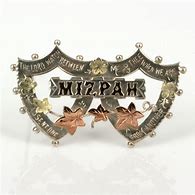
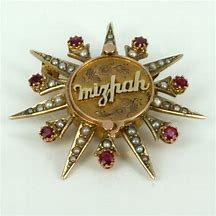
These two examples date from the late 19th century and were found on Etsy. Images used without permission.
But, it was on an Open House visit to St Nicholas church in Chislehurst that I discovered its real meaning. I had read somewhere that Napoleon III was buried there but, alas, it was the wrong church and he had long since been re-interred elsewhere. However, on a churchyard tour that afternoon led by a volunteer I finally learned what it actually signified as he indicated Mizpah on the Campbell monument. He said that it came from an Old Testament phrase ‘I will set around you a mountain which will keep you and protect you.’ I haven’t been able to find this particular Biblical quotation yet.
The word, Mizpah, appears in the Old Testament in Genesis 31:49:
‘And Mizpah, for he said, the Lord watch between you and me, when we are out of another’s sight.’ King James Bible
In other words, the one left behind is still protected and watched over even though their loved one has gone. A touching link between two people or an entire family who have been separated by death or another force.
But there is another version, according to Wikipedia, in which it’s claimed that Mizpah stands for ’Lord watch over me’ and relates to the story of Jacob and Laban. Jacob fled with from Laban’s house in the middle of the night with all of his earthly possessions including animals, wives and children and Laban was soon in pursuit. But the two men came to an agreement and built a watchtower or Mizpah. This would be a border between their respective territories, and neither would pass the watchtower, which was reputed to be merely a pile of stones, to visit the other to do evil. God would be the only witness to their pact and would protect one from the other. Today a modern village stands on the supposed site called Metullah which means lookout.
However, I prefer the more poignant reference to the affectionate ties between the departed and the bereaved and the wish to leave them with the feeling that they were still being supported and protected as exemplified by the one simple word.
Mizpah jewellery is still available and is often in the form of a coin shaped pendant, cut in two, with a zig-zag line bearing the words that I quoted in the first paragraph.
Here are two examples that I found online; one is vintage and the other is contemporary.


This first example is from Beckenham Cemetery and the Victorian epitaph is an affectionate tribute to a much loved and missed wife, Emma.
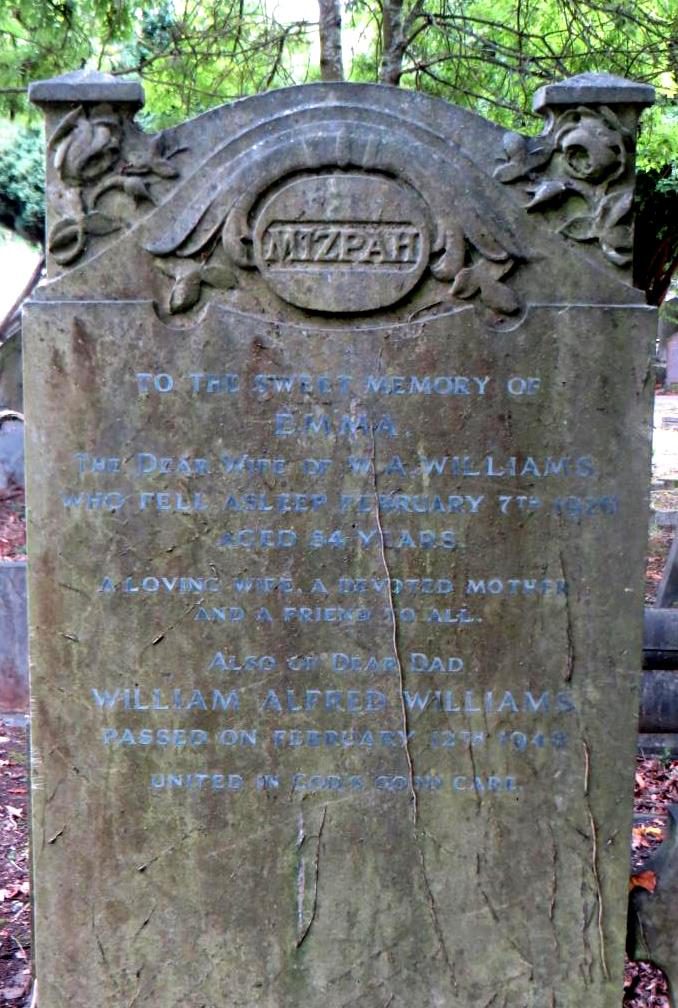
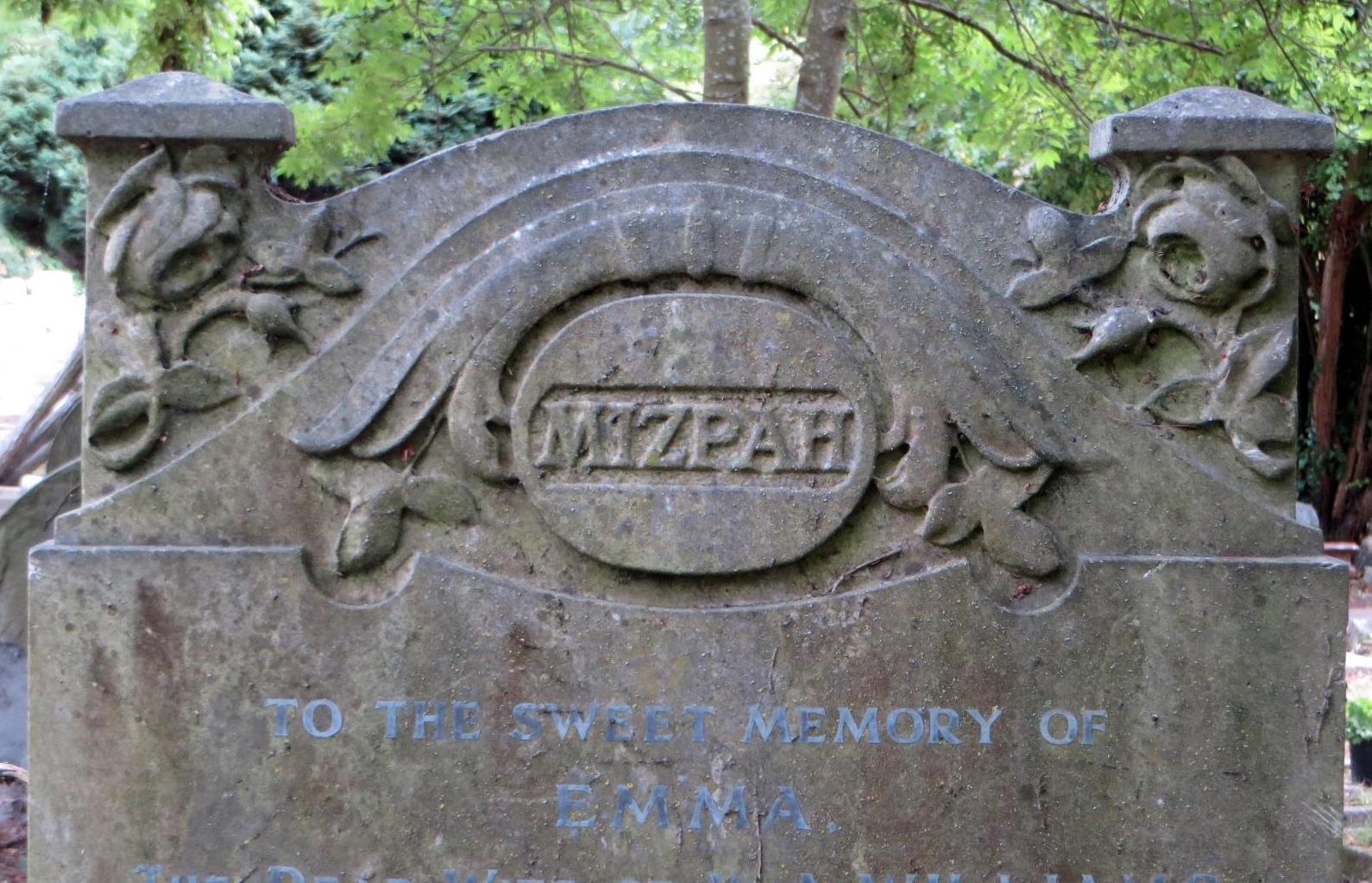
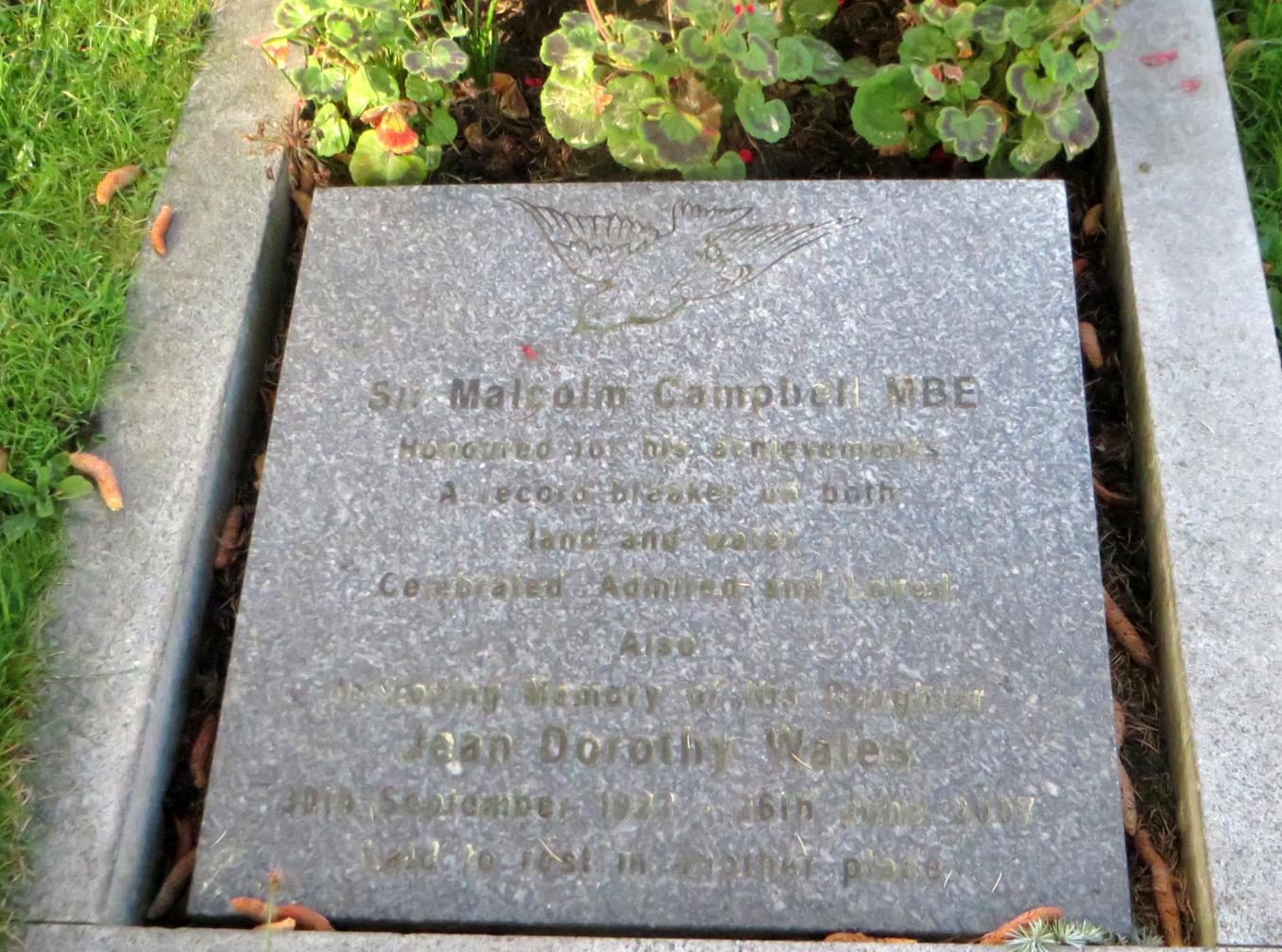
The second is from the Campbell monument in St Nicholas churchyard. The Celtic cross above the grave is also of interest as it has strapwork on it made from entwined snakes, themselves symbols of eternity and mortality. The Campbells had two famous sons: Sir Malcolm Campbell and his son Donald. Note the small motif of a bluebird in one corner above the epitaph. This was the name of the vehicles on which both Sir Malcolm and Donald achieved several world speed records during their lifetimes. Donald was tragically killed in 1967 when another world speed record breaking attempt on Coniston Water went tragically wrong and both he and Bluebird sank to the bottom of the lake. It wasn’t until 2001 that his remains were discovered and buried in Coniston cemetery. Nick Wales, his son, maintains the grave and also holds the world record for the fastest lawnmower. Donald Campbell’s Bluebird has been restored and was taken out for a trip on Bewl Water, near Tunbridge Wells by its new owner Paul Foulkes-Halbard in 2017.

The final one is a modern version, again from Beckenham Cemetery, and is dedicated to a Kathleen Sabine and dates from 2000.

©Text and photos Carole Tyrrell unless otherwise stated.
http://biblehub.com/genesis/31-49.htm
https://en.wikipedia.org/wiki/Mizpah_(emotional_bond)
http://www.helenalind.com/mizpah.htmlhttp://mizpah.biz/what-does-word-mizpah-mean
http://mizpah.biz/what-does-word-mizpah-mean
 shadows fly away