Symbol of the Month – The Mourning Woman


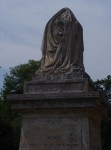
A fine example from Kensal Green Cemetery on the Isabella Shaw memorial.
©Carole Tyrrell


This month’s symbol is the Mourning Woman who is derived from Classicism and its association with ancient Greece and Rome.  I would hesitate before describing their presence in Victorian cemeteries and churchyards as a monstrous regiment but they have mostly been on duty for over a hundred years.  They patiently watch over and grieve for the departed.  An eternal mourner, often with a veil covering her head and swathed in flowing robes, she keeps vigil.

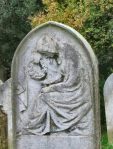
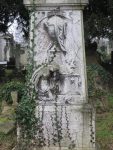
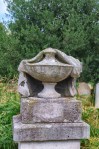
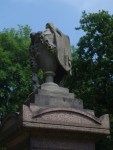
The Mourning Woman can be a free standing statue on top of a monument or plinth looking sorrowfully down on the viewer.  She can also be in the form of a 3D relief weeping over an urn containing the beloved’s ashes as in these examples:
 

At West Norwood cemetery there is this example of one resting on a lifesize cross (I hate to say it but whenever I see her I’m always reminded of the George Formby song ‘I’m Leaning on a lamp post…etc.).
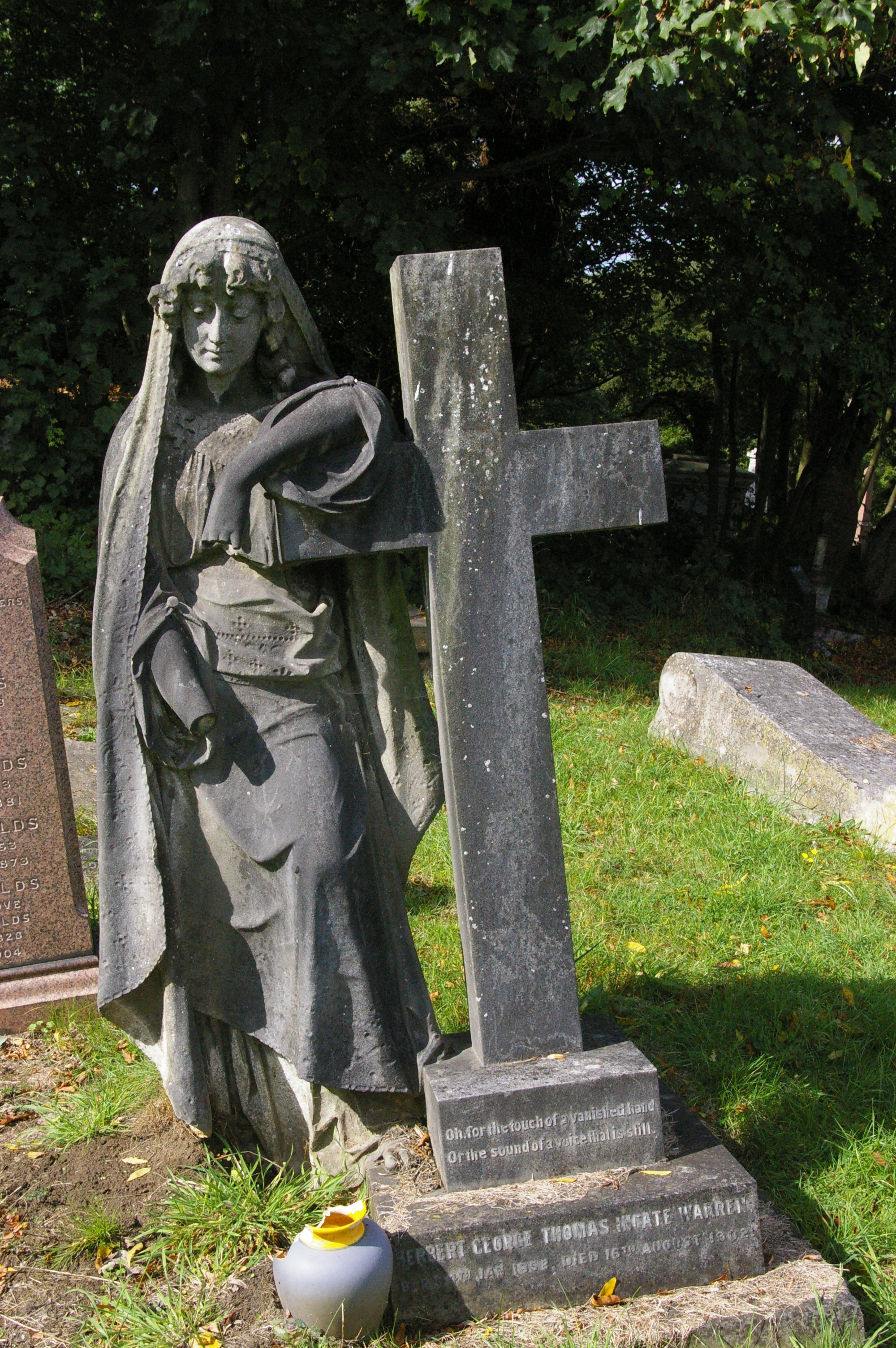
A full view of the mourning woman as she rests on a cross on the Herbert Warren memorial, West Norwood Cemetery.
©Carole Tyrrell


Classicism held sway when London’s Magnificent Seven cemeteries were created. The anti-Catholic movement from the Georgian era was still a major influence with the cry ‘No Popery!’ loudly shouted.   So no crosses, no statues of Jesus or any angels were permitted.  Instead the clear cool lines of the ancient world were used as well as some of their traditions.

Mourning women were one of these as women played an integral part in the funerary ritual in ancient Egypt, Greece and Rome.   In the latter they were paid professional mourners as the more mourners there were at a funeral the more wealthy and prestigious the departed had been in life.  In the funeral procession which took place prior to the cremation the professional mourning women, who were not part of the deceased’s family, would loudly wail, rip out their hair and also scratch their faces in mourning according to contemporary records.  It was felt that women could more easily express emotions as it was unacceptable for a man to weep in public.

There are several Biblical references to the mourning women.  They are mentioned in Amos 5:16, Chronicles 35:25 and also in Jeremiah 9:17 as below

Thus saith the LORD of hosts,

Consider ye, and call for the mourning women,

that they may come;

and send for cunning women, that they may come:
King James Bible


The reference to ‘cunning’ women means ‘skilled’ women.

They would often weep noisily and copiously spilling their tears into vessels known as tear catchers or lachrimosa.  At the recent excellent Museum of Docklands exhibition, The Roman Dead, there were some on display.  They were small glass vessels and were placed in tombs, presumably overflowing, after the funeral was complete. Again, if many tears were collected, it signified that the deceased was held in high esteem and those crying the most would receive a higher payment.

Incidentally the tear catchers became fashionable again in the 19th century with the Victorian cult of death.  But this time the bottles had special stoppers that allowed the tears to evaporate and when they did the mourning period would be over.  There is also a Biblical association with the practice of collecting tears in bottles in Psalms 56:8:

Thou tellest my wanderings:

put thou my tears into thy bottle:

are they not in thy book?

King James Bible


In ancient Greece it was again women who prepared the body and then laid it out ready for viewing on the second day.

Kinswomen, wrapped in dark robes, stood round the bier, the chief mourner, either mother or wife, was at the head, and others behind. This part of the funeral rites wasthe prothesis. Women led the mourning by chanting dirges, tearing at their hair and clothing, and striking their torso, particularly their breasts.

Wikipedia


Here is a 6th century depiction of ancient Greek professional mourning women in full flow:

Body lying in state attended by family members with the mournign women ritually tearing their hair, Terracotta plaque – late 6th century BC. Walters Art Museum, Baltimore, USA
Shared under Wiki Creative Commons


So for centuries women have been associated with, and played a major part, in the funerary process which may have been one of the reasons for the Mourning Woman appearing in cemeteries.

I feel that these women could be seen as a forerunner of the winged angels that flew into cemeteries towards the end of the 19th century.  Both of them were guardians of the dead protecting them for eternity.

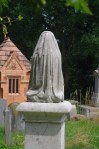
To end on, here is an lovely example that I unexpectedly discovered while on a Sunday afternoon stroll in the ‘secret’ graveyard behind St Nicholas’s church in Sevenoaks.  She stands, surrounded by back gardens, and is a particularly elegant version.  The memorial beneath her feet is dedicated to Elizabeth Dick and was erected by her sorrowing husband.

Sleep well for eternity Elizabeth and all those guarded by the mourning women.

©Text and photos Carole Tyrrell unless otherwise stated

References and further reading:

https://victorianmonsters.wordpress.com/victorian-funerary-practices/https://victorianmonsters.wordpress.com/victorian-funerary-practices/

https://www.ancient.eu/article/96/the-roman-funeral/

https://en.wikipedia.org/wiki/Roman_funerary_practices

http://penelope.uchicago.edu/Thayer/E/Roman/Texts/secondary/SMIGRA*/Funus.html

https://www.psychologytoday.com/gb/blog/understanding-grief/201802/professional-mourners-ancient-tradition

https://biblehub.com/jeremiah/9-17.htm

https://en.wikipedia.org/wiki/Professional_mourning

http://www.lachrymatory.com/History.htm

https://en.wikipedia.org/wiki/Ancient_Greek_funeral_and_burial_practices

http://penelope.uchicago.edu/Thayer/E/Roman/Texts/secondary/SMIGRA*/Funus.html


Symbol of the Month – The Shrouded Cross

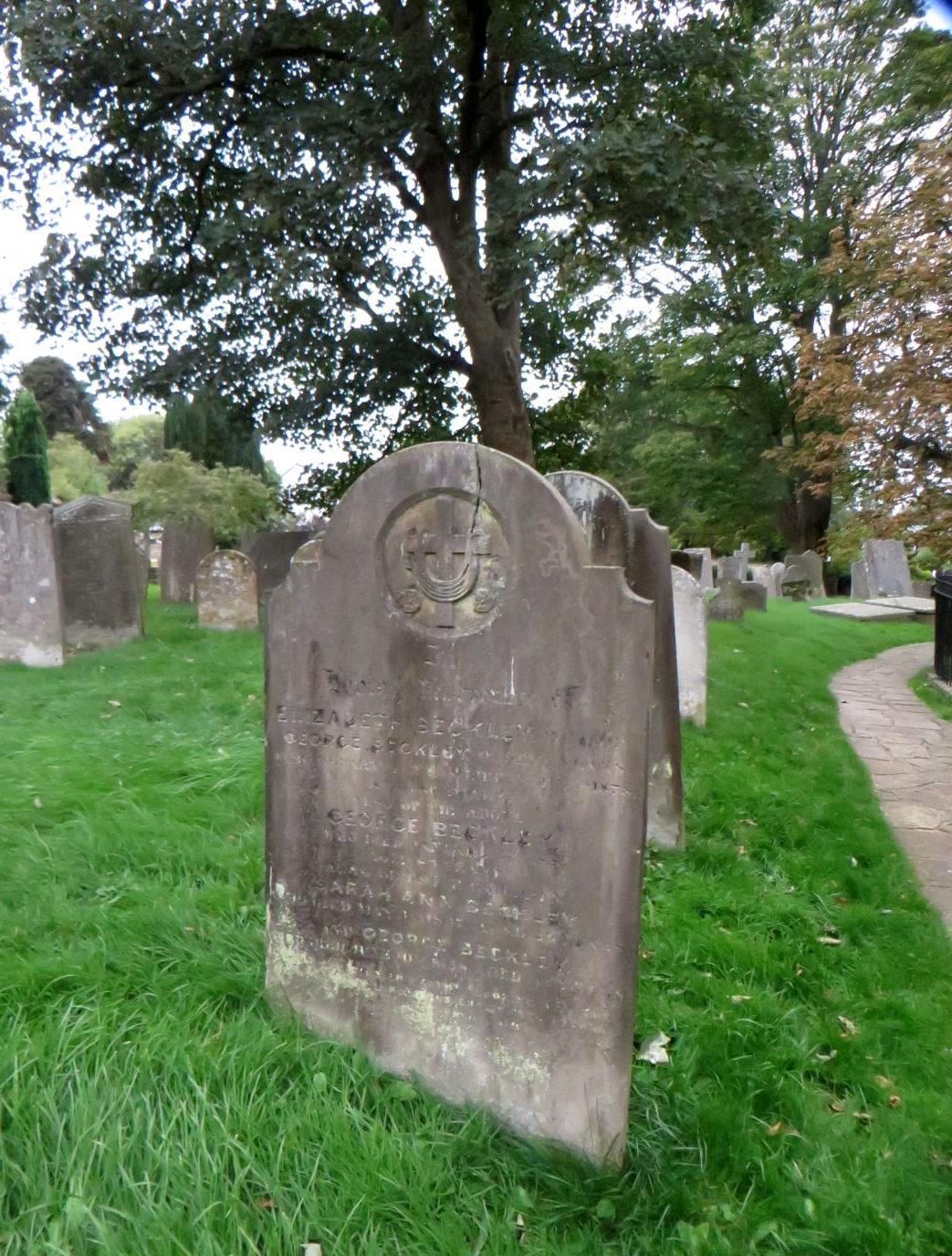
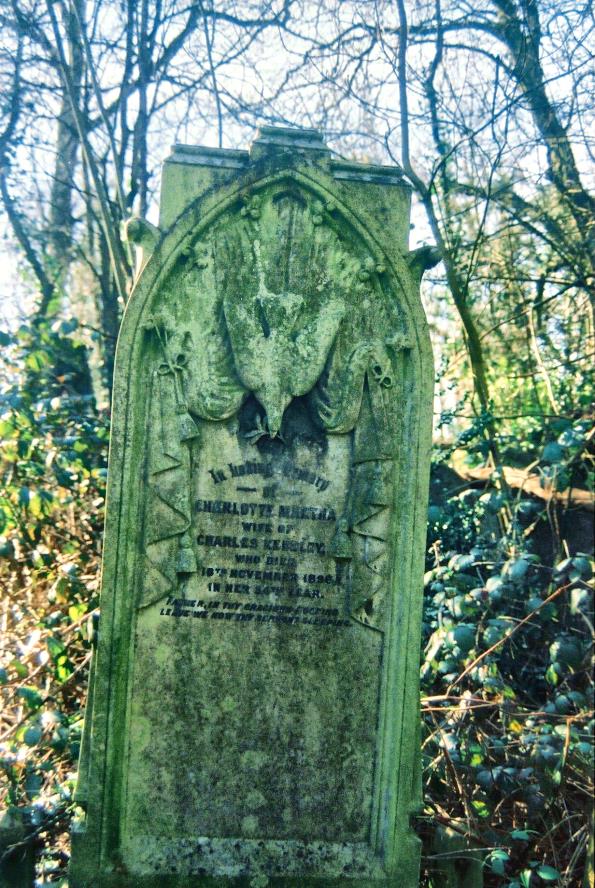
The Shrouded Cross on the family grave of the Beckley family, St Nicholas church, Sevenoaks
©Carole Tyrrell

This month’s symbol is a rare one and I discovered it in my local churchyard, St Nicholas in Sevenoaks. It’s on the grave of the Beckley family.

A draped cross in West Norwood Greek section.
©Carole Tyrrell

However, I have also previously seen crosses with real cloth draped on them in two big London cemeteries One was in the Greek Section of West Norwood.  At that time I thought that perhaps it was to commemorate an anniversary or a particular religious festival. However, during my research for this post. I have discovered that the colour of the   West Norwood cloth, white,  is associated with Easter Sunday.

As you can see from the above photo of the Beckley headstone, the cloth is wrapped loosely around the cross  and, according to my research, it’s a resurrection symbol.  In fact it’s known as the Resurrection Cross or the Shrouded Cross. Some of its other names are: the Draped Cross, the Empty Cross, the Risen Cross or the Deposition Cross. The latter is a further reminder of Christ’s descent from the cross

It’s intended to be a representation of Jesus no longer being on the cross. Although there are also plain crosses on graves unless they have the cloth they are not Resurrection crosses. The cloth is a supposed reference to Christ’s grave clothes or shroud that were found in the tomb after he rose from the dead. It emphasises to the bereaved left behind that death isn’t the end.

Within the church calendar, the cloth draped around a cross during important dates in the Christian calendar particularly Easter has special significance according the colours of the fabric. These are white, purple – the colour of royalty, and black.  The latter is used from Palm Sunday (the week prior to Easter) until Good Friday and denotes mourning after Christ’s death on the cross.

The shrouded cross on the Beckley headstone is a striking image which caught my attention and really stood out in a churchyard containing several headstones with fascinating symbols on them.

So this one may be an affirmation of faith on behalf of the deceased  or a strong belief in the afterlife with death being seen as the beginning of a new life.


©Text and photos Carole Tyrrell


References and further reading

https://www.seiyaku.com/customs/crosses/shrouded.html

http://www.thecemeteryclub.com/symbols.html
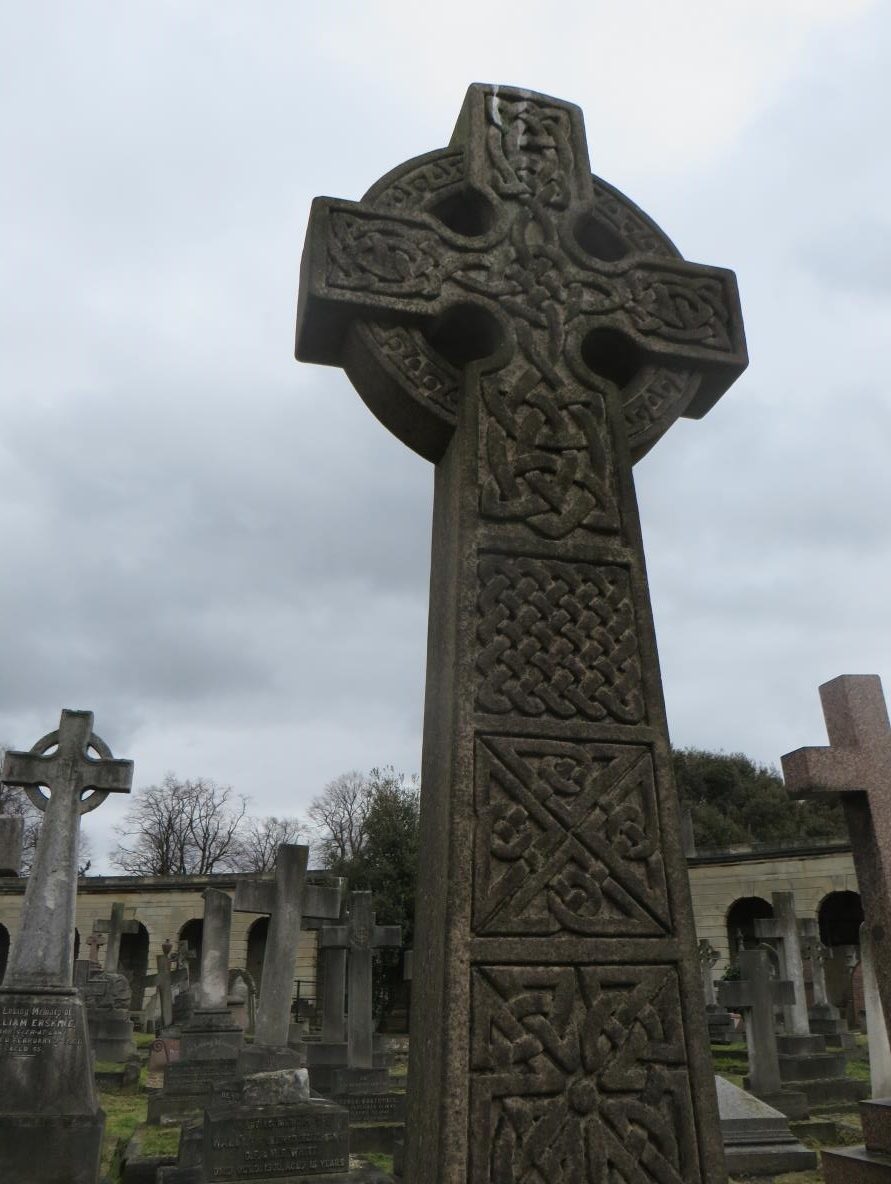
https://answers.yahoo.com/question/ind?qid=20170406140444AAUuXdc

Symbol of the Month: Gather ye rosebuds while ye may as Death is always waiting

At last the endless sorting out of boxes is over after the move.  I’ve found some money I’d forgotten about, family photos and a lot of books. The Cancer r Research charity shop in the High Street is groaning under the weight of my donations and I have recycled a lot of stuff.

And now down to the important things in life – shadowsflyaway!   I didn’t have an internet connection for a few weeks which was probably a good thing as it made me concentrate on emptying boxes and organising rooms.

But let’s begin with Symbol of the Month!

This month’s symbol comes from a post on Facebook’s Folk Horror Revival page and I was intrigued enough to make this one Symbol of the Month.  I would describe it as a memento mori which is Latin for ‘Remember you must die.’

Tombstone from St Peter’s Church Falstone ,Northumberland
©Stephen Sebastian Murray

It’s a carving on a tombstone featuring a skeleton and a woman or girl facing the viewer. She is holding three flowers in one hand.  In this photo, although the skeleton almost seems to be rising from the ground, he is actually holding a scythe in one hand and an hourglass in the other.  This can be seen more clearly in the clipping from Northumberland’s Hidden History by Stan Beckensall which another reader on the strand of the post kindly attached.

Clipping on headstone from Falstone churchyard, Northumberland. taken from Northumberland’s Hidden History by Stan Beckensall used without permission.

She is wearing a tightly belted dress, perhaps fashionable in her time, and seems carefree despite having Death standing next to her in all his glory. I had the impression that this might have been on the grave of a young girl due to her dress and the flowers.

They reminded me of roses and I immediately thought of the famous phrase, ‘Gather ye rosebuds while you may’ which is a quotation from a poem by Robert Herrick, a 16th century poet.

The poem is entitled: To the Virgins to make much of time and the quotation comes from the first verse:

Gather ye rosebuds while ye may,

   Old Time is still a-flying;

And this same flower that smiles today

   Tomorrow will be dying.

So this little scene could be saying Enjoy life while you can as death will soon be here.’   It sounds a little depressing but life was shorter in earlier times. In the 19th century, for example, the average life of a working man was until their late 40’s and women often died in childbirth.  I wander around cemeteries a lot as you can imagine and there are many monuments and memorials to wives and often children who have died young as a result.  On the other hand it can be seen as uplifting in that it encourages the onlooker to enjoy life to the fullest.

Sadly I don’t know who’s buried here but she or he was obviously much missed to have such an impressive scene carved on their tombstone.

© text Carole Tyrrell photos use  with permission.

Symbol of the Month – The Urn

Another draped urn on the Richard Mosley monument, West Norwood.
©Carole Tyrrell

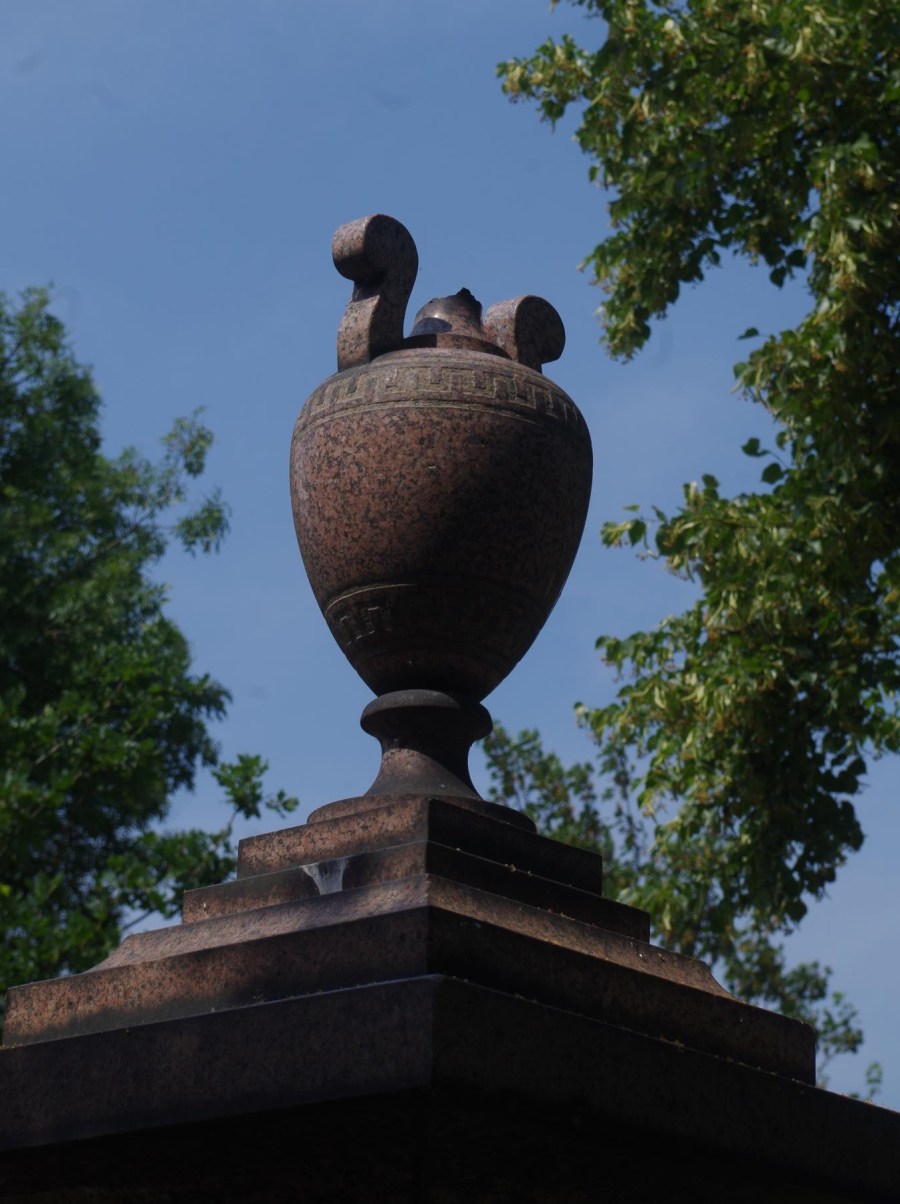
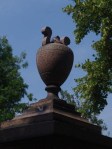
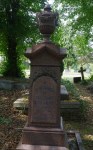
This month’s symbol is one that you frequently see in cemeteries. In fact, in most Victorian cemeteries you’re never more than a few steps from an urn… or two… or three……

These elegant sculptures are usually placed on top of a monument or can appear in 2D relief on a tombstone.

In marble, stone or plaster, they may also be draped with a sculpted piece of cloth or a flower garland. Urns may also have two handles, no handles or what looks like a lid to emphasise its use as a container. In Nunhead Cemetery there is a particularly elegant example with a lovely tassel on the sculpted drapery.

The Victorians loved urns which is why their cemeteries are clustered with them.  They are examples of the Classical movement which was very much in vogue at the time when these large municipal cemeteries were created.  This was an echo of the Greek and Roman eras but the urn as a funerary symbol was known long before them.  However, according to theartofmourning website:

‘…the word ‘urn’ comes from the Latin word ‘uro’ which  translates as ‘to burn’  so no matter what shape the vessel was, its title was always ‘urn’.

Urn was, therefore, the umbrella name for containers of ashes.  It may have been a small box or an elegant vase but as the above quotation says, it was always known as an urn.  Cremation was an early form of preparing the dead for burial as ancient civilisations cremated their dead and put the ashes into containers. In fact, some urns found in China have been dated to 7000BC.  In Central Europe there was what has been described as an Urnfield culture from 1300BC – 750BC which is due to the large cemeteries of urn burials that have been excavated.

The Greeks adopted the use of urns in around 1000BC and the scattering ashes blog has suggested that this may have been:

‘because of soldiers dying abroad in wars or campaigns abroad and this was the only way to return their bodies home to their loved ones.’

After the Greeks, the Romans used cremation as a method to bury the dead until it was superseded by interment within a sarcophagus. But, even then, the urn maintained its status as a symbol of death and the body’s decay into dust. A reminder that, ultimately, we will return to the dust from which we were originally created. So the urn is also a link to the ancient world and its burial practices However, there is an alternative theory put forward on the Lakewood cemetery website in which it’s suggested:

‘The urn is also a symbol of a house or dwelling.  When it’s draped this indicates a house of mourning.’

But, ironically, the Victorians weren’t all that enthusiastic about cremation, despite their love of urns,  until at least the late 1880’s. This is when it was introduced into large London cemeteries such as Kensal Green and West Norwood.

But why are some urns draped?  I often feel it’s almost as though the folds of the drapery are protecting the deceased from the world until Judgement Day although there’s nothing in the urns.   The artofmourning website considers it to be an indication of the death of an older person but I’m not sure that I’d agree with that due to its prevalence in Victorian cemeteries.

The draped cloth has also been seen as the division, the impenetrable curtain if you like, between life and death.  Some drapes can almost resemble shrouds and this can indicate that the soul has departed from the shrouded body.

The urn also appears as a popular motif in mourning jewellery and George Hepplewhite also used it as a symbol on neo classical influenced furniture. It was an indication of taste and of a classical education.

So the next time you’re in a Victorian cemetery why not try and count how many urns you can see or how many times a draped urn appears? It’s a simple symbol to sculpt with and calls down the millennia to our Prehistoric forefathers as they buried their dead in the same way that we do. The ones that I featured in this blog post nearly all came from West Norwood cemetery and were within a short distance of each other. I was spoilt for choice as to which ones I decided to feature.

And you’ll be pleased to know that I’ve managed to refrain by working in the classic Morecambe and Wise joke on a Greek urn….

©Text and photos Carole Tyrrell unless otherwise stated.

References:

https://artofmourning.com/2011/04/10/symbolism-sunday-the-urn/

https://artofmourning.com/2011/04/10/symbolism-sunday-the-urn/

https://www.lakewoodcemetery.org/styles-sculptures-symbolism

http://historyinstone.blogspot.com/2012/12/the-draped-urn.html

http://www.bbc.co.uk/london/content/articles/2005/05/10/victorian_memorial_symbols_feature.shtml

https://www.thoughtco.com/photo-gallery-of-cemetery-symbolism-4123061

https://symbolsproject.eu/explore/others/objects0/drapes-/-drapery/draped-urn.aspx

https://www.furniturelibrary.com/the-urn-logo-from-antiquity/


Symbol of the Month – the Scallop Shell


Carved scallop shell on monument in Brompton Cemetery. Note Celtic cross type support for it.
©Carole TyrrellThis month’s symbol is the scallop shell and is traditionally associated with pilgrims. Since ancient times they have made the not inconsiderable journey to visit St James of Compostella’s shrine in Spain and proudly collected their scallop shell badge as evidence of their trip. But this humble mollusc has several other meanings especially in a funerary context.

However, despite it being a common shell and also an invaluable food source, I have only found it gracing 3 monuments so far.  There are several flat 2D versions on a tomb in Nunhead Cemetery and two examples within Brompton Cemetery; one is a more decorative touch and the other is this lovely 3D beauty.  So well carved and tactile – I just wanted to reach out and touch it.  But I’m keeping a look out for any other shells adorning memorials.

Shells have been with us since time immemorial and who hasn’t picked one up from a beach to take home as a souvenir?

A scallop on sand.
Shared under Wiki Creative Commons

The scallop is inextricably linked with the Christian religion and its use in funerary rites pre-dates the Egyptians.  In pre Christian times, the Celts in particular, used it as an emblem of the setting sun and note that in the above example it is placed in the centre of the supporting Celtic Cross.  The nimbus of the Cross is considered to be a sun symbol.  In Christianity baptismal fonts were often shell shaped and a shell was used to scoop water up and then pour it over the person being baptised’s head. This emphasises the shell’s association with water as it’s thrown up by the sea onto the shore.  But there is another link in that it’s seen as representing the final journey from the world of the living to that of the dead by the crossing of a body of water such as the River Styx and so is also a motif of rebirth.  This is how the early Christian church used it.

Another funerary use for the shell was being placed, often with stones and coins, on tombstones or at gravesites.  The artofmourning website says:

It has been suggested that this refers to the ancient tradition of burying the dead under a cairn of rocks as protection from scavenging animals or as a reminder of the deceased.’

But there’s also a more meditative side to the scallop as its grooves can also be seen as representing many paths leading to one point such as searching for God or a path in life.  So this ancient motif can be seen as representing a journey through life itself or indeed to St James’ shrine.

It’s also associated with fertility and, in particular, the goddess of love, Venus.  In Botticelli’s celebrated painting, ‘The Birth of Venus’, the goddess is portrayed as standing on a large scallop shell.

Sandro Botticelli The Birth of Venus shared under Wiki Creative Commons

Incidentally, it also features in Palladian architecture which flourished 1715 – 1760 which was built on the heritage from Greece and Rome.  Here the shell was used in a concave form and usually within a niche.  In this example, also from Brompton, the shell is less obvious and more of a decorative feature.

Stylised shell decoration on memorial in Brompton Cemetery.
©Carole Tyrrell

The link with St James is that scallop shells are very common in Galacia where the shrine is located.  But there are also 3 very famous myths and legends that reinforce the link.  According to the hillwalktours website:

St James, together with his brother John, one of Christs’  disciples. After Jesus’s death, James went to Iberia, which is now Galacia in the north of Spain with the intention of converting the pagans there to Christianity.  However, in roughly 44AD, after returning to Jerusalem, James was beheaded by order of King Herod.  This made him the first disciple to be martyred. James’s body was then carried by ship to Galacia where the three myths arose.

In the first, the ship carrying St James’ body was lost and destroyed in a severe storm. After an unspecified length of time, his body washed ashore completely covered in scallop shells.  In the second myth, a knight fell from a clifftop as St James’ ship passed beneath. The saint’s influence was felt as the knight emerged from the sea unharmed and covered in scallop shells.  The third and final one features a wedding in which the horse carrying the bride bolted into the ocean as St James’ ship passes by. But the bride and horse were saved as they emerged from the water covered in scallop shells.  Hence the link between St James and the shell.

Pilgrims were big business in medieval times and the scallop was a badge of honour for pilgrims to display that they had made the journey.  They often had their shells buried with them or carved on their tombs.

And so the humble scallop shell reveals itself as an important symbol with several significant meanings.   A fertility symbol, evidence of a seeker exploring many oaths towards their goal or a passenger on Charon’s boat towards eternity?  Myself, I would incline to the final river journey but I also like the idea of exploring many paths in life.   We will probably never know the actual significance of the shell to the deceased but it was important enough to be placed on their memorial to be enjoyed by any passer-by.

©Text and photos Carole Tyrrell unless otherwise stated. ©Carole Tyrrell

References and further reading:

https://artofmourning.com/2006/01/17/symbolism-meaning-objects

www.thecemeteryclub.com/symbols.html

https://www.gravestonestudies.org/knowledge-center/symbolism

www.waysidearteastanglia.me.uk/symbols.html

https://www.hillwalktours.com/…/camino-scallop-shell-symbolism

https://symbolsproject.eu

https://compostela.co/symbols/the-scallop-shell-was-the-emblem

https://en.wikipedia.org/wiki/The_Birth_of_Venus


Symbol of the Month – The Final Curtain

Full view of the impressive Raikes headstone, West Norwood Cemetery/
©Carole Tyrrell

The theatre is dark, the audience and backstage staff have all gone home or off to the pub and the final curtain has been brought down. The end of a show, the end of the evening and, in funerary symbolism, the end of a life.

This fine example is from West Norwood Cemetery where it commemorates the Raikes family.  Theatre was in their blood and so the sculpture of a theatrical curtain is very appropriate.

But curtains and draperies have always been associated with death and remembrance.  There is the old saying which is sometimes quoted on headstones and memorials that the deceased has ‘gone beyond the veil’.  An urn on top of a memorial will often have a sculpted piece of cloth draped across it which indicates the division between the living world and the realm of the dead.

In the 19th century and also well into the 20th century drapes were hung over mirrors with curtains and blinds drawn down at windows during the period of mourning. It was as if they were hiding death from the world or containing it within the family. On the Friends of Oak Grove Cemetery website they mention mirrors being covered with black crepe fabric in order to prevent the deceased’s spirit being trapped in the looking glass.

Parted curtains on a headstone to display a downturned dove and epitaph in the centre, Nunhead Cemetery
©Carole Tyrrell

Curtains also feature on headstones where they are depicted as parted in order to display a meaningful symbol or to draw attention to an epitaph that takes centre stage.  This example comes from Nunhead Cemetery where the curtains are parted to display a downturned dove which is a symbol of The Holy Ghost.

However the Raikes one is very obviously a theatrical curtain and it’s beautifully detailed.  They were powerful players in that flamboyant world and the curtain is a direct reference to this. For example, in 1889, they had Sir Edward Elgar and his new wife, Caroline, as guests in their house, Northlands in College Road, Dulwich.  This was just prior to his Salut D’Amour being performed at the Crystal Palace.

But the family home had a secret in its basement. This was where Charles Raikes (1879-1945) had constructed his own private theatre.  He lived there with his mother, Vera, (1858-1942) and two sons, Raymond and Roynon, from his former marriage. Roynon’s wife, Greta, and their daughter Gretha were also part of the household. Charles lived and breathed theatre and he was ahead of his time when he converted a large billiard room into the Northlands Private Theatre. Nowadays it would be a lavish home cinema with comfy seats and popcorn on tap with his own home movies onscreen.  He extended his pride and joy by removing a couple of inconvenient bay windows and then converting a coal cellar and wine cellar into dressing rooms. He was a talented scenic artist and stage carpenter and from 1924 – 1939 the Theatre put on nearly 23 productions a year to an invited audience. This was made up of the Raikes’ friends and relations and the actors and actresses friends as well. The lavish after show parties were renowned.

Charles’ sons continued the links to the entertainment world.  Raymond (1910-1998) became a professional actor in the 1930’s and played Laertes to Donald Wolfit’s Hamlet at Stratford upon Avon.

Raymond Raikes taken in 1945
Shared under Wiki Creative Commons

However he eventually became a BBC producer, director and broadcaster. He won several awards over a long career which included pioneering the use of stereo sound in radio drama.  In 1975 he retired and is known as one of the three greatest radio drama producers. Roynon became a professional photographer specialising in theatre pictures and also as a stills photographer for the BBC. Greta, his wife, became a theatrical costumier and drama teacher and her daughter, Gretha, in turn became a speech and drama teacher. In a 1997 Dulwich Society article she was also credited with being the curator of the archives of the Northlands Private Theatre.

View of the curtains and the quote from the Rubaiyyat of Omar Khayyam, Raikes headstone, West Norwood cemetery.
©Carole Tyrrell

The quotation below the curtain is from the Rubaiyat of Omar Khayyam.  It comes from the 21st, 22nd  or 23rd stanza depending on which version you read.   This is the verse in full and is taken from the 1859 translation by Edward Fitzgerald

Lo! some we loved, the loveliest and best

That Time and Fate of all their Vintage prest,

Have drunk their Cup a Round or two before,

And one by one crept silently to Rest.


He saw them as a selection of quatrains or Rubaiyats that had been attributed to the Persian poet who was also known as the Astronomer Poet of Persia.  Although Fitzgerald’s translation was initially unsuccessful, by the 1880’s, it had become immensely popular.  It has influenced many creative people over the years including the Pre-Raphaelites and especially Dante Gabriel Rossetti. Oscar Wilde was also a fan and mentions ‘wise Omar’ in The Picture of Dorian Gray.   Agatha Christie, Isaac Asimov, H P Lovecraft and Daphne Du Maurier are amongst many who may have borrowed a line a s a book title or used an Omar like figure within their works.  Interpretations of the Rubaiyat can be very free and as a result the quatrains can change their wording.  The underlying message of the Rubaiyat appears to be Seize the Day or Carpe Diem in Latin.  There are also several references to drinking with the implication that once drinking is over so is life.   But this particular line seems appropriate for its use on a headstone.

And so the curtain has bene brought down on the Raikes family but, as I took my photos, I thought I detected a faint smell of greasepaint and the appreciative sound of applause……

©Text and photos Carole Tyrrell unless otherwise stated

References and further reading:

 https://aeon.co/ideas/how-the-rubaiyat-of-omar-khayyam-inspired

 sleepinggardens.blogspot.co.uk/2011/06/fridays-funerarysymbols

https://en.wikipedia.org/wiki/Rubaiyat_of_Omar_Khayyam

schoolworkhelper.net

https://artofmourning.com/2010/11/14/symbolism-sunday-drapery/

Rubáiyát of Omar Khayyám Summary – eNotes.com

https://www.enotes.com/topics/rubaiyatomarkhayyam

https://dulwichsociety.com/2017-winter/1578-brief-encounter

https://en.wikipedia.org/wiki/Raymond_Raikes

www.suttonelms.org.uk/raymond-raikes.html

https://en.wikipedia.org/wiki/Rubaiyat_of_Omar_Khayyam


Symbol of the Month – The Celtic Cross

The Surrey Celtic Cross Brompton Cemetery
©Carole Tyrrell

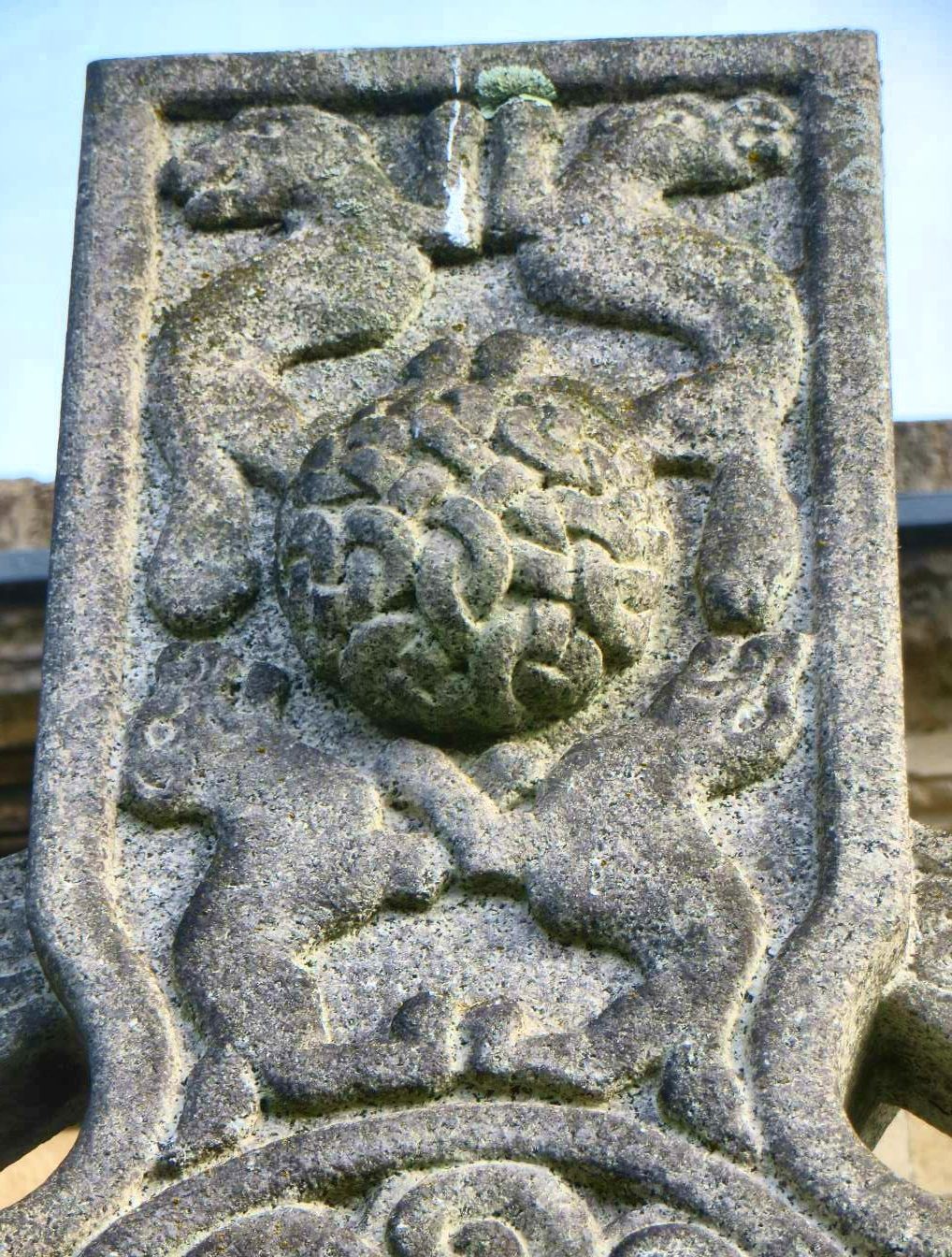
Stylised animals, sinuous snakes, Celtic knots and traditional strapwork, flowers, angels and even a cat! The decoration on Celtic crosses within cemeteries can be varied and interesting. But it wasn’t until I was exploring Brompton Cemetery with an apps designer that I really began to look at them more closely. He spotted the Viking style animals on Margaret Stevenson’s cross near the Chapel and we were soon seeing spirals and the more emblematic strapwork known as Hiberno-Saxon art or Insular art amongst others.

Celtic Crosses first appeared within cemeteries during the Celtic Revival of the 1850’s and it has since become a worldwide emblem of Irish identity.  The Revival has also been described as the Celtic Twilight and the Cross is seen as its lasting contribution to the western world’s funerary art.  The Celtic Cross has been known in Ireland since the 9th century and in mainland Britain since medieval times.

It’s a form of the traditional cross but with the addition of a nimbus or ring.  The latter is seen as a symbol of eternity as it has no beginning or end. The addition of the nimbus has been attributed to St Patrick who is reputed to have added it to a Christian cross, extended one of the of the lengths to form the stem and then placed it on top of a stepped base. It was this combination of a pagan symbol and a Christian one that became the Celtic Cross. It has also been described as the ‘sun cross’ by those who interpret the nimbus ring as a representation of the sun. The four arms have also been interpreted as representations of the four elements; air, earth, fire and water as well as the stages of the day or the four fixed compass directions.

The more traditional, intricately patterned bands known as strapwork are known for the unbroken lines that make up any piece.  There have been 8 basic designs that have been identified and claimed to be the basis of nearly all of the interlaced patterns in Celtic decorative art. Hiberno-Saxon art is also known as Insular art and examples appear in the Books of Kells. Here are four examples from West Norwood Cemetery.

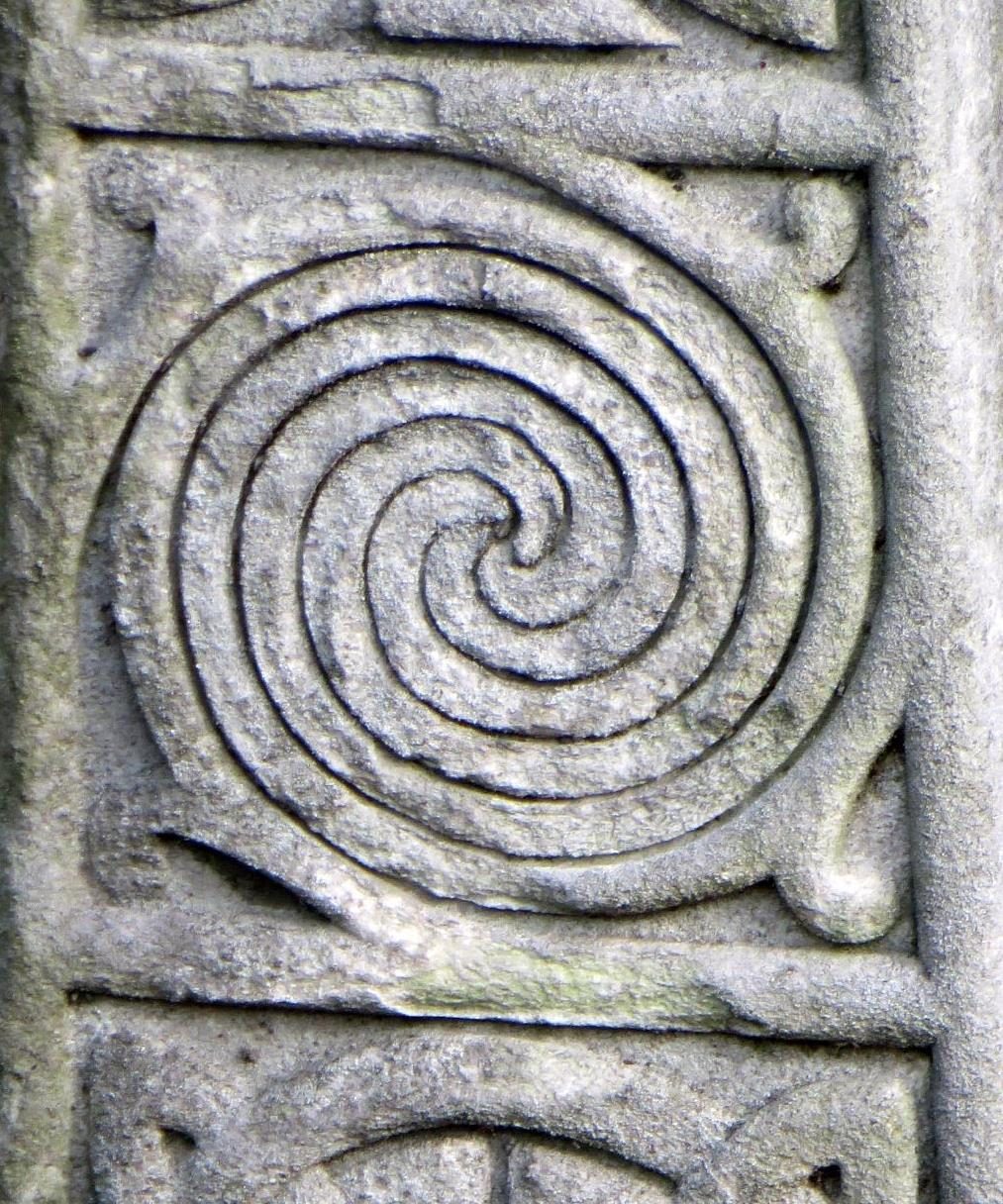
It was in Brompton that I noticed two examples with single spirals on them. A spiral on a Celtic cross is generally drawn clockwise to represent either the sun or the direction of running water.

Detail of spiral on Celtic cross in Brompton Cemetery, Sadly the epitaph is now illegible.
©Carole Tyrrell

It is one of the most ancient symbols known to mankind.   A double spiral is more difficult to create and has been seen as a depiction of universal balance such as yin and yang or night and day.  The triple spiral or triskele is the most difficult for obvious reasons and has several meanings attributed to it. But the one that I thought was the most appropriate in a funerary context was the triskele being seen as a representation of three worlds: the spiritual, the earthly and the celestial.  The word Triskele is reputed to have come from the Greeks and it’s one of the most complex Celtic symbols.


Also in Brompton, I discovered a Celtic cross with decoration that ended in snakes heads which is interesting as snakes which were revered by the Celts. They saw them as a representation of rebirth as they shed their skins and then live again.  Notice also the Celtic knot in the centre of them.  These have been found in Scandinavia and Western Europe as well as appearing within Celtic insular art. They are supposed to represent eternity or the never ending cycle of life with the closed ends signifying unity.

A Celtic knot with snakes entwined around it from Brompton Cemetery.
©Carole Tyrrell


Stylised Viking inspired animals and a Celtic knot on a Celtic Cross.
©Carole Tyrrell

So the next time you visit a cemetery or churchyard look out for the Celtic Cross and see what you find. It’s not only Celtic inspired decoration that appears on them. These two examples are from my local churchyard – one features traditional strapwork and the other has a lovely and unusual angel with beautifully carved feathery wings and the nimbus is almost like a halo.


This is the Mills memorial from Nunhead Cemetery and features beautifully carved passionflowers, a deeply significant symbol in the language of flowers, and also the IHS in the centre of the cross.

This lovely example is the Mills memorial from Nunhead Cemetery. It features beeautifully carved passionflowers and IHS at the centre of thet nimbus.
©Carole Tyrrell


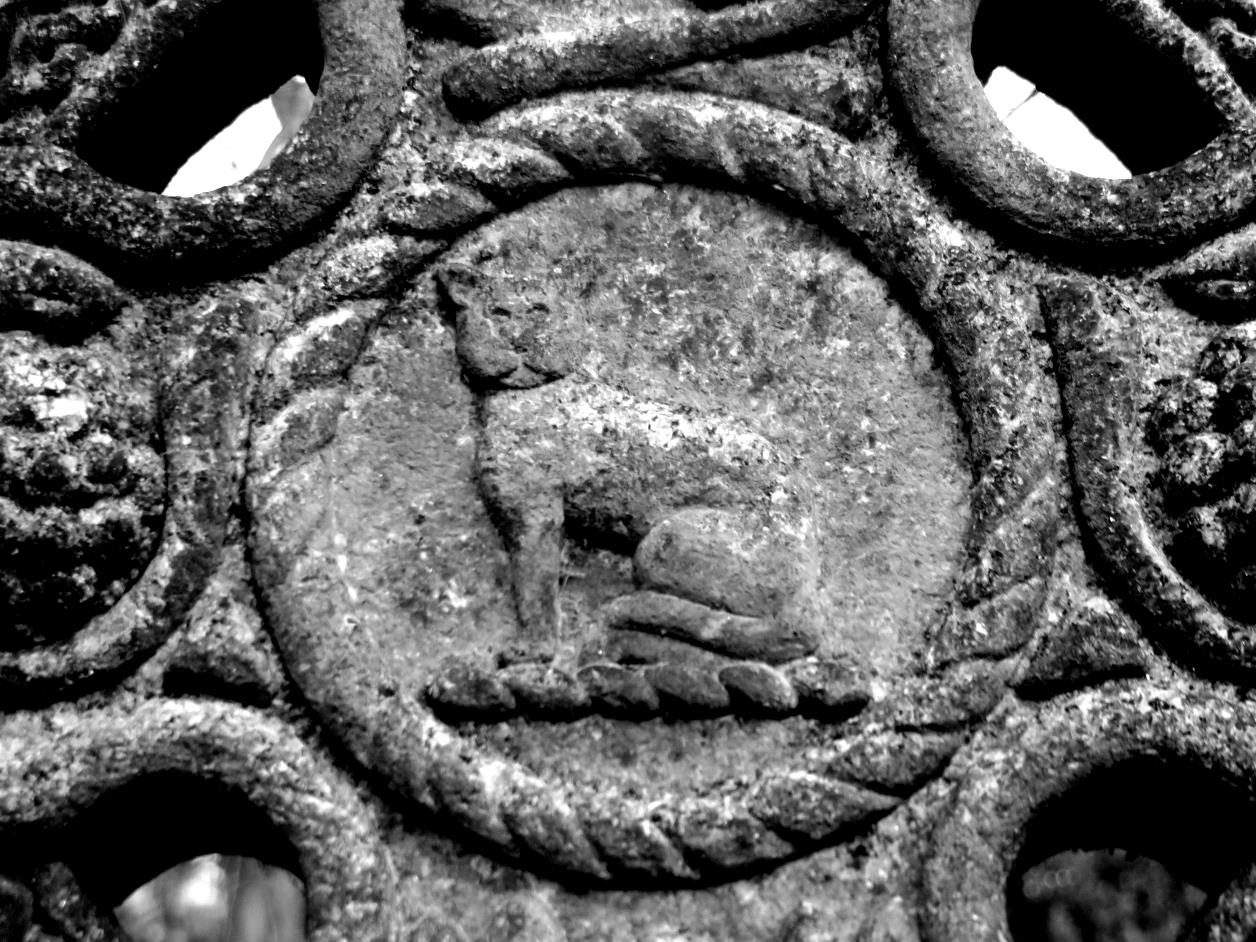
And finally, again from Brompton, one with a cat in its centre which is possibly a pun on the name of the family commemorated – Cattenach.

The Cattanach Celtic Cross from Brompton Cemetery. A probably pun on the surname with the cat at the centre of the nimbus.
©Carole Tyrrell

©text and photos Carole Tyrrell


Further reading and references


https://www.claddaghdesign.com/history/celtic-symbols-what-they-mean/

http://ireland-calling.com/celtic-symbol-spiral/

https://www.ringsfromireland.com/Article/67/Celtic-Crosses


https://en.wikipedia.org/wiki/Celtic_cross

https://www.myirishjeweler.com/uk/blog/irish-celtic-cross-history

https://en.wikipedia.org/wiki/Celtic_knot

https://www.gotquestions.org/Celtic-cross.html

http://irishfireside.com/2015/02/03/history-symbolism-celtic-cross/


Symbol of the Month   – The Cadaver tomb

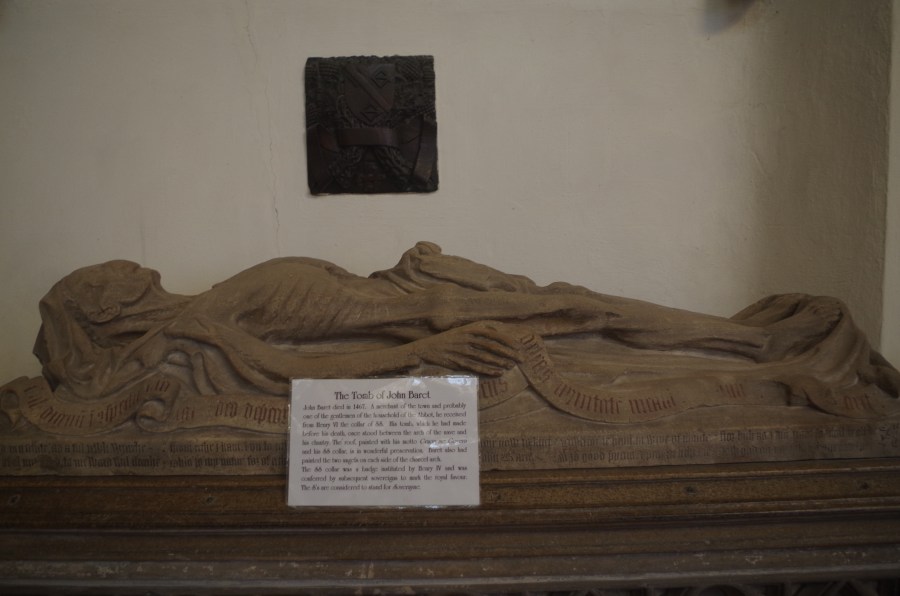
Full length view of John Benet’s cadaver tomb.
©Text and photos Carole Tyrrell

This month’s symbol is a cadaver or pardon tomb from St Mary’s in Bury St Edmunds.  These medieval tombs  were an extremely visual  way of reminding everyone that, despite what you had achieved during life, death would make you equal with all men.

It was as I stood in St Mary’s church, Bury St Edmunds after having  admired its magnificent hammerbeam with lifesize angels pinned to it like exotic butterflies that I saw John Benet’s tomb resting against a side wall.

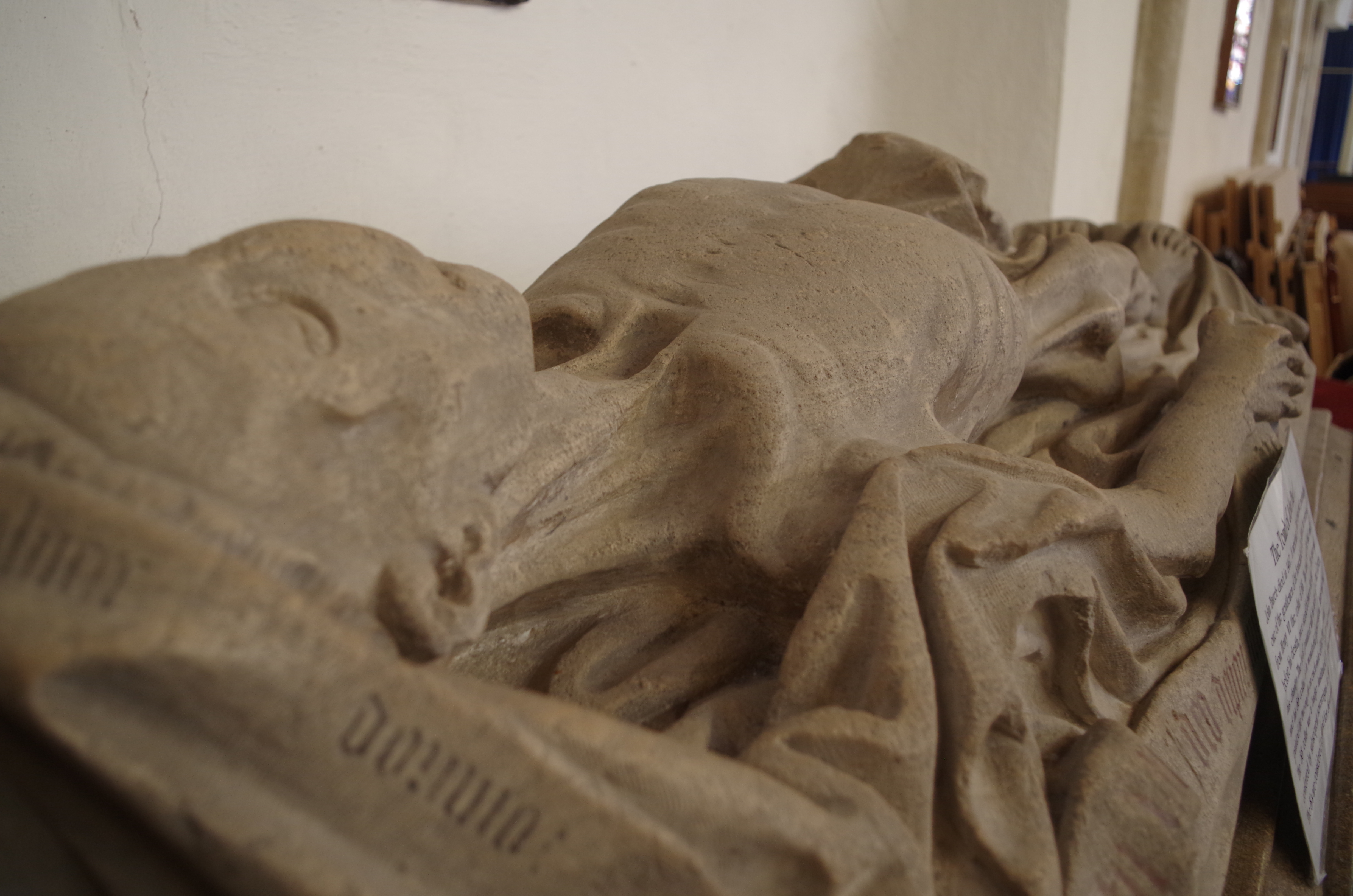
I’d seen two, somewhat worn, cadaver tombs in Winchester Cathedral but not one so close up and so well carved. Even now it’s still crisp and detailed but due to its current location it was difficult to take a full length photo. The tomb depicts John Benet lying on his back as a lifesize corpse with a shroud or towel protecting his modesty.

Another full length from the feet up of Benet’s cadaver tomb with the modesty cloth.
©Text and photos Carole Tyrrell

Although St Mary’s guidebook describes Benet’s tomb as a Pardon tomb, they are more often known as a transi or cadaver tomb.  This definition comes from Wikipedia who describe a transi or cadaver tomb, as a ‘memento mori’.  This is Latin for ‘remember you will die’ and a reminder of the inevitability of death.  Wiki goes onto add that this type of tomb is in the form of:

‘…a type of gisant or recumbent effigy tomb featuring an effigy in the macabre form of a decomposing corpse…’

This type of tomb is particularly associated with the Middle Ages which is roughly when Benet’s tomb was created and I’ve always known them as cadaver tombs. However, they’re not always in the form of a decomposing corpse as they can also be in the form of skeletons or the body of the deceased wrapped in a shroud. I am indebted to the flickeringlamps blog which featured transi tombs in the form of ‘double-deckers’.  This is where the top layer of the tomb portrays the gisant of the deceased as they were when alive and then below on the bottom layer as a decomposing corpse.  This is an extremely visual reminder of what the person once was and what they will inevitably become as earthly glory is fleeting and all must die.

Cadaver tombs can be found in several UK cathedrals and parish churches. The earliest surviving one is in Lincoln Cathedral and is dedicated to Richard Fleming. It dates from the 1430’s.  St Pauls’ cathedral has a later example from the 17th century which commemorates the poet John Donne.  Cadaver tombs are also known in Europe and particularly in Italy, France. Germany and the Netherlands.

But who was John Benet?

According to St Mary’s guidebook, John Benet was a medieval cloth trader and one of St Mary’s most important benefactors.  He financed the very ceiling that I’d been admiring and also his own private chancel chapel and tomb. Within his lifetime, Bury St Edmunds was a thriving town built on the local wool trade.  This led to the creation of a rising merchant class who were able to use their money to leave a lasting memorial to themselves in their local church as proof of their good and pious life.  Surely admittance to the Pearly Gates would be assured if you provided your church with some embellishments…. After they couldn’t take it with them but they could definitely prove that they’d had it while alive….

John Benet was a rich and powerful man within his local town  which is why he was able to afford to have a cadaver tomb made for him and one that was so well sculpted.   It originally lay in his own private chapel.  This has now gone but if you look up you can still see its glittering ceiling  which was restored in 1968.   You may just be fortunate enough to see the light glisten on the tiny pieces of concave mirror glass inserted into the gold stars to give the illusion of real stars twinkling.  Benet’s motto, ‘Grace me Governe’, his initials, coat of arms and SS collar are also part of the intricate decoration.  The latter, again from St Mary’s guidebook:

’….was a gift from the Lancastrian kings in recognition of a special or personal services.  It was in the form of a collar or chain in which the letter ‘S’ was engraved.  The letter ‘S’  which presumably stood for ‘Sovereign.’

The restored ceiling of what once was the ceiling of John Benet’s private chapel.
©Text and photos Carole Tyrrell

So Benet moved in high circles and wasn’t afraid to shout about it for all eternity.

There are Latin prayers on the ceiling’s edges which include ‘Pray for the soul of John Benet, ‘Let us praise the Lord gloriously’, Alleluia, Honour and glory to the only God.’, ‘My soul shall delight in the Lord’, ‘Seek only the highest’ and finally ‘May the pure Virgin Mary bless us with issue.’  Benet was not a man who stinted where his soul was concerned.

The tomb has moved around the church interior several times. But not of its own volition as far as I know. It has been surmised that the effigy of him portrayed as a decaying corpse was made during his lifetime.

Now there’s an  interior design feature for you…it would have been intended as a constant reminder of his own inevitable death and the need to make preparations for the afterlife. It’s in remarkable condition and is the best one that I’ve seen.  It may have been created in the  nearby Abbey’s master mason’s workshops.  This seems very likely given Benet’s powerful connections and the quality of the carving would also confirm this.

Originally he was positioned with his feet facing the east but, in 1884, the tomb was turned around so that the side inscription could be read.  In this, Benet’s motto is carved and a small figure of himself is in the middle of it, dressed in his finest clothes, and holding up the word ‘Me’.  Under one hand of the decaying corpse are the words:

‘He that will sadly beholde me with his ie, May he hyd own mirrour (and) lerne for to die. ‘

Full length view of John Benet’s cadaver tomb.
©Text and photos Carole Tyrrell

 A lifesize memento mori if you will. The guidebook, however, describes it as a Pardon Grave’ which isn’t a term that I’ve heard before. It’s meant to indicate that the person who was being commemorated has obtained a pardon or remission from purgatory.  Benet had also left instructions for his papal pardon to be displayed near his tomb for all to see.  I had the impression that Mr Benet was a bit of a show-off but if you don’t blow your own trumpet…. I sincerely hope that all this piety and expense achieved its aim.

The cadaver tomb iconography is based on the medieval Dance of Death or Danse Macabre.

Nobleman & Physician from the Lubeck Totentanz courtesy of UT Southwestern

This depicted a long line of people from Emperors to Popes right down to a beggar, each of whom had death in the form of a skeleton at their shoulder. This was a reminder that Death made all men equal.   The first one was recorded in St Paul’s Cathedral and in Long Melford, Suffolk, according to St Mary’s guidebook, long cloths were displayed depicting ‘the dance of Pauls’

It’s amazing that this survived the Reformation and Cromwell’s wrecking crews and still sits in St Mary’s reminding visitors of their inevitable fate.   But Mr Benet has a further claim to fame as, in 2003, he was loaned out to the Victoria and Albert Museum as part of their ‘Gothic: Art of England’ exhibition. Apparently, during conservation, traces of flesh coloured paint were discovered on the figure which included red and green veins especially in the neck.  So try and imagine Mr Benet in his original colouring – it must have quite a sight to see.    I think that he’d be very proud that his tomb, the hammerbeam ceiling and also his chapel ceiling are still in St Mary’s for all to enjoy and remember him.

©Text and photos Carole Tyrrell unless otherwise stated. 

References and further reading: 

St Mary’s, Bury St Edmunds A guidebook, Clive Paine, Honey Hill Publishing 1986.

Metamorphosis of a Death Symbol’ The Transi Tomb in the Late Middle Ages an d the Renaissance, Kathleen Cohen (Berkeley: University of California Press) 1973

https://flickeringlamps.com/2015/01/03/a-most-macabre-tomb-in-lincoln-cathedral/

https://en.wikipedia.org/wiki/Cadaver_tomb


Symbol of the Month – The Six Pointed Star

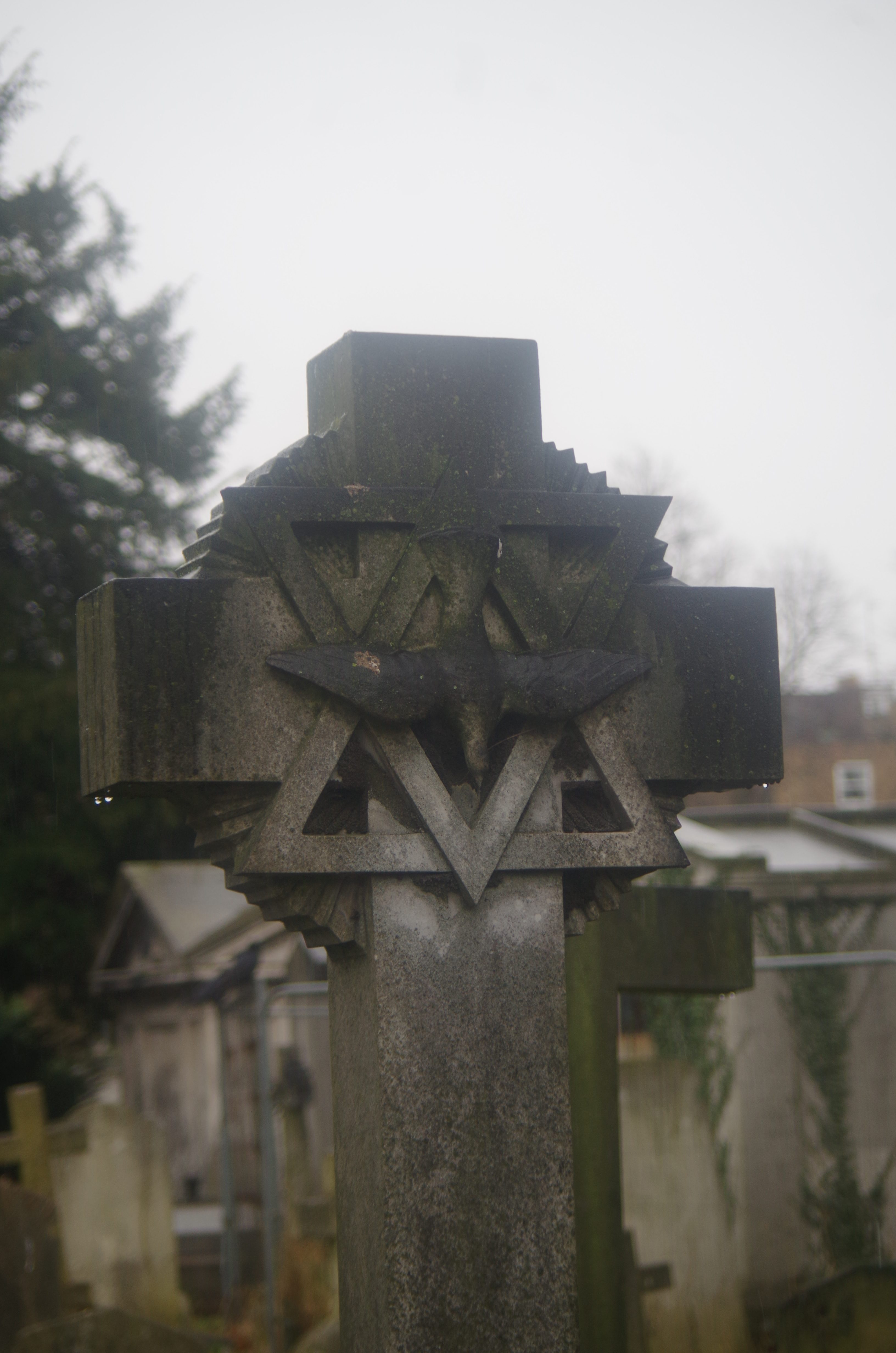
Another view of the 6 pointed star,Brompton Cemetery.
©Carole Tyrrell


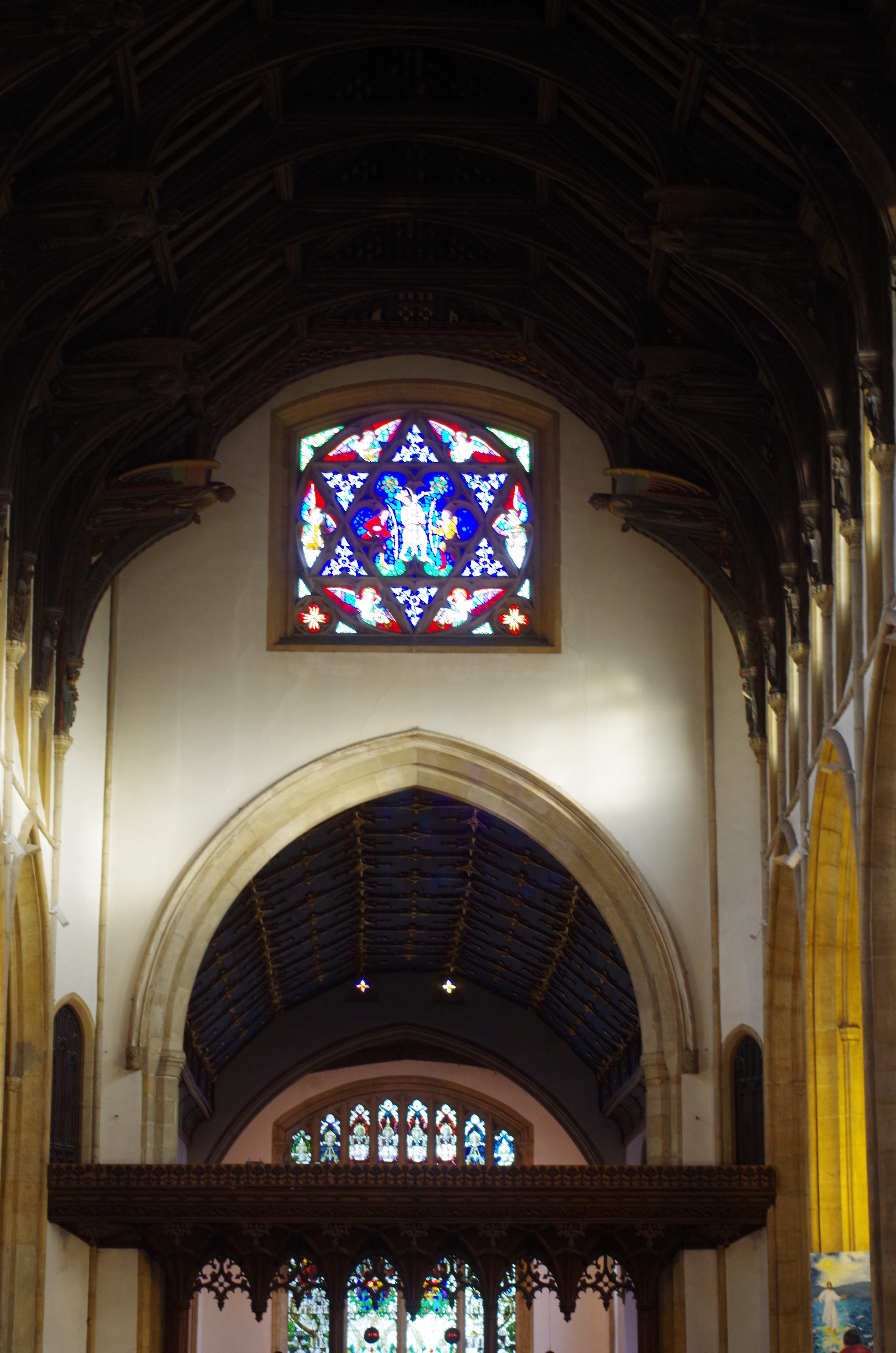
This month’s symbol is one that I’ve always associated with the Jewish faith where it’s known as the Star of David. But when I spotted a prominent example in Brompton Cemetery which isn’t a Jewish Cemetery I wondered why it was on that particular monument.  But on a recent visit to St Mary’s church in Bury St Edmunds I saw a six pointes tar in the East window and read in the guidebook of its significance with Christianity.  The window was part of the 1844 restoration and is based on a  14th century example on the nearby Abbey Gate.

Six pointed star in St Mary’s church, Bury St Edmunds
©Carole Tyrrell

According to St Mary’s guidebook the star is an important Christian symbol as:

‘Jesus was descended from David and is the Messiah for both Jews and Gentiles, the star of David is an important Christian symbol.’

This may account for the apparently Hebrew looking writing in the centre of a six pointed start dating from the 14th century on a window in Winchester cathedral.  Another one in the same building, dating from the same period on a choirstall canopy, was recorded by Pevsner.


6 pointed star from stained glass window in Winchester Cathedral
©https://www.simonarich.com – used without permissionThe six pointed star is a geometric shape and is formed from the intersection of two equilateral triangles.  At the centre of the intersection is a regular hexagon.  In Greek it’s known as a hexagram and in Latin it’s called a sexagram.

In Christianity it’s known as the Creator’s Star or the Star of Creation. The six points are alleged to represent the six days of the Creation and also the six attributes of God. These are:

  • Power
  • Wisdom
  • Majesty
  • Love
  • Mercy
  • Justice

But the six pointed star is a universal symbol.  No-one is quite sure where or when it first appeared bit it’s known and revered throughout both Eastern and Western religions and faiths.  For example, in Buddhism it has been found in the Tibetan Book of the Dead and has been used as decoration on Masonic temples, In Freemasonry the star is seen as a representation of the male and female.  This is also an important element  in Hinduism as the combination of triangles are also seen as motifs of male and female and the star becomes an emblem of Creation and divine union.


There is a darker side to the six pointed star as, in Occultism, the star is a powerful symbol for conjuring up spirits and as a talisman.  In this the star is seen as representing the 4 elements:


  • Fire         –             upwards pointing triangle
  • Air           –             opposite upwards pointing triangle
  • Water     –             downwards pointing triangle
  • Earth      –             opposite triangle pointing downwards


But the Rastafarian faith also uses the Star of David or the Magen David as a central motif. Here it’s coloured either black or appears in the Rastafarian colours of red, green and gold.   This is because the Rastafarians believe that their leader, the late King of Ethiopia, Haile Selassie, was a divine being.  He’s always been considered as being directly related to King Solomon’s father, King David, and therefore to Jesus.  This is based on a visit by the Queen of Sheba to the Israelite king, Solomon, as recorded in the Book of Kings 1 Kings 10 1:13. Rastafarians believe that during the visit they slept together and a child was born.  This child led to a direct line of descendants to Haile Selassie.

Although the Star of David is now seen as almost exclusively Jewish it wasn’t always so.  It is reputed to have originated in ancient Arabic Kabbalistic texts in which it was known as the Seal of Solomon and became the Star of David in the 17th century.   The Jews of Eastern Europe in the 19th century adopted it as a representation of their faith and Hitler used it as a badge to identify Jews during the Second World War. Today it is on the national flag of modern day Israel.

But what does it mean in funerary terms and why is it in this particular monument?   I looked more closely at the first epitaph beneath it.

The epitaph underneath the 6 pointed star – note Thomas Bower died.
©Carole Tyrrell

It was dedicated to a Thomas Henry Bowyer Bower, the son of Captain Thomas Bowyer Bower whose epitaph is lower down. Thomas died young, aged 24, at Port Palmerston, Darwin, Australia. I’m not sure if he’s actually buried there but, perhaps in this context, the star has been placed there as a symbol of the spirit that survives death. Over the centuries people have used the stars to guide their way and I thought that maybe the star was placed here as an eternal light guiding the deceased through the darkness back home again. Note the quotation on the epitaph from Deuteronomy 32.12,

‘The Lord alone shall lead him’

This  may be a reference to the to North or Pole Star which is traditionally associated with Jesus.

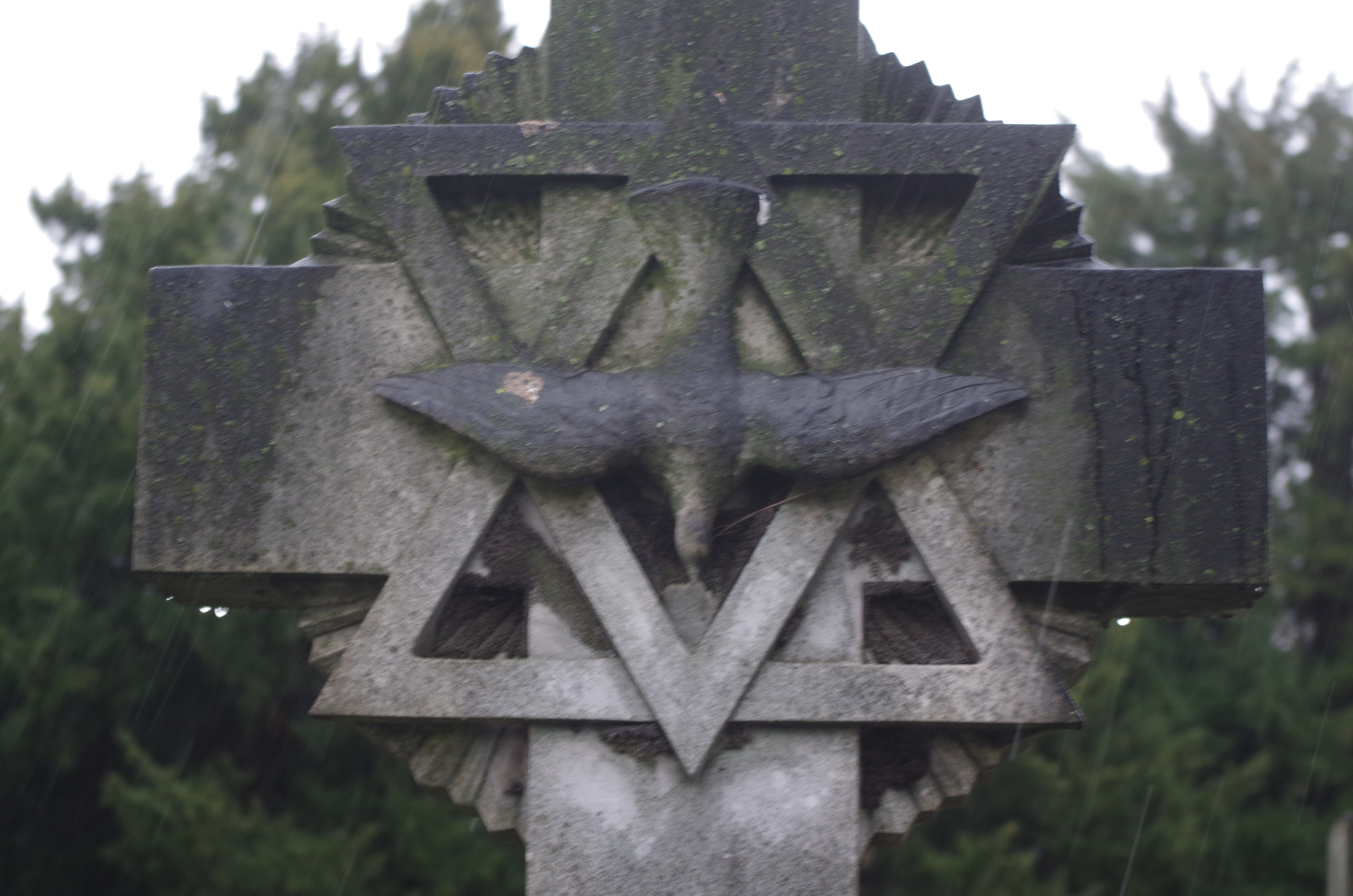
There is a downward pointing dove placed over the star which is a symbol of the Holy Ghost, part of the Holy Trinity: Father, Son and Holy Ghost.

6 pointed star on the Bower monument, Brompton Cemetery
©Carole Tyrrell


In the King James version of the Bible in Luke 3:22 :

‘And the Holy Ghost descended in a bodily shape like a dove upon him, and a voice came from heaven, which said, Thou art my beloved Son; in thee I am well pleased.’

 I wondered if the last words of this biblical verse referred to the father and son relationship.

My own interpretation of the star and the dove is that it may have been a final goodbye from a father to a son who died far from home and wanting him to know how much he was loved.

©Carole Tyrrell text and photos unless otherwise stated.


References and further reading:

www.religionfacts.com/six-point-star

http://www.thecemeteryclub.com/symbols.html

http://www.gmct.com.au

https://stoneletters.com/blog/gravestone-symbols

http://religionfacts/six-point-star

http://star-of-david.blogspot.co.uk/2006/06/rastafarians.html

http://bbc.co.uk/religion/rastafari

http://symbolism.co/dove-symbolism.html

https://en.wikipedia.org/wiki/Holy_Spirit_in_Christianity

http://www.biblegateway.com


Symbol of the Month – The Chalice

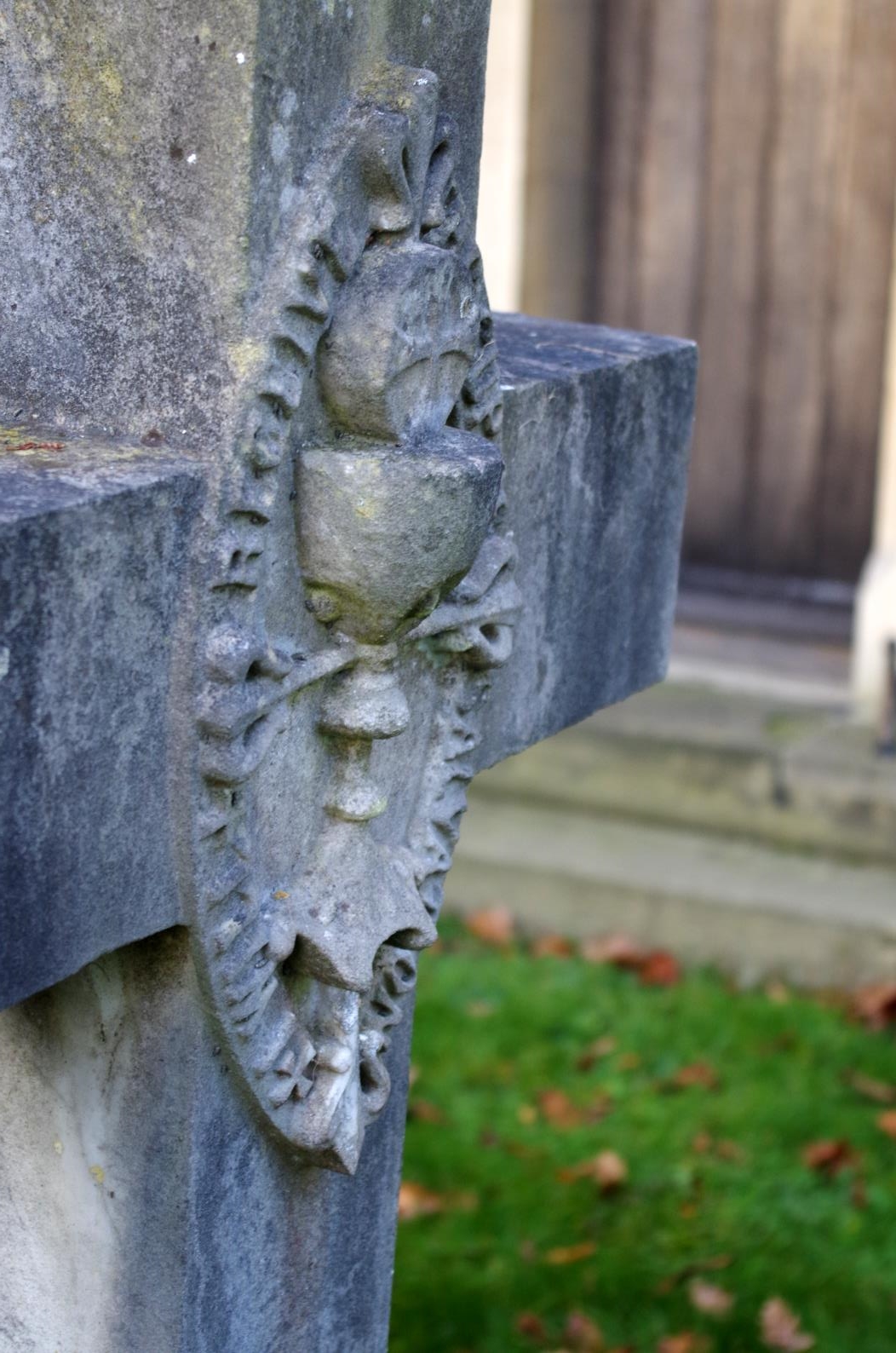
Rev Murray’s chalice – note Communion wafer above it. St Nicholas churchyard, Chislehurst
©Carole Tyrrell

The first symbol of 2018 is the chalice.  It’s traditionally associated with the Church and the Communion and is often found on rectors and priests headstones for obvious reasons.   Almost like having the tools of their trade close at hand so to speak.

I found the fine example above in the churchyard of St Nicholas in Chislehurst.   Note the communion wafer on top of the well sculpted 3D sculpture of the goblet.   This headstone is dedicated to a former rector of the Church, Rev Francis Henry Murray and this little corner is almost an ecclesiastical enclave.  There are three other former Rectors buried here as well as a former Bishop of Singapore and an Archdeacon of Bromley. Rev Murray’s wife is buried alongside him under the grapevine and crown of thorns symbols and behind them is buried their son, Lieutenant  Herbert  Francis Murray  who was lost at sea on 7 September 1870 on the HMS Captain and his monument features a large anchor. There are two gleaming brass wall tablets inside the church dedicated to each of them respectively.

Chalices, goblets or cups – whatever you want to call them –  have been used in religious and other important ceremonies for thousands of years and are also associated with the Last Supper and the Holy Grail.  In Matthew 26:27:

While they were eating, Jesus took bread, and when he had given thanks, he broke it and gave it to his disciples, saying, “Take and eat; this is my body.”

Then he took a cup, and when he had given thanks, he gave it to them, saying, “Drink from it, all of you..”

During the Communion worshippers drink wine from the chalice as a representation of Christ’s blood and then eat the communion wafer

From Salinas, Spain
Shared from wikipedia. Creative Commons

after it has been dipped in the wine as an interpretation of his body.  Chalices are often made from gold or silver, hexagonal in shape and can be decorated with semi-precious stones as with this example from Spain.  It’s very ornate with the inscription ‘Sanguinis meus vere est petus’ . This translates to ;My blood is drink indeed’ from John 6:55.  This was made for the church of John the Baptist, Salinas Spain.


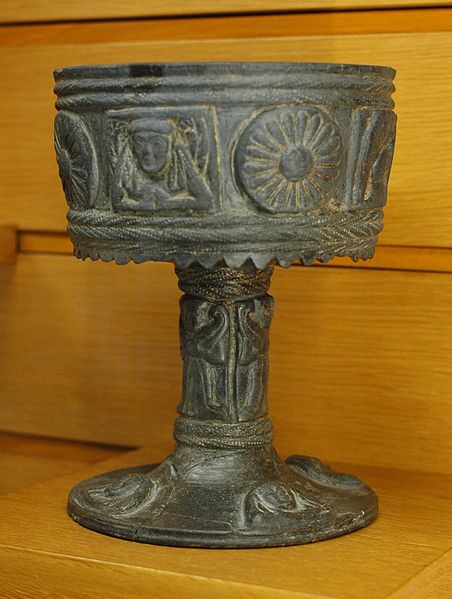
They can also be heavily decorated in other ways as with this one from 6th century Italy.

Etruscan chalice from Bucchero – 6th century BC.
Shared under Wikipedia Creative Commons


In the Sufi faith the chalice takes centre stage as it represents the sharing of blessings such as water and milk and this brings the desert nomad and steppe peoples together.  It also appears within Wicca and Paganism where it represents the Goddess as water is a feminine element.  In some Byzantine and Gothic imagery, the chalice can also be a protective symbol as, anyone holding a chalice is demonstrating that they are God’s servant and they have turned away from evil.

The Holy Grail is traditionally assumed to be the cup that Christ drank from during the Last Supper.  It remains unidentified although many chalices have been suspected as being the Grail.

The chalice can also appear with other symbols such as, for example, a white circle to represent the consecrated Eucharist. Also, a chalice with an X shaped cross on its front is an emblem of one of the disciples, Andrew, and a flaming chalice is the 

The flaming chalice – the symbol of the Unitarians.
Shared from Wikipedia Creative Commonsemblem of the Unitarian movement.

Chalices also feature heavily in heraldry and in some vanitas paintings.  These were still life paintings of the 16th and 17th centuries from Flanders and the Netherlands.  They invited the observer to ponder on the transcience and meaninglessness of earthly life and used symbols to indicate this. In Allegory of the Eucharist by the Flemish painter Alexander Coosemans (1627 – 1689) the chalice is the

Allegory of the Eucharist Aleaxander Coosemans
Shared under Wiki Creative Commons

centrepiece. But the items surrounding it have a deeper meaning.  The cornucopia is a symbol of creation and divine bounty, the wheat stalks and grapes are obviously representations of the Communion wine and bread and the pomegranate and quince are representations of plenty as well as fertility and immortality.

However, there is also a negative to the holiness of the chalice with the phrase ‘the poisoned chalice’.  This where a situation or item appears to be good on the surface and then turns out to be the opposite. Shakespeare refers to this in Macbeth Act 1 Scene VII as Macbeth contemplates the murder of King Duncan:

We still have judgment here, that we but teach

Bloody instructions, which, being taught, return

To plague th’ inventor: this even-handed justice

Commends the ingredients of our poisoned chalice

Seek and ye shall find is an old adage and it can often be applied to looking for symbols in a churchyard or cemetery.  I think I’ve found just one example of one and then they’re everywhere.  And so it was with St Nicholas – I found 4 examples within the churchyard.

Side view of Rev Murray’s chalice, St Nicholas churchyard, Chislehurst
©Carole Tyrrell

This is dedicated to a former rector of the church, Rev Francis Henry Murray (1820-1902). He was an energetic Rector at St Nicholas for over 56 years and wasn’t afraid to push forward church alterations or change styles of worship despite opposition from Diocesan Bishops.  The parishioners were inspired by him to agitate for the establishment of St Katherine’s Rotherhithe.  Rev Charles Fuge Lowder, the first vicar of St Peter’s, London Docks and Rev Murray were great friends as they were both leading members of the Society of the Holy Cross.  This was formed in February 1855 by a group of 6 Anglo-Catholic clergy.  Rev Murray was also responsible for the first publication of the now classic Hymns Ancient and Modern.


Rev Charles Lowder also has a memorial in the churchyard with a chalice portrayed on its other side.  He was another energetic, pioneering priest who devoted 24 years of his life to working with the poor in one of the most deprived dockland areas of East London.  In 1856, aged 36, he founded the St George’s Mission.  This was in response to a request for assistance to the Society of the Holy Cross from the vicar of St George’s in the East.  The Society is still in existence worldwide with a membership of over 1000 priests.  Every year, on the date of his death in 1880 on the 9 September he is commemorated.

A more modest chalice is on the Greatheed monument which is dedicated to Ellen and Stephen Greatheed.  The latter is merely recorded on the epitaph as ‘Priest’ but he wasn’t mentioned on the list of St Nicholas’ rectors inside the church so perhaps he was based at another local church..

This is dedicated to Edward Herbert Fuller  Jenner and he is also recorded on his epitaph as ‘Priest’ but isn’t  listed on the list of previous rectors. Again note the communion wafer above the chalice.

Finally, as I explored St Nicholas’ interior I looked up at the 19th century stained glass windows and there at the bottom of one window were two angels holding a chalice between them. The Holy Grail perhaps?

Detail from Victorian stained glass window of possibly the Holy Grail/ St Nicholas church Chislehurst
©Carole Tyrrell


©Text and photos Carole Tyrrell unless otherwise stated.

References and further reading:

Some graves of interest within the churchyard – St Nicholas Church Chislehurst publication

https://www.ancient-symbols.com/symbols-directory/chalice.html

http://www.lsew.org.uk/funerary-symbolism/

https://symbolsproject.eu/explore/others/objects0/cup-/-chalice.aspx

https://www.reference.com/world-view/chalice-symbolize-f6e394fff39e62f0

https://en.wikipedia.org/wiki/Chalice#Poisoned_chalice

https://en.wikipedia.org/wiki/Alexander_Coosemans

http://www.symbols.com/symbol/flaming-chalice

http://www.catholic-saints.info/catholic-symbols/chalice-christian-symbol.htm

https://www.biblegateway.com/passage/?search=Matthew+26-27&version=NIV

http://nfs.sparknotes.com/macbeth/page_40.html