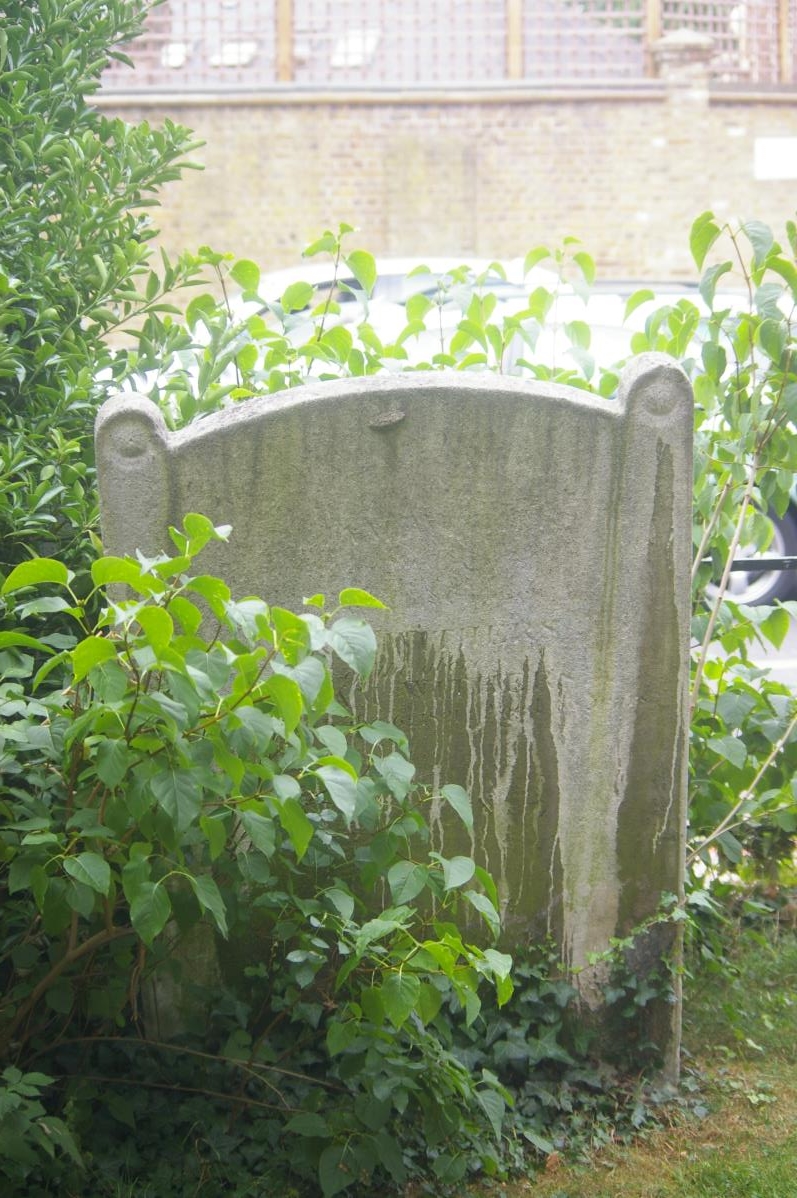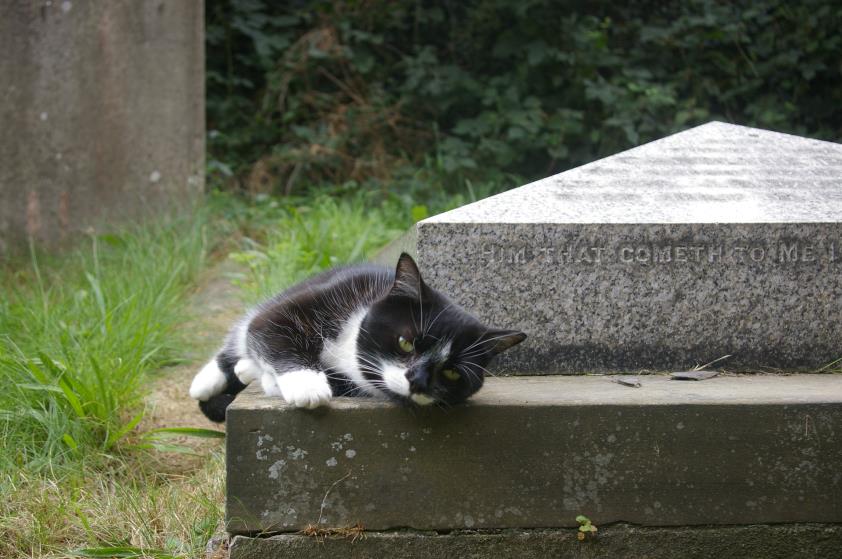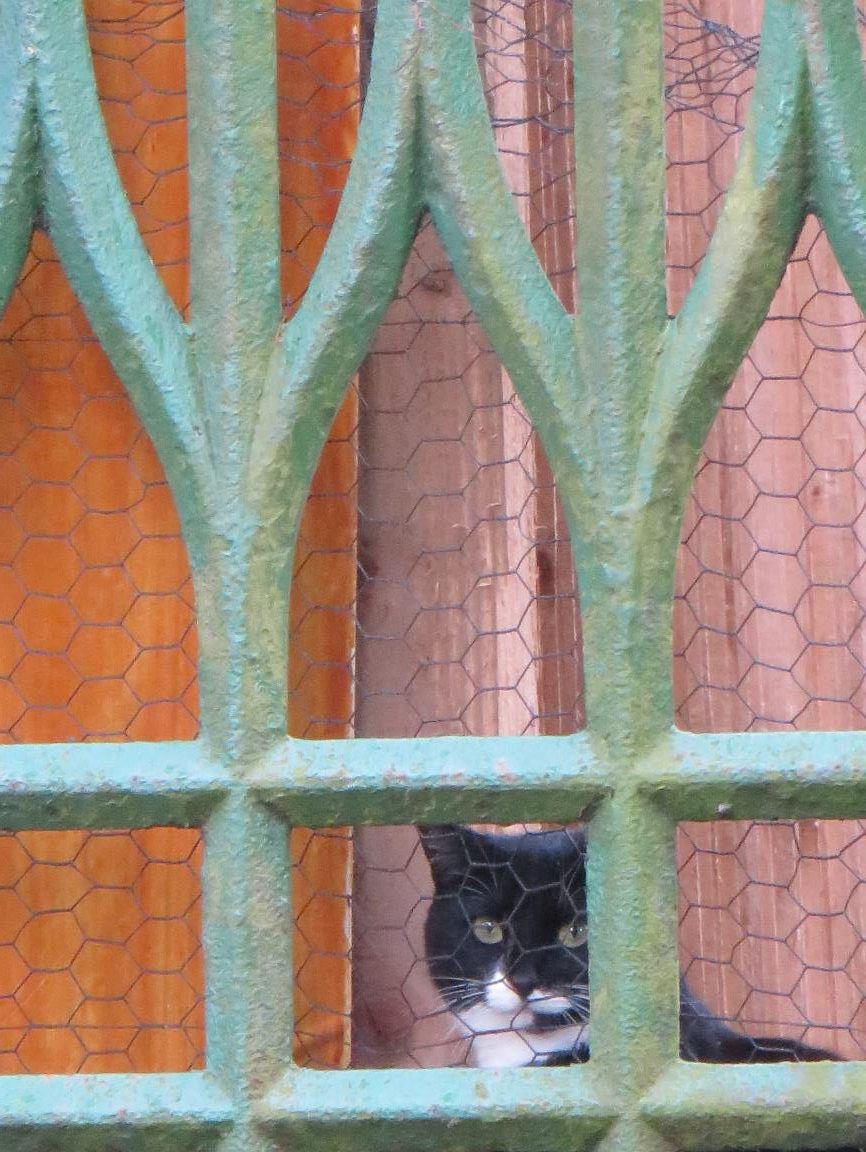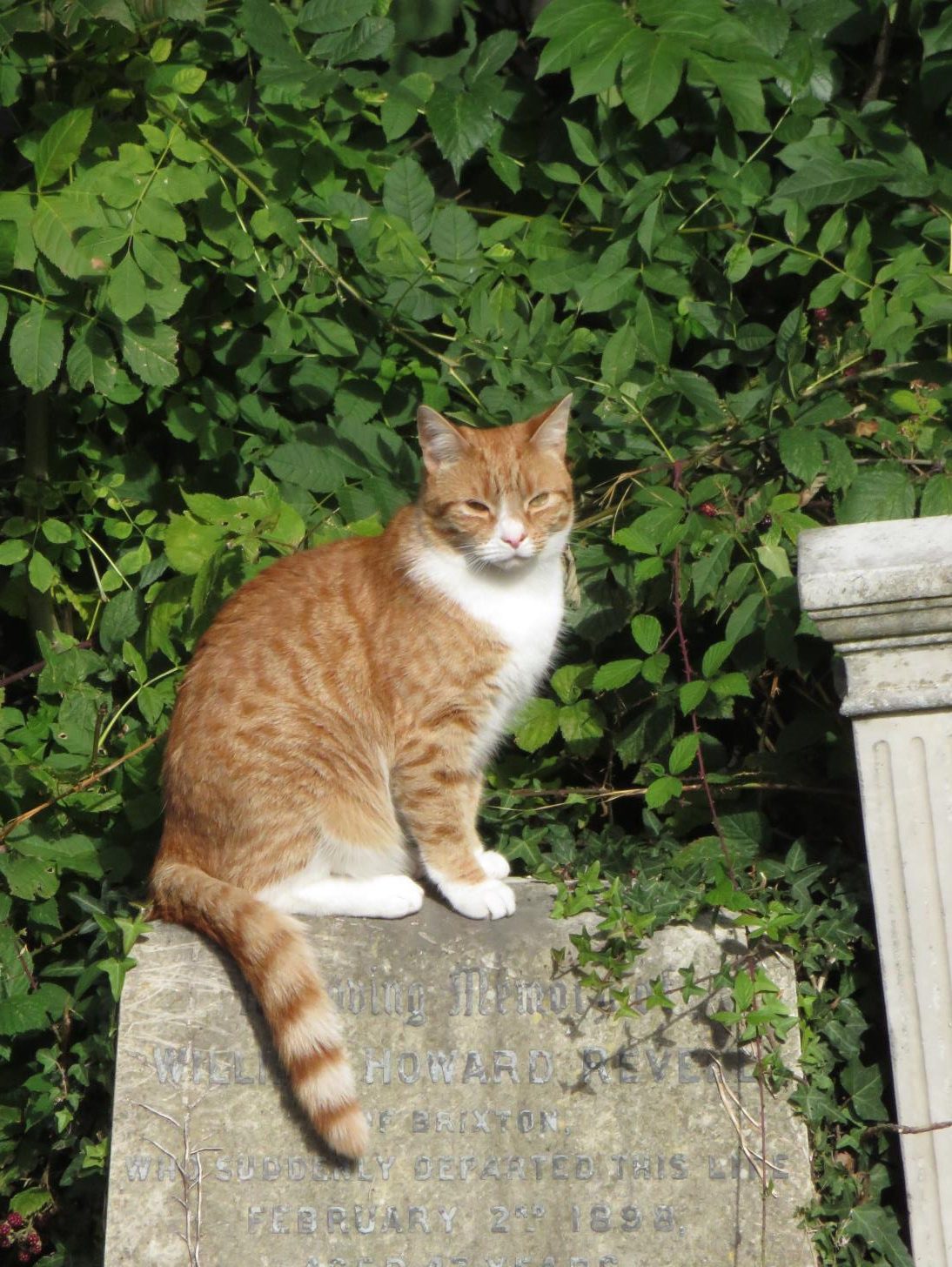
A large, often quiet and deserted, cemetery or graveyard can be irresistible to an inquisitive feline. Once young Tiddles or Baphomet, depending on your taste in names or cat, has exhausted neat suburban back gardens or annoyed the neighbours sufficiently they often like to explore farther afield.
A cemetery can also attract prey such as rodents or birds and so can be a happy hunting ground. And of course it can be unrivalled as a place to hang out and just chill.
At West Norwood and Woodbury Park in Tunbridge Wells, for example, cats have only to climb through an iron railing or over a wall to gain access and the whole marble orchard is their domain.
And, if you know where to find them, the keen photographer can take some wonderful pictures. I belong to a Facebook page called appropriately enough, Cemetery Cats, and features photos of cats roaming and often posing by pensive angels, monuments, crosses, or on monuments or just generally going about their lives. Contributions are from all over the world; the UK, USA, Italy, France and Eastern Europe.
What does a woman clinging to a cross, seemingly for dear life, have in common with the film ‘Merry Christmas Mr Lawrence’ and heavy metal group Def Leppard?
Strangely enough, the connection is an 18th century Protestant hymn written by a fiercely Calvinist minister which has entered the Western cultural consciousness in the same way as ‘Abide With Me’.
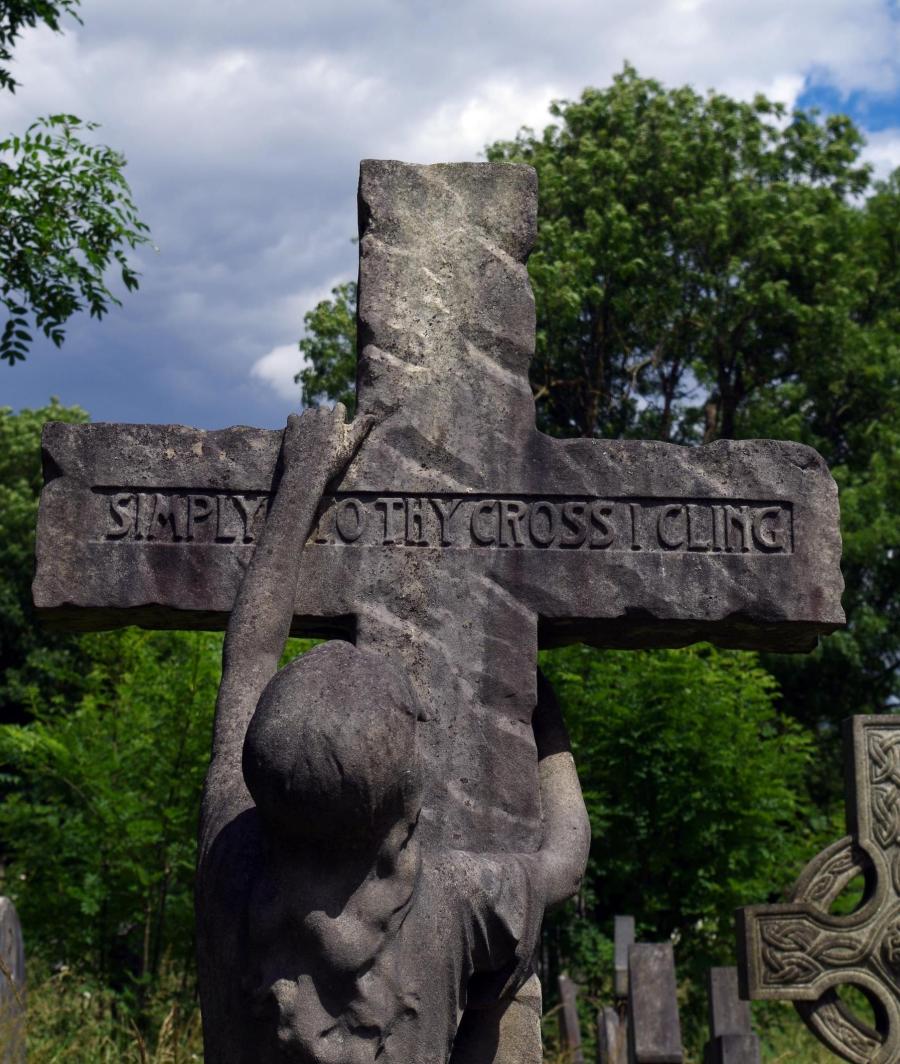
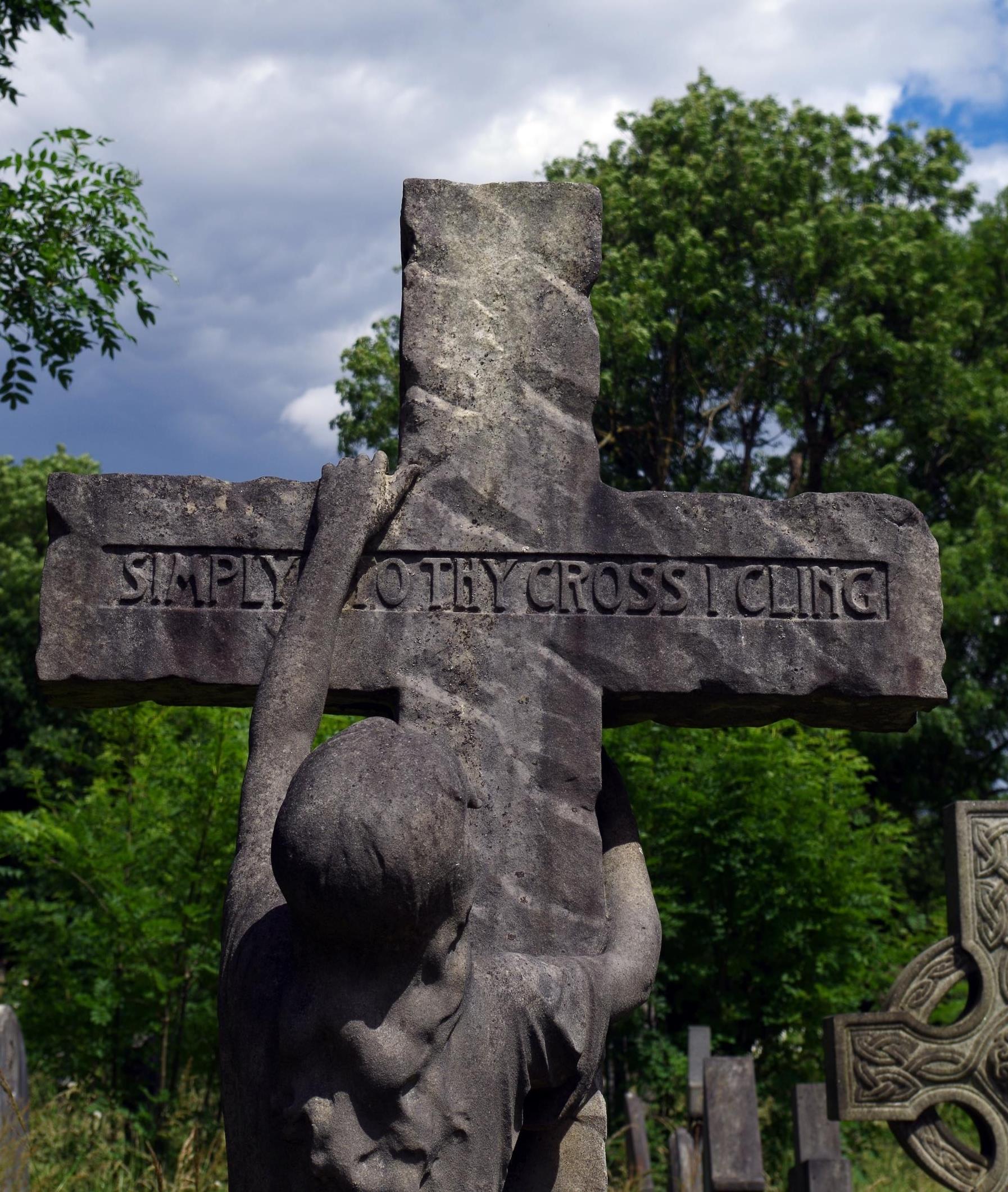
‘Rock of Ages’ is a hymn with an enduring message of hope and ultimate salvation. So no wonder it inspired a potent funerary symbol which is still used today. However, it’s the second line in the third verse, ‘Simply to Thy cross I cling.’ that has proved most inspirational to Victorian monument masons.
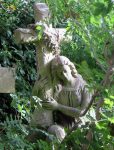
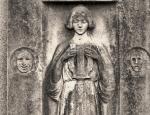
A variant is a pensive young woman leaning on a cross for support as at West Norwood. This cemetery contained several examples and here is a selection:
They’re not angels as they don’t possess wings and angels didn’t begin to appear in Victorian cemeteries until the late 19th century. But they are one of the few cemetery symbols inspired by a popular hymn. It’s also a Protestant motif and was the only way in which a cross would have been permitted in a Victorian cemetery until near the end of the 19th century. This was due to the religious wars that were raging at the time.
When the Victorians created their large municipal cemeteries there was still a fierce Anti-Catholic prejudice within Britain. This dated back to Henry VIII and the Reformation and had resulted in several anti-Catholic laws being passed during the 17th and 18th centuries. But the cry was still ‘No Popery’ in the 19th century and any symbols that were associated with Catholicism weren’t welcome in the new marble orchards. These included crosses, figures of saints and also angels. Instead, there was a return to Classicism using Roman and Greek motifs and architecture. Then, as the 19th century progressed, funerary monuments reflected the tastes of the time. So you could walk through one and see Arts & Crafts, Celtic Revival, Art Nouveau until eventually towards the end angels did being to fly in.
‘Rock of Ages’ was written by a Calvinist minister, the Reverend Augustus Toplady, in 1763 and was first published in a religious magazine, ‘The Gospel’, in 1775. It’s allegedly based on an incident in Toplady’s life. He was a preacher in a village named Blagdon and was travelling along the gorge of Burrington Combe in Somerset’s Mendip Hills when he was caught in a storm. He managed to find shelter in a gap in the gorge and was struck by the name of the crevice that had saved him. It’s still marked as ‘Rock of Ages’ both on the rock itself and maps. He is reputed to have written the hymn’s lyrics on the back of a playing card although one wonders what a minister was doing with a deck of cards. However, no-one’s sure if this incident actually happened or if it’s apocryphal….
Toplady wasn’t a popular man and in an article by Rupert Christensen of the Daily Telegraph he was described as ‘fanatical, in a gross Calvinism and most difficult to deal with.’ John Wesley avoided him. Toplady was also fond of writing bizarre articles, one of which proposed that a spiralling National Debt could never be paid off due to the extent of human sinfulness. Something for the new Chancellor to ponder on I’m sure. Toplady died in 1776 from TB and would undoubtedly have been forgotten were it not for his rousing hymn.
‘Rock of Ages’ caught the popular imagination. Gladstone translated it into Latin and Greek and asked for it to be played at his funeral. Prince Albert reputedly requested it on his deathbed and it has appeared in several feature films. These include ‘Merry Christmas Mr Lawrence’ where it’s sung by David Bowie as Major Jack Celliers and both ‘Paper Moon’ and ‘The Silence of the Lambs’ where it’s played at a funeral. It’s also inspired musicians such as Def Leppard and the writer of the film score for ‘Altered States.’ John Congliano. It’s also the title of the long running musical stage show.
These are its lyrics:
Rock of Ages, cleft for me,
Let me hide myself in Thee;
Let the water and the blood,
From Thy riven side which flowed,
Be of sin the double cure,
Cleanse me from its guilt and power.
Not the labour of my hands
Can fulfill Thy law’s demands;
Could my zeal no respite know,
Could my tears forever flow,
All for sin could not atone;
Thou must save, and Thou alone.
Nothing in my hand I bring,
Simply to Thy cross I cling;
Naked, come to Thee for dress;
Helpless, look to Thee for grace;
Foul, I to the fountain fly;
Wash me, Saviour, or I die!
It was also popular as a print and these are two examples:
This is a particularly effective one dating from 1876 and is by Johannes Adam Simon Oertel. Again from Pinterest.
I found this on Pinterest with no details of artist. The only information was that it dated from 1909.
Both seem to clinging to a cross in a raging sea – a sea of sin perhaps?
The symbol has reappeared in more recent years and there is a much smaller, modern version at Beckenham Cemetery. This is on the grave of a 16 year old who died in 1965.
An inspirational hymn to the Victorians and also well into the 20th Century but what could have the same effect these days? I’ve always fancied a video of Sid Vicious singing ‘/My Way’ on my tombstone…..
The wind thrashed through the small group of ancient oak trees in Mausoleum Field as I stood admiring the view of the surrounding hills. It was a hot, but windy, August day and the gift shop assistant had been enthusiastic about the wonderful vistas. But I felt that on a dark winter’s night it could be very eerie and lonely.
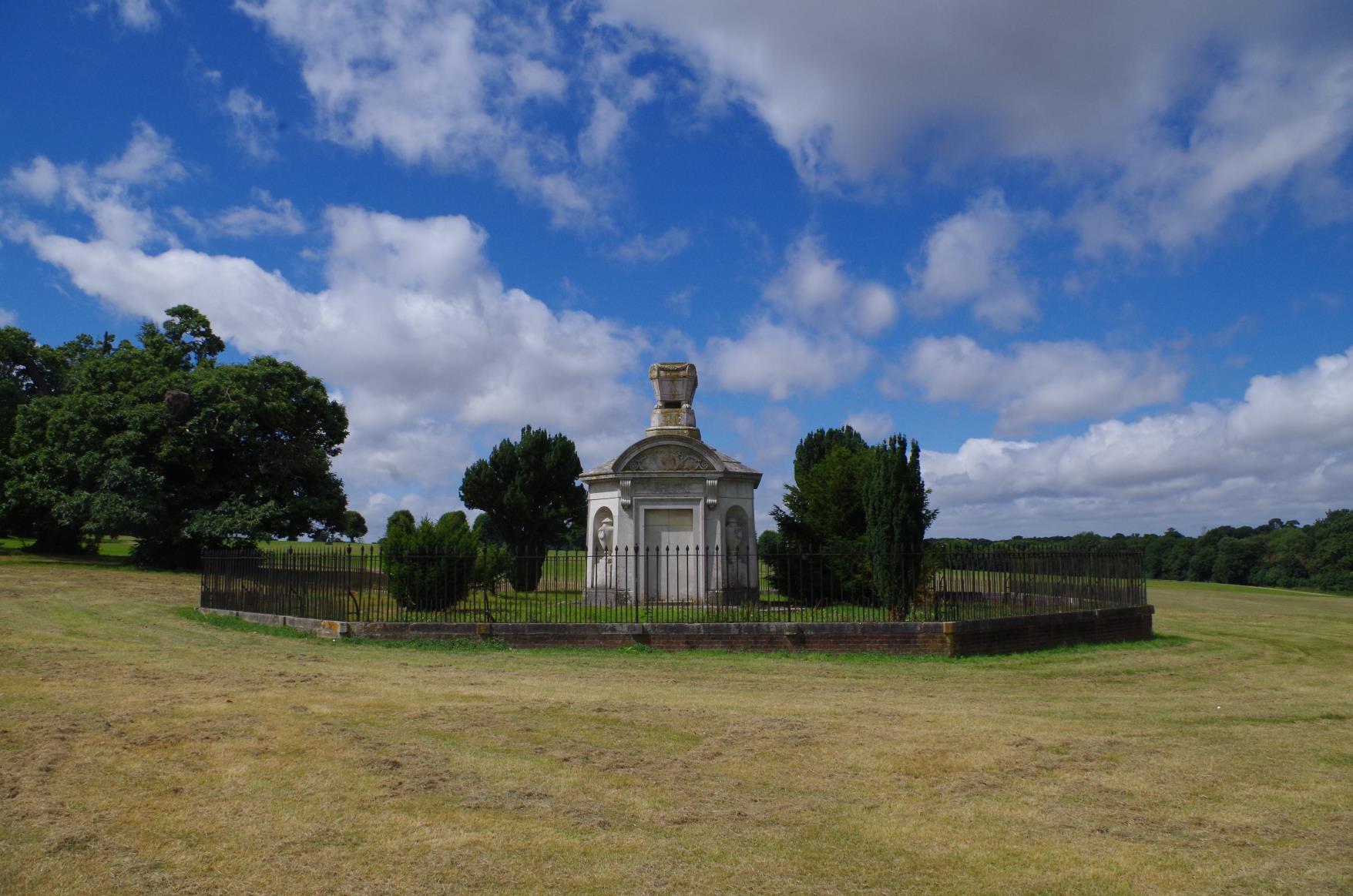
This field contains Elizabeth Bulwer-Lytton’s (1773-1843) mausoleum in which she rests with several other members of the Lytton family. But why is she resting here eternally and not in the Lytton chapel in the nearby church?
Elizabeth was the mother of Edward Bulwer-Lytton, the novelist and she lived at Knebworth from 1811 -1843. She is responsible for the House’s present Gothic style with its myriad of gargoyles, bats, towers and battlements after having had most of the old, ancient House demolished. She inherited it from her father, Richard Warburton-Lytton who lived at Ramsgate and described the estate as ‘the old half-feudal pile. ‘ Or as we would describe it today ‘as having many original features and development potential.’
She lived with Edward, her third and favourite son, until she died and her rooms are still preserved exactly as she left them. Edward had inscribed above the mantelpiece a reminder to future generations to maintain them in her memory. He was very close to Elizabeth but one wonders if he was worried that she might return and haunt him if he didn’t.
Elizabeth had a powerful personality to say the least. She disapproved of Edward’s marriage to Rosina Doyle Wheeler by cutting off his allowance and forcing him into a whole new career as a writer. He was very prolific, as the section of his books in the library attests, and he coined the famous phrases ‘It was a dark and stormy night’ and ‘The pen is mightier than the sword.’ Edward also had a successful political career but found the pressure too much and after two children, his marriage collapsed. Elizabeth’s thoughts on the situation that she had helped create aren’t known but he gained custody of the children after a nasty separation. Rosina then embarked on her own literary career with a thinly veiled account of her marriage and followed this with other works on the theme of the wronged wife. She was buried in an unmarked grave in Croydon which is certainly ‘out of sight, out of mind’ and was forgotten until her great-great-grandson erected a tombstone in her name in 1995.
Elizabeth quarrelled with every rector of St Mary’s about the tithe that the church claimed on all estate produce. As a result, they all ended up preaching to an empty church while she insisted that her staff and tenants attended her own church services in Knebworth’s State Drawing Room. The large Bible at the foot of her bed in her room is the one that she always used and carries her own initials EBBCL – Elizabeth Barbara Bulwer Lytton. As a House tour guide told us, she planted trees around the church to hide it from the House and they’re still there but it was only partially successful. She was also equally determined that she and her family wouldn’t be buried within the Lytton Chapel or the churchyard.
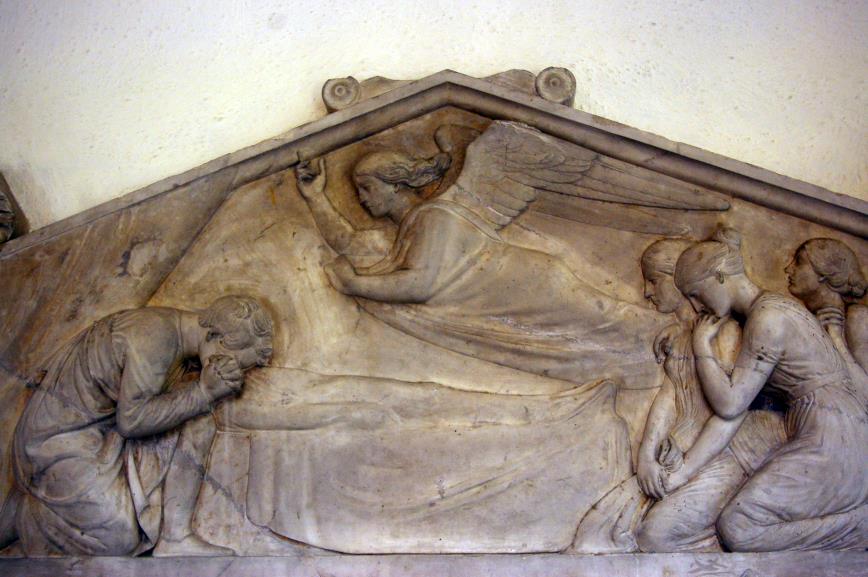
Of course with the compact size of the Chapel and the three 18th century Lytton gentlemen’s monuments which take up most of the space she may have felt that there simply wasn’t room for her. Or at least room for her to be forever remembered in the way that she wanted and so her own large sepulchre was the only way in which she could compete. Four of the five female statues in the Chapel decorate Sir William Lytton’s monument and it does feel like a gentlemen’s club. So Elizabeth had a mausoleum constructed a short distance from the church and in what is appropriately named Mausoleum Field. Although the male incumbents of the Chapel may have life size facsimiles of themselves lolling about in rumpled sheets Elizabeth had gone farther in a game of one-upmanship.
Closer view of epitaph to Robert commemorating his achievements. He is buried elsewhere.
copyright Carole Tyrrell
Another strong-minded Lytton woman who is interred here was Lady Constance Lytton (1869-1923) who was a noted suffragette under an assumed identity and was force-fed on several occasions. The epitaph reads ‘…sacrificed her health and talents in helping to bring victory to this cause.’ The vault was restored in 2004 and has contemporary iron railings around it. There is a sarcophagus on top of it with shell acroteria. However, these always remind me of old-fashioned baths.
But knowing Elizabeth’s determination and desire to have her own way one wonders if she and the other incumbents rest easily together or if they are all locked into an eternal argument……
Everywhere I looked, as I stood in the Lytton Chapel, a well-upholstered, well dressed 18th century gentleman stared impassively back at me. They seemed to jostle for space in the small chapel and, although these past members of the Lytton family, couldn’t take it with them, you certainly knew that they’d had it when they were alive. These were powerful men and there’s plenty of beautifully sculpted marble on show in the Chapel. Nowadays, people would ask an artist or sculptor to make them look slimmer but here the subjects are unashamedly larger than life.
All three of the memorials are in the baroque style which was made fashionable by the Italian sculptor, Bernini. It was a technique that achieved effects in carving such as flesh, hair and textures that were remarkably realistic as well as other pictorial effects that had previously only been attempted in 2D paintings . And yet English Baroque was dismissed as mundane. However the three tombs in the chapel seem anything but that.
Both Pevsner and Simon Jenkins in ‘1000 Best Churches’ mention the Chapel. Indeed the latter describes it as having ‘the best of 17th and 18th century monumental art (is) on parade and ‘three of the Knebworth tombs are among the finest 18th century monuments In England.’ It was originally built in 1520 and then rebuilt 200 years later.
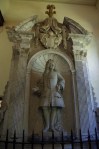
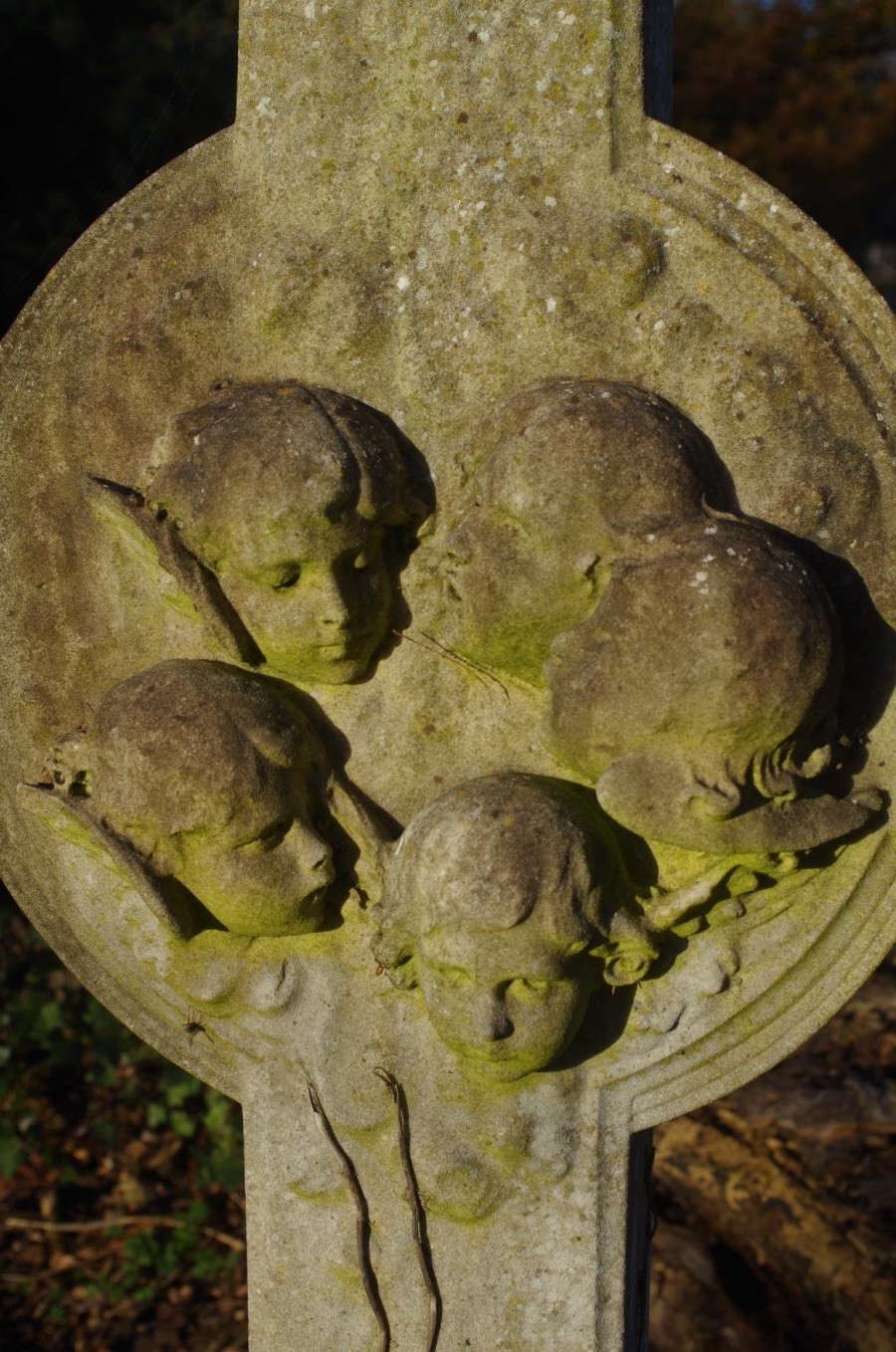
The first one as you enter is Lytton Strode Lytton who stands perfectly posed in his shell niche dressed fashionably in his coat and shoes with some of his coat buttons undone to display the buttoned up waistcoat beneath, Too many power lunches perhaps? He died young at 21 as his epitaph reveals but he looks older with an almost feminine face and full lips. Lytton is guarded on either side by winged cherubs, or Cupids, as Historic England describes them.. One is copiously weeping and the other is in prayer and the whole memorial has been attributed to Thomas Green of Camberwell.here is a helpful English translation of the Latin epitaph:
‘Here lies Lytton Strode Lytton Esq., sole son and heir of Sir George Strode (of Etchinham in the County of Sussex_ and also heir of Sir William Lytton of this parish, his great-uncle. He married Bridget Mostyn, the eldest daughter of Richard Mostyn, Eds., of Pembedwinthe county of Flint. He died without issue at the age of 21 in 1710. He left the ancient patrimony of the Lytton family to his dearly beloved relative William Robinson, who erected this monument at his own expense as a pledge of his own affection.’
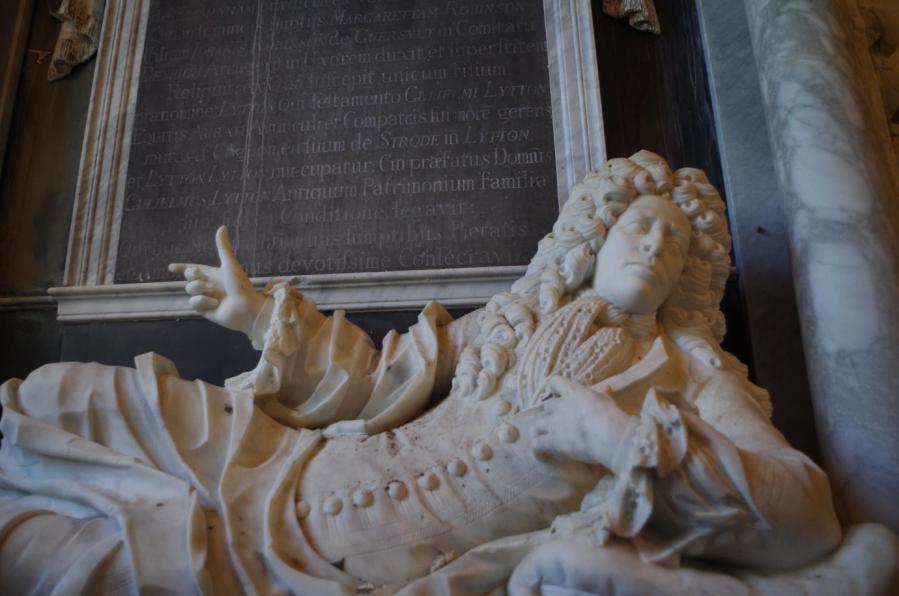
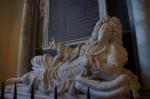
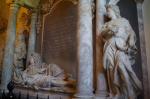
Then you turn and are almost crowded out by the other two: Sir William Lytton to the left and Sir George Strode on your right. Their heads are both inclined towards Lytton Lytton as they lie semi-recumbent on marble beds, sheets rumpled and you almost feel as if you’ve disturbed them in conversation. Sir George Strode was Lytton’s father and Sir William was his maternal great-uncle so it’s not surprising that they both look to their cherished heir and once the bearer of the Lytton dynasty hopes.
Both of these memorials are credited to Edward Stanton. (1681-1718). He was a very successful mason who carved 40 monuments between 1699-1718 and in 1720 became a mason to Westminster Abbey where he remained until his death. Stanton was married 3 times and one wondered where he found the energy. He has his name prominently displayed at the base of one of the pillars on Sir William Lytton’s huge monument.
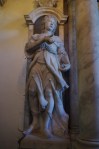
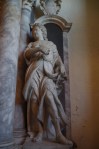
The carving on Sir William’s cravat, cuffs and wig as well as the delicate lacing of the Grecian style boots on two life size allegorical female figures or Virtues on either side of him is beautifully detailed. However, his opposite neighbour, Sir George Strode, has a wig that reminds me of waves of whipped cream. Both men face each other and lie in the fashion of old style glamorous Hollywood stars with their rumpled marble sheets and supporting cushions. But, perhaps in a feat of one-upmanship, William’s shrine is bigger than George’s as it’s laden down with figures and decoration such as the two Virtues dressed in flowing robes and showing a fair bit of leg. There are also 3 winged cherubs heads under the cartouche decorated roof with swags of fruit and flowers. But if you look up still further there are two small female figures, possibly children, perched on top of the roof and one appears to be playing an accordion. The English translation of the Latin epitaph is:
‘Here lies Sir William Lytton, Knight, son and heir of Sir Rowland Lytton, Knight of the ancient family of the Lyttons de Lytton in the County of Derby (which has flourished happily in this neighbourhood since the time of King VII) in the direct line of descent. He married first Mary the daughter of Sir John Harrison of Balls in the county of Hertford, then Philippa the daughter of Sir John Keyling of Southill in the county of Bedford; he died without issue, his second wife surviving him. 14th Jan AD 1704-5’
By contrast, his neighbour, Sir George Strode, Lytton Lytton’s father, is far more restrained as there wouldn’t have been enough room in the chapel for another tomb as large as William’s. George appears to be in mid-conversation with his hands making a gesture and one thumb indicating the epitaph above him. This translates in English as:
‘Sacred to the memory of Sir George Strode of the ancient family of the Strodes, the eldest son of Sir Nicholas Strode of Etchinham in the county of Sussex, and his wife Judithe the oldest daughter of Sir Rowland Lytton of Knebworth in the county of Hertfordshire, who piously and peacefully fell asleep in the Lord on the 9th of June, 1707, whose remains repose at his own wish in the Church at Etchinham aforesaid, who married Margaret Robinson (the daughter of John Robinson Esq., of Geursylt in the county of Denbigh). She survived him and from this union was born one son with the Christian name of Lytton, who by the will of Sir William Lytton his maternal great-uncle changed his family name from Strode to Lytton, and this became styled Lytton Lytton to whom the aforesaid Sir William Lytton bequeathed the ancient patrimony of his family. He has dedicated this monument at his own expense as a tribute of piety and affection.’
The motto underneath George’s figure reads:
‘Life is the gateway to death, and death in turn the gate of a new life and learn to die to the world, and live for God.’
Comforting words for a man who lost his only son at an early age.
And so I left them, perhaps in an eternal interrupted, silent conversation, after marvelling at the skill of the mason’s work. They are all behind iron railings, presumably to stop visitors touching them, but I also felt that the figures were so realistic that it might also be to stop them coming to life and lunging at sightseers.
Most people associate Knebworth with huge rock concerts and as a Gothic backdrop to many well-known films including The King’s Speech.
But it has other claims to fame apart from gargoyles and lovely gardens. It also has a wonderful mausoleum in its own field and the Lytton Chapel which, according to Pevsner and Simon Jenkins, has the finest 18th century memorials in England.
The Knebworth church is officially known as St Mary’s although it’s actually dedicated to the Virgin Mary and St Thomas of Canterbury or Thomas a Becket. It sits facing the House with its own small graveyard and surrounded by trees and railings. This is where many of the past owners of Knebworth are buried and you enter under a lovely lychgate. But why is it there?
St Mary’s was originally part of the medieval village of Knebworth and was first recorded in the Domesday Book. But when the village was moved after the creation of Knebworth Park in the late 1300’s , St Mary’s stayed in its place. It’s a church steeped in history and an architectural jigsaw as so much of it comes from different periods. The nave and chancel, for example, date from 1120 AD. When you first enter, the interior appears very plain but St Mary’s real glory is the Lytton Chapel in a side room near the altar.
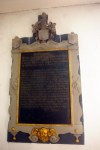
However, amongst its impressive marble monuments was a memorial tablet mounted on a side wall, to the left as I entered.
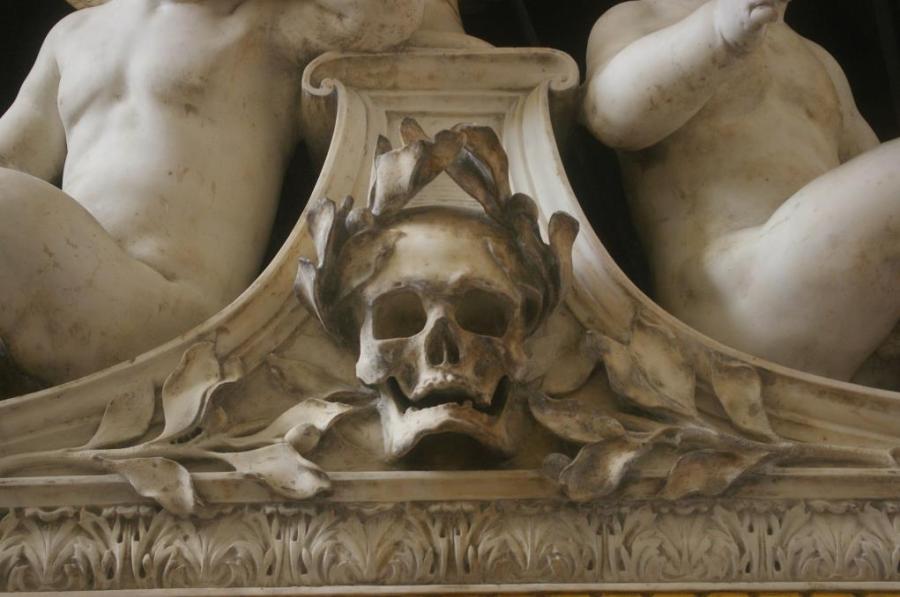
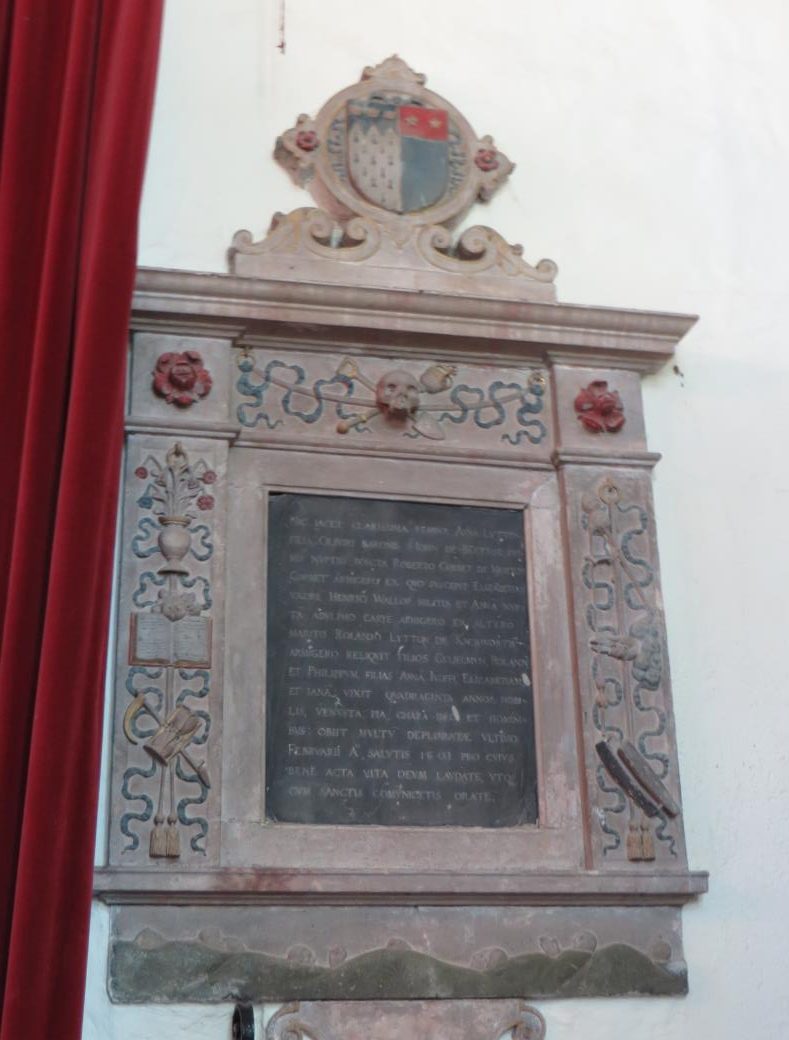
This is dedicated to a woman who died on the last day of February 1601, Anne St John, and for anyone fascinated by iconography it has a rich display of symbols. She was the wife of Sir Rowland Lytton who was her second husband. Sir Rowland’s memorial slab is on the church’s floor and he died in 1674 at 59. Anne died comparatively young at 40 and I wondered if this is why there are so many references to death on her tablet. The motifs on Anne’s memorial are beautifully carved and delicately coloured. It’s a wonderful example of a memento mori. According to J C Cooper:
‘This was an image or item that urged people to remember their death. It was a reminder that death was an unavoidable part of life and to be prepared at all times.’
Memento Mori is a Latin phrase which translates as: ‘Remember you must die’ and often expressed in art through symbols as in this memorial.
The epitaph is in Latin but, helpfully, there is an English translation provided. It reads:
‘Here lies the most illustrious Lady Anne Lytton, daughter of Oliver, Lord St John who had previously married Robert C – of Morton C—— Esquire, by whom she had two daughters, Elizabeth, who married Sir Henry Walop, and Anne, who married Adolphus Carye, Esqre, by her second husband, Rowland Lytton, Esqre of Knebworth, she had 3 sons, William, Rowland and Philip, and four daughters, Anne, Judith, Elisabeth and Jane. She lived 40 years, a noble, handsome and pious lady, beloved alike by God and men. She died, greatly d—– on the last day of February 1601 for the fulfilment of whose noble life give praise to God, and pray that you may be in communion with her among the blessed ones.’
NB: The gaps are where my camera decided to play up and rendered the words unreadable.
This was my favourite memorial in the Lytton Chapel because of its modest size and unusual iconography. I apologise for the quality of the photos – the light levels are low in the Chapel and I didn’t have much time.
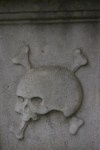
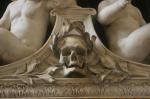
It’s no accident that the skull takes centre stage, as it, Death. is the ultimate conqueror of life. There is no escape and one recalls Hamlet and Yorick’s skull. The crossed mace and spade beneath it are representations of both high and humble stations in life. The mace is a representation of absolute power whereas the spade indicates a labourer. This demonstrates that it doesn’t matter what your status was in life as Death makes us all equal.
Vase of broken or drooping flowers: According to Howgate, this signifies ‘the brief transience oflifebefore death intervenes, even in the first flowering of youth.’ I have discussed in a previous post the significance of roses in funerary iconography and broken rose blossoms also indicate a life cut short as the flower never blooms. But flowers are a representation of the brevity of life. Beneath is a Bible which is open at Daniel, chapter 10 which refers to Daniel going through 3 weeks of mourning. At the bottom of the panel is an Hourglass. This has been discussed in a previous post but it means that the ‘sands of time’ have run out. J C Cooper describes it as indicating
‘Time is passing quickly…everyday comes closer to the hour of their death, Life and Death is the attribute of the Grim Reaper, Death and Father Time.
When the Grim Reaper or Death is depicted as a skeleton he is often holding an hourglass and a scythe which is the next symbol. This is one of the most potent symbols of Death as the Grim Reaper is always depicted as holding one. He cuts down lives like cutting down crops or grass. Cooper adds:
‘…also symbolises the harvest which, in turn, implies death, rebirth, destructive and creative powers of the Great Mother.’
However, Keister says: ‘…form of a scythe is a union of the masculine, upright and cutting with feminine as curved and reaping.
At the top is a spindle on which is wound the thread of life. Beneath it, the Hand of God or, as one commentator has suggested, the Hand of Fate, emerges from a cloud with a fearsome pair of shears to cut the thread and indicate that life is at an end. He is in charge of making that decision. Underneath is an empty coffin with the lid slightly ajar awaiting its next incumbent.
Due to time constraints I didn’t look at the bottom of the memorial in detail. But Howgate reveals that it is an ‘image of the resurrection of the dead on the day of judgement.’ He goes onto to say that ‘The lumpy looking resurrected dead, some with hands joined in prayer, appear to be gasping for breath as they emerge with difficulty from the earth.’ Although this isn’t a very good photo I can see one person with their hands in prayer at least and I have to admit that when I saw the panel, it didn’t register as an image of people. A return visit to have a closer look is undoubtedly in the offing.
Two of Anne’s 4 daughters, Judith and Anne, are commemorated nearby in the church with floor memorials. They both lived to ripe old ages.
I am indebted to Revd Jim Pye who very kindly emailed me an informative article based on a talk given in 2008 by Michael E Howgate on the St John Memorial and the contentious panel on William Robinson Lytton Strode’s monument. My grateful thanks to him and to the 2 very helpful volunteers who were on duty in St Mary’s on my visit.
NB: Due to malicious thefts St Mary’s is only open during services and on Sundays 2-4pm during July and August – check the St Marys or Knebworth House websites for info in 2017.
View of the Stearns mausoleum – note stepped roof and water spouts. copyright Carole Tyrrell
This is the last of the trio and, in contrast to the ones in West Norwood, wasn’t designed by Harold Peto. He had left Peto and Geoge by then and it has been suggested that the building was actually designed by an anonymous assistant who worked from previously rejected designs. It’s very different from the other two, both in style and decoration. It was built in 1901 to house the coffin of Mrs Laura Stearns. She died in 1900 and came from Twickenham. William Chillingworth, her father, is buried next to her in his own vault.
View of mausoleum with Mrs Stearns father, William Chillingworth’s sepulchre visible to the left.
copyright Carole Tyrrell
Radnor House Twickenham – owned by Mrs Laura Stearns and her father. Demolished in 1940 after being hit by a bomb.
He was a wine merchant and they owned Radnor House in Twickenham. It was known as Pope’s House as it was built on the site of Alexander Pope’s original house. It no longer exists as it was demolished in 1940 after being hit by a bomb. There seems to be no mention of a Mr Stearns. In the 1930’s Mrs Stearns’ coffin was removed from the mausoleum by her relatives and interred behind it.
The interior was never finished which is why it is so plain. However, 20 years later, an anonymous builder glazed it with bland tiles. There are two simple, unadorned stone coffin shelves set into each of the side walls. A trefoil shaped window on the back wall lets light in as the side windows are blocked up.
Trefoil window at the back of the mausoleum – the grille is a modern addition.
copyright Carole Tyrrell
Side windows of the mausoleum with relief and stylised Romanesque detailing.
copyright Carole Tyrrell
One of the side window columns with patterning.
copyright Carole Tyrrell
The mausoleum is decorated in the Romanesque style. This is an architectural style of medieval Europe which possibly dates from the 10th century and was characterised by the use of semi-circular arches. It was used extensively throughout Europe and in Britain is referred to as Norman Architecture. The word ‘Romanesque’ originally means descended from Roman and most surviving examples are on churches.
One of the 4 columns on either side of the entrance featuring stylised flowers and leaves.
copyright Carole Tyrrell
This is the other two columns which feature stylised birds, flowers and fruits in a quasi medieval style.
copyright Carole Tyrrell
The front view with stylised flowers and leaves and classic Romanesque semi circular arches.
copyright Carole Tyrrell
It is also characterised by its use of columns and, on the Stearns vault, we can see that the two small ones on either side of the entrance are carved with birds etc in a medieval style. The carvings are very tactile and I can never walk past within wanting to touch them. The side window columns are also patterned but not as beautifully as the entrance ones. Romanesque was also a highly decorative style as can be seen from the arched bands of stylised leaves over the entrance.
Close-up of Romanesque semi arch over entrance with stylised leaves. copyright Carole Tyrrell
The 19th century saw a Revival of Romanesque although it was decried by some writers as ‘barbaric ornament.’ The Natural History Museum in London is highly decorated in Romanesque Revival style and is well worth seeing.
It’s the only surviving mausoleum within Nunhead Cemetery and, although a tree tried to grow through it while the cemetery was abandoned, it’s still in good condition. When I first visited Nunhead in 1989, it was rumoured that the only person who now rested within the mausoleum was a passing tramp. It now has a wrought iron gate to protect it.
References:
Nunhead Cemetery, An Illustrated Guide by The Friends of Nunhead Cemetery . 1988, FONC Publications, London
The terracotta trio are all so different and unique and all three are Grade Ii listed and although, in comparison to other mausoleums such as Highgate’s Beer vault and Hannah Portnoy’s vast Egyptian Revival sepulchre in Brompton, they are relatively modest. However, I feel that they deserve their own special place in 19th century English funerary architecture..
Path sign in West Norwood named after the Doulton mausoleum. copyright Carole Tyrrell
Doulton – note cross on roof and relief lettering on front. copyright Carole Tyrrell
It’s easy to find the Doulton mausoleum in West Norwood Cemetery – just look for the Doulton Path sign and you’ll soon come to its lovely wrought iron doorway.
This is the second of the Doulton mausolea and, although similar in shape to the Tate Mausoleum, the external and interior decoration and style are very different.
Sir Henry Doulton (1820 – 1897) commissioned this mausoleum after the death of his wife, Sarah, in 1888 and it was built in 1889. He entered the family firm of Doultons in 1835, enlarged its range of wares and took it over completely on his father’s death. In fact it was Sir Henry who invented the weather resistant type of terracotta used on all three vaults and he was knighted in 1887.
Sir Henry asked Harold Peto to design a similar building to the Tate mausoleum on a nearby plot and they are within walking distance of each other. Sir Henry’s son, Henry Lewis Doulton, followed him into the business and is also interred in the mausoleum. There is a memorial tablet to both Sarah and Sir Henry on the interior back wall of the building.
The sepulchre’s exterior is covered in relief ornamentation. This includes small busts of angels on either side of the entrance door, the Lamb of God on the back of the roof and Gothic revival medieval style heads along the roof border below it. Sir Henry ordered green glass for the windows on either side which are protected by wrought iron grilles and as, no expense was spared, the rear window is glazed with rippled Venetian glass.
Doulton – one of a pair of angels busts on either side of the entrance door.
copyright Carole Tyrrell
Doulton – damaged relief of angels over entrance.
copyright Carole Tyrrell
Doulton – damaged relief panel on back roof but Lamb of God is still visible.
copyright Carole Tyrrell
Doulton – back view with Venetian glass window and the relief of the Lamb of God on roof.
copyright Carole Tyrrell
Doulton – relief lettering on front which is a Biblical quote from the Book of Job 12.22.
copyright Carole Tyrrell
Doulton – close-up view of green glass windows on side of mausoleum. They resemble church windows.
copyright Carole Tyrrell
The external decoration has been credited to Mark Marshall who was Doulton’s chief artist but I have also seen George Tinsworth also mentioned which even I’ve heard of as he was one of Doulton’s most renowned artists. I am indebted to Jeane Trend-Hill for the lovely photos of the stunning marble interior and mosaic ceiling. The mausoleum is not open to the public.
A Doulton descendant still comes and mows the grass around the mausoleum every Sunday and so it always looks at its best.
Doulton – side view showing green glass side windows and grilles.
copyright Carole Tyrrell
Doulton – front view – note relief s of angels blowing trumpets on either side of the entrance.
copyright Carole Tyrrell
Both of the West Norwood mausolea were restored in 2002 and so are in very good condition. The architect, Harold Peto, is said to have also been responsible for the extensive use of terracotta in buildings along Pont Street in Mayfair.
View of the Tate Mausoleum – note the patterning of the contrasting colours.
copyright Carole Tyrrell
Doulton – note cross on roof and relief lettering on front.
copyright Carole Tyrrell
View of mausoleum with Mrs Stearns father, William Chillingworth’s sepulchre visible to the left.
copyright Carole Tyrrell
My first encounter with the Doulton mausolea was seeing the charming Stearns mausoleum in Nunhead Cemetery. I fell in love with its dainty proportions and beautiful Romanesque decoration. When I first saw it in 1989, its coffin shelves were empty, the entrance was open and it was rumoured to be the preferred hotel of choice for any passing vagrants.
But first, a brief history of mausoleums. The word comes from the Mausoleum of Halicarnassus which was near the modern day city of Bodrum in Turkey. It was the 140ft high, highly decorated, last resting place of King Mausolea who was the Persian Satrap or Governor of Caria. It was created by his wife, Queen Artemesia Ii of Caria after he died in 353 BC and it was one of the Seven Wonders of the World.
Mausoleums were very popular with the Romans and were usually created for deceased leaders and other important people. The via Appia Antica near Rome contains the ruins of many private mausolea but the coming of Christianity made them fall out of favour.
A mausoleum is literally a house of the dead and usually contains a burial chamber either above ground or with a burial vault below the structure. This can contain the body or bodies. However, some mausolea contain coffin shelves above ground as with the Kilmorey Mausoleum near Richmond where the coffins are still in situ. One of the most famous mausoleums is the Taj Mahal in India.
The three Doulton mausolea are all made of red brick with terracotta facing. It’s a surprisingly durable material and is a very warm colour. Indeed it almost seem to glow when the sun shines on it. As the name implies, they were all built by the famous firm of Doulton & Co – now Royal Doulton – who had a factory at Vauxhall. They made many ceramic items including stoneware and salt glaze sewer pipes and are still in existence today. The firm and especially Sir Henry Doulton pioneered the use for terracotta and provided unlimited amounts of it to the mausolea builders.
Mortal Remains; The History and Present State of The Victorian and Edwardian Cemetery, Chris Brooks, 1989, Wheaton Publishers
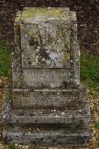
Here lies Mr Cube copyright Carole Tyrrell
Part 1 – The Tate Mausoleum – West Norwood
This is the first of the three and was commissioned t in 1884. It was designed by Harold Peto of the firm of Peto and George and Doulton craftsmen worked on it. It’s in the Perpendicular style which was the last breath of English Gothic from late 14th – mid 16th century and is characterised by its use of vertical lines. The patterning on the terracotta surface resembles that of a jigsaw especially with the contrasting bands of red and buff colours.
There is some lovely ornamentation including 2 angels in relief blowing trumpets in the upper corners of the door frame – one on either side.
Tate Mausoleum – note the reliefs of angels blowing trumpets on either side of the door frame. copyright Carole Tyrrell
It also has the famous quote from the Song of Solomon on one side of the door:
‘Until the day dawns and the shadows flee away’
Tate Mausoleum – note the famous quote from the Song of Solomon in relief. copyright Carole Tyrrell
This is where I first saw it and it was the inspiration for the name of this blog.
The interior, which I haven’t yet seen, is reputed to have a vaulted ceiling with the design of an angel at Sir Henry’s request.
Sir Henry Tate (1819 – 1899) was originally from Lancashire and worked in the Liverpool sugar trade. He soon amassed a huge fortune and invented the sugar cube.
In fact he was known as ‘Mr Cube.’ Sir Henry was an avid art collector and, in 1897, donated his entire art collection the nation. He gave it to what was then known as The National Gallery of British Art before becoming The Tate Gallery and now finally as Tate Britain. It was built on the former site of Millbank Prison. Two of Tate Britain’s most popular paintings; Millais’ ‘Ophelia’ and Waterhouse’s ‘The Lady of Shalott’ came from Sir Henry’s collection.
He refused a knighthood on several occasions and only finally accepted it after being informed that the Royal Family would be offended if he refused again.
In 2012, as part of an art trail in West Norwood Cemetery in 2012, a Belfast based artist, Brendon Jamiston recreated a mini version of Mr Cube’s last resting place from 5,117 sugar cubes in homage to Sir Henry and his invention. It was displayed next to the real thing and I feel that Sir Henry would have approved.
The Gordon monument butterfly motif in all its glory. Kensal Green Cemetery. copyright Carole Tyrrell
Cemeteries and graveyards can be happy hunting grounds for butterflies. But not just the bright, dancing summer jewels, borne on the breeze, but also the much rarer kind which perches in them for eternity.
So far I’ve only discovered two of this particular species which were both in London. One was in Brompton and the other was in Kensal Green. But I have also seen others online in American cemeteries.
But I’m surprised that the butterfly symbol isn’t more widely used as it is a deep and powerful motif of resurrection and reincarnation. It has fluttered through many cultures which include Ancient Egypt, Greece and Mexico.
Gold disc found at Myceanae near Greece – possibly dating from 1350 BC
In classical myth, Psyche, which translates as ‘soul’, is represented in the form of a butterfly or as a young woman with butterfly wings. She’s also linked with Eros the Greek God of love. It is also a potent representation of rebirth and in this aspect, the Celts revered it. Some of the Ancient Mexican tribes such as the Aztec and Mayans used carvings of butterflies to decorate their buildings as certain butterfly species were considered to be reincarnations of the souls of dead warriors. The Hopi and Navaho tribes of Native American Indians performed the Butterfly Dance and viewed them as symbols of change and transformation.
The butterfly is an archetypal image of resurrection in Christianity and this meaning is derived from the 3 stages of a butterfly’s life. These are: 1st stage = the caterpillar, 2nd stage = the chrysalis and 3rd and final stage = the butterfly. So the sequence is life, death and resurrection. The emergence of the butterfly from the chrysalis is likened to the soul discarding the flesh. It has been depicted on Ancient Christian tombs and, in Christian art, Christ has been shown holding a butterfly. It is supposed to appear chiefly on childrens memorials but the two that I’ve seen were on adult memorials.
Butterflies also feature in Victorian mourning jewellery and there is a fascinating article on this with some lovely examples at:
In the 20th century, butterflies appeared in the flowing, organic lines of Art Nouveau and often featured in jewellery and silverware.
Face and butterfly on exterior of chapel.
copyright Carole Tyrrell
This example is from the Watts Chapel in Surrey and shows the flowing lines and stylised butterfly. They also appear in vanitas paintings, the name given to a particular category of symbolic works of art and especially those associated with the still life paintings of the 16th and 17th centuries in Flanders and the Netherlands. In these the viewer was asked to look at various symbols within the painting such as skulls, rotting fruit etc and ponder on the worthlessness of all earthly goods and pursuits as well as admiring the artist’s skill in depicting these. Butterflies in this context can be seen as fleeting pleasure as they have a short life of just two weeks.
Vanitas Still Life – Maria van Oosterwijck (1630-16930
Maria van Oosterwijck [Public domain], via Wikimedia Commons
The Nature as a Symbol of Vanitas Abraham Mignon created between 1665-1679.
Abraham Mignon [Public domain], via Wikimedia Commons
Butterfly traditions
There are many superstitions and beliefs associated with butterflies. They are often regarded as omens, good and bad, or as an advance messenger indicating that a visitor or loved one is about to arrive. In Japan, they are traditionally associated with geishas due to their associations with beauty and delicate femininity.
Butterfly & Chinese wisteria by Xu Xi Early Sing Dynasty c970. By Xü Xi (Scanned from an old Chinese book) [Public domain], via Wikimedia Commons
The Chinese see them as good luck and a symbol of immortality. Sailors thought that if they saw one before going on ship it meant that they would die at sea . In Devon it was traditional to kill the first butterfly that you saw or have a year of bad luck as a result. In Europe the butterfly was seen as the spirit of the dead and, in the Gnostic tradition, the angel of death is often shown crushing a butterfly underfoot. In some areas in England, it’s thought that butterflies contain the souls of children who have come back to life. A butterfly’s colours can also be significant. A black one can indicate death and a white one signifies the souls or the departed. It’s also a spiritual symbol of growth in that sometimes the past has to be discarded in order to move forward as the butterfly sheds its chrysalis to emerges complete. So it can indicate a turning point or transition in life. There are also shamanistic associations with the butterfly’s shapeshifting and it has also been claimed as a spiritual animal or totem.
Another view of the Brompton Butterfly surrounded by an ivy wreath.
copyright Carole Tyrrell
An example of a stylised butterfly on a tombstone in Brompton Cemetery in London. Unfortunately the epitaph is now unreadable. copyright Carole Tyrrell
Brompton Cemetery, tomb unknown
This example with its wings outstretched is from Brompton Cemetery in London. Alas, the epitaph appears to have vanished over time and the surrounding vegetation was so luxuriant that I will have to return in the winter to investigate further. Note the wreath of ivy that surrounds it. Ivy is an evergreen and is a token of eternal life and memories. The wreath’s ribbons are also nicely carved.
The Gordon monument, Kensal Green
The second one is perched on the tomb of John Gordon Esquire, a Scotsman from Aberdeenshire who died young at only 37. As the epitaph states ‘it was erected to his memory as the last token of sincere love and affection by his affectionate widow’. Gordon came from an extended family of Scottish landowners who had estates in Scotland and plantations in Tobago amongst other interests. The monument is Grade II listed and is made of Portland stone with a York stone base and canopy supported by the pillars. There was an urn on the pedestal between the four tapering stone pillars but this was stolen in 1997.
John Gordon’s epitaph – he was only 38 when he died and it was erected by his affectionate widow as ‘last token of sincere love and esteem.’ Kensal Green Cemetery
copyright Carole Tyrrell
The Gordon Monument in Kensal Green Cemetery. There are traces of something once being in place – perhaps an urn – on the platform between the pillars.
copyright Carole Tyrrell
The butterfly also has an ouroboros encircling it so, not only a symbol or resurrection, but also of eternity with the tail devouring snake. It is a little hard to see but it is there.
The butterfly symbol of the roof of the Gordon monument Kensal Green Cemetery. copyright Carole Tyrrell
The pharaonic heads at each corner are Egyptian elements within an ostensibly classically inspired monument. Acroteria, or acroterion as is its singular definition, are an architectural ornament. The ones on this monument are known as acroteria angularia. The ‘angularia’ means at the corners.
Detail of the rood of the monument – note the Pharaonic head, one at each corner, and another glimpse of the butterfly. Kensal Green Cemetry
copyright Carole Tyrrell
Close- up of one of the four Pharaonic heads on the Gordon monument. Kensal Green Cemetery
copyright Carole Tyrrell
The entire monument is based on an illustration of the monument of the Murainville family in Pugin’s Views of Paris of 1822 and also on Moliere’s memorial which are both at Pere Lachaise in Paris.
The Gordon memorial incorporates elements of the Egyptian style and symbolism that influenced 19th century funerary monuments after the first Egyptian explorations. Kensal Green contains many significant examples and there are others to be found in Brompton, Highgate and Abney Park. The Victorians regarded the Egyptians highly as it was also a cult of the dead.
So when you next see a butterfly fluttering on the breeze or even perched on a memorial for eternity remember its importance within the tradition of symbols, religions and cultures. Who knows it might be one of your ancestors…..
A memorial from West Norwood Cemetery. copyright Carole Tyrrell
Yes shadowsflyaway is one year old this month!
I’ve really enjoyed researching, writing and posting my entries – it’s been wonderful to have an opportunity to immerse myself in history again and to meet other interesting cemetery enthusiasts via cyberspace. Please keep sending your comments.
So let’s raise a glass, cup or mug and celebrate and revel in being taphophiles. After all everyone has to have a hobby….without cemeteries where would all those eager Pokemon Go enthusiasts go?
This photo was taken in West Norwood Cemetery near the Columbarium – every time I visit there is is always a glass jar or vase containing fresh flowers placed on the shelf. I thought it looked appropriate.