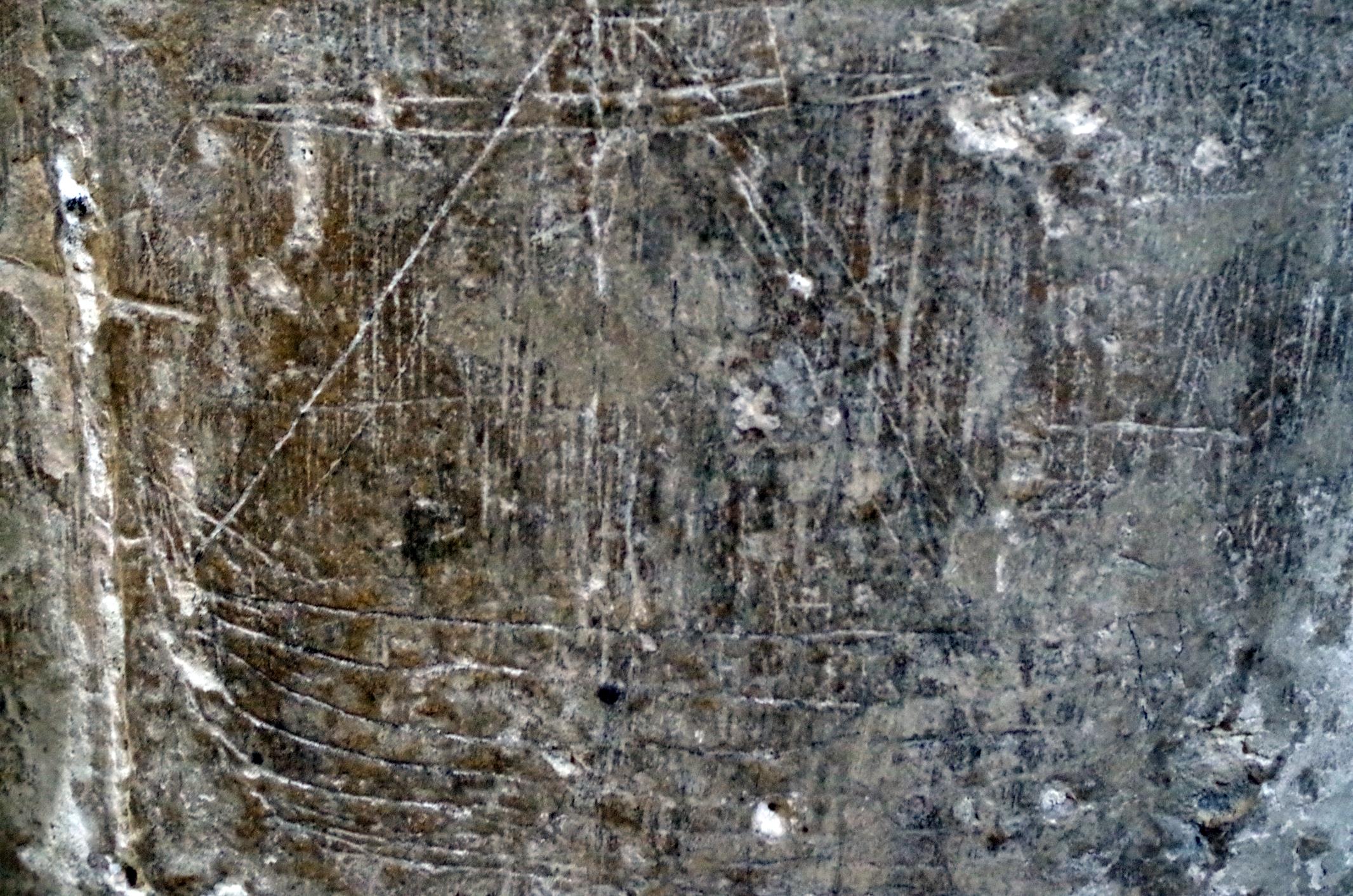
Last month’s Symbol of the Month was devoted to the ship. It’s a central symbol of Christianity and recently, on a visit to Rochester Cathedral, I found more evidence of this in the medieval graffiti etched on several of its pillars.
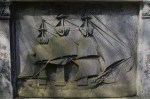
They are in the nave of the Cathedral and consist of at least a dozen scratched images of sailing ships. They look almost as if a child has drawn them and you have to look very closely to see them. Th eone above is the only one that I could find easily.
According to the Cathedral’s information board these were often drawn by :
‘…..crew members and sea captains with proximity to an altar, image or shrine dedicated to St Nicholas, the patron saint of those in peril on the sea. At times of trouble on a sea voyage, such as storm, a vow could be made to St Nicholas that, if they survived, a votive offering would be made in thanks, sometimes in the form of a model ship of wax and wood. Some of these models survive in coastal churches today but at Rochester this graffiti is the only surviving trace of this once common tradition.;
It goes onto add:
‘……..All recorded designs are located on the south face of the pillar, (this) may indicate the suspected position of an altar or shrine to St Nicholas in the south nave aisle in the 12th of 13th centuries.’
There is a church dedicated to St Nicholas adjacent to the Cathedral but this is now the offices of the Board of Education of the Diocese of Rochester. According to their website, there was a shrine to the saint within the Cathedral at which people worshipped until the 15th century. It was consecrated on 18 December 1423. The current church dates from the 17th century with 19th century restoration.
So these little ships, symbols of protection, will sail on a sea of stone for as long as the Cathedral stands. Let’s hope that all of the crews and captains, they who go down to the sea in ships, who created them came home safely back to port.
The first Symbol of the Month of 2020 – a little later than I planned but more to come….
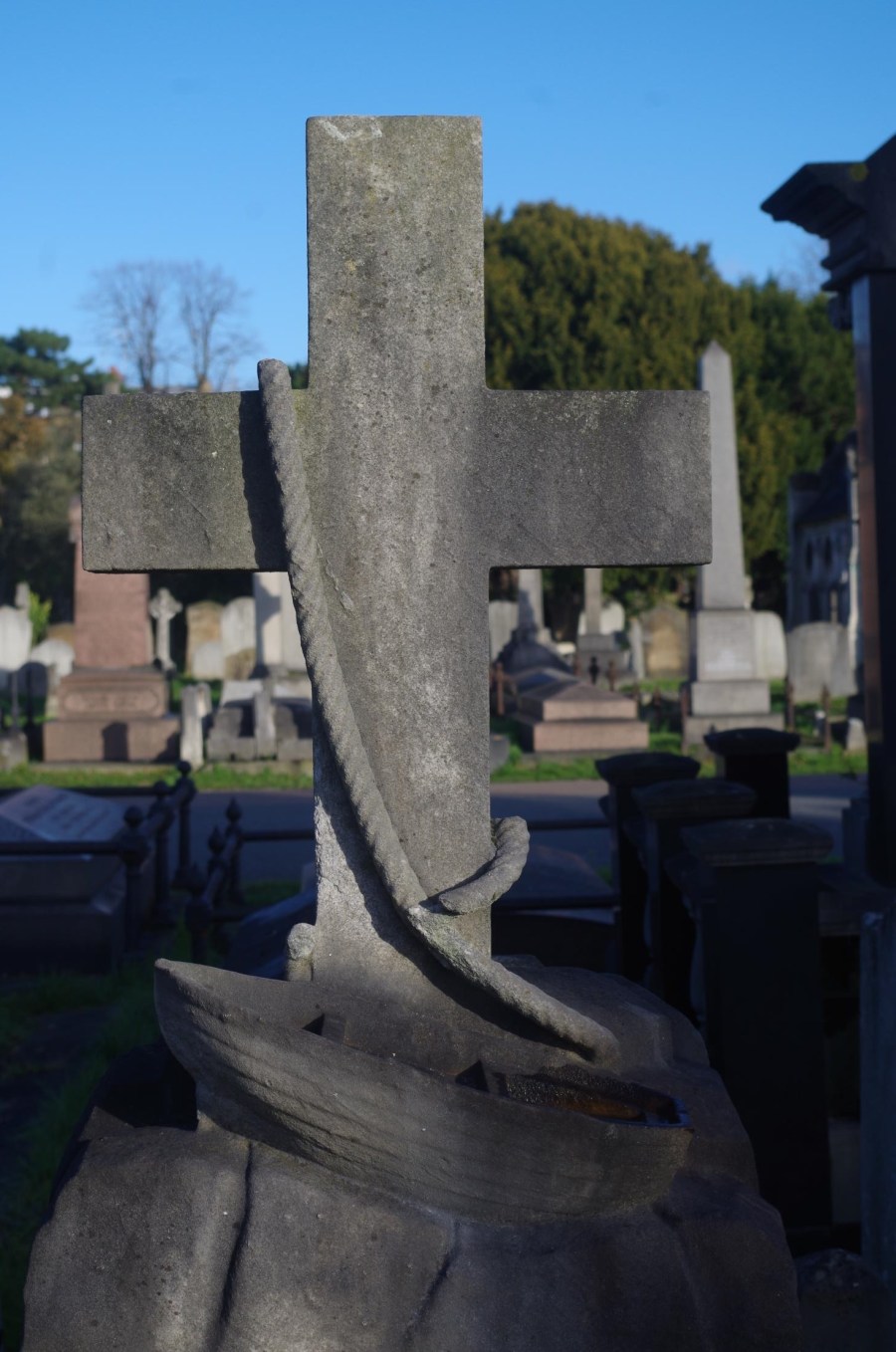
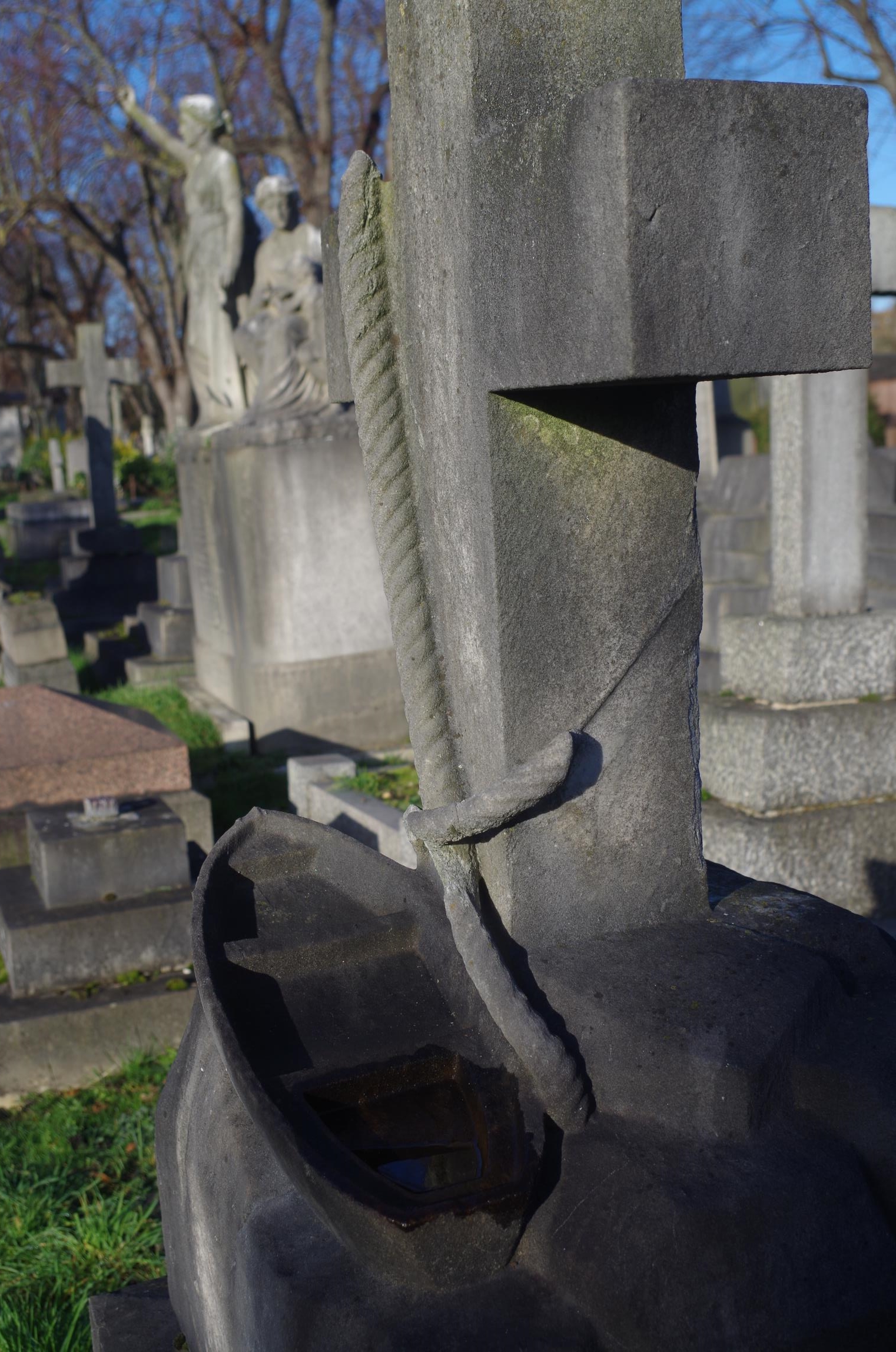
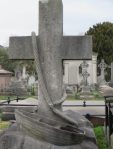
Close-up of boat, Caig monument Brompton Cemetery Side view of boat
There are many sailing vessels in cemeteries. Ships, boats and the occasional yacht, becalmed on headstones or monuments forever sailing on a marble or granite sea. Often they reveal the incumbent’s former occupation as on this fine example on the grave of Captain Edward Parry Nisbet in Brompton Cemetery. Note the cross formed by the mast which is one of the central symbols of Christianity. There’s also the magnificent and exuberant monument to Captain Wimble and his indomitable wife on the appropriately named Ship Path in West Norwood Cemetery.
But this little boat tied up and apparently moored at the base of a large cross is symbolic of a journey that has reached its final destination.
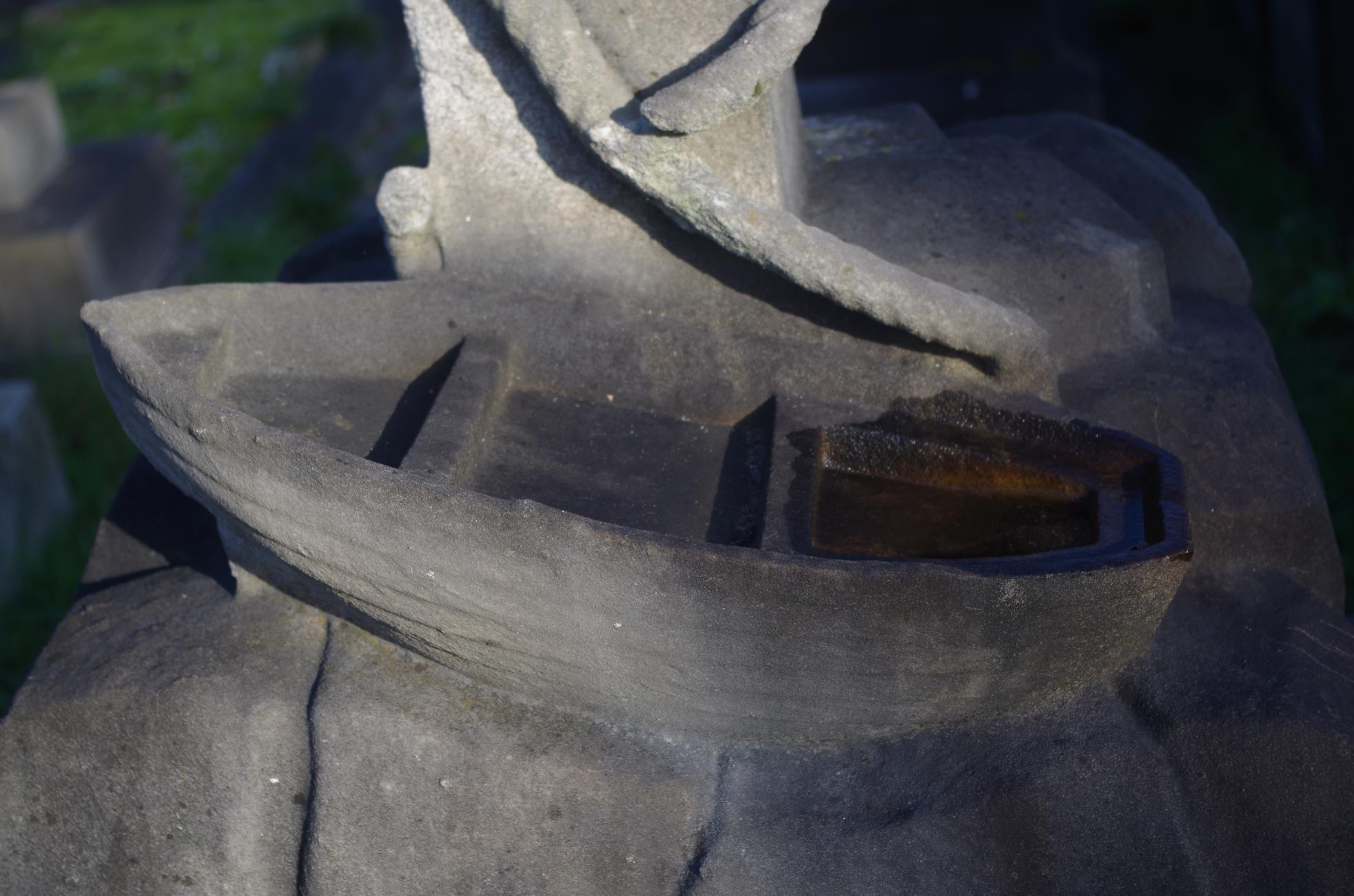
Side Side view of boatview of boat showing detail as it’s been carved to resemble a wooden boat.
The monument is located within Brompton Cemetery and is a representation of the journey of life. This is a small sculpture of a rowing boat that has been carved to resemble a wooden one and there are seats inside but no oars. It could be interpreted as coming to the end of your life or journey and entering another life of eternity symbolised by the cross. In other words, the crossing to the ‘other world’ as Douglas Keister calls it. Also as www.stoneletters says:
‘…it’s a symbol of our last journey, it embodies the voyage of life, of coming full circle and taking us back to the waters of our beginning.’
However a boat can also be seen as an emblem of safety and refuge as it carries us over life’s often choppy seas and takes us home. In this context, another boat that springs to mind is Noah’s Ark. It protected and saved all that were on it and was a metaphor for the church as it weathered the storm against all odds. However, Keister also suggests that the shape of a boat can resemble that of a cradle or a womb which would again emphasise shelter and protection. It holds us secure above the chaos of life.
Boats and death are a central theme in many other religions and cultures in that they carry the souls of the dead to eternity. For example, King Arthur was transported by boat on death and, most famously, the Vikings people also used funerary boats. This was granted to important people of the tribe as they and their possessions would be sent out across the water in one after it had been set ablaze. A symbolic mimicking of the soul’s journey to Valhalla. Also in Greek mythology, Charon was the ferryman who took the souls of the dead by boat into the Underworld by crossing the River of Woe, Acheron.
But boats and death also feature in literature, especially poetry and there is the famous quotation by F Scott Fitzgerald:
‘So we beat on, boats against the current, borne back ceaselessly into the past.’
‘Crossing the Bar’ by Alfred Lord Tennyson also features a sea voyage which will end in death,
Sunset and evening star,
And one clear call for me!
And may there be no moaning of the bar,
When I put out to sea,
But such a tide as moving seems asleep,
Too full for sound and foam,
When that which drew from out the boundless deep
Turns again home.
Twilight and evening bell,
And after that the dark!
And may there be no sadness of farewell,
When I embark;
For tho’ from out our bourne of Time and Place
The flood may bear me far,
I hope to see my Pilot face to face
When I have crost the bar.
There is also The Ship of Death by D H Lawrence amongst others.
I said earlier that a boat or ship is an important Christian symbol due to the mast forming a cross. Also, the Latin for ‘nave’ ,the central aisle of a church, means ‘ship’ and there are several Biblical references to boats and ships. After all, Christ told his disciples to “follow me and I will make you fishers of men”.
But let’s not forget that a boat or ship can also indicate a love of sailing and freedom.
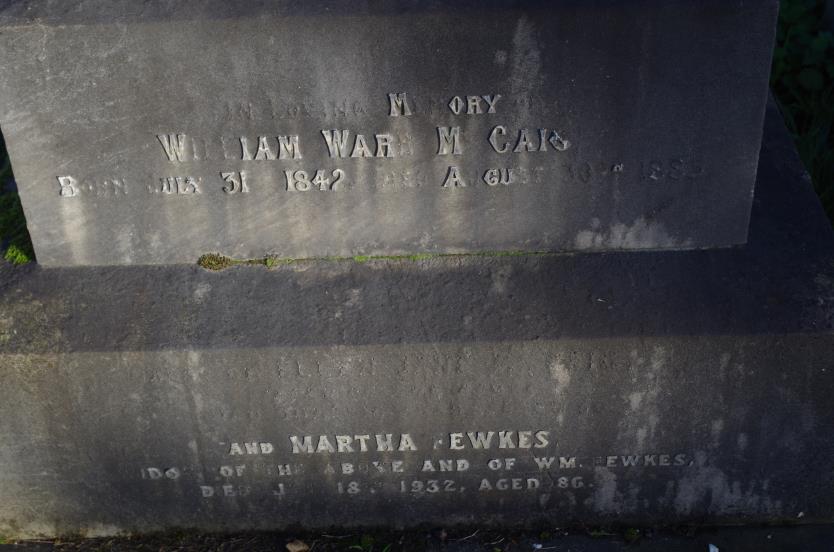
Some of the letters on the epitaph beneath the boat and cross have worn away so I can only assume tha the name commemorated is Walter Ward M Cais but it seems incomplete. He died young at only 43 and his widow, Martha, married again and lived well into the 20th century. It must have been a message of comfort that Walter’s small boat was moored safely for eternity.
It was a, shall we say, bracing February day in Brompton Cemetery. The snowdrops were clinging together for warmth along the main avenue and a drift of daffodils near the soon to be completed café thought better of coming out in bloom. But I, and the apps designer, local GP Simon Edwards, didn’t let this spoil our fun. We had previously worked with together on the Brompton animals app and it was good to have another pair of eyes with me.
Our aim was to devise an app that gave a good selection of symbols within the cemetery, both common ones that can also be found in other cemeteries and others that were perhaps unique to Brompton. There would be a brief comment on each one by yours truly and there was also the opportunity to see me in person. You’ll have to make up your own mind about whether I’m attempting fruitlessly to hide behind a Celtic Cross or draping myself elegantly around it.
Brompton opened in 1840 and, due to the 19th century anti-Papist movement. crosses, Christ statues or angels were not popular. Instead other cultures and civilisations and other older cultures and influences were used as inspiration. These included Classicism from ancient Greece and Rome, the Celtic and Egyptian Revivals, Biblical quotations and references, the language of flowers as well as animals and insects.
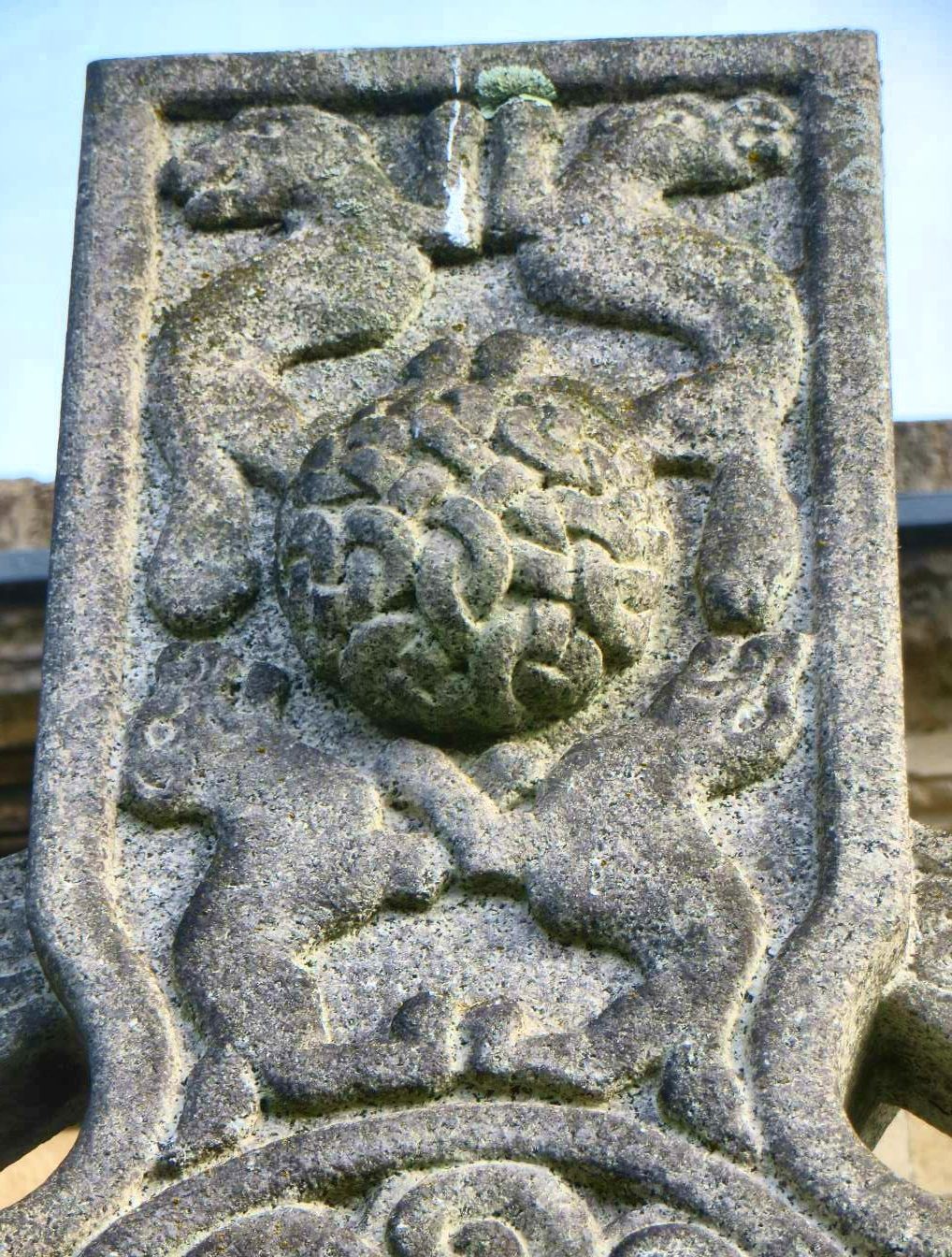
Simon was also looking for additional images for the Brompton animals app and soon found a group at the top of the Stevenson Celtic cross. These are supposedly based on Viking animal images but although, when we looked more closely, it was difficult to make out exactly what kind of animals they were. Brompton’s Celtic crosses are very interesting due to the variety of decoration on them from spirals, traditional Celtic strapwork, flowers and even a cat. I will be writing about them in next month’s Symbol of the Month.
But soon we were exploring the alpha and omega, the Chi Rho, shaking hands, downturned torches, and flowers amongst others.
Among Brompton’s more unusual symbols are the two Aladdin style lamps on the Cornwell headstone, the polar and cub on the Hills one in the modern burials section and the small stone boat tied up at the base of the cross on the McCaig monument.








 shadows fly away