There are so many stories within a churchyard. They are truly repositories of a community’s history in their recording of births, deaths and the history of local families. A simple epitaph can say so much about the people buried beneath it.
I almost missed the Allen headstone as it’s lying down on the grass. This would have been a shame as it is one of the loveliest and most poignant memorials in the churchyard and must have looked imposing when it was standing upright.
It’s dedicated to a married couple, Janet Lormie Allen or ‘Cissie’ who died young aged 23 on 10 October 1914, and her husband, Ernest August Allan, who died 45 years later aged 79. I don’t know why Cissie died so young: it may have been in childbirth, due to illness or to another cause. But she was greatly missed as the sentiment on the headstone shows.
At one side of the tombstone, beside the epitaph, stands a young woman, a maiden, dressed in a diaphanous, long flowing robe from which one strap has fallen, exposing a bare shoulder. The hair is untied and falls to her shoulders. Behind her is a tall, slender rose stem whose blossoms reach over her head. She looks upwards to the blooms above her as, with one hand, she reaches up to pluck a rosebud. In her other hand she already holds a single bloom half open. There is a hint of the waning of the Art Nouveau movement in the flowing lines of her dress and the romance of the image.
The significance of the rose being plucked is that it’s a bud and so not yet in bloom which indicates a life cut short.
I don’t know if Ernest remarried but he was buried with his wife in 1959 and so they were reunited. It’s such a shame that as the headstone is lying down as rainwater gathers on the carving of the young woman and, for example, there has been erosion on her face.
Despite my research I have not been able to find out any further details about the couple. But it’s one of the most beautiful memorials that I’ve seen, not just because of the carving, but, as I like to think of it, a love story written on an epitaph in a country churchyard. And as we approach St Valentine’s Day what could be more appropriate?
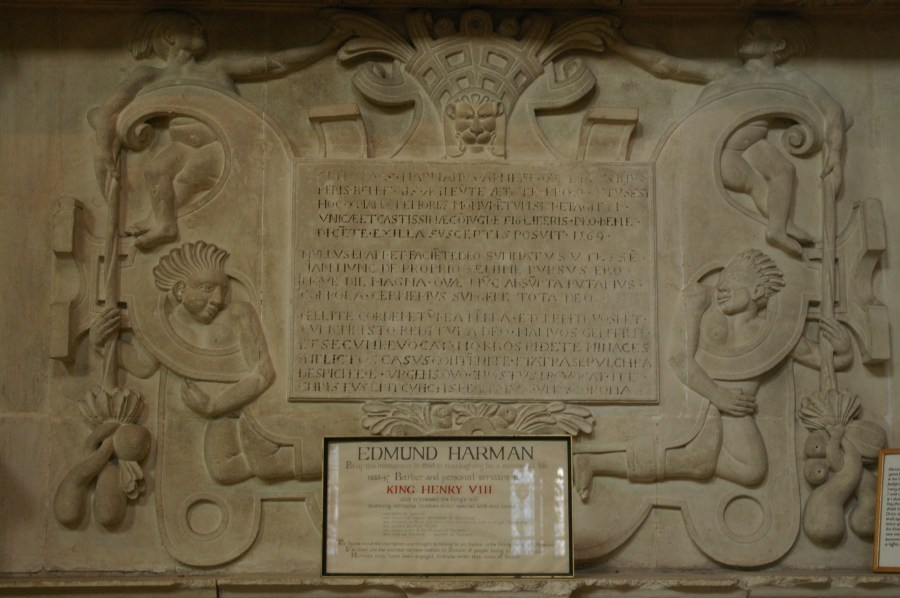
Detail of one of theTupinamba Indians on the Harman monument, Burford
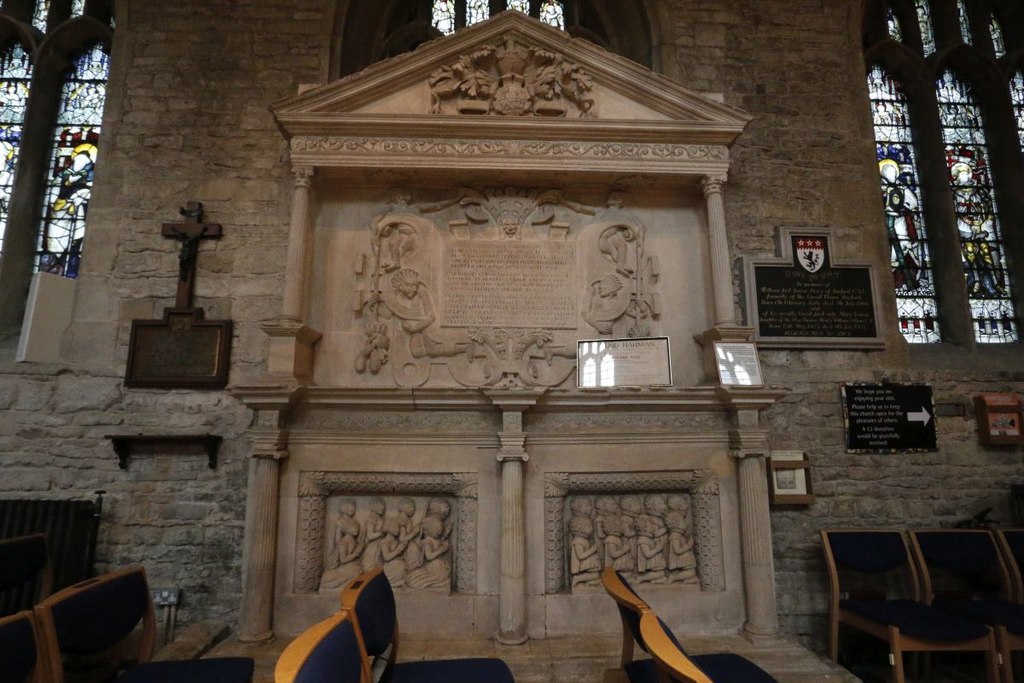
As a ‘church crawler’, or someone who likes to poke about in churches and churchyards, I didn’t expect to find this finely carved pair of South American Indians in an Oxfordshire church. They decorate the monument dedicated to Edmund Harman (1509-1577) and his ‘faithful’ wife, Agnes.
The Indians have been identified as belonging to the Tupinamba tribe who, in the early 1500’s, lived at the mouth of the Amazon. They are assumed to be the earliest known representation of South American Indians in England. The Tupinamba tribe were known to be cannibals and the carvings are believed to be the work of a Dutch carver, Cornelis Bos. However, no-one’s quite sure whether they’re there. It has been assumed that they are a reference to Edmund Harman’s Brazilian trade interests. But perhaps Bos might have seen a similar design in the Spanish Netherlands and decided to ‘borrow’ it.
Edmund Harman was an influential man at Henry VIII’s court. In fact, he was one of Henry’s most important and trusted servants. From 1533-1547, he was the King’s personal barber and servant, a position that gave him enormous influence at court as he was so near to the King. I’m sure that he didn’t spend his time asking Henry VIII if he’d been anywhere nice for his holidays……he was probably too busy bending the King’s ear with promoting his friends business schemes. In 1538, Edmund had risen so high that he was included in a list of people at court who were:
‘…to be had in the King’s most benign remembrance…’
Benign it certainly was, as it meant that Edmund was granted several pieces of land in Oxfordshire as well as Burford Priory. He was also one of the 15 servants who made up the Privy Chamber and their job was to attend to every aspect of the King’s comfort.
In 1546, Edmund was one of the witnesses to Henry VIII’s will which was a very important document. According to the Burford church website,
He makes an appearance with his King in Holbein’s last painting which is kept at The Barber’s Hall in London. The artist has helpfully labelled all the assembled men and Edmund is at the front on the right hand side.
Henry VII and the Barber Surgeons – Hans Holbein (1497/1498-1543) Edmund can be seen kneeling with his name. Shared under Wiki Creative Commons
Edmund and Agnes had sixteen children (!) but only two of them, both girls, survived their parents. There are representations of them on the lower half of the monument.
According to the Burford church website, Edmund’s epitaph:
‘…..is considered to be an early example of a Post-Reformation epitaph as there is no mention of Purgatory or saying prayers for the dead man’s soul to ease his way out of it. Purgatory and other religious practices had all been swept away by Henry VIII’s determination to divorce Katherine of Aragon and set himself up as the Head of the new Church of England.’
It is a lovely monument with beautiful, crisp carving and a wonderful example of the stone carver’s skill. Sadly, despite all the expense and the effort lavished in creating the monument, Edmund and Agnes were buried in Taynton which is 7 miles away from Burford.
However, it stands as a memorial to a man who rose from humble beginnings, moved in powerful circles and brought the New World closer to home.
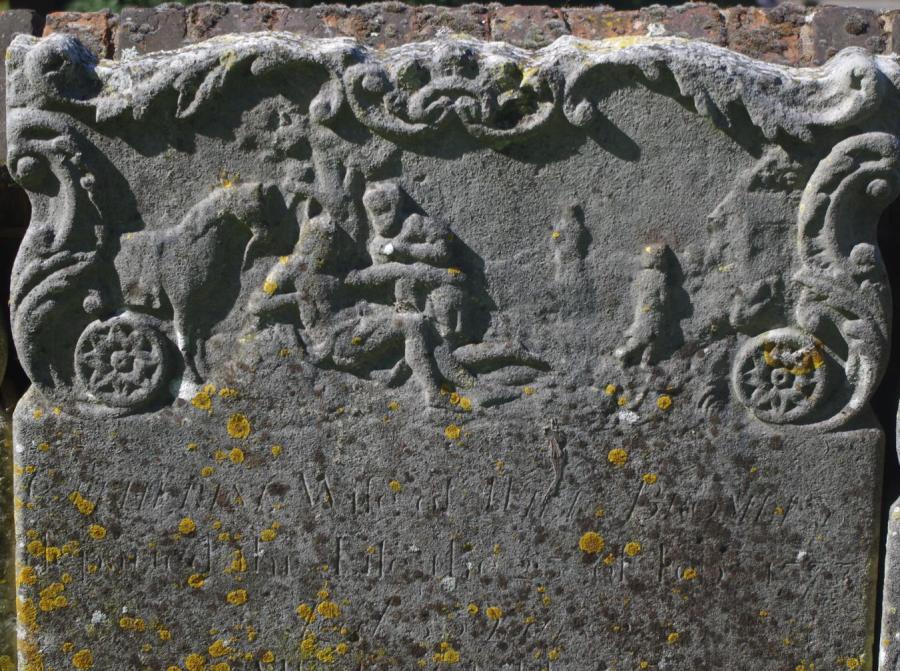
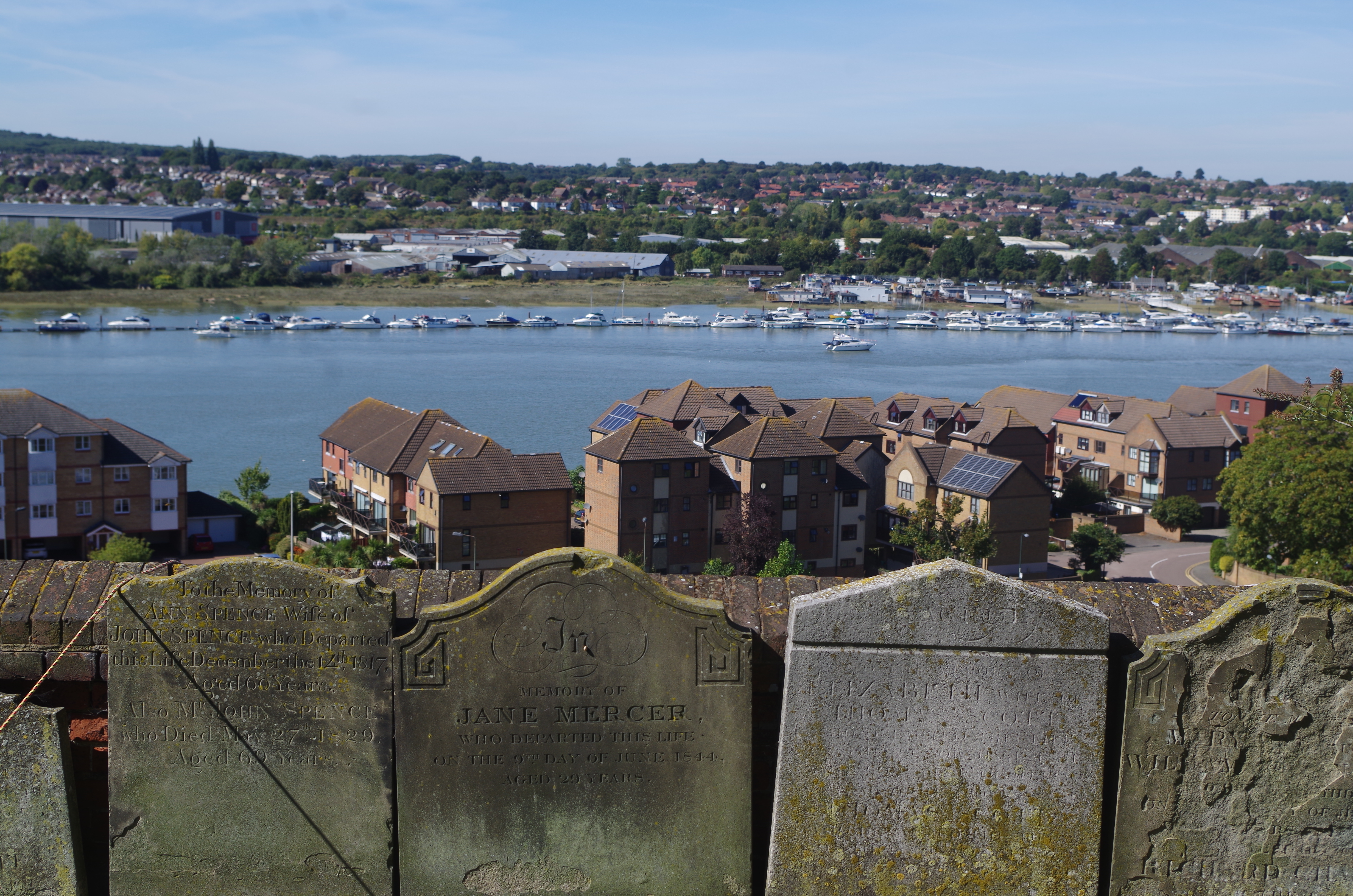
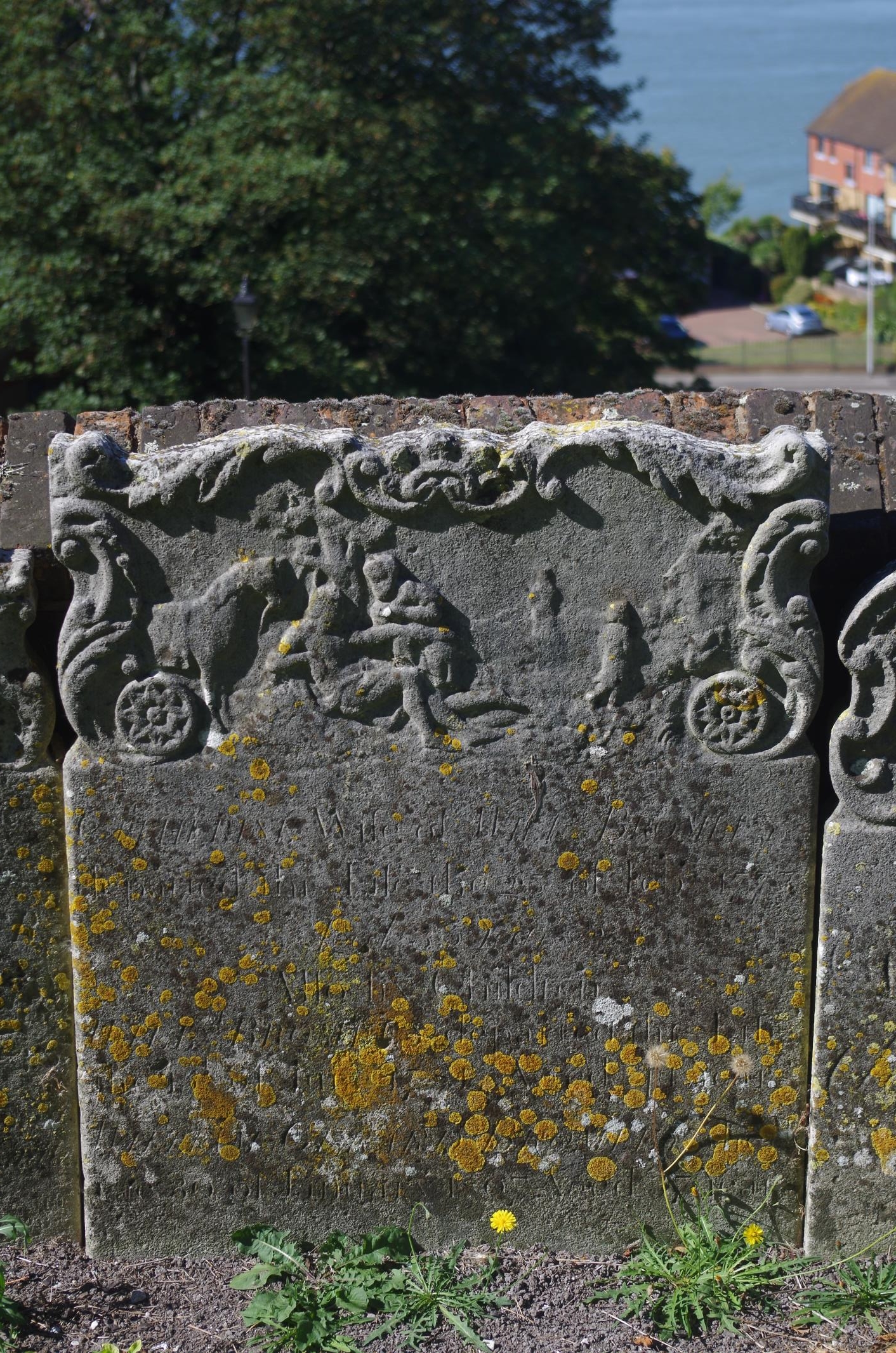
The tombstones in St Margaret’s churchyard, Rochester are arranged like teeth along one wall. It faces out onto the Medway and, if you’ve got the strength, to look over there’s also a steep slope beneath. But it was here that I found the Good Samaritan headstone. Never underestimate the power of a lovely sunny day to really bring out the beauty of a good carving.
A man is depicted on it, lying half naked being comforted by another man while a horse, presumably the victim’s, stands nearby. In the distance two figures, presumably men, walk away with their backs to the scene. It’s a well carved little picture and I immediately thought of Parable of the Good Samaritan.
I am indebted to the Kent Archaeological; Society for the transcript of the epitaph. . Even at 400% magnification, all I could make out was
‘…….Wife….
….this life…
…1777…..
…Children..’
It actually reads:
(In memory of)
Catherine Wife of Will Bromley
Departed this life
The ( ) Feb 1777
aged 33 years
Also Six Children
Will Bromley
departed this life
( ) June 1783 aged 41 years
Also William Gerrad Bromley died
the 30th of January 180(7) aged (36 years)
The Parable of The Good Samaritan comes from the Gospel of Luke, verses 10:25-37 and here is a shortened version taken from the World English Bible:
‘Jesus answered, “A certain man was going down from Jerusalem to Jericho, and he fell among robbers, who both stripped him and beat him, and departed, leaving him half dead. By chance a certain priest was going down that way. When he saw him, he passed by on the other side. In the same way a Levite also, when he came to the place, and saw him, passed by on the other side. But a certain Samaritan, as he travelled, came where he was. When he saw him, he was moved with compassion, came to him, and bound up his wounds, pouring on oil and wine. He set him on his own animal, and brought him to an inn, and took care of him. On the next day, when he departed, he took out two denarii, gave them to the host, and said to him, ‘Take care of him. Whatever you spend beyond that, I will repay you when I return.’ Now which of these three do you think seemed to be a neighbor to him who fell among the robbers?”’
He said, “He who showed mercy on him.”
Then Jesus said to him, “Go and do likewise.”
The Samaritan who stopped to help is described as Good but in reality Jews and Samaritans hated each other. They were known to destroy each other’s temples but few people have heard of the Samaritans nowadays. According to Wikipedia, the parable is now:
‘…….often recast in a more modern setting where the people are ones in equivalent social groups known not to interact comfortably. Thus, cast appropriately, the parable regains its message to modern listeners: namely, that an individual of a social group they disapprove of can exhibit moral behaviour that is superior to individuals of the groups they approve.’
The old road from Jerusalem to Jericho. Shared under Wiki Commons
At the time in which the Parable is set, the Jerusalem to Jericho road was known as ‘The Way of Blood’ due to the amount of blood that was spilt on it from attacks on travellers by robbers. It was extremely dangerous. In fact Martin Luther King Jr in his ‘I’ve been to the Mountaintop’ speech given the day before his death, had more sympathy for the Levite and priest who ignored the victim and went on with their journeys. He described the road as:
‘As soon as we got on that road I said to my wife, “I can see why Jesus used this as the setting for his parable.” It’s a winding, meandering road … In the days of Jesus it came to be known as the “Bloody Pass.” And you know, it’s possible that the priest and the Levite looked over that man on the ground and wondered if the robbers were still around. Or it’s possible that they felt that the man on the ground was merely faking, and he was acting like he had been robbed and hurt in order to seize them over there, lure them there for quick and easy seizure. And so the first question that the priest asked, the first question that the Levite asked was, “If I stop to help this man, what will happen to me?’’]
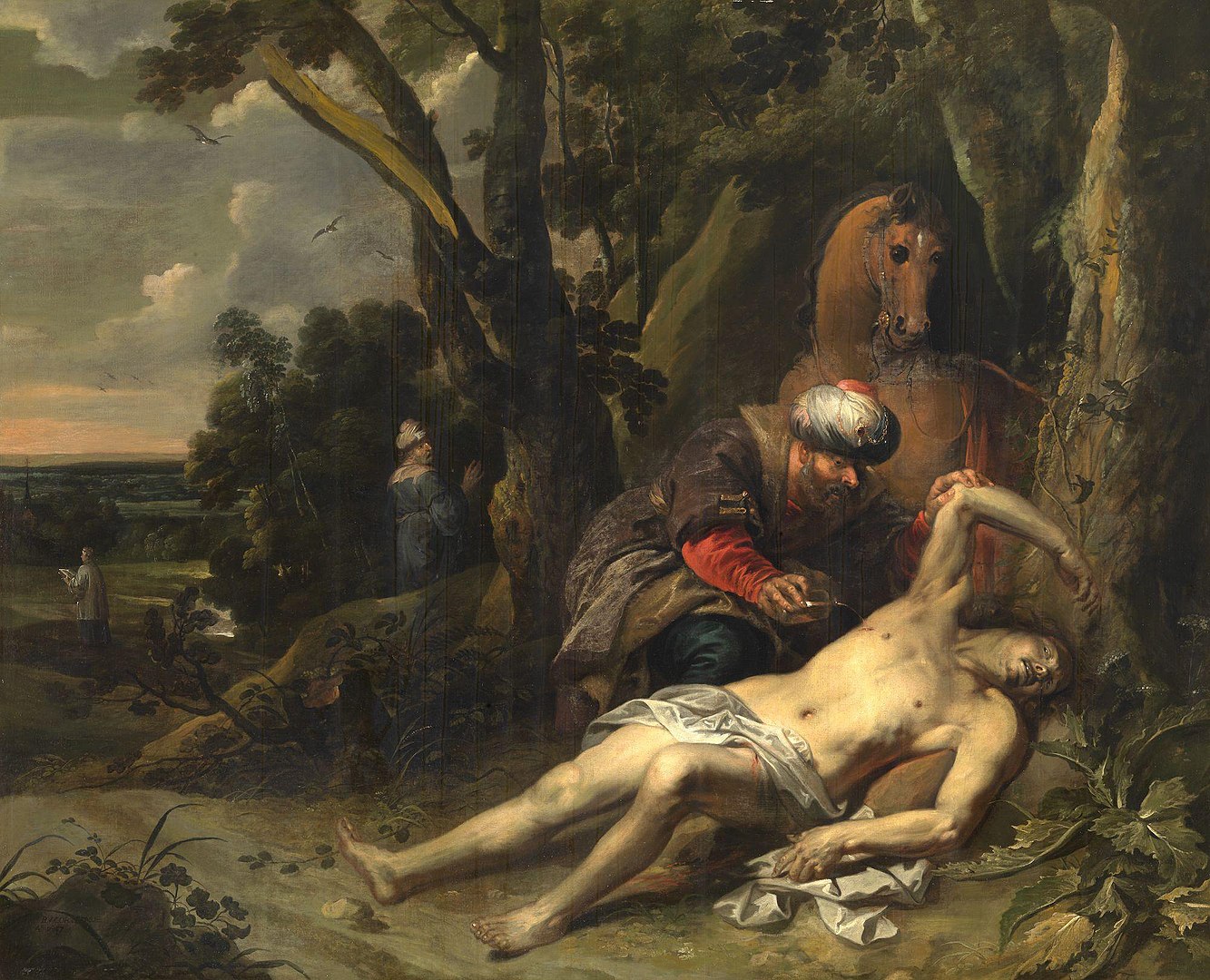
The phrase ‘Good Samaritan’ has become part of modern language and denotes someone who helps a stranger. There are several worldwide hospitals named after him and it has inspired art, fiction, photography and sculpture amongst others. This is a 17th century painting from 1647
Bathasar van Cortbernde The Good Samaritan (1647) Shared under Wiki Commons
and here is a modern sculpture from Nova Scotia.
Monument to William Bruce Almon by Samuel Nixon St Paul’s Church Nova Scotia 2019 Shared under Wiki Commons
However, the only images that I could find that resembled the headstone carving were from 19th century bibles which were much later than the carving on the headstone. This is taken from the 1875 Children’s Picture Bible Book.
This image come from the Children’s Picture Bible Book 1875. Shared under Wiki Commons
So was the wife or the husband buried in St Margaret’s churchyard the Good Samaritan or was the image chosen to remind the viewer to be one to their fellow men? We may never know.
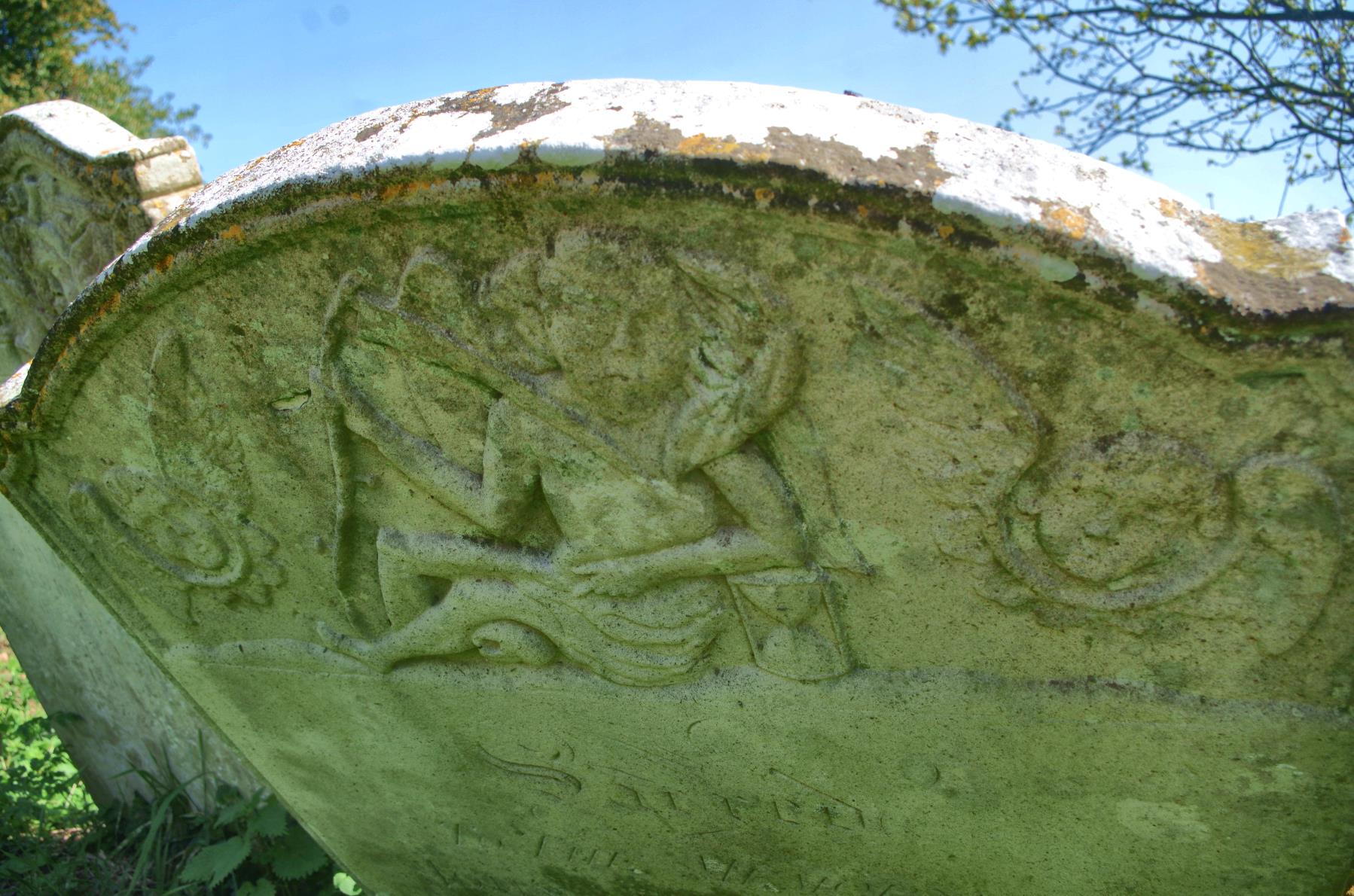
Ah, the perils of searching for symbols in old churchyards. I had to almost lie horizontally on the ground to take a photo of this one in the churchyard of St Nicholas, Pluckley, Kent. I was a little nervous that the headstone would fall on top of me but what a headline that would have made!
At the time I had no idea what it represented and just thought it looked interesting. In fact it wasn’t until much later when I’d had a chance to look at it properly that I realised the identity of the figure in the carving. I then wished that I’d also taken a photo of the epitaph.
It is in fact a depiction of Old Father Time. It’s a lovely example. As you can see he’s sitting with one hand holding a fearsome looking scythe with a bent and gnarled stem and the elbow of his other hand is resting on an hourglass. He is a very old man with a white beard, large angel wings on his back and is flanked on either side by two angel heads. What better symbol for a life that had ended?
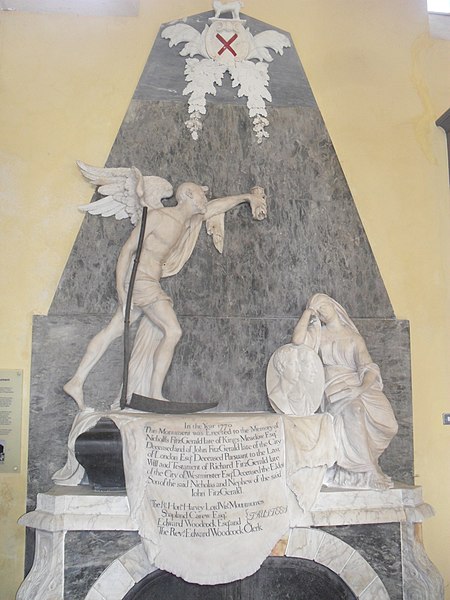
So far I have only discovered a few other examples. There is a 17th century version on a tombstone in a Hendon churchyard and a huge, modern one again resting on an hourglass within Warzaw’s Powarzski cemetery. I can’t show them in this blog as one is on a stock images library and so not royalty free and I am awaiting permission to use the other image. However I found this one on Wikipedia but its location is not given.
Old Father Time and a grieving widow. An unknown Irish memorial. Shared under Wiki Creative Commons
We traditionally associate Old Father Time with the New Year celebrations. He is the representation of the outgoing Old Year welcoming in the New Year which is usually portrayed as a smiling baby. But Father Time has also been described as a gentler version of the Grim Reaper as they share the same accoutrements of a scythe and hourglass.
He is considered to be the personification of age and is related to the ancient Greek god Chronos and also the Roman god Saturn. Father Time’s ageing, worn out body is a reminder that time ultimately devours all things and that none can escape. The grains of sand in the hourglass count out not only his life but all lives. Although he has a long, white beard, a sign of age, it has been interpreted as a reclamation of purity and innocence. But, as the hourglass can be inverted, so can a new generation, the New Year, restore the source of physical vitality. However, time is not always destructive as it can also offer serenity and wisdom.
Cronos, from which chronology derives, was the ancient Greeks word for Time and the Romans knew him as Saturn. According to Wikipedia:
‘The ancient Greeks themselves began to confuse chronos, their word for time, with the agricultural god, Cronus, who had the attribute of a harvester’s sickle. The Romans equated Cronos with Saturn, who also had a sickle and was treated as an old man, often with a crutch. The wings and hourglass were early Renaissance additions.’
The Roman Chronos was originally an Italian corn god known as the Sower and a big festival known as the Saturnalia was held to celebrate the harvest. So there is a link between these ancient gods and Father Time in that they both symbolically harvest, or cut down the mature crops, to make way for the Spring’s new growth.
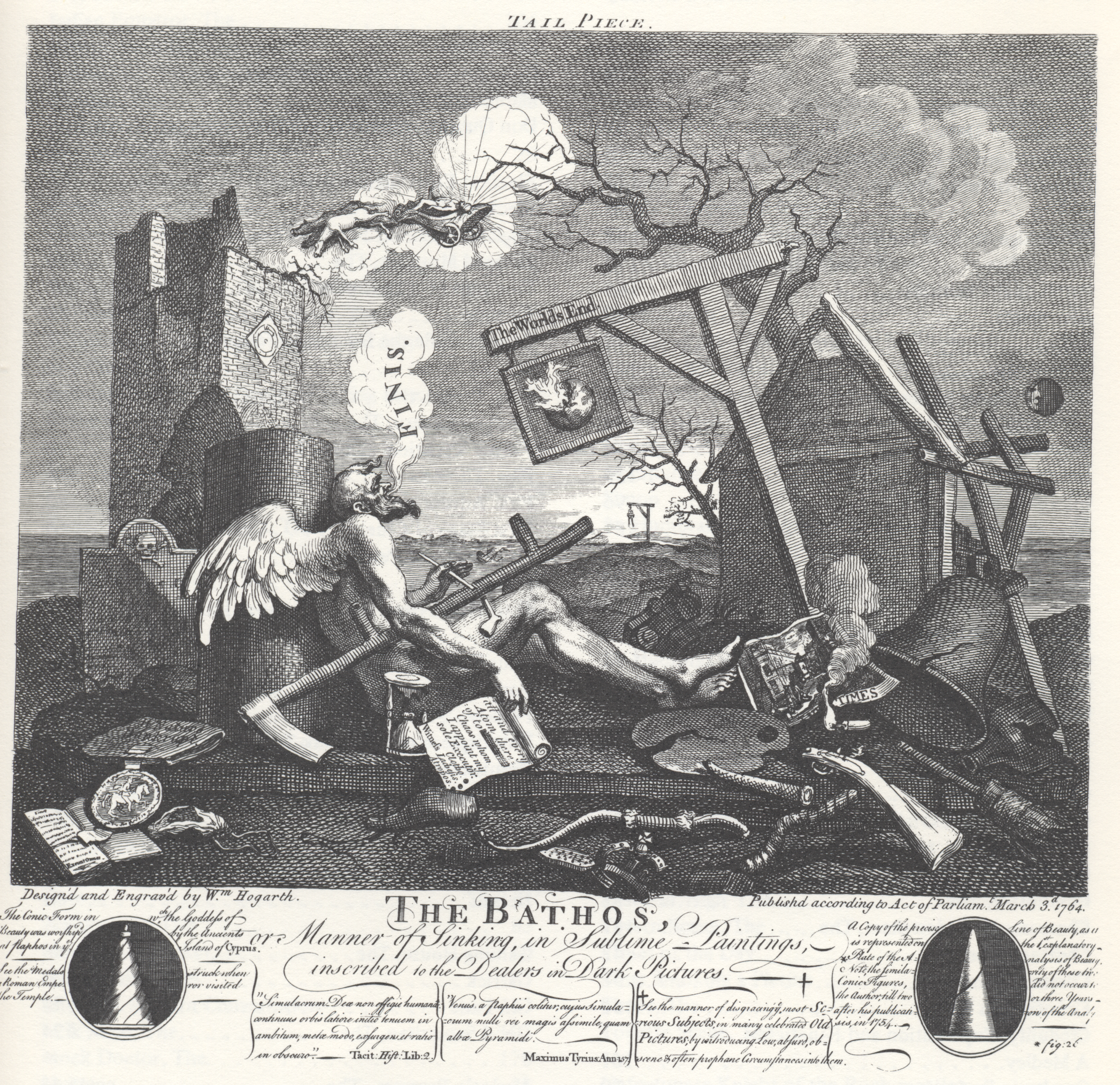
Father Time appears throughout many cultures and also in art, books and sculpture amongst others. In one of Hogarth’s later work, The Bathos, he appears lying down surrounded by his familiar objects, all now broken.
The Bathos by William Hogarth in which Old Father Time lies surrounded by his broken symbols. Shared under Wiki Creative Commons.
But in St Nicholas’ churchyard Old Father Time keeps an eternal watch over a life that has ended, resting on a still crisply carved hourglass. It is full, the scythe has harvested and so the endless cycle of life continues.








 shadows fly away