Loren Rhoads is a US based committed taphophile or cemetery enthusiast, and has written several brilliant, informative books on cemeteries, in the US and further afield. These include:
199 Cemeteries to see before you die
222 Cemeteries to see before you die
Wish you Were Here: Adventures in Cemetery Travel
Death’s Garden Revisited, Personal Relationships with Cemeteries
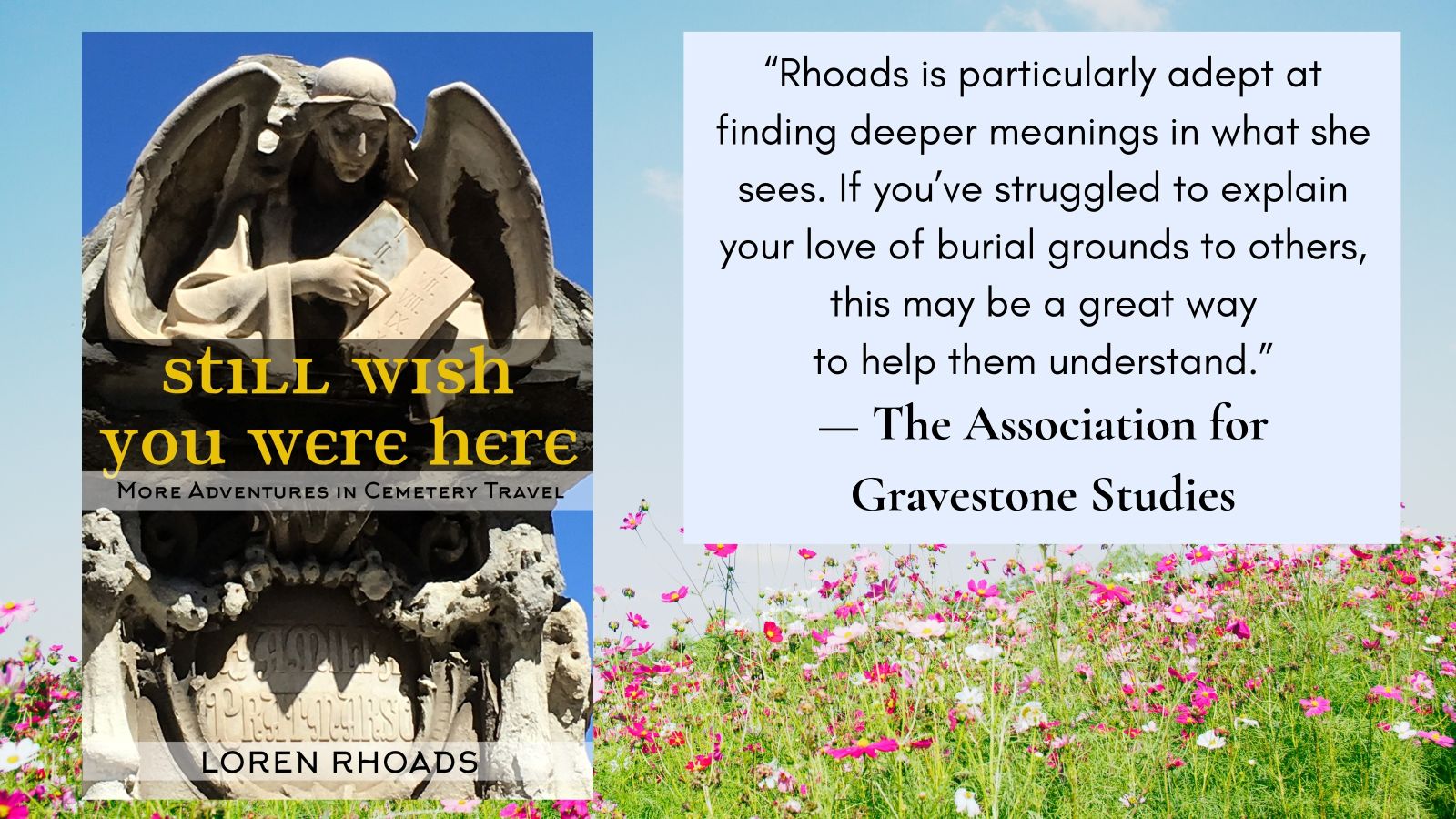
She is an absolute doyenne in the taphophile world and Loren’s latest, ‘Still Wish you Were Here: More Adventures in Cemetery Travel’ is being crowdfunded on Kickstarter. The backing has already exceeded the requested amount which means that Loren can achieve even more with her book.
In her accompanying video Loren describes ‘Still Wish You Were Here’ as being:
‘part travel memoir, part cemetery history with 36 graveyard travel essays written for various organisations and publications.’
She visited 50 burial sites from Michigan, to London, Singapore, Barcelona, Tokyo and more and has confessed to ‘absolutely loving cemeteries and their stories.’ She finds cemeteries as inspiring as I do . Check out her video at:
I was one of the people who were invited to take part in ‘Death’s Garden Revisited: Personal Relationships with Cemeteries’ which was also successfully funded on Kickstarter. It was a fabulous looking book and I was proud to be part of it and to read other essays by fellow taphophiles. So, I have every faith in Loren creating another terrific book on cemeteries and have backed it myself! But don’t take my word for it – this is what the Association for Gravestone Studies have said:
Every little helps and there are several ‘rewards’ for different levels of backing including a cemetery party! So please, if you are a fellow taphophile and are able to , please consider supporting Loren’s book – if anyone can do it she can!
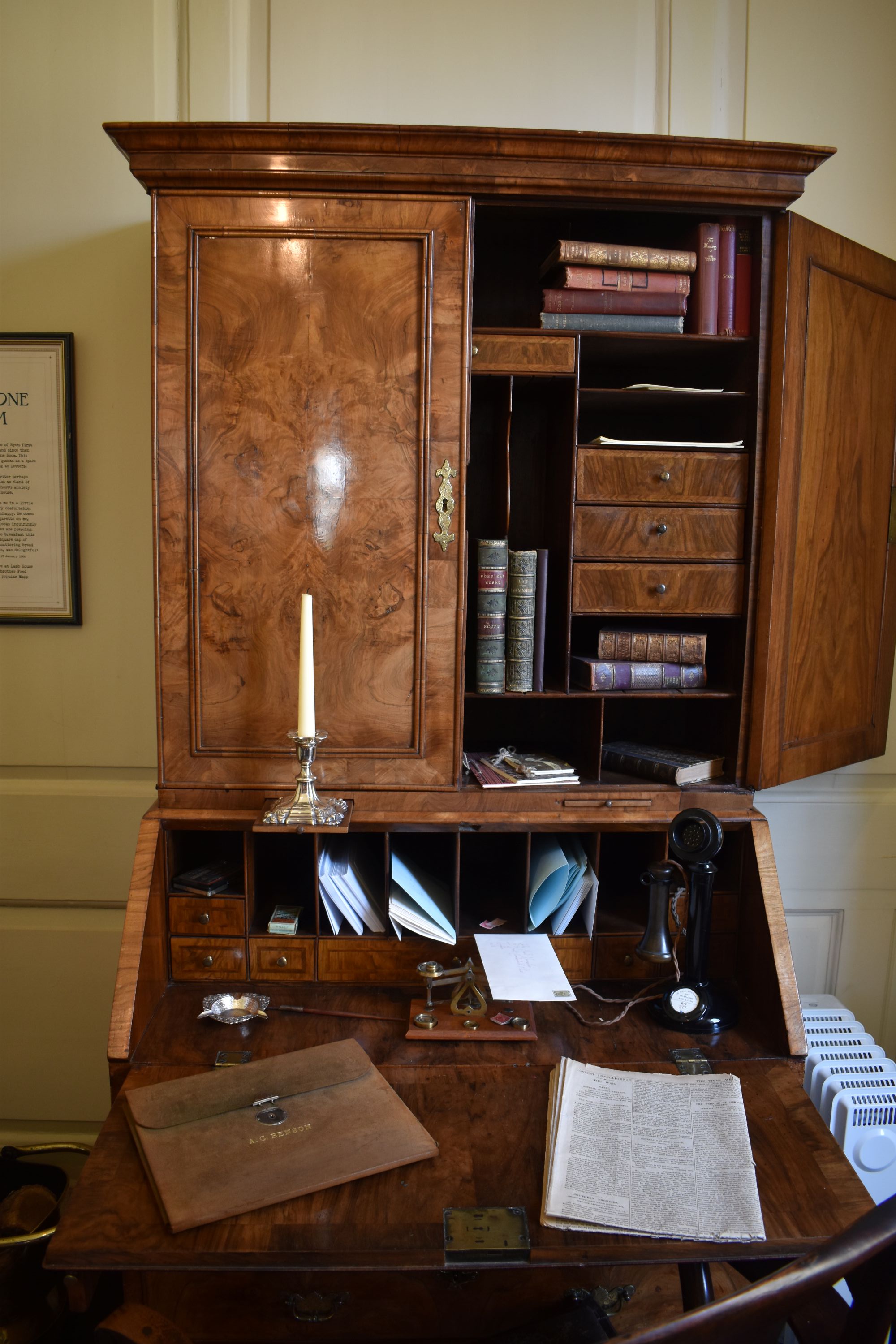
In April, I was on a literary weekend in Sussex and Kent. We made the town of Rye our base. The town has a rich literary tradition with several famous writers having lived there. Several of them were lucky enough to live at Lamb House, a red brick Georgian house with spacious rooms and a garden that was just beginning to take shape on my visit. Neatly labelled rows of vegetable seedlings gave an indication of what was to come later in the year. There is a magnificent view of St Mary’s church from an upper window and Henry James is commemorated with his writing desk and ‘The Telephone Room’. I love finding pet cemeteries as I find them fascinating and touching.
Lamb House is now owned by the National Trust and when I last visited over 20 years ago, it looked very different. There was an upstairs tenant – lucky them! Now the upstairs rooms have been opened to visitors and on my visit there was an exhibition, ‘Ghost Written’, which featured the house’s most well known writers through their ghost stories.
The American writer, Henry James, (1843-1916) wrote three of his most famous books at Lamb House: ‘The Wings of the Dove’, ‘The Ambassadors’ and ‘The Golden Bowl’. He discovered Lamb House while visiting a friend and instantly fell in love with it. He leased it in 1897 and, two years later, he finally bought it.
The house appears in his novel, ‘The Awkward Age’, where it is Mr Longdon’s home. During James’s time there a literary circle came into being that included Rudyard Kipling and H G Wells amongst others. In 1916, James was very ill in London and wanted to be taken back to Lamb House but he was too ill to be moved.
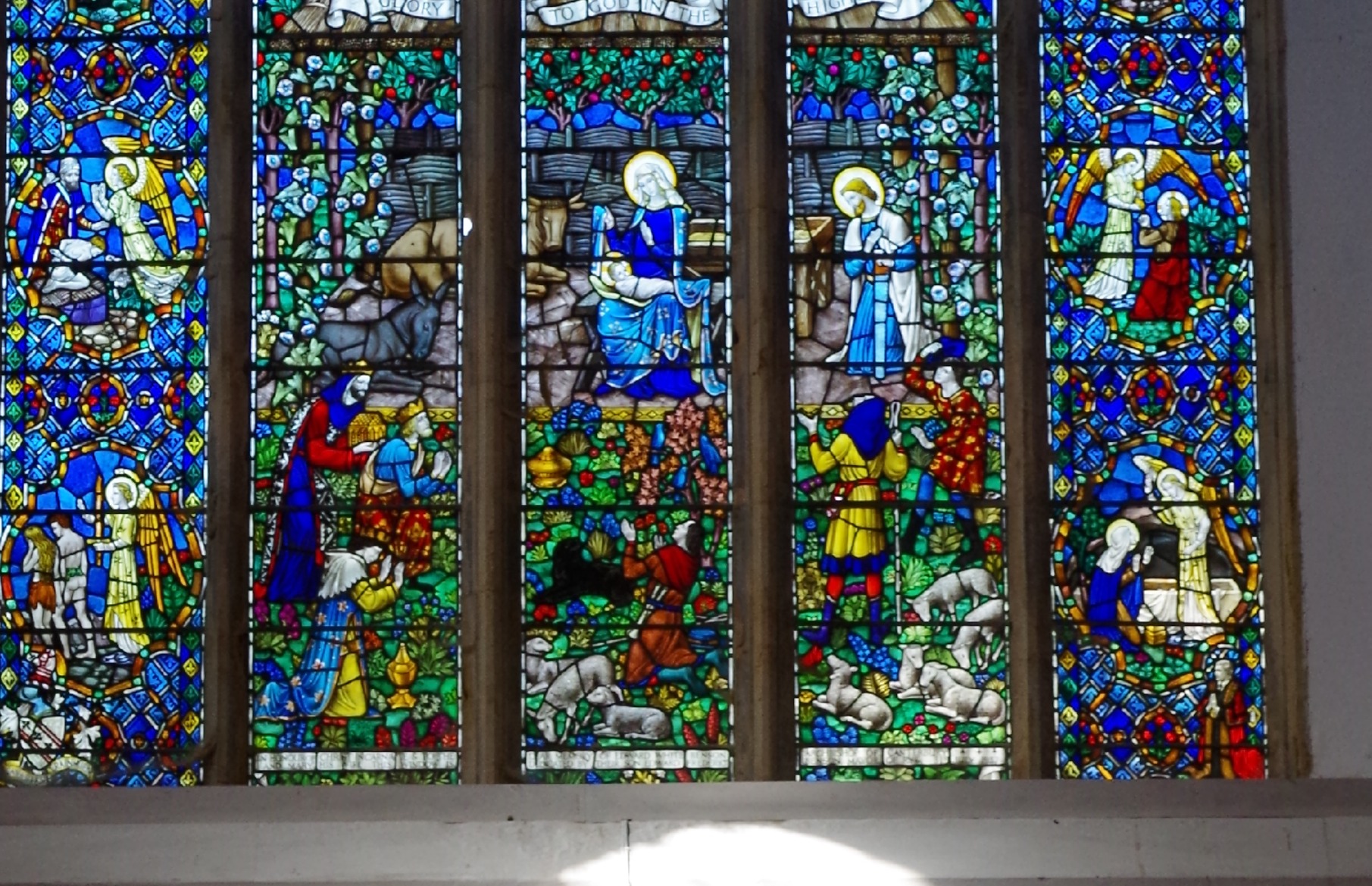
He was followed by E F Benson (Edward Frederic) Benson (1867-1940) who is known for his Mapp and Lucia novels which are set in a fictional town called Tilling that was based on Rye. They were adapted and made into a successful TV series. I know him through his ghost stories or ‘spook stories’ as he called them. He became Mayor of Rye twice and was awarded the Freedom of Rye which was the town’s highest award. He is buried in the local cemetery on the outskirts of town. ‘Fred’ as he was known bequeathed two colourful windows, the East and the West, in the local church, St Mary’s.
Other writers who lived at Lamb House were Montgomery Hyde and the prolific author of ‘Black Narcissus’, Rumer Godden.
It was in the south western corner of the garden that I found the pet cemetery which was dedicated to Henry James and Fred Benson’s pet dogs. I remembered it from my first visit where it was hidden behind vegetation. The cemetery is a small collection of headstones. There are no cats as, although Henry James, was;
‘A great lover of animals he would chase them (cats) away from the garden’
National Trust guidebook
The first headstone in what James called his:
‘domestic mortuary’
was dedicated to Tosca, his black and tan terrier who died in 1899.
Tosca was followed by Tim who was another terrier, then came:
‘my admirable little Peter’
Then there was another terrier, Nick. But James’s heart was undoubtedly given to Maximilian or Max, a red dachshund. According to his owner Max had
‘a pedigree as long as Remington Ribbon.’
He also described Max as:
‘the gentlest and most reasonable and well mannered as well as most beautiful small animal of his kind to be easily come across.’
Max loved being taken on long walks but, due to his love of chasing sheep, had to be kept on a long leash.
Henry was very upset at having to leave Max behind when he went on an extended trip to the US. He wrote to his lodgers of his homesickness and how much harder it was when thinking of:
Fred Benson also adored dogs and his favourite was a collie called Taffy. This is a photo of them together and Taffy is also commemorated in the East Window of St Mary’s church.
Rumer Godden loved Pekingese dogs and she owned several throughout her life.
I didn’t recall the pet cemetery being so large but the Trust’s intention is to recreate the garden so that it resembles
‘ the space that delighted and inspired Henry James and Fred Benson’
National Trust guidebook
I found the little cemetery with its little plain, simple stones very touching and a poignant reminder that these much loved pets were not forgotten. And as I read the names on the stones they seemed to come alive again racing around the garden at play.
There are so many stories within a churchyard. They are truly repositories of a community’s history in their recording of births, deaths and the history of local families. A simple epitaph can say so much about the people buried beneath it.
I almost missed the Allen headstone as it’s lying down on the grass. This would have been a shame as it is one of the loveliest and most poignant memorials in the churchyard and must have looked imposing when it was standing upright.
It’s dedicated to a married couple, Janet Lormie Allen or ‘Cissie’ who died young aged 23 on 10 October 1914, and her husband, Ernest August Allan, who died 45 years later aged 79. I don’t know why Cissie died so young: it may have been in childbirth, due to illness or to another cause. But she was greatly missed as the sentiment on the headstone shows.
At one side of the tombstone, beside the epitaph, stands a young woman, a maiden, dressed in a diaphanous, long flowing robe from which one strap has fallen, exposing a bare shoulder. The hair is untied and falls to her shoulders. Behind her is a tall, slender rose stem whose blossoms reach over her head. She looks upwards to the blooms above her as, with one hand, she reaches up to pluck a rosebud. In her other hand she already holds a single bloom half open. There is a hint of the waning of the Art Nouveau movement in the flowing lines of her dress and the romance of the image.
The significance of the rose being plucked is that it’s a bud and so not yet in bloom which indicates a life cut short.
I don’t know if Ernest remarried but he was buried with his wife in 1959 and so they were reunited. It’s such a shame that as the headstone is lying down as rainwater gathers on the carving of the young woman and, for example, there has been erosion on her face.
Despite my research I have not been able to find out any further details about the couple. But it’s one of the most beautiful memorials that I’ve seen, not just because of the carving, but, as I like to think of it, a love story written on an epitaph in a country churchyard. And as we approach St Valentine’s Day what could be more appropriate?
There are over 53 war graves and I found the plot containing most of them although there are others buried throughout the cemetery. The plot contains 18 German airmen, (one unidentified), and 50 British casualties. The others are Commonwealth service personnel of which 2 remain unidentified and I saw some of them as I explored.
The Hebrew section is near the crematorium and I found other notable permanent residents although a chill was beginning to make its presence felt as the afternoon wore on. Samual Courtauld and his wife’s headstone seemed quite modest considering his achievements. He was the great art collector who founded the Courtauld Institute of Art in 1932 which continues to this day and, after a series of gifts during the 1930’s, bequeathed his entire collection to the Institute on his death. He also created a £50k acquisition fund for the Tate and National Gallery in London which enabled them to acquire works that helped create national collections of Impressionist and Post-Impressionist art.
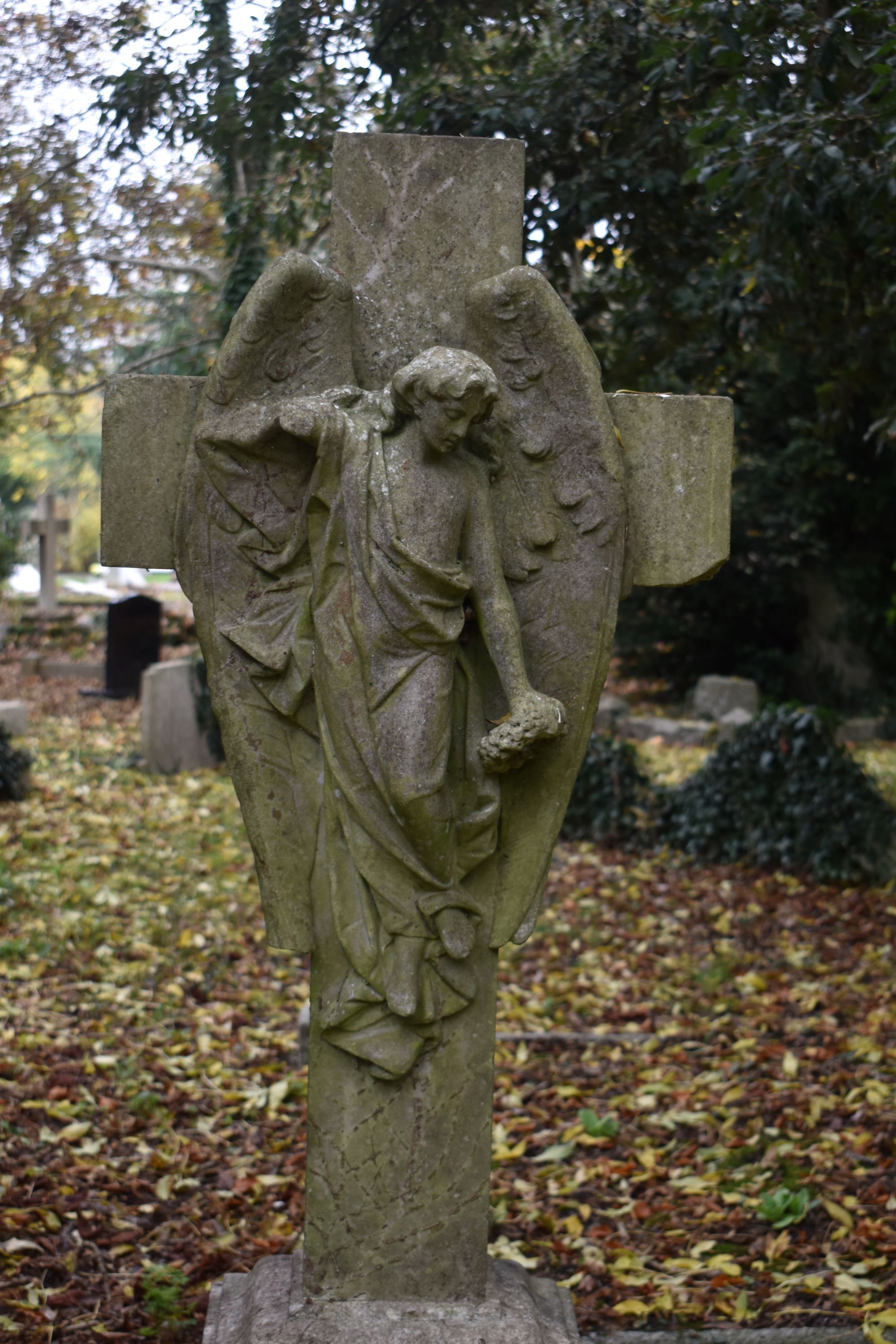
Another surprise was finding a definitely male angel draped in what could be described as a toga (it looked chilly) keeping watch over the grave of Arthur and Ethel Weston. It’s unusual as most angels in cemeteries and churchyards appear to be pretty, pensive young women.
There was a 2D representation of ‘Simply To Thy Cross I Cling’ on the Holness headstone. I found a metal Lourdes medal that had been placed on a stone cross.
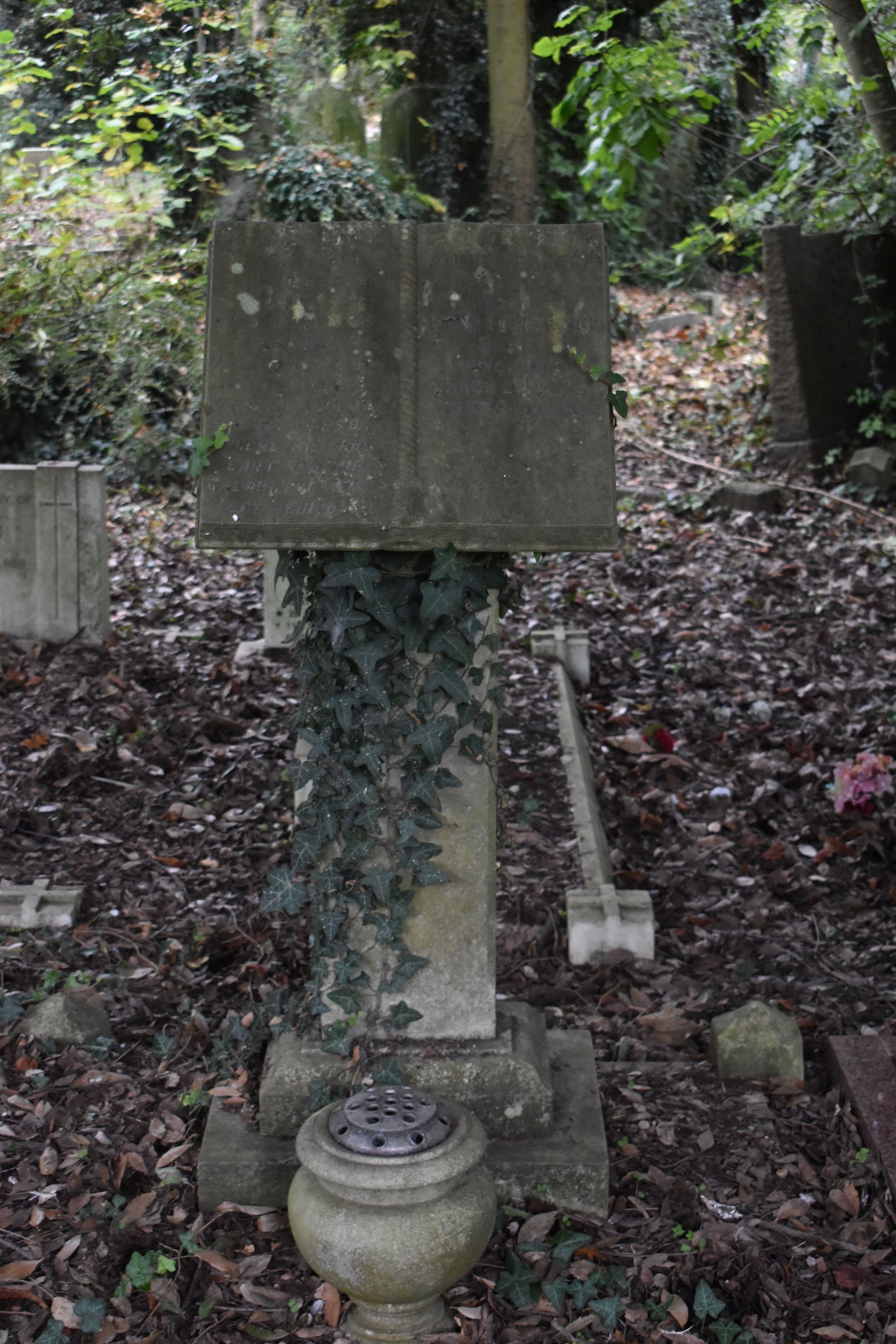
There was also a variant on the open book which was last month’s Symbol of the Month. Here it has been placed on a lectern style stand which made me think of the deceased standing up and telling all those around him of his or her good deeds or perhaps giving them a sermon.
On the elegant Devereux headstone dedicated to Thomas and his wife, Maria, I didn’t need to look at the epitaph to know that this was dedicated to a Royal Navy man. The two pillars have chains wrapped around them ending in two entwined anchors. There is also a Crown above them and the familiar shaking hands at the top.
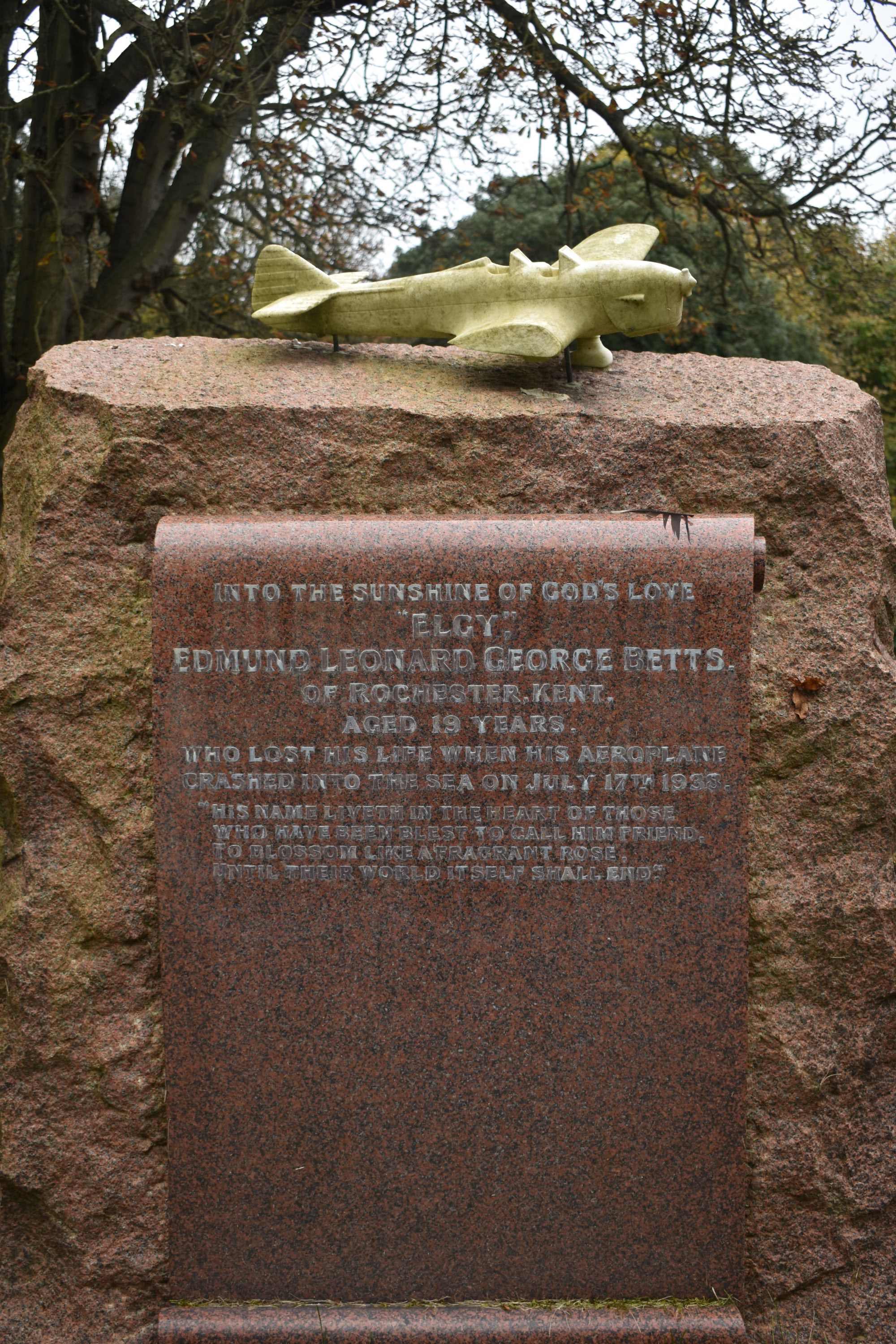
I then came across my other surprise of the day when I found another Grade II listed monument. I was surprised that the small model airplane on top of it hadn’t been stolen although I saw very little vandalism in the cemetery. The monument is dedicated to Edward Leonard George ‘Elgy’ Betts who died aged 19 on 17 July 1938. I am indebted to Findagrave for the information about him:
‘….crashed into the sea with a 2 seater light aircraft after taking off from Ramsgate airport. He was flying a Miles Hawk Trainer airplane belonging to Thanet Aero Club and it crashed into the sea off Cliftonville, Margate, Kent. He and his passenger, 16 year old Marjorie Wall, were killed….. She is also buried in Margate Cemetery with her parents. The sculpture of the plane is and accurate representation of the plane in which he died, including the registration letters G-AEFU.’
Ramsgate airport is long gone and has been replaced by an industrial. For a Sunday afternoon the cemetery was quite busy with visitors, mostly in cars, and a few like myself on foot. But I was aware that I didn’t have enough time on this visit to explore the entire cemetery so will do it in sections on future visits. I am already anticipating this although there is already plenty to write about!
It was a dark, gloomy grey Sunday when I decided to explore the cemetery and walked up the impressive avenue of yew trees studded with bright red berries to the two cemetery chapels. But, by the entrance, I discovered a smaller building hidden behind bushes in the Gothic style of the chapels. I thought that it might have been a mortuary chapel but, on looking at the map, it may have been a more prosaic toilet block now locked up. The cemetery is officially known as St John’s cemetery and also houses a crematorium and associated gardens of rest.
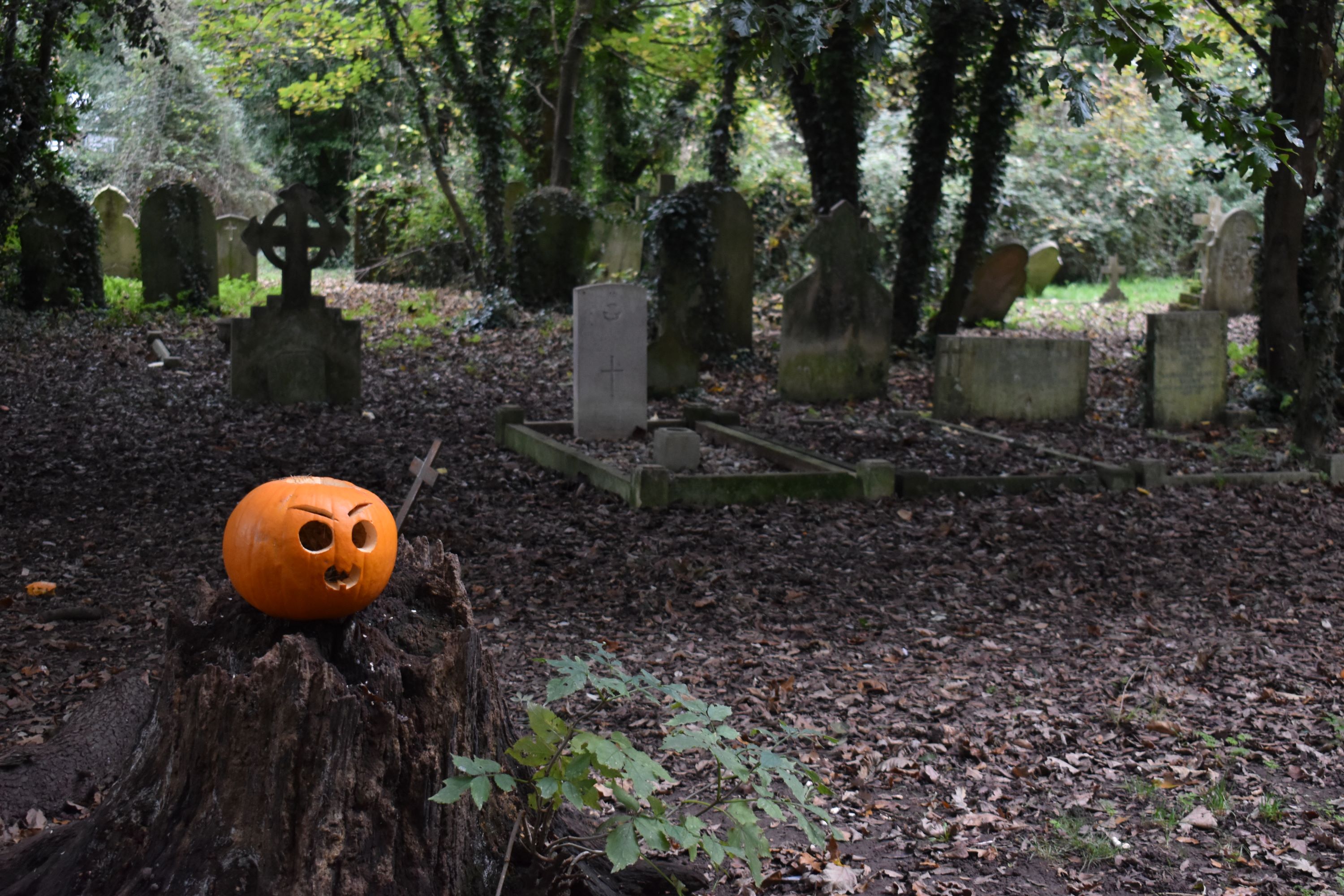
After the excitement of Halloween, people appeared to have donated their pumpkins to the local wildlife and I disturbed a squirrel scampering over one. However, although people may consider them to be a tasty treat. Forestry England doesn’t agree and suggests on their website that they be reused to make pumpkin soup or be added to compost.
Nothing prepared me for the size of the cemetery and, so far, I have been unable to discover its exact dimensions. I soon realised knew another visit or two would be necessary to explore it fully. The bright Autumn colours of the leaves were dulled by the greyness of the skies as I merrily kicked up leaves and looked for fungi. But all I could find were a couple of what I thought were parasol mushrooms lurking in the fallen leaves.
The cemetery was opened in 1856 and a sign marks the place of the first burial which was a woman, Harriet Ross, on 1 November of that year. Most of the first section along the main avenue dates from the 19th century. As I neared the chapels, there was a large monument in a gap between the yew trees, set back from the path featuring an angel praying before a cross with, I assumed, a portrait of the deceased looking approvingly on. This was on the LeMair monument.
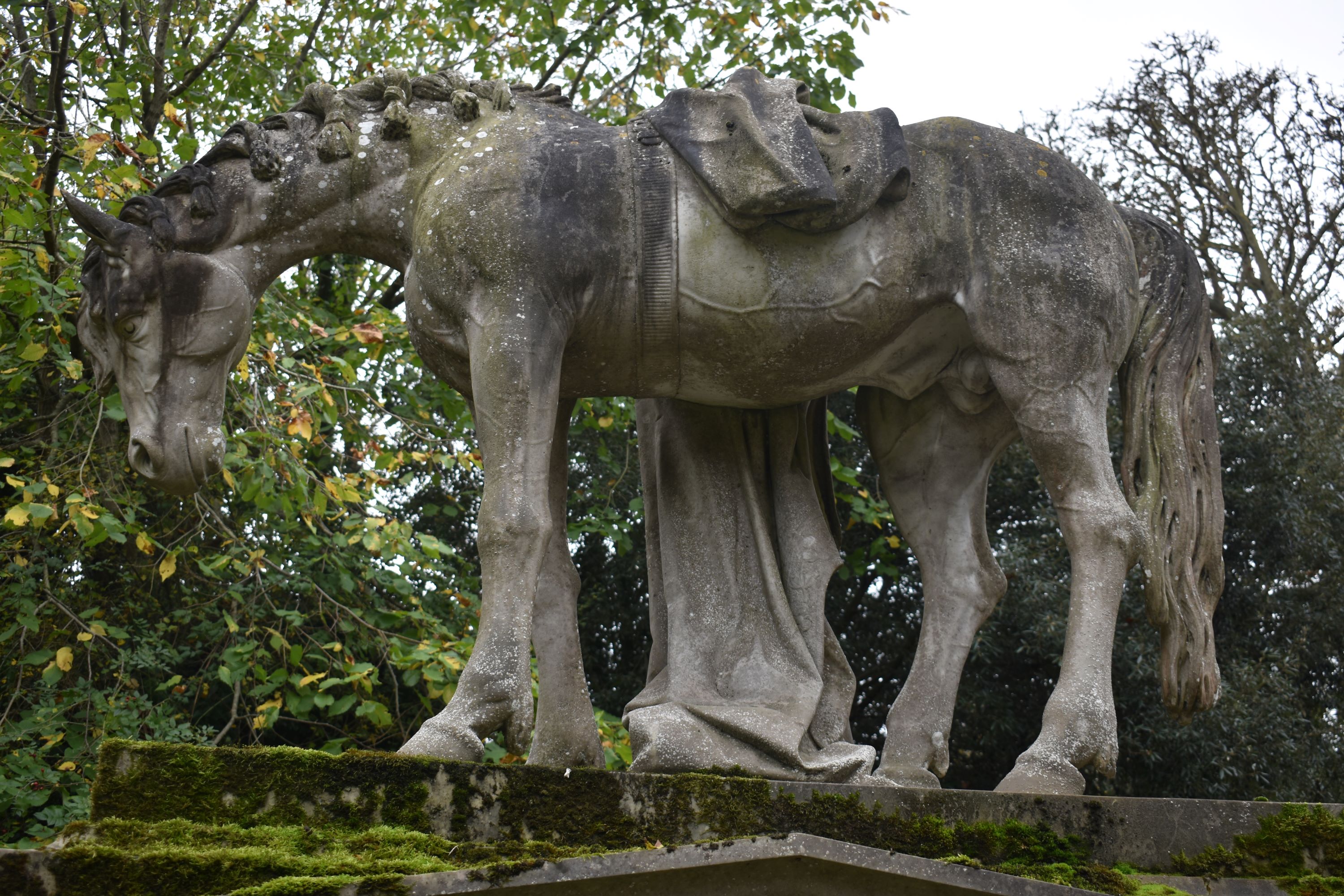
A sign announced ‘Sanger Path’, I wandered along it and came to my first surprise of the day. 4 angels forming a square, one at each corner, on the Reeve memorial. They are well sculpted with detail on the back as well. But then my eye was drawn, well I could hardly miss it, by the lifesize statue of a horse atop the Sanger monument. Beautifully sculpted, it is dedicated to a circus proprietor, John Sanger (1816-1899). He has a tenuous connection to one of my favourite Beatles songs. There is an upturned horseshoe above John Sanger’s epitaph for luck and his shows featured equestrian acts involving horses and ponies and a pantomime every Christmas. He originally went into partnership with his brother, George, but eventually they went their separate ways. George was brutally murdered in 1911 by an ex employee who then committed suicide. A photo album of George’s circus, its performers and animals came up for auction in 2017 and showed that a Victorian circus certainly was value for money! The Sanger circus appeared by royal command at Windsor Castle by Queen Victoria and they also took part in the annual extravaganzas at Crystal Palace.
One of George Sanger’s great granddaughters ashes are also interred in the family plot. This was Victoria Sanger Freeman (1895-1991) and she went under the sobriquet of ‘Queen of the Elephants’ with 4 of them under her charge. She was the last member of the Singer dynasty of circus performers. Beside John Sanger’s horse is another Sanger, Mary Rebecca, who married into the family. She is sandwiched between John and the Reeve ladies. She married William Sanger but I’m not sure at the moment where he stood within the Sanger hierarchy.
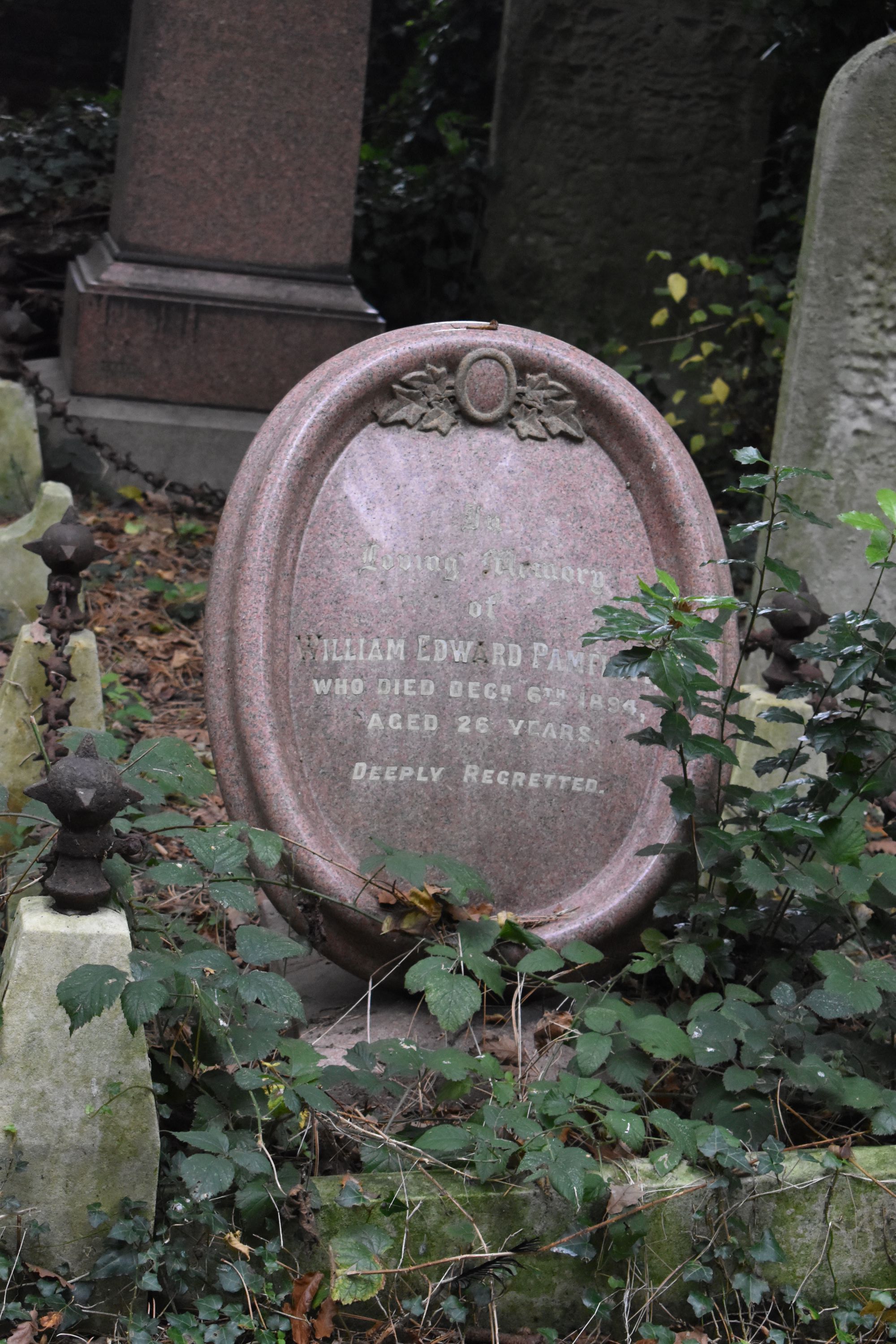
There was an interesting variation regarding epitaphs within the cemetery. On several graves, they were carved within an oval frame that was reminiscent of a portrait. I thought they looked very elegant.
There was only one way to discover why another path was named ‘Surfboat Path’ and halfway down I came upon the Grade II listed memorial to the Surfboat Disaster. It commemorated the tragedy that killed 9 Margate boatman on 2 December 1887 and was restored by the Royal National Lifeboat Institute, 120 years later in 2017. The town’s surfboat, ‘Friend to All Nations’, went out on that night in appalling weather to assist the sailing vessel, ‘Persian Empire’. Sadly, the surfboat capsized on the Nayland Rock in Margate with only 4 survivors. A surfboat is according to Wikipedia: ‘A surfboat (or surf boat) is an oar-driven boat designed to enter the ocean from the beach in heavy surf or severe waves. It is often used in lifesaving or rescue missions where the most expedient access to victims is directly from the beach’
The 2017 memorial service was not only to acknowledge the tragic event but also as a reminder that the crews and elements still face the same challenges as emphasised in the sad loss of the crew of the Penless lifeboat in 1981. To say that it is impressive is an understatement as it is surrounded by more modest memorials. It’s in the shape of a huge rock with a lifesize mourning woman, her hands to her head, face turned away, in Victorian dress and carrying a laurel wreath, an evergreen that symbolises eternity. There is an epitaph to the disaster beside her and above, on the top of the rock, are a collection of nautical symbols: chains, anchors, ropes and a life belt with the surfboat’s name on it. I was stunned although I would have expected a few nautical graves due to Margate being on the coast.
In case you were wondering why there hasn’t been much activity on shadowsflyaway recently, it’s because WordPress has had an upgrade. I apparently now have a website instead of a blog.
This wasn’t something that I had anticipated but they have upgraded or updated me so here we are. I’m trying to work out where everything is at the moment. But I’ll get there and be posting away before long.
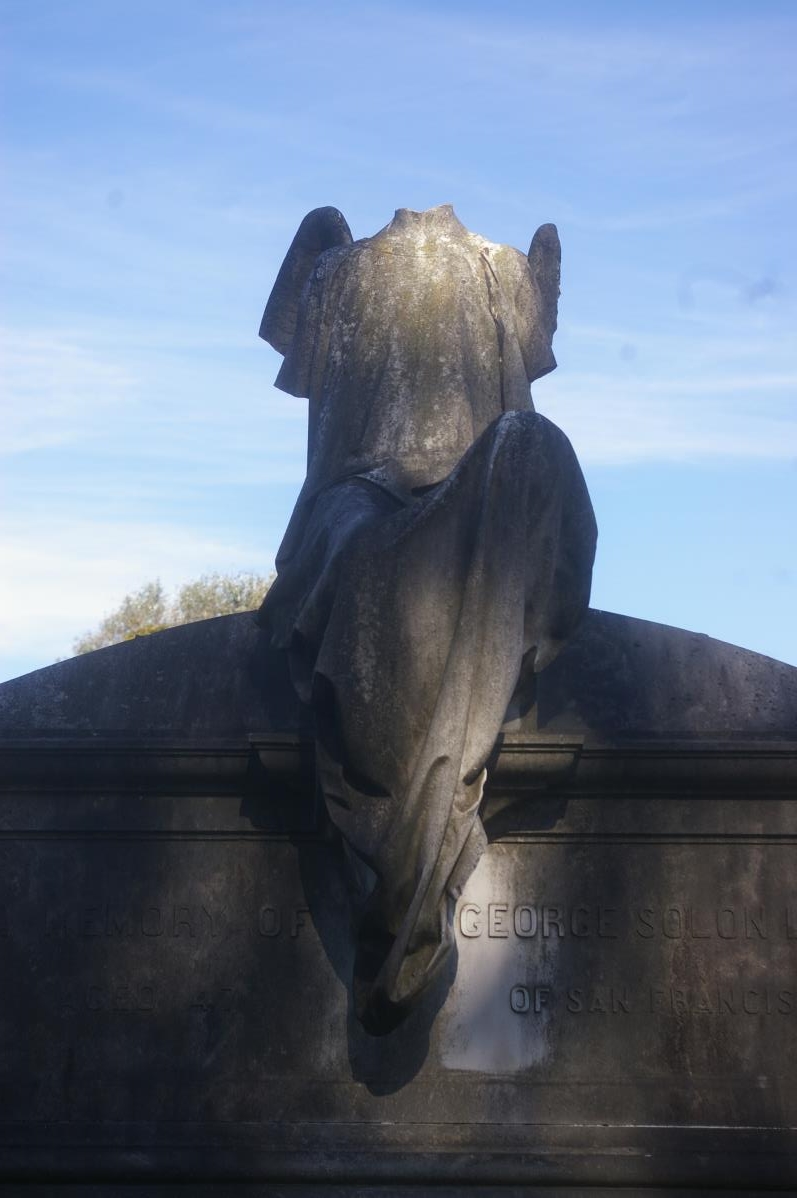
The angel up above is a male angel which is unusual in Victorian cemeteries. He is in Kensal Green Cemetery in London. If you think he look scary or a little creepy without his head, I have seen archive photos of him with a head and, believe me, he doesn’t look any less unnerving!
If I wanted to be flippant I could have subtitled this post ‘The Tracks of my tears’ as 1, and a group of members of The Dracula Society, enjoyed a guided tour along the fragments of the Necropolis Railway in deepest Surrey. Our guide, John Clarke, had given a fascinating talk on the Railway after discovering the abandoned North station buildings at Brookwood in the 1970’s.
The Necropolis Railway was commonly known as The Stiffs Express and ran from a dedicated platform at Waterloo station to Brookwood station or Necropolis Junction as it was originally known. It was created by Victorian enterprise and entrepreneurship in 1854 as its owners eagerly anticipated a lucrative trade from transporting up to 10,000 bodies a year to the new Brookwood Cemetery. This was approximately 23 miles out of London and was envisaged as relieving the pressure on overcrowded city churchyards. The Railway had two stations; North and South. One was for Anglicans and the other was for Non-Conformists which was basically anyone who wasn’t an Anglican.
The Victorian class system was rigidly enforced on the Railway even in death. Charles Blomfield, the Bishop of London, declared that it was completely unacceptable for the families of people from different social classes, living or dead, to be forced to share the same train on the journey to the cemetery. After all, no-one wanted people who had led ‘decent and wholesome’ lives to be placed in the hearse car beside those who had led ‘less moral’ lives. You might think that once someone’s dead what does it matter…..
The Railway wasn’t cheap. Here are the fares with their modern equivalent:
1st class 6s = £92
2nd class 3s 6d = £23
3rd class 2s 6d = £12
Coffin tickets were priced for 1st/2nd/3rd class according to the type of funeral booked.
A train left Waterloo at 11.40am and there was a return one to Waterloo at 3.30pm so mourners could be out in the countryside most of the day. This meant that, unless the funeral was on a Sunday, a working person would have to lose a day’s pay. However refreshments were available at both stations and consisted of home cooked ham sandwiches and fairy cakes. At the talk, Mr Clarke revealed that there had been a sign over the counter announcing ‘Spirits served here.’ There were only two accidents during its 90 years of existence and neither involved fatalities.
But the anticipated trade didn’t take off. Instead of 10,000 burials per year it was at best roughly 2000 and by the 1930’s the train journeys had tailed off to 1 or 2 a week. It was the Luftwaffe that finally killed off the Necropolis Railway and it closed forever on 11 May 1941. After the end of Second World War its surviving parts were sold off as office space.
But we still found its traces around Waterloo. On Westminster Bridge Road the magnificent booking hall still stands with most of the original features intact although the London Necropolis Railway sign has long since gone. The booking hall dates from 1902 and used to be the HQ of the British Haemophilia Society but is now the offices of a Maritime broker.
Then we walked up Lower Marsh and into Hercules Street to see what remained of one of the 3rd class platforms. These were meant for working people and, as we looked along the underneath of the platform from ground level, someone in our group pointed out the metal posts on the pavement beneath. These were inscribed with the word ‘LIFE’ whereas the platform up above had been concerned with Death. A hotel is now in place of where the cortege dramatically swept through Waterloo station as they entered.
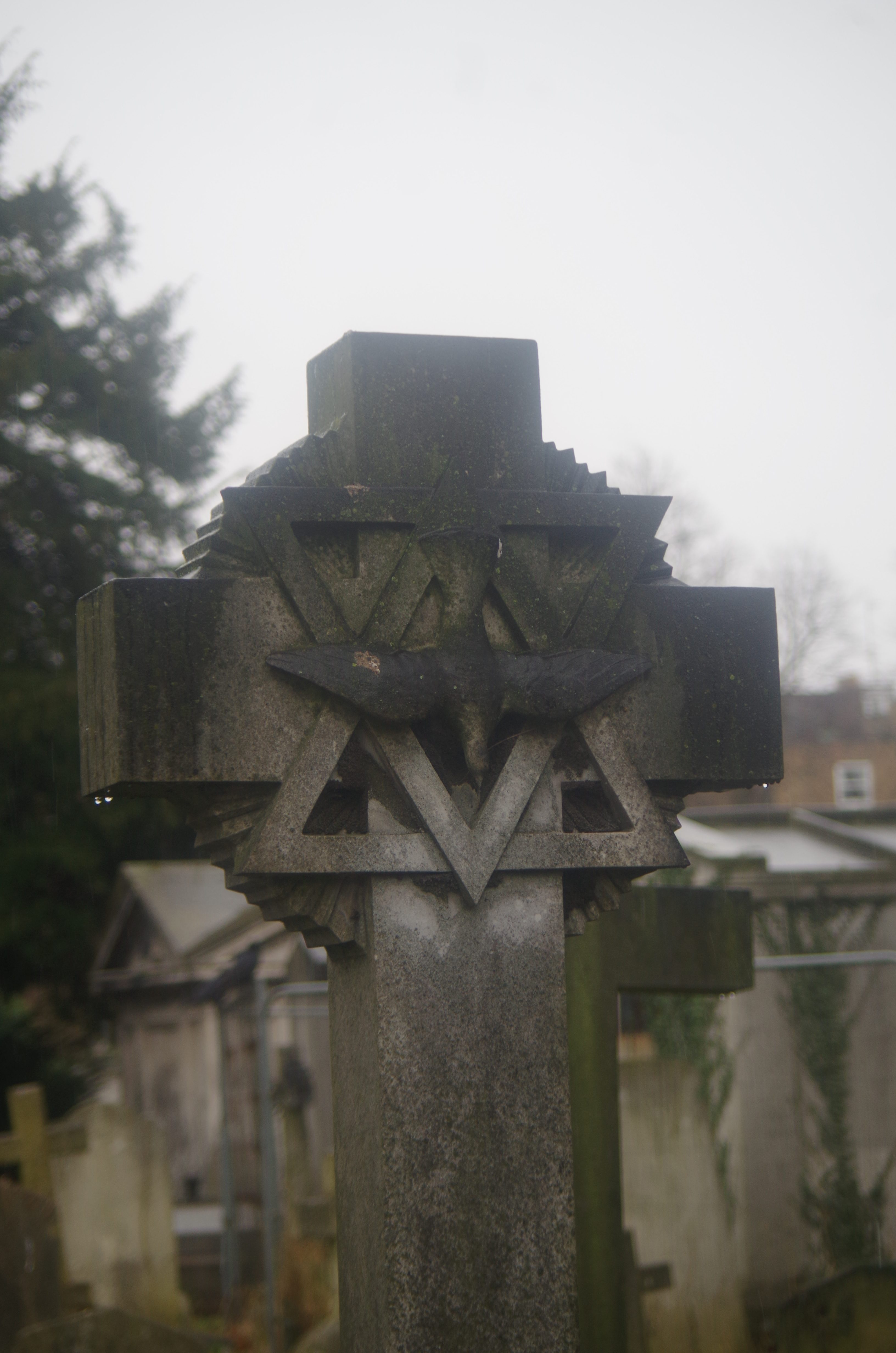
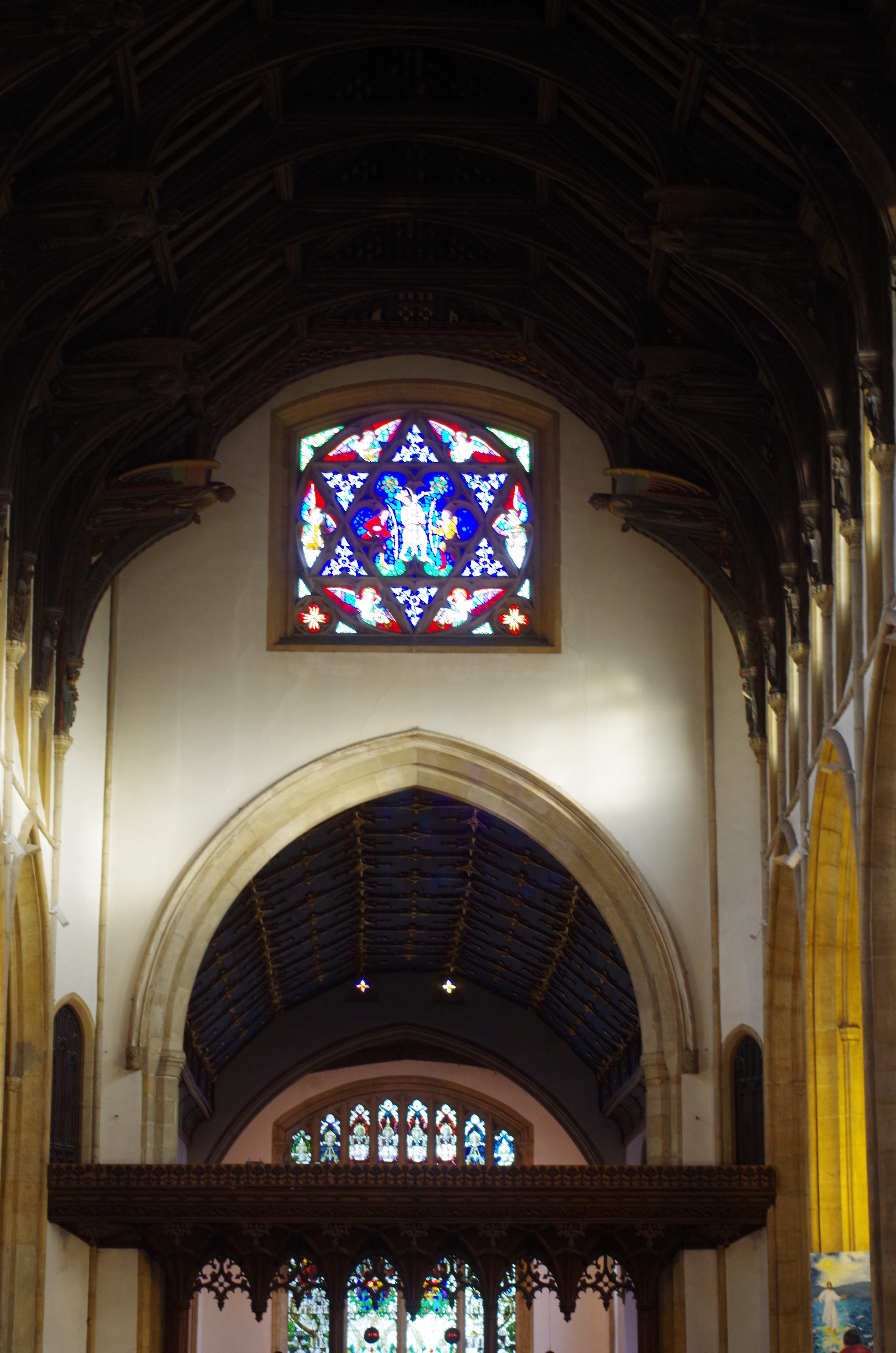
This month’s symbol is one that I’ve always associated with the Jewish faith where it’s known as the Star of David. But when I spotted a prominent example in Brompton Cemetery which isn’t a Jewish Cemetery I wondered why it was on that particular monument. But on a recent visit to St Mary’s church in Bury St Edmunds I saw a six pointes tar in the East window and read in the guidebook of its significance with Christianity. The window was part of the 1844 restoration and is based on a 14th century example on the nearby Abbey Gate.
According to St Mary’s guidebook the star is an important Christian symbol as:
‘Jesus was descended from David and is the Messiah for both Jews and Gentiles, the star of David is an important Christian symbol.’
This may account for the apparently Hebrew looking writing in the centre of a six pointed start dating from the 14th century on a window in Winchester cathedral. Another one in the same building, dating from the same period on a choirstall canopy, was recorded by Pevsner.
In Christianity it’s known as the Creator’s Star or the Star of Creation. The six points are alleged to represent the six days of the Creation and also the six attributes of God. These are:
Power
Wisdom
Majesty
Love
Mercy
Justice
But the six pointed star is a universal symbol. No-one is quite sure where or when it first appeared bit it’s known and revered throughout both Eastern and Western religions and faiths. For example, in Buddhism it has been found in the Tibetan Book of the Dead and has been used as decoration on Masonic temples, In Freemasonry the star is seen as a representation of the male and female. This is also an important element in Hinduism as the combination of triangles are also seen as motifs of male and female and the star becomes an emblem of Creation and divine union.
There is a darker side to the six pointed star as, in Occultism, the star is a powerful symbol for conjuring up spirits and as a talisman. In this the star is seen as representing the 4 elements:
Fire – upwards pointing triangle
Air – opposite upwards pointing triangle
Water – downwards pointing triangle
Earth – opposite triangle pointing downwards
But the Rastafarian faith also uses the Star of David or the Magen David as a central motif. Here it’s coloured either black or appears in the Rastafarian colours of red, green and gold. This is because the Rastafarians believe that their leader, the late King of Ethiopia, Haile Selassie, was a divine being. He’s always been considered as being directly related to King Solomon’s father, King David, and therefore to Jesus. This is based on a visit by the Queen of Sheba to the Israelite king, Solomon, as recorded in the Book of Kings 1 Kings 10 1:13. Rastafarians believe that during the visit they slept together and a child was born. This child led to a direct line of descendants to Haile Selassie.
Although the Star of David is now seen as almost exclusively Jewish it wasn’t always so. It is reputed to have originated in ancient Arabic Kabbalistic texts in which it was known as the Seal of Solomon and became the Star of David in the 17th century. The Jews of Eastern Europe in the 19th century adopted it as a representation of their faith and Hitler used it as a badge to identify Jews during the Second World War. Today it is on the national flag of modern day Israel.
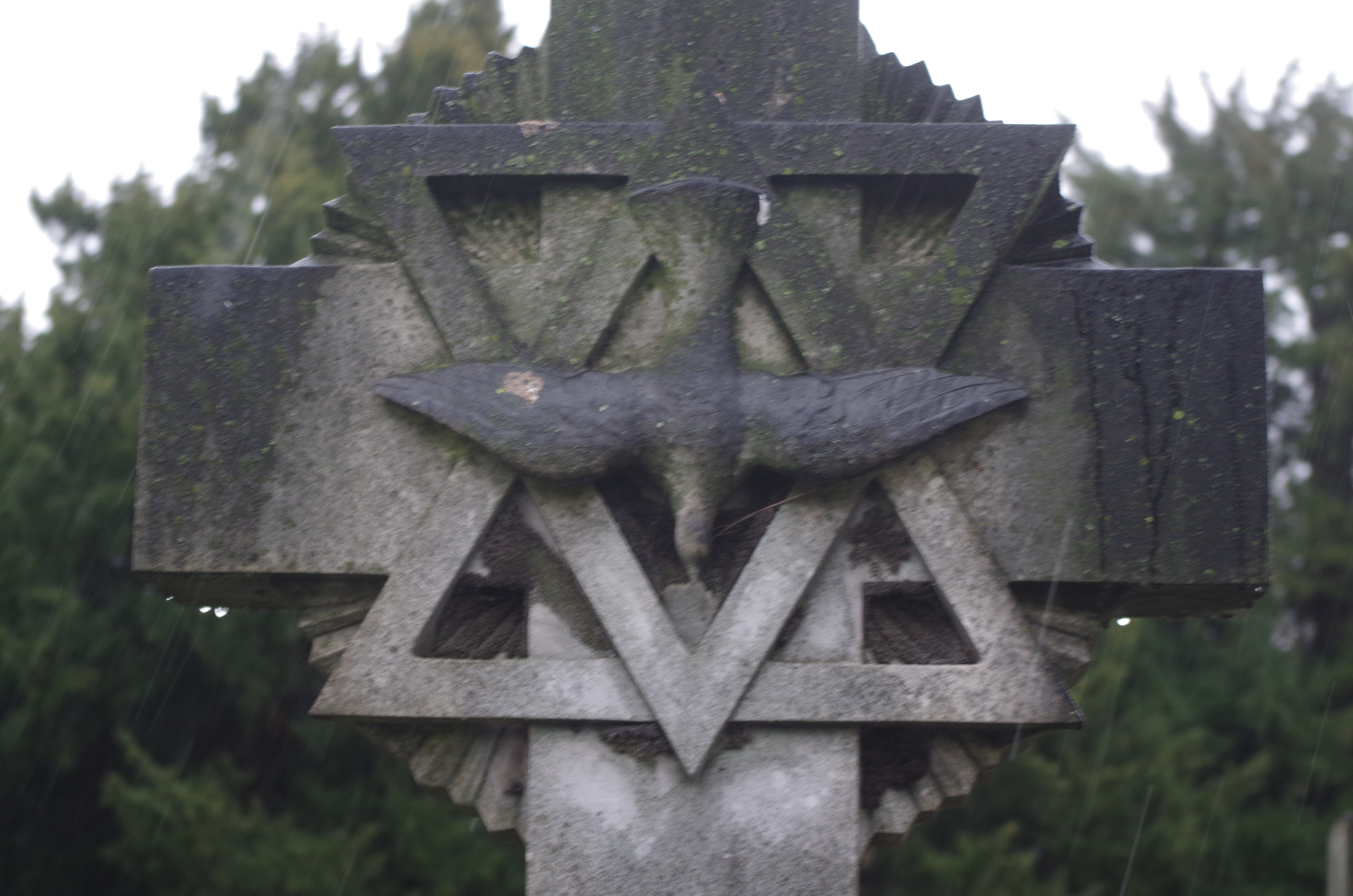
But what does it mean in funerary terms and why is it in this particular monument? I looked more closely at the first epitaph beneath it.
It was dedicated to a Thomas Henry Bowyer Bower, the son of Captain Thomas Bowyer Bower whose epitaph is lower down. Thomas died young, aged 24, at Port Palmerston, Darwin, Australia. I’m not sure if he’s actually buried there but, perhaps in this context, the star has been placed there as a symbol of the spirit that survives death. Over the centuries people have used the stars to guide their way and I thought that maybe the star was placed here as an eternal light guiding the deceased through the darkness back home again. Note the quotation on the epitaph from Deuteronomy 32.12,
‘The Lord alone shall lead him’
This may be a reference to the to North or Pole Star which is traditionally associated with Jesus.
There is a downward pointing dove placed over the star which is a symbol of the Holy Ghost, part of the Holy Trinity: Father, Son and Holy Ghost.
In the King James version of the Bible in Luke 3:22 :
‘And the Holy Ghost descended in a bodily shape like a dove upon him, and a voice came from heaven, which said, Thou art my beloved Son; in thee I am well pleased.’
I wondered if the last words of this biblical verse referred to the father and son relationship.
My own interpretation of the star and the dove is that it may have been a final goodbye from a father to a son who died far from home and wanting him to know how much he was loved.
There had been blue August skies above me as I’d plodded up Woodplace Lane again. The suburbs of Coulsdon and Hooley soon petered out to give way to fields. I lost my bearings around the newly expanded Netherne on the Hill. But I retraced my steps and found myself at the entrance of a large ploughed field and saw a gap in the trees on its opposite side.
I began to walk across the field towards it. As I did so 3 or 4 policemen and women walked past the entrance. ‘Yes, we’ve found her, she’s visiting the cemetery, it’s ploughed so no damage to crops otherwise we’d have suggested that she walk around the border.’ said one into his walkie-talkie. ‘Doesn’t look like a ghoul.’ They walked on and I wasn’t sure whether to be flattered or insulted – me a dangerous person? Obviously the neighbourhood watch had been on duty and I wondered what had been going on at the cemetery.
A defiant purple branch of buddleia stood tall over the wait high wildflowers as a white butterfly fluttered around it. Bright splashes of colour from ragwort, scarlet pimpernel, speedwell, red sorrel and fleabane stood out amongst them. There were also fresh puffballs and older ones half hidden in the undergrowth.
The birdsong stopped as I stood inside the graveyard and looked around. It didn’t look as forgotten as it had done in 2007. The cemetery had been cleared but was now rampant again with summer vegetation. There was now a clear border around it which made it easier to explore. The horse chestnut trees still stood tall with bright shiny conkers here and there beneath them. At the bottom of the cemetery was a luxuriant bush of ripe elderberries and I looked over the hedgerow to see two horses grazing in a nearby field.
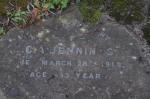
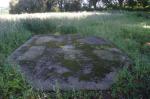
It still seemed incredible that 1350 people were buried here but now the cemetery felt less abandoned. I looked again at the 6 memorials set into the concrete plinth, presumably to preserve them, but at least I now knew why the 7 year old Betty Trotman had been buried there.
In 2010, the developers of the Netherne on the Hill site had claimed in a local newspaper that they had never been approached by any family members of the people buried there. But in 2013, a Croydon paper reported on the 2 and a half year campaign by two local people, an amateur historian called Adrian Falks and a Ms Wendy Mortimer. They had both called for the cemetery to be cleared and the graves within it to be maintained.
Ms Mortimer knew that she had a great-aunt, Frances, who had been buried there in 1915 and had been extremely upset when visiting the graveyard in 2008 to find her last resting place to discover how overgrown the site was. She had had to crawl under a fence to actually get inside to find 5 feet high brambles and no memorials. Ms Mortimer’s great-aunt, Frances, had been an epileptic, which at the time wasn’t properly understood and appropriate treatment didn’t really exist. Frances had become brain damaged after falling from a wall, presumably during an epileptic fit, and had subsequently been sent to Netherne where she was classed as ‘an idiot’ in the less than PC classification of the time. A photo in the paper shows Ms Mortimer kneeling in the middle of the then cleared cemetery beside flowers in memory of her great aunt. It was a tragic tale of a life ruined which nowadays with the correct medication would have been very different.
As I walked around the edge of the cemetery I could see holes dug by animals, presumably foxes. Again in 2010, it was alleged by another Croydon paper that burrowing animals had dislodged some of the remains buried there and that bone fragments had been found.
Due to the war hospital scheme which displaced the asylum population in order to treat nearly half a million wounded or shell- shocked soldiers, some of which are buried here. There are also the children of serving soldiers interred there.
I am indebted to Adrian Falks’ research on the soldiers who were buried at both Cane Hill and Netherne Asylums. However, the names of most of the servicemen remain hidden in closed records. But here are the stories of two of them who are buried at Netherne.:
In 1914, Gunner William James Carpenter joined the army for a better life. But he found Army discipline was too tough and often went AWOL which led to constant disciplining. William finally deserted just before being sent to France in 1915. But after an argument with his wife he left their Peckham home and vanished for nearly 90 years. He had died alone in Netherne hospital but it’s unknown how he ended up there.
Until 1962 a German POW, Hermann Albert Schnid, was buried there. He had contracted syphilis which was treated at the hospital and he’d died there in 1917. In 1959, the German War Graves Commission wrote to the Netherne authorities requesting that his body be exhumed and moved to the Cannock Chase German military Cemetery in Staffordshire.
Mr Falks also discovered the names of a few of the children of serving soldiers who were buried in the cemetery. He was quoted in a newspaper article as saying that he thought the state of the cemetery was ‘shocking’ and ‘that all but one of the children buried at Netherne had had fathers who were fighting in the First World War.’
Some of the children are:
Leslie Thomas Jackman aged 11 – died 11/12/1917 – whose father was a serving soldier
William Arthur Simmonds aged 15 died 15/10/1917 – his father was presumed killed at the Battle of Arras.
Sidney Peters aged 5 – died 03/10/1915 – had a soldier father.
Jessica Davis – aged 11 who died from TB on 20/02/1915. It’s not known if her soldier father survived the war.
and these two:
Both of her parents, Dorothya m
William John Newland – aged 15 – died from pulmonary TB on 18/02/1918. I found his case particularly poignant as he was an orphan without next of kin who had been transferred from an Epsom workhouse infirmary. I hoped that someone was with him when he passed away.
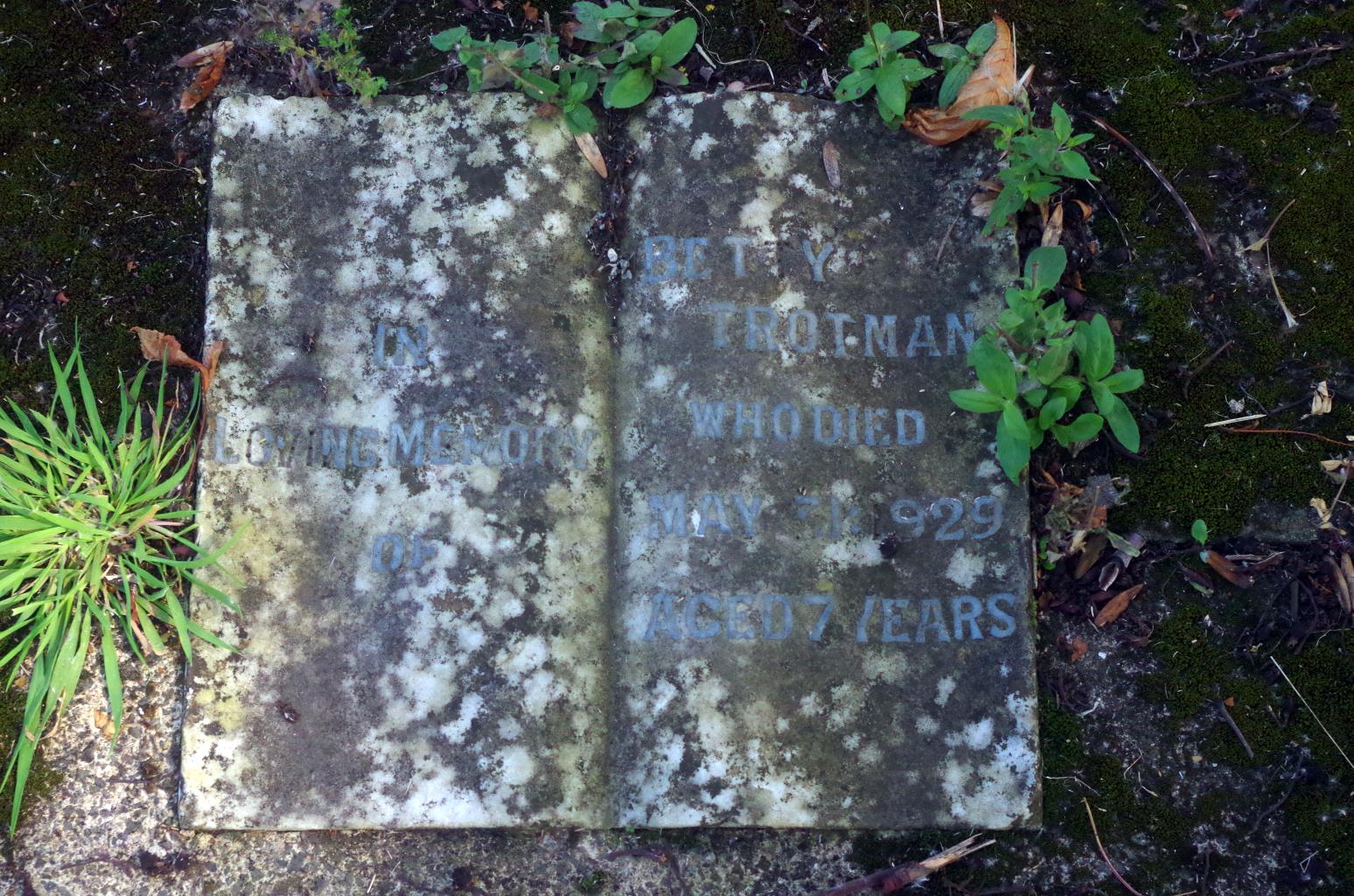
And finally Betty Trotman, aged 7, recorded on the Book of Life memorial as having died on 31/05/1929 after a 5 month stay in Netherne. It had been surmised that her parents probably worked at the hospital. I am indebted to a local resident who had searched for more information on Betty’s family via genesreunited. Both of her parents, Dorothy and Charles were Londoners and have moved to Godstone in Surrey. They married in 1921 but it’s not known if Betty had any siblings. Dorothy died in 1991 aged 90 and Charles preceded her in 1959 aged 65.
Asylums were often overcrowded and an epidemic such as influenza or TB would soon spread amongst patients.
I haven’t found any photos of these incumbents in Netherne cemetery which is sad as I would have liked to be able to put faces to the stories I stood there in the hot August sunshine and realised that under the wildflowers were people with names, Jean, William, Betty, Frances, etc who had all ended up in Netherne often because there was nowhere else for them to go. But some of the once anonymous dead had been reclaimed by their relatives and they no longer rested alone and forgotten.
But one of the saddest and most moving stories is undoubtedly that of 8 year old Jean Barboni who died in Netherne in 1915 and whose nurse mourned him for the rest of his life.
Part 3 – the nurse that never forgot the little boy she cared for and a patient’s remarkable artistic legacy.
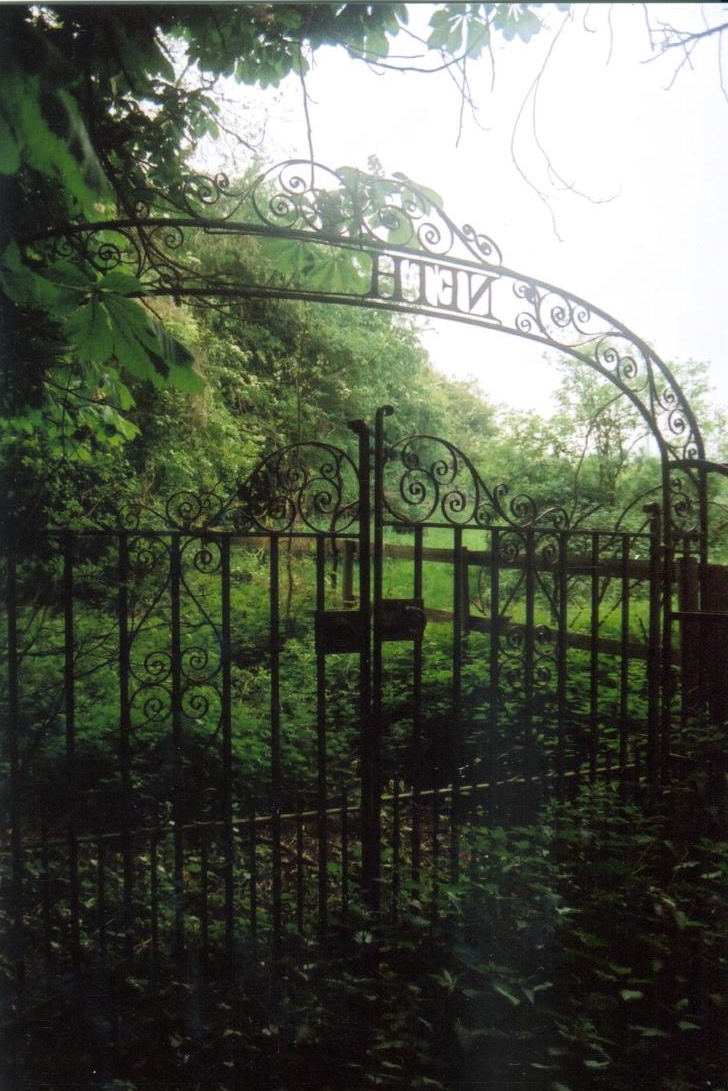
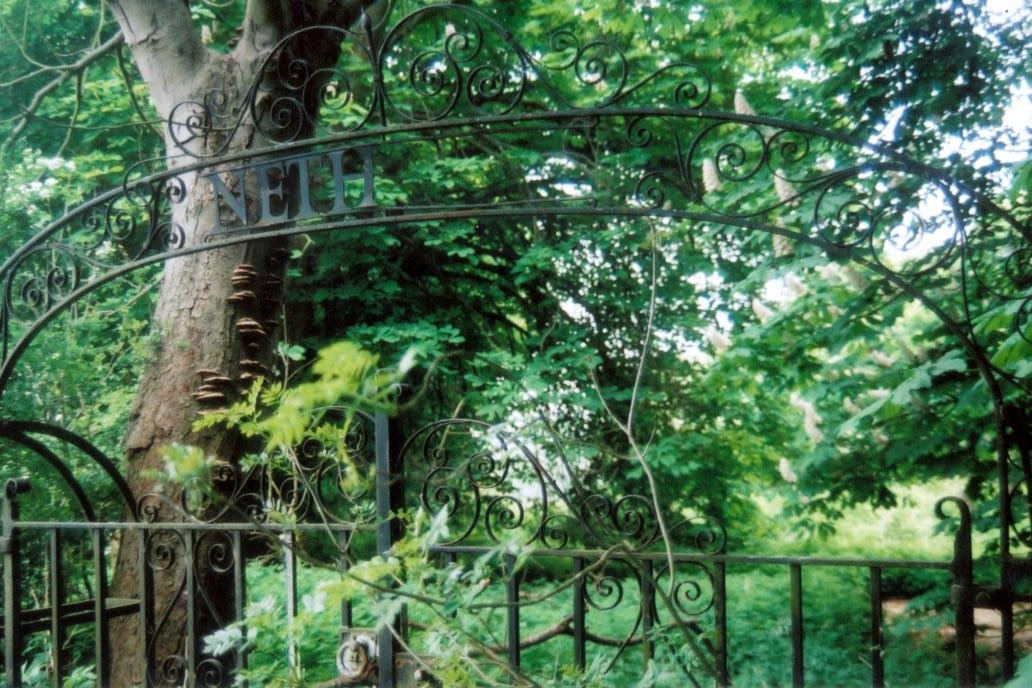
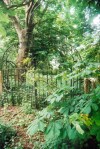
I first visited Netherne Hospital cemetery on an overcast day in May 2007. It’s located at the edge of a large farmer’s field and is a broad, sloping strip of land bordered on three sides by huge, majestic, spreading horse chestnut trees. You can look across the cemetery to the local beauty spot Farthing Downs in the distance. The trees were luxuriantly leafy on my visit and the graveyard certainly looked more appealing than in the photos I’d seen of it on an urban explorer’s website. He had visited it in January when it looked very desolate and forgotten. But on that day in May I saw large white candles of horse chestnut flowers in abundance as I peered through the two elegant, probably Victorian, iron gates. Once they must have had Netherne Asylum in large iron capital letters over the top of them but now only ‘NETH’ remained. They were almost being engulfed by large branches and leaves trying to force their way through. ‘Someone will steal them for scrap.’ I thought to myself as I pushed one of the gates open and entered.
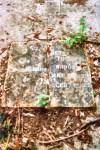
Inside Nature had taken over with a thick carpet of green brambles and undergrowth covering the entire site and it looked as if no one had been there in a very long time. Without the gates the cemetery would have just looked like a fallow field. It was impossible to see any monuments or memorials but I did find a raised concrete plinth in which 2 tombstones and a smaller Book of Life memorial had been inserted possibly to preserve them. The Book of Life was dedicated to a 7 year old named Betty Trotman and I wondered why a child was buried here. Little did I know as I closed the gate behind me that it would take me nearly 10 years to find out.
Netherne was sited at Hooley in Surrey and was originally known as the Surrey County Asylum or Netherne Asylum before being renamed Netherne Asylum.. It closed in the 1990’s along with the other large asylums and hospitals in the county. Surrey has always been seen as an affluent region with its exclusive golf clubs, Tudorbethan stockbroker houses and the rolling hills of the green belt. But it has another, less publicised claim to fame. For over a century at least it was also home to several lunatic asylums originally intended for paupers and also homes or children with learning difficulties. It was felt that the incurable or mentally ill might improve if taken out of the city and into what was then countryside.
The creation of the asylums also reduced the workhouse population as they were designed for paupers. Cane Hill in Coulsdon, Netherne in Hooley, the Epsom cluster, Earlswood in Redhill and St Lawrence’s Hospital in Caterham were amongst them. Iain Sinclair in his book, London Orbital, described them as mandalas of madness. All now gone; either demolished or converted into upmarket housing estates.
In 2007 Netherne Hospital as it later became known was still in the throes of being transformed into an instant village; Netherne on the Hill. The developers later stated that they were ‘leaving the cemetery well alone and allowing the wildlife to take over.’ It would be another three years before relatives of those buried there would start to come looking for their last resting place. At that time I had no idea that there were 1350 people buried there and that these included children, ex-soldiers, epileptics, the elderly as well as the mentally ill and those who had nowhere else to go. The people buried in the cemetery seemed to be as anonymous in death as they had been in life apart from the memorials embedded on the plinth.
The cemeteries and burial grounds attached to these asylums and hospitals can be difficult to find. Often the markers on the graves have gone and so there’s no sign of their original purpose and as a result they can often become overgrown and look abandoned. For example, in 2000 the Somerset & Bath Lunatic Asylum, or the Mendip Hospital as it later became, burial ground in Wells was put up for sale by the NHS as a freehold development opportunity. Nearly 3,000 people, patients and staff, are buried here with the last burial having taken place in 1963. The grave markers had long since been removed. However there was a public outcry from the local populace, some of whom may have had relatives living or working in the hospital and they formed a group to stop it. There is a now a thriving Friends of Mendip Hospital Cemetery group and so the burial ground looks safe.
I started researching the cemetery and discovered that asylums had a varied population. In Rachel Lichtenstein and Iain Sinclair’s book Rodinsky’s Room they go in search of a man, David Rodinsky, who vanishes suddenly from a room above a back garden synagogue in Spitalfields and discover that he ended up in Warlingham Hospital, another Surrey asylum, where he died. They speculated that his Eastern European Jewish scholarly background and language of codes and cabbalism may have led to him ending up there as it would have been incomprehensible to anyone unfamiliar with it. Other patients may have suffered from what we now term learning difficulties which the Victorians classed ‘idiots’. There were also the elderly with dementia or people with degenerative diseases such as syphilis.
The soldiers appeared in asylums after the First World War when the authorities devised a scheme to treat the almost half a million wounded and shell shocked soldiers. This involved decanting the current patients elsewhere and then re-designating the asylums as ‘war hospitals’. By 1920 over 250,000 soldiers had been treated with 9% of them with psychiatric problems. It saved lives but caused upset and distress to the decanted patient population. However, not only soldiers were admitted to the ‘war hospitals’ but also their families.
There was an asylum in every county and in 1914 there were 102 in the UK with a total population of 108,000 men, women and children living within them – some permanently. The sexes were strictly segregated and only met at events such as dances or sports days. Men usually worked on the hospital farm and women in the laundry or kitchen. Women could be admitted as a result of having an illegitimate baby, rape or post-natal depression. Asylums were often overcrowded and an epidemic such as flu could kill many patients.
I’d read on the urban explorer website that Netherne that there had been a campaign by a local amateur historian to have the cemetery cleared and accusing the developers of neglect. It was time for a return visit especially as my research had enabled me to put names to some of those buried there and their poignant, often heart-breaking stories.








































 shadows fly away