They are the sentinels of the silent cities, standing tall and spreading out their branches to shade the last resting places of the permanent residents. Yew trees can often be older than the churches which they nestle beside in the churchyard and may predate Christianity as many churches were built on pagan sites of worship. In fact there are reputed to be at least 500 yew trees of this vintage! And incredibly, there are 10 yew trees in Britain that are believed to predate the 10th century.
These venerable trees have many associations and traditions. I will try and concentrate on a few but they are usually associated with churchyards and burial grounds. The most common one is that they are nourished by the decaying bodies beneath them and, as they can grow up to 20 metres high, this could seem plausible. Another tradition states that yews were planted on plague victims graves to protect and purify them – if this were true than some churchyards would resemble a forest!
Another common tradition is that they were planted to prevent ‘commoners’ from grazing their cattle on church ground. This was because yews are very poisonous to livestock. The needles are deadly, and Shakespeare used this in Macbeth when the three witches conjure up a deadly brew that contains, amongst other unpleasant ingredients:
‘Gall of goat, and slips of yew Silver’d in the moon’s eclipse,’
However, the Celts saw the yew as a symbol of immortality, death and resurrection. The yew’s drooping branches are able to root and form new trunks where they touch the ground. The one at St James in Cooling was living inside its dead ancestor which demonstrates its ability to renew itself.
In fact, they are one of the most long lived trees in Western Europe but are not considered ancient until at least 900 years old. The oldest tree in Scotland, and possibly Europe, is the magnificent Fortingall yew in Glen Lyon. It has been suggested that it is over 2000 years old and maybe even 9000 years old. It has numerous legends attached to it and in 1769 was reputed to have a girth of over 56ft. In 1854, funeral processions were reputed to be able to pass through the arch formed by its split trunk. The yew in St Cynog’s churchyard in Wales is a mere stripling at a reputed 5000 years old. One of the world’s oldest surviving wooden artifacts is a yew spear head which is estimated to be around 450,000 years old. They are evergreens with red berries which although are edible, the seed in the berry is extremely dangerous.
One of my favourite churchyards is that of St Marys in Painswick, Gloucestershire. It has 99 clipped yew trees but according to Roy’s blog post, attempts to grow a 100th tree have always failed. They are a dramatic sight to see!
I must admit that I would feel disappointed if I visited a churchyard and didn’t see a tall, majestic yew or two keeping watch over the dead as potent symbols of resurrection and immortality.
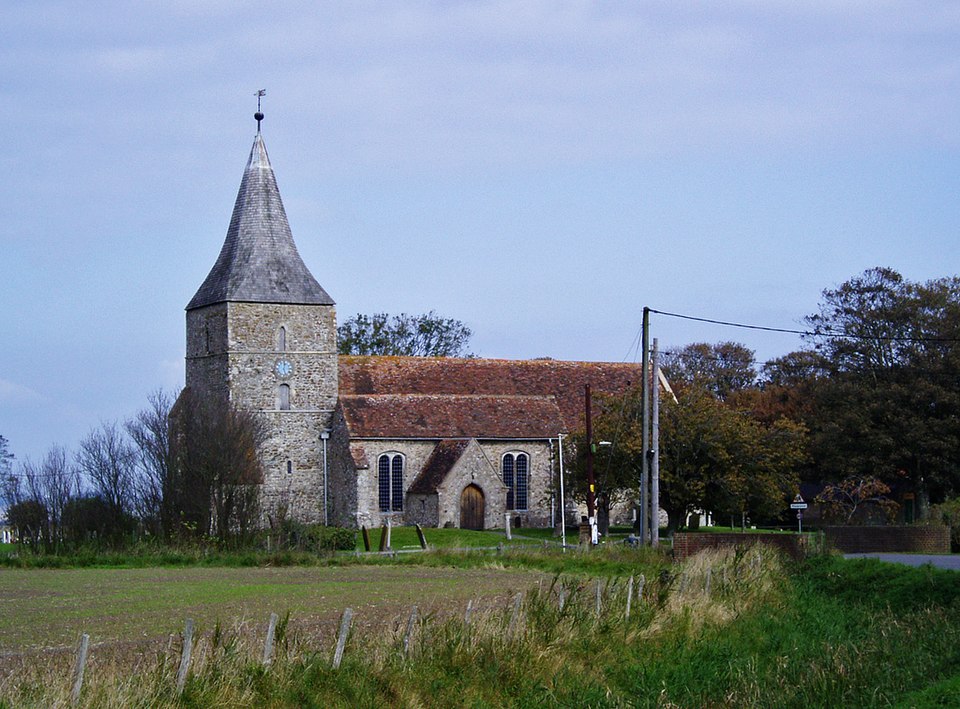
Edith Nesbit is buried in the churchyard of St Mary in the Marsh which was our next church. We left Brenzett and its attractive cats to travel through the wonderful Kent countryside. Blossom foamed over the hedgerows and the fields and marshes seemed to stretch on forever. There was a sense that Nature was beginning to stretch herself and come back to life after the winter.
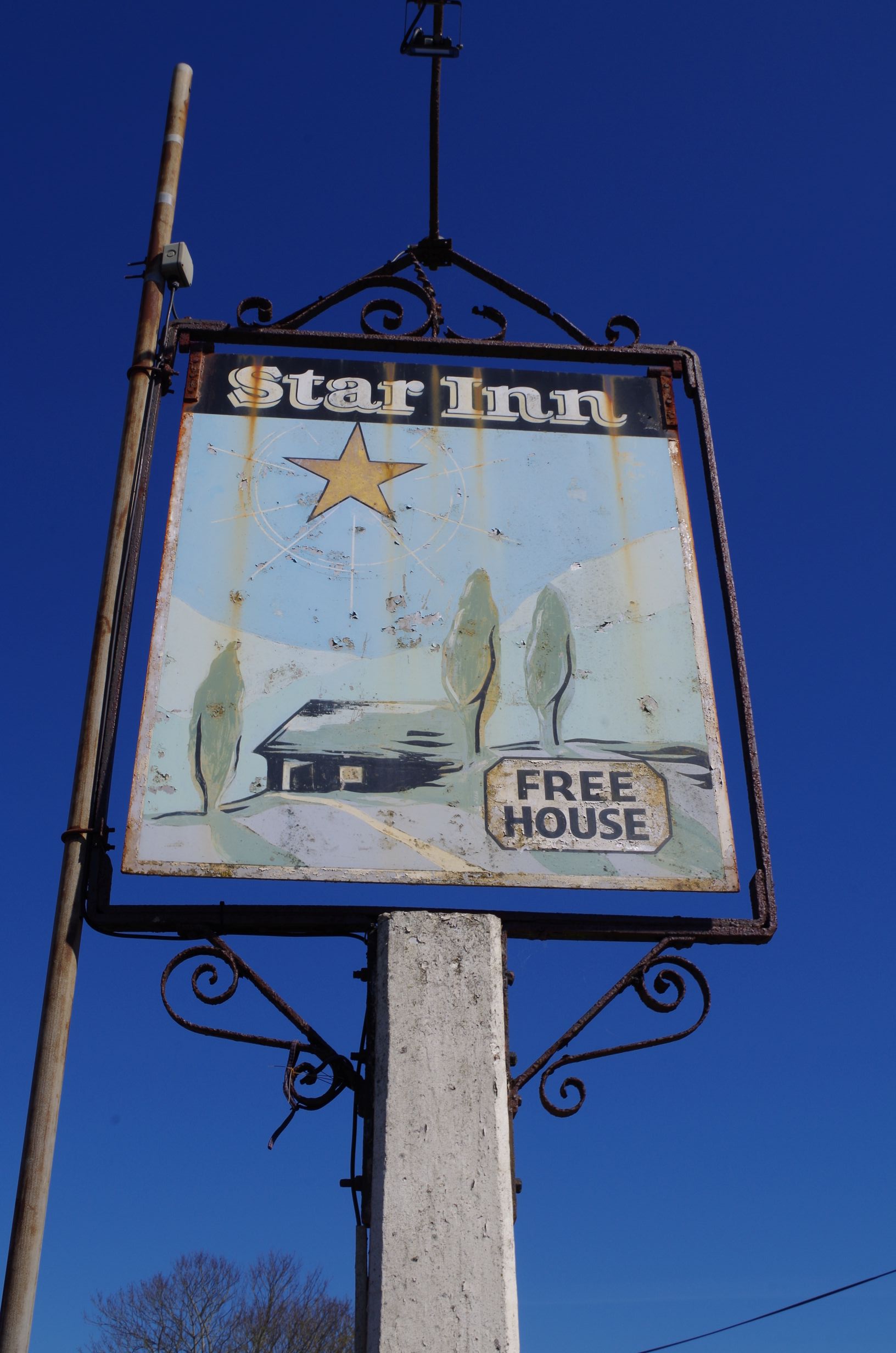
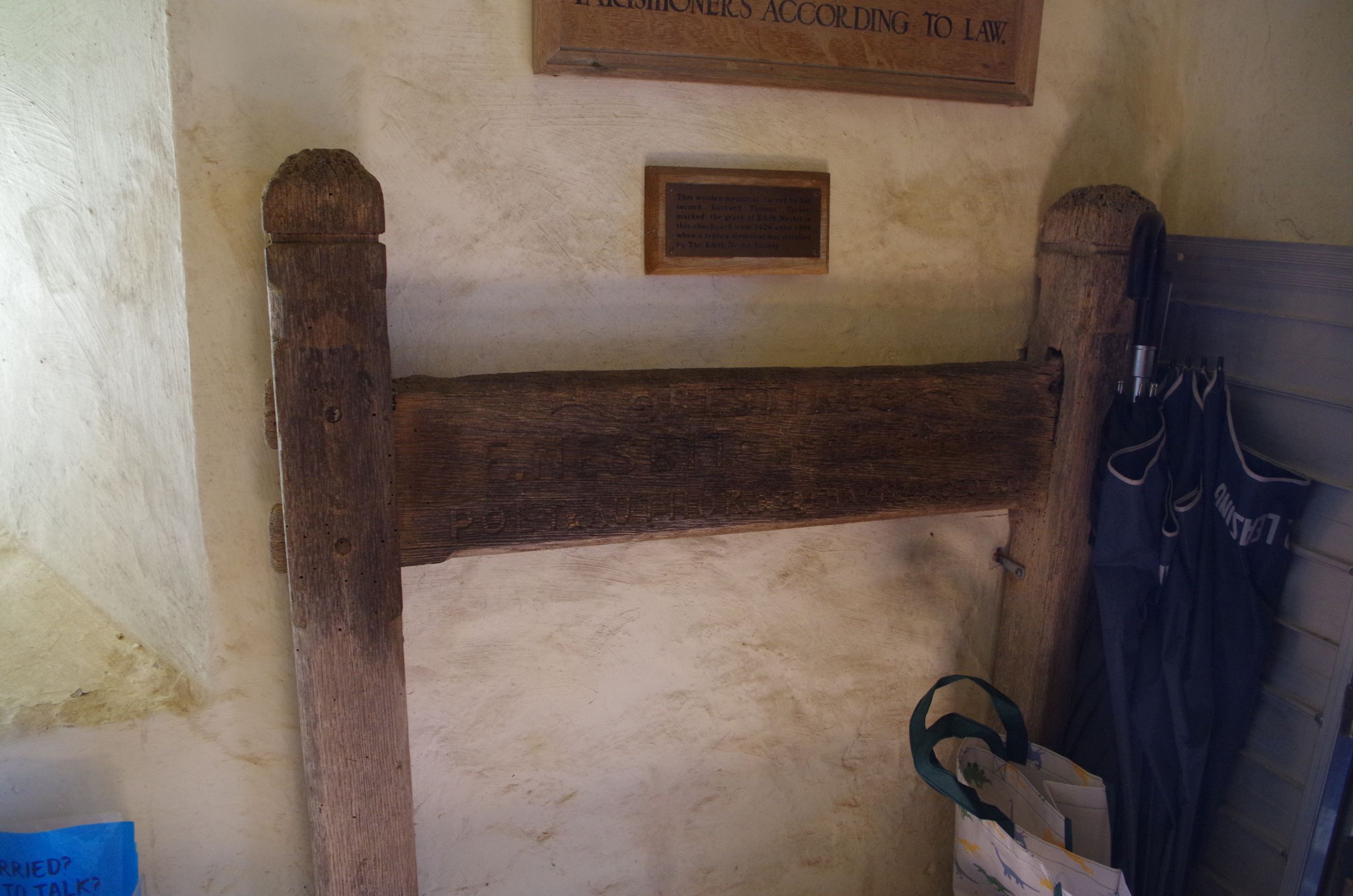
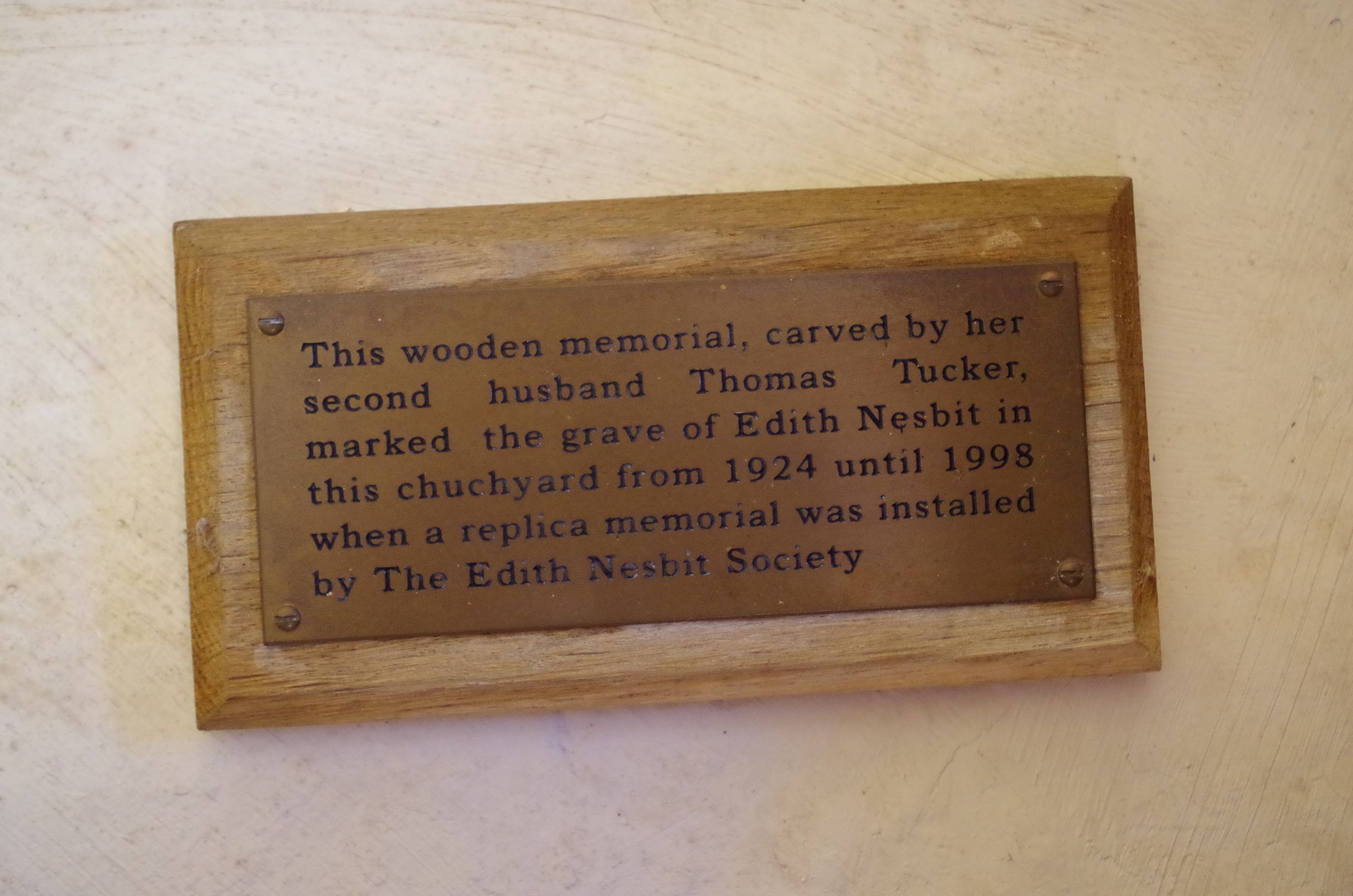
St Mary in the Marsh was a more substantial church and we were greeted by the Star Inn which ‘would have been Edith’s local’ but is now a private house. It’s a large, rambling building and was opposite the church. We soon found her last resting place in front of St Mary’s lying under the morning sun and with a simple wooden rail as a marker. It was Tommy, her second husband, who erected the first wooden rail commemorating Edith. This has suffered over the years and is now inside the church porch with a small plaque. The one in the churchyard today is a replacement put up by the E Nesbit Society.
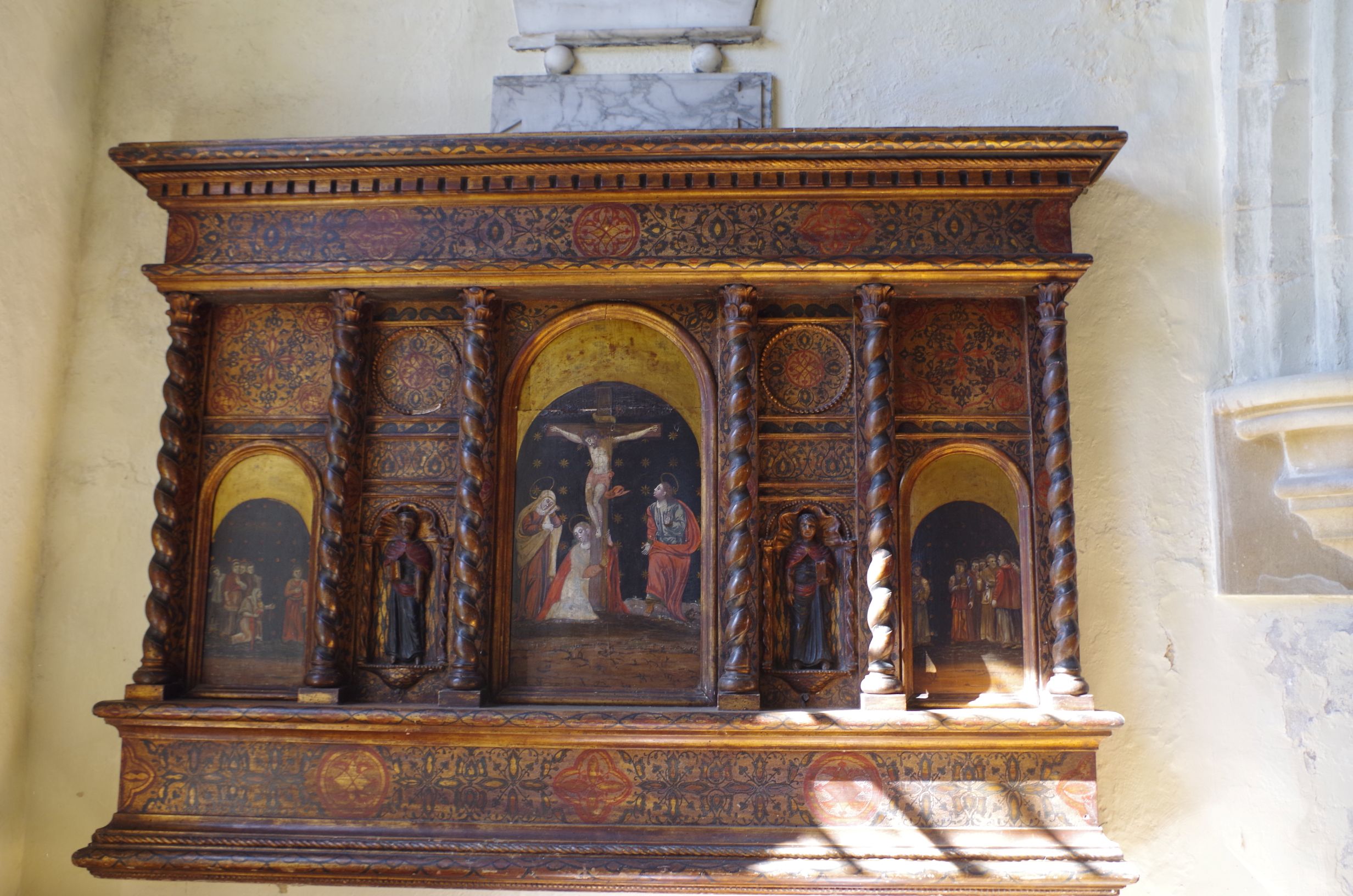
St Mary’s was less plain inside than St Eanswith although there were still box pews and whitewashed walls. There was a magnificent triptych on one wall and another little plaque inside the nave dedicated to Edith. Three pairs of eyes were watching us as we explored. There were two small heads attached to two pillars of a sedilia by the altar and another, larger one at the base of a column.
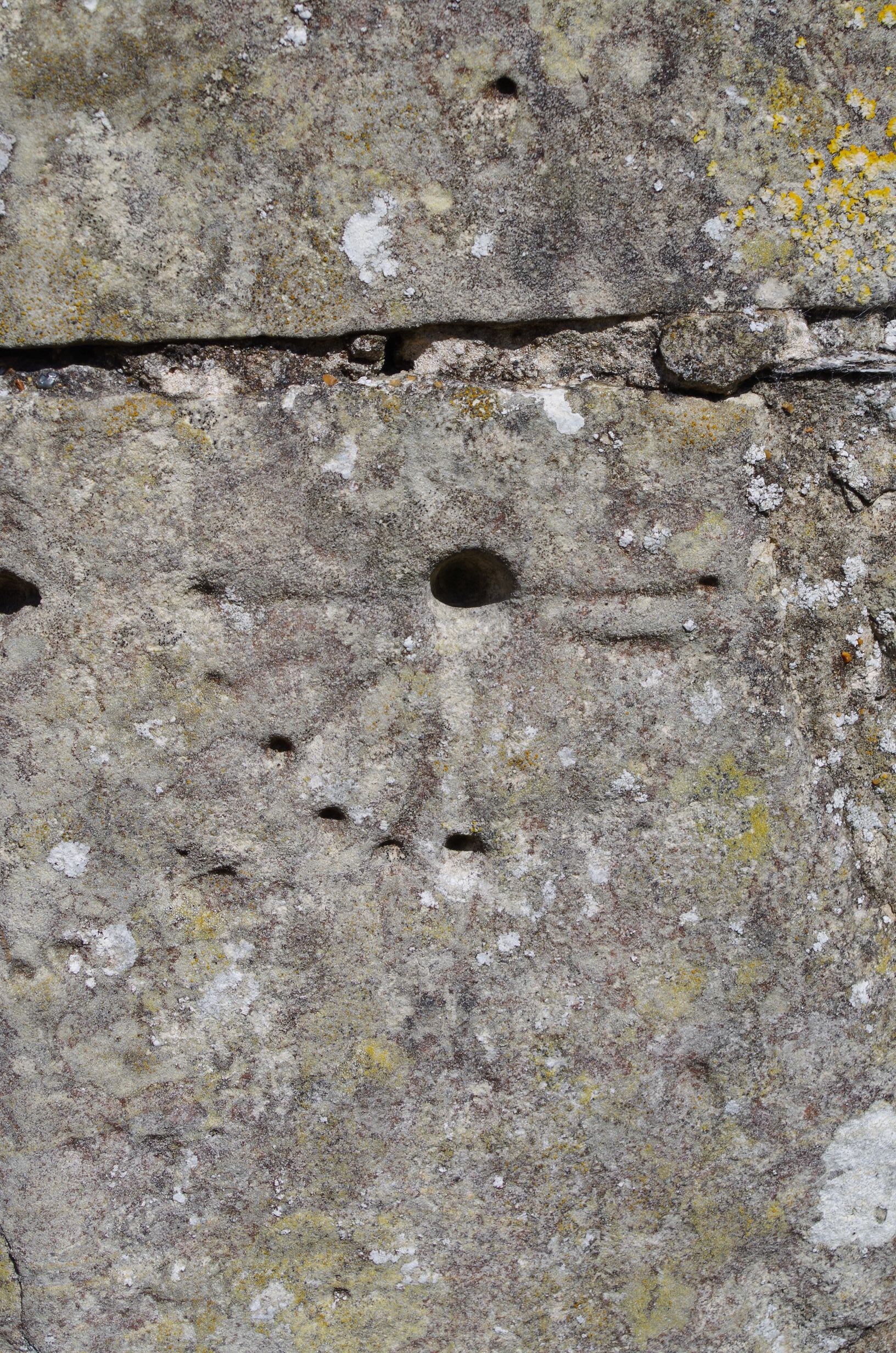
Outside early bluebells nodded in the breeze and we found a medieval mass dial set into a wall. (please see Symbol of the Month – The Mass Dial published 18/10/21)
Afterwards we went on to explore churches and other places associated with Russell Thorndike and his famous creation whose exploits took place on the Marshes, Dr Syn.
Our final port of call was St Mary’s Bay in Dymchurch where we saw the house known as ‘The Jolly Boat’ which was E Nesbit’s final home which she are with Tommy. It is now a holiday home and is situated at the end of Nesbit Road appropriately enough. As we admired it, we were lucky enough to see a steam train from the Romney and Hythe railway come puffing past as it steamed into the station nearby. In the town one of our party had spotted a blue plaque on a house called ‘The Cottage’ which commemorated its famous residents: the painter Paul Nash, Noel Coward and Edith all stayed there. We did wonder if it had been at the same time and one of our party commented that ‘it must have been quite a party!’
E Nesbit had a fascinating life with her strong Socialist views and published over 60 books, some of which are still in print today. The film version of ‘The Railway Children’ is a much loved classic although her ghost stories are less well known. They were reprinted last year in ‘The House of Silence’ by Handheld Press.
It was a wonderful day travelling the marshes and understanding how they inspired Edith where she is still remembered with such affection.
There are so many stories within a churchyard. They are truly repositories of a community’s history in their recording of births, deaths and the history of local families. A simple epitaph can say so much about the people buried beneath it.
I almost missed the Allen headstone as it’s lying down on the grass. This would have been a shame as it is one of the loveliest and most poignant memorials in the churchyard and must have looked imposing when it was standing upright.
It’s dedicated to a married couple, Janet Lormie Allen or ‘Cissie’ who died young aged 23 on 10 October 1914, and her husband, Ernest August Allan, who died 45 years later aged 79. I don’t know why Cissie died so young: it may have been in childbirth, due to illness or to another cause. But she was greatly missed as the sentiment on the headstone shows.
At one side of the tombstone, beside the epitaph, stands a young woman, a maiden, dressed in a diaphanous, long flowing robe from which one strap has fallen, exposing a bare shoulder. The hair is untied and falls to her shoulders. Behind her is a tall, slender rose stem whose blossoms reach over her head. She looks upwards to the blooms above her as, with one hand, she reaches up to pluck a rosebud. In her other hand she already holds a single bloom half open. There is a hint of the waning of the Art Nouveau movement in the flowing lines of her dress and the romance of the image.
The significance of the rose being plucked is that it’s a bud and so not yet in bloom which indicates a life cut short.
I don’t know if Ernest remarried but he was buried with his wife in 1959 and so they were reunited. It’s such a shame that as the headstone is lying down as rainwater gathers on the carving of the young woman and, for example, there has been erosion on her face.
Despite my research I have not been able to find out any further details about the couple. But it’s one of the most beautiful memorials that I’ve seen, not just because of the carving, but, as I like to think of it, a love story written on an epitaph in a country churchyard. And as we approach St Valentine’s Day what could be more appropriate?
Happy New Year to all my readers and what an auspicious year it is for shadowsflyaway!
It’s 10 years since I began this blog on July 10th 2015 to be exact and some of my readers have been with me since the very beginning. Even now I am still discovering new symbols to write about, little mysteries that I find in churchyards and cemeteries that intrigue and inspire me.
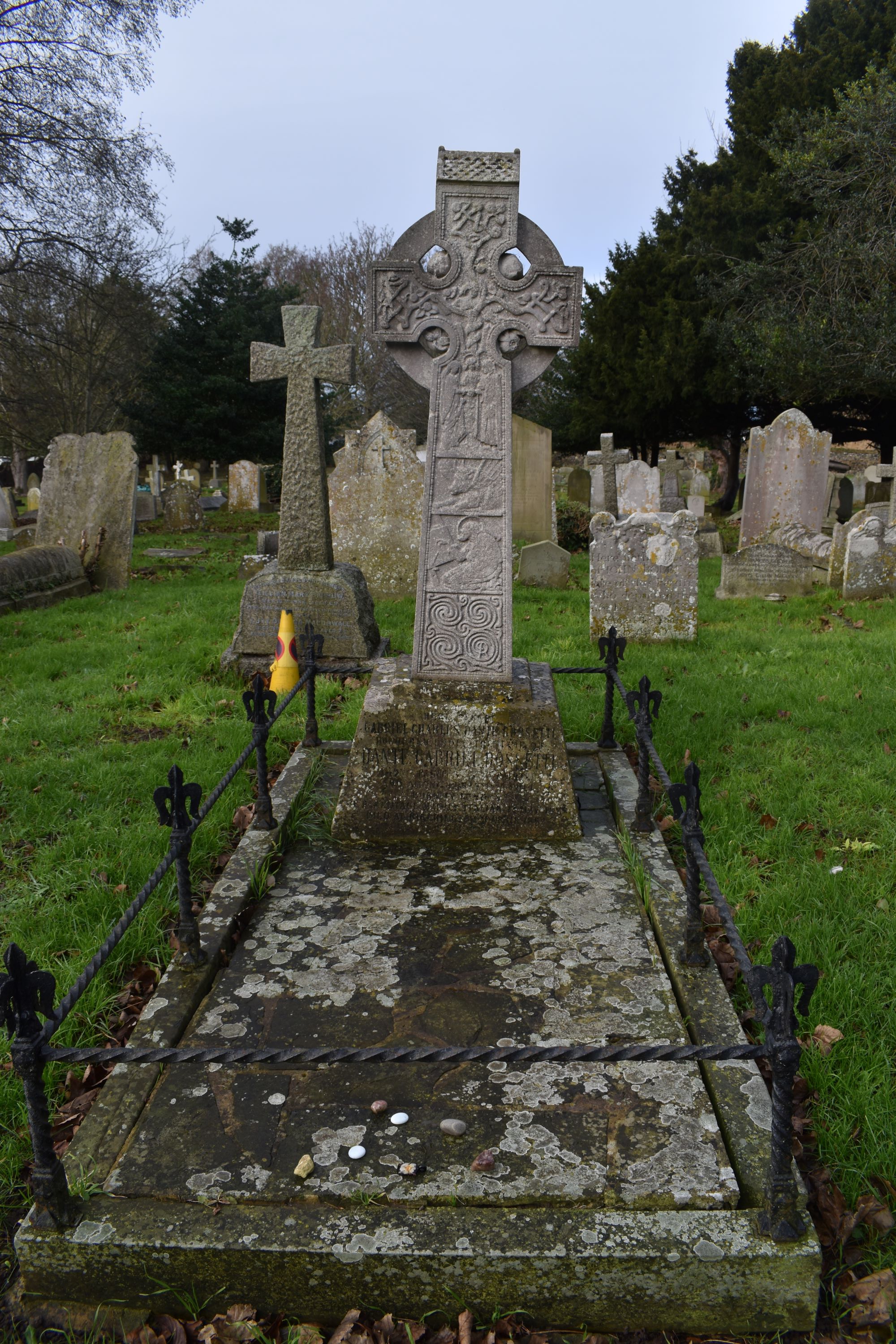
Here are a couple that I found on a Christmas Eve walk in All Saints churchyard, Birchington on Sea. This is where the 19th century Pre-Raphaelite artist, Dante Gabriel Rossetti is buried with a Celtic Cross over his grave. It was a dull grey day, enlivened only by the bright efforts of the town’s yarn bombers.
An example of one of Rossetti’s most beautiful paintings, ‘Lady Lilith’.
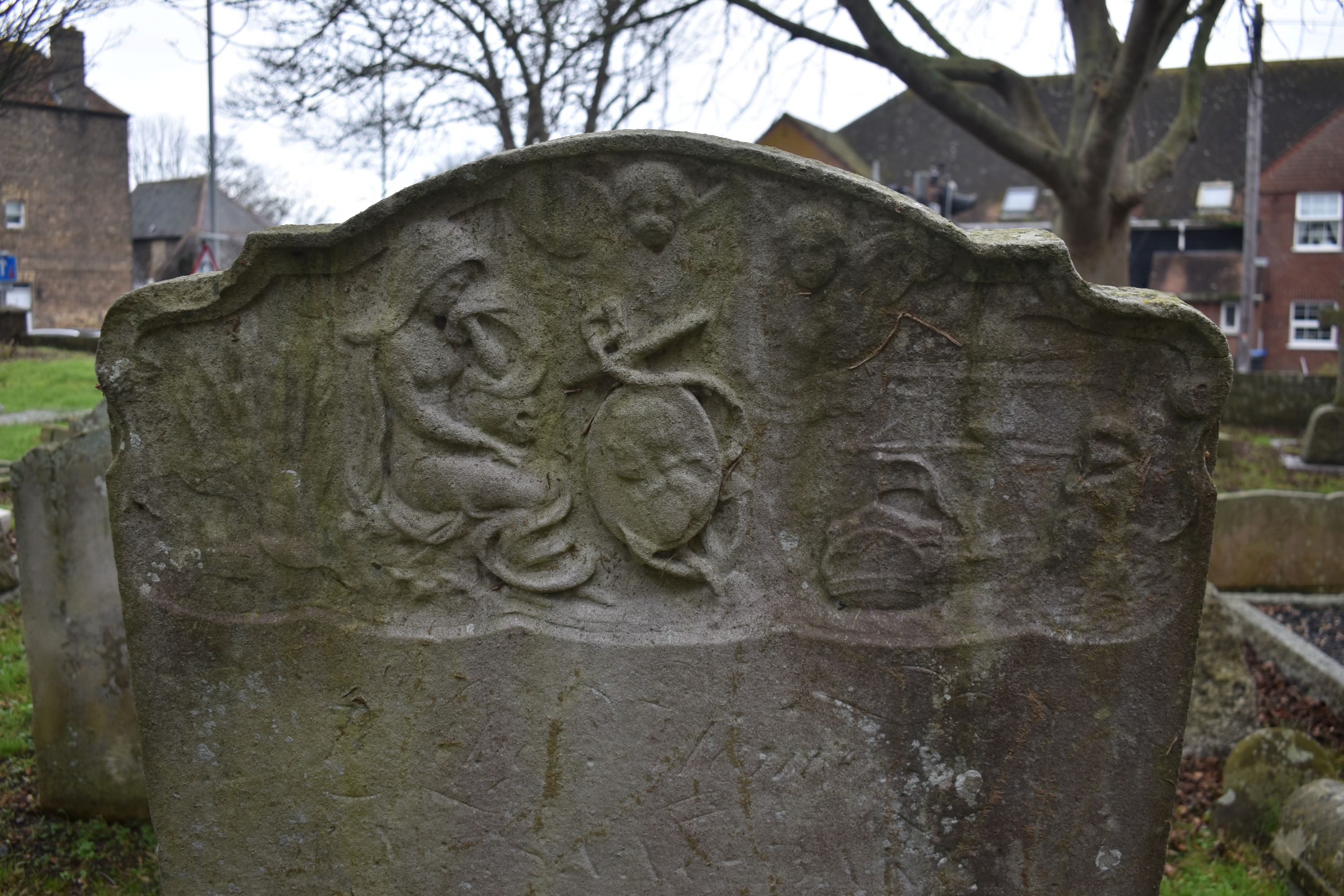
But these two stood out. The first one was located by the original church door and appeared to be a variant on the mourning woman symbol as a woman, wearing a billowing gown or cloak, weeps over a man’s portrait. He faces her in profile and is dressed in 18th century fashion with a small ponytail and is within an oval frame. She sits with a skull on her lap. The portrait is supported by a large anchor whose rope ripple around and behind it. Above it there are two floating angel heads or winged messengers. The carvings on either side of the tableau were indistinct under the overcast sky. But a sunny day can often bring out details of carvings and epitaphs so I will return. The anchor would indicate a naval man and I have to say that that, on first look, the folds of cloth around the lower half of the woman resembled a mermaid’s tail to me. But that may just be me being more fanciful… It’s an impressive headstone with the central figures still crisp. I would hazard a guess that this is from the 18th century.
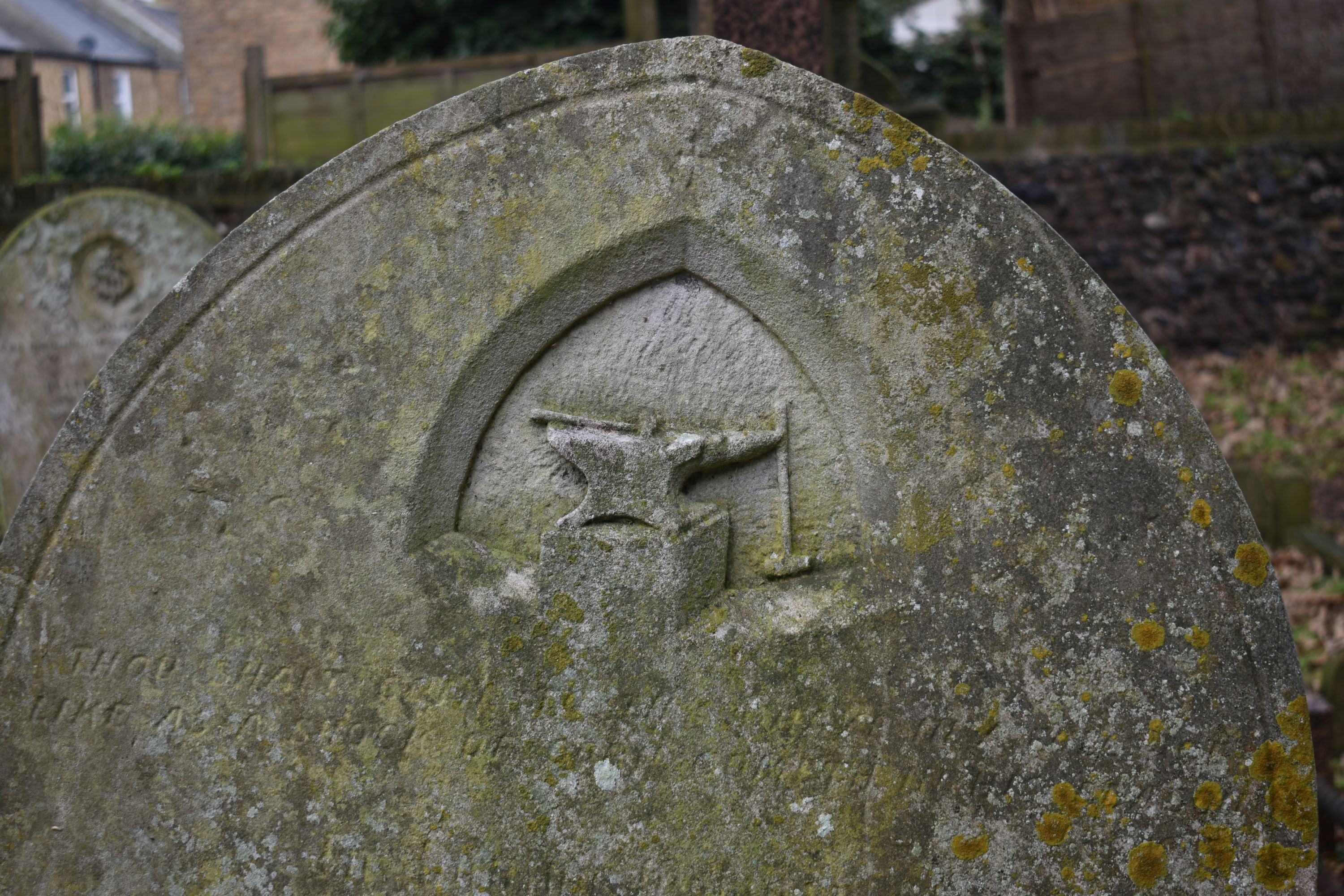
The other one is on a 19th century headstone and features an anvil and tools. On first glance I thought it might belong to the village blacksmith. But it’s dedicated to a woman, Elizabeth Adams. Underneath the motif is what appears to be a quotation which I thought might have come from the Bible. But, so far, I haven’t found anything that resembles it but a burst of bright sunshine could illuminate it further on a future visit.
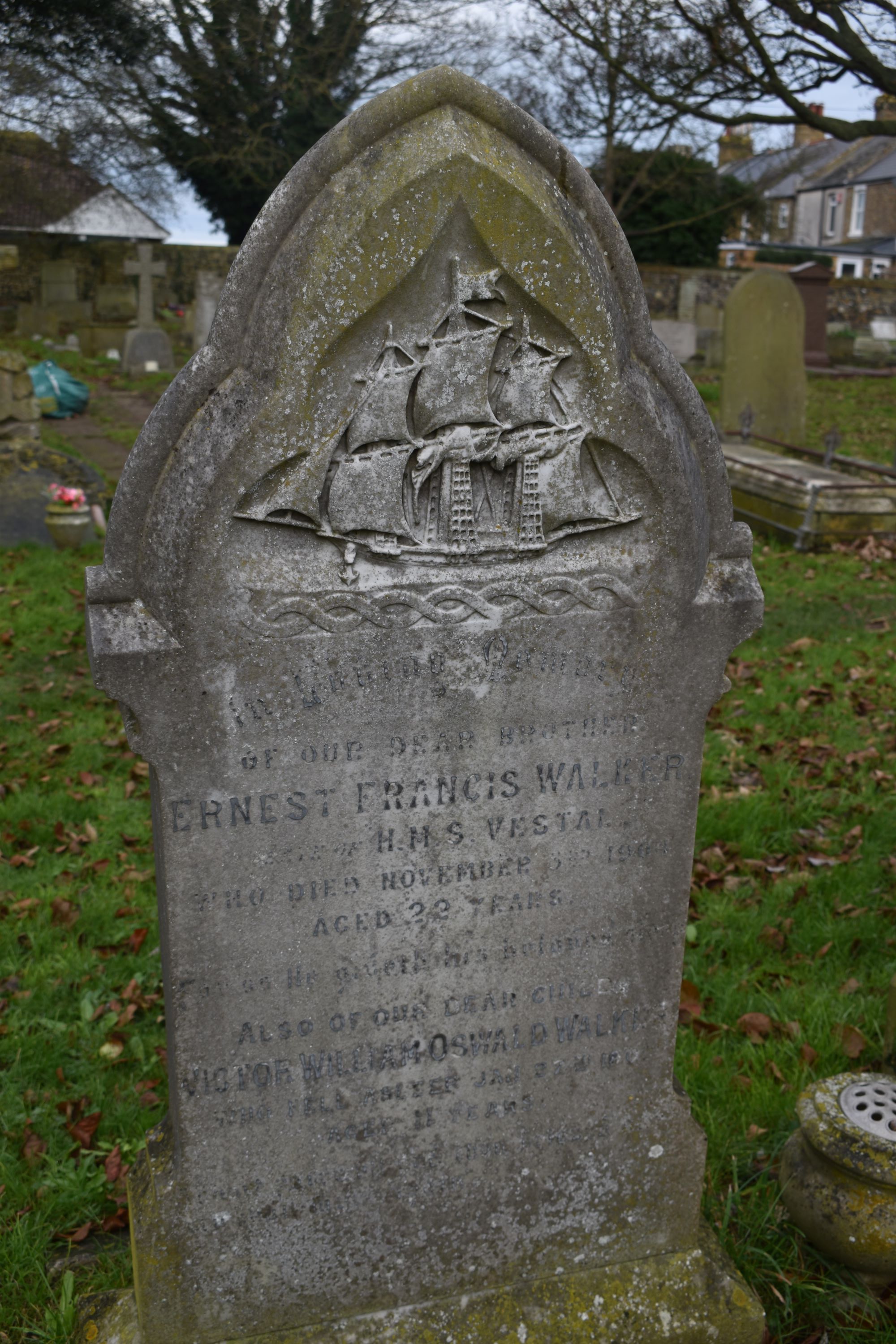
A ship is permanently sailing on Ernest Francis Walker’s headstone with a border of entwined ropes beneath it. The epitaph states that he was a crew member on HMS Vestal and so I presume the carving of a ship is a representation of it. Ernest died young at 22 and there are several ships that bear this name. The one that I think is most likely is a 26 gun sixth rate frigate of the Royal Navy. She was launched in 1833 and sailed in the West Indies and the Caribbean. In 1852 she ran aground near the Needles on the Isle of Wight and was taken to Portsmouth for inspection and repair prior to being decommissioned in 1860 and then broken up in 1862.
I am already looking forward to what else I will discover in 2025 including the spooky angel in a Broadstairs churchyard but I am determined to wait for a really foggy day for that one!
The skull and crossbones. One of the central motifs of 18th century Memento Mori and intended to be a stark and macabre reminder of the viewer’s inevitable destination. This would be all that would remain of you after death.
However it wasn’t a very comforting message to either the loved ones left behind or to the living.
But fashions and tastes change, even in funerary symbolism, and the skull and crossbones had served their purpose.
Instead they were replaced by the winged soul. This consisted of a small child’s head flanked by a pair of wings or a garland of leaves. They have the faces of babies with big, round eyes, plump cheeks and pouting lips and resemble Renaissance putti which are child-like. Putti represent the sacred cherub as they are known in England.
The winged soul may have been intended to be a more comforting image as the wings represented the soul of the deceased ascending to heaven. This could also give hope of a resurrection to those left behind. According to headstone symbols:
‘In the USA the winged soul is known as a soul effigy.’
It was immensely popular and in my explorations of medieval Kent churches and their churchyards I found many examples. In fact, in one or two churchyards they outnumbered the skull and crossbones symbol. They mainly had one winged soul on a headstone but there were sometimes two or three clustered together as in these examples:
In addition, every mason seemed to have his own interpretation of feathers as they can be carved as typical fluffy feathers, resemble broad leaves or be very stylised.
With wings in general they are an important symbol of spirituality. They express the possibility of flying and rising upwards to heaven. For example, in the Hindu faith, they are:
‘the expression of freedom to leave earthly things behind…..to reach Paradise.’
New Acropolis
However, as the full flowering of the Victorian language of death in the 19th century began to appear the emblems of memento mori were retired. Although a couple, such as the hourglass and ouroboros, were revived. But I did find two modern examples of the winged soul in the churchyard of St Martin of Tours in Eynsford, Kent.
I had always previously thought of the winged soul as being a more general symbol and just a decorative feature. I called them winged cherub heads or death heads and never considered that they might have had a specific meaning or purpose. It was exciting to see so many variations and interpretations sometimes within the same churchyard. But it depended on the skills of the mason as to how well they were carved and whether they were 2 dimensional or 3 dimensional.
But as a message of comfort it is one of the most poignant in memento mori. The other central motifs emphasise time running out, think about your life now and this is all that will be left. The winged soul suggests an eternal life and a more uplifting message.
I’ll be honest. I’d been out exploring churchyards just prior to the coronavirus and St Mary’s in St Mary Cray was the last on my list. I’d noticed its distinctive steeple from the train on my daily commute and it was on my list so that I could visit and cross it off. I didn’t expect to find much and my first impression confirmed it. A few ivy clad altar tombs greeted me and then I wandered around the side of the closed church. What a surprise! A gallery of 18th century headstones placed in lines with some of the more familiar symbols depicted on them. Ouroboros’s, angel heads, skulls, crossbones and then this fine selection.
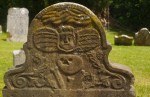
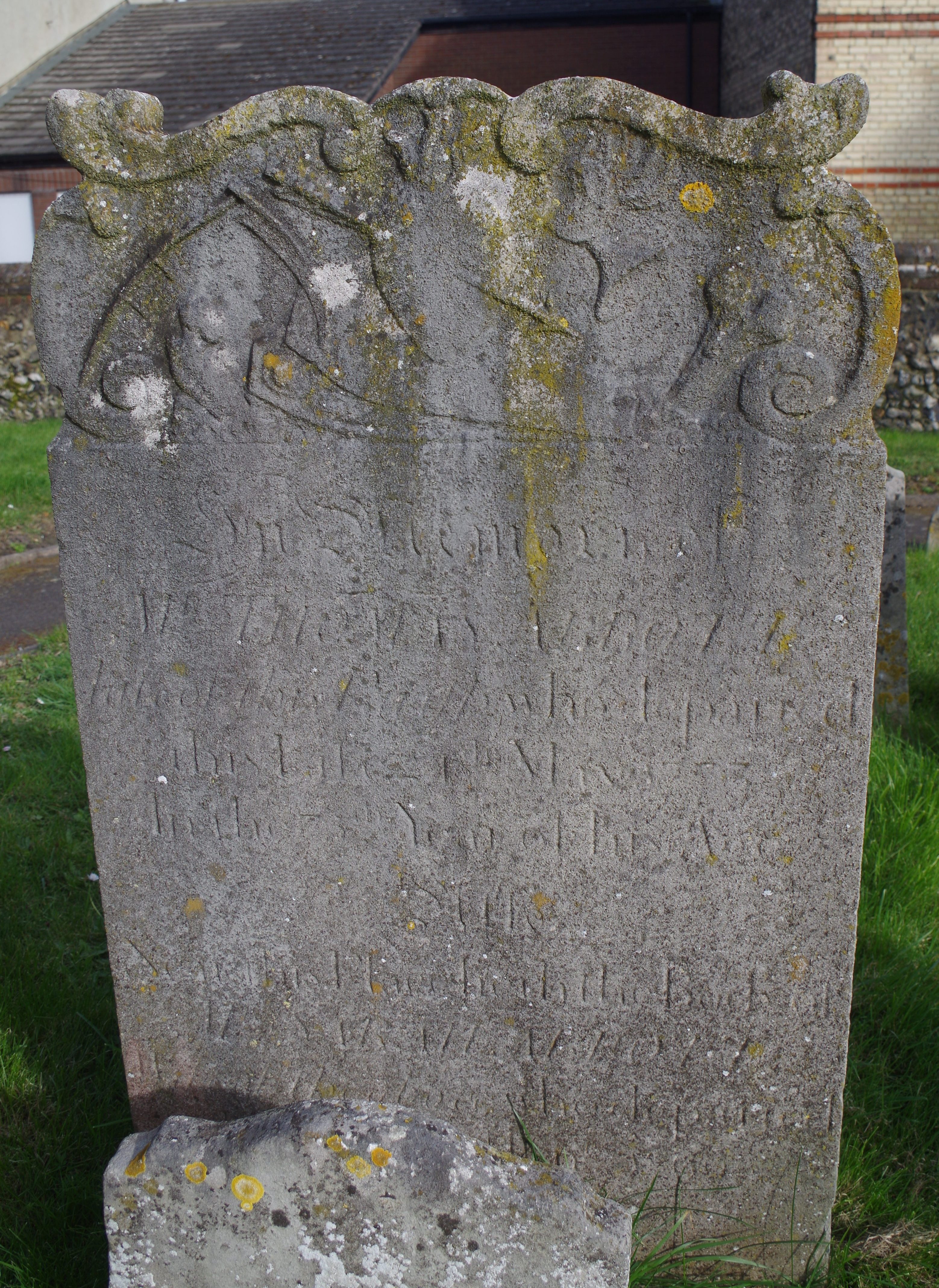
As you can see, it boasts a large, sharp scythe, a half open coffin with the incumbent visible, a trumpet blowing from what seems to be a heavenly cloud and, in the centre, a heart pierced by an arrow. We usually associate a pierced heart with the ones found on millions of St Valentine’s cards as a representation of Cupid’s love darts. You may be thinking that it doesn’t have the usual heart shape but there may be how the stonemason interpreted it. This is the Symbol of the Month.
Although there are other Abbotts buried in the same churchyard I couldn’t find any sign of a headstone or monument dedicated to Sarah Abbott and there was none recorded on the Kent Archaeological Society survey of the churchyard So whether it has vanished over time we will never know.
On Thomas’s headstone, the heart is surrounded by symbols of resurrection and the Day of Judgement when all of the dead will rise. This is the meaning of the half open coffin lid. So is the pierced heart a symbol of everlasting love which means that the Abbotts will be reunited on that day? After all, Keister suggests that it’s a sign of matrimony which would fit in with both husband and wife being mentioned on the headstone. However, Cooper comments that the pierced heart is also a sign of contrition so perhaps Mr Abbott felt guilty or sad about outliving Sarah by 6 years.
But let’s discuss other representations and interpretations of the pierced heart as well as the heart in general. It’s one of the most powerful symbols and resonates through many cultures and faiths both ancient and modern. Without it, none of us would be alive as it pumps our lifeblood through our bodies. This is why it has been a central part of religions and cultures since the beginning of time.
Heart symbolism is significant in, Chinese, Hindu and most religions and cultures. For example, it is one of the eight precious organs of Buddha and also the Aztecs whose rituals involved human sacrifice. In these the chests of the victims were sliced open and their still-beating hearts were offered to the gods. The Aztecs believed that the heart was the seat of the individual and also a fragment of the Sun’s heart.
Section from the Book of teh Dead depicting the Weighing of the Heart showing the heart on one side of the scales and the feather of Maat n the other. Osiris is between them. Shared under Wiki Creative Commons
In Ancient Egypt, the heart was considered to be the source of human wisdom and the centre of emotions and memory. It could reveal a person’s true character, even after death, and was left in the body after mummification. The ancient Egyptians believed that it would survive death where it would give evidence against or for its owner and so was integral to the afterlife. This culminated in the Weighing of the Heart which appears in the Book of the Dead. The heart was given to Osiris, the god of the dead and the underworld who placed it on one of a pair of great golden scales. On the other was a feather which represented Maat the goddess of order, truth and what was right. If the heart was lighter than the feather then the deceased passed on into eternal bliss. But if it was heavier, due to past misdeeds, then it was thrown onto the floor of the Hall of Truth where Amut, a god with the face of a crocodile, the front of a leopard and the back of a rhinoceros who was also known as ‘The Gobbler’. Once he had devoured the heart then the individual ceased to exist. The Egyptians concept of hell was non-existence.
But the heart has an even greater significance in the Judaeo-Christian tradition. There are many references to it in the Bible with over a 100 in Psalms alone. One of the most famous quotations is in 1 Samuel 16.7 in which it is seen as the seat of emotion:
‘But the Lord said unto Samuel, Look not on his countenance, or on the height of his stature; because I have refused him: for the Lord seeth not as man seeth; for man looketh on the outward appearance, but the Lord looketh on the heart.’ (King James Bible).
The heart is seen as revealing the inner person but not only as the centre of human life. It also expresses spiritual or emotional feelings, wisdom, piety and righteousness. There is also the famous quote from Matthew 5:8;
‘blessed are the pure in heart’
However, the heart also has a darker side as an evil person is often described as being ‘blackhearted.’ In Ecclesiastes 8:11 it’s seen as evil:
‘ Because sentence against an evil work is not executed speedily, therefore the heart of the sons of men is fully set in them to do evil.’ (King James Bible).
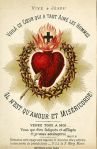
In Christian iconography the heart took on a symbolic role as an indication of God and piety particularly in the Catholic church where Christ displaying a heart in his hands or on his breast is a key image. It’s known as the Sacred Heart and is one of the most practiced and well known of the Catholic devotions. The sacred heart is seen as a symbol of ‘God’s boundless and passionate love for mankind.’ The pierced heart was also included in the five wounds that Christ suffered during the crucifixion
Catholic Holy card depicting the Sacred Hear of Jesus circa 1880
shared under Wiki Creative Commons
The Pierced Heart of Jesus 19th century Portuguese painting
Shared under Wiki Creative Commons
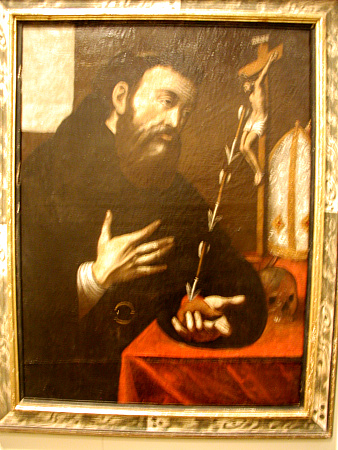
St Augustine 17th century Portuguese painting Museum of Church Paio of San Santiago de Compostela, Spain Shared under Wiki Creative Commons
One saint in particular, St Augustine, has a special relationship with the pierced heart. He is often shown holding a heart, in some cases topped by a flame and in others pierced by an arrow. Another passage from the Confessions IX, 2:3 may explain the significance of the pierced heart:
‘Thou hadst pierced (sagittaveras) our heart with thy love, and we carried thy words, as it were, thrust through our vitals.’
(The word sagittaveras means literally ‘ shot arrows’ into as in this 17th century painting.
St Valentine’s Day was originally derived from a much darker and bawdier Roman festival called Lupercalia. This took place in Rome from 13-15 February and was intended to avert evil spirits and purify the city. However, it didn’t involve the giving of chocolates and bouquets of roses. Instead there was animal sacrifice, random matchmaking and couplings which were intended to ward off infertility. In reality, it was a fertility festival dedicated to Faunus, the Roman god of agriculture and also to the founders of Rome, Romulus and Remus. It was finally outlawed as ‘unChristian’ in the 5th century by Pope Gelasius who declared the 14 February to be St Valentine’s Day. There were two actual St Valentines who were both martyrs.
However, the first person to mention the famous day for lovers was actually Geoffrey Chaucer in his 1375 poem, A Parliament of Fowles (or Fowls). In this he says:
‘For this was sent on Seynt Valentyn’es day
When every fowl cometh here to choose his mate.’
During the Middle Ages it was believed in both France and England that February 14 was the beginning of the mating season for birds and so an ideal date for romance for all.
But it was during the early medieval and early Renaissance when the heart began to resemble the more stylised symbol that we know today. It took on the shape of a converted A and represented Amor or Love. Since the 19th century it has been associated with love and romance and the pierced heart has also been known as the wounded heart due to Cupid’s arrows.
But, due to its placing within other potent symbols of resurrection, I interpret the pierced heart on Mr Abbott’s headstone to be a token of love. Although he wasn’t buried with his wife he may have hoped that they would be reunited on the Day of Judgement when the angels trumpets sounded and the dead met the living again.
It was one of the most potent symbols that I have found in my explorations and I haven’t seen another one – yet. The pierced heart has also been one of the most fascinating symbols to research because of its many connotations and associations. Who would have thought that Chaucer might be the father of the St Valentine’s Day industry that we know so well today.
Was the pierced heart a token of love or a hope of a meeting in the after-life? We will never know but a fascinating collection of symbols for the passer-by to admire.
The Coroner’s Court is situated at the rear of the churchyard and, according to Lester, 7000 bodies had been re-interred beneath it. He hinted at a connection between it and The Man Who Never Was.
This was a Second World War ruse called Operation Mincemeat. A cadaver was obtained and dressed up to become a Major William Martin, R N and put into the sea near Huelva, Spain. A briefcase was attached to the body which contained fake papers which falsely stated that the Allied attack would be against Sardinia and Greece instead of Sicily which was the actual point of invasion. When the body was found, the Spanish Intelligence service passed copies of the papers to their German counterparts who in turn passed them onto their High Command. It was very successful as the Germans still believed that Sardinia and Greece were the targets weeks after the landings in Sicily had begun. But the true identity of The Man Who Never Was has never been revealed although there have been several theories. BBC Radio’s The Goon Show which was hugely popular in the 1950’s were fascinated by it and The Man Who Never Was featured in several episodes.
The Beatles Mad Day Out 28 July 1968 with the famous bench
Photo by Don McCullin from beatlesbootleg.
The Beatles Mad Day Out 28 July 1968 and they are sitting right by the Burdett Coutts sundial
Photo by Don McCullin from photoblog.com
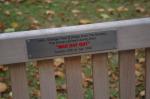
In 1968 The Beatles needed some new publicity photos and so they embarked on a Mad Day Out in London. Don, now Sir, McCullin accompanied them as photographer. St Pancras church and churchyard were one of the locations they visited much to the delight of local residents. There are many photos of the day online and this is the very bench on which they sat in these photos. It’s amazing to look at the photos now as they look so spontaneous and not part of a publicity machine. It’s a step back in time when stars were more accessible.
Nearby is the memorial stone to the English Bach, Johann Christian Bach(1735-1762).
Johann Christian Bach by Thomas Gainsborough 1776
Shared under Wiki Creative Commons
He is also known as the ‘London’ Bach and was the eighteenth (!) child of Johann Sebastian Bach and the youngest of his eleven sons. He moved to London in 1762and premiered 2 operas at The Kinds Theatre which established his reputation. Queen Charlotte employed him as her music master and in 1766 he married a much younger singer, Cecelia Grassi, but the union was childless. Bach’s symphonies and concertos were very popular in fashionable London circles but by the late 1770’s his fortunes had reversed. After his death on New Year’s Day 1782, Queen Charlotte had to cover his estate’s expenses and to provide a pension for his widow after his steward had embezzled his money.
Lester said that the memorial stone moves around a lot but not whether it was of its own volition…..
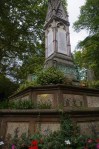
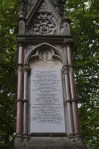
But towering over it is the Burdett-Coutts Memorial sundial. This impressive and attractive, in my opinion, structure was built during 1877-79. It’s very High Victorian Gothic and could be seen in some people’s eyes as a Marmite construction in that you either loathe or love it. The sundial is also known as an obelisk and it was created as a memorial to the people buried near the church whose graves were disturbed by the Midland rail works. It comprises of a tall square tower in a Gothic style with a tall Portland stone pinnacle bearing a sundial. Columns of pink and grey granite support it and are on either side of four inscribed marble plaques, These are topped by a Gothic arch and relief sculptures of St Giles and St Pancras. The steps are decorated with mosaic panels featuring flowers, butterflies and the sun. There are also animal sculptures at each of the four corners of the enclosure surrounding the sundial.
Angela Georgina Burdett-Coutts (1814 -1906) was a wealthy philanthropist who inherited her grandfather’s huge fortune. It was £1.8 million at the time but in modern terms is now roughly £160,000,000.
Baroness Angela Georgina Burdett Coutts (1814-1906) Painter unknown. Shared under Wiki Creative Commons
The Baroness was always unconventional. She fended off fortune hunters and instead gave practical help to the East End’s poor. It has been said that Coutts is Cockney slang for ‘boots.’ Angela worked with Dickens to set up a home and rescue centre for prostitutes and ‘fallen women’ in London’s Shepherds Bush. A significant patron to artists and actors, the RSPCA and many other causes.
After inheriting Holly Lodge in Highgate, her grandfather’s mansion, she created the nearby Holly Village in 1865 for her staff. These are Gothic style houses set around a village green and are now very sought after. In 1881, the Baroness married her 29 year old American secretary, William Ashmead, when she was 67. The Baroness was buried in Westminster Abbey after dying aged 92 in 102. As the saying goes, her works live on in her name.
But there is a name on one of the plaques who also defied conventional and was ahead of his, or her, time.
This was the Chevalier d’Eon (1728-1810) a transgender person who moved in high circles in France and Britain during the 18th century. The Chevelier’s full name was Charles Genevieve Louis Auguste Andre Timothee d’Eon de Beaumont but Chevelier d’Eon for short. She was born a male and obtained a law degree, published books on the French tax system, was knighted and was also a celebrated fencer. What could come next? A double life.
In public the Chevalier was a diplomat to Russia and England but in private he was employed by the most secret spy service in France. This was the Le Secret Du Roi or the King’s Secret. He reported directly to Louis XV and became, as a result, the temporary liaison to the English court in 1763. When denied the permanent position he then published a book of French state secrets which he’d collected during his spy’s life but ensuring that he kept back the most controversial. This ensured that he remained on Louis XV’s payroll. A tricky tactician as well and as a result he accepted political exile in England. He became a celebrated public figure but in 1770 a controversy began. It was suggested that she had been born a woman but had been raised as a man in order to collect a family inheritance. Bets were placed on the London Stock Exchange and it was suggested that she had placed some herself. However in 1777 she was officially declared to be a woman at the age of 49. Chevalier then negotiated her return to France with the French government. She gave them the remaining incriminating documents still in her possession and agreed to publicly present as a woman for the rest of her life.
But life was dull after being a spy and diplomat and she returned to London never to leave again. But after the French Revolution she lost her pension from her days as a spy. Despite continuing to write she lived the rest of her life in poverty. But on her death it was finally discovered that she had been a man all along.
A final, fascinating tale of another unconventional St Pancras resident who left behind a reputation and flamboyance.
And here she lies in a London churchyard with many others who made up part of the capital’s cosmopolitan inhabitants. People who were not afraid to take risks, to go against the grain, to set in motion changes to society even though they would not live to see them.
It was quite a shock to leave St Pancras and walk up to the Euston Road and enter the teeming, bustling modern world again.
Despite their transformation into swish new, trendy areas of London, Kings Cross and St Pancras still retain their historical origins if you know where to look.
However, I can remember when St Pancras was the station that time forgot. In fact if Stephenson’s Rocket had puffed its way along a platform at one time I wouldn’t have been surprised, The MIdland Grand, an enormous rabbit warren of a building was still awaiting its Cinderella like transformation in 2003/4. Now, reborn as St Pancras Renaissance, it’s always a magnificent sight to see as you perambulate along the Euston Road.
But behind St Pancras International, as it’s now known, there is still a part of London that has welcomed visitors and immigrants from all over the world and is testament to the capital’s ever-changing history.
In this quiet part of North London, if you listen hard enough you can still hear the running feet of The Beatles or Mary and Percy Shelley discussing their elopement as they take a Sunday afternoon stroll. But, even more gruesomely, you might also hear body snatchers plying their trade.
This is St Pancras Old Church and churchyard. But it’s not to be confused with St Pancras New Church which is the one with the weirdly proportioned caryatids that face the Euston Road.
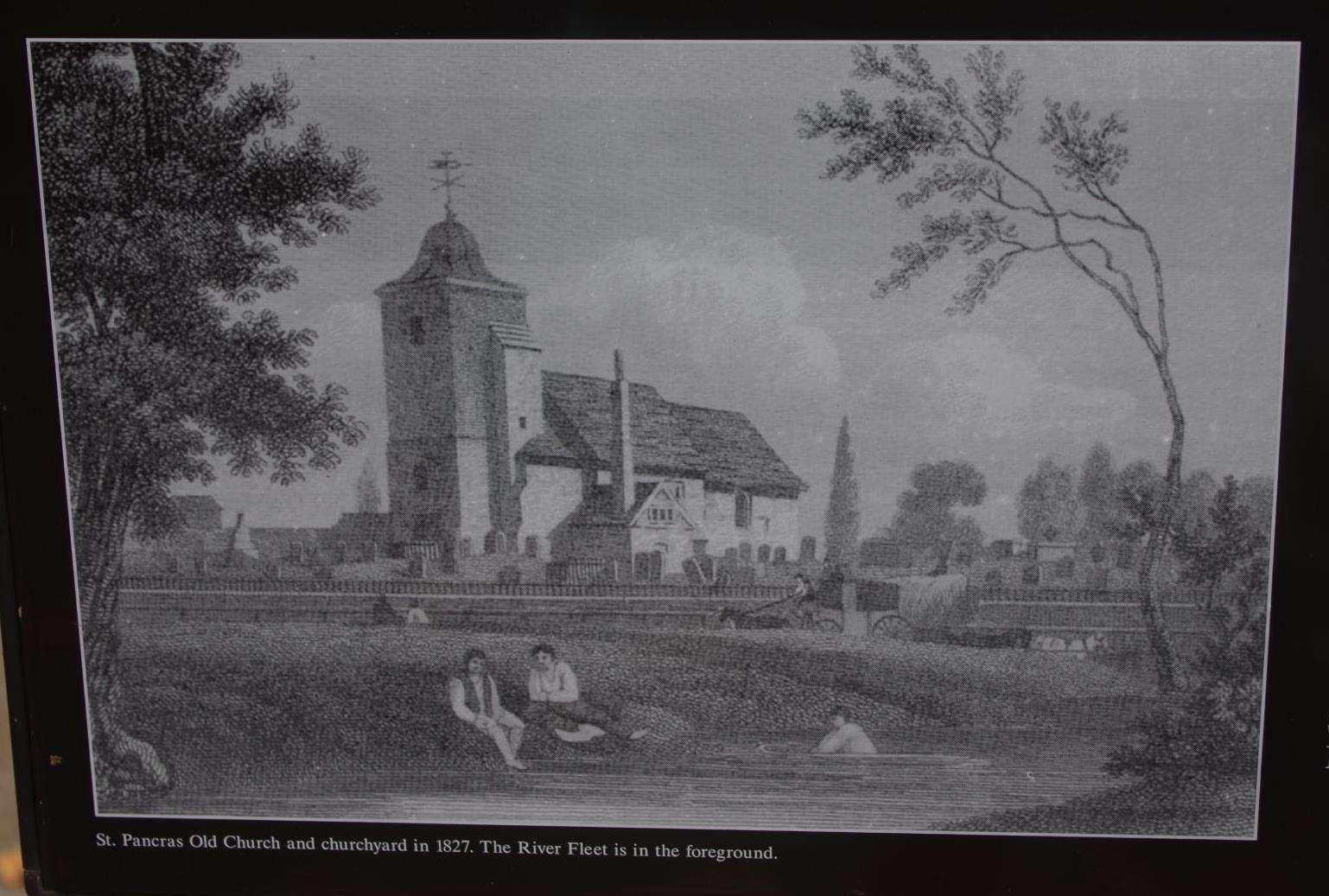
The Research History Group of Brompton Cemetery visited on an overcast September afternoon when the churchyard, or park, as it’s now known seemed sombre and silent under the canopy of the 160 year old tress. But it wasn’t always like this. Our knowledgeable guide, Lester Hillman, told us that during the 19th century, instead of the elegant iron railings that border the front of the churchyard , there had been pubs and adjacent to the church there had been a terrace of houses.
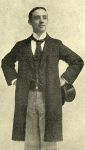
Dan Leno in the 1880’s.
Shared under Wiki Creative Commons
The famous music hall star Dan Leno had been born in one of them. During the 1850‘s there had been balloon ascents as well and I did wonder how the permanent residents of St Pancras had ever got any of their eternal rest.
Charles Dickens who lived opposite the churchyard as a child described it as:
‘ a desolate place surrounded by little else but fields and ditches’
This seems incredible now as the area is so built up. Dickens featured St Pancras in ‘A Tale of Two Cities’ in which one of the characters, Jerry Cruncher and his son, Jerry Jnr, visit the churchyard in order to ‘fishing’. This was a euphemism for body snatching which was rife at the time.
Although the churchyard is now much smaller, during 1689-1845 88,000 burials took place in it and It’s estimated that 1.5% of the 66 million Londoners who have lived in the capital over the centuries have been buried here. It closed to burials in 1850 and was acquired by parish authorities becoming a public park in June 1877.
We first visited the church which is very attractive and to walk through its door is to walk into London’s past. Roman, Norman and Tudor brickwork are almost cheek by jowl with each other and the memorial of the very first burial is preserved on a wall near the altar. This is to a Mary Berisford who was interred on a very auspicious day, 21 August 1588, which was the day of the Spanish Armada. On the opposite wall is the memorial to Daniel Clark (died 1613) and his wife, Katherine (died 1627) and he was cook to Elizabeth 1st. This large monument is dedicated to William Platt and his wife and they look as if they’re sitting in a box at the theatre.
The river now runs underground but continues to supply Highgate Ponds. Lester informed us that the 17th generation descendant of Richard III swam in them daily. However, little remains of the medieval church.
As we left the church to enter the churchyard I spotted a wall memorial to a Amelia Rogers whose occupation was given as ‘pew-opener’. This undoubtedly referred to the days when there were box pews with doors and she was obviously greatly valued.
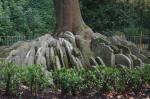
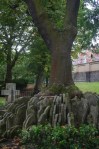
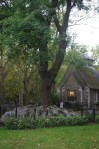
One of the features for which the churchyard is renowned is The Hardy Tree. This is an ash tree which has grown in and around the headstones placed around it. Sadly, the tree isn’t looking very healthy these days and an exclusion fence has had to be placed around it as branches have fallen from it. Fungus is clearly visible. The Hardy connection comes from the novelist Thomas Hardy.
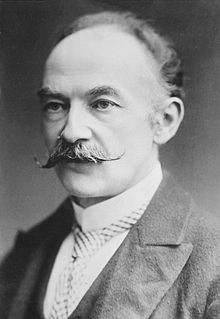
Thomas Hardy (1840-19280 Shared under Wiki Creative Commons
During 1862-67, as a young man, he studied architecture under Arthur Blomfield, in London. At this time, the Midland Railway was being built over part of the churchyard and Hardy was given the task of supervising the proper exhumation of human remains and the dismantling of tombs.
‘In The Early Life, Hardy recounts being involved with the overseeing of churchyards that were being cut through by railroad companies. His employer, Arthur Blomfield, described “returning from visiting the site on which all the bodies were said by the railway companies to be reinterred; but there appeared to be nothing deposited, the surface of the ground quite level as before” In order to make sure the bodies were actually buried properly, Hardy was asked to check one such job at irregular intervals. One evening, accompanied by Blomfield, he watched as a coffin fell apart. Out dropped a skeleton and two skulls. When years later he met Arthur Blomfield again, “among the latter’s first words were: ‘Do you remember how we found the man with two heads at St. Pancras?'”http://casterbridge.blogspot.com/2009/05/levelled-churchyard.html
In 1882, 20 years later, he wrote the poem ‘The Levelled Churchyard’ which may refer to this period.
‘O passenger, pray list and catch
Our sighs and piteous groans,
Half stifled in this jumbled patch
Of wrenched memorial stones!
“Welate-lamented, resting here, Are mixed to human jam, And each to each exclaims in fear, ‘I know not which I am!’
“The wicked people have annexed The verses on the good; A roaring drunkard sports the text Teetotal Tommy should!
“Where we are huddled none can trace, And if our names remain, They pave some path or p-ing place Where we have never lain!
“There’s not a modest maiden elf But dreads the final Trumpet, Lest half of her should rise herself, And half some local strumpet!
“From restorations of Thy fane, From smoothings of Thy sward, From zealous Churchmen’s pick and plane Deliver us O Lord! Amen!”
The Hardy Tree is a London legend but no-one’s quite sure if Hardy himself placed the headstones there. However, it was certainly created at the right time. With the Eurostar coming to St Pancras in 2007, another part of the churchyard was lost and there has been a Hardy Homage. A graceful swirl or half circle of headstones marks the spot
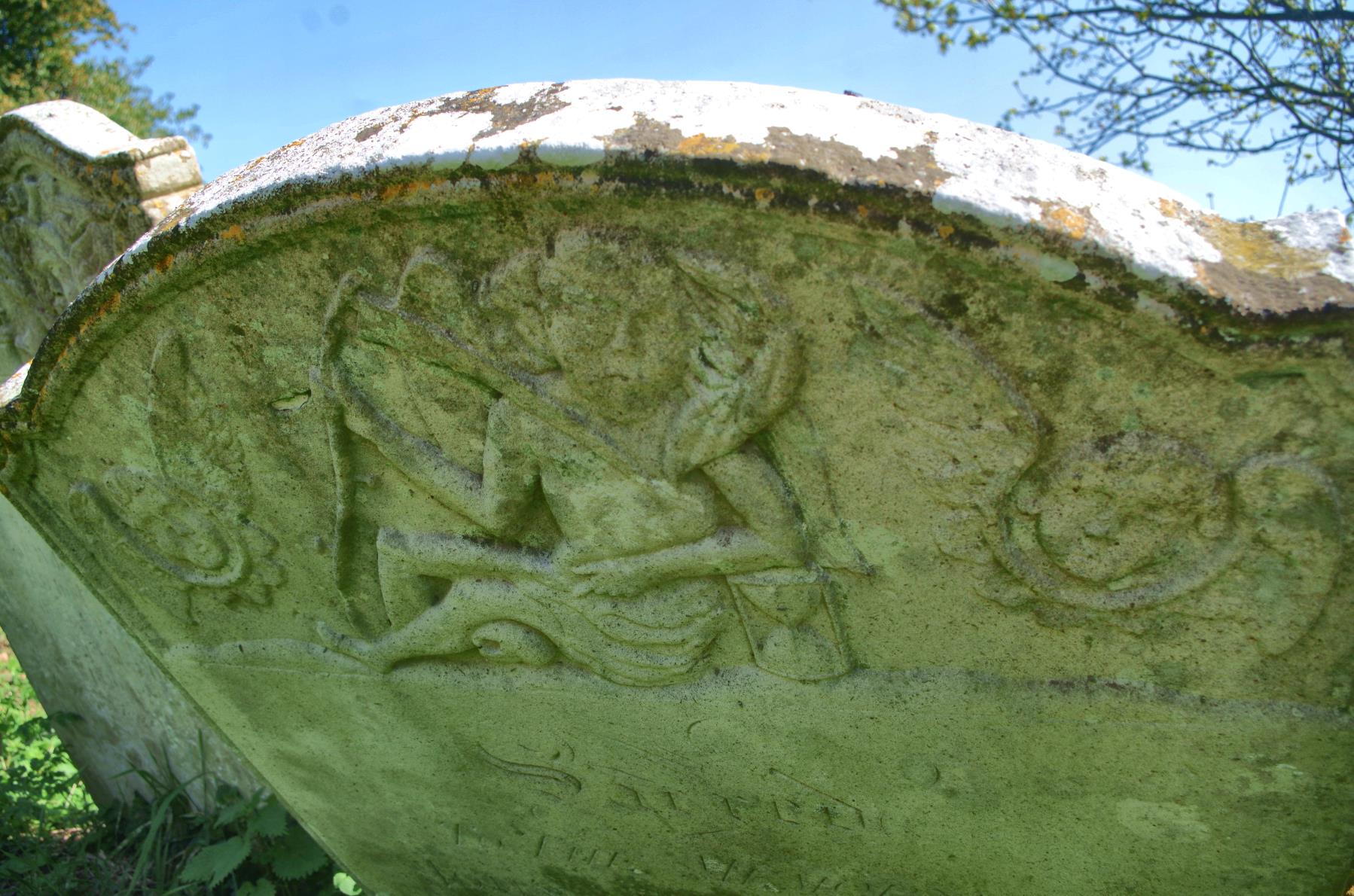
Ah, the perils of searching for symbols in old churchyards. I had to almost lie horizontally on the ground to take a photo of this one in the churchyard of St Nicholas, Pluckley, Kent. I was a little nervous that the headstone would fall on top of me but what a headline that would have made!
At the time I had no idea what it represented and just thought it looked interesting. In fact it wasn’t until much later when I’d had a chance to look at it properly that I realised the identity of the figure in the carving. I then wished that I’d also taken a photo of the epitaph.
It is in fact a depiction of Old Father Time. It’s a lovely example. As you can see he’s sitting with one hand holding a fearsome looking scythe with a bent and gnarled stem and the elbow of his other hand is resting on an hourglass. He is a very old man with a white beard, large angel wings on his back and is flanked on either side by two angel heads. What better symbol for a life that had ended?
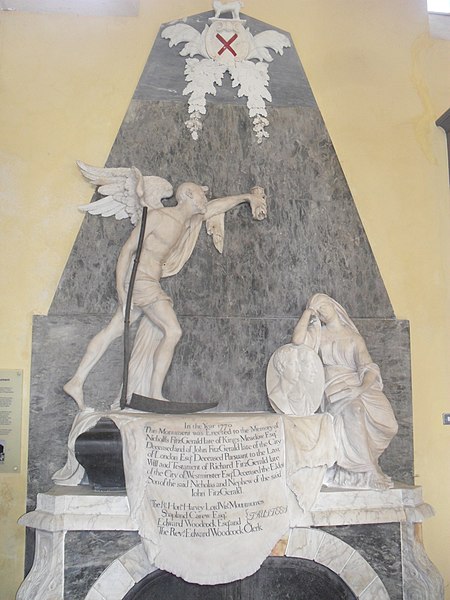
So far I have only discovered a few other examples. There is a 17th century version on a tombstone in a Hendon churchyard and a huge, modern one again resting on an hourglass within Warzaw’s Powarzski cemetery. I can’t show them in this blog as one is on a stock images library and so not royalty free and I am awaiting permission to use the other image. However I found this one on Wikipedia but its location is not given.
Old Father Time and a grieving widow. An unknown Irish memorial. Shared under Wiki Creative Commons
We traditionally associate Old Father Time with the New Year celebrations. He is the representation of the outgoing Old Year welcoming in the New Year which is usually portrayed as a smiling baby. But Father Time has also been described as a gentler version of the Grim Reaper as they share the same accoutrements of a scythe and hourglass.
He is considered to be the personification of age and is related to the ancient Greek god Chronos and also the Roman god Saturn. Father Time’s ageing, worn out body is a reminder that time ultimately devours all things and that none can escape. The grains of sand in the hourglass count out not only his life but all lives. Although he has a long, white beard, a sign of age, it has been interpreted as a reclamation of purity and innocence. But, as the hourglass can be inverted, so can a new generation, the New Year, restore the source of physical vitality. However, time is not always destructive as it can also offer serenity and wisdom.
Cronos, from which chronology derives, was the ancient Greeks word for Time and the Romans knew him as Saturn. According to Wikipedia:
‘The ancient Greeks themselves began to confuse chronos, their word for time, with the agricultural god, Cronus, who had the attribute of a harvester’s sickle. The Romans equated Cronos with Saturn, who also had a sickle and was treated as an old man, often with a crutch. The wings and hourglass were early Renaissance additions.’
The Roman Chronos was originally an Italian corn god known as the Sower and a big festival known as the Saturnalia was held to celebrate the harvest. So there is a link between these ancient gods and Father Time in that they both symbolically harvest, or cut down the mature crops, to make way for the Spring’s new growth.
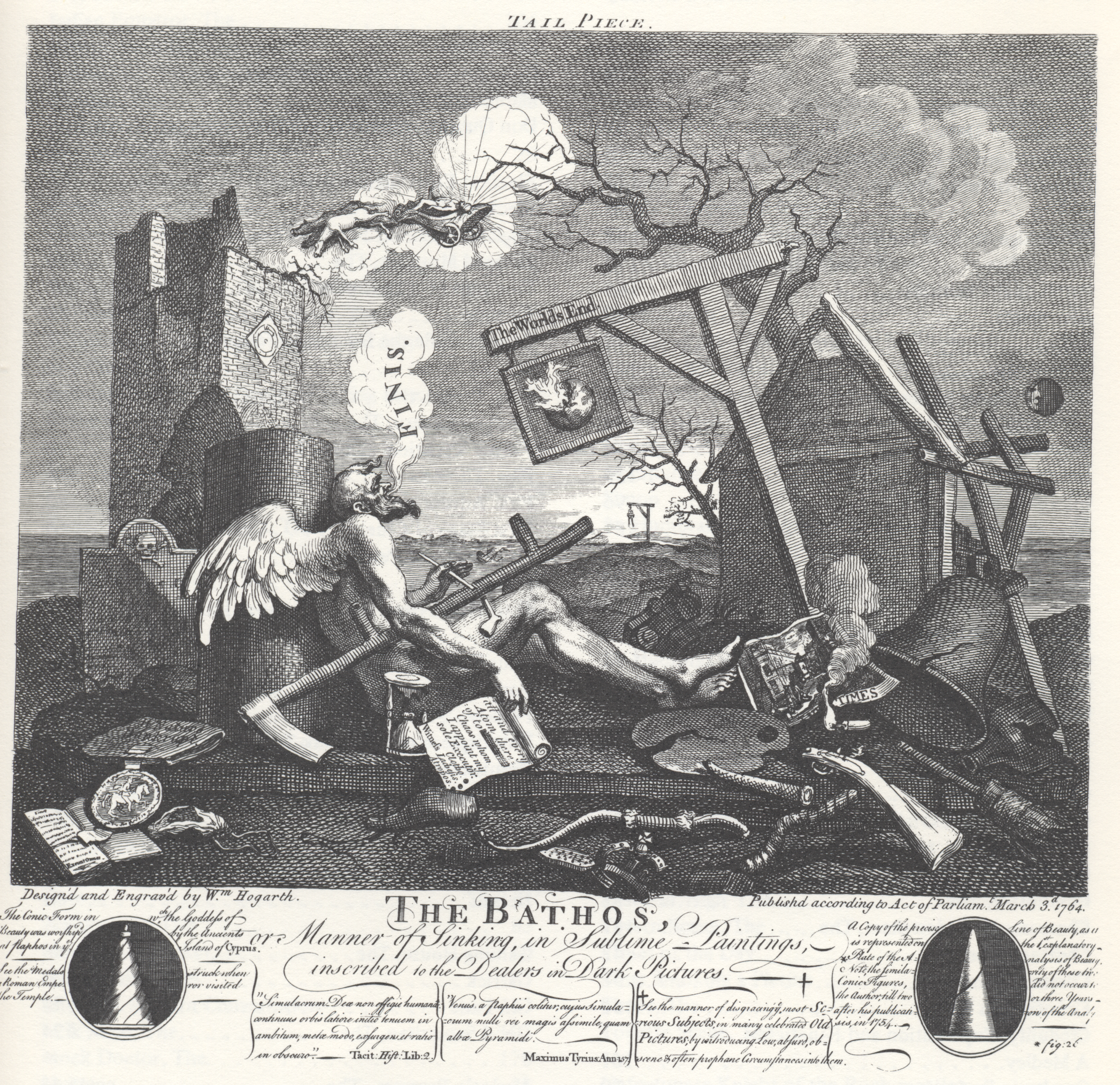
Father Time appears throughout many cultures and also in art, books and sculpture amongst others. In one of Hogarth’s later work, The Bathos, he appears lying down surrounded by his familiar objects, all now broken.
The Bathos by William Hogarth in which Old Father Time lies surrounded by his broken symbols. Shared under Wiki Creative Commons.
But in St Nicholas’ churchyard Old Father Time keeps an eternal watch over a life that has ended, resting on a still crisply carved hourglass. It is full, the scythe has harvested and so the endless cycle of life continues.
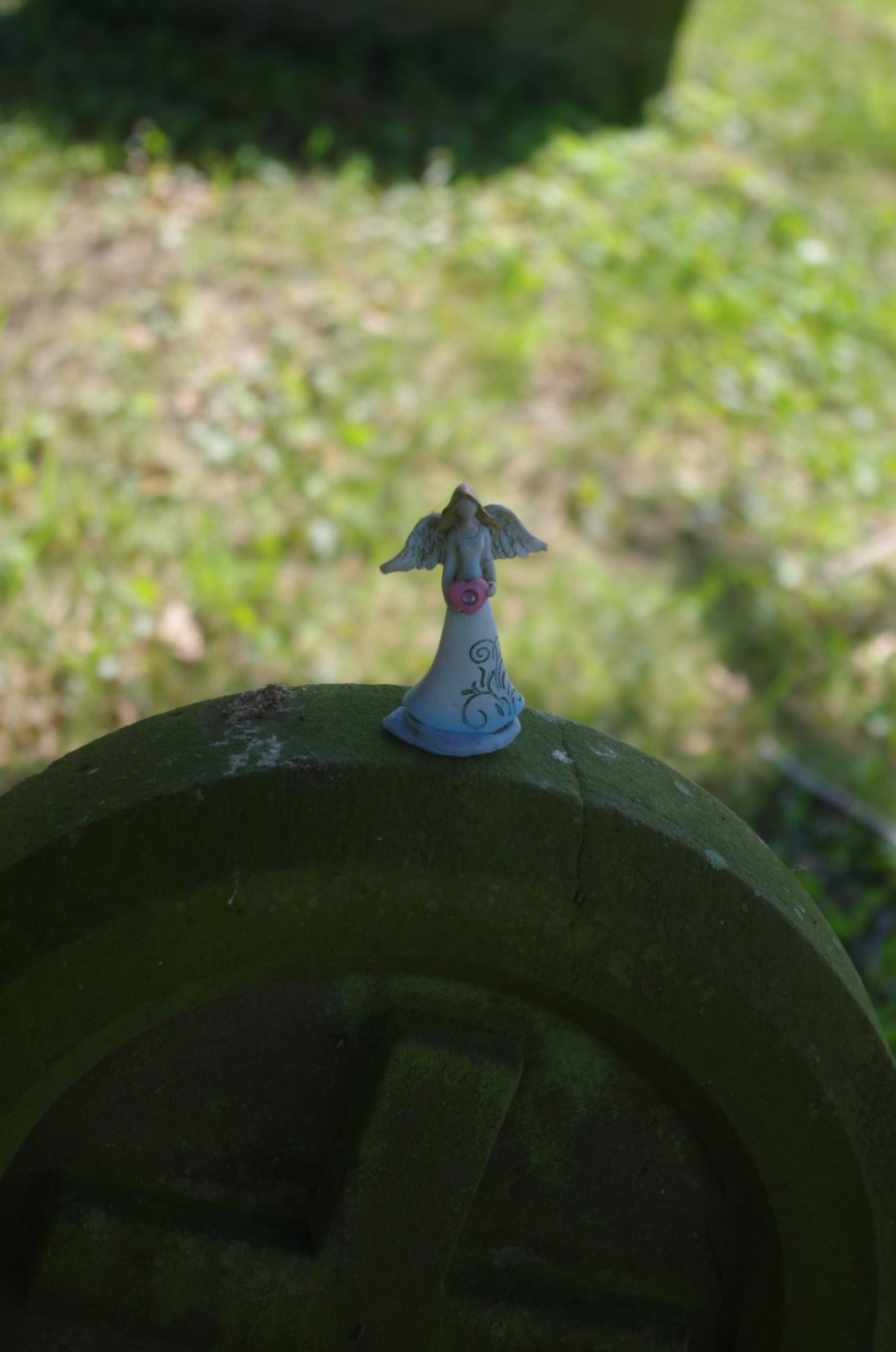
As I walked along the path to the church’s door I spotted the little angel, maybe a Christmas decoration, maybe a holiday souvenir, perched on top of a tombstone within the churchyard. Was she a warning? But I was nervous and excited at the same time. What awaited me inside? I put my hand on the church door. Would the Red Lady or the White Lady be ready to welcome me…….or would it be both of them? At last I could put it off no longer, pulled open the door and entered.
OK, I admit it. A friend dared me to visit the village of Pluckley which is in Kent and reputed to be haunted by up to 14 ghosts. ‘When will you ‘pluckley’ up the courage to visit?’ the wag quipped. So I accepted the challenge and set off on Easter Saturday.
However, Guinness World Records has stood down Pluckley’s claim to fame as the most haunted village in the UK. This is a shame as I always had visions of a solemn official from GWR turning up with a clipboard and pen to studiously record and tick off each phantom at their appointed location as if they appear to a timetable. Some of the purported ghosts include:
The spectre of the highwayman hid in a tree at the Pinnock
A phantom coach and horses has been seen in several locations around the village
The ghost of a Gypsy woman who drowned in a stream at the Pinnock
The sighting of the miller seen at Mill Hill
The hanging body of a schoolmaster in Dicky Buss’s Lane
A colonel who hanged himself in Park Wood
A man smothered by a wall of clay who drowned at the brickworks
The Lady of Rose Court, who is said to have poisoned herself in despair over a love triangle
St Nicholas church in the centre of the village is reputed to be haunted by two female ghosts: The White Lady and the Red Lady. The latter was supposed to be a great beauty who died 500 years ago and was preserved by her husband in a series of lead coffins and then ultimately in an oak chest. The Red Lady was supposedly a member of the local landowning family, the Derings, and is a sad wraith. She is said to haunt the churchyard searching for the unmarked grave of her still born son.
There had been a recent piece in the Fortean Times ‘It happened to me’ section from a visitor to the church who claimed that he’d found a hostile atmosphere and heard sibilant whispering. A blogger online discovered that none of her photos of the church or churchyard had been recorded by her camera. ‘The church is eerie’ said one friend who had visited it and another commented that the whole village had ‘an atmosphere’. ‘Oo-er!’ I thought, ’would there be an entire company of ghosts awaiting my arrival?’
It was a gloriously sunny, warm day as I walked the mile or so from the station up to the village. Fields of bright yellow rape were almost luminous. I saw my first Peacock butterfly of 2019 as it obligingly posed on a dandelion head and the local sheep bleated in welcome. Or perhaps it was a warning…
Then I encountered my first ghost hunters of the day as a car stopped with an eager looking family inside. The driver asked for directions to the church. I pointed in its direction and they drove off. Later I saw them driving out of the village again looking somewhat disappointed. As I said earlier ghosts don’t appear to order.
In fact Pluckley was teeming with small groups of ghost hunters walking up and down the High Street or briefly visiting St Nicholas looking hopeful. Some drove off quickly as obviously they had been unable to find a spectre with which to pose for a selfie. The village’s other claim to fame is that it was used as the backdrop to ITV’s The Darling Buds of May and I could see why. It’s just ‘perfick.’
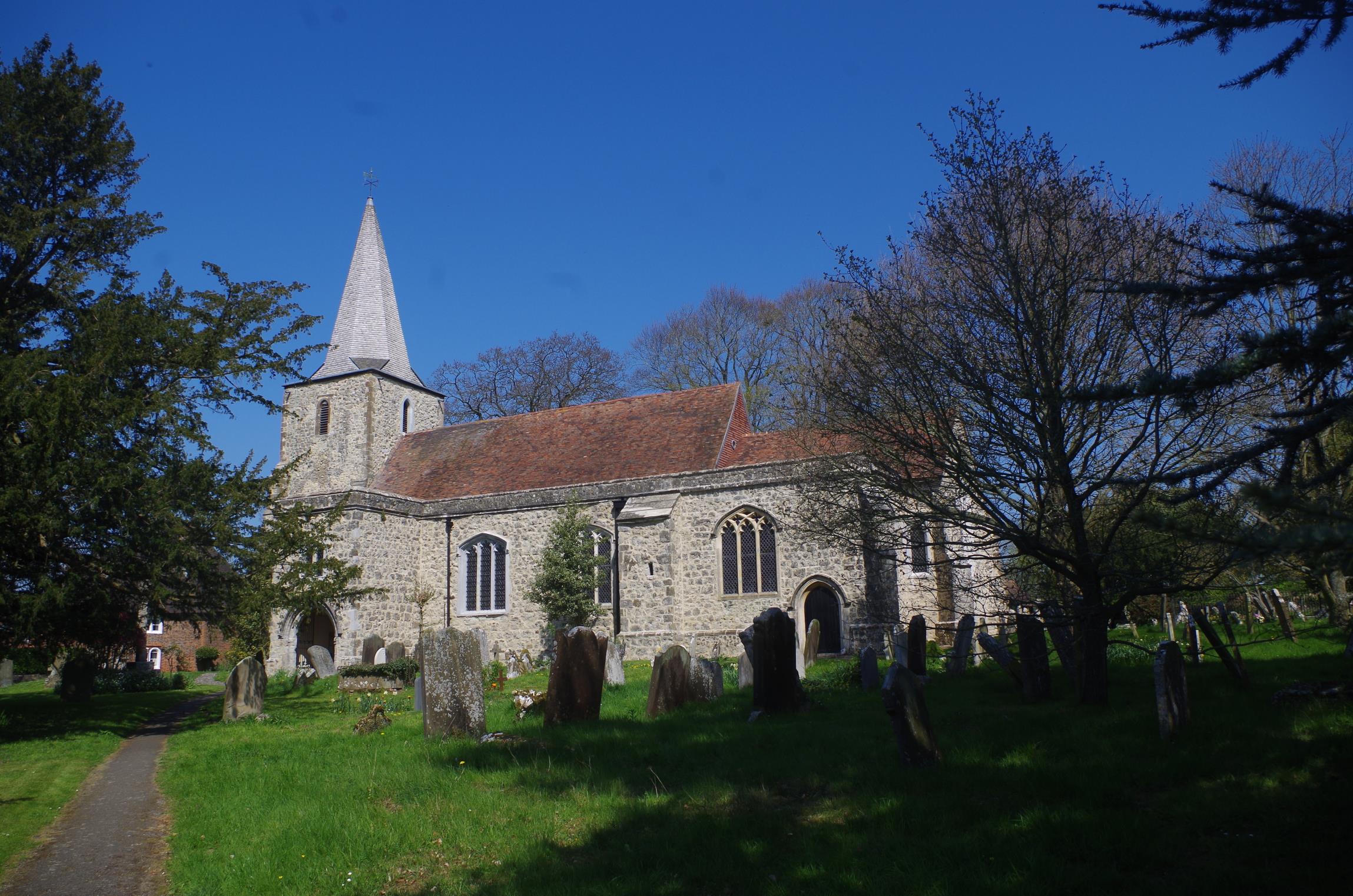
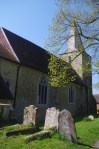
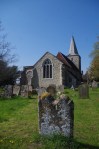
St Nicholas was easy to find and it’s a real picture postcard church with a candle snuffer spire. It features on the village sign.
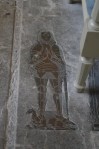
There may have been a church on the site since Saxon times and Pluckley is recorded in the Domesday Book as ‘Pluchelei’. In the 13th century there was a stone church in place and there have been many alterations and repairs right up to the present day. The Derings have their own side chapel and there are brasses set into the floor that record various family members.
They lived at the grand house of Surrenden Dering from the 1500’s until 1928. The house was demolished in 1957 after a fire and part of some of its wood after the fire was used to create the oak cover for the font.
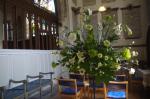
Inside, the church was bustling but not with eager spectres anticipating my arrival. Instead it was a group of flower arrangers placing elaborate arrangements around the church. I should have guessed that the church would be busy over the Easter weekend as the female organist began to practice. The interior of St Nicholas is small and plain with the Dering Chapel on one side. But no ghosts unless they were masquerading as the helpers, or hiding in one of their pockets. Another ghost hunting family popped their heads in and then quietly closed the door.
But no, I didn’t feel anything at all other-worldly
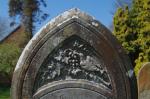
I decided to explore the churchyard which had a fine collection of 19th century headstones and some precariously leaning older ones. They were weighed down by moss and age and any inscriptions or symbols are now lost unless recorded elsewhere. I had to photograph one interesting symbol almost lying down on the grass as the headstone was almost horizontal.
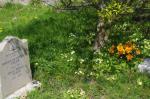
On the other side of the churchyard was an apple orchard, just beginning to blossom, and attracting butterflies and enthusiastic bees. A small rug of multi-coloured primroses were beside a grave with a beehive on the headstone. ‘The local beekeeper?’ I thought and in a corner of the churchyard was a small plot bordered by iron railings on which there was a fulsome epitaph.
After buying postcards in the local shop to prove that I had actually been there and stoutly resisting the temptation to have a cold lager shandy in the Black Horse I retraced my steps to the station.
So is Pluckley the most haunted village in Britain? Does anything or anyone lie in wait in St Nicholas Church? Were the flower arrangers or one of their number ghosts?
The jury’s still out on whether Pluckley deserves its title but on another day in another season, perhaps when St Nicholas is not so busy, it could all be so different. Maybe if I visited during the dark season on a chill autumnal day with perhaps with the chilly fingers of mist wreathing the trees… A forgotten scarecrow blown by a wind that makes it creak and turn towards me in an empty field and the marauding groups of spook seekers are all at home watching their Most Haunted Live DVDs. This time when I enter St Nicholas it’s changed.
The shadows are longer, it feels claustrophobic and I know, by the prickling of my spine that I’m not alone…… I can only hope that this is my chance at last to meet the wonderful people in the dark..





































 shadows fly away