The Tradescant tomb Part 2 -its enigmatic carvings.

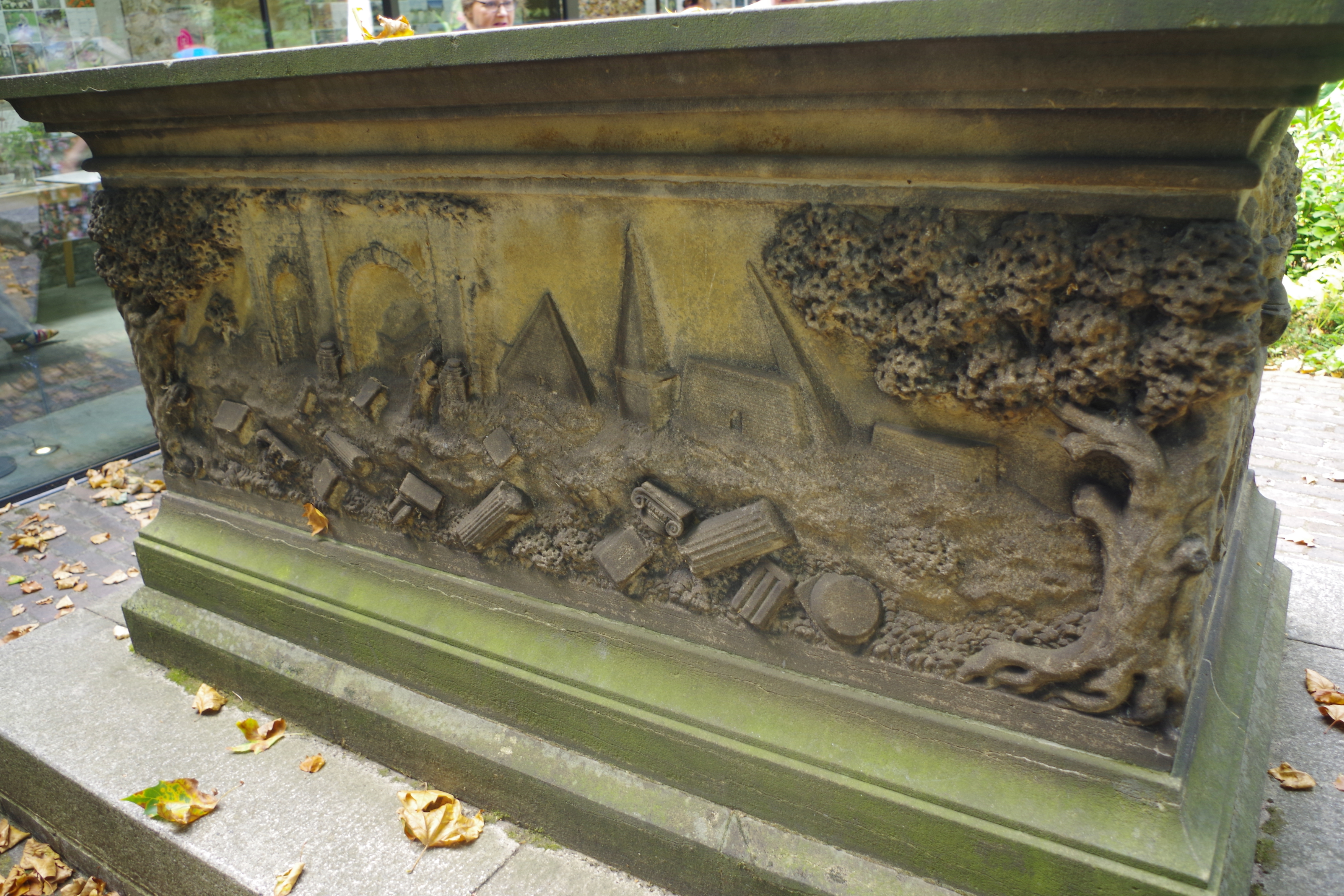
The north side of the tomb showing ruined buildings and discarded architectural features © Carole Tyrrell

It was the drawings made by Wenceslaus Hollar for Samuel Pepys (see above) that were used as guidance for the recarving of the reliefs in 1773 and 1853. These allow the viewer to see what the tomb originally looked like and to compare them with the changes that successive sculptors have made. For example, G P White in 1853 seemed to have his own interpretation of the hydra.

But, as you might imagine with pollution and the London atmosphere, the tomb being outside and at the mercy of the elements, the carvings have deteriorated and changed over the centuries. As the gardentrust.blog says:

‘The casual viewer is not seeing the original carvings. As it was outside in what would have originally been the churchyard, the elements soon did their work. The tomb was so badly damaged by 1773 that a public subscription was raised for its restoration. Lambeth Archives still have the ledger that recorded the donations.

But in 1853, 70 years later, the public funded a further restoration. It was the sculptor G P White who undertook this restoration.’

The 1853 restoration cost £110.  The Victorians were enthusiastic restorers, perhaps too enthusiastic in some ways.

The East end of the tomb. © Carole Tyrrell

At one end of the tomb is a coat of arms which comprises of three fleur de lys on a diagonal bar and with a lion holding up its paw. A helmet with a closed visor is meant to be a sign of gentility and is topped with the crest of another fleur de lys and 2 wings.  However, the Tradescants had no official grant from the College of Arms and may just have adopted it as a ‘rising’ family.  It was a standard item on a monument and is the most conventional symbol.

The west face of the sarcophagus. © Carole Tyrrell

At the other end, the west end, is a fearsome looking hydra which is a mythical ancient Greek creature associated with the 10 Labours of Hercules. It lived in the murky waters of Lake Lerna which was reputed to be the entrance to the underworld. Each time one of the hydra’s heads were cut off , two more would grow in its place so it was a deadly enemy. The hydra in the Pepys drawings is almost friendly and certainly non threatening whereas the 1853 version, carved in high relief, is much more dramatic with its bat like wings, female breasts., seven bird like heads and a long forked reptilian tail. 

There were other changes as well and the gardenstrust.blog commented on the skull in the lower part of the panel.

‘It lacks the lower jaw and is presumably the same one that appears in the younger John’s portrait where it is covered with skull moss, much sought after as a powerful medicine.’

This portrait appears in Part 1. The significance of the skull may be a reminder of vanitas paintings which flourished during the 16th and 17th centuries and came from the Netherlands. They often featured a skull and invited the viewer to ponder on the fleeting quality of life.

The north side of the tomb. © Carole Tyrrell
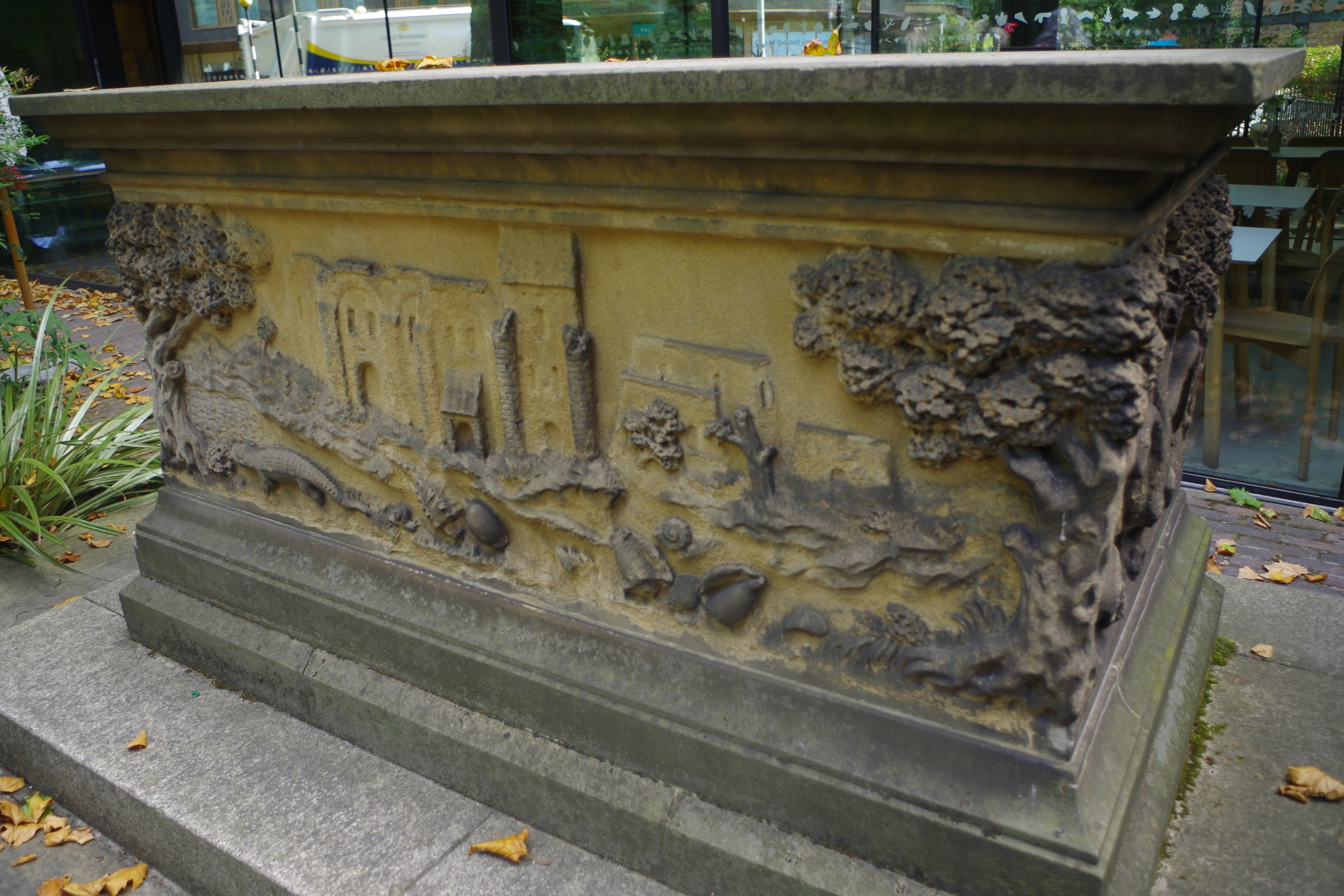
The south side of the tomb. © Carole Tyrrell

The longer north and south sides depict:

‘ruined buildings in the background and architectural detritus in the foreground together with a crocodile and shells and fossils. The corners are formed by gnarled and stunted trees with heavy foliage.’ Cabinet.ox.ac.uk

The depiction of the ruins have been debated as the restorations may have changed their appearance. They have been described as Egyptian or Greek with obelisks and a pyramid amongst others. There are also fragments of Corinthian capitals. The shells may refer to specimens that were in the Tradescant collection and the large reptile in the lower part of the north panel could refer to the ‘Crocodile from Aegypt’ that was listed in the exhibits of the ‘Ark.’ It was also seen as a symbol of the early modern culture of collecting as seen in the oldest depiction of a ‘cabinet of curiosities’, the museum of Ferrente Imperato.

Detail showing one of the trees that appear on each of the tomb’s corners.© Carole Tyrrell

In order to link all the sides of the tomb together, the mason carved a set of large trees in deep relief. They hold up the ledger with its epitaph:

 ‘Know, stranger, ere thou pass, beneath this stone
Lie John Tradescant, grandsire, father, son
The last dy’d in his spring, the other two,
Liv’d till they had travelled Art and Nature through,
As by their choice Collections may appear,
Of what is rare in land, in sea, in air,
Whilst they (as Homer’s Iliad in a nut)
A world of wonders in one closet shut,
These famous Antiquarians that had been
Both Gardeners to the Rose and Lily Queen,*
Transplanted now themselves, sleep here & when
Angels shall with their trumpets waken men,
And fire shall purge the world, these three shall rise
And change this Garden then for Paradise.’

It has been suggested that the line ‘A world of wonders in one closet shut’ may refer to the Ark.
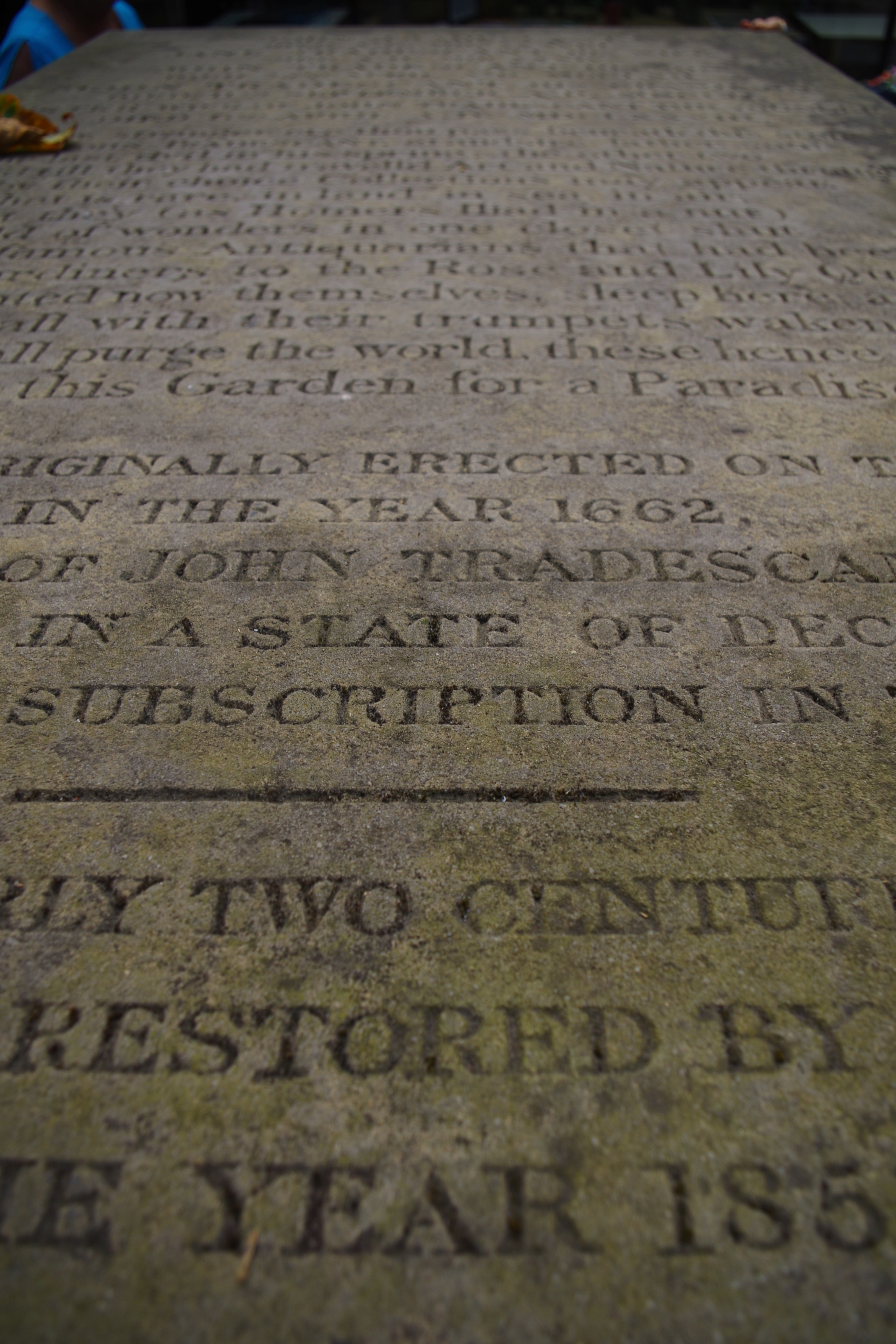
A section of the epitaph on the Tradescant tomb. ©Carole Tyrrell

Despite the changes to the carvings, the Tradescant tomb is a magnificent survivor with five members of the family being commemorated. The enigmatic carvings, the epitaph and one woman’s determination have all added to the legendary Tradescant reputation.  It’s a real sight to see and there are other interesting memorials in the ex-churchyard as well. For example, there is one dedicated to Admiral Bligh of Mutiny on the Bounty fame and there is a wonderful ouroboros on another, the Sealy family monument.
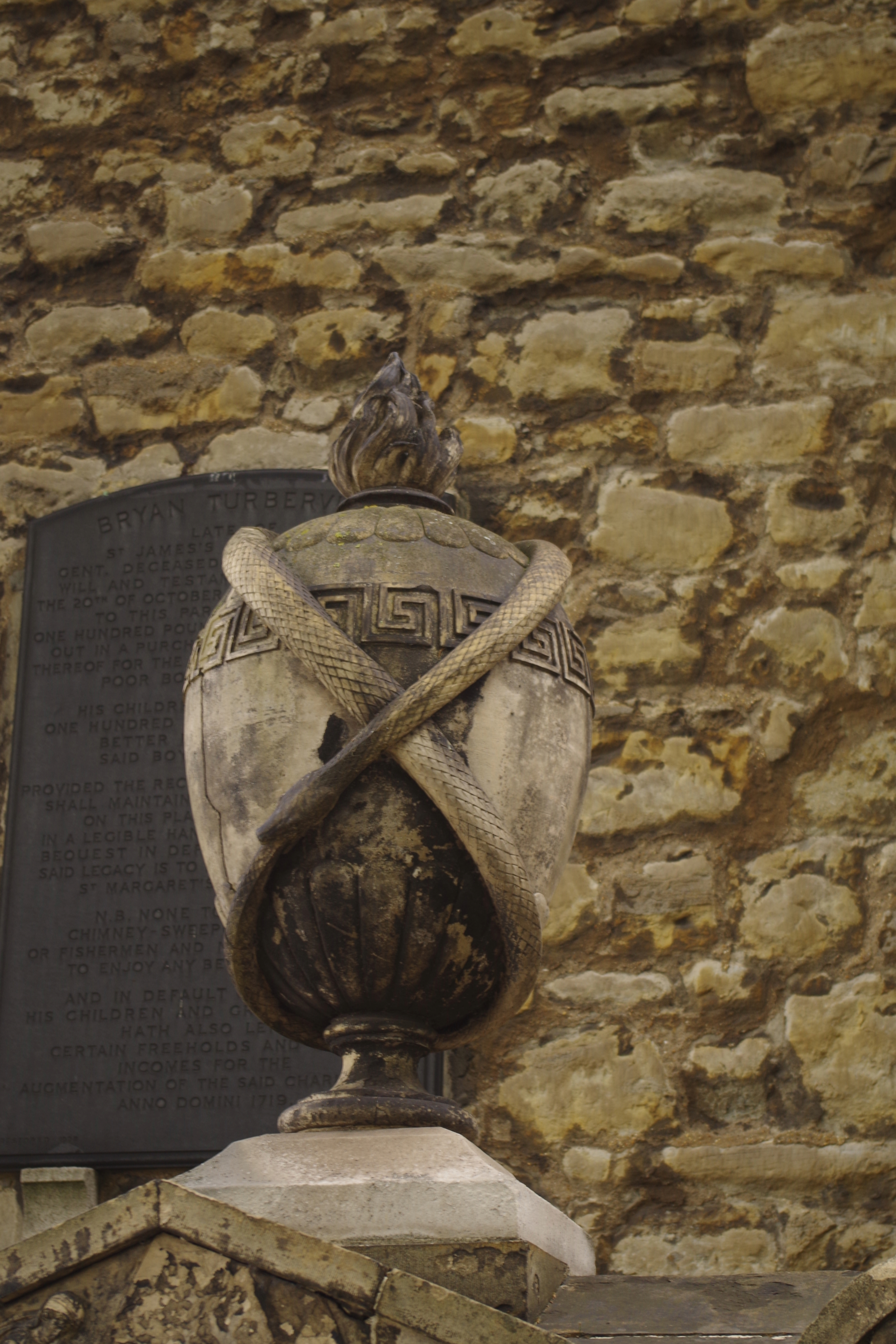
The elegant ouroboros on the Sealy monument topped by an eternal flame. © Carole Tyrrell

The Sealy family had connections with Eleanor Coade, the inventor of Coade or artificial stone and the monument is made from it.

Inside the museum there are several memorials on its walls and some fine skulls. Well worth a visit if you’re in the area. 

©Text and photos Carole Tyrrell unless otherwise stated.

The Tradescant family tomb | cabinet (ox.ac.uk)

The Tradescants and their Tomb | The Gardens Trust( a lot more information on the Tradescants and the tomb)

The Tradescants – Garden Museum

The spectacular Tradescant tomb: “a world of wonders in one closet shut” – Flickering Lamps

Garden Museum – celebrating British gardens and gardening

John Tradescant the Elder – Wikipedia

John Tradescant the Younger – Wikipedia

The Garden Museum: Trandescant Tomb | Londonist

The spectacular Tradescant tomb: “a world of wonders in one closet shut” – Flickering Lamps

The enigmatic Tradescant tomb Part 1- The Garden Museum, London

The Tradescant tomb, The Garden Museum, London. © Carole Tyrrell

A large, ancient chest tomb is not what you expect to see from the window of a central London restaurant. However, I’d seen pictures of it before and, for me, a dedicated Symbols enthusiast, it was the icing on the cake while enjoying a fantastic meal.

It is the Tradescant tomb and it sits in the courtyard of The Garden Museum in Lambeth which is housed within the deconsecrated church of St Mary at Lambeth. The Museum was founded in 1977 by Rosemary Nicholson in order to preserve the tomb. She and her husband saved St Mary’s from demolition and it is the second oldest structure within the borough of Lambeth. A church has existed on the site for over 950 years.

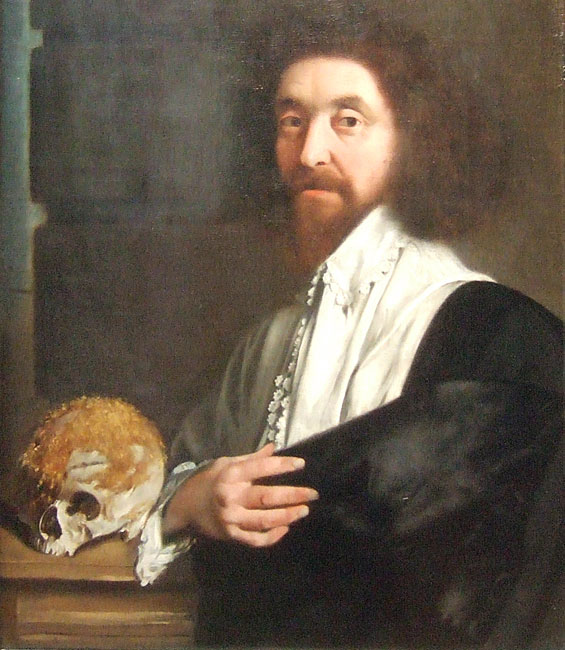
John Tradescant the elder attributed to Cornelis de Neve (1668-1665) Shared under Wiki Commons

John Tradescant the elder (1570-1638) is one of the most important figures in English gardening and he founded a dynasty of horticultural experts. In 1623 he became head gardener to royal favourite George Villiers, 1st Duke of Buckingham. After his assassination Tradescant became keeper of his Majesty’s Gardens, Vines and Silkworms at his queen’s minor palace in Oatlands Place, Surrey in 1630. He was the Royal Gardener at the court of Charles 1st and worked with his wife, Queen Henrietta Maria. In search of new plants, he travelled widely including trips to the Arctic which was no mean feat at the time. He even took part in an expedition to Algeria to fight Barbary pirates! One of the earliest records of him is a letter that he wrote while on a journey to the Netherlands, to buy plants for the 1st Earl of Salisbury’s garden at Hatfield House. He seems to have been a man possessed of indefatigable energy.  In 1629 he moved to Lambeth near where the Museum is now situated and created the first museum in Britain to be open to the public. It was known as the ‘Ark’ and was formed from his own collection of natural history and ethnography.

John Tradescant the younger Thomas de Critz 1652 Shared under Wiki Commons

But the tomb commemorates his son, also called John, (1608-1662)as well. It was his widow Hester who commissioned it after his death. They were married at St Mary’s and he succeeded his father as the Royal Gardener.  He also travelled widely to collect specimens. John Tradescant the younger  went to America for plants and seeds during the early 1600s and introduced trees such as magnolias, tulip trees and garden plants such as phlox and asters.

In addition, it celebrates four other family members including his father, his two daughters in laws, Jane Hurte (died 1634) and Hester Pookes (died 1678) and his grandson, another John, who died in 1652 in his late teens.  The Tradescant dynasty died out in 1678 with Hester’s death.

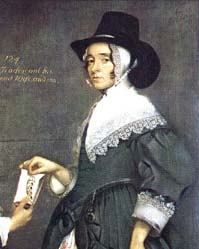
Hester Thomas Thomas de Critz, Ashmolean Museum, Oxford. Shared under Wiki Commons

The sarcophagus is made from hard sandstone and has suffered deterioration over the centuries and it would have originally been in St Mary’s churchyard.  The inscription on the tomb states that it was originally erected in 1662, repaired in 1773 and then restored in 1853 by the sculptor G P White. It’s an unusual tomb, not just because of its size, but in its carvings and enigmatic symbols. However, unusually for the time, there are no religious references on it except for the final lines of the inscription:

‘Angels shall with their trumpets waken men,

And fire shall purge the world, these three shall rise

And change this Garden then for Paradise.’

It’s an intriguing tomb and is a visible sign of the Tradescants standing and aspirations. Hester was asked to pay £50 to the Lambeth church wardens of the time towards the parish poor relief. This was the equivalent of 6 months wages for John as the Royal Gardener. And this was only for permission to site the tomb as everything else was extra.

But it’s the enigmatic carvings that attracted me to the Tradescant tomb and in Part 2 I will discuss these further. However, these are not the original carvings as after two restorations, in 1773 and 1853, the scenes and creatures depicted have subtly changed especially the Hydra sculpture.  

Part 2 – the carvings of the Tradescant tomb

©Text and photos Carole Tyrrell unless otherwise stated.

The Tradescant family tomb | cabinet (ox.ac.uk)

The Tradescants and their Tomb | The Gardens Trust

The Tradescants – Garden Museum

The spectacular Tradescant tomb: “a world of wonders in one closet shut” – Flickering Lamps

Garden Museum – celebrating British gardens and gardening

John Tradescant the Elder – Wikipedia

John Tradescant the Younger – Wikipedia

The Garden Museum: Trandescant Tomb | Londonist

The spectacular Tradescant tomb: “a world of wonders in one closet shut” – Flickering Lamps

Symbol of the Month – The Final Curtain

Full view of the impressive Raikes headstone, West Norwood Cemetery/
©Carole Tyrrell

The theatre is dark, the audience and backstage staff have all gone home or off to the pub and the final curtain has been brought down. The end of a show, the end of the evening and, in funerary symbolism, the end of a life.

This fine example is from West Norwood Cemetery where it commemorates the Raikes family.  Theatre was in their blood and so the sculpture of a theatrical curtain is very appropriate.

But curtains and draperies have always been associated with death and remembrance.  There is the old saying which is sometimes quoted on headstones and memorials that the deceased has ‘gone beyond the veil’.  An urn on top of a memorial will often have a sculpted piece of cloth draped across it which indicates the division between the living world and the realm of the dead.

In the 19th century and also well into the 20th century drapes were hung over mirrors with curtains and blinds drawn down at windows during the period of mourning. It was as if they were hiding death from the world or containing it within the family. On the Friends of Oak Grove Cemetery website they mention mirrors being covered with black crepe fabric in order to prevent the deceased’s spirit being trapped in the looking glass.

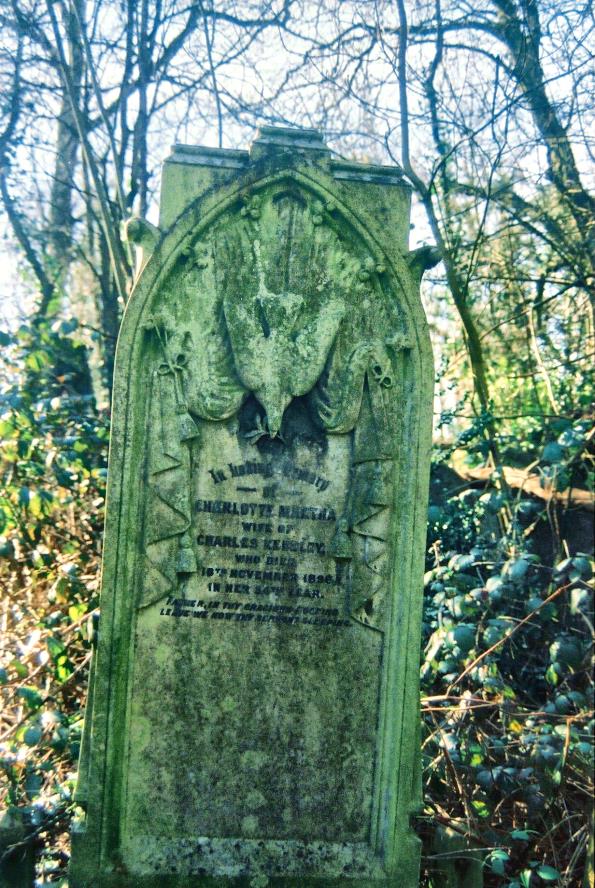
Parted curtains on a headstone to display a downturned dove and epitaph in the centre, Nunhead Cemetery
©Carole Tyrrell

Curtains also feature on headstones where they are depicted as parted in order to display a meaningful symbol or to draw attention to an epitaph that takes centre stage.  This example comes from Nunhead Cemetery where the curtains are parted to display a downturned dove which is a symbol of The Holy Ghost.

However the Raikes one is very obviously a theatrical curtain and it’s beautifully detailed.  They were powerful players in that flamboyant world and the curtain is a direct reference to this. For example, in 1889, they had Sir Edward Elgar and his new wife, Caroline, as guests in their house, Northlands in College Road, Dulwich.  This was just prior to his Salut D’Amour being performed at the Crystal Palace.

But the family home had a secret in its basement. This was where Charles Raikes (1879-1945) had constructed his own private theatre.  He lived there with his mother, Vera, (1858-1942) and two sons, Raymond and Roynon, from his former marriage. Roynon’s wife, Greta, and their daughter Gretha were also part of the household. Charles lived and breathed theatre and he was ahead of his time when he converted a large billiard room into the Northlands Private Theatre. Nowadays it would be a lavish home cinema with comfy seats and popcorn on tap with his own home movies onscreen.  He extended his pride and joy by removing a couple of inconvenient bay windows and then converting a coal cellar and wine cellar into dressing rooms. He was a talented scenic artist and stage carpenter and from 1924 – 1939 the Theatre put on nearly 23 productions a year to an invited audience. This was made up of the Raikes’ friends and relations and the actors and actresses friends as well. The lavish after show parties were renowned.

Charles’ sons continued the links to the entertainment world.  Raymond (1910-1998) became a professional actor in the 1930’s and played Laertes to Donald Wolfit’s Hamlet at Stratford upon Avon.

Raymond Raikes taken in 1945
Shared under Wiki Creative Commons

However he eventually became a BBC producer, director and broadcaster. He won several awards over a long career which included pioneering the use of stereo sound in radio drama.  In 1975 he retired and is known as one of the three greatest radio drama producers. Roynon became a professional photographer specialising in theatre pictures and also as a stills photographer for the BBC. Greta, his wife, became a theatrical costumier and drama teacher and her daughter, Gretha, in turn became a speech and drama teacher. In a 1997 Dulwich Society article she was also credited with being the curator of the archives of the Northlands Private Theatre.

View of the curtains and the quote from the Rubaiyyat of Omar Khayyam, Raikes headstone, West Norwood cemetery.
©Carole Tyrrell

The quotation below the curtain is from the Rubaiyat of Omar Khayyam.  It comes from the 21st, 22nd  or 23rd stanza depending on which version you read.   This is the verse in full and is taken from the 1859 translation by Edward Fitzgerald

Lo! some we loved, the loveliest and best

That Time and Fate of all their Vintage prest,

Have drunk their Cup a Round or two before,

And one by one crept silently to Rest.


He saw them as a selection of quatrains or Rubaiyats that had been attributed to the Persian poet who was also known as the Astronomer Poet of Persia.  Although Fitzgerald’s translation was initially unsuccessful, by the 1880’s, it had become immensely popular.  It has influenced many creative people over the years including the Pre-Raphaelites and especially Dante Gabriel Rossetti. Oscar Wilde was also a fan and mentions ‘wise Omar’ in The Picture of Dorian Gray.   Agatha Christie, Isaac Asimov, H P Lovecraft and Daphne Du Maurier are amongst many who may have borrowed a line a s a book title or used an Omar like figure within their works.  Interpretations of the Rubaiyat can be very free and as a result the quatrains can change their wording.  The underlying message of the Rubaiyat appears to be Seize the Day or Carpe Diem in Latin.  There are also several references to drinking with the implication that once drinking is over so is life.   But this particular line seems appropriate for its use on a headstone.

And so the curtain has bene brought down on the Raikes family but, as I took my photos, I thought I detected a faint smell of greasepaint and the appreciative sound of applause……

©Text and photos Carole Tyrrell unless otherwise stated

References and further reading:

 https://aeon.co/ideas/how-the-rubaiyat-of-omar-khayyam-inspired

 sleepinggardens.blogspot.co.uk/2011/06/fridays-funerarysymbols

https://en.wikipedia.org/wiki/Rubaiyat_of_Omar_Khayyam

schoolworkhelper.net

https://artofmourning.com/2010/11/14/symbolism-sunday-drapery/

Rubáiyát of Omar Khayyám Summary – eNotes.com

https://www.enotes.com/topics/rubaiyatomarkhayyam

https://dulwichsociety.com/2017-winter/1578-brief-encounter

https://en.wikipedia.org/wiki/Raymond_Raikes

www.suttonelms.org.uk/raymond-raikes.html

https://en.wikipedia.org/wiki/Rubaiyat_of_Omar_Khayyam


The blank eyed stare of a marble congregation – Part 2 of a visit to Knebworth – The Lytton Chapel, St Mary’s Church


Sir William Lytton. ©Carole Tyrrell
Sir William Lytton.
©Carole Tyrrell

Everywhere I looked, as I stood in the Lytton Chapel, a well-upholstered, well dressed 18th century gentleman stared impassively back at me.  They seemed to jostle for space in the small chapel and, although these past members of the Lytton family, couldn’t take it with them, you certainly knew that they’d had it when they were alive.  These were powerful men and there’s plenty of beautifully sculpted marble on show in the Chapel.   Nowadays, people would ask an artist or sculptor to make them look slimmer but here the subjects are unashamedly larger than life.

All three of the memorials are in the baroque style which was made fashionable by the Italian sculptor, Bernini.  It was a technique that achieved effects in carving such as flesh, hair and textures that were remarkably realistic as well as other pictorial effects that had previously only been attempted in 2D paintings .  And yet English Baroque was dismissed as mundane.  However the three tombs in the chapel seem anything but that.

Both Pevsner and Simon Jenkins in ‘1000 Best Churches’ mention the Chapel.  Indeed the latter describes  it as having ‘the best of 17th and 18th century monumental art (is) on parade and ‘three of the Knebworth tombs are among the finest 18th century monuments  In England.’   It was originally built in 1520 and then rebuilt 200 years later.

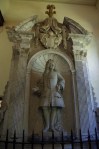
The first one as you enter is Lytton Strode Lytton who stands perfectly posed in his shell niche dressed fashionably in his coat and shoes with some of his coat buttons undone to display the buttoned up waistcoat beneath, Too many power lunches perhaps?  He died young at 21 as his epitaph reveals but he looks older with an almost feminine face and full lips. Lytton is guarded on either side by winged cherubs, or Cupids, as Historic England describes them..  One is copiously weeping and the other is in prayer and the whole memorial has been attributed to Thomas Green of Camberwell.here is a helpful English translation of the Latin epitaph:

‘Here lies Lytton Strode Lytton Esq., sole son and heir of Sir George Strode (of Etchinham in the County of Sussex_ and also heir of Sir William  Lytton of this parish, his great-uncle. He married Bridget Mostyn, the eldest daughter of Richard Mostyn, Eds., of Pembedwinthe county of Flint. He died without issue at the age of 21 in 1710.  He left the ancient patrimony of the Lytton family to his dearly beloved relative William Robinson, who erected this monument at his own expense as a pledge of his own affection.’


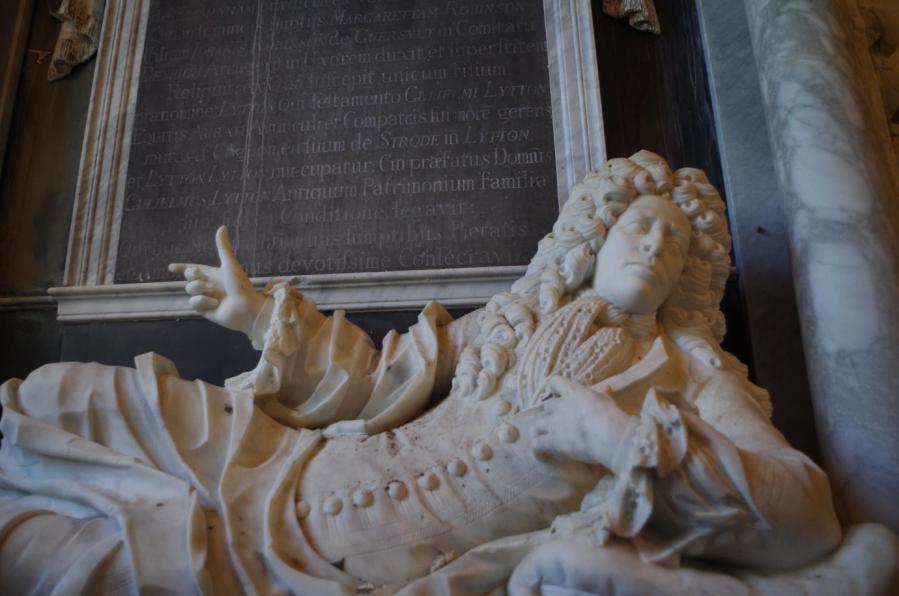
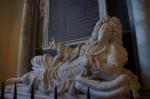
Then you turn and are almost crowded out by the other two:  Sir William Lytton to the left and Sir George Strode on your right. Their heads are both inclined towards Lytton Lytton as they lie semi-recumbent on marble beds, sheets rumpled and you almost feel as if you’ve disturbed them in conversation.  Sir George Strode was Lytton’s father and Sir William was his maternal great-uncle so it’s not surprising that they both look to their cherished heir and once the bearer of the Lytton dynasty hopes.

Both of these memorials are credited to Edward Stanton. (1681-1718).   He was a very successful mason who carved 40 monuments between 1699-1718 and in 1720  became a mason to Westminster Abbey where he remained until his death.  Stanton was married 3 times and one wondered where he found the energy.  He has his name prominently displayed at the base of one of the pillars on Sir William Lytton’s huge monument.

The carving on Sir William’s cravat, cuffs and wig as well as the delicate lacing of the Grecian style boots on two life size allegorical female figures or Virtues on either side of him is beautifully detailed. However, his opposite neighbour, Sir George Strode, has a wig that reminds me of waves of whipped cream.  Both men face each other and lie in the fashion of old style glamorous Hollywood stars with their rumpled marble sheets and supporting cushions.  But, perhaps in a feat of one-upmanship, William’s shrine is bigger than George’s as it’s laden down with figures and decoration such as the two Virtues dressed in flowing robes and showing a fair bit of leg.  There are also 3 winged cherubs heads under the cartouche decorated roof with swags of fruit and flowers.  But if you look up still further there are two small female figures, possibly children, perched on top of the roof and one appears to be playing an accordion.  The English translation of the Latin epitaph is:

‘Here lies Sir William Lytton, Knight, son and heir of Sir Rowland Lytton, Knight of the ancient family of the Lyttons de Lytton in the County of Derby (which has flourished happily in this neighbourhood since the time of King VII) in the direct line of descent.  He married first Mary the daughter of Sir John Harrison of Balls in the county of Hertford, then Philippa the daughter of Sir John Keyling of Southill in the county of Bedford; he died without issue, his second wife surviving him. 14th Jan AD 1704-5’

 By contrast, his neighbour, Sir George Strode, Lytton Lytton’s father, is far more restrained as there wouldn’t have been enough room in the chapel for another tomb as large as William’s.  George appears to be in mid-conversation with his hands making a gesture and one thumb indicating the epitaph above him.  This translates in English as:

‘Sacred to the memory of Sir George Strode of the ancient family of the Strodes, the eldest son of Sir Nicholas Strode of Etchinham in the county of Sussex, and his wife Judithe the oldest daughter  of Sir Rowland Lytton of Knebworth in the county of Hertfordshire, who piously and peacefully fell asleep in the Lord on the 9th of June, 1707, whose remains repose at his own wish in the Church at Etchinham aforesaid, who married Margaret Robinson (the daughter of John Robinson Esq., of Geursylt in the county of Denbigh). She survived him and from this union was born one son with the Christian name of Lytton, who by the will of Sir William Lytton his maternal great-uncle changed his family name from Strode to Lytton, and this became styled Lytton Lytton to whom the aforesaid Sir William Lytton bequeathed the ancient patrimony of his family.  He has dedicated this monument at his own expense as a tribute of piety and affection.’ 

The motto underneath George’s figure  reads:

‘Life is the gateway to death, and death in turn the gate of a new life and learn to die to the world, and live for God.’

 Comforting words for a man who lost his only son at an early age.

And so I left them, perhaps in an eternal interrupted, silent conversation, after marvelling at the skill of the mason’s work.  They are all behind iron railings, presumably to stop visitors touching them, but I also felt that the figures were so realistic that it might also be to stop them coming to life and lunging at sightseers.

 ©Text and photos unless otherwise indicated Carole Tyrrell

References

https://historicengland.org.uk/listing/the-list/list-entry/1295771

http://hetrfordshirechurches.blogspot.co.uk/2014/02/knebworth-1.html

https://en.wikipedia.org/wiki/Edward_Stanton_(sculptor)

http://217.204.55.158/henrymoore/sculptor/browserecord.php?-action=browse&-recid=2558

https://www.britannica.com/art/Western-sculpture/The-Baroque-period#ref401564

http://217.204.55.158/henrymoore/sculptor/browserecord.php?-action=browse&-recid=52

http://hertfordshirechurches.weebly.com/knebworth-churches-hertfordshire.html