A Cheshire cat grin from out of the darkness – St John the Evangelist, Margate

Close up of head, ‘monumental’ brass, St John the Evangelist, Margate. ©Carole Tyrrell

It was dark in the chancel as I explored St John’s and then five small figures set into stones in the floor glinted at me.  Four of them were dressed in the clothes or armour of their time and one depicted a former priest, Sir Thomas Cardiff who was in post from 1460-1415. In fact Kent has the largest number of remaining monumental brasses depicting the human form than any other county. These total 400. But one in particular caught my eye.  How could I resist its smiling, gleeful face?
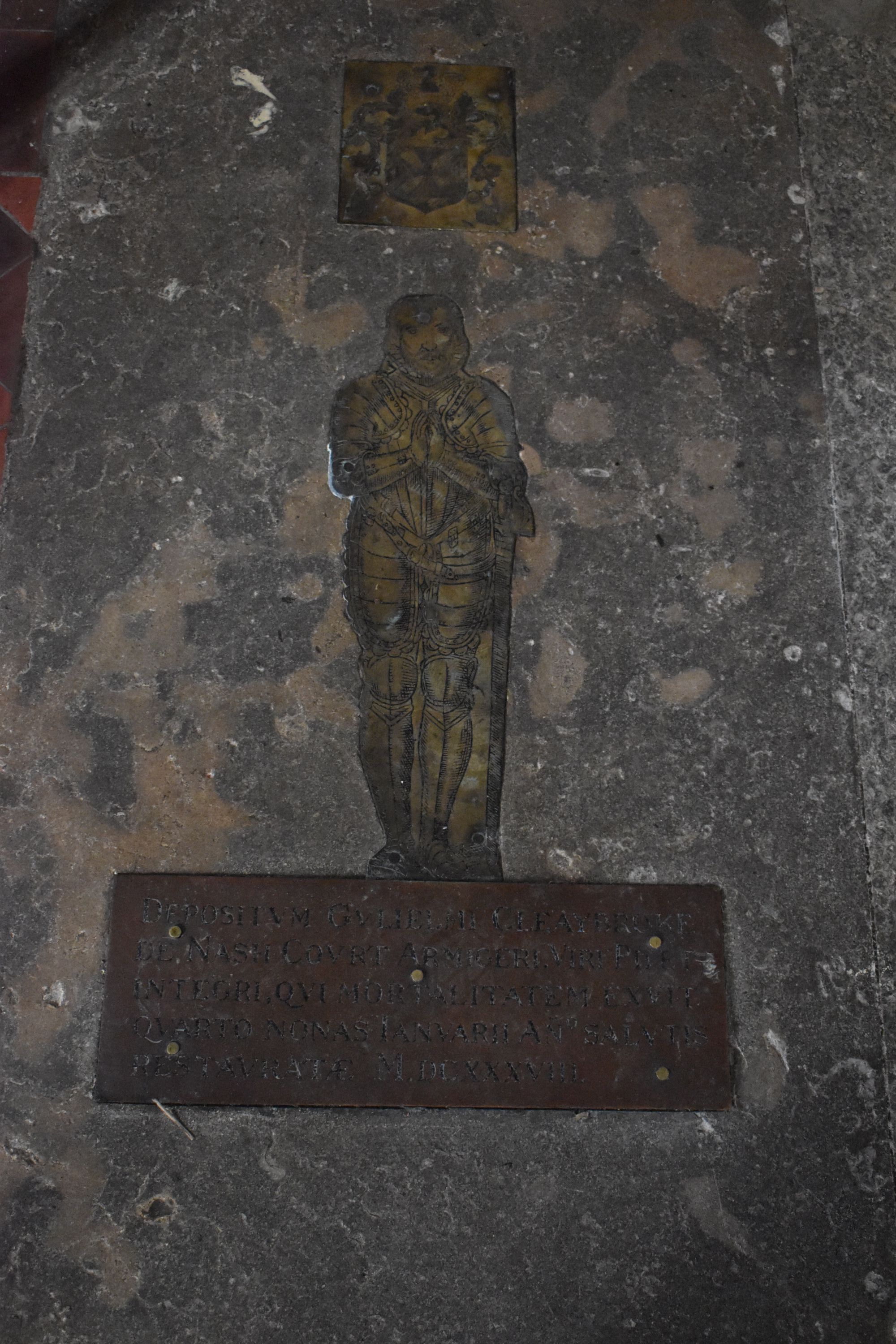
A knight in full armour, St John’s the Evangelist, Margate. ©Carole Tyrrell

Monumental brass of a priest in his vestments, Sir Thomas St John’s the Evangelist, Margate.©Carole Tyrrell

View of skeleton showing depiction of bones.©Carole Tyrrell

It was a skeleton, standing upright and tall with its arms at its sides facing the viewer, and a label underneath in Latin. This was the language of the church pre-Reformation.

The inscription reads:

‘Orate pro anima Ricardi Notfelde qui obiit penultimo die mensis marcii anno domini millesimo ccccxlvi.’

which translates as:

‘Pray for the soul of Richard Notfelde, who died on the last day of March 1446 AD

 The skeleton’s creator has some knowledge of anatomy as the ribs have been sketched in and there are also leg and arm bones. There is a rubbing of the brass in the Wellcome Collection that dates from 1880 and depicts the bones much more clearly.

Wellcome Collection rubbing of the skeleton. Shared under Wiki Commons Brass rubbing by F.Q. Hawkes Mason, 1880.

But it was its face that caught my attention. That grin! The little eyes and nose! It’s obviously not intended to resemble a proper skull but the effect was impressive. As the brasses are in such a dark place within the church, when I stood over the skeleton to take my photos, my shadow fell on it and the grin would disappear. So it was quite difficult to take a decent picture of any of the brasses.

The skeleton is a memento mori which derives from the Latin, ‘remember you must die.’  It is intended to remind the viewer that the skeleton is all that will remain of them after death. Rich or poor, high or low, all will be the same.  

According to the guide on duty, the brasses and their labels have been moved and it’s not known where they originally were within the church. But they also have a secret.  They’re not actually made of brass. Instead, they were made from a cheap alloy called ‘Latten’.  The guide helpfully reminded me of Chaucer’s Pardoner’s Tale in which he sold fake relics to simple, innocent people to extort money from them.  These included a cross made of ‘Latoum’ a cheap alloy that he pretends is made of gold.

Latten was an alloy that

‘contained varying amounts of copper, tin, zinc and lead which gave the characteristics of both brass and bronze.’   Wikipedia.

These alloys were used for monumental brasses in churches, decorative effects on borders, rivets or other metalwork details as on armour for example. They were also used for livery and pilgrim badges. Canterbury Museums have the largest collection of pilgrims badges in the UK so please follow the link to see a selection.

Pilgrim Badges – Canterbury Museums & Galleries

The skeleton was an unexpected find on a Heritage Open Day and I enjoyed making its acquaintance. A rare survivor in any church although I have seen other brasses made from Latten when visiting other Kent churches.

In this case, all that glitters is not brass!

© Text and photos Carole Tyrrell unless otherwise stated.

References and further reading

Latten – Wikipedia

Latten: The Definition and Meaning

Monumental Brasses in Kent — Kent Archaeological Society

Richard Notfield, St John’s, Margate, Kent, 1446. Brass rubbing by F.R. Hawkes Mason, 1880. | Wellcome Collection

Symbol of the Month – Visitation stones.

Roadside shrine on the way to Minnis Bay, Kent © Carole Tyrrell

This summer I was out walking with a friend along the sea wall to Minnis Bay when we saw this little roadside shrine. It was on a popular  route  which is used by walkers and cyclists alike. On one side is the pebbly beach and on the other are marshes that stretch down to the railway line.   It was touching to see that people, friends or perhaps fellow passers-by, had left little tributes of a bunch of flowers and stones.

Stones left on a grave in a North London Jewish cemetery. © Carole Tyrrell

The placing of stones on graves is something that I’ve always associated with the Jewish faith (see blog post ‘Silently slumbering for remembrance Part 1 dated 14 April 2016). If you have ever visited a Jewish cemetery then you will have noticed stones placed on top of graves and headstones and there may be a basket of stones available for this purpose. But over the last few years I have noticed them being placed on the graves of people who aren’t Jewish and I was intrigued by their possible meaning.

In the Jewish faith, it is believed that the placing of stones ‘keeps the soul down.’ This comes from the Talmud

‘which is the central text of rabbinical Judaism and is the primary source of Jewish religious law and theology’   Wikipedia

In the Talmud, it is stated that:

‘souls continue to dwell for a while in the graves in which they are placed. The grave was called a beit olam or a permanent home and was thought to retain some aspects of the departed soul. By placing stones, it becomes a way of the living helping the dead to ‘stay put’.  

This may have brought comfort to those visiting the grave in that they may feel that their loved ones are still near.The Hebrew word for pebble is ‘tz’ror’ which can also mean ‘bond’. The placing of stones was also a mark of respect and a way of showing that someone had visited.

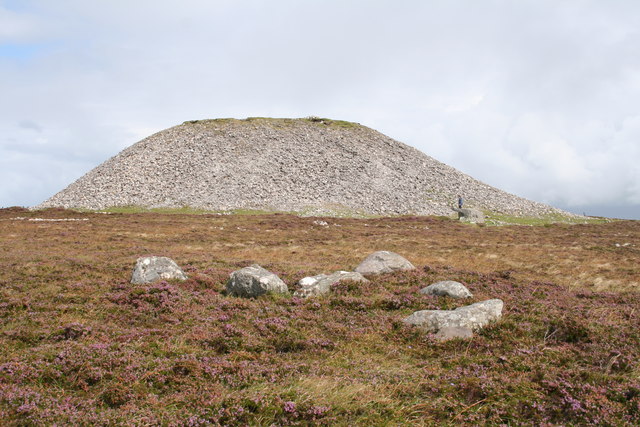
Maeve’s Cairn, the biggest one in Ireland, Knocknarea from geograph.org.uk © Bob Embleton. Shared under Wiki Commons.

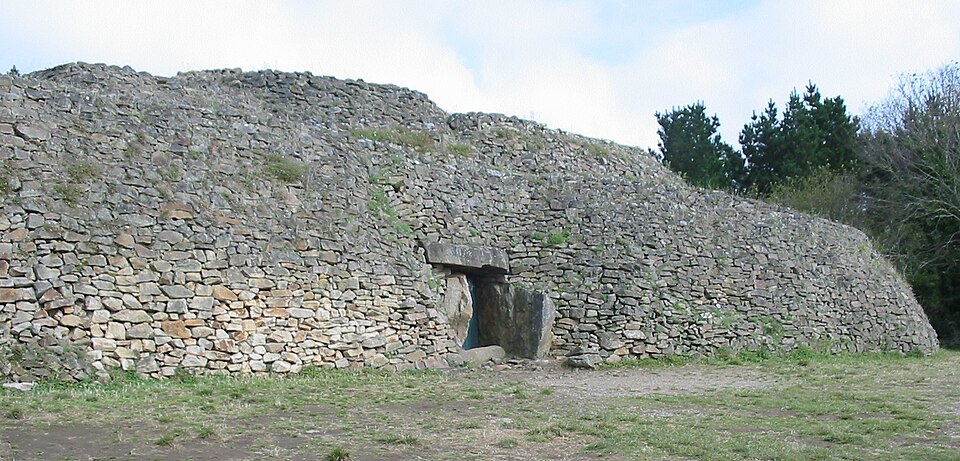
Gavrinis cairn, Brittany, France © Many vyi. Shared under Wiki Commons.

Ancient cairn, ruins of Qa’ableh, Saraag, Somalia. © Abdirisak Shared under Wiki Commons

Stones were used because of their durability. The Ancient Greeks believed that using stones to mark graves would ward off evil spirits and they also symbolised the soul’s eternal nature as they didn’t change over time. They associated them with the god, Hermes. However, stones and their associations with burials have been known to many ancient cultures especially Ireland, Scandinavia North Africa, the Middle East and Asia amongst others where they used them to mark sacred territories where communities would gather to honour their dead. Also the  Neolithic and Bronze periods in Europe in particular. Stones were used to create cairns.  These are usually placed on top of graves as markers and to protect the dead from predators.  In the Bronze Age they may have believed that the stones would stop the dead from rising as in the Jewish faith. Some of these still stand. The word ‘cairn’ comes from the Irish ‘carn’ with the plural being ‘cairn’ . In Scottish Gaelic ‘càrn’ translates to ‘heap of stones.’

They were also seen as a method of defence in that it would ward off predators from the burial site.

However, more recently, there has been controversy regarding the building of cairns on certain sites. This is due to the environmental damage that they can cause. Both the Hawaiian Volcano Observatory and the US National Park Service have complained about visitors prying off pieces from important geological features to make them as well as interfering with existing cairns and the destruction of important trail markers.  In the Peak District one man has made his mission to kick down the dozens of stacks that he finds. BBC News reported that:

‘Many have been created by taking stones from an old wall which may have damaged the habitats of the small creatures that live inside the wall and may have long term effects according to the National Trust who will also disassemble any stacks.

The stacks are seen as :

…. not to mark any burial sites or act as markers but just create unnecessary stacks for aesthetic purposes forgetting their original purpose as wayfinding tools and symbols rather than decorations.’

Stones taken to build stacks along the Great Wall were taken from an old wall which now looks like this. © Stuart Cox

The stones that have been left behind on the little seawall shrine, have presumably, come from the beach below and are a poignant symbol of remembrance signifying that the departed has been visited. The stones emphasise the enduring nature of memory and ite sbaility to enable the departed to live on. He is not forgotten by those who knew him and he died at one of his favourite places. RIP.

©Text and photos Carole Tyrrell unless otherwise stated

Why Jews Put Stones on Graves | My Jewish Learning

Why Do People Put Stones On Graves? Here Are 5 Reasons

Visitation stones – Wikipedia

Why Do People Put Rocks on Gravestones

Cairn – Wikipedia

The History of Cairns: Marking Paths, Memories, and Sacred Spaces – Magnolias + Fluff

Why I kick down Peak District stone stacks – BBC News

Please don’t stack rocks on your next hike. Here’s why. – Lonely Planet