A Spring saunter in the footsteps of E Nesbit – Part 2 – The last resting place and final home.

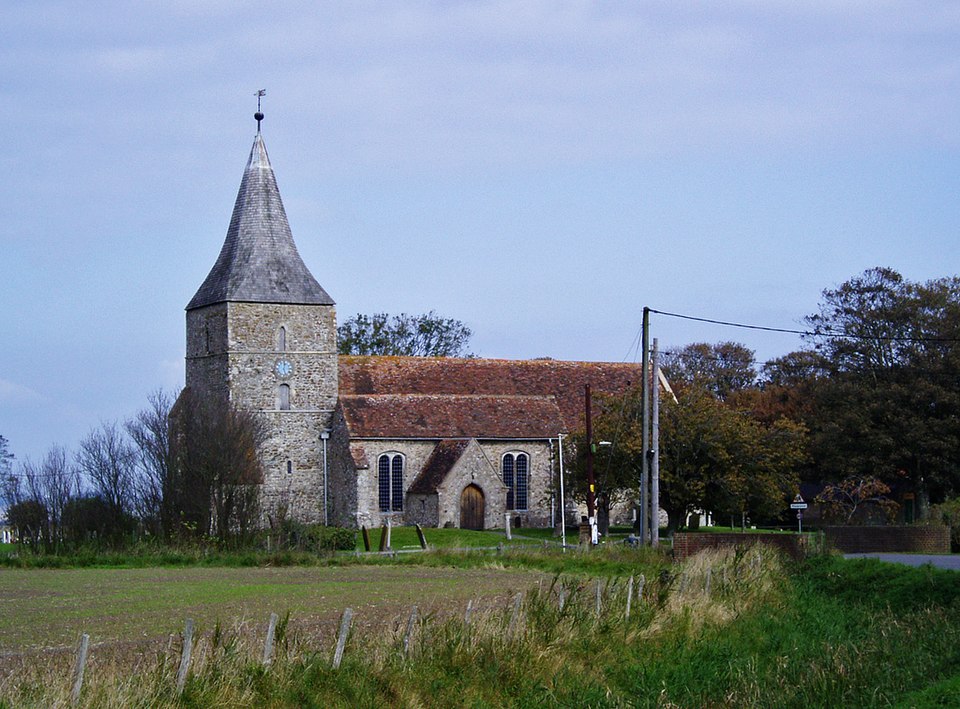
St Mary’s in the Marsh Shared under Wiki Commons

Edith Nesbit is buried in the churchyard of St Mary in the Marsh which was our next church. We left Brenzett and its attractive cats to travel through the wonderful Kent countryside. Blossom foamed over the hedgerows and the fields and marshes seemed to stretch on forever. There was a sense that Nature was beginning to stretch herself and come back to life after the winter.


Early bluebells nodding in the breeze, St Mary’s in the Marsh ©Carole Tyrrell
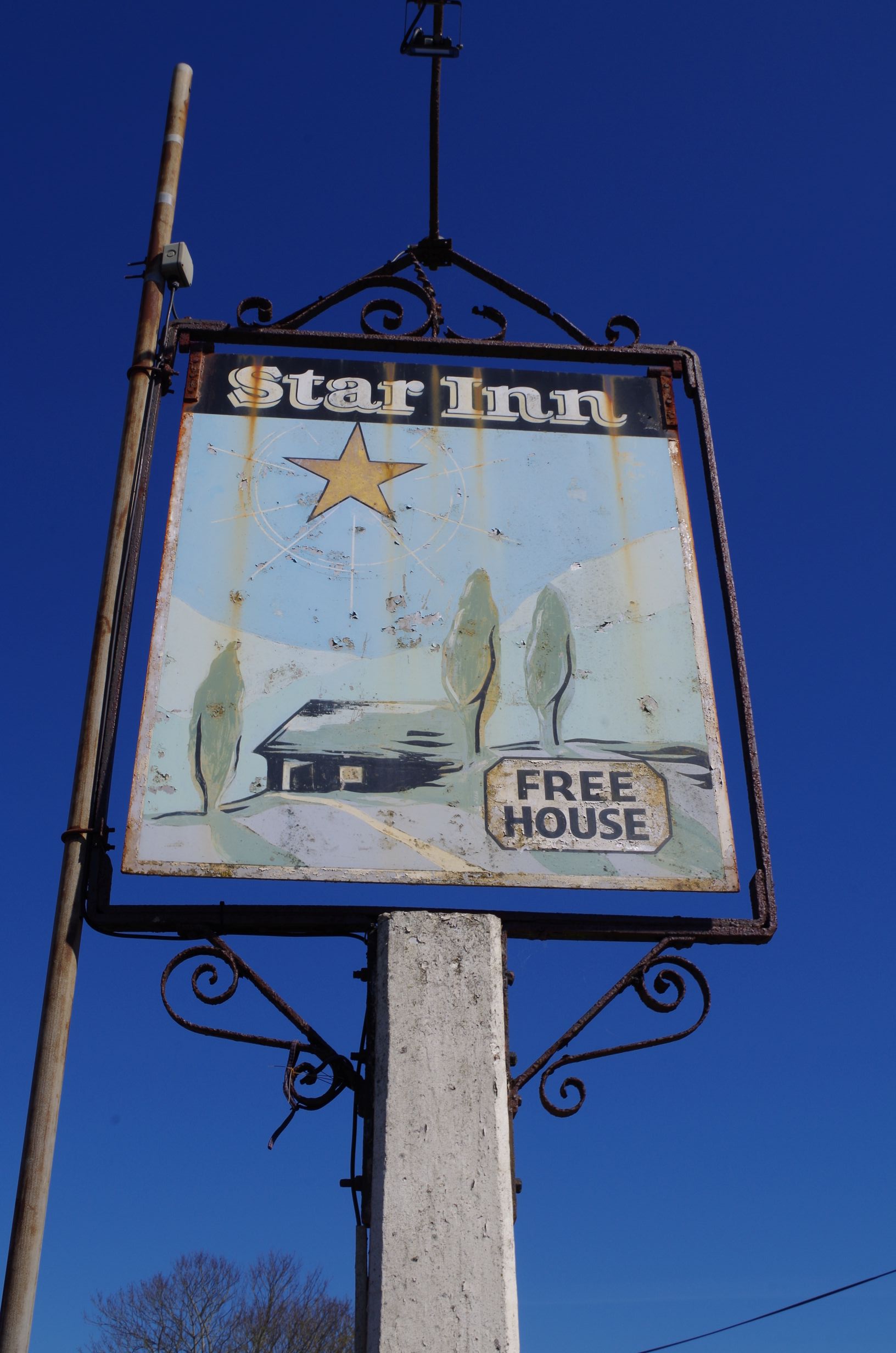
St Mary in the Marsh was a more substantial church and we were greeted by the Star Inn which ‘would have been Edith’s local’ but is now a private house. It’s a large, rambling building and was opposite the church. We soon found her last resting place in front of St Mary’s lying under the morning sun and with a simple wooden rail as a marker. It was Tommy, her second husband, who erected the first wooden rail commemorating Edith. This has suffered over the years and is now inside the church porch with a small plaque.  The one in the churchyard today is a replacement put up by the E Nesbit Society.  

E Nesbit grave marker.©Carole Tyrrell
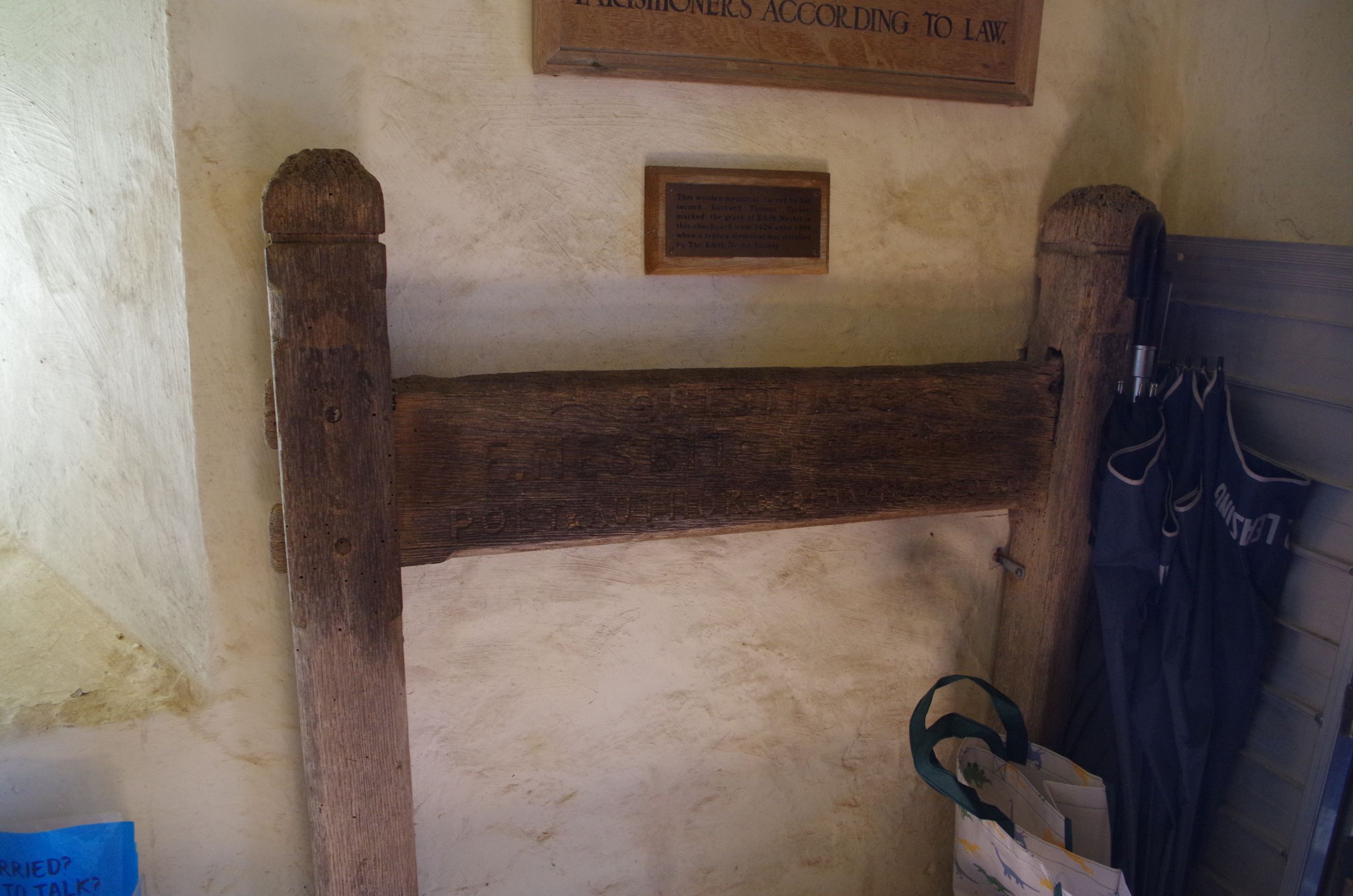
The original grave marker now in St Mary’s church porch. ©Carole Tyrrell
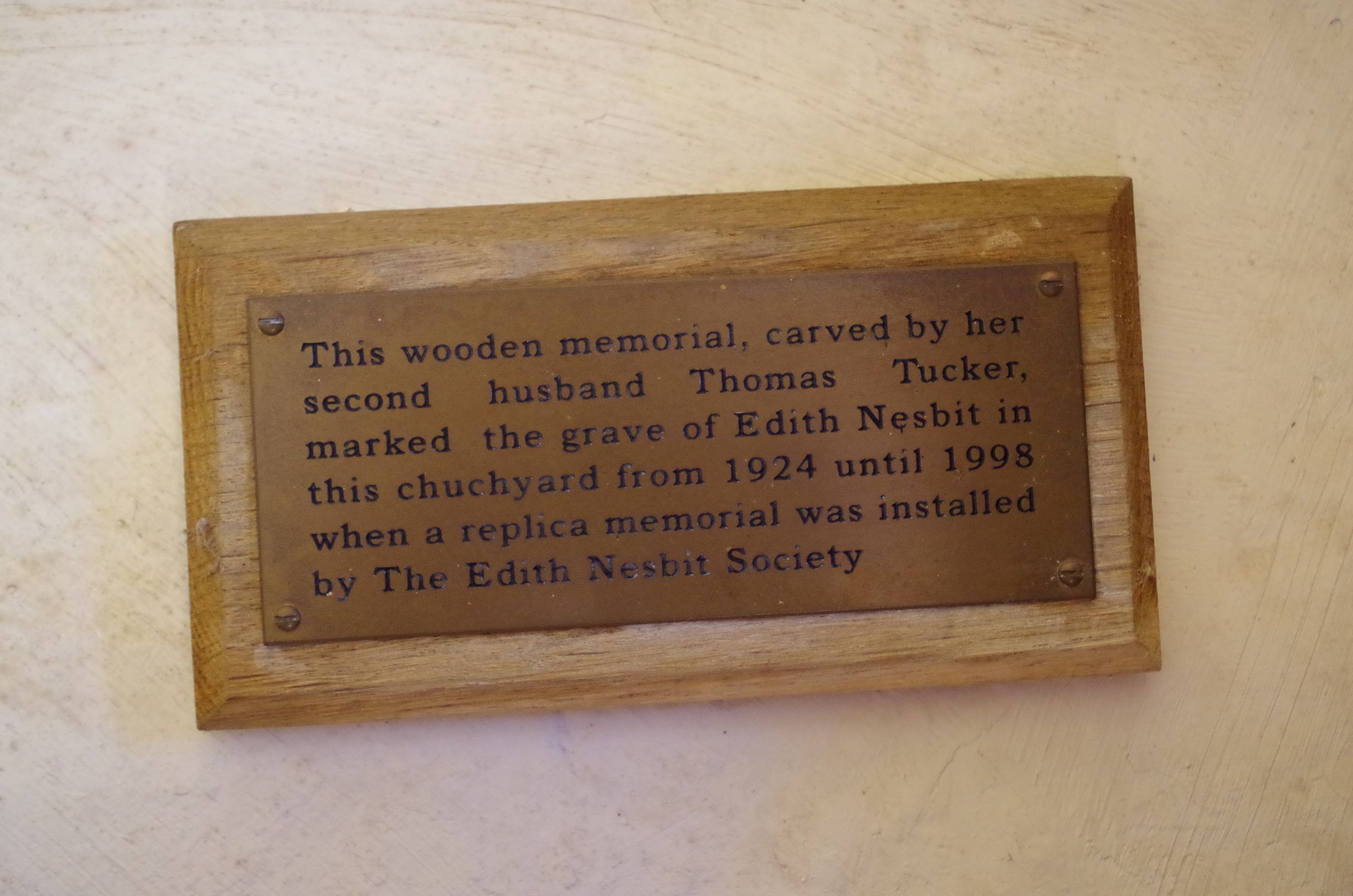
Plaque above E Nesbit’s grave marker. ©Carole Tyrrell

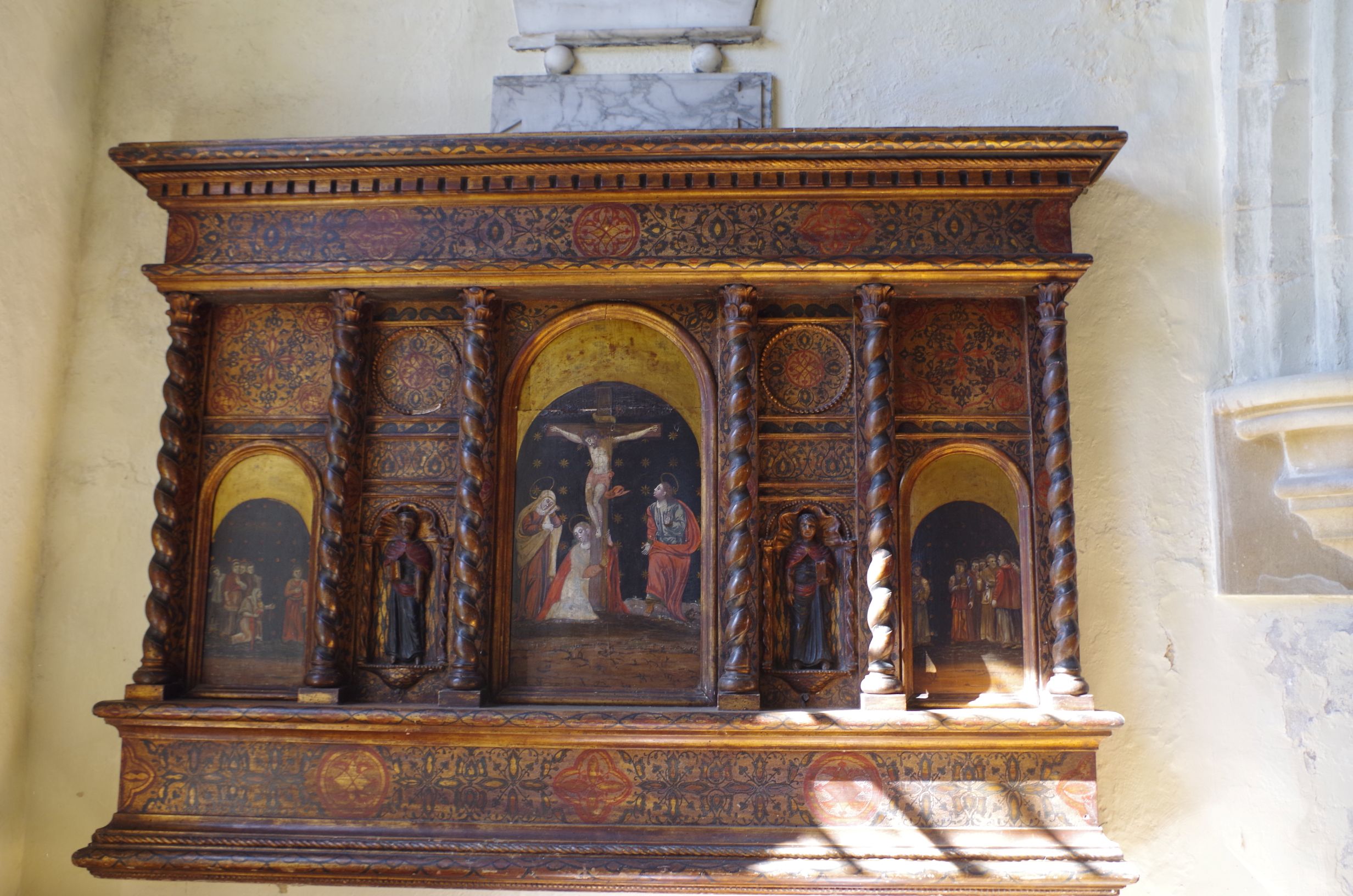
St Mary’s was less plain inside than St Eanswith although there were still box pews and whitewashed walls.  There was a magnificent triptych on one wall and another little plaque inside the nave dedicated to Edith. Three pairs of eyes were watching us as we explored. There were two small heads attached to two pillars of a sedilia by the altar and another, larger one at the base of a column.

Two ancient faces watching from the sedilia by the altar.©Carole Tyrrell

Another watching face from the base of a column. All four images ©Carole Tyrrell

Outside early bluebells nodded in the breeze and we found a medieval mass dial set into a wall. (please see Symbol of the Month – The Mass Dial published 18/10/21)
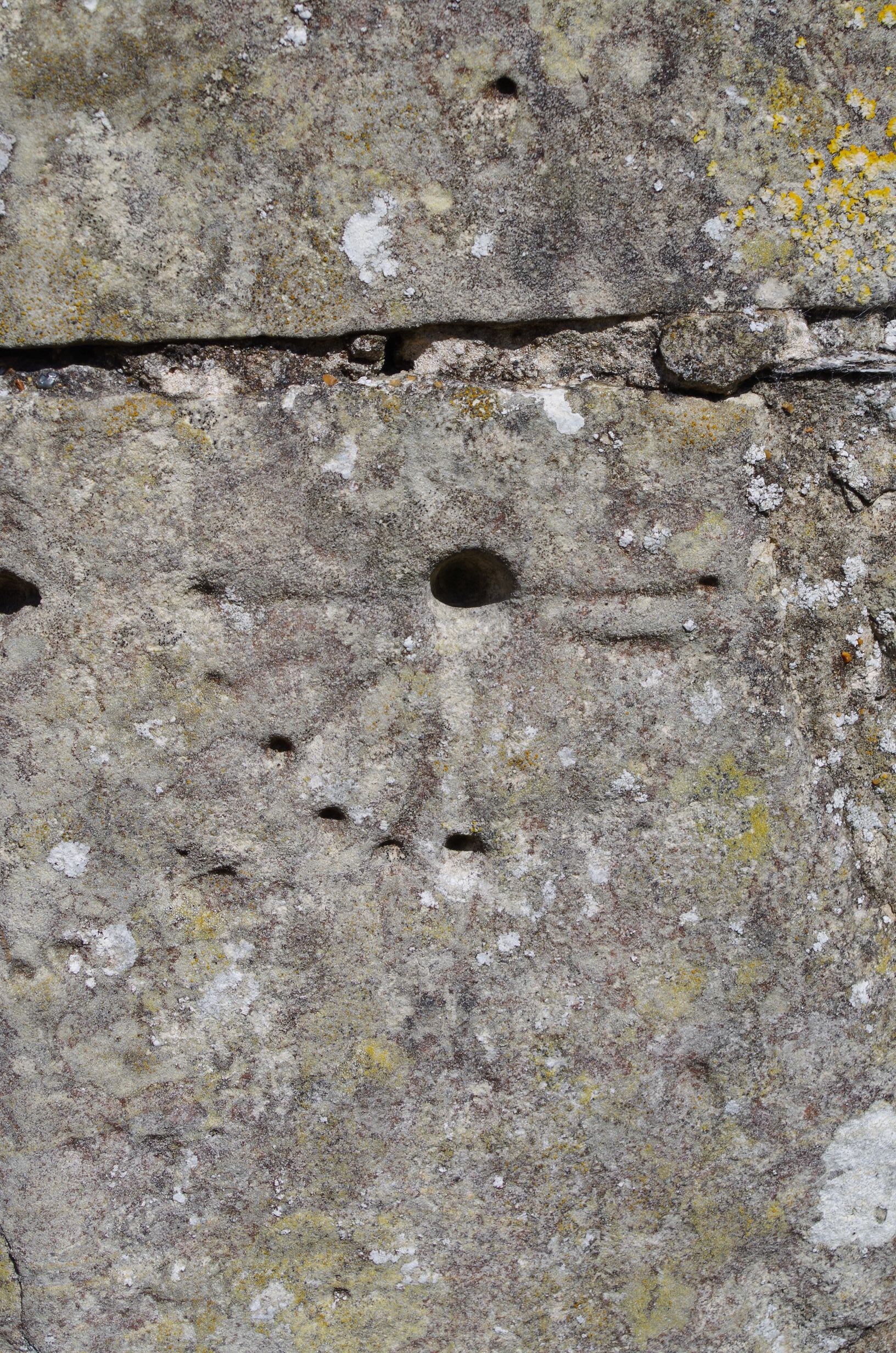
Medieval mass dial set in wall. ©Carole Tyrrell

Afterwards we went on to explore churches and other places associated with Russell Thorndike and his famous creation whose exploits took place on the Marshes, Dr Syn.

Our final port of call was St Mary’s Bay in Dymchurch where we saw the house known as ‘The Jolly Boat’ which was E Nesbit’s final home which she are with Tommy. It is now a holiday home and is situated at the end of Nesbit Road appropriately enough.  As we admired it, we were lucky enough to see a steam train from the Romney and Hythe railway come puffing past as it steamed into the station nearby.  In the town one of our party had spotted a blue plaque on a house called ‘The Cottage’ which commemorated its famous residents: the painter Paul Nash, Noel Coward and Edith all stayed there. We did wonder if it had been at the same time and one of our party commented that ‘it must have been quite a party!’

The Jolly Boat, April 2025. ©Carole Tyrrell

Nameplate of ‘The Jolly Boat’©Carole Tyrrell

A steam train came puffing past! ©Carole Tyrrell

Blue plaque outside The Cottage, Dymchurch. ©Carole Tyrrell

E Nesbit had a fascinating life with her strong Socialist views and published over 60 books, some of which are still in print today. The film version of ‘The Railway Children’ is a much loved classic although her ghost stories are less well known.  They were reprinted last year in ‘The House of Silence’ by Handheld Press.

It was a wonderful day travelling the marshes and understanding how they inspired Edith where she is still remembered with such affection.

©Text and photos Carole Tyrrell unless otherwise stated

References and further reading:

Brenzett, Church of St Eanswith — Romney Marsh Historic Churches Trust

St Eanswith’s Church, Brenzett, Kent

The Project Gutenberg ebook of Grim Tales, by E. Nesbit.

https://edithnesbit.co.uk  The Edith Nesbit Society

E. Nesbit – Wikipedia

Symbol of the month – The anvil

The Adams headstone, Birchington-on-sea. © Carole Tyrrell

What a difference a sunny day makes in a churchyard! I revisited All Saints in Birchington-on-Sea earlier this month to look for the first snowdrops and found several headstones of interest that I’d missed. The headstone with the two-dimensional carving of an anvil above the epitaph was now clearly readable and I could see that it was dedicated to a couple: Elizabeth Adams (1813-1888) and Josiah Lyon Adams (1805-1898). According to the Kent Parish Clerks online website, they had 3 children, all boys and Josiah was definitely the village blacksmith. He is commemorated below his wife on the headstone.

The verse below the still crisp carving of the anvil and hammers reads:


‘Thou shalt come to thy grave in a full act like,
as a shock of corn cometh in the season.’


This comes from the Book of Job 5:26 and has been assumed to emphasise the natural cycle of life and death. Anvils are traditionally associated with blacksmiths working in their forges but they do have other associations.

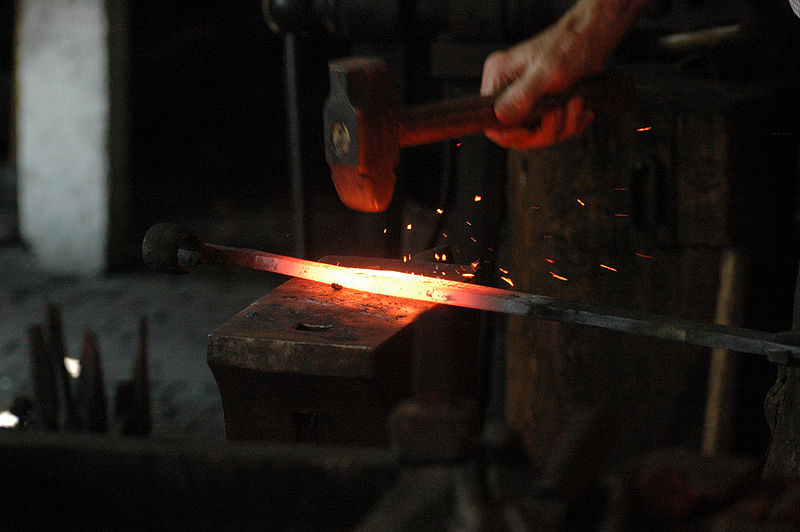
Blacksmith in forge at his anvil. Shared under Wikimedia Commons

The blacksmith would have been an important person within the community and his skills would have been much in demand. The anvil is one of the most basic craftsman tools and has not changed for thousands of years. I have seen photos online of 3 dimensional anvils on graves but have yet to see one. However, the anvil has been superseded by other ways of working metal such as welding and steam hammers.

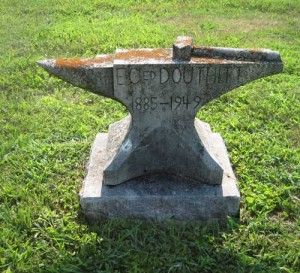
3 Dimensional anvil and hammer on grave found on Pinterest.

An anvil is a solid block of steel or iron with a flat top which is called the ‘face’, often with a pointed ‘horn’ at the front and a flat ‘heel’ at the back with holes for attaching tools. They are very heavy as you can imagine and durable with a quality of ‘liveliness’. This means that they cause the blacksmith’s hammer to bounce back after each blow and onto the metal.


It’s a powerful act of creation and transformation when a piece of metal is hammered into a shape to become another object. As a result, it can be seen as an act of transformation as well as a demonstration of craftsmanship and the use of base metals to create something new. It has been suggested that it is also a potent symbol of enduring the blows of life while shaping our destiny.

St Dunstan shoeing the devil’s cloven foot. Project Gutenberg.

St Dunstan is the patron saint of blacksmiths and used his skills to defeat the devil. The story goes that, while living in a cell at Glastonbury after leaving the royal court, an old man appeared at his window and asked the saint to make a chalice for him. St Dunstan agreed and began to work on it. But as he did so, the old man changed his shape and appearance several times until, finally, he became an attractive woman. St Dunstan realised that his visitor was actually the devil when he saw a cloven hoof under her dress. So, he heated up his tongs until they were red hot and then used them to seize the devil by the nose. Despite the Devil struggling and screaming, St Dunstan held on until the Devil admitted defeat and thrown. He then fled while complaining loudly.


Another legend associated with St Dunstan includes nailing a red hot horseshoe onto one of the Devil’s hooves after noticing that he was limping. The saint refused to take it off and made the Devil promise that he would always respect the horseshoe symbol and never enter a building that was protected by it. This is is believed to be the explanation for horseshoes being nailed over doorways for good luck.


Anvils appear in other cultures and civilisations. For example, in Norse mythology, Brokerr and Sindri, two dwarf brother blacksmiths, created the powerful hammer Mjolnir on an anvil. It was then used by the god, Thor, to create thunderstorms. The Greek god, Hephaestus, who was renowned for his metal working skills, used his anvil to create powerful weapons for his fellow gods as in Homer’s The Iliad. So, the anvil has associations with warfare as well as more domestic creations.

The Third gift – an enormous hammer – © Elmer Boyd Smith 1860-1943 Shared under Wikimedia Commons

They are also traditionally associated with wealth and good luck due to their ability to forge a prosperous future. It is believed that placing an anvil in the home or workplace can also attract wealth and success.
On a lighter note, anvils have often appeared in many cartoon or comedy sketches as they fall on characters with a huge bang! This gag was mainly used in Warner Bros Looney Tunes and ‘Merrie Melodies’ cartoons. Tom Slatin’s online article discusses this and why people find it funny.

© Photo by Faze

By contrast, there are also other, more spiritual associations such as the anvil being a representation of:


the challenges and obstacles that we may face in life with the hammer symbolising the strength and perseverance to overcome them.’ symbolsage.

This may seem a little fanciful but the anvil has always been a firm foundation on which to build and create new objects under the flickering flames and heat of the forge.

© Text and photos Carole Tyrrell
References and further reading
Anvil | Symbols
Symbolism of Anvils: Meanings and Interpretations
Anvil Symbolism & Meaning – Symbolopedia (more information about dream symbolism and anvils)
19 Powerful Symbols of Perseverance and What They Mean
http://Treestump anvil Gravely speaking
Fran Jurga`s Hoofcare + Lameness: St Dunstan and the Devil: Why We Hang Horseshoes Over Doors
A Clerk of Oxford: Stories of St Dunstan, 4: Dunstan and the Devil
** Kent Online Parish Clerk ** – Birchington, Christenings 1801 – 1880
https://www.tomslatin.com/the-history-of-the-anvil-gag-in-classic-cartoons/#:~:text=The%20first%20time%20an%20anvil%20was%20used%20as,height%2C%20causing%20him%20to%20sink%20into%20the%20ground.

Part 3 – a nurse’s enduring love and a patient’s remarkable artistic legacy – Netherne Hospital cemetery Aug 17.

One of  the most poignant stories from Netherne Cemetery is  that of Jean Barboni. He was an 8 year old who died in the hospital in 1915 and whose death haunted his nurse, Elizabeth Martin, for the rest of her life.   Ms Martin’s niece, Edith Kelly,  contacted her local paper to share her aunt’s memories and her own outrage at the then state of the cemetery.   Elizabeth had shared her still vivid memories of Jean with Edith 30 years later after his death.  She had devotedly nursed Jean who was born with what we would now call learning difficulties but then was classed as mentally defective.  Edgard Barboni, his father, was an officer in the French army and a physicist engaged in top secret chemical warfare work during the First World War.  They had had another little boy named Pierre and were finding it difficult to cope as Jean required specialist care.   Eventually he was admitted as a private patient in a house for the ‘mentally subnormal’ as the Victorians classed him at Netherne.  Edith discovered, through her aunt’s diaries that she had always felt that she had contributed to Jean’s death by allowing him to be put in a pauper hospital, Netherne, where he contracted TB.  After Jean’s  parents returned to France with Pierre Elizabeth tended Jean’s grave until her own death. Edith was quoted as saying

‘ For as long as I could remember, she regarded him as her own child.  I suppose the emotional involvement must have been that much greater because the parents were in France and possibly never visited the grave again.’

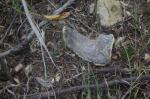
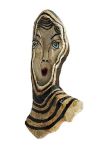
As I left the cemetery and walked back around the border of the field again I noticed the large number of flints on the ground.  I was tempted to take one home as a souvenir but it was too heavy. However, the local flints provided inspiration for a Netherne patient, Gwyneth Rowlands, who painted faces, usually of women directly onto the ones that she found in the fields around the hospital. She might have even found some in this very field.

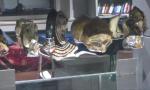
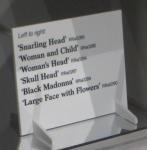
Sadly, I could discover very little about Gwyneth, despite her work being on display at the Wellcome Collection recently.  She was admitted as a patient in 1946 and stayed there for 35 years probably until it closed in the 1990’s. But on a recent visit to the Wellcome Collection Reading Room I spoke with one of the volunteers, Rock, who told me that Gwyneth may still be alive and she had been in contact with a staff member up until 3 or 4 years ago.  She is considered to be part of the Outsider art movement.   Gwyneth’s technique was to paint directly onto the flint using watercolour, indian ink and varnish.

Art therapy which subsequently  became part of the Outsider or Art Brut movement began at Netherne in 1948 when the pioneering Edward Adamson (1911-1996) became the first artist to be employed full time as an Art Director.

Edward Adamson
Shared under Wikipedia Creative Commons licence.

He formed a huge collection of over 4000 pieces of artwork which is now housed at The Wellcome Collection in London. He believed that the creation of art was a healing process especially for those who could not speak or express themselves in any other way.  However, Adamson wasn’t a teacher or someone who used the artworks as a diagnostic tool.  Instead his approach was as a facilitator artist.  He worked at Netherne until his retirement in 1981. Art therapy was also called  ‘psychiatric art’ . The Outsider Art movement is concerned with artists who are outside the mainstream, usually self-taught and often living within institutions.  It often has no meaning except to the artist themselves although the raw power and emotion of some of these artworks can be really impressive as with Gwyneth’s flint heads.

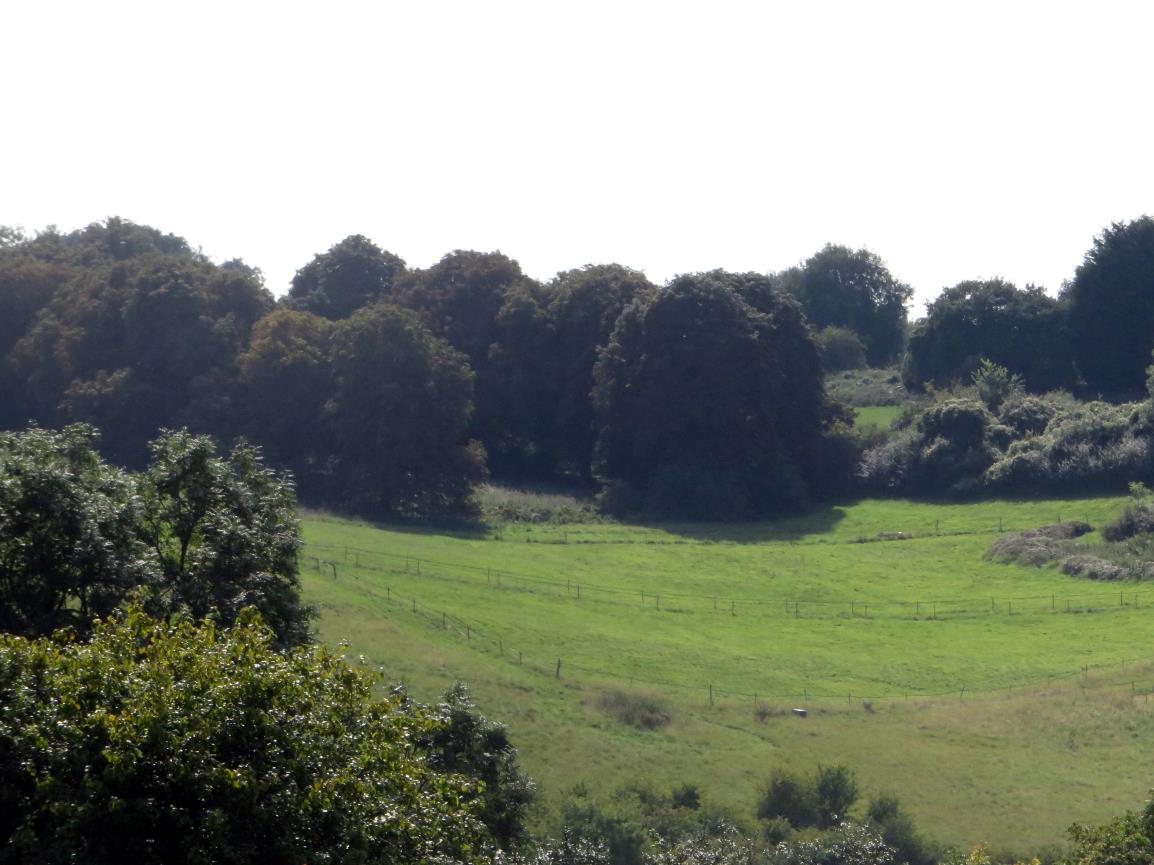
View from Farthing Downs, 500ft up, across to Neherne Cemetry.
©Carole Tyrrell

As I walked over the top of Farthing Downs later on that afternoon heading for Sunday afternoon tea and cakes at Chaldon church I saw the cemetery on the opposite slope.   I hoped that it would always be surrounded by large green fields and that its incumbents would always rest in peace under the chestnut trees and wildflowers.

©Text and photos Carole Tyrrell unless otherwise stated.

Further Reading:

Outsider Art: From the Margins to te Marketplace, David Maclagan Reaktion Books 2009

Art as Healing, Edward Adamson, Coventure 1984

https://wellcomecollection.org/adamson-collection

http://www.mendiphospitalcemetery.org.uk/history.html

http://www.yourlocalguardian.co.uk/news/10494304.Campaign_victory_after_cemetery_with_war_dead_finally_cleared/

https://billiongraves.com/cemetery/Netherne-Asylum-Cemetery/292853

http://www.simoncornwell.com/urbex/hosp/n/e140106/1.htm

http://www.thisislocallondon.co.uk/indepth/nostalgia/8392020.Forgotten_graves_of_the_war_dead/

http://www.suttonguardian.co.uk/news/8437328.Diaries_of_Catholic_nun_reveal_tale_of_child_buried_at_Netherne_asylum/

 http://beyondthetrenches.co.uk/the-other-war-dead-asylum-patients-during-the-first-world-war/

 http://www.croydonguardian.co.uk/news/8421298.Developer_s_broken_promise_over_asylum_cemetery/

 https://www.genesreunited.co.uk/boards/board/ancestors/thread/1314646


Death parted them and then reunited them – The Pointing Finger Symbol update

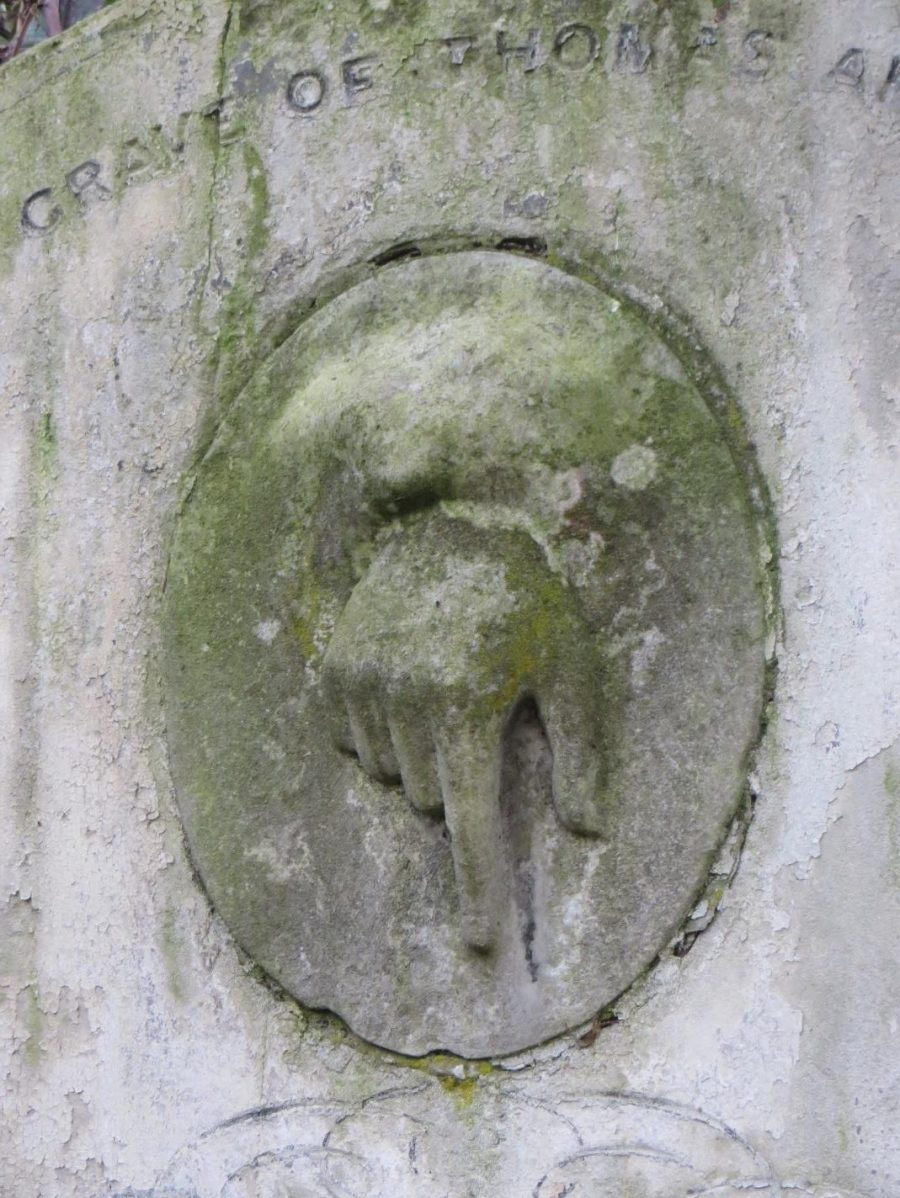
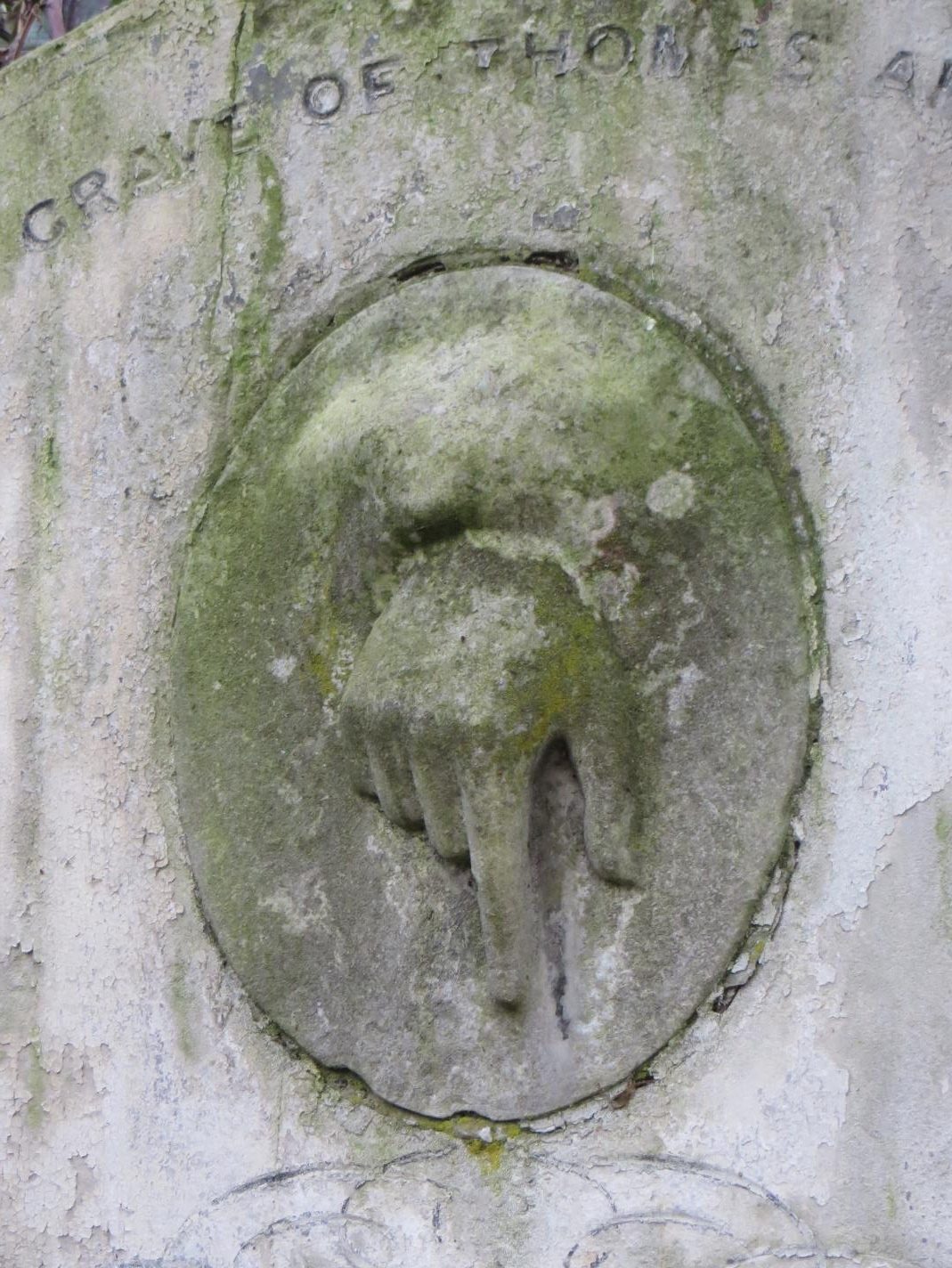
Anderson memorial - the downward pointing hand in detail. ©Carole Tyrrell
Anderson memorial – the downward pointing hand in detail.
©Carole Tyrrell

In my  recent post on the Pointing Finger symbol I was bemoaning that I hadn’t found an example of the downward pointing version.

Someone must have heard me because, lo and behold, as I was pottering through Brompton Cemetery I suddenly saw one.  It was on a side path and set back from it in front of a thick clump of brambles which probably engulf it when they’re in high season.  Winter is always a good time to  look for symbols as the encroaching ivy; brambles and long grass will have died down and don’t obscure them.

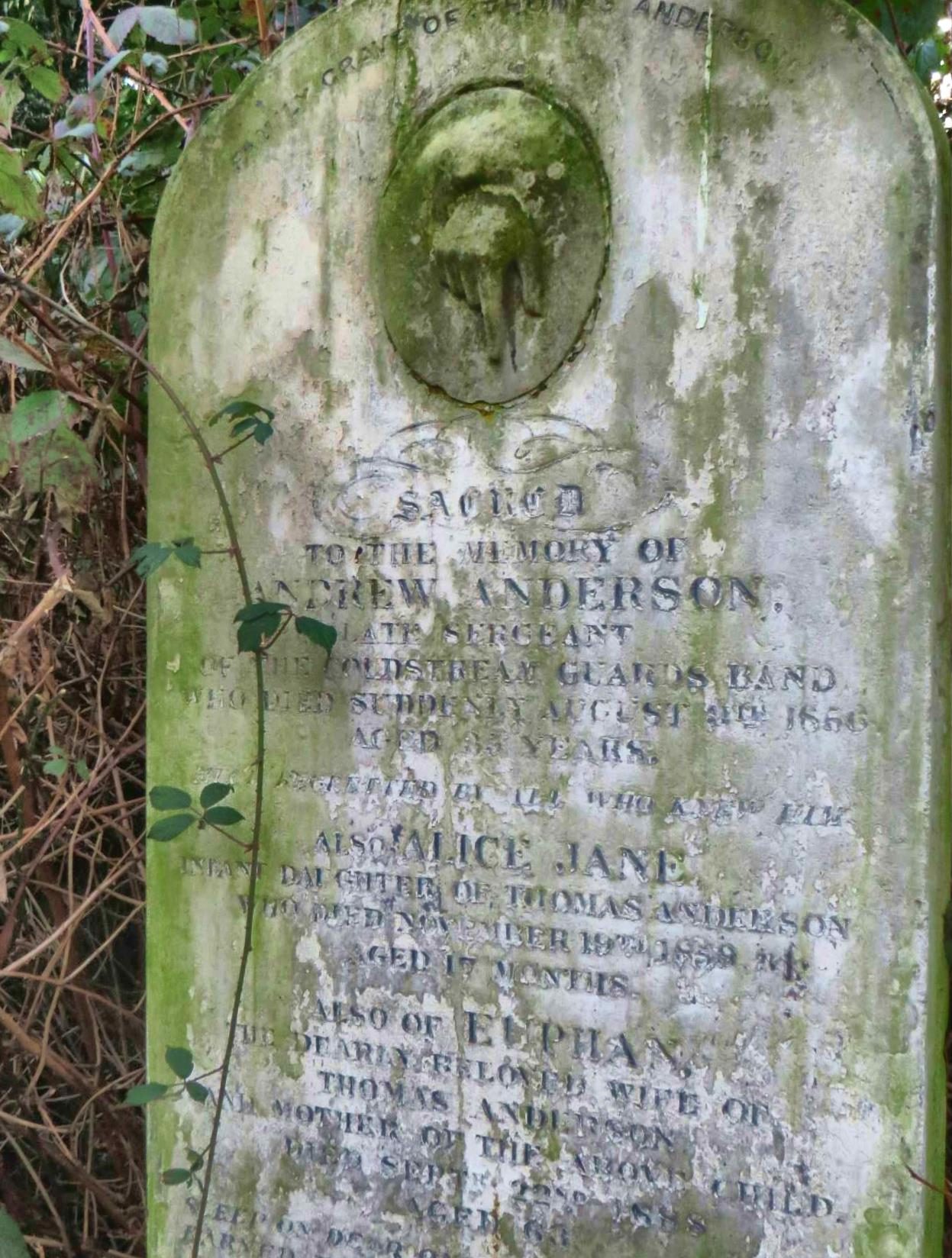
The Anderson family grave headstone.in Brompton Cemetery ©Carole Tyrrell
The Anderson family grave headstone.in Brompton Cemetery
©Carole Tyrrell

There is a fascinating story behind this memorial as it’s the tale of two Irish brothers who first enlisted together at the tender age of 11.  They both had action packed lives in military service together until one died before the other at a young age.  This confirms what I said in my previous post,  that the downward pointing finger denotes an untimely, sudden or unexpected death.

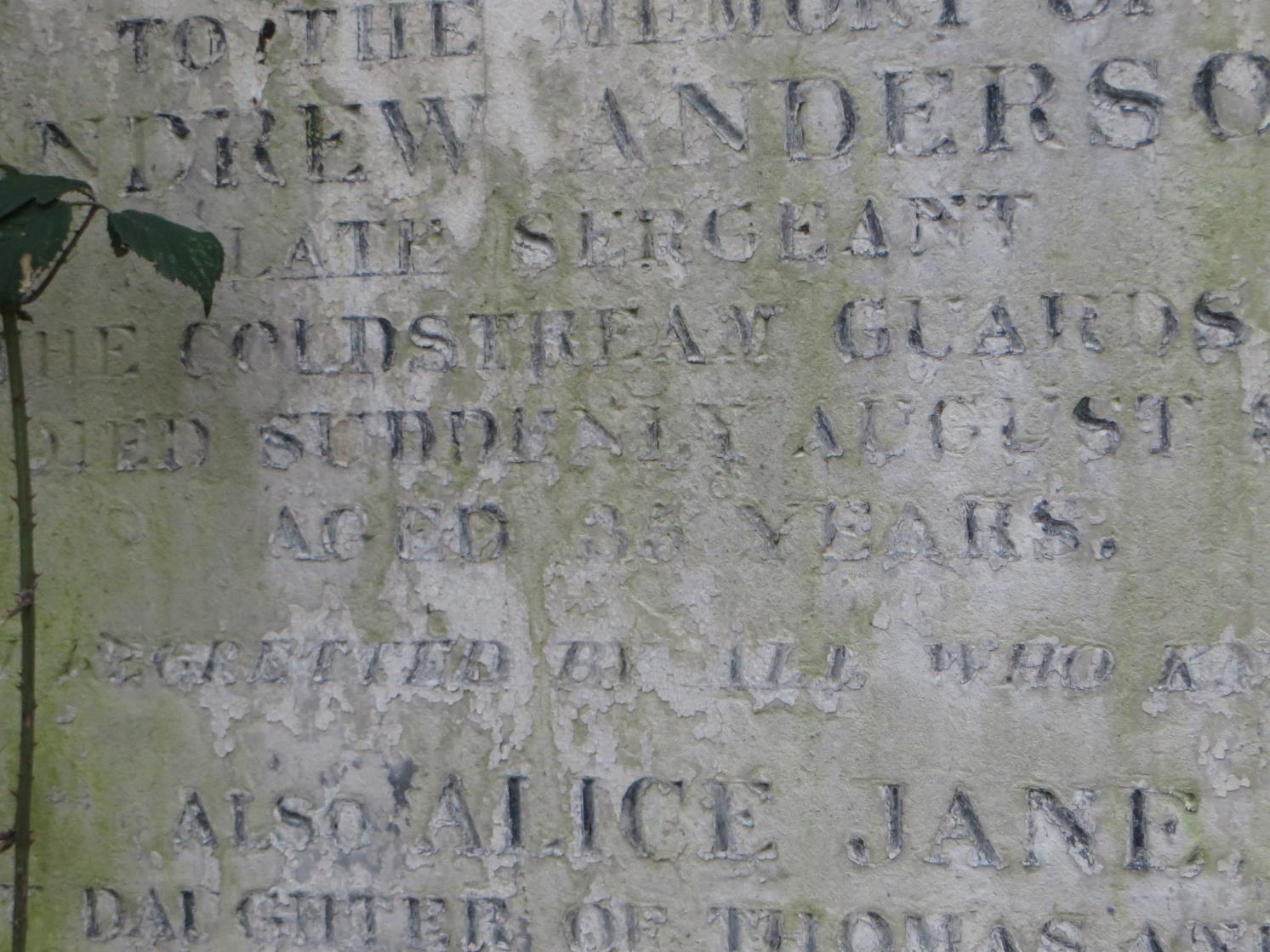
The headstone   announced that it was the ‘Family Grave of Thomas Anderson’ and there are six members of the family commemorated on it.  The first one was to Andrew Anderson, who was a sargeant in the Coldstream Guards Band until died suddenly, aged 35, on August 11th 1856.   Sadly it doesn’t give the cause of death so we can only guess at what might have happened to Andrew. The epitaph also says that his death was ‘regretted by all who knew him’ so he was obviously popular and much missed.  Accident?  Heart attack? Murder?  We may never know but I may do some further investigating.

Andrew Anderson's epitaph in detail. ©Carole Tyrrell
Andrew Anderson’s epitaph in detail.
©Carole Tyrrell

Underneath  Andrew’s epitaph are recorded two more members of the Anderson family.   These are Thomas Anderson’s  ‘infant daughter’,  Alice Jane, who died at 17 months on November 19th 1859 and also his wife and Alice’s mother, Euphan.   She died on September 22 1888 aged 63.   The quotation underneath reads ‘Sleep on dear one and take thy well earned rest.’

The Anderson memorial. Andrew, his brother, and Thomas's infant daughter, Alice Jane, and his wife Euphan are also commemorated. ©Carole Tyrrell
The Anderson memorial. Andrew, his brother, and Thomas’s infant daughter, Alice Jane, and his wife Euphan are also commemorated.
©Carole Tyrrell

And then underneath is Thomas himself.  He died on 15 July 1891 aged 70 with the motto ‘His end was peace.’

Initially I presumed that Thomas was Andrew’s father.   But, after doing some online delving, I discovered a post on an Irish library forum by a respondent who claimed to be Thomas’s great, great, great grandson. He was trying to carry out his own research into the family history.

According to him, Thomas and Andrew Anderson were actually brothers, probably twins, who were both born in 1821 and came from Ennis, County Clare.  This would fit in with Andrew’s age at death and there were other coincidences  between the information on the headstone and what the great, great, great grandson  was saying. The unusual name of Thomas’s wife was helpful and this led me to the Clan McFarlane website as McFarlane was her maiden name.

The brothers were very close and, aged 11, they both enlisted in the 40th Regiment of Foot on February 2 1832 and were then both discharged on 7 September 1839 aged 18.

It was the Royal Navy that beckoned next and they set off for adventure on the high seas aboard HMS Wellesley when they enlisted in 1839.  They both played their part in the Opium War of 1839 – 1842 and, as a result, they both received the China War Medal.  This was awarded to members of the Royal Navy who had ‘served with distinction’ between 5 July 1840 – 29 August 1842.


After that they moved on and back into the Army which is where the Coldstream Guards connection comes in.  As you might expect they both signed up: Thomas on 8 May 1850 and Andrew on 8 May 1844.  Thomas was discharged on 17 May 1860 after becoming a  lieutenant.  We know Andrew’s story but Thomas’s is less clear.

According to the family member he was living at 6 Hospital Street in Glasgow in 1845 and married Euphan McFarlane in 1863.  She came from the Gorbals which always had a reputation as a really tough area and so good preparation for the life of an Army wife.   She and Thomas had three more daughters; Elizabeth Euphan, Rosina Edith and Rosina Elizabeth.  But there’s no mention of Alice Jane.  Both Elizabeth and Rosina Edith married.

But the family member didn’t mention Alice Jane or John so one wonders where they fit in.

Thomas supposedly died in Middlesex  but after his death he joined Andrew in Brompton Cemetery.

Thomas Anderson's epitaph. ©Carole Tyrrell
Thomas Anderson’s epitaph.
©Carole Tyrrell

There are two more Anderson Family members recorded on the headstone; John, Thomas’s son, who died on 15 February 1925 aged 65 and John’s daughter, Isabella, but  her dates were too indistinct to read.

John Anderson's epitaph - not very readable now as it's near the base of the headstone. ©Carole Tyrrell
John Anderson’s epitaph – not very readable now as it’s near the base of the headstone.
©Carole Tyrrell


Family stories can change over time as they’re handed down through the generations   but this seemed to tally with the information on the headstone.   I am trying to contact the great, great, great grandson via the County Clare forum for more information.


The Anderson brothers seemed to have led exciting lives in military service and  certainly did their bit for King and Country. So rest in peace Andrew and Thomas – you have certainly earned it.

© Text and photographs Carole Tyrrell unless otherwise stated.


http://www.rootschat.com/forum/index.php?topic=379308.0

http://www.ourlibrary.ca/phpbb2/viewtopic.php?f=1&t=551

http://www.clanmacfarlanegenealogy.info/genealogy/TNGWebsite/getperson.php?personID=I769&tree=UL

http://www.clarelibrary.ie/eolas/coclare/genealogy/don_tran/mil_rec/rh_chelsea_clare_soldiers_service_docs.htm

https://en.wikipedia.org/wiki/China_War_Medal_(1842)