A Spring saunter in the footsteps of E Nesbit – Romney Marshes, Kent Part 1- Man size in Marble

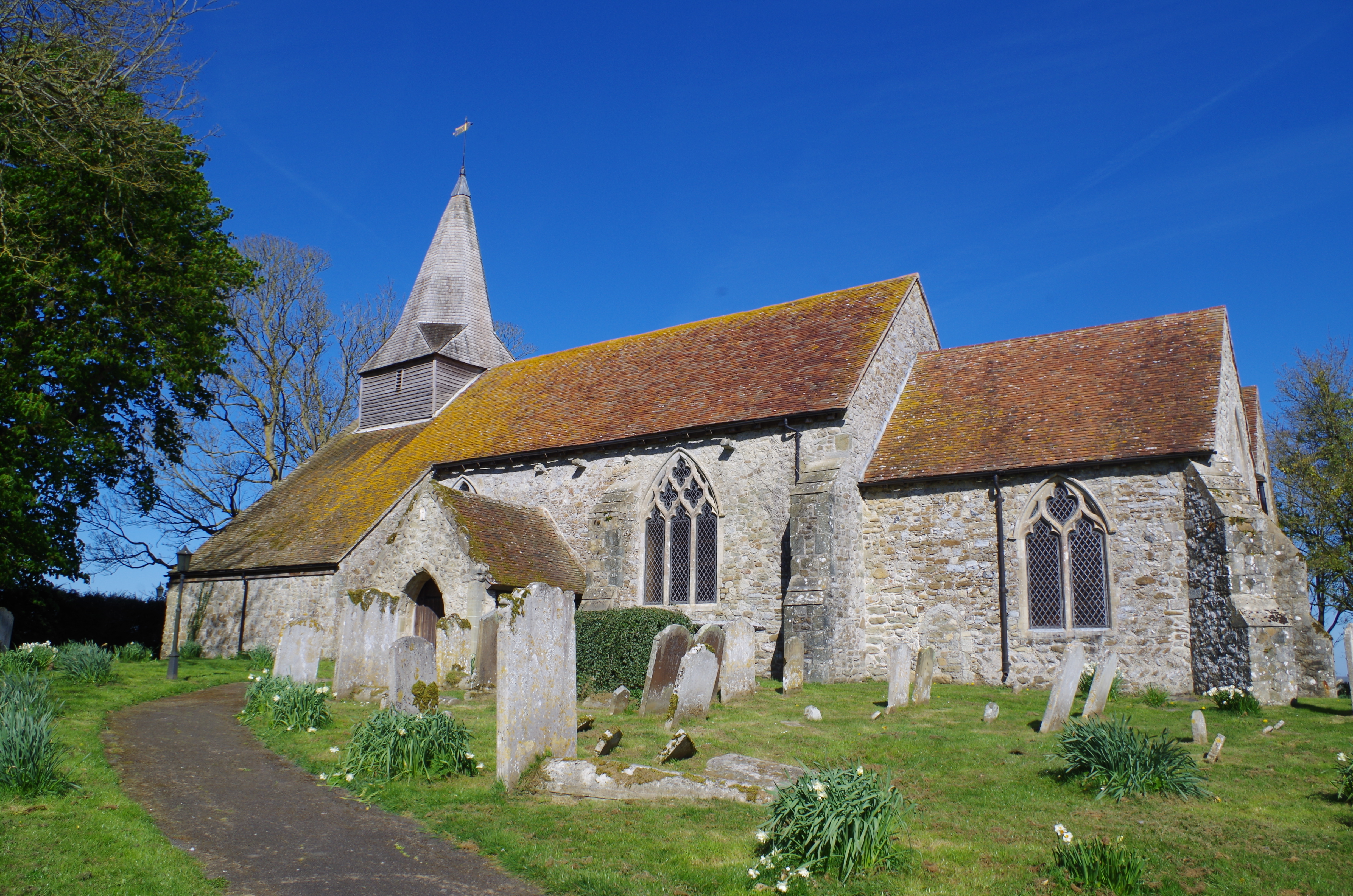
St Eanswith, Brenzett © Carole Tyrrell

The churches of the Romney Marshes are isolated and you’ll need your own transport to visit them. But there are hamlets and villages here and there and I could imagine how it must feel in mid-winter with dark short nights.

However it has long been one of my ambitions to explore the churches that are on the marshes. So when I was offered the chance I didn’t hesitate.  It was a wonderful Spring day, sunny and bright, and we were all eager to explore the Marshes.

Our first church was St Eanswith in Brenzett. This was a plain little church with a candlesnuffer steeple on top of a small slope and was surrounded by a small churchyard dotted with daffodils. There was an azure blue sky and a hare was spotted racing across a bare field at the back of the church. It’s one of the smallest churches on the Marshes and is dedicated to a 7th Saxon princess who founded a nunnery in Folkestone in 630AD. There is now nothing left of the Saxon building and the present church can only be dated back to the 12th century when the Normans rebuilt it.
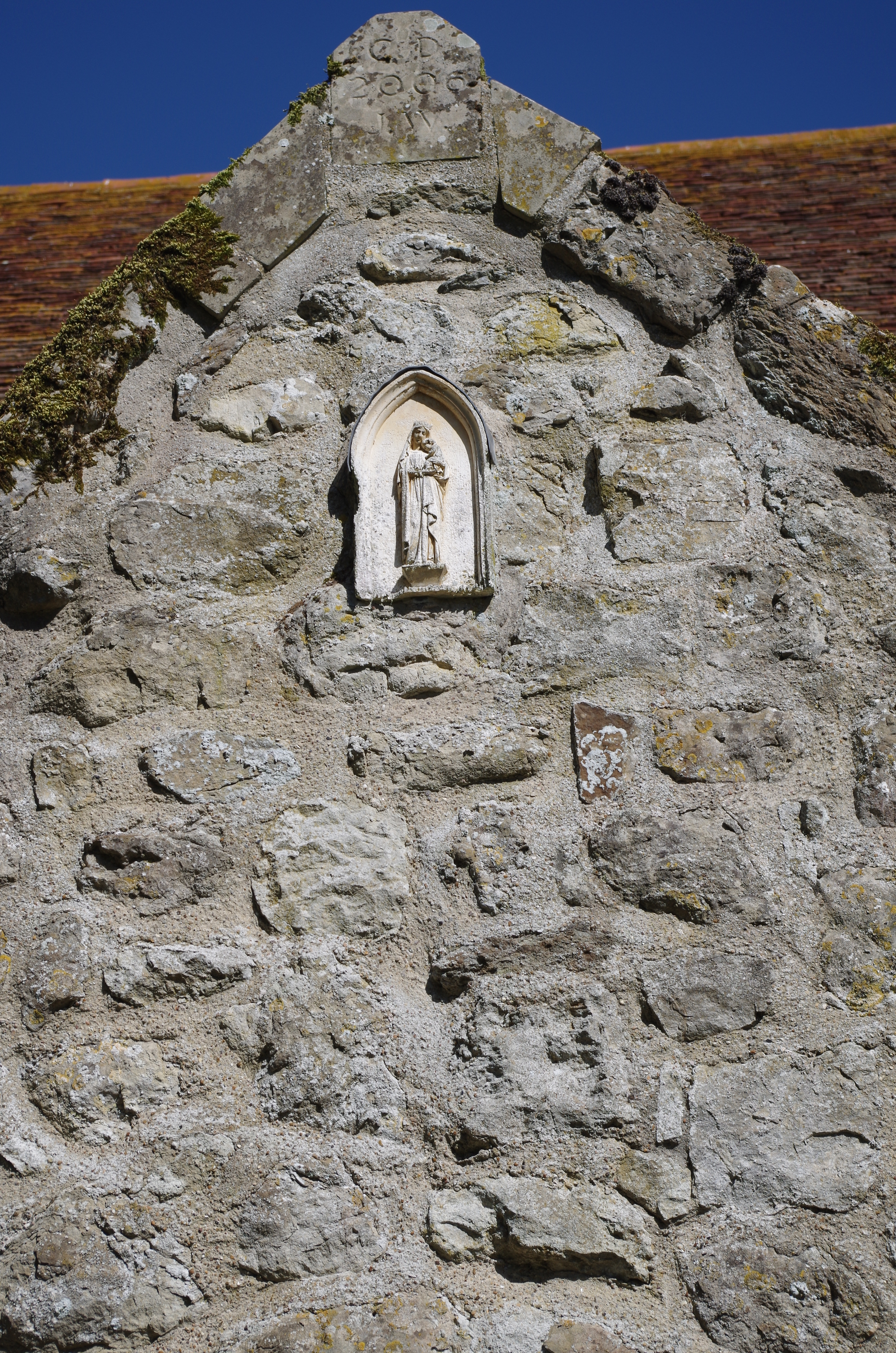
A small statue of St Eanswith over the top of the porch. © Carole Tyrrell

A large Maine Coon cat, who was obviously returning from a night out through the churchyard to its home in the little straggle of houses nearby, caught sight of us and tried to hide by running from patch after patch of daffodils. Then its owner came out of the house that it ran into with another Maine Coon cat!

Hide and seek © Carole Tyrrell

Inside St Eanswith it was plain, with white washed walls and dark wood pews. The pulpit had a raised roof panel which I’d not seen before and at the altar end of the church was the table tomb that we had come to see. This was the Fagge monument and is the only monument in the church. It is dedicated to a father and son, both confusingly called John, and it is a pair of alabaster sculptures of two men in fashionable 17th century clothes. The man in the foreground is portrayed as lying on his back on a sculpted cushion with his left hand on his chest while the man behind is lying on his elbow with his right hand under his chin and his left hand on his left leg. There are visible cracks and damage with repairs which you would expect over the centuries. They are beautifully sculpted. There are small coats of arms beneath the figures at corners which bring a small splash of colour. John Fagge the elder died in 1639 and his son and heir died in 1646.
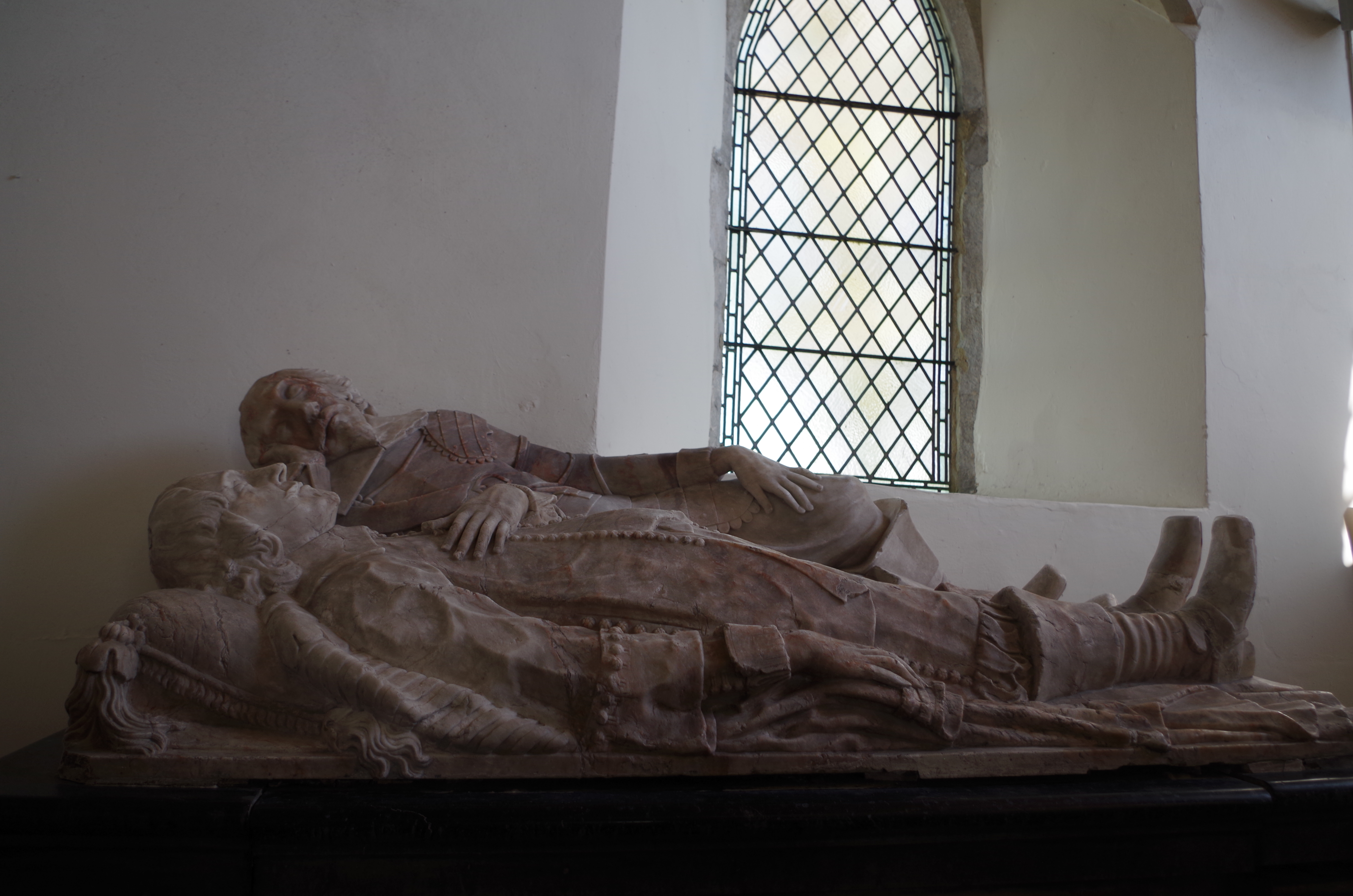
The Fagge monument, St Eanswith. © Carole Tyrrell
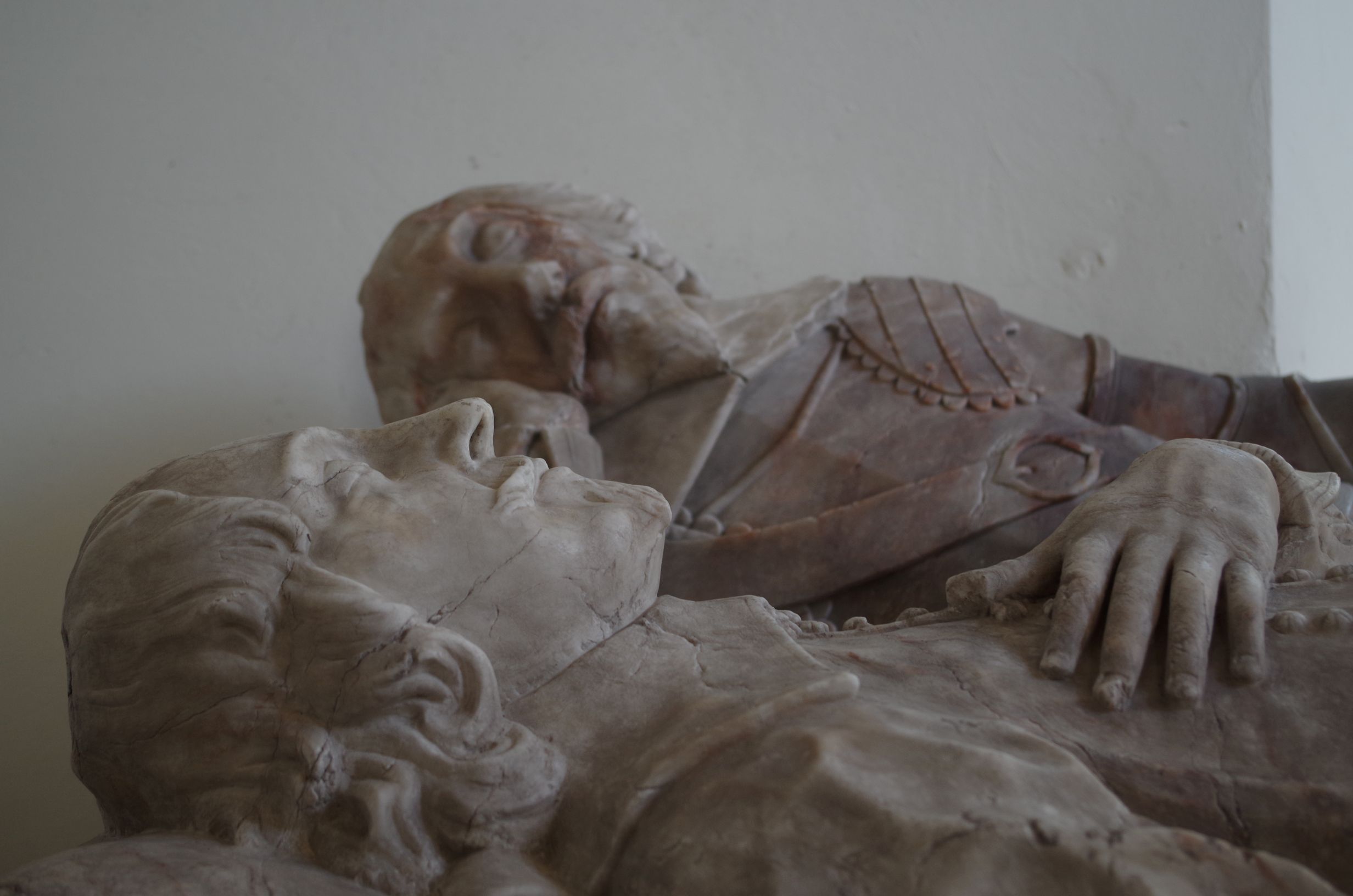
Close up of the Fagge monument. © Carole Tyrrell

Close up of hands showing the ravages of time. © Carole Tyrrell

Epitaph to the Fagges and one of their coat of arms.© Carole Tyrrell

This is the monument that inspired one of E Nesbit’s most famous stories, ‘Man Size in Marble’ which was adapted by Mark Gatiss for the 2024 BBC Christmas ghost story and retitled ‘the Stone Woman’.  A young married couple have moved to the country and their housekeeper tells them of a certain night when something walks from a local church to their house. They take no notice of this but when the husband is called away and leaves his wife alone in the house….you can read the story here:  The Project Gutenberg ebook of Grim Tales, by E. Nesbit.

This is English folk horror clashing with modern reasoning and belief. Nesbit creates the dark countryside so well and also the central characters incredulity at what they are being told. They are still in love with endearments such as ‘wifie’ and ‘dearest’ which makes the ominous events that are about to happen all the more shocking.
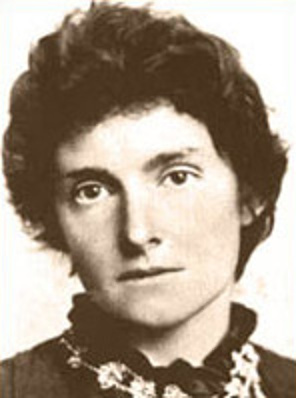
E Nesbit c. 1890 Shared under Wiki Commons

E Nesbit (1858-1924)  is most known for ‘The Railway Children’ which was first published in 1905 and has never been out of print. It was also a classic and well loved childrens film. Some of her other children’s stories have also been adapted for TV.  But she also wrote ghost stories, some of which were recently published by Handheld Press in the collection ‘The House of Silence.’

She was only 4 when her father, an agricultural chemist, died. Edith’s sister, Mary, suffered from ill health and as a result the family travelled in the UK and France. She died in 1871 of tuberculosis after becoming engaged to the poet Phillip Bourke Marston.  After Mary’s death, Edith and her mother lived in Halstead Hall, Halstead in Kent which is considered to be a possible location for ‘The Railway Children’.  When she was 17 they moved to Elswick Road in Lewisham. 

She married Hubert Bland on 22 April 1880. They met when she was aged 18 and at 21 and 7 months pregnant they tied the knot. It was a difficult marriage to say the least as he was always being unfaithful. Edith had 3 children by him and adopted 2 more from one of his long term affairs. It was a complicated family.  She and Hubert were both fervent socialists and joined the Fabian Society, jointly editing its journal ‘Today.’ But this work often took second place to Edith’s writing as she became more successful. The Fabian Society ultimately became part of the Labour party.

From 1899-1920 she lived at Well Hall Eltham. The house is long gone but the garden remains as a public park. She also had a second home at Crowlink, Friston, East Sussex when she entertained.

Bland died in 1918 and she married her second husband, Thomas ‘the Skipper’ Tucker in Woolwich where he was the captain of the Ferry.  They both lived at St Mary’s Bay, Dymchurch at their house ‘The Jolly Boat’ where she died on 4 May 1924. It may have been from lung cancer as she was a great smoker.  Tommy died at the same address on 17 May 1935. To read more about Edith and her life please visit: https://edithnesbit.co.uk

It was such a privilege to see the Fagge monument in the flesh so to speak and also a writer’s inspiration. I could easily imagine Brenzett on a winter’s night, the little terrace of houses with their curtains drawn and lights out as something stirs and moves within the small church and suddenly the top of the tomb is empty and something that shouldn’t be is walking…..

A Spring Saunter in the footsteps of E Nesbit Part 2 her late life on the Marshes

© Carole Tyrrell photos and text unless otherwise stated

Brenzett, Church of St Eanswith — Romney Marsh Historic Churches Trust

St Eanswith’s Church, Brenzett, Kent

The Project Gutenberg ebook of Grim Tales, by E. Nesbit.

https://edithnesbit.co.uk  The Edith Nesbit Society
E. Nesbit – Wikipedia

Symbol of the Month – Simply To Thy Cross I Cling

In the light of the current COVID restrictions, I am reblogging this post from a previous Symbol of the Month. Enjoy!

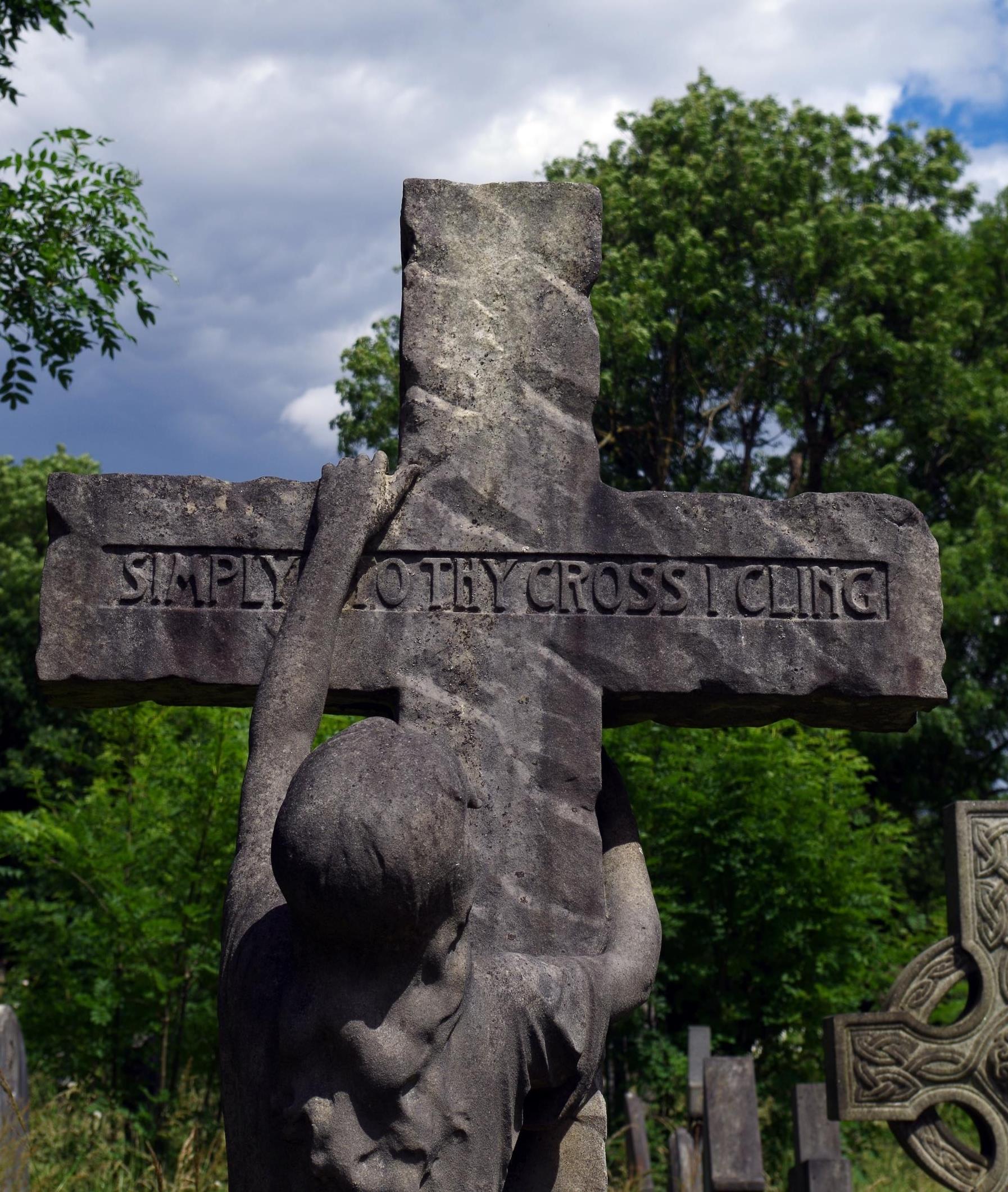
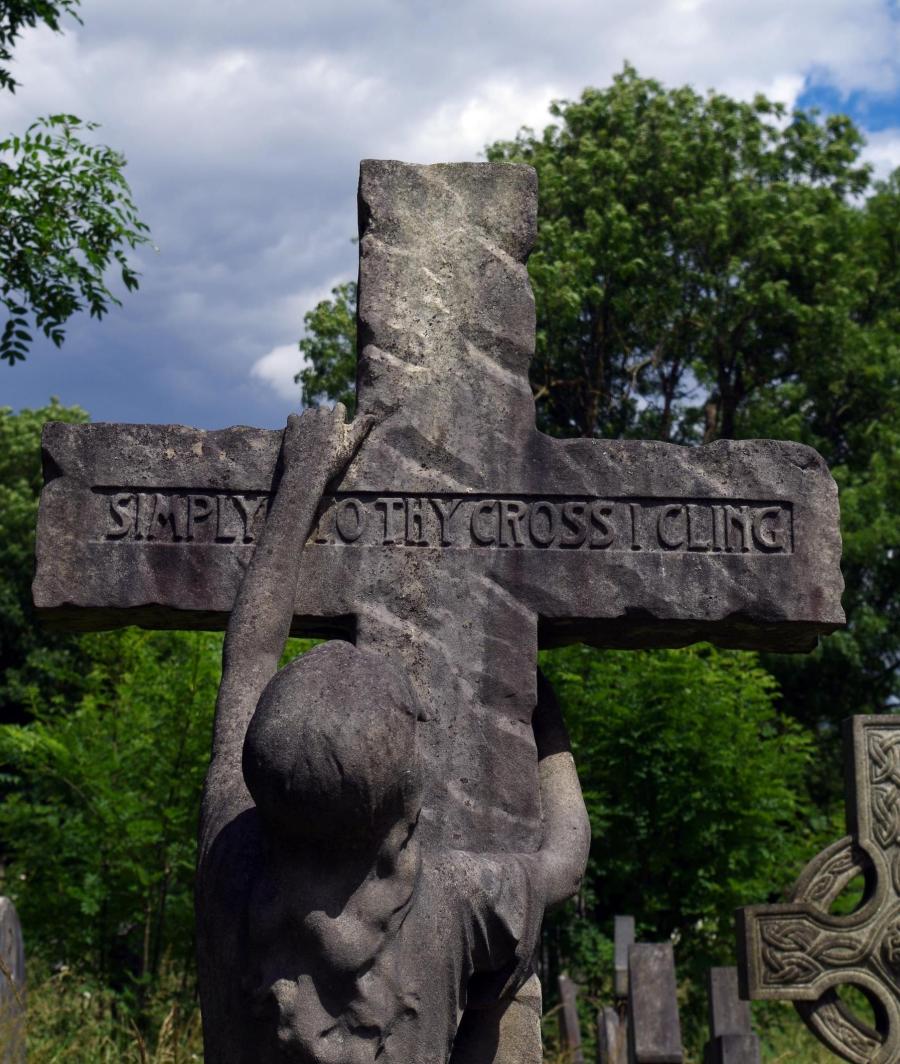
The famous quote on the third on in West Norwood. This is to an 11 year old girl, Dorothy Boswel. ©Carole Tyrrell
The famous quote on the third on in West Norwood. This is to an 11 year old girl, Dorothy Boswel.
©Carole Tyrrell

What does a woman clinging to a cross, seemingly for dear life,   have in common with the film  ‘Merry Christmas Mr Lawrence’  and heavy metal group Def Leppard?

Strangely enough, the connection is an 18th century Protestant hymn written by a fiercely Calvinist minister which has entered the Western cultural consciousness in the same way as ‘Abide With Me’.

‘Rock of Ages’ is a hymn with an enduring message of hope and ultimate salvation.  So no wonder it inspired a potent funerary symbol which is still used today.  However, it’s the second line in the third verse, ‘Simply to Thy cross I cling.’ that has proved most inspirational to Victorian monument masons.

A variant is a pensive young  woman  leaning on a cross for support as at West Norwood.  This cemetery contained several examples and here is a selection:

They’re not angels as they don’t possess wings and angels didn’t begin to appear in Victorian cemeteries until the late 19th century.  But they are one of the few cemetery symbols inspired by a popular hymn. It’s also a Protestant motif and was the only way in which a cross would have been permitted in a Victorian cemetery until near the end of the 19th century. This was due to the religious wars that were raging at the time.

When the Victorians created their large municipal cemeteries there was still a fierce Anti-Catholic  prejudice within Britain. This dated back to Henry VIII and the Reformation and had resulted in several anti-Catholic laws being passed during the 17th and 18th centuries.    But the cry was still ‘No Popery’ in the 19th century and any symbols that were associated with Catholicism weren’t welcome in the new marble orchards.   These included crosses, figures of saints and also angels.   Instead, there was a return to Classicism using Roman and Greek motifs and architecture.  Then, as the 19th century progressed, funerary monuments reflected the tastes of the time.  So you could walk through one and see Arts & Crafts, Celtic Revival, Art Nouveau until eventually towards the end angels did being to fly in.

‘Rock of Ages’ was written by a Calvinist minister, the Reverend Augustus Toplady, in 1763 and  was first published in a religious magazine, ‘The Gospel’, in 1775.   It’s allegedly based on an incident in Toplady’s life.  He was a preacher in a village named Blagdon and was travelling along the gorge of Burrington Combe in Somerset’s Mendip Hills when he was caught in a storm.  He managed to find shelter in a gap in the gorge and was struck by the name of the crevice that had saved him. It’s still marked as ‘Rock of Ages’ both on the rock itself and maps.  He is reputed to have written the hymn’s lyrics on the back of a playing card although one wonders what a minister was doing with a deck of cards.  However, no-one’s sure if this incident actually happened or if it’s apocryphal….

Toplady wasn’t a popular man and in an article by Rupert Christensen of the Daily Telegraph he was described as ‘fanatical, in a gross Calvinism and most difficult to deal with.’ John Wesley avoided him. Toplady was also fond of writing bizarre articles, one of which proposed that a spiralling National Debt  could never be paid off due to the extent of human sinfulness.  Something for the new Chancellor to ponder on I’m sure.   Toplady died in 1776 from TB and would undoubtedly have been forgotten were it not for his rousing hymn.

‘Rock of Ages’ caught the popular imagination. Gladstone translated it into Latin and Greek and asked for it to be played at his funeral.  Prince Albert reputedly requested it on his deathbed and it has appeared in several feature films. These include ‘Merry Christmas Mr Lawrence’ where it’s sung by David Bowie as Major Jack Celliers and both ‘Paper Moon’ and ‘The Silence of the Lambs’ where it’s played at a funeral.  It’s also inspired musicians such as Def Leppard and the writer of the film score for ‘Altered States.’ John Congliano.  It’s  also the title of the long running musical stage show.

These are its lyrics:

Rock of Ages, cleft for me,
Let me hide myself in Thee;
Let the water and the blood,
From Thy riven side which flowed,
Be of sin the double cure,
Cleanse me from its guilt and power.

Not the labour of my hands
Can fulfill Thy law’s demands;
Could my zeal no respite know,
Could my tears forever flow,
All for sin could not atone;
Thou must save, and Thou alone.

Nothing in my hand I bring,
Simply to Thy cross I cling;
Naked, come to Thee for dress;
Helpless, look to Thee for grace;
Foul, I to the fountain fly;
Wash me, Saviour, or I die!

While I draw this fleeting breath,
When mine eyes shall close in death,
When I soar to worlds unknown,
See Thee on Thy judgement throne,
Rock of Ages, cleft for me,
From L http://library.timelesstruths.org/music/Rock_of_Ages/et me hide myself in Thee.

I’ve also seen the lyrics of the hymn inscribed on monuments as at Streatham Cemetery and also Brompton.

However it does also appear as a motif on tombstones as here:

This is one on a tombstone - I found it on a blog but they had found it on wikipedia. So source unknown.
This is one on a tombstone – I found it on a blog but they had found it on wikipedia. So source unknown.

It has been described as a symbol of faith, of a person lost in sin whose only hope is to cling to the cross.

Sometimes just the phrase is enough as here:

This simple memorial only has the phrase on it. This is to Eva Catherine Dorin by her husband. She died young at 48. ©Carole Tyrrell
This is to Eva Catherine Dorin by her husband. She died young at 48. West Norwood.
©Carole Tyrrell

It was also popular as a print and these are two examples:

Both seem to clinging to a cross in a raging sea – a sea of sin perhaps?

The symbol has reappeared in more recent years and there is a much smaller, modern version at Beckenham Cemetery.  This is on the grave of a 16 year old who died in 1965.

Modern version on a 16 year year old girls' grave in Beckenham Cemetery at Elmers End. ©Carole Tyrrell
Modern version on a 16 year year old girls’ grave in Beckenham Cemetery at Elmers End.
©Carole Tyrrell

A much simpler version seen on the grave of Maud and Percival Jones in Beckenham Cemetery.. He founded Twinlock files who were a large local firm  in the area until the late '80's   ©Carole Tyrrell
A much simpler version seen on the grave of Maud and Percival Jones in Beckenham Cemetery dating back to the 1940’s. He founded Twinlock files who were a large local firm in the area until the late ’80’s
©Carole Tyrrell

An inspirational hymn to the Victorians and also well into the 20th Century but what could have the same effect these days?  I’ve always fancied a video of Sid Vicious singing ‘/My Way’ on my tombstone…..

©  Text and photos Carole Tyrrell unless otherwise stated.

https://en.wikipedia.org/wiki/Rock_of_Ages_(Christian_hymn)

http://www.telegraph.co.uk/culture/music/3668144/The-story-behind-the-hymn.html

http://www.graveaddiction.com/symbol.html

http://www.thecemeteryclub.com/symbols.html

http://cayugaheightshistory.weebly.com/uploads/2/4/5/4/24545229/pleasant_grove_cemetery_iconography.pdf

http://owlseeyouinthecemetery.blogspot.co.uk/2014/10/nothing-in-my-hand-i-bring-simply-to.html

Symbol of the Month – And With The Morn Those Angel Faces Smile


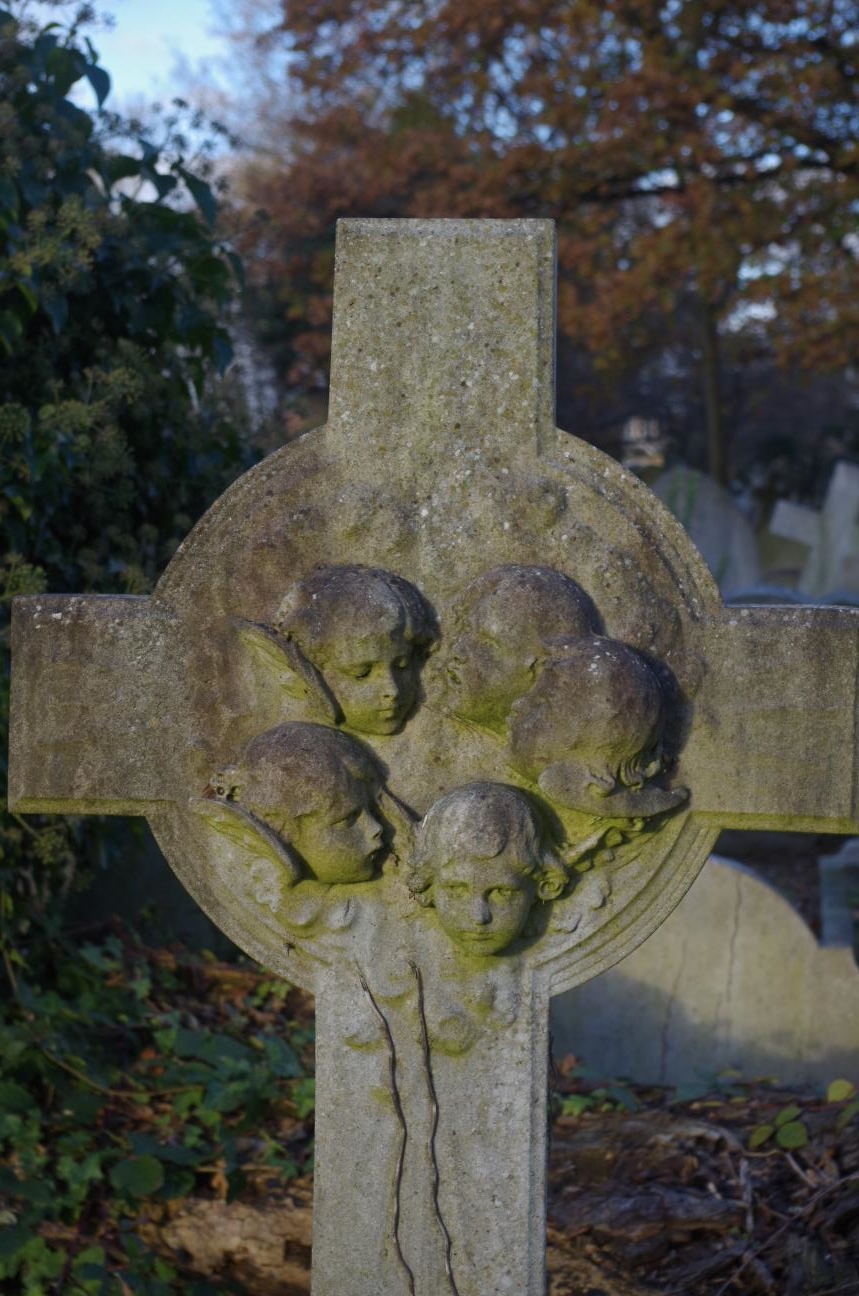
This is the other version which is sited on the main road through the cemetery. The epitaph was difficult to read as worn but it was also to much missed children. ©Carole Tyrrell
This is the first one that I saw on a guided tour of Beckenham Cemetery.  The Foster family monument which is sited on the main road through the cemetery.
©Carole Tyrrell

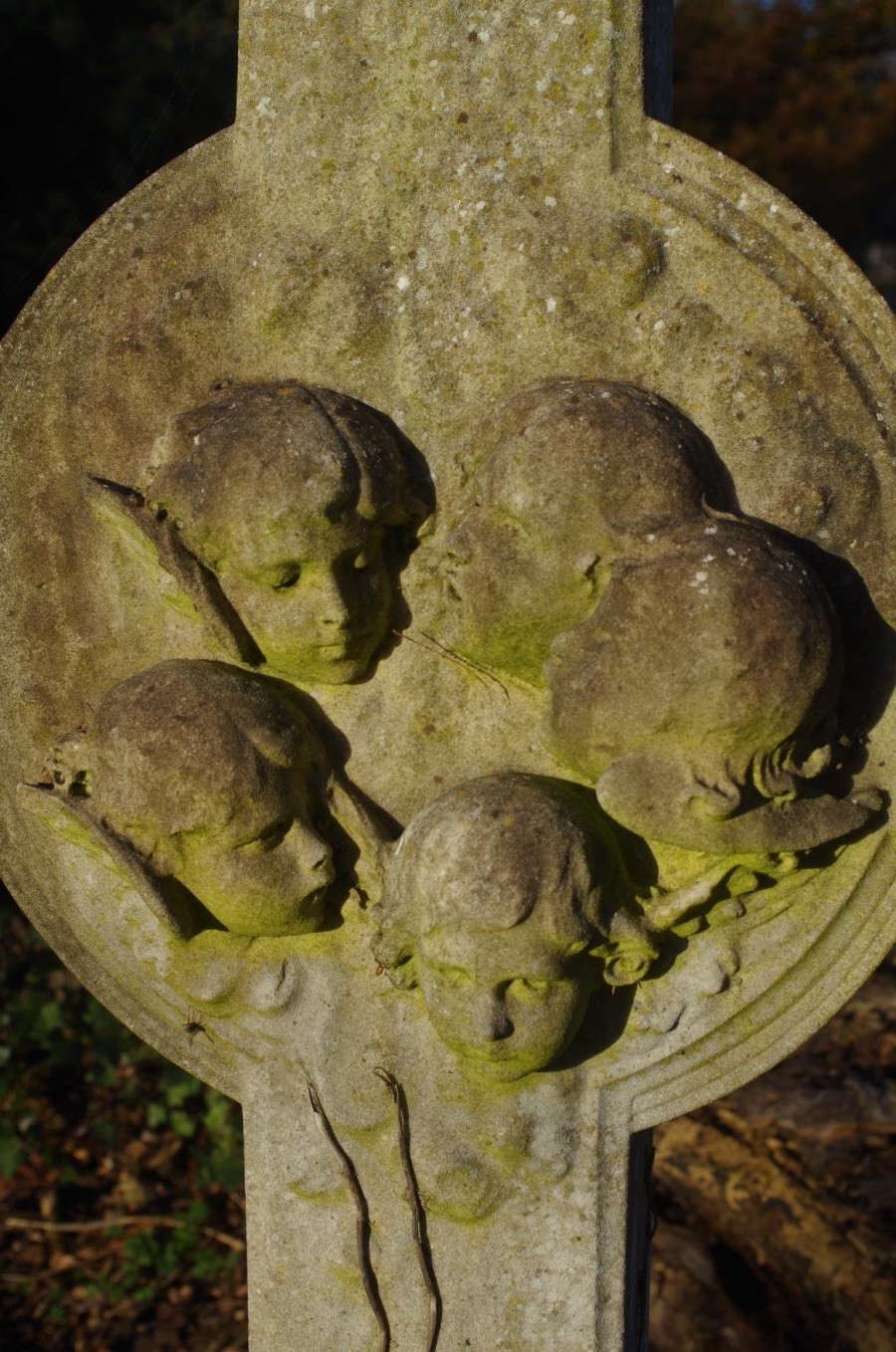
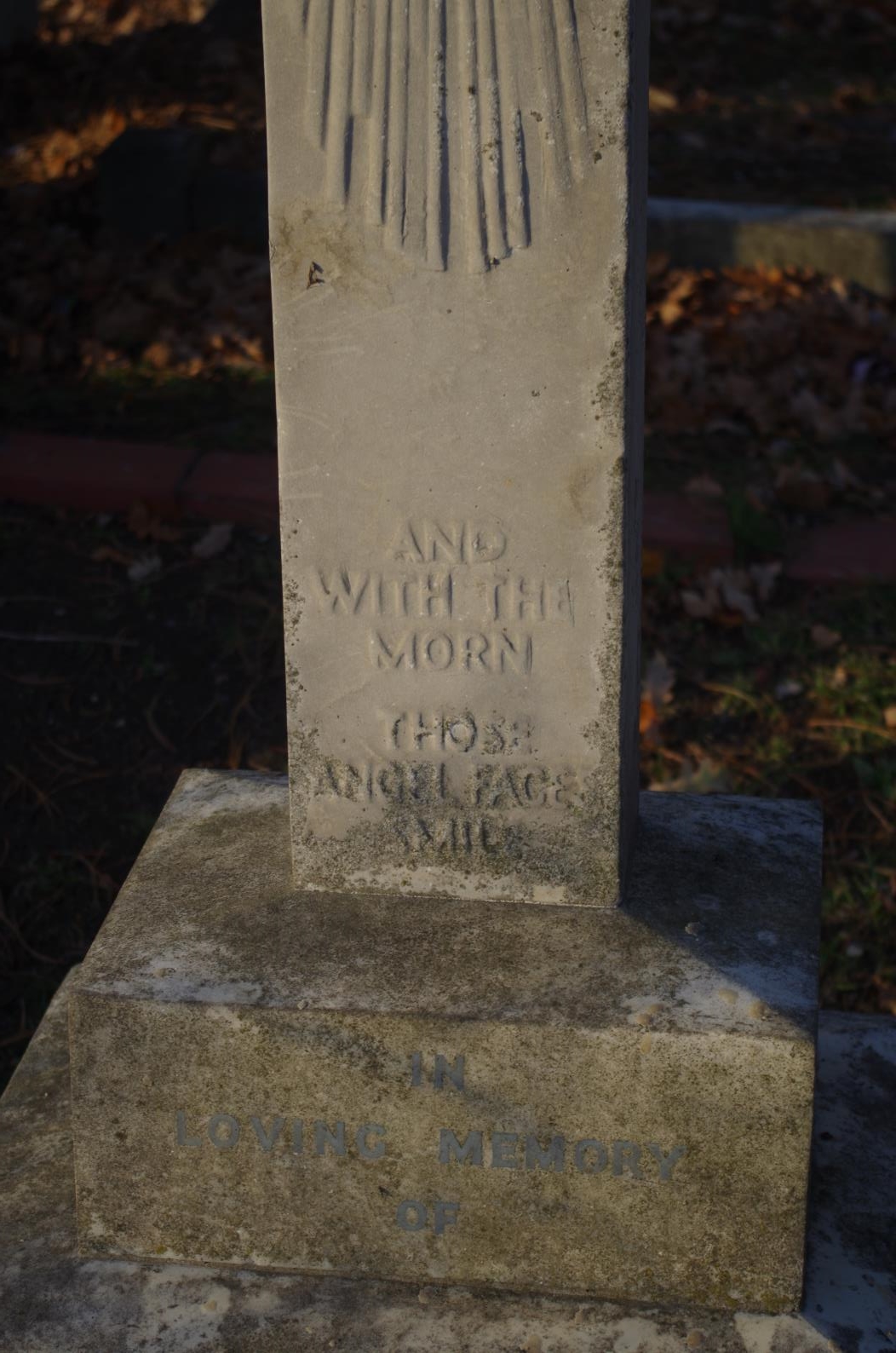
Five child angels, their faces turned to each other, framed by small wings, except for one that was staring out at me, I wanted to reach out and touch them but didn’t want to damage them.   They formed a roundel at the centre of a tall cross with the phrase ‘And with the morn those angel faces smile’ inscribed at the base of its stem.  I was on a tour of Beckenham Cemetery when I first saw them.

The line that led me on my quest to find out the origin of this symbol. ''And with the morn Those Angel Faces Smile.'. ;©Carole Tyrrell
The line that led me on my quest to find out the origin of this symbol. ”And with the morn Those Angel Faces Smile.’. ;©Carole Tyrrell

Our guide didn’t comment on them but the monument is in a prominent place on the main road through the cemetery and I often wondered about this pretty and poignant memorial.

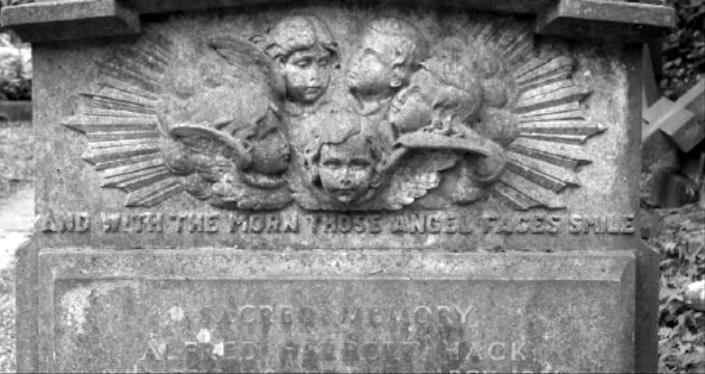
On a visit to Highgate East in 2014 I found another example but on a smaller scale on a tombstone in the name of Alfred Hack and dated 1956.  There is a distinctly 1930’s look about the angels from  their hairstyles.

I also found another version which featured cherubs faces instead of childrens on a visit to Knebworth this summer.

Then , on a more recent visit to Beckenham Cemetery,  I found another similar one which was only a short distance away from the first.  In this the child angels seem to have more definite, individual faces and the one that has her head towards the viewer is looking down instead of outwards.  Now I wanted to find out more about the quotation and the angels and my research led me to a Victorian hymn that was sung on the Titanic at its final service on board and by the inmates of Ravensbruck concentration camp as the S.S led them in.   The ‘angel faces’ is a quotation from ‘Lead, kindly Light’,  in fact it’s the penultimate line and like ‘Rock of Ages’ it caught the mood of its time.

These are the lyrics:

‘Lead, kindly Light, amid the encircling gloom
Lead thou me on;
The night is dark, and I am far from home,
Lead thou me on.
Keep thou my feet; I do not ask to see
The distant scene; one step enough for me.

I was not for ever thus, nor prayed that thou
Shouldst lead me on;
I loved to choose and see my path; but now
Lead thou me on,
I loved the garish day, and, spite of fears,
Pride ruled my will: remember not past years.

So long thy power hath blessed me, sure it still
Will lead me on,
O’er moor and fen, o’er crag and torrent, till
The night is gone;
And with the morn those angel faces smile,
Which I have loved long since, and lost awhile.’


However, the writer John Henry Newman (1801-90), always refused to reveal the meaning of the ‘angels faces’ or what the ‘kindly light’ actually was.

Originally a poem, it was written by Newman in 1833.  He was then a young theologian and Anglican vicar and was going through a challenging time in his life. Struck down by a fever which nearly killed him while travelling in the Mediterranean, Newman’s  servant was so convinced that he would die that he asked him for his last orders.  But in his autobiography, Newman told him ‘I shall not die, for I have not sinned against light’.

Newman recovered but that wasn’t the end of his troubles.  Desperate to return to England he then took a boat from Palermo to Marseilles only to end up stranded and becalmed in the Straits of Bonifacio. Exhausted and frustrated Newman wrote the poem, ‘The Pillar of the Cloud’ that, in 1845, became ‘Lead, Kindly Light’.  Newman was not happy about this as by then he’d converted to Catholicism and hymn singing wasn’t included as part of divine service.  He went onto become Cardinal Newman, one of the most important figures in English Catholicism, and also an important writer. In 1900 Elgar set Newman’s poem ‘The Dream of Gerontius’ to music.

Cardinal Newman as John Newman eventually became after his conversion to Catholicism. This celebrated portrait is by Sir John Everett Millais. In the public domain in UK - from the National Portrait Gallery wkipedia
Cardinal Newman as John Newman eventually became after his conversion to Catholicism.
This celebrated portrait is by Sir John Everett Millais.
In the public domain in UK – from the National Portrait Gallery wkipedia


‘Lead, Kindly Light’ has struck a chord with those in danger or about to enter the endless dark realm and needed the comfort of a light leading their way through it.  Miners awaiting rescue from deep underground  during the 1909 Durham mining disaster sang it  as did the  passengers on one of Titanic’s lifeboats  when the rescue ship, Carpathia,  was sighted the morning after.  It caught the Victorian mood perfectly as did ‘Rock of Ages’ and Queen Victoria asked for it to be read as she lay dying.  It also inspired a celebrated painting by the Scottish artist, Sir Joseph Noel Paton in 1894 in which the angels are pensive young woman.


But why did one line from this song inspire two monuments in Beckenham Cemetery and one in Highgate East?  I noticed that both of the Beckenham monuments were on children’s graves and that the carved angels were also children. Perhaps the mourning relatives left behind may have wanted the consolation that their beloved children would be waiting for them when their time came.


The first one is the Foster family monument.  The epitaph is now virtually unreadable but I could make out the name ‘Francis Frederick’ carved along the base.    There are two inscribed ‘Books of Life’ placed on top of the grave.  One is dedicated to John Francis Foster and Alice Gladys Alice Chapman and the other is dedicated to John Francis Foster and Alice Emma Foster.

The Pace monument in Beckenham Cemetery. ©Carole Tyrrell
The Pace monument in Beckenham Cemetery.
©Carole Tyrrell


The second one is the Pace family monument and is to the two daughters of Henry William and Elizabeth Pace.  These were Lilian Alice who died in 1888 and Grace Irene who died in 1903.  Strangely enough they both died at the same age and Elizabeth herself is commemorated here as she died at 33 in 1912.

The epitaph on the Page monument. It's dedicated to the 2 daughters of Henry and Elizabeth Page., Lilian died in 1888 and Gr ace in 1903 and at the same age. ©Carole Tyrrell
The epitaph on the Page monument. It’s dedicated to the 2 daughters of Henry and Elizabeth Page., Lilian died in 1888 and Gr ace in 1903 and at the same age.
©Carole Tyrrell


This is the one in Highgate East dedicated to Alfred Hack and dated 1956.

This is a much smaller version on a tombstone in Highgate East Cemetery. ©Carole Tyrrell
This is a much smaller version on a tombstone in Highgate East Cemetery.
©Carole Tyrrell

So, a line from a hymn that even its writer was unsure of its meaning, became a symbol of comfort to sorrowing families.

However the symbol has been adapted to feature cherubs as in St Mary’s, Knebworth’s churchyard. These are on the tombstone of the Lutyens family’s nanny, Alice Sleath.

But I am indebted to Douglas Keister’s Stories in Stone for the possible origins on the image of the angels.

The composition of the five heads may have been adapted from  a painting by Sir Joshua Reynolds PRA entitled ‘Heads of Angels Miss Frances Gordon’ which was painted during July 1786 – March 1787.  The sitter was the then 5 year old Frances Isabella Keir Gordon (1782-1831) who was the only daughter of illustrious parents. They were Lord William Gordon (1744-1823) and his wife Frances Ingram (1761-1841), second daughter of Charles, 9th Viscount Irvine (1727-78), who were married on 6 March 1781. Her uncle was Lord George Gordon (1751-93), whose political activities had sparked the anti-Catholic riots of 1780.

'Heads of Angels Miss Frances Gordon' by Sir Joshua Reynolds PRA 1786-1787. . This is in public domain wilki creative commons
‘Heads of Angels Miss Frances Gordon’ by Sir Joshua Reynolds PRA 1786-1787. . This is in public domain wiki creative commons

Frances’ mother outlived her by 10 years and the painting was then presented to the National Gallery.  It was enormously popular and was reproduced on numerous decorative items and photographic reproductions such as ‘The Cherub Choir.’

And so a poignant and powerful symbol was created from the combination of a great painting, an inspirational hymn and Victorian taste and led to these three lovely memorials to much missed children.

©Text and photos Carole Tyrrell unless otherwise stated.


http://www.telegraph.co.uk/culture/music/3668066/The-story-behind-the-hymn.html

https://en.wikipedia.org/wiki/Lead,_Kindly_Light

http://www.thebeautybag.net/videos/angel-faces-smile/

http://www.tate.org.uk/art/artworks/reynolds-a-childs-portrait-in-different-views-angels-heads-n00182

Stories in Stone, Douglas Keister,  2006, Gibbs Smith

Symbol of the Month – Simply To Thy Cross I Cling

The famous quote on the third on in West Norwood. This is to an 11 year old girl, Dorothy Boswel. ©Carole Tyrrell
The famous quote on the third on in West Norwood. This is to an 11 year old girl, Dorothy Boswel.
©Carole Tyrrell

What does a woman clinging to a cross, seemingly for dear life,   have in common with the film  ‘Merry Christmas Mr Lawrence’  and heavy metal group Def Leppard?

Strangely enough, the connection is an 18th century Protestant hymn written by a fiercely Calvinist minister which has entered the Western cultural consciousness in the same way as ‘Abide With Me’.

‘Rock of Ages’ is a hymn with an enduring message of hope and ultimate salvation.  So no wonder it inspired a potent funerary symbol which is still used today.  However, it’s the second line in the third verse, ‘Simply to Thy cross I cling.’ that has proved most inspirational to Victorian monument masons.

A variant is a pensive young  woman  leaning on a cross for support as at West Norwood.  This cemetery contained several examples and here is a selection:


They’re not angels as they don’t possess wings and angels didn’t begin to appear in Victorian cemeteries until the late 19th century.  But they are one of the few cemetery symbols inspired by a popular hymn. It’s also a Protestant motif and was the only way in which a cross would have been permitted in a Victorian cemetery until near the end of the 19th century. This was due to the religious wars that were raging at the time.

When the Victorians created their large municipal cemeteries there was still a fierce Anti-Catholic  prejudice within Britain. This dated back to Henry VIII and the Reformation and had resulted in several anti-Catholic laws being passed during the 17th and 18th centuries.    But the cry was still ‘No Popery’ in the 19th century and any symbols that were associated with Catholicism weren’t welcome in the new marble orchards.   These included crosses, figures of saints and also angels.   Instead, there was a return to Classicism using Roman and Greek motifs and architecture.  Then, as the 19th century progressed, funerary monuments reflected the tastes of the time.  So you could walk through one and see Arts & Crafts, Celtic Revival, Art Nouveau until eventually towards the end angels did being to fly in.

‘Rock of Ages’ was written by a Calvinist minister, the Reverend Augustus Toplady, in 1763 and  was first published in a religious magazine, ‘The Gospel’, in 1775.   It’s allegedly based on an incident in Toplady’s life.  He was a preacher in a village named Blagdon and was travelling along the gorge of Burrington Combe in Somerset’s Mendip Hills when he was caught in a storm.  He managed to find shelter in a gap in the gorge and was struck by the name of the crevice that had saved him. It’s still marked as ‘Rock of Ages’ both on the rock itself and maps.  He is reputed to have written the hymn’s lyrics on the back of a playing card although one wonders what a minister was doing with a deck of cards.  However, no-one’s sure if this incident actually happened or if it’s apocryphal….

Toplady wasn’t a popular man and in an article by Rupert Christensen of the Daily Telegraph he was described as ‘fanatical, in a gross Calvinism and most difficult to deal with.’ John Wesley avoided him. Toplady was also fond of writing bizarre articles, one of which proposed that a spiralling National Debt  could never be paid off due to the extent of human sinfulness.  Something for the new Chancellor to ponder on I’m sure.   Toplady died in 1776 from TB and would undoubtedly have been forgotten were it not for his rousing hymn.

‘Rock of Ages’ caught the popular imagination. Gladstone translated it into Latin and Greek and asked for it to be played at his funeral.  Prince Albert reputedly requested it on his deathbed and it has appeared in several feature films. These include ‘Merry Christmas Mr Lawrence’ where it’s sung by David Bowie as Major Jack Celliers and both ‘Paper Moon’ and ‘The Silence of the Lambs’ where it’s played at a funeral.  It’s also inspired musicians such as Def Leppard and the writer of the film score for ‘Altered States.’ John Congliano.  It’s  also the title of the long running musical stage show.

These are its lyrics:

Rock of Ages, cleft for me,
Let me hide myself in Thee;
Let the water and the blood,
From Thy riven side which flowed,
Be of sin the double cure,
Cleanse me from its guilt and power.

Not the labour of my hands
Can fulfill Thy law’s demands;
Could my zeal no respite know,
Could my tears forever flow,
All for sin could not atone;
Thou must save, and Thou alone.

Nothing in my hand I bring,
Simply to Thy cross I cling;
Naked, come to Thee for dress;
Helpless, look to Thee for grace;
Foul, I to the fountain fly;
Wash me, Saviour, or I die!

While I draw this fleeting breath,
When mine eyes shall close in death,
When I soar to worlds unknown,
See Thee on Thy judgement throne,
Rock of Ages, cleft for me,
From L http://library.timelesstruths.org/music/Rock_of_Ages/et me hide myself in Thee.

I’ve also seen the lyrics of the hymn inscribed on monuments as at Streatham Cemetery and also Brompton.

However it does also appear as a motif on tombstones as here:

This is one on a tombstone - I found it on a blog but they had found it on wikipedia. So source unknown.
This is one on a tombstone – I found it on a blog but they had found it on wikipedia. So source unknown.

It has been described as a symbol of faith, of a person lost in sin whose only hope is to cling to the cross.


Sometimes just the phrase is enough as here:

This simple memorial only has the phrase on it. This is to Eva Catherine Dorin by her husband. She died young at 48. ©Carole Tyrrell
This is to Eva Catherine Dorin by her husband. She died young at 48. West Norwood.
©Carole Tyrrell


It was also popular as a print and these are two examples:

Both seem to clinging to a cross in a raging sea – a sea of sin perhaps?

The symbol has reappeared in more recent years and there is a much smaller, modern version at Beckenham Cemetery.  This is on the grave of a 16 year old who died in 1965.

Modern version on a 16 year year old girls' grave in Beckenham Cemetery at Elmers End. ©Carole Tyrrell
Modern version on a 16 year year old girls’ grave in Beckenham Cemetery at Elmers End.
©Carole Tyrrell

A much simpler version seen on the grave of Maud and Percival Jones in Beckenham Cemetery.. He founded Twinlock files who were a large local firm  in the area until the late '80's   ©Carole Tyrrell
A much simpler version seen on the grave of Maud and Percival Jones in Beckenham Cemetery dating back to the 1940’s. He founded Twinlock files who were a large local firm in the area until the late ’80’s
©Carole Tyrrell

An inspirational hymn to the Victorians and also well into the 20th Century but what could have the same effect these days?  I’ve always fancied a video of Sid Vicious singing ‘/My Way’ on my tombstone…..


©  Text and photos Carole Tyrrell unless otherwise stated.


https://en.wikipedia.org/wiki/Rock_of_Ages_(Christian_hymn)

http://www.telegraph.co.uk/culture/music/3668144/The-story-behind-the-hymn.html

http://www.graveaddiction.com/symbol.html

http://www.thecemeteryclub.com/symbols.html

http://cayugaheightshistory.weebly.com/uploads/2/4/5/4/24545229/pleasant_grove_cemetery_iconography.pdf

http://owlseeyouinthecemetery.blogspot.co.uk/2014/10/nothing-in-my-hand-i-bring-simply-to.html