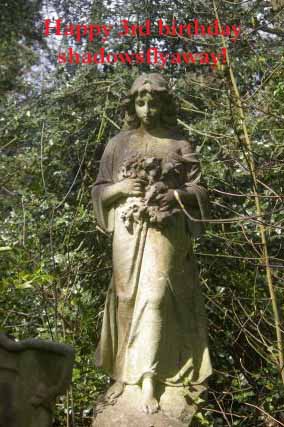
Yes, dear reader, it was three years ago in 2015 that I began this blog. A complete novice, I set it up in order to talk about primarily funerary symbols which are my main interest and to promote my work in progress which will be a book about them. One of my great pleasures in life is exploring cemeteries, graveyards and cemeteries to find new symbols to write about. But a word of warning, remember to take a camera with you and take photos of the graves around the one that you’ve chosen otherwise they can be difficult to relocate. I feel that symbols are the deceased’s final message to the world. It can either be a way to say goodbye or a message of comfort to those left behind. However, I can only speculate on the reasons for their choice.
But, while writing this blog, I’ve also become interested in the living residents of cemeteries – the wildlife. Often cemeteries are locked up at night and are usually quiet places which enable wildlife to flourish. There are often wild areas where the grass is left uncut and these can be a vital lifeline in an urban green space. They can support many different varieties of wildflowers, butterflies, moths, grasshoppers, dragonflies and also foxes and birds. At a recent Brompton Cemetery Exploring Butterflies day 13 species of Butterflies were found. It’s interesting how people use cemeteries as one man enthusiastically recommended Brompton Cemetery’s plentiful supply of blackberries for his smoothies!
So, thanks to my readers and visitors for staying with me over the last 3 years. I hope you’ve enjoyed my posts, photographs and theories on particular symbols. There’s plenty more to come including exploring what remains of the Necropolis Railway at Brookwood Cemetery in Surrey, a return visit to Chaldon Church to look at the churchyard memorials and also to the place where my interest in cemeteries began, St Lawrence’s Hospital burial ground also in Surrey and a Roman necropolis surrounded by back gardens in Italy.
And as always there will be Symbol of the Month. It’s always fascinating to undertake the research for these as there may be several different interpretations of meaning and it can also led into other directions.
So please come with me through either the cemetery gates or perhaps the lychgate to a churchyard and let’s explore together. There’s a symbol over there that I haven’t seen before and although I’m not sure what it means now I soon will…..
It was a, shall we say, bracing February day in Brompton Cemetery. The snowdrops were clinging together for warmth along the main avenue and a drift of daffodils near the soon to be completed café thought better of coming out in bloom. But I, and the apps designer, local GP Simon Edwards, didn’t let this spoil our fun. We had previously worked with together on the Brompton animals app and it was good to have another pair of eyes with me.
Our aim was to devise an app that gave a good selection of symbols within the cemetery, both common ones that can also be found in other cemeteries and others that were perhaps unique to Brompton. There would be a brief comment on each one by yours truly and there was also the opportunity to see me in person. You’ll have to make up your own mind about whether I’m attempting fruitlessly to hide behind a Celtic Cross or draping myself elegantly around it.
Brompton opened in 1840 and, due to the 19th century anti-Papist movement. crosses, Christ statues or angels were not popular. Instead other cultures and civilisations and other older cultures and influences were used as inspiration. These included Classicism from ancient Greece and Rome, the Celtic and Egyptian Revivals, Biblical quotations and references, the language of flowers as well as animals and insects.
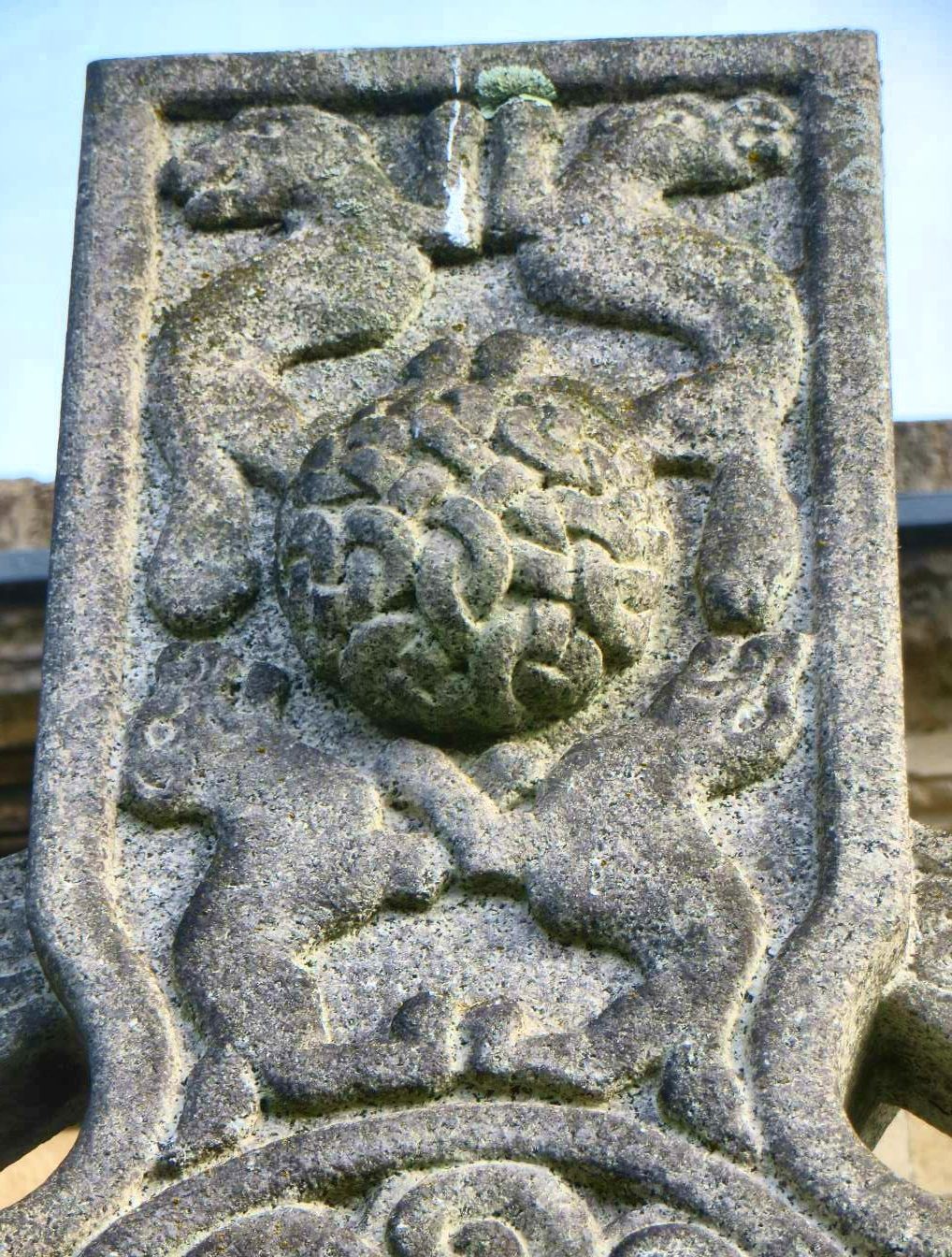
Simon was also looking for additional images for the Brompton animals app and soon found a group at the top of the Stevenson Celtic cross. These are supposedly based on Viking animal images but although, when we looked more closely, it was difficult to make out exactly what kind of animals they were. Brompton’s Celtic crosses are very interesting due to the variety of decoration on them from spirals, traditional Celtic strapwork, flowers and even a cat. I will be writing about them in next month’s Symbol of the Month.
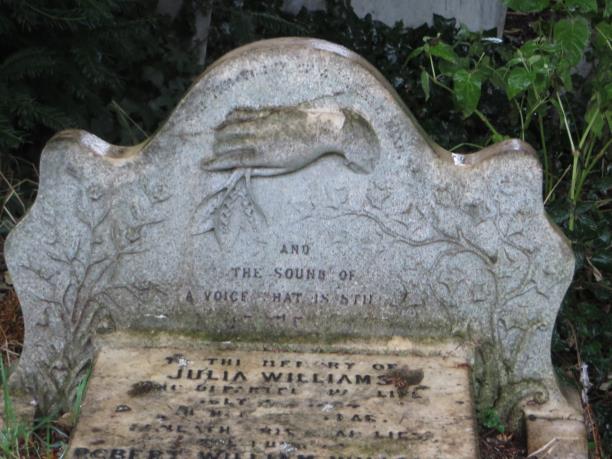
But soon we were exploring the alpha and omega, the Chi Rho, shaking hands, downturned torches, and flowers amongst others.
Among Brompton’s more unusual symbols are the two Aladdin style lamps on the Cornwell headstone, the polar and cub on the Hills one in the modern burials section and the small stone boat tied up at the base of the cross on the McCaig monument.
The Great Churchyard in Bury St Edmunds is big. Very big and forms a useful shortcut for the locals from an uninspiring car park (aren’t they all I hear you say) to Honey Hill. But the Great Churchyard is steeped in history and, according to a volunteer in nearby St Mary’s church, some of its pathways date back to Saxon times. The church sits perched further up the hill and so looks down and over the churchyard’s permanent residents.
I came upon the Great Churchyard by chance on a day trip in 2006 while exploring the extensive Abbey ruins. The Abbey’s ruins have eroded into strange shapes over the centuries and now look like lumpy fingers pointing accusingly at the sky. But after Henry VIII dissolved the Abbey in 1539, much of its flint and mortar has been ‘recycled’ by the locals and can be seen in walls and nearby houses. But it was the Churchyard’s memorable epitaphs that stayed with me and so on a bright December day last year I returned.
There is a plethora of 18th century symbols on display: skull and crossbones, winged angels, open books and one memorial had its own duvet of moss on the coffin lid shaped top.
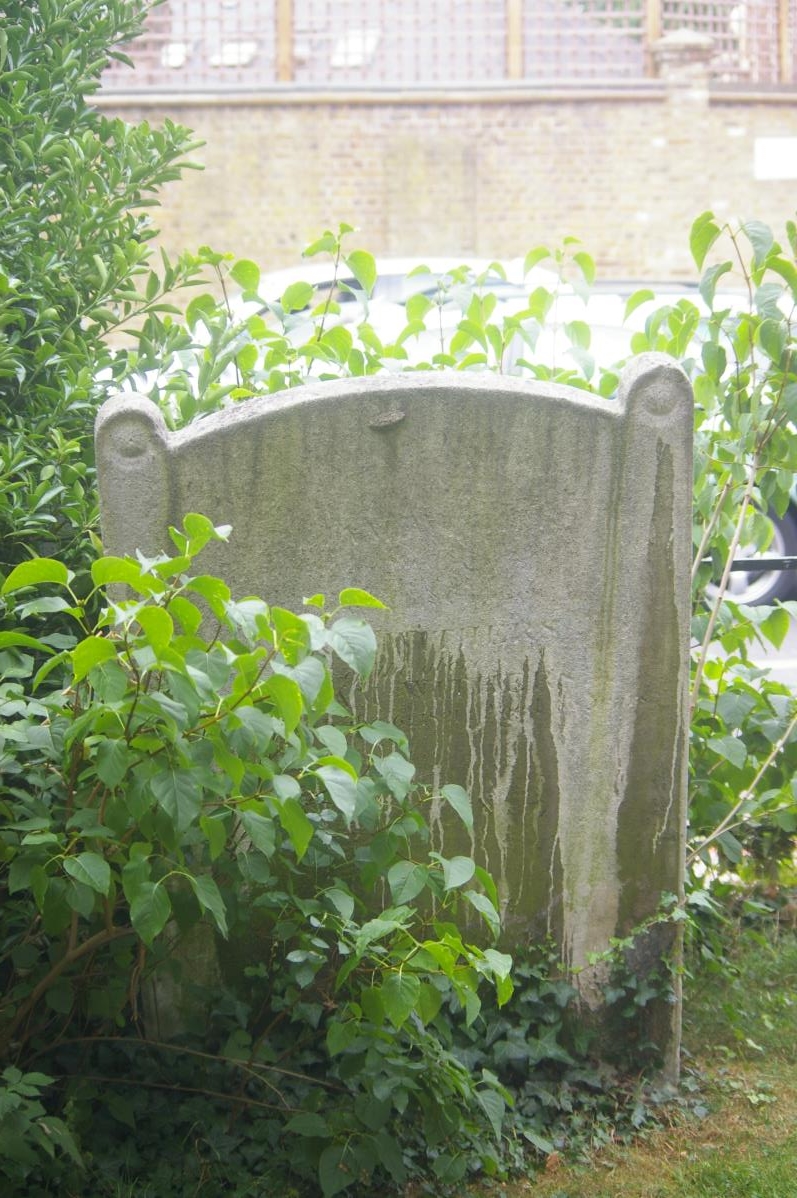
As I explored, I found this tombstone and remembered that M R James had written a book on the Abbey’s history. Ann Clarke is the name of the unfortunate character in his story ‘Martin’s Close. I did wonder if this was his inspiration……
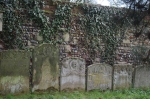
But the real jewel of the Churchyard is undoubtedly the 13th century roofless Charnel House. A rare survivor and its flint walls were lucky not to have suffered the same fate as the Abbey’s. The Charnel House was where all the disinterred bones from the Churchyard were stored. It’s empty now and is protected by iron railings. The Charnel House now acts as a roost for birds and also as a backdrop or gallery for the epitaphs that I remembered from 2006.
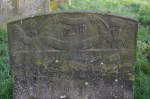
Amongst the collection are two 17th century tombstones placed on the walls. One is illegible although the symbols are still clear and the other is to a Sarah Worton, wife of Edward. Under the epitaph is the verse:
Good people all as you
Pas by looked round
See how Corpes de lye
For as you are from time ware we
And as we were f(s)o must you be.
If you take a closer look you can see how the mason had to slightly squash the letters to get all the words in.
But there are 4 significant epitaphs on the Charnel House walls and these are dedicated to the good, the bad and the just plain unlucky.
Firstly, the unlucky……..
Henry Cockton (1807 – 1853)
Engraving of Henry Cockton from 1841 by James Warren Childe (1780 – 1862) Shared under Wiki Creative Commons
No. I’d never heard of him either until I started researching this post. This is not a name widely known today although his first and most successful novel, ‘The Life and Adventures of Valentine Vox the Ventriloquist ‘ is still available from various online booksellers. Note the symbol of a blank scroll of paper and quill pen above the epitaph which is the sign of a writer.
According to Wikipedia. Cockton was born in Shoreditch but ended up working in Bury St Edmunds where he married a local girl whose family were involved in the local pub trade. They had two children, Eleanor and Edward. As we shall see alliteration was a theme of Henry’s life. Valentine Vox was a largely comic novel about a man who teaches himslef ventriloquism and the jolly japes that ensue from this. It also involved social issues as, at one point, the hero is incarcerated in a private lunatic asylum and in the book’s preface Cockton rails against these places. Valentine Vox was a huge success and sold over 400, 000 copies and was published, like Dickens, in serial form. After this Cockton should have gone onto greater things but he was destined never to make any money from his writing. Editors cheated him, publishers went out of business and he was imprisoned for debt after being declared bankrupt. In 1843 he wrote ‘Sylvester Sound, the Sonanambulist’ which was about a sleepwalker who performed daring feats during his sleep but it didn’t enjoy the success of its predecessor – see what I mean about alliteration?
But he kept on writing until 1845 when he announced to his readers that The Love Match would be his final novel. Unfortunately bad luck continued to dog him – he was like King Midas in reverse as the song goes – everything he touched turned to mud. He stood surety for his brother who thanked him by fleeing to Australia and a speculative malting venture collapsed and ruined him. He and his family moved into his mother-in-law’s house and he wrote a further 3 unsuccessful novels. Sadly, aged 46, he died of consumption and 4 days later was buried in an unmarked grave in the town churchyard without any obituaries. Its exact location is still unknown. The plaque was put up by admirers and friends.
Henry’s widow petitioned the Royal Literary Fund for financial assistance and in 1856 a local paper printed another appeal for his family. But Valentine Vox, his most successful novel. has enjoyed a life beyond its creator. Jack Riley, a performer and writer on ventriloquism uses it as his stage name and Chris Jagger’s 1974 album also borrowed it. So a tragedy all round? It certainly was for Henry but not so much for his family…….
While researching online I found a blog on which there was a lively dialogue between the blogger and respondents who claimed to be Henry’s descendants. According to them, Henry’s widow remarried, Eleanor became a teacher and Edward eventually became Professor of Music at the Greenwich Royal Naval College.
And the the victim of a somewhat unkind Act of God……
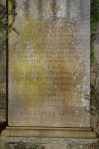
This fulsome eptaph is dedeicated to the unfortunate Mary Haselton who, in 1785, was struck by lightning while saying her prayers. There was virtually nothing about her online but I may contact the town’s Local Studies department. The epitaph reads:
Here lies interred the Body
MARY HASELTON
A Young Maiden of this Town
Born of Roman Catholic Parents
And Virtuously brought up
Who being in the Act of Prayer
Repeating her Vespers
Was instantaneously killed by a flash
Of lightning August the 16 1785
Aged 9 years
Not Silom’ (?) ruinous tower the Vicoms slew
Because above the many sinn’d the few
Nor here the fated lightning wreak its rage
Its Vengeance sent for crimes manned by age
For while the Thunder’s awful voice was heard
The little supplicant with its hand upraised
Answered her God in prayers the Priest had taught
His mercy (?) and his protection sought
The last 4 lines are unreadable even on Zoom view. But it’s an amazing piece of verse and the mason who carved it really earned his money if he was paid by the letter.
It’s interesting that Mary’s parents religion is so openly stated. There had been a relaxing of attitudes towards Catholics in the 18th century despite the 1780 anti-Catholic Gordon Riots.
However there’s no way of knowing Mary’s actual burial place within the Great Cemetery but her memorial is in safekeeping on the wall of the Charnel House.
Part 2: The good and the bad…a Founding Father and a notorious crime.
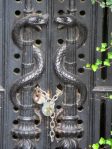
Shadows move on the coffins and walls. Above you the glass orbs set into the high ceiling admit a little light into the depths but you prefer the intimate illumination of the flame. It reflects on the brass fittings and the patterns of the nails on the coffin on the shelf beside you. Your loved one now rests eternally in Brompton catacombs as you sit by the head of the coffin in its space or lochulus. Family news, world events: you talk to them as if they were alive with your voice the only sound in the silence. Then you open the book that you have brought with you at the bookmarked page, and then read the next chapter of what was their favourite novel. It’s almost like having your own private mausoleum.
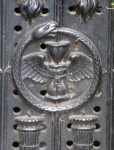
Finally, almost reluctantly, you close the book, after having marked next week’s chapter and pick up the candleholder. As you walk towards the cast iron entrance gates, your footsteps echo behind you and the candle finally goes out as you open them. The sun outside temporarily blinds you as you pull the gate closed and then lock it with your own key. The symbols of eternity and mortality on them remind you of the other world behind. Then you ascend the flight of steps and return into Brompton Cemetery and the noisy world again. You have been ‘communing with the dead’ as our guide, Nick, explained.
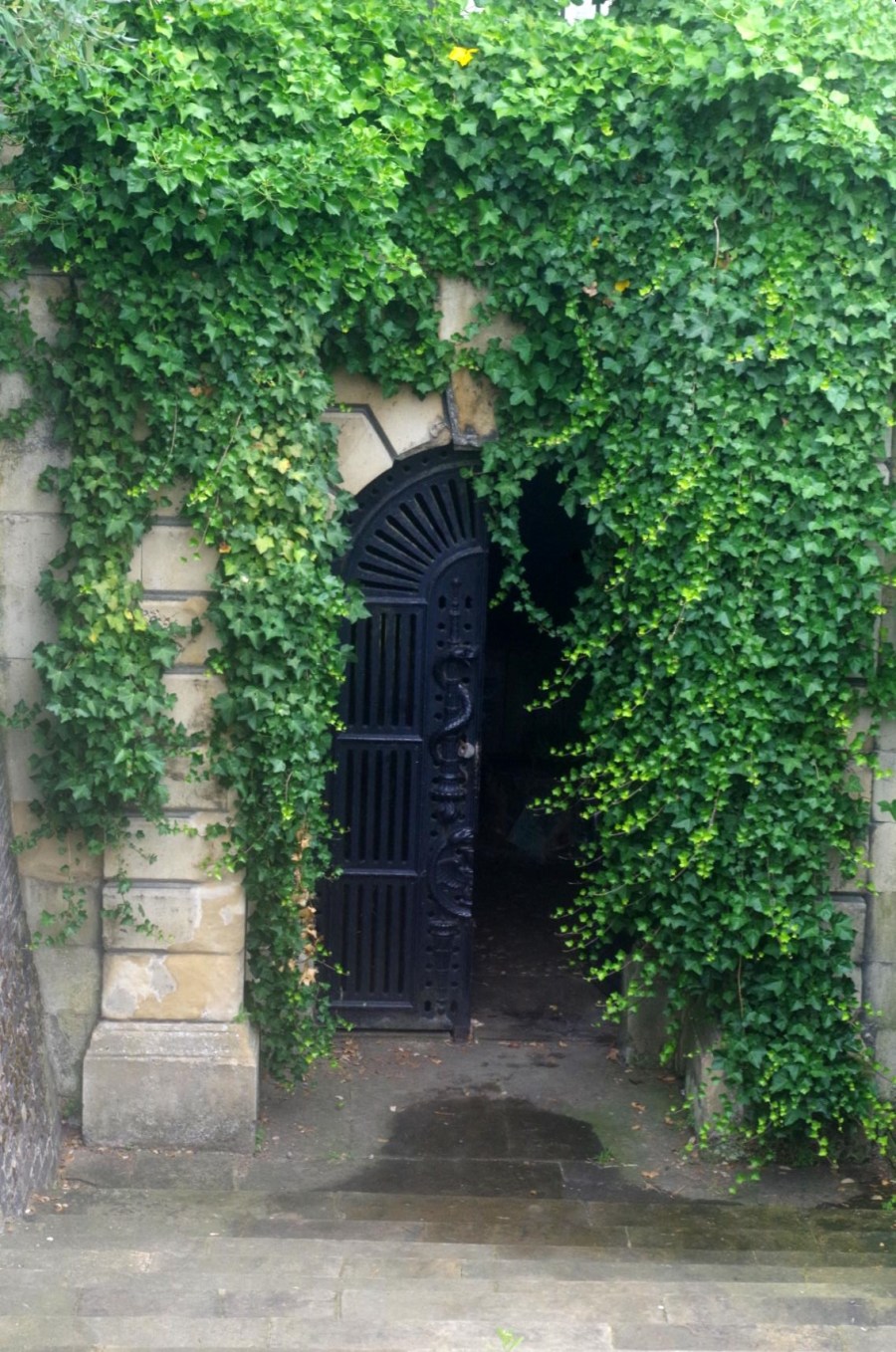
Brompton Cemetery isn’t holding an Open Day in 2017 due to the ongoing restoration project but, instead, on 15 July they held catacomb tours. These are not usually open and I haven’t visited these for some time so eagerly took up the opportunity. It was a drizzly day so it was good to be under cover. The catacombs have the most magnificent cast iron doors featuring snakes, downturned torches, an ouroboros and a winged hourglass – all symbols of mortality and eternity. You know that you are entering the realm of the dead once you step inside.
I have visited several catacombs located in large London cemeteries and what has always remained with me is the special and unique atmosphere that each one has: Kensal Green, Highgate, Brompton and the Valhalla that is West Norwood. One of Nunhead’s catacombs has now become the Anglican chapel crypt and is only open on certain days.
Catacombs never became popular in England and most of the coffin spaces available were destined to only have dust as an occupant. These are known as loculi or loculus in the singular. Even Highgate was unable to sell all theirs in the Egyptian Avenue and I would have thought that they would have been snapped up. However, there is reputed to be a cemetery in Cheshunt which is doing a roaring trade in selling them as they have an Italian and Greek community who view catacombs differently.
There is another set of catacombs under Brompton’s western colonnades with an identical set of doors on the other side of the circle but these have remained unused. The other Western catacombs on the boundary side were never used and when reopened were crammed floor to ceiling with spoil which took a year to remove.
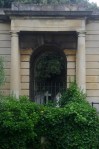
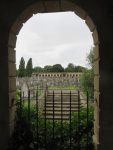
We were visiting the Eastern colonnade crypt and a flight of steps led to the iron doors. As Nick said imagine six pallbearers carrying a coffin on their shoulders down them on a wet day. The coffin would have been triple lined: wood, lead, wood so a heavy load indeed. Brompton, unlike other catacombs, such as West Norwood or Kensal Green, didn’t have a chapel above the catacombs with a handy hydraulic catafalque to transport the coffin down into the darkness.
Nick indicated an interment in the first chamber behind the doors. This was sealed in with a plaque and epitaph dedicated to Captain Alexander Louis Ricardo of the Grenadier Guards. For me, it was a reminder of the still unsolved Victorian Charles Bravo murder. Captain Ricardo was Florence Bravo’s first husband who died young from alcoholism in Cologne. I noticed ferns growing from a family vault beneath him and wondered about damp as a perennial problem.
Lit candles had been placed on the coffin shelves to light our way which added to the ambience. Victorians were fascinated with the idea of an afterlife and seances and mediums were big business. Sir William Crookes of the notorious Katie King case is also buried in Brompton. Nick added the Victorians were a heady mix of hardheadiness and sentimentality.
The glass inserts that allowed some light into the catacomb have long gone and been bricked up. Brompton’s original owners, The Westminster and West London Cemetery Company initially offered 4000 loculi for sale but of these only 700 were sold. So if you have a hankering for going underground they still have at least 3300 spaces available. Nick informed us that the last request for a catacomb space was in 1926.
English catacombs were based on the ones in Rome. Cremation was illegal until well into the 19th century so it was either under or over ground burial until then. Catacombs at Brompton were also called upon as a temporary mortuary when necessary. A visitor noticed that one coffin was just under the roof above four other coffins stacked on shelves and asked how the cemetery workers got it up there. Nick indicated the pulley blocks that they could have used to lift it up and manoeuvre it into place. Quite a feat.
Nick indicated the plumber’s diaper mark on the exposed side of one coffin which indicated that he had sealed it properly and there would be no leakages. He also pointed out the wreaths, somewhat desiccated by now, that mourners often left by the coffins, and there was a small elegant urn containing ashes placed on a shelf next to one.
Our visit lasted 30 minutes and we filed out towards the light of the outside world again leaving Brompton’s catacomb’s incumbents to eternally sleep on.
The attractive colonnades of Brompton are above the catacombs and have plaques on their walls. These were to enable friends or other relatives without keys to pay their respects to the deceased at the plaque. These are reputed to be affixed directly above the departed’s place within the chamber.
A word of cautionfor anyone considering visiting a catacomb for the first time: if you feel uncomfortable about seeing coffins, and a lot of people do, then don’t visit or think carefully about it first.
Please note: Photography is not permitted in the Brompton catacombs.
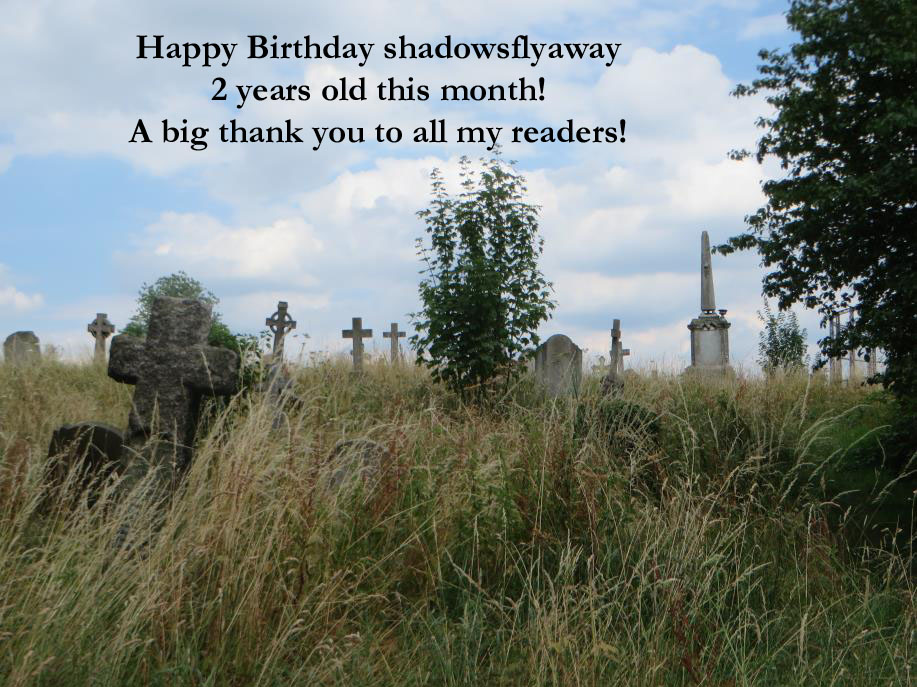
Yes shadowsflyaway is two years old this month! I’ll just blow out the candles on the birthday cake…
When I started shadowsflyaway in July 2015 I had no idea if anyone would read it although I invited a few like-minded people to view it. But sometimes putting something out into cyberspace with no idea of who, or if anyone, is going to look at it can be very liberating.
But some of my readers and followers have been with me from the start so thank you for staying with me and the blog.
And also welcome to my new followers and readers – it’s great to have you on board!
I really enjoy writing and researching shadowsflyaway as well as taking the photos to accompany the posts. I never know where the research might take me from a simple symbol to an unsolved Victorian murder. I know that Symbol of the Month is very popular and there’s many more out there for me to write about and discover. As a tour guide leading a recent Symbols tour within Brompton Cemetery it was a privilege to share my passion with other enthusiastic people face to face.
Shadowsflyaway started out to support my proposed book on symbols which is still an ongoing project. But the blog has taken on a life of its own and has also encompassed other aspects of cemeteries such as wildlife etc.
So raise your glasses,mugs or cups and let’s drink a toast to you for your support and to the next year of shadowsflyaway……now let me take you by the hand and we’ll explore that shadowy, overgrown part of the local cemetery as I’m sure there’s an interesting symbol under all that undergrowth……trust me I know these things.
It’s often on a winter’s night, just as dusk begins to fall and the lamp lights in St Georges churchyard come up, that the fine selection of 18th century tombstones are at their best. Carved skulls leer at you, an hourglass emphasises time passing and the gravedigger’s tools stand ready for the next interment. And perhaps there is still a phantom schoolteacher using his sculpted globe to teach geography to his spectral students.
There has been a church on this site since the 14th century and in one place in the graveyard the number of burials over the centuries has made the ground rise up on both sides. But, as well as 18th century examples of funerary symbolism, there are also some wonderful 19th century ones as well. Inside the church there’s also a good selection of impressive wall monuments dedicated to prominent local families dating back to the 1600’s. They are buried in the vaults beneath the church. St George’s also has the country’s oldest lych gate in that the current one incorporates elements from a far older one. The churchyard is a pretty one for a short walk through to the bustling High Street especially when the spring flowers begin to appear, carpeting the grass between the stones with bluebells and flitting butterflies.
However for this month’s Symbols post I will concentrate on the 18th century memorials within the churchyard. These tombstones are topped with classic memento mori symbols. This is Latin for ‘remember me.’ They are the visual accompaniment to the immortal epitaph from Dundee’s Howff graveyeard:
‘Remember Man as you pass by
As you are now so once was I
As I am now so must you be
Remember man that you must die.’
Graveyard symbolism, according to Douglas Keister, began when the well to do could no longer be buried with in their local church due to lack of space. Instead, they took up their eternal residence in the newly consecrated burial grounds outside and surrounding the church walls. These were often known as’God’s Acres’ and gave the wealthy the opportunity to erect a lasting memorial or tombstone in their memory.
St George’s churchyard became the last resting place of prominent local familes, some of whose descendants still live in the area. The oldest tombstone dates from 1668 and the 18th century ones are nearest to the church walls which in effect meant that they were ‘‘Nearer my God to Thee.’
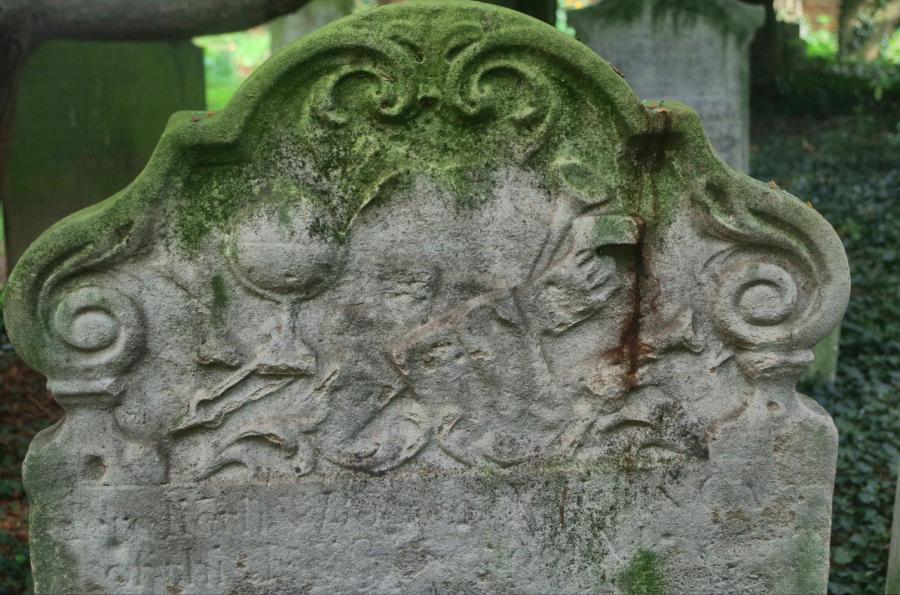
I’ve always enjoyed walking through the churchyard as it can feel like walking through a gallery of funerary symbols. There’s something very exuberant about these 18th Century motifs of mortality even though some have eroded and only one epitaph is still fully readable. However, the skull and crossbones, the Death’s Heads and others have, in several cases, lasted better than the epitaph below them.
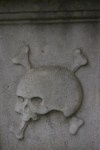
The skull and crossbones are an effective, if macabre, reminder of what is left of a body after it decomposes and there are several good examples in St Georges.
This one is near the church entrance and features a skull and crossbones with what appear to be protruding palm fronds. It also seesm to be resting on something whch may be a shield. All that can now be read on the epitaph is…who dep….’
Nearby is another skull and crossbones with a winged hourglass above it. This is a reminder that ‘Time flies’ or ‘Tempus Fugit’ and that the onlooker will soon be bones and dust and it’s important to make the most of their time on earth. On the left hand side is a pick and shovel. These are a sexton’s tools which made me wonder if this was a sexton’s grave but the epitaph is now illegible. The sexton’s role not only encompassed maintaining and looking after the church but also the churchyard. In larger graveyards the sexton would have been more of a manager but in smaller ones he would have had sole responsibility for preparing the ground, digging and closing the grave, mowing the lawn and also maintaining the lawn and paths.
Skulls also feature prominently on two other tombstones on the other side of the church very near the wall. One seems to have a very sharp pair of horns and a definite smirk. On each side of it there appear to be small trumpets but it’s too weathered to see if anyone’s blowing them. Maybe he’s keenly anticipating the Last Day of Judgement.
Nearby is a large tombstone with what seem to be two somersaulting skulls on them although one is more eroded than the other. Below them is a small worn hourglass. I believe that these two examples of skulls may be unique to St Georges as I’ve haven’t yet seen them anywhere else.
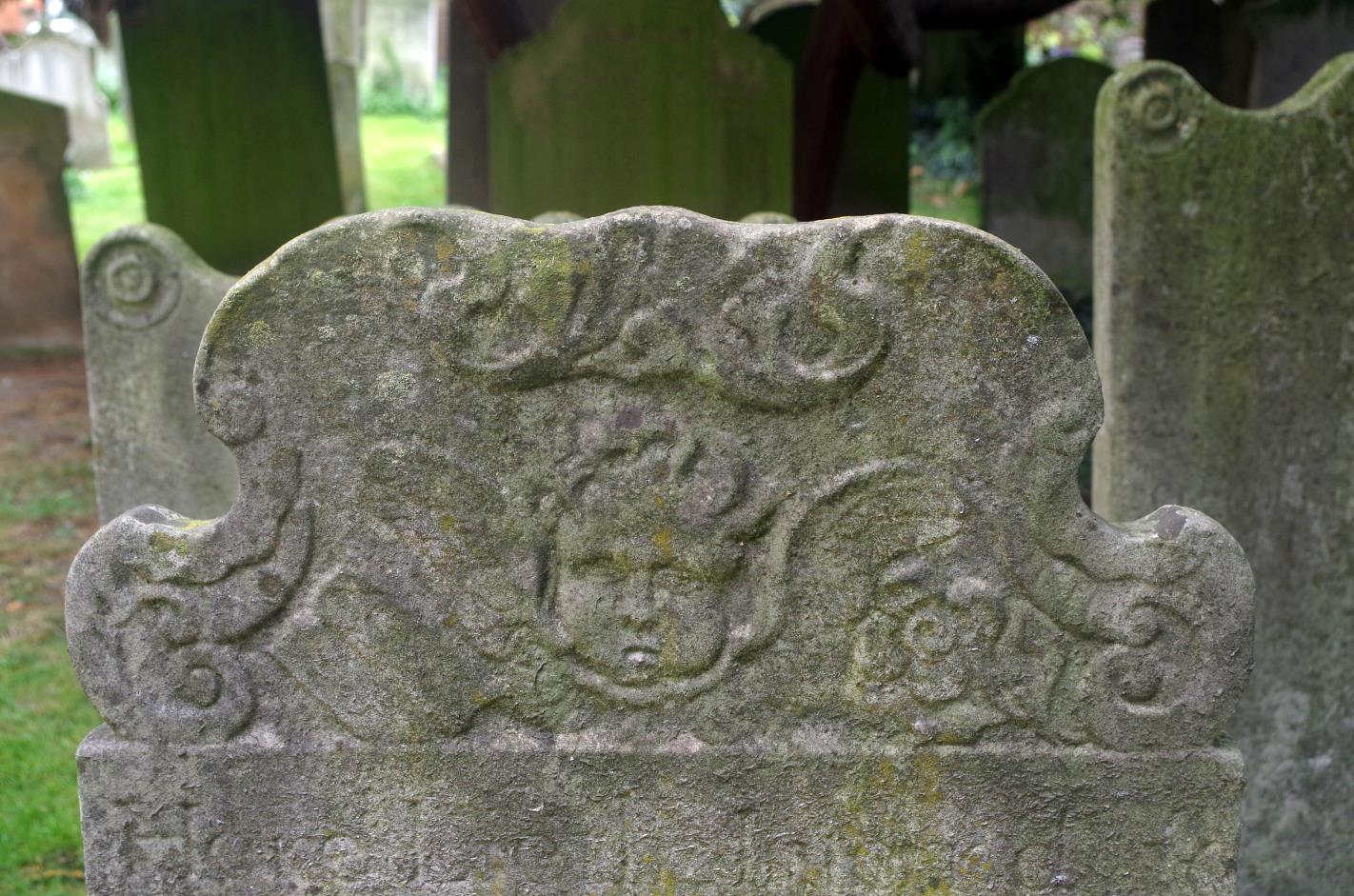
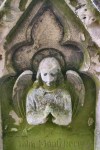
Douglas Keister has suggested that the skull and crossbones slowly began to be replaced by the much less stark and macabre ‘Death’s Head.’ This is a human face with wings on either side of it. I’ve always known it as the ‘winged cherub’ and there are also several good examples within the churchyard.
I am also a huge fan of calligraphy having studied it for two years at evening classes and it has undergone a revival on late 20th and early 21st century tombstones. However 18th century calligraphy has a style all of its own and is instantly recognisable. The only legible 18th century epitaph in St Georges is the one dedicated to a John Saxby. It reads:
‘ ‘Here lyeth the body of John Saxby of the Parish who Departed this life…year of May 1731 aged 41 years. ‘
A fine example of a Death’s Head is on top with an open book beside it which may be the Bible or the Book of Life and there’s a stylised flower on the other side. The open book may be a depiction of the incumbent offering their life to God for judgement as an ‘open book’. People are sometimes described as an ‘open book’ as they have their feelings and thoughts open to the world with no attempt to hide them.
On another memorial two small faces, presumably from the angelic host, peer out from either side of the clouds surrounding a crown. It’s a representation of the reward that awaits the faithful in heaven. This verse from the Bible refers to it:
James 1:12 New International Version (NIV)
Blessed is the one who perseveres under trial because, having stood the test, that person will receive the crown of life that the Lord has promised to those who love him. https://www.biblegateway.com/passage/?search=James%201:12
A plump faced death’s head is surrounded by another open book and what I think maybe a small skull in the far corner of the stone.
But one of the most unique and impressive tombstones in St George’s, or perhaps anywhere, is that of John Kay. He was an 18th century schoolmaster and his life and talents are recorded by the tools of his trade that have been carved on his stone. There’s a globe on a stand, a trumpet, what appears to be a cornet, an artists palette, a pair of compasses and other items which are now too indistinct to read. He was obviously very erudite and much appreciated by his students. Sadly his fulsome epitaph is now virtually unreadable. He lies near Mr Saxby under a spreading yew tree.
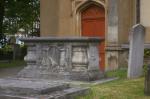
On the other side of the graveyard is a large chest tomb. There is a dedication and an armorial on its top and I feel that some patient research in St George’s burial registers may reveal the incumbent’s identity. There are blank cartouches on each side with death’s heads on top and two skulls beneath each one. At one end are palm fronds which are a Roman symbol of victory which were then adapted by the Christians as a martyr’s triumph of death. The palm as a symbol originated in the ancient Near East and Mediterranean region and is a powerful motif of victory, triumph, peace and eternal life. It’s traditionally associated with Easter and Palm Sunday and Christs’ resurrection and victory over death. On the other end of the tomb are what appear to be olive flowers. The olive’s association with wisdom and peace originally came from Greek mythology when the goddess, Athena, presented an olive tree to the city that was to become Athens. Successive Greek ambassadors then continued the tradtion by offering an olive branch of peace to indicate their goiod intentions. The olive tree is also associated with longevity, fertility, maturity, fruitfulness and prosperity. In the Bible, Noah sent the dove out after the Flood to see if the floodwaters had receded and when it returned with an olive leaf in its beak Noah knew that the Flood had ended. Even today the phrase ‘ offering an olive branch’ means the someone wants to make peace. But in this context the olive branch may mwean that the soul has departed with the peace of God. So one memorial incorporates powerful motifs of mortality and resurrection.
St George’s has also used old tombstones to pave two of the pathways within the churchyard of which some are still readable. It always feels as if I’m walking over someone’s grave although they are buried elsewhere in the graveyard. However, although the 19th and 20th century memorials are rather more restrained and far more legible I prefer the more ‘in your face’ 18th century symbols. But in the case of the horned skull I can only frustratingly only guess at its meaning and the person who lies beneath…..
If you’re in London and near Brompton Cemetery around 2.30pm on Saturday 8 April 2017 then you are cordially invited onto the Symbols and Symbolism tour.
If you’ve ever wondered what the symbols often found in Victorian cemeteries actually mean and the fascinating background to them then this is the tour for you!
Some of the symbols which will be discussed on the tour have featured on this blog but there will be others as well.
The details are below – cost will be £5 per head – so let’s hope for decent weather on the 8th!
The Brompton Butterfly surrounded by an ivy wreath. copyright Carole Tyrrell
The substantial church of St Leonards at Streatham could almost be seen as God’s’ traffic calming measure as it makes the drivers on the busy Streatham High Road inch past its walls. But once inside St Leonards churchyard the noisy flow seems to fade to a hum and you can appreciate a church which has had a chapel on its site for over 1000 years.
I was on a guided tour organised by the Friends of Nunhead Cemetery and our guide was John Brown who had an obvious affection for St Leonards.
The first church was built in 1350 and the lowest part of its tower still stands. St Leonards was then rebuilt in 1778 and altered again in 1831 when the nave was completely rebuilt and a crypt created. During the 1860’s a chancel was added. But, on 5 May 1975, disaster struck when a fire completely destroyed the interior. It was then re-designed and St Leonard’s now has a whitewashed interior within its 19th century walls. This has created a wonderful backdrop on which the surviving wall tablets and memorials are well displayed. An inspiring blend of the ancient and new.
We began by exploring outside and stopped to admire the tower which is known as Sir John Ward’s Tower . According to John, it has the highest oak tree between the Thames and Croydon growing halfway up it. The tower is built from Surrey flint and is topped by a modern spire dating from the 1841.
The churchyard contains over 250 memorials dating from the 18th century with the last burial in 1841. Part of the graveyard was bombed during the 2nd World War and, as a result, has been landscaped to create a Garden of Remembrance. John revealed that some of the burials had only had a wooden graveboard which had long since disintegrated.
St Leonards was a very fashionable church during the 18th and 19th centuries and, as a result, a chapel of ease dedicated to All Saints was built in a nearby road. Alas, even God was expected to adhere to the rigid class system of the time as the local gentry worshipped at St Leonards and their servants would attend their own service at All Saints. Dr Johnson and James Boswell are known to have visited the church. This may be one of the reasons that there are several prominent local people buried in the churchyard. John pointed out some of the more illustrious tombs; Merian Drew, the lord of the manor and his daughter Jane Agnes Fisher, George Pratt of Pratts Department store in Streatham and the Colthurst family member who had owned Coutts bank.
William Dyce, the Pre-Raphaelite painter and polymath, lies under a broken cross. He designed the florin coin and was a much in demand portrait painter. Amongst his many achievements were the frescoes in the robing room of the House of Lords although they remain unfinished. He also painted another celebrated fresco for the House of Lords, ‘The Baptism of Ethelbert’. My own favourite of his paintings is ‘Pegwell Bay, Kent – a Recollection of October 5th 1858’ with its haunting, melancholy atmosphere and muted colour palette. He was also a churchwarden at St Leonards and was responsible for designing the chancel in 1863. Dyce’s ‘Madonna and Child’ of 1827 featured on the Royal Mail 2007 Christmas stamps. Robert Garrard, the royal jeweller s also lies here and there was a flat, plain slab on the grave of one of novelist Trollope’s nephews who was the owner of the building firm, Trollope and Colls. I also admired the small sculptures of angels on the Montefiore monument. There were also several tombstones dating back to the 1700’s with a scattering of skull and crossbones.
A large monument had been made from the wonder material of the 19th century, Coade Stone. A Mrs Coade, invented it but for a long time the recipe was lost. However it and the techniques for producing the stone have now been rediscovered and a new range of Coade sculptures are currently available.
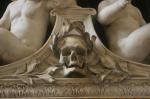
We then followed John inside to admire two 17th century imposing and magnificent monuments in the porch. The striking Massingberde memorial commemorates a London merchant and Treasurer of the East India Company who died in 1653. The two figures facing each other symbolise the triumph of life over death. The dramatic Howland monument was erected by a grieving widow, Elizabeth, to her husband John who died in 1686 and features a brooding skull and several cherubs.
The Thrale memorial tablet by John Flaxman – reputedly drawn from the life. copyright Carole Tyrrell
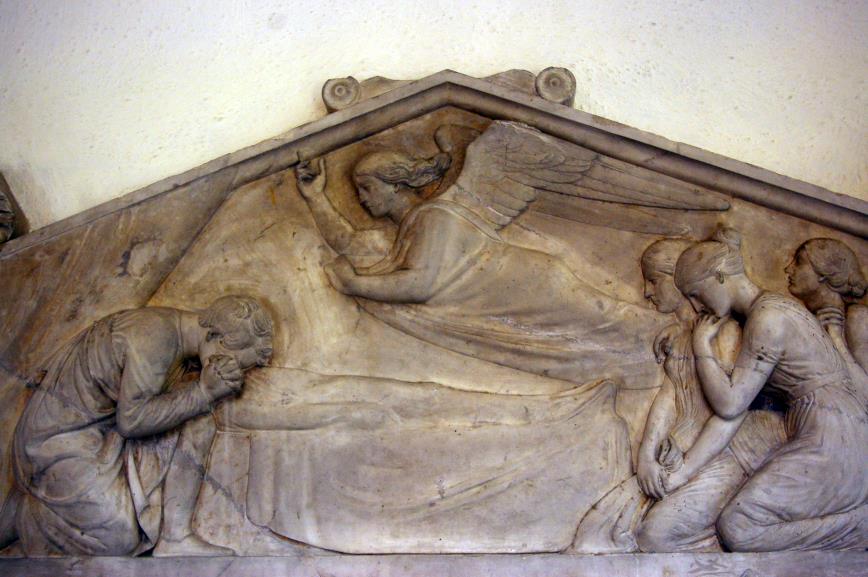
At the top of the chancel by the altar were the Thrale monuments. These were to Henry Thrale and his mother-in-law, Mrs Salusbury. Henry, who is also commemorated by the nearby Thrale Road, was a wealthy brewer and MP. He and his wife, Hester, entertained the well -known movers and shakers of the day including Dr Johnson and James Boswell. There were two epitaphs written in Latin by Dr Johnson and a beautiful tablet by John Flaxman is set into the wall. It has three female figures on it which were reputedly carved from the life. One of them is Sophia Hoare. John Flaxman (1726-1803) was a prolific sculptor of funerary monuments, mainly in the Classical style, and his work can be seen in Westminster Abbey and Gloucester Cathedral as well as many churches.
A somewhat dog eared and damaged figure lies on top of what looks like a table tomb. This is what’s left of an effigy of Sir John Ward in his armour. Colin Fenn of FOWNC has compiled a list of helpful notes to accompany the reconstruction drawing of it and estimates the figure as dating from 1350-1380. Sir John fought with the Black Prince at Crecy and, in the modern Streatham stained glass window, he appears holding a model of the first, 14th century chapel that he built. The rest of the window records the history of Streatham and St Leonard’s and is well worth seeing. It’s by John Hayward as all the stained glass within St Leonard’s.
There are more intriguing memorials in the Chapel of Unity and John drew our attention to Edward Tylney’s. He was the Master of Revels, under Queen Elizabeth 1 and King James 1, and who put on plays and other entertainments for the Court. He was renowned for being vain and had the memorial created during his lifetime which is why there is a blank space for the date of his death in 1610. But there is another version in which the mason was so relieved at Tylney’s passing that he omitted to add the date of his death. Nearby is William Lynne’s affectionate tribute to his wife, Rebecca which dates from Cromwell’s reign. Part of it reads: ‘
‘Should I ten thousand yeares enjoy my life I could not praise enough so good a wife.’
The oldest inscription, dated 1390, was below the altar and is a small brass plate which asks for prayers for the repose of a long past rector, John Elsefield.
Then we descended the spiral staircase to the crypt. This was an unexpected surprise. Although not as extensive as West Norwood or Kensal Green it was still impressive and atmospheric with incumbents in their loculi.
Loculus which is Latin for ‘little place”, plural loculi, is ‘an architectural compartment or niche that houses a body, as in a catacomb, mausoleum or otherplace of entombment’ Wikipedia
The crypt is laid out with 2 corridors and the gated individual family vaults lead off them. Some contained entire families including the Thrales. John showed us one in which the loculus had been bricked up as the occupant had been buried in only a shroud. This was Mr Costa, a silk merchant, who left instructions that every pauper who carried his coffin was to be given a guinea. Needless to say, his coffin was carried by many poor men and so his wealth was redistributed. Only the undertaker was left empty-handed. There’s also two earls who ended up down there whilst visiting Streatham but I don’t think that the two events are connected.
The crypt was rebuilt in 1831 and was used as an air raid shelter during the 2nd World War during which time an experiment was carried out to determine the depth of the charnel pit under the flagstone floor. The measure went down as far as it would go which was 20ft but the pit extended far below that. More recently it became the home of a local tramp called Black Tommy who had his mail delivered there. One wonders with whom the postmen would have left large packages when Mr Tommy was out.
As a finale, John showed us the substantial headstone of the local ratcatcher which proved that he was certainly busy, successful and appreciated. Sadly, the epitaph appears to have completely vanished. Afterwards a couple of us strolled about the churchyard reading the fine epitaphs on several memorials.
Most people associate Knebworth with huge rock concerts and as a Gothic backdrop to many well-known films including The King’s Speech.
But it has other claims to fame apart from gargoyles and lovely gardens. It also has a wonderful mausoleum in its own field and the Lytton Chapel which, according to Pevsner and Simon Jenkins, has the finest 18th century memorials in England.
The Knebworth church is officially known as St Mary’s although it’s actually dedicated to the Virgin Mary and St Thomas of Canterbury or Thomas a Becket. It sits facing the House with its own small graveyard and surrounded by trees and railings. This is where many of the past owners of Knebworth are buried and you enter under a lovely lychgate. But why is it there?
St Mary’s was originally part of the medieval village of Knebworth and was first recorded in the Domesday Book. But when the village was moved after the creation of Knebworth Park in the late 1300’s , St Mary’s stayed in its place. It’s a church steeped in history and an architectural jigsaw as so much of it comes from different periods. The nave and chancel, for example, date from 1120 AD. When you first enter, the interior appears very plain but St Mary’s real glory is the Lytton Chapel in a side room near the altar.
However, amongst its impressive marble monuments was a memorial tablet mounted on a side wall, to the left as I entered.
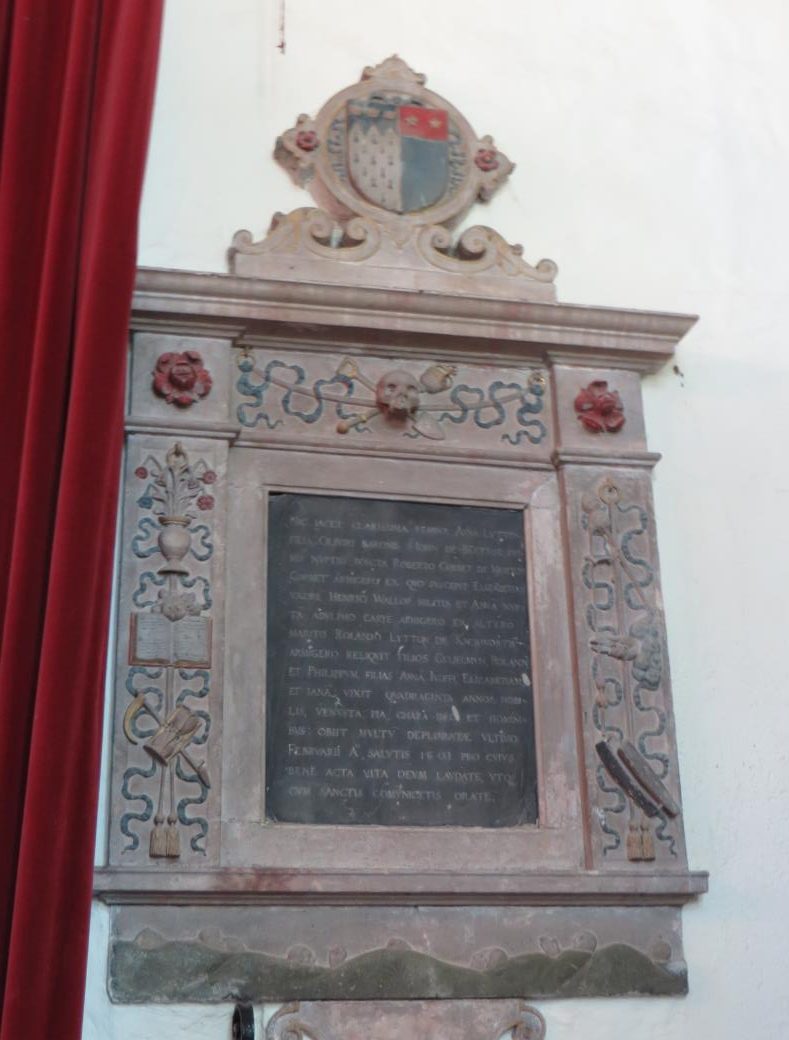
This is dedicated to a woman who died on the last day of February 1601, Anne St John, and for anyone fascinated by iconography it has a rich display of symbols. She was the wife of Sir Rowland Lytton who was her second husband. Sir Rowland’s memorial slab is on the church’s floor and he died in 1674 at 59. Anne died comparatively young at 40 and I wondered if this is why there are so many references to death on her tablet. The motifs on Anne’s memorial are beautifully carved and delicately coloured. It’s a wonderful example of a memento mori. According to J C Cooper:
‘This was an image or item that urged people to remember their death. It was a reminder that death was an unavoidable part of life and to be prepared at all times.’
Memento Mori is a Latin phrase which translates as: ‘Remember you must die’ and often expressed in art through symbols as in this memorial.
The epitaph is in Latin but, helpfully, there is an English translation provided. It reads:
‘Here lies the most illustrious Lady Anne Lytton, daughter of Oliver, Lord St John who had previously married Robert C – of Morton C—— Esquire, by whom she had two daughters, Elizabeth, who married Sir Henry Walop, and Anne, who married Adolphus Carye, Esqre, by her second husband, Rowland Lytton, Esqre of Knebworth, she had 3 sons, William, Rowland and Philip, and four daughters, Anne, Judith, Elisabeth and Jane. She lived 40 years, a noble, handsome and pious lady, beloved alike by God and men. She died, greatly d—– on the last day of February 1601 for the fulfilment of whose noble life give praise to God, and pray that you may be in communion with her among the blessed ones.’
NB: The gaps are where my camera decided to play up and rendered the words unreadable.
This was my favourite memorial in the Lytton Chapel because of its modest size and unusual iconography. I apologise for the quality of the photos – the light levels are low in the Chapel and I didn’t have much time.
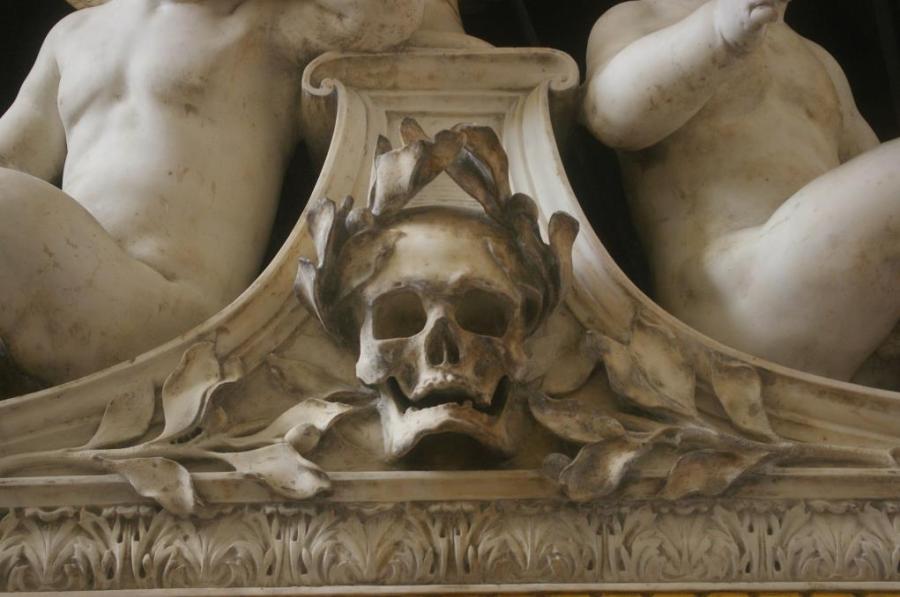
It’s no accident that the skull takes centre stage, as it, Death. is the ultimate conqueror of life. There is no escape and one recalls Hamlet and Yorick’s skull. The crossed mace and spade beneath it are representations of both high and humble stations in life. The mace is a representation of absolute power whereas the spade indicates a labourer. This demonstrates that it doesn’t matter what your status was in life as Death makes us all equal.
Vase of broken or drooping flowers: According to Howgate, this signifies ‘the brief transience oflifebefore death intervenes, even in the first flowering of youth.’ I have discussed in a previous post the significance of roses in funerary iconography and broken rose blossoms also indicate a life cut short as the flower never blooms. But flowers are a representation of the brevity of life. Beneath is a Bible which is open at Daniel, chapter 10 which refers to Daniel going through 3 weeks of mourning. At the bottom of the panel is an Hourglass. This has been discussed in a previous post but it means that the ‘sands of time’ have run out. J C Cooper describes it as indicating
‘Time is passing quickly…everyday comes closer to the hour of their death, Life and Death is the attribute of the Grim Reaper, Death and Father Time.
When the Grim Reaper or Death is depicted as a skeleton he is often holding an hourglass and a scythe which is the next symbol. This is one of the most potent symbols of Death as the Grim Reaper is always depicted as holding one. He cuts down lives like cutting down crops or grass. Cooper adds:
‘…also symbolises the harvest which, in turn, implies death, rebirth, destructive and creative powers of the Great Mother.’
However, Keister says: ‘…form of a scythe is a union of the masculine, upright and cutting with feminine as curved and reaping.
At the top is a spindle on which is wound the thread of life. Beneath it, the Hand of God or, as one commentator has suggested, the Hand of Fate, emerges from a cloud with a fearsome pair of shears to cut the thread and indicate that life is at an end. He is in charge of making that decision. Underneath is an empty coffin with the lid slightly ajar awaiting its next incumbent.
Due to time constraints I didn’t look at the bottom of the memorial in detail. But Howgate reveals that it is an ‘image of the resurrection of the dead on the day of judgement.’ He goes onto to say that ‘The lumpy looking resurrected dead, some with hands joined in prayer, appear to be gasping for breath as they emerge with difficulty from the earth.’ Although this isn’t a very good photo I can see one person with their hands in prayer at least and I have to admit that when I saw the panel, it didn’t register as an image of people. A return visit to have a closer look is undoubtedly in the offing.
Two of Anne’s 4 daughters, Judith and Anne, are commemorated nearby in the church with floor memorials. They both lived to ripe old ages.
I am indebted to Revd Jim Pye who very kindly emailed me an informative article based on a talk given in 2008 by Michael E Howgate on the St John Memorial and the contentious panel on William Robinson Lytton Strode’s monument. My grateful thanks to him and to the 2 very helpful volunteers who were on duty in St Mary’s on my visit.
NB: Due to malicious thefts St Mary’s is only open during services and on Sundays 2-4pm during July and August – check the St Marys or Knebworth House websites for info in 2017.














































 shadows fly away