Symbol of the Month – the yew tree

A few fine yew trees in St Margaret’s churchyard, Rochester. © Carole Tyrrell

They are the sentinels of the silent cities, standing tall and spreading out their branches to shade the last resting places of the permanent residents.  Yew trees can often be older than the churches which they nestle beside in the churchyard and may predate Christianity as many churches were built on pagan sites of worship. In fact there are reputed to be at least 500 yew trees of this vintage!  And incredibly, there are 10 yew trees in Britain that are believed to predate the 10th century.

These venerable trees have many associations and traditions.  I will try and concentrate on a few but they are usually associated with churchyards and burial grounds. The most common one is that they are nourished by the decaying bodies beneath them and, as they can grow up to 20 metres high, this could seem plausible.  Another tradition states that yews were planted on plague victims graves to protect and purify them – if this were true than some churchyards would resemble a forest!

Another common tradition is that they were planted to prevent ‘commoners’ from grazing their cattle on church ground.  This was because yews are very poisonous to livestock.  The needles are deadly, and Shakespeare used this in Macbeth when the three witches conjure up a deadly brew that contains, amongst other unpleasant ingredients:

‘Gall of goat, and slips of yew
Silver’d in the moon’s eclipse,’

However, the Celts saw the yew as a symbol of immortality, death and resurrection. The yew’s drooping branches are able to root and form new trunks where they touch the ground.  The one at St James in Cooling was living inside its dead ancestor which demonstrates its ability to renew itself.

Ancient yew tree in St James, Cooling, Kent © Carole Tyrrell

Another ancient yew with a new tree growing inside the old one. © Carole Tyrrell

In fact, they are one of the most long lived trees in Western Europe but are not considered ancient until at least 900 years old.  The oldest tree in Scotland, and possibly Europe, is the magnificent Fortingall yew in Glen Lyon.  It has been suggested that it is over 2000 years old and maybe even 9000 years old.  It has numerous legends attached to it and in 1769 was reputed to have a girth of over 56ft.  In 1854, funeral processions were reputed to be able to pass through the arch formed by its split trunk.  The yew in St Cynog’s churchyard in Wales is a mere stripling at a reputed 5000 years old. One of the world’s oldest surviving wooden artifacts is a yew spear head which is estimated to be around 450,000 years old. They are evergreens with red berries which although are edible, the seed in the berry is extremely dangerous.

Fortingall Yew in 2011 ©Paul Hermans. Shared under Wiki Creative Commons

A trunk of the Fortingall Yew. ©Mogens Engelund Shared under Wiki Creative Commons

One of my favourite churchyards is that of St Marys in Painswick, Gloucestershire.  It has 99 clipped yew trees but according to Roy’s blog post, attempts to grow a 100th tree have always failed.  They are a dramatic sight to see!

The scenic avenue of 99 yew trees at St Mary’s Painswick ©Carole Tyrrell

I must admit that I would feel disappointed if I visited a churchyard and didn’t see a tall, majestic yew or two keeping watch over the dead as potent symbols of resurrection and immortality.

© Text and photos Carole Tyrrell unless otherwise stated

References and further reading

https://www.woodlandtrust.org.uk/blog/2018/01/ancient-yew-trees/

https://tree2mydoor.com/pages/information-trees-tree-directory-yew-trees

https://en.wikipedia.org/wiki/Taxus_baccata

https://en.wikipedia.org/wiki/Fortingall_Yew oldest yew tree in Britain.
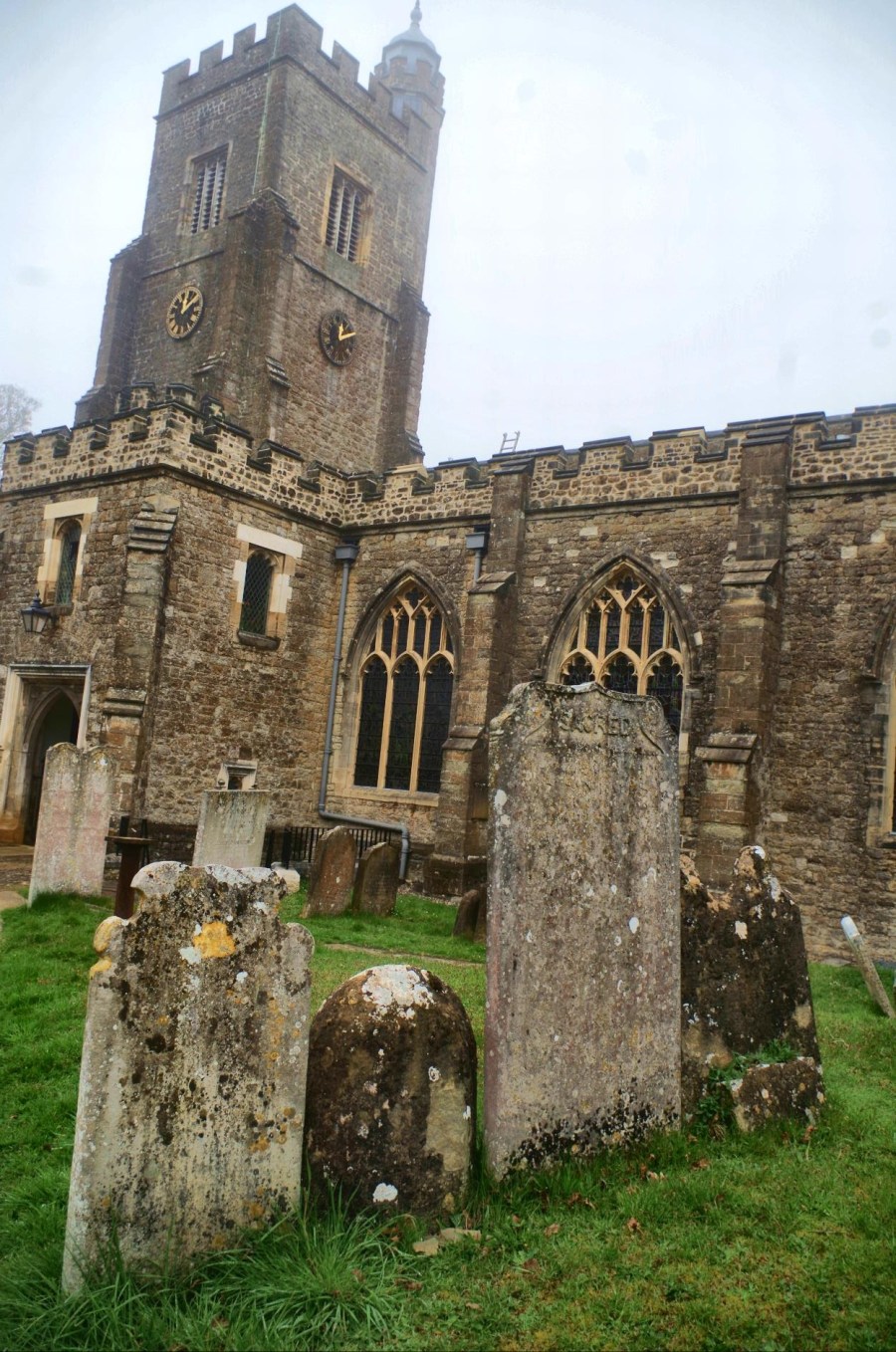
Ancient stones and new beginnings – a Spring saunter through St Nicholas churchyard, Sevenoaks


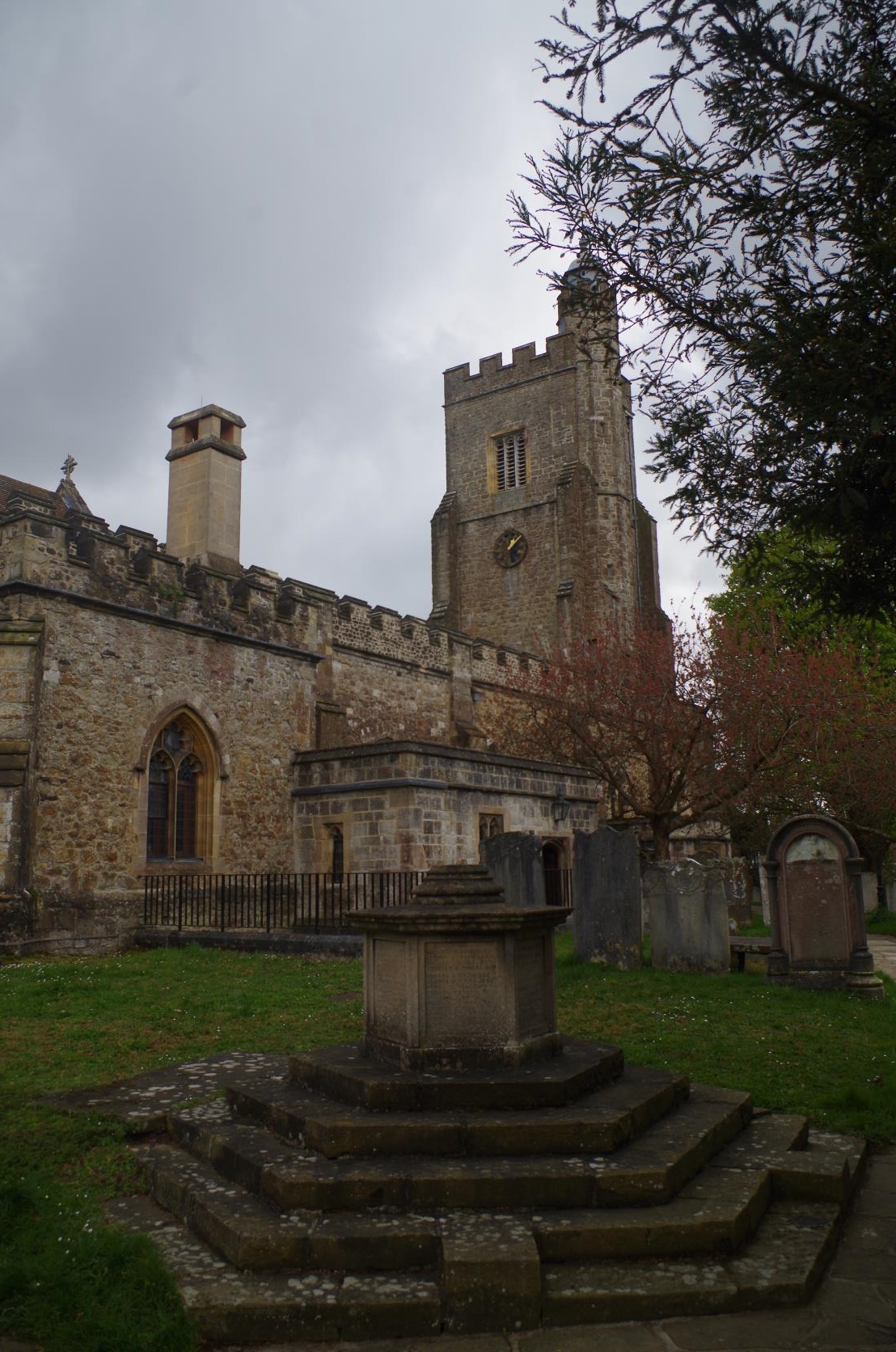
Another view of St Nicholas with a war memorial in the foreground.
©Carole Tyrrell

On my previous spring saunters I’ve wandered through two of London’s large, sprawling cemeteries; Kensal Green and West Norwood but this year I thought I’d stay nearer to home.    St Nicholas is my local church and within walking distance of my home.  It’s in a prominent position in the town as it’s at the top of the hill and  opposite the entrance to Knole Park, another local landmark.   One of its most famous Rectors was the preacher and poet, John Donne, who was in post from 1616 until 1631 and is commemorated with a metal plate on the pavement outside. Every time I visit its churchyard I find something new and at a time when Nature is beginning to awaken again what better excuse did I need?

The present building’s shape dates from the 13th century and in fact the present nave dates from 1270.  It replaces an earlier church.  The north aisle was added in 1320 and the chancel south aisle and tower around 1450.  There have been many later alterations but the basic 15th century structure and style remains.  In 1995 excavations took place to create more meeting rooms in what may have been the crypt.  The interior of the church has some monuments dedicated to prominent local families.

But it’s the churchyard that fascinated me.  Intertwined with plain Victorian headstones are some wonderful examples of 18th century tombstones adorned with memento mori.  A couple are naively executed but others are finely carved with the wonderful 18th century calligraphy accompanying them.

The Spring sunlight illuminated the thick patches of moss and lichens that had carefully draped itself over the monuments and memorials.  It made the subtle hues and shades really stand out; the combination of green and gold or browns seemed to gleam amongst more subtle hints.

Some of the lichens looked as if someone had taken a paintbrush loaded with colour and then dabbed it onto the stones.  Moss has the effect of softening the edges of stones and letters and, where it replaces letters completely, gives a more organic feel to the epitaph.

A spreading horse chestnut tree was laden with sticky buds already beginning to burst into leaf. ‘How many years has it stood near the church door marking the seasons and years?’ I thought.

The spreading horse chestnut is now into full leaf burst.
©Carole Tyrrell

A chaffinch called loudly for its mate from the closed part of the churchyard.  I had explored this in October and seen its large carpet of prickly sweet chestnuts as a fox had turned tail and run back to where it had come from.  There has been a piece of bone abandoned on top of a flat headstone and I hoped that the fox had brought it in from a nearby butchers rubbish bin…….now alas this part of the churchyard is closed due to Health and Safety as it’s so overgrown.  On this visit I disturbed a fluffy ginger and white cat who soon fled in the same direction as the fox.

The closed part of the churchyard.
©Carole Tyrrell

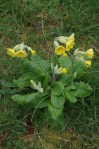
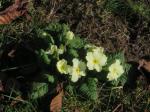
Three large patches of snowdrops clustered protectively around the base of a tree, their pristine heads nodding in the breeze as if deep in conversation.  Primroses had begun to stud the grass and I saw my first ever cowslip amid headstones.

The tiny bright blue flowers of Speedwell blossomed beside a small tombstone and a red-tailed bee, one of the first signs of Spring, buzzed along the top of the grass.    Dog violets, a much underrated flowers in my opinion, frothed plentifully beside the iron entrance gate.


Nearby, was not so much a carpet of Spring flowers, but more of a small rug of them.  More Primroses, the bright yellow of Lesser Celandine, another harbinger of Spring, and more dog violets all combined to make a wonderful collection of green, yellow and purple.

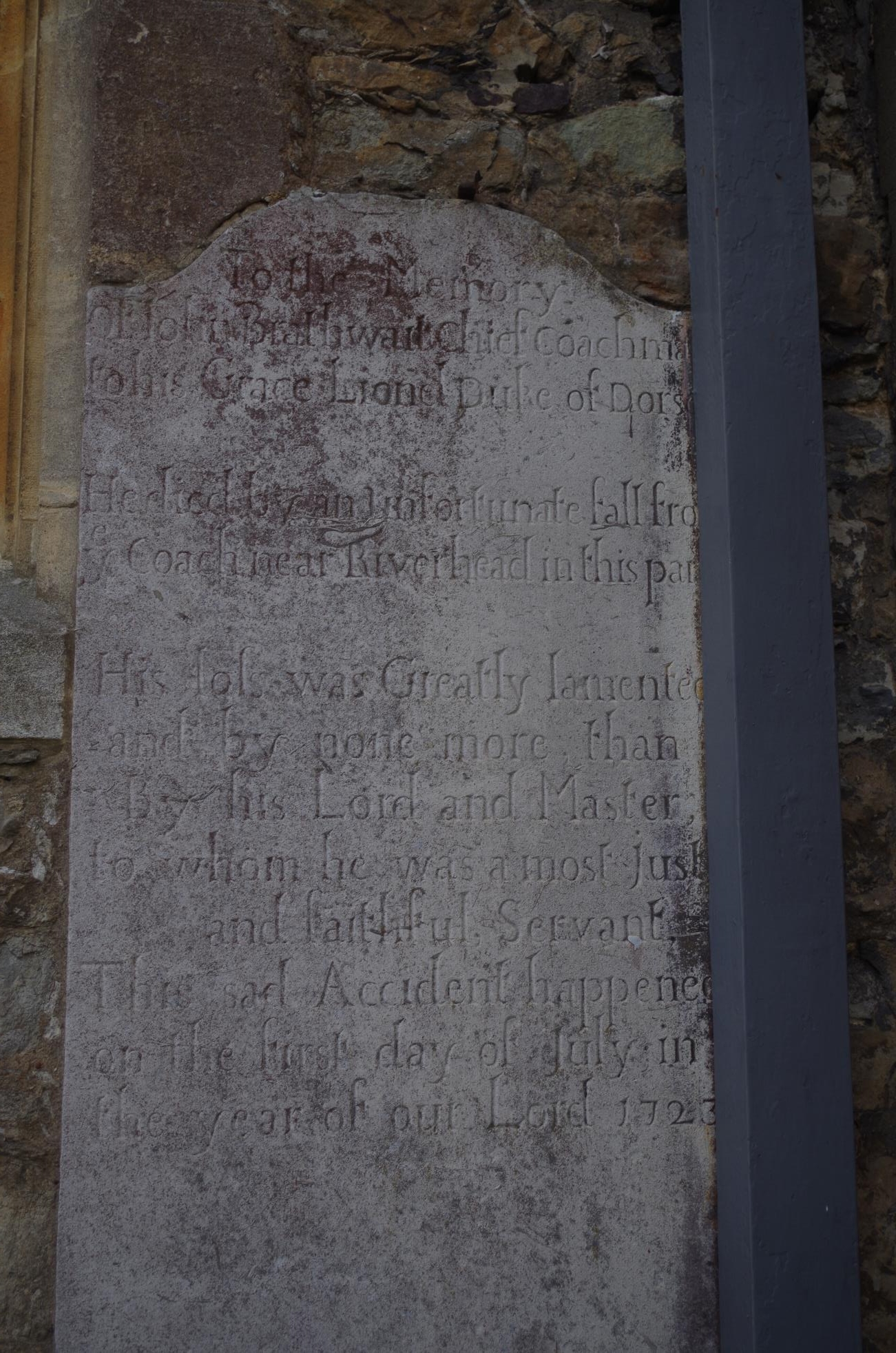
There are some remarkable epitaphs in St Nicholas churchyard and this one which has now been incorporated into the fabric of the church caught my attention.

The epitaph reads:

To the Memory

of John Braithwaite Chief Coachman

to his Grace Lionel Duke of Dorset

He died by an unfortunate fall from

Ye coach near Riverhead in this parish.

His loss was greatly lamented

and by none more than

by his Lord and Master

to whom he was a most just and faithful servant

This sad accident happened

on the first day of July in

the year of our Lord 1723


With the Caring for God’s Acre project which is linked with the bio diversity recording site, irecord, biodiversity within cemeteries is being examined more closely. They are real havens for wildlife especially in big cities as they are an invaluable green space that’s accessible to everyone.  I’ve always enjoyed exploring cemeteries partly for this reason whether it be standing waist high in wild flowers on a hot July day in the meadow at Kensal Green cemetery or counting butterflies along the side paths leading to the Courtoy Mausoleum in Brompton Cemetery.

Sadly the Spring sunshine was replaced by April showers but Mother Nature ignored this and kept bursting forth regardless.  I’m already looking forward to my summer saunter within St Nicholas.

©Text and photos Carole Tyrrell

References and further reading

https://www.sevenoakssociety.co.uk/upper-high-street-west/255-st-nicholas-church

https://www.stnicholas-sevenoaks.org/