Symbol of the Month – The King of Terrors!

The King of Terrors headstone, St Larence in Thanet, Ramsgate. © Carole Tyrrell

It was in the churchyard of St Laurence in Thanet, Ramsgate that I found this gleeful skull wearing a crown. The churchyard has a plethora of winged souls or children’s heads with wings but there is also a scattering of fine skulls as well.  This particular skull has bat wings on either side of its head but more on these later.  I consider it to be a personification of The King of Terrors which is another name for Death.

The left hand side of the headstone showing the word ‘Mary’. © Carole Tyrrell

The words on the righthand side of the headstone are unreadable. © Carole Tyrrell

The headstone is very weathered and most of the epitaph has now gone. According to the 1895 book published by Charles Cotton on ‘St Lawrence (Laurence), Thanet (Ramsgate)’, it could be either the last resting place of:

‘Mary, wife of Cornelius Martin, died 15th December 1728 aged 57 years’

Or

‘Mary, wife of George Martin, died 10th January 1727 aged 38 years.’

On closer inspection, the name Mary can still be seen but what remains on the right-hand side of the headstone is illegible although I did spot an ‘i’. This is what led to my supposition that it might be one of these ladies who is buried there.

On first glance it doesn’t look like a very comforting symbol with its stark representation of death. There is a very sobering verse written by the Rev. George Crabb (1754-1832) in which he mentions the King of Terrors:

‘Death levels man – the wicked and the just,

The wise, the weak, the blended in the dust,

And by the honours dealt to every name,

The King of Terrors seems to level fame.’

This reminds the reader that Death makes all men and women equal despite their rank when alive.

The King of Terrors is usually depicted as a skeleton brandishing a scythe, an arrow, a spear or a dart.  This magnificent example comes from Cralling Old Parish churchyard in the Scottish Borders. It’s a gleeful skeleton holding a scythe which is the symbol most associated with death.

The King of Terrors, Crailing Old Parish Churchyard. © Walter Baxter shared under Creative Commons Licence Geograph NT6820

Also in Scotland, Greyfriars Cemetery in Edinburgh abounds with macabre symbolism on its monuments and is well worth a visit if you’re ever visiting the city. I have seen it for myself and it is an amazing place.  The lively skeleton depicted on the headstone of Surgeon James Borthwick is known as ‘the dancing skeleton’ and is very impressive. Please follow the link below and scroll down to see it.

Greyfriars Kirkyard, Edinburgh: The Ultimate Guide | My Macabre Roadtrip

The monument is large and measures 4m x 2m so you won’t miss it and is the largest one in Greyfriars.  The skeleton is not only holding the Book of Destiny but also a large scythe. It is ultimately a ‘memento mori’ which is Latin for ‘Remember you must die.’

There is also one in the celebrated Rosslyn Chapel, near Edinburgh (don’t be put off by the Dan Brown associations) as it is such a fascinating place to visit.’

Click on this liGenealogy Tours of Scotland: A Month of Scottish Gravestones – The Dance of Death

All of these images emphasis the role of The King of Terrors as the King of Death or the Grim Reaper.  For what else could Death be but a terror as it’s the unknown.

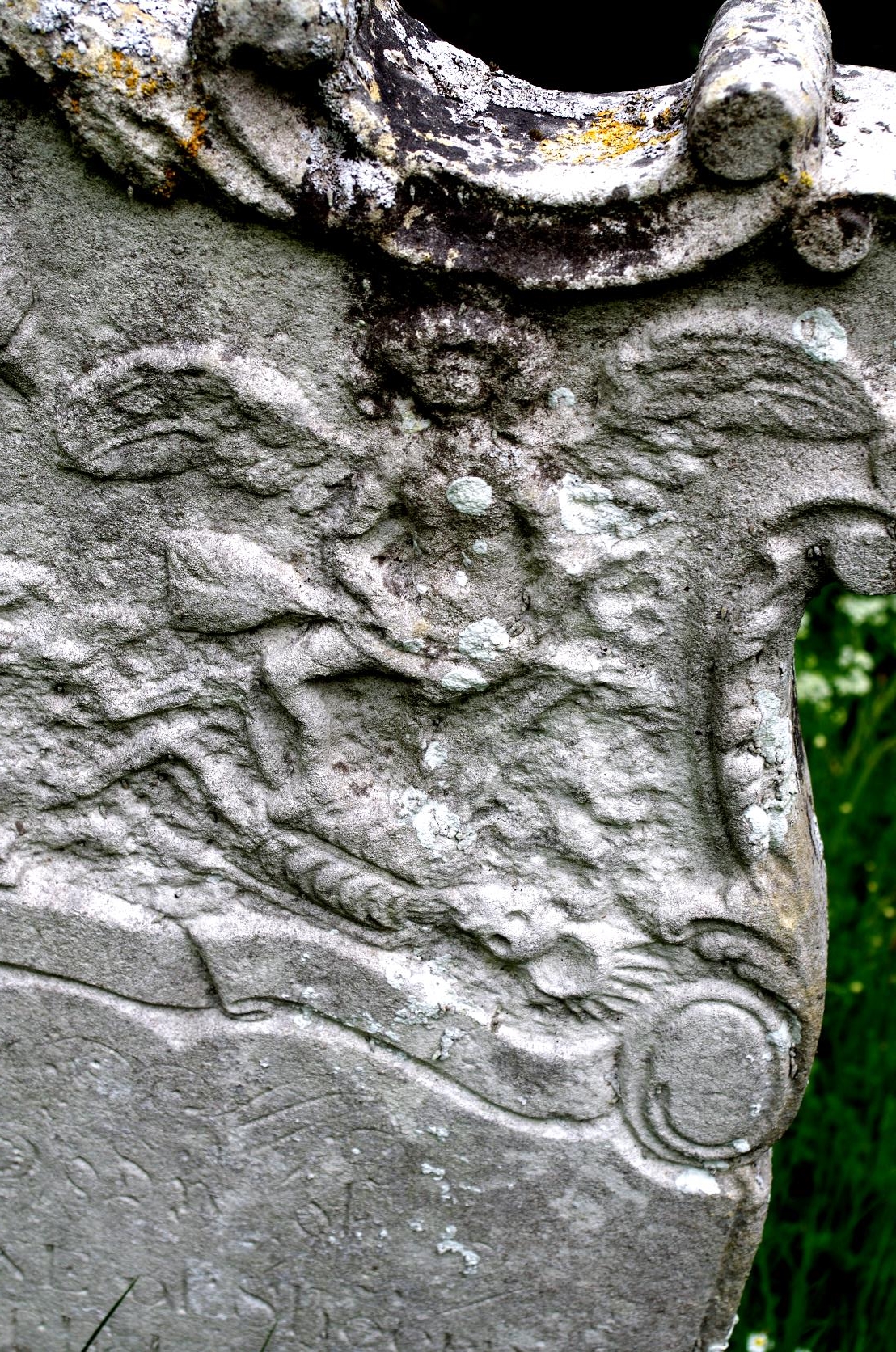
However, in this detail from Alice Stone’s headstone in the churchyard of All Saints, Staplehurst, Kent, a winged figure, presumably the Devil, is triumphantly holding a dart, is standing over a fallen skeleton whose crown has fallen from his head.  Has the Devil beaten Death? Is the incumbent doomed to a life in hell?

The Devil holding Death’s Dart standing over a skeleton that’s lost its crown. Could it be the King of Terrors? ©Carole Tyrrell

The King of Terrors is also a psychopomp. This comes from the Greek word, ‘psychopompos’ which means ‘the guide of souls.’ They appear in many religions and forms such as spirits, angels, demons and gods to guide the deceased to the afterlife.

Anubis and the King – tomb of Horemheb 1323-1295 BC Metropolitian Museum of Art. Shared under Wiki Creative Commons

Charon and his boat on a funerary relief ca 320s BC shared under Wiki Creative Commons.

The most obvious examples are Anubis, the ancient Egyptian god of the underworld, Charon the Greek ferryman, the Goddess Hecate and the Norse Valkyries amongst a host of others.  The psychopomp is also a personification of death and often represented with a scythe and given the title of ‘The Grim Reaper’ – the reaper of souls. This is one of the earliest images of him and dates from 1460.

One of the oldest paintings with conventional ‘Grim Reaper’ elements, a skeletal character with a scythe (circa 1460 by Jean Fouquet) shared under Wiki Creative Commons.

The King of Terrors first appears in the Bible in the Book of Job 18:14:

‘His confidence shall be rooted out of his tabernacle, and it shall bring him to the king of terrors.’

This is part of a chapter emphasising destruction and death for those who do not keep to the righteous path. However, I am indebted to the vastpublicindifference blog for the next earliest use of the name in a printed pamphlet. He is mentioned in William Prynne’s ‘Perpetuite of a Regenerate Man’s Estate’ in 1626:

‘If once you have the smallest dram of time and saving grace, you need not feare the very King of Terrors, hell and death, you need feare the most that men or divells (devils) can do to you. They cannot seuer (sever) you from the love of God, which is Christ Iesus (Jesus) your lord, not yet disturbe you from the state of Grace.’

He also appears in nearly 200 books in English pre-1700.

However, the King of Terrors, the Grim Reaper or whatever you choose to call him is not a very comforting image for those left behind. So, it’s no wonder that, as the years went on, these very stark symbols began to be replaced by the ‘winged souls’. They gave a more hopeful image of another life after death. There’s also the batwings on either side of the skull to consider.

Bats were considered to be the spirits of the dead and associated with evil as the Devil traditionally had the same type of wings. Sometimes the skulls are given two different types of wings; on one side they are feathered and on the other is the batwings.

Bats can also be seen as guardians between physical and spiritual worlds. They were supposed to guide souls through transformation or metamorphosis: renewal, death and rebirth.  So, the use of them is very appropriate on a funerary monument. In China, for example, they are seen as symbols of good luck, longevity and rebirth.

So, within this one symbol there are two meanings.  One is that the person has encountered the Grim Reaper and has died whereas the other suggests that they are going to be reborn to everlasting life. It was an interesting symbol to see on my churchyard visit although the skull does look a little too enthusiastic!

Text and photos © Carole Tyrrell unless otherwise stated

References and further reading

The History and Antiquities of the Church and Parish of St Laurence (Lawrence), Thanet (Ramsgate) Charles Cotton, 1895 via Kent Archaeological Society

King of Terrors | Gravely Speaking

King of Terrors Gravestone © Walter Baxter cc-by-sa/2.0 :: Geograph Britain and Ireland

Vast Public Indifference: Death: “King of Terrors”

Greyfriars Kirkyard, Edinburgh: The Ultimate Guide | My Macabre Roadtrip

The King of Terrors takes a rest | Gravely Speaking

Psychopomp – Wikipedia

Job 18 KJV – Then answered Bildad the Shuhite, and – Bible Gateway

Genealogy Tours of Scotland: A Month of Scottish Gravestones – The Dance of Death

Bats, a funerary fascination

What’s The Meaning Of Bat Symbol? – Ourspiritanimal.com

Symbol of the Month – The Winged Soul

A lovely example of a winged soul from St Peter & St Paul, Shoreham, Kent.
©Carole Tyrrell

The skull and crossbones was one of the central motifs of 18th century Memento Mori and intended to be a stark and macabre reminder of the viewer’s inevitable destination.  They would be all that would remain of you after death.

However it wasn’t a very comforting message to either the loved ones left behind or to the living.

But fashions and tastes change, even in funerary symbolism, and the skull and crossbones had served their purpose.

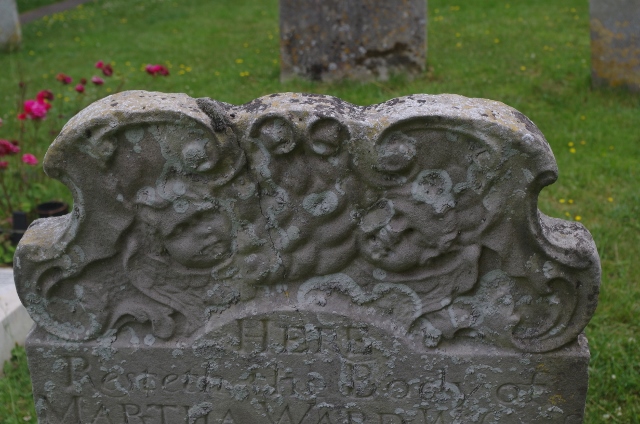
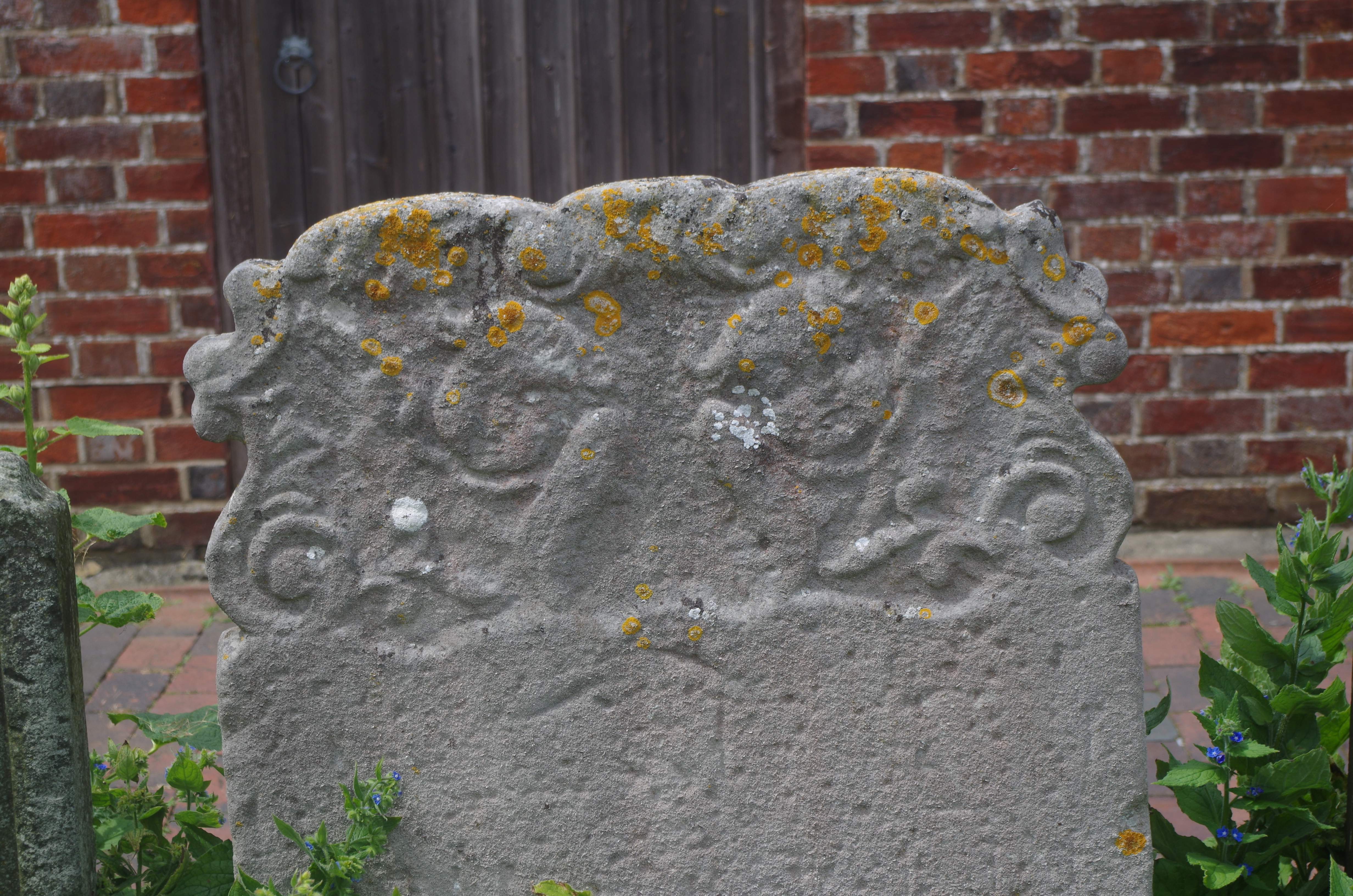
Instead they were replaced by the winged soul. This consisted of a small child’s head flanked by a pair of wings or a garland of leaves.  They have the faces of babies with big, round eyes, plump cheeks and pouting lips and resemble Renaissance putti which are child-like.  Putti represent the sacred cherub as they are known in England.

The winged soul may have been intended to be a more comforting image as the wings represented the soul of the deceased ascending to heaven.  This could also give hope of a resurrection to those left behind.  According to headstone symbols:

‘In the USA the winged soul is known as a soul effigy.’

It was immensely popular and in my explorations of medieval Kent churches and their churchyards I found many examples. In fact, in one or two churchyards they outnumbered the skull and crossbones symbol. They mainly had one winged soul on a headstone but there were sometimes  two or three clustered together as in these examples:

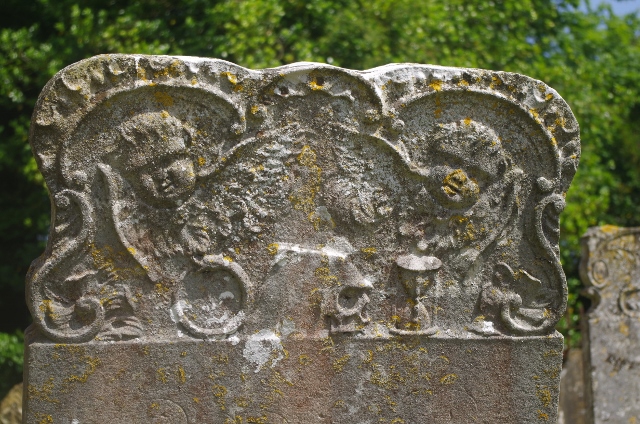
They can also appear in several combinations with other classic memento mori symbols as here:

2 winged souls apparently in mid flight with clouds between them. St Martin of Tours, Eynsford, Kent.
©Carole Tyrrell


The winged soul’s head looks more like a skull with a fine pair of wings. St Peter & St Paul, Tonbridge, Kent ©Carole Tyrrell
2 winged souls in mid-flight, St Peter & St Paul, Tonbridge, Kent ©Carole Tyrrell
One of my personal favourites! Another stylised winged soul with skull and crossbones beneath and a cloud above as well as a pair of bones. St Peter & St Paul, Seal, Kent on the grave of a widow. ©Carole Tyrrell
A combination of memento mori symbols and a winged soul with one wing almost furled as if in mid-flight, St Peter & St Paul, Seal, Kent. ©Carole Tyrrell
A pair of winged souls with their wings almost in mid-flight with other memento mori symbols. St Peter & St Paul, Seal, Kent. ©Carole Tyrrell

In addition, every mason seemed to have his own interpretation of feathers as they can be carved as typical fluffy feathers, to resemble broad leaves or be very stylised.

With wings in general they are an important symbol of spirituality.  They express the possibility of flying and rising upwards to heaven.  For example, in the Hindu faith, they are:

the expression of freedom to leave earthly things behind…..to reach Paradise.’

New Acropolis

However, as the full flowering of the Victorian language of death in the 19th century began to appear the emblems of memento mori were retired. Although a couple, such as the hourglass and ouroboros, were revived.  

A modern interpretation of the winged Soul on a headstone from 1996, St Martin of Tours, Eynsford, Kent. ©Carole Tyrrell

But I did find two modern examples of the winged soul in the churchyard of St Martin of Tours in Eynsford, Kent and one is featured above. For years I had always thought of the winged soul as being a more general symbol and merely a decorative feature.  I called them winged cherub heads or death heads and never considered that they might have had a specific meaning or purpose.  It was exciting to see so many variations and interpretations, sometimes within the same churchyard.  But it depended on the skills of the mason as to how well they were carved and whether they were 2 dimensional or 3 dimensional.

But, as a message of comfort, it is one of the most poignant in memento mori. The other central motifs emphasise time running out and what will be left behind. The winged soul suggests an eternal life and a more uplifting message.

©Text and photos Carole Tyrrell unless otherwise stated

References and further reading:

http://www.thecemeteryclub.com/symbols.html

https://headstonesymbols.co.uk/headstone-meanings-and-symbols/deathheads/

https://stoneletters.com/blog/gravestone-symbols

https://www.boston.gov/departments/parks-and-recreation/iconography-gravestones-burying-grounds

https://en.wikipedia.org/wiki/Funerary_art_in_Puritan_New_England

http://www.speel.me.uk/gp/wingedcherubhead.htm

https://www.sacred-texts.com/lcr/fsca/fsca11.htm

A 200th birthday and an unsolved murder Part 2 – a visit to St Werbergh’s, Hoo

William White’s headstone and fulsome epitaph. © Carole Tyrrell

You never know what you will find in a country churchyard; crumbling mausoleums associated with royalty, a fine selection of skulls on headstones and poignant memorials.

But what I didn’t expect at Hoo was to find one that revealed, positively shouted in fact, about a local unsolved murder from the early part of the 19th century. This is the headstone dedicated to William Walter White. This is the inscription:

‘IN MEMORY OF

WILLIAM WHITE OF THIS PARISH, YEOMAN

WHO WAS ON SUNDAY EVENING THE 11TH OF DECR.

1808 MOST INHUMANLY MURDERED

IN THE BOSOM OF HIS FAMILY

BY A GUN DISCHARGED AT HIM THRO A WINDOW

WHILST SITTING BY HIS OWN FIRESIDE

THE PERPETRATOR OF THIS HORRID DEED IS

NOT YET DISCOVERED BUT THERE IS ONE, “WHO

IS ABOVE OUR PATH AND ABOUT OUR BED

AND WHO SPIETH OUT ALL OUR WAYS”

WHO[O] [WI]LL SOMETIME BRING IT TO LIGHT

HE LIVED ESTEEMED BY ALL WHO KNEW HIM

[AND HIS] SAD END IS UNIVERSALLY REGRETTED HE

[LEFT ISSUE]6 SONSAND 5 DAUGHTERS TO BEWAIL

[HIS LOSS AND DIED [AT] THE AGE OF 58 YEARS

STONE WAS ERECTED JUNE THE 24TH 1809

“[By] whose Assa[ssinating} {H}and [I fell]

[Drop] Reader [o’er my Grave one] Silent Tear

[Live Well remembering that your God is Near]

[If Rich or Poor or Relative you be]

[Strike your own breast and say – It was not Me!]’

A more dramatic epitaph it would be hard to find and the stonemason certainly earned his money!  The case shocked the farming community of Hoo especially as no one was ever brought to justice and suspicions ran rife. It even led to the local vicar of St Werbergh’s at the time, Rev Jordan, deciding to become an amateur sleuth and unmask the perpetrator.

Death had already visited the White family when William’s wife, Jane, dropped dead with no prior indication of illness on 24 March 1808 aged 44. The murder left the 11 children orphans within a short space of time and more about what happened afterwards later. William was a man of some standing in the village. He was a yeoman which meant that, although he was a farmer, he wasn’t part of the gentry. In 1790, he was one of only two franchised householders in the village and so was eligible to vote.

A typical farm house in Hoo. © eclipse

The Murder

The facts are that, on Sunday 11th December 1808, William was sitting reading at home with his family when a shot rang out. A gun had been fired through an open pantry window which killed William outright. The shot entered the back of his head and exited under the right eye. The ‘cries and lamentations’ of his family could be heard in Hoo village a mile away after the body was found. An unsuccessful search was made immediately for the perpetrator. However, a recently discharged gun was found in a ditch roughly 200 yards away from the house near the River Medway which led to the assumption that the murderer had escaped by water.

Such was the notoriety of the case that reports of it appeared in London newspapers and the Bow Street Runners were called in. They were the forerunner of the modern police force.

Bow Street Runners c1800 from History UK website.

Whoever fired the fatal shot must have known the layout of the house and the family’s habits. It took place on a Sunday when there were no servants about and it would have been necessary for the pantry door to be open in order to have a good view from the window as the gun was fired at William sitting by the fire. It had been propped up on a hurdle in front of the window and this helped the murderer to have a good aim. The gun was an old musket-barrel which had nails in the breach fastening it to the stock. It was a very crude gun as the hammer would not hold at full cock but was fastened back by a piece of twine which was presumed to have been cut at the time of firing. The fatal shot was fired at the same as the nightly salvo of guns from convict hulks on the River Medway. 

The suspects

The gun’s owner was a man called Driver and he and another man called Day were picked up in Bapchild near Sittingbourne, Kent. It was assumed that they were on the run. The Coroner, J Simmons Esq, questioned them but soon realised that he didn’t have enough evidence to prosecute them. He then had them removed to one of his Majesty’s ships which was a euphemism for being ‘press ganged’. The Kentish Gazette described it like this:

‘as they were unable to give a satisfactory account of their mode of obtaining a livelihood, they were sent to serve their country on board one of his Majesty’s ships of war.’

 If that wasn’t enough, later on, they were marched back from Portsmouth to Rochester to be further questioned and then press ganged a second time before being finally released without charge.

As for motive, William had recently found a servant, possibly Driver, in the act of robbing a neighbour and had informed the appropriate authorities. He had sacked the man who had sworn to get his revenge. In fact, a week prior to the murder, the unnamed man, had purchased a gun:

‘for which he had no possible occasion, under some frivolous pretence’

according to newspaper reports at the time.

The inquest on William was held and a verdict was returned of:

‘Wilful murder against some per or persons unknown – Friday 23 December 1808.

Events began to gather pace as the executor of William’s will, Thomas Denton, was authorised to put William’s home, land, possessions and other assets up for auction. It was intended that the money raised would be distributed by him amongst the children as he thought best for them. Originally it had been intended that Jane White, William’s wife would be a joint executor but of course with her death it fell to Thomas alone. Understandably the children tried to stop him and suspicion began to fall on him.  In the space of a few months they had been left orphans with the loss of both their parents and now they were to lose the family home as well.

But another suspect had appeared who was much closer to home. It was George White, William’s eldest son. He was known to be on bad terms with his father and had been seen to threaten him. George wanted the farm and the land but William was considering writing a new will leaving him and another relative out. However, his will dated 22 January 1808 did not indicate.   

But George had convinced both the Mr Simmons, the coroner, and the Bow Street Runners that, during the vital thirty minutes between 7.45pm and 8.15pm he had been in Hoo village buying:

‘a penny’s worth of nuts.’

The shop was a good mile away from the farm. But someone else in the community had doubts about George’s alibi and was determined to disprove it as we shall see in Part 3.

©Text and photos Carole Tyrrell unless otherwise stated.

Part 3 – the parson detective comes onto the scene

A love supreme? The Allen memorial, All Saints Birchington

Full view of the Allen memorial. © Carole Tyrrell

There are so many stories within a churchyard. They are truly repositories of a community’s history in their recording of births, deaths and the history of local families. A simple epitaph can say so much about the people buried beneath it.


I almost missed the Allen headstone as it’s lying down on the grass. This would have been a shame as it is one of the loveliest and most poignant memorials in the churchyard and must have looked imposing when it was standing upright.

A closer view of the epitaph. © Carole Tyrrell

It’s dedicated to a married couple, Janet Lormie Allen or ‘Cissie’ who died young aged 23 on 10 October 1914, and her husband, Ernest August Allan, who died 45 years later aged 79. I don’t know why Cissie died so young: it may have been in childbirth, due to illness or to another cause. But she was greatly missed as the sentiment on the headstone shows.

At one side of the tombstone, beside the epitaph, stands a young woman, a maiden, dressed in a diaphanous, long flowing robe from which one strap has fallen, exposing a bare shoulder. The hair is untied and falls to her shoulders. Behind her is a tall, slender rose stem whose blossoms reach over her head. She looks upwards to the blooms above her as, with one hand, she reaches up to pluck a rosebud. In her other hand she already holds a single bloom half open. There is a hint of the waning of the Art Nouveau movement in the flowing lines of her dress and the romance of the image.

The significance of the rose being plucked is that it’s a bud and so not yet in bloom which indicates a life cut short.

I don’t know if Ernest remarried but he was buried with his wife in 1959 and so they were reunited. It’s such a shame that as the headstone is lying down as rainwater gathers on the carving of the young woman and, for example, there has been erosion on her face.

Closer view of the maiden’s face. © Carole Tyrrell

Despite my research I have not been able to find out any further details about the couple. But it’s one of the most beautiful memorials that I’ve seen, not just because of the carving, but, as I like to think of it, a love story written on an epitaph in a country churchyard. And as we approach St Valentine’s Day what could be more appropriate?


©Text and photos Carole Tyrrell

Symbol of the month – The anvil

The Adams headstone, Birchington-on-sea. © Carole Tyrrell

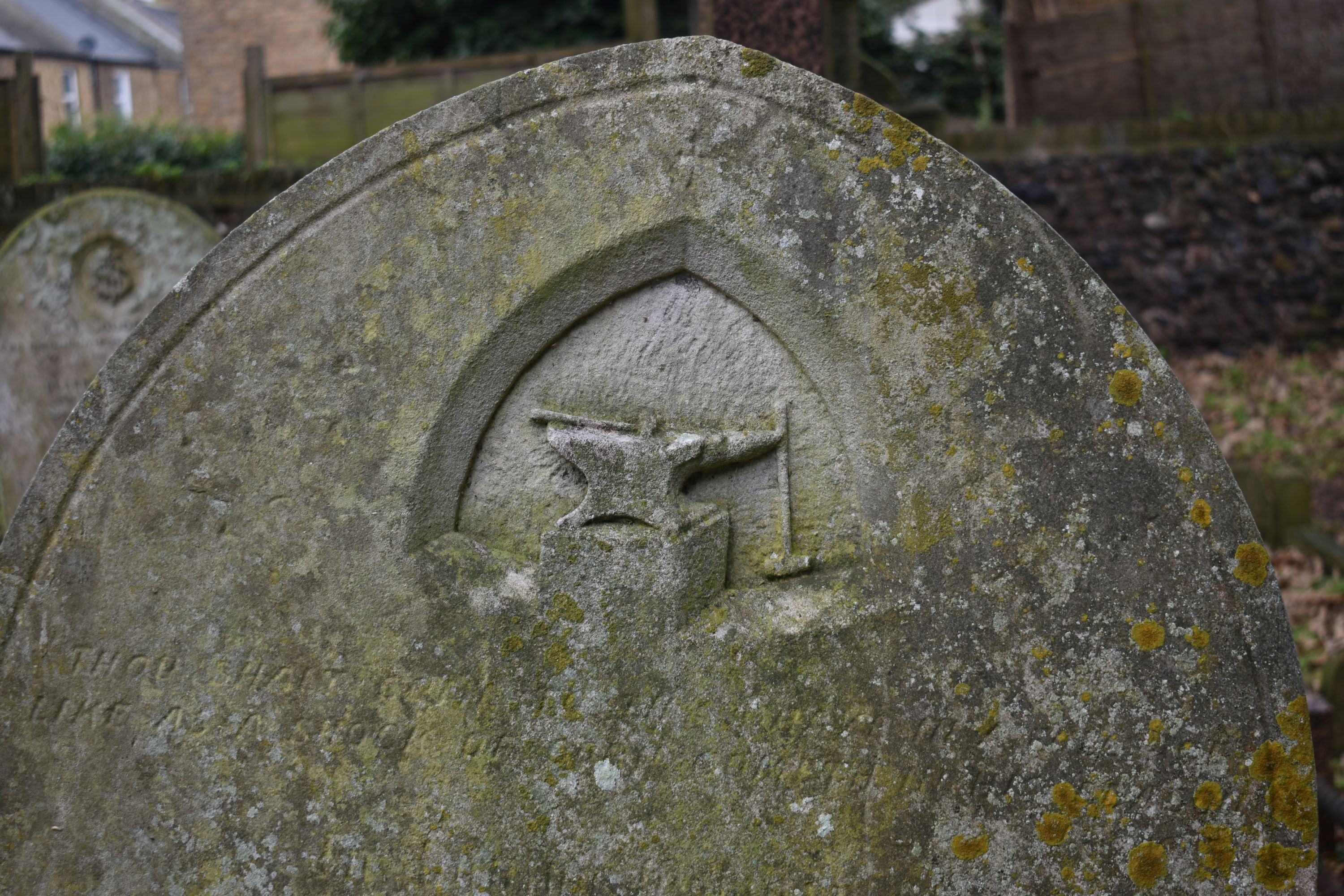
What a difference a sunny day makes in a churchyard! I revisited All Saints in Birchington-on-Sea earlier this month to look for the first snowdrops and found several headstones of interest that I’d missed. The headstone with the two-dimensional carving of an anvil above the epitaph was now clearly readable and I could see that it was dedicated to a couple: Elizabeth Adams (1813-1888) and Josiah Lyon Adams (1805-1898). According to the Kent Parish Clerks online website, they had 3 children, all boys and Josiah was definitely the village blacksmith. He is commemorated below his wife on the headstone.

The verse below the still crisp carving of the anvil and hammers reads:


‘Thou shalt come to thy grave in a full act like,
as a shock of corn cometh in the season.’


This comes from the Book of Job 5:26 and has been assumed to emphasise the natural cycle of life and death. Anvils are traditionally associated with blacksmiths working in their forges but they do have other associations.

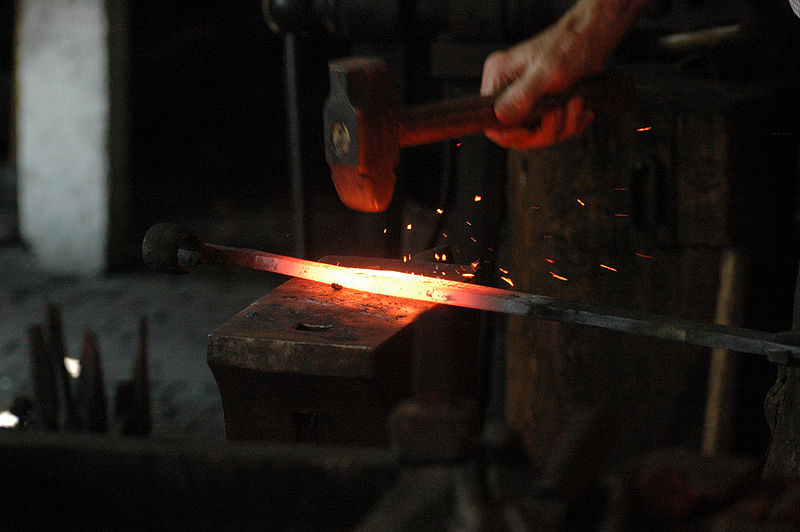
Blacksmith in forge at his anvil. Shared under Wikimedia Commons

The blacksmith would have been an important person within the community and his skills would have been much in demand. The anvil is one of the most basic craftsman tools and has not changed for thousands of years. I have seen photos online of 3 dimensional anvils on graves but have yet to see one. However, the anvil has been superseded by other ways of working metal such as welding and steam hammers.

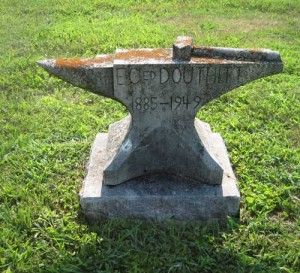
3 Dimensional anvil and hammer on grave found on Pinterest.

An anvil is a solid block of steel or iron with a flat top which is called the ‘face’, often with a pointed ‘horn’ at the front and a flat ‘heel’ at the back with holes for attaching tools. They are very heavy as you can imagine and durable with a quality of ‘liveliness’. This means that they cause the blacksmith’s hammer to bounce back after each blow and onto the metal.


It’s a powerful act of creation and transformation when a piece of metal is hammered into a shape to become another object. As a result, it can be seen as an act of transformation as well as a demonstration of craftsmanship and the use of base metals to create something new. It has been suggested that it is also a potent symbol of enduring the blows of life while shaping our destiny.

St Dunstan shoeing the devil’s cloven foot. Project Gutenberg.

St Dunstan is the patron saint of blacksmiths and used his skills to defeat the devil. The story goes that, while living in a cell at Glastonbury after leaving the royal court, an old man appeared at his window and asked the saint to make a chalice for him. St Dunstan agreed and began to work on it. But as he did so, the old man changed his shape and appearance several times until, finally, he became an attractive woman. St Dunstan realised that his visitor was actually the devil when he saw a cloven hoof under her dress. So, he heated up his tongs until they were red hot and then used them to seize the devil by the nose. Despite the Devil struggling and screaming, St Dunstan held on until the Devil admitted defeat and thrown. He then fled while complaining loudly.


Another legend associated with St Dunstan includes nailing a red hot horseshoe onto one of the Devil’s hooves after noticing that he was limping. The saint refused to take it off and made the Devil promise that he would always respect the horseshoe symbol and never enter a building that was protected by it. This is is believed to be the explanation for horseshoes being nailed over doorways for good luck.


Anvils appear in other cultures and civilisations. For example, in Norse mythology, Brokerr and Sindri, two dwarf brother blacksmiths, created the powerful hammer Mjolnir on an anvil. It was then used by the god, Thor, to create thunderstorms. The Greek god, Hephaestus, who was renowned for his metal working skills, used his anvil to create powerful weapons for his fellow gods as in Homer’s The Iliad. So, the anvil has associations with warfare as well as more domestic creations.

The Third gift – an enormous hammer – © Elmer Boyd Smith 1860-1943 Shared under Wikimedia Commons

They are also traditionally associated with wealth and good luck due to their ability to forge a prosperous future. It is believed that placing an anvil in the home or workplace can also attract wealth and success.
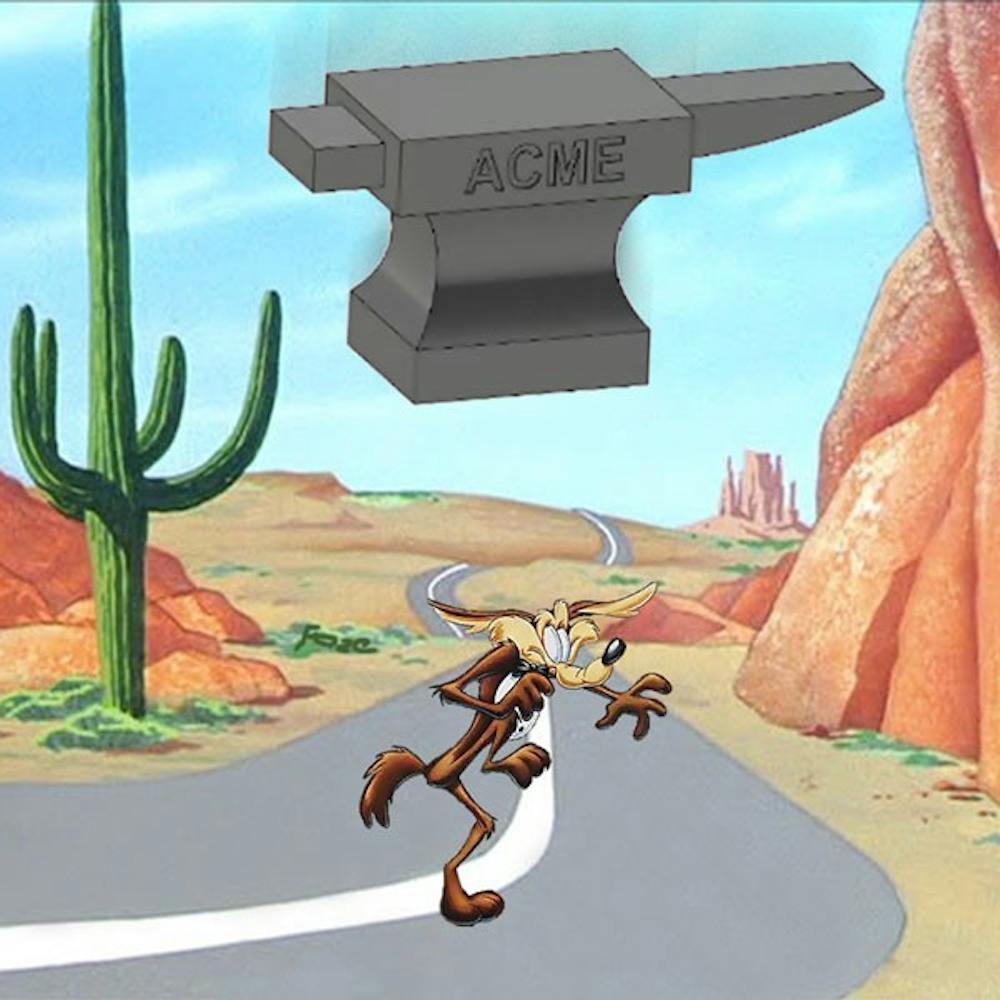
On a lighter note, anvils have often appeared in many cartoon or comedy sketches as they fall on characters with a huge bang! This gag was mainly used in Warner Bros Looney Tunes and ‘Merrie Melodies’ cartoons. Tom Slatin’s online article discusses this and why people find it funny.

© Photo by Faze

By contrast, there are also other, more spiritual associations such as the anvil being a representation of:


the challenges and obstacles that we may face in life with the hammer symbolising the strength and perseverance to overcome them.’ symbolsage.

This may seem a little fanciful but the anvil has always been a firm foundation on which to build and create new objects under the flickering flames and heat of the forge.

© Text and photos Carole Tyrrell
References and further reading
Anvil | Symbols
Symbolism of Anvils: Meanings and Interpretations
Anvil Symbolism & Meaning – Symbolopedia (more information about dream symbolism and anvils)
19 Powerful Symbols of Perseverance and What They Mean
http://Treestump anvil Gravely speaking
Fran Jurga`s Hoofcare + Lameness: St Dunstan and the Devil: Why We Hang Horseshoes Over Doors
A Clerk of Oxford: Stories of St Dunstan, 4: Dunstan and the Devil
** Kent Online Parish Clerk ** – Birchington, Christenings 1801 – 1880
https://www.tomslatin.com/the-history-of-the-anvil-gag-in-classic-cartoons/#:~:text=The%20first%20time%20an%20anvil%20was%20used%20as,height%2C%20causing%20him%20to%20sink%20into%20the%20ground.

Happy New Year with a couple of mysteries!

Sorrowing woman on headstone, All Saint, Birchington-on-sea, Kent. © Carole Tyrrell

Happy New Year to all my readers and what an auspicious year it is for shadowsflyaway!

It’s 10 years since I began this blog on July 10th 2015 to be exact and some of my readers have been with me since the very beginning. Even now I am still discovering new symbols to write about, little mysteries that I find in churchyards and cemeteries that intrigue and inspire me.

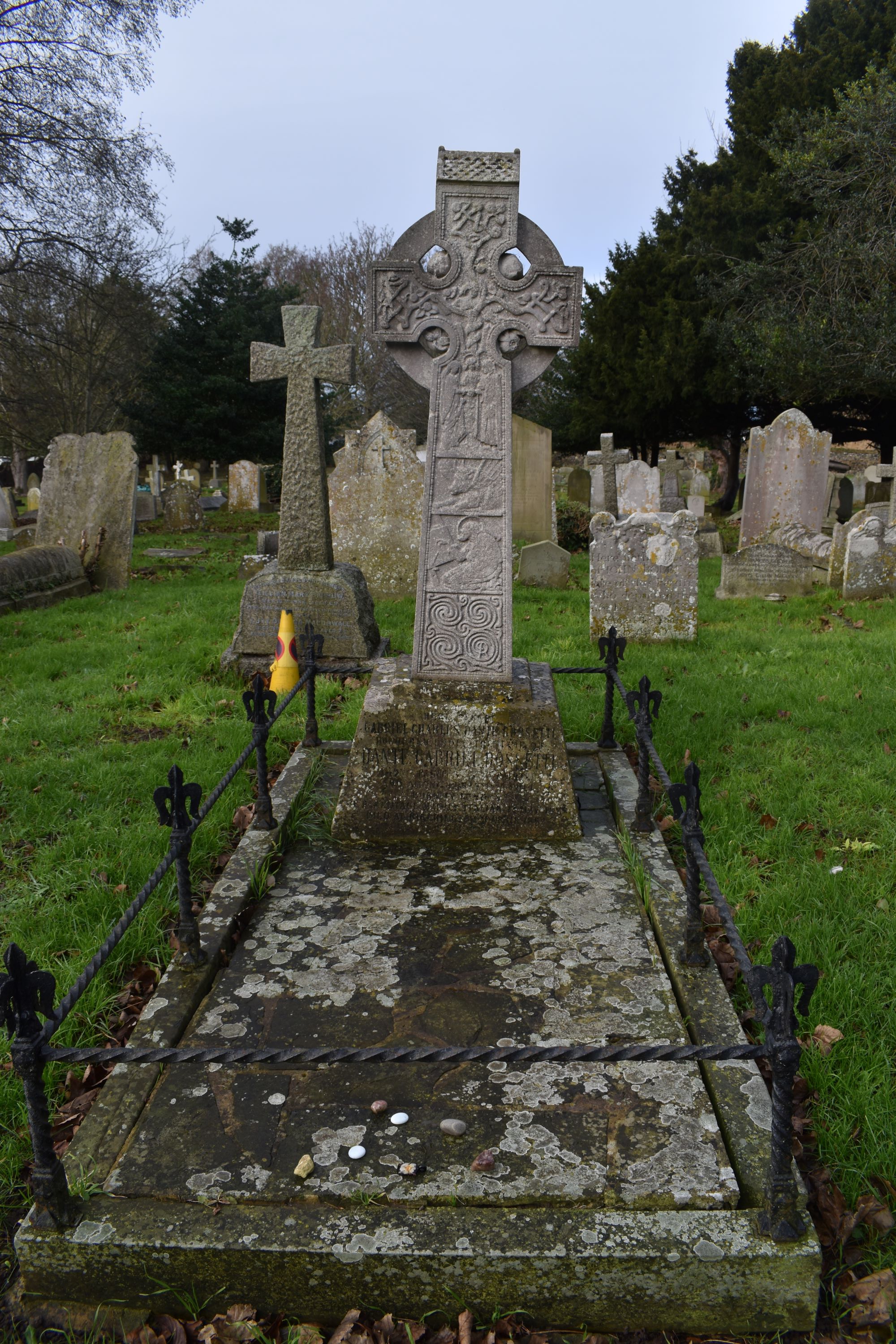
Here are a couple that I found on a Christmas Eve walk in All Saints churchyard, Birchington on Sea. This is where the 19th century Pre-Raphaelite artist, Dante Gabriel Rossetti is buried with a Celtic Cross over his grave. It was a dull grey day, enlivened only by the bright efforts of the town’s yarn bombers.

Dante Gabriel Rossetti’s grave, All Saints Birchington-on-Sea which is in the form of a Celtic Cross. © Carole Tyrrell

An example of one of Rossetti’s most beautiful paintings, ‘Lady Lilith’.

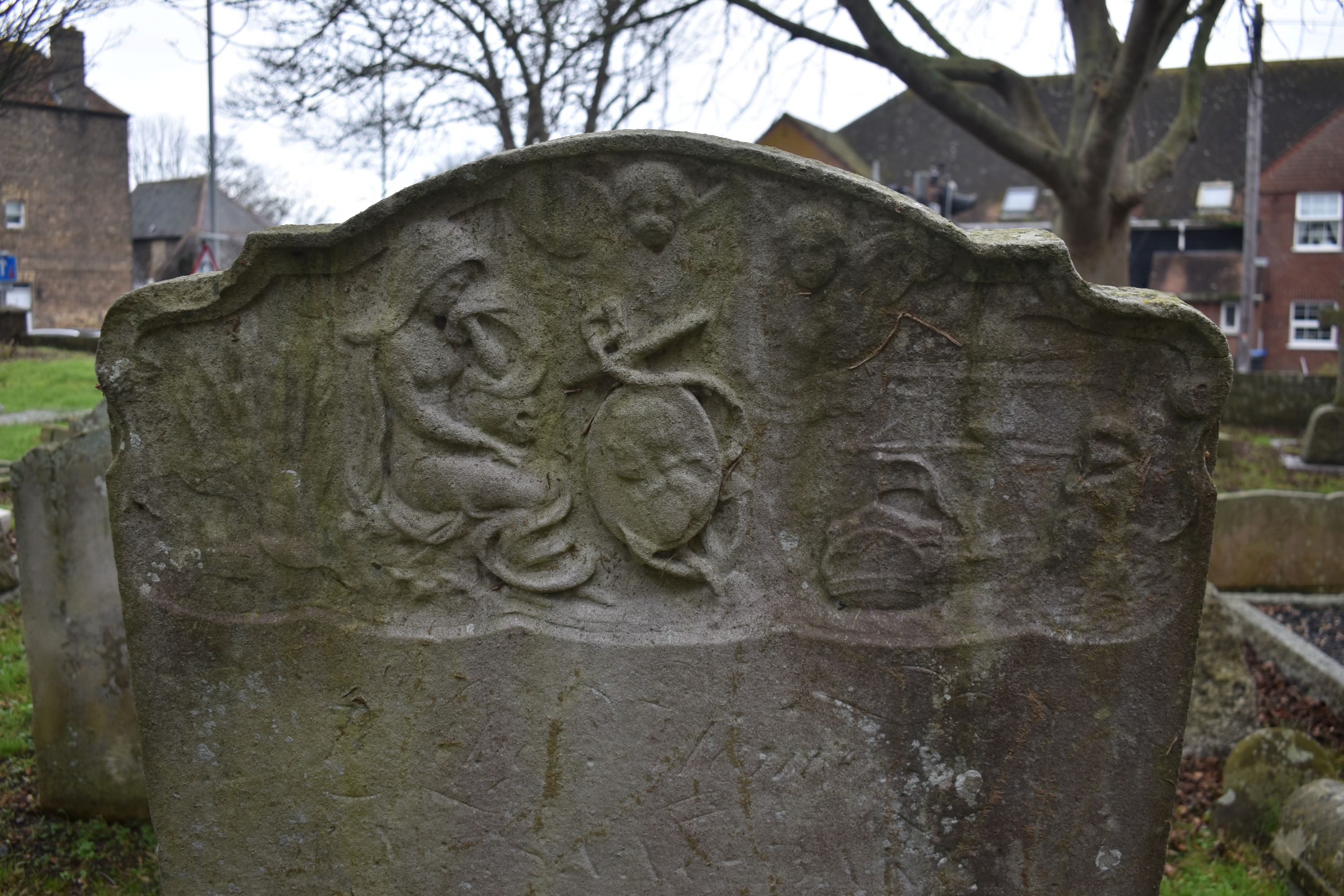
But these two stood out. The first one was located by the original church door and appeared to be a variant on the mourning woman symbol as a woman, wearing a billowing gown or cloak, weeps over a man’s portrait. He faces her in profile and is dressed in 18th century fashion with a small ponytail and is within an oval frame. She sits with a skull on her lap. The portrait is supported by a large anchor whose rope ripple around and behind it. Above it there are two floating angel heads or winged messengers. The carvings on either side of the tableau were indistinct under the overcast sky. But a sunny day can often bring out details of carvings and epitaphs so I will return. The anchor would indicate a naval man and I have to say that that, on first look, the folds of cloth around the lower half of the woman resembled a mermaid’s tail to me. But that may just be me being more fanciful… It’s an impressive headstone with the central figures still crisp. I would hazard a guess that this is from the 18th century.

A closer view of the sorrowing woman headstone. © Carole Tyrrell

The other one is on a 19th century headstone and features an anvil and tools. On first glance I thought it might belong to the village blacksmith. But it’s dedicated to a woman, Elizabeth Adams. Underneath the motif is what appears to be a quotation which I thought might have come from the Bible. But, so far, I haven’t found anything that resembles it but a burst of bright sunshine could illuminate it further on a future visit.

A closer view of the anvil and tools with quotation partly visible beneath. © Carole Tyrrell

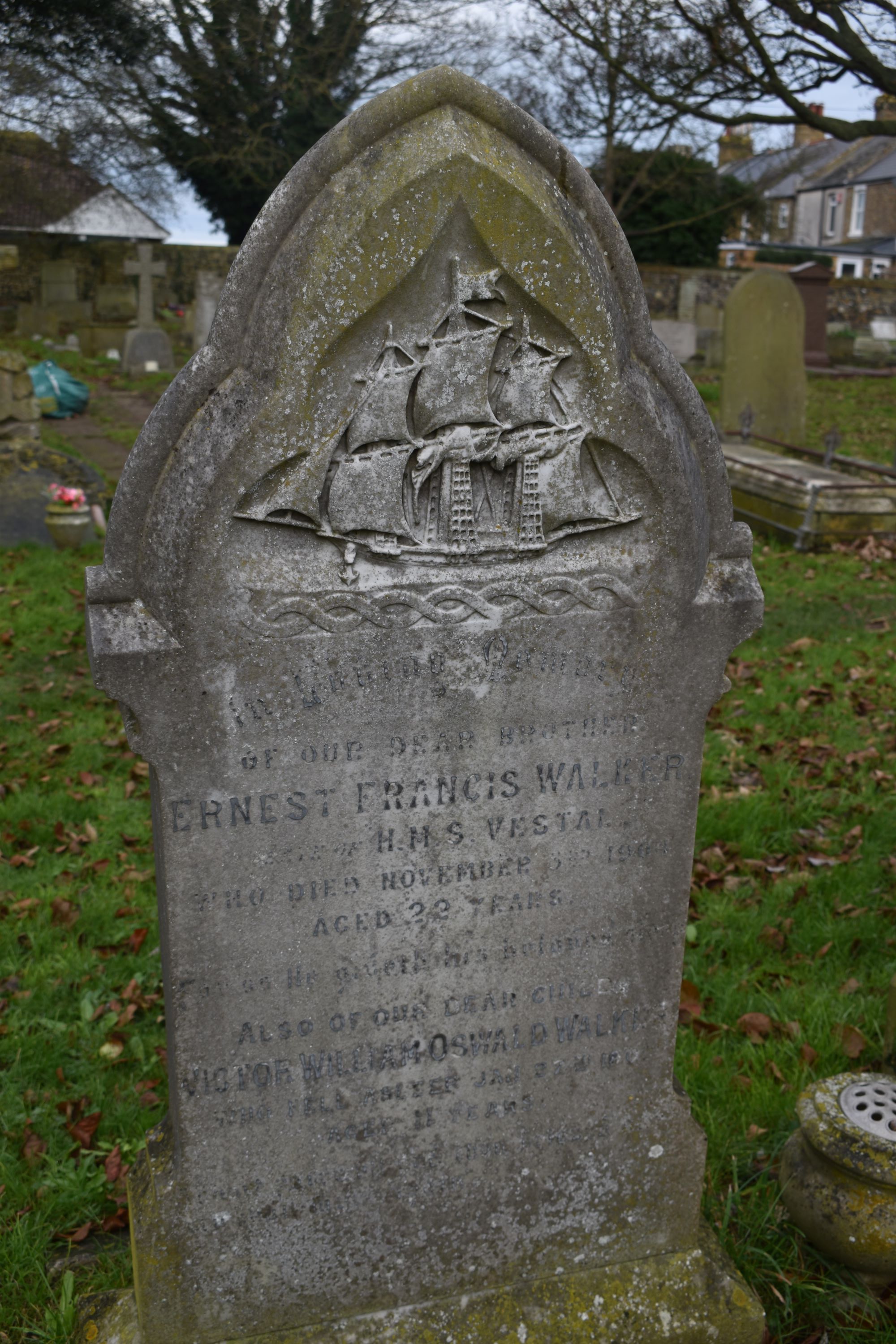
A ship is permanently sailing on Ernest Francis Walker’s headstone with a border of entwined ropes beneath it. The epitaph states that he was a crew member on HMS Vestal and so I presume the carving of a ship is a representation of it. Ernest died young at 22 and there are several ships that bear this name. The one that I think is most likely is a 26 gun sixth rate frigate of the Royal Navy. She was launched in 1833 and sailed in the West Indies and the Caribbean. In 1852 she ran aground near the Needles on the Isle of Wight and was taken to Portsmouth for inspection and repair prior to being decommissioned in 1860 and then broken up in 1862.

I am already looking forward to what else I will discover in 2025 including the spooky angel in a Broadstairs churchyard but I am determined to wait for a really foggy day for that one!

© Text and photos Carole Tyrrell


References and further reading:
https://en.wikipedia.org/wiki/HMS_Vestal_(1833)