
Cemeteries, and in particular large Victorian ones, often have areas which are either a designated nature reserve or just left to run wild. These are havens to insect and mini-beasts and also to the dedicated lepidopterist or butterfly fancier. On a long, warm, summer afternoon their tiny, colourful, patterned wings can be seen fluttering over their favourite foods such as the humble ragwort. No wonder a group of them are described as a kaleidoscope of butterflies.
Commas, common and holly blues, large skippers, meadow browns, red admirals, gatekeepers and, if you’re lucky, the magnificent Peacock , are all summer visitors to cemeteries.
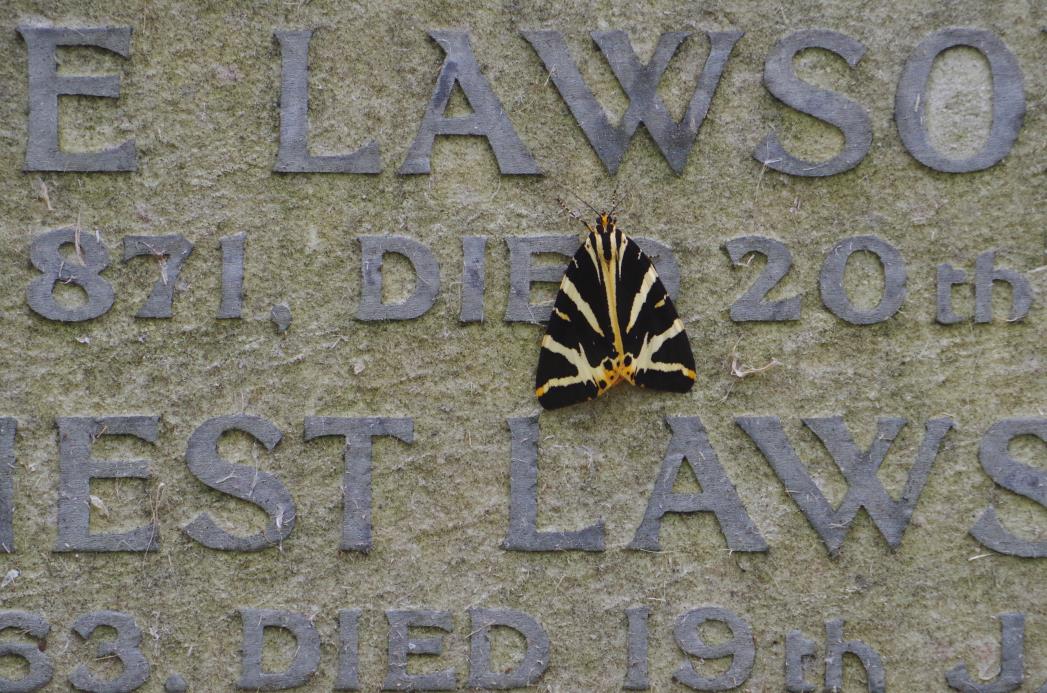
However, an increasingly common visitor, once rare, isn’t a butterfly at all but is, instead, a day-flying moth. This is a Jersey Tiger or Euplagia quadripunctaria to give it its Latin name. Its striped upper wings, when closed, give it the appearance of an African mask. But it also has a surprise for, when in flight, it reveals its iridescent orange underwings. When the sun catches them it’s like a small jewel on the wing.
This one obligingly posed on an inscription at Brompton Cemetery’s 2015 Open Day.
copyright Carole Tyrrell
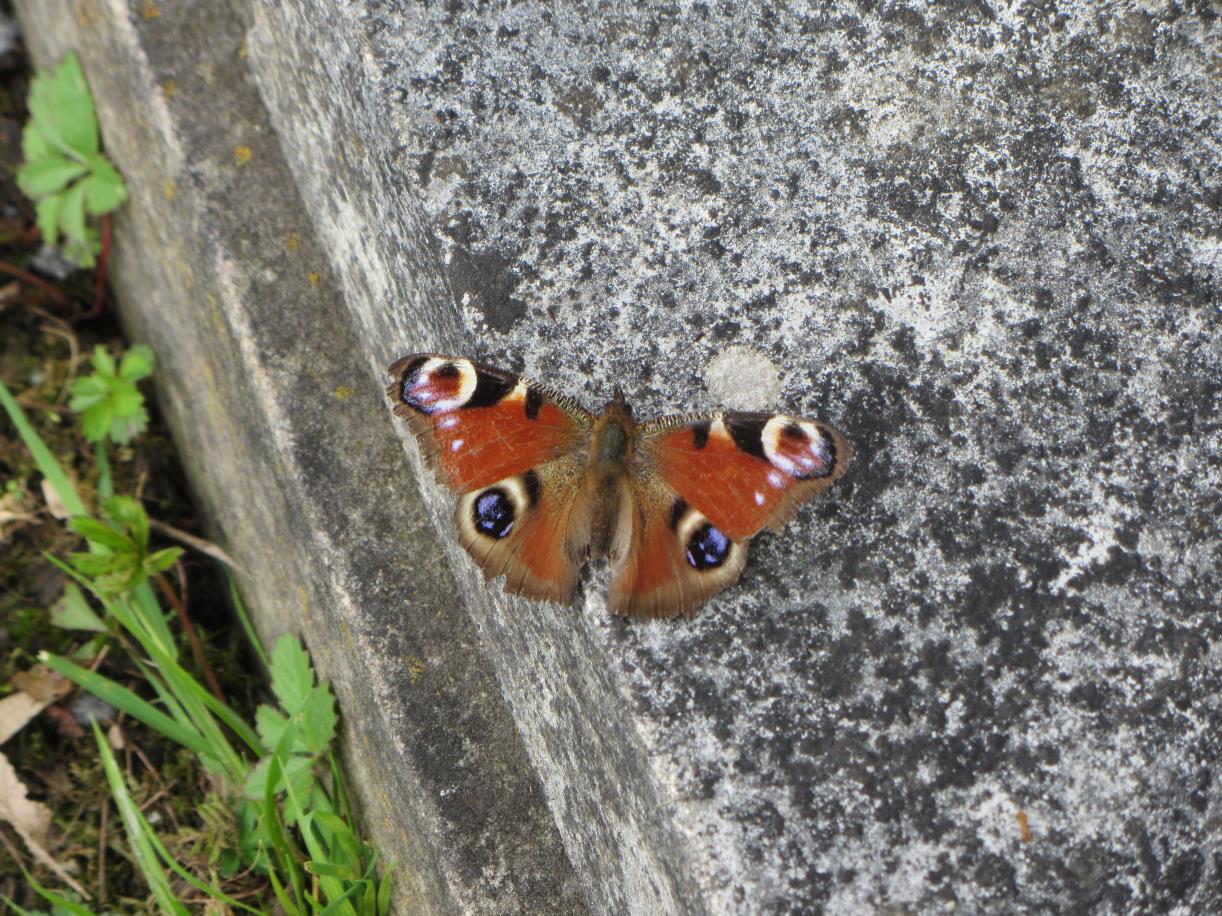
A lovely Peacock butterfly in Elmers End Cemetery. When closed its wings are completely black and then open to show the beauty inside.
copyright Carole Tyrrell
This is a gatekeeper roosting on its favourite food, the ragwort. Although a common butterfly and sitting on what is generally considered to be a weed it does make for an effective composition. Again from a Brompton Cemetery Open Day in 2013.

copyright Carole Tyrrell
Below is a six spotted burnet – it’s dramatic red and black colouring always makes me think of it as a Goth Moth. It is very impressive when it’s on the wing and is very fast. I first saw it on an Open Day at Kensal Green Cemetery, London, in 2013. It was a warm and sunny July day and I was making my way to the open air colonnade when I saw a burnet fluttering past I have only found it at one location within the cemetery so far but I always look out for it.
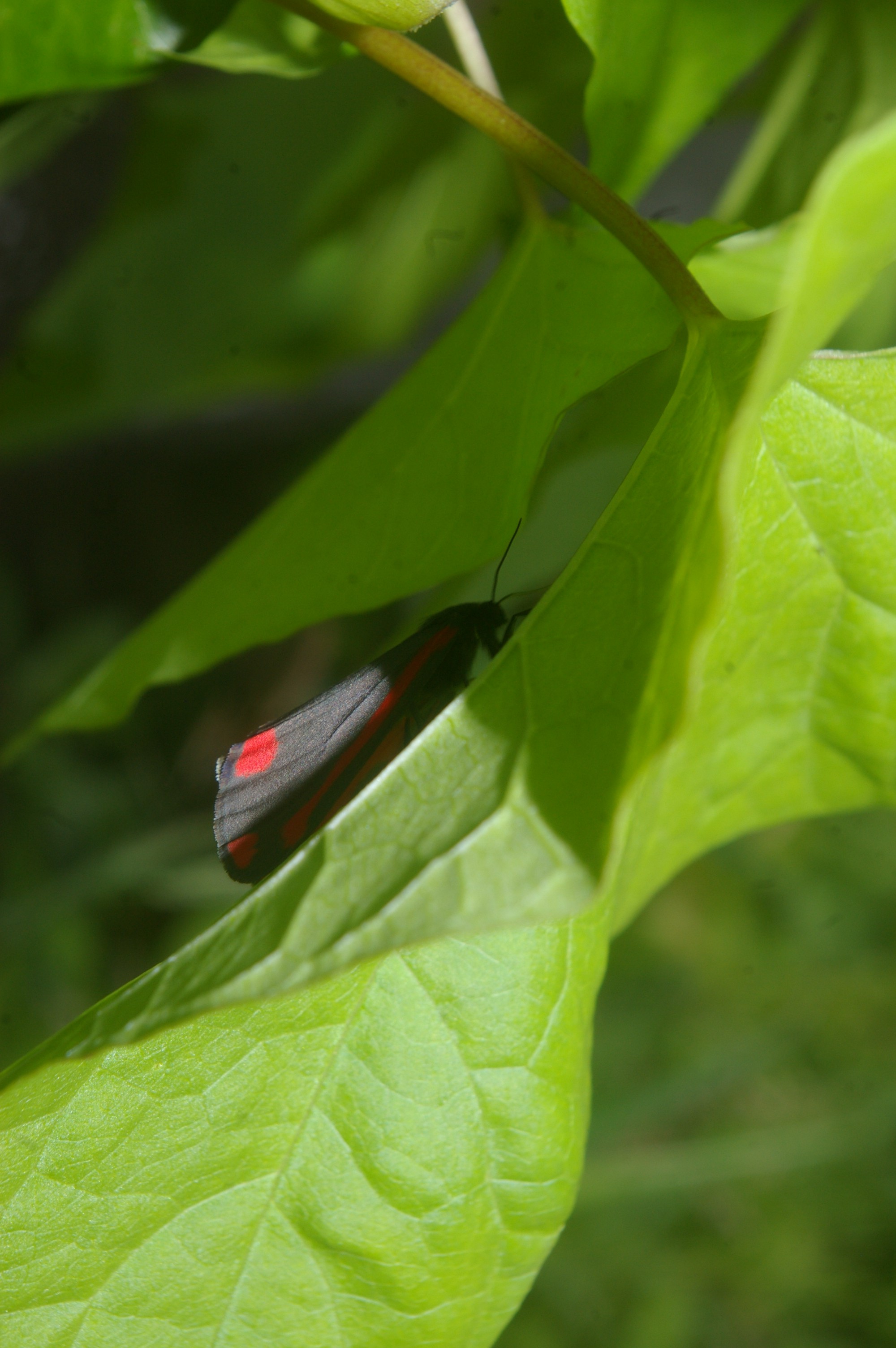
Latin name is: Zygaena filipendulae
Copyright Carole Tyrrell
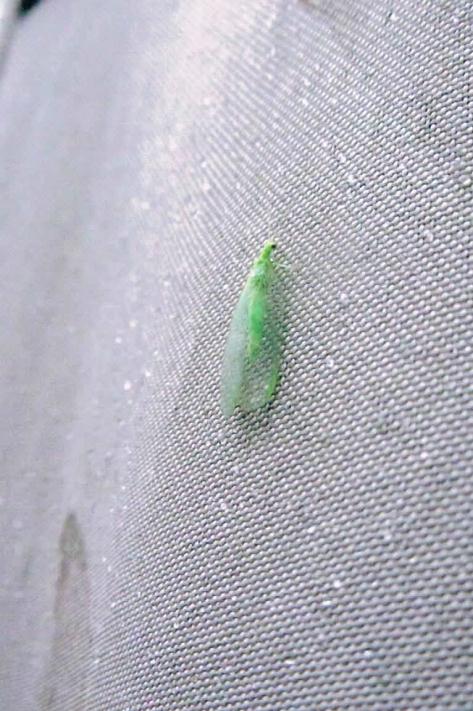
This was an unusual moth to find on a damp winter’s day in Nunhead Cemetery. This is a lacewing. Its Latin name is Neuroptera and it’s not known to be as a day flying moth. It clung to the side of our gazebo for some time.
copyright Carole Tyrrell
So although cemeteries are primarily to remember the dead, they can also provide a vital ecosystem as well. Next time you visit one take some time to check out the wilder areas and you might be surprised at what you find!
All text and photographs © Carole Tyrrell
i
 shadows fly away
How nice to take notice of the unexpected life in a cemetery. These creatures are beautiful! It reminds me of a photo and comment my great-niece posted on her Facebook page after a visit to her mother’s grave. She found a beautiful lizard on her mother’s headstone and took solace in it beauty. Your photos are impressive and reminds us that beauty can be found anywhere if we look for it. The grave stones and butterflies/moths make a nice contrast.
LikeLike
Thanks Coastal Crone for your kind comments. People often think that cemeteries are for the dead but they also have the living within them.
LikeLike