Symbol of the Month – the Ouroboros

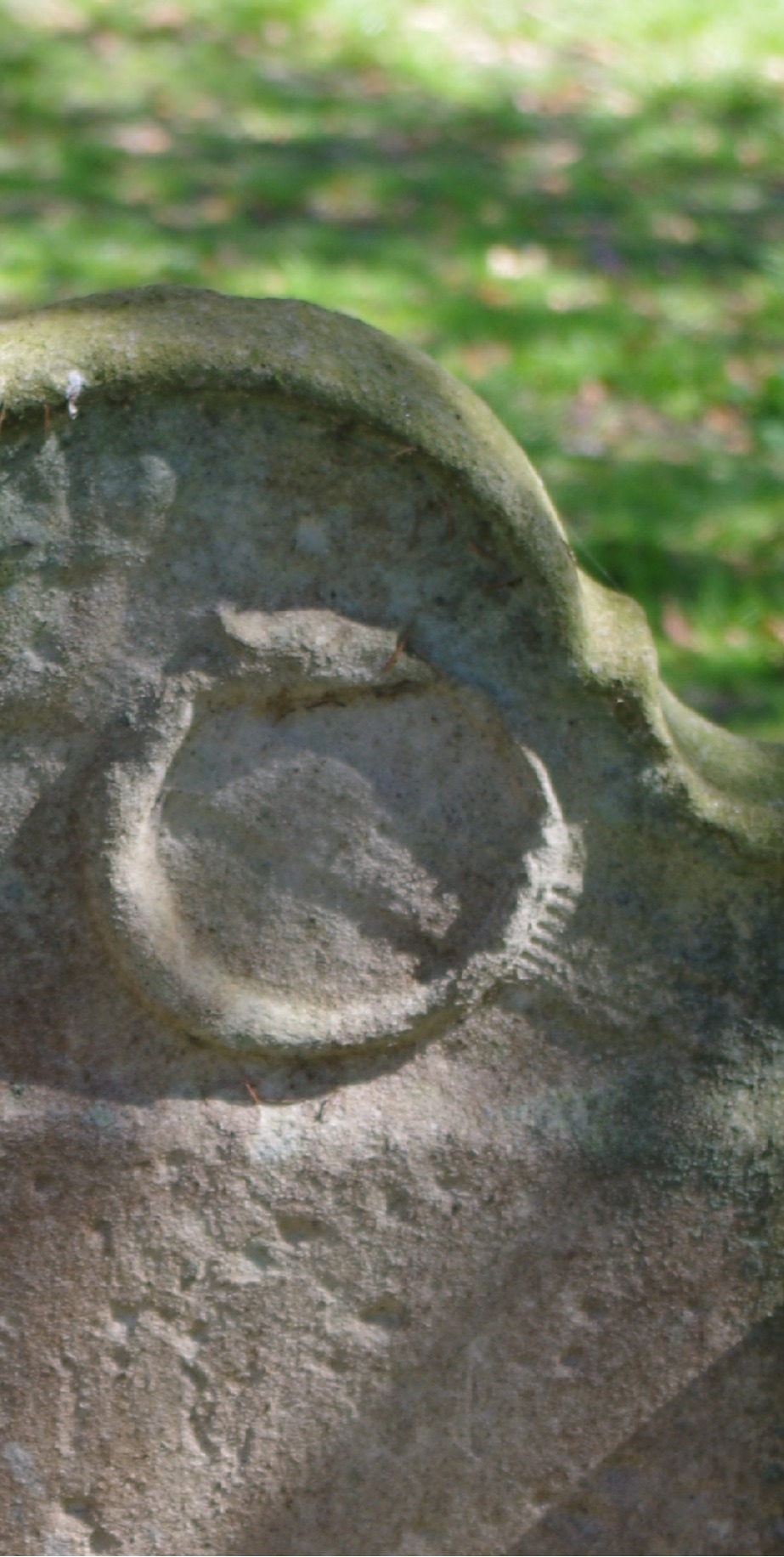
Ouroboros on 18th century headstone, St Mary’s churchyard, Rye, Sussex. ©Carole Tyrrell

For every end there is a beginning.

This is only one of the several positive and powerful meanings of the ouroboros which is one of the most ancient symbols known to man.  It’s depicted as a snake eating its own tail to sustain its life in an eternal cycle of renewal and it usually forms a full circle.  It occurs in many cultures, religions and beliefs.  The psychologist, Jung, called it an archetype which is best described as:

‘a primitive mental image inherited from the earliest human ancestors, and supposed to be present in the collective unconscious.
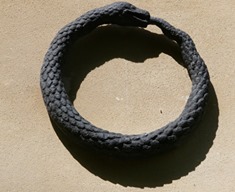
A lovely picture of an ouroboros on a mausoleum in Highgate West.
copyright Jeane Mary – used with kind permission
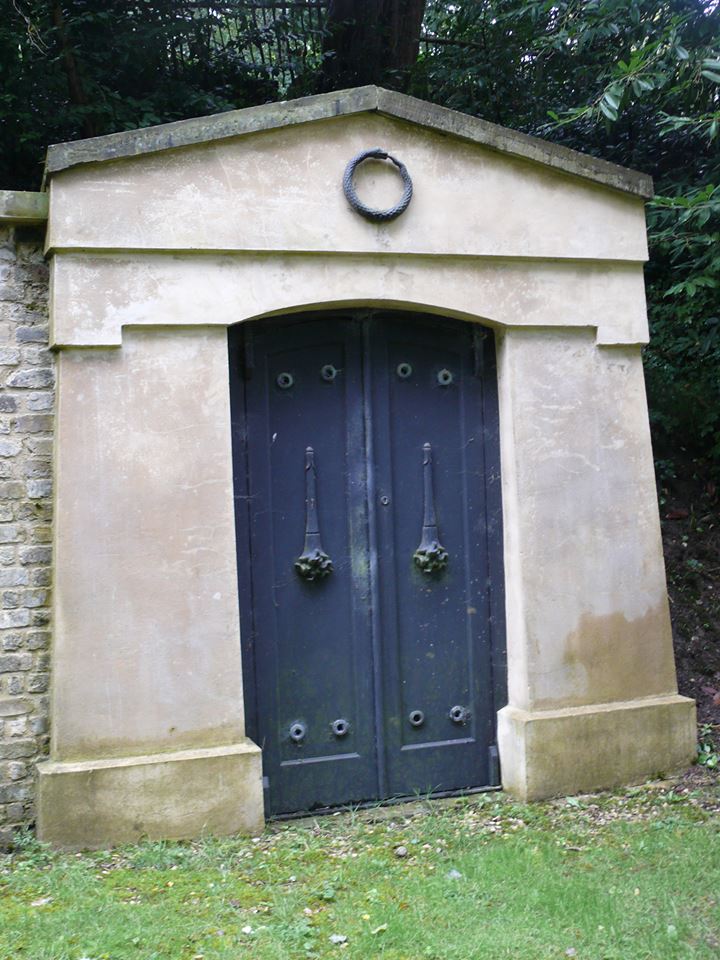
This is the mausoleum to which the ouroboros belongs.
Note downturned torches on doors which are a sign of life extinguished.
copyright Jeane Mary and used with kind permission.

The ouroboros appears in ancient churchyards and Victorian cemeteries as a symbol of resurrection.  The snake is reborn as it sheds its skin and this fine example is on a mausoleum in Highgate cemetery, London. Victorian visitors would have understood its meaning.   As a resurrection image it can be very positive as some of its other attributes are immortality, eternity and wisdom.  However, as with most symbols , it can have several meanings.  These include the Universe’s cyclic nature and life out of death and, as the snake sheds its skin it has a Phoenix-like cycle of life, death and rebirth. The Victorians revived several older symbols in a return to the classicism of ancient Greece and Rome.
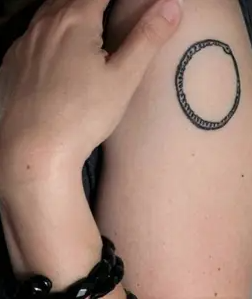
There is also a magnificent ouroboros on the gates of Sheffield General Cemetery. The Highgate one inspired the tattoo worn proudly above by Jeane Mary, a photographer and fellow cemetery explorer now sadly gone from us. She also wears a Whitby mourning bracelet based on the ouroboros in Highgate. Used with kind permission.

But the ouroboros origins lie in either ancient Greece or Egypt as both cultures have claimed it.  In Greece, Plato described it as:

‘the first living thing, a self-eating, circular being’. 

In fact, the Greek translation of ouroboros is ‘tail devouring snake’ and it’s associated with something constantly recreating itself and the eternal return.
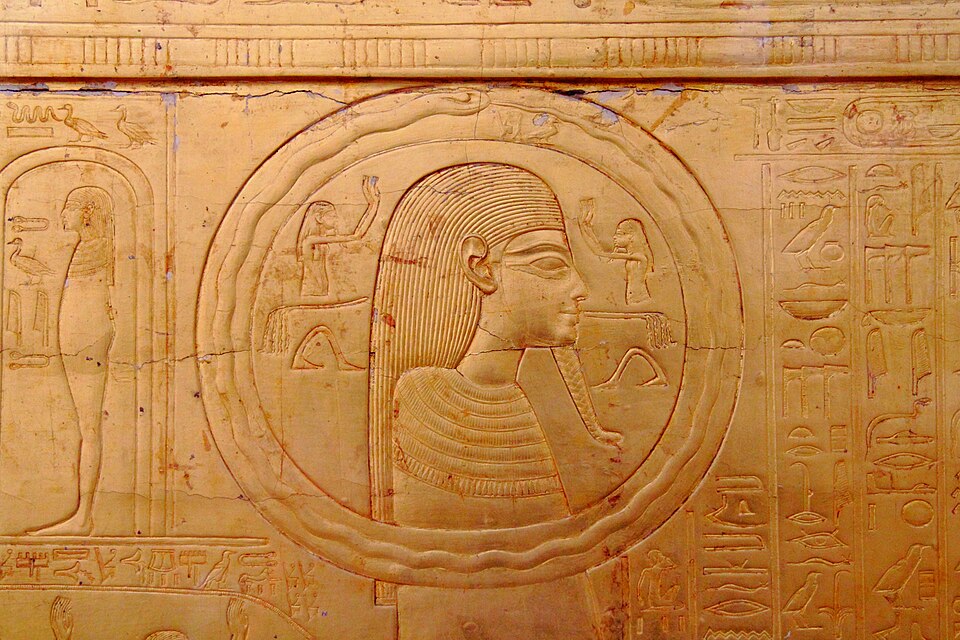
The earliest known depiction of an Ouroboros on one of the shrines enclosing the sarcophagus of Tutenkhamun. Shared under Wiki Commons. Egyptian Museum Cairo.

In Egypt, the ouroboros reputedly appears for the first time in the 14th century BC in Tutenkhamen’s tomb on an ancient funerary text. This depicts the Sun God Ra and his union with Osiris in the underworld and is illustrated with two serpents, holding their tails in their mouths, coiled around hands and feet. This may be a representation of the unified Ra-Osiris.  Both serpents are reputedly the manifestation of the god Mehen, who in other funerary texts protect Ra in his underworld journey.  I haven’t been able to find an image of this particular representation but I did find the one above which is claimed to be the earliest representation of an ouroboros.

The ouroboros also appears in Hindu, Norse, Aztec and Chinese religions.  In addition, it’s a significant alchemical symbo and features in Cleopatra the Alchemist’s work. There are also Masonic associations from numerous seals, frontispieces and other imagery dating from the 17th century such as the one below:
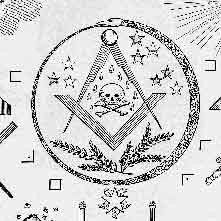
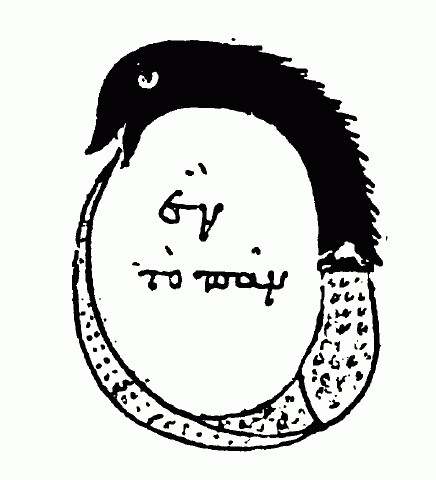
Alchemist ouroboros from Cleopatra the Alchemist Greco-Roman Egypt.
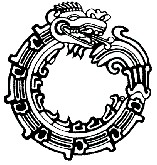
Aztec seven segmented ouroboros.

In China it can also take the form of a dragon and it features on the Magician card in the Rider- Waite deck of Tarot cards.

I found this quote online:

‘In other myths the ouroboros encircles the whole world, a circumference of the waters surrounding the earth.  It can support and maintain the world and also inject death into life and life into death.  Although apparently immobile, it’s actually in perpetual motion, forever recoiling upon itself.’

One of the many fascinating myths surrounding the ouroboros is the experience of the chemist, August Kekule, who was trying to discover the structure of benzene.   This is how he described his Eureka moment :

‘I was sitting, writing at my text-book; but the work did not progress; my thoughts were elsewhere. I turned my chair to the fire and dozed. Again the atoms were before my eyes. This time the smaller groups kept modestly in the background. My mental eye, rendered more acute by the repeated visions of the kind, could now distinguish larger structures of manifold conformation: long rows, sometimes more closely fitted together; all twining and twisting in snake-like motion. But look! What was that? One of the snakes had seized hold of its own tail, and the form whirled mockingly before my eyes. As if by a flash of lightning I awoke; and this time also I spent the rest of the night in working out the consequences of the hypothesis.’

As I said earlier, Jung would see this dream as evidence of the ouroboros and its effect on the collective unconscious.
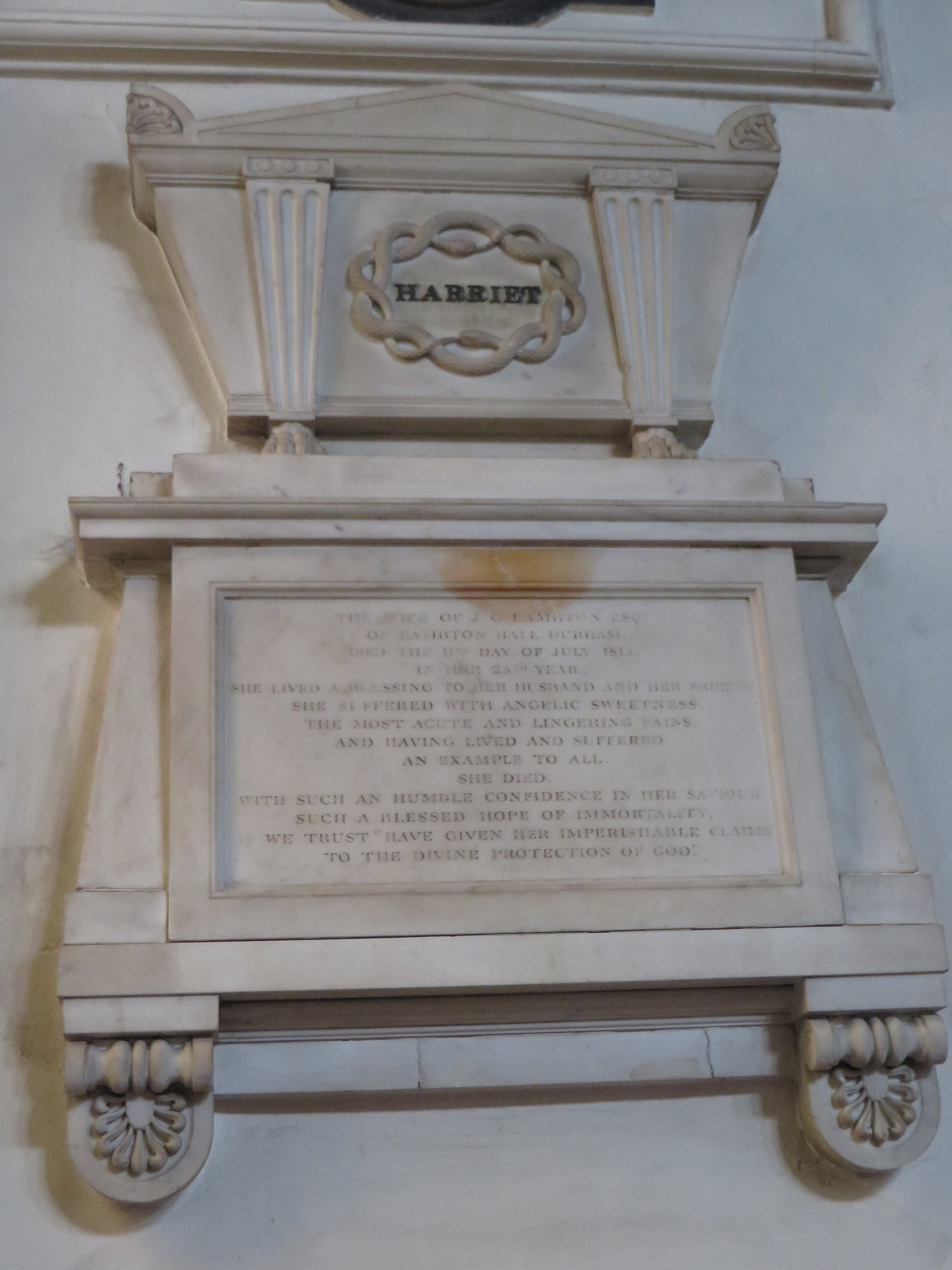
The monument dedicated to Harriet. St George’s church, Beckenham, Kent copyright Carole Tyrrell
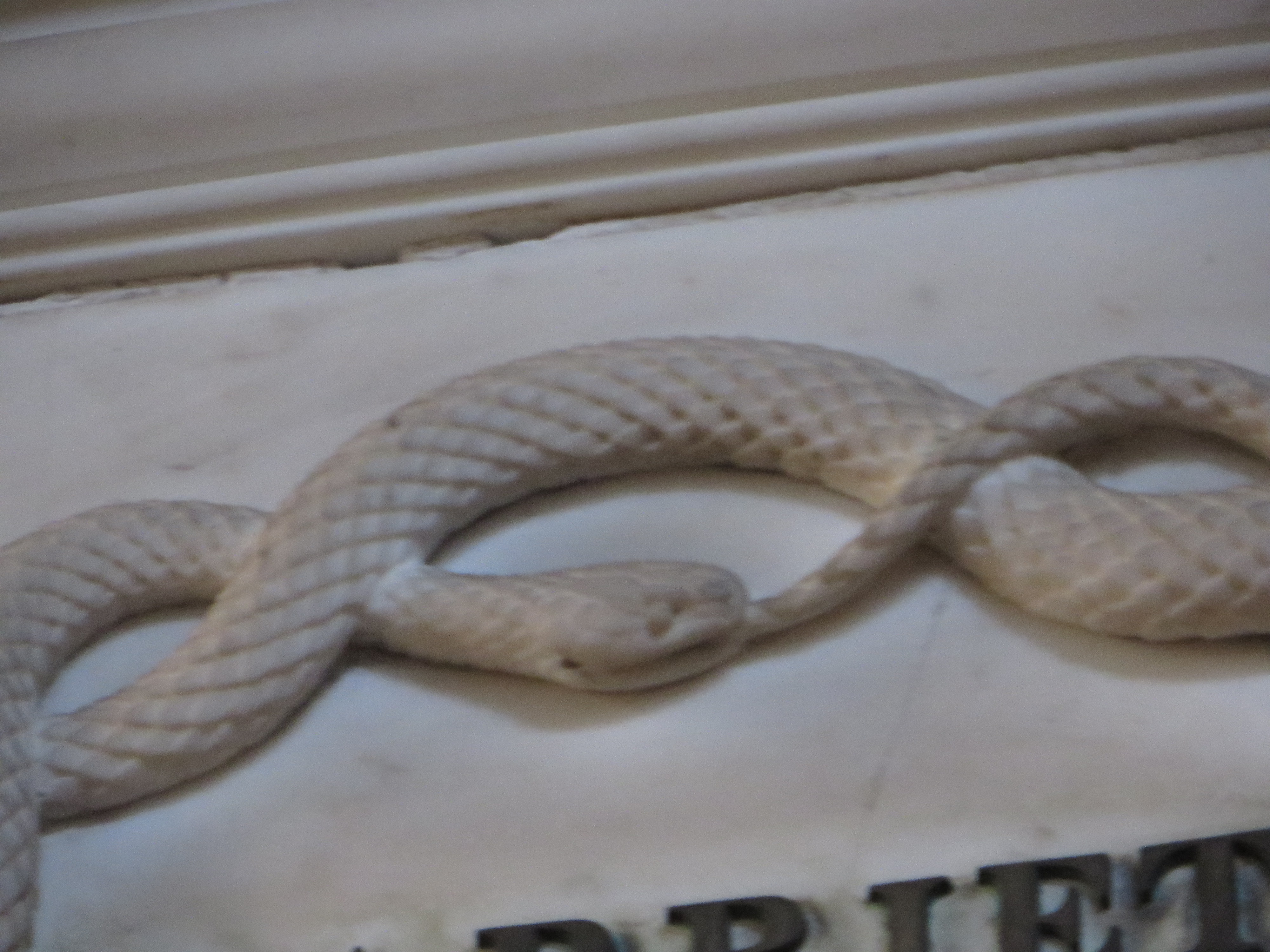
Close-up of the snakes. St George’s church Beckenham, Kent. copyright Carole Tyrrell
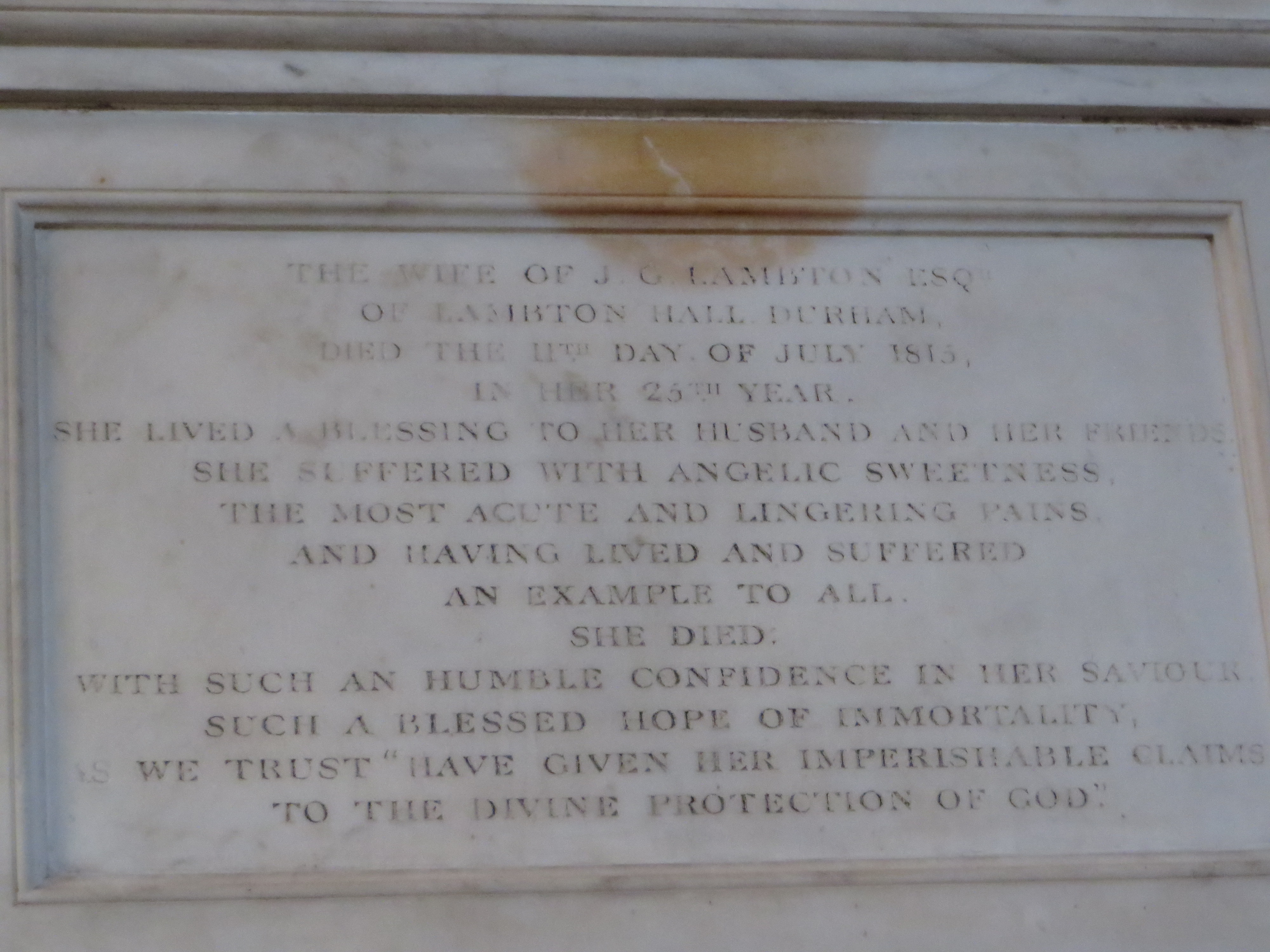
Harriet’s epitaph shows that she was obviously much missed. St George’s church, Beckenham, Kent. copyright Carole Tyrrell

Although the ouroboros is usually depicted as a full circle, this is one that I found in my local church, St Georges in Beckenham. On first glance, it merely looks like an attractive, rippling border around the name Harriet and it dates from 1815. But on a recent visit, I looked closer and realised that it was actually composed of 2 entwined snakes, each biting their own tail.  When I spoke to a churchwarden, she had always thought that, due to the patterning on the snakes’ bodies, that it was two entangled pieces of rope.   It is a poignant memorial to a young wife who died aged 25 after suffering the ‘most acute and lingering pains.’   So it would have been a potent reminder of resurrection. More recently, the ouroboros has also appeared as part of a crop circle.
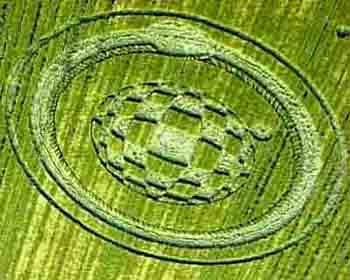
The ouroboros is one of the most intriguing and interesting symbols that I have researched.  It is a universal image of rebirth, hope and eternity.

© Text and photos Carole Tyrrell unless otherwise stated

Further reading and references:

Ouroboros – Token Rock

Ouroboros – Wikipedia

Ouroboros – Crystalinks

Ouroboros, the Infinity Symbol – Mythologian.Net

Stories in Stone – Douglas Keister, Gibbs Smith, 2004

How to Read Symbols, Clare Gibson and Claire Haworth-Maden, A & C Black publishers, 2009

An Illustrated Encyclopaedia of traditional symbols J C Cooper, Thames & Hudson originally pub 1979, reprinted 1993
Excise men and smugglers – All Saints churchyard, Birchington, Kent

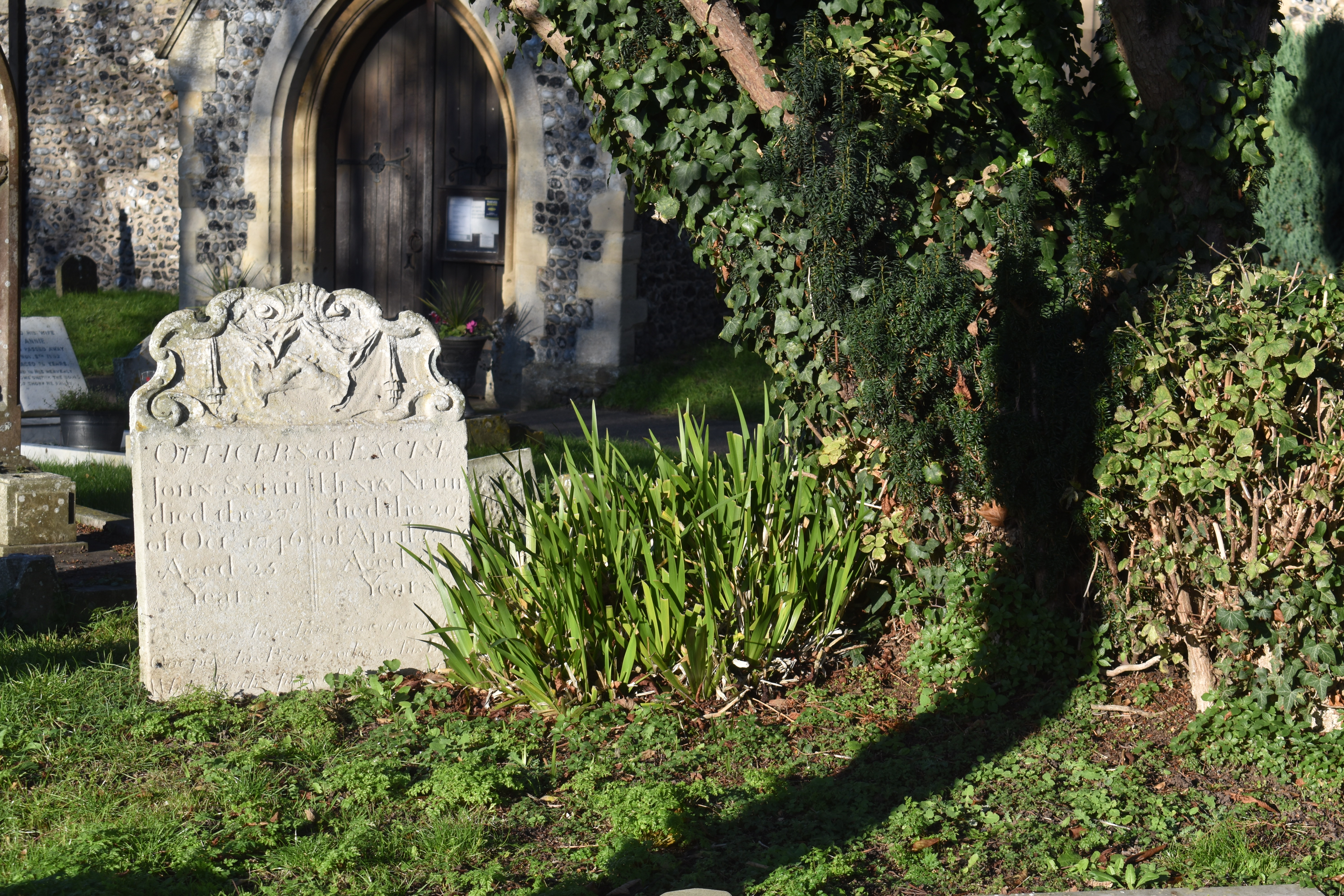
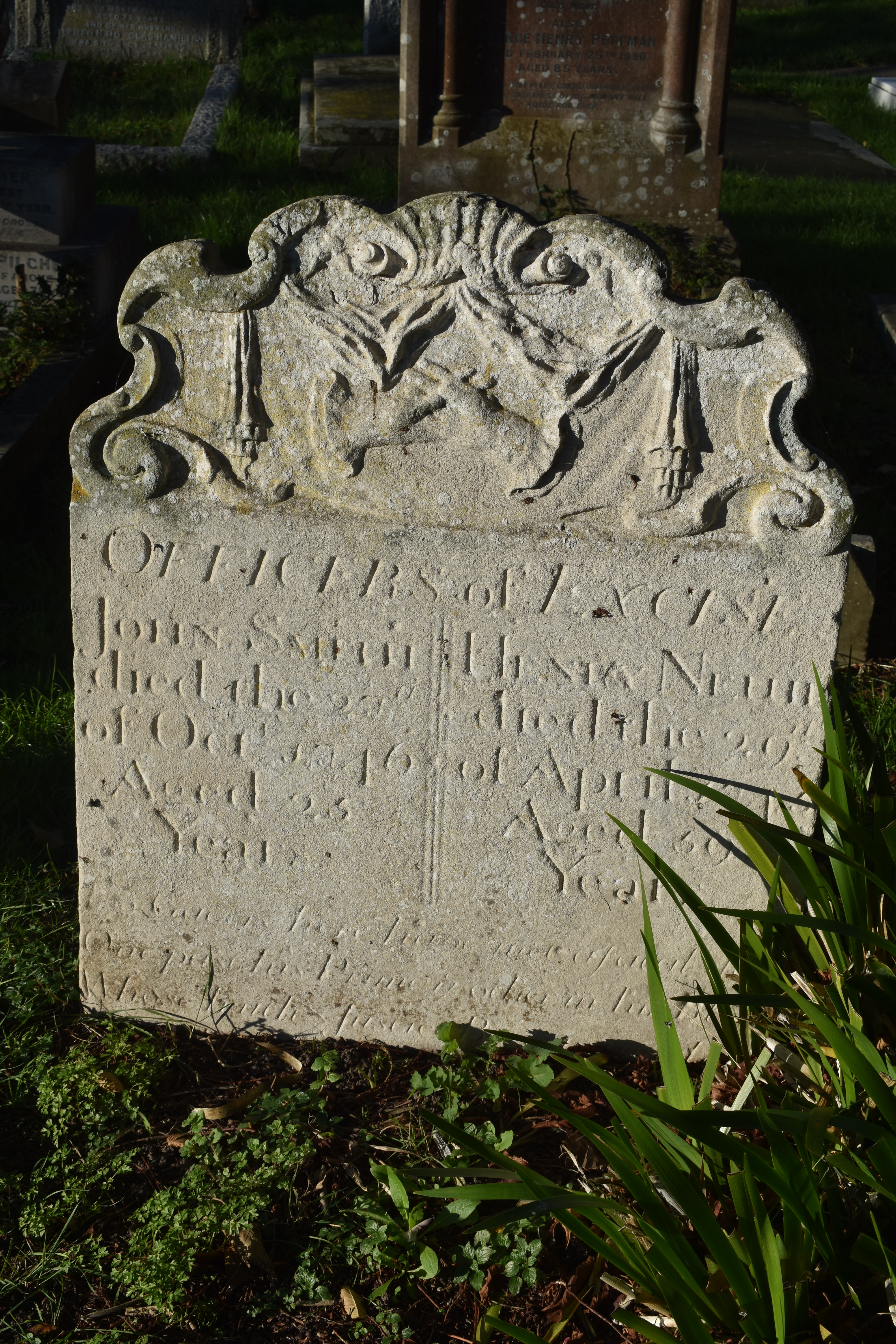
Headstone dedicated to James Smith and Henry Nevil, All Saints, Birchington, Kent. © Carole Tyrrell

This headstone has intrigued me ever since I first saw it while exploring the fascinating churchyard of All Saints. The church is the oldest building still standing within the village and there may have been one on the site in Saxon times. So many questions came to mind. Firstly, what is an officer of excise?  And why are they buried together with such a disparity in their dates of death? And finally, what is the near illegible verse carved at the base of the headstone?

The epitaph reads:

‘OFFICERS of EXCISE

JOHN SMITH                  HENRY NEVIL

died the 27th                  died the 29th

of Oct 1746                    April 1745

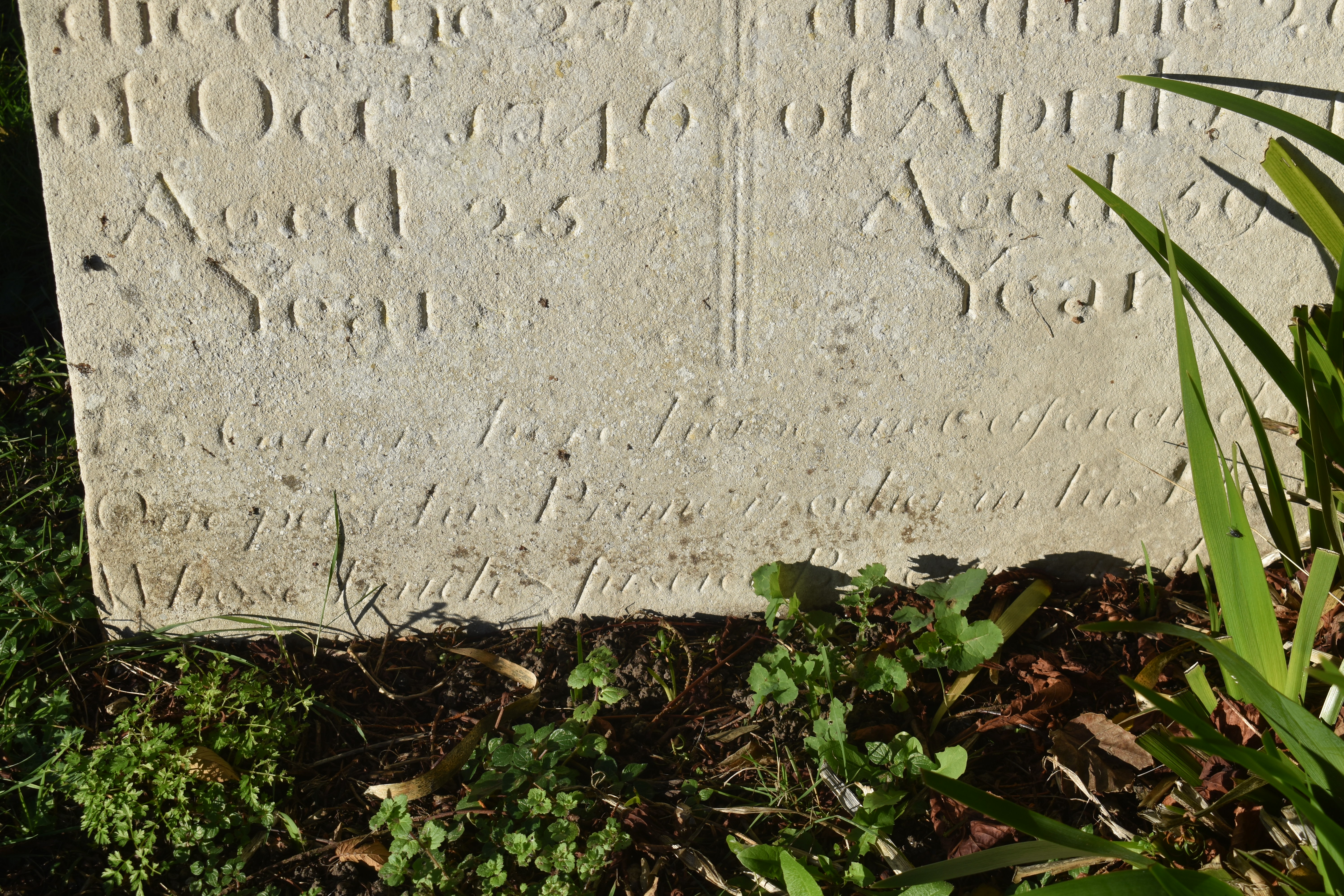
Aged 23 years              Aged 59 years

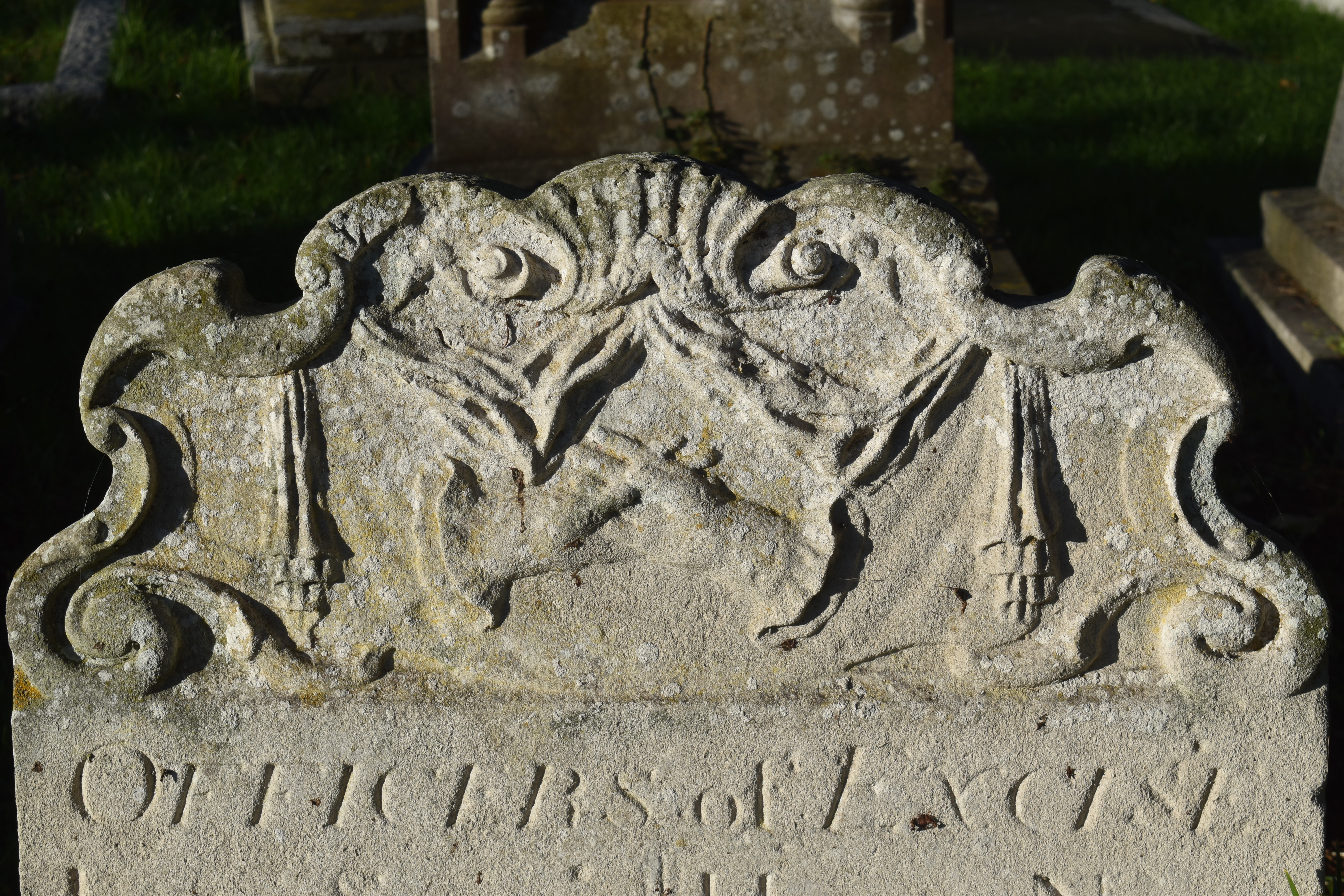
At the top of the headstone are two entwined hands, both with fashionable (at the time) frilly cuffs, and above them is what appears to be an old fashioned curtain with two drapes hanging down on either side. This could be a reference to The Final Curtain. This is often associated with the theatrical world in that it indicates the end of a show, the end of an evening, and, in funerary symbolism terms, the end of a life. The drapes on either side of the hands also resemble downturned torches which are a symbol of extinguished life. The two hands could be a variant of the ‘shaking hands’ indicating that two friends have been reunited in death. Decorative scrolls surround the images enhance the design and are typical of the period.

The top of the headstone showing the symbols. © Carole Tyrrell

According to the Birchington Heritage Trust the facts are these:

‘In April 1745, there was a disastrous smuggling run on the Kent coast at an unknown location. Two Excise Officers, Henry Nevil, aged 59 and John Smith, aged 23, were badly injured for the smugglers gave no quarter. Henry died soon after the event but John lingered on for a further 18 months before finally dying in October 1746.’

The parish buried John with Henry after his death and erected a beautifully carved headstone in their memory. The verse at the base of the stone reads:

“Two gagers have met a fatal doom,

One past his prime, the other in his bloom,

Whose truth and justice bore, on equal scale,

And Christian virtues did o’er vice prevail.”

A ‘gager ‘was the nickname given to seamen when they left the service. Most excise men were ex-seamen hence the reference in the verse as it stuck to them in their new profession. It is still in use today as a term for anyone involved in preventing tax evasion.

The verse at the base of the headstone. © Carole Tyrrell

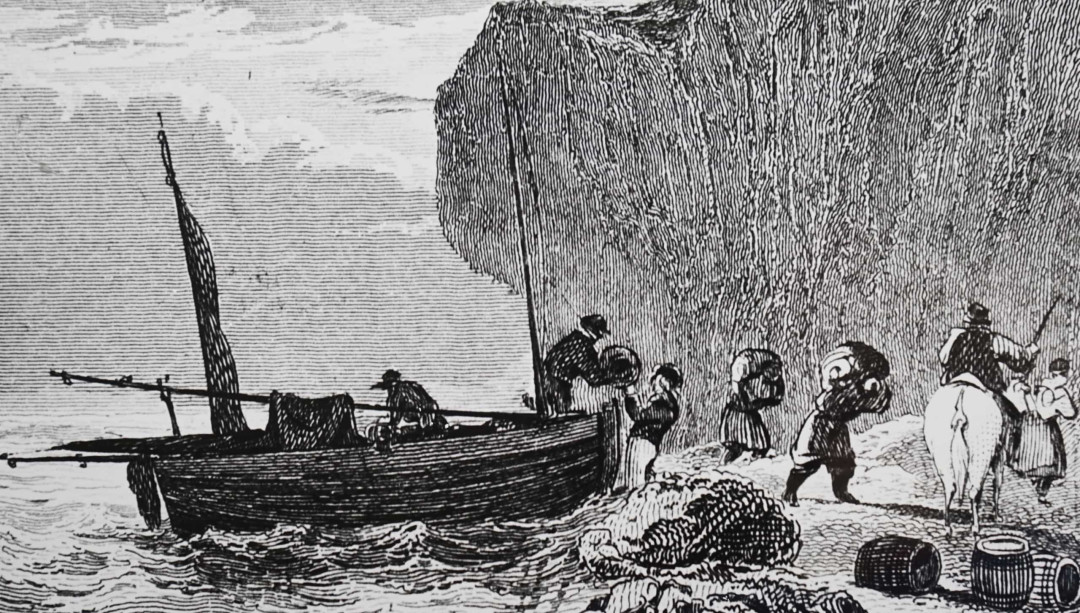
Clashes between Excise men and smugglers were often violent and bloody. The smugglers were well organised and large armed gangs would descend on a location armed to the teeth with cutlasses, blunderbusses and clubs. It was big business for the time.

According to the Borrowing Cats substack:

‘A notorious affray in 1786 saw Customs officers ‘severely beaten and near drowned’, at nearby Minnis Bay when attempting to seize kegs of brandy.’

Even now a pub in Birchington village is named ‘The Smugglers’.

Smugglers unloading illicit cargo. © starsider

Excise men were not popular. As the National Archives research guide describes it:

Excise duty is a tax imposed on certain goods at the time of manufacture. They differ from Customs in that excise is an inland duty and customs is a border tax. Excise was originally imposed in 1643 by the Long Parliament for the war against the Crown.  The revenue reverted to King Charles 11 after the Restoration and he was able to allow Nell Gwynn, one of his mistresses, £500 from these monies. Excise was imposed on anything that was popular at the time. Thus when wigs were fashionable there was a tax on their powder. When people had servants, they were taxed on male servants. Later taxes included tea; coffee; chocolate; beer; wine and spirits. In addition excise was levied on candles and other taxes were also imposed on salt, paper and windows.’

The National Archives hold records for Customs and Excise officer applications. In 1792, salaries varied from £800 pa for Commissioners to £50 a year for the Excise Officers.

‘The duties of an Excise Officer meant that they were allocated ‘a ride’. Every county was split into two divisions and each division into ‘rides’ i.e. the distance a man could ride on a horse in a day. The Excise Officer would have to visit at least twice during the manufacture of any goods, and in the case  of beer, wines and spirits they would need to sample them to test for alcoholic and quality. They then needed to record these details which were used to determine the amount of duty levied. This is why the application to become an Excise Officer required them to be literate and possess a good standard of arithmetic. Needless to say, officers involved with the testing of wines, spirits and beers were occasionally found intoxicated and this led to punishment or dismissal. Famous Excise men were Robert Burns and Thomas Paine.’

However,  there are also smugglers buried in the same churchyard and this includes three members of the Darby family who stated their occupation as ‘smuggler’. A ‘Riding Officer’, Thomas Thunder was also buried there in 1789. Another man whose occupation was listed as ‘smuggler’ was Thomas Hollands who was on the Burial Register in 1814 aged 34.

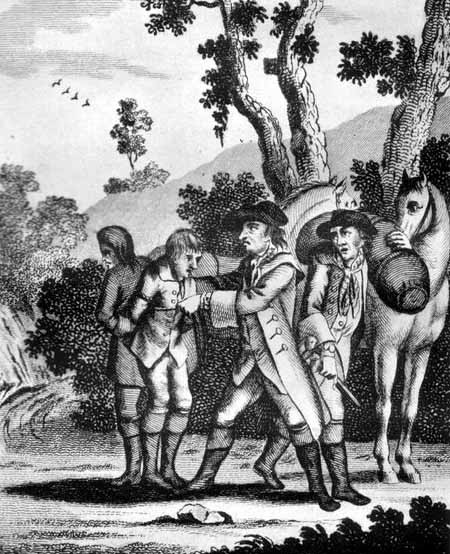
Smugglers and Exciseman dated 1774. © cuckfieldconnections.org

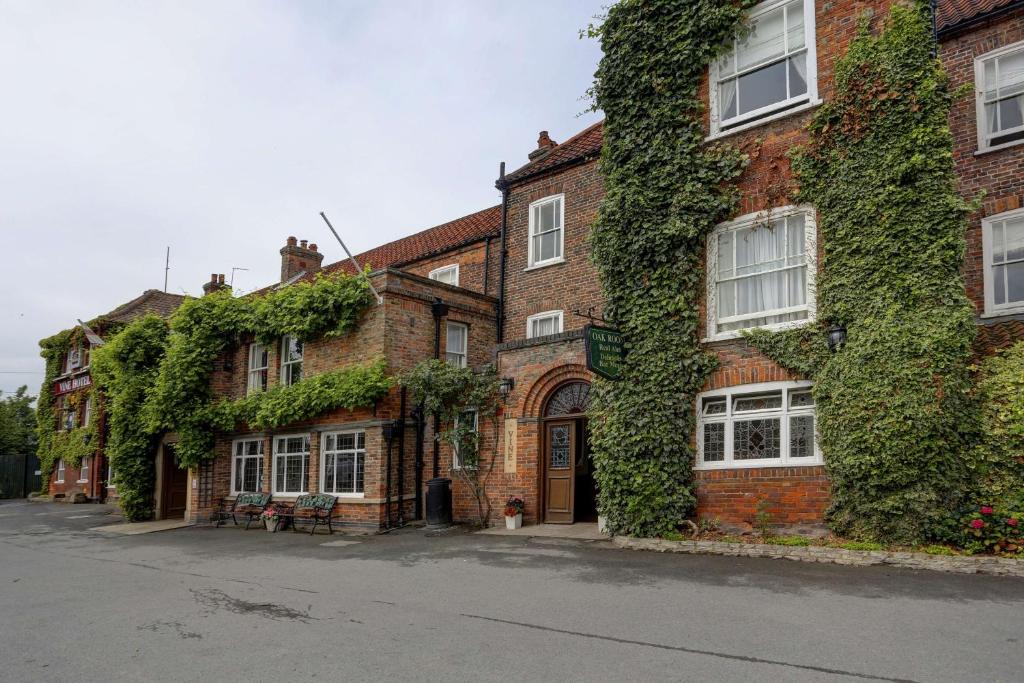
However there is a grisly legend of a male skeleton being discovered during 19th century renovations at the Vine Hotel, Skegness. He had been bricked into a cavity opposite the reception area and was still wearing the very tattered remnants of a uniform with buttons bearing the Royal insignia. But no hard evidence exists for this such as the current location of the skeleton or what happened to it although there have been rumours of ghostly happenings at the Hotel.

The Vine Hotel, Skegness.

There is also a very gruesome painting dated 1774 entitled ‘Bostonians Paying the Excise man or Tarring and Feathering.’  

So under spreading trees lie the two Officers of Excise, together for eternity, in a country churchyard.  But what a story they tell of smuggling and the men trying to foil them. RIP gentlemen you have done your duty.

© Carole Tyrrell

© Text and photos Carole Tyrrell unless otherwise indicated.

References and further reading:

https://birchingtonheritage.org.uk/Excise Men

https://birchingtonheritage.org.uk/SMUGGLERS in ALL SAINTS CHURCHYARD

http://www.nationalarchives.gov.uk/records/research-guides/customs-excise-tax-officers.htm – author Linda Taylor

The Excise Officer – Lincolnshire Folk Tales Project

(7) Borrowing Cats: Tangents-The Smugglers of Birchington

Snowdrops – the unofficial churchyard flower of February

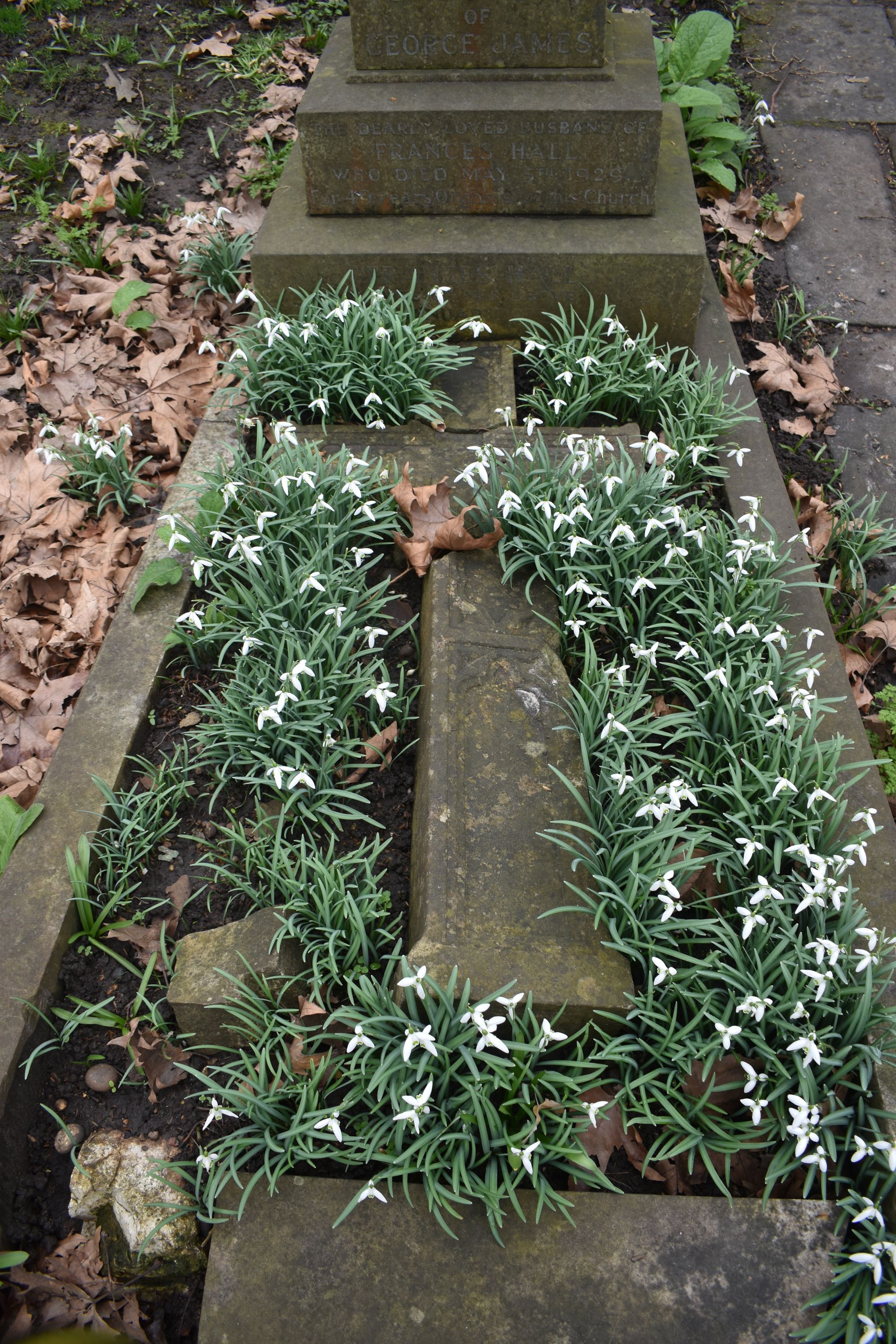
Snowdrops on the grave of George James, St George’s churchyard, Beckenham, Kent. © Carole Tyrrell

Dear all

I have not had access to my blog for a couple of weeks for various reasons. But I am now back and have been researching a group of headstones in the churchyard of St Nicholas, Stood, Kent.

But continuing last month’s theme of snowdrops, this was a lovely planting of them that I saw in St George’s churchyard in Beckenham Kent in February 2026. They are on the grave of George James.  The cross has obviously fallen at some point and I love the way in which the flowers have grown up around it and emphasised its shape.  Churchyards can often have magnificent displays of snowdrops in February which is one of the first signs of Spring.