
copyright Carole Tyrrell
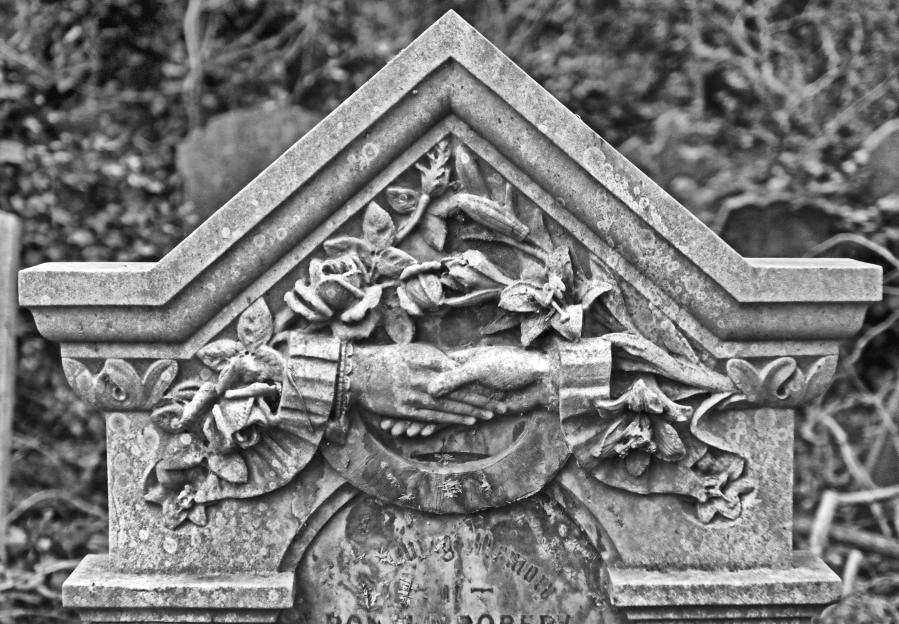
This is one of the most common symbols in a Victorian cemetery and visitors on my tour often ask about it. Initially the handshakes may all look the same but, if you look carefully, there are differences. Although a handshake is a traditional way of saying goodbye or farewell, as with other funerary motifs, it can have several meanings.
For example, it can signify the parting of a wife from her husband or vice versa and this is demonstrated by the fact that on several examples that I’ve seen there are two carefully delineated cuffs. One will have a more attractive, perhaps a frilly one, with the other having a plainer one to indicate the husband. This emphasises a marital connection or at the very least a close bond. It has also been suggested that the deceased person is holding the other’s hand to guide them to heaven.
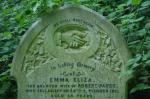
This epitaph is to Eliza Pavey and the differentiation of the cuffs can be seen quite clearly on the handshake. Also his right hand clasps her open right hand with his fingers overlapping. On this tombstone it confirms marriage or a close bond between individuals, unity and affection even after death. There is also a saying above it which reads ‘We shall meet again’. Eliza left behind a sorrowing husband who clearly wanted the comfort of knowing that they would meet again in the after-life. Note the ivy leaves surrounding the handshake which indicate evergreen or everlasting. She died at 54, which is quite a young age at which to die, and her husband, Robert, outlasted her by another 20 years.
copyright Carole Tyrrell
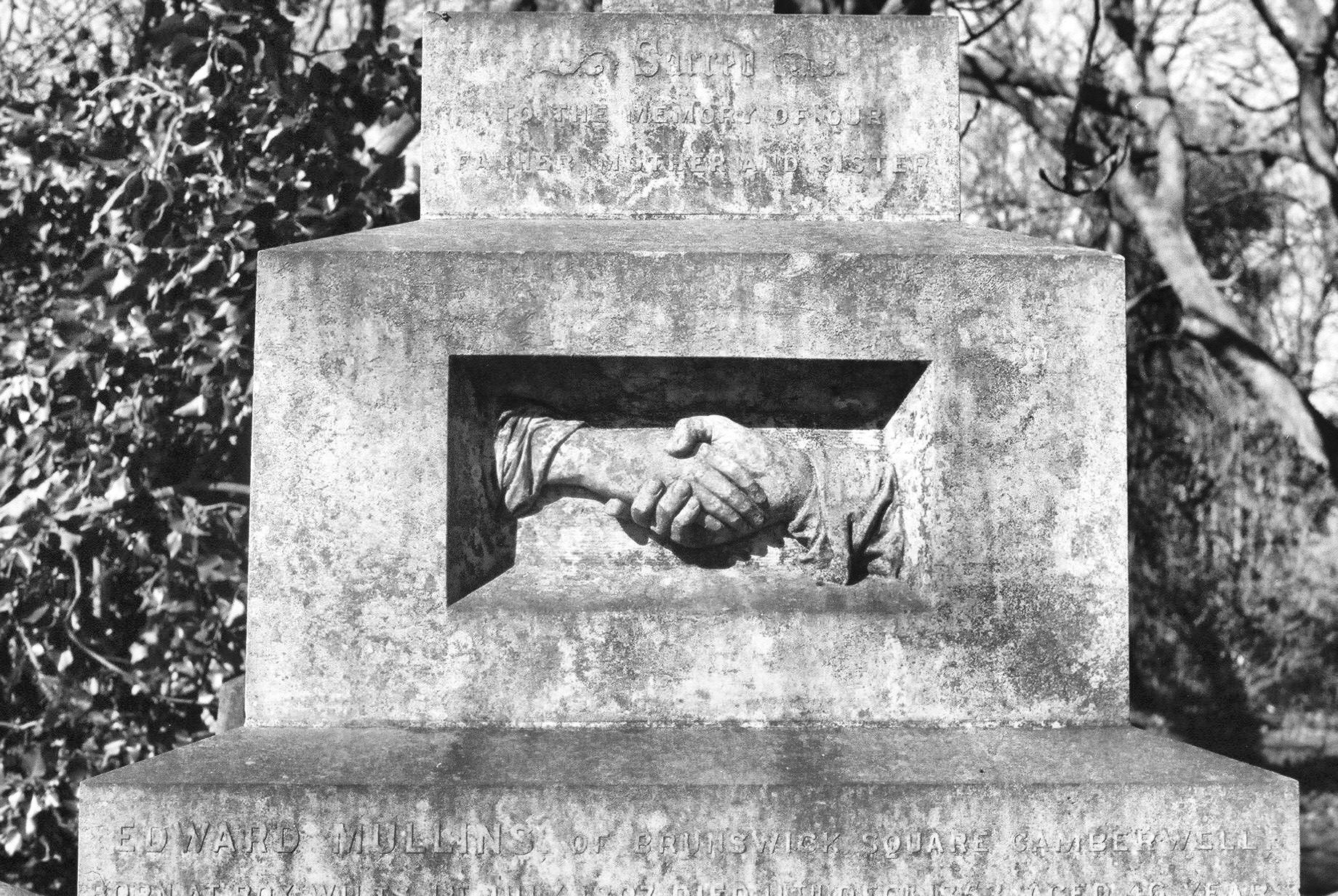
A particularly striking and beautifully carved example is on the Edward Roscoe Mullins vault. There are several examples within Nunhead Cemetery but these are the best in my opinion. Mullins was a Victorian sculptor and began his career working with classical themes and then moved onto municipal sculpture such as on Croydon Town Hall amongst others. This has been extremely well sculpted, in my opinion, with the two hands and cuffs being sharply defined.
The handshake can also be a representation of hope as there is a suggestion of meeting again in the afterlife.
copyright Carole Tyrrell
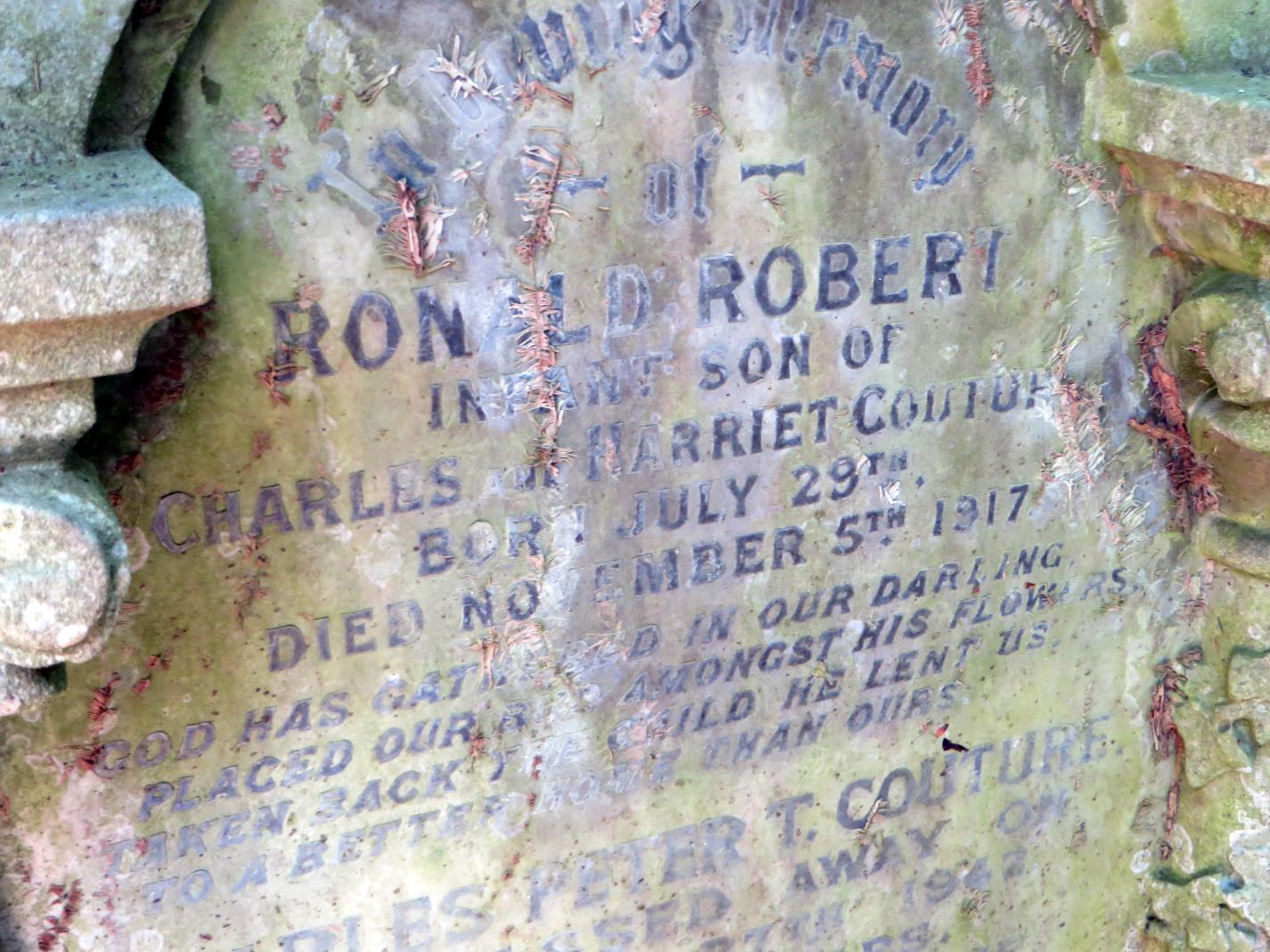
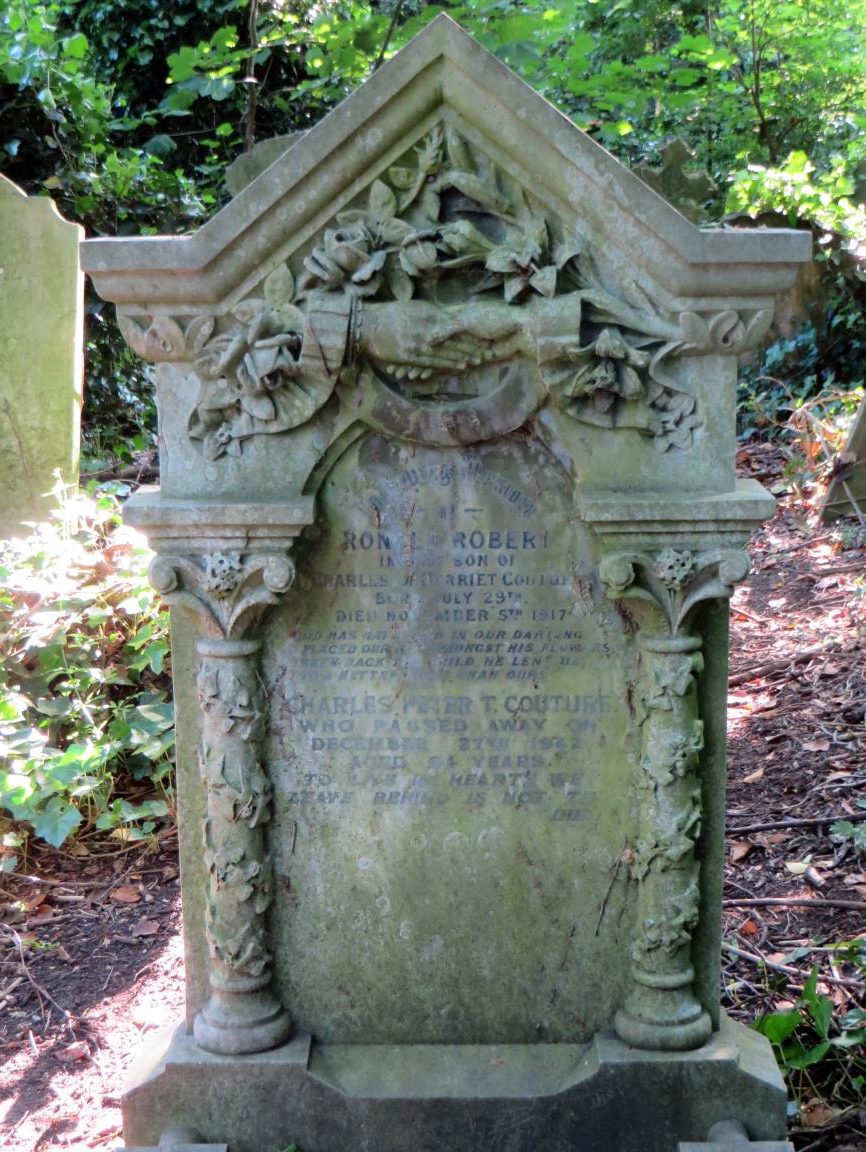
This is the poignant memorial to Ronald Robert Couture who died in his infancy at just over 3 months old. The handshake is garlanded with flowers; roses which represented love, beauty and hope and also daffodils which meant regard in floriography, the language of flowers. There is a rosebud in the garland which often appears on childrens memorials. It represents a life unfulfilled, a rose that never opened and bloomed. There is also ivy entwined around the two pillars. This beautiful and elegant monument to an obviously much wanted and much missed child would indicate that here the handshake is a hopeful sign.
The handshake may also be a reminder of ‘see you soon’ from the deceased to their sorrowing close relatives which may not be as comforting as it sounds with the Victorians high mortality rate.
Ultimately, the handshake is a symbol of comfort and reassurance from the departed to those left behind and in the case of Ronald Couture, that his brief life was not forgotten.
©Text and photos Carole Tyrrell unless otherwise indicated.
Reference:
https://cemeteries.wordpress.com/2008/05/06/handshake/
http://www.thecemeteryclub.com/symbols.html
Stories in Stone; A Field Guide to Cemetery Symbolism and Iconography, Douglas Keister, Gibbs Smith, 2004
 shadows fly away
I will look more closely at a handshake on memorials. Fascinating details! I had forgotten that roses meant love.
LikeLike
Also – you have made me so much more aware of the symbolism of what is on gravestones!
LikeLike
Thanks Coastal Crone – even I was surprised at the variation in the use of handshakes in one cemetery.
LikeLike
Hello
I too photographed the MULLINS stone, when I was in the UK last year. Today i’m just researching a bit about Edwin Roscoe MULLIN’s and it seems he isn’t actually buried at Nunhead cemetery.
According to https://en.wikisource.org/wiki/Mullins,_Edwin_Roscoe_(DNB12) He was cremated at Golders Green and ashes buried at Hendon Park. At least one other mentioned on the headstone also isn’t buried there.
Just thought I would clarify for readers. More information on the MULLINS with my photograph https://www.flickr.com/photos/porkynz/18928360536/in/dateposted-public/
Regards
Sarndra
LikeLike