

The Adams headstone, Birchington-on-sea. © Carole Tyrrell
What a difference a sunny day makes in a churchyard! I revisited All Saints in Birchington-on-Sea earlier this month to look for the first snowdrops and found several headstones of interest that I’d missed. The headstone with the two-dimensional carving of an anvil above the epitaph was now clearly readable and I could see that it was dedicated to a couple: Elizabeth Adams (1813-1888) and Josiah Lyon Adams (1805-1898). According to the Kent Parish Clerks online website, they had 3 children, all boys and Josiah was definitely the village blacksmith. He is commemorated below his wife on the headstone.
The verse below the still crisp carving of the anvil and hammers reads:
‘Thou shalt come to thy grave in a full act like,
as a shock of corn cometh in the season.’
This comes from the Book of Job 5:26 and has been assumed to emphasise the natural cycle of life and death. Anvils are traditionally associated with blacksmiths working in their forges but they do have other associations.
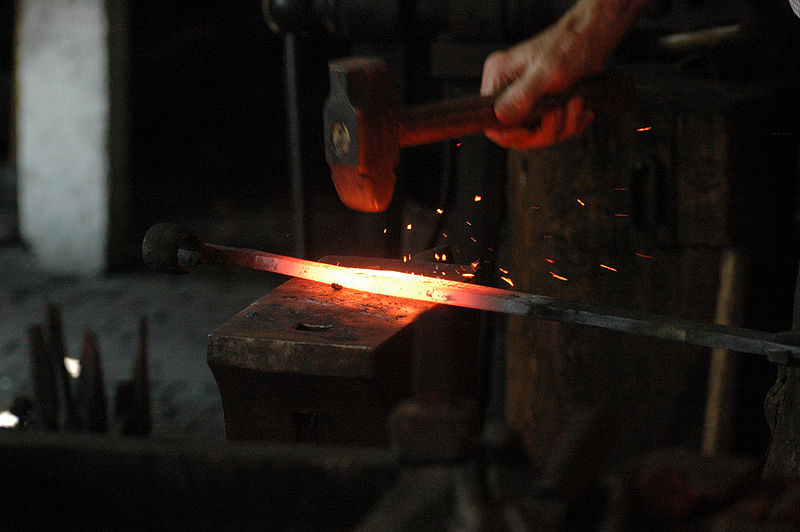
Blacksmith in forge at his anvil. Shared under Wikimedia Commons
The blacksmith would have been an important person within the community and his skills would have been much in demand. The anvil is one of the most basic craftsman tools and has not changed for thousands of years. I have seen photos online of 3 dimensional anvils on graves but have yet to see one. However, the anvil has been superseded by other ways of working metal such as welding and steam hammers.
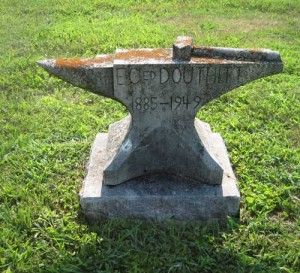
3 Dimensional anvil and hammer on grave found on Pinterest.
An anvil is a solid block of steel or iron with a flat top which is called the ‘face’, often with a pointed ‘horn’ at the front and a flat ‘heel’ at the back with holes for attaching tools. They are very heavy as you can imagine and durable with a quality of ‘liveliness’. This means that they cause the blacksmith’s hammer to bounce back after each blow and onto the metal.
It’s a powerful act of creation and transformation when a piece of metal is hammered into a shape to become another object. As a result, it can be seen as an act of transformation as well as a demonstration of craftsmanship and the use of base metals to create something new. It has been suggested that it is also a potent symbol of enduring the blows of life while shaping our destiny.

St Dunstan shoeing the devil’s cloven foot. Project Gutenberg.
St Dunstan is the patron saint of blacksmiths and used his skills to defeat the devil. The story goes that, while living in a cell at Glastonbury after leaving the royal court, an old man appeared at his window and asked the saint to make a chalice for him. St Dunstan agreed and began to work on it. But as he did so, the old man changed his shape and appearance several times until, finally, he became an attractive woman. St Dunstan realised that his visitor was actually the devil when he saw a cloven hoof under her dress. So, he heated up his tongs until they were red hot and then used them to seize the devil by the nose. Despite the Devil struggling and screaming, St Dunstan held on until the Devil admitted defeat and thrown. He then fled while complaining loudly.
Another legend associated with St Dunstan includes nailing a red hot horseshoe onto one of the Devil’s hooves after noticing that he was limping. The saint refused to take it off and made the Devil promise that he would always respect the horseshoe symbol and never enter a building that was protected by it. This is is believed to be the explanation for horseshoes being nailed over doorways for good luck.
Anvils appear in other cultures and civilisations. For example, in Norse mythology, Brokerr and Sindri, two dwarf brother blacksmiths, created the powerful hammer Mjolnir on an anvil. It was then used by the god, Thor, to create thunderstorms. The Greek god, Hephaestus, who was renowned for his metal working skills, used his anvil to create powerful weapons for his fellow gods as in Homer’s The Iliad. So, the anvil has associations with warfare as well as more domestic creations.

The Third gift – an enormous hammer – © Elmer Boyd Smith 1860-1943 Shared under Wikimedia Commons
They are also traditionally associated with wealth and good luck due to their ability to forge a prosperous future. It is believed that placing an anvil in the home or workplace can also attract wealth and success.
On a lighter note, anvils have often appeared in many cartoon or comedy sketches as they fall on characters with a huge bang! This gag was mainly used in Warner Bros Looney Tunes and ‘Merrie Melodies’ cartoons. Tom Slatin’s online article discusses this and why people find it funny.
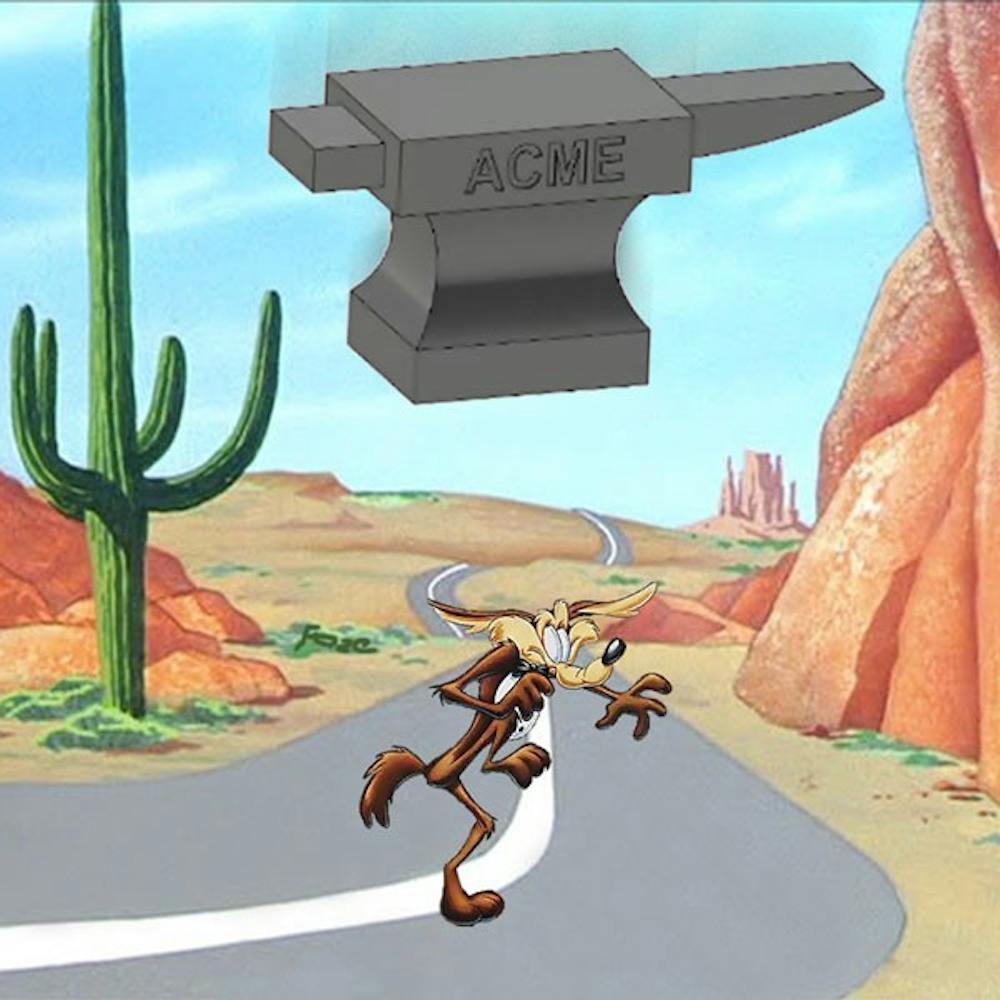
© Photo by Faze
By contrast, there are also other, more spiritual associations such as the anvil being a representation of:
‘the challenges and obstacles that we may face in life with the hammer symbolising the strength and perseverance to overcome them.’ symbolsage.
This may seem a little fanciful but the anvil has always been a firm foundation on which to build and create new objects under the flickering flames and heat of the forge.
© Text and photos Carole Tyrrell
References and further reading
Anvil | Symbols
Symbolism of Anvils: Meanings and Interpretations
Anvil Symbolism & Meaning – Symbolopedia (more information about dream symbolism and anvils)
19 Powerful Symbols of Perseverance and What They Mean
http://Treestump anvil Gravely speaking
Fran Jurga`s Hoofcare + Lameness: St Dunstan and the Devil: Why We Hang Horseshoes Over Doors
A Clerk of Oxford: Stories of St Dunstan, 4: Dunstan and the Devil
** Kent Online Parish Clerk ** – Birchington, Christenings 1801 – 1880
https://www.tomslatin.com/the-history-of-the-anvil-gag-in-classic-cartoons/#:~:text=The%20first%20time%20an%20anvil%20was%20used%20as,height%2C%20causing%20him%20to%20sink%20into%20the%20ground.
 shadows fly away