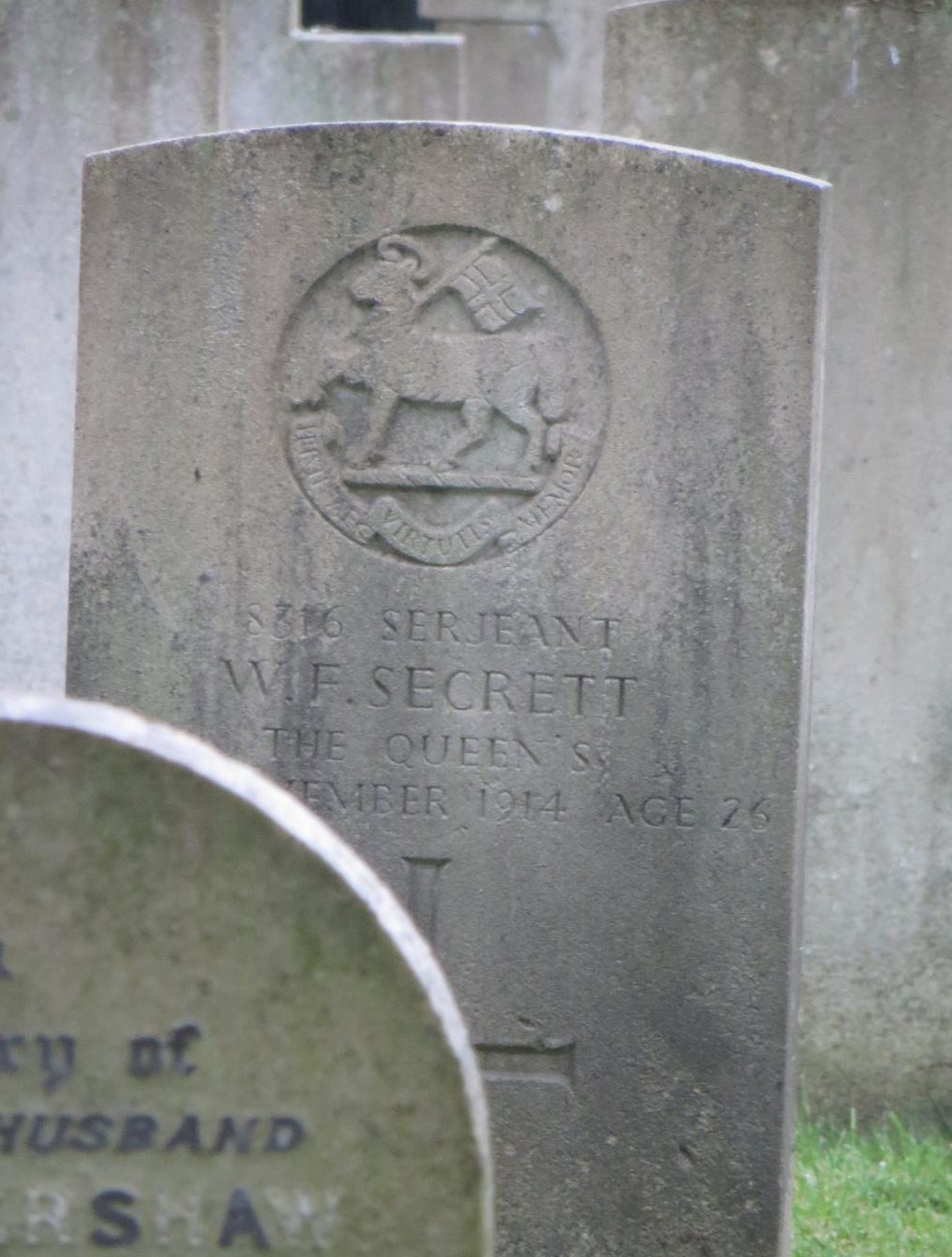
This month’s symbol is the Agnus Dei, which is a Latin term and can be translated as The Lamb of God. The Lamb is usually portrayed sideways on and is often depicted with a variety of accoutrements such as a cross, a banner and a halo or a combination of these elements. In the example above, the Lamb is carrying a cross which represents the Crucifixion as well as a banner which, according to J C Cooper, is an emblem of the Resurrection. It has also be depicted with other motifs such as a shepherd’s crook, Chi-Rho crosses and the alpha/omega.
I have seen The Lamb several times as it is common throughout Christian art and I saw a fine example within a stained glass window in Augustus Pugin’s private chapel at his former home at Ramsgate, Kent. William Morris also created a memorable one, now sadly faded, in a window at St Martin’s church, Scarborough. The Agnus Dei is known as a Paschal Lamb within heraldry and is the regimental emblem of the Queens Royal Surrey Regiment. I found this example in the military war graves section of a London cemetery..
But the origins of the Lamb go back much further into antiquity. In John 1:29, it’s seen as a direct allusion to Jesus:
‘The next day John seeth Jesus coming unto him, and saith, Behold the Lamb of God, which taketh away the sin of the world.’
This verse emphasises Christ’s sacrifice for humanity’s sins and there are several references in the Old Testament to lambs as sacrificial objects. For example, the Israelites sacrificed one as a representation of a human sinner. In this way, its death signified the absorbing of original sin. This painting, The Sacrificial Lamb, is by the 16th century artist, Francisco Zurbaran.
Francesco Zurbaran (1598 – 1664) The Lamb of God, Prado Museum, Madrid shared under Wiki Commons
Sheep have been also been worshipped as deities by several ancient civilisations including he Sumerians. The Bible contains numerous references to sheep with God being seen as the shepherd of a vast flock of sheep that represents humanity.
But as a funerary symbol within cemeteries and graveyards the Lamb represents gentleness, innocence and the unblemished life of the deceased. In this context, it is supposed to mark the grave of an infant or child. However, the epitaph on the example that I found in Brompton Cemetery had completely vanished which made it difficult to disprove or support this theory. However, I particularly like this one with its black background emphasising the light rays emanating from the Lamb. These highlight its divinity within the unusual lozenge shaped tombstone. But it’s a real shame that we don’t know whose buried there.
The Lamb is also associated with resurrection and there is an example at the back of the Doulton mausoleum in West Norwood Cemetery.
I’m surprised that it doesn’t appear more often within cemeteries and graveyards and I will be looking out for more examples. Although I was aware that the symbol was called the Lamb of God I didn’t know of its association within major religions and civilisations. It has been fascinating to research this.
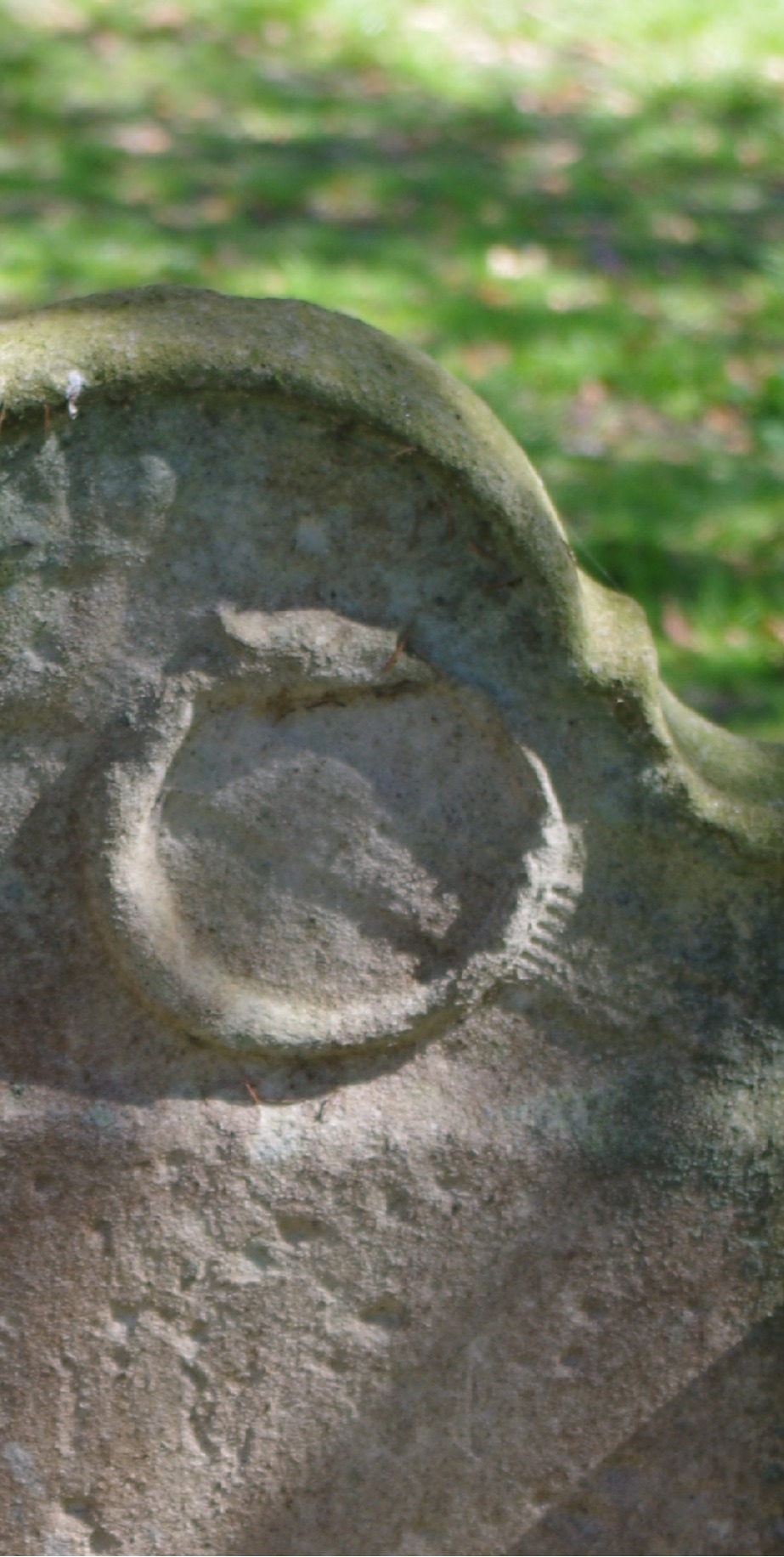
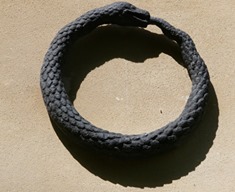
This is only one of the several positive and powerful meanings of the ouroboros which is one of the most ancient symbols known to man. It’s depicted as a snake eating its own tail to sustain its life in an eternal cycle of renewal and it usually forms a full circle. It occurs in many cultures, religions and beliefs. The psychologist, Jung, called it an archetype which is best described as:
‘a primitive mental image inherited from the earliest human ancestors, and supposed to be present in the collective unconscious.
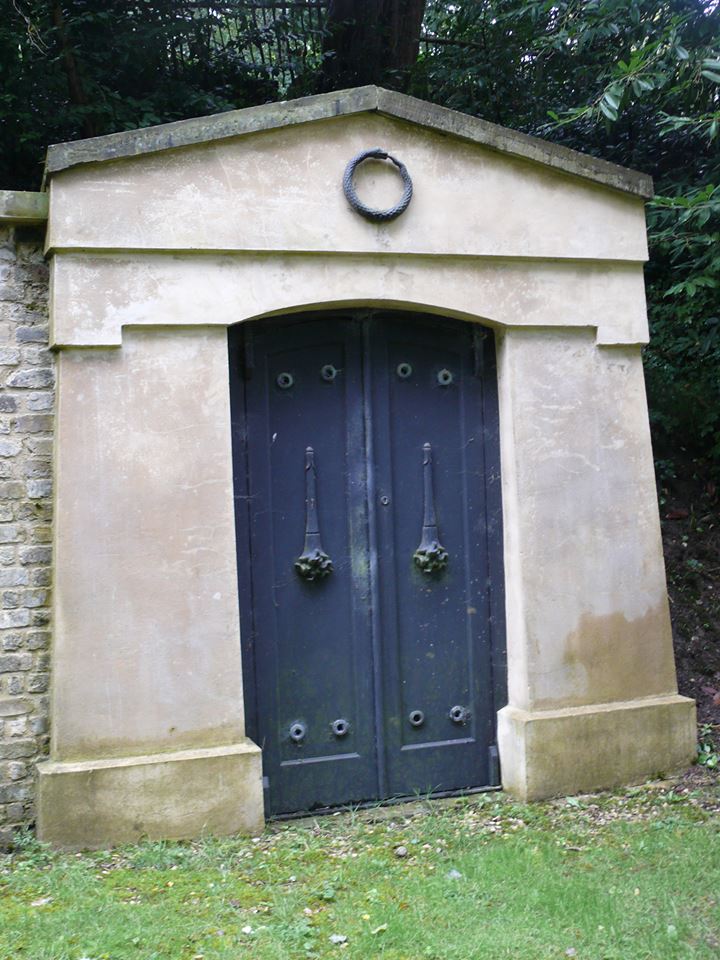
A lovely picture of an ouroboros on a mausoleum in Highgate West. copyright Jeane Mary – used with kind permissionThis is the mausoleum to which the ouroboros belongs. Note downturned torches on doors which are a sign of life extinguished. copyright Jeane Mary and used with kind permission.
The ouroboros appears in ancient churchyards and Victorian cemeteries as a symbol of resurrection. The snake is reborn as it sheds its skin and this fine example is on a mausoleum in Highgate cemetery, London. Victorian visitors would have understood its meaning. As a resurrection image it can be very positive as some of its other attributes are immortality, eternity and wisdom. However, as with most symbols , it can have several meanings. These include the Universe’s cyclic nature and life out of death and, as the snake sheds its skin it has a Phoenix-like cycle of life, death and rebirth. The Victorians revived several older symbols in a return to the classicism of ancient Greece and Rome.
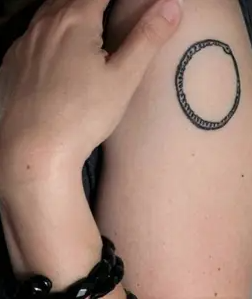
There is also a magnificent ouroboros on the gates of Sheffield General Cemetery. The Highgate one inspired the tattoo worn proudly above by Jeane Mary, a photographer and fellow cemetery explorer now sadly gone from us. She also wears a Whitby mourning bracelet based on the ouroboros in Highgate. Used with kind permission.
But the ouroboros origins lie in either ancient Greece or Egypt as both cultures have claimed it. In Greece, Plato described it as:
‘the first living thing, a self-eating, circular being’.
In fact, the Greek translation of ouroboros is ‘tail devouring snake’ and it’s associated with something constantly recreating itself and the eternal return.
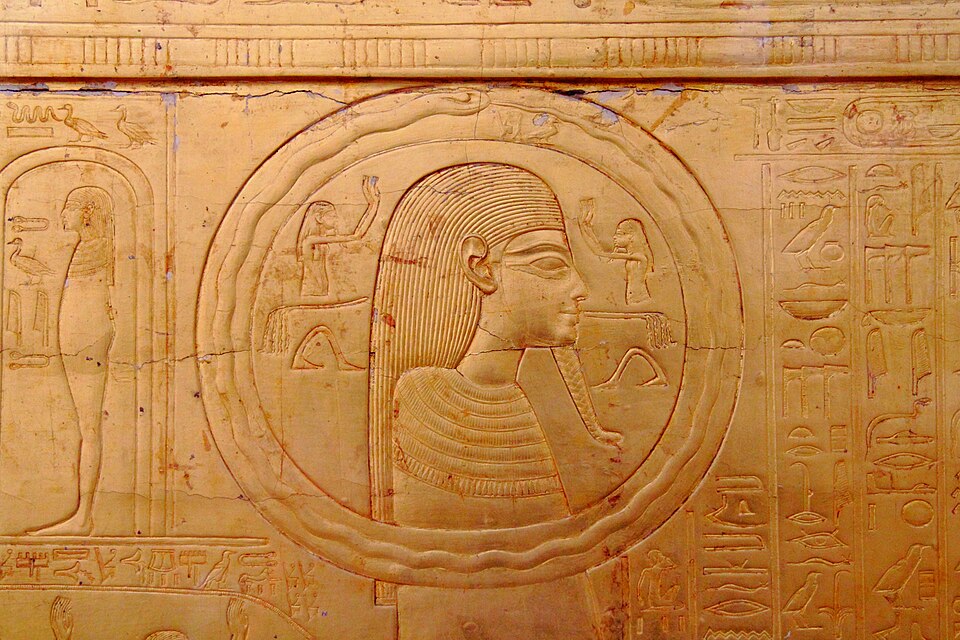
The earliest known depiction of an Ouroboros on one of the shrines enclosing the sarcophagus of Tutenkhamun. Shared under Wiki Commons. Egyptian Museum Cairo.
In Egypt, the ouroboros reputedly appears for the first time in the 14th century BC in Tutenkhamen’s tomb on an ancient funerary text. This depicts the Sun God Ra and his union with Osiris in the underworld and is illustrated with two serpents, holding their tails in their mouths, coiled around hands and feet. This may be a representation of the unified Ra-Osiris. Both serpents are reputedly the manifestation of the god Mehen, who in other funerary texts protect Ra in his underworld journey. I haven’t been able to find an image of this particular representation but I did find the one above which is claimed to be the earliest representation of an ouroboros.
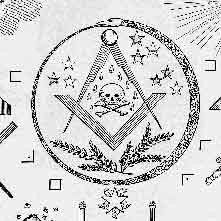
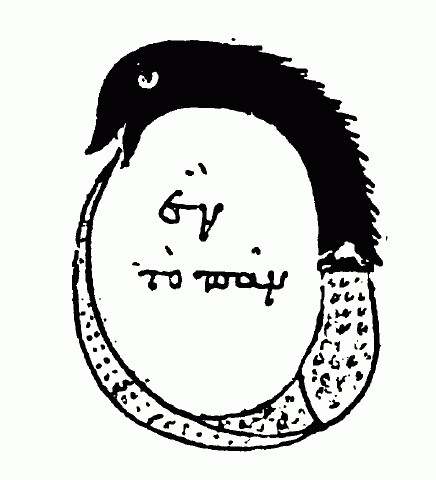
The ouroboros also appears in Hindu, Norse, Aztec and Chinese religions. In addition, it’s a significant alchemical symbo and features in Cleopatra the Alchemist’s work. There are also Masonic associations from numerous seals, frontispieces and other imagery dating from the 17th century such as the one below:
Alchemist ouroboros from Cleopatra the Alchemist Greco-Roman Egypt.
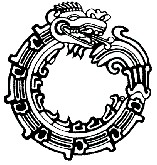
Aztec seven segmented ouroboros.
In China it can also take the form of a dragon and it features on the Magician card in the Rider- Waite deck of Tarot cards.
I found this quote online:
‘In other myths the ouroboros encircles the whole world, a circumference of the waters surrounding the earth. It can support and maintain the world and also inject death into life and life into death. Although apparently immobile, it’s actually in perpetual motion, forever recoiling upon itself.’
One of the many fascinating myths surrounding the ouroboros is the experience of the chemist, August Kekule, who was trying to discover the structure of benzene. This is how he described his Eureka moment :
‘I was sitting, writing at my text-book; but the work did not progress; my thoughts were elsewhere. I turned my chair to the fire and dozed. Again the atoms were before my eyes. This time the smaller groups kept modestly in the background. My mental eye, rendered more acute by the repeated visions of the kind, could now distinguish larger structures of manifold conformation: long rows, sometimes more closely fitted together; all twining and twisting in snake-like motion. But look! What was that? One of the snakes had seized hold of its own tail, and the form whirled mockingly before my eyes. As if by a flash of lightning I awoke; and this time also I spent the rest of the night in working out the consequences of the hypothesis.’
As I said earlier, Jung would see this dream as evidence of the ouroboros and its effect on the collective unconscious.
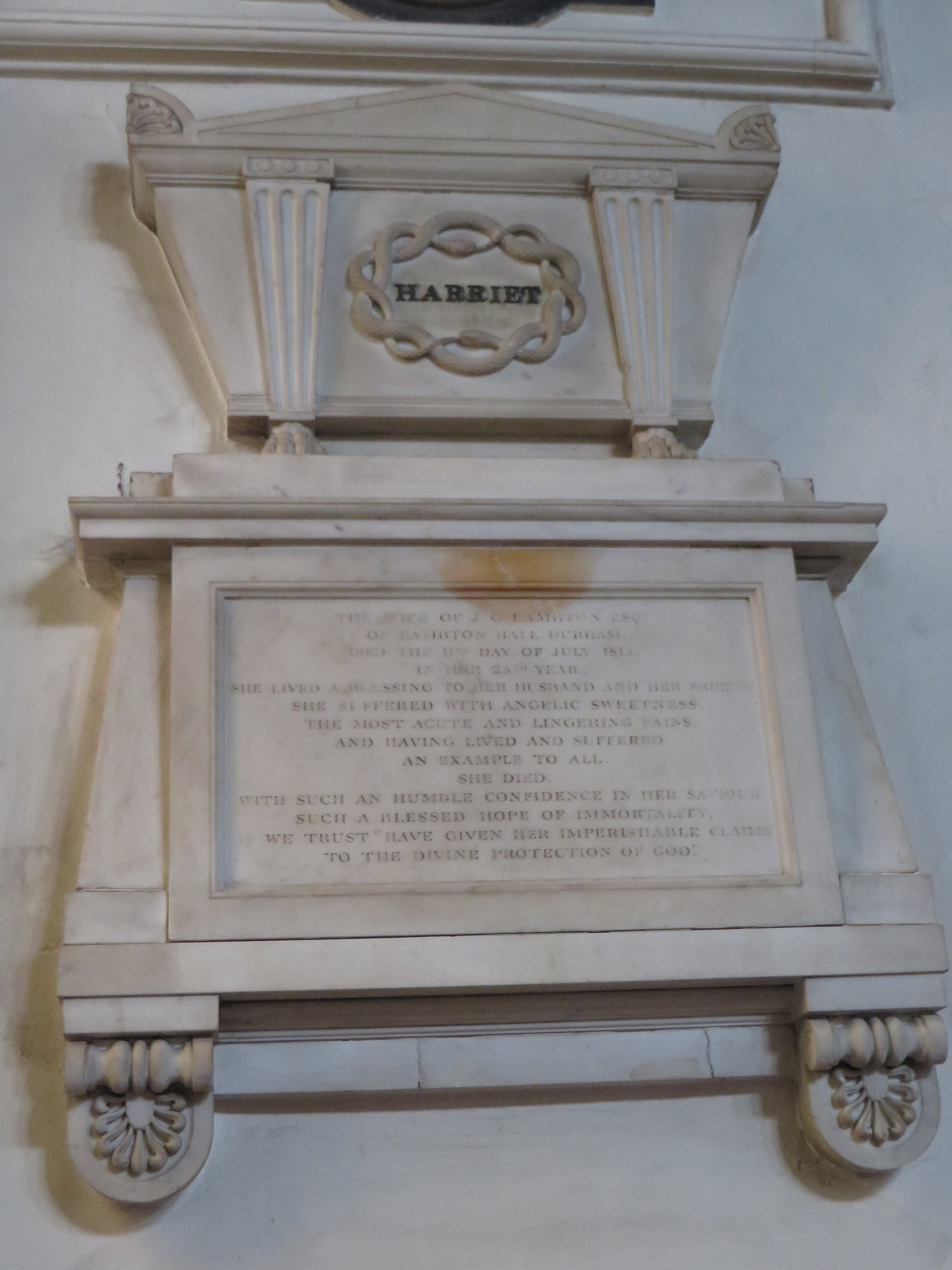
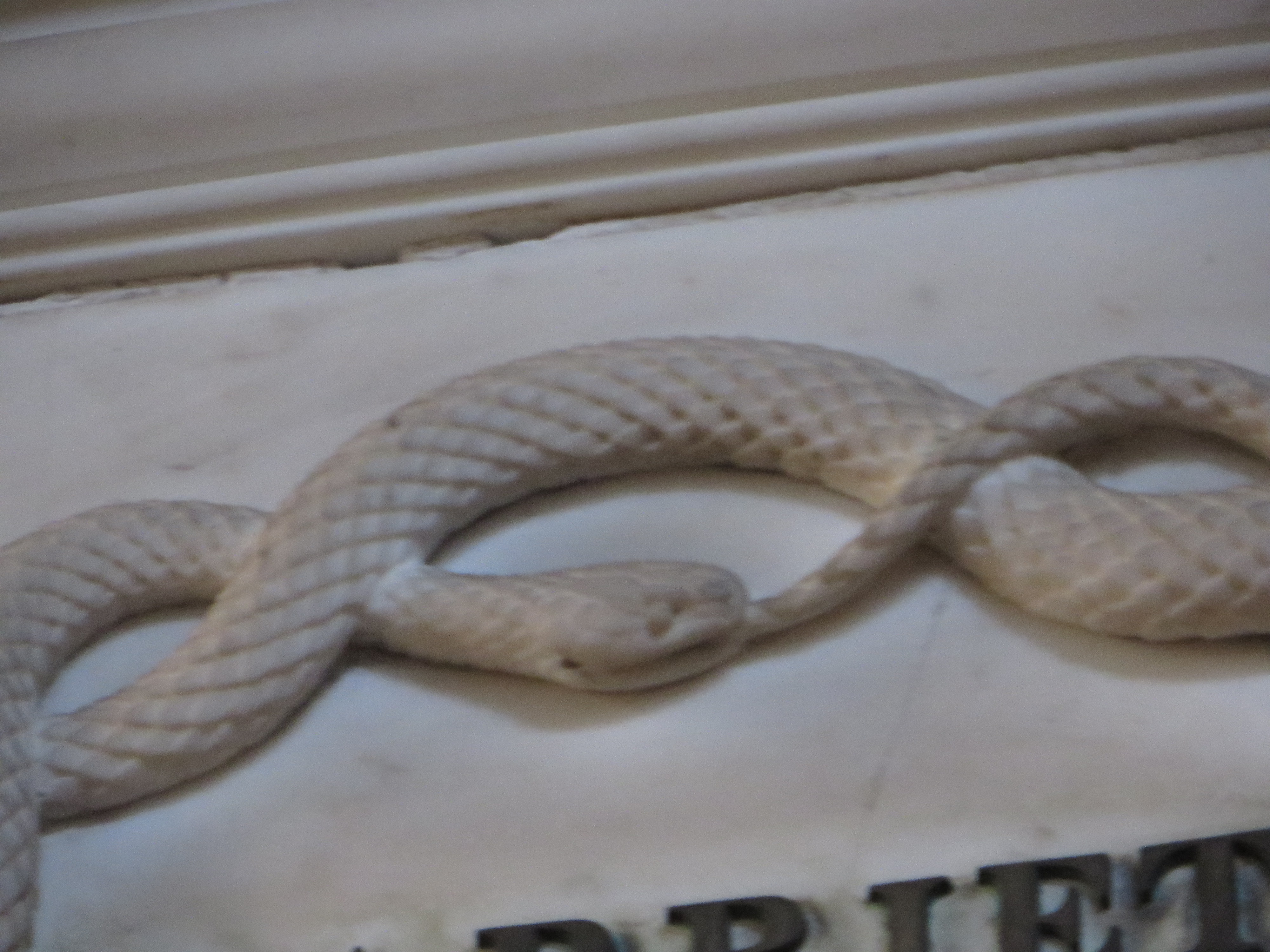
The monument dedicated to Harriet. St George’s church, Beckenham, Kent copyright Carole TyrrellClose-up of the snakes. St George’s church Beckenham, Kent. copyright Carole TyrrellHarriet’s epitaph shows that she was obviously much missed. St George’s church, Beckenham, Kent. copyright Carole Tyrrell
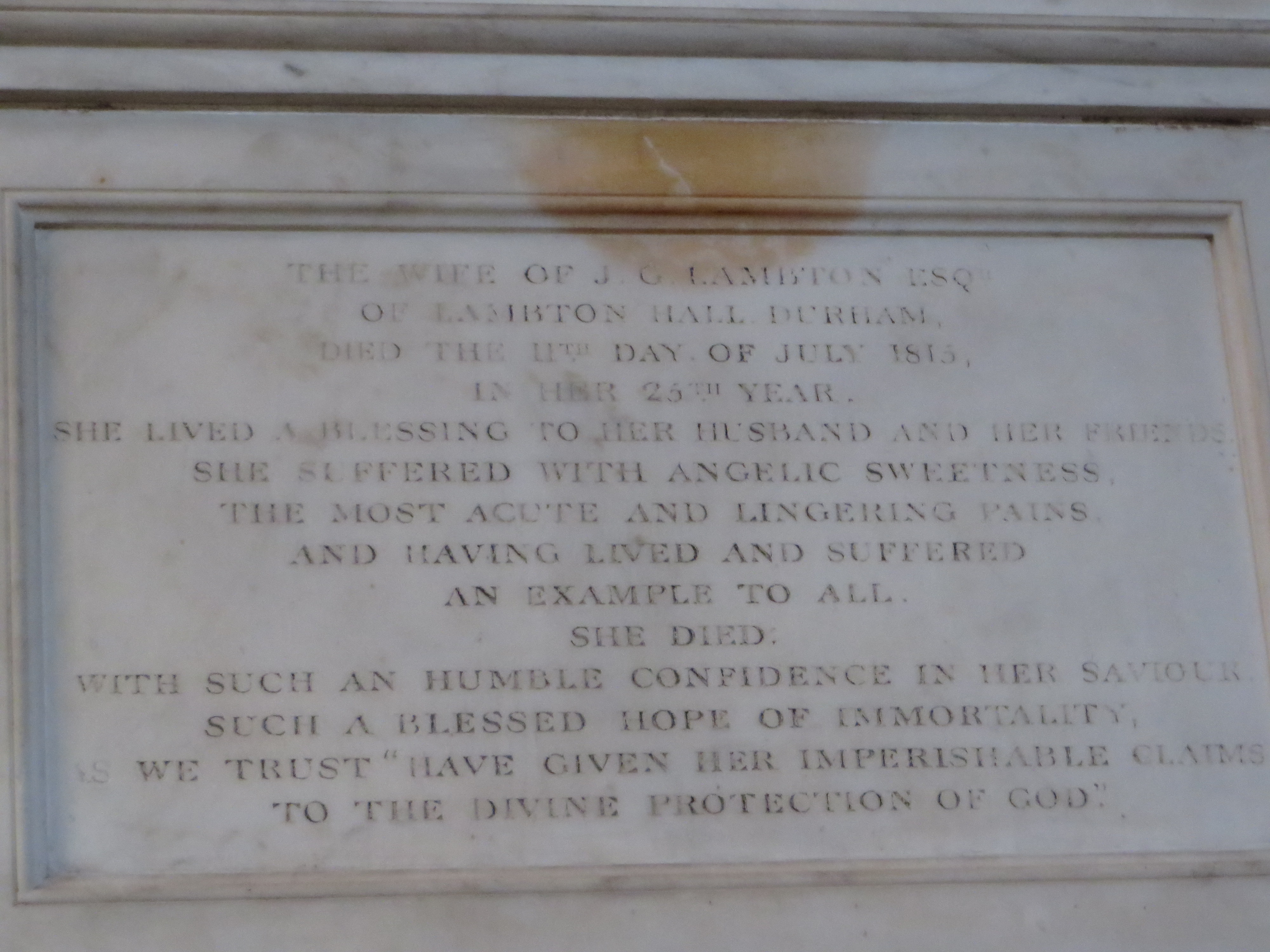
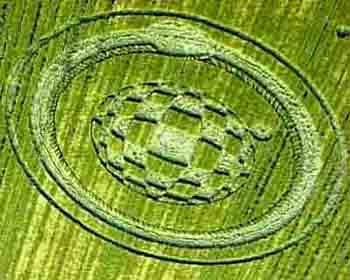
Although the ouroboros is usually depicted as a full circle, this is one that I found in my local church, St Georges in Beckenham. On first glance, it merely looks like an attractive, rippling border around the name Harriet and it dates from 1815. But on a recent visit, I looked closer and realised that it was actually composed of 2 entwined snakes, each biting their own tail. When I spoke to a churchwarden, she had always thought that, due to the patterning on the snakes’ bodies, that it was two entangled pieces of rope. It is a poignant memorial to a young wife who died aged 25 after suffering the ‘most acute and lingering pains.’ So it would have been a potent reminder of resurrection. More recently, the ouroboros has also appeared as part of a crop circle.
The ouroboros is one of the most intriguing and interesting symbols that I have researched. It is a universal image of rebirth, hope and eternity.
The skull and crossbones was one of the central motifs of 18th century Memento Mori and intended to be a stark and macabre reminder of the viewer’s inevitable destination. They would be all that would remain of you after death.
However it wasn’t a very comforting message to either the loved ones left behind or to the living.
But fashions and tastes change, even in funerary symbolism, and the skull and crossbones had served their purpose.
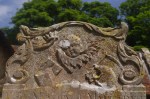
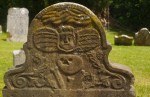
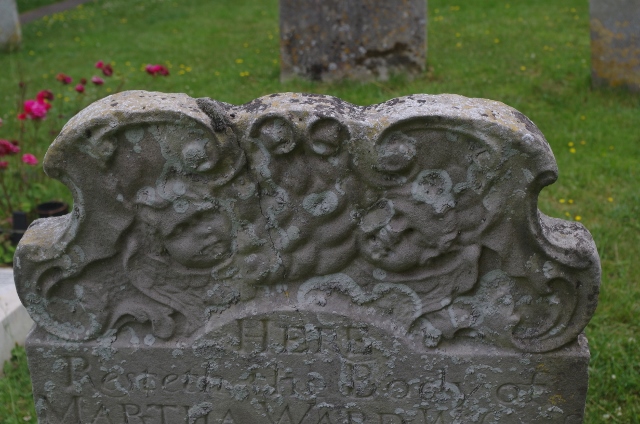
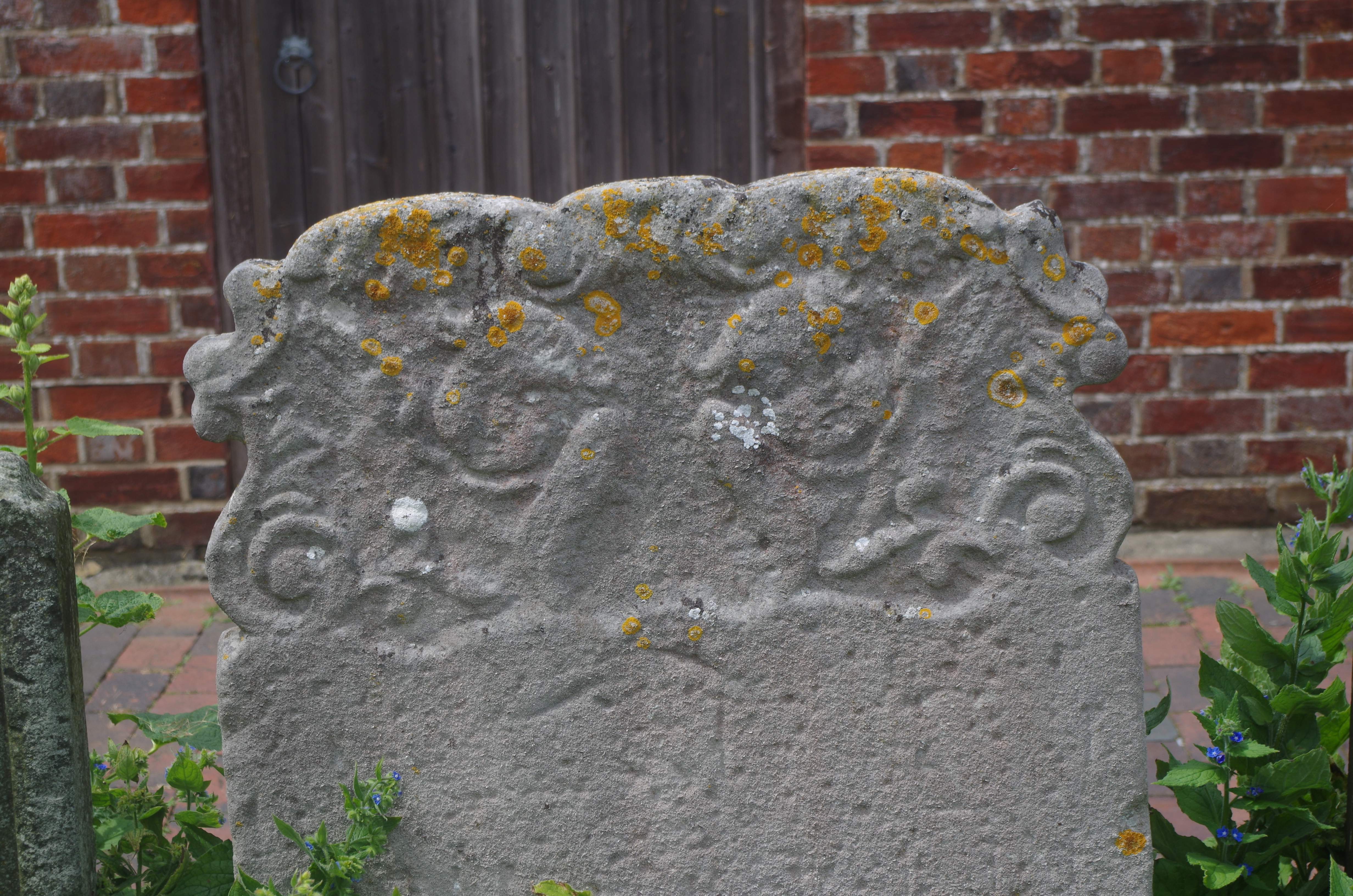
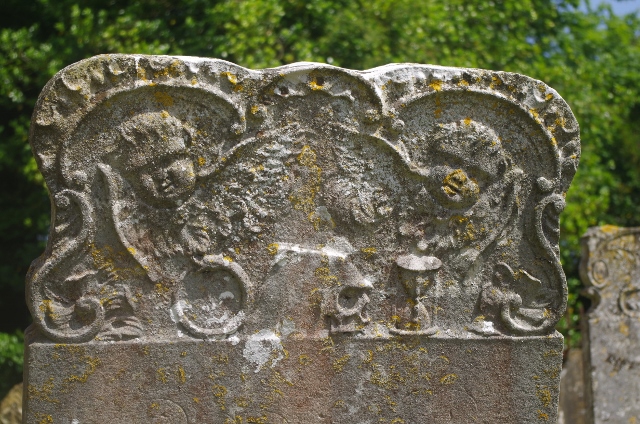
Instead they were replaced by the winged soul. This consisted of a small child’s head flanked by a pair of wings or a garland of leaves. They have the faces of babies with big, round eyes, plump cheeks and pouting lips and resemble Renaissance putti which are child-like. Putti represent the sacred cherub as they are known in England.
The winged soul may have been intended to be a more comforting image as the wings represented the soul of the deceased ascending to heaven. This could also give hope of a resurrection to those left behind. According to headstone symbols:
‘In the USA the winged soul is known as a soul effigy.’
It was immensely popular and in my explorations of medieval Kent churches and their churchyards I found many examples. In fact, in one or two churchyards they outnumbered the skull and crossbones symbol. They mainly had one winged soul on a headstone but there were sometimes two or three clustered together as in these examples:
They can also appear in several combinations with other classic memento mori symbols as here:
In addition, every mason seemed to have his own interpretation of feathers as they can be carved as typical fluffy feathers, to resemble broad leaves or be very stylised.
With wings in general they are an important symbol of spirituality. They express the possibility of flying and rising upwards to heaven. For example, in the Hindu faith, they are:
‘the expression of freedom to leave earthly things behind…..to reach Paradise.’
New Acropolis
However, as the full flowering of the Victorian language of death in the 19th century began to appear the emblems of memento mori were retired. Although a couple, such as the hourglass and ouroboros, were revived.
But I did find two modern examples of the winged soul in the churchyard of St Martin of Tours in Eynsford, Kent and one is featured above. For years I had always thought of the winged soul as being a more general symbol and merely a decorative feature. I called them winged cherub heads or death heads and never considered that they might have had a specific meaning or purpose. It was exciting to see so many variations and interpretations, sometimes within the same churchyard. But it depended on the skills of the mason as to how well they were carved and whether they were 2 dimensional or 3 dimensional.
But, as a message of comfort, it is one of the most poignant in memento mori. The other central motifs emphasise time running out and what will be left behind. The winged soul suggests an eternal life and a more uplifting message.
Poking about in churchyards as is my wont is how I discover symbols to write about. It was while exploring two churchyards in Kent, All Saints in Frindsbury and St Martin of Tours in Eynsford, that I discovered this month’s symbol.
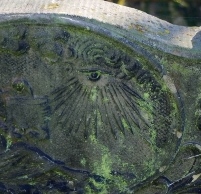
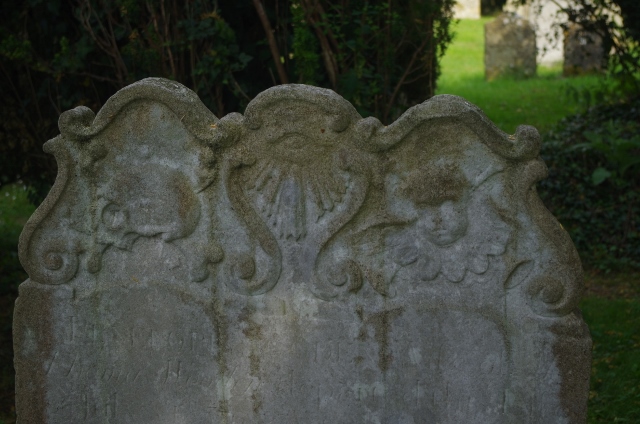
This is the All Seeing Eye, also known as The Eye of Providence, and is usually depicted as a single realistic eye within a triangle or within a burst of light. I’ve always associated it with Freemasons as it appears on their documents. But neither of these headstones had any other symbols linked with Freemasons such as the square and compass. So what was the story?
The one in the churchyard of St Martin of Tours in Eynsford was bordered by what looked like two snakes with a skull and crossbones and a winged spirit on either side, familiar memento mori symbols. Sadly the epitaph is now illegible.
The second one is in the churchyard of All Saints in Frindsbury and this intriguing version is on the grave of the Caryer family. The Kent Archaeological Society thought that it might represent the Woman of Samuria as featured in John 4.4-26 but I’m not sure about that. (see Symbol of the month – the womand from Samaria or a Greek goddess? 27 January 2021) The epitaph reads: ‘Sacred To the memory of Hannah wife of John Caryer Died 9th Sept 1809 aged 30 years Also Robert her son Died 28th June 1801 aged 8 years Also the above John Caryer Died 11th March 1814 aged (4)2 years.’
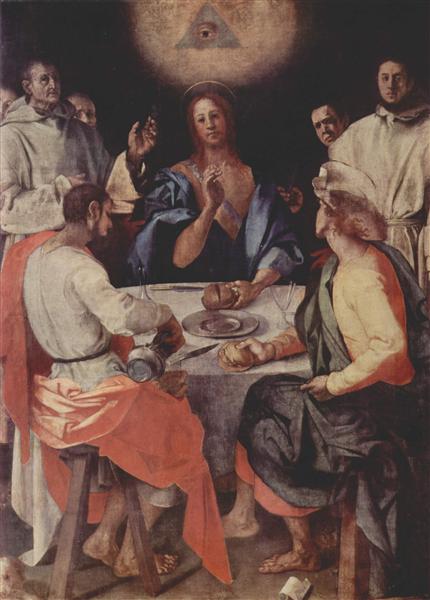
The earliest known representation of The Eye is in a painting called ‘The Supper at Emmaus’ by the Italian painter Jacopo Pontormo in 1525. This was painted during the Renaissance and it depicts the second part of the Second Appearance story in Luke 24: verses 13.35:
‘And they drew nigh unto the village, whither they went: and he made as though he would have gone further. But they constrained him, saying, Abide with us: for it is toward evening, and the day is far spent. And he went in to tarry with them. And it came to pass, as he sat at meat with them, he took bread, and blessed it, and brake, and gave to them. And their eyes were opened, and they knew him; and he vanished out of their sight. And they drew nigh unto the village, whither they went: and he made as though he would have gone further. But they constrained him, saying, Abide with us: for it is toward evening, and the day is far spent. And he went in to tarry with them. And it came to pass, as he sat at meat with them, he took bread, and blessed it, and brake, and gave to them. And their eyes were opened, and they knew him; and he vanished out of their sight.’
As you can see the Eye is above Christ’s head which shows that God is watching the event and so can be seen as a Christian symbol. On the Ancient Origins website it’s claimed that
‘the elements surrounding the eye also have a Christian meaning. For example, the triangle surrounding the eye also have a Christian meaning in that it’s a clear reference to the Holy Trinity – the Father, the Son and the Holy Spirit. The burst of light is meant to symbolise divinity, holiness and God himself’
Within the Bible there are many references to The Eye in the context of God keeping watch and observing in Proverbs and Ecclesiasticus and also from Psalms 33: verse 18:
‘The LORD is in his holy temple, the LORD’s throne is in heaven: his eyes behold, his eyelids try, the children of men. Behold, the eye of the LORD is upon them that fear him, upon them that hope in his mercy . . . . The eyes of the LORD are upon the righteous, and his ears are open unto their cry.’
But older religions and faiths such as Hinduism and the Ancient Egyptians also had an important eye symbol.
In Egypt it was known as the Eye of Horus. Even today it’s still used as an emblem of protection and good health. The Eye was also known as a wadjet (the whole one), wedjat or udjat. Sailors would often paint the Eye of Horus on the prows of their ships to ensure a safe voyage. I’m sure that I’ve seen this on a boat or two in some of Hollywood’s classic sword and sandal epics! The depiction of the Eye of Horus is said to resemble the markings on a falcon’s eye due to the teardrop marking which is sometimes found below the eye as here. This would make sense as Horus is usually shown as a falcon. There are several myths about Horus and his eye. For instance, in one of them Horus fought with Set who gouged out Horus’s left eye which was later restored by a goddess.
The Eye also appears on the US one dollar bill. But it made its first appearance as a Freemason symbol on the personal seal of Robert Moray (1609-1673) who was a Scottish Freemason. Then during the 18th century it appeared again in two Freemason books, one of which was Thomas Smith Webb’s ‘Freemasonry Monitor’ and, by the 19th century, it had become part of the permanent hieroglyphical emblems of the Freemasons. There are other associations with the Illuminati and, if you’re interested, there is more information online.
But with these two All Seeing Eye symbols I think that they were meant, as they often are, to be a comforting message. The departed, and the bereaved, were all being watched over and supported at a time of sorrow and grief.
What a difference a sunny day makes in a churchyard! I revisited All Saints in Birchington-on-Sea earlier this month to look for the first snowdrops and found several headstones of interest that I’d missed. The headstone with the two-dimensional carving of an anvil above the epitaph was now clearly readable and I could see that it was dedicated to a couple: Elizabeth Adams (1813-1888) and Josiah Lyon Adams (1805-1898). According to the Kent Parish Clerks online website, they had 3 children, all boys and Josiah was definitely the village blacksmith. He is commemorated below his wife on the headstone.
The verse below the still crisp carving of the anvil and hammers reads:
‘Thou shalt come to thy grave in a full act like, as a shock of corn cometh in the season.’
This comes from the Book of Job 5:26 and has been assumed to emphasise the natural cycle of life and death. Anvils are traditionally associated with blacksmiths working in their forges but they do have other associations.
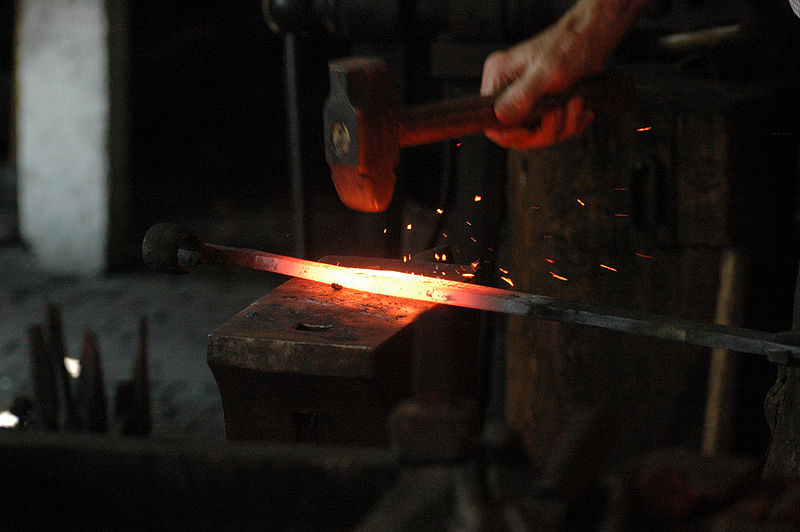
Blacksmith in forge at his anvil. Shared under Wikimedia Commons
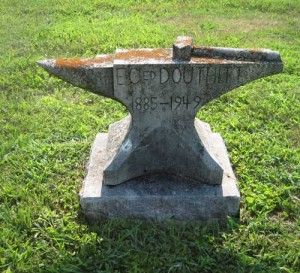
The blacksmith would have been an important person within the community and his skills would have been much in demand. The anvil is one of the most basic craftsman tools and has not changed for thousands of years. I have seen photos online of 3 dimensional anvils on graves but have yet to see one. However, the anvil has been superseded by other ways of working metal such as welding and steam hammers.
3 Dimensional anvil and hammer on grave found on Pinterest.
An anvil is a solid block of steel or iron with a flat top which is called the ‘face’, often with a pointed ‘horn’ at the front and a flat ‘heel’ at the back with holes for attaching tools. They are very heavy as you can imagine and durable with a quality of ‘liveliness’. This means that they cause the blacksmith’s hammer to bounce back after each blow and onto the metal.
It’s a powerful act of creation and transformation when a piece of metal is hammered into a shape to become another object. As a result, it can be seen as an act of transformation as well as a demonstration of craftsmanship and the use of base metals to create something new. It has been suggested that it is also a potent symbol of enduring the blows of life while shaping our destiny.
St Dunstan shoeing the devil’s cloven foot. Project Gutenberg.
St Dunstan is the patron saint of blacksmiths and used his skills to defeat the devil. The story goes that, while living in a cell at Glastonbury after leaving the royal court, an old man appeared at his window and asked the saint to make a chalice for him. St Dunstan agreed and began to work on it. But as he did so, the old man changed his shape and appearance several times until, finally, he became an attractive woman. St Dunstan realised that his visitor was actually the devil when he saw a cloven hoof under her dress. So, he heated up his tongs until they were red hot and then used them to seize the devil by the nose. Despite the Devil struggling and screaming, St Dunstan held on until the Devil admitted defeat and thrown. He then fled while complaining loudly.
Another legend associated with St Dunstan includes nailing a red hot horseshoe onto one of the Devil’s hooves after noticing that he was limping. The saint refused to take it off and made the Devil promise that he would always respect the horseshoe symbol and never enter a building that was protected by it. This is is believed to be the explanation for horseshoes being nailed over doorways for good luck.
Anvils appear in other cultures and civilisations. For example, in Norse mythology, Brokerr and Sindri, two dwarf brother blacksmiths, created the powerful hammer Mjolnir on an anvil. It was then used by the god, Thor, to create thunderstorms. The Greek god, Hephaestus, who was renowned for his metal working skills, used his anvil to create powerful weapons for his fellow gods as in Homer’s The Iliad. So, the anvil has associations with warfare as well as more domestic creations.
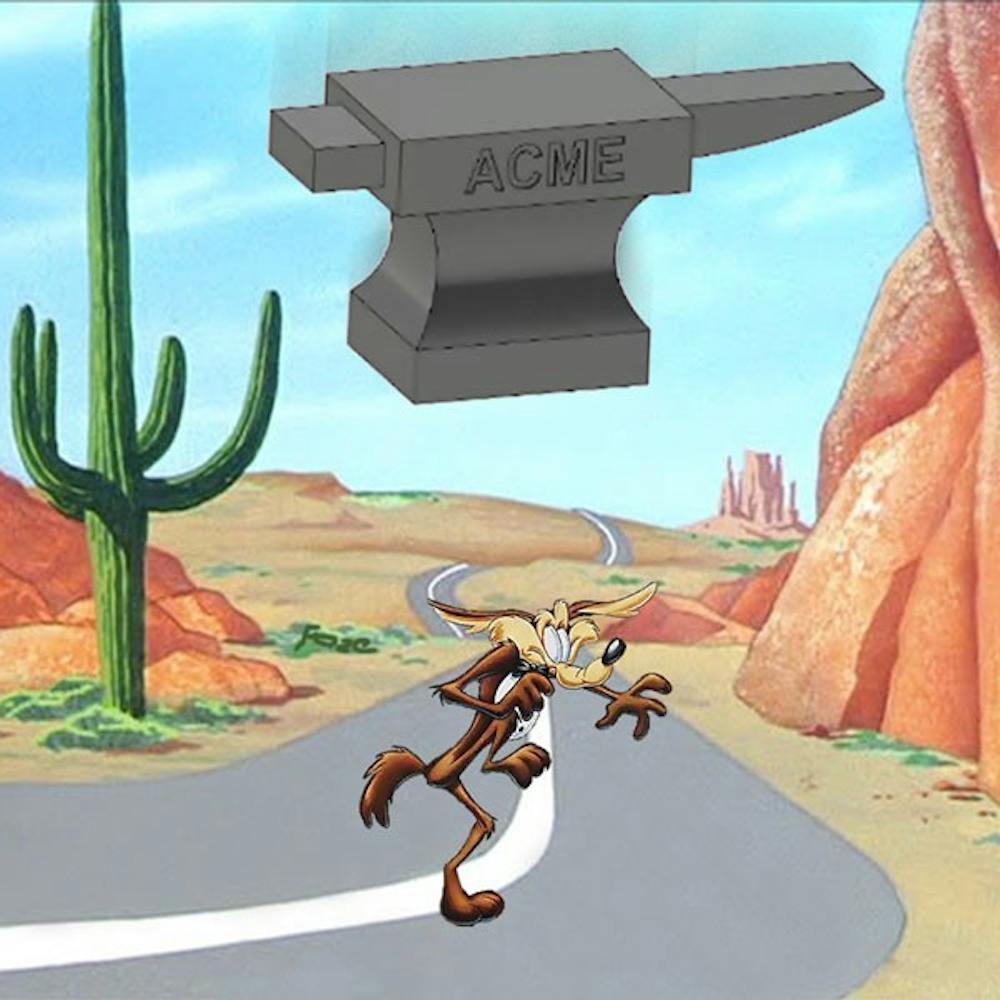
They are also traditionally associated with wealth and good luck due to their ability to forge a prosperous future. It is believed that placing an anvil in the home or workplace can also attract wealth and success. On a lighter note, anvils have often appeared in many cartoon or comedy sketches as they fall on characters with a huge bang! This gag was mainly used in Warner Bros Looney Tunes and ‘Merrie Melodies’ cartoons. Tom Slatin’s online article discusses this and why people find it funny.
By contrast, there are also other, more spiritual associations such as the anvil being a representation of:
‘the challenges and obstacles that we may face in life with the hammer symbolising the strength and perseverance to overcome them.’symbolsage.
This may seem a little fanciful but the anvil has always been a firm foundation on which to build and create new objects under the flickering flames and heat of the forge.
There are over 53 war graves and I found the plot containing most of them although there are others buried throughout the cemetery. The plot contains 18 German airmen, (one unidentified), and 50 British casualties. The others are Commonwealth service personnel of which 2 remain unidentified and I saw some of them as I explored.
The Hebrew section is near the crematorium and I found other notable permanent residents although a chill was beginning to make its presence felt as the afternoon wore on. Samual Courtauld and his wife’s headstone seemed quite modest considering his achievements. He was the great art collector who founded the Courtauld Institute of Art in 1932 which continues to this day and, after a series of gifts during the 1930’s, bequeathed his entire collection to the Institute on his death. He also created a £50k acquisition fund for the Tate and National Gallery in London which enabled them to acquire works that helped create national collections of Impressionist and Post-Impressionist art.
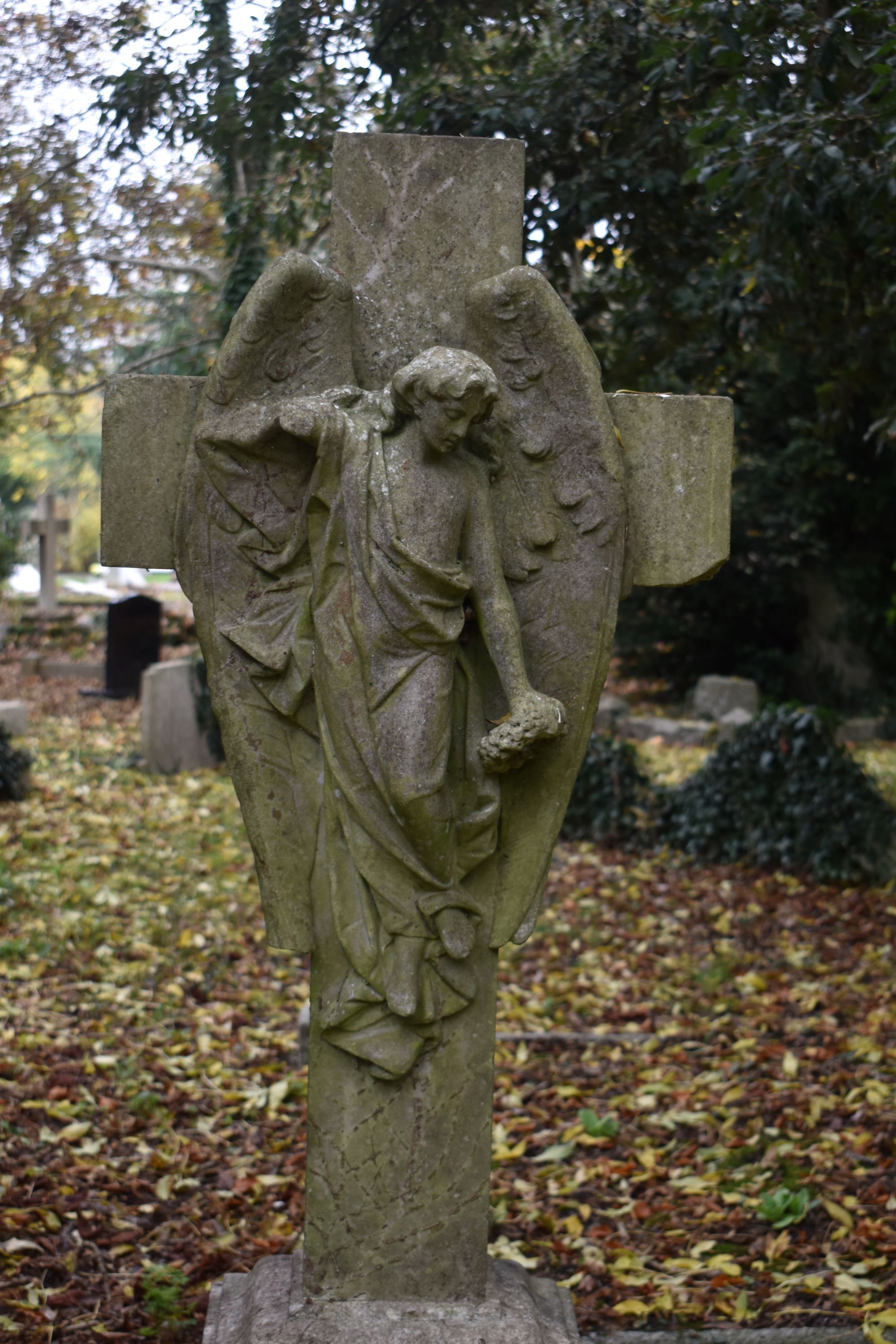
Another surprise was finding a definitely male angel draped in what could be described as a toga (it looked chilly) keeping watch over the grave of Arthur and Ethel Weston. It’s unusual as most angels in cemeteries and churchyards appear to be pretty, pensive young women.
There was a 2D representation of ‘Simply To Thy Cross I Cling’ on the Holness headstone. I found a metal Lourdes medal that had been placed on a stone cross.
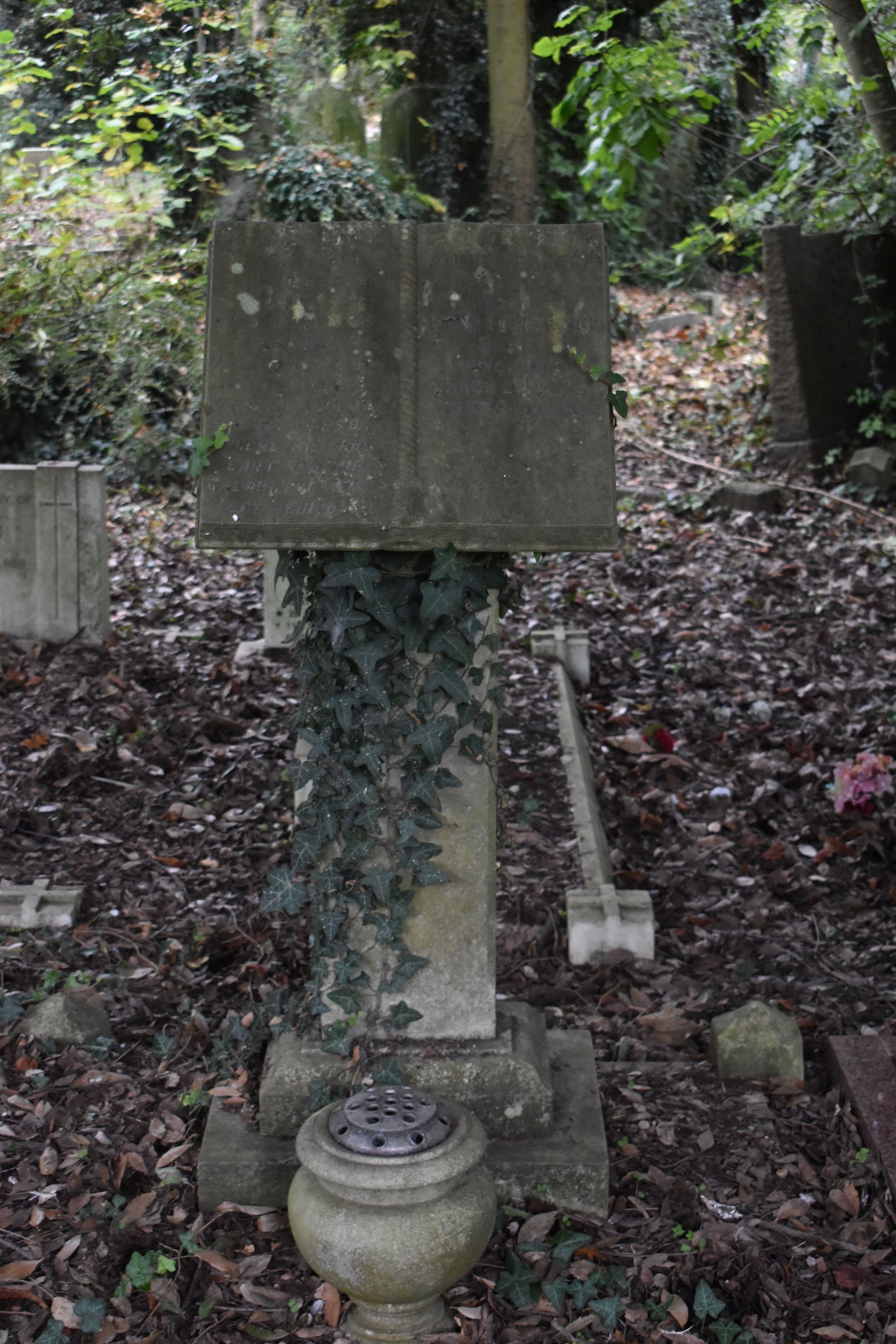
There was also a variant on the open book which was last month’s Symbol of the Month. Here it has been placed on a lectern style stand which made me think of the deceased standing up and telling all those around him of his or her good deeds or perhaps giving them a sermon.
On the elegant Devereux headstone dedicated to Thomas and his wife, Maria, I didn’t need to look at the epitaph to know that this was dedicated to a Royal Navy man. The two pillars have chains wrapped around them ending in two entwined anchors. There is also a Crown above them and the familiar shaking hands at the top.
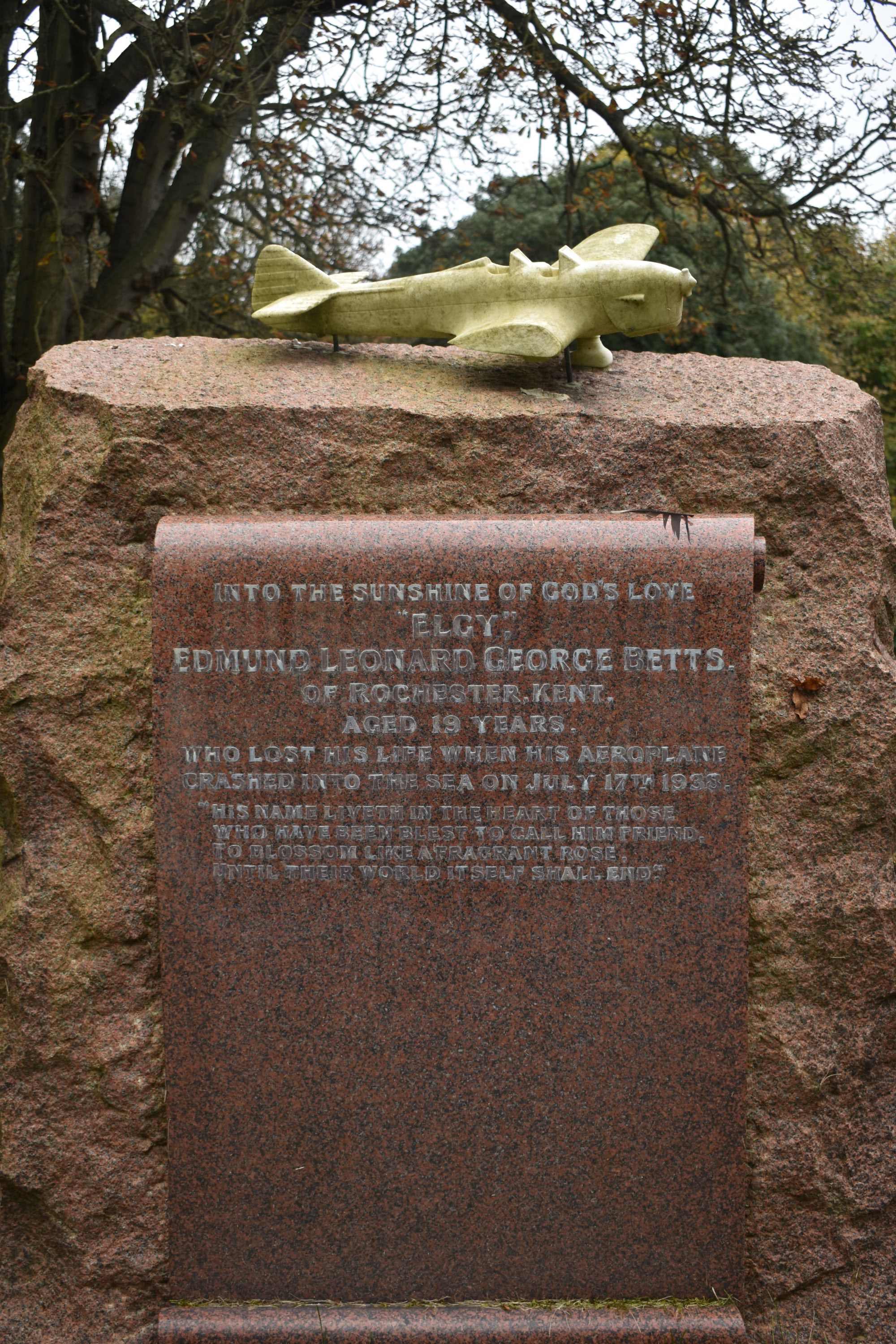
I then came across my other surprise of the day when I found another Grade II listed monument. I was surprised that the small model airplane on top of it hadn’t been stolen although I saw very little vandalism in the cemetery. The monument is dedicated to Edward Leonard George ‘Elgy’ Betts who died aged 19 on 17 July 1938. I am indebted to Findagrave for the information about him:
‘….crashed into the sea with a 2 seater light aircraft after taking off from Ramsgate airport. He was flying a Miles Hawk Trainer airplane belonging to Thanet Aero Club and it crashed into the sea off Cliftonville, Margate, Kent. He and his passenger, 16 year old Marjorie Wall, were killed….. She is also buried in Margate Cemetery with her parents. The sculpture of the plane is and accurate representation of the plane in which he died, including the registration letters G-AEFU.’
Ramsgate airport is long gone and has been replaced by an industrial. For a Sunday afternoon the cemetery was quite busy with visitors, mostly in cars, and a few like myself on foot. But I was aware that I didn’t have enough time on this visit to explore the entire cemetery so will do it in sections on future visits. I am already anticipating this although there is already plenty to write about!
Sometimes a wander through a cemetery can make you feel as if you’re in a heavenly library due to the number of open books reverently laid on top of graves. They’re usually made from stone or granite, inscribed with the name and dates of the deceased and often a decorative carved book marker complete with tassel keeping the pages open. In this example, a downwardly pointing finger indicates the large open book.
On first appearance the open book can seem a very simple and obvious symbol and it’s used in place of a more formal headstone. But, as with other symbols, it can have alternative meanings.
The 3 dimensional version that is carved to simulate a real book is a 19th century innovation. Prior to this it was rendered in a 2 dimensional, flat form and can be found on 18th century tombstones as part of an overall design or epitaph.
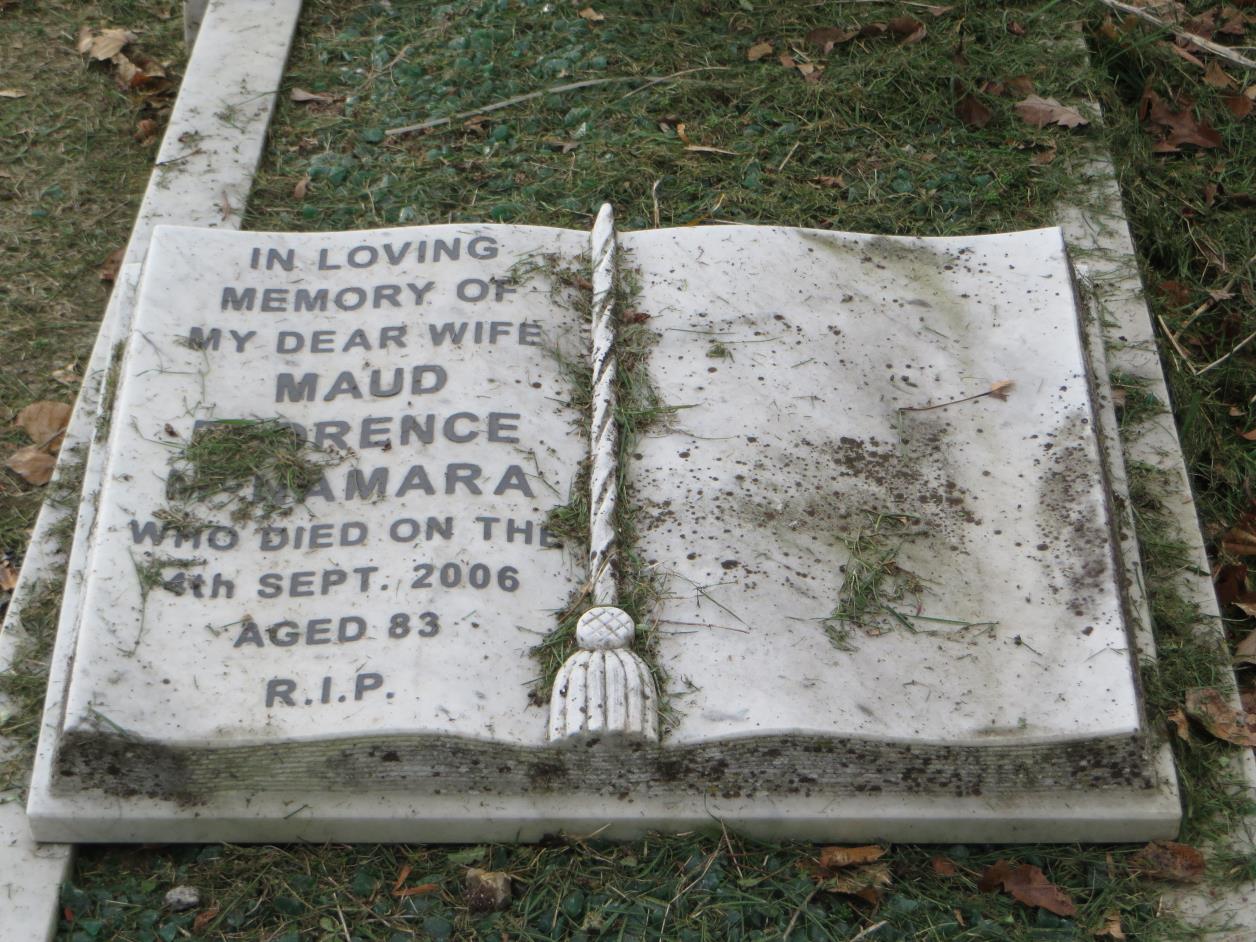
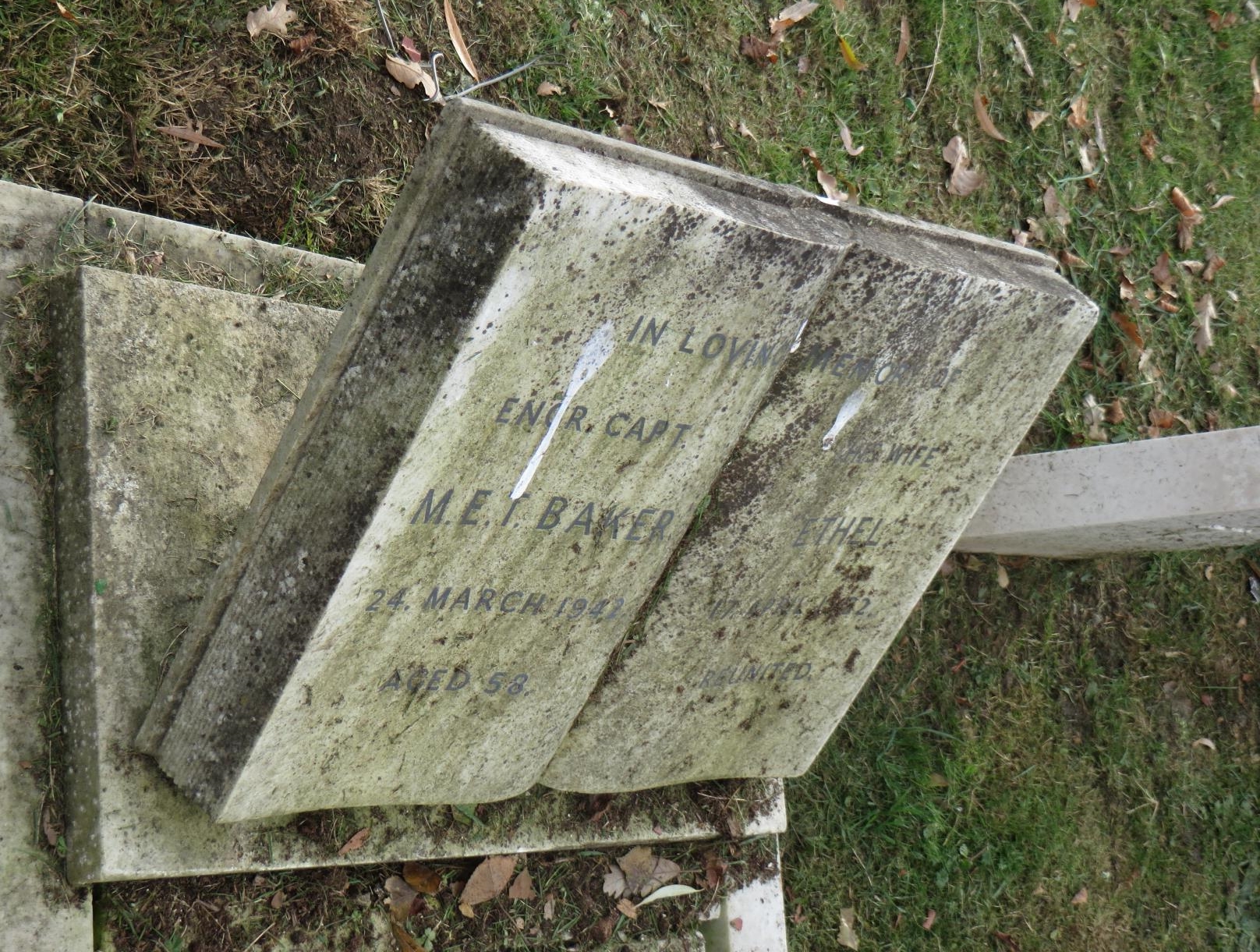
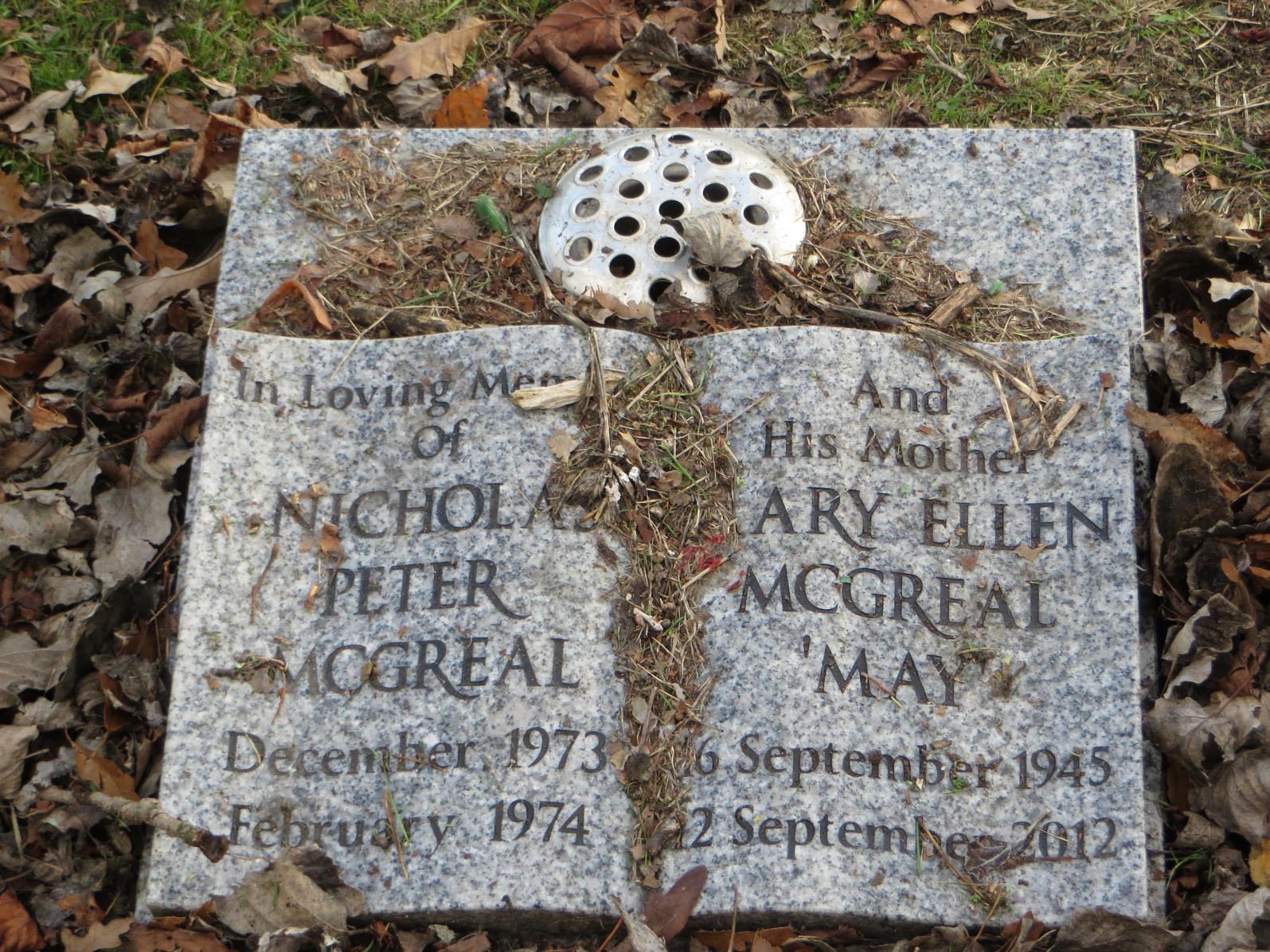
The open book can almost resemble a visitors book with the deceased’s details inscribed on it as if they were signing in or checking out for eternity and sometimes one page is left blank for perhaps the partner who will follow. On a recent stroll through Beckenham cemetery I came across several variations:
For example, there was one with both pages blank which could indicate that the inscription has worn off or that they were ready to be written for eternity. The latter echoes the well-known phrase ‘he or she can be read like an open book’ and the empty pages can indicate that this is how they want to be judged on the Day of Judgement. This references the quotation from the Book of Revelation 20:11-15:
‘And I saw the dead, small and great, stand before God; and the books were opened: and another book was opened, which is the book of life: and the dead were judged out of those things which were written in the books, according to their works.’ King James Bible
This is also why the open book is also known as the Book of Life as it contains everything that the deceased has done throughout their life and for which they will now be accountable. Christ is often depicted carrying a book. J C Cooper also sees it as the Book of Life and adds that it can also represent
‘….learning and the spirit of wisdom, revelation and …wisdom.’
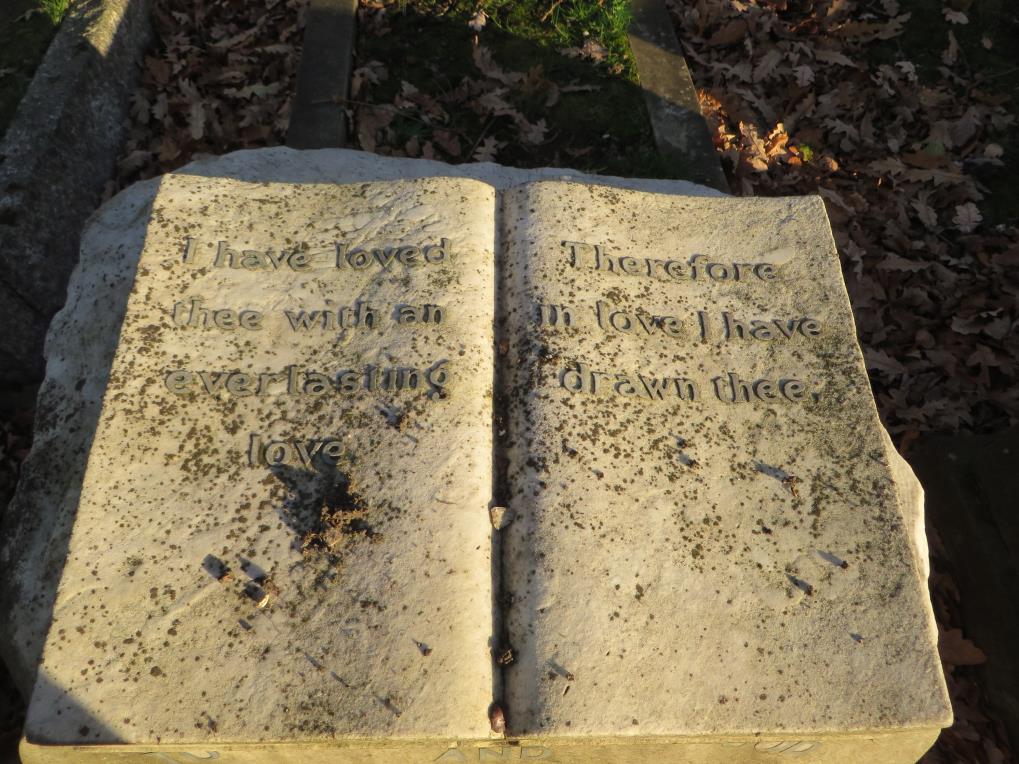
‘The LORD hath appeared of old unto me, saying, Yea, I have loved thee with an everlasting love: therefore with loving kindness have I drawn thee.’ Jeremiah 31.3 King James Bible
This makes the symbol almost resemble a Bible. Other suggestions are that it can indicate the grave of a writer, publisher or even more obviously a clergyman.
It can also suggest that a chapter of life has ended or closed and a variant is the closed book. I found this one in West Norwood cemetery and it clearly indicates a life that has ended with the final chapter now written.
So the open book has made me think about how my book of life would look on my last resting place. I’m determined to make sure that it’s a good read for any passing visitor.
This is another older post about a symbol that is not common within churchyards and cemeteries and so I am always thrilled whenever I see an example. This gorgeous example is in below is in the interior of St Nicholas’ church in Chislehurst, Kent. It’s dedicated to a woman and perfectly illustrates the use of the butterfly as a symbol of transformation and resurrection.
As the lockdown edges closer to more restrictions being relaxed, I hope to be out exploring again very soon!
Butterfly on monement, interior of St Nichols church Chislehurst, Kent, copyright Carole Tyrrell
The Gordon monument butterfly motif in all its glory. Kensal Green Cemetery. copyright Carole Tyrrell
Cemeteries and graveyards can be happy hunting grounds for butterflies. But not just the bright, dancing summer jewels, borne on the breeze, but also the much rarer kind which perches in them for eternity.
So far I’ve only discovered two of this particular species which were both in London. One was in Brompton and the other was in Kensal Green. But I have also seen others online in American cemeteries.
But I’m surprised that the butterfly symbol isn’t more widely used as it is a deep and powerful motif of resurrection and reincarnation. It has fluttered through many cultures which include Ancient Egypt, Greece and Mexico.
In classical myth, Psyche, which translates as ‘soul’, is represented in the form of a butterfly or as a young woman with butterfly wings. She’s also linked with Eros the Greek God of love. It is also a potent representation of rebirth and in this aspect, the Celts revered it. Some of the Ancient Mexican tribes such as the Aztec and Mayans used carvings of butterflies to decorate their buildings as certain butterfly species were considered to be reincarnations of the souls of dead warriors. The Hopi and Navaho tribes of Native American Indians performed the Butterfly Dance and viewed them as symbols of change and transformation.
The butterfly is an archetypal image of resurrection in Christianity and this meaning is derived from the 3 stages of a butterfly’s life. These are: 1st stage = the caterpillar, 2nd stage = the chrysalis and 3rd and final stage = the butterfly. So the sequence is life, death and resurrection. The emergence of the butterfly from the chrysalis is likened to the soul discarding the flesh. It has been depicted on Ancient Christian tombs and, in Christian art, Christ has been shown holding a butterfly. It is supposed to appear chiefly on childrens memorials but the two that I’ve seen were on adult memorials.
Butterflies also feature in Victorian mourning jewellery and there is a fascinating article on this with some lovely examples at:
In the 20th century, butterflies appeared in the flowing, organic lines of Art Nouveau and often featured in jewellery and silverware.
Face and butterfly on exterior of chapel. copyright Carole Tyrrell
This example is from the Watts Chapel in Surrey and shows the flowing lines and stylised butterfly. They also appear in vanitas paintings, the name given to a particular category of symbolic works of art and especially those associated with the still life paintings of the 16th and 17th centuries in Flanders and the Netherlands. In these the viewer was asked to look at various symbols within the painting such as skulls, rotting fruit etc and ponder on the worthlessness of all earthly goods and pursuits as well as admiring the artist’s skill in depicting these. Butterflies in this context can be seen as fleeting pleasure as they have a short life of just two weeks.
Butterfly traditions
There are many superstitions and beliefs associated with butterflies. They are often regarded as omens, good and bad, or as an advance messenger indicating that a visitor or loved one is about to arrive. In Japan, they are traditionally associated with geishas due to their associations with beauty and delicate femininity.
Butterfly & Chinese wisteria by Xu Xi Early Sing Dynasty c970. By Xü Xi (Scanned from an old Chinese book) [Public domain], via Wikimedia Commons
The Chinese see them as good luck and a symbol of immortality. Sailors thought that if they saw one before going on ship it meant that they would die at sea . In Devon it was traditional to kill the first butterfly that you saw or have a year of bad luck as a result. In Europe the butterfly was seen as the spirit of the dead and, in the Gnostic tradition, the angel of death is often shown crushing a butterfly underfoot. In some areas in England, it’s thought that butterflies contain the souls of children who have come back to life. A butterfly’s colours can also be significant. A black one can indicate death and a white one signifies the souls or the departed. It’s also a spiritual symbol of growth in that sometimes the past has to be discarded in order to move forward as the butterfly sheds its chrysalis to emerges complete. So it can indicate a turning point or transition in life. There are also shamanistic associations with the butterfly’s shapeshifting and it has also been claimed as a spiritual animal or totem.
Brompton Cemetery, tomb unknown
This example with its wings outstretched is from Brompton Cemetery in London. Alas, the epitaph appears to have vanished over time and the surrounding vegetation was so luxuriant that I will have to return in the winter to investigate further. Note the wreath of ivy that surrounds it. Ivy is an evergreen and is a token of eternal life and memories. The wreath’s ribbons are also nicely carved.
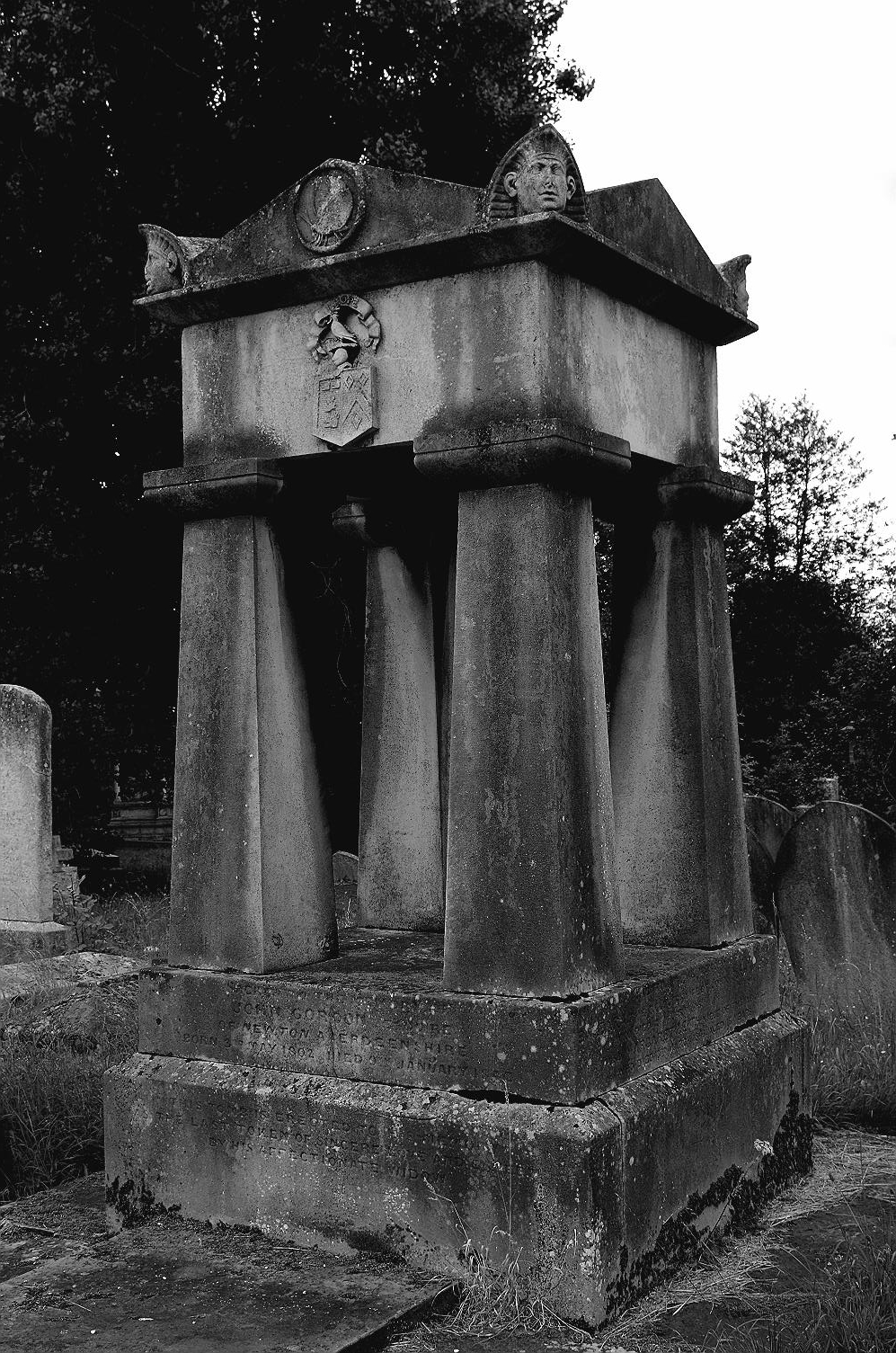
The Gordon monument, Kensal Green
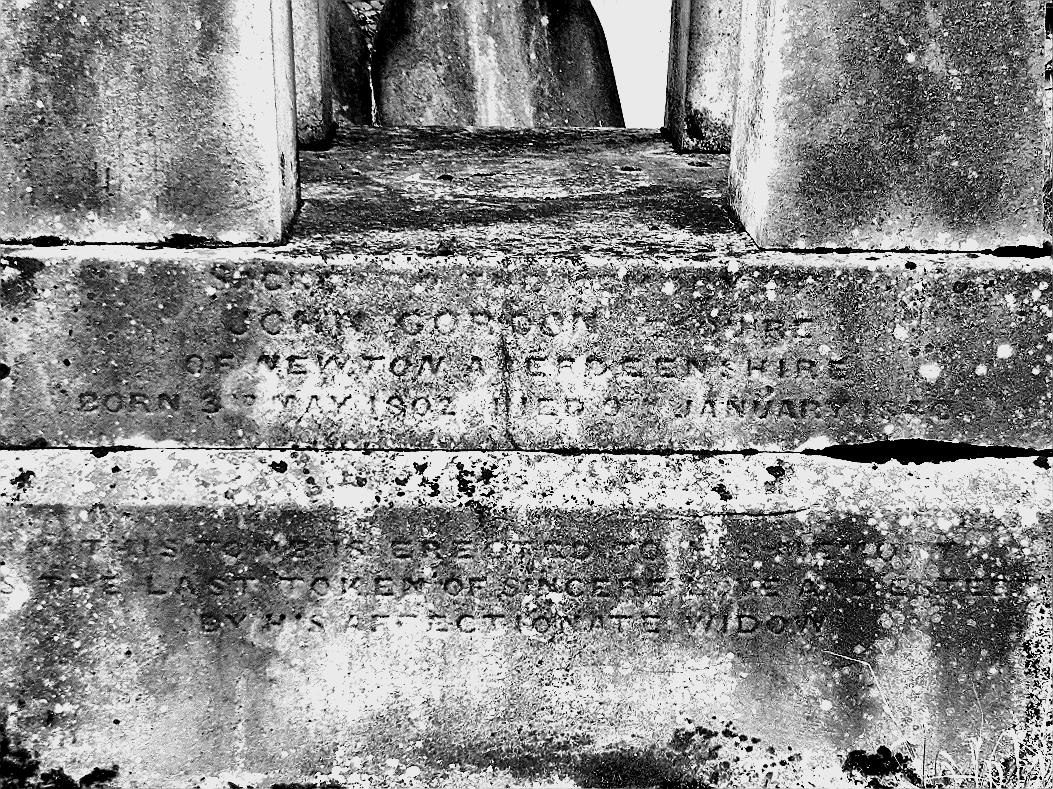
The second one is perched on the tomb of John Gordon Esquire, a Scotsman from Aberdeenshire who died young at only 37. As the epitaph states ‘it was erected to his memory as the last token of sincere love and affection by his affectionate widow’. Gordon came from an extended family of Scottish landowners who had estates in Scotland and plantations in Tobago amongst other interests. The monument is Grade II listed and is made of Portland stone with a York stone base and canopy supported by the pillars. There was an urn on the pedestal between the four tapering stone pillars but this was stolen in 1997.
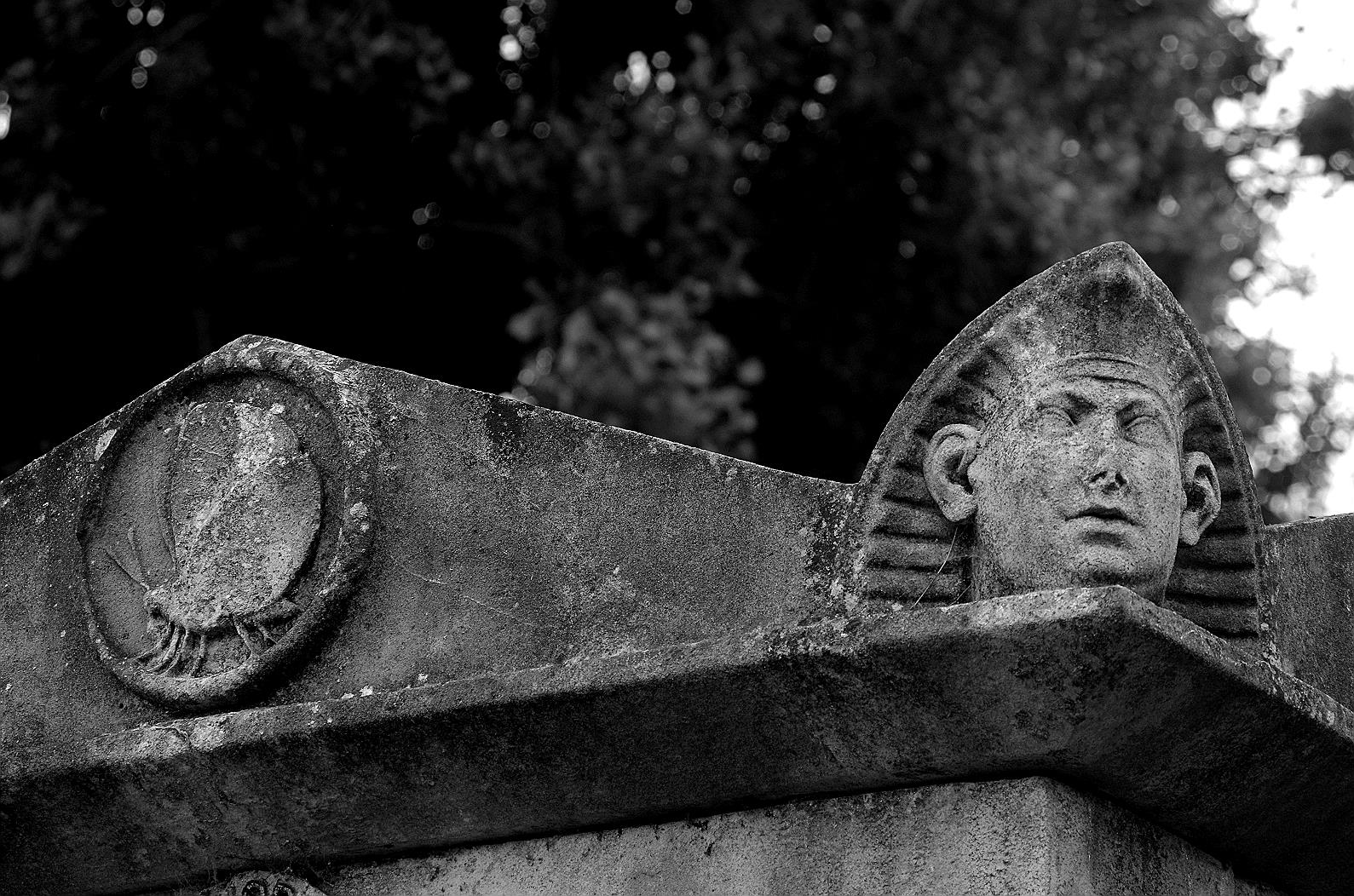
The butterfly also has an ouroboros encircling it so, not only a symbol or resurrection, but also of eternity with the tail devouring snake. It is a little hard to see but it is there.
The butterfly symbol of the roof of the Gordon monument Kensal Green Cemetery. copyright Carole Tyrrell
The pharaonic heads at each corner are Egyptian elements within an ostensibly classically inspired monument. Acroteria, or acroterion as is its singular definition, are an architectural ornament. The ones on this monument are known as acroteria angularia. The ‘angularia’ means at the corners.
The entire monument is based on an illustration of the monument of the Murainville family in Pugin’s Views of Paris of 1822 and also on Moliere’s memorial which are both at Pere Lachaise in Paris.
The Gordon memorial incorporates elements of the Egyptian style and symbolism that influenced 19th century funerary monuments after the first Egyptian explorations. Kensal Green contains many significant examples and there are others to be found in Brompton, Highgate and Abney Park. The Victorians regarded the Egyptians highly as it was also a cult of the dead.
So when you next see a butterfly fluttering on the breeze or even perched on a memorial for eternity remember its importance within the tradition of symbols, religions and cultures. Who knows it might be one of your ancestors…..
The skull and crossbones. One of the central motifs of 18th century Memento Mori and intended to be a stark and macabre reminder of the viewer’s inevitable destination. This would be all that would remain of you after death.
However it wasn’t a very comforting message to either the loved ones left behind or to the living.
But fashions and tastes change, even in funerary symbolism, and the skull and crossbones had served their purpose.
Instead they were replaced by the winged soul. This consisted of a small child’s head flanked by a pair of wings or a garland of leaves. They have the faces of babies with big, round eyes, plump cheeks and pouting lips and resemble Renaissance putti which are child-like. Putti represent the sacred cherub as they are known in England.
The winged soul may have been intended to be a more comforting image as the wings represented the soul of the deceased ascending to heaven. This could also give hope of a resurrection to those left behind. According to headstone symbols:
‘In the USA the winged soul is known as a soul effigy.’
It was immensely popular and in my explorations of medieval Kent churches and their churchyards I found many examples. In fact, in one or two churchyards they outnumbered the skull and crossbones symbol. They mainly had one winged soul on a headstone but there were sometimes two or three clustered together as in these examples:
In addition, every mason seemed to have his own interpretation of feathers as they can be carved as typical fluffy feathers, resemble broad leaves or be very stylised.
With wings in general they are an important symbol of spirituality. They express the possibility of flying and rising upwards to heaven. For example, in the Hindu faith, they are:
‘the expression of freedom to leave earthly things behind…..to reach Paradise.’
New Acropolis
However, as the full flowering of the Victorian language of death in the 19th century began to appear the emblems of memento mori were retired. Although a couple, such as the hourglass and ouroboros, were revived. But I did find two modern examples of the winged soul in the churchyard of St Martin of Tours in Eynsford, Kent.
I had always previously thought of the winged soul as being a more general symbol and just a decorative feature. I called them winged cherub heads or death heads and never considered that they might have had a specific meaning or purpose. It was exciting to see so many variations and interpretations sometimes within the same churchyard. But it depended on the skills of the mason as to how well they were carved and whether they were 2 dimensional or 3 dimensional.
But as a message of comfort it is one of the most poignant in memento mori. The other central motifs emphasise time running out, think about your life now and this is all that will be left. The winged soul suggests an eternal life and a more uplifting message.
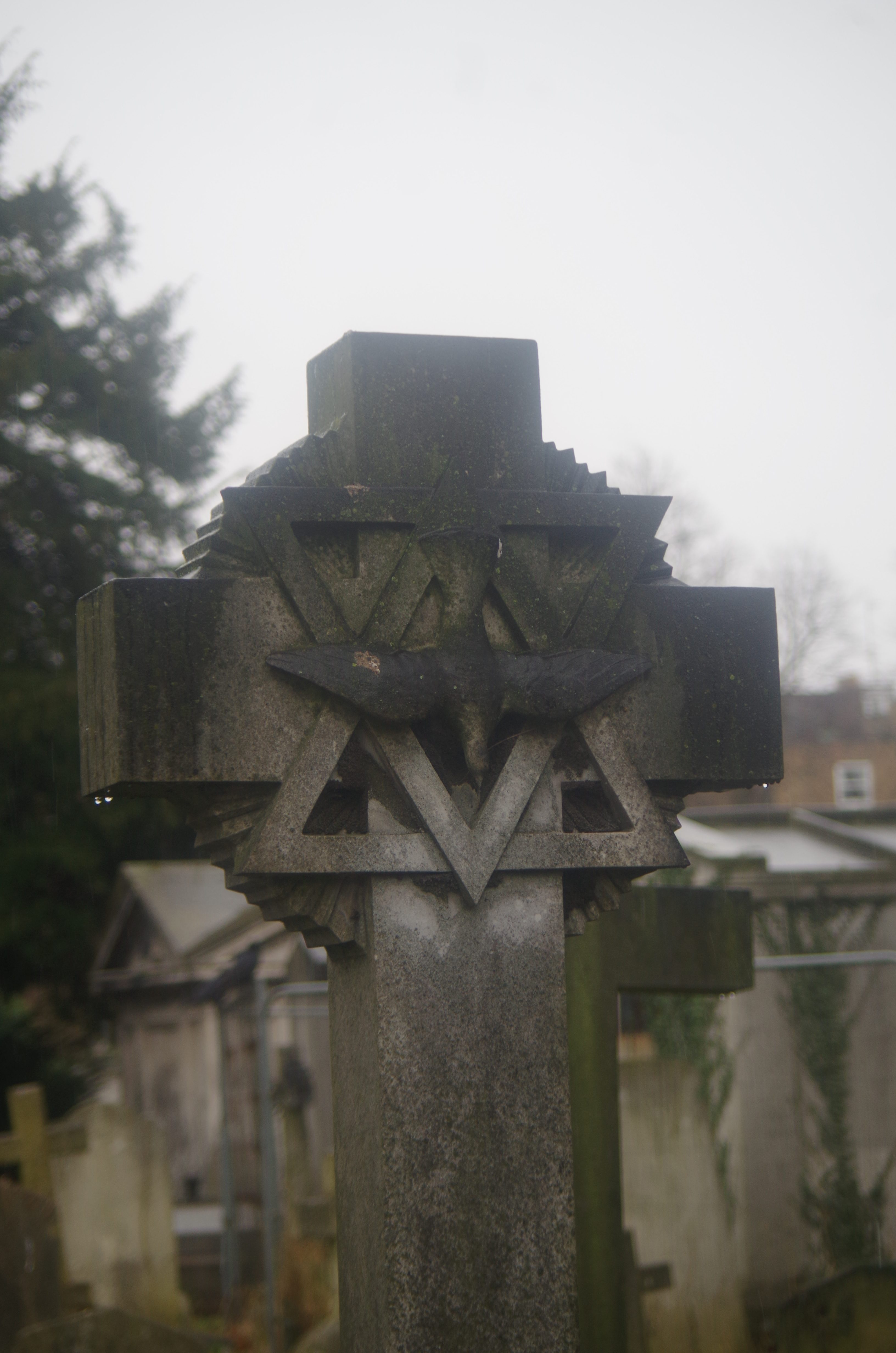
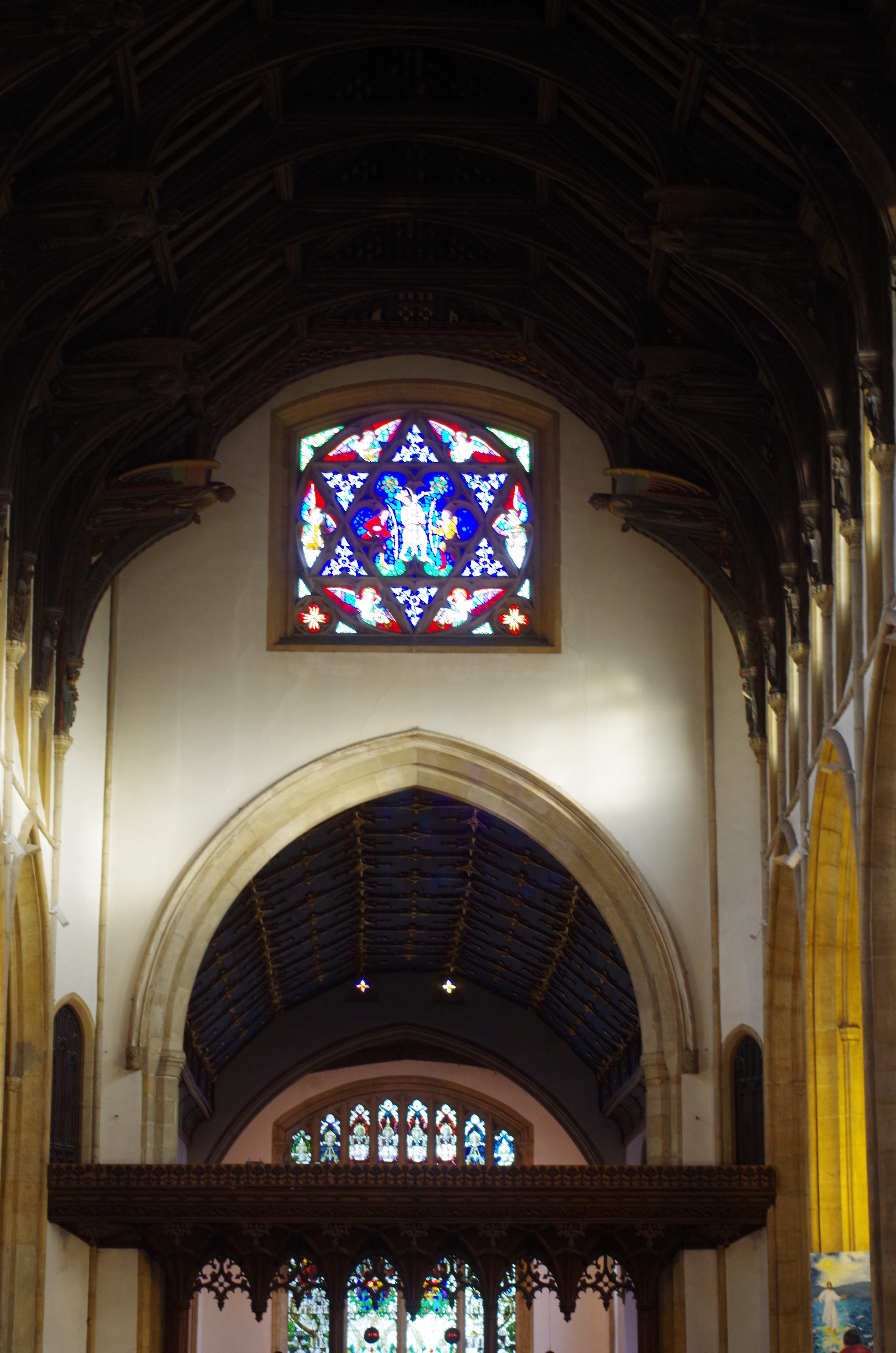
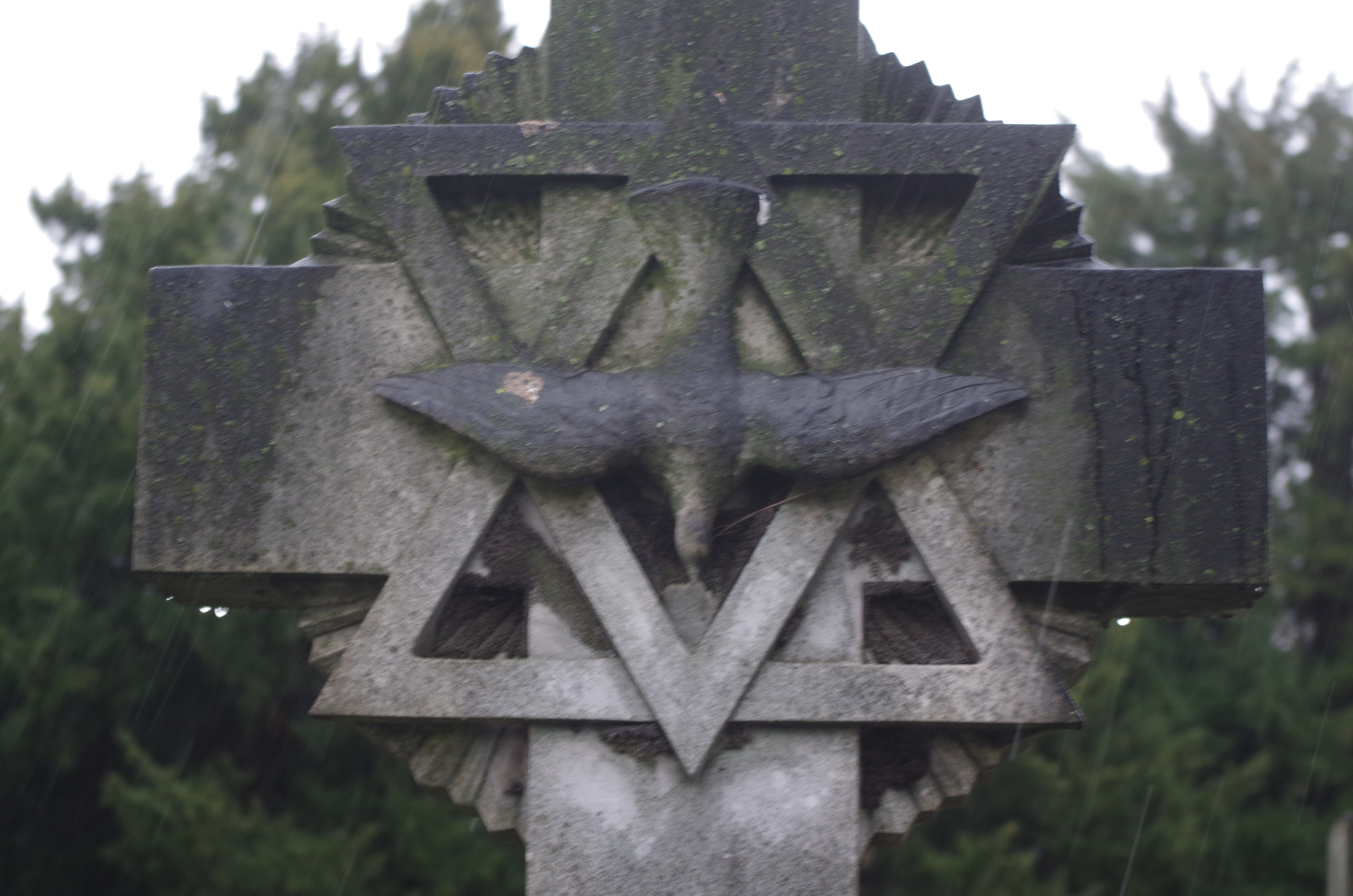
This month’s symbol is one that I’ve always associated with the Jewish faith where it’s known as the Star of David. But when I spotted a prominent example in Brompton Cemetery which isn’t a Jewish Cemetery I wondered why it was on that particular monument. But on a recent visit to St Mary’s church in Bury St Edmunds I saw a six pointes tar in the East window and read in the guidebook of its significance with Christianity. The window was part of the 1844 restoration and is based on a 14th century example on the nearby Abbey Gate.
According to St Mary’s guidebook the star is an important Christian symbol as:
‘Jesus was descended from David and is the Messiah for both Jews and Gentiles, the star of David is an important Christian symbol.’
This may account for the apparently Hebrew looking writing in the centre of a six pointed start dating from the 14th century on a window in Winchester cathedral. Another one in the same building, dating from the same period on a choirstall canopy, was recorded by Pevsner.
In Christianity it’s known as the Creator’s Star or the Star of Creation. The six points are alleged to represent the six days of the Creation and also the six attributes of God. These are:
Power
Wisdom
Majesty
Love
Mercy
Justice
But the six pointed star is a universal symbol. No-one is quite sure where or when it first appeared bit it’s known and revered throughout both Eastern and Western religions and faiths. For example, in Buddhism it has been found in the Tibetan Book of the Dead and has been used as decoration on Masonic temples, In Freemasonry the star is seen as a representation of the male and female. This is also an important element in Hinduism as the combination of triangles are also seen as motifs of male and female and the star becomes an emblem of Creation and divine union.
There is a darker side to the six pointed star as, in Occultism, the star is a powerful symbol for conjuring up spirits and as a talisman. In this the star is seen as representing the 4 elements:
Fire – upwards pointing triangle
Air – opposite upwards pointing triangle
Water – downwards pointing triangle
Earth – opposite triangle pointing downwards
But the Rastafarian faith also uses the Star of David or the Magen David as a central motif. Here it’s coloured either black or appears in the Rastafarian colours of red, green and gold. This is because the Rastafarians believe that their leader, the late King of Ethiopia, Haile Selassie, was a divine being. He’s always been considered as being directly related to King Solomon’s father, King David, and therefore to Jesus. This is based on a visit by the Queen of Sheba to the Israelite king, Solomon, as recorded in the Book of Kings 1 Kings 10 1:13. Rastafarians believe that during the visit they slept together and a child was born. This child led to a direct line of descendants to Haile Selassie.
Although the Star of David is now seen as almost exclusively Jewish it wasn’t always so. It is reputed to have originated in ancient Arabic Kabbalistic texts in which it was known as the Seal of Solomon and became the Star of David in the 17th century. The Jews of Eastern Europe in the 19th century adopted it as a representation of their faith and Hitler used it as a badge to identify Jews during the Second World War. Today it is on the national flag of modern day Israel.
But what does it mean in funerary terms and why is it in this particular monument? I looked more closely at the first epitaph beneath it.
It was dedicated to a Thomas Henry Bowyer Bower, the son of Captain Thomas Bowyer Bower whose epitaph is lower down. Thomas died young, aged 24, at Port Palmerston, Darwin, Australia. I’m not sure if he’s actually buried there but, perhaps in this context, the star has been placed there as a symbol of the spirit that survives death. Over the centuries people have used the stars to guide their way and I thought that maybe the star was placed here as an eternal light guiding the deceased through the darkness back home again. Note the quotation on the epitaph from Deuteronomy 32.12,
‘The Lord alone shall lead him’
This may be a reference to the to North or Pole Star which is traditionally associated with Jesus.
There is a downward pointing dove placed over the star which is a symbol of the Holy Ghost, part of the Holy Trinity: Father, Son and Holy Ghost.
In the King James version of the Bible in Luke 3:22 :
‘And the Holy Ghost descended in a bodily shape like a dove upon him, and a voice came from heaven, which said, Thou art my beloved Son; in thee I am well pleased.’
I wondered if the last words of this biblical verse referred to the father and son relationship.
My own interpretation of the star and the dove is that it may have been a final goodbye from a father to a son who died far from home and wanting him to know how much he was loved.




























![Butterfly & Chinese wisteria by Xu Xi Early Sing Dynasty c970. By Xü Xi (Scanned from an old Chinese book) [Public domain], via Wikimedia Commons](https://shadowsflyaway.blog/wp-content/uploads/2016/07/butterfly-chinesewiki.jpg)