Symbol of the Month – The Mass Dial

In light of the mass dial found at St Mary’s In the Marsh, I thought it might be timely to repeat the 2021 Symbol of the Month about them. Easily missed as they are not always where you expect to find them, they are survivors from a time where there were no time keepers such as clocks. People rose with the sun and went to bed at sunset which is why they were so important to villages and their inhabitants.

Mass Dial set into a wall at St James’s, Cooling, Kent. © Carole Tyrrell

Despite the somewhat dispiriting summer, I was determined to escape from the house and see at least one or two local churches.  My little part of Kent is known as Charles Dickens country (I’m not sure that he knows about this) and there are several buildings and churches associated with him. 

One of these is St James’s church at Cooling.  Although closed for services, it is still kept open by local people on most days. The Churches Conservation Trust take care of it and it’s in an isolated spot which borders onto marshes.  It’s also a fair walk from the nearest town, Cliffe.  I didn’t see any signs of much of a village there although there is a 14th century ruined castle nearby. St James’s is the end of a terrace of houses appropriately named Dickens Walk. 

l’ll talk more about St James in a later post as it inspired one of Dickens most atmospheric scenes in ‘Great Expectations’ with the childrens graves in the churchyard.  But while I was there, I found a symbol set within a wall that I had heard of but had never previously seen an example – this was the Mass Dial.  I have to admit that if it hadn’t been pointed out on a display board within the church that I might have missed it as it’s set into an outer wall of the church.  Not many have survived and Victorian restoration may have meant that they are found in odd places.

Mass dials are rare survivors and were a way of telling time before the invention of mechanised clocks and timepieces in the 14th century. 

It was the Anglo-Saxons who established the dials.  There had been confusion with all the different calendar systems such as the Lunar and Julian, and with a largely illiterate population, a visual way of telling the time was necessary.

It was the Anglo-Saxons who established the dials.  There had been confusion with all the different calendar systems such as the Lunar and Julian, and with a largely illiterate population, a visual way of telling the time was necessary.

According to the Building Conservation website:

the Anglo Saxons divided night and day into 8 artificial divisions known in Old English as Tid or Tides.  The 4 daylight divisions were called:

Morgen – 6am – 9am

Undern – 9am to noon

Middaeg – Noon to 3pm

Geletendoeg – 3pm to 6pm. 

Morning, noon and evening are still in use as the last remnants of this division still in use today as are moontide, yuletide and shrovetide.’

But, throughout the Middle Ages, the Catholic church emphasised the reciting of prayers and fixed times during the day as pre-Reformation Britain was still a Catholic country.  These were known as the Divine Offices and were:

Matins – pre-dawn

Prime (6am)

Terce (9am)

Sext (12pm)

None (3pm)

Vespers (sunset

Nocturnes (after sunset) 

However, these were not set as the sun might not shine for a few days and if a mistake was made then the parish priest might end up celebrating certain feasts on different days from a neighbouring parish. 

Mass Dial, St John’s church, Devizes, Wiltshire – note that it still has the marker in it showing how it worked.© Brian Robert Marshall under Geograph Creative Commons Licence.

They were a form of medieval sun dial and originally the hole in the centre of the dial would have contained a horizontal wooden or metal rod that cast a shadow.  This was known as a ‘gnomon’ which is pronounced as No Mon.  These may well have been the local community’s only way of telling the time although medieval life revolved around getting up at sunrise and going to bed at sunset.

According to the British Sundial Society,

‘mass dials can be found on the south side of many churches.  They are usually small and often located on the walls, buttresses, windows and doorways of a church.  However, they can also appear in more unlikely places such as inside churches and on north walls where the sun rarely shines. But they have also been found in porches suggesting that the porch was built sometime after the dial was made.’

The Society goes onto suggest that this may be

 ‘due to the stone blocks having been re-used in the rebuilding of the church.’ 

The location of the Cooling one may indicate that it’s been moved.

Again, according to Building Conservation:

‘if a mass dial is found anywhere other than a church and other than the south elevation of a church, this usually means that it has been moved from its original location often as part of a Victorian restoration.  In such cases, the dials were sometimes rebuilt into the fabric upside down, making them unreadable.’

The positioning of mass dials is important and can vary.  They may be on the smooth cornerstone or quoin of a tower, nave or chancel, above a porch or on a door or window jamb.  Often they are set at eye level and in one church it is cut into a window ledge.

Mass dial, All Saints.Oaksey, Wiltshire. © Brian Robert Marshall. Shared under Wiki Creative Commons

Mass Dial, St Michael & All Angels., Heydon, Lincs. ©Richard Croft. Shared under Wiki Creative Commons

Mass dials also vary in their design as:

‘Some have either a few or many radiating lines, {others} have ‘hour’ lines within the circles or semi circles and others are constructed with a ring of ‘pock’ marks drilled into the stone.’  

British Sundial Society

There are also variants in the way that the hour lines are numbered as they may have Roman numerals or even Arabic ones.  They’re also known as scratch dials as

‘many are quite crudely scratched into the stone.’ British Sundial Society
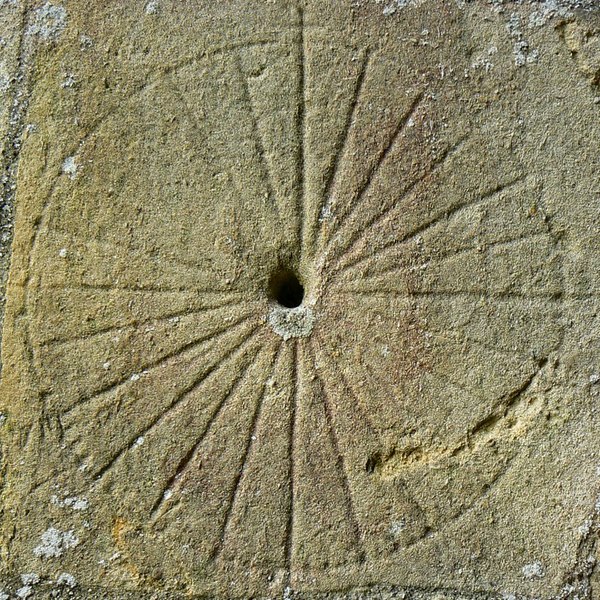
A full circle version, All Saints, Yatesbury. ©Brian Robert Marshall Shared under Wiki Creative Commons

The 14th century brought mechanical clocks that created a regulated 24 hour time period.  As a result, medieval life changed as it was no longer so reliant on daylight.  However, mass dials were still in use but now they were a complete circle with lines radiating from the central gnomon to simulate the 24 hour clock.  But by the 16th century they had fallen out of use.  Sundials and mechanical locks had overtaken them and it was no longer the Roman Catholic church that dominated after the Reformation.

Mass dials are of great archaeological and historic importance.  However, many of them are now indecipherable due to erosion and vandalism and people may not even realise what they are or their significance.

© Carole Tyrrell Text and photos unless otherwise stated.

References and further reading

https://sundialsoc.org.uk/dials_menu/mass-dials/

https://www.buildingconservation.com/articles/mass-dials/mass-dials.htm

http://massdials.org.uk/links.htm
A Spring saunter in the footsteps of E Nesbit – Part 2 – The last resting place and final home.

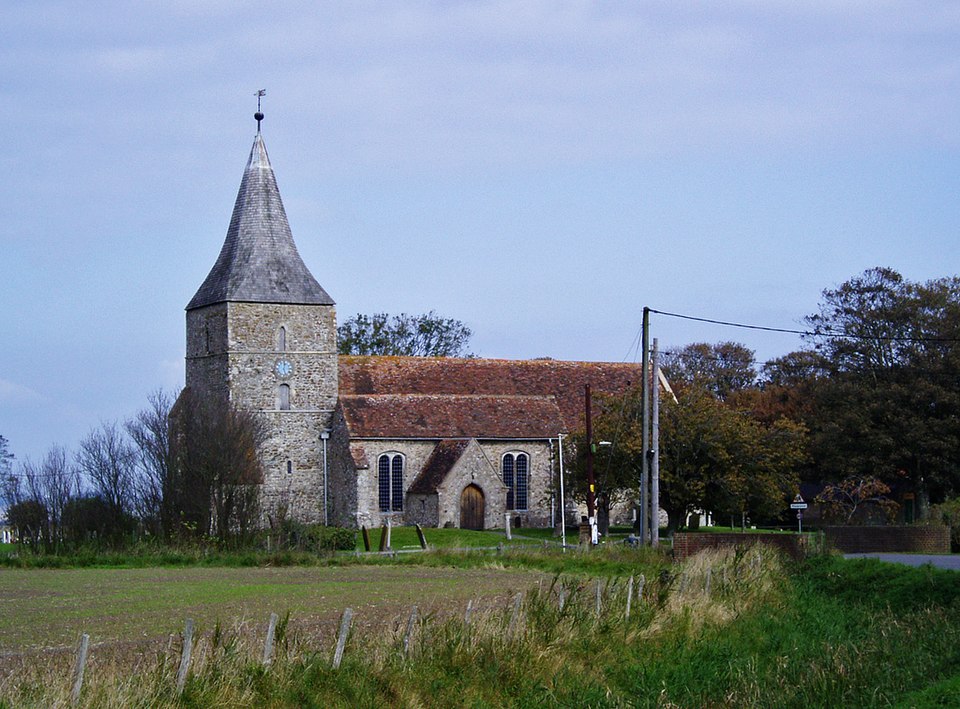
St Mary’s in the Marsh Shared under Wiki Commons

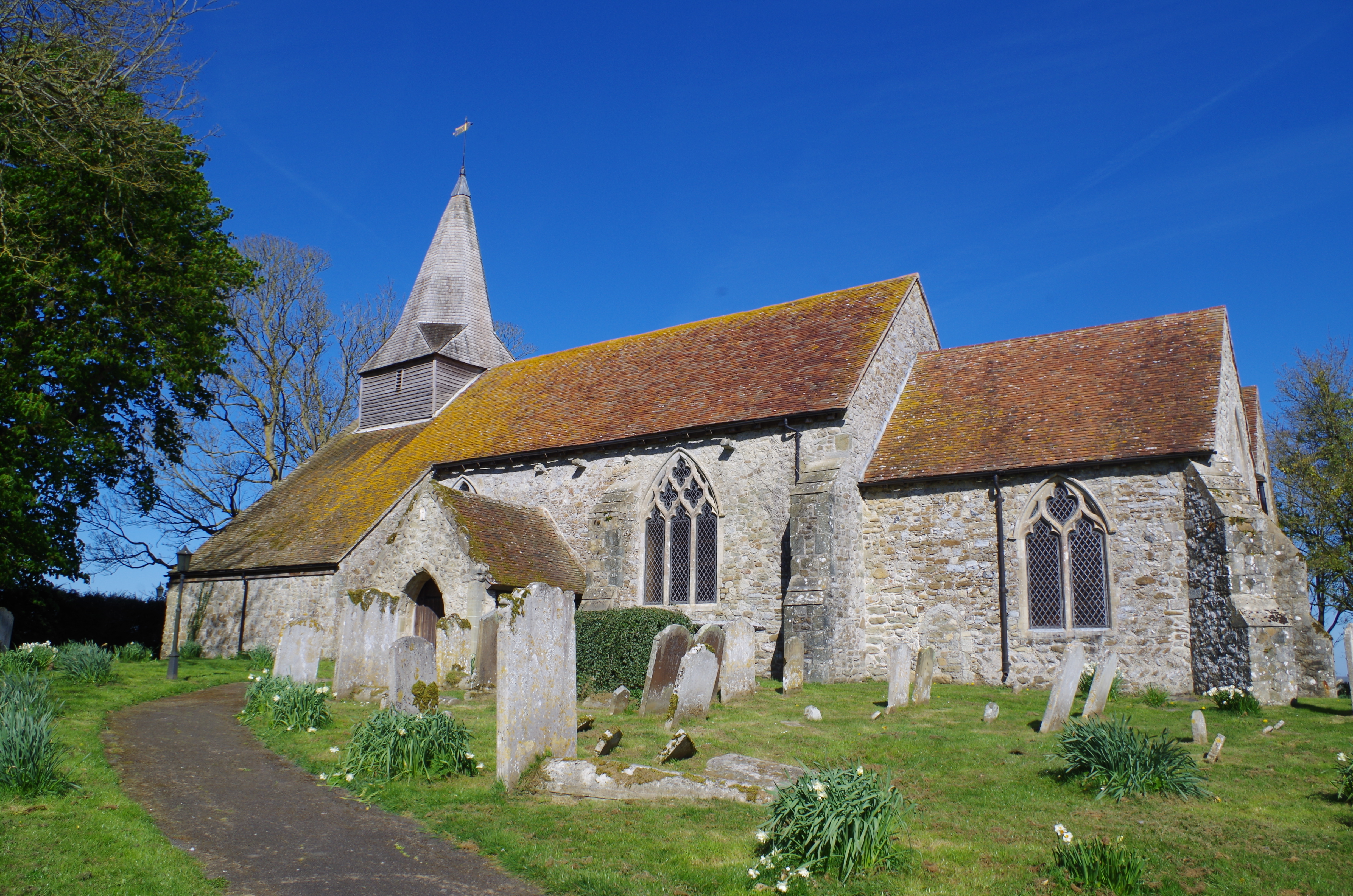
Edith Nesbit is buried in the churchyard of St Mary in the Marsh which was our next church. We left Brenzett and its attractive cats to travel through the wonderful Kent countryside. Blossom foamed over the hedgerows and the fields and marshes seemed to stretch on forever. There was a sense that Nature was beginning to stretch herself and come back to life after the winter.


Early bluebells nodding in the breeze, St Mary’s in the Marsh ©Carole Tyrrell

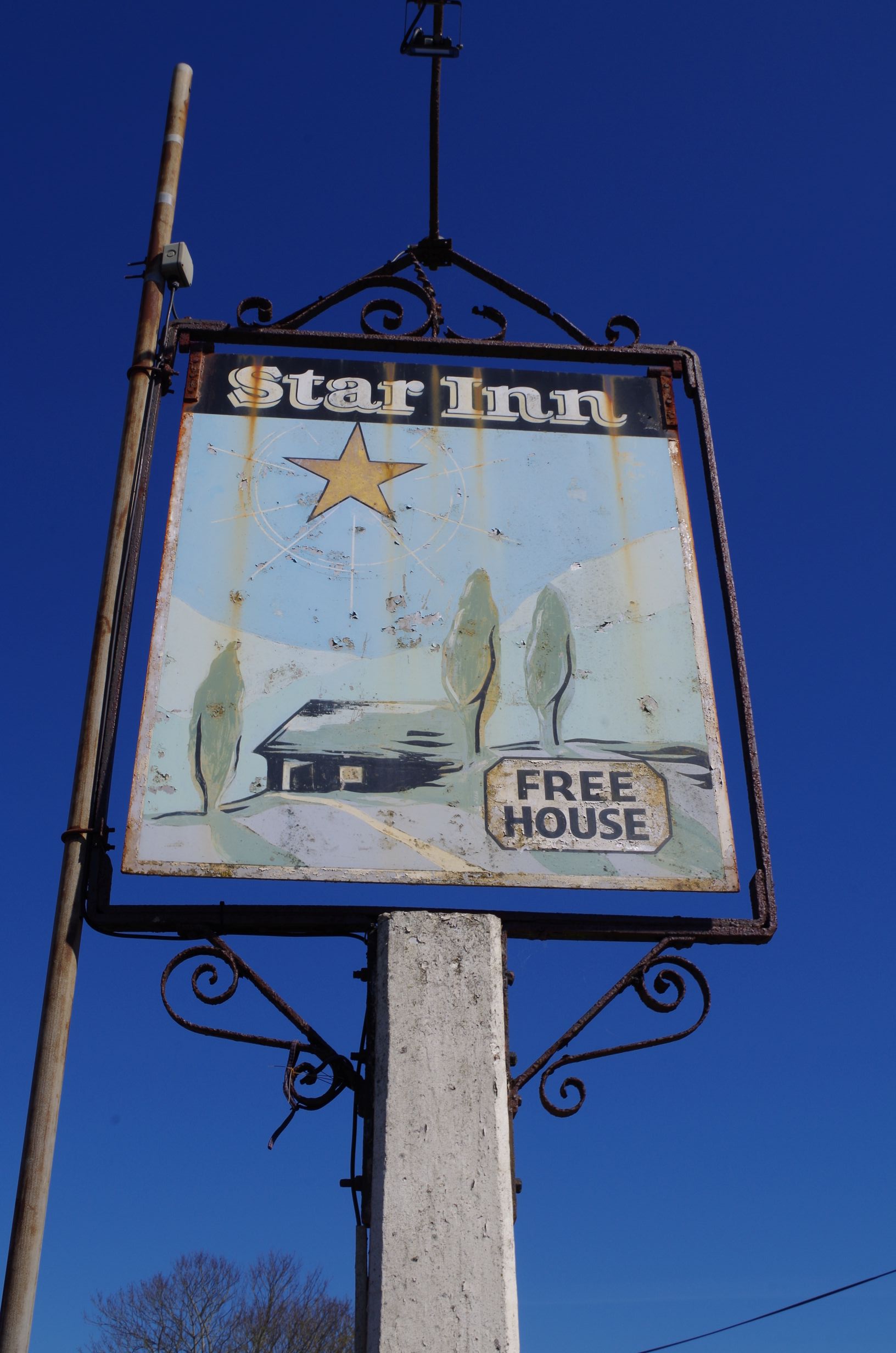
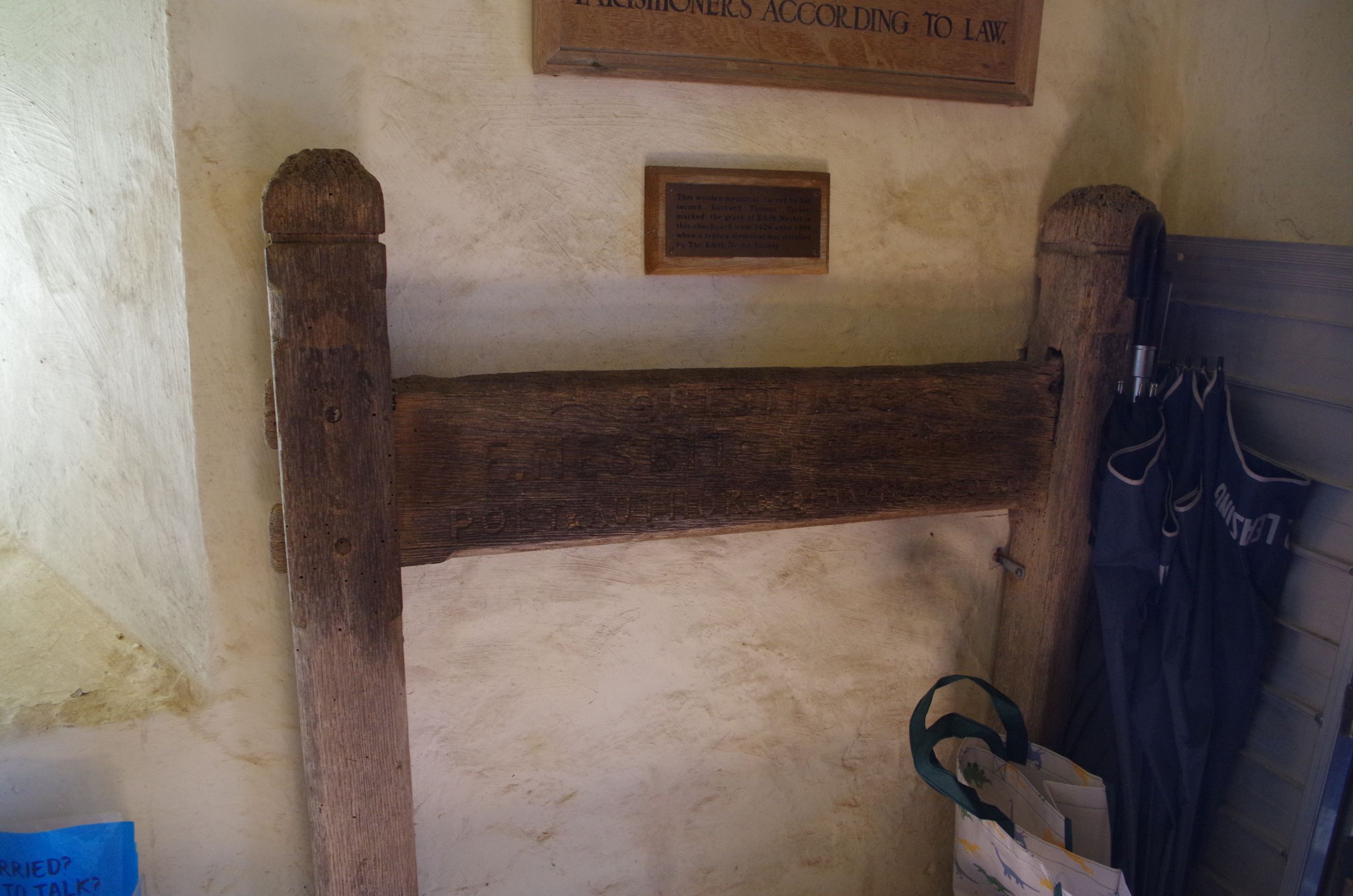
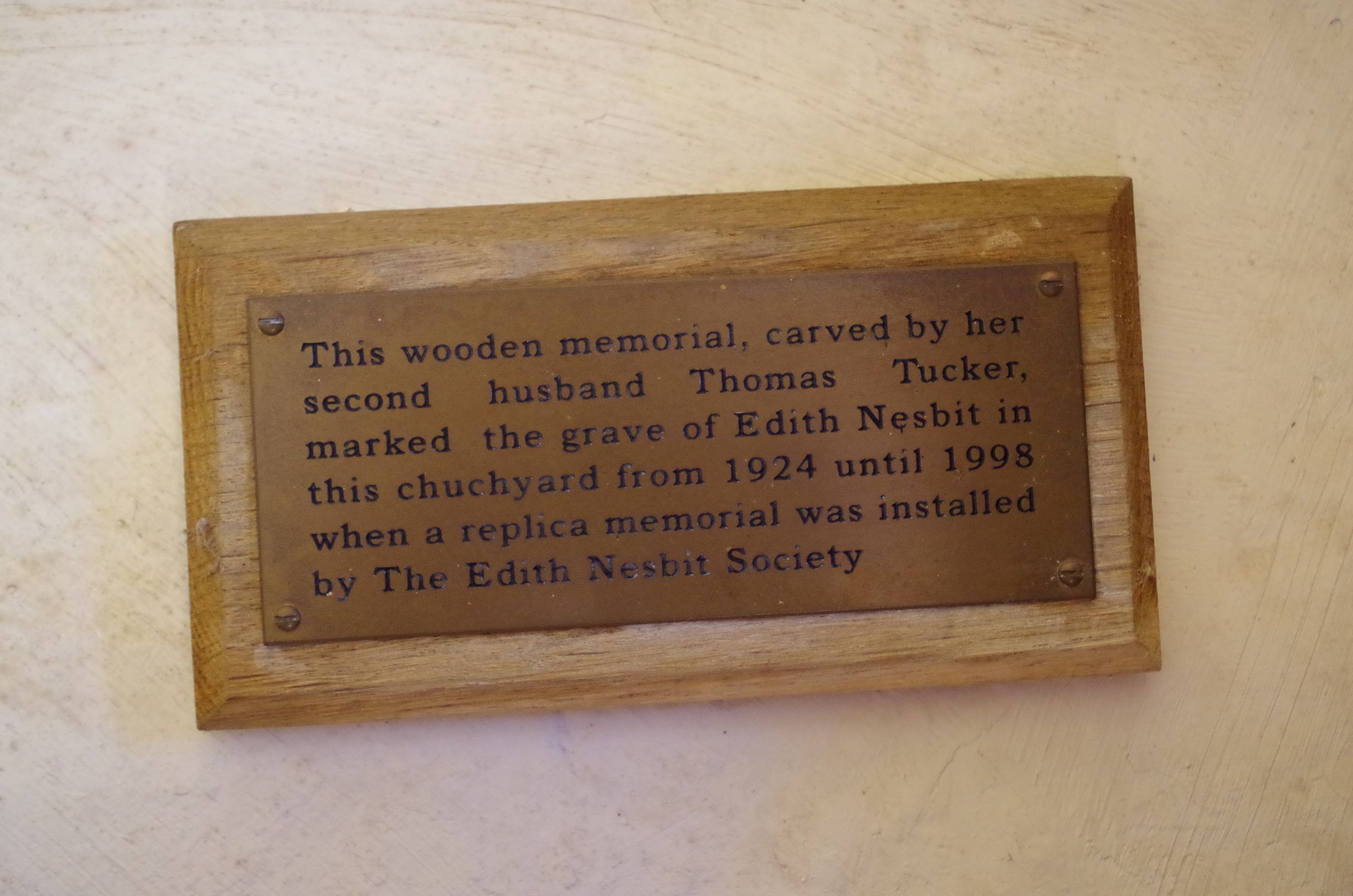
St Mary in the Marsh was a more substantial church and we were greeted by the Star Inn which ‘would have been Edith’s local’ but is now a private house. It’s a large, rambling building and was opposite the church. We soon found her last resting place in front of St Mary’s lying under the morning sun and with a simple wooden rail as a marker. It was Tommy, her second husband, who erected the first wooden rail commemorating Edith. This has suffered over the years and is now inside the church porch with a small plaque.  The one in the churchyard today is a replacement put up by the E Nesbit Society.  

E Nesbit grave marker.©Carole Tyrrell

The original grave marker now in St Mary’s church porch. ©Carole Tyrrell

Plaque above E Nesbit’s grave marker. ©Carole Tyrrell

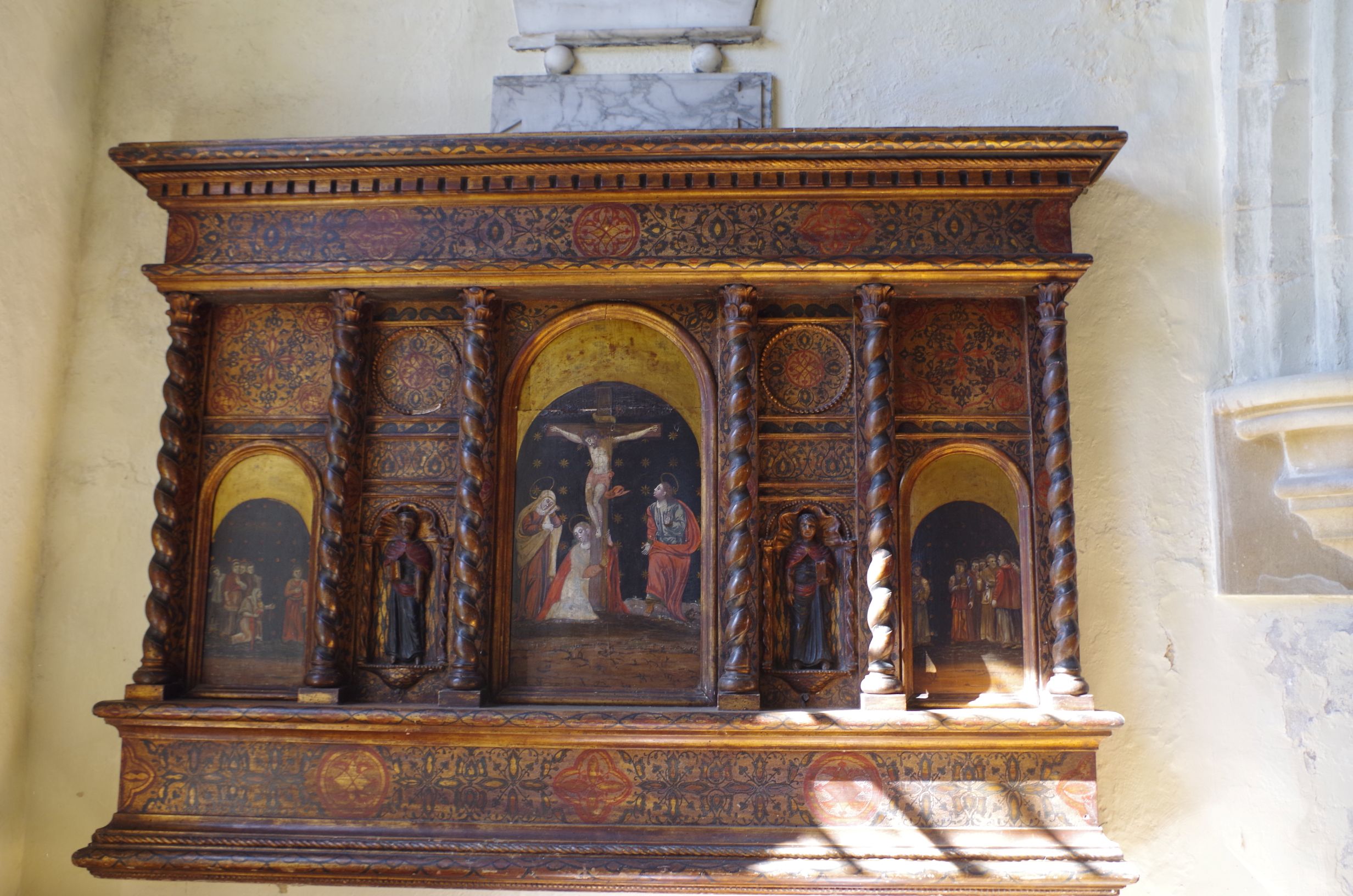
St Mary’s was less plain inside than St Eanswith although there were still box pews and whitewashed walls.  There was a magnificent triptych on one wall and another little plaque inside the nave dedicated to Edith. Three pairs of eyes were watching us as we explored. There were two small heads attached to two pillars of a sedilia by the altar and another, larger one at the base of a column.

Two ancient faces watching from the sedilia by the altar.©Carole Tyrrell

Another watching face from the base of a column. All four images ©Carole Tyrrell

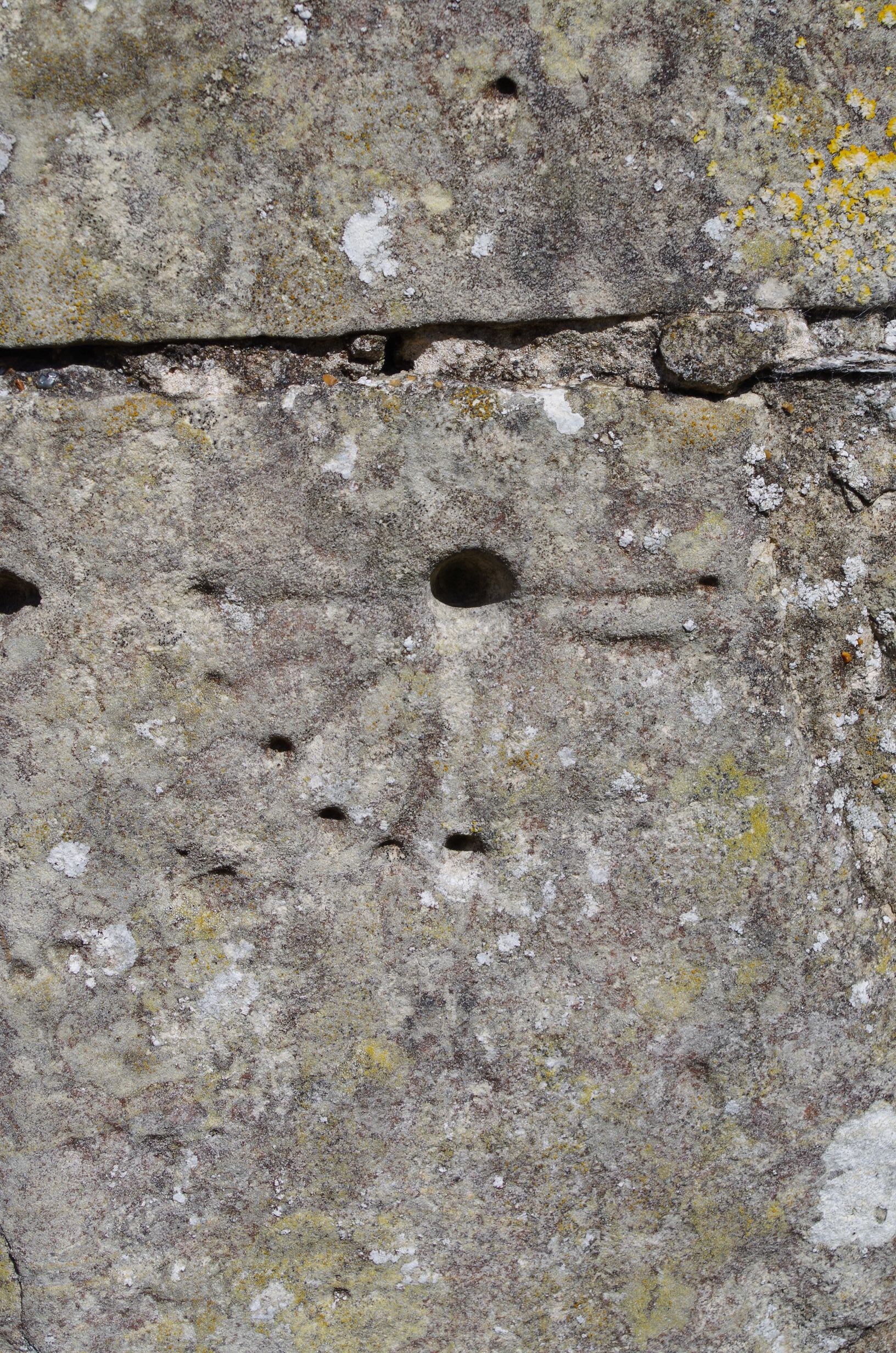
Outside early bluebells nodded in the breeze and we found a medieval mass dial set into a wall. (please see Symbol of the Month – The Mass Dial published 18/10/21)

Medieval mass dial set in wall. ©Carole Tyrrell

Afterwards we went on to explore churches and other places associated with Russell Thorndike and his famous creation whose exploits took place on the Marshes, Dr Syn.

Our final port of call was St Mary’s Bay in Dymchurch where we saw the house known as ‘The Jolly Boat’ which was E Nesbit’s final home which she are with Tommy. It is now a holiday home and is situated at the end of Nesbit Road appropriately enough.  As we admired it, we were lucky enough to see a steam train from the Romney and Hythe railway come puffing past as it steamed into the station nearby.  In the town one of our party had spotted a blue plaque on a house called ‘The Cottage’ which commemorated its famous residents: the painter Paul Nash, Noel Coward and Edith all stayed there. We did wonder if it had been at the same time and one of our party commented that ‘it must have been quite a party!’

The Jolly Boat, April 2025. ©Carole Tyrrell

Nameplate of ‘The Jolly Boat’©Carole Tyrrell

A steam train came puffing past! ©Carole Tyrrell

Blue plaque outside The Cottage, Dymchurch. ©Carole Tyrrell

E Nesbit had a fascinating life with her strong Socialist views and published over 60 books, some of which are still in print today. The film version of ‘The Railway Children’ is a much loved classic although her ghost stories are less well known.  They were reprinted last year in ‘The House of Silence’ by Handheld Press.

It was a wonderful day travelling the marshes and understanding how they inspired Edith where she is still remembered with such affection.

©Text and photos Carole Tyrrell unless otherwise stated

References and further reading:

Brenzett, Church of St Eanswith — Romney Marsh Historic Churches Trust

St Eanswith’s Church, Brenzett, Kent

The Project Gutenberg ebook of Grim Tales, by E. Nesbit.

https://edithnesbit.co.uk  The Edith Nesbit Society

E. Nesbit – Wikipedia

A Spring saunter in the footsteps of E Nesbit – Romney Marshes, Kent Part 1- Man size in Marble

St Eanswith, Brenzett © Carole Tyrrell

The churches of the Romney Marshes are isolated and you’ll need your own transport to visit them. But there are hamlets and villages here and there and I could imagine how it must feel in mid-winter with dark short nights.

However it has long been one of my ambitions to explore the churches that are on the marshes. So when I was offered the chance I didn’t hesitate.  It was a wonderful Spring day, sunny and bright, and we were all eager to explore the Marshes.

Our first church was St Eanswith in Brenzett. This was a plain little church with a candlesnuffer steeple on top of a small slope and was surrounded by a small churchyard dotted with daffodils. There was an azure blue sky and a hare was spotted racing across a bare field at the back of the church. It’s one of the smallest churches on the Marshes and is dedicated to a 7th Saxon princess who founded a nunnery in Folkestone in 630AD. There is now nothing left of the Saxon building and the present church can only be dated back to the 12th century when the Normans rebuilt it.

A small statue of St Eanswith over the top of the porch. © Carole Tyrrell

A large Maine Coon cat, who was obviously returning from a night out through the churchyard to its home in the little straggle of houses nearby, caught sight of us and tried to hide by running from patch after patch of daffodils. Then its owner came out of the house that it ran into with another Maine Coon cat!

Hide and seek © Carole Tyrrell

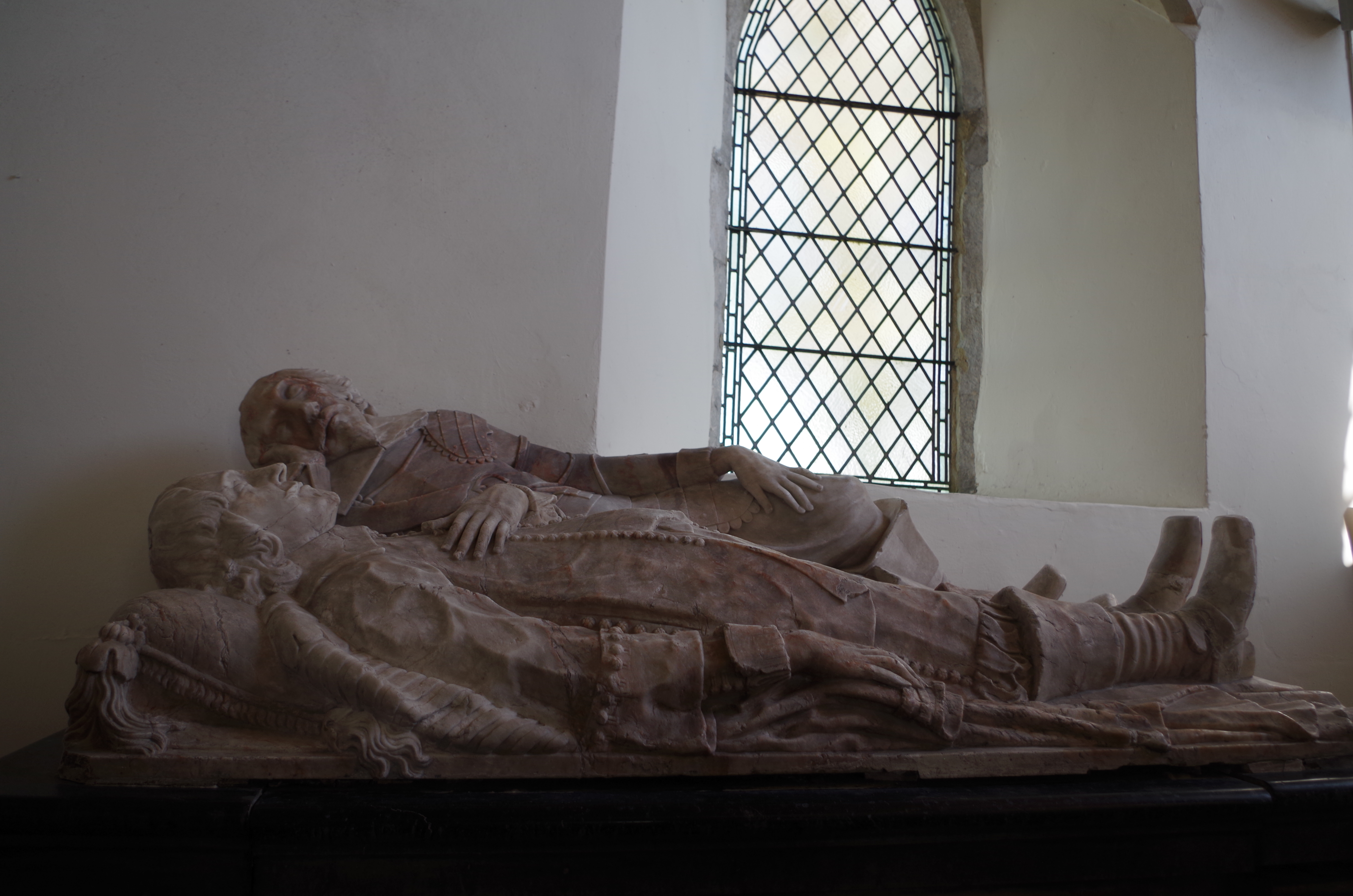
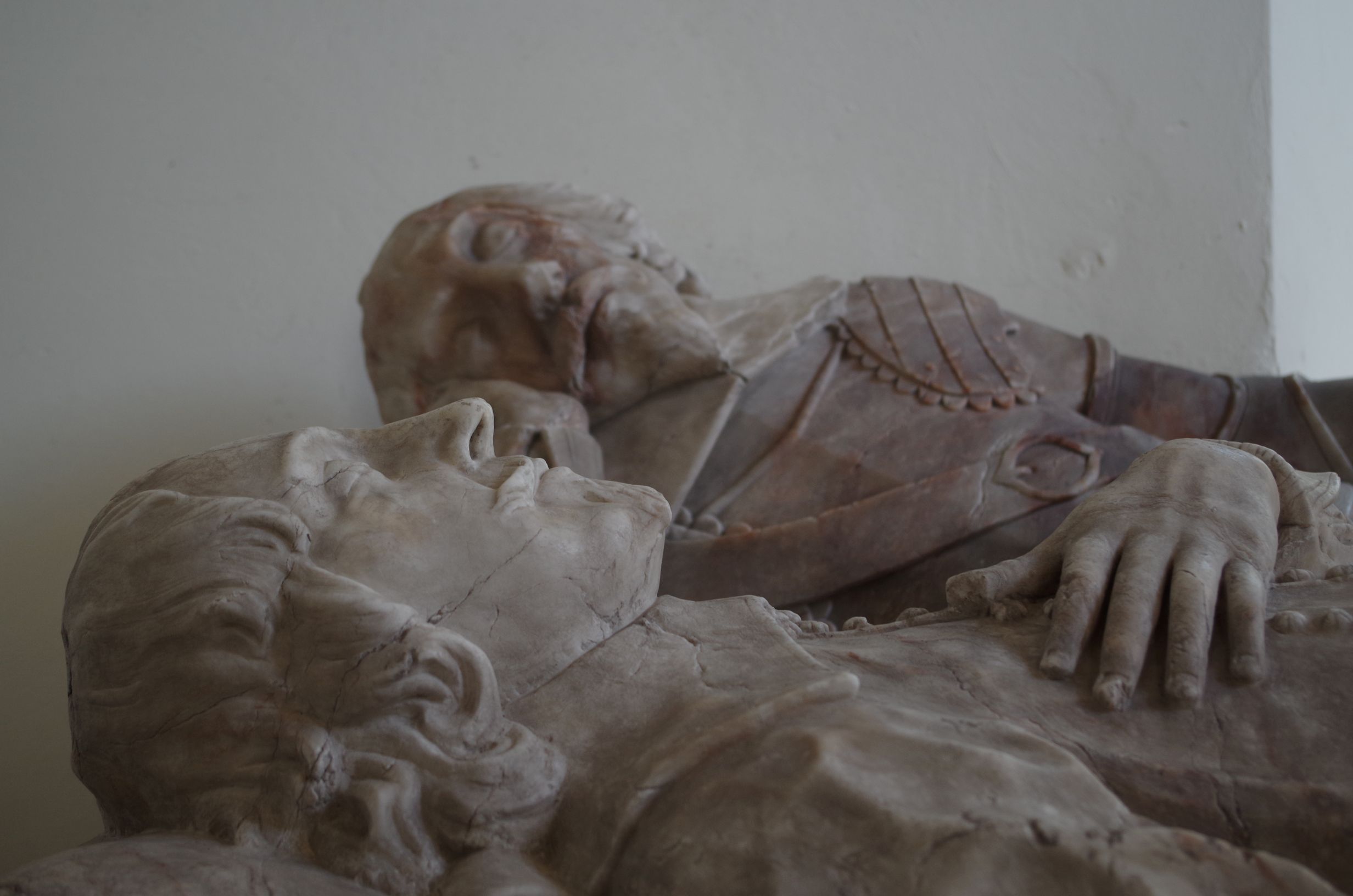
Inside St Eanswith it was plain, with white washed walls and dark wood pews. The pulpit had a raised roof panel which I’d not seen before and at the altar end of the church was the table tomb that we had come to see. This was the Fagge monument and is the only monument in the church. It is dedicated to a father and son, both confusingly called John, and it is a pair of alabaster sculptures of two men in fashionable 17th century clothes. The man in the foreground is portrayed as lying on his back on a sculpted cushion with his left hand on his chest while the man behind is lying on his elbow with his right hand under his chin and his left hand on his left leg. There are visible cracks and damage with repairs which you would expect over the centuries. They are beautifully sculpted. There are small coats of arms beneath the figures at corners which bring a small splash of colour. John Fagge the elder died in 1639 and his son and heir died in 1646.

The Fagge monument, St Eanswith. © Carole Tyrrell

Close up of the Fagge monument. © Carole Tyrrell

Close up of hands showing the ravages of time. © Carole Tyrrell

Epitaph to the Fagges and one of their coat of arms.© Carole Tyrrell

This is the monument that inspired one of E Nesbit’s most famous stories, ‘Man Size in Marble’ which was adapted by Mark Gatiss for the 2024 BBC Christmas ghost story and retitled ‘the Stone Woman’.  A young married couple have moved to the country and their housekeeper tells them of a certain night when something walks from a local church to their house. They take no notice of this but when the husband is called away and leaves his wife alone in the house….you can read the story here:  The Project Gutenberg ebook of Grim Tales, by E. Nesbit.

This is English folk horror clashing with modern reasoning and belief. Nesbit creates the dark countryside so well and also the central characters incredulity at what they are being told. They are still in love with endearments such as ‘wifie’ and ‘dearest’ which makes the ominous events that are about to happen all the more shocking.

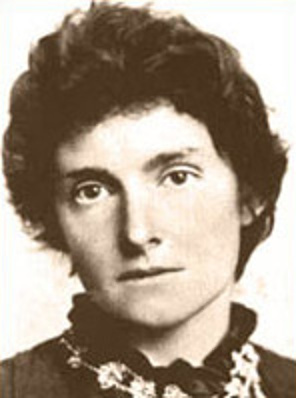
E Nesbit c. 1890 Shared under Wiki Commons

E Nesbit (1858-1924)  is most known for ‘The Railway Children’ which was first published in 1905 and has never been out of print. It was also a classic and well loved childrens film. Some of her other children’s stories have also been adapted for TV.  But she also wrote ghost stories, some of which were recently published by Handheld Press in the collection ‘The House of Silence.’

She was only 4 when her father, an agricultural chemist, died. Edith’s sister, Mary, suffered from ill health and as a result the family travelled in the UK and France. She died in 1871 of tuberculosis after becoming engaged to the poet Phillip Bourke Marston.  After Mary’s death, Edith and her mother lived in Halstead Hall, Halstead in Kent which is considered to be a possible location for ‘The Railway Children’.  When she was 17 they moved to Elswick Road in Lewisham. 

She married Hubert Bland on 22 April 1880. They met when she was aged 18 and at 21 and 7 months pregnant they tied the knot. It was a difficult marriage to say the least as he was always being unfaithful. Edith had 3 children by him and adopted 2 more from one of his long term affairs. It was a complicated family.  She and Hubert were both fervent socialists and joined the Fabian Society, jointly editing its journal ‘Today.’ But this work often took second place to Edith’s writing as she became more successful. The Fabian Society ultimately became part of the Labour party.

From 1899-1920 she lived at Well Hall Eltham. The house is long gone but the garden remains as a public park. She also had a second home at Crowlink, Friston, East Sussex when she entertained.

Bland died in 1918 and she married her second husband, Thomas ‘the Skipper’ Tucker in Woolwich where he was the captain of the Ferry.  They both lived at St Mary’s Bay, Dymchurch at their house ‘The Jolly Boat’ where she died on 4 May 1924. It may have been from lung cancer as she was a great smoker.  Tommy died at the same address on 17 May 1935. To read more about Edith and her life please visit: https://edithnesbit.co.uk

It was such a privilege to see the Fagge monument in the flesh so to speak and also a writer’s inspiration. I could easily imagine Brenzett on a winter’s night, the little terrace of houses with their curtains drawn and lights out as something stirs and moves within the small church and suddenly the top of the tomb is empty and something that shouldn’t be is walking…..

A Spring Saunter in the footsteps of E Nesbit Part 2 her late life on the Marshes

© Carole Tyrrell photos and text unless otherwise stated

Brenzett, Church of St Eanswith — Romney Marsh Historic Churches Trust

St Eanswith’s Church, Brenzett, Kent

The Project Gutenberg ebook of Grim Tales, by E. Nesbit.

https://edithnesbit.co.uk  The Edith Nesbit Society

E. Nesbit – Wikipedia