
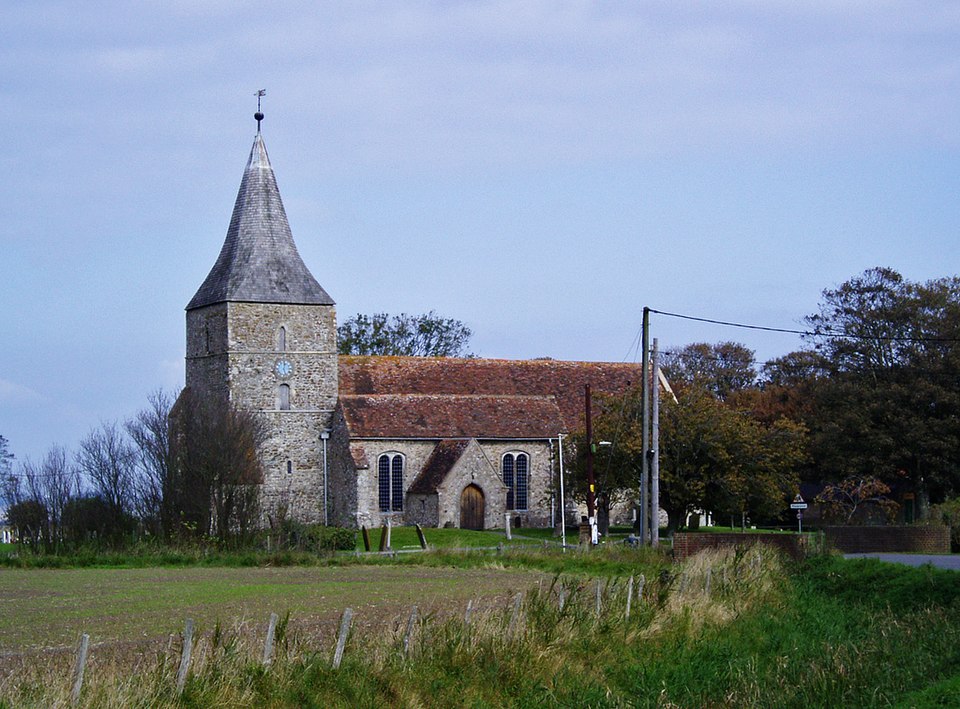
Edith Nesbit is buried in the churchyard of St Mary in the Marsh which was our next church. We left Brenzett and its attractive cats to travel through the wonderful Kent countryside. Blossom foamed over the hedgerows and the fields and marshes seemed to stretch on forever. There was a sense that Nature was beginning to stretch herself and come back to life after the winter.

Early bluebells nodding in the breeze, St Mary’s in the Marsh ©Carole Tyrrell
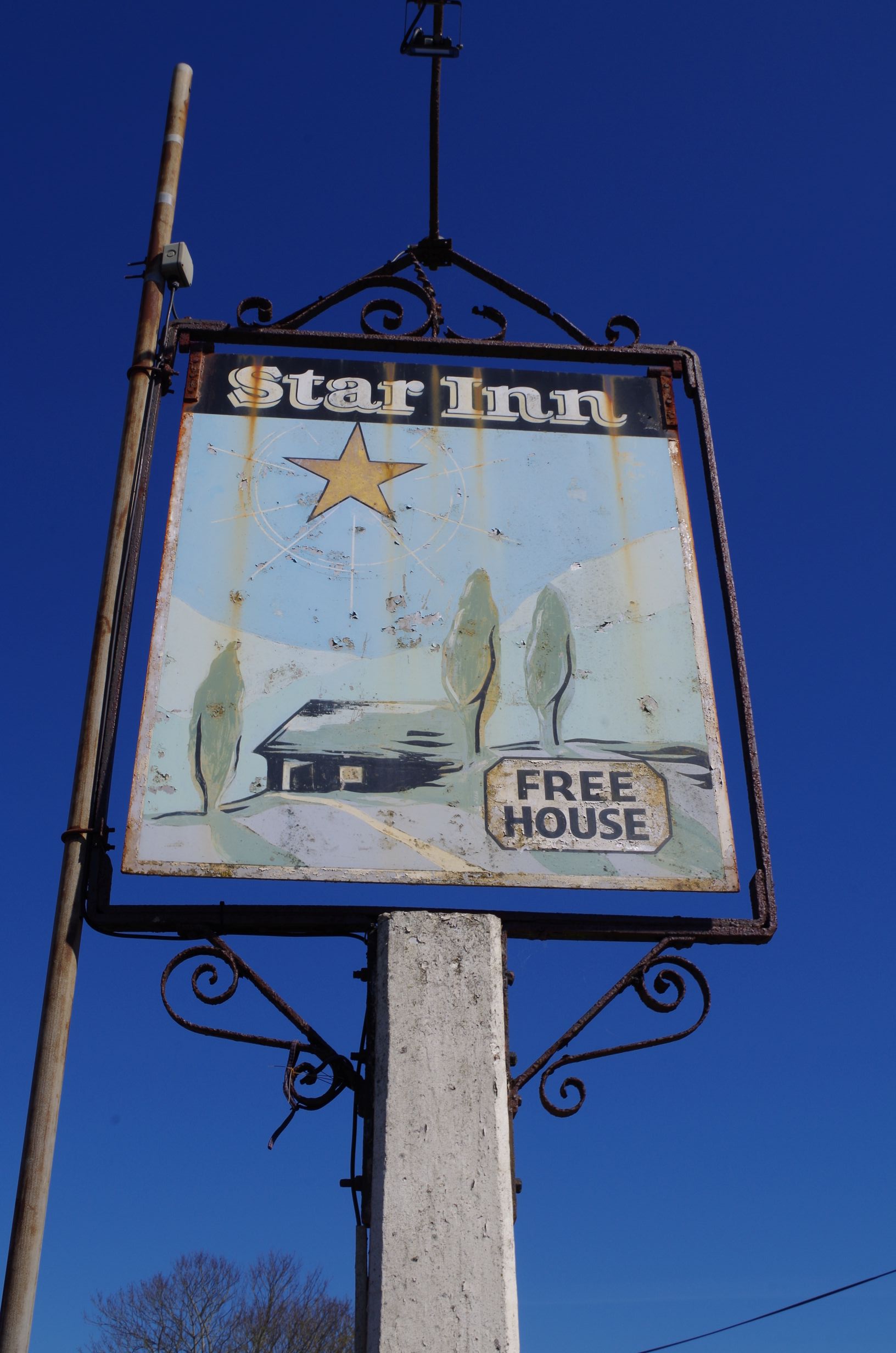
St Mary in the Marsh was a more substantial church and we were greeted by the Star Inn which ‘would have been Edith’s local’ but is now a private house. It’s a large, rambling building and was opposite the church. We soon found her last resting place in front of St Mary’s lying under the morning sun and with a simple wooden rail as a marker. It was Tommy, her second husband, who erected the first wooden rail commemorating Edith. This has suffered over the years and is now inside the church porch with a small plaque. The one in the churchyard today is a replacement put up by the E Nesbit Society.

E Nesbit grave marker.©Carole Tyrrell
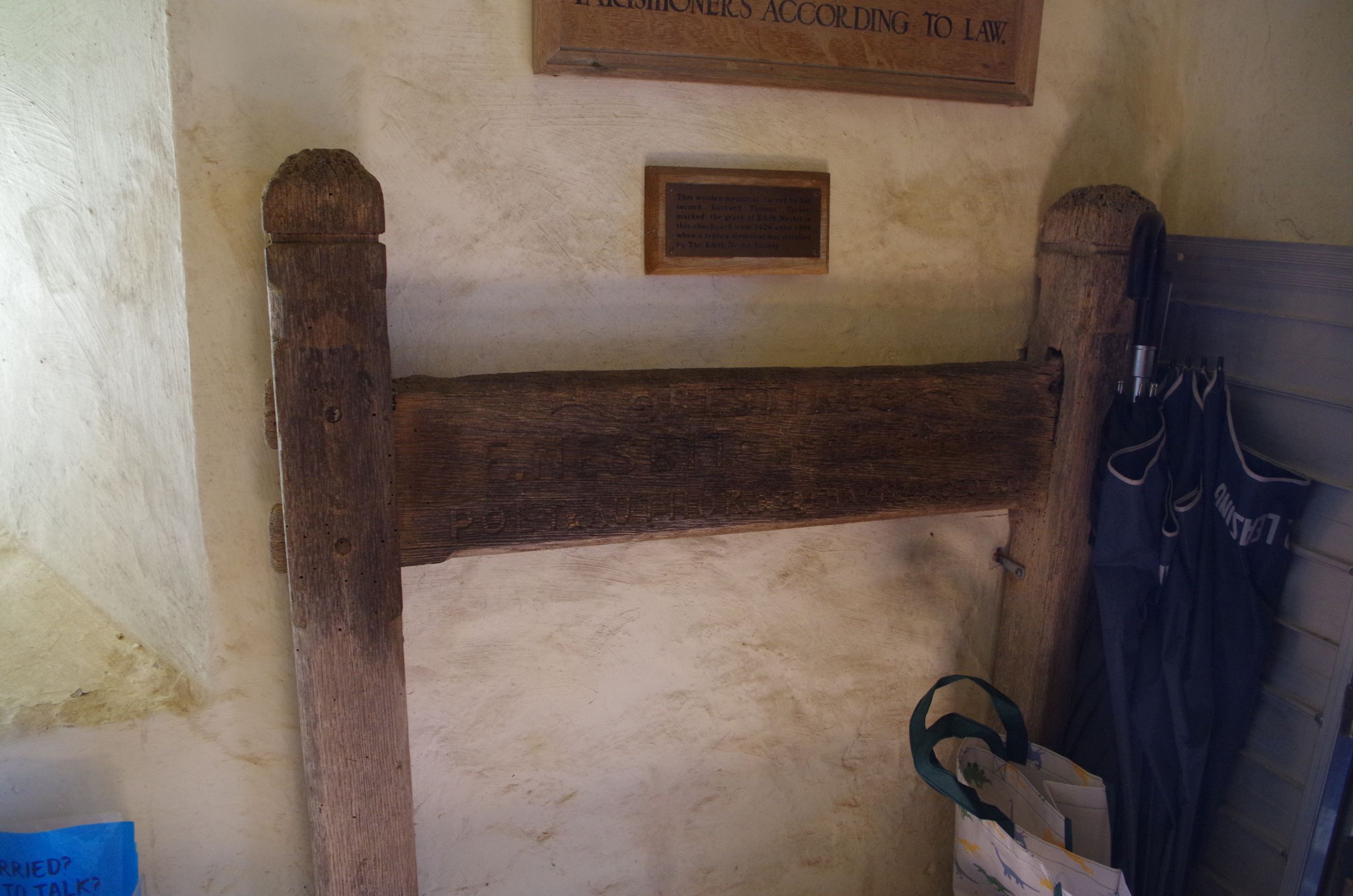
The original grave marker now in St Mary’s church porch. ©Carole Tyrrell
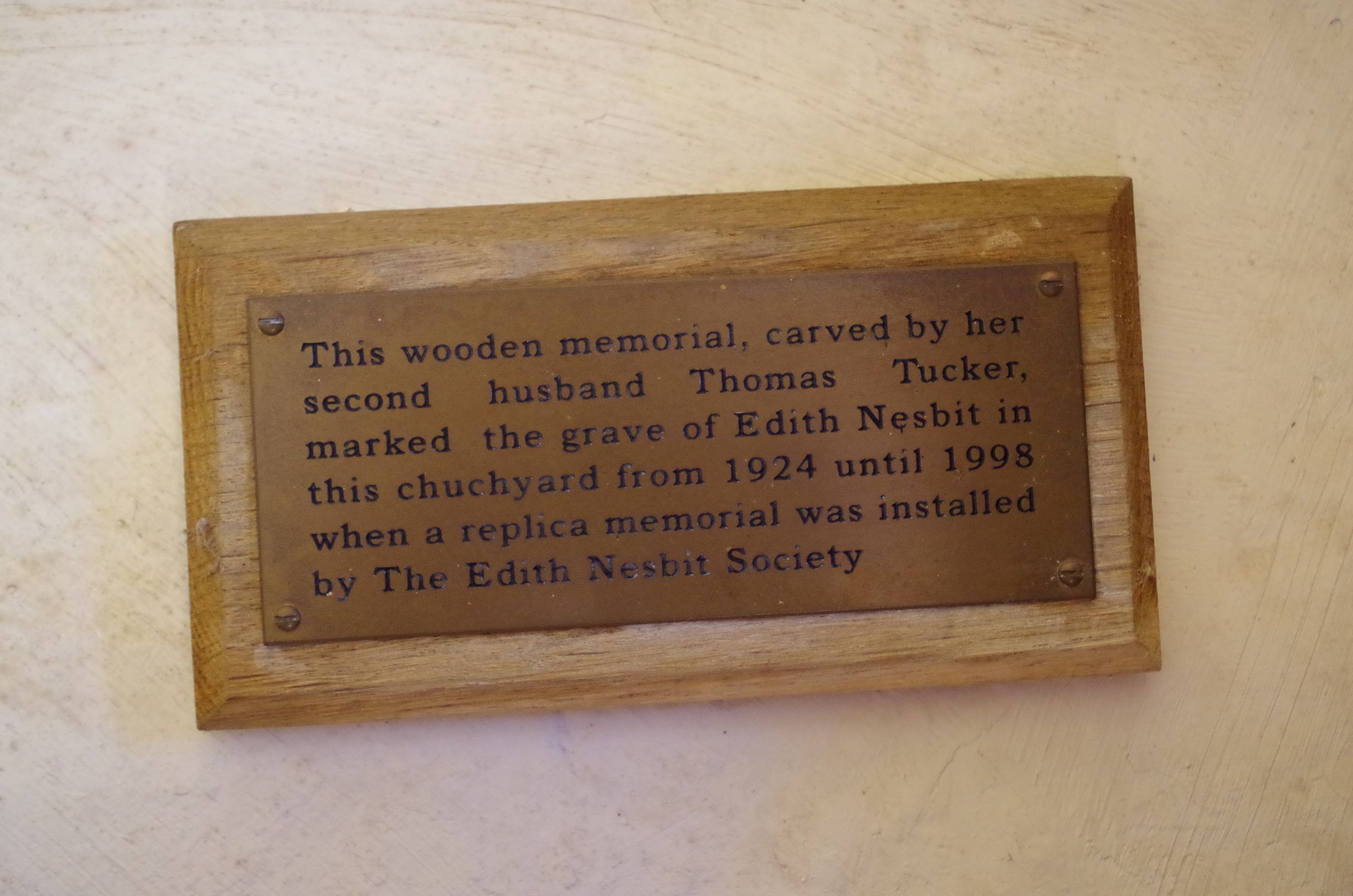
Plaque above E Nesbit’s grave marker. ©Carole Tyrrell
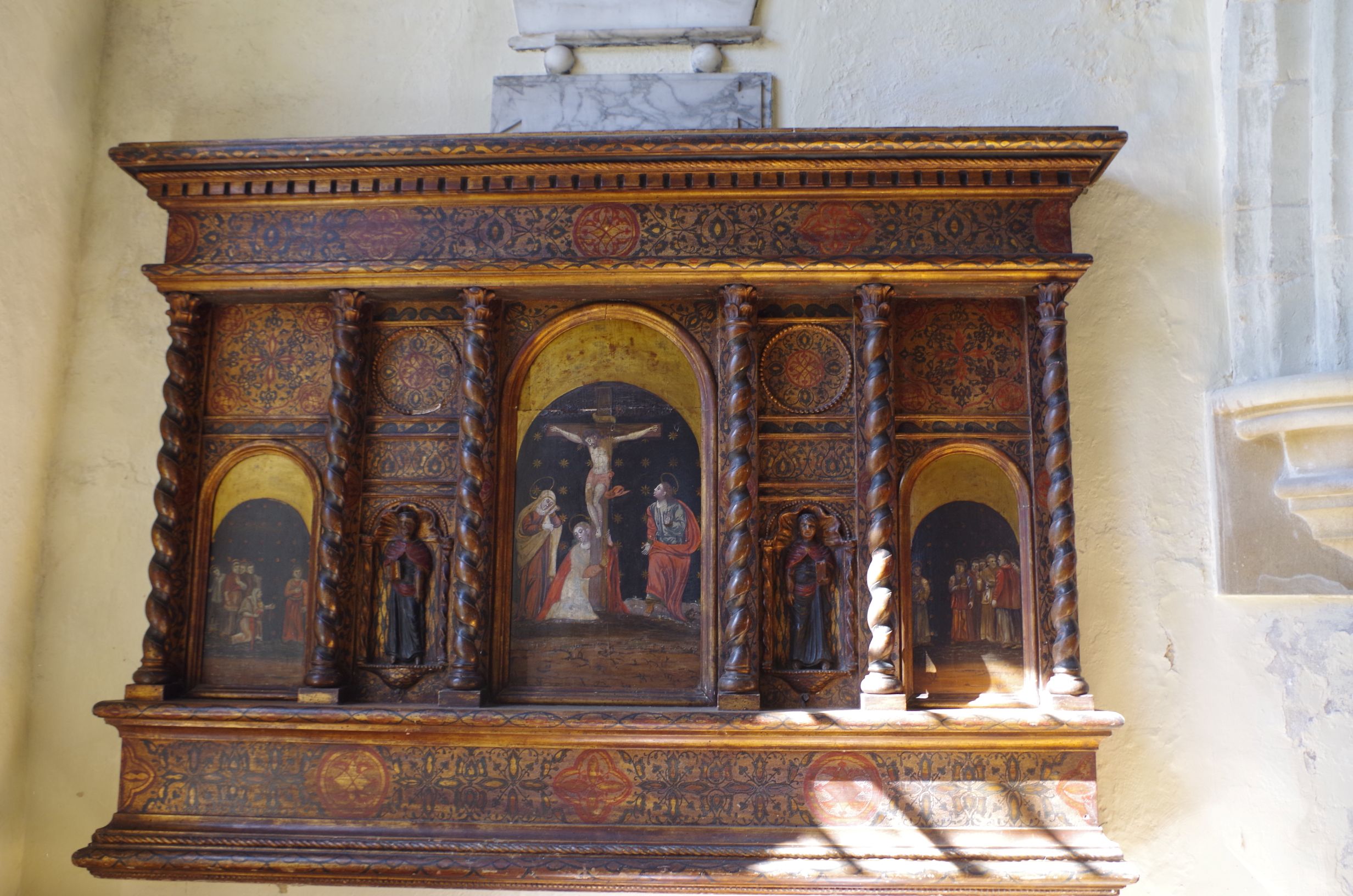
St Mary’s was less plain inside than St Eanswith although there were still box pews and whitewashed walls. There was a magnificent triptych on one wall and another little plaque inside the nave dedicated to Edith. Three pairs of eyes were watching us as we explored. There were two small heads attached to two pillars of a sedilia by the altar and another, larger one at the base of a column.


Two ancient faces watching from the sedilia by the altar.©Carole Tyrrell

Another watching face from the base of a column. All four images ©Carole Tyrrell
Outside early bluebells nodded in the breeze and we found a medieval mass dial set into a wall. (please see Symbol of the Month – The Mass Dial published 18/10/21)
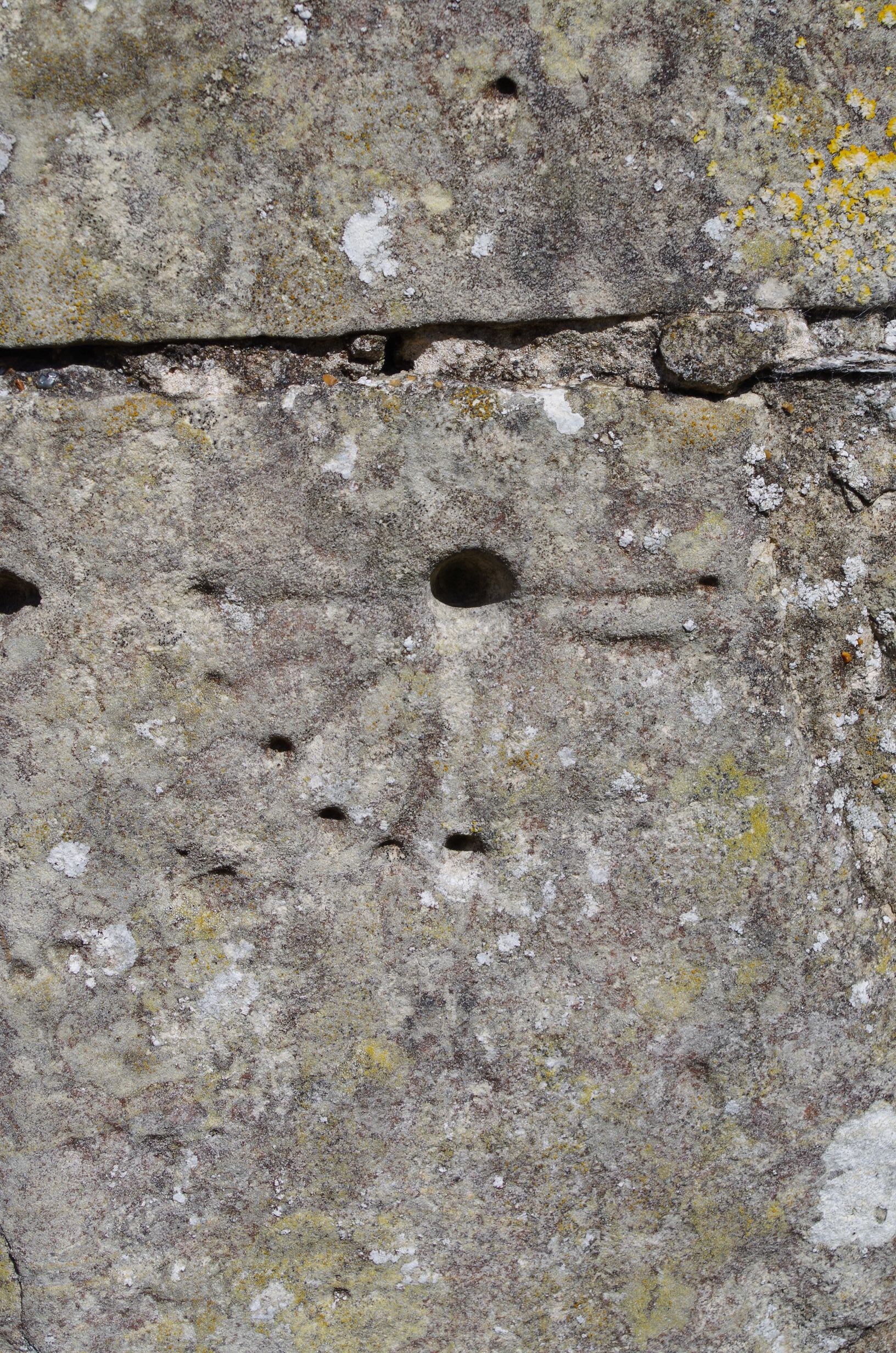
Medieval mass dial set in wall. ©Carole Tyrrell
Afterwards we went on to explore churches and other places associated with Russell Thorndike and his famous creation whose exploits took place on the Marshes, Dr Syn.
Our final port of call was St Mary’s Bay in Dymchurch where we saw the house known as ‘The Jolly Boat’ which was E Nesbit’s final home which she are with Tommy. It is now a holiday home and is situated at the end of Nesbit Road appropriately enough. As we admired it, we were lucky enough to see a steam train from the Romney and Hythe railway come puffing past as it steamed into the station nearby. In the town one of our party had spotted a blue plaque on a house called ‘The Cottage’ which commemorated its famous residents: the painter Paul Nash, Noel Coward and Edith all stayed there. We did wonder if it had been at the same time and one of our party commented that ‘it must have been quite a party!’

The Jolly Boat, April 2025. ©Carole Tyrrell

Nameplate of ‘The Jolly Boat’©Carole Tyrrell

A steam train came puffing past! ©Carole Tyrrell

Blue plaque outside The Cottage, Dymchurch. ©Carole Tyrrell
E Nesbit had a fascinating life with her strong Socialist views and published over 60 books, some of which are still in print today. The film version of ‘The Railway Children’ is a much loved classic although her ghost stories are less well known. They were reprinted last year in ‘The House of Silence’ by Handheld Press.
It was a wonderful day travelling the marshes and understanding how they inspired Edith where she is still remembered with such affection.
©Text and photos Carole Tyrrell unless otherwise stated
References and further reading:
Brenzett, Church of St Eanswith — Romney Marsh Historic Churches Trust
St Eanswith’s Church, Brenzett, Kent
The Project Gutenberg ebook of Grim Tales, by E. Nesbit.
https://edithnesbit.co.uk The Edith Nesbit Society
 shadows fly away