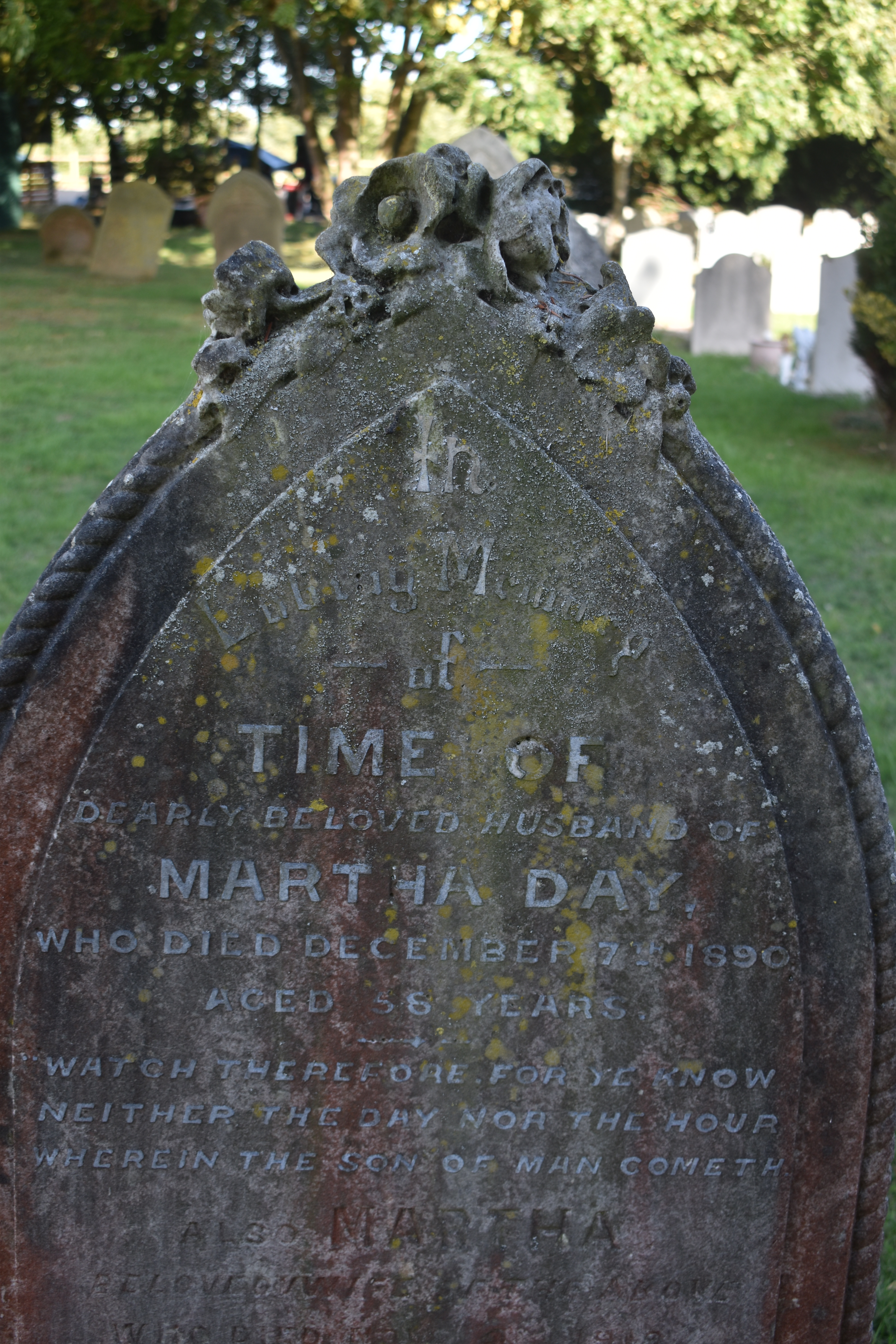
I tried to find this grave last year in the churchyard of Hoo St Werbergh but ran out of time. However, on a return visit this year I finally found it.
It’s dedicated to a man called ‘Time Of Day’ ( I kid you not). (1833-1890) with ‘Day’ being his surname. I did wonder if his siblings were called after days of the week with their surname providing the end as in ‘Sun – Day, Mon-Day etc.
He was a licenced victualler or publican who owned a pub in a nearby hamlet, Fenn Street, Hoo, called The Bell Inn from 1881. He died on 11 December 1890 and the headstone was erected by his wife, Martha, who was the executrix of his will. The value of his estate was £962.10s.3d which was a substantial sum at that time. There was no mention of any children.
The Fenn Bell Inn may have been named after one of several bells erected on nearby marshes. In poor weather they would ring to enable travellers to find a safe way to cross but The ‘Bell’ is a common name for pubs throughout Britain. The Fen Bell Inn has been in existence since the 17th century although it has been remodelled and restored since then. However, some of the original fabric still exists. Since 2014, it has housed the Fenn Bell Conservation project for rescued animals and a miniature railway. Recently, there has been controversy over the pub landlord’s plan to sell off land for housing but he has defended it saying that he needed to do it to keep his business going.
‘Time of Day’ is a very unusual name as you might agree but he was a man of some substance and is likely to remembered for many years to come.
This summer I was out walking with a friend along the sea wall to Minnis Bay when we saw this little roadside shrine. It was on a popular route which is used by walkers and cyclists alike. On one side is the pebbly beach and on the other are marshes that stretch down to the railway line. It was touching to see that people, friends or perhaps fellow passers-by, had left little tributes of a bunch of flowers and stones.
The placing of stones on graves is something that I’ve always associated with the Jewish faith (see blog post ‘Silently slumbering for remembrance Part 1 dated 14 April 2016). If you have ever visited a Jewish cemetery then you will have noticed stones placed on top of graves and headstones and there may be a basket of stones available for this purpose. But over the last few years I have noticed them being placed on the graves of people who aren’t Jewish and I was intrigued by their possible meaning.
In the Jewish faith, it is believed that the placing of stones ‘keeps the soul down.’ This comes from the Talmud
‘which is the central text of rabbinical Judaism and is the primary source of Jewish religious law and theology’ Wikipedia
In the Talmud, it is stated that:
‘souls continue to dwell for a while in the graves in which they are placed. The grave was called a beit olam or a permanent home and was thought to retain some aspects of the departed soul. By placing stones, it becomes a way of the living helping the dead to ‘stay put’.
This may have brought comfort to those visiting the grave in that they may feel that their loved ones are still near.The Hebrew word for pebble is ‘tz’ror’ which can also mean ‘bond’. The placing of stones was also a mark of respect and a way of showing that someone had visited.
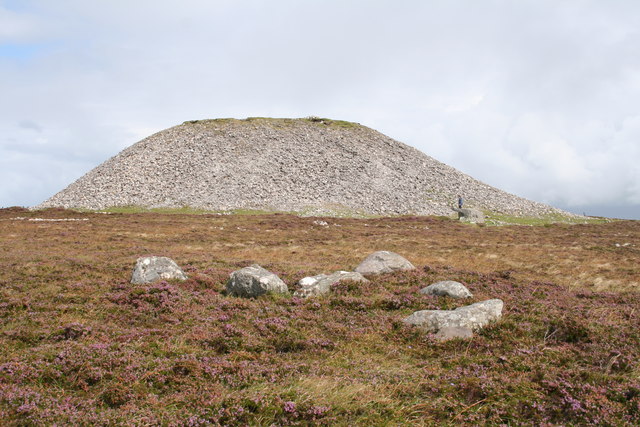
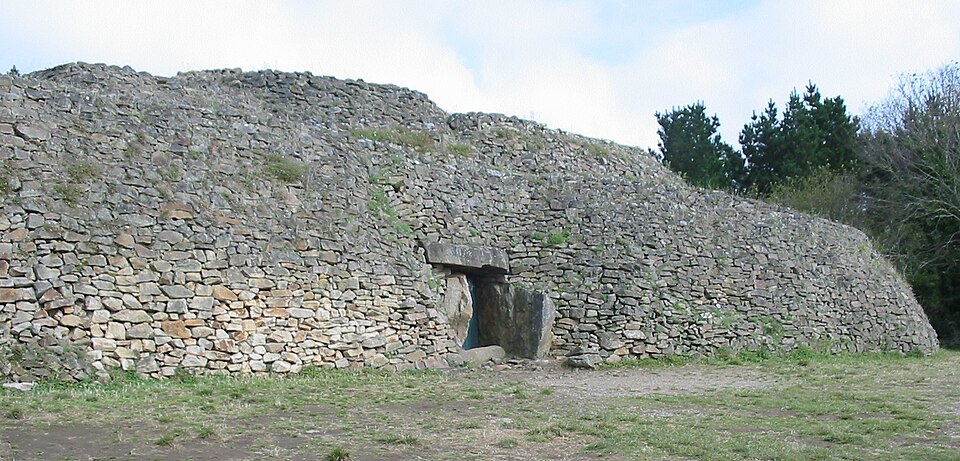
Stones were used because of their durability. The Ancient Greeks believed that using stones to mark graves would ward off evil spirits and they also symbolised the soul’s eternal nature as they didn’t change over time. They associated them with the god, Hermes. However, stones and their associations with burials have been known to many ancient cultures especially Ireland, Scandinavia North Africa, the Middle East and Asia amongst others where they used them to mark sacred territories where communities would gather to honour their dead. Also the Neolithic and Bronze periods in Europe in particular. Stones were used to create cairns. These are usually placed on top of graves as markers and to protect the dead from predators. In the Bronze Age they may have believed that the stones would stop the dead from rising as in the Jewish faith. Some of these still stand. The word ‘cairn’ comes from the Irish ‘carn’ with the plural being ‘cairn’ . In Scottish Gaelic ‘càrn’ translates to ‘heap of stones.’
They were also seen as a method of defence in that it would ward off predators from the burial site.
However, more recently, there has been controversy regarding the building of cairns on certain sites. This is due to the environmental damage that they can cause. Both the Hawaiian Volcano Observatory and the US National Park Service have complained about visitors prying off pieces from important geological features to make them as well as interfering with existing cairns and the destruction of important trail markers. In the Peak District one man has made his mission to kick down the dozens of stacks that he finds. BBC News reported that:
‘Many have been created by taking stones from an old wall which may have damaged the habitats of the small creatures that live inside the wall and may have long term effects according to the National Trust who will also disassemble any stacks.
The stacks are seen as :
…. not to mark any burial sites or act as markers but just create unnecessary stacks for aesthetic purposes forgetting their original purpose as wayfinding tools and symbols rather than decorations.’
The stones that have been left behind on the little seawall shrine, have presumably, come from the beach below and are a poignant symbol of remembrance signifying that the departed has been visited. The stones emphasise the enduring nature of memory and ite sbaility to enable the departed to live on. He is not forgotten by those who knew him and he died at one of his favourite places. RIP.





 shadows fly away