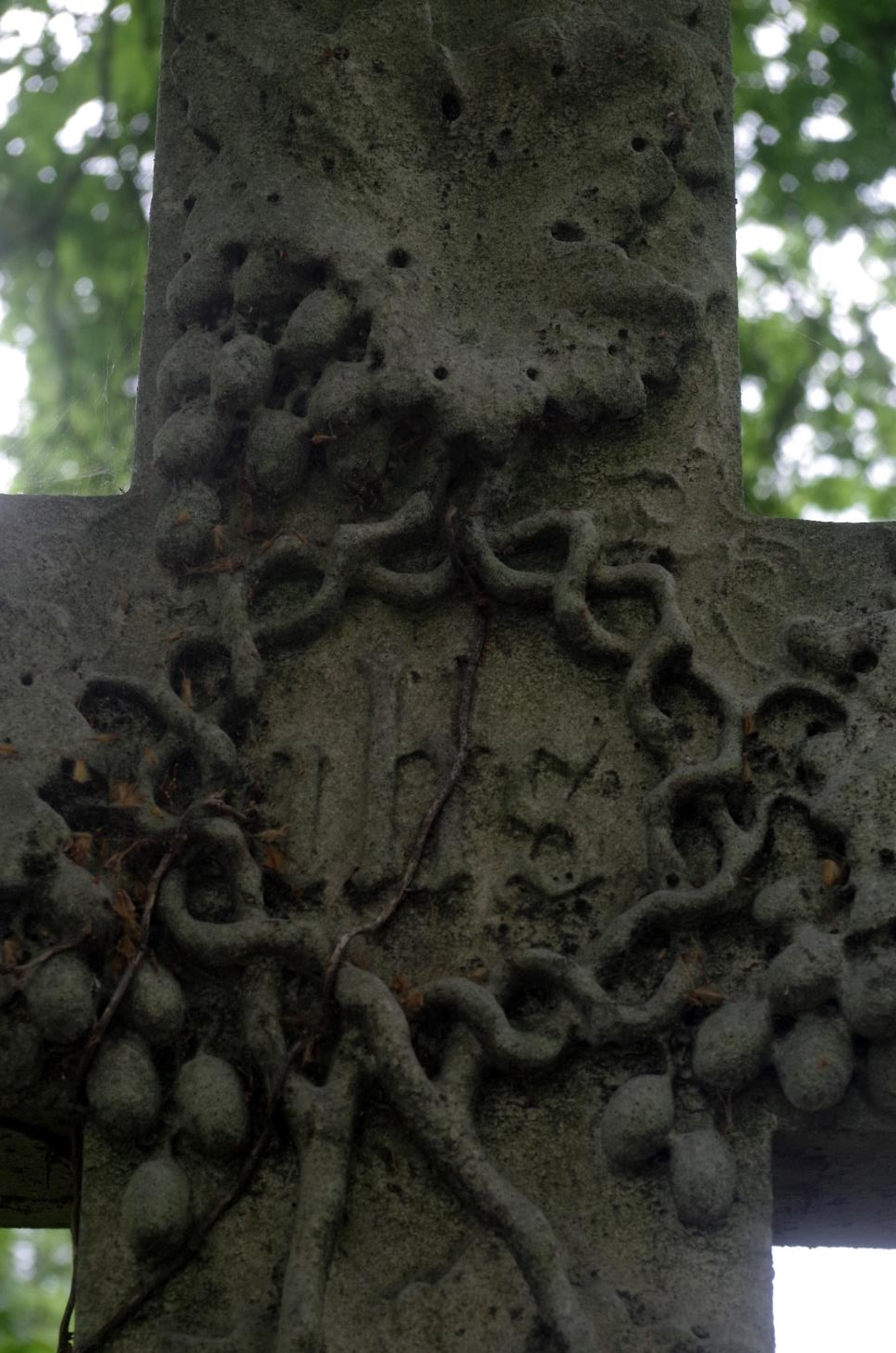
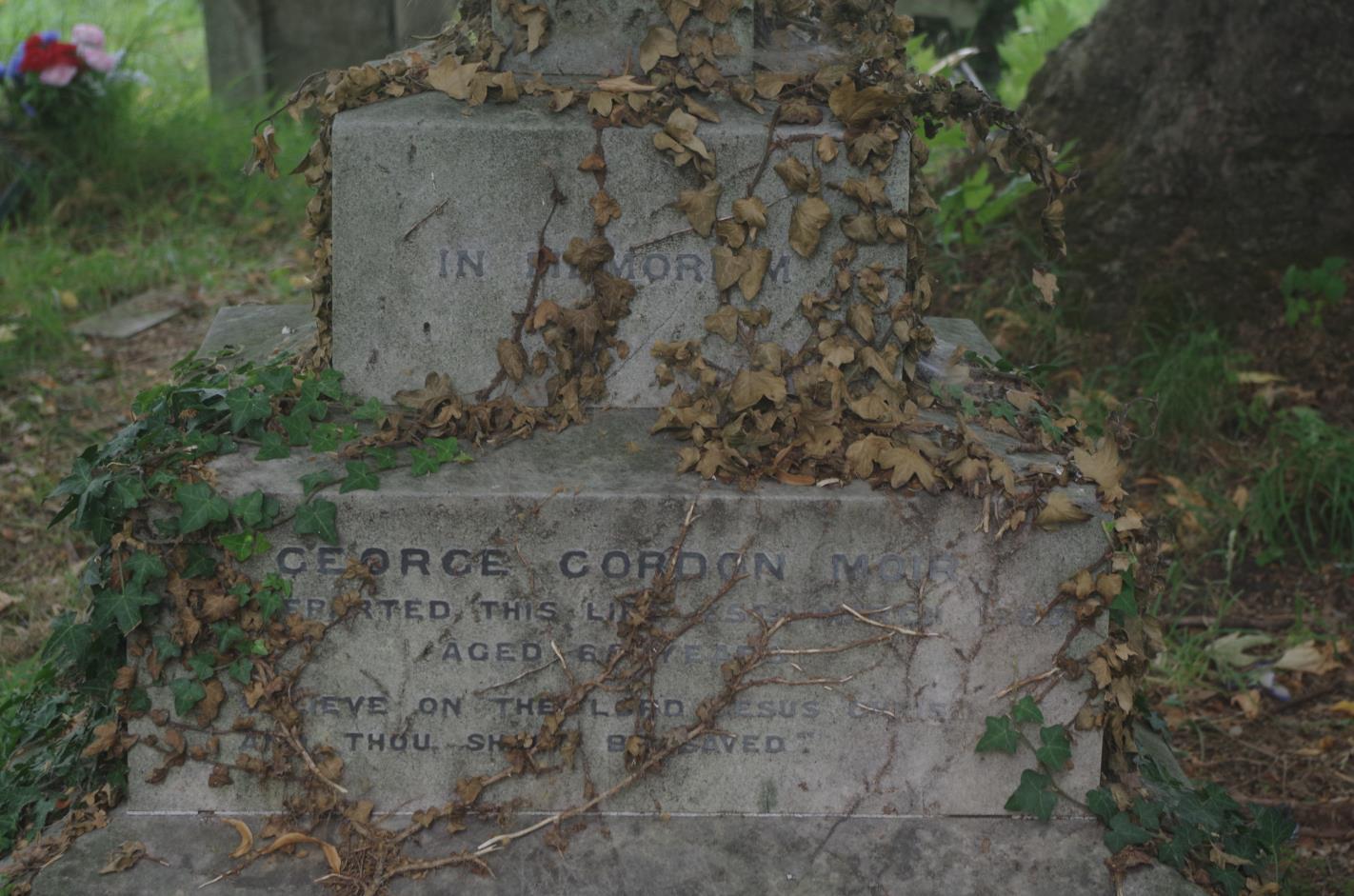
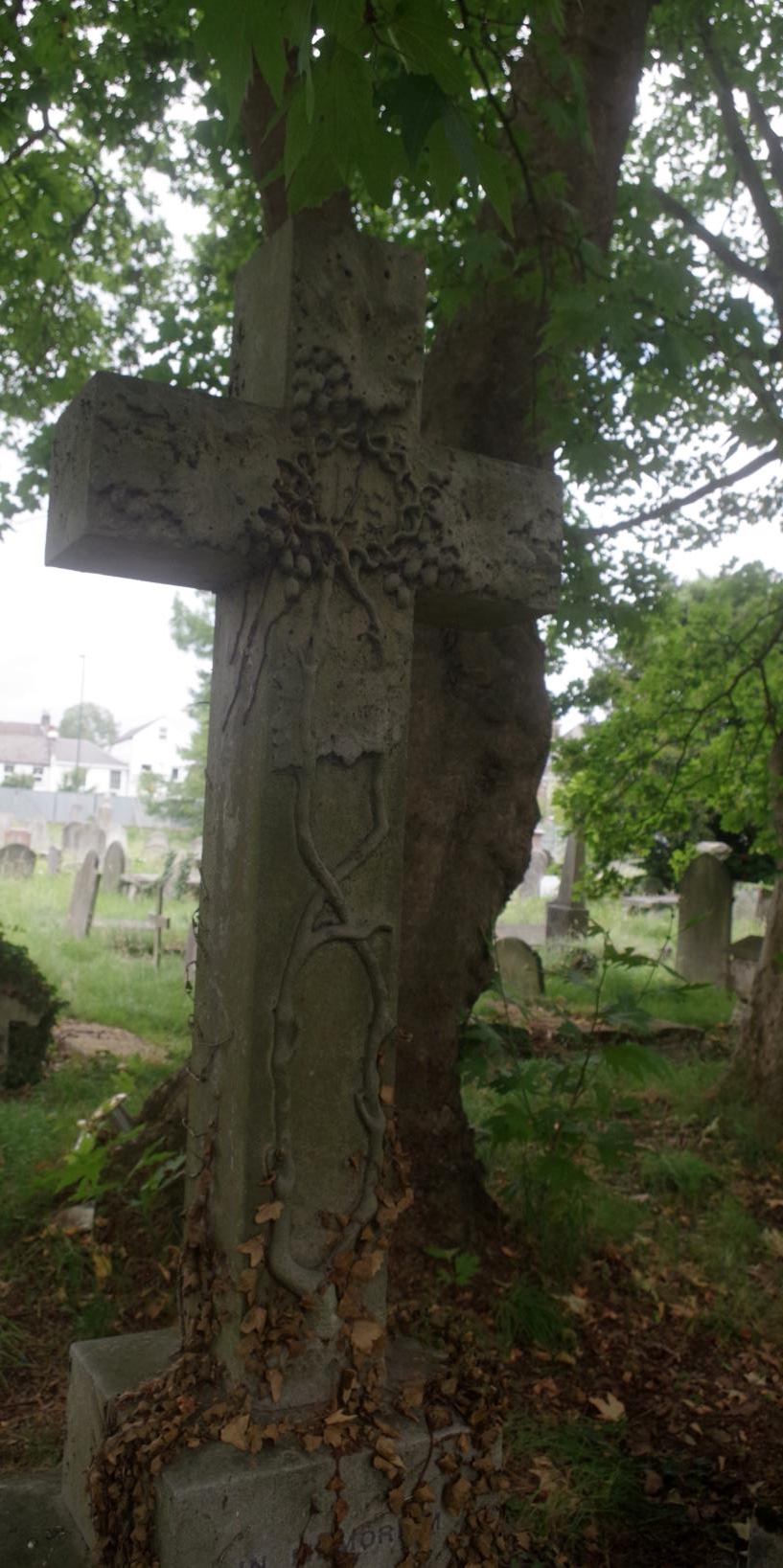
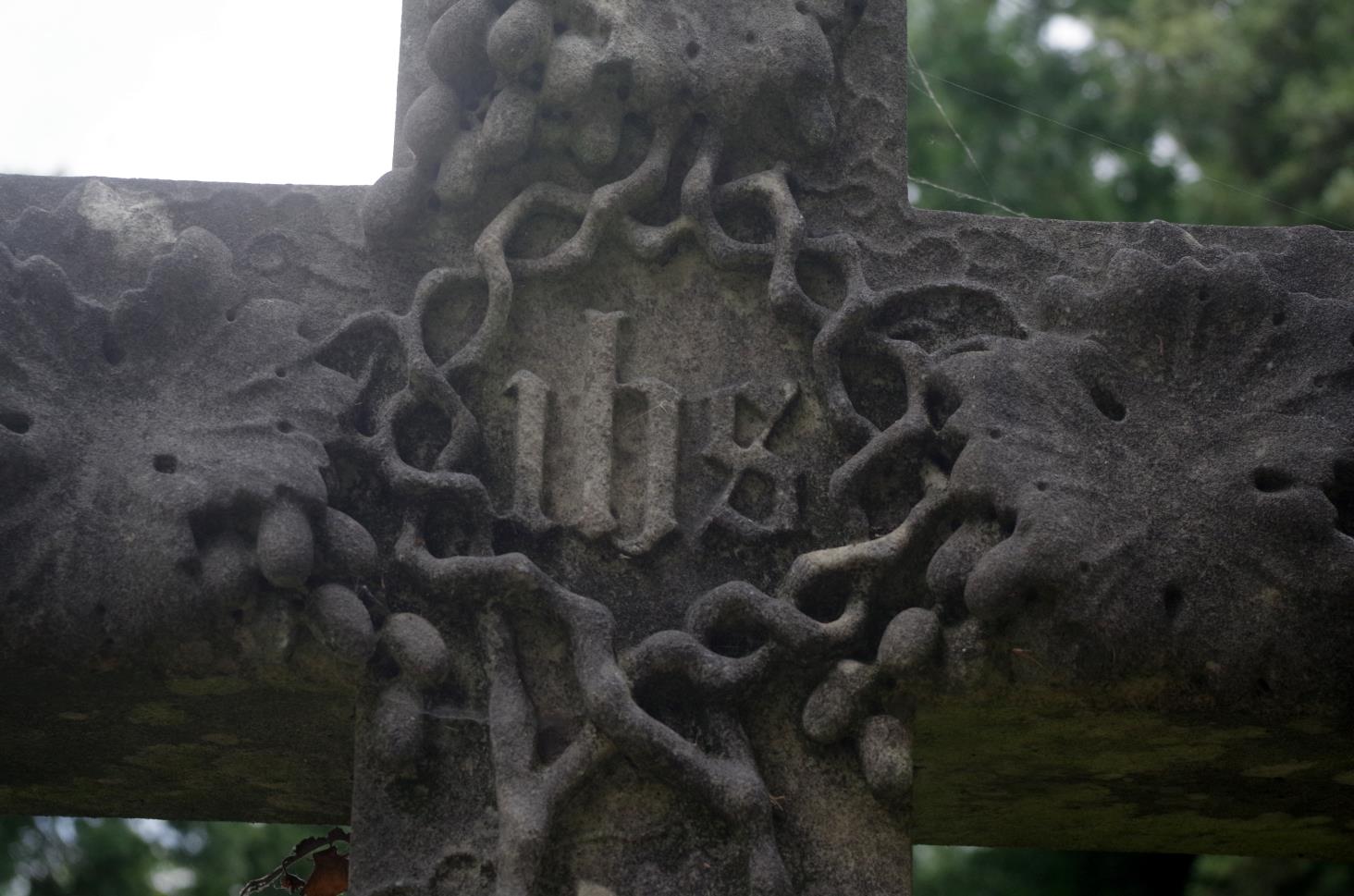
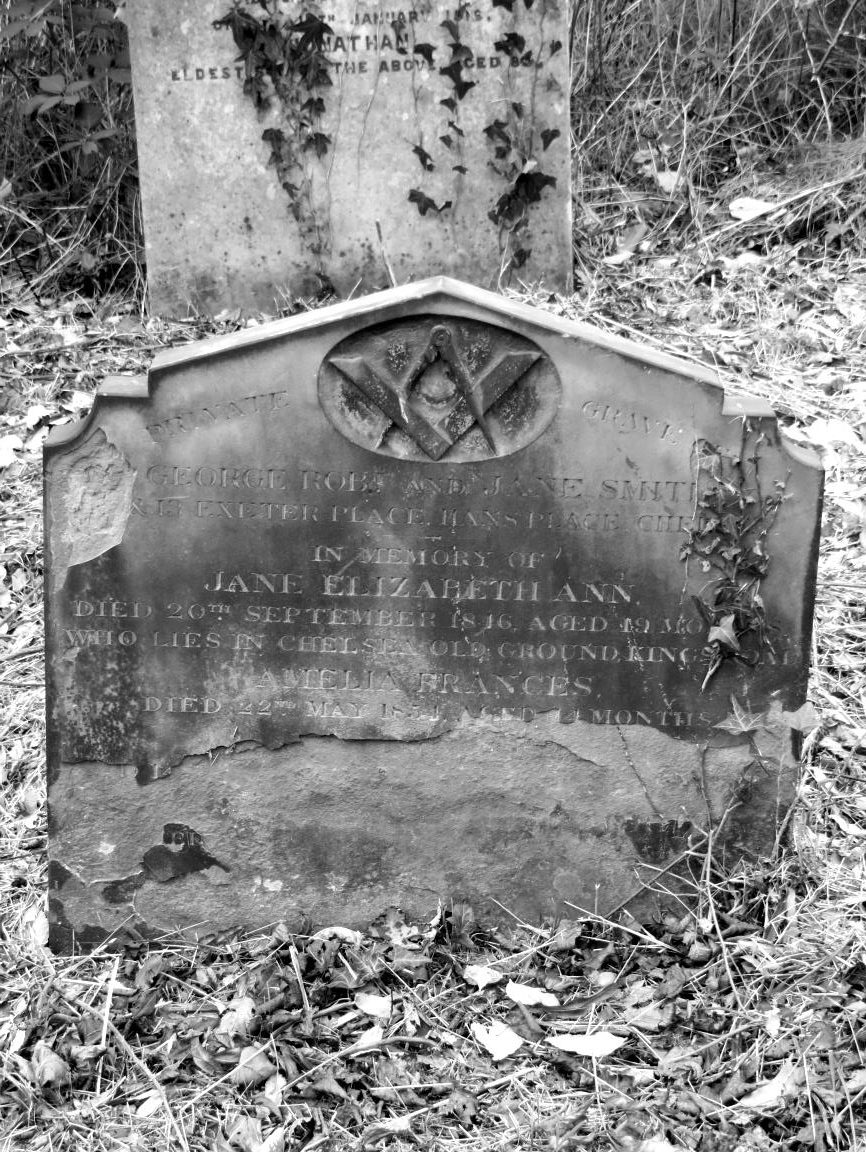
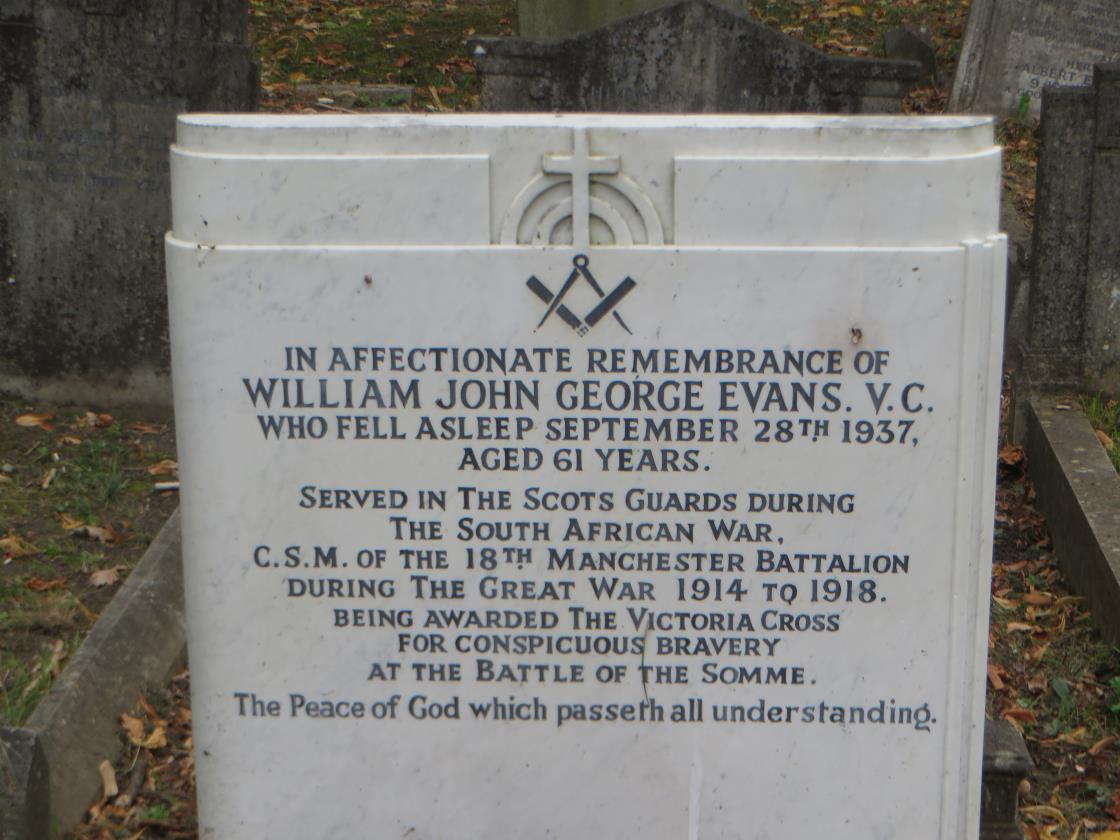
Another symbol from the archives while I finish editing my first church visit of 2021. The lure of strange symbols can lead you into all sorts of interesting places…..
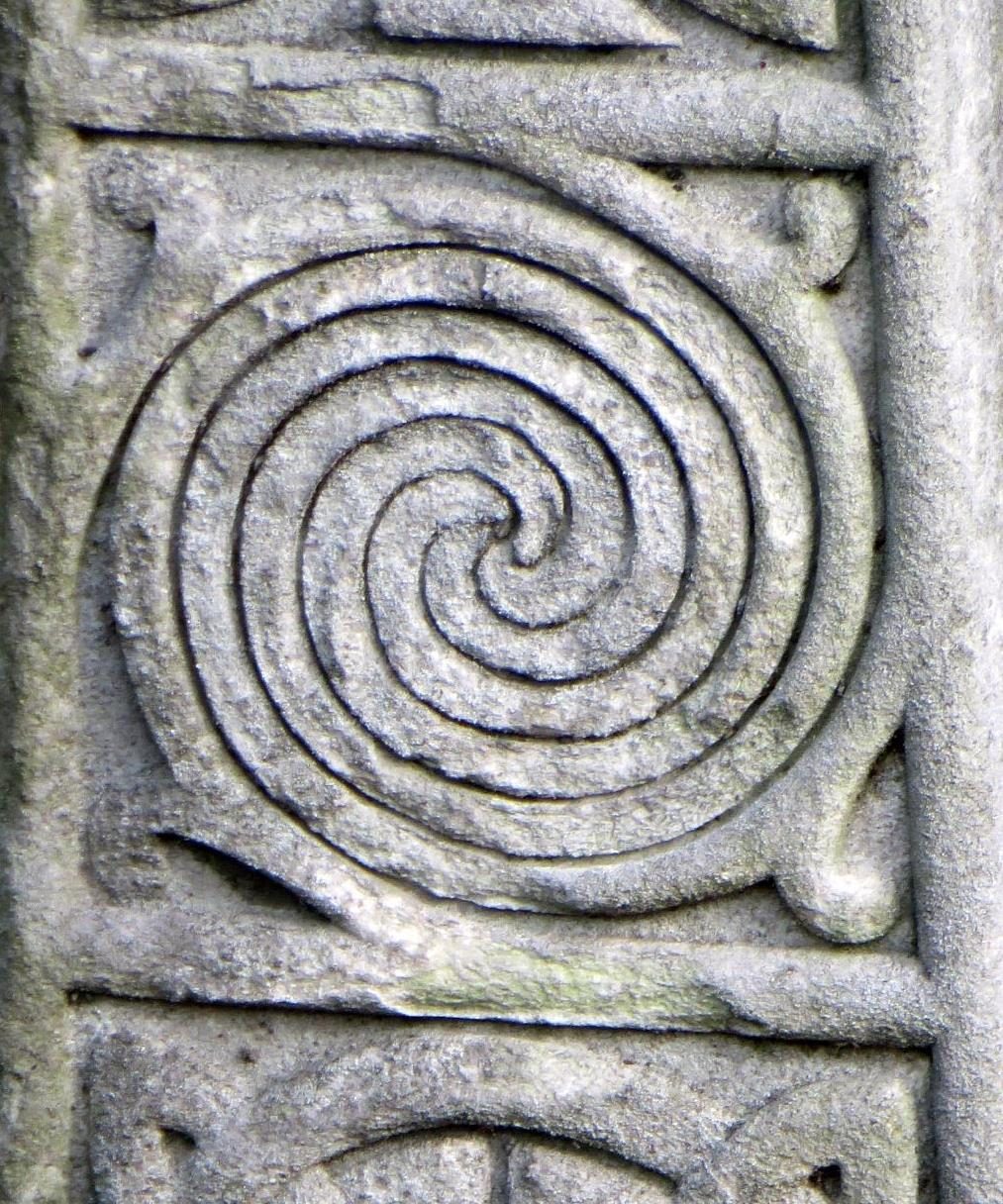
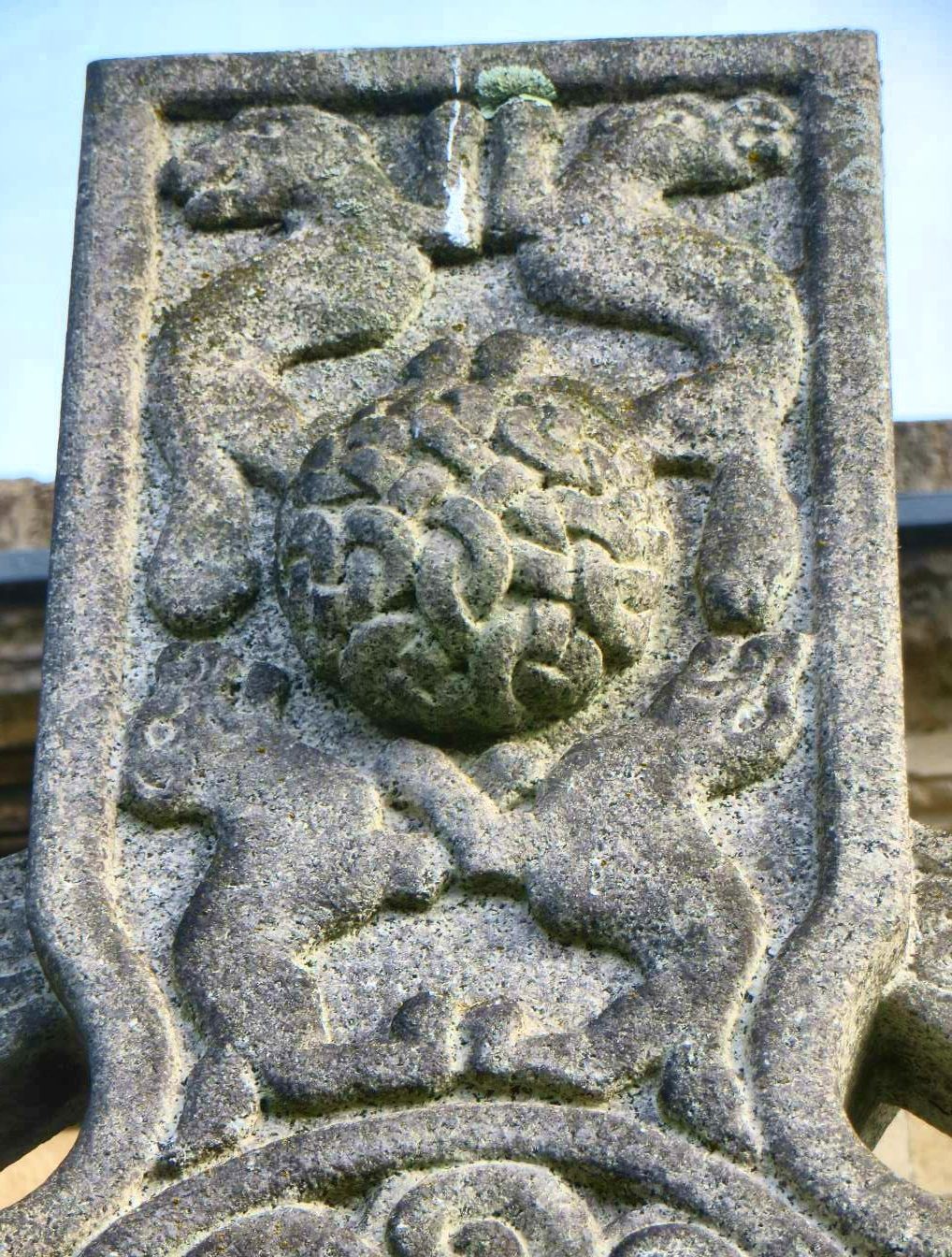
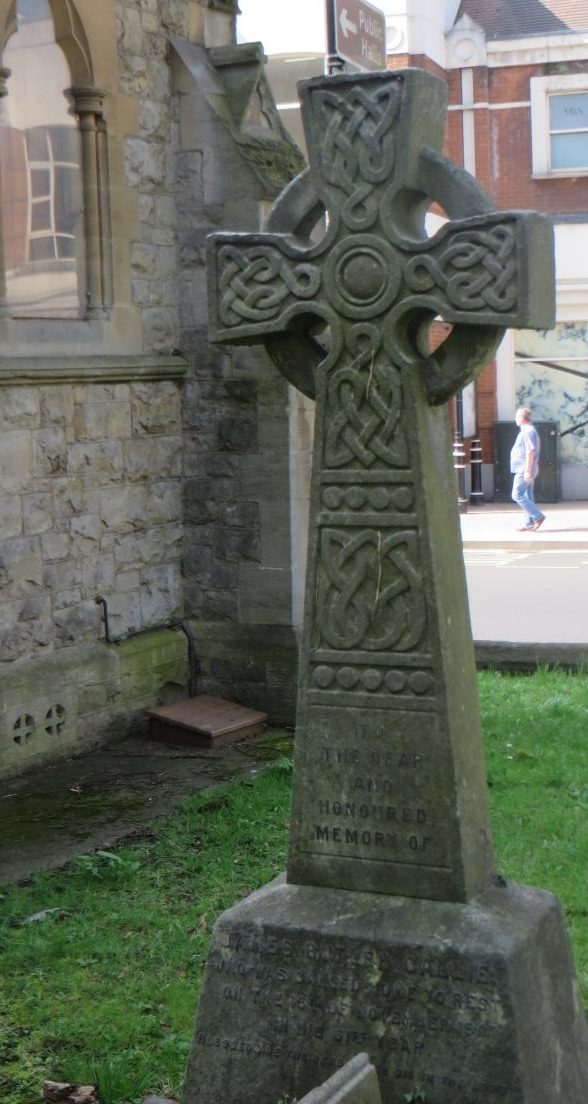
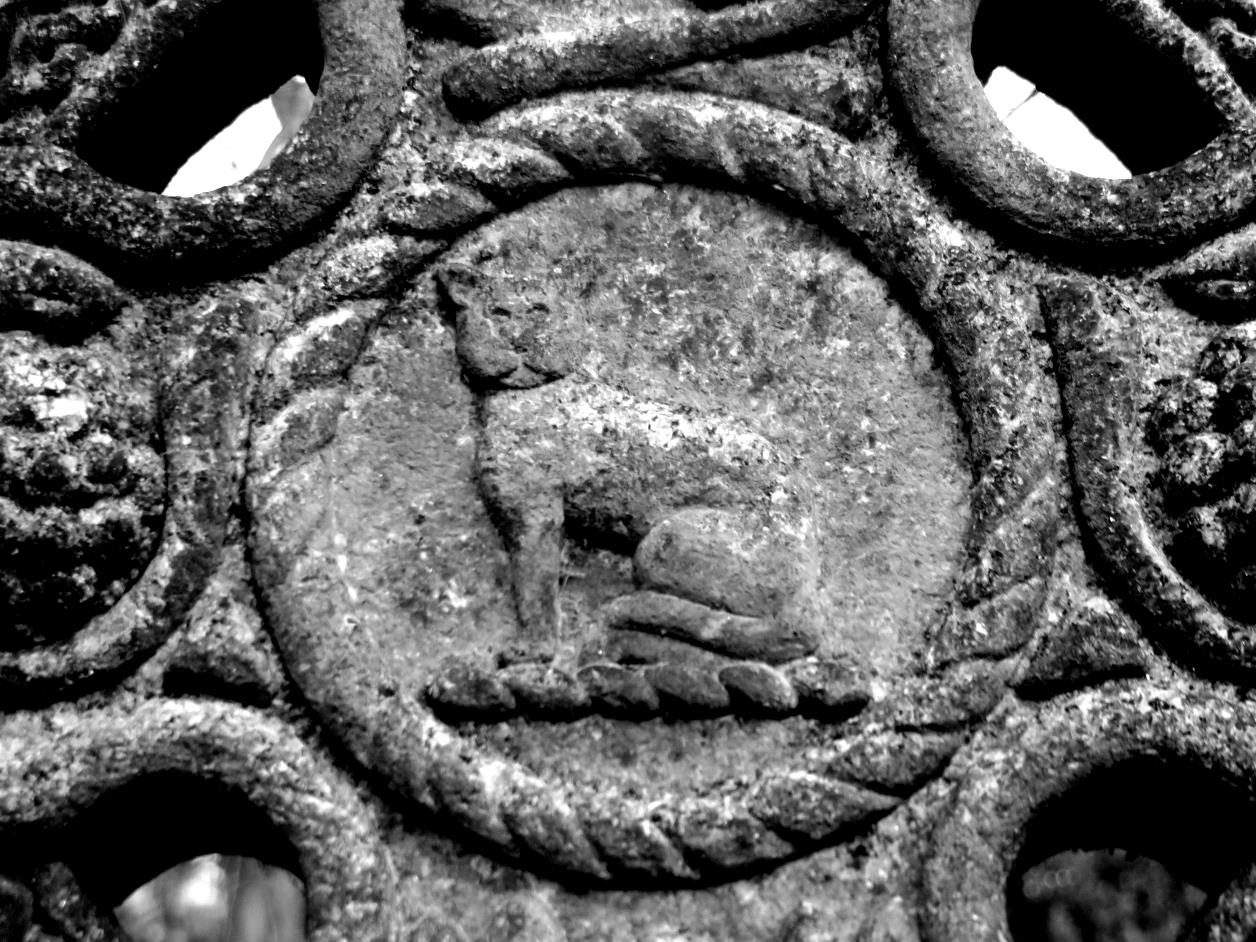
Stylised animals, sinuous snakes, Celtic knots and traditional strapwork, flowers, angels and even a cat! The decoration on Celtic crosses within cemeteries can be varied and interesting. But it wasn’t until I was exploring Brompton Cemetery with an apps designer that I really began to look at them more closely. He spotted the Viking style animals on Margaret Stevenson’s cross near the Chapel and we were soon seeing spirals and the more emblematic strapwork known as Hiberno-Saxon art or Insular art amongst others.
Celtic Crosses first appeared within cemeteries during the Celtic Revival of the 1850’s and it has since become a worldwide emblem of Irish identity. The Revival has also been described as the Celtic Twilight and the Cross is seen as its lasting contribution to the western world’s funerary art. The Celtic Cross has been known in Ireland since the 9th century and in mainland Britain since medieval times.
It’s a form of the traditional cross but with the addition of a nimbus or ring. The latter is seen as a symbol of eternity as it has no beginning or end. The addition of the nimbus has been attributed to St Patrick who is reputed to have added it to a Christian cross, extended one of the of the lengths to form the stem and then placed it on top of a stepped base. It was this combination of a pagan symbol and a Christian one that became the Celtic Cross. It has also been described as the ‘sun cross’ by those who interpret the nimbus ring as a representation of the sun. The four arms have also been interpreted as representations of the four elements; air, earth, fire and water as well as the stages of the day or the four fixed compass directions.
The more traditional, intricately patterned bands known as strapwork are known for the unbroken lines that make up any piece. There have been 8 basic designs that have been identified and claimed to be the basis of nearly all of the interlaced patterns in Celtic decorative art. Hiberno-Saxon art is also known as Insular art and examples appear in the Books of Kells. Here are four examples from West Norwood Cemetery.
It was in Brompton that I noticed two examples with single spirals on them. A spiral on a Celtic cross is generally drawn clockwise to represent either the sun or the direction of running water.
It is one of the most ancient symbols known to mankind. A double spiral is more difficult to create and has been seen as a depiction of universal balance such as yin and yang or night and day. The triple spiral or triskele is the most difficult for obvious reasons and has several meanings attributed to it. But the one that I thought was the most appropriate in a funerary context was the triskele being seen as a representation of three worlds: the spiritual, the earthly and the celestial. The word Triskele is reputed to have come from the Greeks and it’s one of the most complex Celtic symbols.
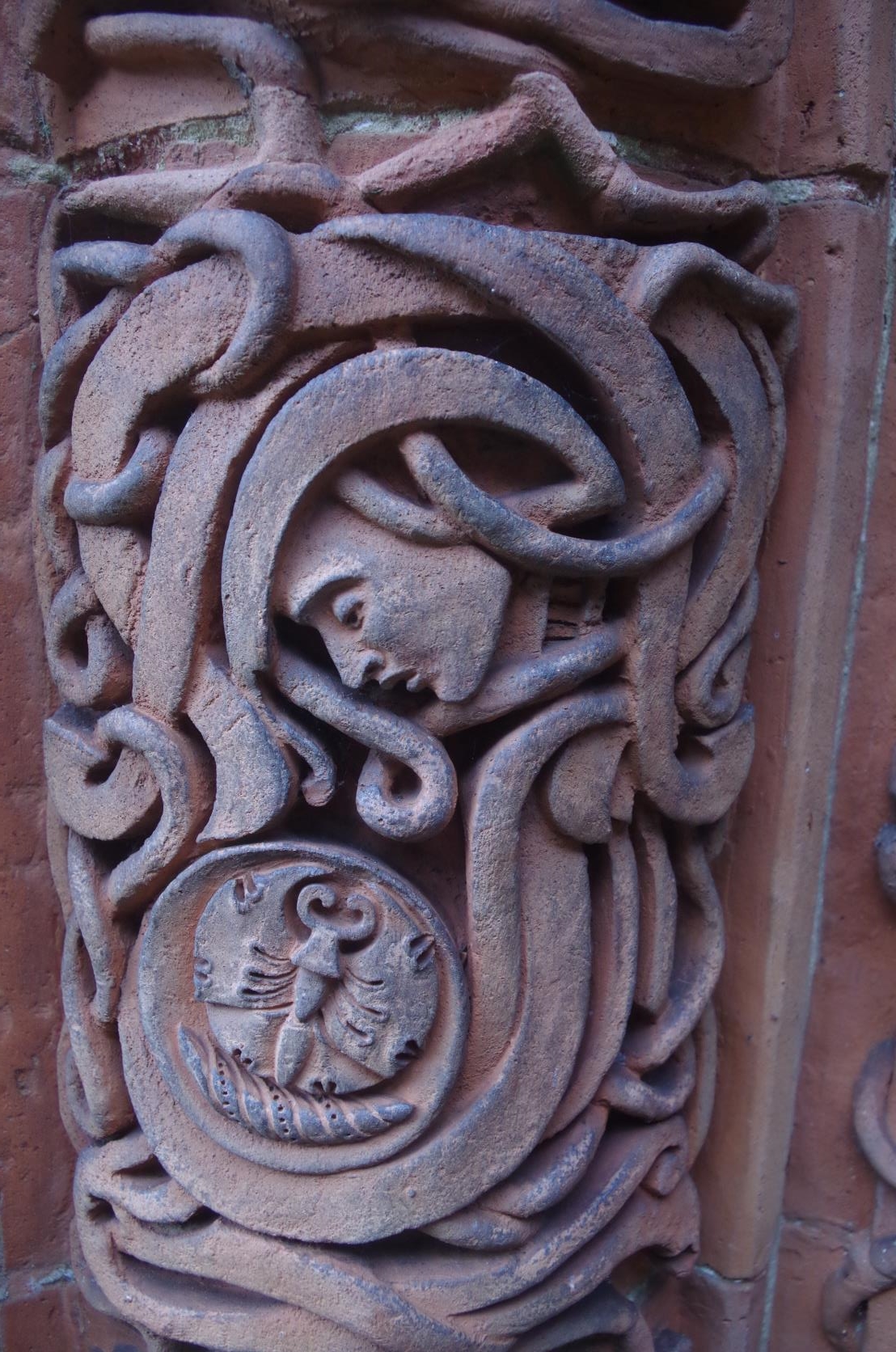
Also in Brompton, I discovered a Celtic cross with decoration that ended in snakes heads which is interesting as snakes which were revered by the Celts. They saw them as a representation of rebirth as they shed their skins and then live again. Notice also the Celtic knot in the centre of them. These have been found in Scandinavia and Western Europe as well as appearing within Celtic insular art. They are supposed to represent eternity or the never ending cycle of life with the closed ends signifying unity.
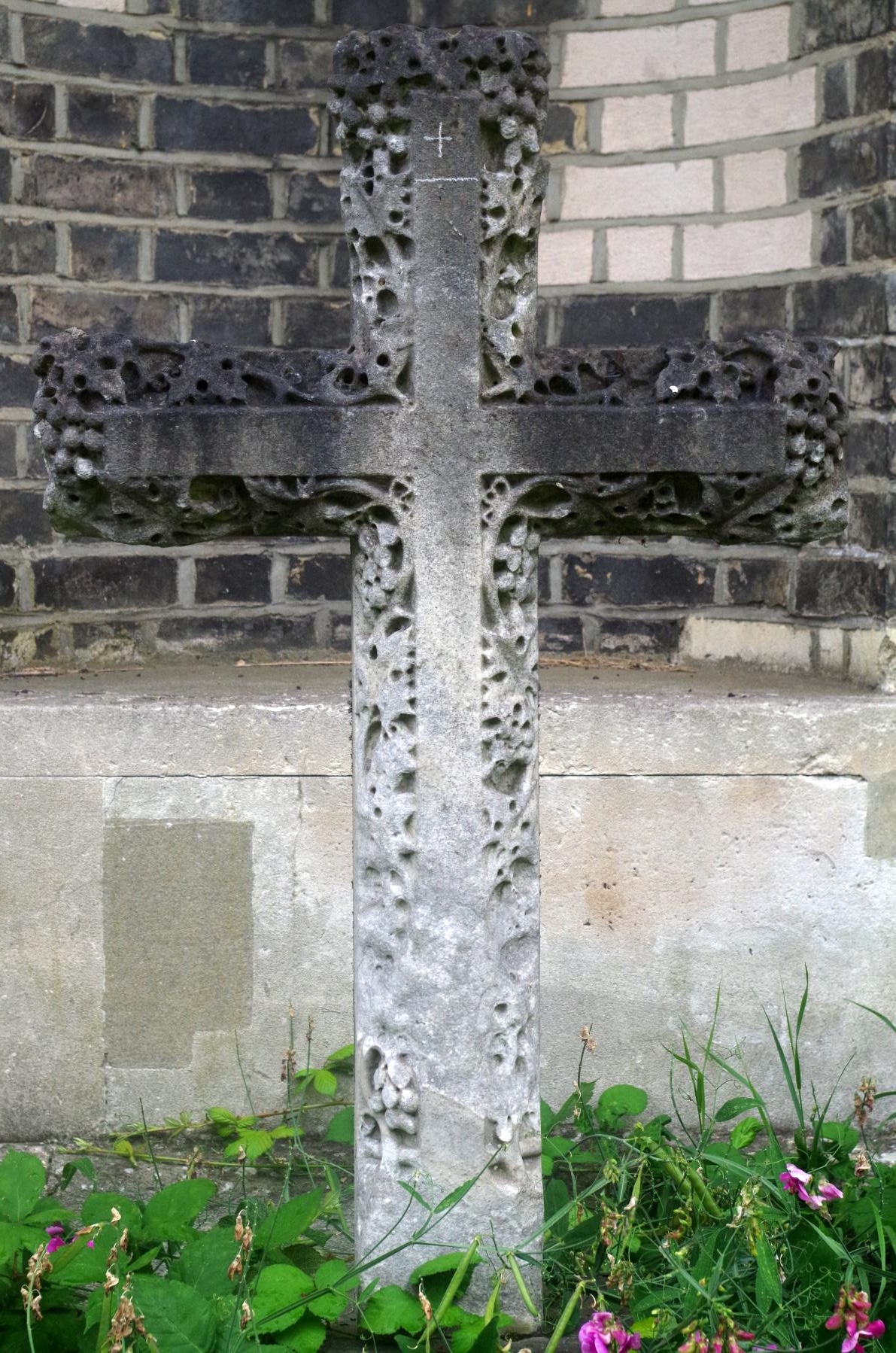
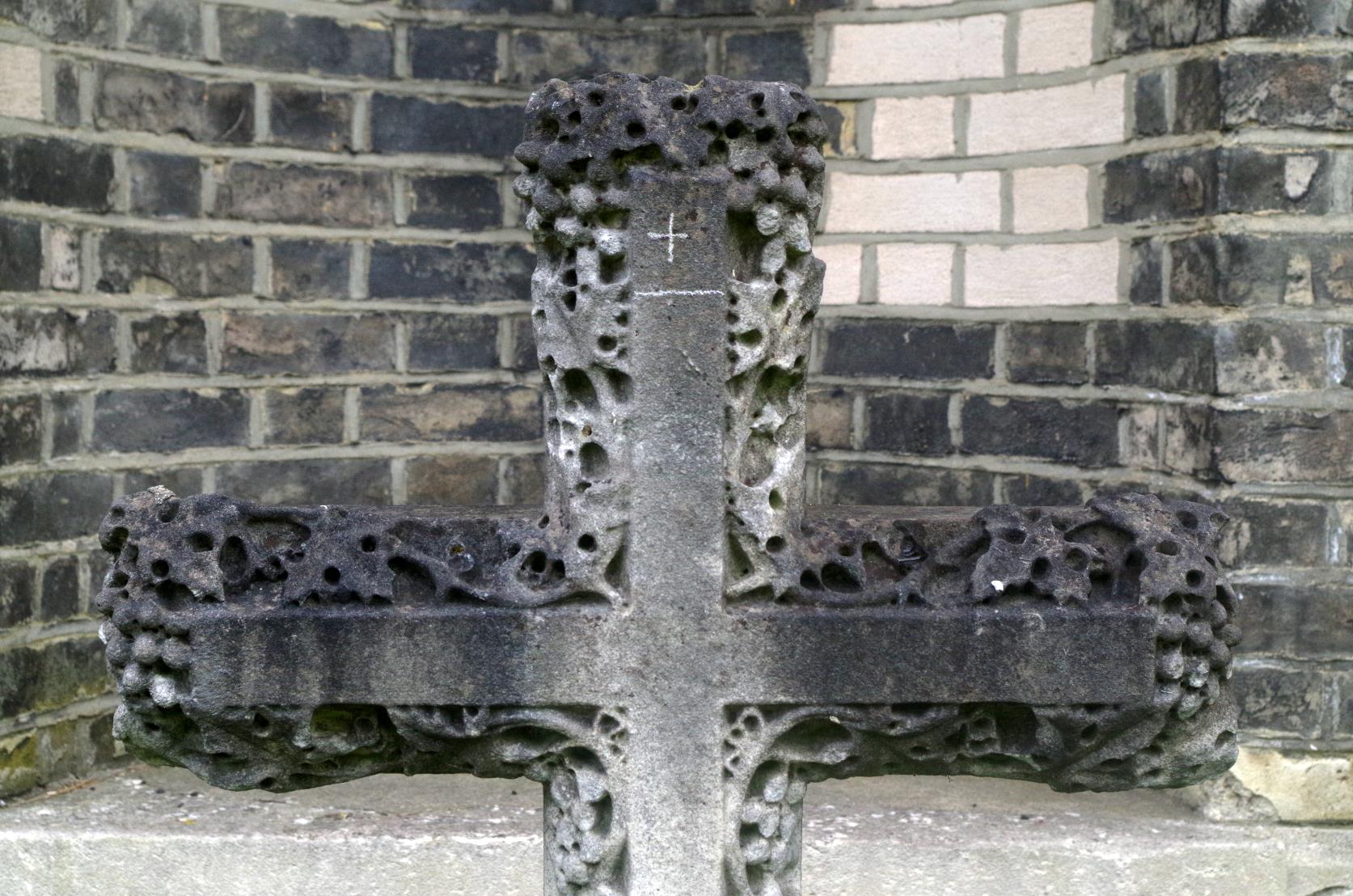
So the next time you visit a cemetery or churchyard look out for the Celtic Cross and see what you find. It’s not only Celtic inspired decoration that appears on them. These two examples are from my local churchyard – one features traditional strapwork and the other has a lovely and unusual angel with beautifully carved feathery wings and the nimbus is almost like a halo.
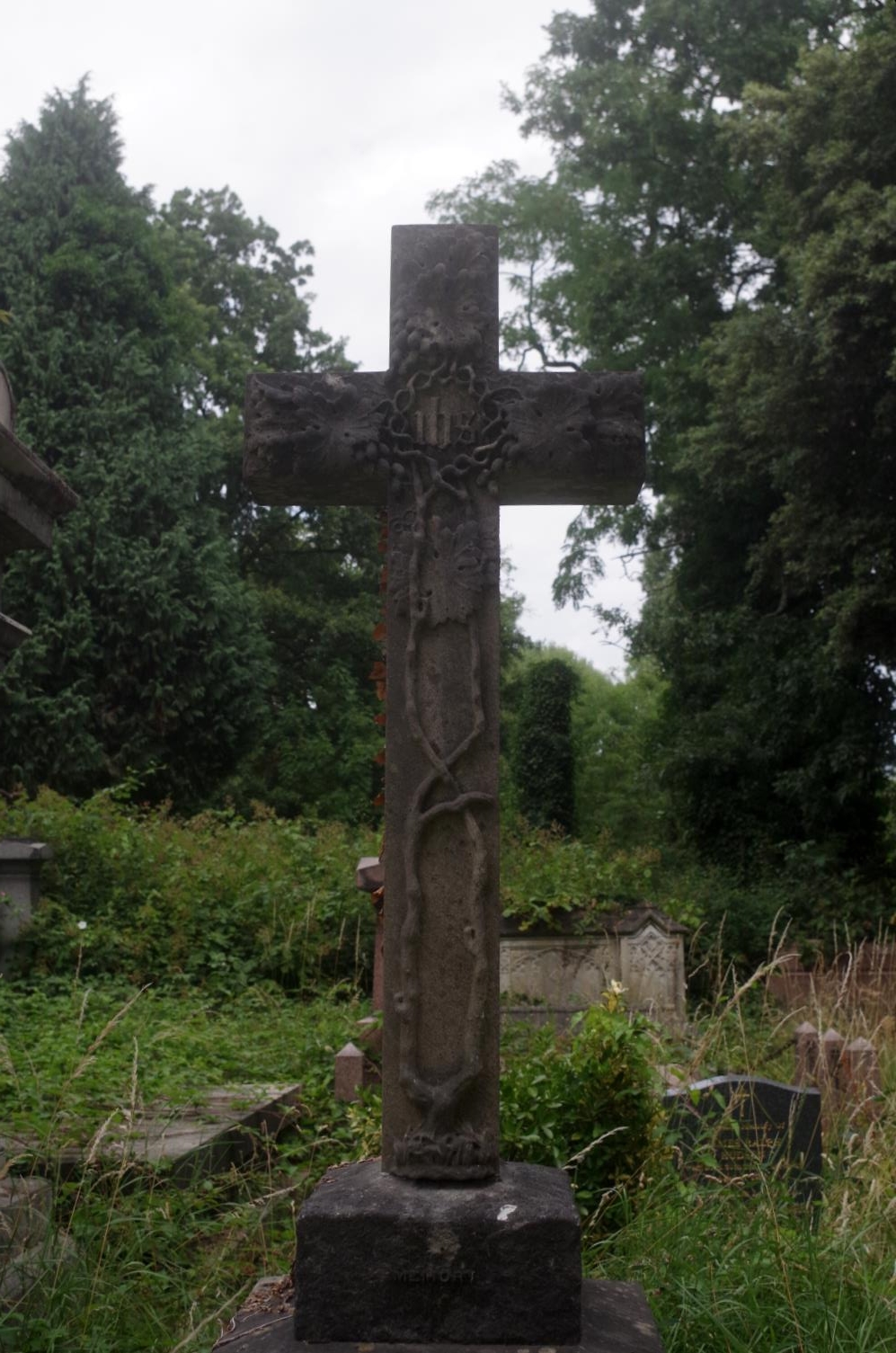
This is the Mills memorial from Nunhead Cemetery and features beautifully carved passionflowers, a deeply significant symbol in the language of flowers, and also the IHS in the centre of the cross.
This is another reblog of a n older post from when I began shadowsflyaway and it’s always been a favourite of mine.
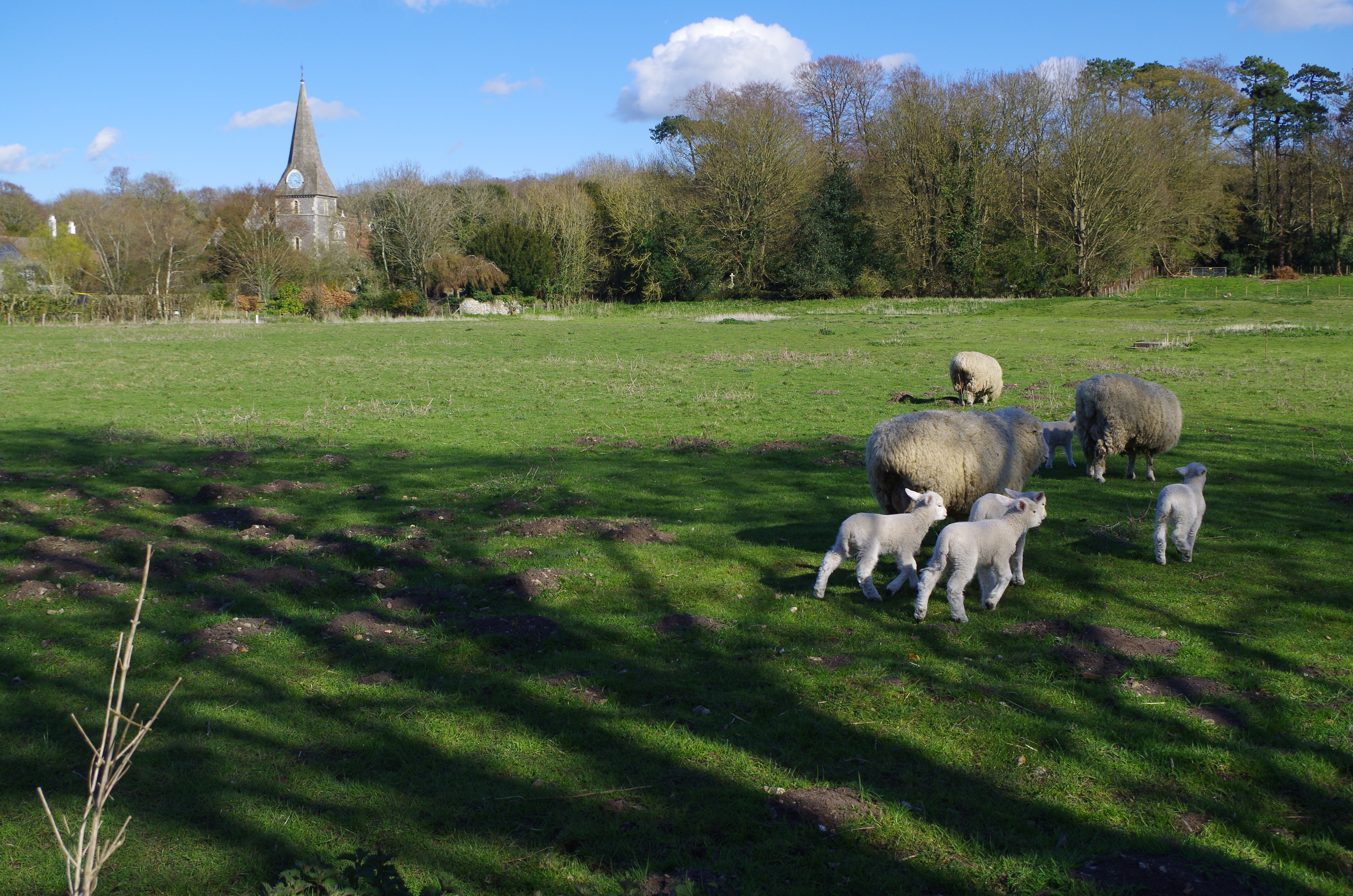
I have been out again looking for symbols and have found one or two so looking forward to sharing them with you. I went church crawling earlier this month and visited a church in Kent rumoured to have strange symbols. It certainly did and other curiosities. You never know what you’re going to find in a church and I have often been pleasantly surprised. Beyond the churchyard wall was a field of sheep and lambs, merrily bleating and baa-ing away at each other, and it made me feel so glad to be outside again on a warm Spring day. I also visited a church in the east End of London on a wet, cold day as the tall cow parsley was rampant amongst the tombstones and found something that I didn’t expect. I’m really looking forward to researching and writing about it for next month.
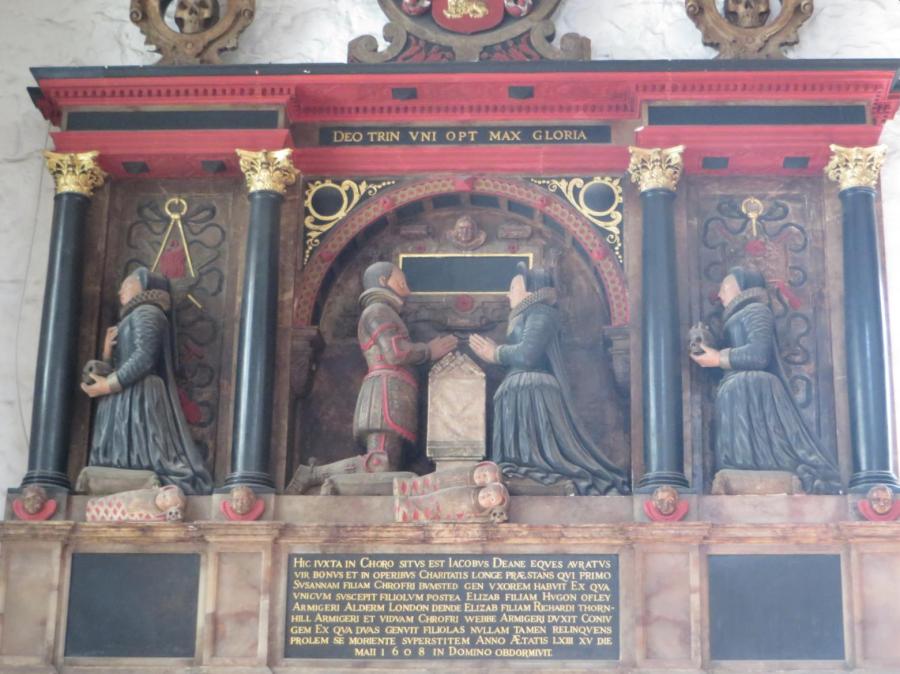
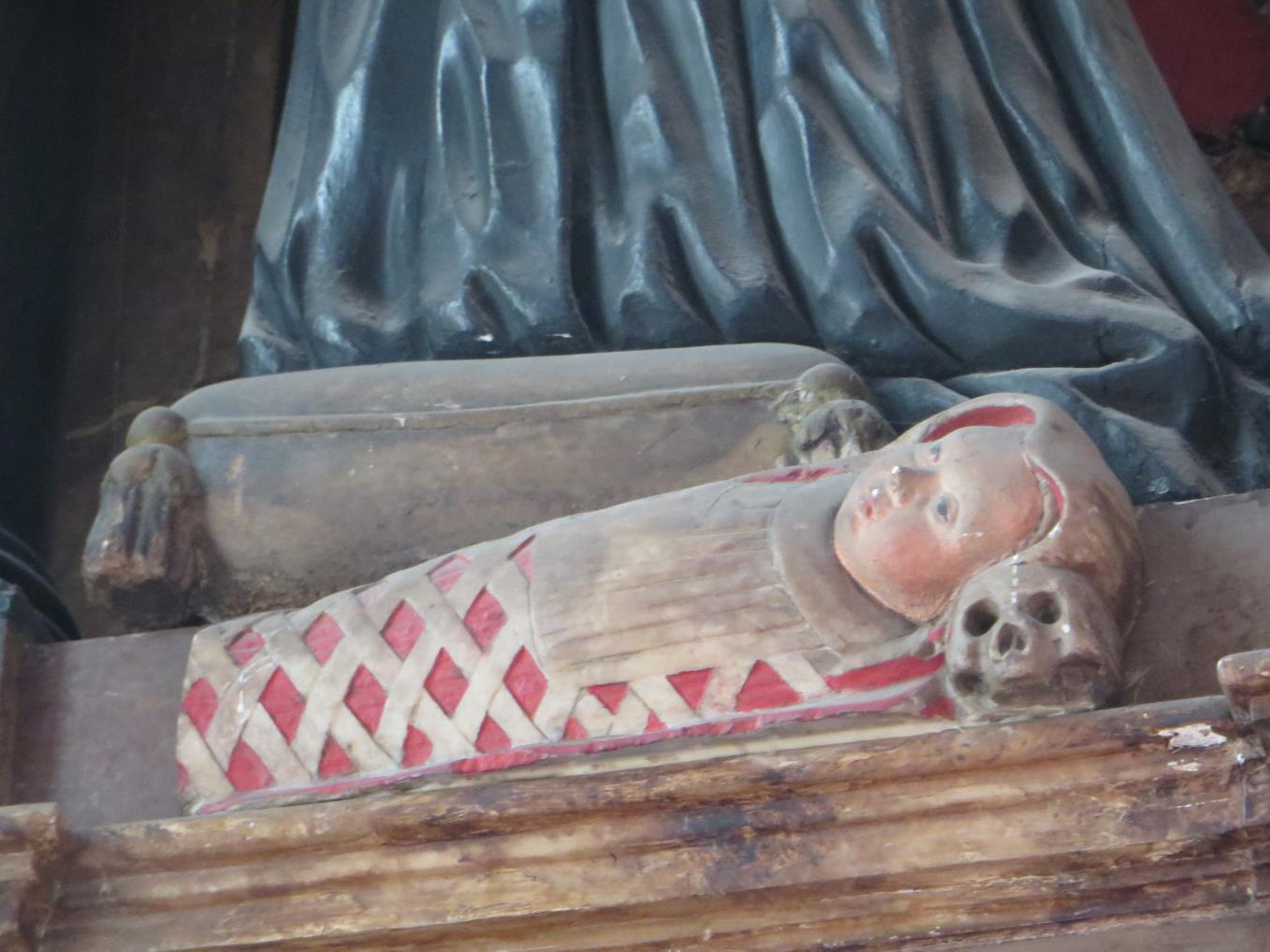
A pelican in her piety. Detail of monument, The Drake Chapel, St Mary’s Amersham. copyright Carole Tyrrell
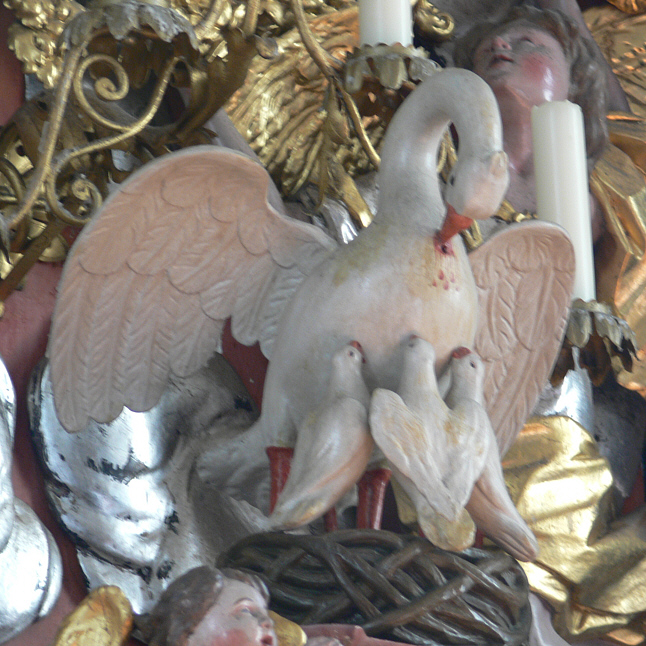
This is a more unusual symbol to find in cemeteries and dates from pre-Christian times. There are two versions of the legend. In one, the pelican pierces her own breast to feed her children with her own blood and in the second she feeds her dying children with her own blood to bring them back to life but as a result she dies herself. In both of them the pelican is a potent motif of self-sacrifice and charity. It’s also seen as a powerful representation of Christ’s Passion in that he gave his life for us and rose again. The symbol is known as a pelican in her piety.
However, the legend of the pelican is found in Physiologies, an anonymous Christian work from Alexandria which dates from the 2nd century. It contained legends of animals and their allegorical interpretations which is where the attribution of the pelican’s sacrifice to the Passion of Christ come from. It states that
‘ the pelican is very fond of its brood, but when the young ones begin to grow they rebel against the male bird (the father) and provoke his anger, so that he kills them, the mother returns to the nest in three day, sits on the dead birds, pours her blood over them, revives them, and they feed on the blood.
The pelican in its piety was very popular during the Middle Ages and can be found on altar fronts, fonts and misericords in churches. Also, when tabernacles were occasionally suspended over the altar, they were shaped like pelicans as was one in Durham Cathedral.
Later, in St Thomas Aquinas’s hymn ‘Adoro te devote.’ or Humbly we adore thee’, in the penultimate verse he describes Christ as:
‘the loving divine pelican able to provide nourishment for his breast’
In Nicholas Hilliard’s famous 1573 portrait of Elizabeth I which is known colloquially as the Pelican portrait she wears a prominent piece of jewellery which features a pelican feeding her young with her blood which symbolised her role as Mother of the Nation.
The pelican also appears in Shakespeare’s Hamlet in Act IV in which Laertes says:
‘To his good friend thus wide,
I’ll open my arms.
And, like the kind life-rendering pelican
Repast them with my blood.’
The renowned bird appears in key Renaissance literature. For example, Dante in The Divine Comedy refers to Christ as ‘our Pelican’. John Lyly in Euphues of 1606 also wrote:
‘Pelicane who striketh blood out of its own owne bodye to do others good.’
John Skelton wrote in 1529 in his Armorie of Birds:
‘They sayd the Pellycan’
When my Byrds be slayne
With my bloude I them nevyve. Scripture doth record the same dyd as our Lord
And rose from deth to lyve.’
However, the belief that the pelican nourishes her children with her own blood is a myth. It may have arisen from the fact that pelicans have a large pouch attached under their bill. When the parent is about to feed its chicks, it macerates small fish in this pouch and then whilst pressing the bag against its breast, it transfers the food to the babies.
However, its use in Victorian cemeteries may indicate a resurrection motif in that the pelican gives er life to her children so that they are resurrected. It is quite a rare one to find although it does appear within churches especially on wall memorials, altars and fonts.
This is a sculpture from a church in Germany. copyright Andreas Praefcke
This is a magnificent impressive pelican sculpture from a church in Germany.
There is an impressive monument in a Cuban cemetery which has a large marble pelican and children carving on it and there is also one on a memorial in Arnos Vale Cemetery near Bristol. This is an especially poignant one as is it is to a young doctor, Joseph Williams, who insisted on treating the local workhouse inmates for cholera, during the 1849 Bristol epidemic. Sadly, and perhaps inevitably, he succumbed to it himself and subsequently died. Here the pelican and her young are a true representation of self-sacrifice.
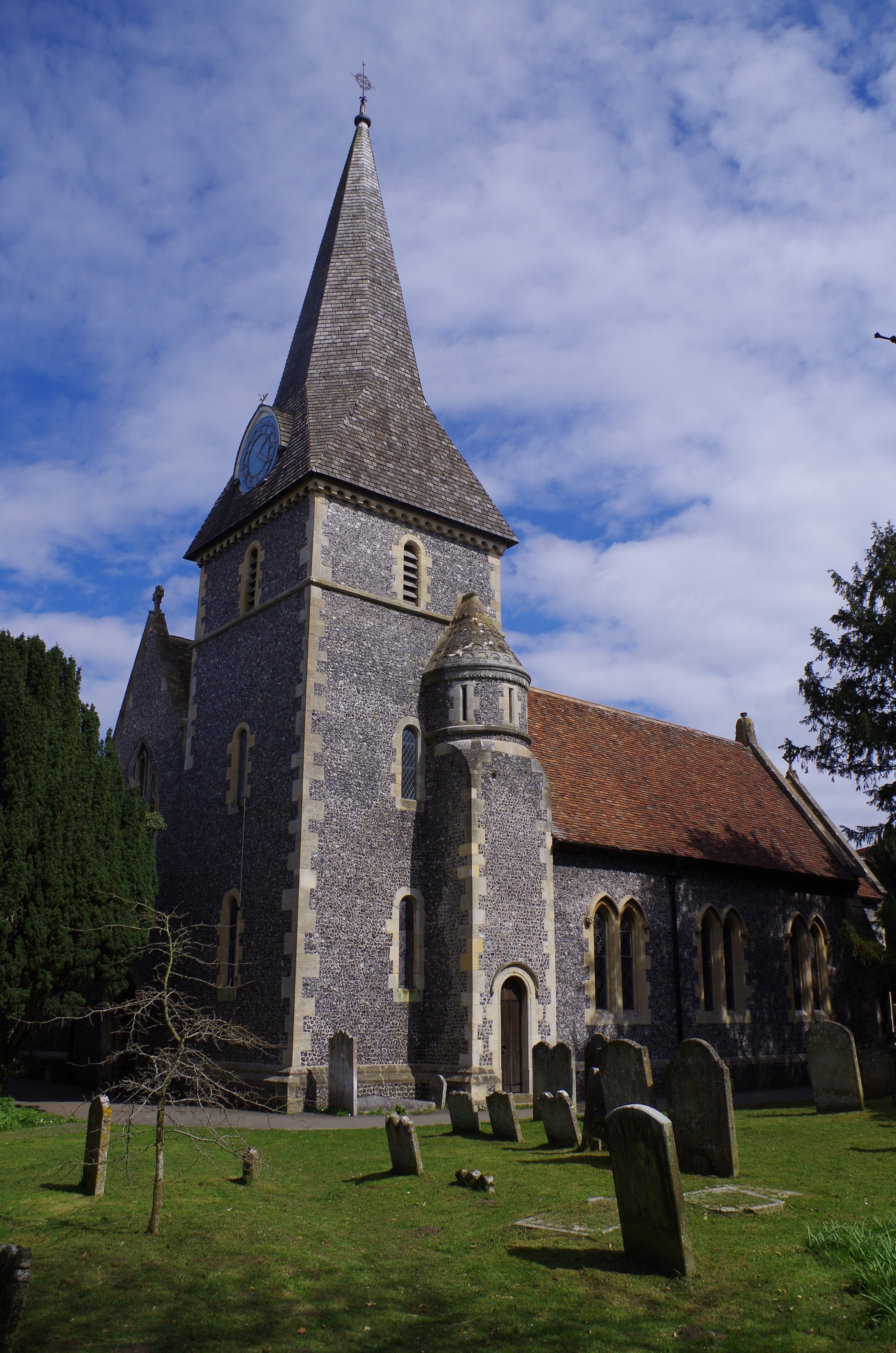
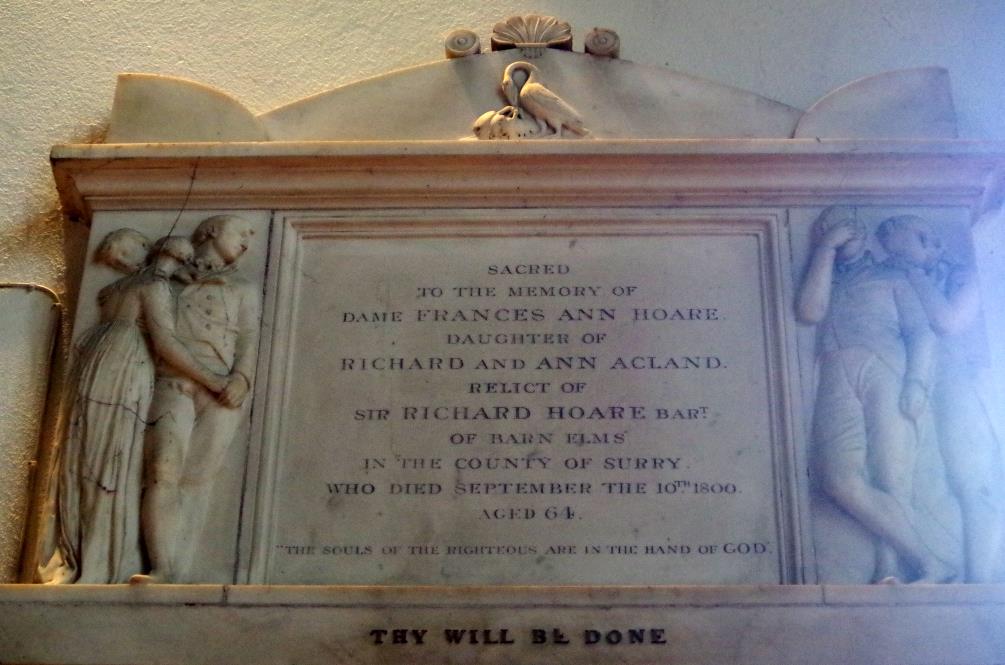
This is one is in my local church, St Georges in Beckenham and appears on a monument to Dame Ann Frances Hoare who died in 1800 at 64.
And this one is from the Drake Room in St Mary’s Church Amersham.
Here is a more recent use of the Pelican in her piety on a World War II blood donor appeal.
In darkest Eltham, there is a headstone dedicated to an Aborigine who came to England in the 18th century. It was the New World meeting the Old World. The English had begun to colonise New South Wales which had been his home although he called it by another name. The country itself wasn’t called Australia when he left his home for England. In fact, it wouldn’t be called that until 1804. It was known as New Holland. He was a young man who died in England and never returned home.
So who was he?
And why is he buried here? After all, Aborigines believe that, until the bones are returned to his ancestral homeland, he is destined to remain forever a wandering spirit, homeless and alone. If he’s actually still here.
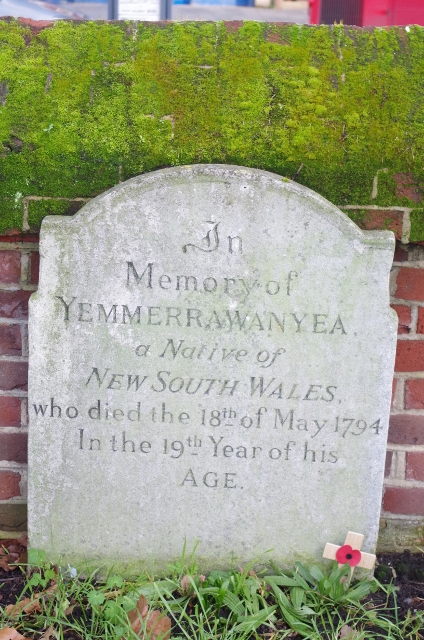
I was out exploring, during the Christmas/New Year relaxation of lockdown. when I visited the churchyard of St John the Baptist in Eltham. It has a fine old churchyard with a few 18th century memento mori. Then I found this headstone by the boundary wall which is dedicated to Yemmerrawanyea, a native of New South Wales. The full epitaph reads:
‘In
Memory of
YEMMERRAWANYEA
a Native of
NEW SOUTH WALES
Who died the 18th of May 1794
In the 19th Year of his
AGE’
I was intrigued as the headstone is a substantial one and it isn’t everyday that you discover an Aborigine grave.
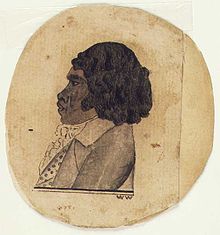
This is a silhouette portrait of Yemmarrawanyea which was created by William Wentworth who was his landlord during his time in London. Wentworth spelled the name as Yuremany
There are several spellings of the name but I will keep to the spelling on the headstone as it’s easier.
In the 18th century, the British had begun to colonise what they called New South Wales and they wanted to establish relations with the Aborigines. George III was very keen for this to happen and the first Governor of the colony, Arthur Phillip, resorted to kidnap to get one man, Bennelong, involved. There will be more on him later.
Yemmerrawanyea was a member of the Wangai tribe, part of the Eora nation of Aborigines. They lived in the Port Jackson area on the south bank of the Parramatta river where Sydney is now. He was known to the settlers and Capt Watkin Tench, as ’ a good tempered, lively lad who became a great favourite with us, and almost constantly lived at the Governor’s house.’ He had clothes made for him and he waited at the Governor’s table. He was a servant.
In February 1791, aged 16, he was initiated according to Aboriginal custom, by having a front tooth and part of his jaw knocked out by a Kebba which was a stone or rock. This allowed him to use the name Kebarrah which was only given to men who had undergone this ritual. It was done according to Keith Vincent Smith:
‘…..in February 1791 at a bay in the Gamaragai territory on the north shore of Port Jackson. It was Bennelong who officiated, removing the teeth with a specially cut womera or throwing stick. Though Yemmerrawanyea ‘suffered severely, losing apart of his jawbone, he ‘boasted the firmness and hardihood, with which he had endured it.’ wrote Capt Tench.
A portrait of Bennelong in Regency costume.which is signed on the back W.W. This may be William Wentworth, his landlord in London.
He came to England with Bennelong when Phillip returned home to England in 1792-93 after his first stint as the British Governor of the colony of New South Wales. Apparently, they went on the very long sea journey ’voluntarily and cheerfully’. Bennelong could speak English but I have been unable to discover if Yemmerrawanyea could also do so. However, they did have English lessons during their visit.
In 1793, they arrived in Falmouth, Cornwall and then travelled onto London. Mayfair to be precise and there they mixed in high society. Fashionable Regency clothes were made for them and they were tutored in reading, writing, and English. There are still expense claims on file for their visit. The men visited St Paul’s Cathedral, the Tower of London and even went bathing in the Serpentine. I did wonder what Regency society made of them and vice versa.
At a fashionable gathering, Bennelong and Yemmerrawanyea performed a native song accompanied by clapsticks and you can hear a modern recreation of it here:
They said that the song was ‘in praise of their lovers; but the meaning of the song has been lost. Only two words have been translated and were apparently about jumping kangaroos.
Edward Jones, (1752-1824) who was in the audience, wrote down and published the words and music and called it ‘A song of the natives of New South Wales.’ It appeared in Musical Curiosities in 1811. Jones was the composer, Welsh Harpist, folk music collector and bard to the Prince of Wales who became George IV.
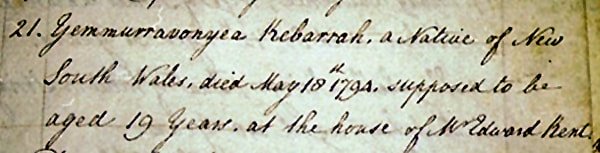
However, in October 1793, disaster struck when Yemmerrawanyea fell ill and began to drastically lose weight. After injuring his leg, his health declined even further. He and Bennelong were taken to Eltham which was then a village and he was treated by Dr Gilbert Blane. He was the Prince of Wales’s physician. They lodged at the house of William Kent who had been employed by the former Home Secretary, Lord Sydney. This again emphasises the circles in which the two men moved. But it was to no avail as Yemmerrawanyea died on 18 May 1794 aged roughly 19 from a lung infection. This may have been tuberculosis but no-one’s quite sure.
Entry in St John the Evangelist parish records recording Yemmerrawanyea’s burial and death.
There are still bills preserved at the National Archives for his burial and,according to Keith Vincent Smith:
‘A gravedigger covered Yemmerrawanyea’s grave with turf at a cost of 1 shilling and 6 pence. The headstone costs £6.16.00’,
This was a substantial cost for a headstone.
There have been several campaigns to have his remains returned to Australia but their current location in the churchyard is unknown. In fact, they may no longer be there due to the practice of graves being re opened and re used for burials to reduce overcrowding. The headstone has also been moved and restored several times.
In 1982, 3 Aboriginal men made what is believed to be the first Australian Aboriginal pilgrimage to visit Yemmerrawanyea’s grave. But they were unaware that his body may have been removed and that the headstone may not even be over his grave.
Bennelong returned to what is now Sydney in 1795 and went back to the bush. He was considered by some of Sydney’s white society to be a ‘thorough savage’ who couldn’t be tamed. Relations between the Aborigines and the colonists were deteriorating as Keith Vincent Smith says:
‘as more and more land was cleared and fenced for farming and they were seen as savages who were unwilling to give their country and become labourers and servants to the colonists.’
Bennelong died on the 3 January 1813 and his grave has been finally been located. The New South Wales Government has announced that it has bought the house and garden in which he is buried. It would be turned into a public memorial with a museum commemorating the impact of the European invasion on the indigenous people of the Sydney area. The site of the Sydney Opera House is located at Bennelong Point which was named after him.
These were 2 important figures in Aboriginal society and have left their traces in Australia and England. Yemmerrawanyea’s grave is of cultural significance to the Aboriginal people and their history. it seems sad that the stone is the only surviving trace of him in the churchyard and yet it’s it’s a reminder of the New World visiting the Old World. So that passers-by, like me, stop and wonder who he was. how he came to Eltham and remember him.
This is another older post about a symbol that is not common within churchyards and cemeteries and so I am always thrilled whenever I see an example. This gorgeous example is in below is in the interior of St Nicholas’ church in Chislehurst, Kent. It’s dedicated to a woman and perfectly illustrates the use of the butterfly as a symbol of transformation and resurrection.
As the lockdown edges closer to more restrictions being relaxed, I hope to be out exploring again very soon!
Butterfly on monement, interior of St Nichols church Chislehurst, Kent, copyright Carole Tyrrell
The Gordon monument butterfly motif in all its glory. Kensal Green Cemetery. copyright Carole Tyrrell
Cemeteries and graveyards can be happy hunting grounds for butterflies. But not just the bright, dancing summer jewels, borne on the breeze, but also the much rarer kind which perches in them for eternity.
So far I’ve only discovered two of this particular species which were both in London. One was in Brompton and the other was in Kensal Green. But I have also seen others online in American cemeteries.
But I’m surprised that the butterfly symbol isn’t more widely used as it is a deep and powerful motif of resurrection and reincarnation. It has fluttered through many cultures which include Ancient Egypt, Greece and Mexico.
In classical myth, Psyche, which translates as ‘soul’, is represented in the form of a butterfly or as a young woman with butterfly wings. She’s also linked with Eros the Greek God of love. It is also a potent representation of rebirth and in this aspect, the Celts revered it. Some of the Ancient Mexican tribes such as the Aztec and Mayans used carvings of butterflies to decorate their buildings as certain butterfly species were considered to be reincarnations of the souls of dead warriors. The Hopi and Navaho tribes of Native American Indians performed the Butterfly Dance and viewed them as symbols of change and transformation.
The butterfly is an archetypal image of resurrection in Christianity and this meaning is derived from the 3 stages of a butterfly’s life. These are: 1st stage = the caterpillar, 2nd stage = the chrysalis and 3rd and final stage = the butterfly. So the sequence is life, death and resurrection. The emergence of the butterfly from the chrysalis is likened to the soul discarding the flesh. It has been depicted on Ancient Christian tombs and, in Christian art, Christ has been shown holding a butterfly. It is supposed to appear chiefly on childrens memorials but the two that I’ve seen were on adult memorials.
Butterflies also feature in Victorian mourning jewellery and there is a fascinating article on this with some lovely examples at:
In the 20th century, butterflies appeared in the flowing, organic lines of Art Nouveau and often featured in jewellery and silverware.
Face and butterfly on exterior of chapel. copyright Carole Tyrrell
This example is from the Watts Chapel in Surrey and shows the flowing lines and stylised butterfly. They also appear in vanitas paintings, the name given to a particular category of symbolic works of art and especially those associated with the still life paintings of the 16th and 17th centuries in Flanders and the Netherlands. In these the viewer was asked to look at various symbols within the painting such as skulls, rotting fruit etc and ponder on the worthlessness of all earthly goods and pursuits as well as admiring the artist’s skill in depicting these. Butterflies in this context can be seen as fleeting pleasure as they have a short life of just two weeks.
Butterfly traditions
There are many superstitions and beliefs associated with butterflies. They are often regarded as omens, good and bad, or as an advance messenger indicating that a visitor or loved one is about to arrive. In Japan, they are traditionally associated with geishas due to their associations with beauty and delicate femininity.
Butterfly & Chinese wisteria by Xu Xi Early Sing Dynasty c970. By Xü Xi (Scanned from an old Chinese book) [Public domain], via Wikimedia Commons
The Chinese see them as good luck and a symbol of immortality. Sailors thought that if they saw one before going on ship it meant that they would die at sea . In Devon it was traditional to kill the first butterfly that you saw or have a year of bad luck as a result. In Europe the butterfly was seen as the spirit of the dead and, in the Gnostic tradition, the angel of death is often shown crushing a butterfly underfoot. In some areas in England, it’s thought that butterflies contain the souls of children who have come back to life. A butterfly’s colours can also be significant. A black one can indicate death and a white one signifies the souls or the departed. It’s also a spiritual symbol of growth in that sometimes the past has to be discarded in order to move forward as the butterfly sheds its chrysalis to emerges complete. So it can indicate a turning point or transition in life. There are also shamanistic associations with the butterfly’s shapeshifting and it has also been claimed as a spiritual animal or totem.
Brompton Cemetery, tomb unknown
This example with its wings outstretched is from Brompton Cemetery in London. Alas, the epitaph appears to have vanished over time and the surrounding vegetation was so luxuriant that I will have to return in the winter to investigate further. Note the wreath of ivy that surrounds it. Ivy is an evergreen and is a token of eternal life and memories. The wreath’s ribbons are also nicely carved.
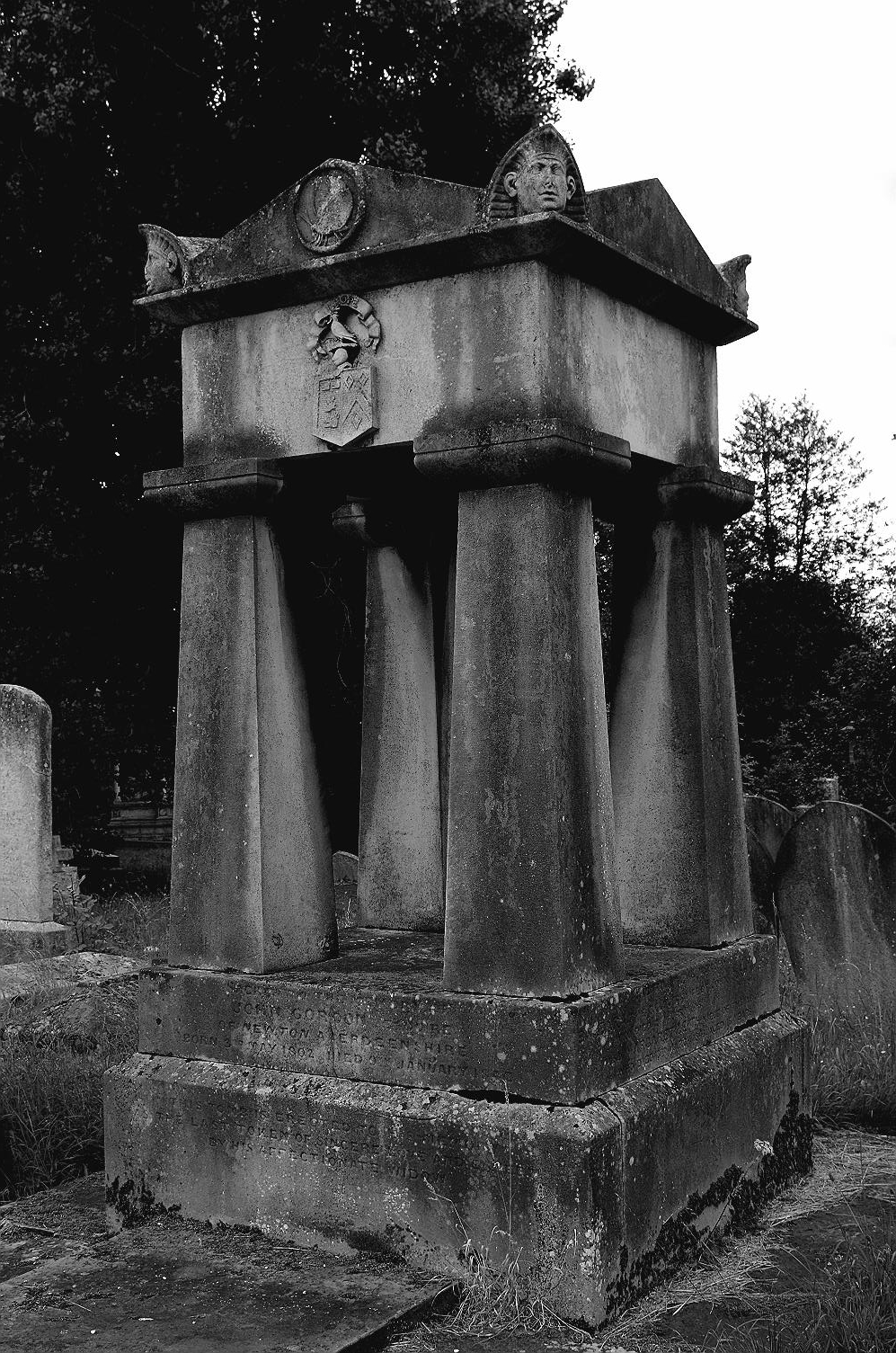
The Gordon monument, Kensal Green
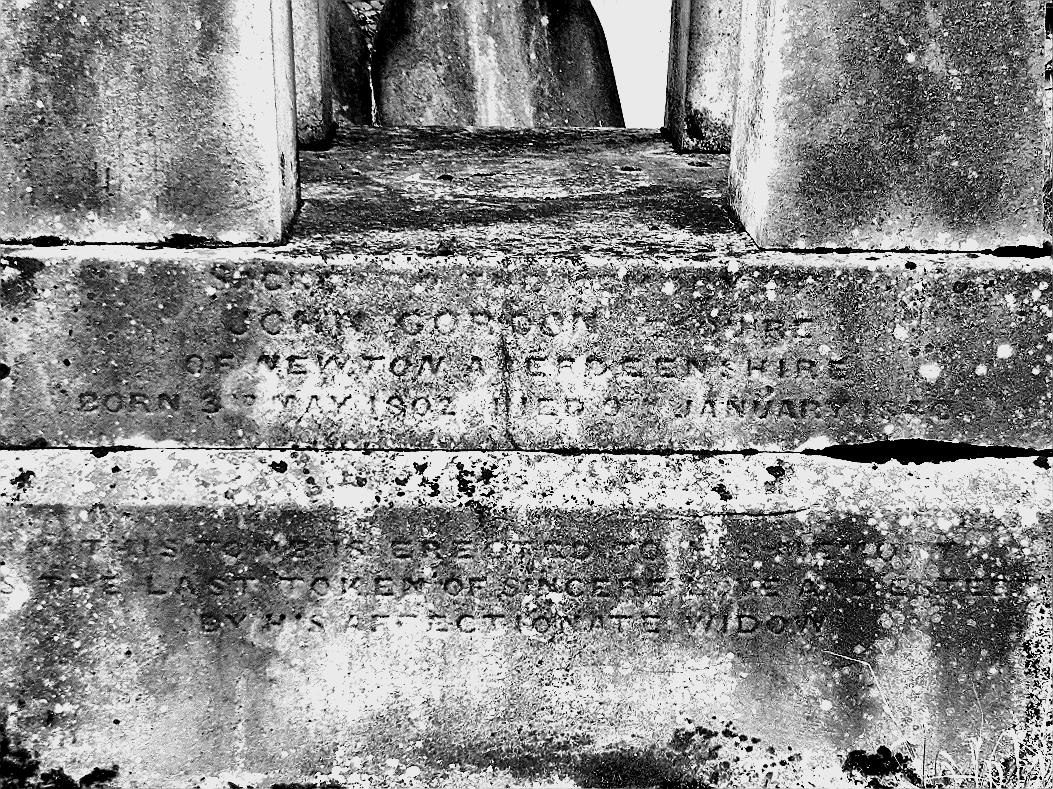
The second one is perched on the tomb of John Gordon Esquire, a Scotsman from Aberdeenshire who died young at only 37. As the epitaph states ‘it was erected to his memory as the last token of sincere love and affection by his affectionate widow’. Gordon came from an extended family of Scottish landowners who had estates in Scotland and plantations in Tobago amongst other interests. The monument is Grade II listed and is made of Portland stone with a York stone base and canopy supported by the pillars. There was an urn on the pedestal between the four tapering stone pillars but this was stolen in 1997.
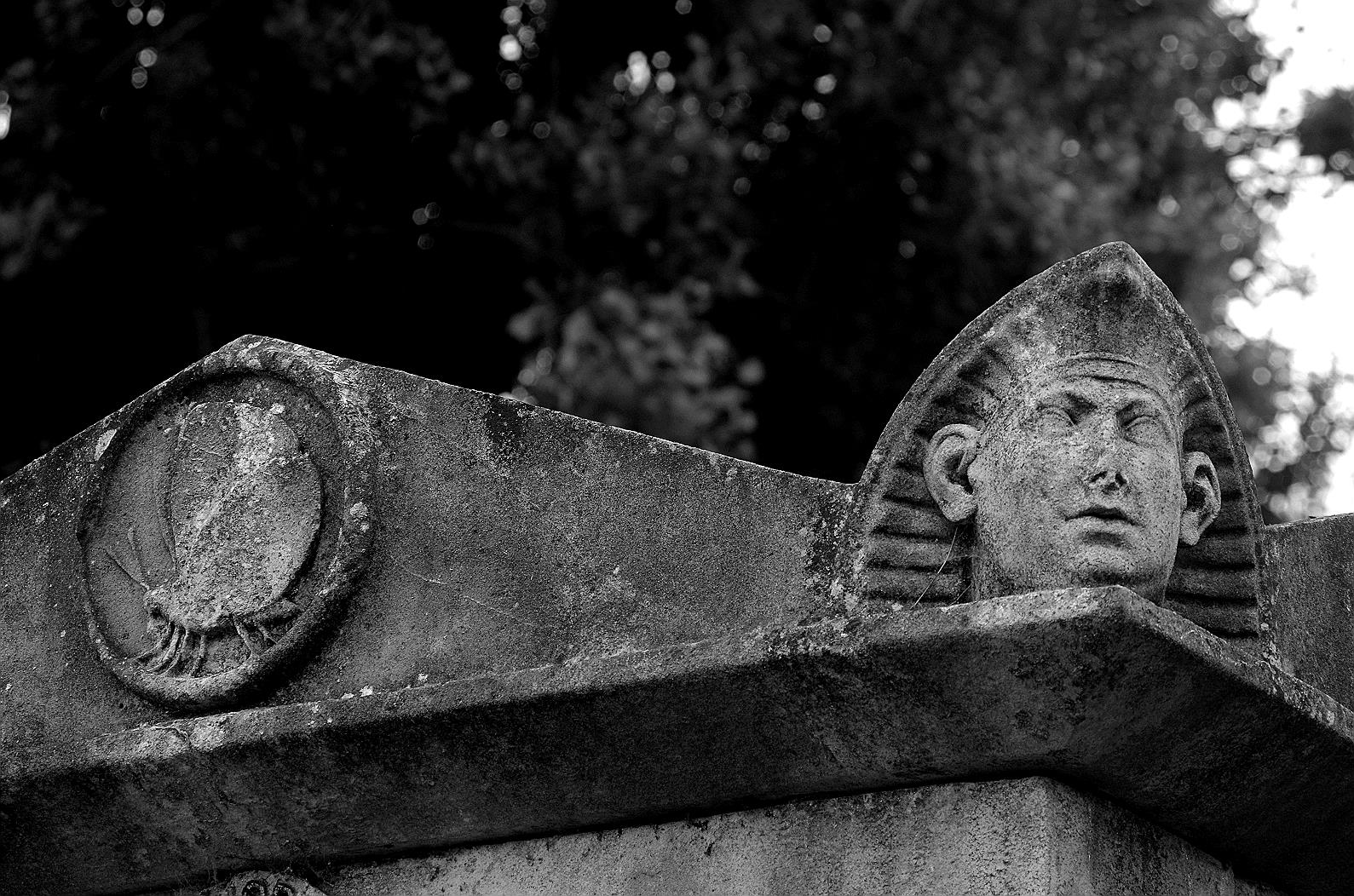
The butterfly also has an ouroboros encircling it so, not only a symbol or resurrection, but also of eternity with the tail devouring snake. It is a little hard to see but it is there.
The butterfly symbol of the roof of the Gordon monument Kensal Green Cemetery. copyright Carole Tyrrell
The pharaonic heads at each corner are Egyptian elements within an ostensibly classically inspired monument. Acroteria, or acroterion as is its singular definition, are an architectural ornament. The ones on this monument are known as acroteria angularia. The ‘angularia’ means at the corners.
The entire monument is based on an illustration of the monument of the Murainville family in Pugin’s Views of Paris of 1822 and also on Moliere’s memorial which are both at Pere Lachaise in Paris.
The Gordon memorial incorporates elements of the Egyptian style and symbolism that influenced 19th century funerary monuments after the first Egyptian explorations. Kensal Green contains many significant examples and there are others to be found in Brompton, Highgate and Abney Park. The Victorians regarded the Egyptians highly as it was also a cult of the dead.
So when you next see a butterfly fluttering on the breeze or even perched on a memorial for eternity remember its importance within the tradition of symbols, religions and cultures. Who knows it might be one of your ancestors…..
What does a woman clinging to a cross, seemingly for dear life, have in common with the film ‘Merry Christmas Mr Lawrence’ and heavy metal group Def Leppard?
Strangely enough, the connection is an 18th century Protestant hymn written by a fiercely Calvinist minister which has entered the Western cultural consciousness in the same way as ‘Abide With Me’.
‘Rock of Ages’ is a hymn with an enduring message of hope and ultimate salvation. So no wonder it inspired a potent funerary symbol which is still used today. However, it’s the second line in the third verse, ‘Simply to Thy cross I cling.’ that has proved most inspirational to Victorian monument masons.
A variant is a pensive young woman leaning on a cross for support as at West Norwood. This cemetery contained several examples and here is a selection:
They’re not angels as they don’t possess wings and angels didn’t begin to appear in Victorian cemeteries until the late 19th century. But they are one of the few cemetery symbols inspired by a popular hymn. It’s also a Protestant motif and was the only way in which a cross would have been permitted in a Victorian cemetery until near the end of the 19th century. This was due to the religious wars that were raging at the time.
When the Victorians created their large municipal cemeteries there was still a fierce Anti-Catholic prejudice within Britain. This dated back to Henry VIII and the Reformation and had resulted in several anti-Catholic laws being passed during the 17th and 18th centuries. But the cry was still ‘No Popery’ in the 19th century and any symbols that were associated with Catholicism weren’t welcome in the new marble orchards. These included crosses, figures of saints and also angels. Instead, there was a return to Classicism using Roman and Greek motifs and architecture. Then, as the 19th century progressed, funerary monuments reflected the tastes of the time. So you could walk through one and see Arts & Crafts, Celtic Revival, Art Nouveau until eventually towards the end angels did being to fly in.
‘Rock of Ages’ was written by a Calvinist minister, the Reverend Augustus Toplady, in 1763 and was first published in a religious magazine, ‘The Gospel’, in 1775. It’s allegedly based on an incident in Toplady’s life. He was a preacher in a village named Blagdon and was travelling along the gorge of Burrington Combe in Somerset’s Mendip Hills when he was caught in a storm. He managed to find shelter in a gap in the gorge and was struck by the name of the crevice that had saved him. It’s still marked as ‘Rock of Ages’ both on the rock itself and maps. He is reputed to have written the hymn’s lyrics on the back of a playing card although one wonders what a minister was doing with a deck of cards. However, no-one’s sure if this incident actually happened or if it’s apocryphal….
Toplady wasn’t a popular man and in an article by Rupert Christensen of the Daily Telegraph he was described as ‘fanatical, in a gross Calvinism and most difficult to deal with.’ John Wesley avoided him. Toplady was also fond of writing bizarre articles, one of which proposed that a spiralling National Debt could never be paid off due to the extent of human sinfulness. Something for the new Chancellor to ponder on I’m sure. Toplady died in 1776 from TB and would undoubtedly have been forgotten were it not for his rousing hymn.
‘Rock of Ages’ caught the popular imagination. Gladstone translated it into Latin and Greek and asked for it to be played at his funeral. Prince Albert reputedly requested it on his deathbed and it has appeared in several feature films. These include ‘Merry Christmas Mr Lawrence’ where it’s sung by David Bowie as Major Jack Celliers and both ‘Paper Moon’ and ‘The Silence of the Lambs’ where it’s played at a funeral. It’s also inspired musicians such as Def Leppard and the writer of the film score for ‘Altered States.’ John Congliano. It’s also the title of the long running musical stage show.
These are its lyrics:
Rock of Ages, cleft for me,
Let me hide myself in Thee;
Let the water and the blood,
From Thy riven side which flowed,
Be of sin the double cure,
Cleanse me from its guilt and power.
Not the labour of my hands
Can fulfill Thy law’s demands;
Could my zeal no respite know,
Could my tears forever flow,
All for sin could not atone;
Thou must save, and Thou alone.
Nothing in my hand I bring,
Simply to Thy cross I cling;
Naked, come to Thee for dress;
Helpless, look to Thee for grace;
Foul, I to the fountain fly;
Wash me, Saviour, or I die!
It was also popular as a print and these are two examples:
This is a particularly effective one dating from 1876 and is by Johannes Adam Simon Oertel. Again from Pinterest.
I found this on Pinterest with no details of artist. The only information was that it dated from 1909.
Both seem to clinging to a cross in a raging sea – a sea of sin perhaps?
The symbol has reappeared in more recent years and there is a much smaller, modern version at Beckenham Cemetery. This is on the grave of a 16 year old who died in 1965.
An inspirational hymn to the Victorians and also well into the 20th Century but what could have the same effect these days? I’ve always fancied a video of Sid Vicious singing ‘/My Way’ on my tombstone…..
Detail of one of theTupinamba Indians on the Harman monument, Burford
As a ‘church crawler’, or someone who likes to poke about in churches and churchyards, I didn’t expect to find this finely carved pair of South American Indians in an Oxfordshire church. They decorate the monument dedicated to Edmund Harman (1509-1577) and his ‘faithful’ wife, Agnes.
The Indians have been identified as belonging to the Tupinamba tribe who, in the early 1500’s, lived at the mouth of the Amazon. They are assumed to be the earliest known representation of South American Indians in England. The Tupinamba tribe were known to be cannibals and the carvings are believed to be the work of a Dutch carver, Cornelis Bos. However, no-one’s quite sure whether they’re there. It has been assumed that they are a reference to Edmund Harman’s Brazilian trade interests. But perhaps Bos might have seen a similar design in the Spanish Netherlands and decided to ‘borrow’ it.
Edmund Harman was an influential man at Henry VIII’s court. In fact, he was one of Henry’s most important and trusted servants. From 1533-1547, he was the King’s personal barber and servant, a position that gave him enormous influence at court as he was so near to the King. I’m sure that he didn’t spend his time asking Henry VIII if he’d been anywhere nice for his holidays……he was probably too busy bending the King’s ear with promoting his friends business schemes. In 1538, Edmund had risen so high that he was included in a list of people at court who were:
‘…to be had in the King’s most benign remembrance…’
Benign it certainly was, as it meant that Edmund was granted several pieces of land in Oxfordshire as well as Burford Priory. He was also one of the 15 servants who made up the Privy Chamber and their job was to attend to every aspect of the King’s comfort.
In 1546, Edmund was one of the witnesses to Henry VIII’s will which was a very important document. According to the Burford church website,
He makes an appearance with his King in Holbein’s last painting which is kept at The Barber’s Hall in London. The artist has helpfully labelled all the assembled men and Edmund is at the front on the right hand side.
Henry VII and the Barber Surgeons – Hans Holbein (1497/1498-1543) Edmund can be seen kneeling with his name. Shared under Wiki Creative Commons
Edmund and Agnes had sixteen children (!) but only two of them, both girls, survived their parents. There are representations of them on the lower half of the monument.
According to the Burford church website, Edmund’s epitaph:
‘…..is considered to be an early example of a Post-Reformation epitaph as there is no mention of Purgatory or saying prayers for the dead man’s soul to ease his way out of it. Purgatory and other religious practices had all been swept away by Henry VIII’s determination to divorce Katherine of Aragon and set himself up as the Head of the new Church of England.’
It is a lovely monument with beautiful, crisp carving and a wonderful example of the stone carver’s skill. Sadly, despite all the expense and the effort lavished in creating the monument, Edmund and Agnes were buried in Taynton which is 7 miles away from Burford.
However, it stands as a memorial to a man who rose from humble beginnings, moved in powerful circles and brought the New World closer to home.
This was the inscription that made the most impression as it was so touching and heartfelt. It perfectly expressed the deceased’s belief, that although they had pre-deceased their partner, they believed that they would both wake again on Judgement Day and be reunited.
The first part of the epitaph on a unknown Monument, So John te Baptist, BurfordThe second part of the epitaph on an unknown monument, St John the Evangelist, Burford
Its simplicity is what makes it stand out simple and yet I have no idea on which monument the inscription was despite looking through my photos from the day. But it made a powerful impression. In many ways it was more powerful than far more ornate monuments and tombs.
However, when the Penguin Book Cover Generator was doing the rounds on social media just prior to Christmas last year it provided inspiration…
This was the inscription that made the most impression as it was so touching and heartfelt. It perfectly expressed the deceased’s belief, that although they had pre-deceased their partner, they believed that they would both wake again on Judgement Day and be reunited.
The first part of the epitaph on a unknown Monument, So John te Baptist, BurfordThe second part of the epitaph on an unknown monument, St John the Evangelist, Burford
Its simplicity is what makes it stand out simple and yet I have no idea on which monument the inscription was despite looking through my photos from the day. But it made a powerful impression. In many ways it was more powerful than far more ornate monuments and tombs.
However, when the Penguin Book Cover Generator was doing the rounds on social media just prior to Christmas last year it provided inspiration for one book design.
When we can actually go out again, whenever that is, I’m coming back Burford – ready or not!
Now that snow has come to Central London again how I wish I was there to see it! But I’m not and instead I thought I would show how beautiful a cemetery can look when it’s covered in the white stuff. These were taken during the last big snowfall, the so called Beast from the East, in Feb 201 and feature Brompton Cemetery looking a little mysterious as the snow fell and fell and fell……
As we are still in lockdown, I thought that I would repost an earlier blog about a flower that is traditionally associated with cemeteries and churchyards. This is the time of year when they start to make a welcome appearance as signs of Spring and this year, especially, I think that we need to know that better days are coming.
Imagine yourself in a gloomy medieval church on the festival of Candlemass. You, and your fellow parishioners, have each brought your candles to be blessed by the priest and, after the procession which will fill the church with light, they will all be placed in front of a statue of the Virgin Mary. Candlemass marked the end of winter and the beginning of Spring and the blessing is to ward off evil spirits. It traditionally falls on February 2 and is shared with the Celtic festival of Imbolc. And in the churchyard outside you can see green shoots forcing their way up through the hard winter earth. The snowdrop’s milk-white flowers show that spring is on its way as they begin to emerge into the light.
The placing of the lit candles in front of the Virgin Mary’s statue gave the snowdrop one of its many other names – Mary’s Tapers. But there are many others such: Dingle Dangle, Candlemas Bells, Fair Maids of February, Snow Piercer, Death’s Flower and Corpse Flower.
The snowdrop’s appearance has also inspired many comments . According to the Scottish Wildlife Trusts website they have been described as resembling 3 drops of milk hanging from a stem and they are also associated with the ear drop which is an old fashioned ear ring. Anyone who has seen a group of snowdrops nodding in the wind will understand what they mean. The snowdrop’s colour is associated with purity and they have been described as a shy flower with their drooping flowers. However, the eco enchantments website reveals that the flower is designed in this way due:
‘to the necessity of their dusty pollen being kept dry and sweet in order to attract the few insects flying in winter.’
Snowdrops have been known since ancient times and, in 1597, appeared in Geralde’s ‘Great Herbal where they were called by the less than catchy name of ‘Timely Flowers Bulbous Violets’. Its Latin name is Galanthus nivalis. Galanthus means milk white flowers and the nivalis element translates as snowy according to the great botanist, Linnaeus in 1753. In the language of flowers they’re associated with ‘Hope’ and the coming of spring and life reawakening.
However, yet despite all these positive associations, the elegant snowdrop has a much darker side. Monks were reputed to have brought them to the UK but it was the ever enthusiastic Victorians who copiously planted them in graveyards, churchyards and cemeteries which then linked them with death. Hence the nickname name ‘Death’s Flower.’
They were described by Margaret Baker in the 1903 ‘Encyclopedia of Superstitions, Folklore and the Occult of the World’ as:
‘so much like a corpse in a shroud that in some counties the people will not have it in the house, lest they bring in death.‘
So that’s where the ‘Corpse Flower’ nickname came from.
Snowdrops are also seen as Death’s Tokens and there are several regional folk traditions of connecting death with them. For example in the 19th and early 20th centuries it was considered very unlucky to bring the flower into the house from outside as it was felt that a death would soon occur. The most unlucky snowdrop was that with a single bloom on its stem. Other folk traditions were described in a 1913 folklore handbook which claims that if a snowdrop was brought indoors it will make the cows milk watery and affect the colour of the butter. Even as late as 1969 in ‘The Folklore of Plants’ it was stated that having a snowdrop indoors could affect the number of eggs that a sitting chicken might hatch. A very powerful plant if these are all to be believed – you have been warned!
It’s amazing that this little flower has so many associations and legends connected with it but I always see it as a harbinger of spring, rebirth and an indication of warmer days to come.
But the snowdrop also has a surprise. This came courtesy of the Urban Countryman page on Facebook – not all social media is time wasting! If you very gently turn over a snowdrop bloom you will find that the underside is even prettier and they also vary depending on the snowdrop variety.
Here is a small selection from my local churchyard and one from Kensal Green cemetery.
So don’t underestimate the snowdrop – it’s a plant associated with life and death but watch out for your hens and the colour of your butter if you do decide to tempt fate…..