A guided tour led by me! So if you’re in London and want to know more about cemetery symbols then come along!
Date and time: Sat, 11 May 2024, 14:00
Leaving from: Information Centre (Old Brompton Road entrance) Duration: approx. 1 hour 30 minutes Tickets are £10 per person (plus £1.50 booking fee if booked on Eventbrite (refundable up to 1 day before event but Eventbrite’s fee is non-refundable.
The lost language of death is all around us in Brompton Cemetery in the symbols on headstones and monuments. But have you ever wondered if they have meaning and what it might be?
This is a subject that has always fascinated Carole Tyrrell and in this tour she will introduce you to many of the symbols that can be seen in Brompton cemetery and discuss their meanings. From Celtic crosses to Egyptian gods and updated 18th century memento mori, there’s plenty to see.
Carole Tyrrell has her own blog which features ‘Symbol of the Month’ at http://shadowsflyaway.blog and is currently researching and writing a book on cemetery symbols.
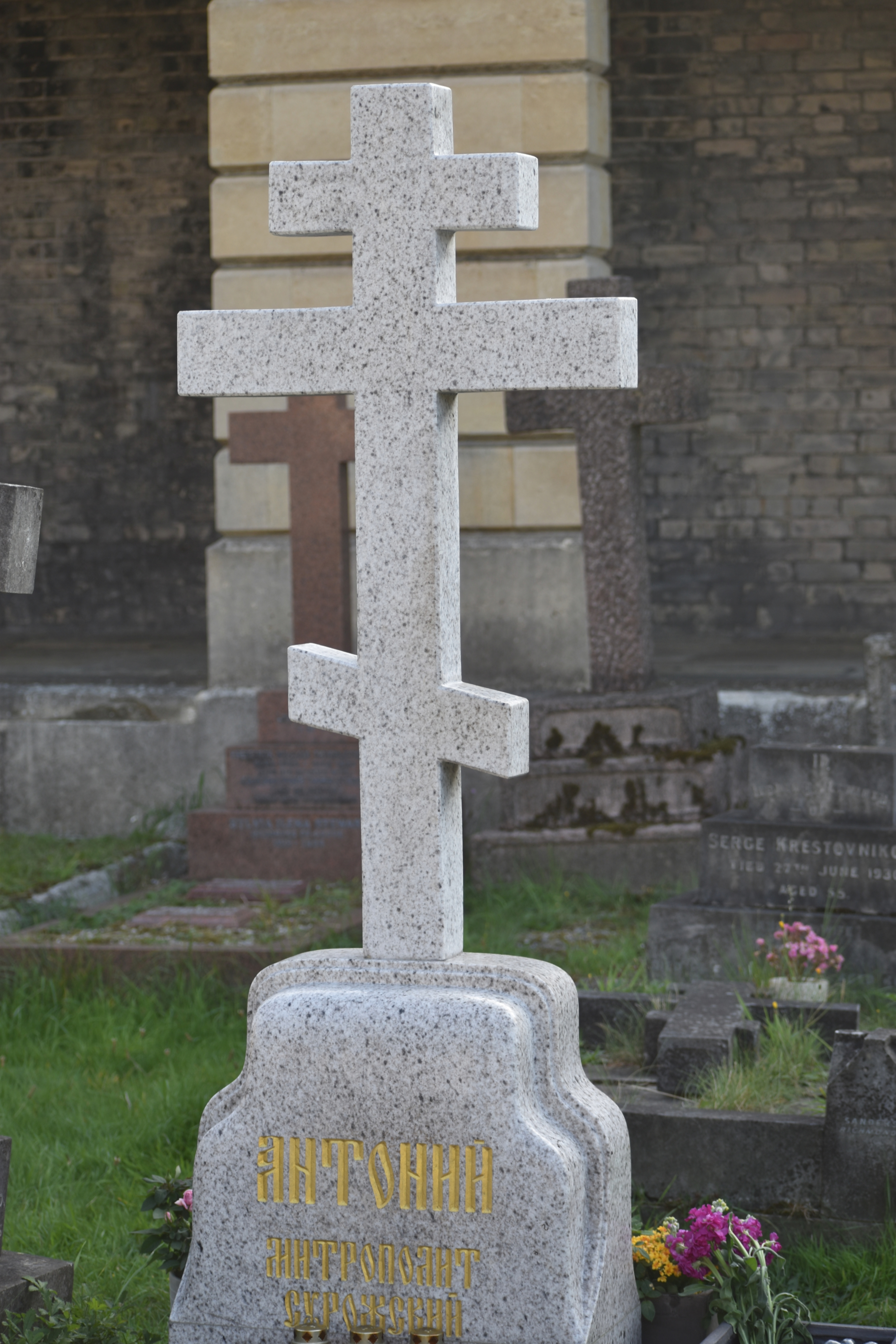
We are approaching Easter which is the holiest event in the religious calendar and it started me thinking about an appropriate symbol for this month. The Orthodox cross is one that has always intrigued me and I have been asked about it on my Symbol tours in Brompton Cemetery. There are a good selection of Orthodox crosses within Brompton Cemetery as Metropolitan Anthony (Bloom) is buried there and he has a fine Orthodox cross with an inscription in gold leaf. It is one of the most visited graves within the cemetery and visitors often leave floral tributes on it. He was the head of the Russian Orthodox Patriarchal church in Great Britain and Ireland and 2023 was the 20th anniversary of his death. The cross marking his grave is known as the Russian Orthodox Cross. But for this post I will refer to it as the Orthodox cross.
Crosses appear in many religions and cultures from the ancient Egyptians ankh which is a cross with a loop at the top and means ‘life’, the Celtic Cross with the pagan sun circle surrounding the cross and the more familiar Latin cross. Since the 3rd and 4th centuries, the latter has been the main symbol of Christianity as it is a representation of the cross on which Christ was crucified.
The Orthodox cross is a six pointed cross, with three horizontal bars as you can see in the photo below. It has a short top one, a longer one beneath it and a slanted one at the bottom that points upwards.
The cross first appeared in the 6th century during the Byzantine empire. This was part of the Roman Empire and Constantinople, now modern day Istanbul, was its hub. The cross featured in mosaics and frescoes and it was Ivan the Terrible in the 16th century who is reputed to have encouraged its use to differentiate the Orthodox church from the Christian church. He was keen to promote Moscow as being the Third Rome.
Metropolitan Anthony’s grave has two crosses. One above the grave and one placed on it which is decorated and painted and shows how the cross is arranged.
This is known as the title or titulus board. Pontius Pilate ordered a sign to be hung in mockery over Christ’s head on the cross. On it was inscribed ‘Jesus of Nazareth, King of the Jews’ in Hebrew, Greek and Latin. This was abbreviated to INBI in Greek or the more familiar INRI. In Latin it appears as
‘Iesus Nazarenus Rex Iudarerum’
Hence INRI.
The Middle Bar
This was where Christ’s hands were nailed to the cross with his feet on the lower bar.
The Lower Bar
The slanted bottom bar was Christ’s footrest. The upper left of the bar always points heavenwards and the lower end points downwards. The tradition is that it’s slanted because Christ kicked it out of place during his final moments and it can also be interpreted as pointing to heaven and hell. It has also been thought that it may also symbolise the scales that traditionally weigh the dead’s sins and virtues. These appear in medieval wall paintings and I have seen an example in St Peter’s, Preston Park, Brighton, UK.
Beneath Christ’s feet, at the base of the cross, there is a stylised skull on top of a rock. According to the website www.rbth.com:
‘this symbolises Adam’s head as according to tradition, the remains of Adam, Eve and their descendants were buried right under the site of crucifixion at Golgotha. This, the blood of the crucified Christ, symbolically washed Adam’s bones and washed away original sin from them and their descendants. ‘
As I said earlier, the Orthodox cross has always intrigued me as to why it is so different from the traditional Christian cross. It has been fascinating to research it and I was lucky to have such a good example on Metropolitan Anthony’s grave.
The Church Bell is an unusual and rare symbol to be found in a cemetery or churchyard. So far I have found two examples but I feel sure that there are others out there. This post was inspired by the three bells that I saw on a Mr Judd’s headstone in St Michael’s churchyard, Betchworth, Surrey. It must be an ex-bellringer I thought and sure enough the epitaph stated that Mr Judd was:
‘ for 36 years Captain of the Bellringers at this Church.’
The central bell on the three appeared to be ringing but was it a specific peal? A secret message to other bellringers?
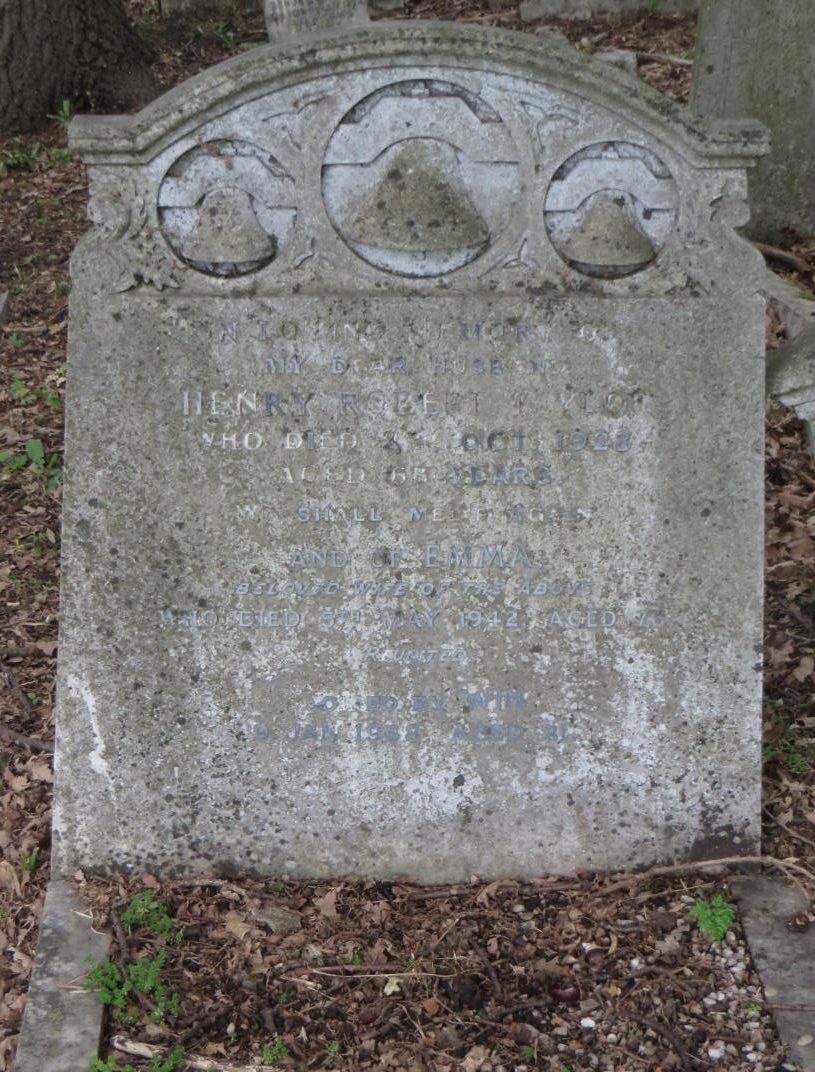
The second one was in Beckenham Cemetery and was dedicated to Henry Robert Taylor but with no further information on it. This time all three bells appeared to be static.
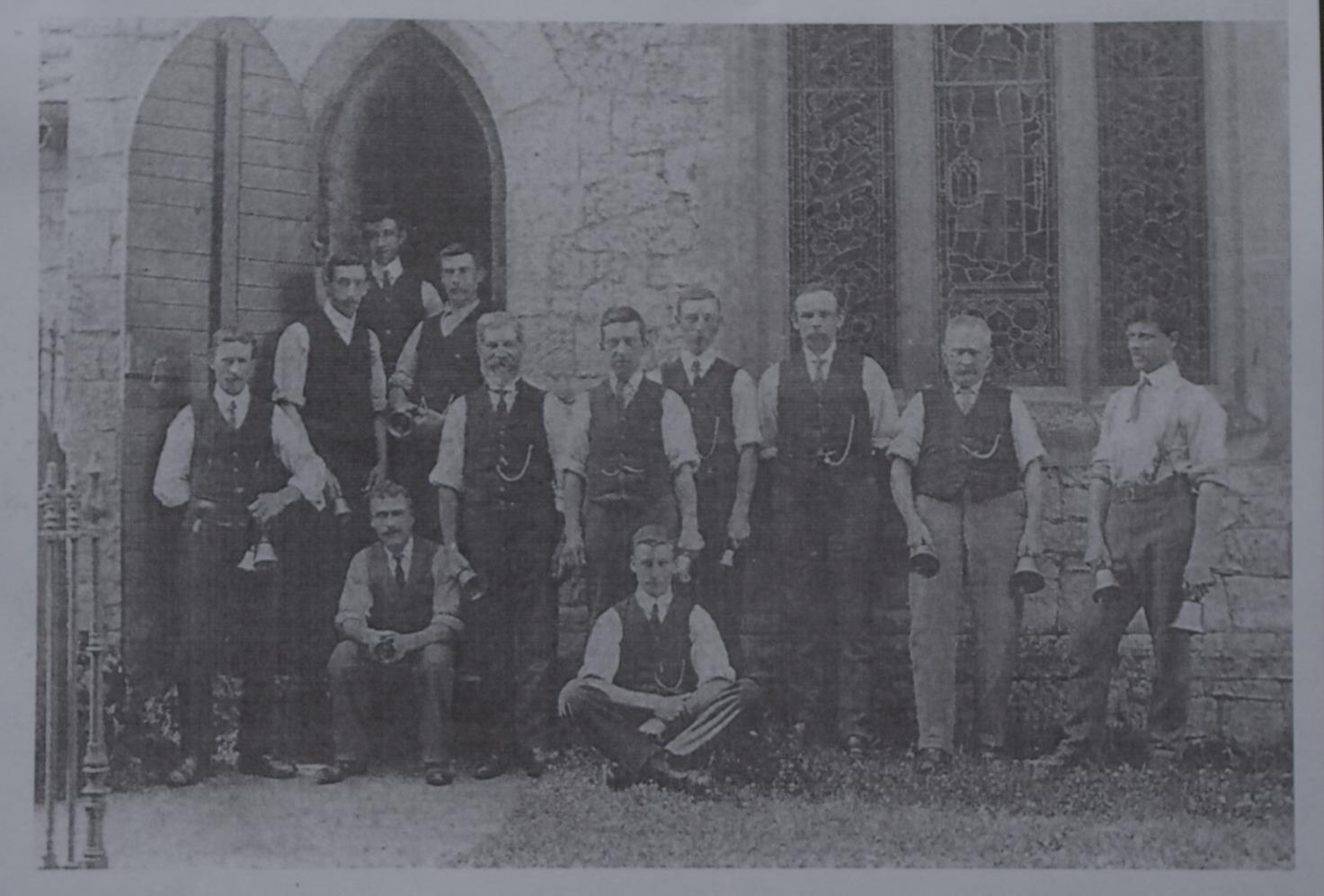
So I contacted The Central Council of Church Bellringers (yes it does exist) to find out if they could shed light on the bells. Firstly, they were very interested in my photos as these are rare memorials and they didn’t know that they existed. One of their members, a retired Captain of Bellringers and historian, was kind enough to reply and said that the Taylor headstone was probably the grave of a bellringer which was close to the door of the bell ringing chamber. He added that the bells depicted were inaccurate for English church bell ringing and thought that it might be a standard pattern designed to fit a pointed headstone.
However, with the Judd headstone in Betchworth he thought that the bells were a much better representation of a church bell hung for ‘change ringing’. Change ringing is an English form of bell ringing and if you want to know more there is a link in the references and further reading section.
I then approached the churchwarden at St Michael’s who informed me that the Judd tombstone was originally dedicated to Clara Judd but eventually William Henry (Bill) was added to the inscription. He also confirmed that Bill is buried close to the door of the church’s bell-tower. In 1910, Canon Sanders paid tribute to his astonishing 36 years as Captain of the Bellringers by saying that
These two headstones and the bellringing references reminded me of the links between church bells, the rituals of the church and death. The most obvious one is ringing the ‘death toll.’ which appears in Shakespeare’s Sonnet 71:
‘No longer mourn for me when I am dead,
Than you should hear the surly, sullen bell,
Give warning to the world that I am fed
From this vile world with vilest worms to dwell.’
There is also the often quoted final lines from John Donne’s 1624 Meditation 17, from Devotions Upon Emergent Occasions:
‘Therefore, send not to know
For whom the bell tolls,I
It tolls for thee’.
Although only the ‘death toll’ is used today, originally there were three tolls that were rung and they denoted different stages of death. I am indebted to the headstonesymbols.co.uk blog for this:
‘There was superstition that evil spirits would gather around a dying person, trying to catch the departing soul. To give the soul a chance of ascending to heaven, church bells were rung at the time of death to frighten away these demonic forces. It was even added to the rules of the early Church of England that:
…when any is passing out of this Life, a Bell shall be Tolled, and the Minister shall not then slack to do his last Duty. And after the Parties Death (if it so fall out) there shall be rung no more than one short Peal, and one other before the Burial, and one other after the Burial.
Church of England Canon law; 1604
The Passing Bell
The first ringing to indicate an impending death was called the “Passing Bell“. This was to alert the priest that he was needed to perform the Last Rights.
The Death Knell
A “Death Knell” was rung immediately after the death. This was a slow solemn peal and each strike or teller identified the sex and age of the deceased. In small communities they would know from this who had passed and who’s souls to pray for.
From the number of strokes being formerly regulated according to circumstances, the hearers might determine the sex and social condition of the dying or dead person. Thus the bell was tolled twice for a woman and thrice for a man. If for a clergyman, as many times as he had orders, and, at the conclusion, a peal on all the bells to distinguish the quality of the person for whom the people are to put up their prayers. In the North of England, are yet rung nine knells for a man, six for a woman, and three for a child.
Old Church Lore by William Andrews
Lych or Corpse Bell
The last bell, the Lych or Corpse bell would be rang at the funeral, and is the only one that survives today.’
The Funeral Toll was also rung as the procession approached the church and was known as ‘ringing home the dead’.
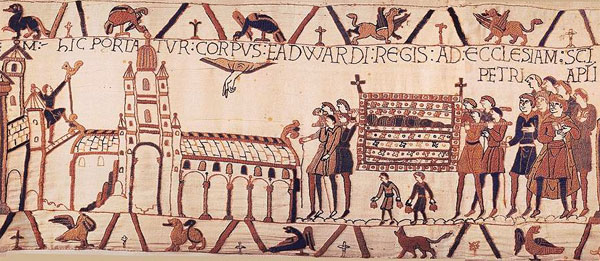
However, in Scotland and parts of Northern England, a hand bell was rung which was known as the dead bell. This was used with deaths and funerals until the 19th century. The dead bells were rung for two reasons; to protect the newly deceased from evil spirits and to also seek prayers for the dead person’s soul. These ‘dead bells’ are often carved on monuments and tombstones in Scotland and Northern England. There are two men ringing dead bells on the Bayeux Tapestry at the funeral of Edward the Confessor:
The funeral procession of Edward the Confessor as depicted on the Bayeux Tapestry. Note the dead bells held by the two people next to (below) the deceased. From: Lucien Musset The Bayeux Tapestry, translated by Richard Rex, published by the Boydell Press, Woodbridge, UK. 2005. ISBN 1-84383-163-5. pp. 160-165 Shared under Wiki Creative Commons
But there are also superstitions and beliefs concerned with church bells particularly during the medieval period. They were thought to have special protective powers to drive away evil spirits for example and were often baptised. After all, most people know of the Houses of Parliament’s world famous Great Bell in its clock house, Big Ben. The Catholic church still has a blessing for new bells in which they’re given the power to protect those who hear them, repel storms and triumph over evil.
There are also several legends concerning bells that have ended up underwater either due to cliff erosion, a reservoir or hidden in lakes. They are reputed to ring from their watery graves at dead of night.
Bells have always been an intrinsic part of church life whether ringing to denote the end of a life or jubilantly pealing at the beginning of a new life in marriage. They have been held in reverence and awe due to their supposedly magical powers. Even today, they sometimes have names and are seen as part of the community. Both the Betchworth and Beckenham headstones record a connection between man and church bell that has lasted for centuries.
On a clear summer’s day, if you stand in the Garden of Remembrance in St Helen’s churchyard and look over the wall, the marshlands seem to stretch on and on into the distance. But it’s a view that is constantly changing as new houses encroach on the flat landscape. The marshes lead on as far as Tilbury in Essex and the Thames estuary. St Helen’s is in the hamlet of Cliffe in Kent and has a substantial churchyard which is well worth exploring.
As I wandered through it with my camera , I saw a structure in the northwest corner that looked as if it was for storage. But, as I drew closer, I saw the interpretation board nearby which announced that it was in fact the Charnel House and that it had been built for a much darker, more macabre purpose. I could easily imagine that on a duller day, the cloud low and dark, the wind biting across the marshlands as a group of parishioners carried a body back from the river, it would have assumed a far more sinister appearance.
‘The definition of a charnel house is that it is a building in which corpses or bones are piled in a place . The name ‘charnel house’ comes from middle French and also Latin. ‘Carnale’ means graveyard and ‘Carnalis’ means ‘of the flesh’. It was somewhere to store bones either disinterred to enable burial spaces to be reused or unearthed up by gravediggers . ‘
The Cliffe charnel house is a Grade II listed building but it is perhaps a misnomer. It dates from the 19th century and was in fact a temporary mortuary for bodies that were taken from the river. They were the responsibility of the parish in which they washed up whether they died from suicide, drowning or were a sea burial.
‘However, it was clear that if men died on the ships travelling up and down the Thames they would often just be dropped into the river to avoid the expense of burial. In a similar vein the villagers would sometimes push washed-up bodies back into the river in the hope they would be washed further upriver so that another parish would have the expense of dealing with them.’
At Cliffe, the recovered bodies would be put in the Charnel House to await identification and burial.
The House is supposed to be one of a handful of such buildings along the Kent Coast although an article in the Kent Messenger thought:
‘That it may be the only surviving example of its kind.’
I haven’t seen or heard of another one – yet. Although there was supposed to be a ‘dead house’ at Higham, Kent but is now long gone.
The Cliffe charnel house was built in the mid 19th century from flint with a plain tiled roof. The lantern on the roof was intended to let odours escape through its vents on either side. It was in use until the start of the 20th century when it was closed due to several Public Health Acts. It was then used for storage.
The Charnel House was restored in 2008 with £52,000 of National Lottery money. In a photo on the Historic England website there is a pre restoration photo of the House in which vegetation such as ivy almost completely covers it and the churchyard wall. Timber within the structure, including the entrance doors, needed to be replaced as well as the windows. Ivy had invaded the wall, damaging it and that was repaired at the same time together with the flint walls.
It’s a reminder of a bygone time. For those unfortunate souls without identification, then it might have meant burial in an unmarked grave within St Helen’s churchyard. But at least they would have had a final resting place.
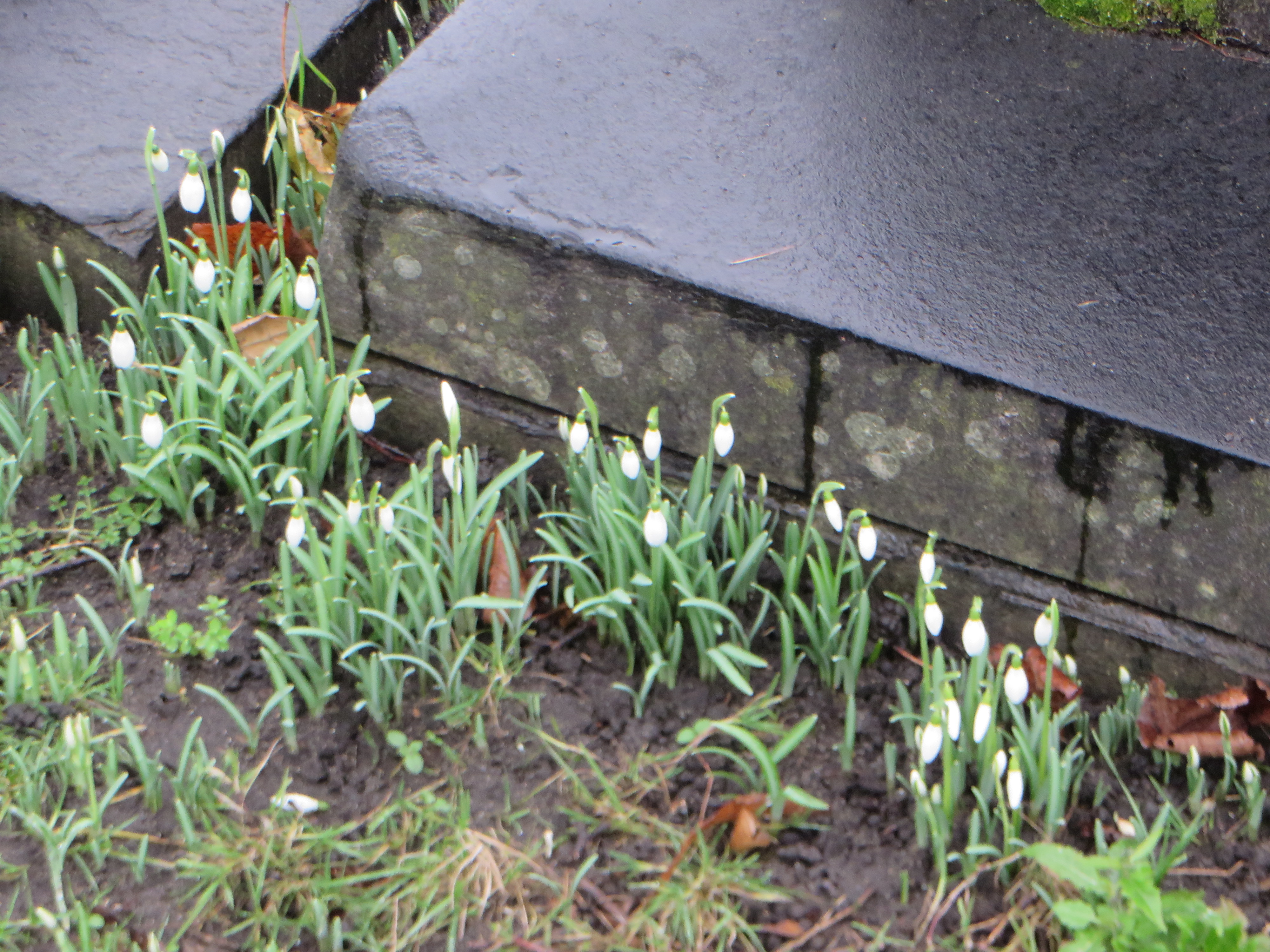
On February 2 it was Candlemass, an important day in the church calendar. Already snowdrops are appearing, nodding their tiny white heads in the breeze and making people feel that Spring is on its way.
But these delicate little flowers have another side to them and it’s always at this time of year that I repeat this post. They have a darker side and a long association with churchyards and death.
Imagine yourself in a gloomy medieval church on the festival of Candlemass. You, and your fellow parishioners, have each brought your candles to be blessed by the priest and, after the procession which will fill the church with light, they will all be placed in front of a statue of the Virgin Mary. Candlemass marked the end of winter and the beginning of Spring. The blessing is to ward off evil spirits. It traditionally falls on February 2 and is shared with the Celtic festival of Imbolc. And in the churchyard outside you can see green shoots forcing their way up through the hard winter earth. The snowdrop’s milk-white flowers show that spring is on its way as they begin to emerge into the light.
The placing of the lit candles in front of the Virgin Mary’s statue gave the snowdrop one of its many other names – Mary’s Tapers. But there are many others such: Dingle Dangle, Candlemas Bells, Fair Maids of February, Snow Piercer, Death’s Flower and Corpse Flower.
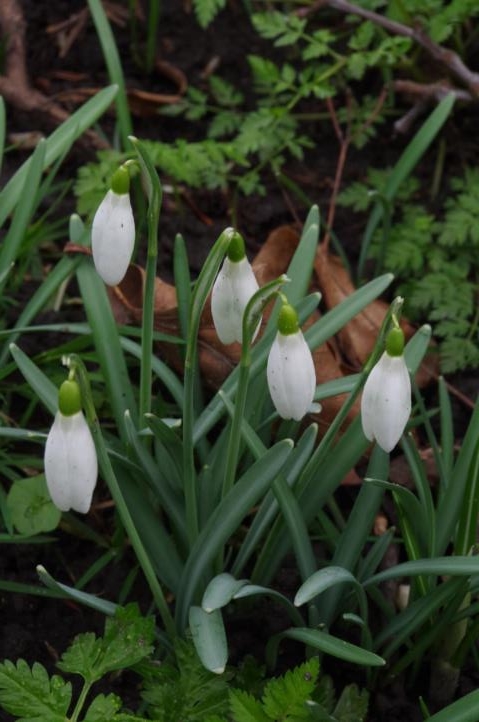
The snowdrop’s appearance has also inspired many comments . According to the Scottish Wildlife Trusts website they have been described as resembling 3 drops of milk hanging from a stem and they are also associated with the ear drop which is an old fashioned ear ring. Anyone who has seen a group of snowdrops nodding in the wind will understand what they mean. The snowdrop’s colour is associated with purity and they have been described as a shy flower with their drooping flowers. However, the eco enchantments website reveals that the flower is designed in this way due:
‘to the necessity of their dusty pollen being kept dry and sweet in order to attract the few insects flying in winter.’
Snowdrops have been known since ancient times and, in 1597, appeared in Geralde’s ‘Great Herbal’ where they were called by the less than catchy name of ‘Timely Flowers Bulbous Violets’. Its Latin name is Galanthus nivalis. Galanthus means milk white flowers and the nivalis element translates as snowy according to the great botanist, Linnaeus in 1753. In the language of flowers they’re associated with ‘Hope’ and the coming of spring and life reawakening.
However, yet despite all these positive associations, the elegant snowdrop has a much darker side. Monks were reputed to have brought them to the UK but it was the ever enthusiastic Victorians who copiously planted them in graveyards, churchyards and cemeteries which then linked them with death. Hence the nickname name ‘Death’s Flower.’
They were described by Margaret Baker in the 1903 ‘Encyclopedia of Superstitions, Folklore and the Occult of the World’ as:
‘so much like a corpse in a shroud that in some counties the people will not have it in the house, lest they bring in death.‘
So that’s where the ‘Corpse Flower’ nickname came from.
Snowdrops are also seen as Death’s Tokens and there are several regional folk traditions of connecting death with them. For example in the 19th and early 20th centuries it was considered very unlucky to bring the flower into the house from outside as it was felt that a death would soon occur. The most unlucky snowdrop was that with a single bloom on its stem. Other folk traditions were described in a 1913 folklore handbook which claims that if a snowdrop was brought indoors it will make the cows milk watery and affect the colour of the butter. Even as late as 1969 in ‘The Folklore of Plants’ it was stated that having a snowdrop indoors could affect the number of eggs that a sitting chicken might hatch. A very powerful plant if these are all to be believed – you have been warned!
It’s amazing that this little flower has so many associations and legends connected with it but I always see it as a harbinger of spring, rebirth and an indication of warmer days to come.
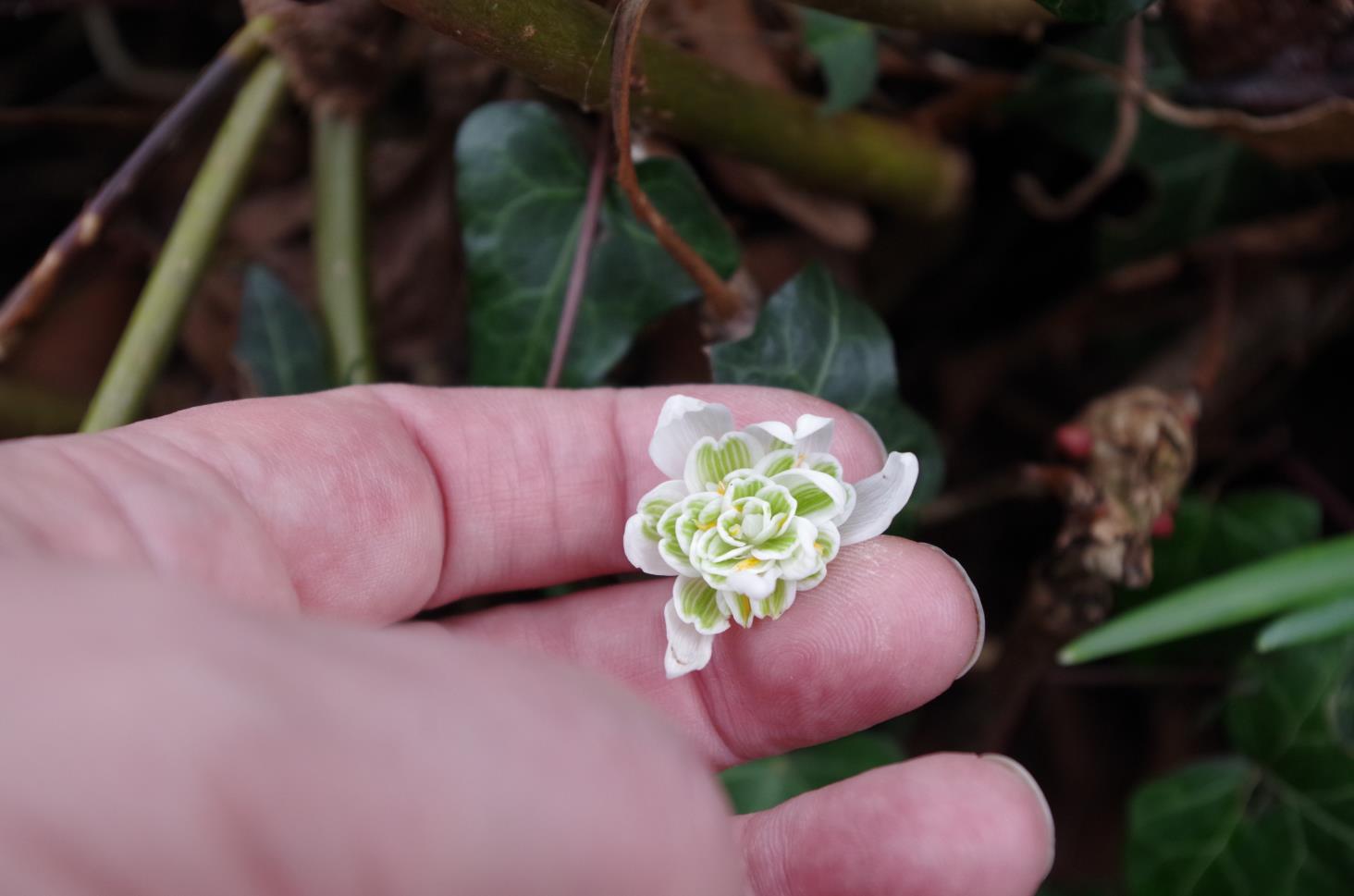
But the snowdrop also has a surprise. This came courtesy of the Urban Countryman page on Facebook – not all social media is time wasting! If you very gently turn over a snowdrop bloom you will find that the underside is even prettier and they also vary depending on the snowdrop variety.
Here is a small selection from my local churchyard and one from Kensal Green cemetery.
So don’t underestimate the snowdrop – it’s a plant associated with life and death but watch out for your hens and the colour of your butter if you do decide to tempt fate…..
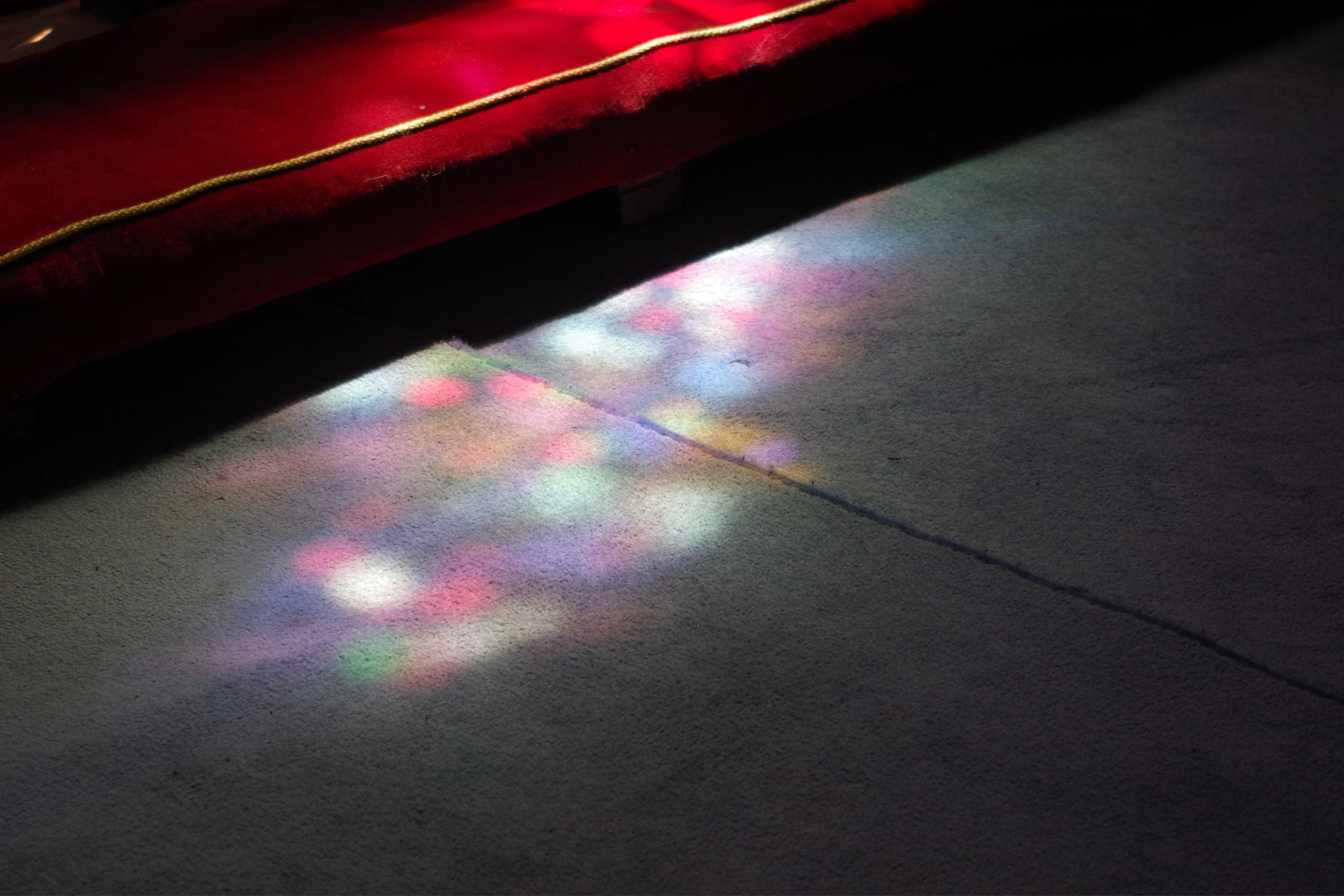
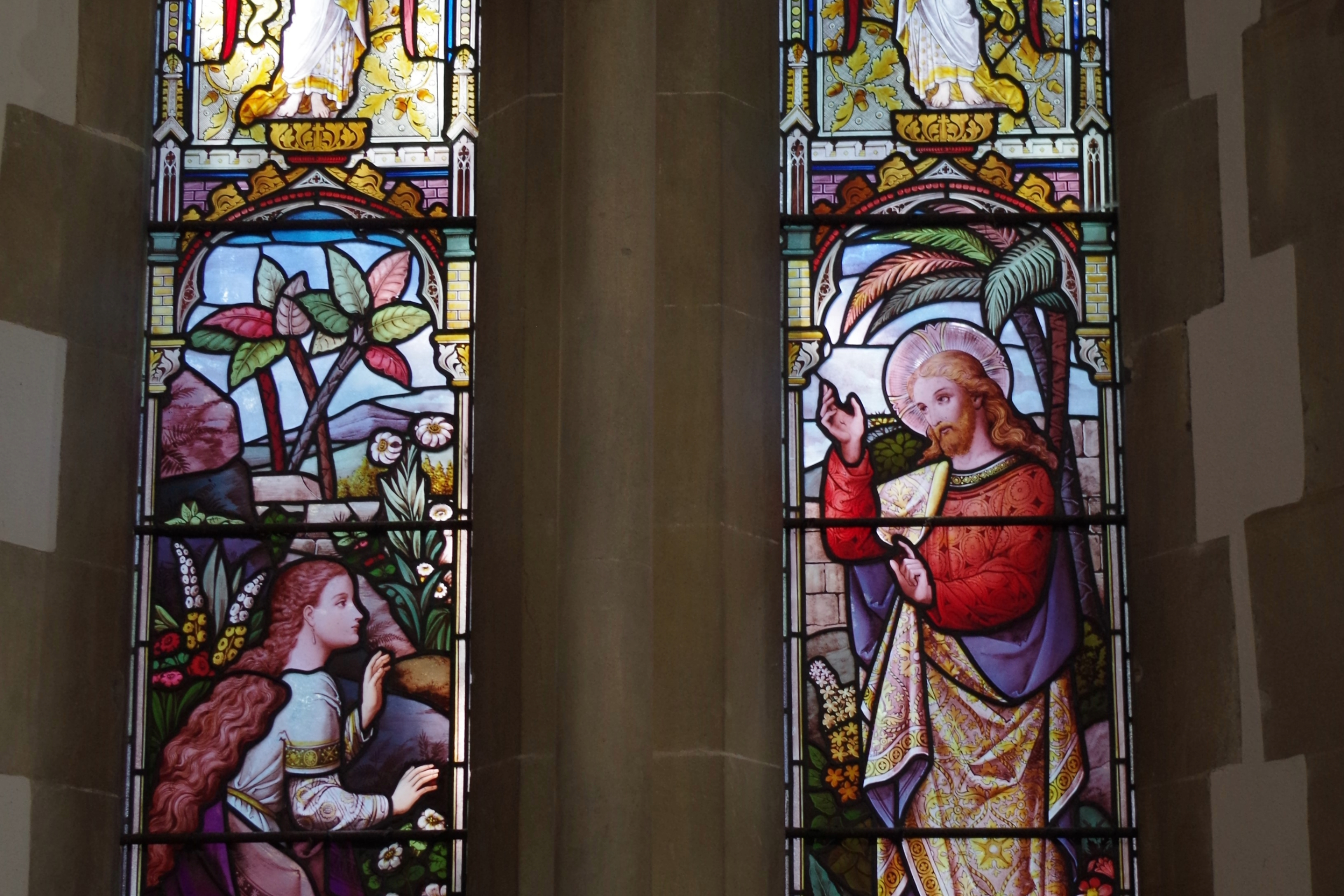
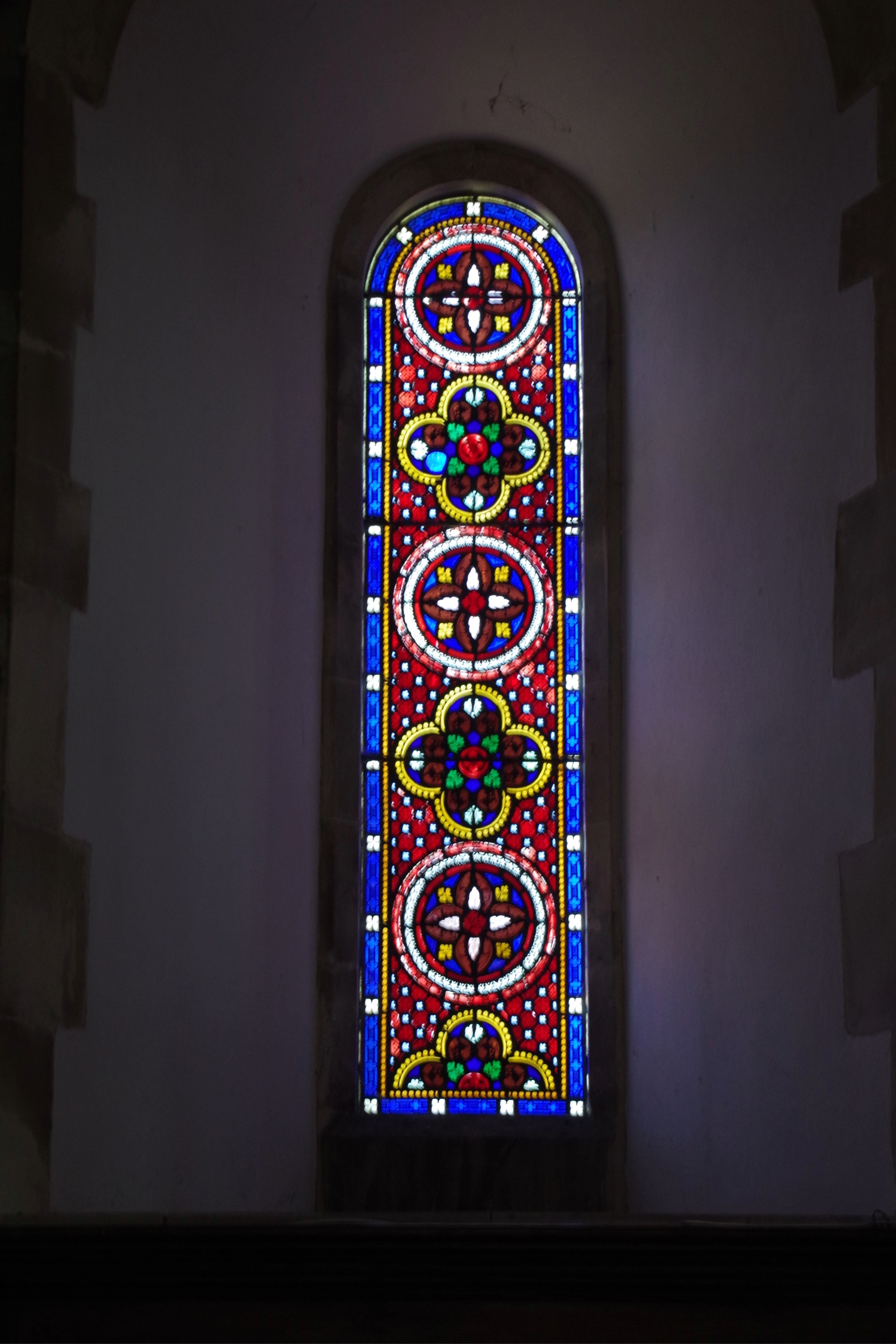
On a clear day, when the sun shines through, the stained glass in a church window takes on a beauty all of its own. Detailed pictures within the glass can become abstract shapes when reflected on floors and furnishings.
I love stained glass and one of the greatest pleasures of ‘church crawling’ is in wondering what I will find in its windows; remnants of medieval glass, colourful Victorian Biblical scenes or bespoke contemporary creations.
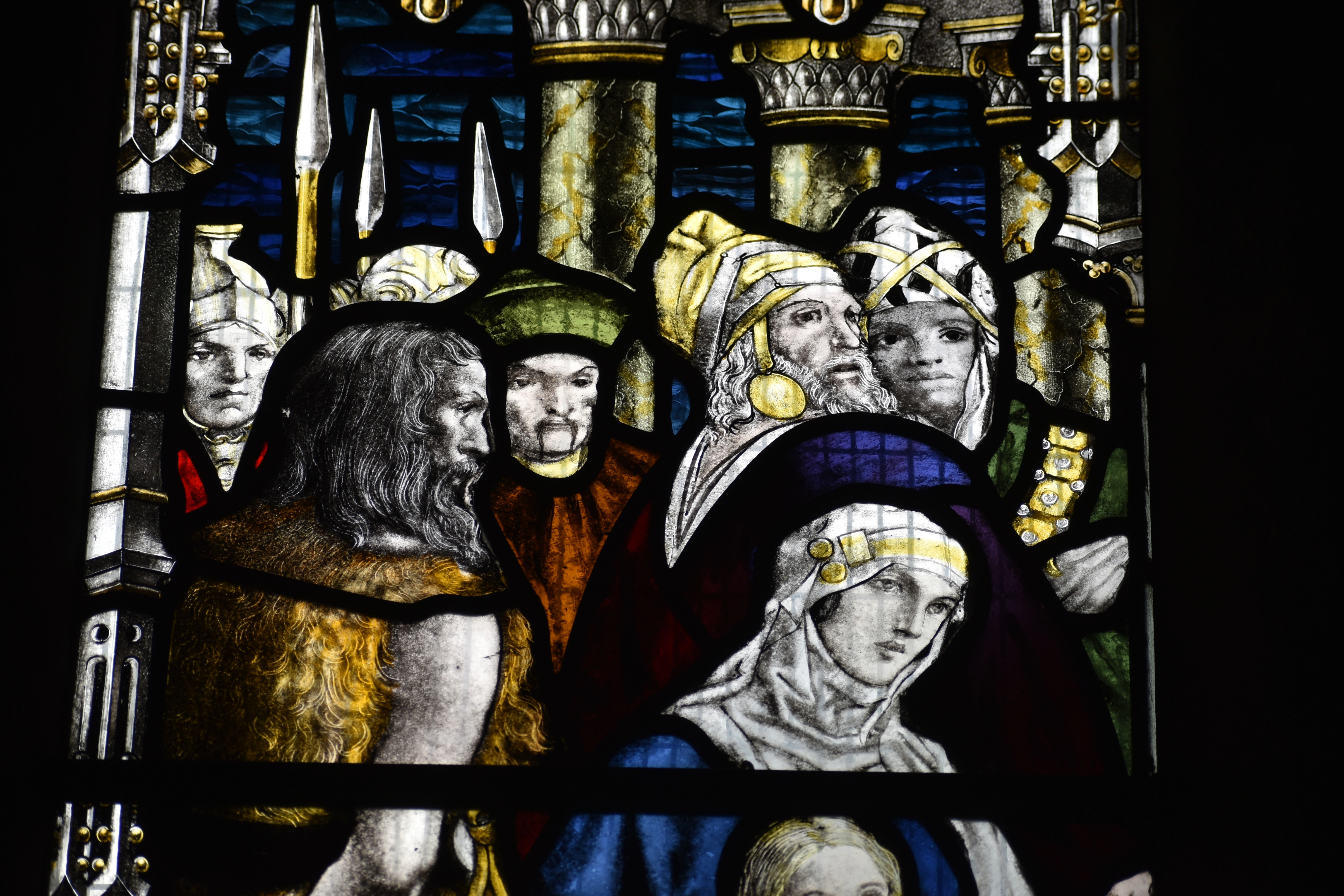
But St Mary’s in Rainham, Kent had a surprise in one of its windows. ‘Are you one of the christening party?’ The vicar asked as I entered the church and I shook my head. But we started chatting as I attempted to impress him with my knowledge of church architecture. He told me that a guidebook to the church was in preparation and he was kind enough to point out several interesting features.
One of them was this window. It’s dedicated to a former rector as the dedication in the bottom corner of the left hand panel attests. Most, if not all, Victorian stained glass features white people but this one portrays people from other races. There is in the crowd of onlookers: a Chinese man , a black man and others and this is certainly the first time I’ve seen such diversity in a stained glass window.
However, there is no way of knowing, at the moment, if the dedication is contemporary with the window or added later and whether the Rector had a hand in the design. However, more research is currently been done within the church and perhaps more will be known about the window and its origins.
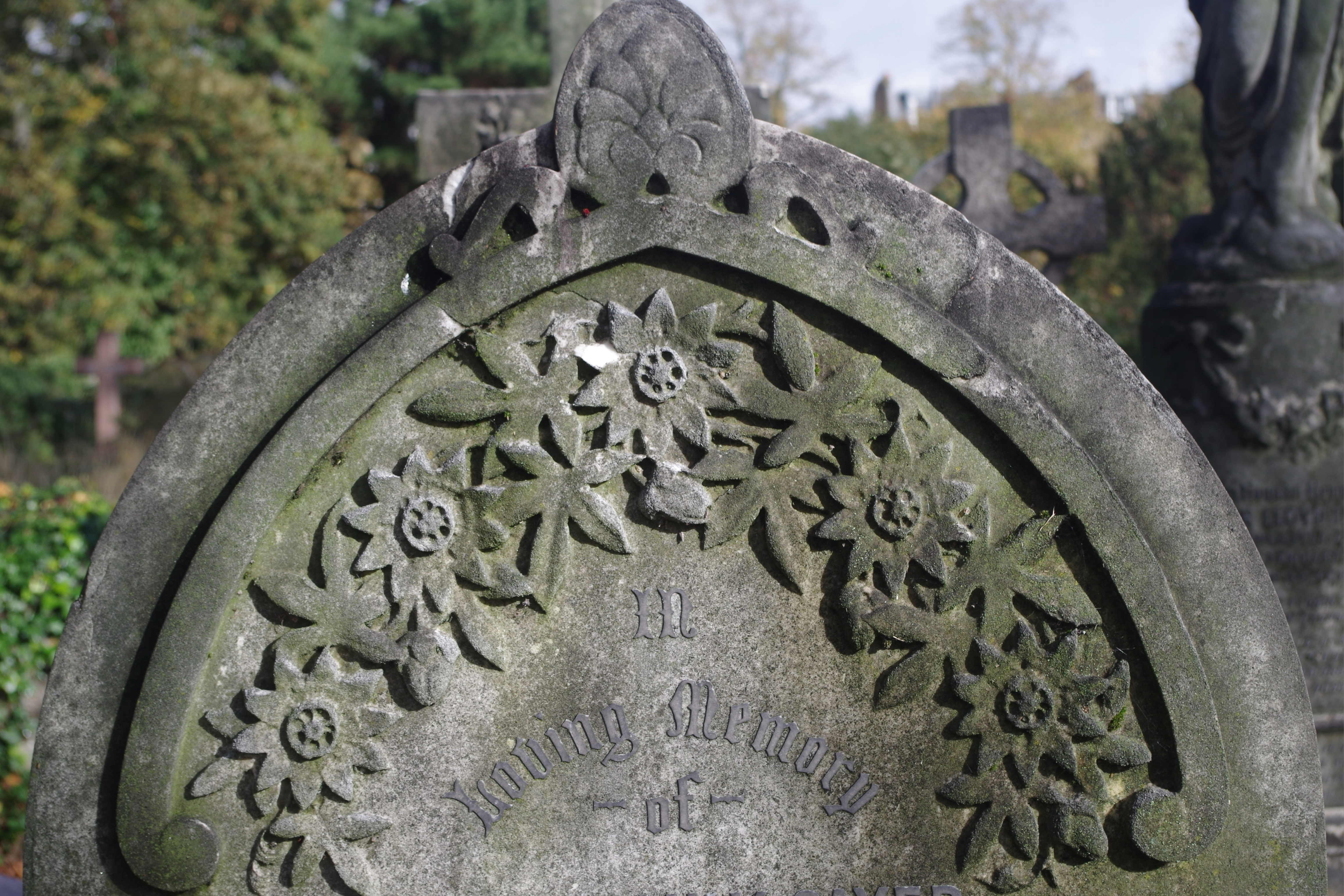
As you walk through a Victorian cemetery, flowers will be everywhere and not just as floral tributes on memorials and monuments. These are the permanent flowers, carved onto headstones and memorials and are often more than just pretty decoration. Ivy, roses and passion flowers are among the most popular and it’s the latter that I want to discuss this month as it is a deeply symbolic flower. The passionflower is a pretty trailing, climbing flower which lends itself to being carved on monuments and crosses. It is called a passionflower as it is believed to symbolise Christ’s suffering on the cross.
Floriography or the language of flowers is very pertinent to the study of Victorian funerary symbols and explains why flowers were so popular. However, over time the meanings have been lost although the meaning of a single rose as expressing true love still survives.
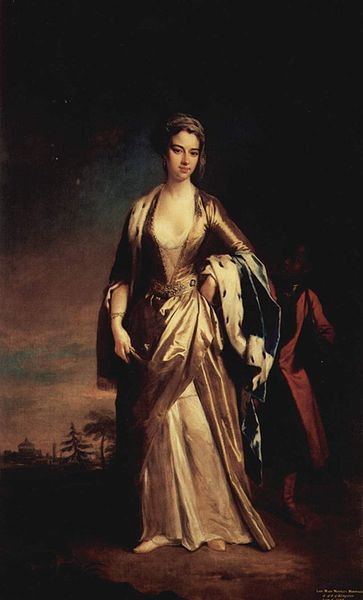
Portrait of Lady Mary Wortley Montagu, by Jonathan Richardson the Younger painted in 1725. Shared under Wiki Commons.
Floriography is a way of communicating through flowers. It has been used for thousands of years in various cultures, most notably in 17th century Turkey, where it is believed to have originated, as a way for illiterate harem women to communicate. It was introduced to Europe by Lady Mary Wortley Montagu who was the wife of the British Ambassador in Constantinople, now known as Istanbul during 1716 – 1718.
It reached its zenith in Victorian England. The Victorians love of flowers coincided with their love of cyphers and coded messages. Anyone who has ever watched BBCTV’s Antiques Roadshow jewellery expert, Geoffrey Munn, revealing the hidden meanings behind the seemingly innocuous combination and arrangement of stones in a brooch will know what I mean.
The strict etiquette of the 19th century that was expected of the upper and middle classes meant that people had to find other, more secretive means to express feelings and messages that couldn’t be openly shared. Floral decoration was already extremely fashionable in the home with William Morris’s wallpapers, for example, so flowers became the preferred choice.
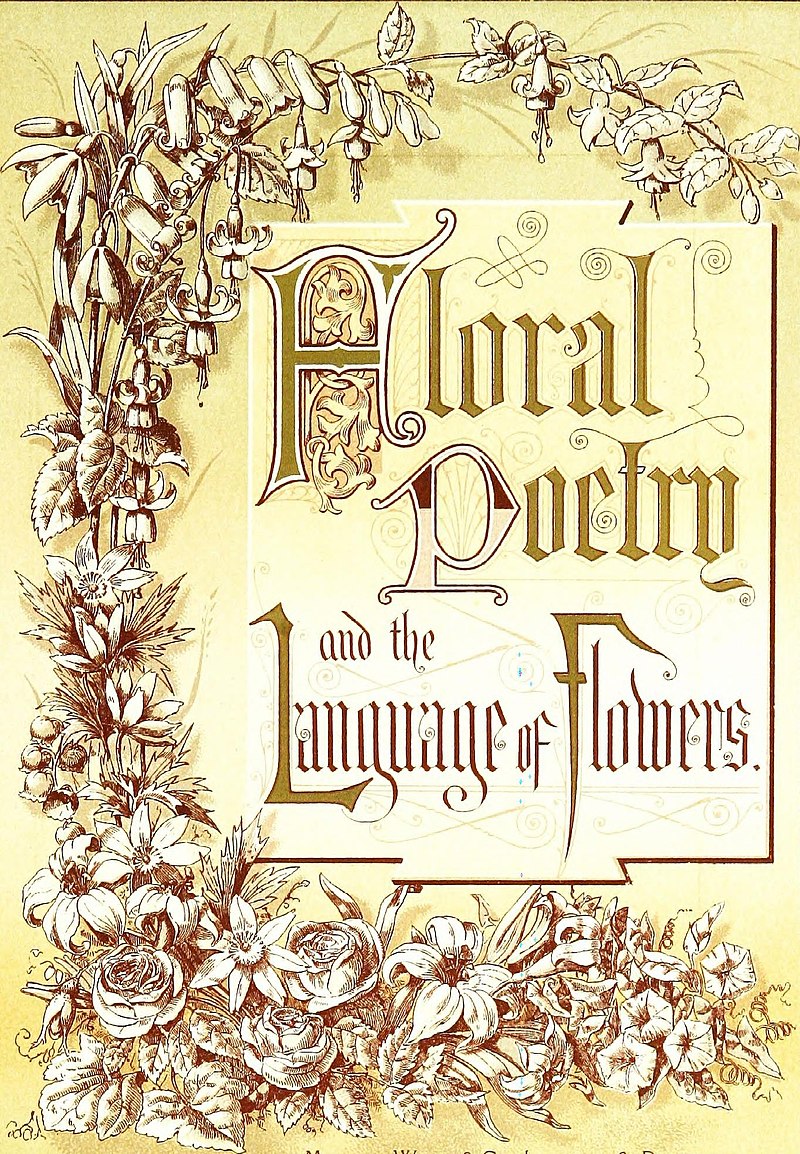
This is an example of a 19th century floral dictionary and was published in 1877. Shared under Wiki Commons.
Floral dictionaries were extremely popular. The first official one, entitled ‘The Language de Fleurs’, was published in Paris in 1819. It was written by Louise Contambert who wrote under a pen name. However, in 1879 a Scotswoman, Miss Carruthers, wrote one that rapidly became an essential guide. The one meaning that has survived is that of a single rose which is still associated with true love.
The Passionflower is a symbol of faith and suffering. It is believed that it is so named, because of Jacomo Bosio, a scholar in Rome, who was writing a treatise on the Crucifixion. A Mexican friar showed him a passionflower and Jacomo included it in his work.
These are the symbols of Christ’s Passion within the passionflower:
The unique corona
Christ’s crown of thorns
The sepals and petals
The Apostles excluding Judas and peter who distanced themselves from Christ before the Crucifixion.
The five anthers
The five wounds on Christ’s body.
The three stigmas
The three nails that pierced Christ’s body on the Cross
The leaves
The spears that pierced Christ’s side
The tendrils
The scourges which flayed Christ’s flesh.
An actual passionflower displaying the elements that have made it such a powerful religious symbol.
copyright Carole Tyrrell
So the next time you are exploring a Victorian cemetery, take a closer look at the permanent flowers that may be blooming on memorials and monuments. Floriography can be a fascinating subject.
It’s ‘the most wonderful time of the year’ according to singer Andy Williams and so I am taking this opportunity to send my own good wishes to you all.
This image was taken last year in Brompton Cemetery, London on a frosty day and I liked the way that Mother Nature had outlined and emphasised the detail on the carving especially on the wings and the drapery. It’s very much in the Classical style but sadly I can’t recall the name on the memorial.
There is no Symbol of the Month this month but it will begin again in January 2024 which, scarily, is not that far away.
It was a cold, grey, wet day in St Mary’s churchyard in Rainham, Kent. ‘Typical English late summer day.’ I thought. A christening was taking place inside the church and so I had decided to explore the churchyard. It’s a large one with a scattering of indecipherable 18th century tombstones and many far more contemporary ones. There was a poignant one that was dedicated to a baby that had only lived for a few hours and I felt that I was in the presence of the parents’ grief as I stood there.
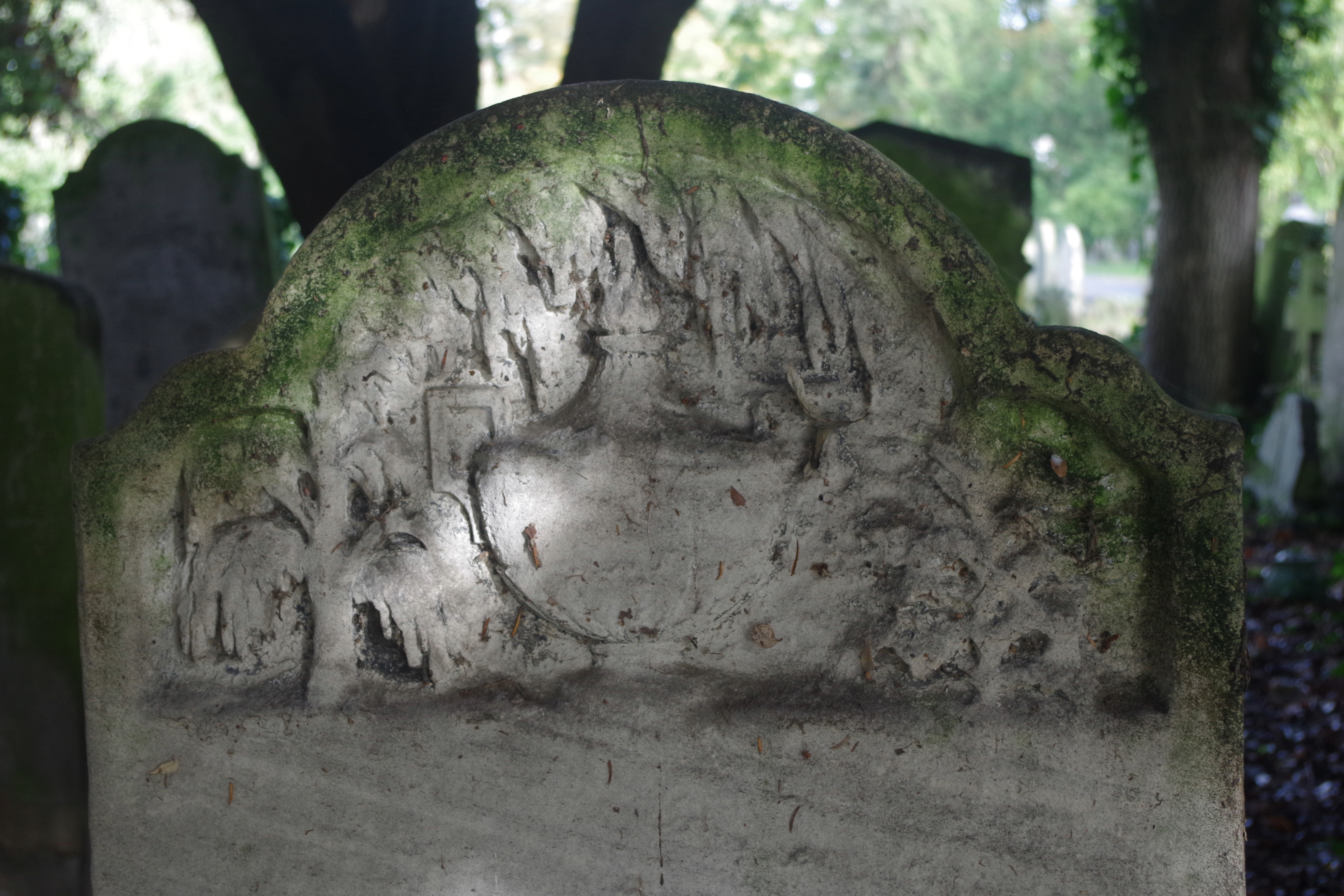
I sheltered from the fitful rain under a thick cluster of large yew trees and, as I stood there, I saw this well carved headstone. It features a large weeping willow, drooping or draped, depending on your point of view, over an urn which has a large of piece of cloth over it. Beneath this scene are ivy leaves and ivy flowers which symbolise eternity. So, several symbols on one stone which is dedicated to an Ann Baker who died in 1869. Two other family members are also recorded below. But we do not know if they are actually buried there.
The draped cloth over the urn can be seen as the curtain between life and death and almost resemble shrouds. For more information, please see my earlier post Symbol of the Month: The Urn.
Weeping willows often feature on mourning jewellery as seen on the example below.
But seeing this headstone set me thinking about the weeping willow, its association with death and mourning and its name. But firstly, a word about its history and other associations.
A weeping willow can be an impressive sight as with these two in St James’ Park, London. They can grow up to 70 feet tall although most are 35 – 40 feet tall. Its long, flowing branches allow it to bend with strong winds and it’s usually found near water. The ‘weeping’ supposedly comes from the way in which raindrops run down its long leaves which make it look as if the tree is crying. The Celtic tradition has it that a wind blowing through the leaves was said to be elves whispering to each other and if you’ve ever been near a weeping willow when the wind is blowing, it does sound as if the tree is whispering and muttering softly to itself.
The weeping willow originally came from China and is a hybrid of the Peking willow (Salix Babylonica) and the European white willow (Salix Alba). It’s believed that that all English weeping willows are descended from a twig that was tied around a parcel sent from Spain to a Lady Suffolk. The English poet and dramatist, Alexander Pope (1688-1744) apparently begged for the twig, planted it and a tree grew. They are very easy to grow from cuttings which has led to them being seen as emblematic of immortality. So, on the Baker headstone, it could be seen as signifying life after death and resurrection.
Alexander Pope (1688-1744) portrait by Michael Dahl, 1727.National Portrait Gallery – shared under Wiki Commons.
It appears in many cultures especially the Chinese and Japanese. However, the ancient Egyptians believed that in the annual flood of the River Nile which brought new life to the surrounding land,:
‘the willow’s ability to regenerate quickly after being cut down mirrored the cycle of life and death that fascinated them’http://spiritualsymbolism.org
In China, it has a protective element as its branches are carried on the day of the Tomb Sweeping or Qingming Festival. They are also put up on gates and front doors, which are thresholds or gateways, to ward off evil spirits. In the Festival, the ruler of the underworld allows the spirits of the dead to return to earth but as their presence may not always be welcome, the branches are used to keep them away, In Japan, the weeping willow is associated with ghosts and there is a popular belief that a ghost will appear where a willow grows. This could also be seen as resurrection or life after death.
However, a more sinister aspect comes from English folklore where the willow is considered capable of uprooting itself and stalking travellers! A more romantic view is that, if a young woman wished to find true love, then she would tie a ribbon around a willow’s branches while making a wish.
Willows also appear in the Bible in Psalms 137: v1-2:
‘By the rivers of Babylon, there we sat down, yea, we wept, when we remembered Zion,
We hanged our harps upon the willows in the midst thereof.’
King James version
They are also mentioned in Ezekiel 17:5 and Leviticus 23:40.
The weeping willow is ingrained within our culture and literature with Desdemona’s ‘The Willow Song’ in Shakespeare’s ‘Othello’. But it is in Tennyson’s poem, ‘The Willow Tree’ that the tree is described as a symbol of mourning and in Wordsworth’s poem ‘The Willow Tree’ he describes how:
‘it droops languidly o’er his dark mirror below.’
Billie Holliday performing at the Downbeat Jazz Club, 1947. Photographer William P Gottlieb. Shared under Wiki Commons.
The jazz singer, Billie Holliday sang ‘Willow weep for me’ in which she invites the tree to:
‘Bend your branches down along the ground and cover me.’
as she laments her lost love.
But from the late 18th century and into the 19th century it was a frequent motif on mourning jewellery and here is another example from the Museum of London. They were often associated, in the Classical style, with figures of mourning women.
The two mourning rings in this post both come from the Museum of London.
But on the Baker headstone the weeping willow’s branches may symbolise the drooping spirits and hearts of those who mourn. But, as the branches point down back to earth, they can also be signs of eternity in an endless cycle of renewal.
Before writing this post, I had only associated the weeping willow with sorrow and grief but it is a tree that I have always admired for its beauty. So, it was wonderful to learn of its other, more positive aspects. In fact, it does not only weep for the dead but also offers comfort and solace to those left behind.
I was tucking into a milk chocolate toad last night (31/10) when I spotted a familiar symbol on the packet – a winged skull!
This is the death’s head (highly appropriate for Halloween) and is reputed to represent the combination of physical death in the skull and spiritual regeneration with the angel wings.
In other words, triumph over death. So thank you M & S for such great and informative packaging!


















 shadows fly away
