A weeping cherub and brief lives – St Mary’s, Amersham, 4/7/2015 Part 1

This was a visit organised by the Friends of Nunhead Cemetery in 2015.
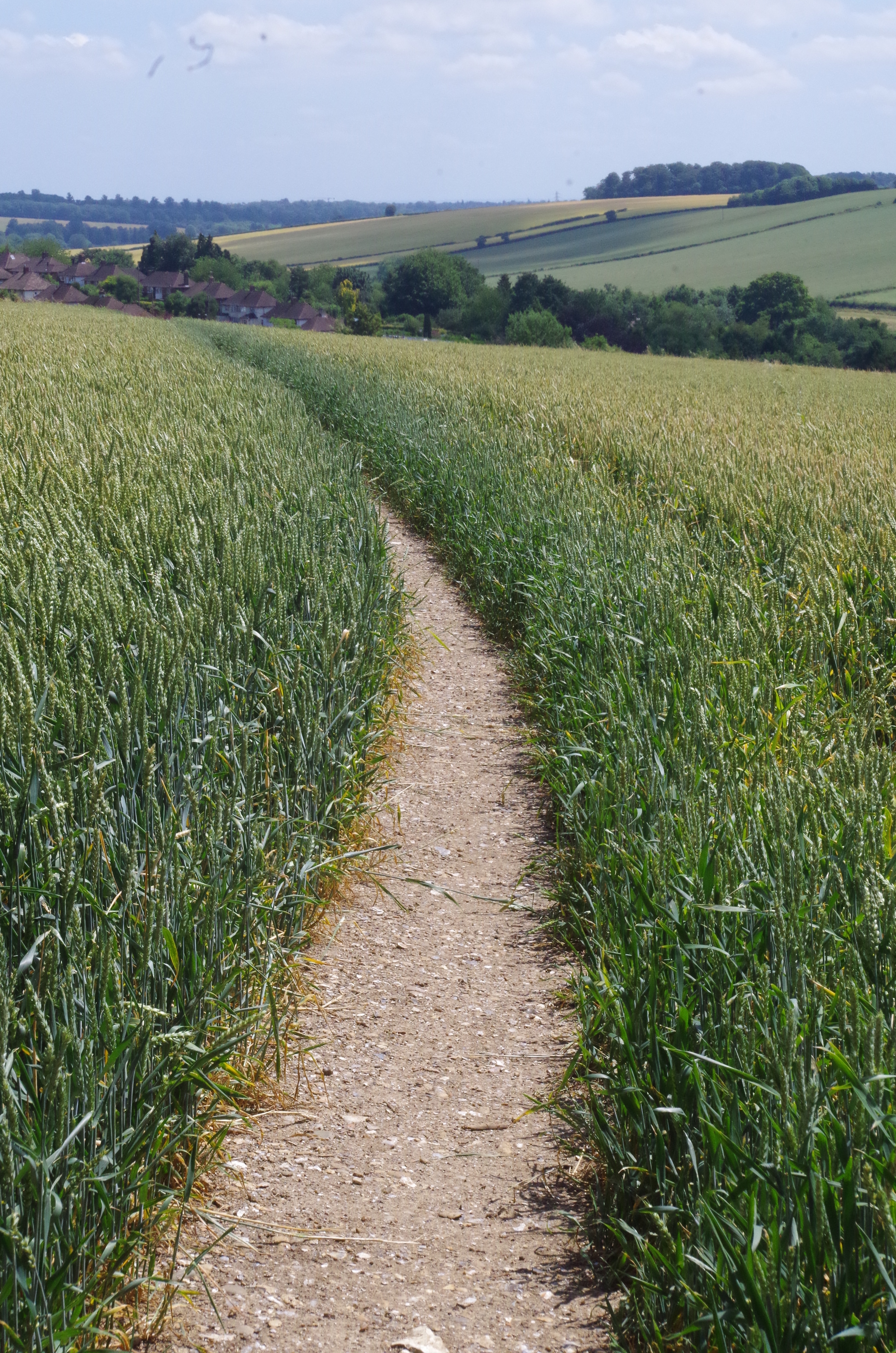
The path through the field towards Amersham copyright Carole Tyrrell
The path through the field towards Amersham
copyright Carole Tyrrell

We could see St Mary’s church below the hill as we skirted the outside of the huge field of barley.  Red kites wheeled above our heads and a skylark sang to accompany us.  Butterflies; tortoiseshells, meadow browns and gate keeper, led our way to Amersham on a hot July day. On the way we passed St Mary’s Graveyard in old Amersham where the last woman to be hanged in England, Ruth Ellis, is rumoured to lie, buried in and unmarked grave.  A pair of banded demoiselle dragonflies danced on the air over the small stream nearby, their wings glittering in the sun like tiny jewels.

St Mary's church under a lovely blue sky. copyright Carole Tyrrell
St Mary’s church under a lovely blue sky.
copyright Carole Tyrrell
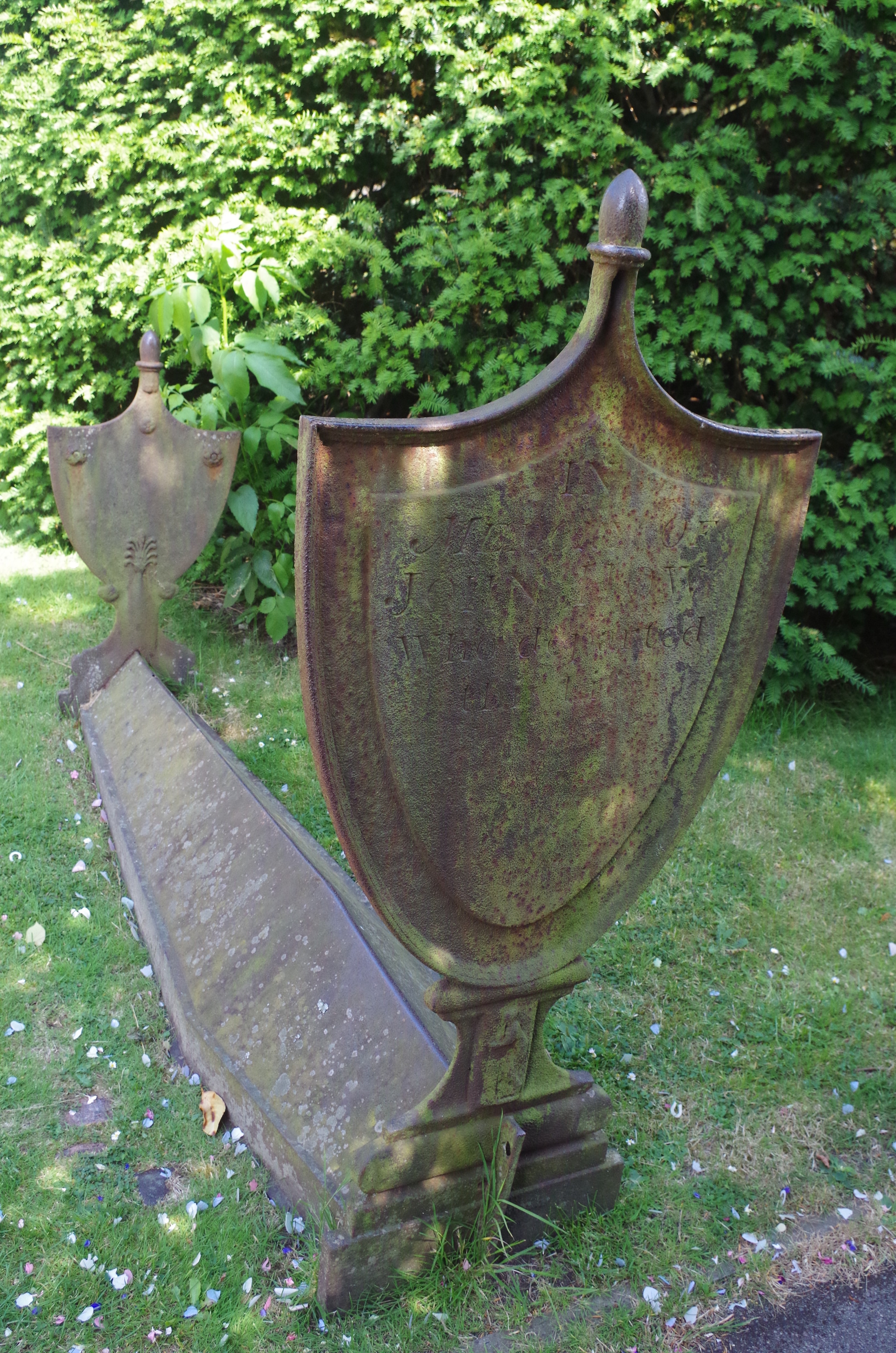
An interesting iron memorial within St Mary's churchyard copyright Carole Tyrrell
An interesting iron memorial within St Mary’s churchyard
copyright Carole Tyrrell


St Mary’s is the church that featured in the film ‘4 Weddings and a Funeral’ and we briefly explored its surrounding churchyard and interesting monuments.   There has been a church on the site since 1140 with many historical features  such as  the medieval font  and a 17th century Flemish stained glass window.

‘ In about 1620, the Drake family (distant cousins of Vice-Admiral Sir Francis Drake) bought the town and its estates. They remain patrons of the Parish to this day, many of their younger sons serving as Rector over the centuries. In 1870, Rector Edward Drake persuaded his brother the Squire to reorder and restore St Mary’s to something like its mediaeval interior layout. It was also at this point that the church was clad in flint.’  http://stmaryschurchamersham.com/history

Our guide had the memorable name of Howard Hughes and he led us through the chancel with its large memorials. One was to a 14 year old boy, Henry Curwen Workington, who died in Amersham in 1636 and another featured 2 lifesize sculptures of a married couple who didn’t look very happy.  There was also a wall memorial with a bust of man which, within the frame, made him look as if he was in a Punch and Judy tent.
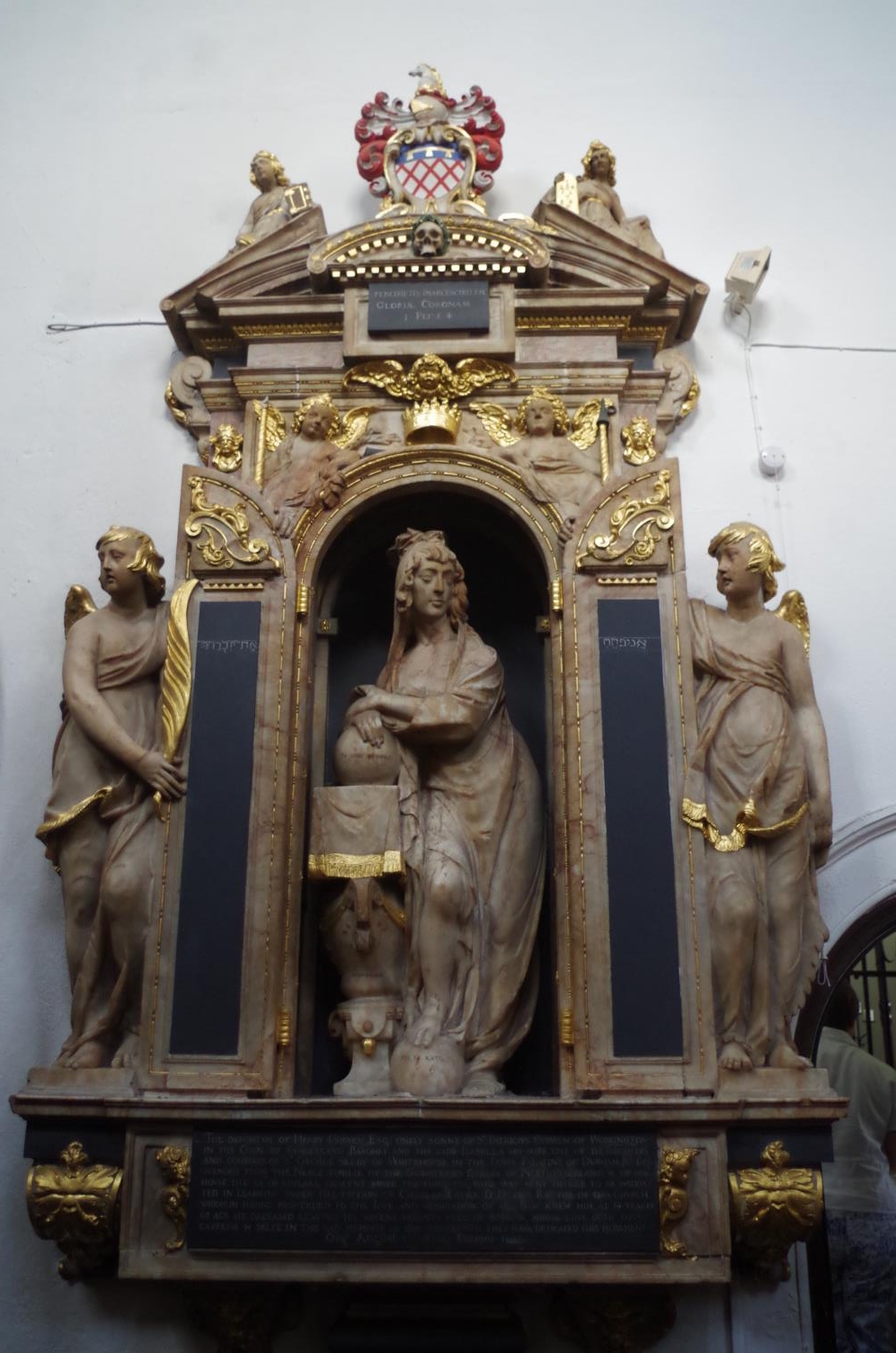
The Henry Curwen Workington memorial copyright Carole Tyrrell
The Henry Curwen Workington memorial
copyright Carole Tyrrell


Memorial, chancel, St Marys copyright Carole Tyrrell
Memorial, chancel, St Marys
copyright Carole Tyrrell
Memorial, St Marys chancel copyright Carole Tyrrell
Memorial, St Marys chancel
copyright Carole Tyrrell

But the Drake chapel, once a vestry, was our destination.  It was an unexpected jewel.     The room is light and airy and lined with fascinating and poignant  memorials.  It’s normally closed,  but Howard opened it especially for us and for a lover of symbols , like myself it was a wonderful feast.  The Drake family had South London connections due to the land they owned and several  or our local road names bear witness such as Drakefell and Shardeloes.  In the 18th century they added Tyrwhitt in order to inherit lands.

The Drake Chapel was converted into a monument room in 1728 with the interment of Mountague Garrard Drake as there was insufficient space to accommodate him and his memorial.   Mountague was laid to rest in the vaults below and Peter Scheneermakers carved his lavish  and flamboyant  memorial carved  which was erected at the then huge cost of 500 guineas.  The tomb features a lifesize reclining statue of himself, we presumed,  with 2 winged cherubs.

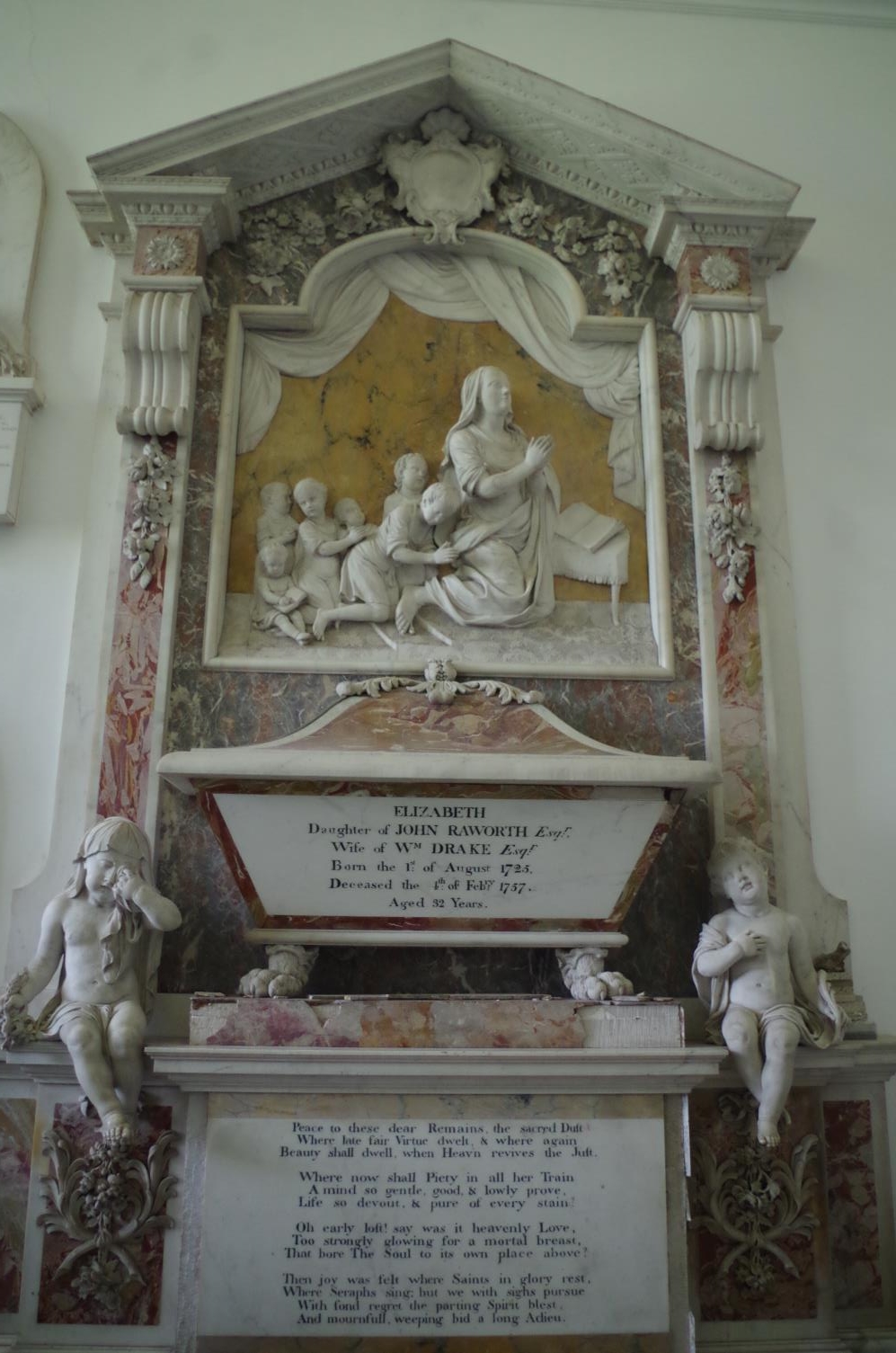
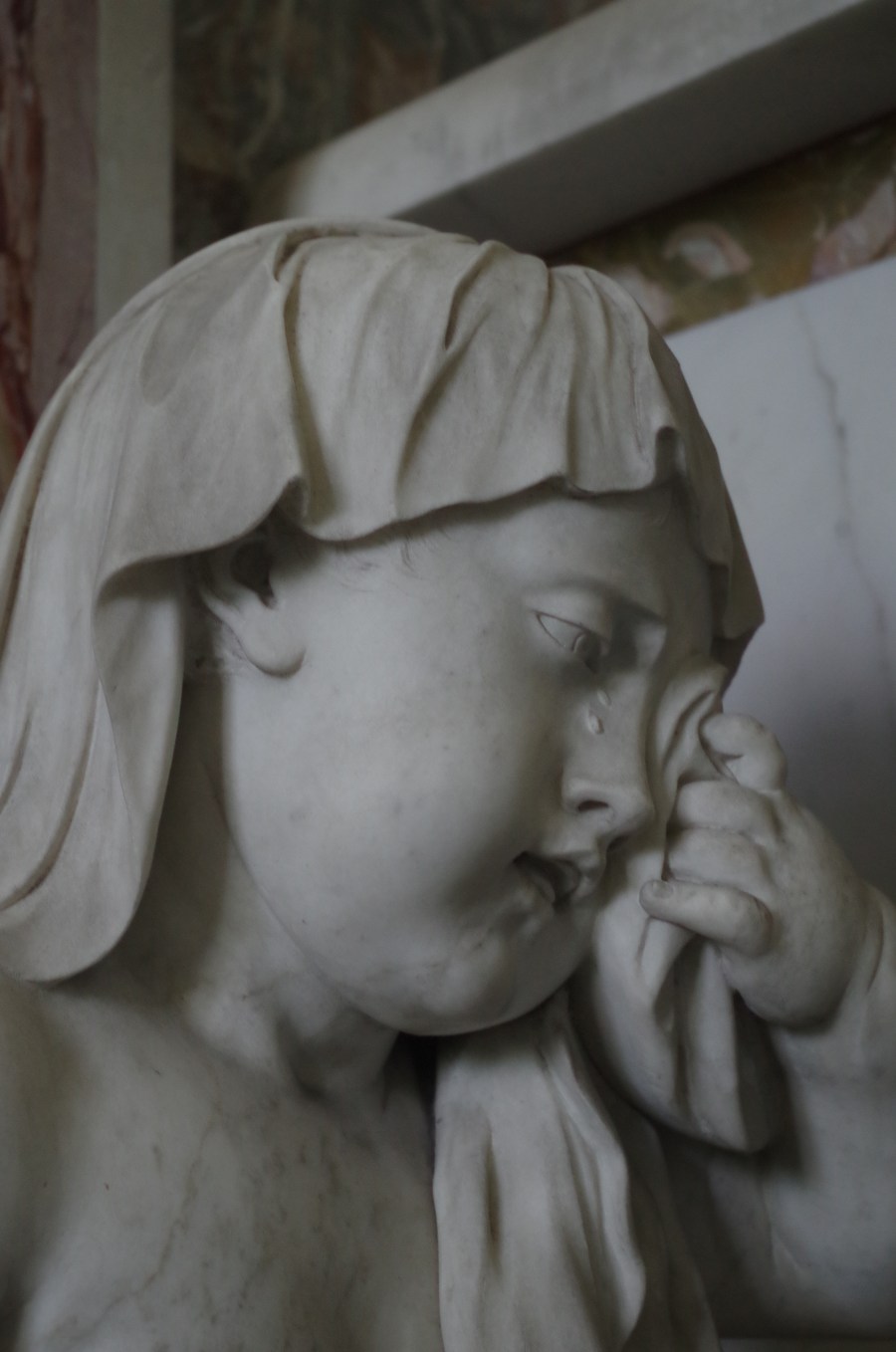
Elizabeth, his son’s wife,  who died at 32 in 1757, monument  faced him.  In a carved panel she is praying with her six surviving children with two other deceased children who may be represented by a weeping cherub beneath.

A carved panel from Elizabeth's memorial. copyright Carole Tyrrell
A carved panel from Elizabeth’s memorial.
copyright Carole Tyrrell
The weeping cherub on Elizabeth's memorial. copyright Carole Tyrrell
The weeping cherub on Elizabeth’s memorial.
copyright Carole Tyrrell
The weeping cherub. copyright Carole Tyrrell
The weeping cherub.
copyright Carole Tyrrell
Elizabeth's memorial in full. copyright Carole Tyrrell
Elizabeth’s memorial in full.
copyright Carole Tyrrell

Another epitaph to a young wife said simply that: she had left behind 2 infant daughters and ‘Her circle of life tho’ small was complete

It seemed appropriate that in; this Waterloo bi-centennial year that there was a Waterloo veteran, William Tyrwhitt-Drake, who was commemorated.
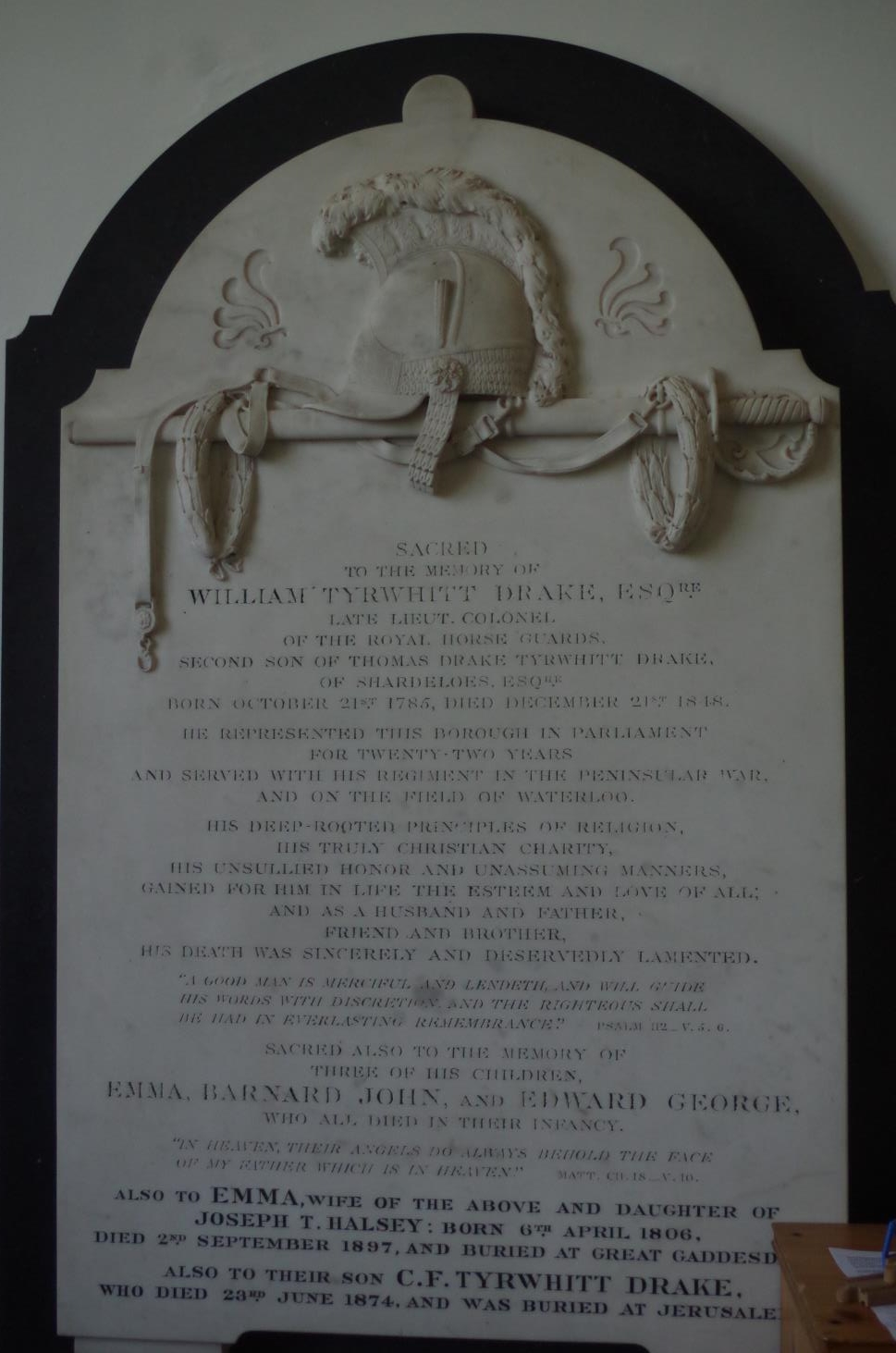
A memorial to a Waterloo veteran copyright Carole Tyrrell
A memorial to a Waterloo veteran
copyright Carole Tyrrell

Note the laurel wreaths suspended from his sword indicating victory, eternity and immortality. He also has his helmet carved onto it.

Howard kindly showed us an unusual  monumental brass to John Drake, a child who died aged 4 in 1623, with a moving epitaph:

Had he liv’d to be a man

This inch had grown but to a span

Now is he past all fear of pain

It were fine to with him here again

View but the way by which we all come

Thought by he’s best that’s first home.
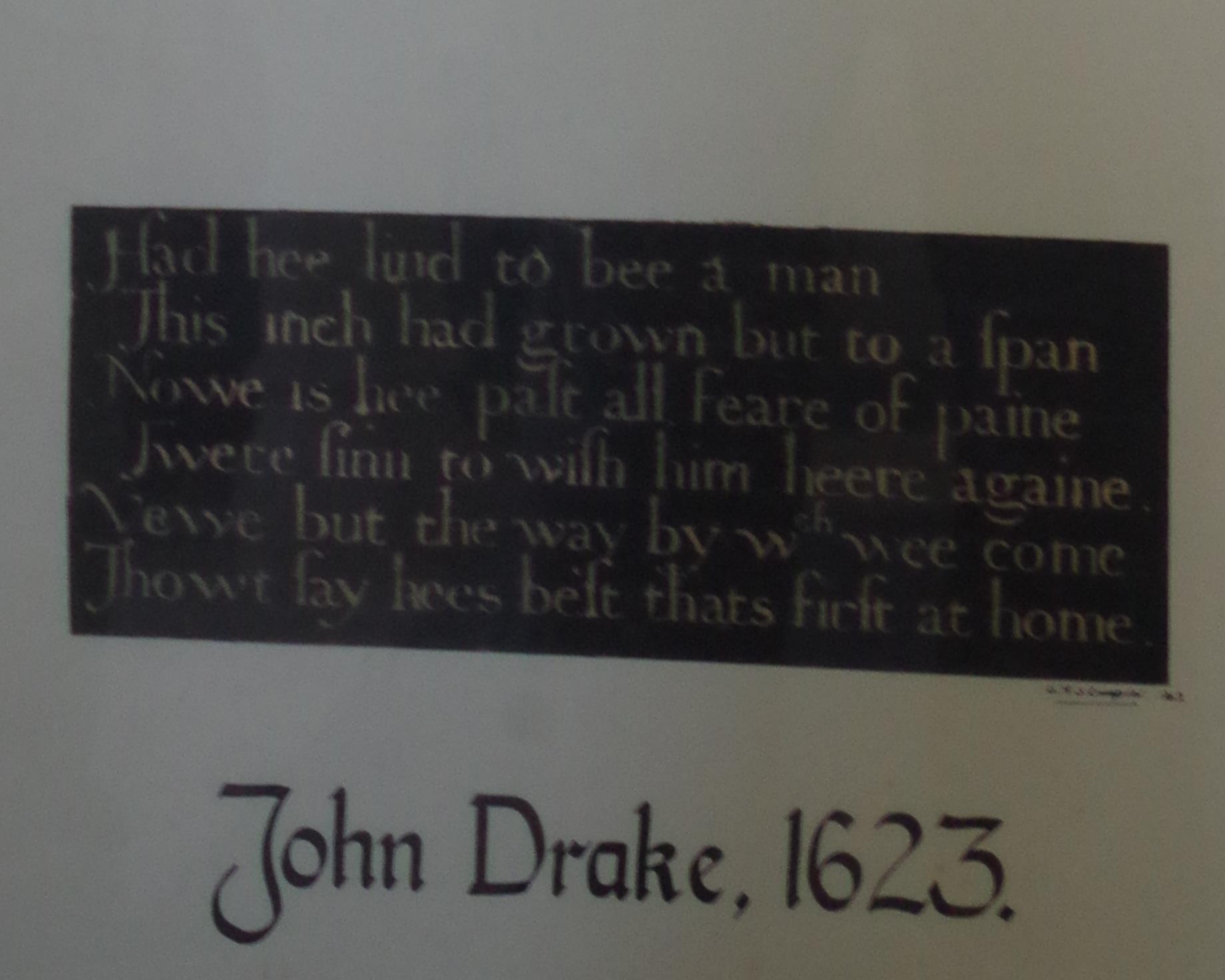
The poignant brass memorial to a child. copyright Carole Tyrrell
The poignant brass memorial to a child.
copyright Carole Tyrrell

Howard had been inspired to read our Symbols guide on the FONC website and pointed out downturned torches and also the pelican and her babies.  She strikes her breast  with her beak to allow the young to feed on her blood to prevent starvation and this is a symbol of Jesus giving his life to his followers.

Two interesting symbols on this memorial. copyright Carole Tyrrell
Two interesting symbols on this memorial.
copyright Carole Tyrrell

There is an elegant turn and, to the right hand side, a pelican feeding her babies.

On the 16 year old Elizabeth Drake’s memorial is a hen and her chicks which was a more unusual one.

A mourning woman copyright Carole Tyrrell
Elizabeth Drake’s memorial with mourning woman and hen
copyright Carole Tyrrell

There was also a magnificently carved weeping willow, a dove with an olive branch and poppies.    On William Drake’s memorial was an exquisitely carved mourning woman with the signature John Bacon Jnr.  We wondered if this was the same John Bacon who worked on St Pauls Cathedral.

A mourning woman attributed to John Bacon. copyright Carole Tyrrell
A mourning woman attributed to John Bacon.
copyright Carole Tyrrell

The memorials took us through the centuries from the 18th to the 20th and they became smaller and plainer as we did.  The Drakes and  Drake-Tyrwhitts could afford the best sculptors. Interments in the Room continued until the death of Thomas Tyrwhitt-Drake .  In 1811 the room was enlarged and doubled  in size.  Interments into the vault continued until the early 20th century.

Several of the FONC party climbed the narrow and dark stairs to  the top of the church tower to admire the views of the surrounding countryside before we thanked Howard and continued on our visit.

‘The Drake Chapel, containing many memorials to the family is one of the finest examples of its kind in the county, second only to that of the Dukes of Bedford in Chenies Church and is well worth a visit if you’re in the area.. It is open on Sunday mornings after the 10.15am service, or by appointment via the Parish Office.’ http://stmaryschurchamersham.com/history

Originally published in Friends of Nunhead News, 2015

Part 2 to follow in which you find out why there is a monument to the Amersham Martyrs in the corner of an English field………
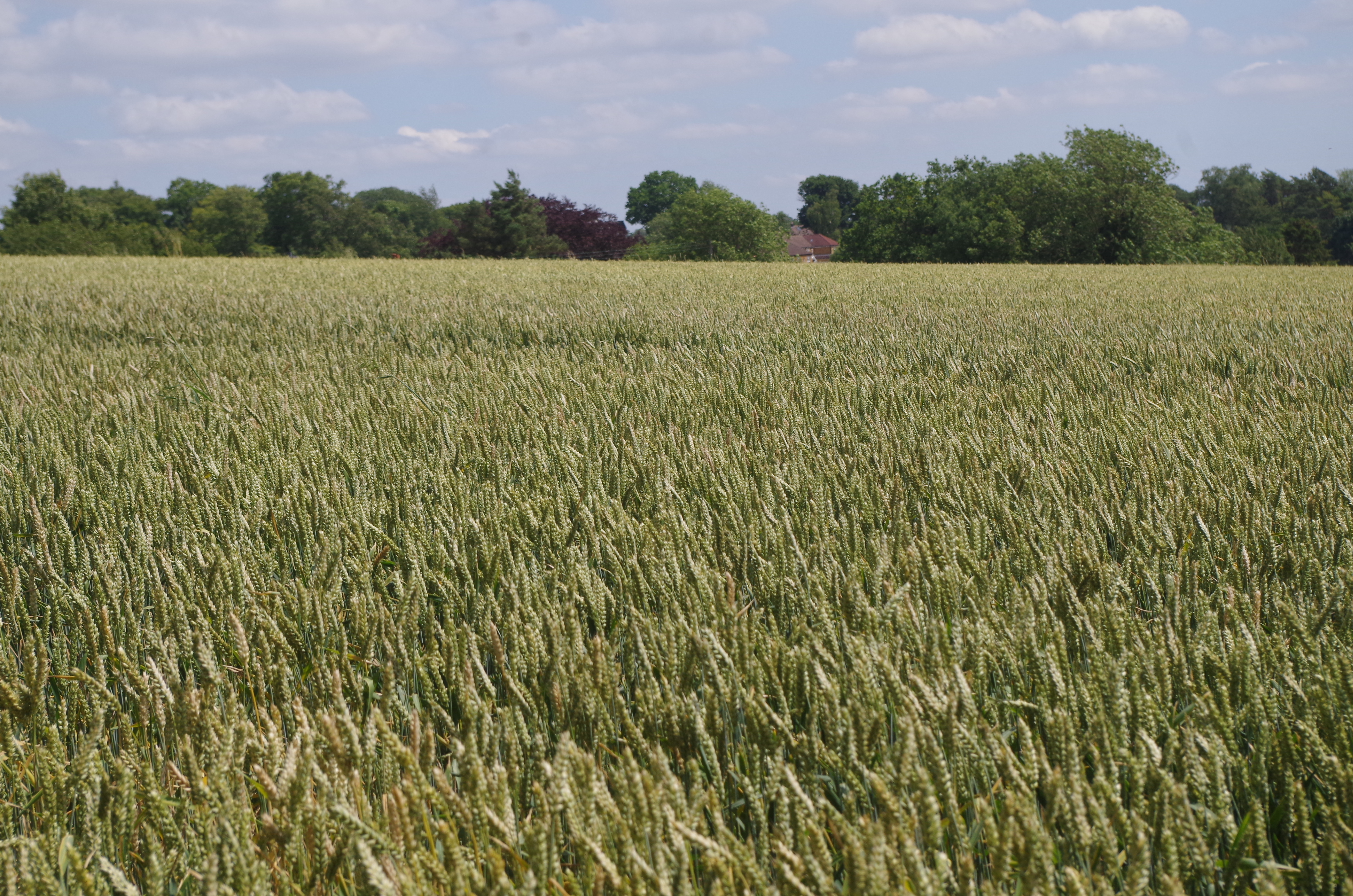
An Amersham barley field with a sinister secret? copyright Carole Tyrrell
An Amersham barley field with a sinister secret?
copyright Carole Tyrrell

Text and photos copyright Carole Tyrrell
 

Black Jack Needham’s mausoleum and an love story for all eternity

The top of the mausoleum is just visible over the top of the high wall. Copyright Carole Tyrrell
The top of the mausoleum is just visible over the top of the high wall.
Copyright Carole Tyrrell

An anonymous, high brick wall with a small green wooden door set into it would not alert a Twickenham visitor to the prize it conceals. You can glimpse something by just peeping over the top of the wall and behind the sheltering trees, but there’s a better view from the top of a double decker bus if you know where to look. if you do, then you will see one of the most unusual and enduring monuments to a 19th century love story in which the two lovers rest for all eternity. It is usually only open to the lucky few who tend its garden.
But once a year, during Open House weekend, the little green door in the high wall is opened to admit visitors into the secret sanctuary.

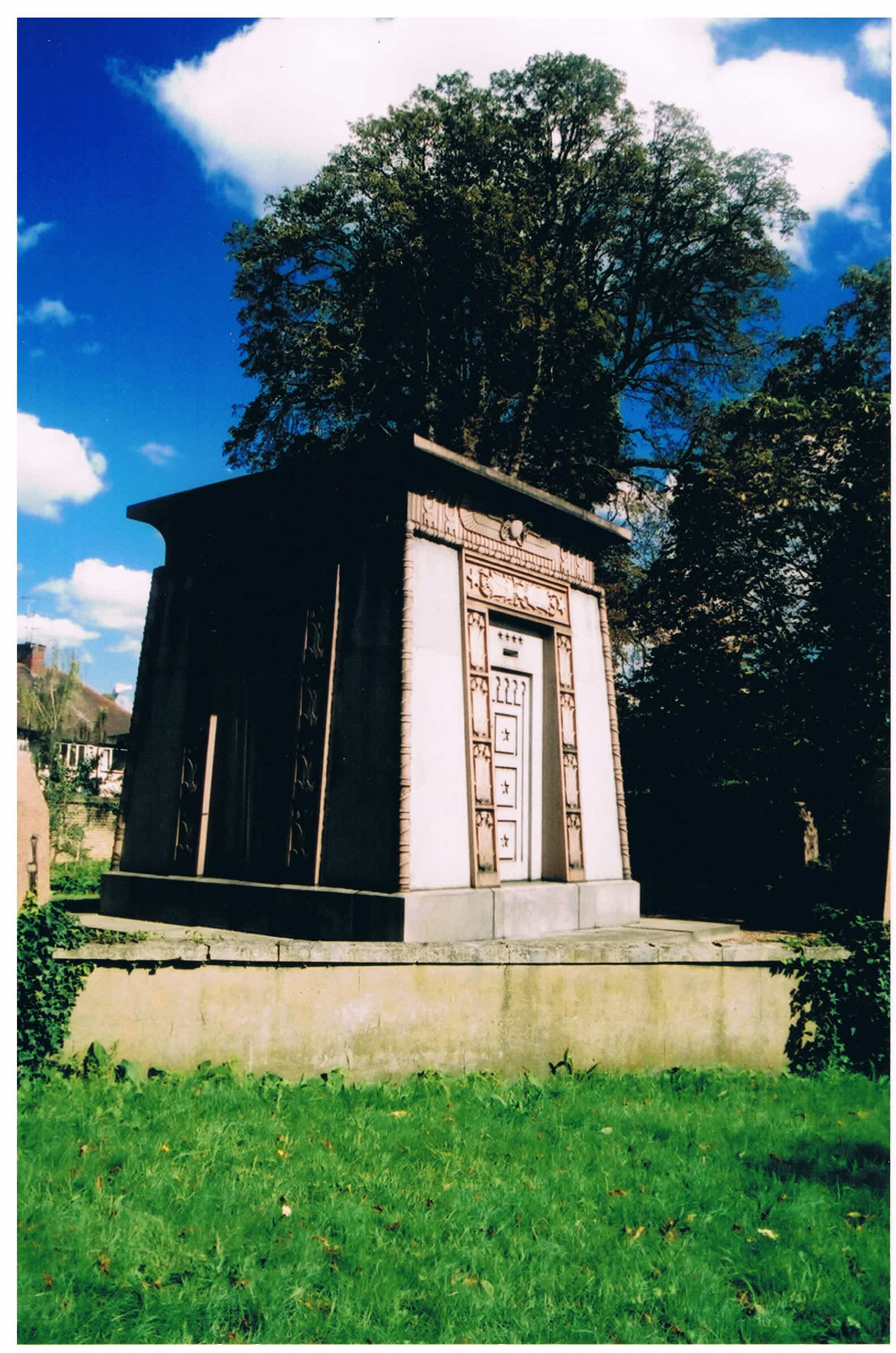
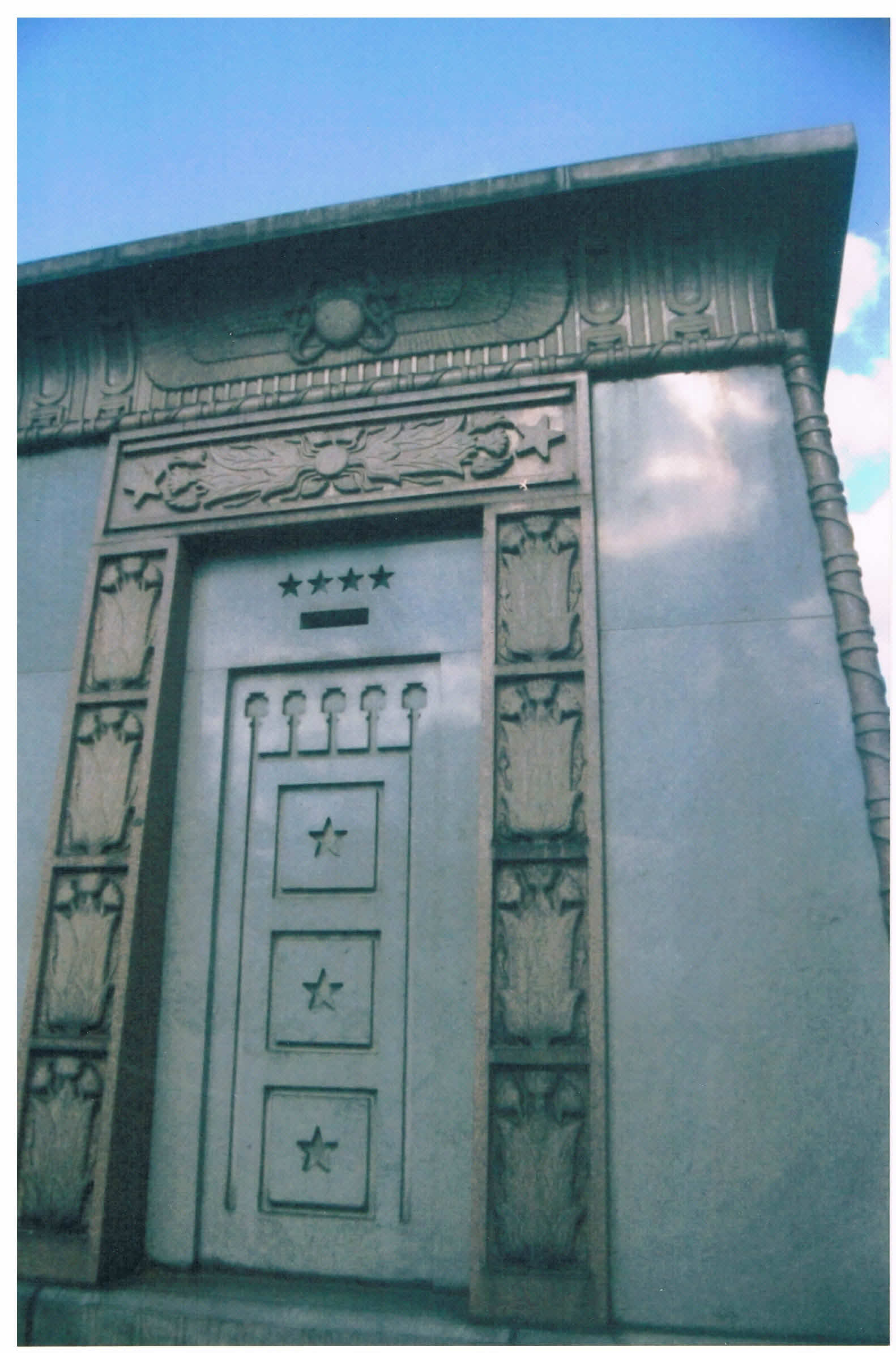
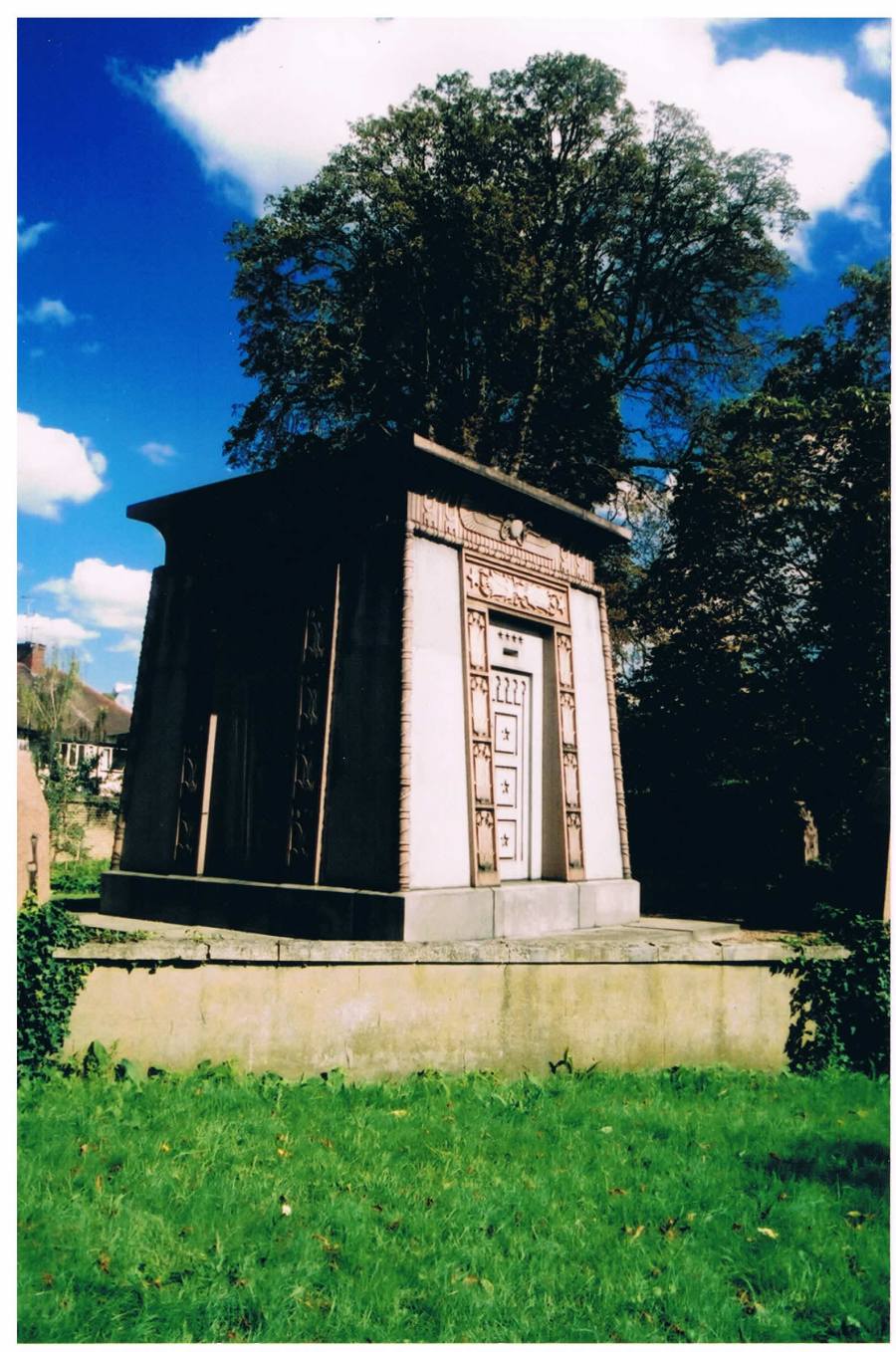
The mausoleum is built in the Egyptian style and in contrasting pink and grey granite
Under the Heathrow flight path the incumbents slumber serenely on. Copyright Carole Tyrrell
Under the Heathrow flight path the incumbents slumber serenely on.
Copyright Carole Tyrrell

An anonymous, high brick wall with a small green wooden door set into it would not alert a Twickenham visitor to the prize it conceals. You can glimpse something by just peeping over the top of the wall and behind the sheltering trees, but there’s a better view from the top of a double decker bus  if you know where to look. if you do, then you will see one of the most it is only open to the lucky few who tend its garden.

But once a year, during Open House weekend, the little green door is opened to admit visitors into the secret sanctuary.

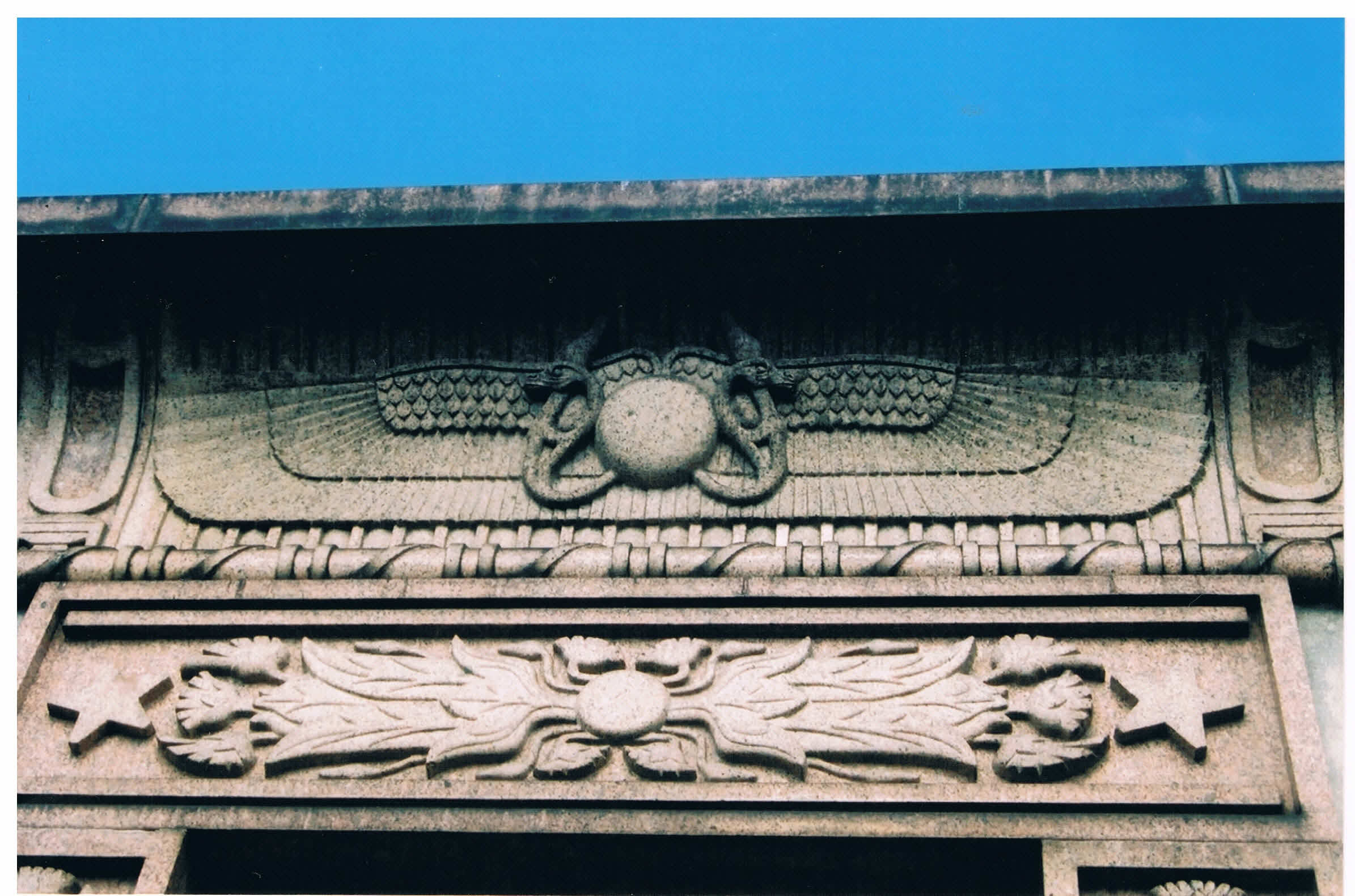
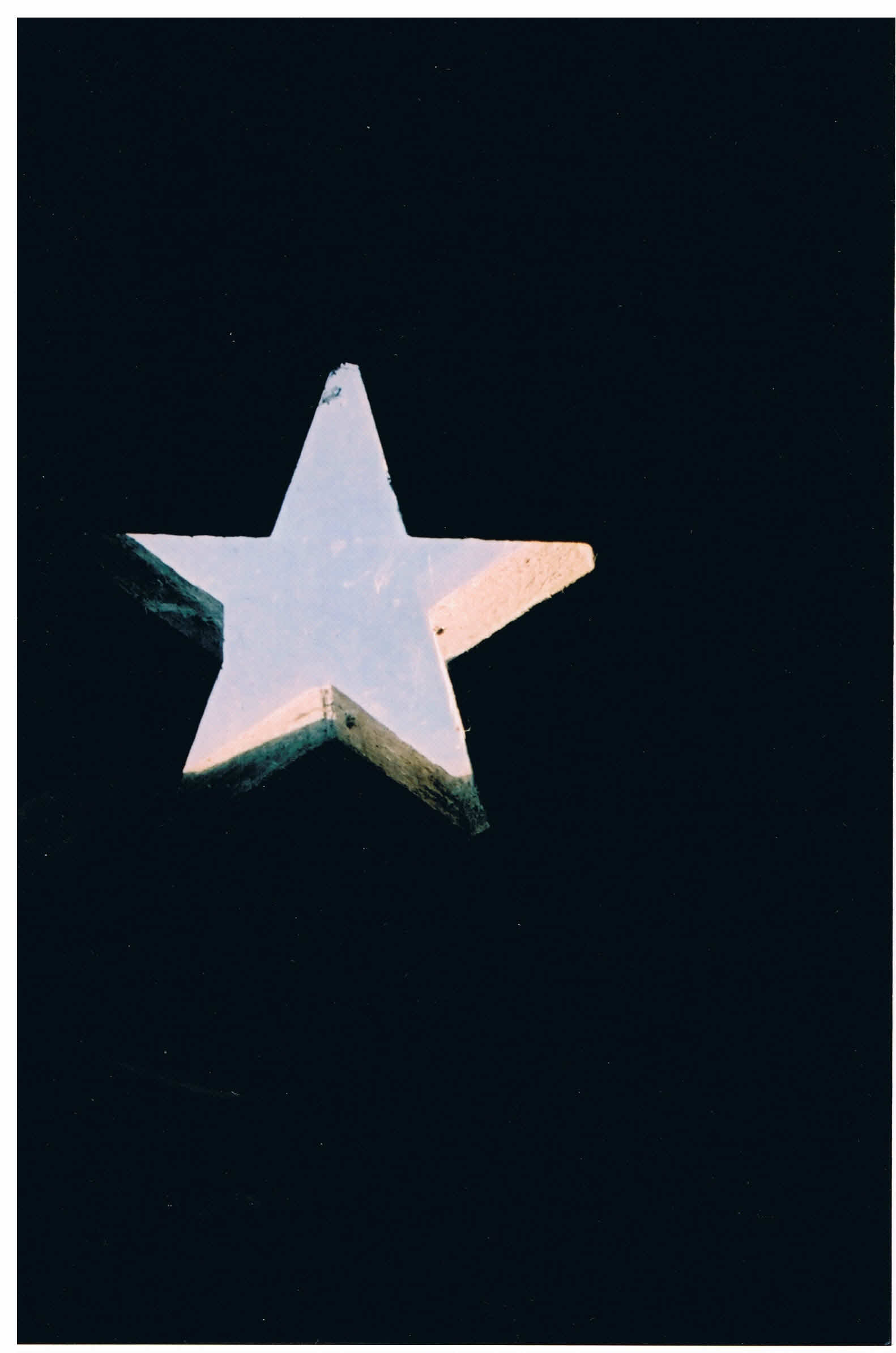
Once inside you are greeted by the Kilmorey Mausoleum which stands in the centre of a clearing. It towers up to 30 feet high: a masterpiece in pink  and grey granite built in the fashionable Egyptian style of the mid-19th century. The stylised designs of flowers  and other symbols are reputedly based on those at Kom Ombo and supposedly taken from the book called ‘Description de Egypte’ published in 1809. A low wall surrounds the vault, with iron railings waiting to be re-erected , and beyond that there are wildflowers and fresh plantings adding to the peaceful atmosphere. Two substantial coffins  lie behind its ornate and imposing front door, resting beneath four star-shaped holes cut into the roof.

The shrine was built by Francis Jack Needham, who was usually known as ‘Black Jack’ because of his dark complexion. He became the second Earl of Kilmorey in 1832 and was a very wealthy man, owning several estates locally and elsewhere. Amongst others, he owned Gordon House which was part of the Brunel University and now sold off for housing. Black Jack was unconventional and lived up to his family motto ‘nune aut numquam’ which means ‘now or never’. In the early 1840s he eloped to marry his ward, Priscilla Hoste, and they fled abroad. Charles, his son, was born in 1844.

But their happiness was short-lived when Priscilla became terminally ill in 1851. Black Jack bought a substantial burial plot in Brompton Cemetery for £1,000. The entire mausoleum eventually cost £30,000, and the architect, Henry Kendall, designed it to fit the circular plot at Brompton, hence the shape of the site. Priscilla died in 1854 and was interred within the burial chamber. There is an exquisite marble relief, carved in Rome, facing the door which depicts Priscilla on her deathbed, the Earl at her feet and their son at her side. Black Jack joined Priscilla in 1880 to rest together for eternity. It’s not recorded what his second wife though of it all.

The monument has been moved twice  which must have been a massive undertaking. Firstly, in 1862, when It accompanied Jack to his home at Chertsey, and again in 1868 to Gordon House. There is a secret tunnel which runs from the latter to the tomb. It’s rumoured that Black Jack would dress himself in white, place himself in his coffin, and then make his servants push him on a trolley as practice for his final journey. Today the area above the tunnel is crammed with prim Edwardian semis, unaware of the shenanigans that used to go on beneath them.

Although the building is under the Heathrow flight path and planes fly over at 6 minute intervals, the secret garden is surprisingly tranquil and secluded. The staff of Orleans House, who look after the place, have recently planted flowers and shrubs and keep the two lovers’ final resting place beautifully. The mausoleum’s occupants slumber on serenely as the oblivious traffic races past outside and the jet planes fly overhead..

The Egyptian influence is obvious.
Stylised lotus flowers border the bronze entrance door Copyright Carole Tyrrell
Stylised lotus flowers border the bronze entrance door
Copyright Carole Tyrrell
The bronze entrance door Copy right Carole Tyrrell
The bronze entrance door
Copy right Carole Tyrrell

Once inside you are greeted by the Kilmorey Mausoleum which stands in the centre of a clearing. It towers up to 30 feet high: a masterpiece in pink and grey granite built in the fashionable Egyptian style of the mid-19th century. The stylised designs of flowers and other symbols are reputedly based on those at Kom Ombo and supposedly taken from the book called ‘Description de Egypte’ published in 1809. A low wall surrounds the vault, with iron railings waiting to be re-erected  and beyond that there are wildflowers and fresh plantings adding to the peaceful atmosphere. Two substantial coffins lie behind its ornate and imposing front door, resting beneath four star-shaped holes cut into the roof.

The roof is made of glass. Copyright Carole Tyrrell
The roof is made of glass.
Copyright Carole Tyrrell

The shrine was built by Francis Jack Needham, who was usually known as ‘Black Jack’ because of his dark complexion. He became the second Earl of Kilmorey in 1832 and was a very wealthy man, owning several estates locally and elsewhere. Amongst others, he owned Gordon House which was part of the Brunel University and has now been sold off for housing. Black Jack was unconventional and lived up to his family motto ‘nune aut numquam’ which means ‘now or never’. In the early 1840s he eloped to marry his ward, Priscilla Hoste, and they fled abroad. Charles, his son, was born in 1844.
But their happiness was short-lived when Priscilla became terminally ill in 1851. Black Jack bought a substantial burial plot in Brompton Cemetery for £1,000. The entire mausoleum eventually cost £30,000, and the architect, Henry Kendall, designed it to fit the circular plot at
Brompton, hence the shape of the site. Priscilla died in 1854 and was interred within the burial chamber. There is an exquisite marble relief, carved in Rome, facing the door which depicts Priscilla on her deathbed, the Earl at her feet and their son at her side. Black Jack joined Priscilla in 1880 to rest together for eternity. It’s not recorded what his second wife though of it all.
The monument has been moved twice which must have been a massive undertaking. Firstly, in 1862, when It accompanied Jack to his home at Chertsey, and again in 1868 to Gordon House. There is a secret tunnel which runs from the latter to the tomb. It’s rumoured that Black Jack would dress himself in white, place himself in his coffin, and then make his servants push him on a trolley as practice for his final journey. Today the area above the tunnel is crammed with prim Edwardian semis, unaware of the shenigans that used to go on beneath them.
Although the building is under the Heathrow flight path and planes fly over at 6 minute intervals, the  secret garden is surprisingly tranquil and secluded. The staff of Orleans House, who look after the place, have recently planted flowers and shrubs and keep the two lovers’ final resting place beautifully. The mausoleum’s occupants slumber on serenely as the oblivious traffic races past outside.

One of the two incumbents Copyright Carole Tyrrell
One of the two incumbents
Copyright Carole Tyrrell

Copyright Text and photos Carole Tyrrell

Reference:

The Second Earl of Kilmorey and his Mausoleum in St Margarets,  A C R Urwin, Borough of Twickenham Local History Society, Paper Number 78, October 1997