Charles’ Churches part 1 – a visit to St James, Cooling, Kent – a church of ‘great expectations’.

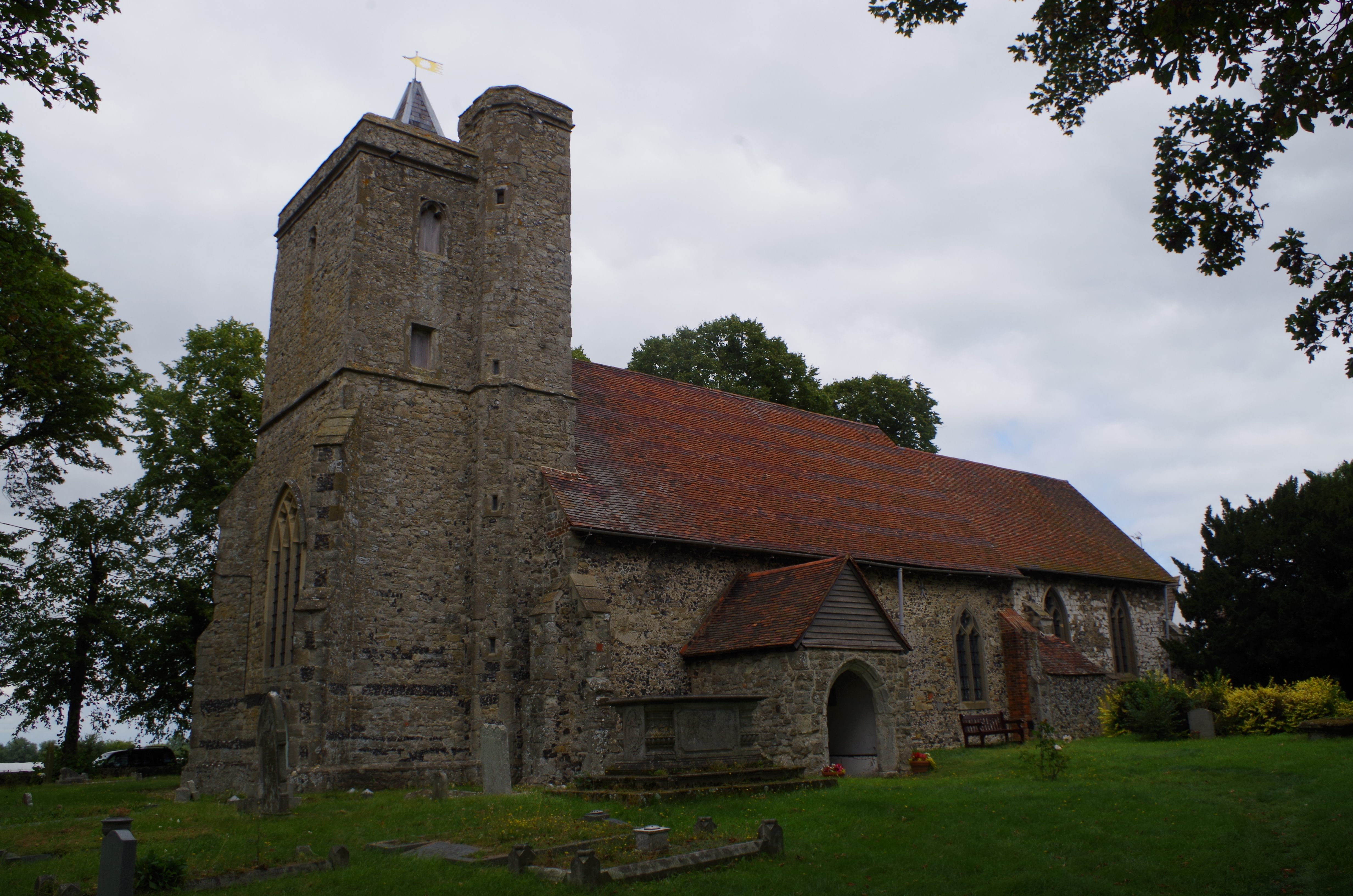
St James, Cooling, Kent from the churchyard gate. ©Carole Tyrrell

‘I give Pirrip as my father’s family name, on the authority of his tombstone and my sister — Mrs. Joe Gargery, who married the blacksmith. As I never saw my father or my mother, and never saw any likeness of either of them (for their days were long before the days of photographs), my first fancies regarding what they were like, were unreasonably derived from their tombstones. The shape of the letters on my father’s, gave me an odd idea that he was a square, stout, dark man, with curly black hair. From the character and turn of the inscription, “Also Georgiana Wife of the Above,” I drew a childish conclusion that my mother was freckled and sickly. To five little stone lozenges, each about a foot and a half long, which were arranged in a neat row beside their grave, and were sacred to the memory of five little brothers of mine — who gave up trying to get a living, exceedingly early in that universal struggle — I am indebted for a belief I religiously entertained that they had all been born on their backs with their hands in their trousers—pockets, and had never taken them out in this state of existence.

Ours was the marsh country, down by the river, within, as the river wound, twenty miles of the sea. My first most vivid and broad impression of the identity of things, seems to me to have been gained on a memorable raw afternoon towards evening. At such a time I found out for certain, that this bleak place overgrown with nettles was the churchyard; and that Philip Pirrip, late of this parish, and also Georgiana wife of the above, were dead and buried; and that Alexander, Bartholomew, Abraham, Tobias, and Roger, infant children of the aforesaid, were also dead and buried; and that the dark flat wilderness beyond the churchyard, intersected with dykes and mounds and gates, with scattered cattle feeding on it, was the marshes; and that the low leaden line beyond, was the river; and that the distant savage lair from which the wind was rushing, was the sea; and that the small bundle of shivers growing afraid of it all and beginning to cry, was Pip.

https://etc.usf.edu/lit2go/140/great-expectations/2545/chapter-1/

This is an excerpt from the first chapter of Great Expectations by Charles Dickens. It’s full of atmosphere and mystery as the hero, Pip, conscious that he is alone in the world, contemplates the graves of his family in a Kent churchyard.   Then Magwitch, the escaped convict, comes up from the marshes and finds him. Pip’s life will never be the same again.

The churchyard is that of St James, Cooling.  As I’m currently living in Charles Dickens country in Kent, I thought I should take the opportunity to visit two nearby churches which are associated with him.  After admiring the restored charnel house in the churchyard of St Margaret’s, Cliffe and the container ships on the horizon which weren’t quite so interesting, I set off.  The large sign pointing me to Cooling did not indicate the distance involved but it soon proved to be ‘a country mile’ away. If you’ve not heard this expression before, it means that it’s a lot further away than you thought.  There was no bus service there and so I walked (why I am not a sylph like being by now I have no idea) and walked and walked along what was an empty road for most of my journey.  A straggle of houses soon came to an end, and I was surrounded by fields.  These were sunflower fields that had been harvested.

Harvested sunflower field, Cooling, Kent. ©Carole Tyrrell

A few stragglers were still visible and what a sight they must have been in high summer!  But hope sprang eternal as to me finding the village and at least it was sunny. I kept looking hopefully but at last the remains of the 14th century Cooling Castle came into sight.  It must have been a magnificent and impressive structure in its day and indicated that there must have been a lot more of Cooling then there is now.  It dwarfed the more contemporary corporate events lodge next door to it.

Part of the ruined Cooling Castle. © Carole Tyrrell

On I plodded and then I turned a corner and there was the church! But as I stepped into the churchyard it became overcast and colder. The atmosphere seemed to change and I felt chilly.

I never did find any evidence of an actual village but there was a small terrace of houses on the other side of the churchyard.  This is named, appropriately or unimaginatively, Dickens Walk.  In Dickens time the church was situated on the marshes which have now been drained for farmland.  But it’s still an isolated spot and must be even more so in the depths of winter.  On the horizon were the Coryton oil refineries and the town of Basildon in Essex.  Not very inspiring I thought.  In Dickens time, the church would have been surrounded by the marshes and quite desolate and yet it inspired one of his greatest novels.
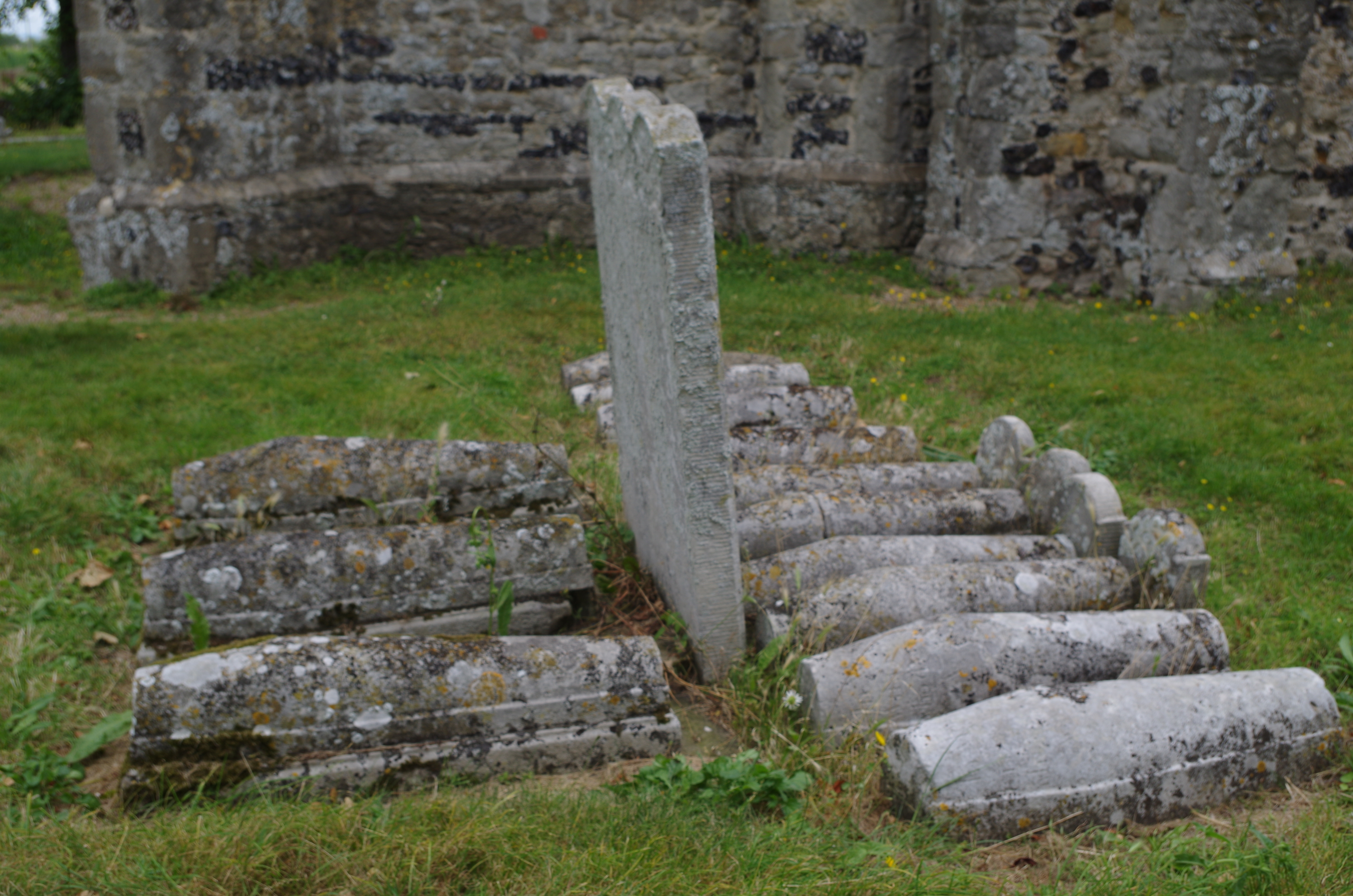
Pips Graves, Cooling, Kent. © Carole Tyrrell
Another view of Pips’ Graves. © Carole Tyrrell

‘Pip’s Graves’ as they are known are in a prominent place near the church door – a   group of small graves clustered together as if for company.  These are the children, aged between 1 month to 18 months from two families who all died during the late 18th and 19th centuries.  It was a poignant sight to see so many and there were 2 more child’s graves on the other side of the church. The table top tomb where Dickens liked to set out his picnic lunch is still there and I wondered if the churchyard had changed much since his day.
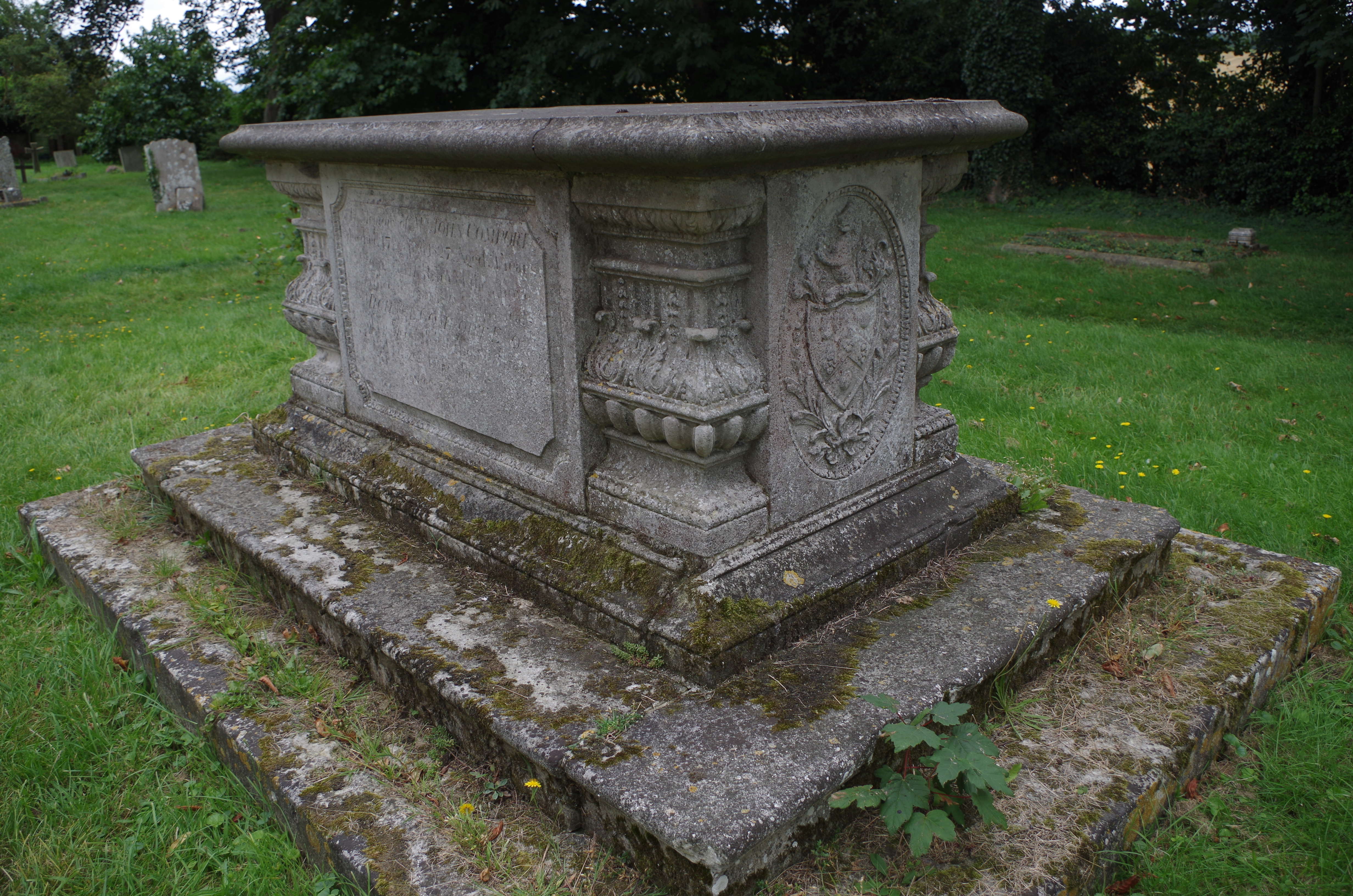
The tabletop tomb where Dickens liked to lay out his picnic lunch. ©Carole Tyrrell

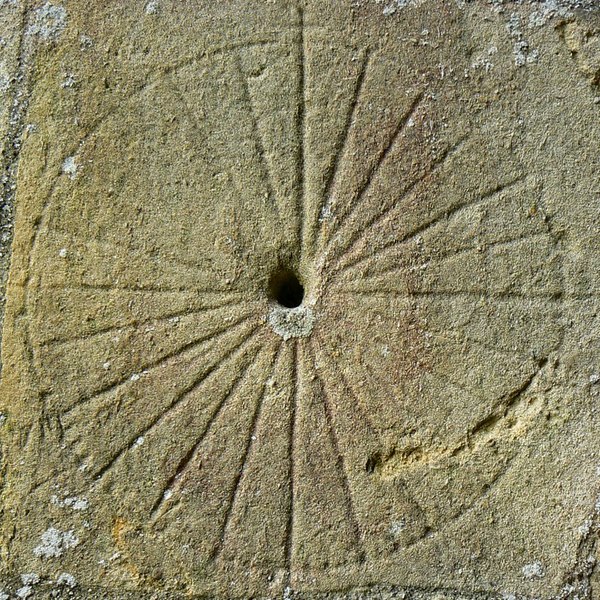
Also in the churchyard, there was a wide, spreading yew that was growing inside its dead ancestor – no wonder they are seen as symbols of resurrection and on one wall there was a mass dial.  These were the only way of telling the time before the invention of mechanised timekeepers in the 14th century. Mass dials featured in a recent Symbol of the Month.

Yew tree Cooling churchyard © Carole Tyrrell
Mass dial © Carole Tyrrell
A skull on a headstone ©Carole Tyrrell
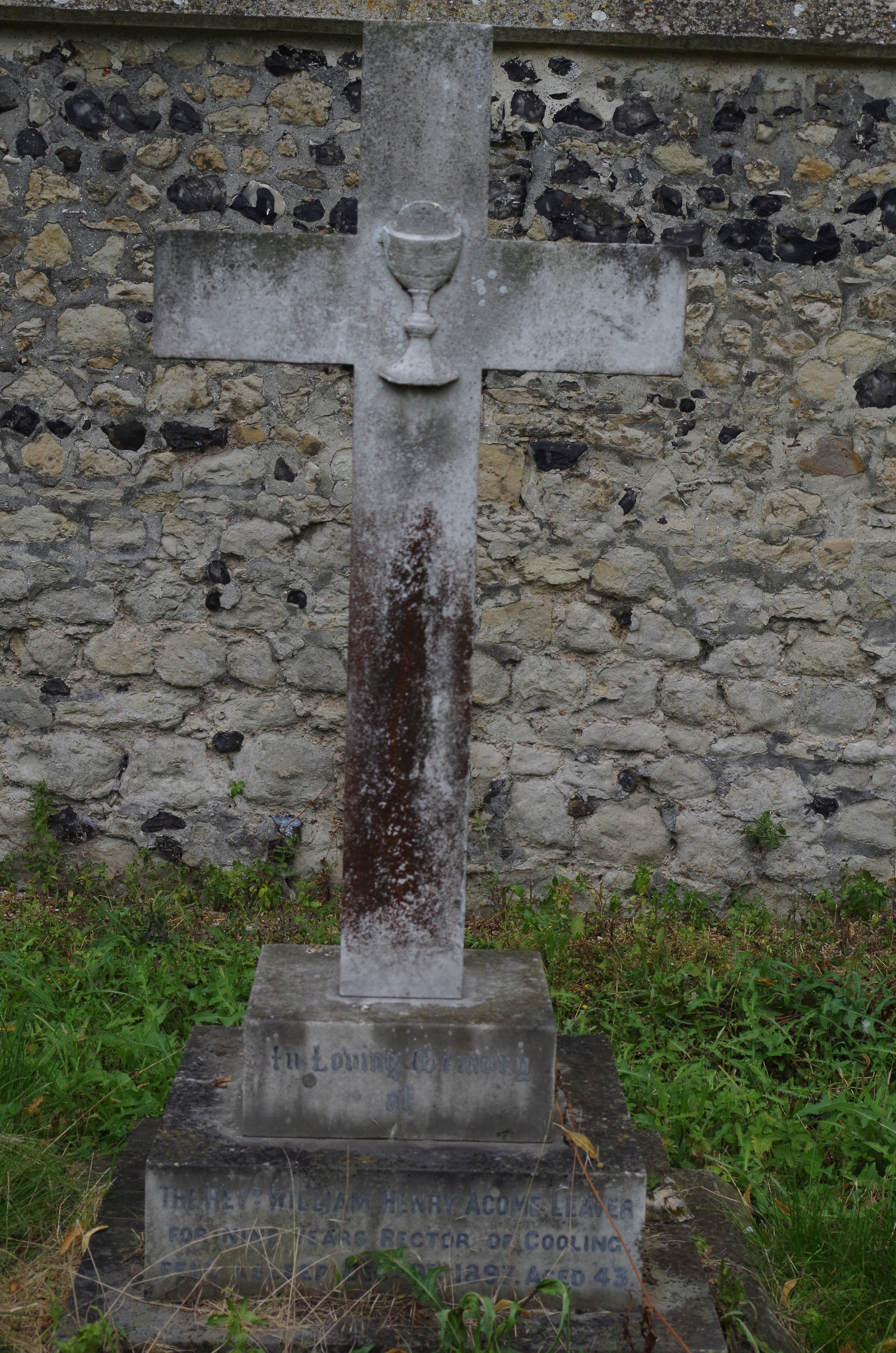
A chalice on a memorial denoting a priest’s memorial. ©Carole Tyrrell
Winged cherub heads on a headstone. ©Carole Tyrrell

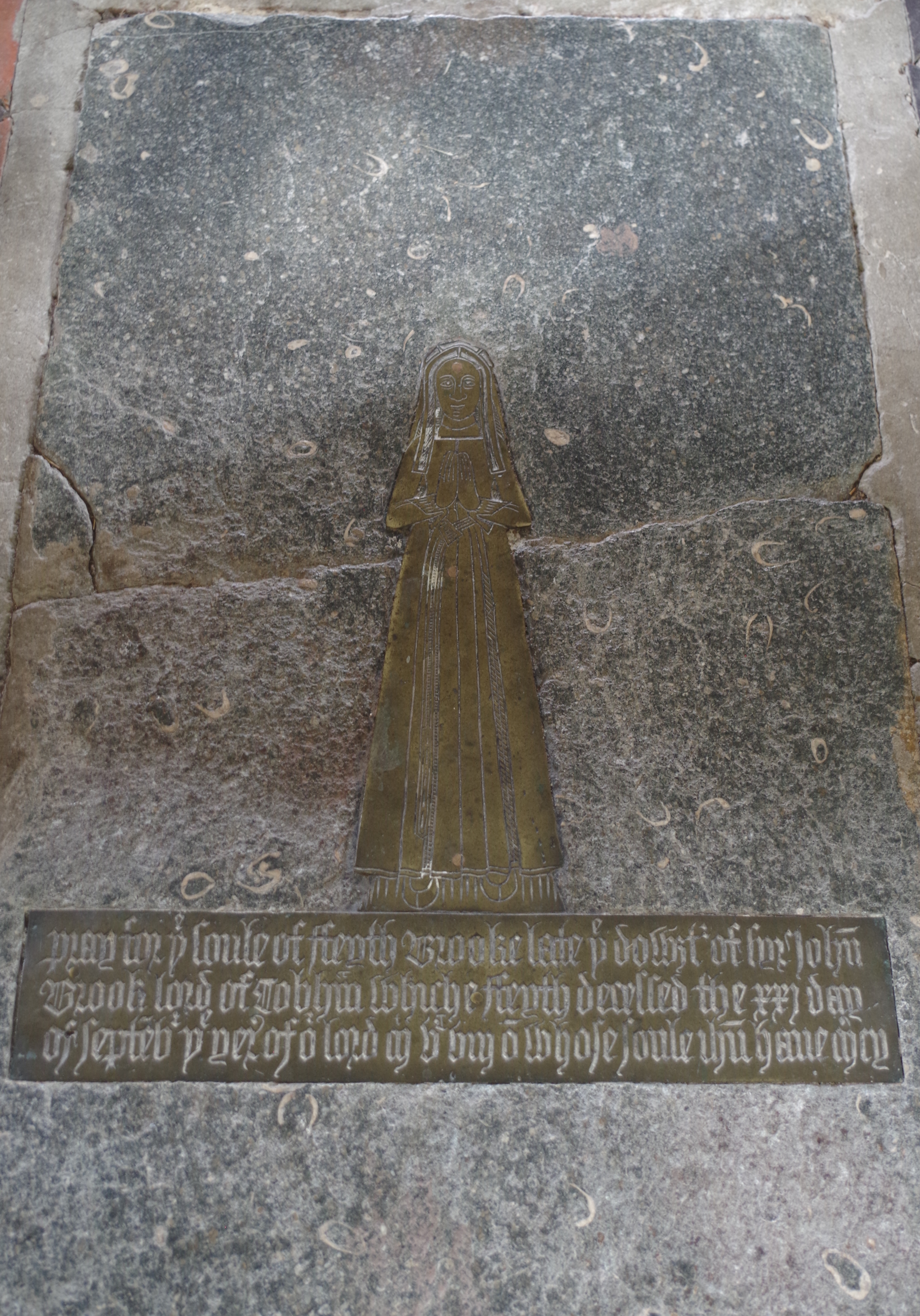
St James’s is a closed church in that it’s no longer used for services and is managed by the Churches Conservation Trust.  On its website it calls itself a ‘church of great expectations’.  Inside it was bright and airy and much of it dated back to the 14th century although there is a 13th century font.  It retains the remnants of a rood screen and loft – obviously the iconoclasts weren’t as enthusiastic in their wrecking sprees here.  The main nave aisle has four memorial slabs  of which one had retained its brass inscription to Thomas Woodycare who died in 1611 and the other one was dedicated to Feyth Brook, the wife of John Brock, Lord Cobham and she died in 1508. The other two were blank or missing their brassware.

St James’ interior. © Carole Tyrrell
Brass of Feyth Brook. © Carole Tyrrell
A memorial missing its brassware. © Carole Tyrrell
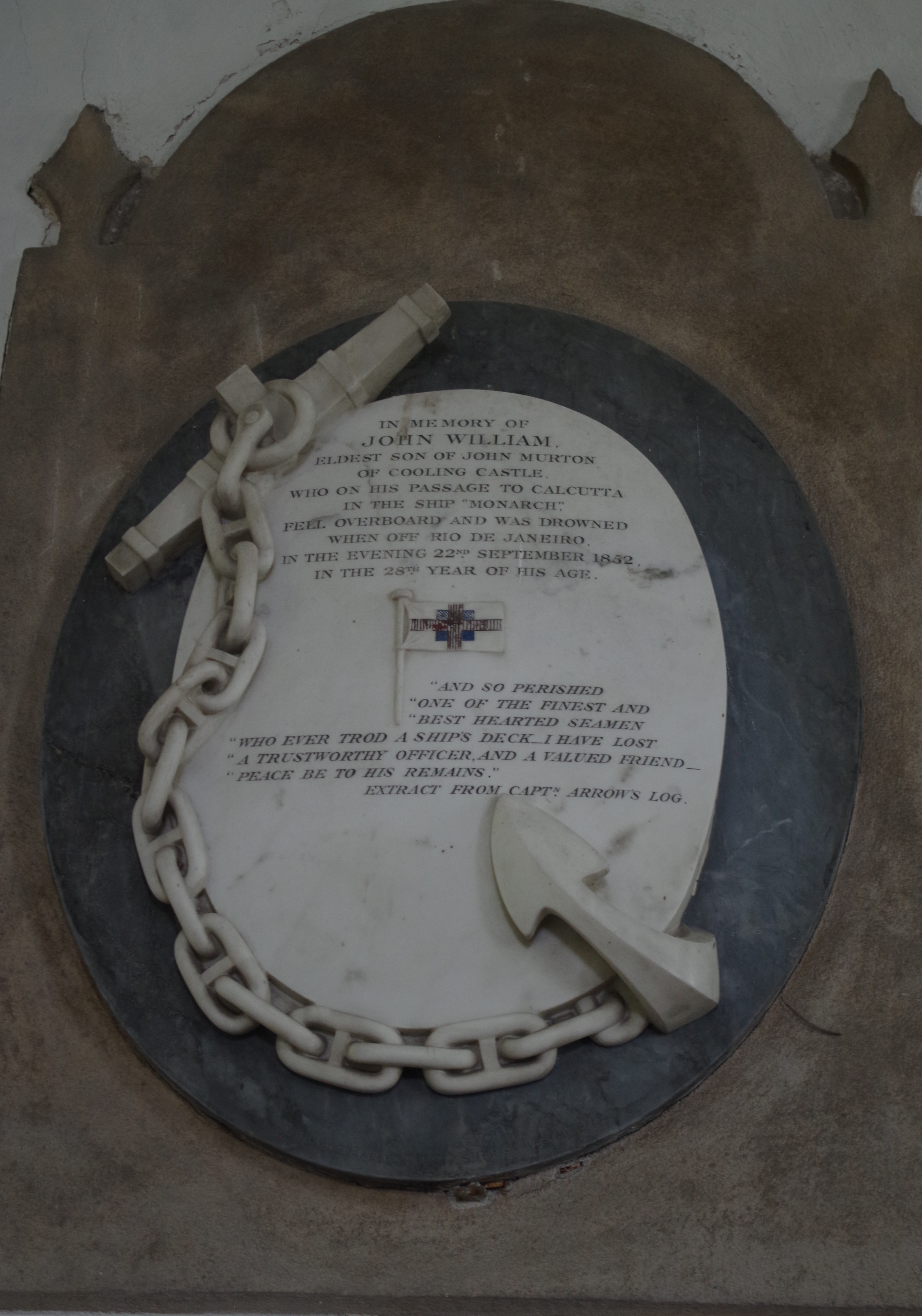
An impressive memorial to a previous resident at Cooling Castle. © Carole Tyrrell

Sadly, I missed seeing another of St James’ claims to fame – the 19th century vestry which is covered from floor to ceiling in cockle shells.  The shell is associated with pilgrims who were on the trail to St James’s shrine at Compostela and there is a brass shell on the church’s weathervane.  I may have to make a return visit to see the shell clad vestry. However, it has been suggested that the scene at the beginning of Great Expectations may be a combination of churches in the area but St James does have the sad little graves.

The churchyard also has a reputation for being haunted. Female figures in Victorian dress have been seen drifting across it. I can only say that I did feel watched all the time that I was exploring but when I saw my observer, I knew someone had a sense of humour……

Another resident of the churchyard. © Carole Tyrrell


© Text and photographs Carole Tyrrell unless otherwise stated.

References and further reading;

https://en.wikipedia.org/wiki/St_James%27_Church,_Cooling

An intriguing and mysterious epitaph…..

Image

This is the headstone dedicated to Henry Smith who rests in the churchyard of St Nicholas in Blakeney, Norfolk, UK. I saw it on Twitter@PoorFrankRaw and was immediately captivated by the ‘rivulet of time’ and the ocean of eternity. Henry is recorded with an entry in the parish records but not much more.

What a wonderful example of an intriguing epitaph that makes you stop, read it and remember Henry.

Wildlife in Cemeteries no 8 – the dark side of the snowdrop

Today, February 2, is Candlemass and it seemed appropriate to revisit an older post featuring one of the first, and perhaps one of the most symbolic, flowers to appear in the New Year….

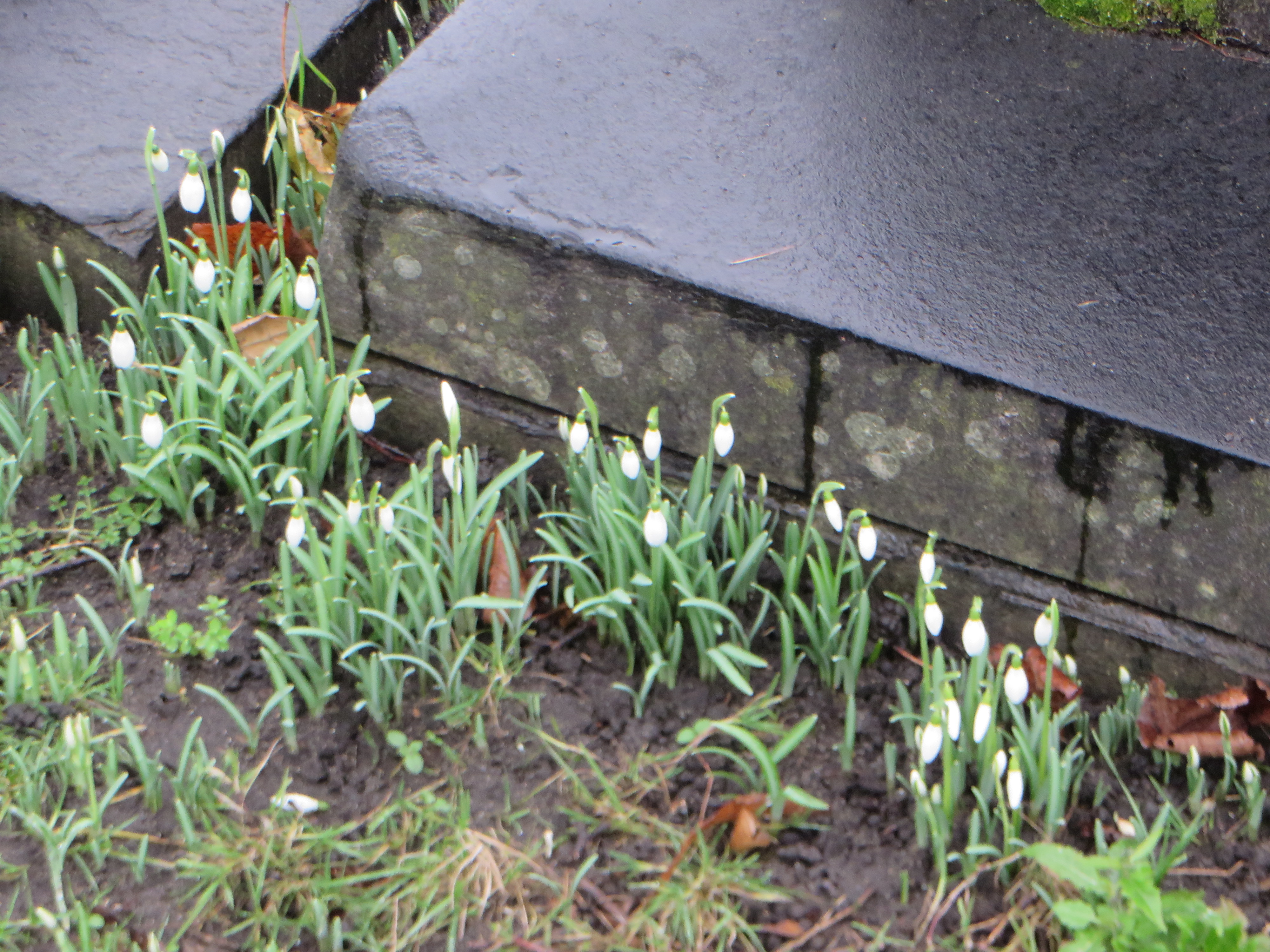
Snowdrops in St George’s churchyard, Beckenham.
©Carole Tyrrell

Imagine yourself in a gloomy medieval church on the festival of Candlemass. You, and your fellow parishioners, have each brought your candles to be blessed by the priest and, after the procession which will fill the church with light, they will all be placed in front of a statue of the Virgin Mary.   Candlemass marked the end of winter and the beginning of Spring and the blessing is to ward off evil spirits.  It traditionally falls on February 2 and is shared with the Celtic festival of Imbolc.  And in the churchyard outside you can see green shoots forcing their way up through the hard winter earth.  The snowdrop’s milk-white flowers show that spring is on its way as they begin to emerge into the light.

The placing of the lit candles in front of the Virgin Mary’s statue gave the snowdrop one of its many other names – Mary’s Tapers.  But there are many others such: Dingle Dangle, Candlemas Bells, Fair Maids of February, Snow Piercer, Death’s Flower and Corpse Flower.

Snowdrops, Brompton Cemetery, January 2018
©Carole Tyrrell

The snowdrop’s appearance has also inspired many comments . According to the Scottish Wildlife Trusts website they have been described as resembling 3 drops of milk hanging from a stem and they are also associated with the ear drop which is an old fashioned ear ring.  Anyone who has seen a group of snowdrops nodding in the wind will understand what they mean.   The snowdrop’s colour is associated with purity and they have been described as a shy flower with their drooping flowers.  However, the eco enchantments website reveals that the flower is designed in this way due:

‘to the necessity of their dusty pollen being kept dry and sweet in order to attract the few insects flying in winter.’

Snowdrops have been known since ancient times and, in 1597, appeared in Geralde’s ‘Great Herbal where they were called by the less than catchy name of ‘Timely Flowers Bulbous Violets’.  Its Latin name is Galanthus nivalis.  Galanthus means milk white flowers and the nivalis element translates as snowy according to the great botanist, Linnaeus in 1753.   In the language of flowers they’re associated with ‘Hope’ and the coming of spring and life reawakening.

However, yet despite all these positive associations, the elegant snowdrop has a much darker side. Monks were reputed to have brought them to the UK but it was the ever enthusiastic Victorians who copiously planted them in graveyards, churchyards and cemeteries which then linked them with death.  Hence the nickname name ‘Death’s Flower.’

They were described by Margaret Baker in the 1903 ‘Encyclopedia of Superstitions, Folklore and the Occult of the World’ as:

‘so much like a corpse in a shroud that in some counties  the people will not have it in the house, lest they bring in death.‘

Snowdrops, St George’s Beckenham.
©Carole Tyrrell

So that’s where the ‘Corpse Flower’ nickname came from.

Snowdrops are also seen as Death’s Tokens and there are several regional folk traditions of connecting death with them. For example in the 19th and early 20th centuries it was considered very unlucky to bring the flower into the house from outside as it was felt that a death would soon occur.  The most unlucky snowdrop was that with a single bloom on its stem.    Other folk traditions were described in a 1913 folklore handbook which claims that if a snowdrop was brought indoors it will make the cows milk watery and affect the colour of the butter.  Even as late as 1969 in ‘The Folklore of Plants’  it was stated that having a snowdrop indoors could affect the number of eggs that a sitting chicken might hatch.  A very powerful plant if these are all to be believed – you have been warned!

It’s amazing that this little flower has so many associations and legends connected with it but I always see it as a harbinger of spring, rebirth and an indication of warmer days to come.

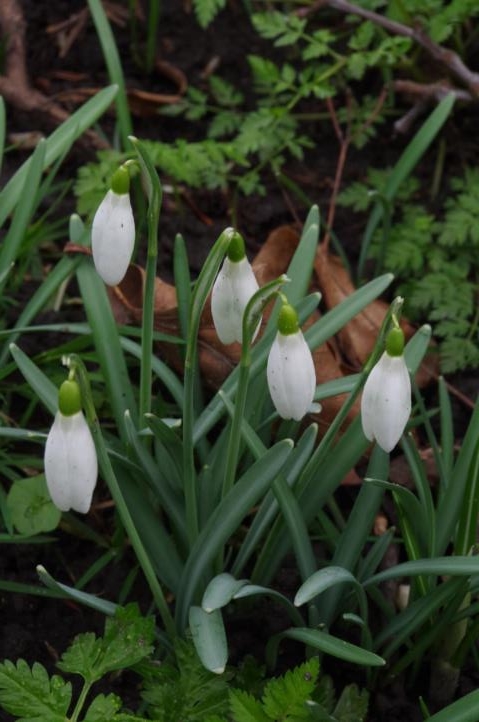
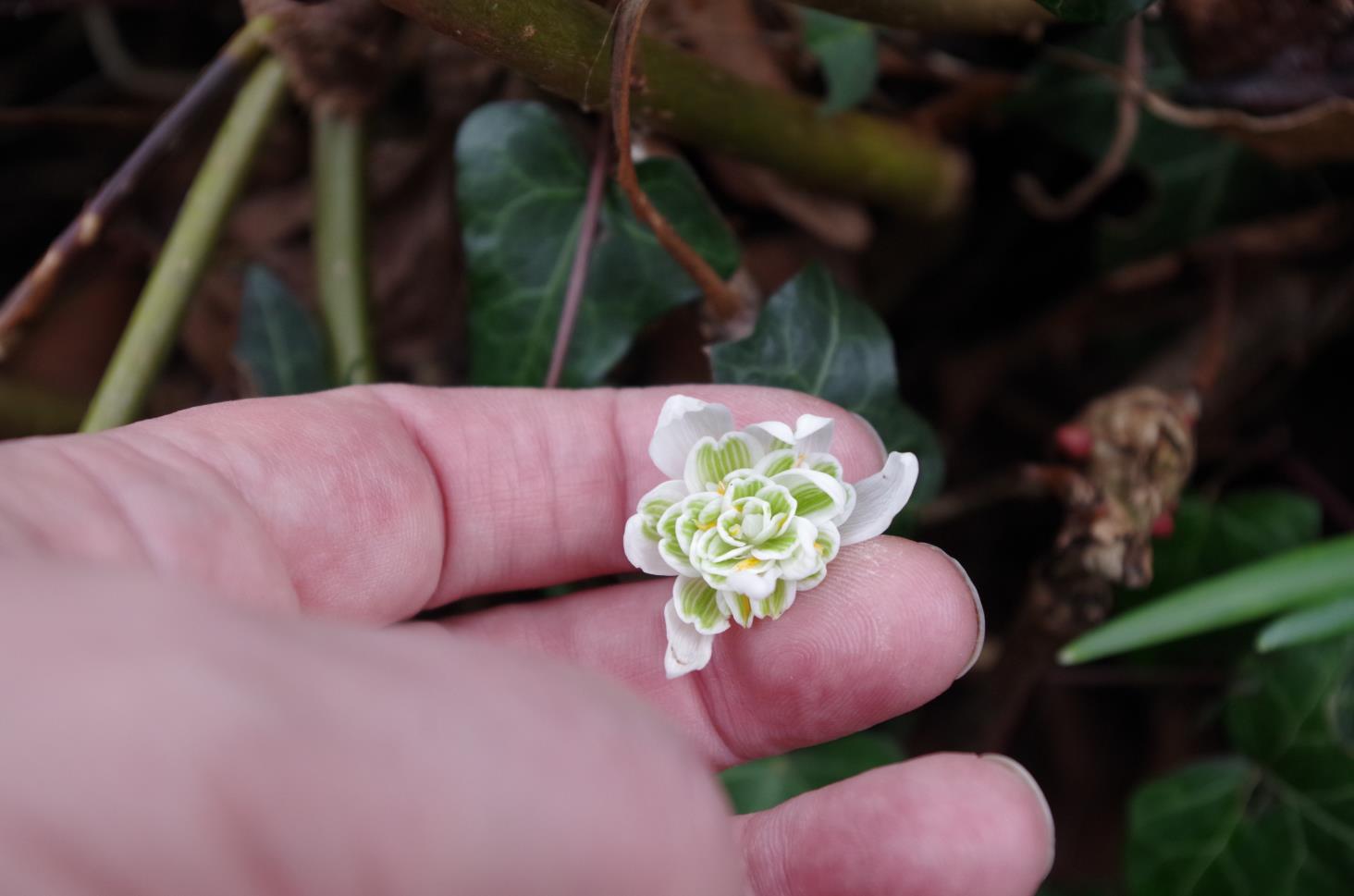
But the snowdrop also has a surprise.  This came courtesy of the Urban Countryman page on Facebook – not all social media is time wasting!  If you very gently turn over a snowdrop bloom you will find that the underside is even prettier and they also vary depending on the snowdrop variety.

Here is a small selection from my local churchyard and one from Kensal Green cemetery.

So don’t underestimate the snowdrop – it’s a plant associated with life and death but watch out for your hens and the colour of your butter if you do decide to tempt fate…..

©Carole Tyrrell text and photos unless otherwise stated

References:

http://www.plantlore.com

http://www.independent.co.uk/environment/naturestudies/bright-in-winters-depths-why-the-flawless-flower-of-candlemas-is-ajoy-forever-8483967

http://www.flowermeaning.com/snowdrop-flower-meaning

http://www.ecoenchantments.co.uk/mysnowdropmagicpage.html

Symbol of the Month – The Pointing Finger

finger2

This is a more unusual symbol although hands often feature as motifs in cemeteries usually in the more familiar clasped hands..

The Pointing Finger is usually  one finger,  the index one, pointing upwards or downwards. On the three that I saw, it was the right hand that was being depicted with the remaining fingers and thumb turned down into the palm.   I have yet to see the downward pointing version but rest assured that it doesn’t indicate that the departed is going ‘down below’ or to Hell.  Instead it can signify an untimely, sudden or unexpected death. As you’ve probably already guessed, the upwardly pointed finger is meant to reassure the grieving family that their loved one has ascended to Heaven and has received the reward of the righteous.

However, I found these three lovely examples in Beckenham Cemetery during a recent visit, much to my surprise, and they made me wonder why it isn’t more popular. In all of these the pointing finger and hand are surrounded by flowers.

The first one is  to John James Lumsden who died on 25 November 1903 aged 63.  It’s very well carved with a daffodil on one side of the hand and two sprays of Lily of the Valley flanking the hand.  When I first saw it, a thick branch of ivy obscured the flower on the other side of the daffodil. But on a return visit in January 2017 the branch had been trimmed back and a rose with one full blown bloom and a bud was now visible again. The bud is significant as it often appears on childrens  graves to symbolise a life unlived, that never fully bloomed and was ‘nipped in the bud.’ But not on this one.

In floriography or the language of flowers the daffodil is an important representation of resurrection.This is because of its association with Easter, rebirth and renewal.   The Lily of the Valley is also associated with Spring as its month is May. Other qualities that the Lily represents are chastity, purity and the return of happiness. It’s mentioned in The Song of Solomon 2.1

‘I am the rose of Sharon

And the lily of the valley.’

There’s also the legend  that Mary’s tears turned into the lily of the valley at the exact spot when she cried at the Cross so an alternate name for the flowers is ‘Mary’s tears.’  The Lily is also meant to have healing powers and has other nicknames such as ‘Jacob’s Tears’ and ‘the ladder to heaven’.

This is to Charles Henry McKay who died on 1 November 1910 at only 23 and was the only son of Charles and Ellen McKay as it states on the epitaph. Although the flowers surrounding the pointing finger and hand are the same here as on Lumden’s, on this one they are more stylised and 2D.  They would have mourned his short life and unfulfilled ambitions.  So there is an added poignancy to the rosebud as his was a life cut short.   There is also the word ‘GONE’ carved on the cuff of the hand which emphasises that he has gone to a better place.   It really stood out amongst its neighbouring grey stones so it may have been recently cleaned or restored.

There is a third memorial featuring the pointed finger which is in the same style as Lumsden’s but not as well kept.  .This was to  ‘Will, eldest son of William and Sarah Greenfield. Born 10 December 1874 died 1 August 1905’

This is the third example from Beckenham Cemetery dedicated to Will Greenfield. ©Carole Tyrrell
This is the third example from Beckenham Cemetery dedicated to Will Greenfield.
©Carole Tyrrell

Again, another memorial to a life cut short as Will died aged only 31.Three other members of the Greenfield family are also commemorated on the headstone.

To our eyes they could be seen as sentimental but I found them very touching with their aim to comfort those left behind through the use of flowers.

But here’s a mystery from my own local churchyard:

This is to a woman who died at 38 called Georgiana Margaret Barns and it has a pointing finger on the headstone. But instead of pointing upwards or downwards, it’s pointing to the left and apparently into thin air.  The hand appears to have a woman’s lacy cuff and I noticed that, although her husband’s dates are also recorded, he isn’t actually buried there. Instead he lies in Hilderstone churchyard in Stafford.  He died at 76 nearly 20 years after his wife.   Is the finger pointing towards his resting place?  Is it a personal symbol known only to them?  I found a few details about them online but not much more so I am intrigued and mystified by this one.

I have to admit that The Pointing Finger symbol does remind me a little of a palmist drawing of the hand but in the ones that I’ve seen it’s also very decorative and moving.

Text and photos Carole Tyrrell otherwise stated.

References:

http://www.lsew.org.uk/funerary-symbolism/

http://genealogy.about.com/cs/symbolism/p/hands.htm

https://mysendoff.com/2012/08/the-grave-secrets-of-symbols-and-iconography-of-the-cemetery/

http://mrssymbols.blogspot.co.uk/2012/08/hands-beyond-grave.html

http://www.john-attfield.com/paf_tree/attfield_current/fam3951.html

http://www.allaboutheaven.org/symbols/996/123/pointing-finger

https://www.verywell.com/headstone-symbols-finger-pointing-up-1132433

A very Merry Christmas and a Happy New Year to you all!

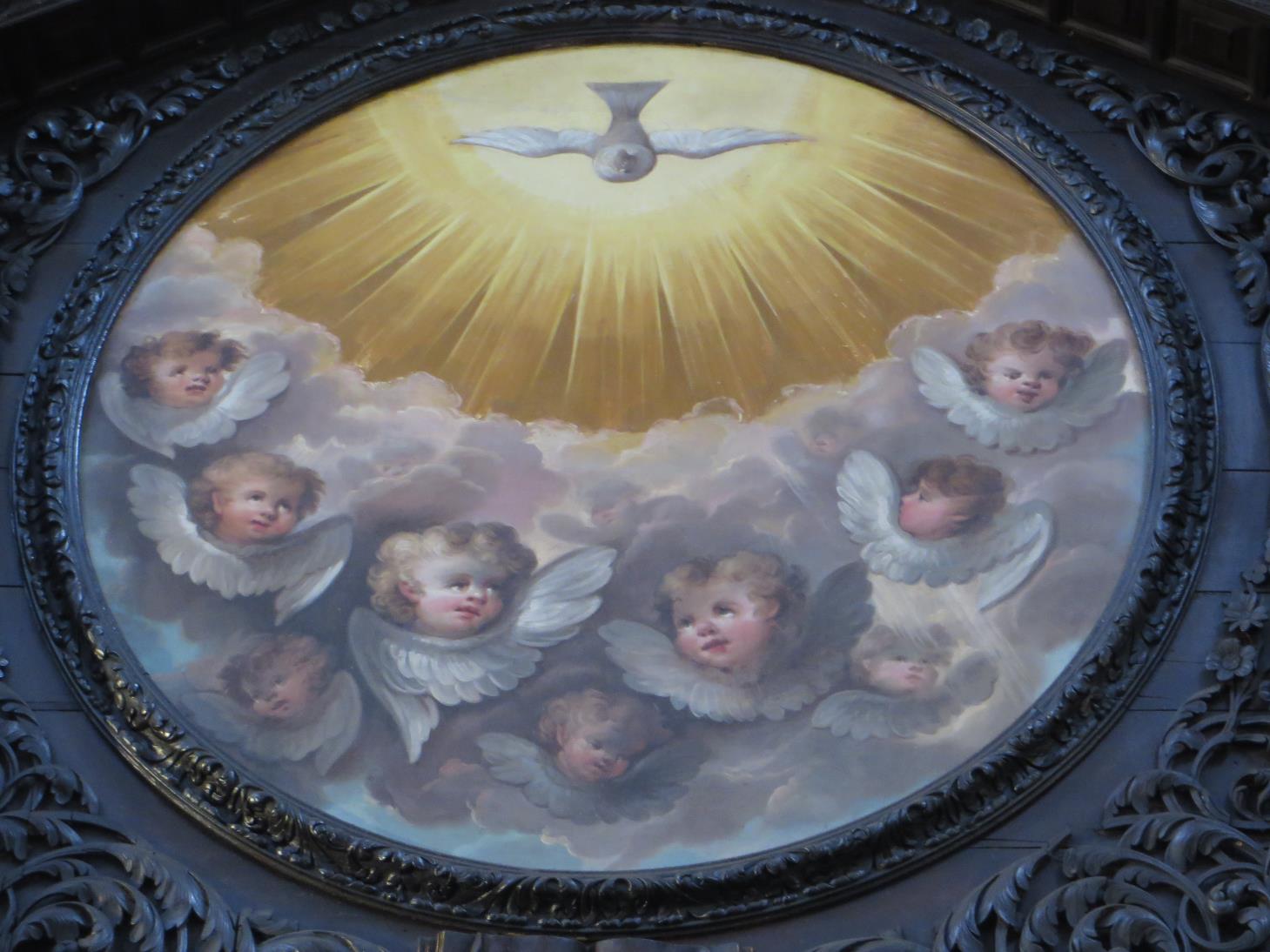
This lovely painting is above the altar at St Magnus the Martyr in the City of London. It’s a Christopher Wren church and there are several ancient churches in the area.

Another year has passed and Christmas is staring us in the eye again. But what about next year? What will it bring? I’m hoping for a better year for everyone and more church exploring! And of course discovering more symbols!

So I would like to wish you all a very Merry Christmas and a Happy New Year!

The Art Nouveau trio with a poignant story – All Saints, Snodland, Kent

I came across this elegant little family group during the summer in a country churchyard. Although a couple are damaged, they are all still in reasonably good condition. The panels set into the stone crosses are made from metal with a floral painted decoration which I feel may be anticipating the Art Nouveau movement. It flourished from 1861 – 1914 and the dates of death would fit it with this.

Dedicated to a child. ©Carole Tyrrell

On this one, dedicated to Charles William Elliott, the floral decoration is intact despite the epitaph being damaged and you can see the flowing, sinuous lines of the stems and petals which is typical of Art Nouveau. However, the inscription is in a Gothic style.

©Carole Tyrrell

The epitaph above is very poignant as it’s dedicated to 4 children, 2 of whom died as babies and 2 others, presumably twins , who died at just under a year old. The epitaph is again in Gothic style with more restrained floral decoration and the addition of a cross.

©Carole Tyrrell

This may be dedicated to the mother of the children who lived until she was in her 60’s and she seems to have been buried with another child who died at just under a year old.

The trio are one of the few memorials within the churchyard which still appear to be in their original place as most have been moved to an outer wall. They emphasise the high infant mortality rate during the 19th century which is why people often had big families. Not all the children were expected to survive. It must have been heartbreaking. I have only seen one other memorial in this style and it was in Highgate East cemetery.

So, an elegant and intriguing little trio of memorials that tell a sad story of a local family.

©Carole Tyrrell Text and photographs

Stairway to heaven? A new use for old headstones.

I’ve often seen headstones used as paving for paths in cemeteries and churchyards and sometimes feel a little uncomfortable when I see them used in this way.. This is because it feels as if ‘I’m walking over someone’s grave’ as the old saying goes. It seems to happen when the churchyard or cemetery has become a park with the headstones removed from their original location and often placed against a wall.

However in my local churchyard, St Margaret’s in Rochester, they have gone one step further and created a small set of steps that lead up to a grassed area. This is where the graves belonging to the people to whom the headstones belonged may still lie. The slope may also have been created by the bodies being buried on top of each other over the centuries which does happen in old burial places.

So I call it the Stairway to Heaven – a little irrelevant perhaps but I felt it’s appropriate!

Side view of steps ©Carole Tyrrell
Looking up the steps from the ground. ©Carole Tyrrell
Looking down from the top of the steps. ©Carole Tyrrell

©  Text and photos Carole Tyrrell

Symbol of the Month – ‘Here I am, given to the worms’ – the Hamsterley memento mori

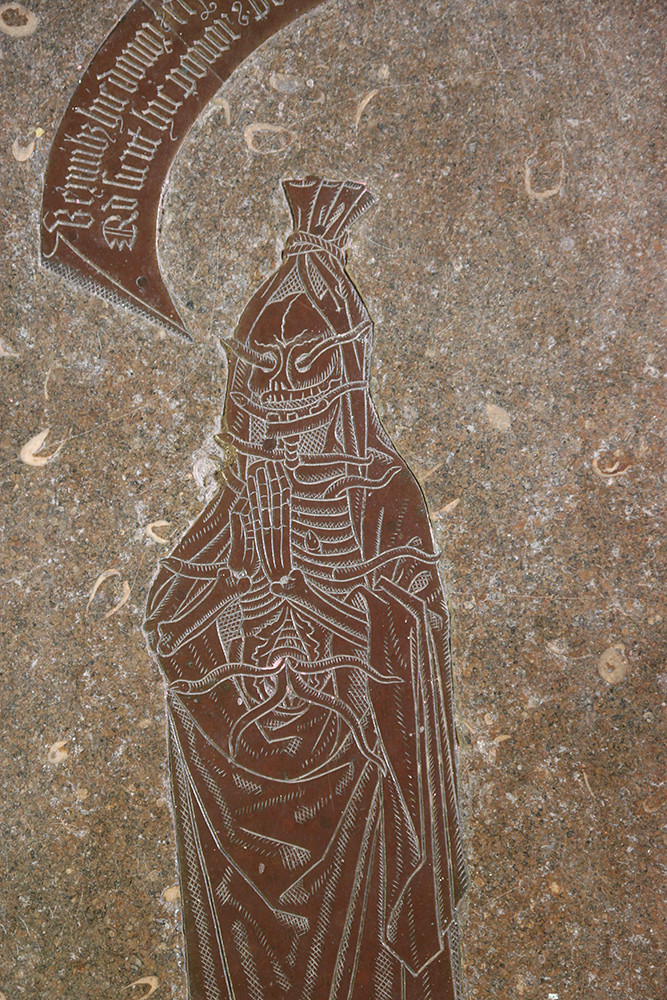
This wonderful example of a medieval mori is dedicated to Master Ralph Hamsterley and doesn’t shrink back from depicting what awaits the viewer after death. It’s a symbol of death that’s designed to make the viewer think, not only of the man that placed it there, but also of their own mortality. However, it’s the only one that has survived from the original four that Hamsterley had placed in Oxford at least 10 years before his death in 1518.

I’ve made it a Symbol of the Month because it’s one of the most arresting and realistic symbols of death that I’ve ever seen.

The article comes from the https://medievalart.co.uk website which is well worth a look if you’re interested in medieval art and like poking around in churches as I do.

//embedr.flickr.com/assets/client-code.js

In the centre of the chancel at Oddington in Otmoor, in eastern Oxfordshire, is a large purbeck marble slab into which is set one of the most unusual monumental brasses from late medieval England.  The brass consists of an effigy, a corpse in a tied shroud, with it’s hands in the attitude of prayer.  The corpse is skeletal and well through the process of putrefaction and issuing out of the body cavity, from between the ribs, leg bones and from the sockets of the eyes, are wriggling maggots or worms.  Such memento mori were not unusual in late medieval England, both shroud brasses and transi tombs were common from the middle of the fifteenth century and survive in some quantity, but this example is particularly grisly and intense.

//

embedr.flick

Oddington, Oxfordshire

r.com/as

sets/client-code.js

Below the effigy is an inscription that identifies the persons commemorated, it asks for prayers for Master Ralph Hamsterley, a fellow of Merton College Oxford and Rector of Oddington.  Issuing from the mouth of the Hamsterley’s cadaverous effigy, is a scroll, a Tudor speech bubble, with the following Latin rhyme:

Vermibus hic donor et sic ostendere conor
quod sicut hic ponor: ponitor omnis honor.

This can be translated as:

Here I am, given to the worms, and thus I try to show
That as I am laid aside here so is all honour laid aside.

Here laid before us is in brass is Hamsterley ‘given to the worms’.  The brass must have been erected within Hamsterley’s lifetime.  He died in 1518, but he actually ceased to be Rector of Oddington in 1508 and it is likely that the brass was erected before that time.  As we will see, Hamsterley wasn’t actually buried here.  Space has been left for the inclusion of Hamsterley’s date of death in the inscription, but this still remains blank, because he was buried elsewhere and ceased to have a connection with the place, nobody bothered to come and add his date of death. 

So here ten years before his death, Hamsterley was clearly contemplating his own mortality and if this brass is anything to go by, seemingly thinking on the sheer futility of human vanity and honour.  If you think that indicates that Hamsterley was a humble man, think again, people are always much more complex than that, aren’t they?  In life Master Ralph Hamsterley was a man of great ambition.  Although he held a number of parochial livings, he was primarily career scholar in Oxford.  At the time the Oddington monument was being laid down, with all it’s self-deprecating imagery, Hamsterley was in the process of contemplating the latest move in his progression up the Tudor academic career ladder. 

//embedr.flickr.com/assets/client-code.js

Born in the 1450s, he was a native of Durham, but by the late 1470s was a fellow of Merton college Oxford. He was a proctor on 1481 and served as principal of St Alban’s hall,  next door to Merton and since incorporated into it.   He spent the next twenty years in Oxford as a fellow at Merton and in both 1507 and 1508, he came very close to being elected Warden of Merton, but was defeated and the post went to others.  Not to be downhearted, he then started looking elsewhere in Oxford for a similar position.  In May of 1509 he decided to give a gift, of some sort, to University College.  Although we don’t know precisely what the gift was, it was generous enough for the Master and fellows of University College to consider Hamsterley as a benefactor of the college and add his name to the obit roll of the college, so that his gift would be remembered for perpetuity.  This gift, presumably financial, seems to have been part of calculated campaign to secure the Mastership at University College.  It worked, very soon the Master of the college died and in September 1509, Hamsterley was duly elected as Master.  His election was not without controversy, the college statutes stated that only fellows of the college could be elected Master and as fellow of another college, he was an outsider, and some of the fellowship resented his presence.  His election was contested and he had to seek recourse to Archbishop Warham to be confirmed in the role and thereon in had trouble controlling the fellows.  Nevertheless the ambitious Hamsterley remained as Master of University College, until his death in 1518.

After laying the brass at Oddington, Hamsterley began what can only be described as a campaign of a memorialisation across Oxford.  The brass at Oddington was to be the first of a series of four brasses that Hamsterley would lay down in his own memory in his lifetime. The other brasses at Durham, University and Merton colleges are all now lost, but Anthony Wood the Oxford antiquarian, saw the University and Merton brasses in the 1650s and transcribed their inscriptions.

At University College, Hamsterley had a brass laid down right smack the middle of the college chapel.  Wood tells us that ‘on a small marble stone, was the effigies of a man in a gown’, below was an inscription invoking prayers for Hamsterley’s soul and stating that he was fellow of Merton and Master of University college.  He wasn’t going to have his great benefaction of May 1509 forgotten and unusually the inscription on the brass records the obit, stating that his obit should be kept on the second feria after the feast of the Holy Trinity – forever!

The brass he laid at Merton college, his alma mater, was also rather unusual.  It was in the south transept of Merton and was not just a memorial to Hamsterley but also commemorated a friend, colleague and rival.  Wood tells that that on the same stone, there were two brass effigies of men side by side and below them a double inscription.  The first portion of the inscription invoked prayers for the repose of the soul of Thomas Harper, who was Warden of Merton between 1507-1508, the man Hamsterley had lost out to in the 1507 election.  The second portion of the inscription asks for prayers for Hamsterley himself, who is referred to here as Master of University college, as well as a fellow of Merton, indicating that the brass was erected after September 1509, well over a year after Harper’s death.  Were Harper and Hamsterley friends, or was erecting this double monument to a former Warden and rival, an attempt by Hamsterley to ingratiate himself with the Merton fellowship and further his career?  Although Harper was buried in his living in Bristol and not here, when Hamsterley died he appears to have been buried underneath this brass at Merton.  He was determined he would not be forgotten in his old college and he endowed a chantry priest ‘Hamsterley’s chaplain’, to sing masses for his soul at the altar of St Catherine in the chapel at Merton.  It was probably before that altar that the brass was placed.

These three brasses laid down by one man, reveal an awful lot about his personality, his piety and his ambition.  Ralph Hamsterley was a man of clear contradictions, well aware of his own mortality and prepared to invest in his memorialisation well before his own demise; he was clearly a man of significant ability too, an ambitious man who was determined to make his mark and to be remembered in Oxford. 

Sources
Details of the brasses in Merton and University Colleges are found in: J. Gutch (ed.), The History and Antiquities of the Colleges and Halls in the University of Oxford: by Anthony Wood (Oxford, 1886), pp. 26-27 & 62. 

Sources on the life of Hamsterley and his career:
G. C. Brodrick, Memorials of Merton College (Oxford, 1885), pp. 162 and 240.
J. M. Fletcher and C. A. Upton, ‘Destruction, Repair and Removal: An Oxford College Chapel during the Reformation’ in Oxoniensia 48 (1983), p. 122
R. Darwall-Smith, Early Records of University College, Oxford (Oxford, 2015), p. xvi

Wildlife in Cemeteries No 9 – Wild Places

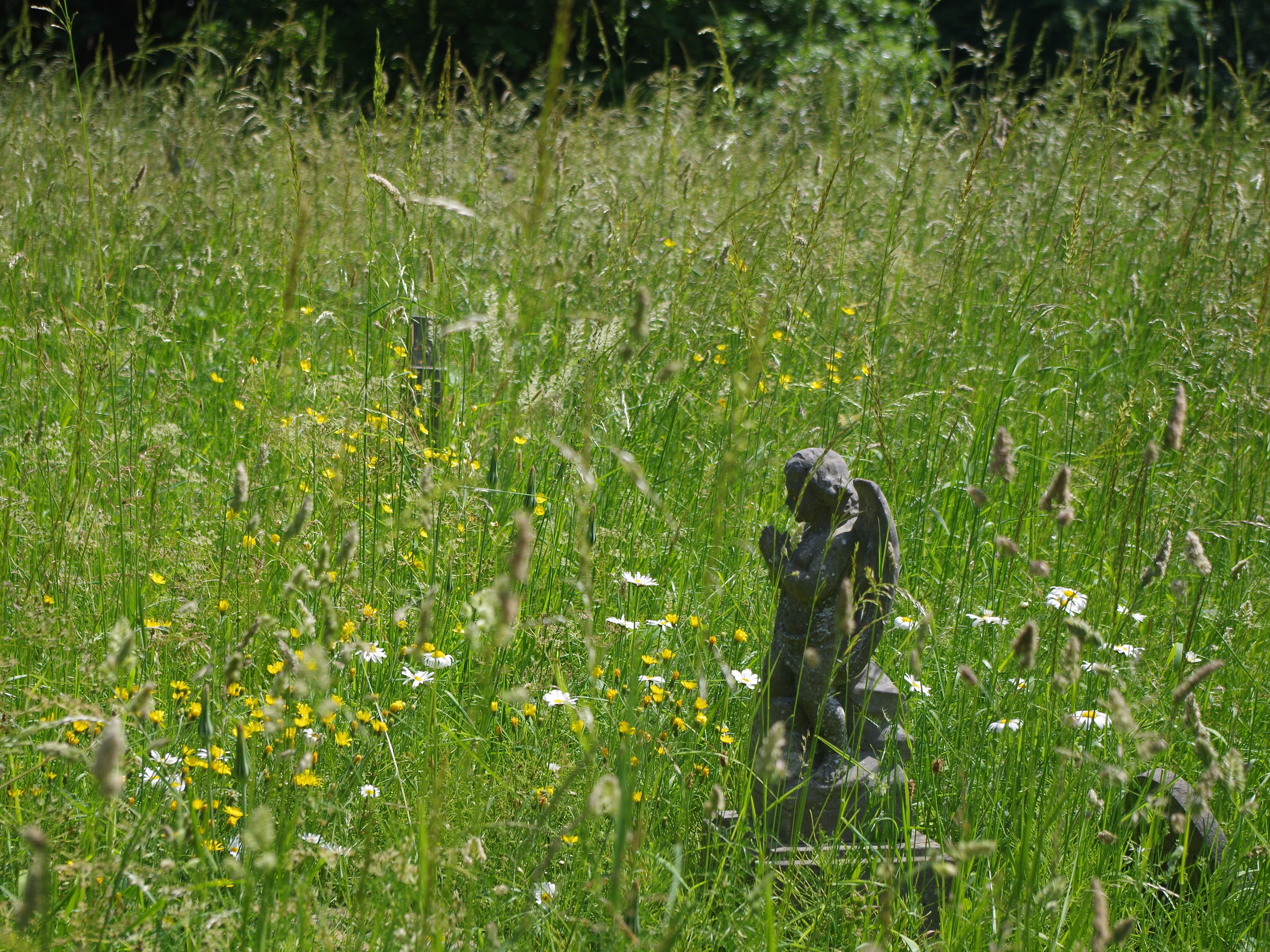
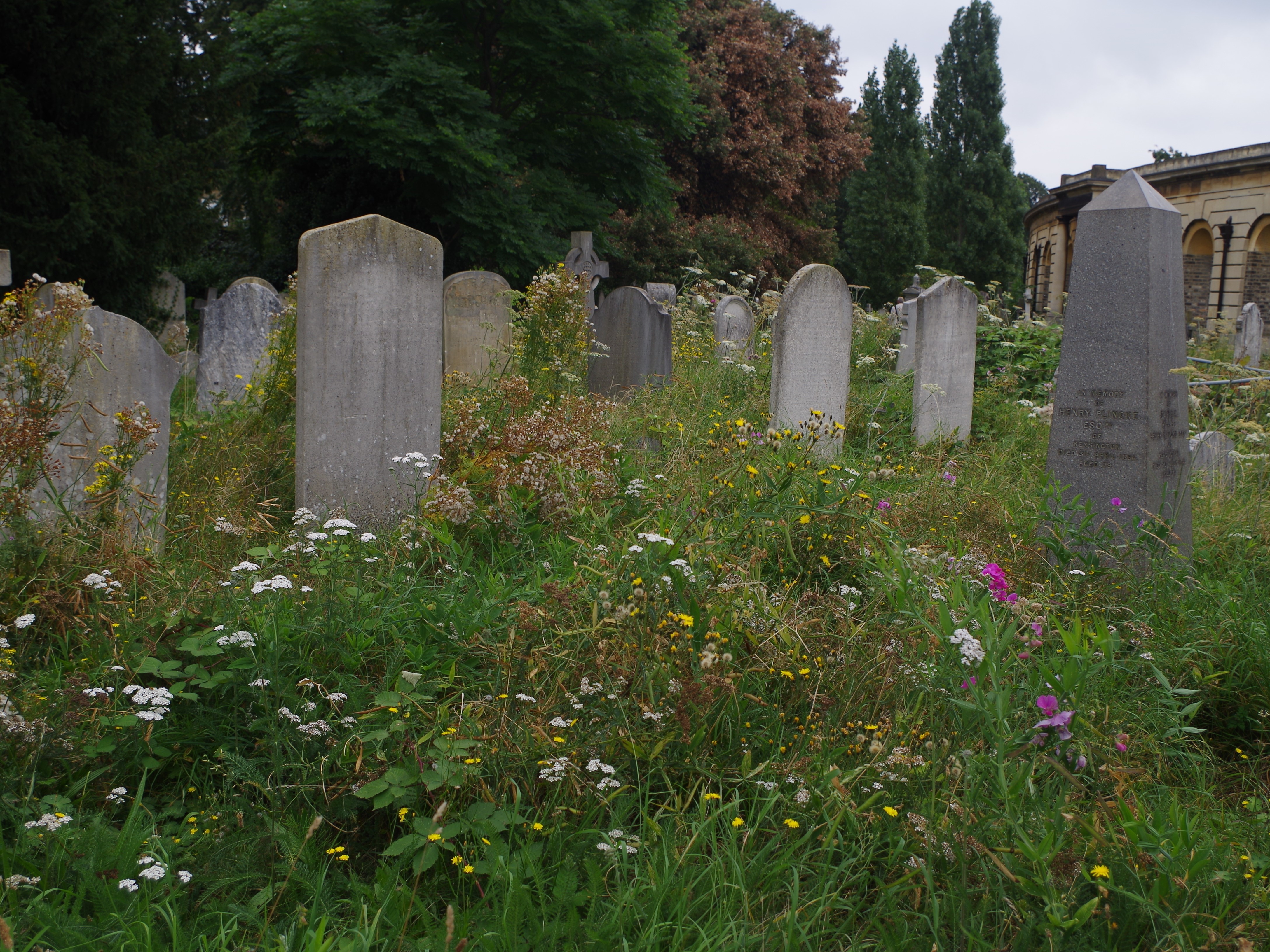
A Wild place at London’s Brompton Cemetery, June 2021 ©Carole Tyrrell

Cemeteries and churchyards aren’t just for the dead.  As their permanent residents eternally slumber, life still goes on above them and it can be a rich and varied diversity.

Over the last two or there years, when I’ve been out exploring and in churchyards in particular, I have noticed areas within them that are allowed to grow freely without being troubled by a passing mower or scythe.

However, after the start of the first lockdown in 2020, every green space looked like a wild place as in the East cemetery at Frindsbury in Kent when grass cutting appeared to have halted in mid cut! 

The untrimmed East Cemetery, Frindsbury, Kent, March 2020 resulting in a magnificent carpet of primroses. ©Carole Tyrrell

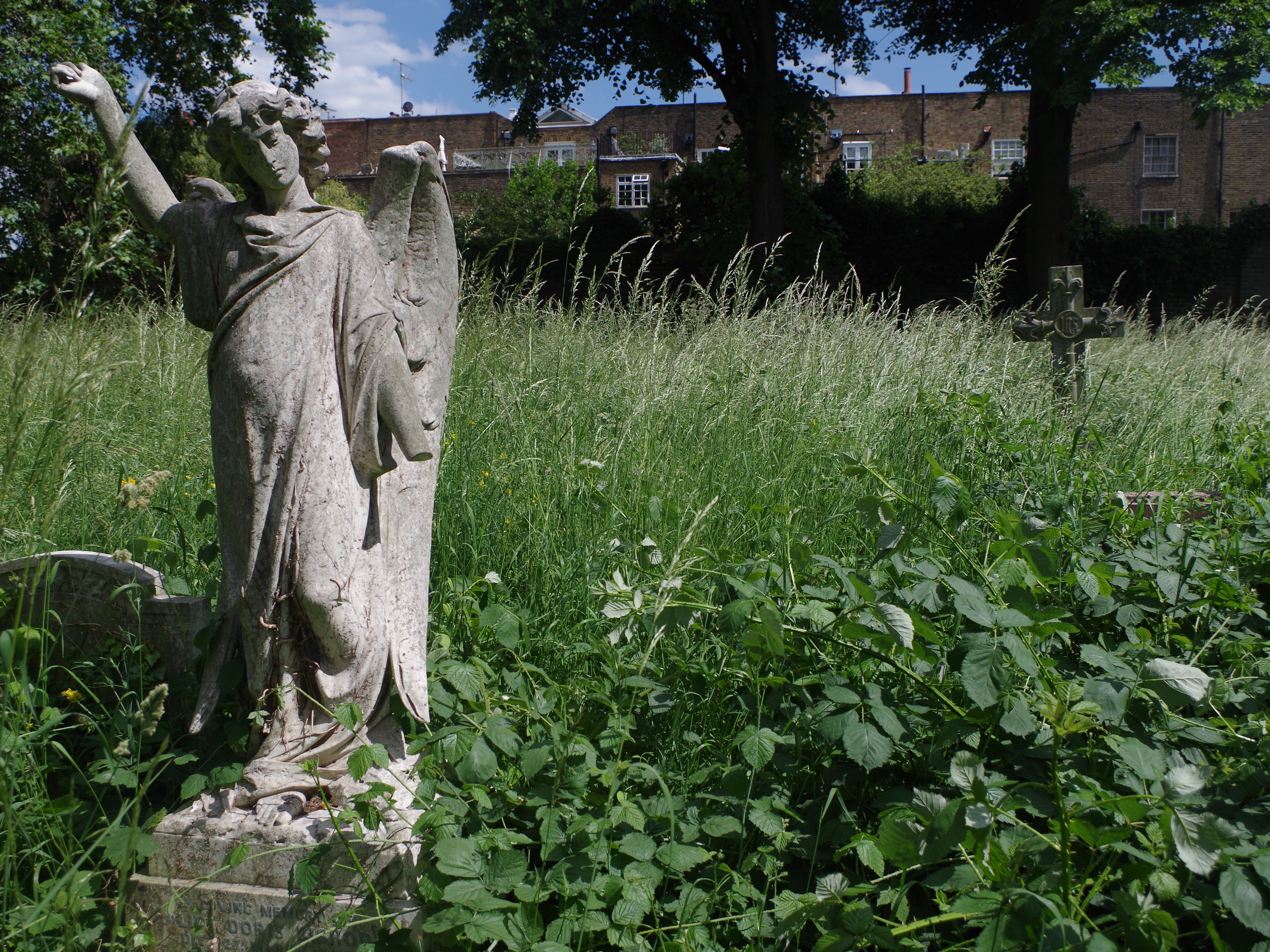
These ‘wild places’ attract butterflies, bees, moths and wildflowers amongst others.  In central London. and in the Magnificent Seven’s Brompton and Kensal Green cemeteries in particular, there are large swathes of the untrimmed and unkempt (according to some visitors).  These are teeming with caterpillars, grasshoppers and dragonflies to name a few.  To be in Kensal Green’s meadow area on a warm, sunny July day is a memorable experience. 

The bright pink of a Wild Pea, Brompton Cemetery, June 2021. ©Carole Tyrrell
Ladies Bedstraw, Brompton Cemetery, June 2021. ©Carole Tyrrell
A sea of Ox Eye Daisies, Brompton Cemetery, June 2021 ©Carole Tyrrell
Brompton Cemetery, September 2021 ©Carole Tyrrell
Grasses, Brompton Cemetery, June 2021. ©Carole Tyrrell

In June 2020, All Saints in Snodland, Kent had a fabulous area of ox eye daisies and a pair of mating damselflies in an untrimmed area.  In Brompton, the bright splashes of colour of wild peas, ragwort, Ladies Bedstraw amongst others are a contrast to the much more sombre memorials and monuments.  In July 2021, one area was a mass of Ox eye daisies.  But do take care.  An area of long grass and wildflowers can often hide the edges of graves and memorials so make sure tread carefully.  

A view of the church and its wild place from a corner filled with Ox Eye Daisies. June 2020 ©Carole Tyrrell
All Saints, Snodland’s wild patch! June 2020 ©Carole Tyrrell
All Saints Snodland, two Azure Damselflies prepare to mate in a wild place. June 2020 ©Carole Tyrrell

My local church, St Margaret’s in Rochester, planted a wildflower meadow this year. It was cordoned off from the rest of the churchyard which is mainly grass with the tombstones ranged along the wall that faces the River Medway.   In the Spring it was full of yellow buttercups and the blue of speedwell.  In the summer it was the turn of yarrow and poppies and the Beautiful Burial Grounds Project made a visit to record what was there.  This is a project that runs until December 2022 and I have submitted wildlife records to them.   When you think of it, cemeteries and churchyards are ideal places for wildlife as they are quiet places where they are unlikely to be disturbed and so can flourish.

St Margaret’s wildflower meadow, June 2021 as it begins. ©Carole Tyrrell
St Margaret’s, Rochester’s wildflower meadow becomes official. ©Carole Tyrrell
Fleabane, St Margaret’s, Rochester wildflower meadow July 2021 ©Carole Tyrrell
Some of the magnificent buttercup displays this year. St Margaret’s, Rochester wildflower meadow June 2021 ©Carole Tyrrell
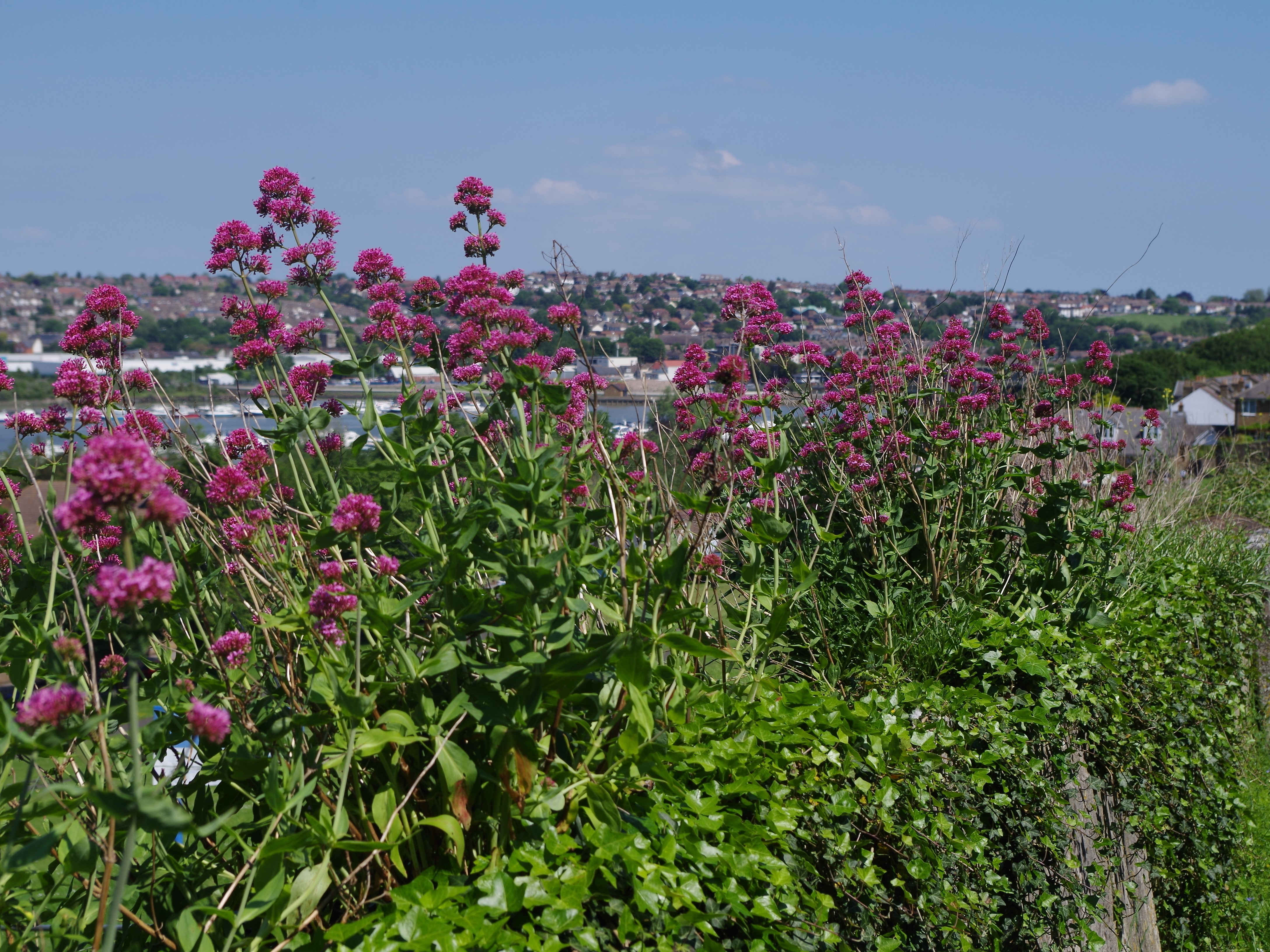
Red Verbena on the churchyard wall, St Margaret’s, Rochester, June 2021 ©Carole Tyrrell
Herb Robert, St Margaret’s, Rochester wildflower meadow, June 2021 ©Carole Tyrrell

However, there are those who see the wild places as untidy and perhaps not really in keeping with a place of the dead.  But I always explain to them that cemeteries are also about life; not just everlasting life but also about real life and helping biodiversity.  They may go away thinking ‘ that’s all very well but it does look very untidy and perhaps the dust needs to come off their lawnmower’ but they may equally go away thinking ‘What a good idea, perhaps I could try it at home.’

I have tried it at home and the variety of insects that I attract into my back garden is proof of how a wild place can help wildlife thrive despite what the neighbours may think about the ‘untidiness’….

© Text and photos Carole Tyrrell

Further reading:https://www.caringforgodsacre.org.uk/about-us/projects/our-beautiful-burial-grounds-project/

Symbol of the Month – the Mass Dial

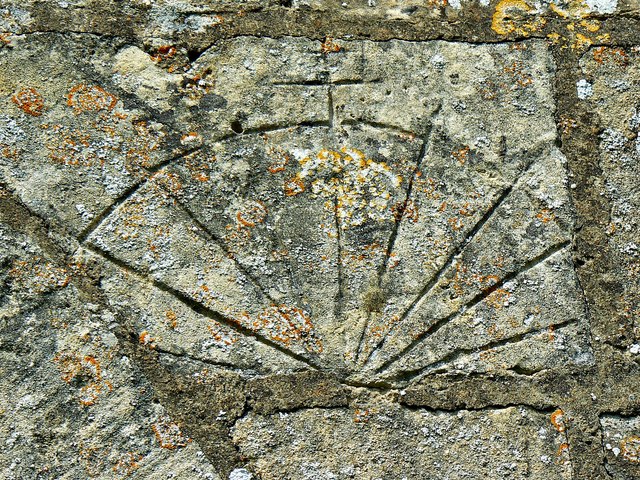
Mass Dial set into wall of St James’s Church, Cooling, Kent. ©Carole Tyrrell

Despite the somewhat dispiriting summer, I was determined to escape from the house and see at least one or two local churches.  My little part of Kent is known as Charles Dickens country (I’m not sure that he knows about this) and there are several buildings and churches associated with him. 

One of these is St James’s church at Cooling.  Although closed for services, it is still kept open by local people on most days. The Churches Conservation Trust take care of it and it’s in an isolated spot which borders onto marshes.  It’s also a fair walk from the nearest town, Cliffe.  I didn’t see any signs of much of a village there although there is a 14th century ruined castle nearby. St James’s is the end of a terrace of houses appropriately named Dickens Walk. 

l’ll talk more about St James in a later post as it inspired one of Dickens most atmospheric scenes in ‘Great Expectations’ with the childrens graves in the churchyard.  But while I was there, I found a symbol set within a wall that I had heard of but had never actually seen an example – this is the Mass Dial.  I have to admit that, if it hadn’t been pointed out on a display board within the church, I might have missed it as it’s set into an outer wall of the church.  Not many have survived and Victorian restoration may meant that they are found in odd places.

Mass dials are rare survivors and were a way of telling time before the invention of mechanised clocks and timepieces in the 14th century. 

It was the Anglo-Saxons who established the dials.  There had been confusion with all the different calendar systems such as the Lunar and Julian, and with a largely illiterate population, a visual way of telling the time was necessary.

According to the Building Conservation website:

the Anglo Saxons divided night and day into 8 artificial divisions known in Old English as Tid or Tides.  The 4 daylight divisions were called:

Morgen – 6am – 9am

Undern – 9am to noon

Middaeg – Noon to 3pm

Geletendoeg – 3pm to 6pm. 

Morning, noon and evening are still in use as the last remnants of this division still in use today as are moontide, yuletide and shrovetide.’

But, throughout the Middle Ages, the Catholic church emphasised the reciting of prayers and fixed times during the day as pre-Reformation Britain was still a Catholic country.  These were known as the Divine Offices and were:

Matins – pre-dawn

Prime (6am)

Terce (9am)

Sext (12pm)

None (3pm)

Vespers (sunset

Nocturnes (after sunset) 

However, these were not set as the sun might not shine for a few days and, if a mistake was made, then the parish priest might end up celebrating certain feasts on different days from a neighbouring parish. 

Mass Dial, St John’s church, Devizes, Wiltshire – note that it still has the marker in it showing how it worked.© Brian Robert Marshall under Geograph Creative Commons Licence.

They were a form of medieval sun dial and originally the hole in the centre of the dial would have contained a horizontal wooden or metal rod that cast a shadow.  This was known as a ‘gnomon’ which is pronounced as No Mon.  These may well have been the local community’s only way of telling the time although medieval life revolved around getting up at sunrise and going to bed at sunset.

According to the British Sundial Society,

‘mass dials can be found on the south side of many churches.  They are usually small and often located on the walls, buttresses, windows and doorways of a church.  However, they can also appear in more unlikely places such as inside churches and on north walls where the sun rarely shines. But they have also been found in porches suggesting that the porch was built sometime after the dial was made.’

The Society goes onto suggest that this may be

 ‘due to the stone blocks having been re-used in the rebuilding of the church.’ 

The location of the Cooling one may indicate that it’s been moved.

Again, according to Building Conservation:

‘if a mass dial is found anywhere other than a church and other than the south elevation of a church, this usually means that it has been moved from its original location often as part of a Victorian restoration.  In such cases, the dials were sometimes rebuilt into the fabric upside down, making them unreadable.’

The positioning of mass dials is important and can vary.  They may be on the smooth cornerstone or quoin of a tower, nave or chancel, above a porch or on a door or window jamb.  Often they are set at eye level and in one church it is cut into a window ledge.

Mass dial, All Saints.Oaksey, Wiltshire. © Brian Robert Marshall. Shared under Wiki Creative Commons
Mass Dial, St Michael 7 All Angels., Heydon, Lincs. ©Richard Croft. Shared under Wiki Creative Commons

Mass dials also vary in their design as:

‘Some have either a few or many radiating lines, {others} have ‘hour’ lines within the circles or semi circles and others are constructed with a ring of ‘pock’ marks drilled into the stone.’  British Sundial Society

There are also variants in the way that the hour lines are numbered as they may have Roman numerals or even Arabic ones.  They’re also known as scratch dials as

‘many are quite crudely scratched into the stone.’ British Sundial Society

A full circle version, All Saints, Yatesbury. ©Brian Robert Marshall Shared under Wiki Creative Commons

The 14th century brought mechanical clocks that created a regulated 24 hour time period.  As a result, medieval life changed as it was no longer so reliant on daylight.  However, mass dials were still in use but now they were a complete circle with lines radiating from the central gnomon to simulate the 24 hour clock.  But by the 16th century they had fallen out of use.  Sundials and mechanical locks had overtaken them and it was no longer the Roman Catholic church that dominated after the Reformation.

Mass dials are of great archaeological and historic importance.  However, many of them are now indecipherable due to erosion and vandalism and people may not even realise what they are or their significance.

© Text and photos Carole Tyrrell unless indicated otherwise

References and further reading

https://www.buildingconservation.com/articles/mass-dials/mass-dials.htm

http://massdials.org.uk/links.htm

Photos