Symbol(s) of the Month – Ritual Protection Marks

Cross, St Nicholas at Wade, Kent © Carole Tyrrell

Imagine if you will a medieval church.  Inside it would be brightly painted and very colourful in contrast to the whitewashed interiors that we are familiar with today. Faded vestiges of these colours can sometimes be seen on monuments or pillars. The church porch might be used for other activities besides keeping out of inclement weather.  They were used for ceremonies such as marriages or the ‘churching’ of women and churches were often the hub of community life. But they also had a dark side as they were seen, surprisingly,  as places where evil lurked. In fact, it was believed that the Devil and his horde lived within the church on the ‘north’ or sinister side.  

The medieval world was often harsh and the forces of evil were supposedly everywhere. A bad harvest, plague or fires were all attributed to them. Witches were also believed to be real.  Meanwhile the Church taught that the world was full of evil spirits who were always looking for unwary souls to tempt or possess. 

Even churches needed protection despite priests performing blessings and masses and so the local parishioners took action into their own hands and relied on the use of apotropaic symbols.  This is a Greek word that comes from ‘apotrepein’ which means ‘to ward off’ i.e. ‘apo’ = away and ‘trepein’ = ‘to turn.’ It was a secret language which its medieval creators firmly believed could protect them from evil. They were a way of their creators taking back control  over their world. The marks  were often inscribed near vulnerable places such as doorways, windows, fireplaces and even fonts. In other words, wherever an evil presence might try to enter. But they were not confined to churches as they also appeared in other historic and ancient buildings.

Daisy wheel on fragment of a demolished house in Essex, Southend Central museum. © Carole Tyrrell

But by the 18th century, belief in protective marks had declined. However, they were inscribed into buildings and churches up until the 19th century and have been described as ‘folk magic’ or superstition. But in rural areas the tradition continued and was handed down through generations.

I have seen many medieval survivors of the 17th century iconoclasts in Kent churches such as wall paintings at Selling and a Doom painting at Newington but more recently I have been finding the most enigmatic survivors of all, ritual protection marks. You have to know where to look as they are often well hidden.  I did wonder if the priest knew what was going on and turned a blind eye. But we will never know. However, this is a huge subject and I can only scratch the surface. I’m just intrigued by them and their variety.  In this post I am giving you a selection of what I’ve found so far and possible meanings. I have visited 3 churches so far: St Nicholas, Sturry, St Nicholas at Wade and Hoo St Werberga who all have these marks. As you might imagine crosses feature heavily.

Figure on pillar, St Nicholas, Sturry.© Carole Tyrrell

I first found marks in St Nicholas church, Sturry, near Canterbury in 2023. The churchwarden pointed them out as they’d just had someone in to do a survey of them. There were crosses on pillars near the entrance and on the other side of the church. So, I made a return visit this year and this time found a figure which may be the Virgin Mary as it seems to be wearing a skirt and has a halo.

However, there was a Facebook post dated 27 December 2025 on the Ritual Protection Marks and Ritual Practices page in which they say that this particular mark may be a Golgotha mark which represents the site just outside Jerusalem where Jesus was crucified. I can’t put a link to it but if you visits the page it’s easy to find. This is an interesting page and they know what they’re talking about.

There was a little note on a pillar indicating a M or Marian mark but I couldn’t find it and then I was distracted by a cream tea.  I also saw circles which appear to have been appear to have been drawn with a compass as well as dots. The small circles are also referred to as hexafoils and are the most common.

Circle, St Nicholas, Sturry, © Carole Tyrrell

According to their information leaflet on the marks;

‘They can range from simple circles, to six petalled flower designs and highly complex geometric designs which are known as daisywheels.’

They are usually small as at St Nicholas, but they can be up to a metre across. It was originally believed that they were created by the masons who built the churches but there are too many for them to be attributed to one trade. It has been suggested that:

‘they may have been created in order to trap the demons that roamed the world within their complex structure by quite literally pinning them to the walls.’ Information leaflet, St Nicholas, Sturry.

Also at Sturry , there are five ‘dots’ on a pillar which could easily be missed but they have significance:

Dots on pillar, St Nicholas, Sturry. © Carole Tyrrell

‘the dots appear to follow numerical values, being found in generally uneven numbers, and commonly in groups of three, five, seven and nine. Certain uneven numbers had considerable significance in the medieval church, such as the Trinity and the seven sacraments, and numbers were also regarded as powerful within aspects of medieval magic’.  Information leaflet, St Nicholas, Sturry

But this is only one interpretation and, as with most ritual protection marks, there can be several and it’s not possible to say definitively which is the correct one.

I visited St Nicholas at Wade at Easter 2025 and the church was bustling as it was being decked with flowers for the celebrations. They very proudly showed me their ‘daisy wheel’ on a pillar. 

Daisy Wheel, St Nicholas at Wade. © Carole Tyrrell

A daisy wheel is a stylised flower pattern and according to English Heritage ‘

‘they are the most easily recognisable. They have been found in early medieval English buildings from the early medieval period right up to the 19th century. Followers of Wicca see them as sun symbols’

Histories and Castles describe them as:

‘geometric rosettes, often with 6 petals that symbolised eternity and divine protection. The medieval mind believed that evil travelled in straight lines and so could be trapped by circular forms, the looping unbroken line of a hexafoil was thought to confuse evil spirits or trap them in an endless journey.’

I previously visited Hoo St Werberga in September 2024. But this time I was looking specifically for ritual protection marks and found them despite being led astray by another excellent cream tea. This time I found a large ship on a pillar which is possibly a reference to St Werberga’s position on the River Dee and the lantern in its tower to guide shipping. My photo did not come out too well although the body of the ship can be seen. So, I attach a copy of a far better photograph that was displayed on the local history desk with their kind permission.

Ship on pillar, Hoo St Werberga. © Carole Tyrrell

In fact it was one of the local history people who proudly indicated one of the most enigmatic and mysterious marks I’ve seen so far. It was a bullseye on a pillar.  It was partly obscured by the organ and other pieces of church furniture and so I might have missed it.   He told me that they know nothing about it and it’s certainly an unusual item to find in a church. .  However, the circles inside each other may have been another method of trapping demons.

Bullseye, Hoo St Werberga. © Carole Tyrrell

I will undoubtedly find more as I explore other churches in Kent especially as I now know where to look for them. They are the traces of a medieval belief system of protection from the threat of unknown demonic forces from which no one was safe not even the rich and powerful. They were seen as holding protective powers and were a way of empowering their creators.

They are a fascinating glimpse into the world and beliefs of our ancestors.

©Text and photos Carole Tyrrell unless otherwise stated.

References and further reading:

392 WITCH MARKS v2.indd (the Fortean Times article on witches marks from 2019)

Witch marks: Medieval graffiti for protection

Witches, Carpenters & Masons – what’s in a mark?

What Are Witches’ Marks? | Historic England

APOTROPAIC / RITUAL PROTECTION MARKS – GAUDIUM SUB SOLE . SUNDIALS . MEDIEVAL TO MODERN

Witch Marks and Secret Symbols: Discover Medieval Witchcraft Protection in England’s Castles and Churches

Apotropaios – Home (one of the best sites on these marks.)

Magical House Protection – the archaeology of Counter-Witchcraft – Brian Hoggard, Berghahn, 2019

Information leaflet, St Nicholas, Sturry, Kent

A Cheshire cat grin from out of the darkness – St John the Evangelist, Margate

Close up of head, ‘monumental’ brass, St John the Evangelist, Margate. ©Carole Tyrrell

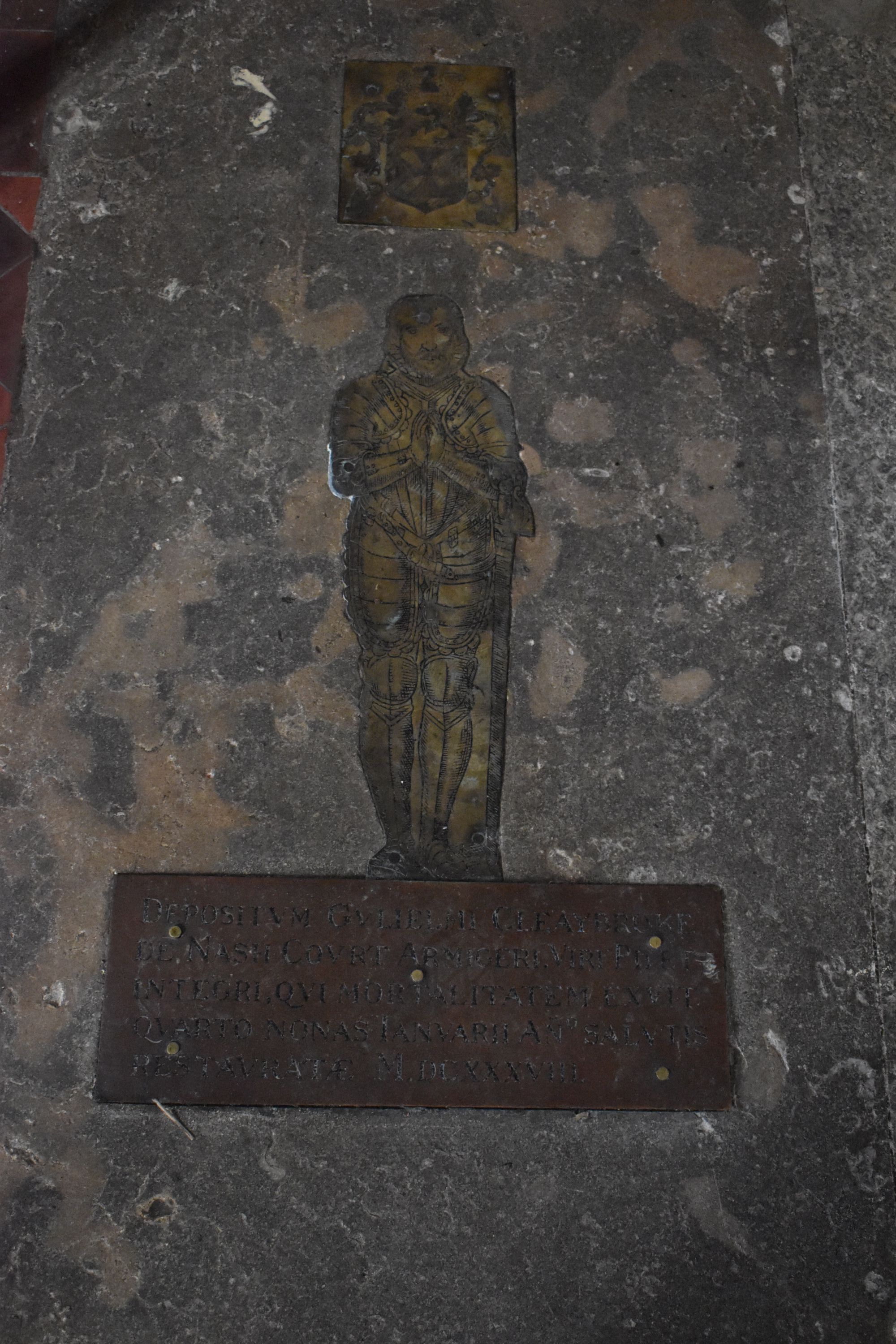
It was dark in the chancel as I explored St John’s and then five small figures set into stones in the floor glinted at me.  Four of them were dressed in the clothes or armour of their time and one depicted a former priest, Sir Thomas Cardiff who was in post from 1460-1415. In fact Kent has the largest number of remaining monumental brasses depicting the human form than any other county. These total 400. But one in particular caught my eye.  How could I resist its smiling, gleeful face?

A knight in full armour, St John’s the Evangelist, Margate. ©Carole Tyrrell

Monumental brass of a priest in his vestments, Sir Thomas St John’s the Evangelist, Margate.©Carole Tyrrell

View of skeleton showing depiction of bones.©Carole Tyrrell

It was a skeleton, standing upright and tall with its arms at its sides facing the viewer, and a label underneath in Latin. This was the language of the church pre-Reformation.

The inscription reads:

‘Orate pro anima Ricardi Notfelde qui obiit penultimo die mensis marcii anno domini millesimo ccccxlvi.’

which translates as:

‘Pray for the soul of Richard Notfelde, who died on the last day of March 1446 AD

 The skeleton’s creator has some knowledge of anatomy as the ribs have been sketched in and there are also leg and arm bones. There is a rubbing of the brass in the Wellcome Collection that dates from 1880 and depicts the bones much more clearly.

Wellcome Collection rubbing of the skeleton. Shared under Wiki Commons Brass rubbing by F.Q. Hawkes Mason, 1880.

But it was its face that caught my attention. That grin! The little eyes and nose! It’s obviously not intended to resemble a proper skull but the effect was impressive. As the brasses are in such a dark place within the church, when I stood over the skeleton to take my photos, my shadow fell on it and the grin would disappear. So it was quite difficult to take a decent picture of any of the brasses.

The skeleton is a memento mori which derives from the Latin, ‘remember you must die.’  It is intended to remind the viewer that the skeleton is all that will remain of them after death. Rich or poor, high or low, all will be the same.  

According to the guide on duty, the brasses and their labels have been moved and it’s not known where they originally were within the church. But they also have a secret.  They’re not actually made of brass. Instead, they were made from a cheap alloy called ‘Latten’.  The guide helpfully reminded me of Chaucer’s Pardoner’s Tale in which he sold fake relics to simple, innocent people to extort money from them.  These included a cross made of ‘Latoum’ a cheap alloy that he pretends is made of gold.

Latten was an alloy that

‘contained varying amounts of copper, tin, zinc and lead which gave the characteristics of both brass and bronze.’   Wikipedia.

These alloys were used for monumental brasses in churches, decorative effects on borders, rivets or other metalwork details as on armour for example. They were also used for livery and pilgrim badges. Canterbury Museums have the largest collection of pilgrims badges in the UK so please follow the link to see a selection.

Pilgrim Badges – Canterbury Museums & Galleries

The skeleton was an unexpected find on a Heritage Open Day and I enjoyed making its acquaintance. A rare survivor in any church although I have seen other brasses made from Latten when visiting other Kent churches.

In this case, all that glitters is not brass!

© Text and photos Carole Tyrrell unless otherwise stated.

References and further reading

Latten – Wikipedia

Latten: The Definition and Meaning

Monumental Brasses in Kent — Kent Archaeological Society

Richard Notfield, St John’s, Margate, Kent, 1446. Brass rubbing by F.R. Hawkes Mason, 1880. | Wellcome Collection

One of the most unusual names to find in a churchyard – St Werbergh, Hoo, Kent

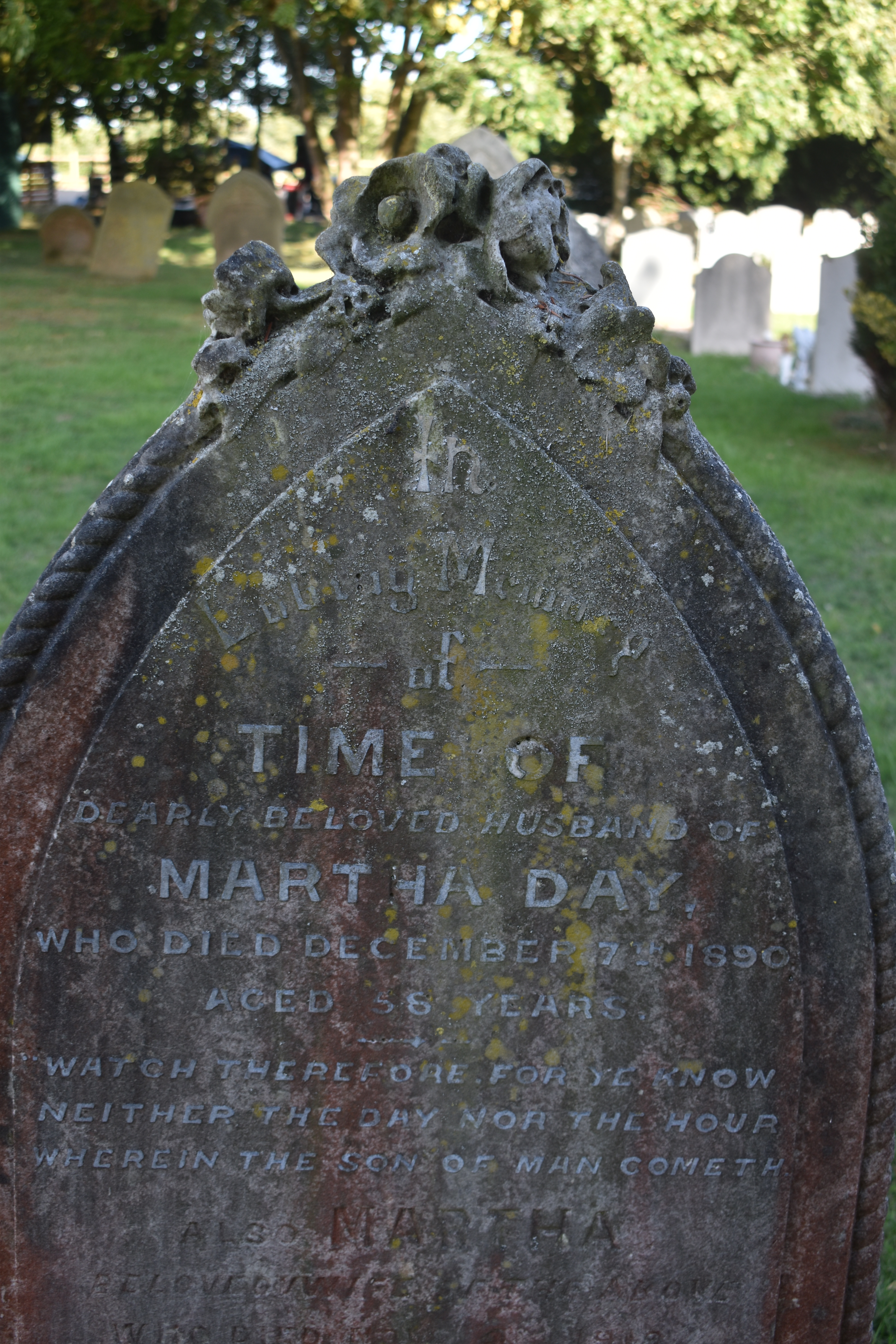
Headstone dedicated to Time of Day, Hoo St Werberga.© Carole Tyrrell

I tried to find this grave last year in the churchyard of Hoo St Werbergh but ran out of time. However, on a return visit this year I finally found it.

It’s dedicated to a man called ‘Time Of Day’ ( I kid you not). (1833-1890) with ‘Day’ being his surname. I did wonder if his siblings were called after days of the week with their surname providing the end as in ‘Sun – Day, Mon-Day etc.

He was a licenced victualler or publican who owned a pub in a nearby hamlet, Fenn Street, Hoo, called The Bell Inn from 1881.  He died on 11 December 1890 and the headstone was erected by his wife, Martha, who was the executrix of his will. The value of his estate was £962.10s.3d which was a substantial sum at that time. There was no mention of any children.

The Fenn Bell Inn Sign © David Anstiss Geograph. Shared under Creative Commons

The Fenn Bell Inn as it looked roughly 16 years ago. © Chris Whippet – Geograph Shared under Creative Commons.

The Fenn Bell Inn may have been named after one of several bells erected on nearby marshes. In poor weather they would ring to enable travellers to find a safe way to cross but The ‘Bell’ is a common name for pubs throughout Britain.  The Fen Bell Inn has been in existence since the 17th century although it has been remodelled and restored since then. However, some of the original fabric still exists. Since 2014, it has housed the Fenn Bell Conservation project for rescued animals and a miniature railway. Recently, there has been controversy over the pub landlord’s plan to sell off land for housing but he has defended it saying that he needed to do it to keep his business going.

‘Time of Day’ is a very unusual name as you might agree but he was a man of some substance and is likely to remembered for many years to come.

© Text and photos Carole Tyrrell unless otherwise stated.

References and further reading

TQ 77 NE 1105 – Fenn Bell Inn or Fenn Bell Public House or Bell Inn, Fenn Street, St Mary Hoo Parish – Historic Environment Record

The Fenn Bell, Pub Sign, Fenn Street,… © David Anstiss cc-by-sa/2.0 :: Geograph Britain and Ireland

Notes from Kent’s Hoo Peninsula: Medway Archives and Local Studies Centre – expanded photo library now online!    (scroll down for vintage photo of The Bell although it doesn’t state when it was taken)

The Fenn Bell Inn, Fenn Street © Chris Whippet cc-by-sa/2.0 :: Geograph Britain and Ireland (photo taken 2009)

Sign for the Fenn Bell Inn © JThomas :: Geograph Britain and Ireland – pub sign taken 2022

Fenn Bell zoo owner in St Mary Hoo says he’s suffered ‘personal attacks’ over plans for 44 homes next door

BELL INN  Pub of St Mary Hoo

Symbol of the Month – Visitation stones.

Roadside shrine on the way to Minnis Bay, Kent © Carole Tyrrell

This summer I was out walking with a friend along the sea wall to Minnis Bay when we saw this little roadside shrine. It was on a popular  route  which is used by walkers and cyclists alike. On one side is the pebbly beach and on the other are marshes that stretch down to the railway line.   It was touching to see that people, friends or perhaps fellow passers-by, had left little tributes of a bunch of flowers and stones.

Stones left on a grave in a North London Jewish cemetery. © Carole Tyrrell

The placing of stones on graves is something that I’ve always associated with the Jewish faith (see blog post ‘Silently slumbering for remembrance Part 1 dated 14 April 2016). If you have ever visited a Jewish cemetery then you will have noticed stones placed on top of graves and headstones and there may be a basket of stones available for this purpose. But over the last few years I have noticed them being placed on the graves of people who aren’t Jewish and I was intrigued by their possible meaning.

In the Jewish faith, it is believed that the placing of stones ‘keeps the soul down.’ This comes from the Talmud

‘which is the central text of rabbinical Judaism and is the primary source of Jewish religious law and theology’   Wikipedia

In the Talmud, it is stated that:

‘souls continue to dwell for a while in the graves in which they are placed. The grave was called a beit olam or a permanent home and was thought to retain some aspects of the departed soul. By placing stones, it becomes a way of the living helping the dead to ‘stay put’.  

This may have brought comfort to those visiting the grave in that they may feel that their loved ones are still near.The Hebrew word for pebble is ‘tz’ror’ which can also mean ‘bond’. The placing of stones was also a mark of respect and a way of showing that someone had visited.

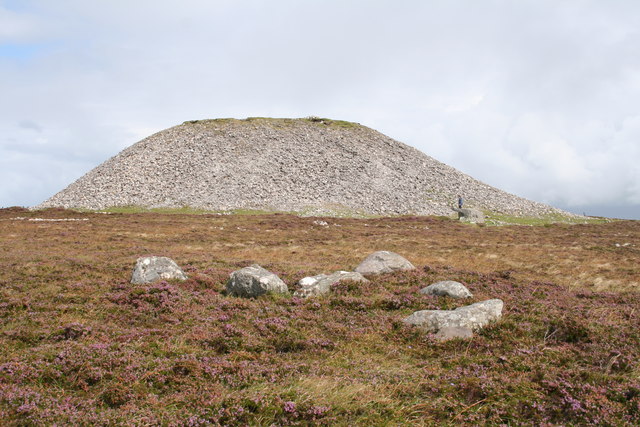
Maeve’s Cairn, the biggest one in Ireland, Knocknarea from geograph.org.uk © Bob Embleton. Shared under Wiki Commons.

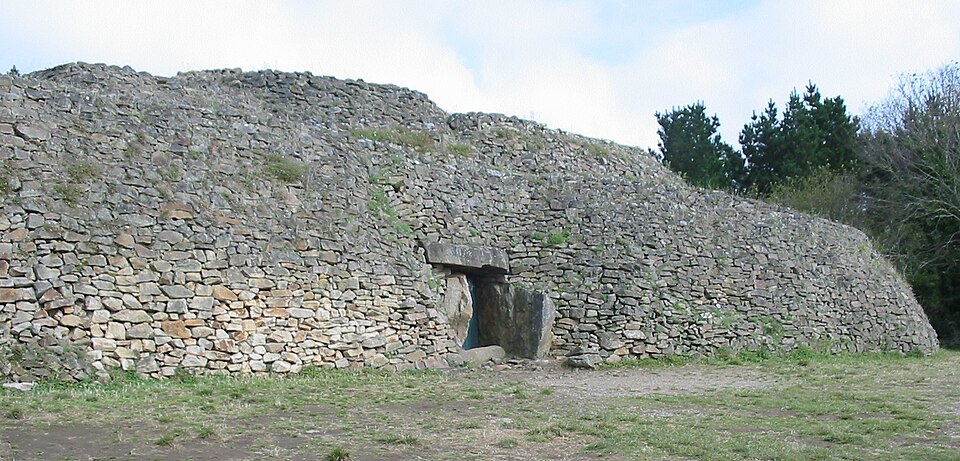
Gavrinis cairn, Brittany, France © Many vyi. Shared under Wiki Commons.

Ancient cairn, ruins of Qa’ableh, Saraag, Somalia. © Abdirisak Shared under Wiki Commons

Stones were used because of their durability. The Ancient Greeks believed that using stones to mark graves would ward off evil spirits and they also symbolised the soul’s eternal nature as they didn’t change over time. They associated them with the god, Hermes. However, stones and their associations with burials have been known to many ancient cultures especially Ireland, Scandinavia North Africa, the Middle East and Asia amongst others where they used them to mark sacred territories where communities would gather to honour their dead. Also the  Neolithic and Bronze periods in Europe in particular. Stones were used to create cairns.  These are usually placed on top of graves as markers and to protect the dead from predators.  In the Bronze Age they may have believed that the stones would stop the dead from rising as in the Jewish faith. Some of these still stand. The word ‘cairn’ comes from the Irish ‘carn’ with the plural being ‘cairn’ . In Scottish Gaelic ‘càrn’ translates to ‘heap of stones.’

They were also seen as a method of defence in that it would ward off predators from the burial site.

However, more recently, there has been controversy regarding the building of cairns on certain sites. This is due to the environmental damage that they can cause. Both the Hawaiian Volcano Observatory and the US National Park Service have complained about visitors prying off pieces from important geological features to make them as well as interfering with existing cairns and the destruction of important trail markers.  In the Peak District one man has made his mission to kick down the dozens of stacks that he finds. BBC News reported that:

‘Many have been created by taking stones from an old wall which may have damaged the habitats of the small creatures that live inside the wall and may have long term effects according to the National Trust who will also disassemble any stacks.

The stacks are seen as :

…. not to mark any burial sites or act as markers but just create unnecessary stacks for aesthetic purposes forgetting their original purpose as wayfinding tools and symbols rather than decorations.’

Stones taken to build stacks along the Great Wall were taken from an old wall which now looks like this. © Stuart Cox

The stones that have been left behind on the little seawall shrine, have presumably, come from the beach below and are a poignant symbol of remembrance signifying that the departed has been visited. The stones emphasise the enduring nature of memory and ite sbaility to enable the departed to live on. He is not forgotten by those who knew him and he died at one of his favourite places. RIP.

©Text and photos Carole Tyrrell unless otherwise stated

Why Jews Put Stones on Graves | My Jewish Learning

Why Do People Put Stones On Graves? Here Are 5 Reasons

Visitation stones – Wikipedia

Why Do People Put Rocks on Gravestones

Cairn – Wikipedia

The History of Cairns: Marking Paths, Memories, and Sacred Spaces – Magnolias + Fluff

Why I kick down Peak District stone stacks – BBC News

Please don’t stack rocks on your next hike. Here’s why. – Lonely Planet

Symbol of the Month – The Pierced Heart

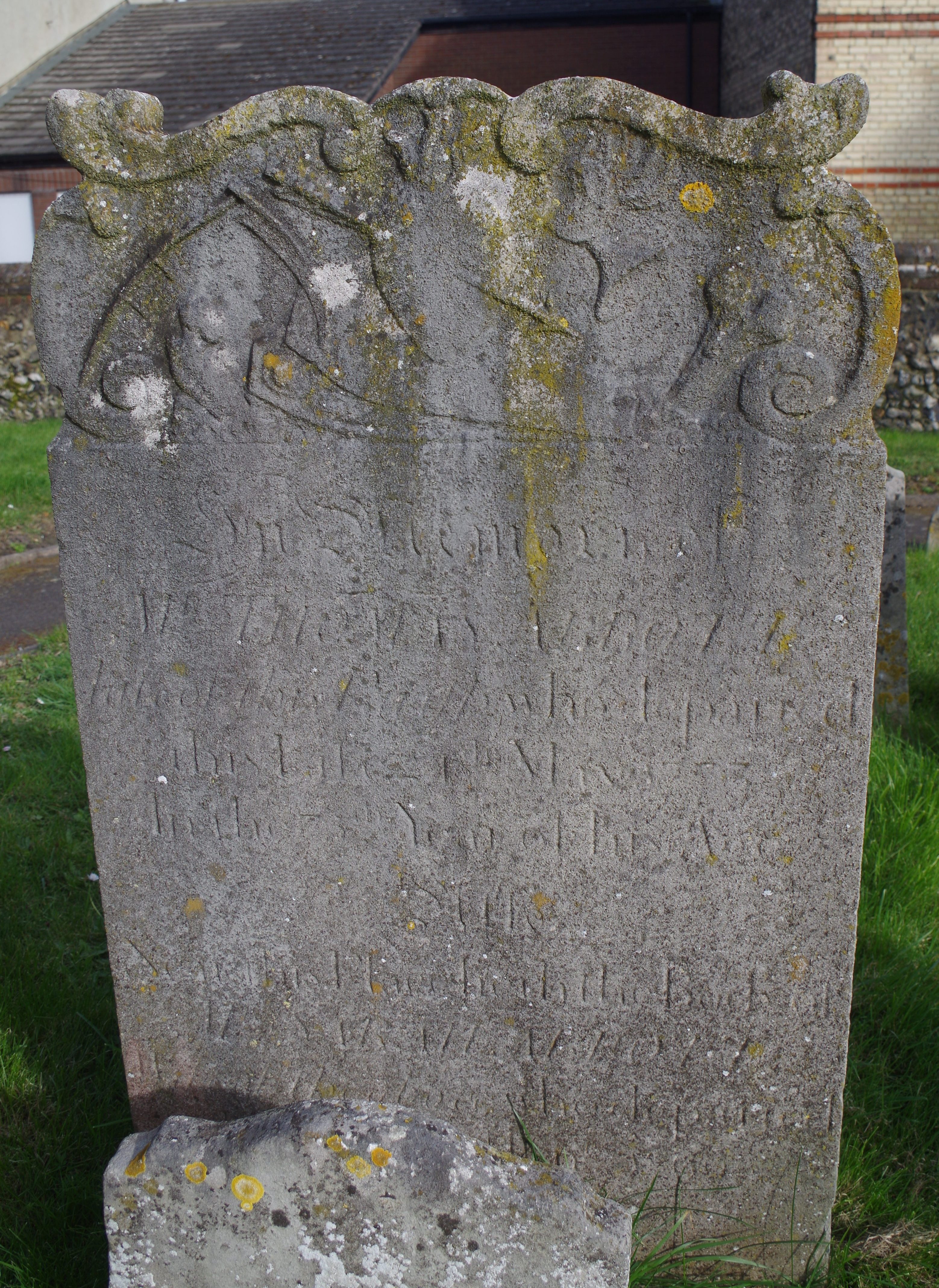
A fine display of symbols on the headstone of Mr Thomas Abbott, St Marys church, St Mary Cray, Kent. ©Carole Tyrrell

The distinctive ‘candlesnuffer’ steeple of St Mary’s church in St Mary Cray has long beckoned to me and I thought that it was time I paid a visit. I didn’t expect to find much and my first impression confirmed it. A few ivy clad altar tombs greeted me and then I wandered around the side of the closed church. What a surprise! A gallery of 18th century headstones placed in lines with some of the more familiar symbols depicted on them. Ouroboros’s, angel heads, skulls, crossbones and then the fine selection in the above photo.


As you can see, it boasts a large, sharp scythe, a half open coffin with the incumbent visible, a trumpet blowing from what seems to be a heavenly cloud and, in the centre, a heart pierced by an arrow. We usually associate a pierced heart with the ones found on millions of St Valentine’s cards as a representation of Cupid’s love darts. You may be thinking that it doesn’t have the usual heart shape but there may be how the stonemason interpreted it. This is the Symbol of the Month – the Pierced Heart

The headstone‘s epitaph reads:

‘In Memory of

Mr THOMAS ABBOTT

Late of this PARISH who departed this life

24 May 1773

In the 75th Year of his life

Also

Near lieth the body of

MRS SARAH ABBOTT  his wife

,,,,who departed ….22 January 1769 aged 69’

Although there are other Abbotts buried in the same churchyard I couldn’t find any sign of a headstone or monument dedicated to Sarah Abbott and there was none recorded on the Kent Archaeological Society survey of the churchyard So whether it has vanished over time we will never know.

A full view of the headstone dedicated to Mr Thomas Abbott, St Marys church, St Mary Cray, Kent
©Carole Tyrrell

On Thomas’s headstone, the heart is surrounded by symbols of resurrection and the Day of Judgement when all of the dead will rise. This is the meaning of the half open coffin lid. So is the pierced heart a symbol of everlasting love which means that the Abbotts will be reunited on that day?  After all, Keister suggests that it’s a sign of matrimony which would fit in with both husband and wife being mentioned on the headstone. However, Cooper comments that the pierced heart is also a sign of contrition so perhaps Mr Abbott felt guilty or sad about outliving Sarah by 6 years.

But let’s discuss other representations and interpretations of the pierced heart as well as the heart in general. It’s one of the most powerful symbols and resonates through many cultures and faiths both ancient and modern. Without it, none of us would be alive as it pumps our lifeblood through our bodies.  This is why it has been a central part of religions and cultures since the beginning of time.

Heart symbolism is significant in, Chinese, Hindu and most religions and cultures. For example, it is one of the eight precious organs of Buddha and also the Aztecs whose rituals involved human sacrifice. In these the chests of the victims were sliced open and their still-beating hearts were offered to the gods.  The Aztecs believed that the heart was the seat of the individual and also a fragment of the Sun’s heart.
Section from the Book of the Dead depicting the Weighing of the Heart showing the heart on one side of the scales and the feather of Maat in the other. Osiris is between them.
Shared under Wiki Creative Commons

In Ancient Egypt, the heart was considered to be the source of human wisdom and the centre of emotions and memory. It could reveal a person’s true character, even after death, and was left in the body after mummification. The ancient Egyptians believed that it would survive death where it would give evidence against or for its owner and so was integral to the afterlife.  This culminated in the Weighing of the Heart which appears in the Book of the Dead.  The heart was given to Osiris, the god of the dead and the underworld who placed it on one of a pair of great golden scales.  On the other was a feather which represented Maat the goddess of order, truth and what was right. If the heart was lighter than the feather then the deceased passed on into eternal bliss.  But if it was heavier, due to past misdeeds, then it was thrown onto the floor of the Hall of Truth where Amut, a god with the face of a crocodile, the front of a leopard and the back of a rhinoceros who was also known as ‘The Gobbler’.  Once he had devoured the heart then the individual ceased to exist. The Egyptians concept of hell was non-existence.

But the heart has an even greater significance in the Judaeo-Christian tradition. There are many references to it in the Bible with over a hundred in Psalms alone.  One of the most famous quotations is in 1 Samuel 16.7 in which it is seen as the seat of emotion:

But the Lord said unto Samuel, Look not on his countenance, or on the height of his stature; because I have refused him: for the Lord seeth not as man seeth; for man looketh on the outward appearance, but the Lord looketh on the heart.’ (King James Bible).

The heart is seen as revealing the inner person but not only as the centre of human life. It also expresses spiritual or emotional feelings, wisdom, piety and righteousness.  There is also the famous quote from Matthew 5:8;

‘blessed are the pure in heart’

However, the heart also has a darker side as an evil person is often described as being ‘blackhearted.’  In Ecclesiastes 8:11 it’s seen as evil:

‘ Because sentence against an evil work is not executed speedily, therefore the heart of the sons of men is fully set in them to do evil.’ (King James Bible).

In Christian iconography the heart took on a symbolic role as an indication of God and piety particularly in the Catholic church where Christ displaying a heart in his hands or on his breast is a key image. It’s known as the Sacred Heart and is one of the most practiced and well known of the Catholic devotions.  The sacred heart is seen as a symbol of ‘God’s boundless and passionate love for mankind.’ The pierced heart was also included in the five wounds that Christ suffered during the crucifixion.

Catholic Holy card depicting the Sacred Heart of Jesus circa 1880. shared under Wiki Creative Commons
The Pierced Heart of Jesus 19th century Portuguese painting. Shared under Wiki Creative Commons
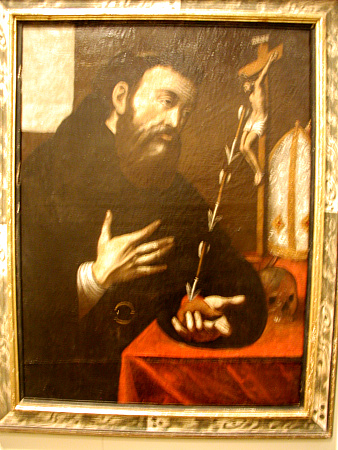
St Augustine 17th century Portuguese painting Museum of Church Paio of San Santiago de Compostela, Spain. Shared under Wiki Creative Commons

One saint in particular, St Augustine, seen above has a special relationship with the pierced heart. He is often shown holding a heart, in some cases topped by a flame and in others pierced by an arrow. Another passage from the Confessions IX, 2:3 may explain the significance of the pierced heart:

‘Thou hadst pierced (sagittaveras) our heart with thy love, and we carried thy words, as it were, thrust through our vitals.’ 

 (The word sagittaveras means literally ‘ shot arrows’ into as in this 17th century painting.

St Valentine’s Day was originally derived from a much darker and bawdier Roman festival called Lupercalia. This took place in Rome from 13-15 February and was intended to avert evil spirits and purify the city.  However, it didn’t involve the giving of chocolates and bouquets of roses. Instead there was animal sacrifice, random matchmaking and couplings which were intended to ward off infertility.  In reality, it was a fertility festival dedicated to Faunus, the Roman god of agriculture and also to the founders of Rome, Romulus and Remus.  It was finally outlawed as ‘unChristian’ in the 5th century by Pope Gelasius who declared the 14 February to be St Valentine’s Day.   There were two actual St Valentines who were both martyrs.

However, the first person to mention the famous day for lovers was actually Geoffrey Chaucer in his 1375 poem, ‘A Parliament of Fowles (or Fowls)’. In this he says:

‘For this was sent on Seynt Valentyn’es day

When every fowl cometh here to choose his mate.’

During the Middle Ages it was believed in both France and England that February 14 was the beginning of the mating season for birds and so an ideal date for romance for all.

However, the heart also has a darker side as an evil person is often described as being ‘blackhearted.’  In Ecclesiastes 8:11 it’s seen as evil:

‘ Because sentence against an evil work is not executed speedily, therefore the heart of the sons of men is fully set in them to do evil.’ (King James Bible).

But it was during the early medieval and early Renaissance when the heart began to resemble the more stylised symbol that we know today.  It took on the shape of a converted A and represented  Amor or Love. Since the 19th century it has been associated with love and romance and the pierced heart has also been known as the wounded heart due to Cupid’s arrows.

But, due to its placing within other potent symbols of resurrection, I interpret the pierced heart on Mr Abbott’s headstone to be a token of love.  Although he wasn’t buried with his wife he may have hoped that they would be reunited on the Day of Judgement when the angels trumpets sounded and the dead met the living again.

It was one of the most potent symbols that I have found in my explorations and I haven’t seen another one – yet.  The pierced heart has also been one of the most fascinating symbols to research because of its many connotations and associations.  Who would have thought that Chaucer might be the father of the St Valentine’s Day industry that we know so well today. 

Was the pierced heart a token of love or a hope of a meeting in the after-life? We will never know but a fascinating collection of symbols for the passer-by to admire.

©Text and photos Carole Tyrrell unless otherwise stated.

References and further reading:

Stories in Stone, Douglas Keister, Gibbs Smith 2004

An illustrated Encyclopedia of Traditional Symbols, J C Cooper, Thames & Hudson, 1979

http://www.thecemeteryclub.com/symbols.html

https://www.kentarchaeology.org.uk/research/monumental-inscriptions/st-mary-cray

https://www.gresham.ac.uk/lectures-and-events/affairs-of-the-heart-an-exploration-of-the-symbolism-of-the-heart-in-art

https://www.midwestaugustinians.org/the-augustinian-emblem

https://www.ncbi.nlm.nih.gov/pmc/articles/PMC3960665/#:~:text=In%20the%20weighing%20of%20the,were%20placed%20with%20the%20deceased.

https://en.wikipedia.org/wiki/Sacred_Heart

https://www.christianiconography.info/augustine.html

https://en.wikipedia.org/wiki/Heart_symbol

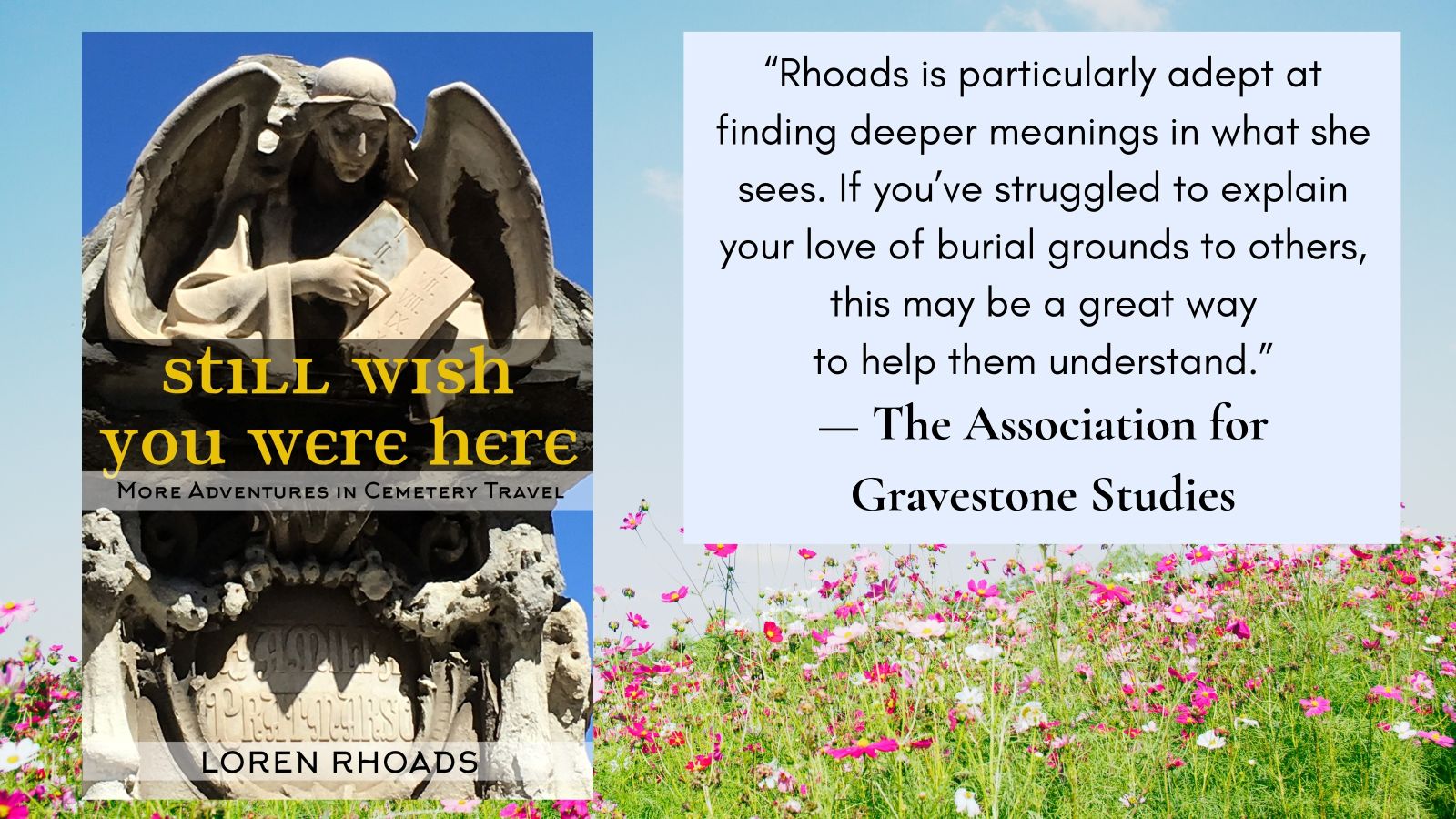
An opportunity to support the latest book from Loren Rhoads, a renowned and respected taphophile!

Loren Rhoads is a US based committed taphophile or cemetery enthusiast, and has written several brilliant, informative books on cemeteries, in the US and further afield.   These include:

  • 199 Cemeteries to see before you die
  • 222 Cemeteries to see before you die
  • Wish you Were Here: Adventures in Cemetery Travel
  • Death’s Garden Revisited, Personal Relationships with Cemeteries

She is an absolute doyenne in the taphophile world and Loren’s latest, ‘Still Wish you Were Here: More Adventures in Cemetery Travel’ is being crowdfunded on Kickstarter.  The backing has already exceeded the requested amount which means that Loren can achieve even more with her book.

In her accompanying video Loren describes ‘Still Wish You Were Here’ as being:

‘part travel memoir, part cemetery history with 36 graveyard travel essays written for various organisations and publications.’ 

She visited 50 burial sites from Michigan, to London, Singapore, Barcelona, Tokyo and more and has confessed to ‘absolutely loving cemeteries and their stories.’ She finds cemeteries as inspiring as I do .  Check out her video at:

Still Wish You Were Here: More Adventures in Cemetery Travel by Loren Rhoads — Kickstarter

I was one of the people who were invited to take part in  ‘Death’s Garden Revisited: Personal  Relationships with Cemeteries’ which was also successfully funded on Kickstarter.  It was a fabulous looking book and I was proud to be part of it and to read other essays by fellow taphophiles.  So, I have every faith in Loren creating another terrific book on cemeteries and have backed it myself!  But don’t take my word for it – this is what the Association for Gravestone Studies have said:

Every little helps and there are several ‘rewards’ for different levels of backing including a cemetery party!   So please, if you are a fellow taphophile and are able to , please consider supporting Loren’s book – if anyone can do it she can!

A poignant memorial to a tragic accident – St Lawrence in Thanet, Ramsgate, Kent
Anonymous epitaph. © Carole Tyrrell

A poignant memorial to a tragic accident – St Laurence in Thanet, Ramsgate, Kent

I was exploring the churchyard of St Laurence in Thanet, in Ramsgate, Kent, when I found this little tombstone.  It’s a deceptive churchyard because as I went behind the building it was actually much larger than it initially appeared.  There are 1400 graves there and it is now closed to burials but there is now a Garden of Remembrance.   The churchyard was consecrated in 1275 which gives you some idea of how long there has been a church on the site.  The oldest known burial has been dated to 1656.
The young woman commemorated here was anonymous at the time of her burial and her epitaph reads:

IN MEMORY

Of a YOUNG LADY, who as

She was walking upon the

CLIFFS

on Oct 4th 1801

unfortunately fell over

and was killed upon the

Spot.

It was St Laurence’s churchwardens who raised the headstone to her and she was later identified as Louisa Grevis who was the second daughter of Captain Charles James Grevis-James. Louisa was born on 13 August 1773 in Doncaster and died aged 28.

This is all I have been able to find about about her so far.  Although her name isn’t on the headstone, at least she was given a decent burial and remembered. 

©Text and photos Carole Tyrrell unless otherwise stated.

References and further reading:

Louisa Grevis (1773-1801) – Find a Grave Memorial

‘Not Lost But Gone Before’ Margaret Bolton, St Laurence in Thanet church leaflet

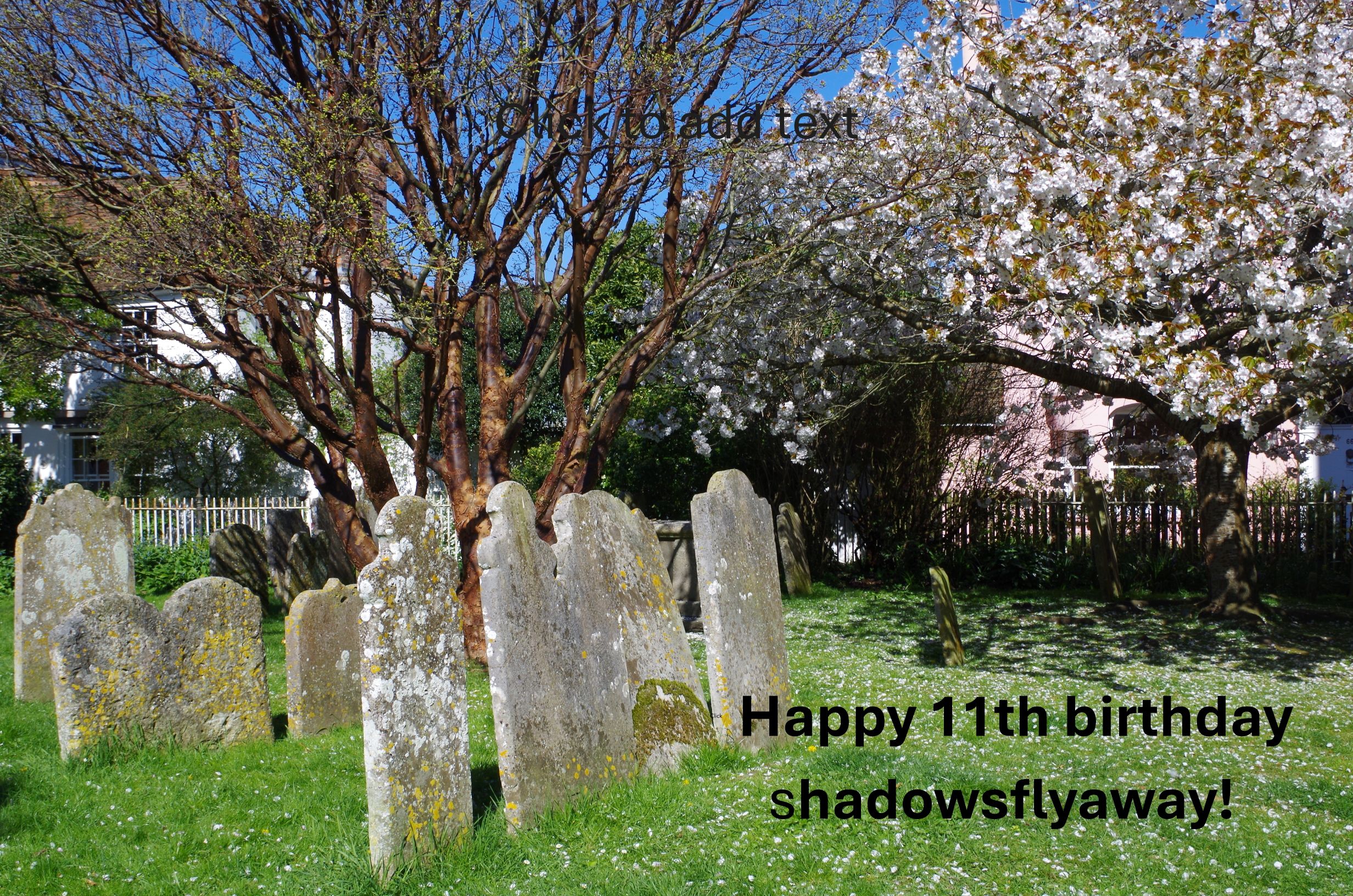
Happy 11th birthday shadowsflyaway!

Yes 2025 is the 11th birthday of shadowsflyaway!

I am still travelling the highways and byways exploring ancient churchyards and cemeteries in search of symbols and interesting tales. You never know what you’ll find so it’s always an adventure for me. There was the 200 year old unsolved murder and discovering traces of Chatham’s maritime history in its epitaphs. Please note that there will be no Symbol of the Month this month.

But I also want to thank my readers for their comments and likes over the years – they have been much appreciated!

So let’s raise a glass, mug, cup, goblet, of whatever you feel is appropriate! Happy Birthday shadowsflyaway!

The image is of the churchyard of St Mary’s in Rye, Sussex on a lovely April day in 2025.

Symbol of the Month – The Mass Dial

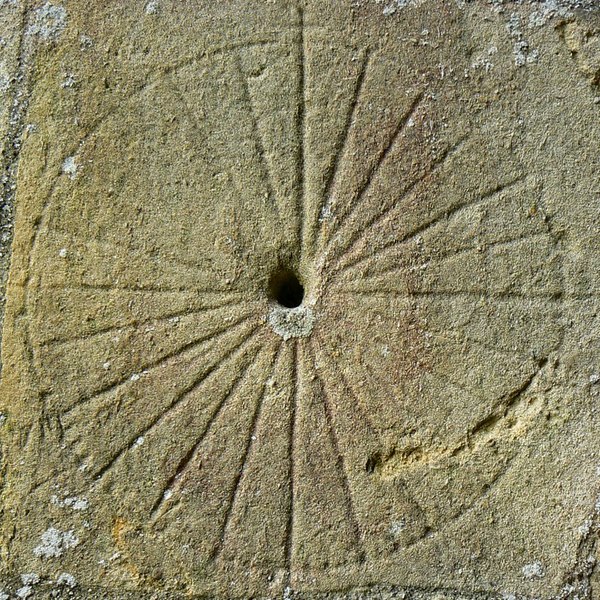
In light of the mass dial found at St Mary’s In the Marsh, I thought it might be timely to repeat the 2021 Symbol of the Month about them. Easily missed as they are not always where you expect to find them, they are survivors from a time where there were no time keepers such as clocks. People rose with the sun and went to bed at sunset which is why they were so important to villages and their inhabitants.

Mass Dial set into a wall at St James’s, Cooling, Kent. © Carole Tyrrell

Despite the somewhat dispiriting summer, I was determined to escape from the house and see at least one or two local churches.  My little part of Kent is known as Charles Dickens country (I’m not sure that he knows about this) and there are several buildings and churches associated with him. 

One of these is St James’s church at Cooling.  Although closed for services, it is still kept open by local people on most days. The Churches Conservation Trust take care of it and it’s in an isolated spot which borders onto marshes.  It’s also a fair walk from the nearest town, Cliffe.  I didn’t see any signs of much of a village there although there is a 14th century ruined castle nearby. St James’s is the end of a terrace of houses appropriately named Dickens Walk. 

l’ll talk more about St James in a later post as it inspired one of Dickens most atmospheric scenes in ‘Great Expectations’ with the childrens graves in the churchyard.  But while I was there, I found a symbol set within a wall that I had heard of but had never previously seen an example – this was the Mass Dial.  I have to admit that if it hadn’t been pointed out on a display board within the church that I might have missed it as it’s set into an outer wall of the church.  Not many have survived and Victorian restoration may have meant that they are found in odd places.

Mass dials are rare survivors and were a way of telling time before the invention of mechanised clocks and timepieces in the 14th century. 

It was the Anglo-Saxons who established the dials.  There had been confusion with all the different calendar systems such as the Lunar and Julian, and with a largely illiterate population, a visual way of telling the time was necessary.

It was the Anglo-Saxons who established the dials.  There had been confusion with all the different calendar systems such as the Lunar and Julian, and with a largely illiterate population, a visual way of telling the time was necessary.

According to the Building Conservation website:

the Anglo Saxons divided night and day into 8 artificial divisions known in Old English as Tid or Tides.  The 4 daylight divisions were called:

Morgen – 6am – 9am

Undern – 9am to noon

Middaeg – Noon to 3pm

Geletendoeg – 3pm to 6pm. 

Morning, noon and evening are still in use as the last remnants of this division still in use today as are moontide, yuletide and shrovetide.’

But, throughout the Middle Ages, the Catholic church emphasised the reciting of prayers and fixed times during the day as pre-Reformation Britain was still a Catholic country.  These were known as the Divine Offices and were:

Matins – pre-dawn

Prime (6am)

Terce (9am)

Sext (12pm)

None (3pm)

Vespers (sunset

Nocturnes (after sunset) 

However, these were not set as the sun might not shine for a few days and if a mistake was made then the parish priest might end up celebrating certain feasts on different days from a neighbouring parish. 

Mass Dial, St John’s church, Devizes, Wiltshire – note that it still has the marker in it showing how it worked.© Brian Robert Marshall under Geograph Creative Commons Licence.

They were a form of medieval sun dial and originally the hole in the centre of the dial would have contained a horizontal wooden or metal rod that cast a shadow.  This was known as a ‘gnomon’ which is pronounced as No Mon.  These may well have been the local community’s only way of telling the time although medieval life revolved around getting up at sunrise and going to bed at sunset.

According to the British Sundial Society,

‘mass dials can be found on the south side of many churches.  They are usually small and often located on the walls, buttresses, windows and doorways of a church.  However, they can also appear in more unlikely places such as inside churches and on north walls where the sun rarely shines. But they have also been found in porches suggesting that the porch was built sometime after the dial was made.’

The Society goes onto suggest that this may be

 ‘due to the stone blocks having been re-used in the rebuilding of the church.’ 

The location of the Cooling one may indicate that it’s been moved.

Again, according to Building Conservation:

‘if a mass dial is found anywhere other than a church and other than the south elevation of a church, this usually means that it has been moved from its original location often as part of a Victorian restoration.  In such cases, the dials were sometimes rebuilt into the fabric upside down, making them unreadable.’

The positioning of mass dials is important and can vary.  They may be on the smooth cornerstone or quoin of a tower, nave or chancel, above a porch or on a door or window jamb.  Often they are set at eye level and in one church it is cut into a window ledge.

Mass dial, All Saints.Oaksey, Wiltshire. © Brian Robert Marshall. Shared under Wiki Creative Commons

Mass Dial, St Michael & All Angels., Heydon, Lincs. ©Richard Croft. Shared under Wiki Creative Commons

Mass dials also vary in their design as:

‘Some have either a few or many radiating lines, {others} have ‘hour’ lines within the circles or semi circles and others are constructed with a ring of ‘pock’ marks drilled into the stone.’  

British Sundial Society

There are also variants in the way that the hour lines are numbered as they may have Roman numerals or even Arabic ones.  They’re also known as scratch dials as

‘many are quite crudely scratched into the stone.’ British Sundial Society

A full circle version, All Saints, Yatesbury. ©Brian Robert Marshall Shared under Wiki Creative Commons

The 14th century brought mechanical clocks that created a regulated 24 hour time period.  As a result, medieval life changed as it was no longer so reliant on daylight.  However, mass dials were still in use but now they were a complete circle with lines radiating from the central gnomon to simulate the 24 hour clock.  But by the 16th century they had fallen out of use.  Sundials and mechanical locks had overtaken them and it was no longer the Roman Catholic church that dominated after the Reformation.

Mass dials are of great archaeological and historic importance.  However, many of them are now indecipherable due to erosion and vandalism and people may not even realise what they are or their significance.

© Carole Tyrrell Text and photos unless otherwise stated.

References and further reading

https://sundialsoc.org.uk/dials_menu/mass-dials/

https://www.buildingconservation.com/articles/mass-dials/mass-dials.htm

http://massdials.org.uk/links.htm

A Spring saunter in the footsteps of E Nesbit – Part 2 – The last resting place and final home.

St Mary’s in the Marsh Shared under Wiki Commons

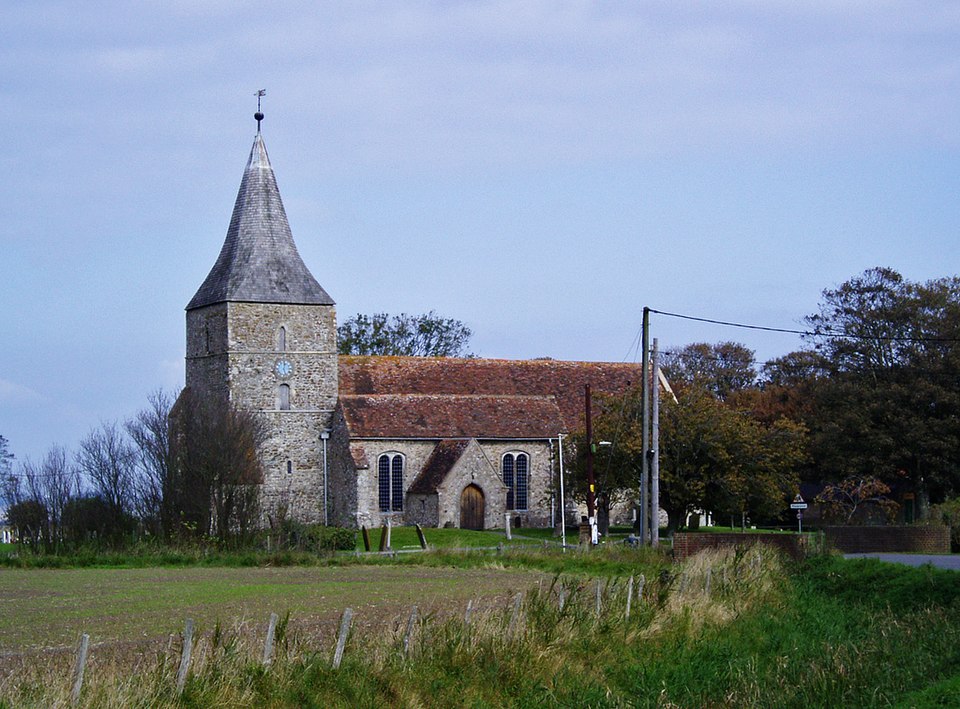
Edith Nesbit is buried in the churchyard of St Mary in the Marsh which was our next church. We left Brenzett and its attractive cats to travel through the wonderful Kent countryside. Blossom foamed over the hedgerows and the fields and marshes seemed to stretch on forever. There was a sense that Nature was beginning to stretch herself and come back to life after the winter.


Early bluebells nodding in the breeze, St Mary’s in the Marsh ©Carole Tyrrell

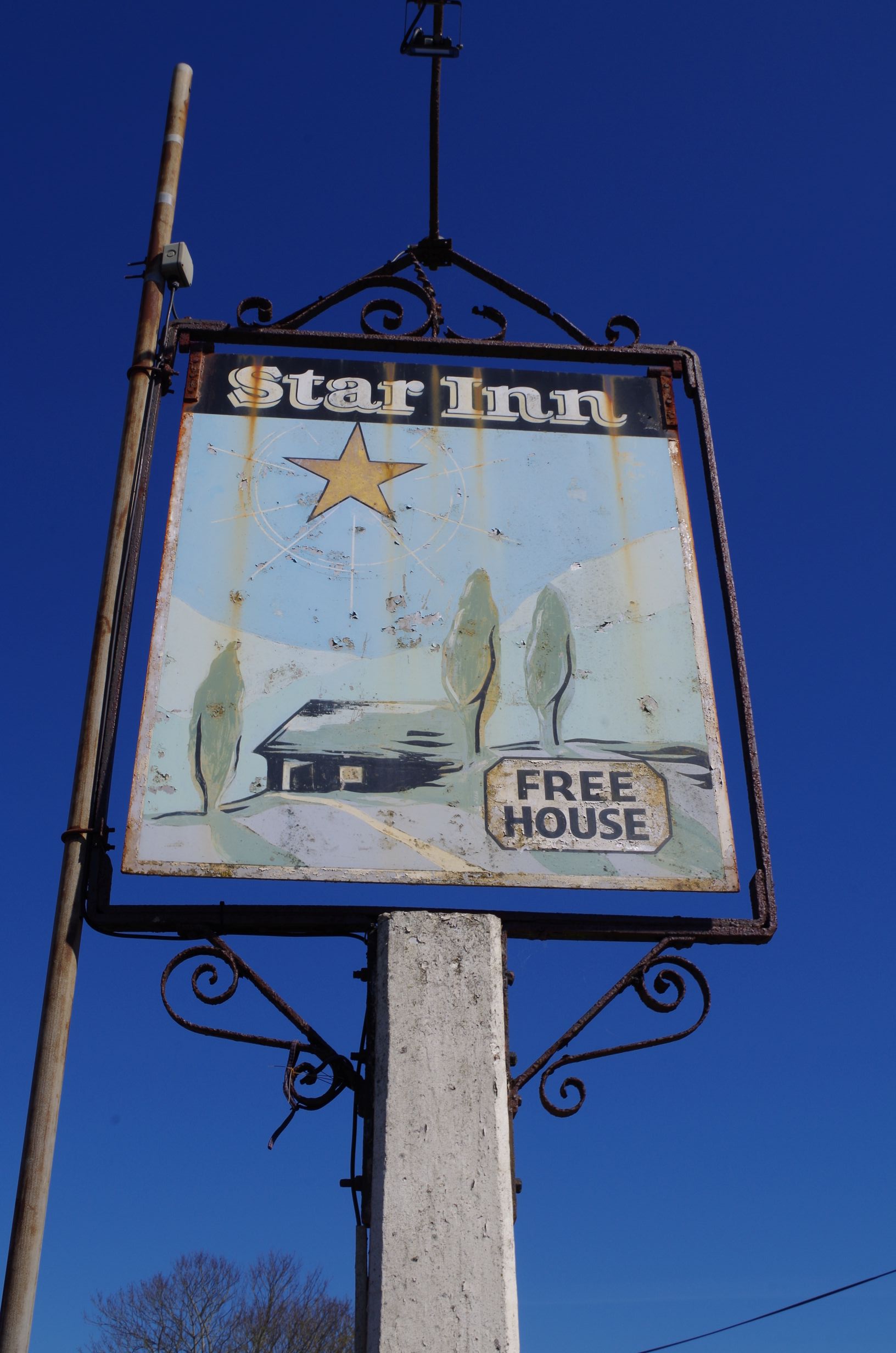
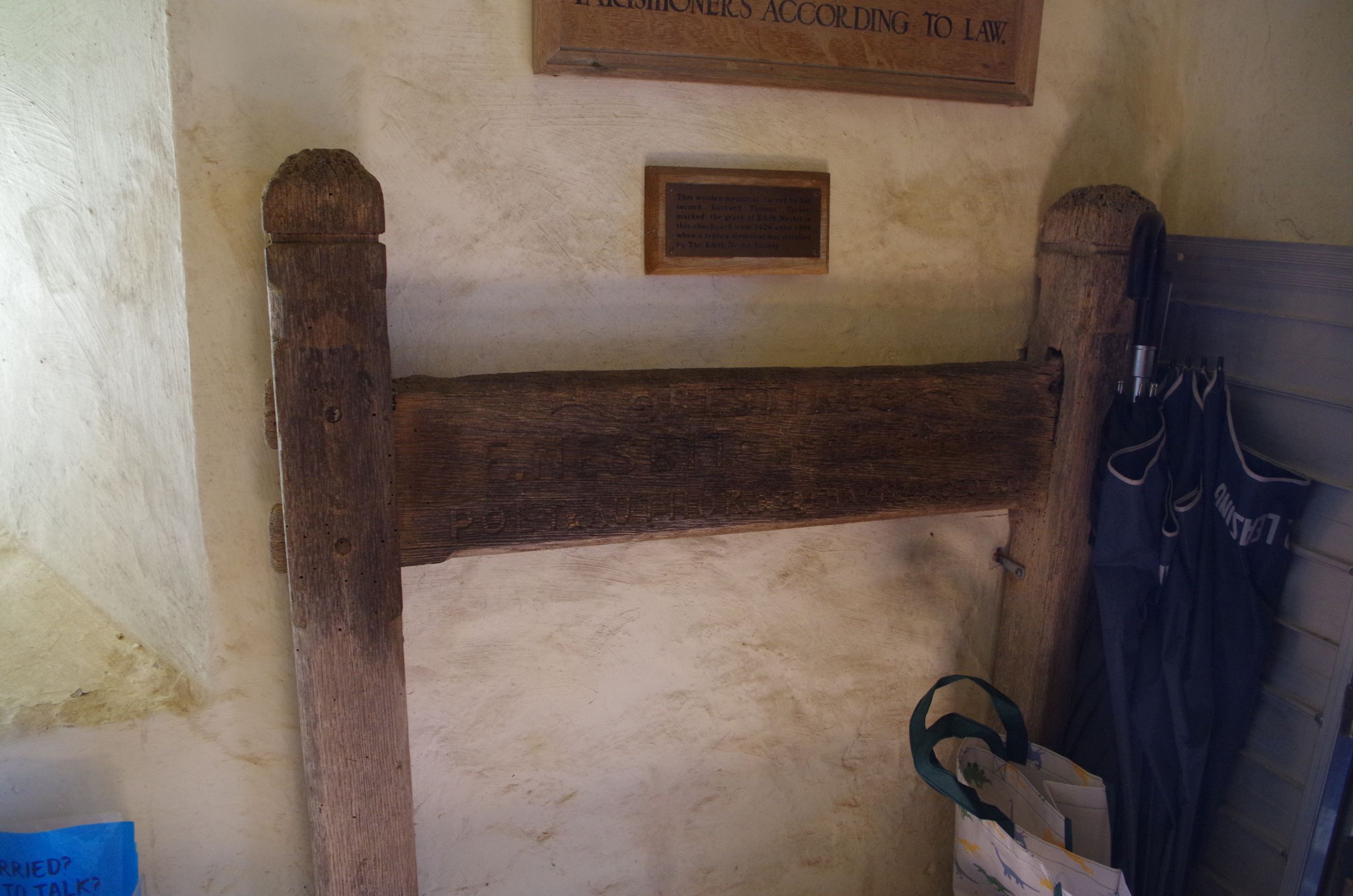
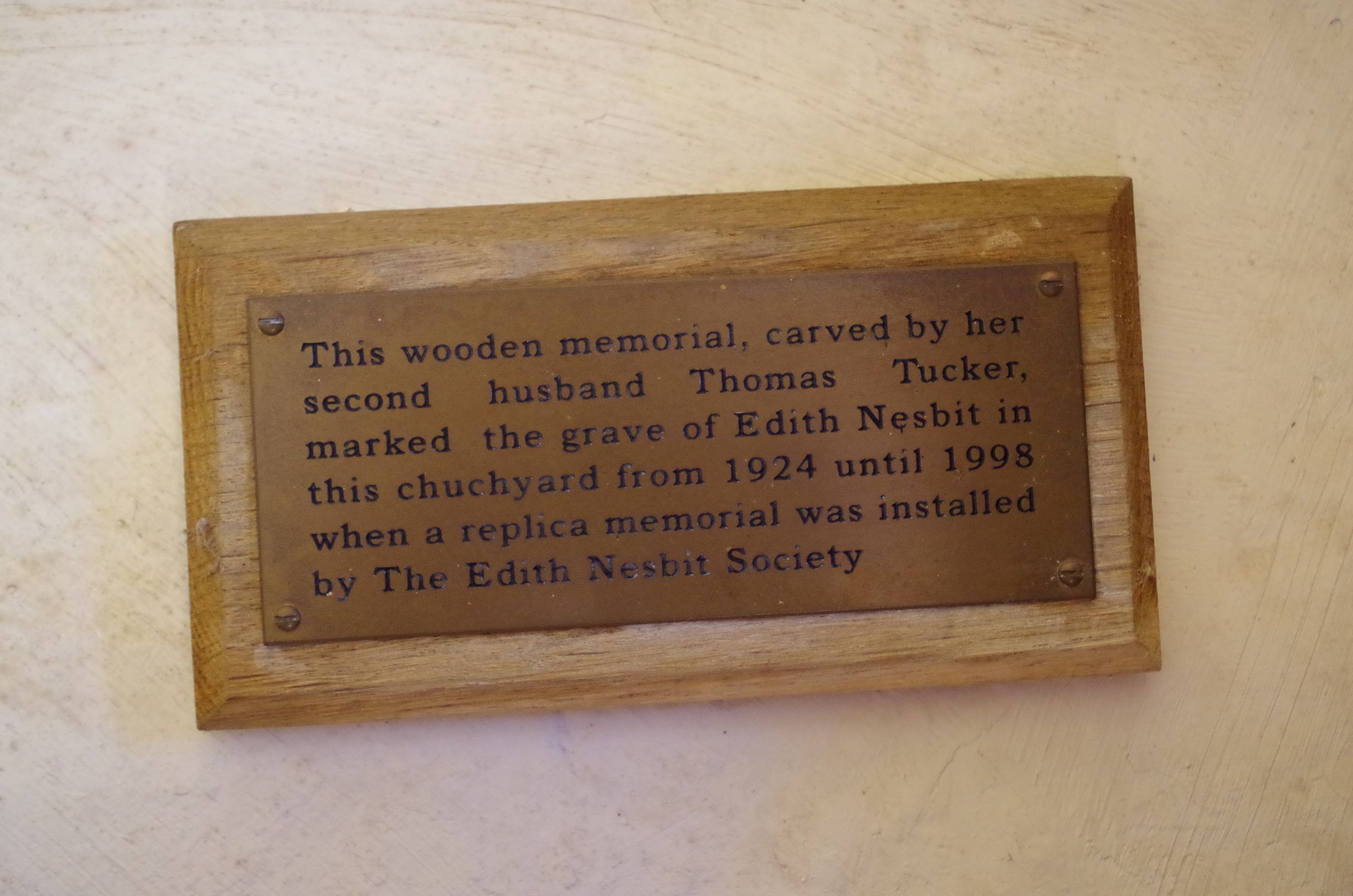
St Mary in the Marsh was a more substantial church and we were greeted by the Star Inn which ‘would have been Edith’s local’ but is now a private house. It’s a large, rambling building and was opposite the church. We soon found her last resting place in front of St Mary’s lying under the morning sun and with a simple wooden rail as a marker. It was Tommy, her second husband, who erected the first wooden rail commemorating Edith. This has suffered over the years and is now inside the church porch with a small plaque.  The one in the churchyard today is a replacement put up by the E Nesbit Society.  

E Nesbit grave marker.©Carole Tyrrell

The original grave marker now in St Mary’s church porch. ©Carole Tyrrell

Plaque above E Nesbit’s grave marker. ©Carole Tyrrell

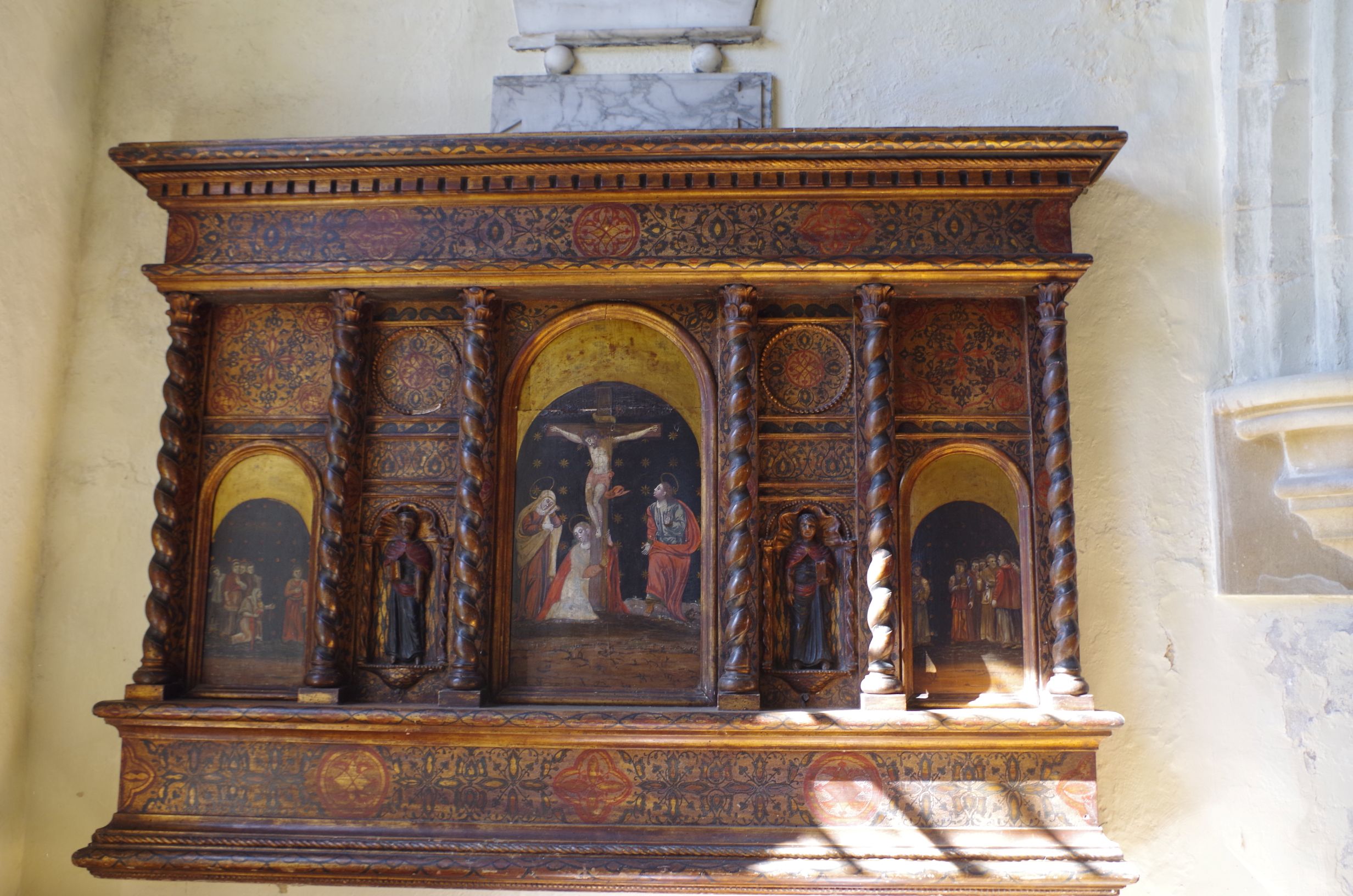
St Mary’s was less plain inside than St Eanswith although there were still box pews and whitewashed walls.  There was a magnificent triptych on one wall and another little plaque inside the nave dedicated to Edith. Three pairs of eyes were watching us as we explored. There were two small heads attached to two pillars of a sedilia by the altar and another, larger one at the base of a column.

Two ancient faces watching from the sedilia by the altar.©Carole Tyrrell

Another watching face from the base of a column. All four images ©Carole Tyrrell

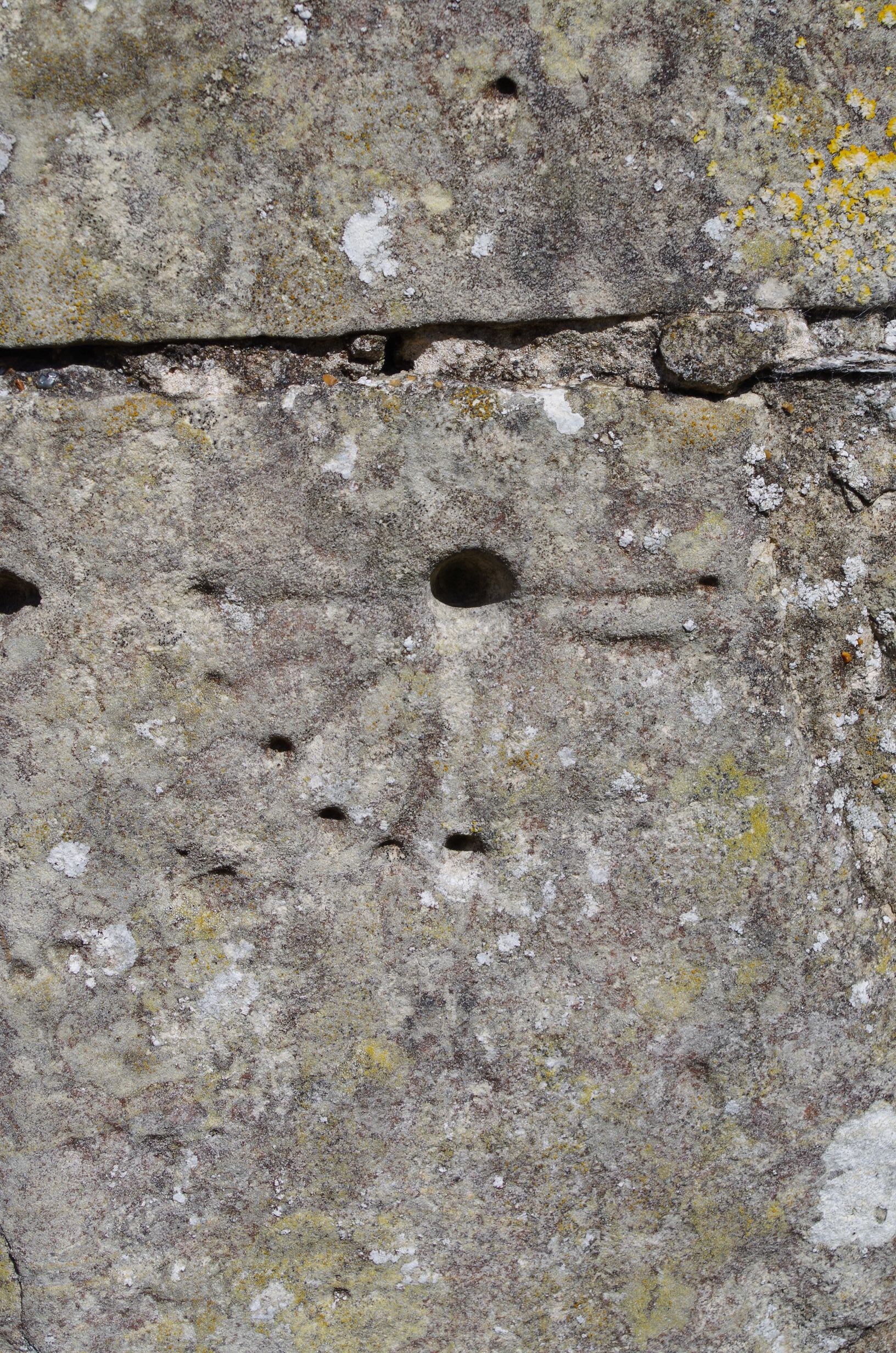
Outside early bluebells nodded in the breeze and we found a medieval mass dial set into a wall. (please see Symbol of the Month – The Mass Dial published 18/10/21)

Medieval mass dial set in wall. ©Carole Tyrrell

Afterwards we went on to explore churches and other places associated with Russell Thorndike and his famous creation whose exploits took place on the Marshes, Dr Syn.

Our final port of call was St Mary’s Bay in Dymchurch where we saw the house known as ‘The Jolly Boat’ which was E Nesbit’s final home which she are with Tommy. It is now a holiday home and is situated at the end of Nesbit Road appropriately enough.  As we admired it, we were lucky enough to see a steam train from the Romney and Hythe railway come puffing past as it steamed into the station nearby.  In the town one of our party had spotted a blue plaque on a house called ‘The Cottage’ which commemorated its famous residents: the painter Paul Nash, Noel Coward and Edith all stayed there. We did wonder if it had been at the same time and one of our party commented that ‘it must have been quite a party!’

The Jolly Boat, April 2025. ©Carole Tyrrell

Nameplate of ‘The Jolly Boat’©Carole Tyrrell

A steam train came puffing past! ©Carole Tyrrell

Blue plaque outside The Cottage, Dymchurch. ©Carole Tyrrell

E Nesbit had a fascinating life with her strong Socialist views and published over 60 books, some of which are still in print today. The film version of ‘The Railway Children’ is a much loved classic although her ghost stories are less well known.  They were reprinted last year in ‘The House of Silence’ by Handheld Press.

It was a wonderful day travelling the marshes and understanding how they inspired Edith where she is still remembered with such affection.

©Text and photos Carole Tyrrell unless otherwise stated

References and further reading:

Brenzett, Church of St Eanswith — Romney Marsh Historic Churches Trust

St Eanswith’s Church, Brenzett, Kent

The Project Gutenberg ebook of Grim Tales, by E. Nesbit.

https://edithnesbit.co.uk  The Edith Nesbit Society

E. Nesbit – Wikipedia