A Spring saunter in the footsteps of E Nesbit – Romney Marshes, Kent Part 1- Man size in Marble

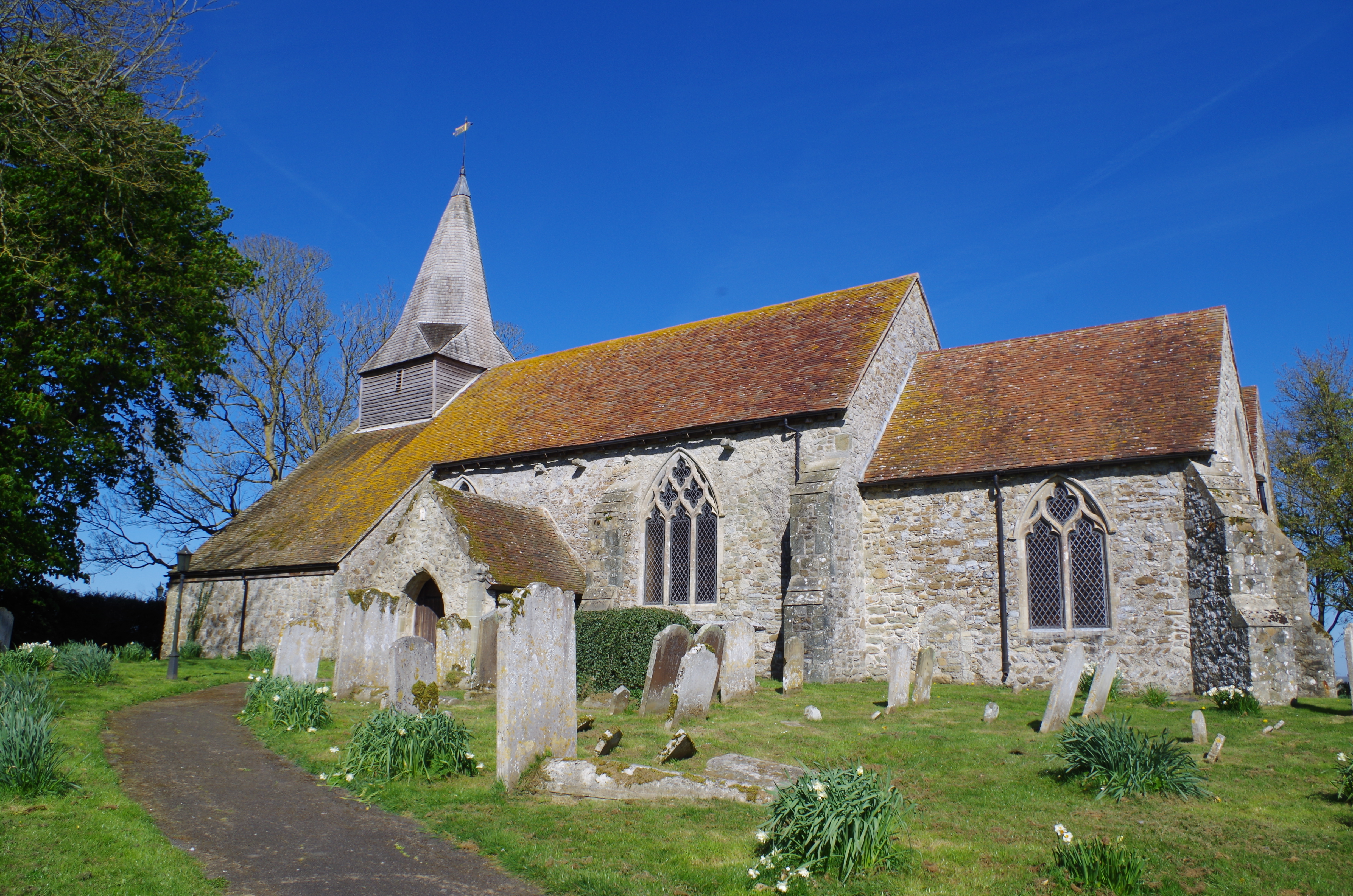
St Eanswith, Brenzett © Carole Tyrrell

The churches of the Romney Marshes are isolated and you’ll need your own transport to visit them. But there are hamlets and villages here and there and I could imagine how it must feel in mid-winter with dark short nights.

However it has long been one of my ambitions to explore the churches that are on the marshes. So when I was offered the chance I didn’t hesitate.  It was a wonderful Spring day, sunny and bright, and we were all eager to explore the Marshes.

Our first church was St Eanswith in Brenzett. This was a plain little church with a candlesnuffer steeple on top of a small slope and was surrounded by a small churchyard dotted with daffodils. There was an azure blue sky and a hare was spotted racing across a bare field at the back of the church. It’s one of the smallest churches on the Marshes and is dedicated to a 7th Saxon princess who founded a nunnery in Folkestone in 630AD. There is now nothing left of the Saxon building and the present church can only be dated back to the 12th century when the Normans rebuilt it.
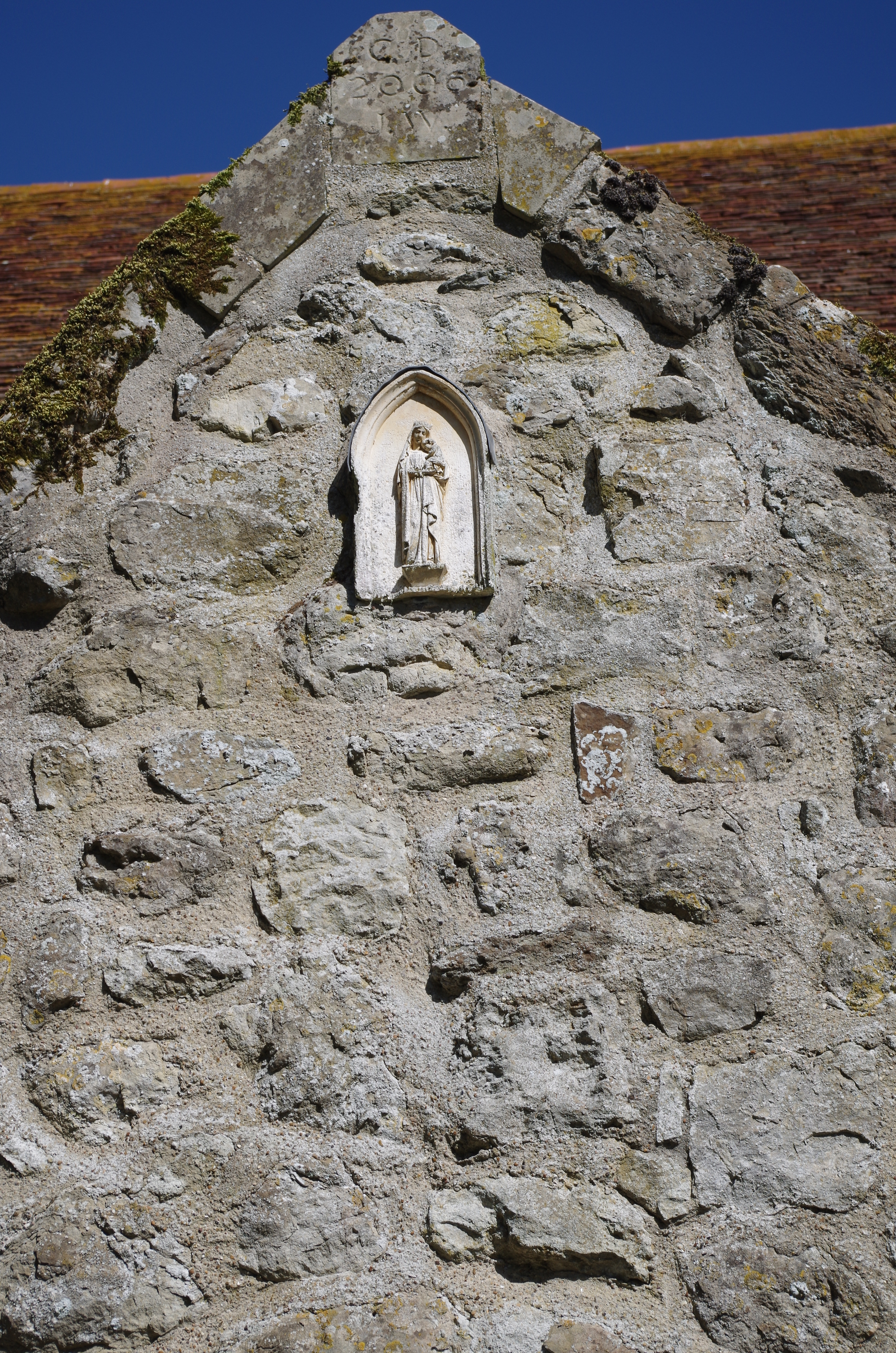
A small statue of St Eanswith over the top of the porch. © Carole Tyrrell

A large Maine Coon cat, who was obviously returning from a night out through the churchyard to its home in the little straggle of houses nearby, caught sight of us and tried to hide by running from patch after patch of daffodils. Then its owner came out of the house that it ran into with another Maine Coon cat!

Hide and seek © Carole Tyrrell

Inside St Eanswith it was plain, with white washed walls and dark wood pews. The pulpit had a raised roof panel which I’d not seen before and at the altar end of the church was the table tomb that we had come to see. This was the Fagge monument and is the only monument in the church. It is dedicated to a father and son, both confusingly called John, and it is a pair of alabaster sculptures of two men in fashionable 17th century clothes. The man in the foreground is portrayed as lying on his back on a sculpted cushion with his left hand on his chest while the man behind is lying on his elbow with his right hand under his chin and his left hand on his left leg. There are visible cracks and damage with repairs which you would expect over the centuries. They are beautifully sculpted. There are small coats of arms beneath the figures at corners which bring a small splash of colour. John Fagge the elder died in 1639 and his son and heir died in 1646.
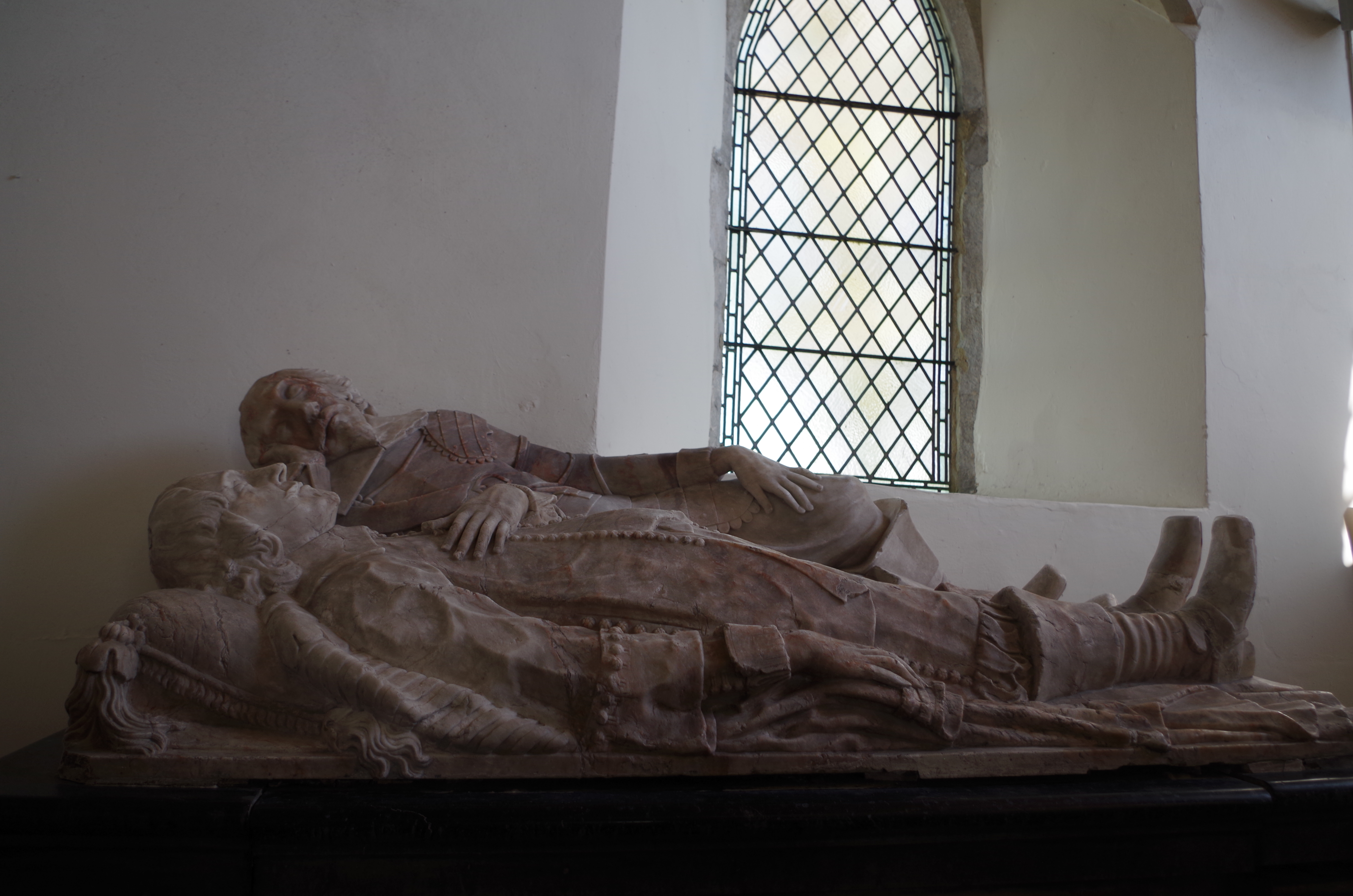
The Fagge monument, St Eanswith. © Carole Tyrrell
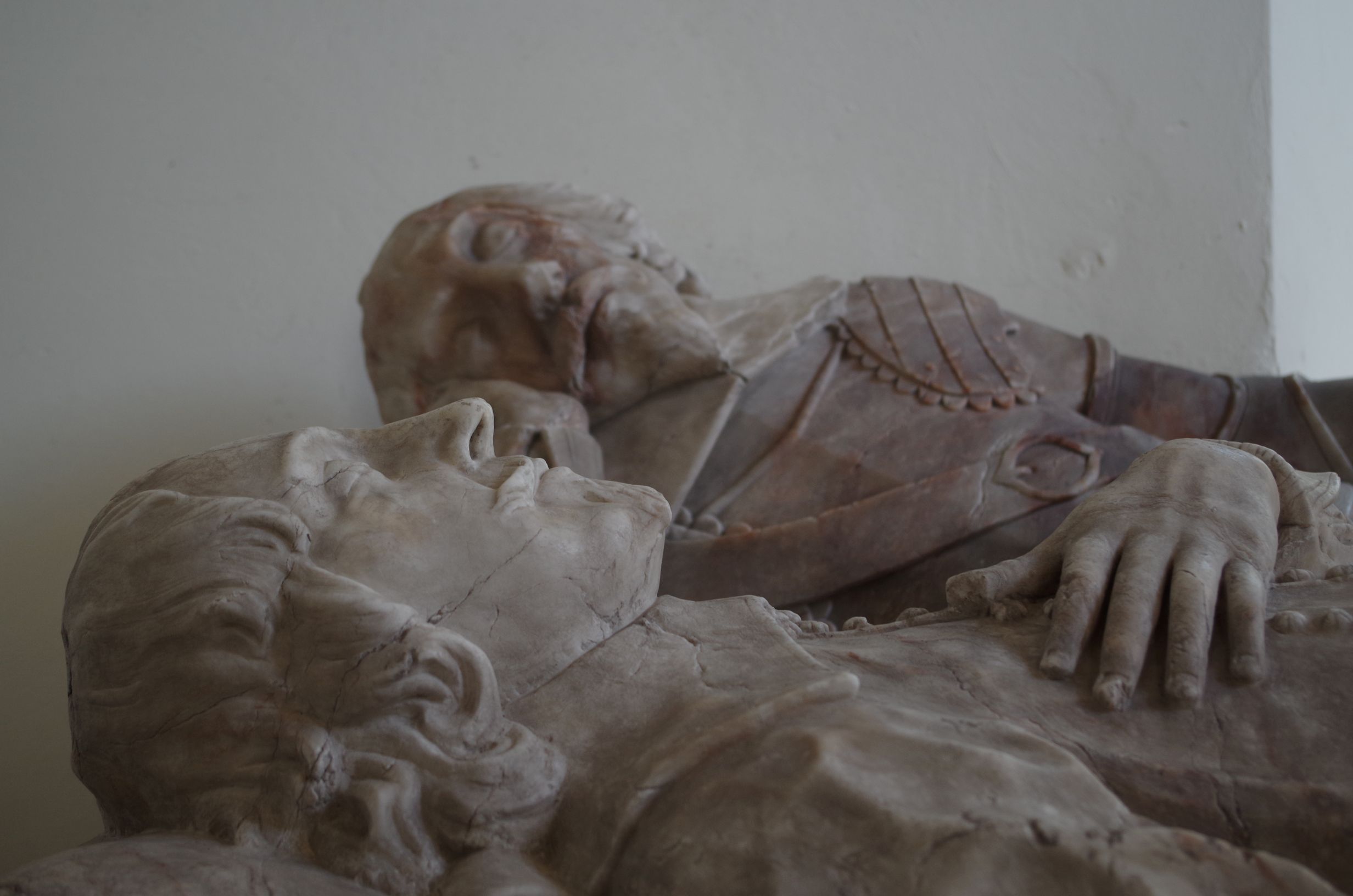
Close up of the Fagge monument. © Carole Tyrrell

Close up of hands showing the ravages of time. © Carole Tyrrell

Epitaph to the Fagges and one of their coat of arms.© Carole Tyrrell

This is the monument that inspired one of E Nesbit’s most famous stories, ‘Man Size in Marble’ which was adapted by Mark Gatiss for the 2024 BBC Christmas ghost story and retitled ‘the Stone Woman’.  A young married couple have moved to the country and their housekeeper tells them of a certain night when something walks from a local church to their house. They take no notice of this but when the husband is called away and leaves his wife alone in the house….you can read the story here:  The Project Gutenberg ebook of Grim Tales, by E. Nesbit.

This is English folk horror clashing with modern reasoning and belief. Nesbit creates the dark countryside so well and also the central characters incredulity at what they are being told. They are still in love with endearments such as ‘wifie’ and ‘dearest’ which makes the ominous events that are about to happen all the more shocking.
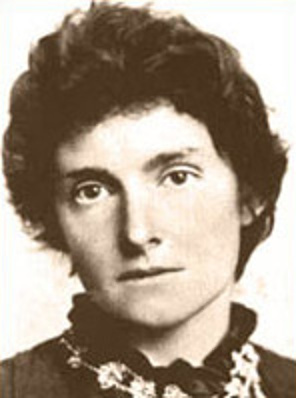
E Nesbit c. 1890 Shared under Wiki Commons

E Nesbit (1858-1924)  is most known for ‘The Railway Children’ which was first published in 1905 and has never been out of print. It was also a classic and well loved childrens film. Some of her other children’s stories have also been adapted for TV.  But she also wrote ghost stories, some of which were recently published by Handheld Press in the collection ‘The House of Silence.’

She was only 4 when her father, an agricultural chemist, died. Edith’s sister, Mary, suffered from ill health and as a result the family travelled in the UK and France. She died in 1871 of tuberculosis after becoming engaged to the poet Phillip Bourke Marston.  After Mary’s death, Edith and her mother lived in Halstead Hall, Halstead in Kent which is considered to be a possible location for ‘The Railway Children’.  When she was 17 they moved to Elswick Road in Lewisham. 

She married Hubert Bland on 22 April 1880. They met when she was aged 18 and at 21 and 7 months pregnant they tied the knot. It was a difficult marriage to say the least as he was always being unfaithful. Edith had 3 children by him and adopted 2 more from one of his long term affairs. It was a complicated family.  She and Hubert were both fervent socialists and joined the Fabian Society, jointly editing its journal ‘Today.’ But this work often took second place to Edith’s writing as she became more successful. The Fabian Society ultimately became part of the Labour party.

From 1899-1920 she lived at Well Hall Eltham. The house is long gone but the garden remains as a public park. She also had a second home at Crowlink, Friston, East Sussex when she entertained.

Bland died in 1918 and she married her second husband, Thomas ‘the Skipper’ Tucker in Woolwich where he was the captain of the Ferry.  They both lived at St Mary’s Bay, Dymchurch at their house ‘The Jolly Boat’ where she died on 4 May 1924. It may have been from lung cancer as she was a great smoker.  Tommy died at the same address on 17 May 1935. To read more about Edith and her life please visit: https://edithnesbit.co.uk

It was such a privilege to see the Fagge monument in the flesh so to speak and also a writer’s inspiration. I could easily imagine Brenzett on a winter’s night, the little terrace of houses with their curtains drawn and lights out as something stirs and moves within the small church and suddenly the top of the tomb is empty and something that shouldn’t be is walking…..

A Spring Saunter in the footsteps of E Nesbit Part 2 her late life on the Marshes

© Carole Tyrrell photos and text unless otherwise stated

Brenzett, Church of St Eanswith — Romney Marsh Historic Churches Trust

St Eanswith’s Church, Brenzett, Kent

The Project Gutenberg ebook of Grim Tales, by E. Nesbit.

https://edithnesbit.co.uk  The Edith Nesbit Society
E. Nesbit – Wikipedia

Symbol of the Month – An Angel with Trumpet

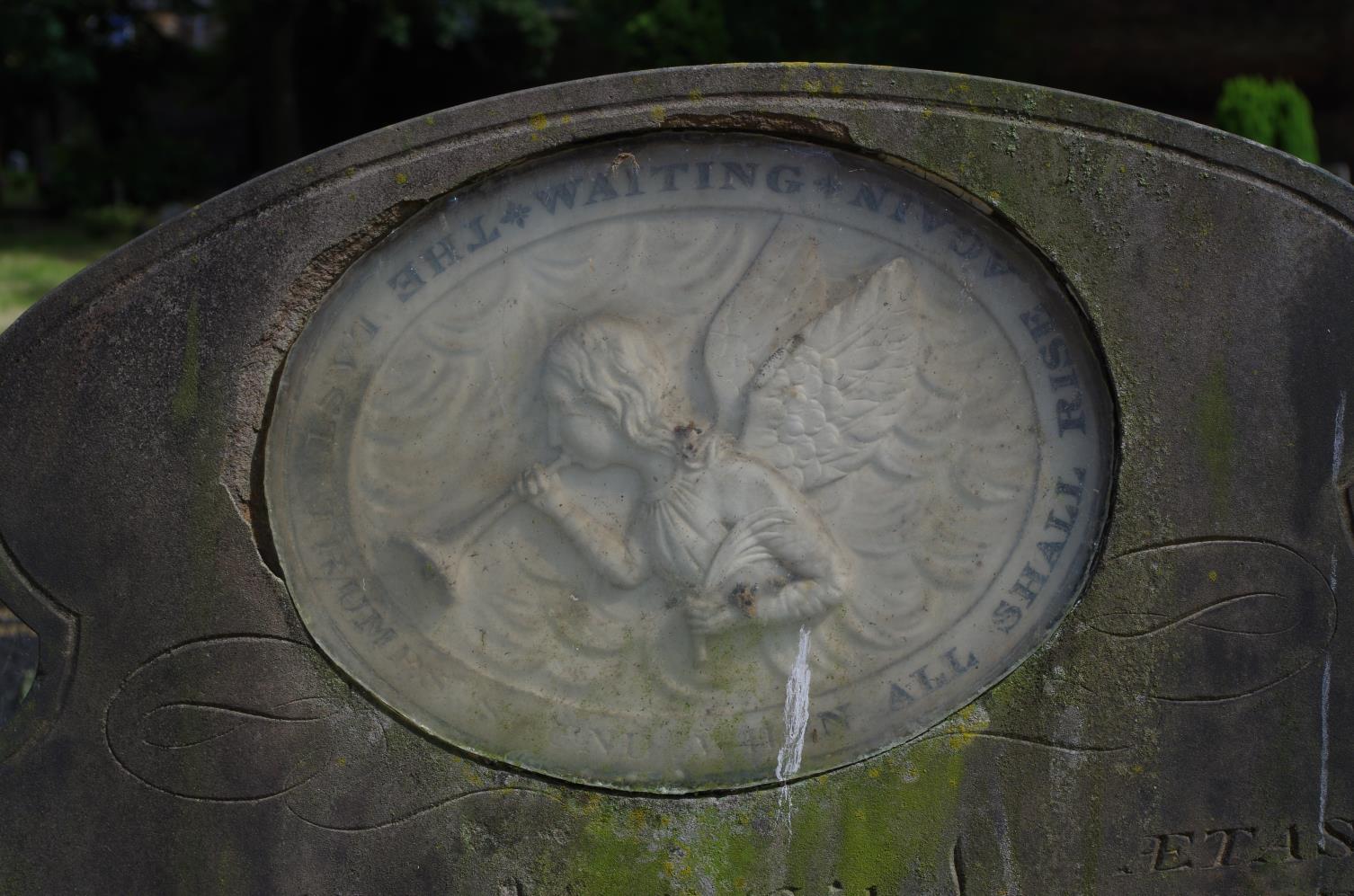
Close-up of relief on the headstone of Edward Du Bois who died aged 13. West Norwood Cemetery © Carole Tyrrell

It wasn’t until late in the 19th century that angels fluttered into large Victorian cemeteries and there is undoubtedly a story to be written as to how they changed sex once they had perched themselves on top of monuments. Prior to that they had been seen as ‘Popish’ symbols and I have visited cemeteries where there is a lone angel or maybe just a scattering of them. There is a hierarchy of angels and they can be identified by what they hold in their hands; a sword, shield, a book or, in this case, a trumpet.   The angel holding a trumpet is the one that features as this month’s Symbol.

I have seen several examples and this one comes from West Norwood Cemetery.  It’s on the headstone dedicated to Edward who died aged only 13 years.  As the epitaph states,

‘Edward

THE ONLY SON

E. du Bois Esq

BARRISTER OF LAW’

I’ve always considered it to be a very striking, almost 3D image, with the detail on the angels wings, clothes and the clouds that surround her.  It depicts an angel blowing on a trumpet with a Biblical quotation surrounding her.  The angelic figure is definitely a woman. and it’s always intrigued me how angels which are traditionally male in the Bible became pretty, pensive young women when they appeared in cemeteries and churchyards.  The quotation reads:

WAITING

THE LAST TRUMPET (words unreadable)………

ALL SHALL RAISE AGAIN

In this case, the angel trumpeter on this headstone is a representation of the Last Judgement Day as she is the herald of the resurrection. 

Full view of the du Bois headstone, West Norwood Cemetery © Carole Tyrrell

There are many references to angels blowing trumpets in the Bible and their association with the dead rising on the Day of Resurrection. For example in Corinthians 15:32, it says:

‘in a moment, in the twinkling of an eye,

At the last trumpet.

For the trumpet will sound, and the

Dead will be raised imperishable,

And we shall be changed.’

There are also references in the Book of Revelation and Matthew 24:32.

However, it is the archangel, Gabriel, who is most associated with blowing a trumpet to announce the resurrection of the dead and images of this began to appear in the 14th century.  There is a very stern and definitely male angel figure holding a trumpet at the entrance to Queen Victoria’s mausoleum at Frogmore.  There is also a geometric figure known as Gabriel’s horn or Torricelli’s trumpet. It has infinite surface area but finite volume. According to Wikipedia:‘The name refers to the Abrahamic tradition identifying the archangel Gabriel as the angel who blows the horn to announce Judgment Day, associating the divine, or infinite, with the finite. The properties of this figure were first studied by Italian physicist and mathematician Evangelista Torricelli in the 17th century.’

Angel with trumpet on the Abreu monument, St Mary’s Catholic Cemetery, Kensal Green © Carole Tyrrell
Another view of the angel trumpeter on the Abreu monument, St Mary’s Catholic Cemetery, Kensal Green © Carole Tyrrell

Angels appear in most religions and it’s appropriate that one of the most well-known is associated with communication. In fact angels are usually seen as messengers as the word ‘angel’ is derived from the Greek word, ‘angelos’, which means ‘messengers.’    They also appear in Islam as the word for messenger, Mala’ika, is the Islamic term for angel.  The Koran, like the Bible, also has references to angels especially Djibril or Gabriel nd Mikhail or Michael. According to Douglas Keister:

‘Angels appeared to grow wings in a 5th century mosaic in Rome. After all they are seen as messengers between heaven and earth.’

Gabriel is also associated with the Annunciation.  He is, with his trumpet blowing, an obvious choice for announcing the departure of a soul and its arrival in Heaven. 

I have seen an example of an angel blowing a trumpet in Tower Hamlets Cemetery and this lovely example above comes from St Mary’s Catholic cemetery which nestles beside its larger neighbour, Kensal Green.

Crossed trumpets on a 17th century headstone, St Andrews, Strood
©Carole Tyrrell
Detail of tombstone showing trumpet, St Andrews, Strood ©Carole Tyrrell
Another headstone with an angelhead and trumpets radiating out. St Mary’s, St Mary Cray, Kent © Carole Tyrrell

While exploring Kent churchyards prior to the Coronavirus outbreak I found 17th headstones with angel heads on them with trumpets surrounding them.  In this one the trumpets are crossed like long bones beneath the angel head.   So, in many ways this is a very ancient symbol which has come down through the centuries as a message of comfort to those left behind.  The one dedicated to Edward du Bois has an epitaph that expresses his father’s grief as well as his anger at his son’s untimely death.

©Text and photos Carole Tyrrell unless otherwise stated.

References and further reading:

Stories in Stone, Douglas Keister, Gibbs Smith, 2004

https://en.wikipedia.org/wiki/Gabriel%27s_Horn

https://en.wikipedia.org/wiki/Gabriel

https://www.cityofgroveok.gov/building/page/angel-blowing-trumpet

https://www.openbible.info/topics/angels_trumpets

https://en.wikipedia.org/wiki/Gabriel

The pet cemetery of Lamb House, Rye, April 2025

View of Lamb House pets cemetery © Carole Tyrrell

In April, I was on a literary weekend in Sussex and Kent. We made the town of Rye our base. The town has a rich literary tradition with several famous writers having lived there.  Several of them were lucky enough to live at Lamb House, a red brick Georgian house with spacious rooms and a garden that was just beginning to take shape on my visit. Neatly labelled rows of vegetable seedlings gave an indication of what was to come later in the year. There is a magnificent view of St Mary’s church from an upper window and Henry James is commemorated with his writing desk and ‘The Telephone Room’. I love finding pet cemeteries as I find them fascinating and touching.

© Carole Tyrrell

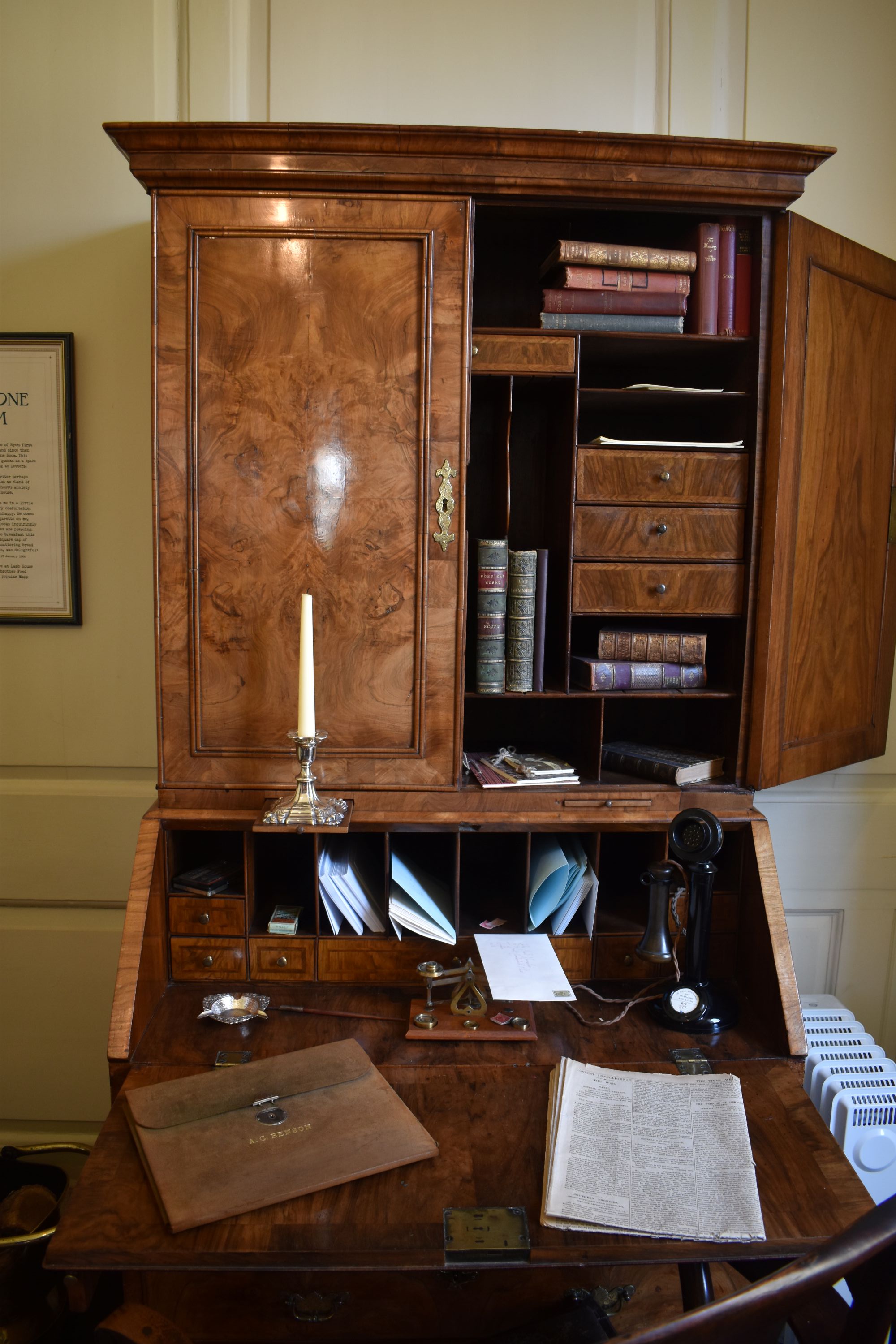
Lamb House is now owned by the National Trust and when I last visited over 20 years ago, it looked very different. There was an upstairs tenant – lucky them! Now the upstairs rooms have been opened to visitors and on my visit there was an exhibition, ‘Ghost Written’, which featured the house’s most well known writers through their ghost stories.

Lamb House Rye Shared under Wiki Commons © Jerrye & Roy Klotz, MD

The American writer, Henry James, (1843-1916) wrote three of his most famous books at Lamb House:  ‘The Wings of the Dove’, ‘The Ambassadors’ and ‘The Golden Bowl’. He discovered Lamb House while visiting a friend and instantly fell in love with it. He leased it in 1897 and, two years later, he finally bought it.

The house appears in his novel, ‘The Awkward Age’, where it is Mr Longdon’s home. During James’s time there a literary circle came into being that included Rudyard Kipling and H G Wells amongst others. In 1916, James was very ill in London and wanted to be taken back to Lamb House but he was too ill to be moved.

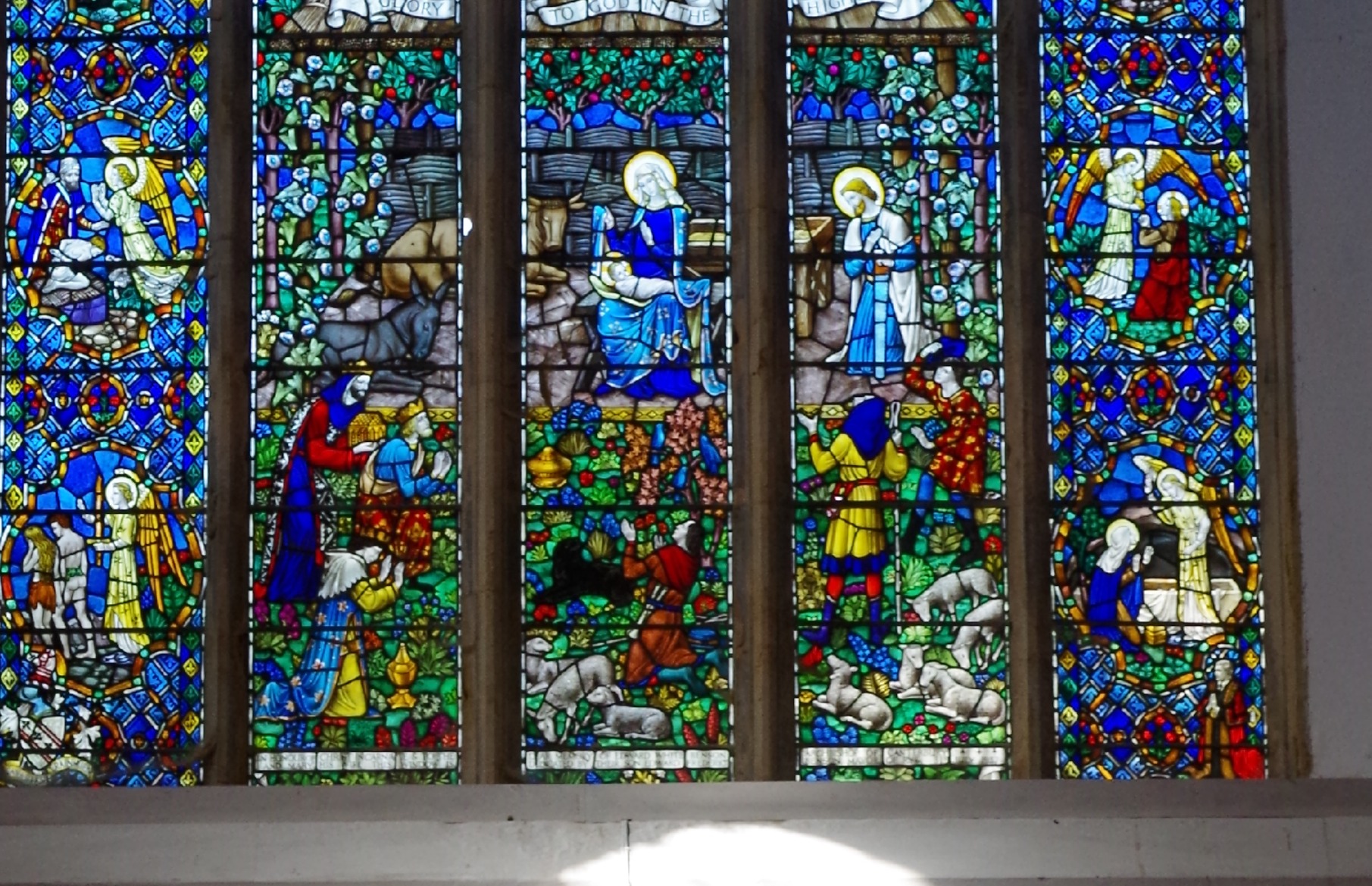
He was followed by E F Benson (Edward Frederic) Benson (1867-1940) who is known for his Mapp and Lucia novels which are set in a fictional town called Tilling that was based on Rye. They were adapted and made into a successful TV series. I know him through his ghost stories or ‘spook stories’ as he called them. He became Mayor of Rye twice and was awarded the Freedom of Rye which was the town’s highest award. He is buried in the local cemetery on the outskirts of town.  ‘Fred’ as he was known bequeathed two colourful windows, the East and the West, in the local church, St Mary’s. 

View of Fred Benson’s monument © Carole Tyrrell

Another view of Fred Benson’s monument.© Carole Tyrrell

Other writers who lived at Lamb House were Montgomery Hyde and the prolific author of ‘Black Narcissus’, Rumer Godden.

It was in the south western corner of the garden that I found the pet cemetery which was dedicated to Henry James and Fred Benson’s pet dogs. I remembered it from my first visit where it was hidden behind vegetation.  The cemetery is a small collection of headstones. There are no cats as, although Henry James, was;

A great lover of animals he would chase them (cats) away from the garden’

National Trust guidebook

The first headstone in what James called his:

‘domestic mortuary’

was dedicated to Tosca, his black and tan terrier who died in 1899.   

Tosca was followed by Tim who was another terrier, then came:

‘my admirable little Peter’

Then there was another terrier, Nick.  But James’s heart was undoubtedly given to Maximilian or Max, a red dachshund. According to his owner Max had

‘a pedigree as long as Remington Ribbon.’

He also described Max as:

‘the gentlest and most reasonable and well mannered as well as most beautiful small animal of his kind to be easily come across.’

Max loved being taken on long walks but, due to his love of chasing sheep, had to be kept on a long leash. 

Henry was very upset at having to leave Max behind when he went on an  extended trip to the US.  He wrote to his lodgers of his homesickness and how much harder it was when thinking of:

‘poor sweet pawing little Max.’

© Carole Tyrrell

© Carole Tyrrell

© Carole Tyrrell

Fred Benson also adored dogs and his favourite was a collie called Taffy. This is a photo of them together and Taffy is also commemorated in the East Window of St Mary’s church.

From the exhibition, ‘Ghostwritten’ at Lamb House

Taffy is the black dog in the lower part of the window, East window, St Mary’s, Rye. © Carole Tyrrell

© Carole Tyrrell

Rumer Godden loved Pekingese dogs and she owned several throughout her life.

I didn’t recall the pet cemetery being so large but the Trust’s intention is to recreate the garden so that it resembles

‘ the space that delighted and inspired Henry James and Fred Benson’

National Trust guidebook

I found the little cemetery with its little plain, simple stones very touching and a poignant reminder that these much loved pets were not forgotten.  And as I read the names on the stones they seemed to come alive again racing around the garden at play.

©Text and photos Carole Tyrrell unless otherwise stated.

References and further reading

National Trust guidebook

Lamb House, Rye | History & Photos

Lamb House – Wikipedia

Symbol of the Month – The Winged Soul

A lovely example of a winged soul from St Peter & St Paul, Shoreham, Kent.
©Carole Tyrrell

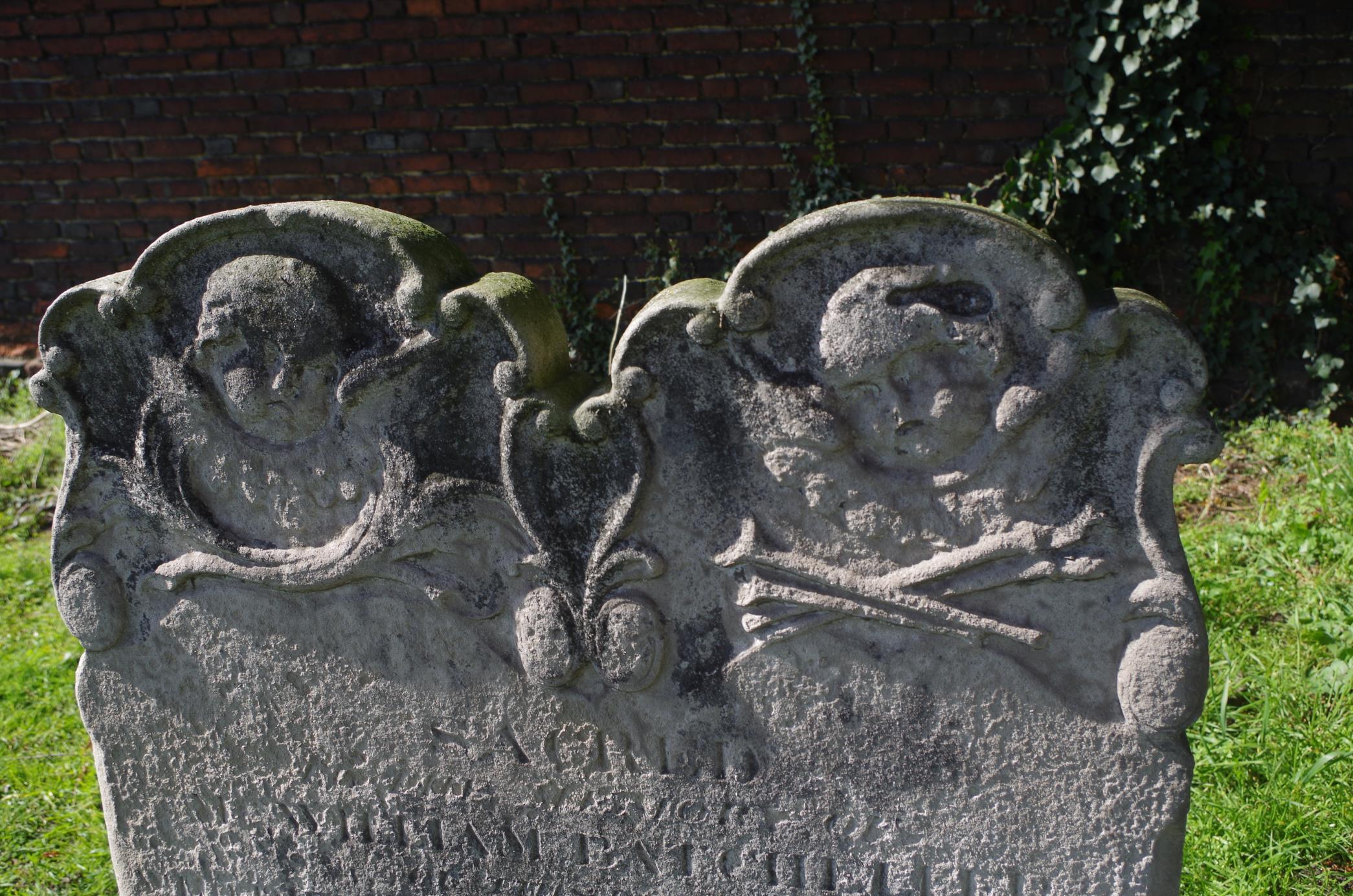
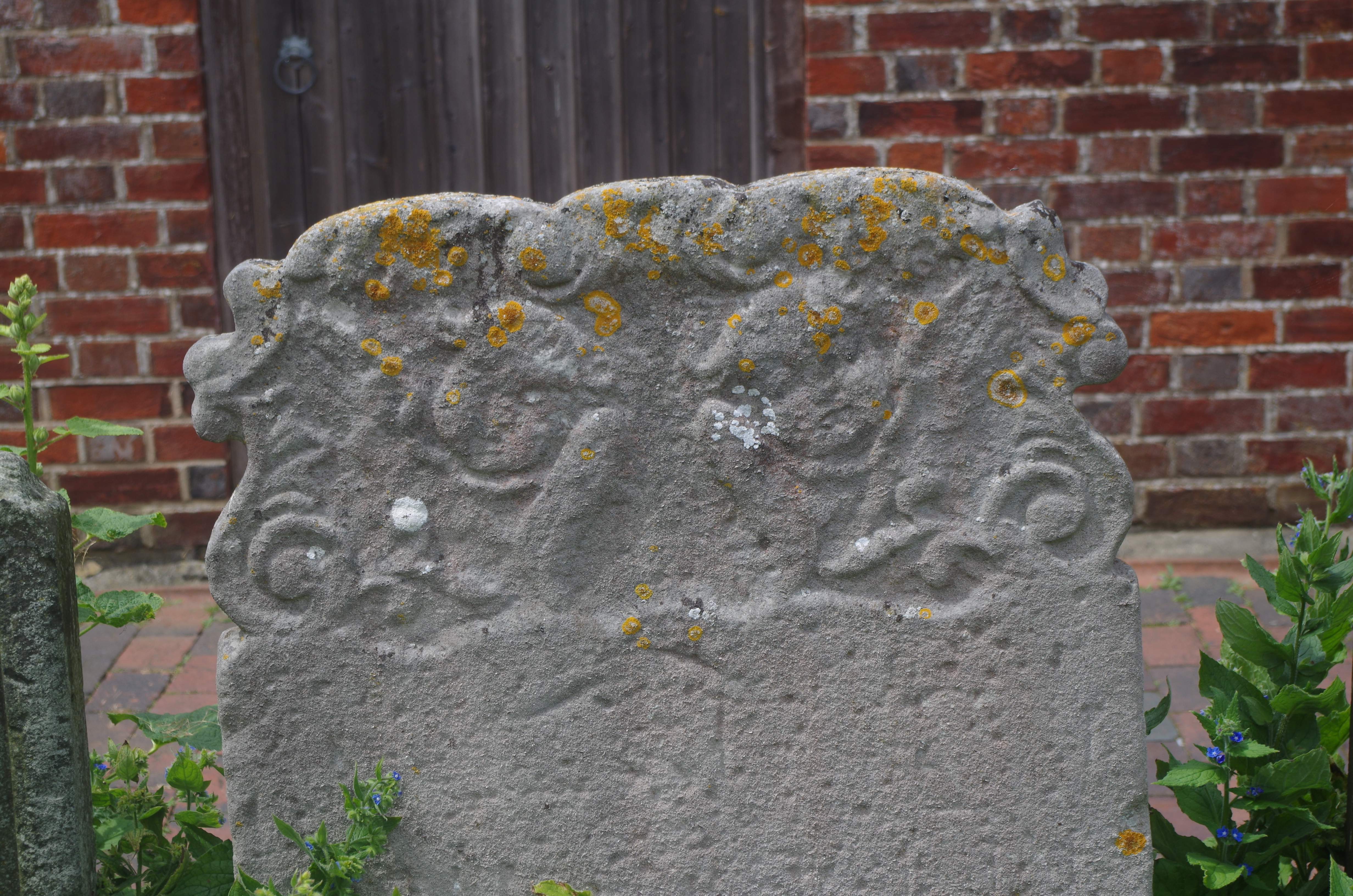
The skull and crossbones was one of the central motifs of 18th century Memento Mori and intended to be a stark and macabre reminder of the viewer’s inevitable destination.  They would be all that would remain of you after death.

However it wasn’t a very comforting message to either the loved ones left behind or to the living.

But fashions and tastes change, even in funerary symbolism, and the skull and crossbones had served their purpose.

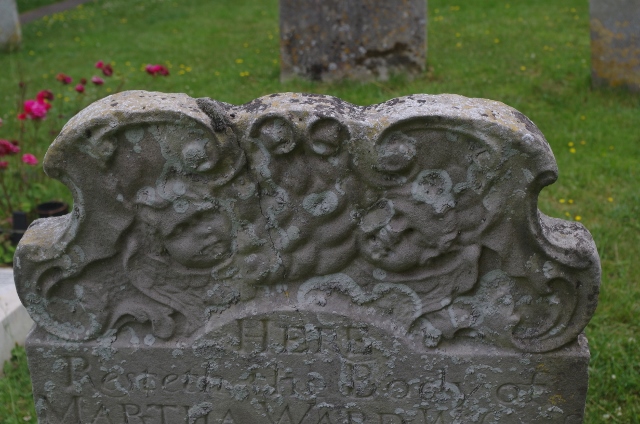
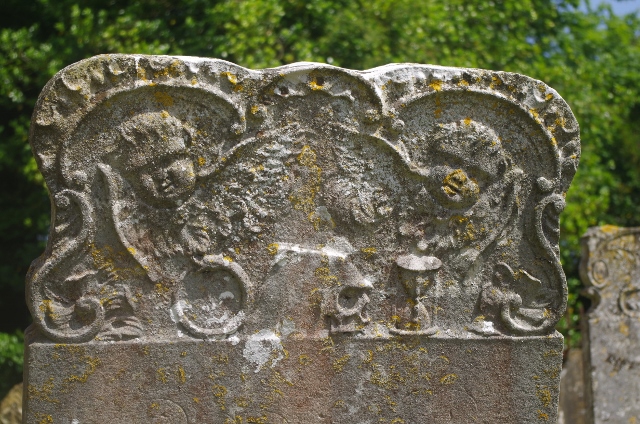
Instead they were replaced by the winged soul. This consisted of a small child’s head flanked by a pair of wings or a garland of leaves.  They have the faces of babies with big, round eyes, plump cheeks and pouting lips and resemble Renaissance putti which are child-like.  Putti represent the sacred cherub as they are known in England.

The winged soul may have been intended to be a more comforting image as the wings represented the soul of the deceased ascending to heaven.  This could also give hope of a resurrection to those left behind.  According to headstone symbols:

‘In the USA the winged soul is known as a soul effigy.’

It was immensely popular and in my explorations of medieval Kent churches and their churchyards I found many examples. In fact, in one or two churchyards they outnumbered the skull and crossbones symbol. They mainly had one winged soul on a headstone but there were sometimes  two or three clustered together as in these examples:

They can also appear in several combinations with other classic memento mori symbols as here:

2 winged souls apparently in mid flight with clouds between them. St Martin of Tours, Eynsford, Kent.
©Carole Tyrrell


The winged soul’s head looks more like a skull with a fine pair of wings. St Peter & St Paul, Tonbridge, Kent ©Carole Tyrrell
2 winged souls in mid-flight, St Peter & St Paul, Tonbridge, Kent ©Carole Tyrrell
One of my personal favourites! Another stylised winged soul with skull and crossbones beneath and a cloud above as well as a pair of bones. St Peter & St Paul, Seal, Kent on the grave of a widow. ©Carole Tyrrell
A combination of memento mori symbols and a winged soul with one wing almost furled as if in mid-flight, St Peter & St Paul, Seal, Kent. ©Carole Tyrrell
A pair of winged souls with their wings almost in mid-flight with other memento mori symbols. St Peter & St Paul, Seal, Kent. ©Carole Tyrrell

In addition, every mason seemed to have his own interpretation of feathers as they can be carved as typical fluffy feathers, to resemble broad leaves or be very stylised.

With wings in general they are an important symbol of spirituality.  They express the possibility of flying and rising upwards to heaven.  For example, in the Hindu faith, they are:

the expression of freedom to leave earthly things behind…..to reach Paradise.’

New Acropolis

However, as the full flowering of the Victorian language of death in the 19th century began to appear the emblems of memento mori were retired. Although a couple, such as the hourglass and ouroboros, were revived.  

A modern interpretation of the winged Soul on a headstone from 1996, St Martin of Tours, Eynsford, Kent. ©Carole Tyrrell

But I did find two modern examples of the winged soul in the churchyard of St Martin of Tours in Eynsford, Kent and one is featured above. For years I had always thought of the winged soul as being a more general symbol and merely a decorative feature.  I called them winged cherub heads or death heads and never considered that they might have had a specific meaning or purpose.  It was exciting to see so many variations and interpretations, sometimes within the same churchyard.  But it depended on the skills of the mason as to how well they were carved and whether they were 2 dimensional or 3 dimensional.

But, as a message of comfort, it is one of the most poignant in memento mori. The other central motifs emphasise time running out and what will be left behind. The winged soul suggests an eternal life and a more uplifting message.

©Text and photos Carole Tyrrell unless otherwise stated

References and further reading:

http://www.thecemeteryclub.com/symbols.html

https://headstonesymbols.co.uk/headstone-meanings-and-symbols/deathheads/

https://stoneletters.com/blog/gravestone-symbols

https://www.boston.gov/departments/parks-and-recreation/iconography-gravestones-burying-grounds

https://en.wikipedia.org/wiki/Funerary_art_in_Puritan_New_England

http://www.speel.me.uk/gp/wingedcherubhead.htm

https://www.sacred-texts.com/lcr/fsca/fsca11.htm

A 200th birthday and an unsolved murder – Part 3 The parson detective comes on the scene – a visit to St Werbergh, Hoo, Kent

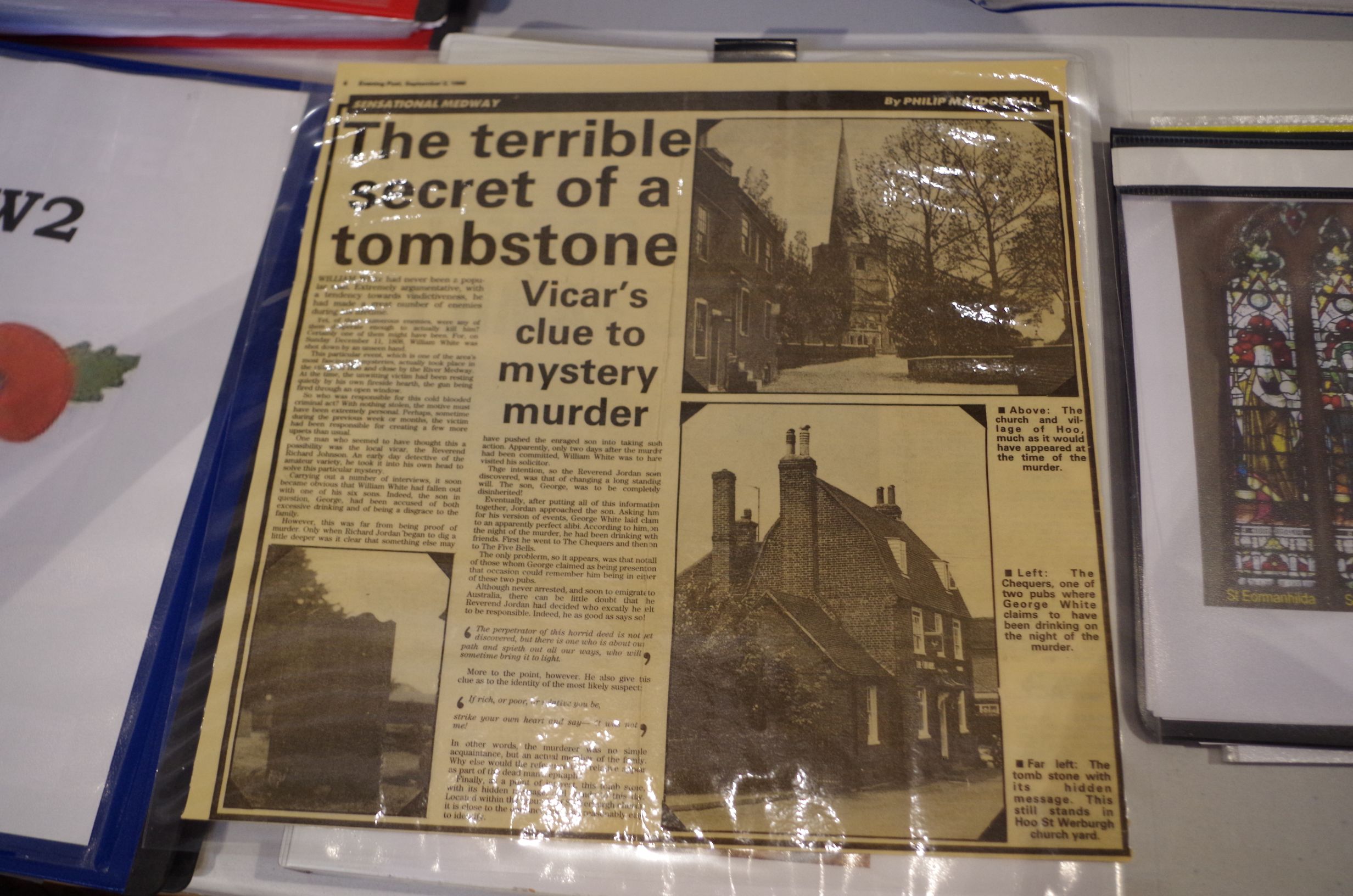
20th century headlines about the murder. © Carole Tyrrell

This is where Rev Jordan came in and he became known as the parson detective.  Such was the feeling in the community that he became determined to find the murderer and bring them to justice. So he set about disproving George White’s alibi.

At the time, George had claimed to have met one of his father’s employees, Joseph Green, who he had invited him to come with him. But a few yards away from the house, George had said that he had to return home to fetch his handkerchief. As a result, he was gone at least ten minutes which would have given him enough time to put the hurdle in place for the perpetrator’s gun to rest on. Joseph attested that the hurdle had not been standing at the pantry window during the day. Afterwards they had walked to the Chequers pub and Joseph said that it was the last time he saw George that night. Joseph had added that he had seen George ‘sitting up about upon the stiles’ near the murder scene before it was dark. Even more damning was that George didn’t get the handkerchief that he had said he went back home to get as, when everyone was assembled in the house after the murder, he hadn’t got one and had to go and find one.

A gun had been found in a clover stack near William’s house about a month prior to the murder and an employee called Francis Smith had put it in the hayloft. A short time afterwards he couldn’t find it and was told by George that William had taken it away, destroyed it the stock and lock of it and thrown the barrel into a lumber room.

Rev Jordan meanwhile had preached a sermon on the matter and opened a book, asking everyone in the congregation and village to write down exactly where they were at 8pm on that fateful Sunday evening.

Rev Jordan persuaded George to make a vestry statement and a meeting was then held to clear him of suspicion. So, he stood before 40 people on Easter Monday, 3 April 1809 after a dinner at the Five Bells Inn. After the parish accounts were settled, Rev Jordan insisted that George make a public statement. He told the audience what George had said in his vestry statement and demanded that George bring in witnesses to confirm that they had seen him at any time between 7.45-8.15 to which he said that he couldn’t as he hadn’t seen anyone at that time. Some of the audience questioned him and none were satisfied with his answers.

The Five Bells Hoo from Facebook photographer unknown

The Rev was able to prove that George had not bought a bag of nuts at 7.45pm as a witness had said that he had seen him cracking and eating them at 7.40pm. Also, George had claimed to be standing at the Five Bells Inn when the hulks guns were fired at 8.15pm but it had actually happened at 8.00pm. He had been seen coming from the farm at 8.20pm with laboured breathing when he reached the vicarage door. He had had enough time to murder his father and then double back to the village.

So what happened next?  Nothing. No one was ever charged with William’s murder and the case is still unsolved. George emigrated to Australia and that is the end of his story. There seems to be nothing more on the auction or the fate of William’s children.  I could not find an image of William or of Cookham Farm House.

The only reminders are the newspaper reports in florid Victorian language such as;

‘Dastardly murder.’

And, of course, the headstone.  It’s a reminder of an event that happened over 200 years ago which shocked a community. It’s not recorded if Rev Jordan went on to do more sleuthing but I think that he made a convincing case against George. William’s grave is situated 20 yards east of the main North church door and not faraway from Thomas Aveling’s resting place.

©Text and photos Carole Tyrrell unless otherwise stated.

Aveling and Porter – Wikipedia photos of steamrollers

Thomas Aveling Society
Thomas Aveling – Graces Guide

Celebrating the lifeNotable People – Hoo Parish Council Hoo, Rochester, Kent – Hoo St Werburgh and Chattenden Parish Council, Hoo, Rochester and legacy of Medway pioneer Thomas Aveling | Medway Council

Murder of William White 1808

 North Wales Gazette December 22 1808

Extracts from The Kentish Gazette

Monumental Inscriptions of St Werburgh Church, Hoo — Kent Archaeological Society

http://www.whitehousefarm.eclipse.co.uk/wwhite – a good selection of newspaper reports and Rev Jordan’s activities.

William Walter White (1751-1808) – Find a Grave Memorial

The Dastardly Murder of William – this site contains Victorian newspaper reports of the murder including 2 in London papers.  Also Rev Jordan’s thought on the murder and possible perpetrators.

GRIM HISTORIES: Premeditated Murder in South East England’s Medway Towns by Janet Cameron

A 200th birthday and an unsolved murder Part 2 – a visit to St Werbergh’s, Hoo

William White’s headstone and fulsome epitaph. © Carole Tyrrell

You never know what you will find in a country churchyard; crumbling mausoleums associated with royalty, a fine selection of skulls on headstones and poignant memorials.

But what I didn’t expect at Hoo was to find one that revealed, positively shouted in fact, about a local unsolved murder from the early part of the 19th century. This is the headstone dedicated to William Walter White. This is the inscription:

‘IN MEMORY OF

WILLIAM WHITE OF THIS PARISH, YEOMAN

WHO WAS ON SUNDAY EVENING THE 11TH OF DECR.

1808 MOST INHUMANLY MURDERED

IN THE BOSOM OF HIS FAMILY

BY A GUN DISCHARGED AT HIM THRO A WINDOW

WHILST SITTING BY HIS OWN FIRESIDE

THE PERPETRATOR OF THIS HORRID DEED IS

NOT YET DISCOVERED BUT THERE IS ONE, “WHO

IS ABOVE OUR PATH AND ABOUT OUR BED

AND WHO SPIETH OUT ALL OUR WAYS”

WHO[O] [WI]LL SOMETIME BRING IT TO LIGHT

HE LIVED ESTEEMED BY ALL WHO KNEW HIM

[AND HIS] SAD END IS UNIVERSALLY REGRETTED HE

[LEFT ISSUE]6 SONSAND 5 DAUGHTERS TO BEWAIL

[HIS LOSS AND DIED [AT] THE AGE OF 58 YEARS

STONE WAS ERECTED JUNE THE 24TH 1809

“[By] whose Assa[ssinating} {H}and [I fell]

[Drop] Reader [o’er my Grave one] Silent Tear

[Live Well remembering that your God is Near]

[If Rich or Poor or Relative you be]

[Strike your own breast and say – It was not Me!]’

A more dramatic epitaph it would be hard to find and the stonemason certainly earned his money!  The case shocked the farming community of Hoo especially as no one was ever brought to justice and suspicions ran rife. It even led to the local vicar of St Werbergh’s at the time, Rev Jordan, deciding to become an amateur sleuth and unmask the perpetrator.

Death had already visited the White family when William’s wife, Jane, dropped dead with no prior indication of illness on 24 March 1808 aged 44. The murder left the 11 children orphans within a short space of time and more about what happened afterwards later. William was a man of some standing in the village. He was a yeoman which meant that, although he was a farmer, he wasn’t part of the gentry. In 1790, he was one of only two franchised householders in the village and so was eligible to vote.

A typical farm house in Hoo. © eclipse

The Murder

The facts are that, on Sunday 11th December 1808, William was sitting reading at home with his family when a shot rang out. A gun had been fired through an open pantry window which killed William outright. The shot entered the back of his head and exited under the right eye. The ‘cries and lamentations’ of his family could be heard in Hoo village a mile away after the body was found. An unsuccessful search was made immediately for the perpetrator. However, a recently discharged gun was found in a ditch roughly 200 yards away from the house near the River Medway which led to the assumption that the murderer had escaped by water.

Such was the notoriety of the case that reports of it appeared in London newspapers and the Bow Street Runners were called in. They were the forerunner of the modern police force.

Bow Street Runners c1800 from History UK website.

Whoever fired the fatal shot must have known the layout of the house and the family’s habits. It took place on a Sunday when there were no servants about and it would have been necessary for the pantry door to be open in order to have a good view from the window as the gun was fired at William sitting by the fire. It had been propped up on a hurdle in front of the window and this helped the murderer to have a good aim. The gun was an old musket-barrel which had nails in the breach fastening it to the stock. It was a very crude gun as the hammer would not hold at full cock but was fastened back by a piece of twine which was presumed to have been cut at the time of firing. The fatal shot was fired at the same as the nightly salvo of guns from convict hulks on the River Medway. 

The suspects

The gun’s owner was a man called Driver and he and another man called Day were picked up in Bapchild near Sittingbourne, Kent. It was assumed that they were on the run. The Coroner, J Simmons Esq, questioned them but soon realised that he didn’t have enough evidence to prosecute them. He then had them removed to one of his Majesty’s ships which was a euphemism for being ‘press ganged’. The Kentish Gazette described it like this:

‘as they were unable to give a satisfactory account of their mode of obtaining a livelihood, they were sent to serve their country on board one of his Majesty’s ships of war.’

 If that wasn’t enough, later on, they were marched back from Portsmouth to Rochester to be further questioned and then press ganged a second time before being finally released without charge.

As for motive, William had recently found a servant, possibly Driver, in the act of robbing a neighbour and had informed the appropriate authorities. He had sacked the man who had sworn to get his revenge. In fact, a week prior to the murder, the unnamed man, had purchased a gun:

‘for which he had no possible occasion, under some frivolous pretence’

according to newspaper reports at the time.

The inquest on William was held and a verdict was returned of:

‘Wilful murder against some per or persons unknown – Friday 23 December 1808.

Events began to gather pace as the executor of William’s will, Thomas Denton, was authorised to put William’s home, land, possessions and other assets up for auction. It was intended that the money raised would be distributed by him amongst the children as he thought best for them. Originally it had been intended that Jane White, William’s wife would be a joint executor but of course with her death it fell to Thomas alone. Understandably the children tried to stop him and suspicion began to fall on him.  In the space of a few months they had been left orphans with the loss of both their parents and now they were to lose the family home as well.

But another suspect had appeared who was much closer to home. It was George White, William’s eldest son. He was known to be on bad terms with his father and had been seen to threaten him. George wanted the farm and the land but William was considering writing a new will leaving him and another relative out. However, his will dated 22 January 1808 did not indicate.   

But George had convinced both the Mr Simmons, the coroner, and the Bow Street Runners that, during the vital thirty minutes between 7.45pm and 8.15pm he had been in Hoo village buying:

‘a penny’s worth of nuts.’

The shop was a good mile away from the farm. But someone else in the community had doubts about George’s alibi and was determined to disprove it as we shall see in Part 3.

©Text and photos Carole Tyrrell unless otherwise stated.

Part 3 – the parson detective comes onto the scene

A 200th birthday and an unsolved murder – a visit to St Werbergh, Hoo, Kent

View of St Werbergh, a pity it wasn’t a better day. © Carole Tyrrell

Every September in Medway, Heritage Open Days take place. For a couple of weekends, I could gain access to buildings that are normally closed to the public such as the Rochester Bridge Chapel, almshouses and a synagogue amongst others. Despite Chatham’s somewhat dubious reputation nowadays, it has rich layers of history to be discovered due to its maritime past.
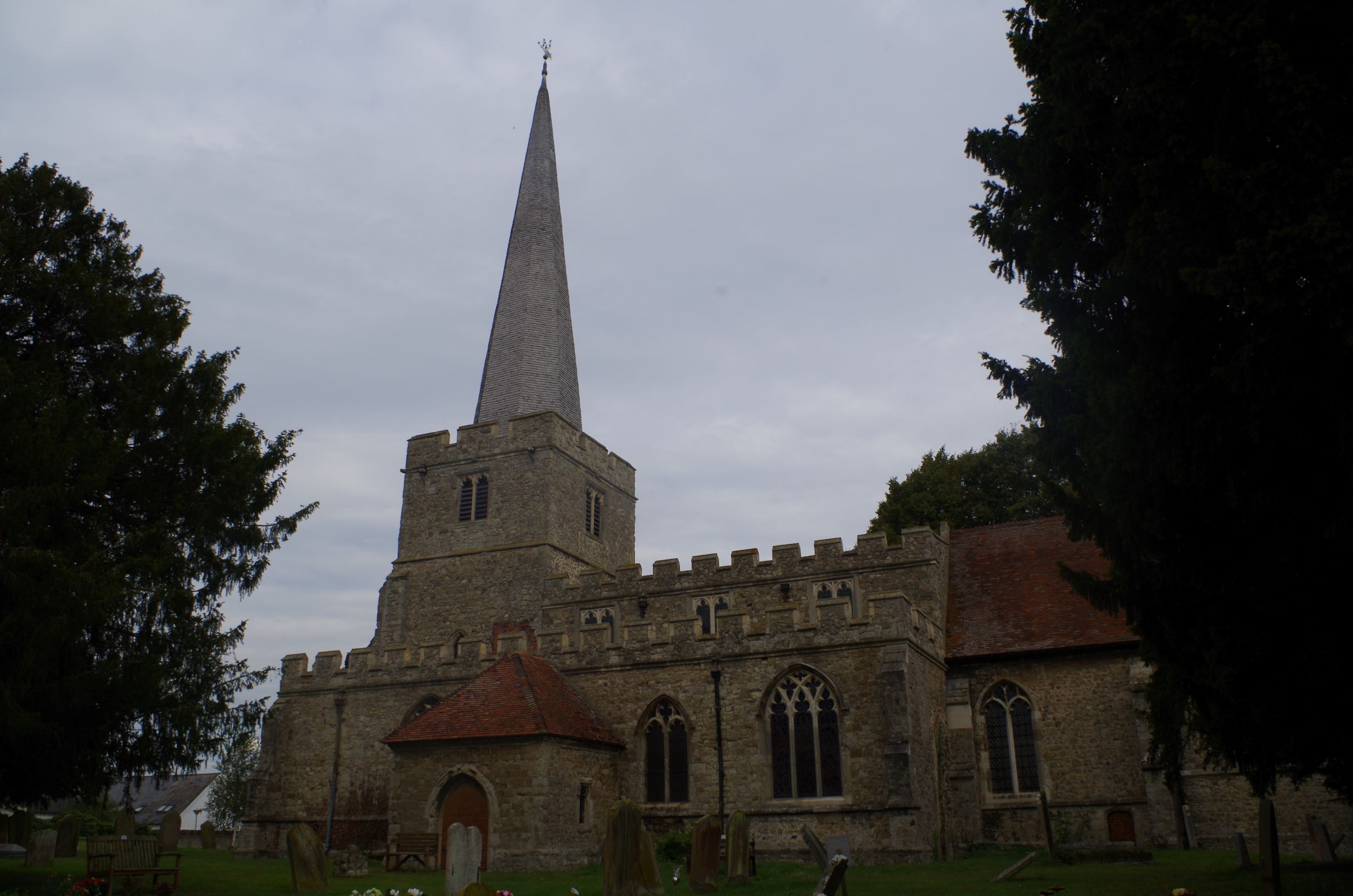
Last year in 2024, I went further afield and visited the Hoo peninsula. This was an area new to me and I wanted to visit St Werburgh’s church. It’s reputed to date back to the 12th century although an earlier church was on the site around 1080-1086 and was recorded in Rochester Cathedral.


I followed a crowd who seemed to be heading in the right direction, some of whom were in costume, but once I saw the church steeple I knew where I was. You can’t miss it – the battlemented tower is 55ft tall but with the steeple it is 127 ft or 38.5 metres in total. There used to be a light within the steeple that guided ships around the peninsula and if you look up you can still see its little wooden door. It seems plausible, after all why else would a recessed door be set into the steeple. The steeple is covered with oak tiles with a weathervane on top. There are 73 steps in the stair turret which give access to the battlemented tower.

View of steeple. © Carole Tyrrell

View of steeple door. © Carole Tyrrell

I’d never heard of the saint before but the guide leaflet has this to say:


‘St Werburgh was an English abbess known and loved for her great kindness and love to all living things. She is associated with geese because when a flock of geese settled in the convent land and were eating the crops, she ordered them into a fenced enclosure as punishment. That night a servant stole one of the geese, cooked and ate it, leaving only the bones.
In the morning St Werburgh set the geese free with a warning not to eat the crops again. Instead of flying away, the geese circled the convent making a great noise. Realising that one goose was missing she had the bones brought to her and restored the goose to life. The whole flock flew away, never to be seen on convent lands again. She was therefore held to have possessed extra-ordinary powers over natural creatures.’

She also has a stained glass window dedicated to her inside the church.

Statue of St Werbergh in church with a goose at her feet. © Carole Tyrrell

The oldest headstone in the churchyard is dated 1681 and is dedicated to Richard Scott who was a yeoman farmer. He died aged 70 in 1677. There is also a yew tree which is reputed to be 800 years old and the award for the most unusual name has to be a man called ’Time of Day’. who died in 1890. Sadly I didn’t find his headstone on this visit.

The oldest headstone in the churchyard, dedicated to Robert Scott. © Carole Tyrrell

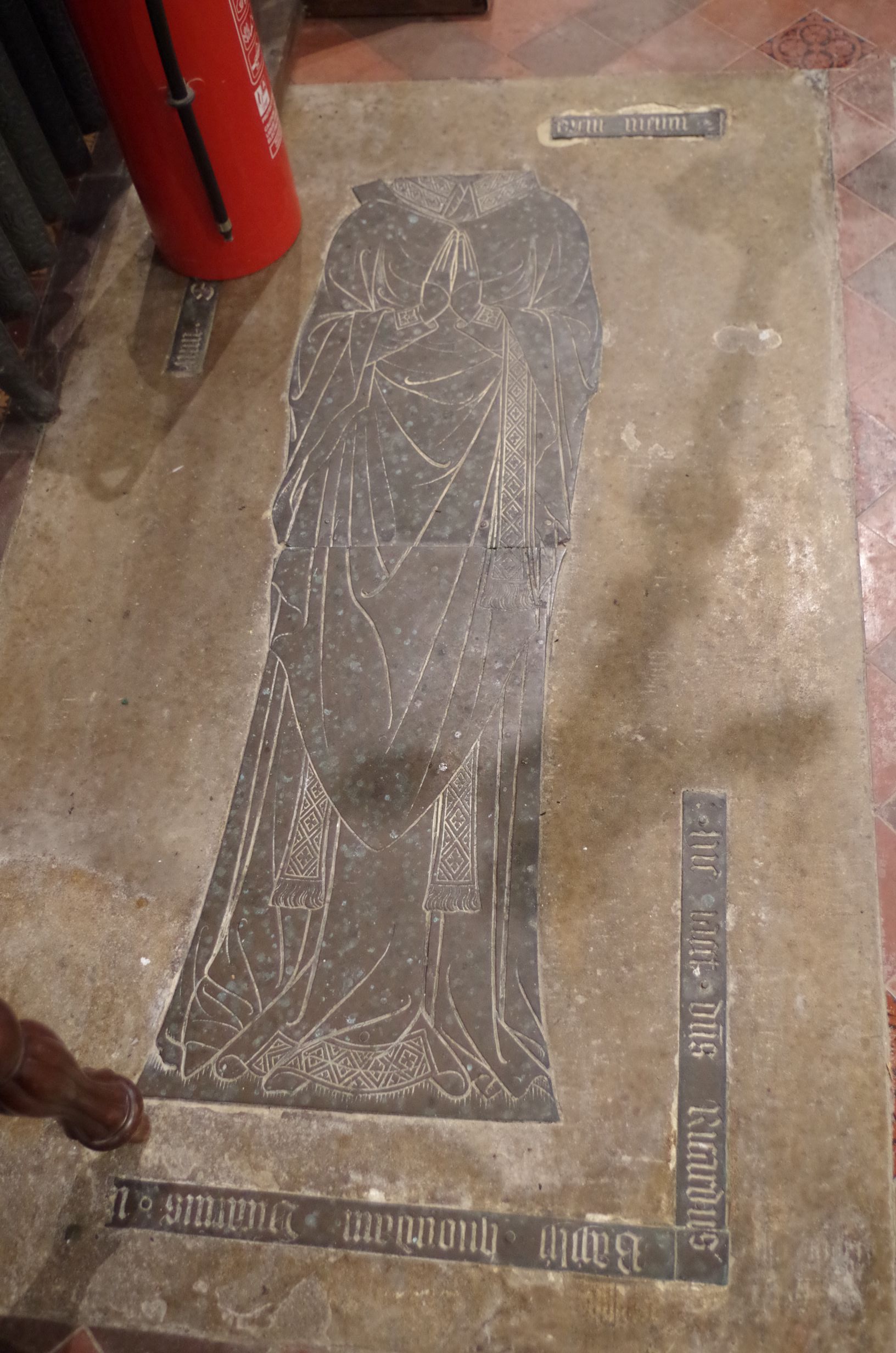
Inside, the church possessed some unusual features. On display was a ledger stone which had been found under the floor and dated to the 12/13th century – the oldest I’ve seen. Two 14th and 15th vicars are also commemorated by memorial brasses. There are also two Royal Coats of Arms from the 17th century and a Norman font.

Medieval ledger stone. © Carole Tyrrell

Memorial brass to a former rector with a missing head.© Carole Tyrrell

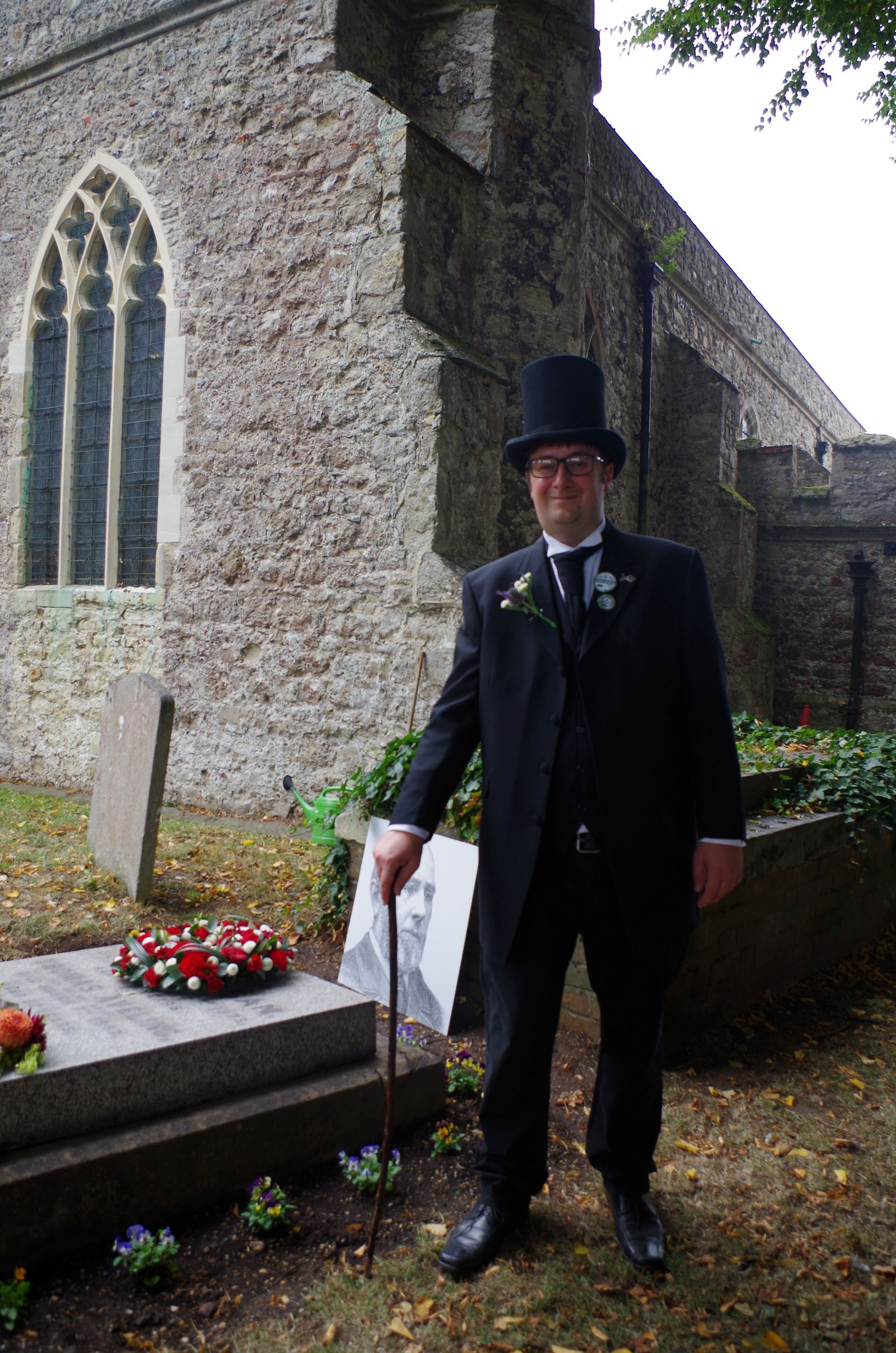
Indoor refreshments were in full swing and I enjoyed a cuppa while exploring. There were local history stalls which is how I discovered the 200 year old unsolved murder. When I came outside again, a ceremony was taking place and the reason for people being in costume was revealed. It was the 200th anniversary of the birth of Thomas Aveling, a local man who designed machines that didn’t require horsepower. Two men were there in Victorian dress from the Thomas Aveling Society. They were joined by children in costume and national treasure, Jools Holland OBE, in his capacity as Deputy Lieutenant of Kent – Medway.

Member of Thomas Aveling society in Victorian dress by Aveling’s grave.© Carole Tyrrell

Thomas Aveling – a brief history

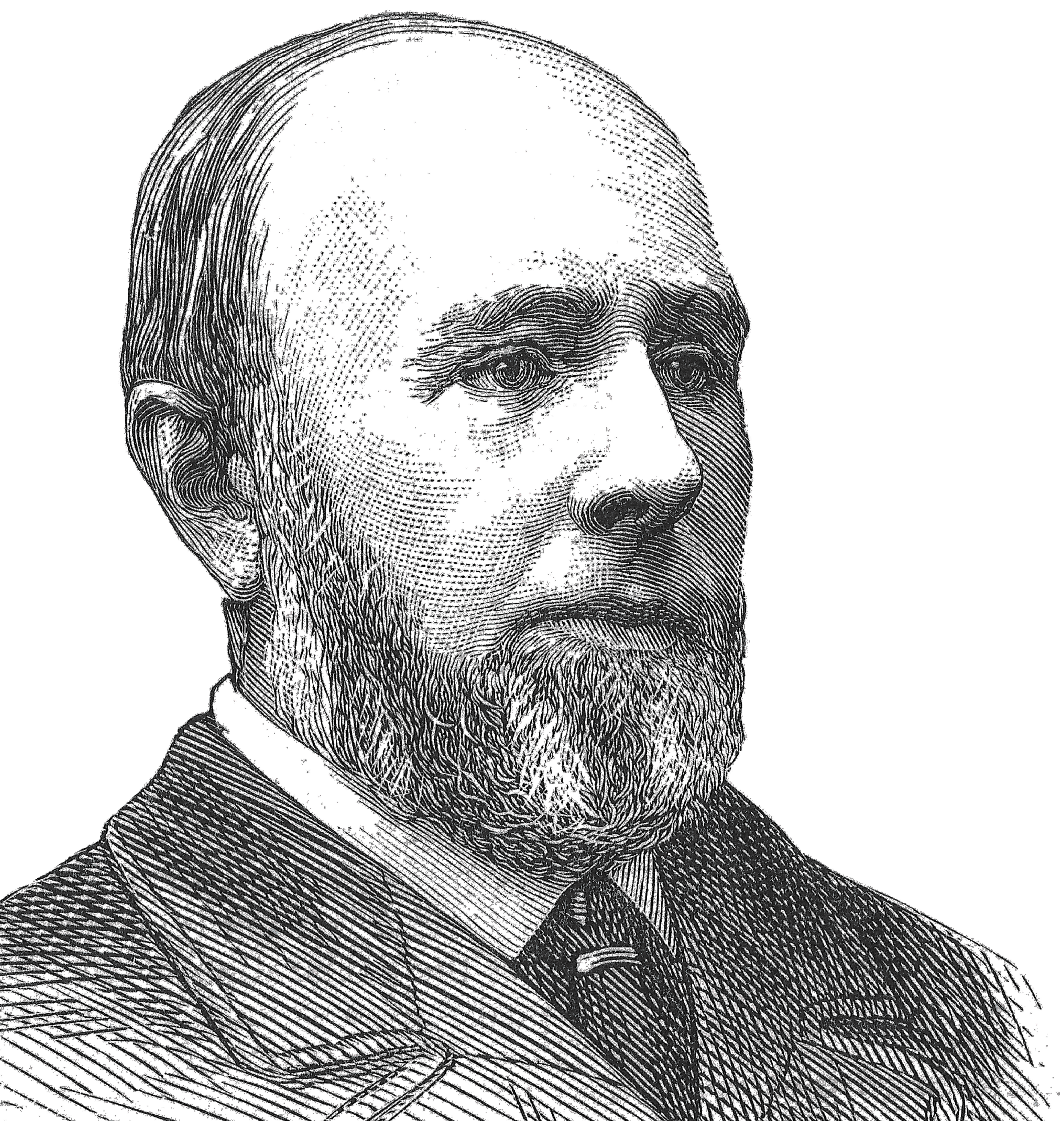
Thomas Aveling. Shared under Wiki Creative Commons

Although he was born in Cambridgeshire in 1824, Thomas moved to Hoo when his widowed mother married the Rev John D’Urban, the curate of St Werbergh. He was apprenticed to a farmer, Edward Lake, and became one himself. But he had dreams of creating machines that could be powered by other means than horsepower. In addition to the farm he also operated a small millwrighting and iron foundry business. Thomas was a talented and determined man and in 1856, in partnership with two other companies, he introduced a steam plough which was incredibly successful. Two years later, in recognition of his achievement, he was awarded ‘a piece of plate’ and a purse containing 300 guineas by Kent farmers. But there was more to come.


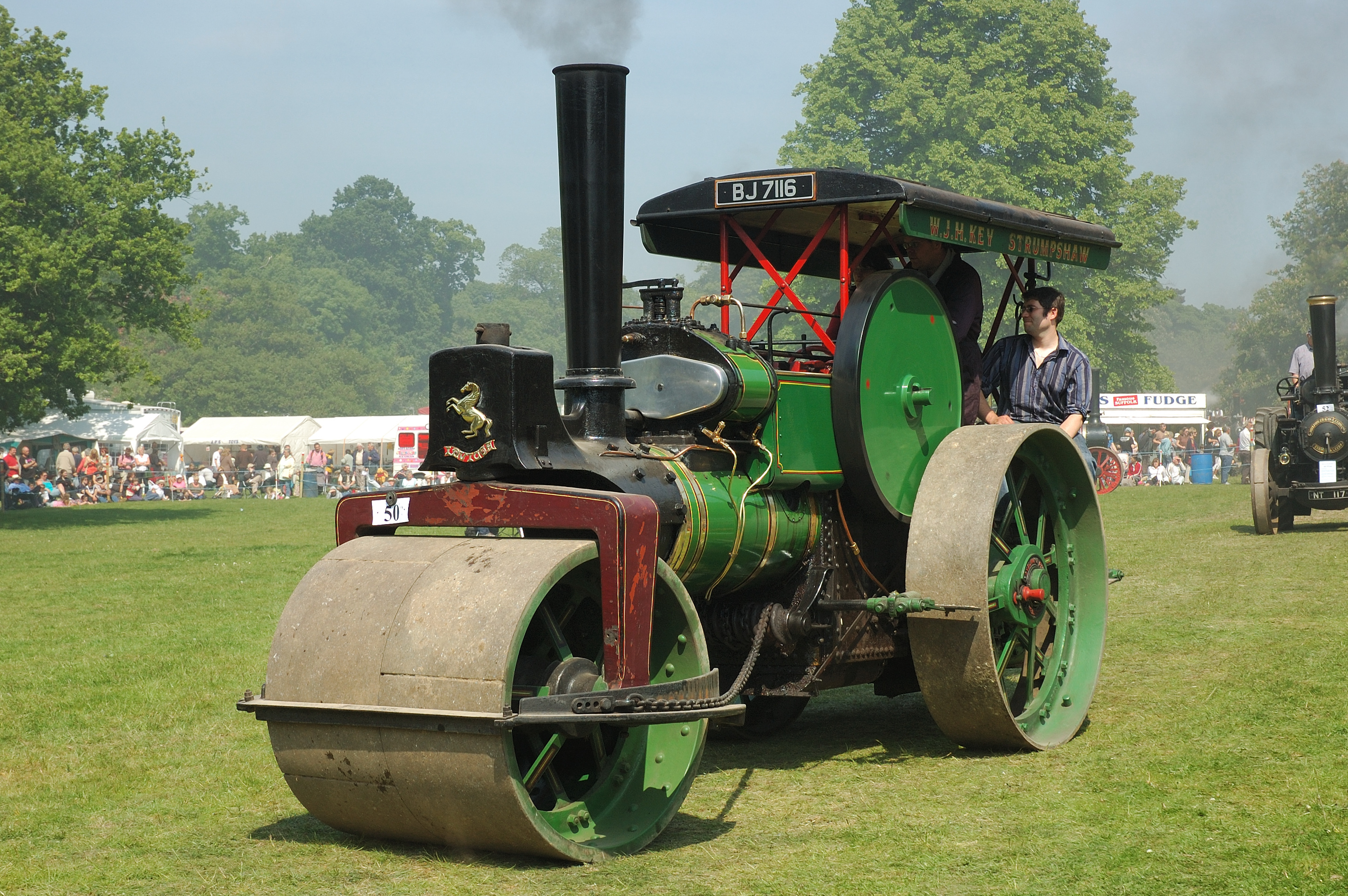
He formed a partnership with Richard Porter in 1862. It was very successful and they sold their products worldwide. But, like most restless, energetic and talented Victorian entrepreneurs, Thomas was onto his next project. One that is still in use today. One that helped create roads the world over including the ones in New York’s Central Park – the steam roller! Virtually unchanged since its creation.

An Aveline/Porter steamroller.

Honours for his invention came thick and fast. Thomas was knighted by the Austrian Emperor after showing it at Vienna’s Universal Exhibition and the French Government awarded him the Chevalier of the National Order of the Legion of Honour.

Thomas was also the Mayor of Rochester and introduced many improvements to the town which sadly no longer exist. He also represented Strood and Frindsbury on the City of Rochester Corporation.

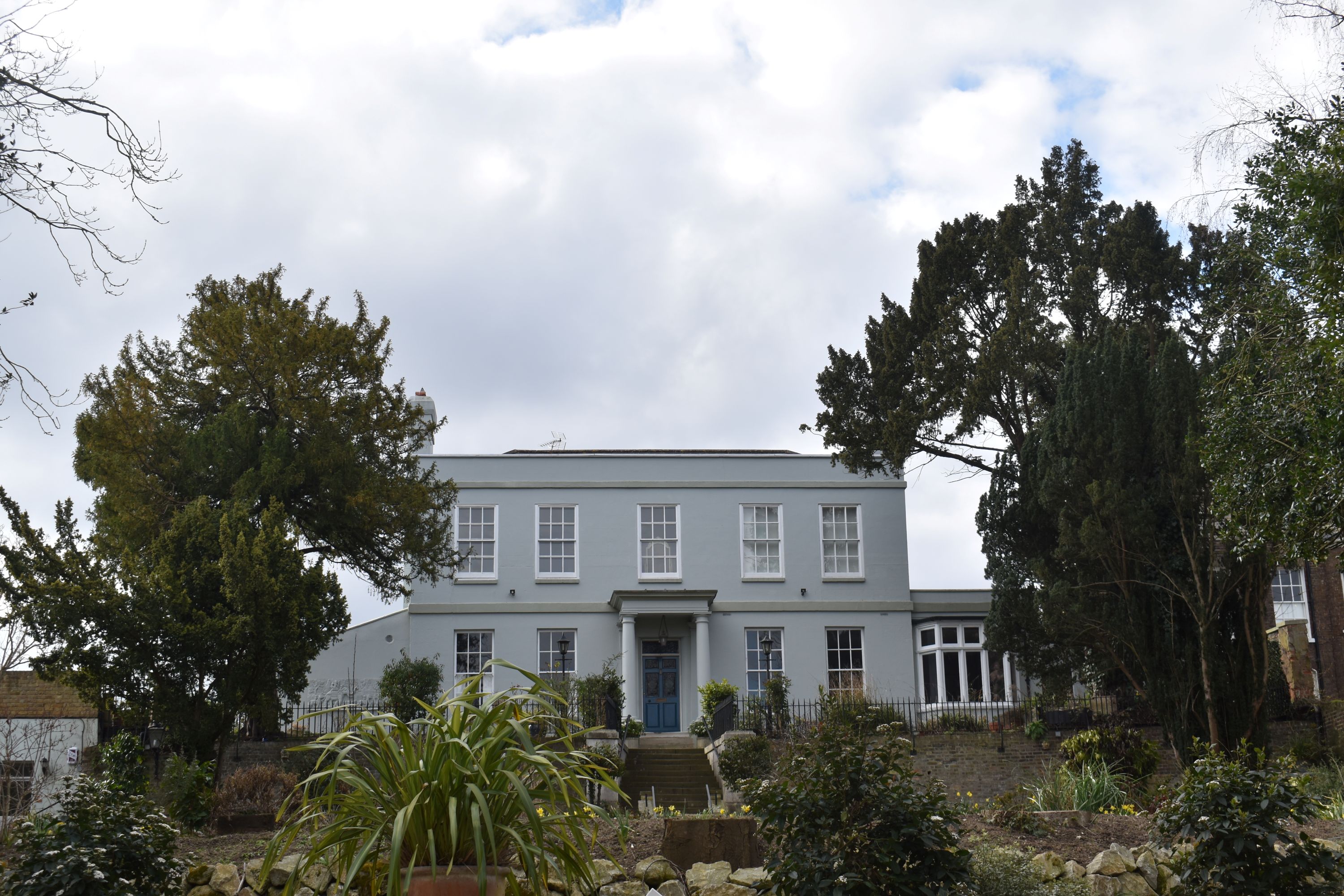
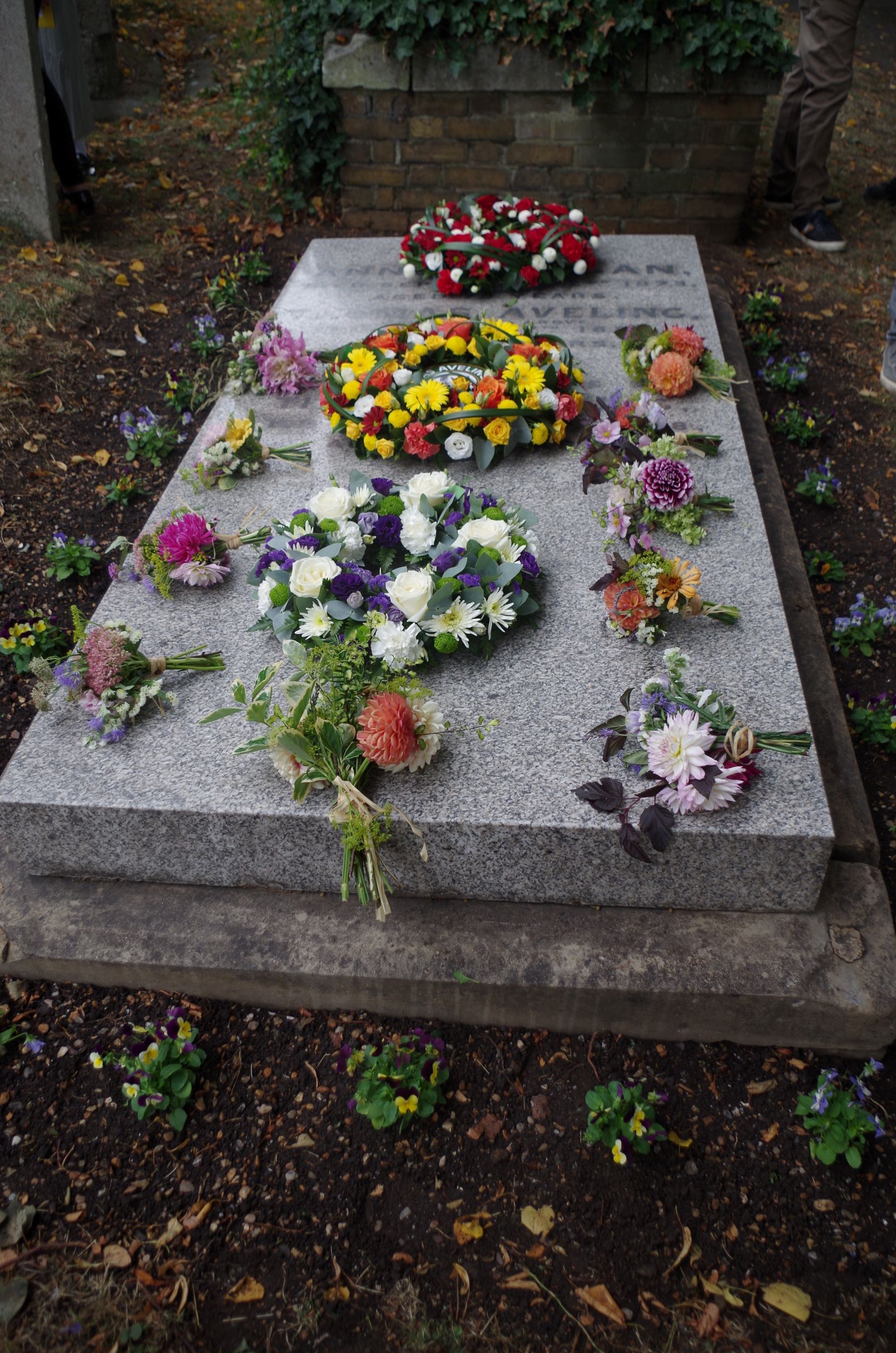
In addition, he was also an enthusiastic yachtsman and it is believed that he may have caught a chill which developed into pneumonia whilst on his 28 ton Yacht, ‘Sally’ at the end of February 1882. On 7 March 1882 he died at the age of 58.  The funeral took place on 11 March 1882 and crowds lined the streets from his home at Boley Hill House in Rochester to St Werburgh’s church – a distance of 4.6 miles.  The funeral procession began with 39 carriages which increased to 54 and his coffin was covered with beautiful wreaths not unlike the ones on his grave for his 200th birthday.  He is buried with his mother, Sarah, his wife Sarah and his son Thomas. Two stained glass windows in the church commemorate him. There is also a secondary school in Chatham named after him and the road names on a housing estate in Hoo are associated with him.

Boley Hill House, Thomas Aveling’s home in Rochester as it is today. © Carole Tyrrell

For a fuller account of Thomas’s life and achievements please visit the Thomas Aveling Society’s website:  https://www.thomasavelingsociety.co.uk

Thomas Aveling’s grave covered with birthday wreaths. © Carole Tyrrell

But very near Thomas Aveling’s grave is one that is determined that the person which it commemorates and the way in which he died will never be forgotten.

©Text and photos Carole Tyrrell unless otherwise stated.

Part 2 The 200 year old unsolved murder of William White, possible suspects and an amateur clerical sleuth.

Symbol of the Month – The All Seeing Eye

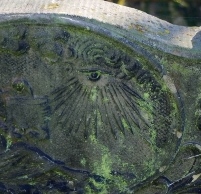
Detail of the All Seeing eye on the Caryer headstone, All Saints Frindsbury © Carole Tyrrell

Poking about in churchyards as is my wont is how I discover symbols to write about. It was while exploring two churchyards in Kent, All Saints in Frindsbury and St Martin of Tours in Eynsford, that I discovered this month’s symbol.

This is the All Seeing Eye, also known as The Eye of Providence, and is usually depicted as a single realistic eye within a triangle or within a burst of light. I’ve always associated it with Freemasons as it appears on their documents. But neither of these headstones had any other symbols linked with Freemasons such as the square and compass. So what was the story?

The one in the churchyard of St Martin of Tours in Eynsford was bordered by what looked like two snakes with a skull and crossbones and a winged spirit on either side, familiar memento mori symbols. Sadly the epitaph is now illegible.

Headstone with All Seeing Eye, Eynsford, Kent.© Carole Tyrrell

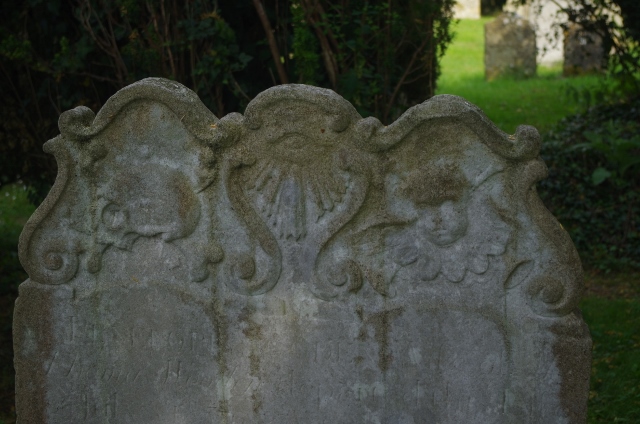
The second one is in the churchyard of All Saints in Frindsbury and this intriguing version is on the grave of the Caryer family. The Kent Archaeological Society thought that it might represent the Woman of Samuria as featured in John 4.4-26 but I’m not sure about that. (see Symbol of the month – the womand from Samaria or a Greek goddess? 27 January 2021) The epitaph reads:
Sacred
To the memory of
Hannah wife of John Caryer
Died 9th Sept 1809 aged 30 years
Also Robert her son
Died 28th June 1801 aged 8 years
Also the above John Caryer
Died 11th March 1814 aged (4)2 years.’

Full view of the Caryer headstone, All Saints Frindsbury, Kent.© Carole Tyrrell

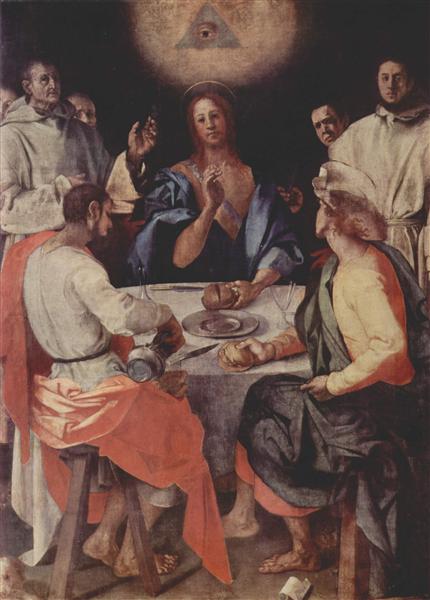
The earliest known representation of The Eye is in a painting called ‘The Supper at Emmaus’ by the Italian painter Jacopo Pontormo in 1525. This was painted during the Renaissance and it depicts the second part of the Second Appearance story in Luke 24: verses 13.35:


And they drew nigh unto the village, whither they went: and he made as though he would have gone further.
But they constrained him, saying, Abide with us: for it is toward evening, and the day is far spent. And he went in to tarry with them.
And it came to pass, as he sat at meat with them, he took bread, and blessed it, and brake, and gave to them.
And their eyes were opened, and they knew him; and he vanished out of their sight.
And they drew nigh unto the village, whither they went: and he made as though he would have gone further.
But they constrained him, saying, Abide with us: for it is toward evening, and the day is far spent. And he went in to tarry with them.
And it came to pass, as he sat at meat with them, he took bread, and blessed it, and brake, and gave to them.
And their eyes were opened, and they knew him; and he vanished out of their sight.’

As you can see the Eye is above Christ’s head which shows that God is watching the event and so can be seen as a Christian symbol. On the Ancient Origins website it’s claimed that

the elements surrounding the eye also have a Christian meaning. For example, the triangle surrounding the eye also have a Christian meaning in that it’s a clear reference to the Holy Trinity – the Father, the Son and the Holy Spirit. The burst of light is meant to symbolise divinity, holiness and God himself’
Within the Bible there are many references to The Eye in the context of God keeping watch and observing in Proverbs and Ecclesiasticus and also from Psalms 33: verse 18:


The LORD is in his holy temple, the LORD’s throne is in heaven:
his eyes behold, his eyelids try, the children of men.
Behold, the eye of the LORD is upon them that fear him,
upon them that hope in his mercy . . . . 
The eyes of the LORD are upon the righteous,
and his ears are open unto their cry.’

But older religions and faiths such as Hinduism and the Ancient Egyptians also had an important eye symbol.

In Egypt it was known as the Eye of Horus. Even today it’s still used as an emblem of protection and good health. The Eye was also known as a wadjet (the whole one), wedjat or udjat. Sailors would often paint the Eye of Horus on the prows of their ships to ensure a safe voyage. I’m sure that I’ve seen this on a boat or two in some of Hollywood’s classic sword and sandal epics! The depiction of the Eye of Horus is said to resemble the markings on a falcon’s eye due to the teardrop marking which is sometimes found below the eye as here. This would make sense as Horus is usually shown as a falcon. There are several myths about Horus and his eye. For instance, in one of them Horus fought with Set who gouged out Horus’s left eye which was later restored by a goddess.

The Eye also appears on the US one dollar bill. But it made its first appearance as a Freemason symbol on the personal seal of Robert Moray (1609-1673) who was a Scottish Freemason. Then during the 18th century it appeared again in two Freemason books, one of which was Thomas Smith Webb’s ‘Freemasonry Monitor’ and, by the 19th century, it had become part of the permanent hieroglyphical emblems of the Freemasons. There are other associations with the Illuminati and, if you’re interested, there is more information online.

But with these two All Seeing Eye symbols I think that they were meant, as they often are, to be a comforting message. The departed, and the bereaved, were all being watched over and supported at a time of sorrow and grief.

©Text and photos Carole Tyrrell unless otherwise stated.

References and further reading
https://www.undercliffecemetery.co.uk/gallery/funerary-
https://www.ancient-origins.net/human-origins-religions/eye-providence-0013057
http://www.thecemeteryclub.com/symbols.html
https://cemeteries.wordpress.com/2006/10/18/all-seeing-eye-eye-of-providence
https://en.wikipedia.org/wiki/Eye_of_Providence (this has some more examples from around the world.)
https://www.biblegateway.com/passage/?search=Luke%2024%3A13-35&version=KJV
https://gwmemorial.org/blogs/news/the-eye-of-providence

A love supreme? The Allen memorial, All Saints Birchington

Full view of the Allen memorial. © Carole Tyrrell

There are so many stories within a churchyard. They are truly repositories of a community’s history in their recording of births, deaths and the history of local families. A simple epitaph can say so much about the people buried beneath it.


I almost missed the Allen headstone as it’s lying down on the grass. This would have been a shame as it is one of the loveliest and most poignant memorials in the churchyard and must have looked imposing when it was standing upright.

A closer view of the epitaph. © Carole Tyrrell

It’s dedicated to a married couple, Janet Lormie Allen or ‘Cissie’ who died young aged 23 on 10 October 1914, and her husband, Ernest August Allan, who died 45 years later aged 79. I don’t know why Cissie died so young: it may have been in childbirth, due to illness or to another cause. But she was greatly missed as the sentiment on the headstone shows.

At one side of the tombstone, beside the epitaph, stands a young woman, a maiden, dressed in a diaphanous, long flowing robe from which one strap has fallen, exposing a bare shoulder. The hair is untied and falls to her shoulders. Behind her is a tall, slender rose stem whose blossoms reach over her head. She looks upwards to the blooms above her as, with one hand, she reaches up to pluck a rosebud. In her other hand she already holds a single bloom half open. There is a hint of the waning of the Art Nouveau movement in the flowing lines of her dress and the romance of the image.

The significance of the rose being plucked is that it’s a bud and so not yet in bloom which indicates a life cut short.

I don’t know if Ernest remarried but he was buried with his wife in 1959 and so they were reunited. It’s such a shame that as the headstone is lying down as rainwater gathers on the carving of the young woman and, for example, there has been erosion on her face.

Closer view of the maiden’s face. © Carole Tyrrell

Despite my research I have not been able to find out any further details about the couple. But it’s one of the most beautiful memorials that I’ve seen, not just because of the carving, but, as I like to think of it, a love story written on an epitaph in a country churchyard. And as we approach St Valentine’s Day what could be more appropriate?


©Text and photos Carole Tyrrell

Symbol of the Month -the dark side of the snowdrop

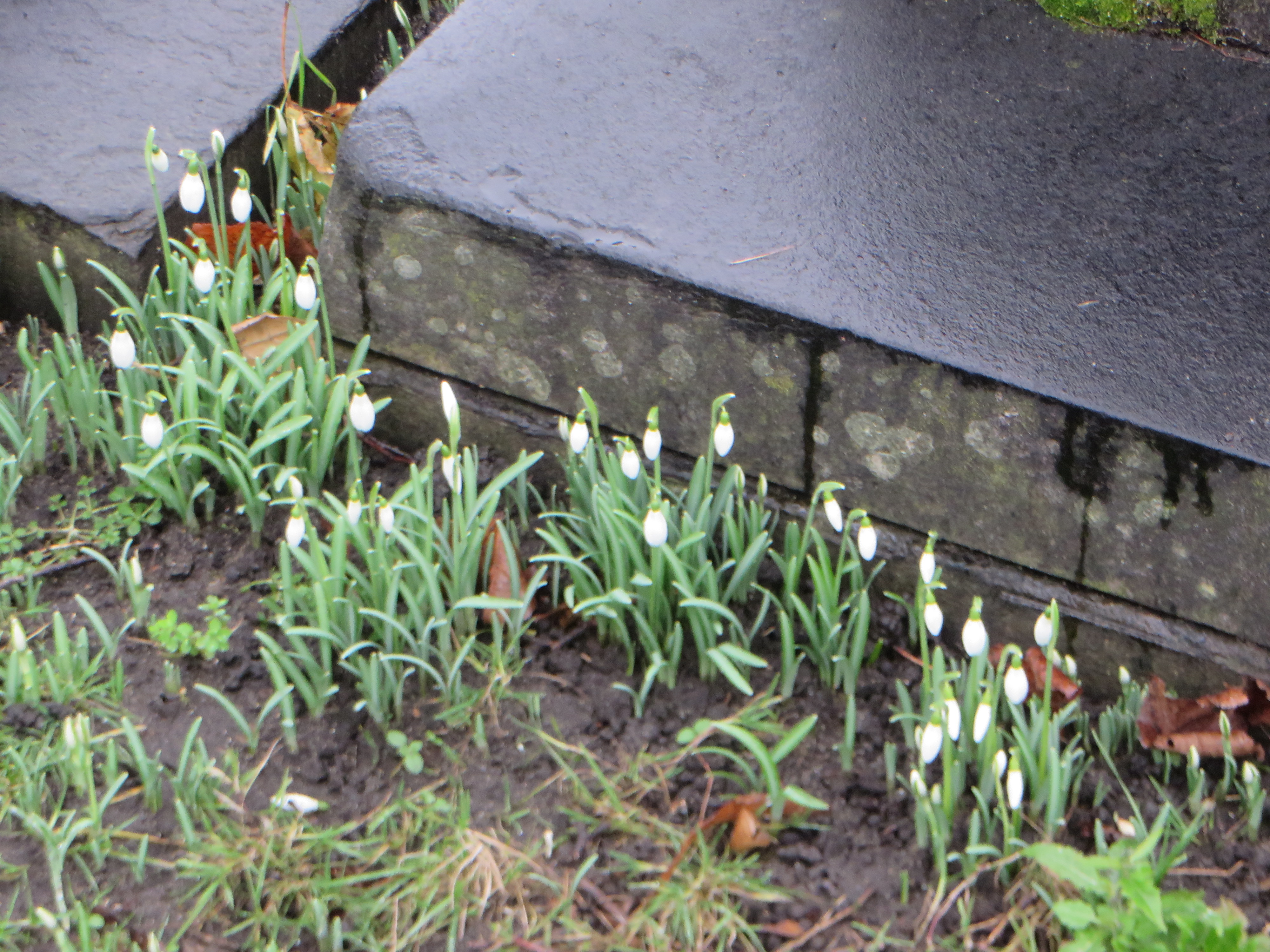
Snowdrops in St George’s churchyard, Beckenham. ©Carole Tyrrell

On February 2, tomorrow in fact, it will be Candlemass, an important day in the church calendar. Already snowdrops are appearing, nodding their tiny white heads in the breeze and making people feel that Spring is on its way.

It’s always at this time of year that I repeat this post. For these delicate little flowers have another darker side to them and a long association with churchyards and death.

Imagine yourself in a gloomy medieval church on the festival of Candlemass. You, and your fellow parishioners, have each brought your candles to be blessed by the priest and, after the procession which will fill the church with light, they will all be placed in front of a statue of the Virgin Mary.   Candlemass marked the end of winter and the beginning of Spring. The blessing is to ward off evil spirits.  It traditionally falls on February 2 and is shared with the Celtic festival of Imbolc.  And in the churchyard outside you can see green shoots forcing their way up through the hard winter earth.  The snowdrop’s milk-white flowers show that spring is on its way as they begin to emerge into the light.

The placing of the lit candles in front of the Virgin Mary’s statue gave the snowdrop one of its many other names – Mary’s Tapers.  But there are many others such: Dingle Dangle, Candlemas Bells, Fair Maids of February, Snow Piercer, Death’s Flower and Corpse Flower.

Snowdrops, Kensal Green Cemetery, January 2018
©Carole Tyrrell

The snowdrop’s appearance has also inspired many comments . According to the Scottish Wildlife Trusts website they have been described as resembling 3 drops of milk hanging from a stem and they are also associated with the ear drop which is an old fashioned ear ring.  Anyone who has seen a group of snowdrops nodding in the wind will understand what they mean.   The snowdrop’s colour is associated with purity and they have been described as a shy flower with their drooping flowers.  However, the eco enchantments website reveals that the flower is designed in this way due:

to the necessity of their dusty pollen being kept dry and sweet in order to attract the few insects flying in winter.’

Snowdrops have been known since ancient times and, in 1597, appeared in Geralde’s ‘Great Herbal’ where they were called by the less than catchy name of ‘Timely Flowers Bulbous Violets’.  Its Latin name is Galanthus nivalis.  Galanthus means milk white flowers and the nivalis element translates as snowy according to the great botanist, Linnaeus in 1753.   In the language of flowers they’re associated with ‘Hope’ and the coming of spring and life reawakening.

However, yet despite all these positive associations, the elegant snowdrop has a much darker side. Monks were reputed to have brought them to the UK but it was the ever enthusiastic Victorians who copiously planted them in graveyards, churchyards and cemeteries which then linked them with death.  Hence the nickname name ‘Death’s Flower.’

They were described by Margaret Baker in the 1903 ‘Encyclopedia of Superstitions, Folklore and the Occult of the World’ as:

‘so much like a corpse in a shroud that in some counties  the people will not have it in the house, lest they bring in death.‘

So that’s where the ‘Corpse Flower’ nickname came from.

Snowdrops, St George’s Beckenham. ©Carole Tyrrell

Snowdrops are also seen as Death’s Tokens and there are several regional folk traditions of connecting death with them. For example in the 19th and early 20th centuries it was considered very unlucky to bring the flower into the house from outside as it was felt that a death would soon occur.  The most unlucky snowdrop was that with a single bloom on its stem.    Other folk traditions were described in a 1913 folklore handbook which claims that if a snowdrop was brought indoors it will make the cows milk watery and affect the colour of the butter.  Even as late as 1969 in ‘The Folklore of Plants’  it was stated that having a snowdrop indoors could affect the number of eggs that a sitting chicken might hatch.  A very powerful plant if these are all to be believed – you have been warned!

It’s amazing that this little flower has so many associations and legends connected with it but I always see it as a harbinger of spring, rebirth and an indication of warmer days to come.

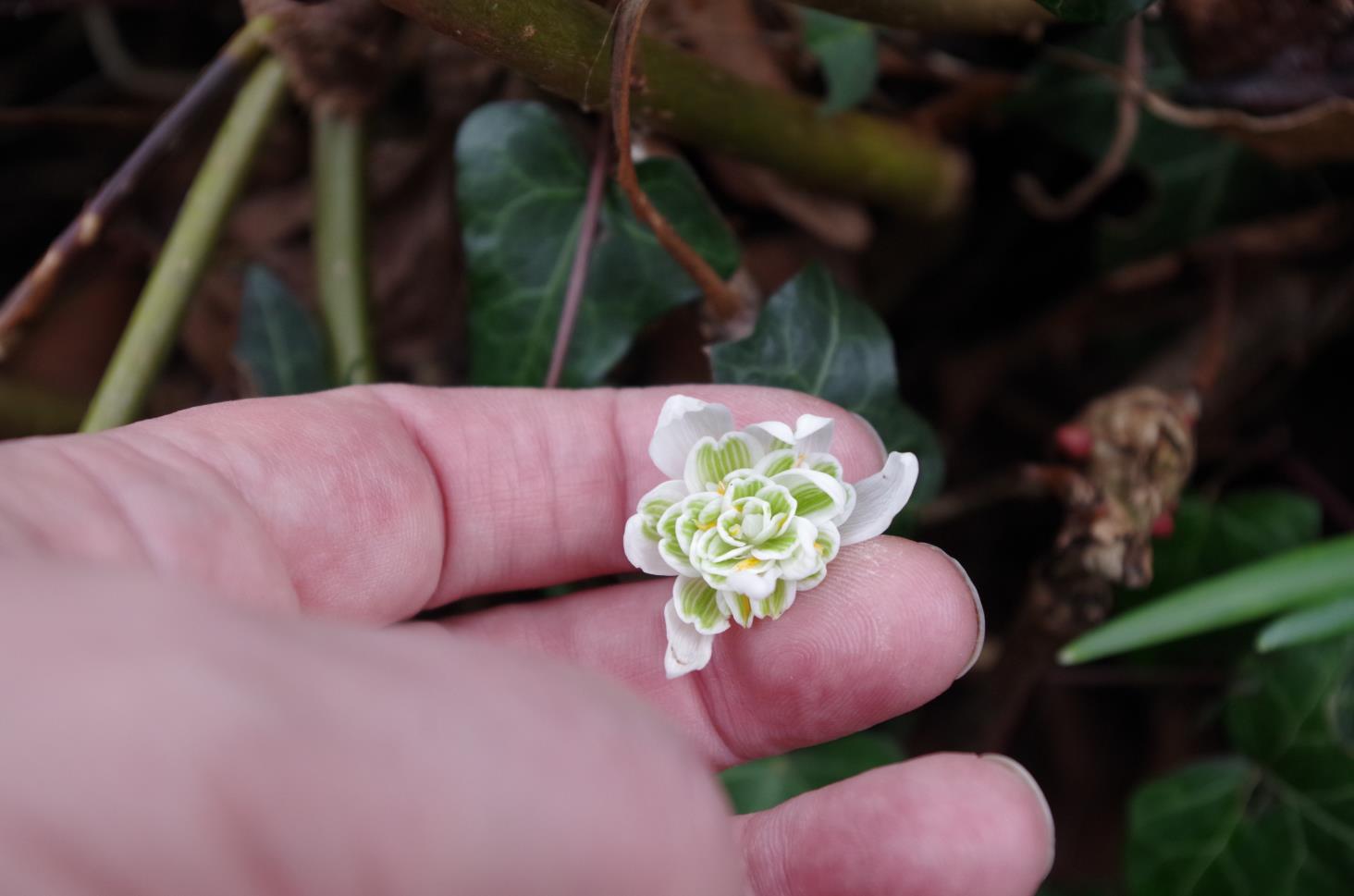
But the snowdrop also has a surprise.  This came courtesy of the Urban Countryman page on Facebook – not all social media is time wasting!  If you very gently turn over a snowdrop bloom you will find that the underside is even prettier and they also vary depending on the snowdrop variety.

Here is a small selection from my local churchyard and one from Kensal Green cemetery.

The underside of a snowdrop, St George’s churchyard Beckenham ©Carole Tyrrell
Another underside of a snowdrop. ©Carole Tyrrell
Another snowdrop underside. ©Carole Tyrrell
Underside of snowdrop in Kensal Green Cemetery March 2017 ©Carole Tyrrell

So don’t underestimate the snowdrop – it’s a plant associated with life and death but watch out for your hens and the colour of your butter if you do decide to tempt fate…..

©Carole Tyrrell text and photos unless otherwise stated

References:

http://www.plantlore.com

http://www.independent.co.uk/environment/naturestudies/bright-in-winters-depths-why-the-flawless-flower-of-candlemas-is-ajoy-forever-8483967

http://www.flowermeaning.com/snowdrop-flower-meaning

http://www.ecoenchantments.co.uk/mysnowdropmagicpage.html