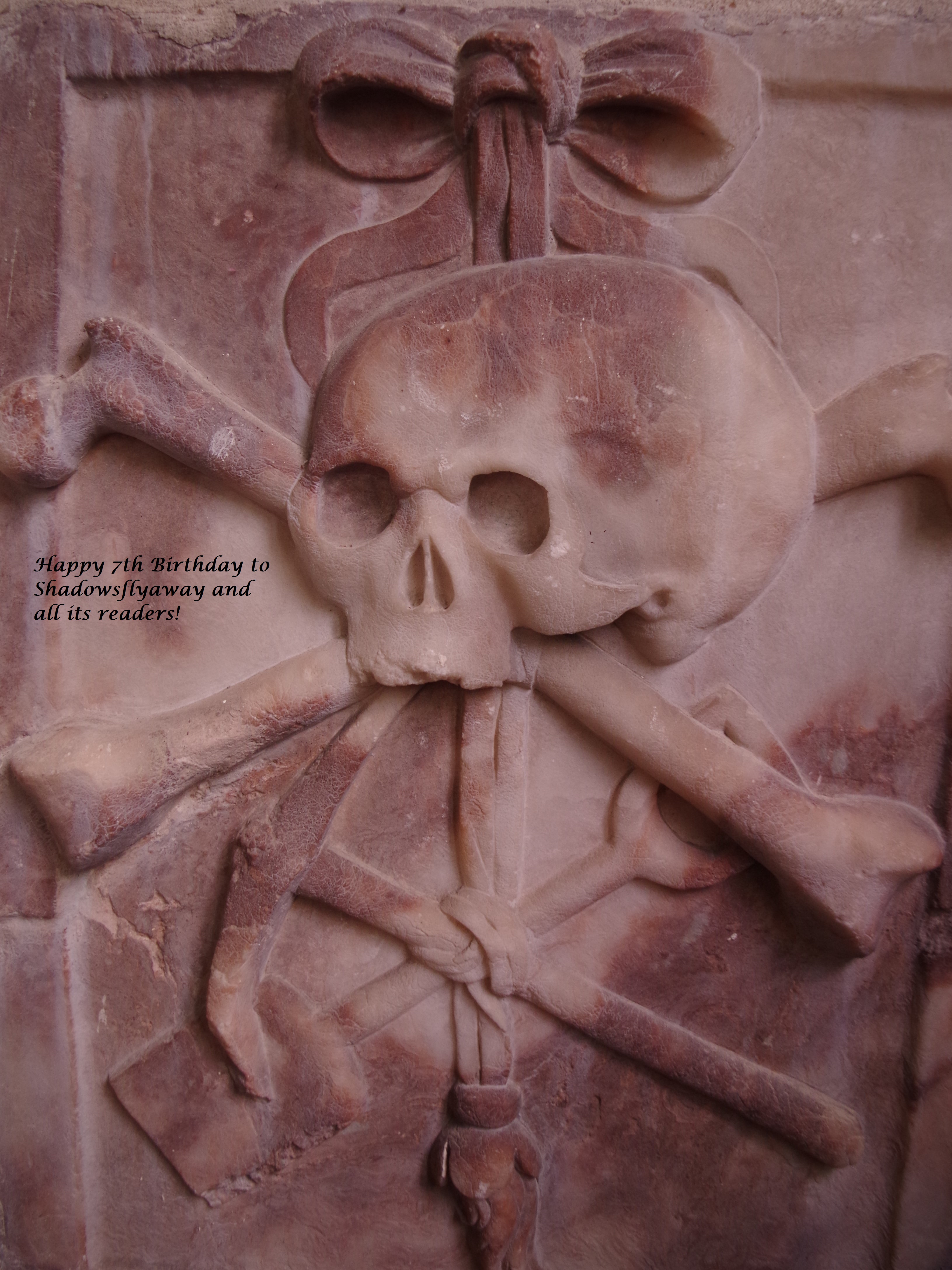
Although I didn’t see many symbols in St Mary’s churchyard in Higham that I hadn’t previously seen before, my attention was drawn to this one.
It appears to be another version of the carving, although in far better condition, that I called Hebe after the Greek Goddess and first saw in the churchyard of All Saints, Frindsbury. Higham is only, just under 3 miles, away from Frindsbury so a journeyman stonemason could probably walk or ride there in a day.
The one in Higham is on a in a unusual roundel on a headstone dedicated to Catherine Jamson who died on 26 August 1806 at 52. It’s beautifully carved and still crisp but with its head missing. There is an almost ghostly impression of where it once was if you look closely. It seems to be a clean break but is it vandalism, as they always like to go for the heads on statues or carvings, or just wear and tear over the years? We may never know. In 2012, according to the Kent Archaeological Society, the epitaph read:
“While in this World I did Remain, My Latter Days were Grief and Pain, At Length the Lord did think it Best, To Take me to a place of Rest”
Thomas Jamson is also buried with her and he died on 3 November 1828 aged 82 years. He was a house carpenter and left a substantial will to his second wife.
The Caryer headstone in 2011 , All Saints Frindsbury
Photo Kent Archaeological Society
In All Saints churchyard, Frindsbury, the headstone is a sad one as it is dedicated to Hannah Caryer, wife of John who died young aged 30 years in 1809. John, her husband died later and also young aged 41 and their young son who predeceased his mother by 8 years. The Frindsbury Hebe still has its head although there has been some wear and tear over the years. So could it be the same stonemason as they were itinerant craftsmen who travelled from parish to parish. Sometimes you can see their work in several churchyards but of course it could be two separate stonemasons using the same symbol, perhaps from a pattern book of the time. However, it’s interesting to note that both ladies died 3 years apart – a fashionable emblem at the time?
However, part of the pleasure of researching symbols in country churchyards is in attempting to identify an individual stonemason’s work. I have not yet been lucky enough to find any signatures or identifying marks on carvings. But maybe I’m not looking in the right places. But this seems to be almost a coincidence that this symbol appears on the headstones of two women in the same area. Especially as it’s a pagan image, if it is Hebe the Greek goddess, in a Christian burial place.
Although I have found several occupations on headstones such as carpenter, caulker, baker and gunner, the only stonemasons grave I have found so far in All Saints churchyard in Maidstone. There are two of them and they date from the 19th century. But I am sure that I will find one that dates from an earlier period if wear and tear hasn’t got there first.
Yes, it’s been seven years since shadowsflyaway began – during which I have visited so many churchyards and cemeteries looking for symbols and interesting stories and, often, I may spot a symbol from a bus or a train and feel compelled to immediately get off and go back to see what it is. It has been fascinating to be able to see how symbols have evolved over the centuries and the way that people want to use them to define themselves after death. Even if it is just the passing visitor stopping to look and then asking themselves ‘Why on earth did they choose that?’
So here’s to another year of shadowsflyaway and unearthing more hidden gems in country churchyards and city cemeteries. Let’s raise our virtual glasses of champagne, or whatever else you choose, and drink a toast to us all. And with symbol finding, I still have a death weekend in Edinburgh to plan……
St Mary’s church in Higham is another one that is associated with Charles Dickens. I am beginning to think that if he even so much as sniffed in the direction of a building or local place, then it is forever part of ‘Dickens country’.
The church was his parish church when, in 1859, he moved into Gad’s Hill Place on the Gravesend-Rochester road. Katey, his daughter, was married there, and in the same year, he began Great Expectations. The abandoned gun emplacement where the convict, Magwitch, hides has been suggested as being that of Shornewood Fort.
I set off to visit St Mary’s church which, like St James in Cooling, is also in a remote place in a rural area roughly 2 miles outside Higham (which is pronounced Hi-am and means ‘high village’). It was never anything but sparsely populated and in the 1860’s most of the population moved inland, away from the marshes, towards Upper Higham. There isn’t much to Higham I have to say. The pubs have gone, the shops have gone, all now converted into accommodation. The houses and streets soon gave way to a straggle of terraced houses, an orchard and then open fields. Above me the sky was azure blue with only chem trails from planes crossing it.
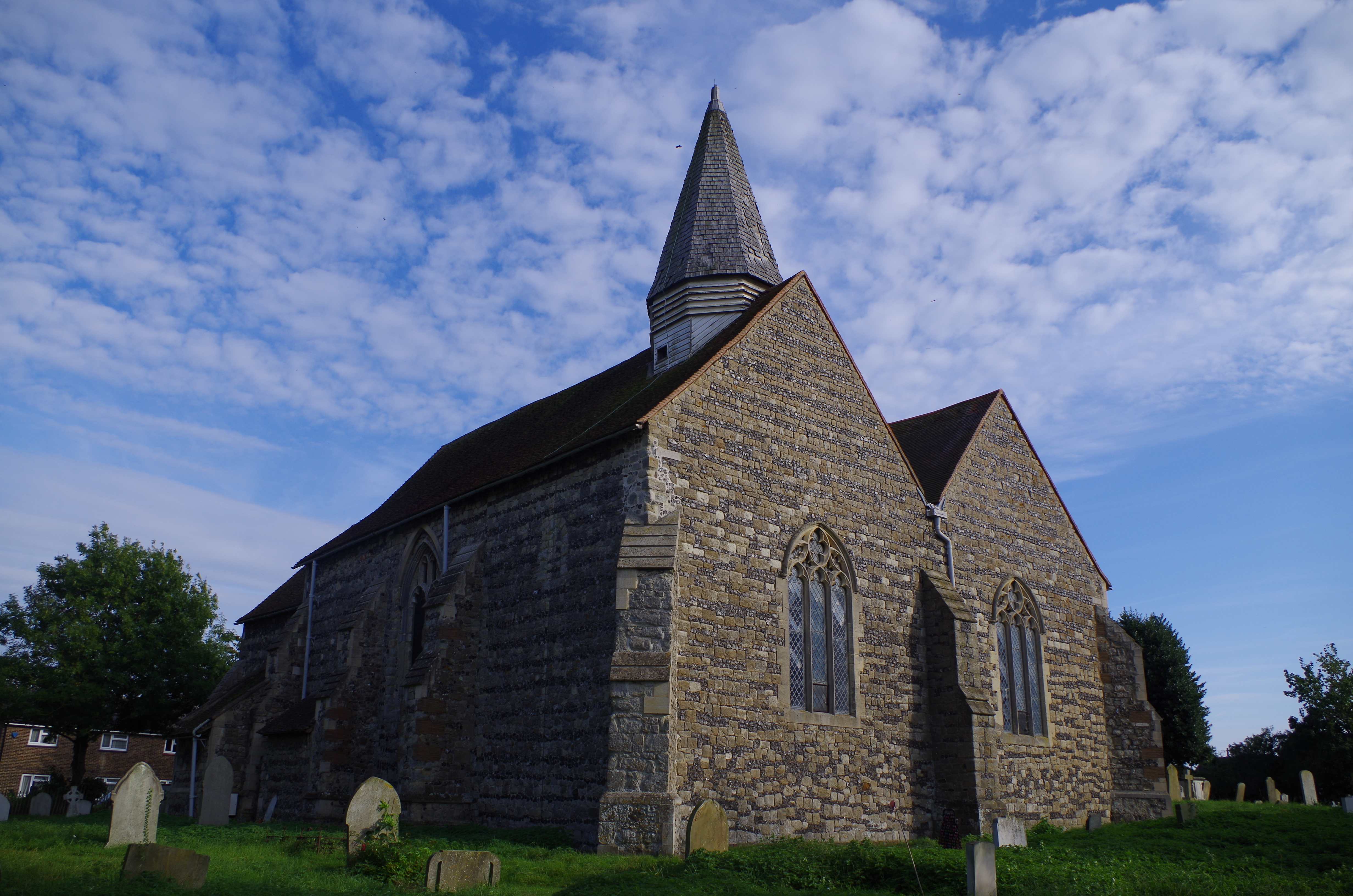
It was a long road with little traffic and I enjoyed being out in the open air again with the sun shining down on me. The church came into sight at last and it was as pretty a country church as I could have wished for. Grade 1 listed St Mary’s has striped walls of flints and Kentish ragstone which were roughly set in horizontal bands and it nestled within its churchyard. (I revisited it over the Platinum Jubilee weekend and the wooden spire has been repaired)
The church is now under the care of the Churches Conservation Trust as it is closed. There was a very small street or ‘street-ette’ along one side of the churchyard which had 2 houses with thatched roofs, one of which was the clerk’s house.
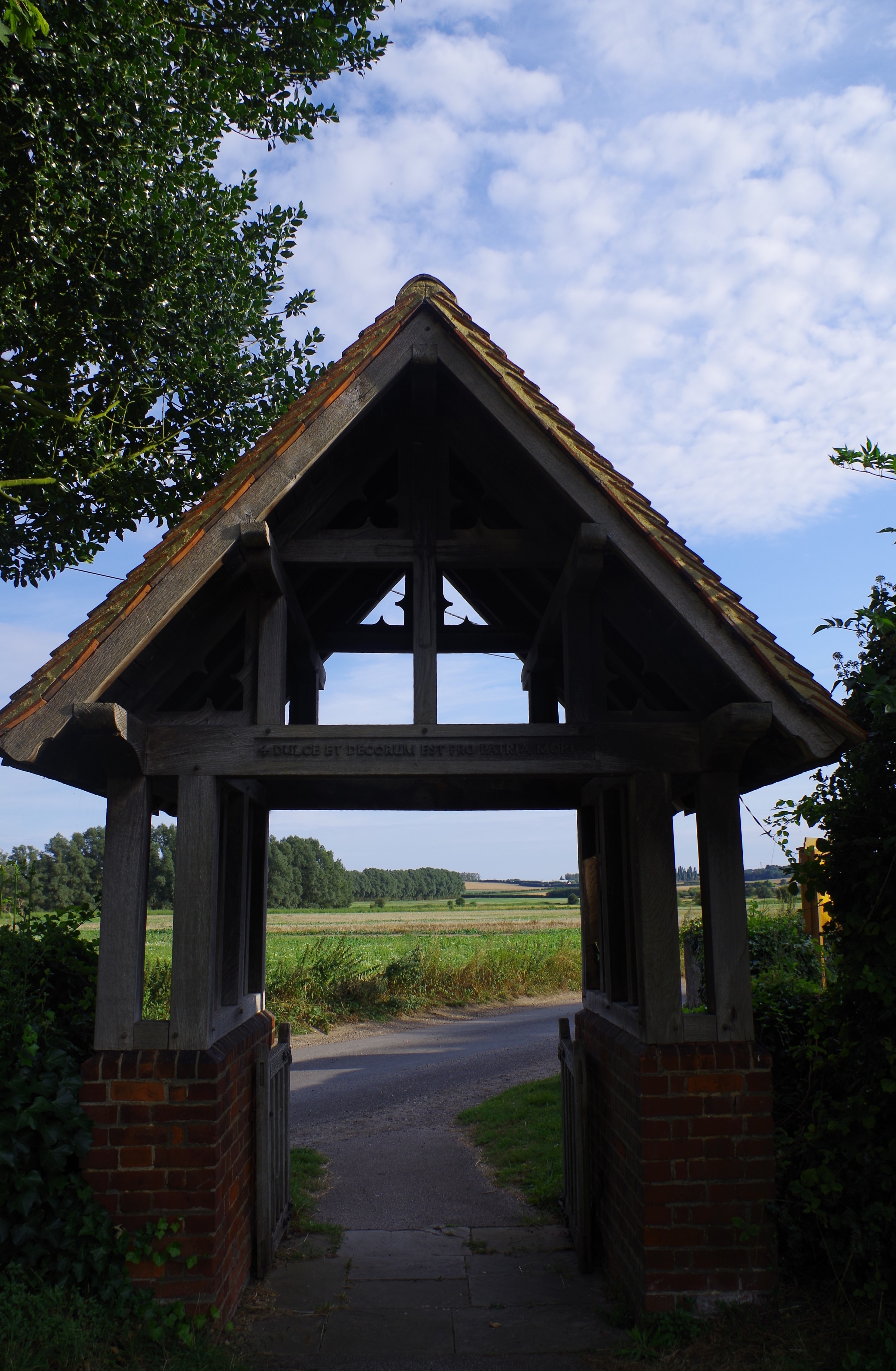
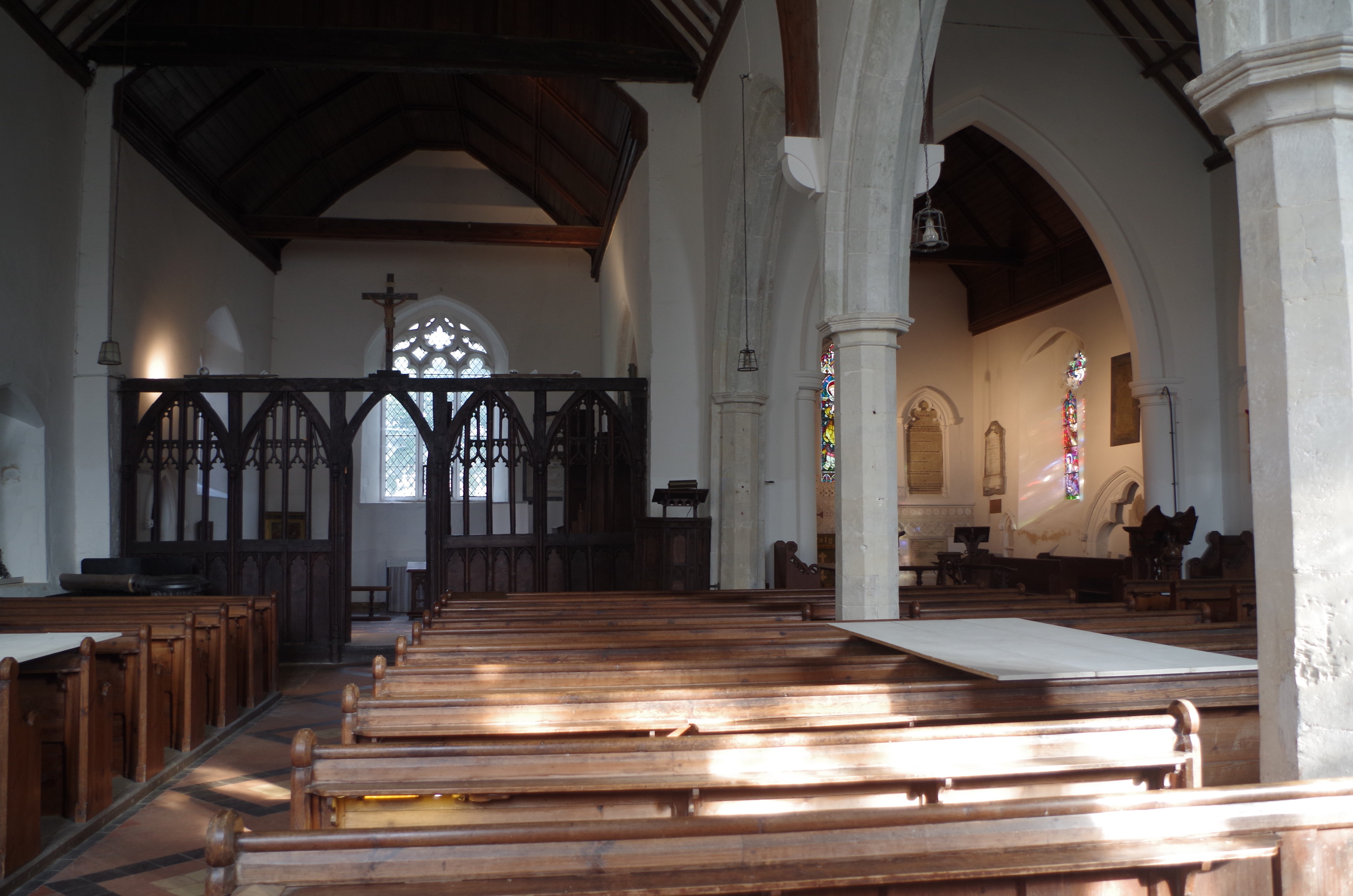
I paused for a moment to drink it all in. The lychgate, dedicated in 1918, had scenic views from both side; on one side was the church and on the other was fields. Inside the church, originally Norman, much of the 14th century features still remained despite an enthusiastic remodelling in 1863. The 16th century iconoclasts don’t seem to have troubled this corner of Kent as the Cooling church had also retained most of its ancient artifacts
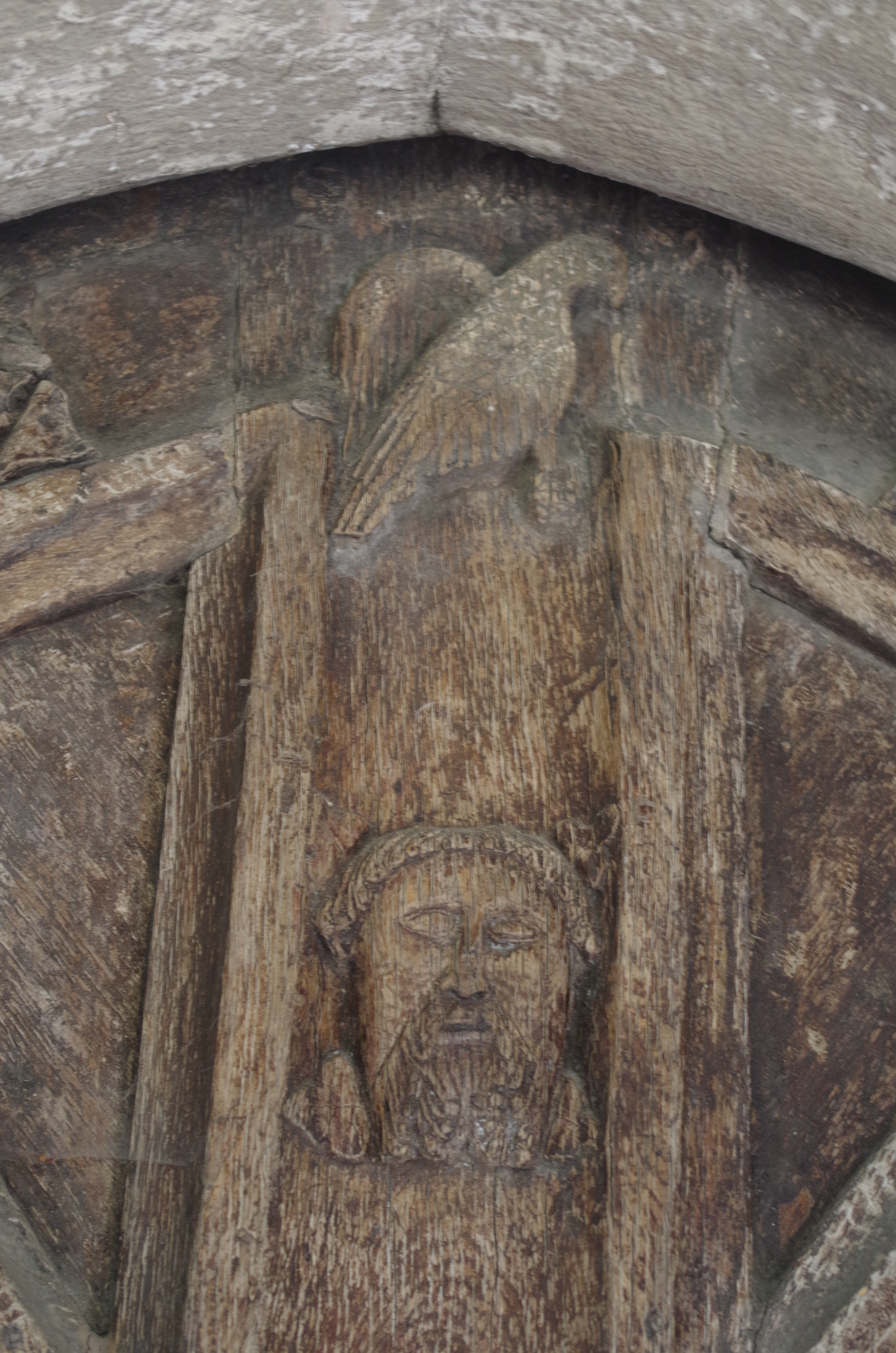
Sadly, there is no longer any medieval glass at St Mary’s and, instead, it all dates from the 19th century. But the 14th century chancel screen, the beautifully carved wooden entrance door, the font and the pulpit still remain. The church door is a superb example of medieval carving in that it resembles a four light window and contains flower designs, animals and a small Green Man (on my second visit I found him!).
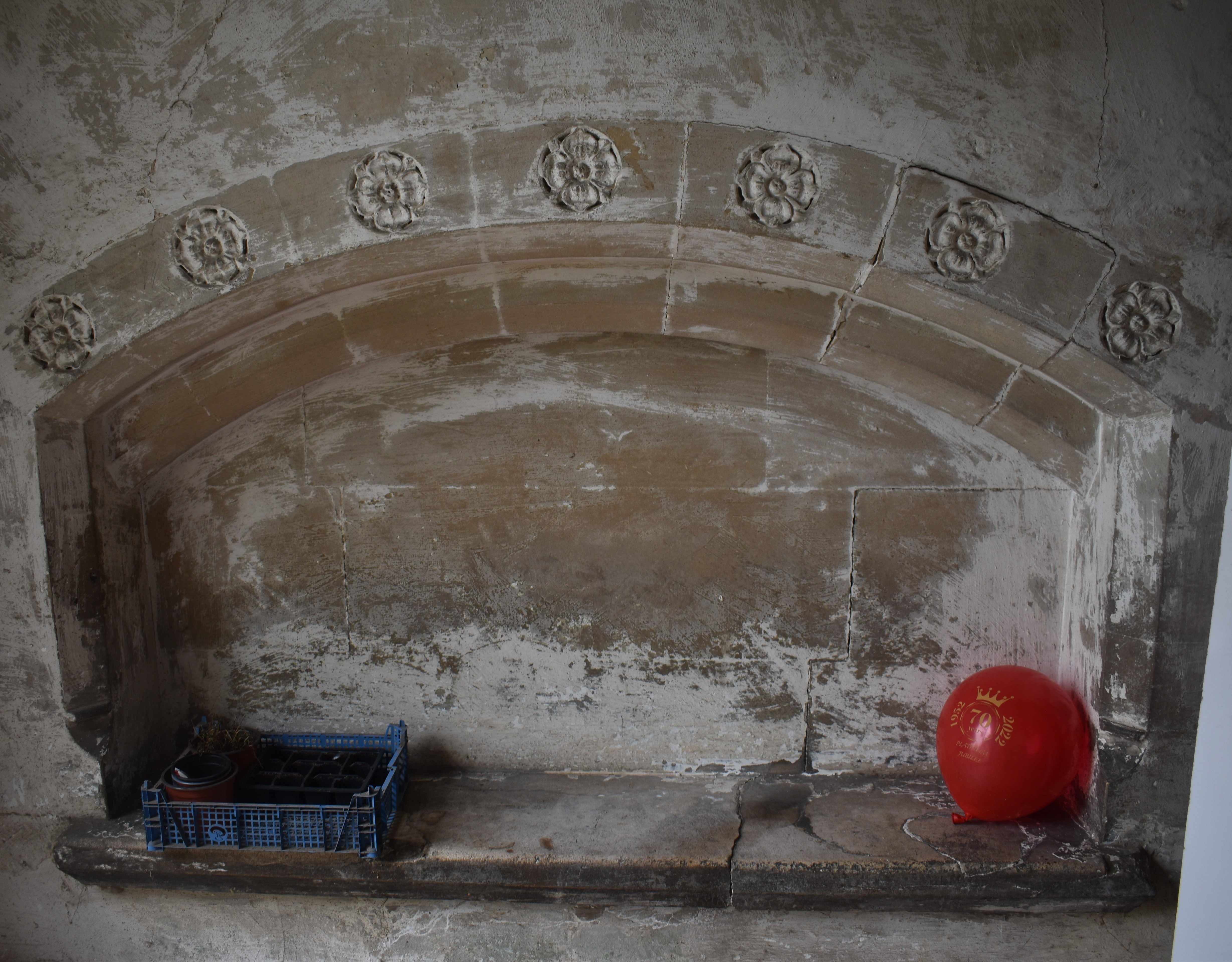
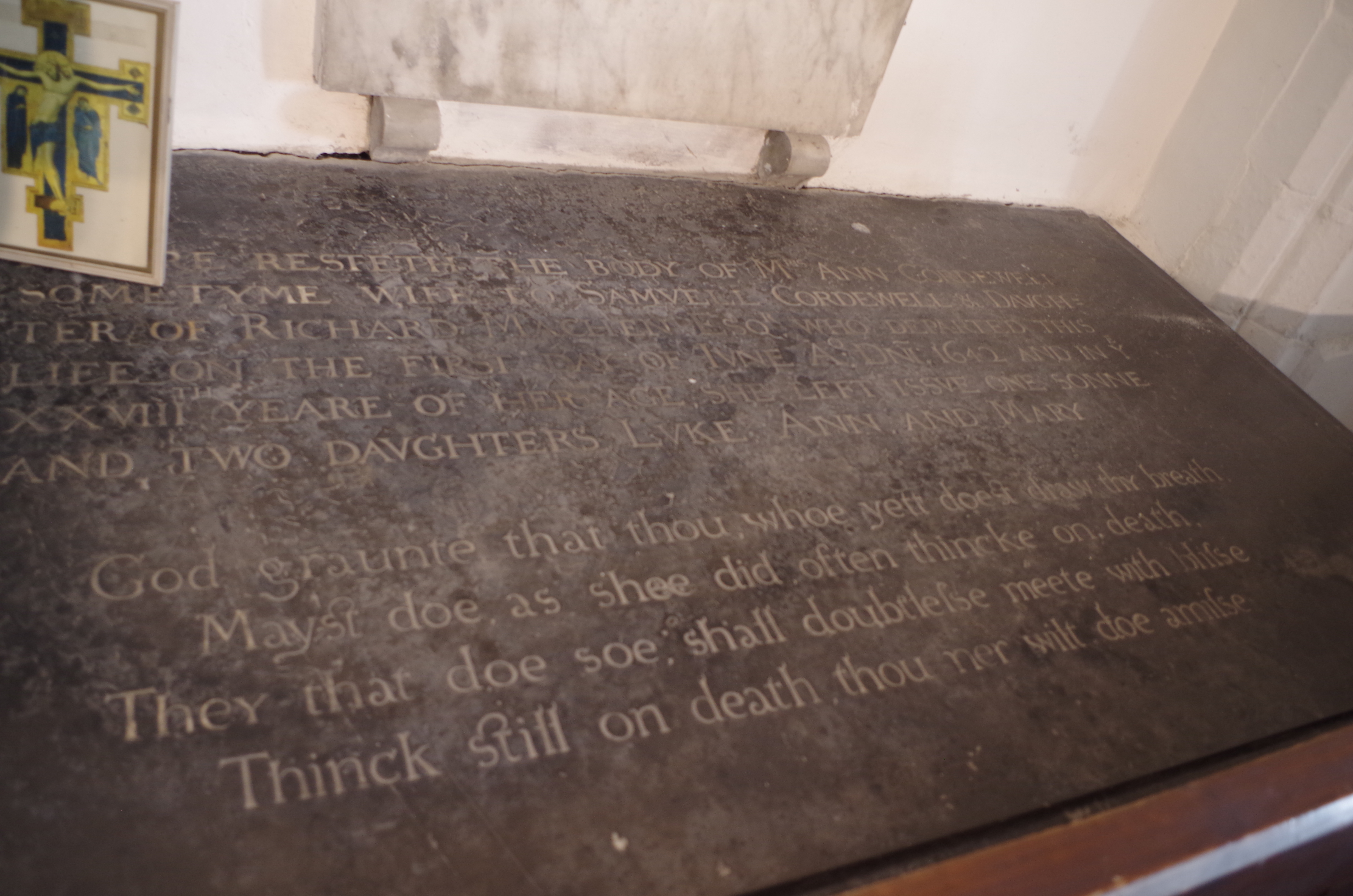
St Mary’s also has 2 naves and 2 chancels. One of the chancels contains a tomb niche with a wide cinque foil arch decorated with corbel heads which was originally contained the tomb of Abbess Joan de Hadloe who died in 1328. Every time I think I’ve seen the earliest memorial, monument or tomb, I promptly come across an earlier one! At last, I hear you say, a naughty nun? Not yet. There was also a memorial to Ann Cordewell who died in 1642. It has an epitaph verse on its wall. Nearby is a plaque dedicated to Ann’s barrister grandson, Samuel Levinge, who died in 1748. To be in St Mary’s was to be in the middle of a community’s history as another memorial recorded a woman who had died in 1615.
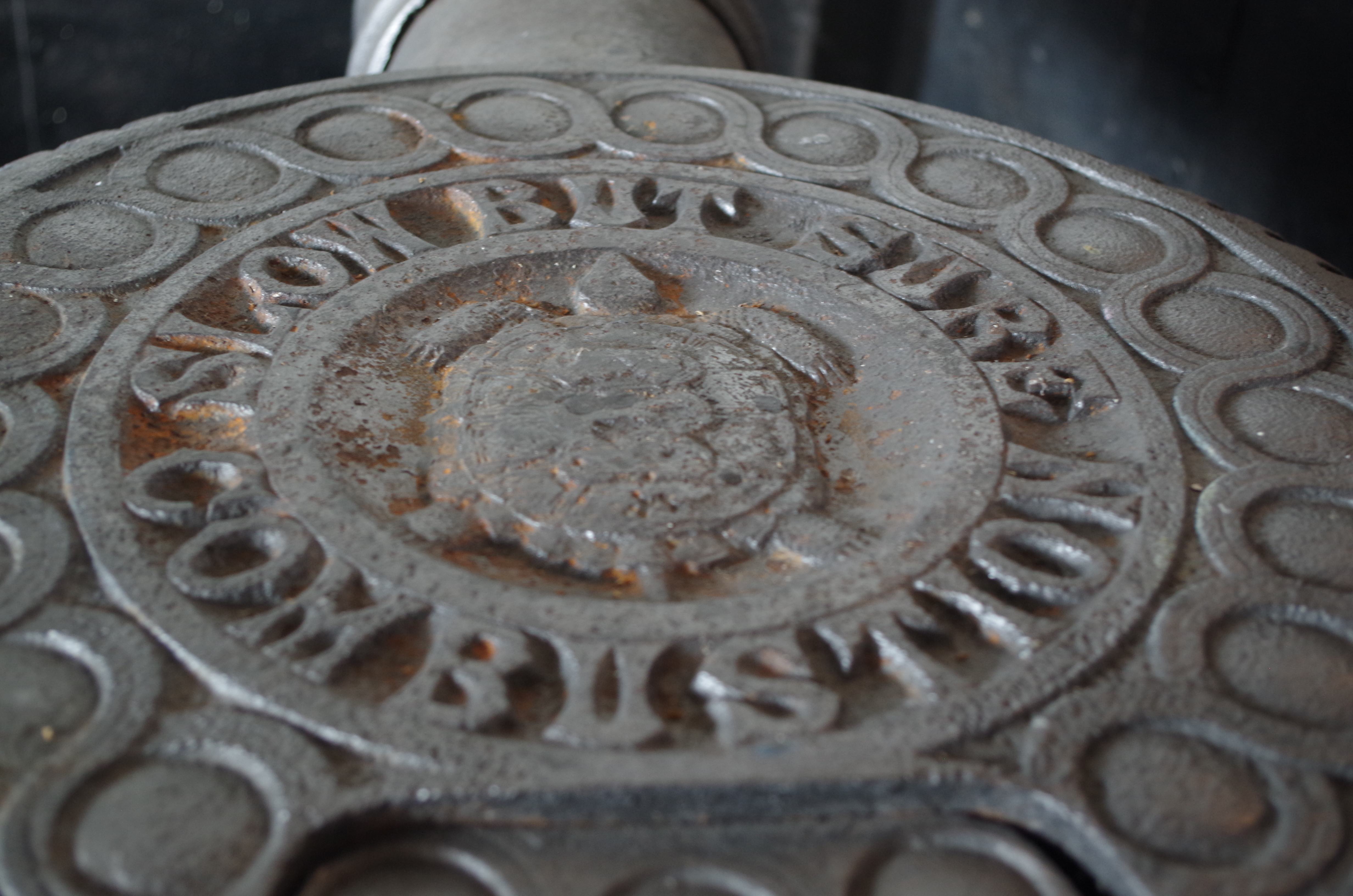
As I admired the rare surviving Tortoise stoves, a 19th century form of heating and their proud statement ‘Slow but sure combustion’, two middle aged ladies bustled in presumably from the side road and began regaling me with tales of the medieval ‘naughty nuns’ who offered travellers more than bed and breakfast…..or perhaps they thought I might attempt to run off with the font in my bag..
Prior to the Dissolution, there was a medieval priory at Higham near the church and the village is reputedly built on it. It was a substantial place which had a fishery and other buildings and the nuns would ferry people across the river. Travellers could also stay at the priory and perhaps received more than bed and breakfast…..
There was a mother church at Saint Sulpice La Florentine which still exists and is in Brittany. It was a Benedictine order and the prior existed from 1151-1521. But according to the records, by 1504, only 5 nuns were still living there. The arrival of a new priest, Edward Steroper, may be what created the image of the ‘naughty nuns’ as he is reputed to have made 2 of them pregnant. Apparently, according to the guidebook the ‘notorious’ conduct of the Higham nuns was common knowledge in the district’ Oo-er! Looking at this now, almost lonely, spot it’s hard to believe that it was once a thriving community, with the nuns clearly making their own entertainment. The priory had an early dissolution and the buildings and land were transferred to St John’s Cambridge. The tomb recess to Abbess Joan de Hadloe is all that remains of the priory and the nuns.
The churchyard that nestles around the church appeared to mostly 19th century memorials with a sprinkling of now unreadable 18th century ones.
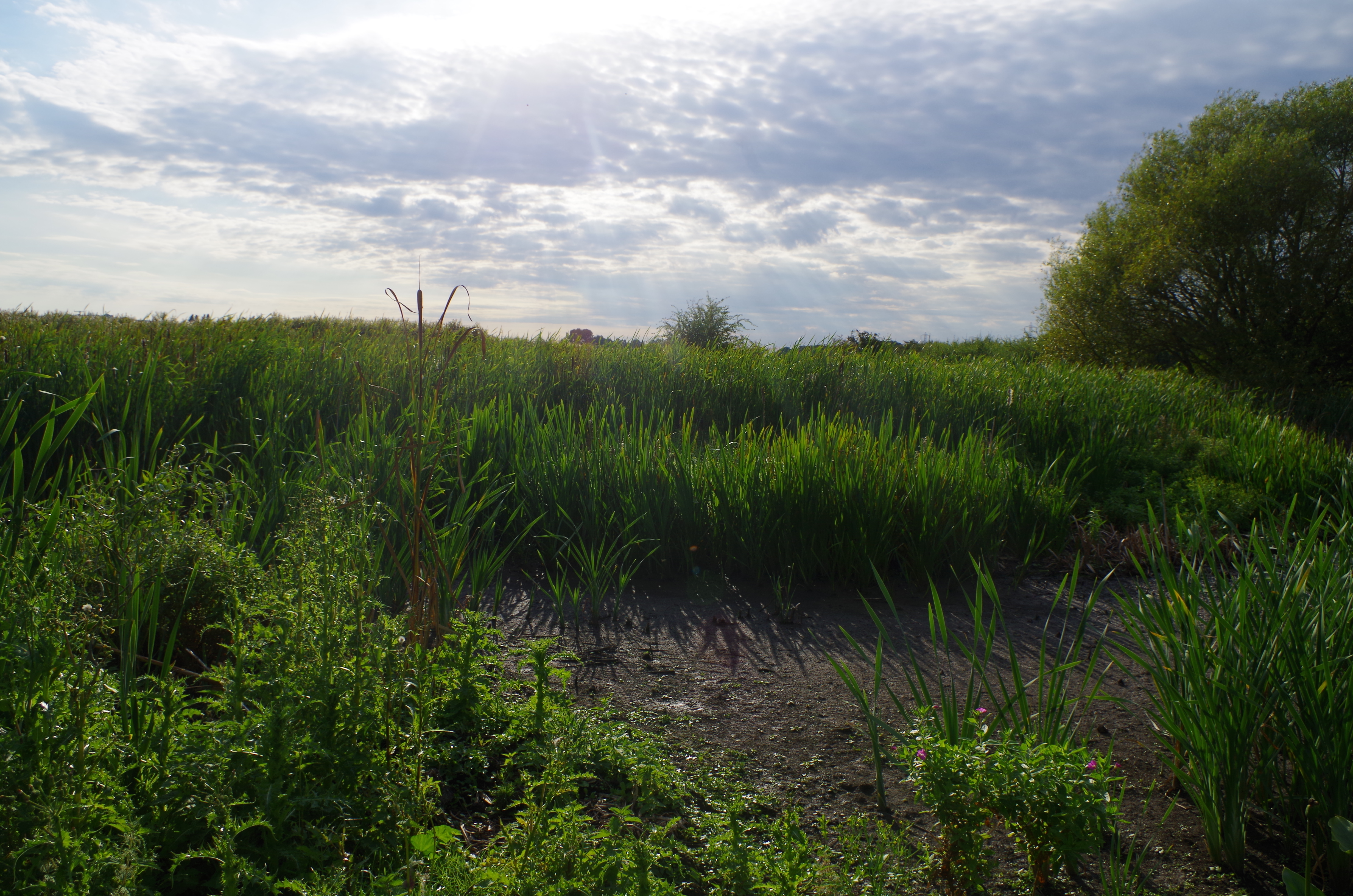
The two friendly ladies suggested that I visit the side road where there were some ancient houses. It was very pretty and it emerged out into an empty farm. 2 large blue Emperor dragonflies flitted above the small pond as the marshes stretched on into the distance. A notice revealed that 6 houses were to be built here in the not too distant future and the locals didn’t seem happy about it. The views over the Kent marshes are towards Stanhope-le-Hope, the oil refineries and Shell Haven and Langdon Hills in Essex.
I walked back to the station along the empty road and, as I sat waiting for the train, a bat flew above me. I wondered how many other churches there were in Kent that were, even vaguely, associated with Charles Dickens and if I had the stamina to visit them all.
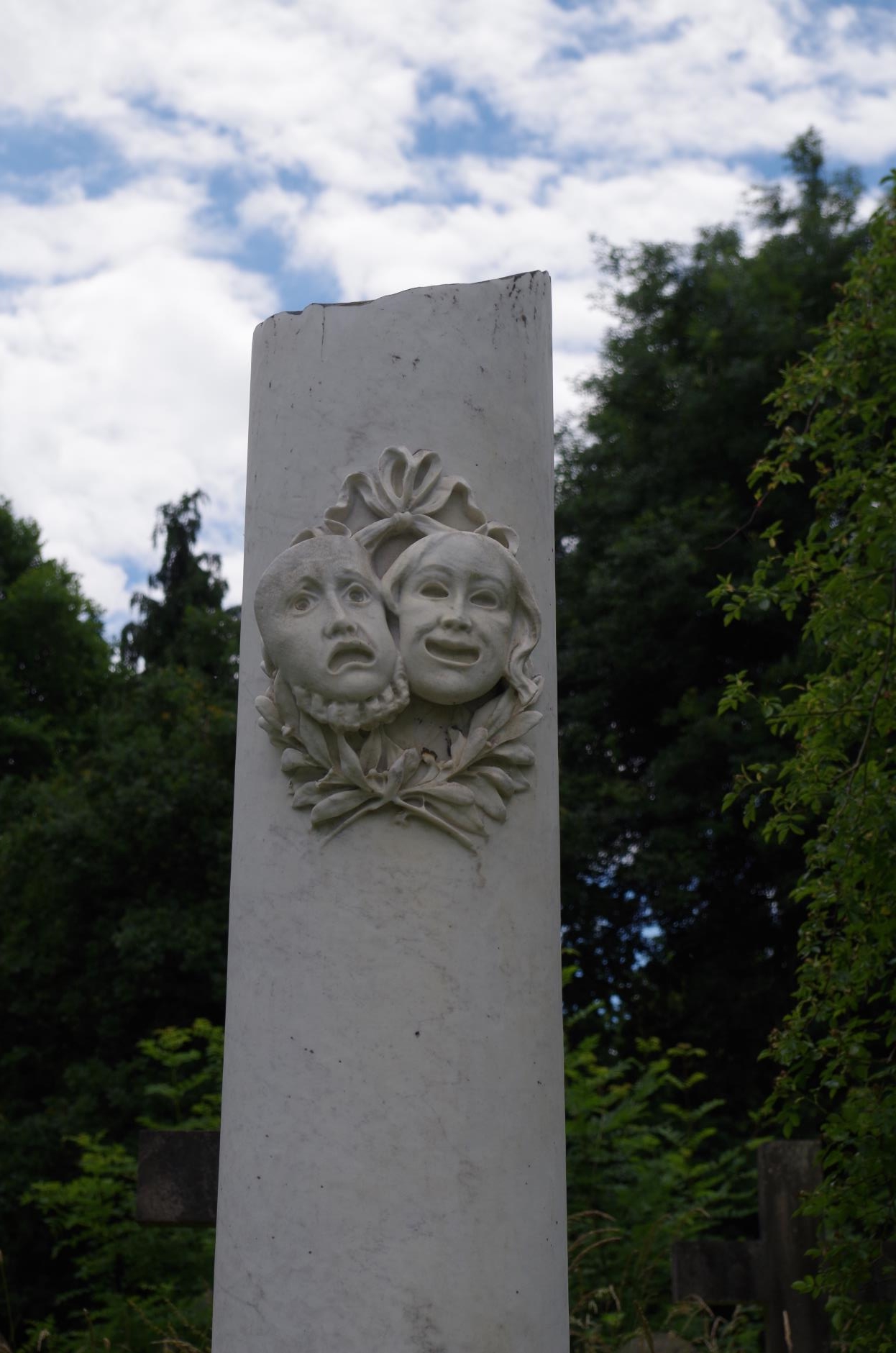
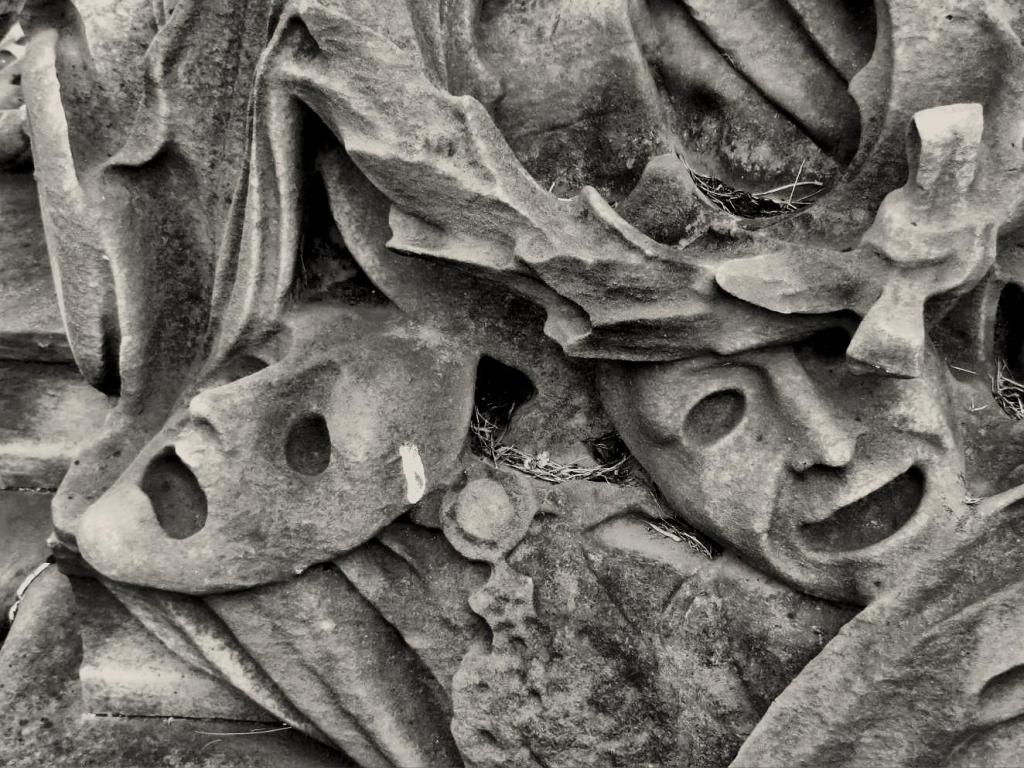
The two masks of comedy and tragedy, or Sock and Buskin as they are also known for reasons I’ll explain later, are not often found in cemeteries. And as you might expect, when they are there’s a theatrical association.
But what is the history behind this two faced symbol and how did these icons from Ancient Greece come into Victorian cemeteries?
It began with the custom of actors wearing masks, an essential part of the performance, in early Greek theatre. It was a vital part of Greek culture and civic pride. However, Comedy and Tragedy were viewed as completely separate genres and no plays ever combined them.
Tragedy
This genre began in Athens around 532 BC with Thespis, the earliest recorded tragic actor. He was known as ‘Father of Tragedy’ and it has been suggested that his name inspired the English term, thespian, for a performer.
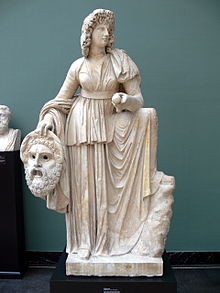
Muse of Tragedy:
Melpomene is the Muse and is often depicted holding the Mask of Tragedy. She often also holds a knife or club and also wears the ‘cothurni ‘or buskin boots that elevated her above other actors. She was a daughter of Zeus and Mnemosyne as was Thalia, the Muse of Comedy, and there were also 7 other daughters who were all Muses.
And so both Comedy and Tragedy became two sides of the theatre world.
Tragic Comic masks Hadrian’s Wall mosiac 2nd Century AD. Domain USA . Located in Capitoline Museum, Rome, Italy. Licenced under wikipedia Creative Commons 2.0
Masks:
They were seen as one of the iconic conventions of classical Greek theatre and date back to the time of Aeschylus (525-456 BC) commonly considered to be the father of Greek tragedy. The Ancient Greek term for mask is ‘prosopon’ or face. There are paintings on vases, such as the 5th century BC Pronomos vase, depicting actors preparing for performance with masks. However none have survived due to the organic materials from which they were created such as stiffened linen, leather or cork with wigs of human and animal hair. After the performance they were dedicated at the altar of Dionysus.
It was mainly the chorus that used masks on stage of which there could be up to 12-15 members. Masks created a sense of unity when representing a single character or voice. They always created a sense of mystery and were also a method of disguise. The actor would use the mask to totally immerse himself in his role and become someone else. It also allowed him to appear and reappear in several different roles instead of only being seen as one character. The exaggerated features of the mask also enabled audience members who were sitting at a distance to see characters emotions.
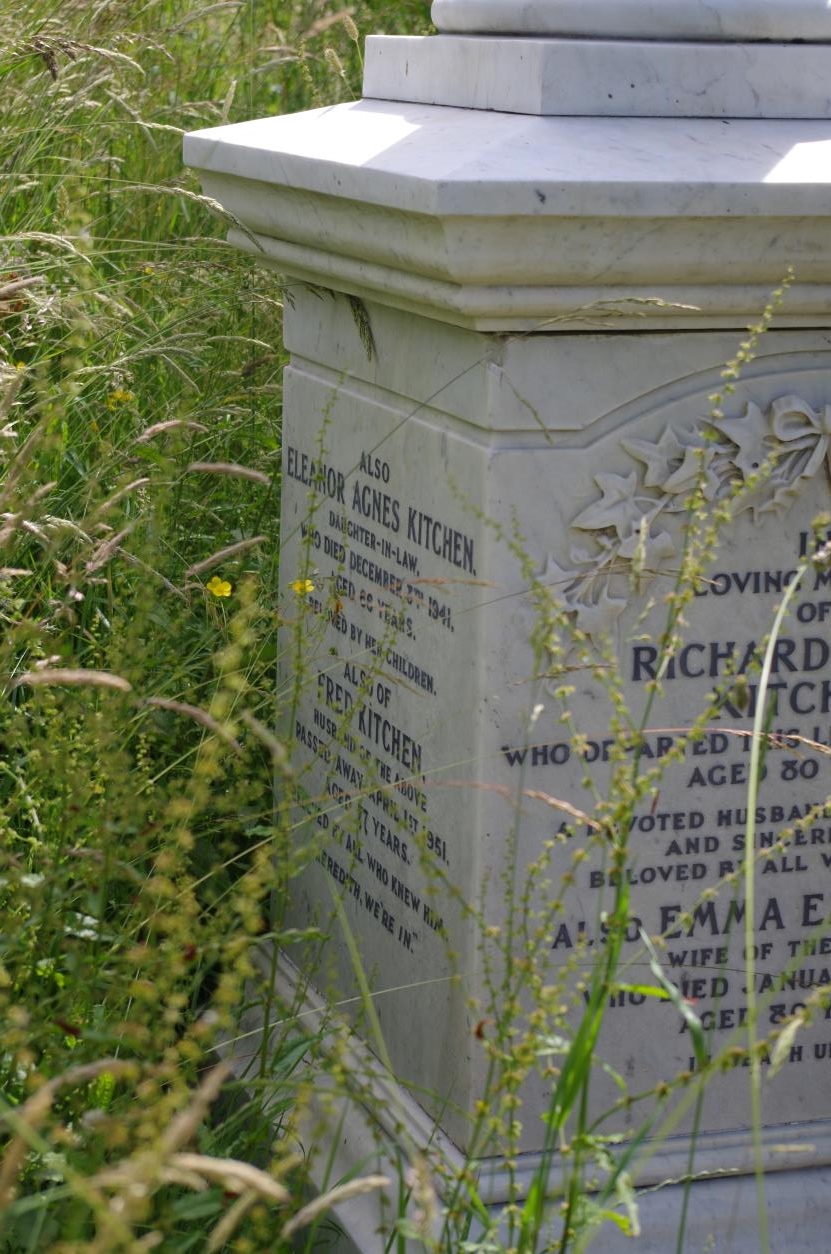
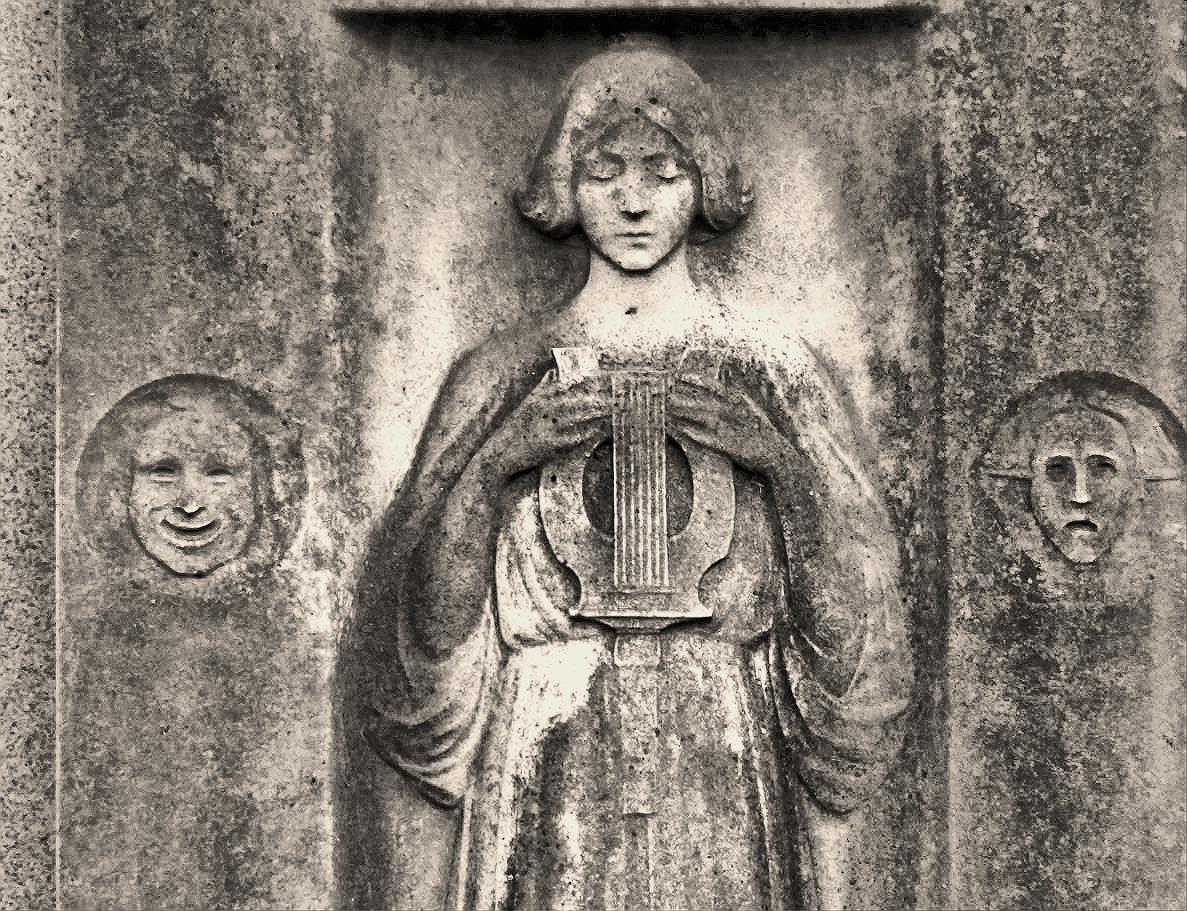
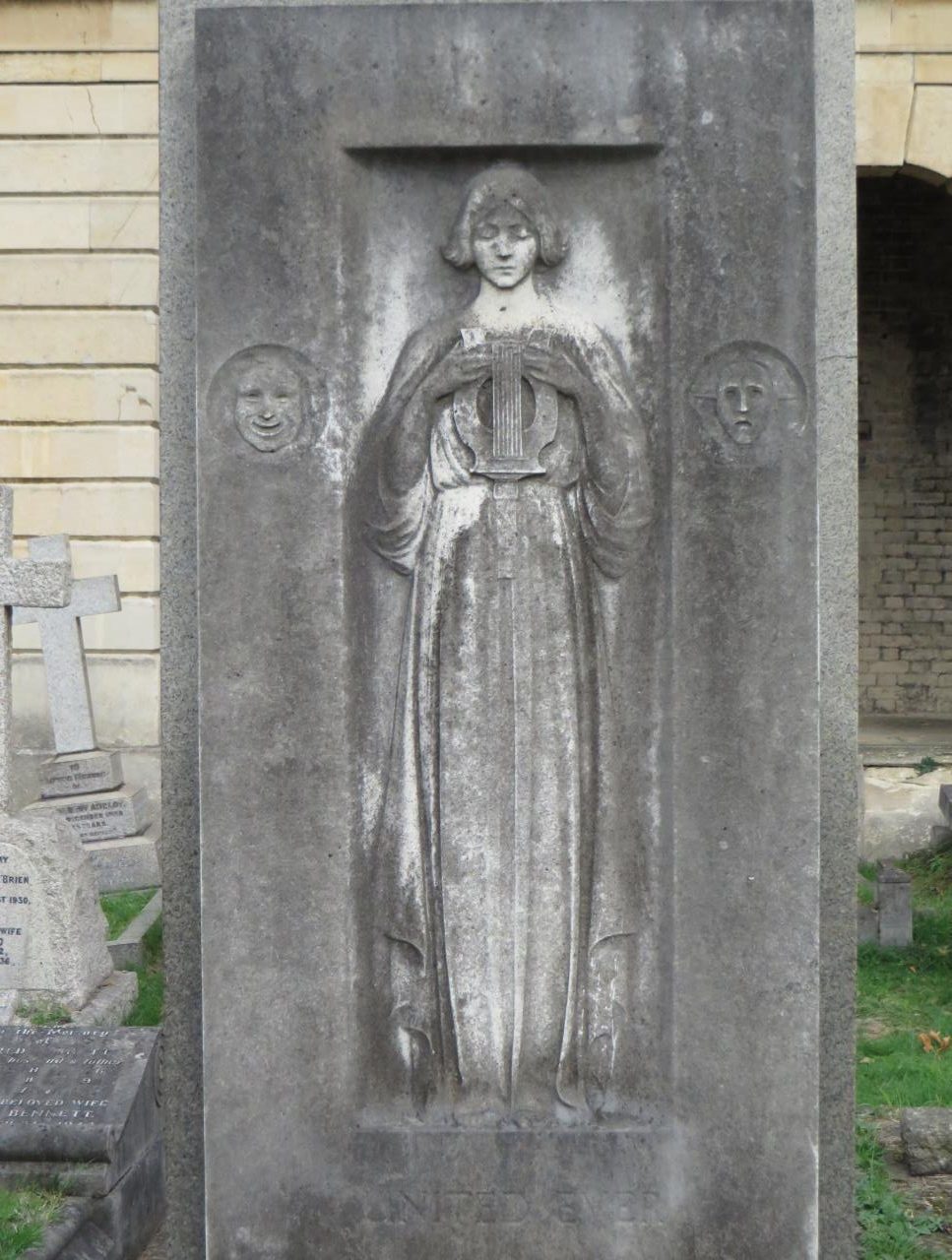
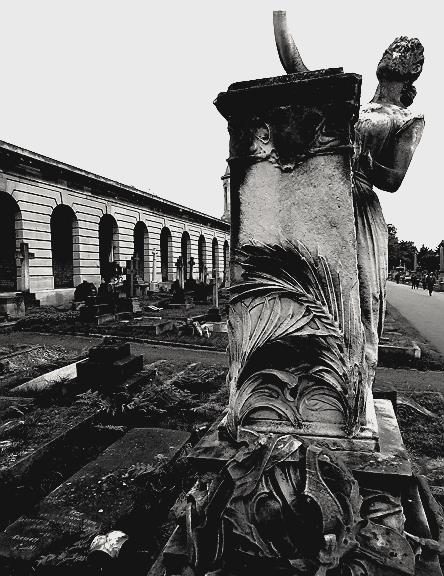
I have found four monuments featuring Tragedy and Comedy each in differing styles, in London Victorian cemeteries: Fred Kitchen in West Norwood Cemetery with a link to Charlie Chaplin. There are two in Brompton Cemetery: Gilbert Laye and Augustus Henry Glossop Harris’s elegant monuments and the exuberant Andrew Ducrow tomb in Kensal Green.
The graceful Kitchen memorial was recently restored by the Music Hall Guild of Great Britain & America in March 2016 with the Heritage Lottery Fund’s support. It almost dazzles under a summer sky. Both Fred and his father, Richard (1830-1910) rest here and note the broken column on which the Sock and Buskin are placed. This denotes that the head of the family as a broken column indicated that the support, or head of the family, rests here.
Fred came from a theatrical family in that his father, Richard, was the Ballet Master and Dancer at the Theatre Royal Drury Lane. Fred worked mainly in the music halls which were considered a low form of entertainment but many famous comedians learned their craft in them. He was discovered by the legendary impresario, Fred Karno, while playing in a production at Glasgow’s Princess Theatre. It was the stuff of showbiz legend, or cliche depending on your point of view, as Fred was standing in for the chief comedian and so, as a result, a 50 year career theatrical career began. From 1897-1910 Fred was a member of Fred Karno’s Army along with such legends as Laurel and Hardy and Charlie Chaplin. Kitchen had a unique style which featured a splayed walk as he had flat feet and scruffy costume. Chaplin later admitted that this had influenced or he had simply ‘borrowed’ it for his iconic tramp character. In 1913 Fred appeared in a Royal Command Performance for King George V and continued to work until 1945 aged 73. But the music hall circuit was beginning to vanish but his son, Fred Kitchen Jr, continued the family tradition in film and theatre.
This is a striking memorial with ‘Comedy & Tragedy’ of either side of a stylised young woman who is holding what appears to be a lyre. There isn’t much known about Gilbert Laye, the incumbent, and I could only find one credit for him online. This was as the director of ‘My Lady Molly’ at Daly’s Theatre on New York’s Broadway. It was a musical comedy and opened on 5 January 1904 and closed on 16 January 1904. He was also briefly the manager of the Palace Pier in Brighton. Both he and his wife, Evelyn Stuart were known as struggling minor actors/ However, she was known as a respected provincial Principal Boy. However, it was their daughter, Evelyn Laye (1900-1995) who became a huge star on stage in musical comedy roles. She made her stage debut in 1915 and acted until well into her nineties. Evelyn worked with Noel Coward and made her first appearance on Broadway in 1929 in his Bitter Sweet. However, her parents disapproved of her first marriage to actor Sonnie Hale in 1926 which ultimately ended in divorce when he left her for actress Jessie Matthews. Evelyn attracted public sympathy over this with the divorce judge branding Matthews ‘an odious creature.’
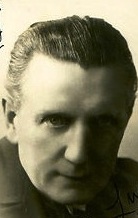
Augustus Harris By Henri Brauer (1858-1936) – Joseph Uzanne, Figures contemporaines tirées de l’Album Mariani, Librairie Henri Floury, Paris, vol II, 1896, Bibliothèque nationale de France, Public Domain, https://commons.wikimedia.org/w/index.php?curid=3181870
This is a very sophisticated monument with a barefoot mourning woman in robes and her hair tied back resting one outstretched arm on the cenotaph. In vintage photos, the other is raised towards a bust of Harris which tops the plinth. However, the bust is no longer in place and neither is the hand that seemed to stroke it. There are three people commemorated on the monument: Augustus himself, his wife Florence Edgcumbe and their daughter, Florence Nellie Cellier. None of them appear to be buried in Brompton as Augustus died at Folkestone and Florence’s ashes were scattered elsewhere. Florence remarried after Augustus’s death so she may actually be buried with her second husband.
Augustus was a British actor and impresario who came from another theatrical family. Born in Paris his father was a dramatist, Augustus Glossop Harris, and his mother was Maria Ann Bone, a theatrical costumier. The Brompton Augustus Henry was known as ‘the Father of British pantomime’. He co-wrote and produced scripts for large scale pantos that were performed at the Theatre Royal Drury Lane every Christmas. They attracted a popular cast including the legendary Dan Leno. Augustus was also involved in local politics and, in 1890, represented the Strand division in the London County Council. In 1891 he was appointed a sheriff and was also knighted. He married Florence Edgcumbe Rendle in 1881 and after his death she remarried and died in 1914.
Florence Nellie Harris Cellier was their daughter. She married Frank Cellier in 1910 and divorced him in 1925. He was an actor who both appeared and directed in numerous plays and acted in Hitchcock’s ‘The 39 Steps’ in 1948.
‘Comedy and Tragedy’ lie beneath a laurel wreath and violin on top of a carved cloth at the base of the cenotaph.
On one of the most desirable and prominent plots in Kensal Green Cemetery lies Andrew Ducrow. To call his blue painted tomb flamboyant is an understatement although the 19th century magazine ‘The Builder’ described it as a piece of ‘ponderous coxcombry‘ . It was supposedly created for his first wife but as the epitaph states
‘Within this tomb erected by genius for the reception of its own remains are deposited those of Andrew Ducrow’
It’s a feast of symbols ranging from 4 Egyptian style 4 sphinxes and columns on the mausoleum and a Greek style roof. A relief over the door depicts Pegasus, the winged horse and a weeping woman in Grecian dress with ‘Comedy and Tragedy’ beside her on clouds.
A pair of gloves and hat lie almost just discarded waiting for their owner to don them again on part of a broken column. There’s also beehives, shells, flowers and downturned torches. Two angels flank the now bricked up entrance which are the closest to any Christian symbol on the monument.
However, Pegasus and an urn decorated with horses heads and garlands are not just mere emblems but direct references to Ducrow’s profession which was as a renowned circus performer. He was known as the ‘Father of British Circus Equestrianism’. Modern day horse acts owe a huge debt to him as he created many horse feats and acts that are still in use today. For example, his most famous act ‘Courier of St Petersburg’ is still performed to this day at equestrian events. In this a rider straddles 2 cantering horses while other horses bearing the flags of the countries through which a courier would pass on his way to Russia passed between his legs.
Ducrow owned a circus called Astley’s Amphitheatre and had learned his skills from his Belgian father who had emigrated to England in 1793. However, Ducrow also had another act that attracted and thrilled audiences. This was the ‘plastique’ or physique performances in which he and his sons would wear ‘fleshings’ or flesh coloured body stockings and pose on white stallions as they carried them around the amphitheatre several times. It must have been quite a sight to see under the lights and it’s a shame that no-one has yet attempted to revive it. There was a black performer in the company called Pablo Fanque who is mentioned in the Beatle Sgt Pepper Lonely Hearts Club Band track, ‘Being for the Benefit of Mr Kite’ which is one of my favourites.
As you can imagine Ducrow and his company were incredibly popular but bad luck dogged him. The Amphitheatre burned down 3 times and after the last one in 1841 he had a nervous breakdown. He died soon after in 1842 and the Amphitheatre and circus were taken over by others who had worked with him.
The skull and crossbones symbol is a ‘memento mori’ which is Latin for ‘Remember that you have to die’ or ‘Remember that you are mortal.’ It’s a reminder of the temporary, transient nature of human life. We are all born to die and should try to make the most of life. The skull and long bones crossed together are the survivors after death along with the other bones as they are the body parts that survive after the flesh has gone. It originated in ‘The Danse Macabre’, a medieval European allegory, in which the universality of death invites everyone, from all walks of life, to dance along to the grave. They are often accompanied by a pope, emperor, king, child, or
The Danse Macabre Nobleman and Physician from the Lübeck Totentanz courtesy UT Southwestern
labourer as key symbols and people. It was intended to remind people of the fragility of their lives and that earthy glories were i n vain. Skeletons lead them to their death. The images of the Danse Macabre were not only reminders of the ultimate fate for us all but they were often humourous as well. But its most powerful theme is of death’s indiscriminate nature. In the Danse, Death wears many faces, as he brandishes his scythe, sounds the death toll bell or plays a violin – he is a friend as well as the inevitable. The skull and crossbones was also a reminder that, on the Day of Judgement, the bones and skull would attach themselves together and the deceased would be able to walk again. This symbol has appeared in other, more ancient cultures such as the Mayans. This example comes from Mexico.
The skull and crossbones was also appropriated in the 18th century by sea pirates and rechristened as The Jolly Roger. This emphasises the skull’s eternal wide open grin. There are also military connections and also counter culture with Hells Angels etc claiming it for their own. According to blogger, Amy Johnson Crow, there is also a Christian connection as she claims that the crossed long bones resemble the Christian cross. The skull and crossbones is one of the most potent and universal symbols that has come down through the centuries. It will always remind us that the skull looking back at us reveals our own ultimate fate. Sources: Wikipedia ‘Death’ Richard Harris, Wellcome Collection An Illustrated encyclopedia of traditional symbols, J C Cooper, Thames & Hudson, 1978 UT Southwestern Digital Services website
This is taken from an email that I received from Historic England about various heritage updates. It included an item on a particularly lovely lych gate which they have recently listed and I thought I would share it with you due to its history and associations.
A picturesque Victorian lych gate at St Giles’ Church in the village of Stoke Poges, Buckinghamshire has been listed at Grade II by the Department for Digital, Culture, Media and Sport (DCMS) on the advice of Historic England, after an application was submitted by local man Harvey Whittam.
Harvey Whittam, Chairman of The Stoke Poges Society, had long admired the lych gate and recently applied to Historic England for it to be considered for listing. He said: “I first saw the lych gate in 1981 in the opening scene of the James Bond film ‘For Your Eyes Only’, when I thought it was beautiful and in a delightful country setting.
“Last year, I started volunteering with others to help to compile a list of historic sites in Stoke Poges for the Parish Council – it was then I realised again, but this time in real life, that it’s a fine structure. I am delighted the lych gate has received national recognition. There’s no doubt having it listed adds cultural, social and environmental value to the area.”
The wooden gateway and its flanking knapped flint wall stand prominently in the churchyard of St Giles, a setting associated with the poet Thomas Gray’s ‘Elegy Written in a Country Churchyard’ published in 1751.
The elegy is said to be one of the best-known poems in the English language. Until relatively recently, it was routinely learnt by school children. It’s widely acknowledged to refer to Stoke Poges, where Gray was staying when he wrote the poem in 1750.
Gray is buried in the churchyard and his tomb is listed at Grade II. A nearby monument to Gray designed by James Wyatt and carved with verses of the elegy is Grade II* listed and is a National Trust site. St Giles’ Church itself is Grade I listed. The newly listed lych gate and boundary wall form an ornate entranceway to, and are part of, this group of significant historic structures.
I’m pleased that new, thorough research has enhanced our understanding of this beautifully carved lychgate, which now takes its place on the National Heritage List. 99% of people in England live within a mile of a listed place – we invite you to explore the List and share your knowledge and pictures so we can record information, and even unlock the secrets of some places.
The lych gate also has special architectural interest in its own right. It is a well-preserved exemplar of its type by a leading architect of the period, with fine carved details. It was designed by the architect John Oldrid Scott and built in 1887 as part of an extension of the churchyard. Oldrid Scott was the eldest son of the architect Sir George Gilbert Scott, from whom he inherited the family practice in 1878. Oldrid Scott established himself as a leading figure in the development of the Gothic Revival in England in the last decades of the 19th century.
The low-set wall and ‘most beautiful lych-gate’ were paid for by a donation by Mr Gilliat of Duffield House, Stoke Poges, as noted in a letter to The Times from the then Rector of St Giles, Reverend Vernon Blake, published 22 November 1887.
The Stoke Poges lych gate has stylistic similarities with another designed by Oldrid Scott in 1880 that stands in the Churchyard of St Andrew and St Mary in Fletching, East Sussex – the lych gate is listed at Grade II.
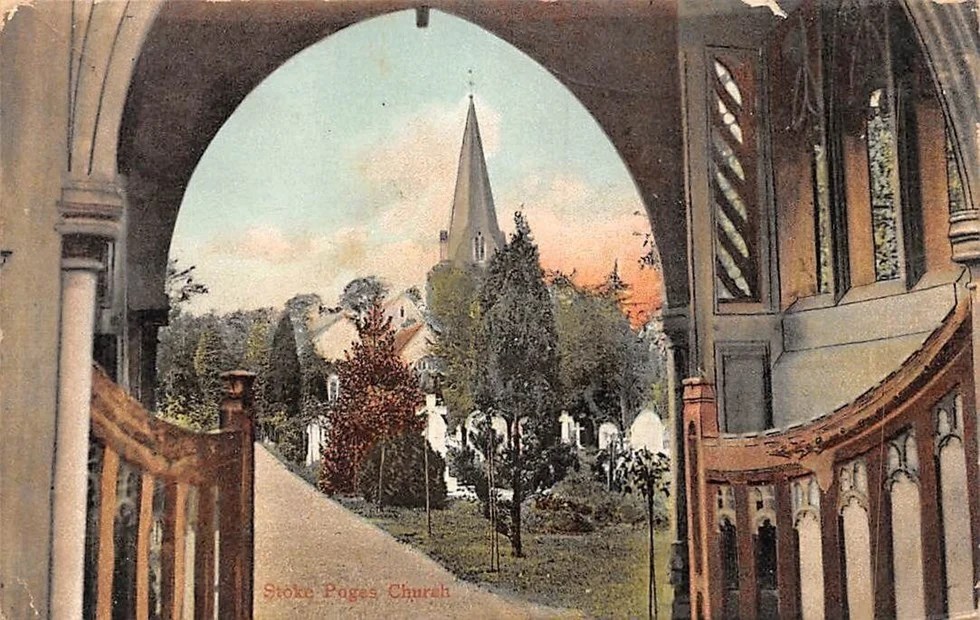
View of St Giles’ church from the inner lych gate, 1906 – public domain/out of copyright.
What is a lych gate?
Lych gates are the ornamental gateways which lead to churchyards. They symbolise the threshold between the secular and sacred zones of a parish and once served a practical function of storing a coffin before burial. Their name derives from the Anglo-Saxon or German word for corpse: lich, or leiche.
Medieval lych gates were used as a meeting point and shelter for mourners. The group would convene beneath it and would be met by the priest prior to entering the consecrated churchyard for the funeral service. Lych gates continued to be built throughout the 19th and 20th centuries, and later examples, particularly after the First World War, were often erected as memorial structures.
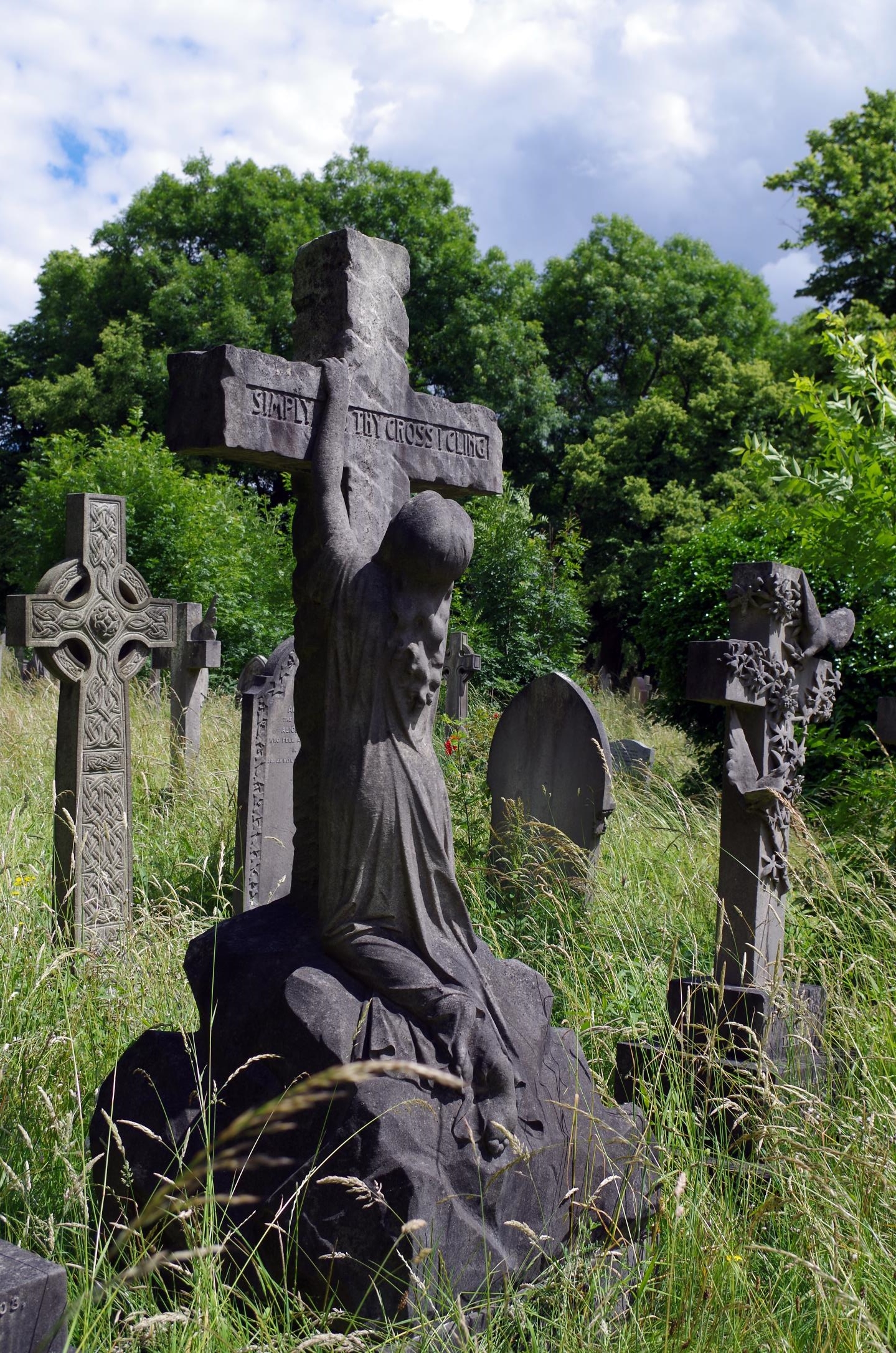
What does a woman clinging to a cross, seemingly for dear life, have in common with the film ‘Merry Christmas Mr Lawrence’ and heavy metal group Def Leppard?
Strangely enough, the connection is an 18th century Protestant hymn written by a fiercely Calvinist minister which has entered the Western cultural consciousness in the same way as ‘Abide With Me’.
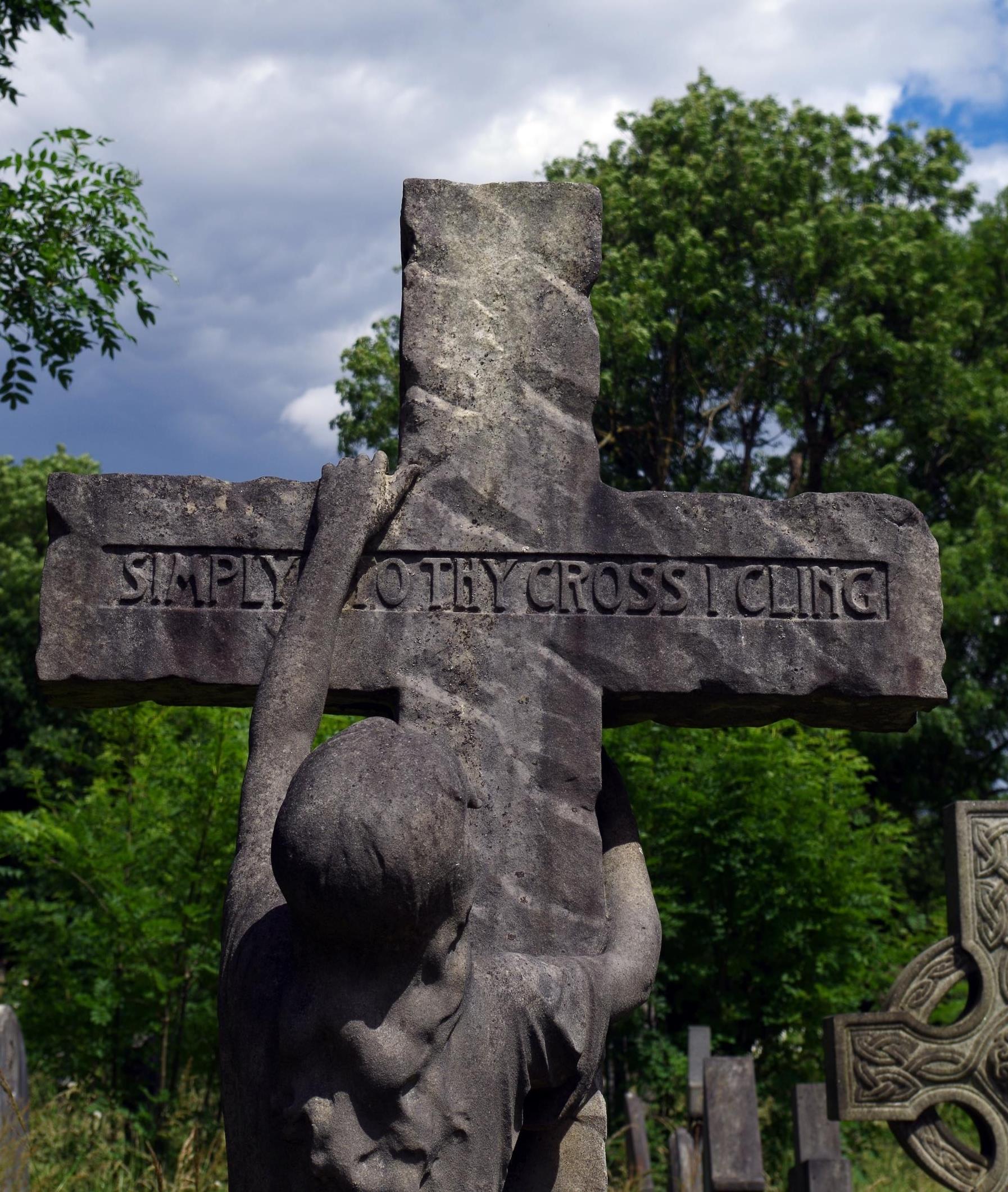
‘Rock of Ages’ is a hymn with an enduring message of hope and ultimate salvation. So no wonder it inspired a potent funerary symbol which is still used today. However, it’s the second line in the third verse, ‘Simply to Thy cross I cling.’ that has proved most inspirational to Victorian monument masons.
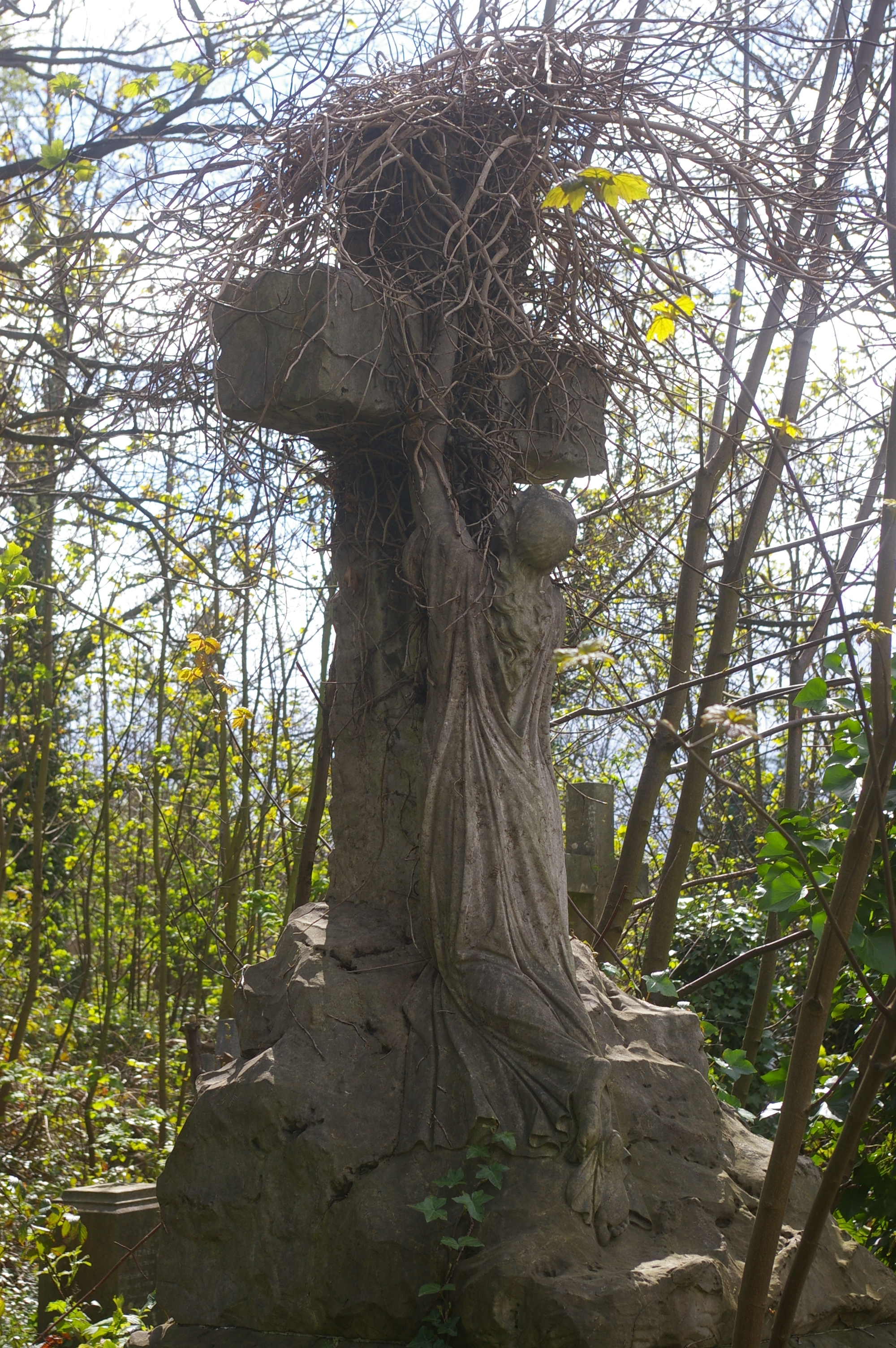
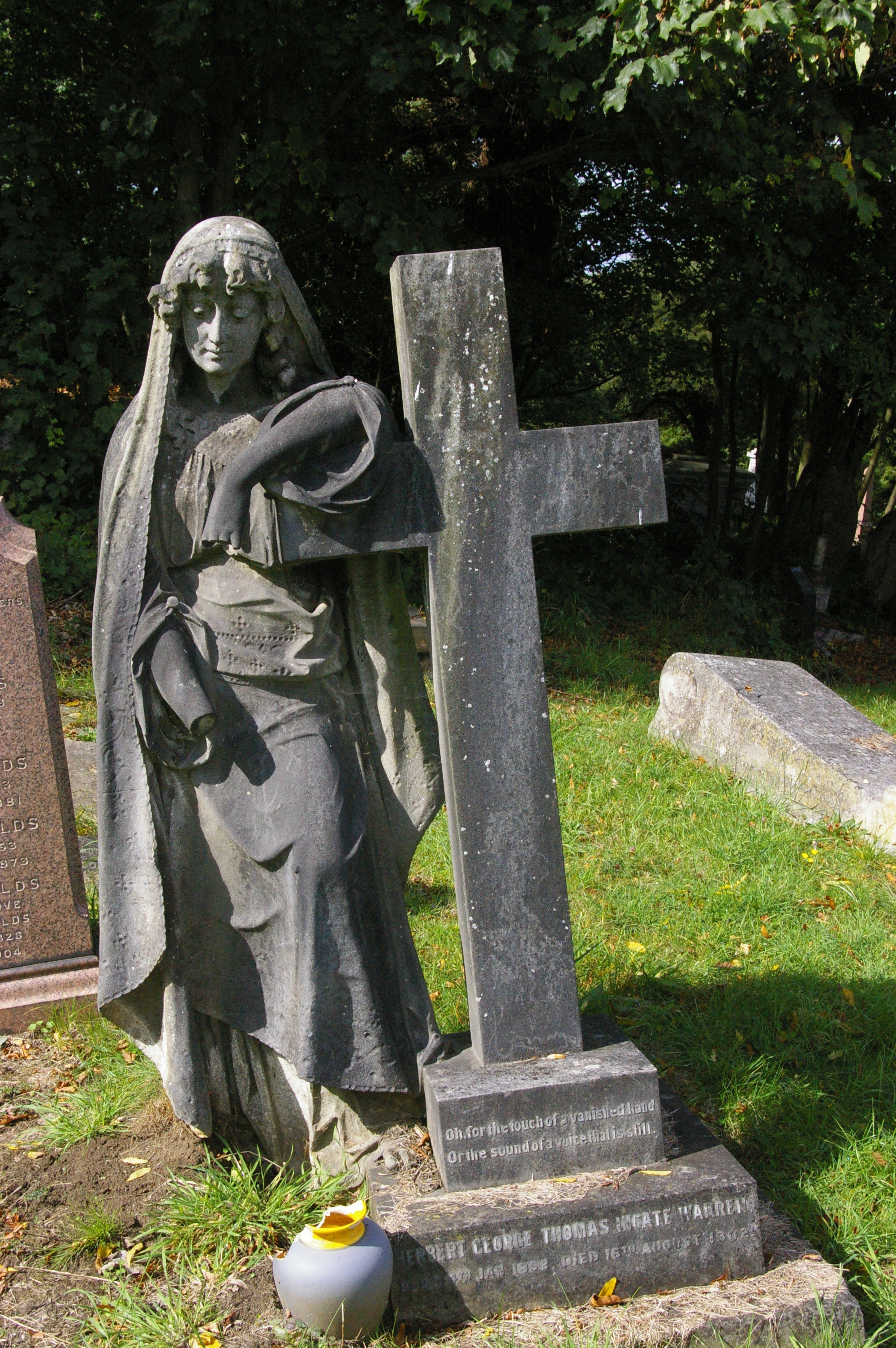
A variant is a pensive young woman leaning on a cross for support as at West Norwood. This cemetery contained several examples and here is a selection:
They’re not angels as they don’t possess wings and angels didn’t begin to appear in Victorian cemeteries until the late 19th century. But they are one of the few cemetery symbols inspired by a popular hymn. It’s also a Protestant motif and was the only way in which a cross would have been permitted in a Victorian cemetery until near the end of the 19th century. This was due to the religious wars that were raging at the time.
When the Victorians created their large municipal cemeteries there was still a fierce Anti-Catholic prejudice within Britain. This dated back to Henry VIII and the Reformation and had resulted in several anti-Catholic laws being passed during the 17th and 18th centuries. But the cry was still ‘No Popery’ in the 19th century and any symbols that were associated with Catholicism weren’t welcome in the new marble orchards. These included crosses, figures of saints and also angels. Instead, there was a return to Classicism using Roman and Greek motifs and architecture. Then, as the 19th century progressed, funerary monuments reflected the tastes of the time. So you could walk through one and see Arts & Crafts, Celtic Revival, Art Nouveau until eventually towards the end angels did being to fly in.
‘Rock of Ages’ was written by a Calvinist minister, the Reverend Augustus Toplady, in 1763 and was first published in a religious magazine, ‘The Gospel’, in 1775. It’s allegedly based on an incident in Toplady’s life. He was a preacher in a village named Blagdon and was travelling along the gorge of Burrington Combe in Somerset’s Mendip Hills when he was caught in a storm. He managed to find shelter in a gap in the gorge and was struck by the name of the crevice that had saved him. It’s still marked as ‘Rock of Ages’ both on the rock itself and maps. He is reputed to have written the hymn’s lyrics on the back of a playing card although one wonders what a minister was doing with a deck of cards. However, no-one’s sure if this incident actually happened or if it’s apocryphal….
Toplady wasn’t a popular man and in an article by Rupert Christensen of the Daily Telegraph he was described as ‘fanatical, in a gross Calvinism and most difficult to deal with.’ John Wesley avoided him. Toplady was also fond of writing bizarre articles, one of which proposed that a spiralling National Debt could never be paid off due to the extent of human sinfulness. Something for the new Chancellor to ponder on I’m sure. Toplady died in 1776 from TB and would undoubtedly have been forgotten were it not for his rousing hymn.
‘Rock of Ages’ caught the popular imagination. Gladstone translated it into Latin and Greek and asked for it to be played at his funeral. Prince Albert reputedly requested it on his deathbed and it has appeared in several feature films. These include ‘Merry Christmas Mr Lawrence’ where it’s sung by David Bowie as Major Jack Celliers and both ‘Paper Moon’ and ‘The Silence of the Lambs’ where it’s played at a funeral. It’s also inspired musicians such as Def Leppard and the writer of the film score for ‘Altered States.’ John Congliano. It’s also the title of the long running musical stage show.
These are its lyrics:
Rock of Ages, cleft for me, Let me hide myself in Thee; Let the water and the blood, From Thy riven side which flowed, Be of sin the double cure, Cleanse me from its guilt and power.
Not the labour of my hands Can fulfill Thy law’s demands; Could my zeal no respite know, Could my tears forever flow, All for sin could not atone; Thou must save, and Thou alone.
Nothing in my hand I bring, Simply to Thy cross I cling; Naked, come to Thee for dress; Helpless, look to Thee for grace; Foul, I to the fountain fly; Wash me, Saviour, or I die! While I draw this fleeting breath, When mine eyes shall close in death, When I soar to worlds unknown, See Thee on Thy judgement throne, Rock of Ages, cleft for me, From L http://library.timelesstruths.org/music/Rock_of_Ages/et me hide myself in Thee.
I’ve also seen the lyrics of the hymn inscribed on monuments as at Streatham Cemetery and also Brompton.
However it does also appear as a motif on tombstones as here:
This is one on a tombstone – I found it on a blog but they had found it on wikipedia. So source unknown.
It has been described as a symbol of faith, of a person lost in sin whose only hope is to cling to the cross.
It was also popular as a print and these are two examples:
Both seem to clinging to a cross in a raging sea – a sea of sin perhaps?
The symbol has reappeared in more recent years and there is a much smaller, modern version at Beckenham Cemetery. This is on the grave of a 16 year old who died in 1965.
An inspirational hymn to the Victorians and also well into the 20th Century but what could have the same effect these days? I’ve always fancied a video of Sid Vicious singing ‘/My Way’ on my tombstone…..
You may recall my excitement at having been asked to take part in a Kickstarter project on personal relationships with cemeteries. It went live on 17 March 2022 and backers fully funded it on the first day of it being on Kickstarter. In fact, Kickstarter gave it ‘Projects We Love’ status. Backers are still funding it and there are big plans afoot. I knew it would be in safe hands with Loren Rhoads as, if anyone could make it happen, she could. And did. As part of the project she did a Google forms interview with each of the contributors and below is mine.
I met Carole Tyrrell years ago, when I discovered her blog Shadows Fly Away. She wonder a wonderfully in-depth feature where she examines one symbol that appears on gravestones, usually in England, and provides history, analysis, and beautiful photos to illustrate it.
Always attracted to the dark side of life as it’s much more entertaining, Carole has been involved with cemeteries for over 30 years. They are an oasis of peace and history. Carole’s fascination with cemetery symbols and their meaning has led to her blog, leading symbolism tours, and a forthcoming book. I can’t wait to read it.
Carole’s essay in Death’s Garden Revisited is about falling in love with London’s Nunhead Cemetery — and how the cemetery changed her life.
What’s your favorite thing to do in a cemetery?
Appreciate the calm.
One of Carole’s lovely photos from Nunhead Cemetery.
Tell me about your favorite cemetery.
Very overgrown, very Gothic, great view from the top of the hill.
Is there a cemetery or gravesite you’ve always wanted to visit?
Too many to mention! One is Arnos Vale in Bristol.
If you have anything to say about it, what would your epitaph be?
See you soon.
Do you have a favorite song about cemeteries or graveyards?
“Cemeteries of London” by Coldplay.
That’s perfect! You can check out Carole’s contributor to the Death’s Garden Revisited playlist on Spotify.
They are the sentinels of the silent cities, standing tall and often spreading out their branches to shade the last resting places of the permanent residents. Yew trees can often be older than the churches they nestle beside and may predate Christianity as many churches were built on pagan sites of worship. In fact there are reputed to be at least 500 yew trees of this vintage in the UK! And incredibly, there are 10 yew trees in Britain that are believed to predate the 10th century.
These venerable trees have many associations and traditions. So, I will concentrate on a few. They are usually associated with churchyards and burial grounds. The most common tradition is that they are nourished by the decaying bodies beneath them and, as they can grow up to 20 metres high, this could seem plausible. Another tradition states that yews were planted on plague victims graves to protect and purify them – if this were true then some churchyards would resemble a forest!
Another common tradition is that they were planted to prevent ‘commoners’ from grazing their cattle on church ground. This was because yews are very poisonous to livestock. The needles are deadly, and Shakespeare used this in Macbeth when the three witches conjure up a deadly brew that contains, amongst other unpleasant ingredients:
‘Gall of goat, and slips of yew Silver’d in the moon’s eclipse,’
However, the Celts saw the yew as a symbol of immortality, death and resurrection which makes the yew’s presence in burial places more obvious. This was because its drooping branches are able to root and form new trunks where they touch the ground. The one at St James in Cooling was living inside its dead ancestor which demonstrates its ability to renew itself.
In fact, they are one of the most long lived trees in Western Europe but are not considered ancient until at least 900 years old. The oldest tree in Scotland, and possibly Europe, is the magnificent Fortingall yew in Glen Lyon. It has been suggested that it is over 2000 years old and maybe even 9000 years old. It has numerous legends attached to it and in 1769 was reputed to have a girth of over 56ft. In 1854, funeral processions were reputed to be able to pass through the arch formed by its split trunk. The yew in St Cynog’s churchyard in Wales is a mere stripling at a reputed 5000 years old. One of the world’s oldest surviving wooden artifacts is a yew spear head which is estimated to be around 450,000 years old. They are evergreens with red berries which although are edible, the seed in the berry is extremely dangerous.
One of my favourite churchyards is that of St Marys in Painswick, Gloucestershire. It has 99 clipped yew trees but according to Roy’s blog post, attempts to grow a 100th tree have always failed. They are a dramatic sight to see!
I must admit that I would feel disappointed if I visited a churchyard and didn’t see a tall, majestic yew or two keeping watch over the dead as potent symbols of resurrection and immortality and the life to come.
Loren Rhoads, author of the first ‘Death’s Garden’ and ‘199 Cemeteries To See Before You Die’, has now created ‘Death’s Garden Revisited’. This is a collection of essays from fellow taphophiles in which they express their relationships and feelings about cemeteries.
And (drum roll) I have an essay in it! It goes live on March 17 2022 on Kickstarter!
Loren Rhoads talks about her inspiration for the book.
A worthy addition to any taphophiles bookshelf or Kindle!




















 shadows fly away
_1935.jpg)
