A touching epitaph to the one left behind. St John the Baptist, Burford

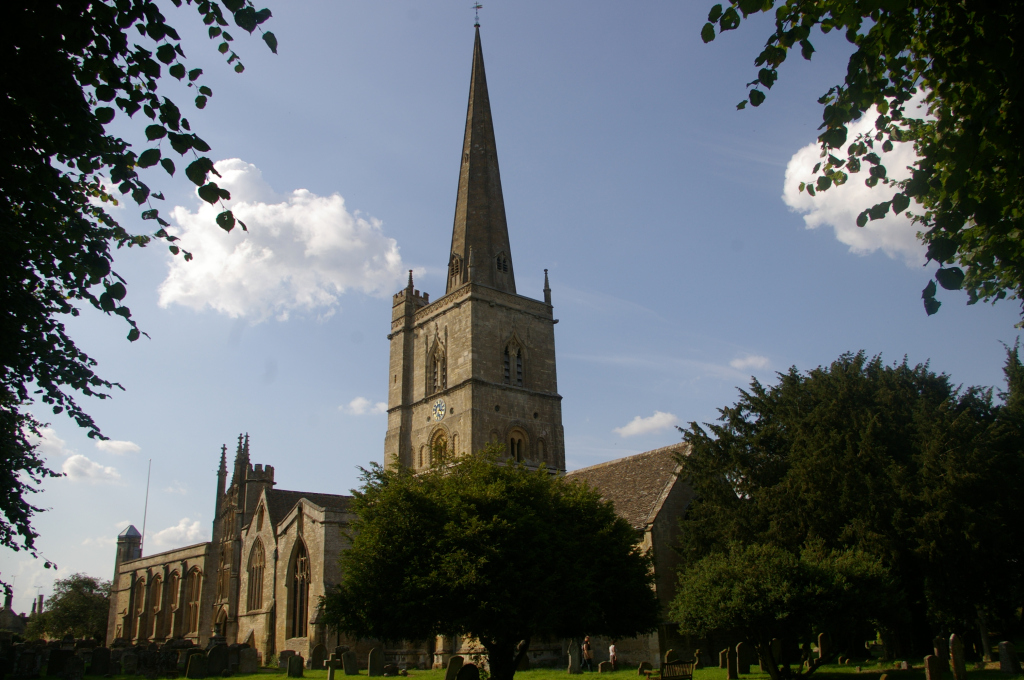
St John the Baptist, Burford,


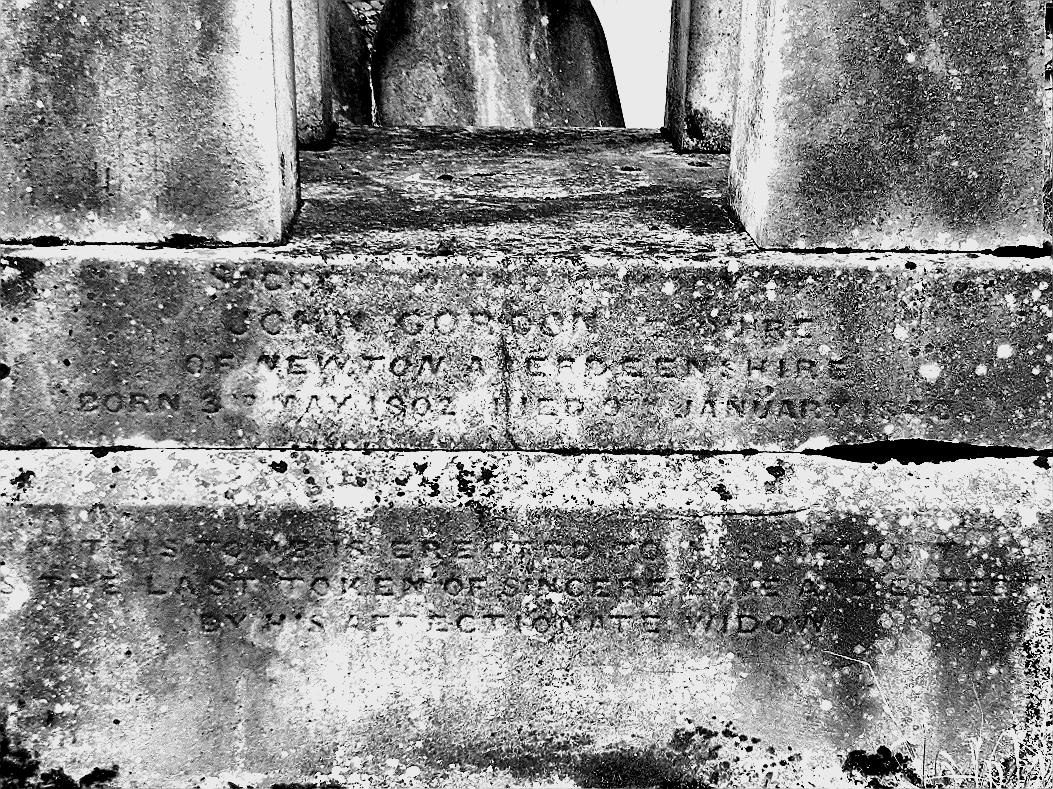
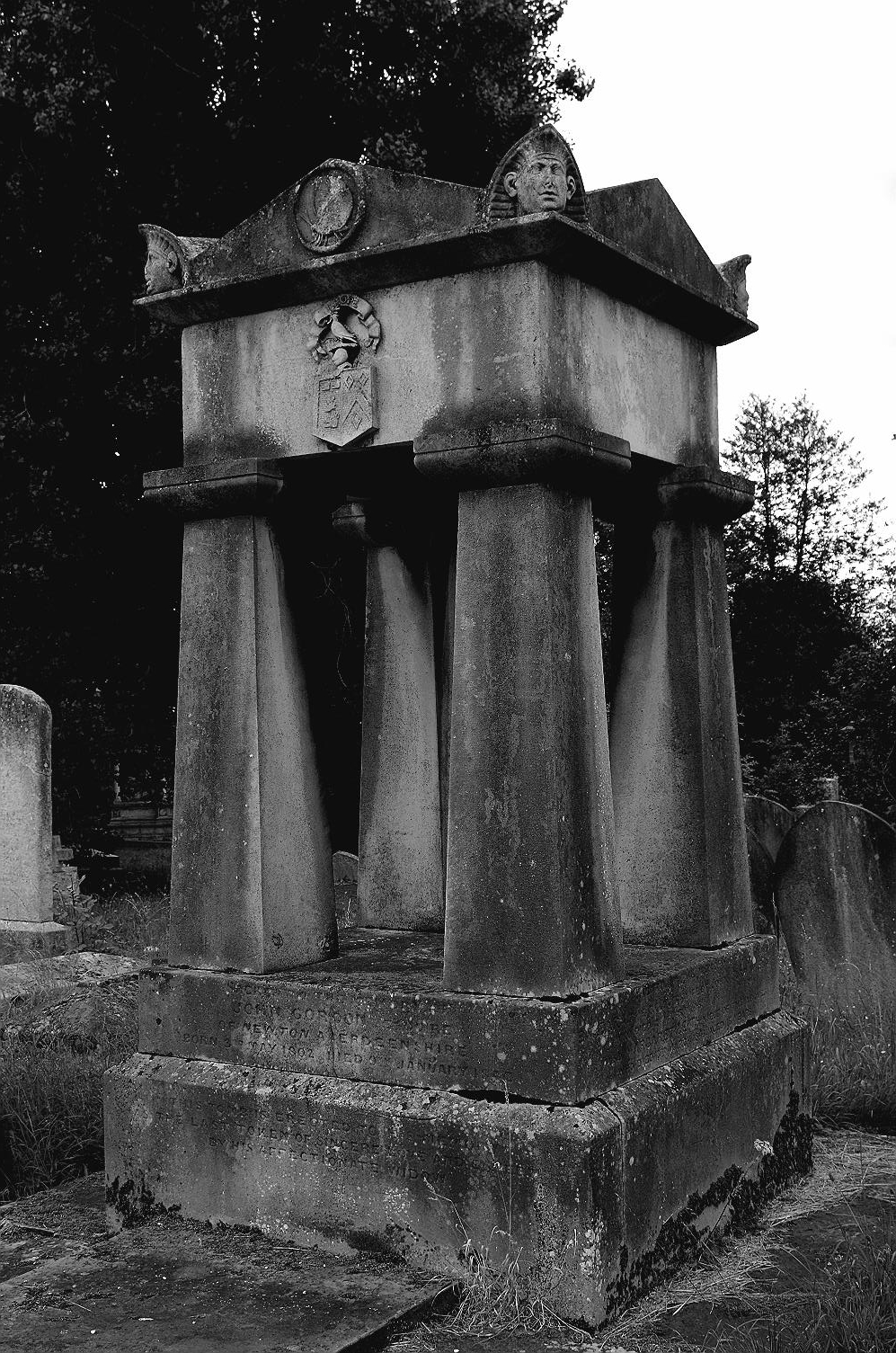
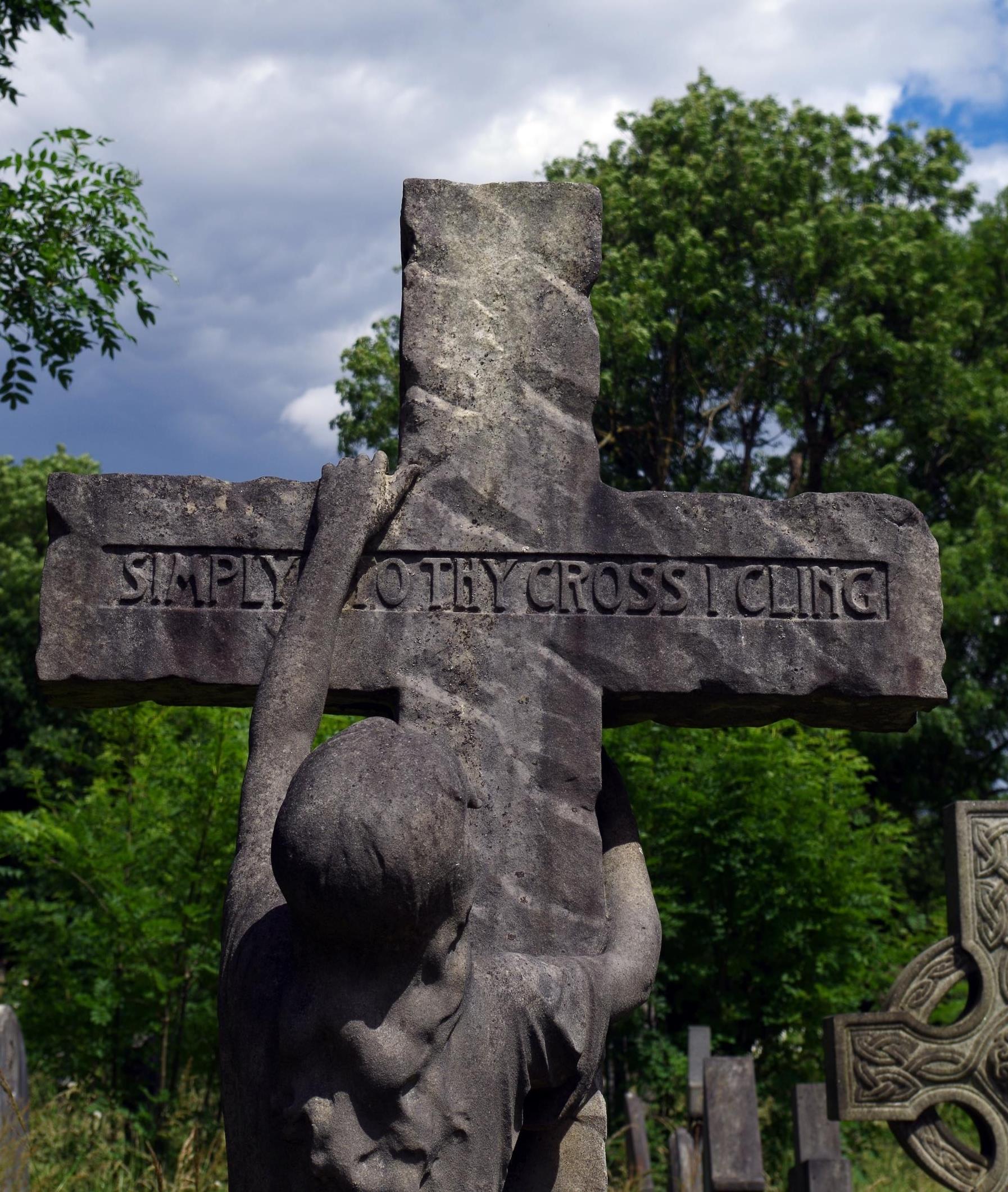
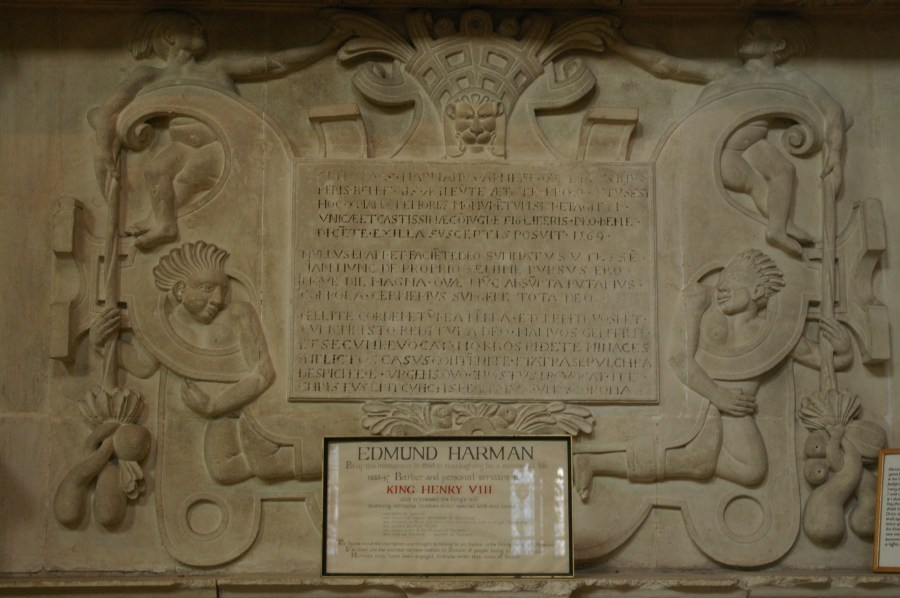
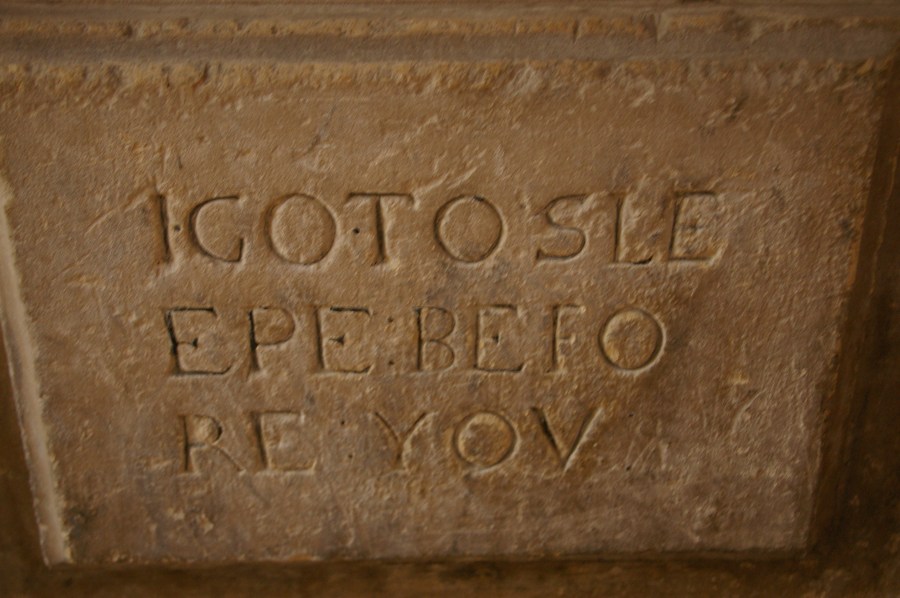
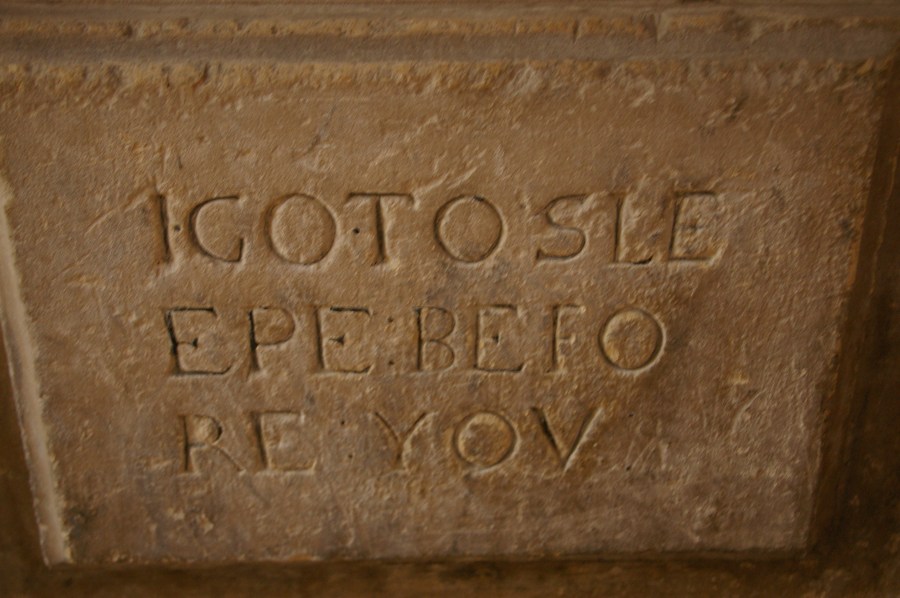
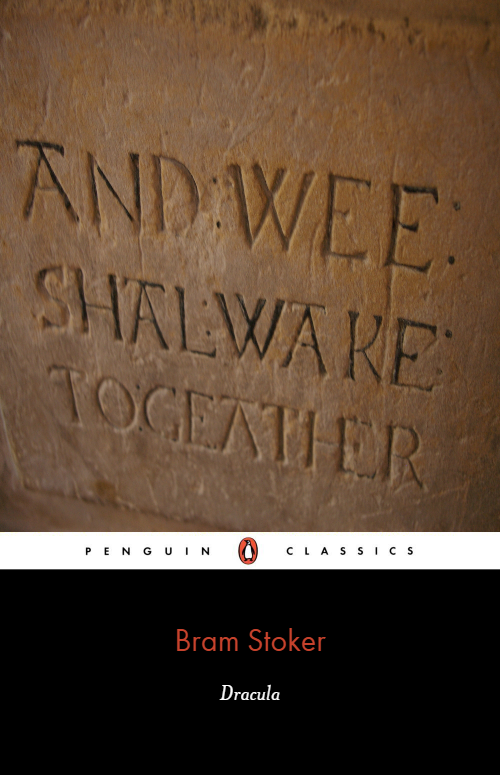
This was the inscription that made the most impression as it was so touching and heartfelt.  It perfectly expressed the deceased’s belief, that although they had pre-deceased their partner, they believed that they would both wake again on Judgement Day and be reunited.

The first part of the epitaph on a unknown Monument, So John te Baptist, Burford
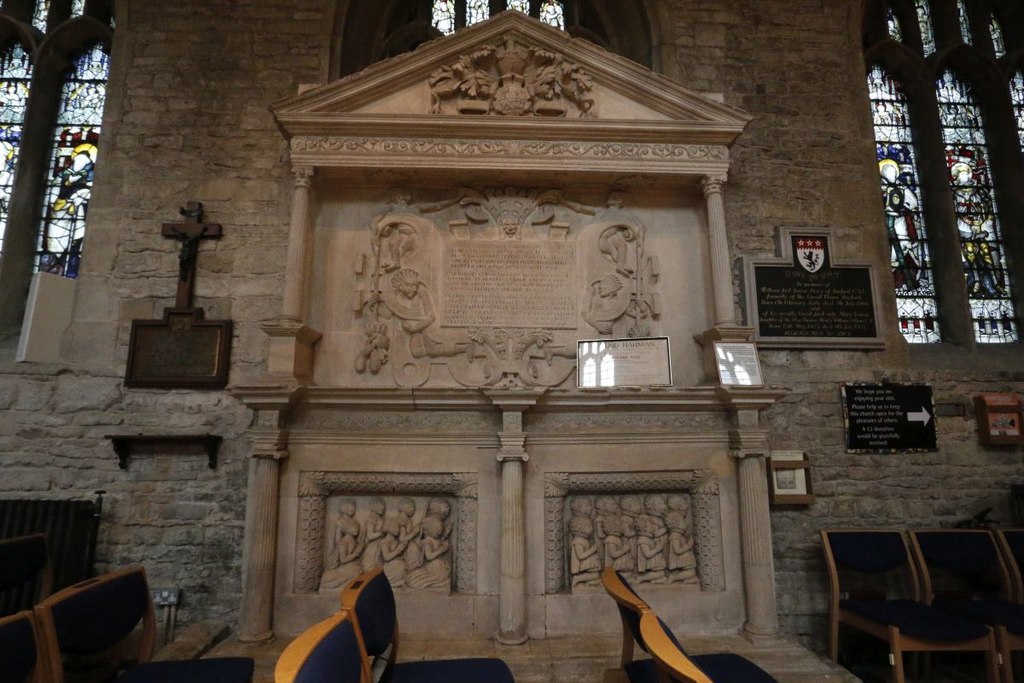
The second part of the epitaph on an unknown monument, St John the Evangelist, Burford

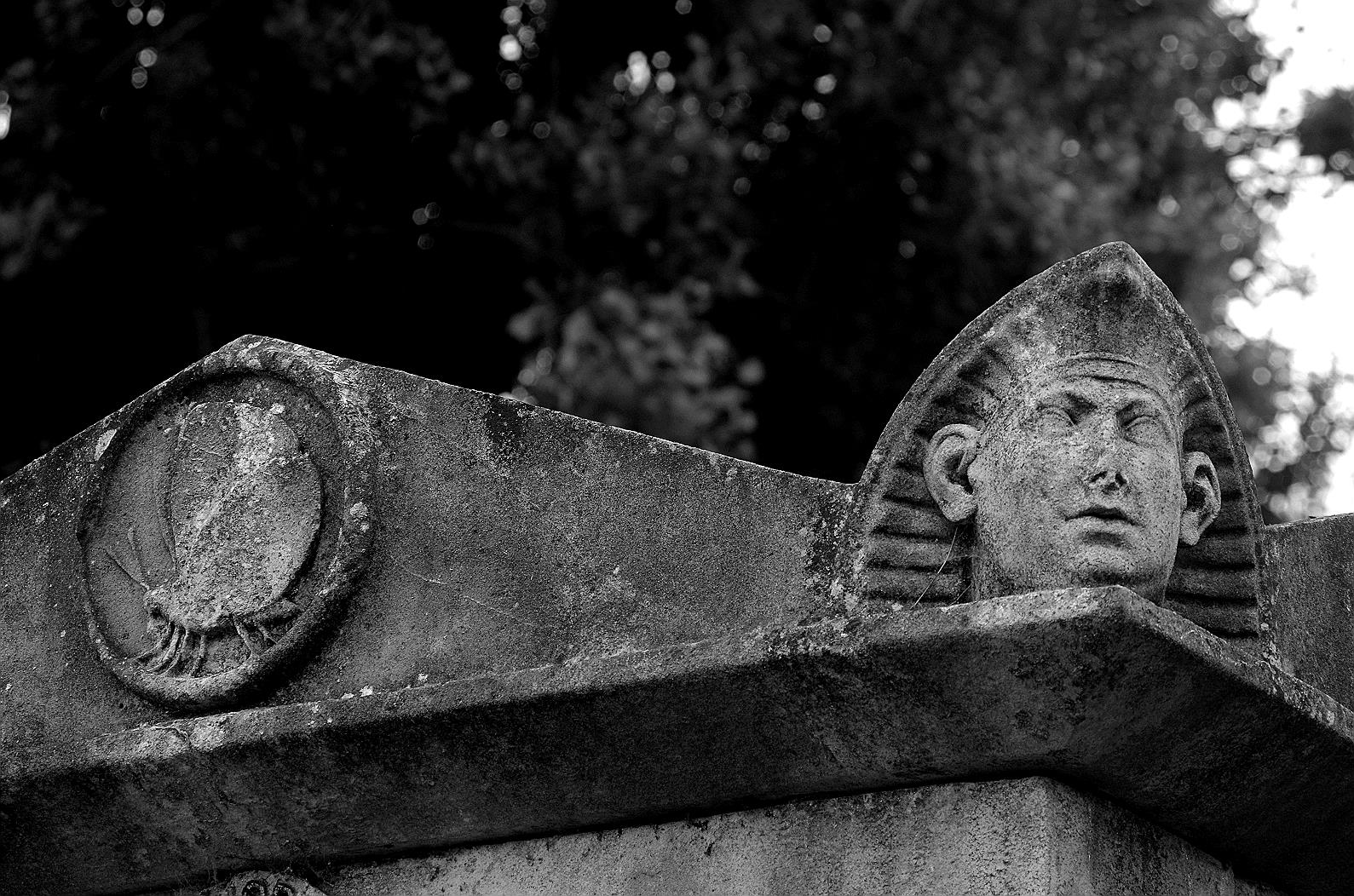
Its simplicity is what makes it stand out simple and yet I have no idea on which monument the inscription was despite looking through my photos from the day.   But it made a powerful impression.  In many ways it was more powerful than far more ornate monuments and tombs.

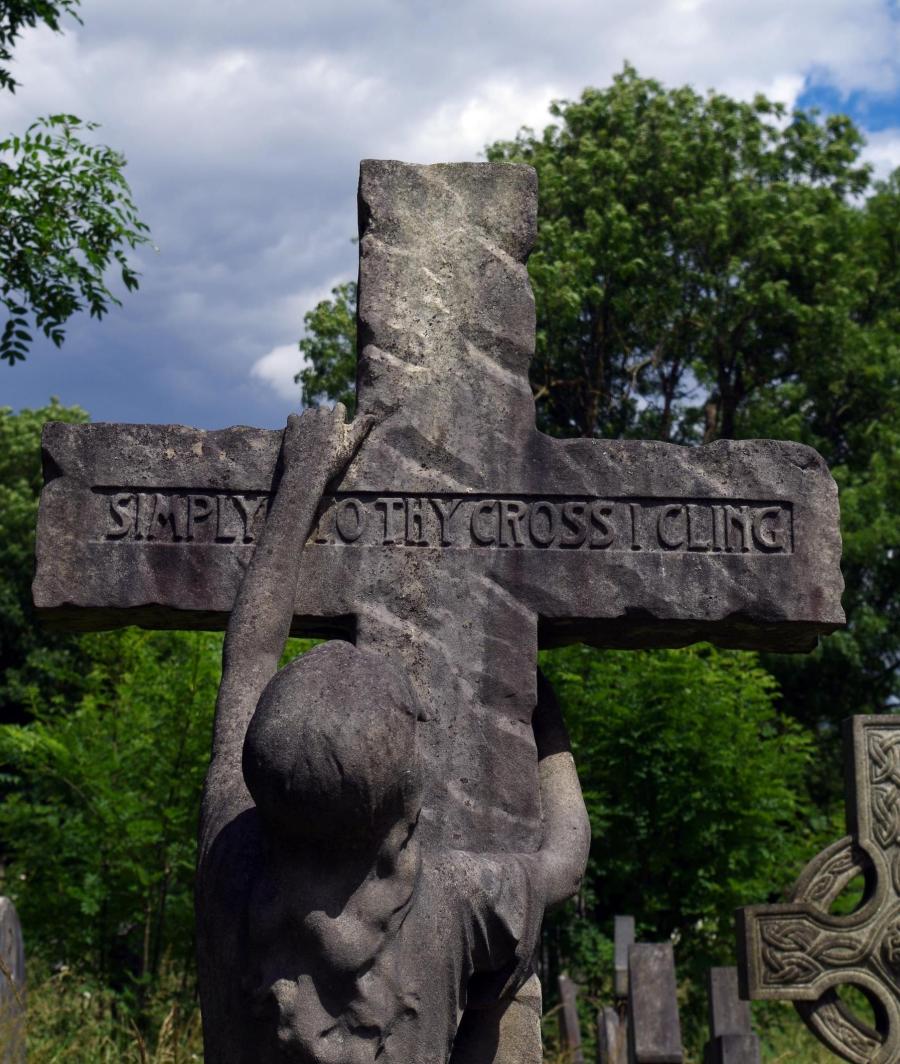
However, when the Penguin Book Cover Generator was doing the rounds on social media just prior to Christmas last year it provided inspiration for one book design.

When we can actually go out again, whenever that is, I’m coming back Burford – ready or not!

Let it snow, let it snow, let it snow in Brompton Cemetery

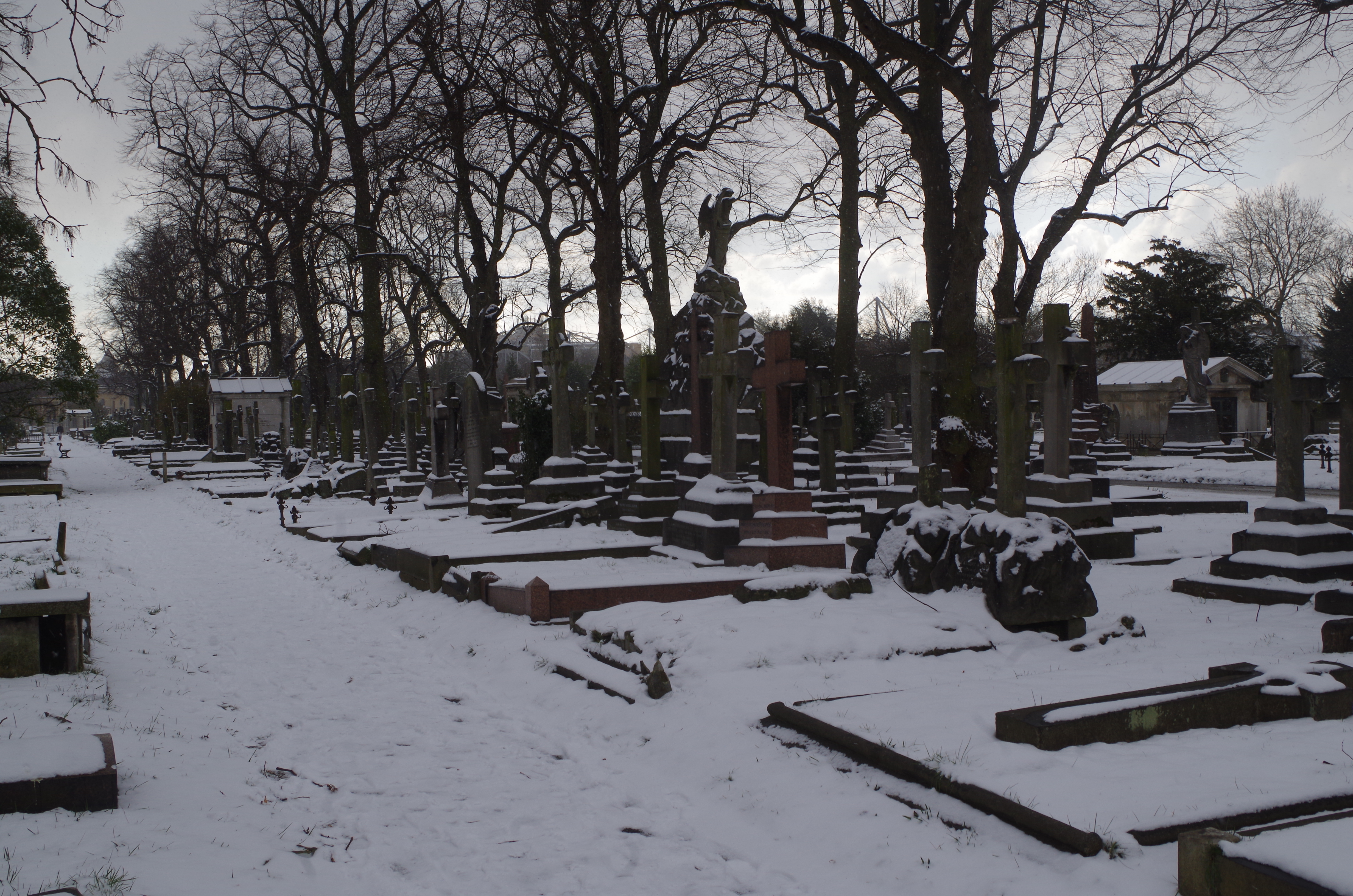
Now that snow has come to Central London again how I wish I was there to see it! But I’m not and instead I thought I would show how beautiful a cemetery can look when it’s covered in the white stuff. These were taken during the last big snowfall, the so called Beast from the East, in Feb 201 and feature Brompton Cemetery looking a little mysterious as the snow fell and fell and fell……

Brompton Cemetery in snow Feb 2018 ©Carole Tyrrell
View over Brompton Cemetery from a side path Feb 2018 ©Carole Tyrrell
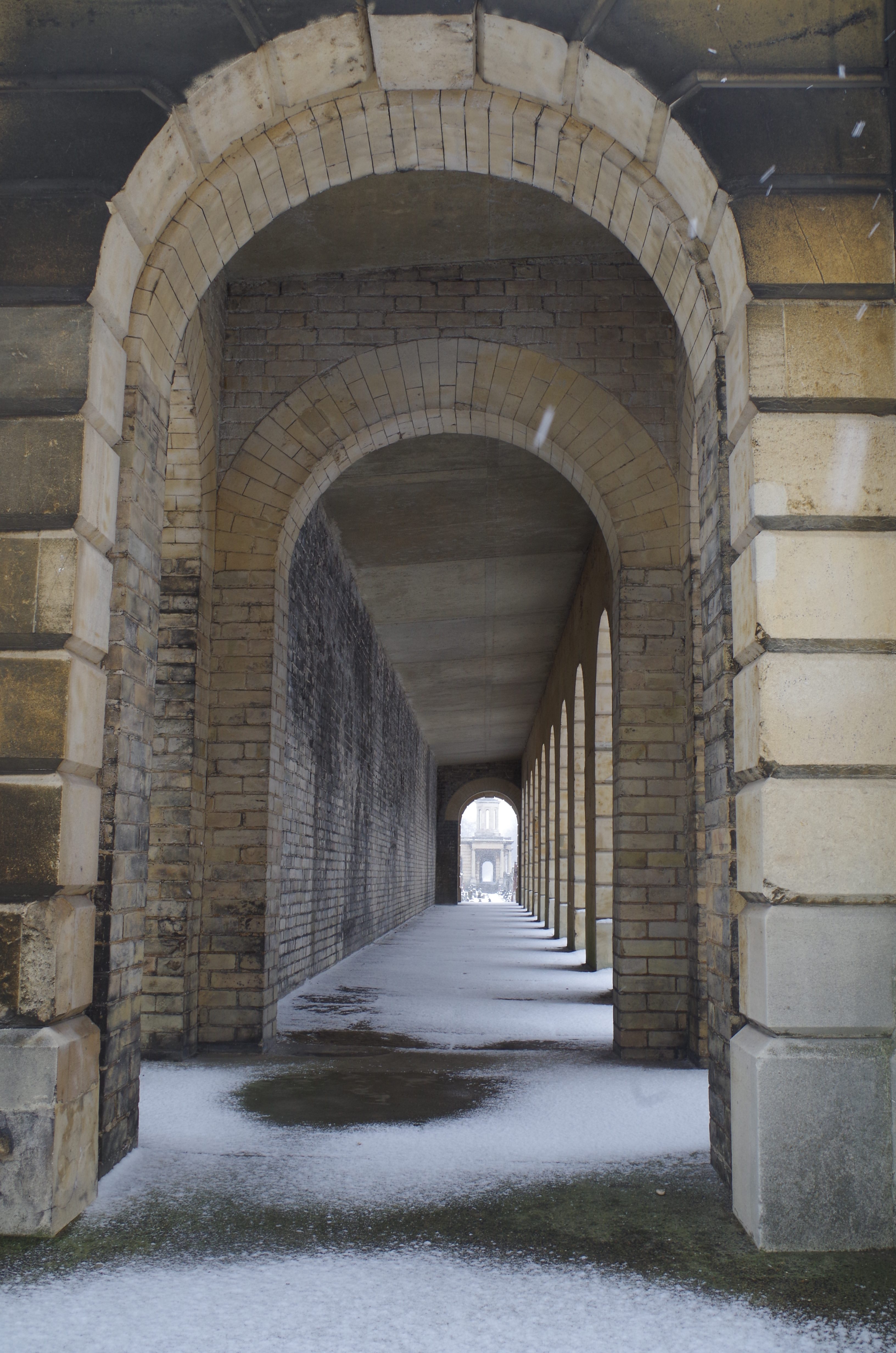
View of colonnades Brompton Cemetery Feb 2018 ©Carole Tyrrell
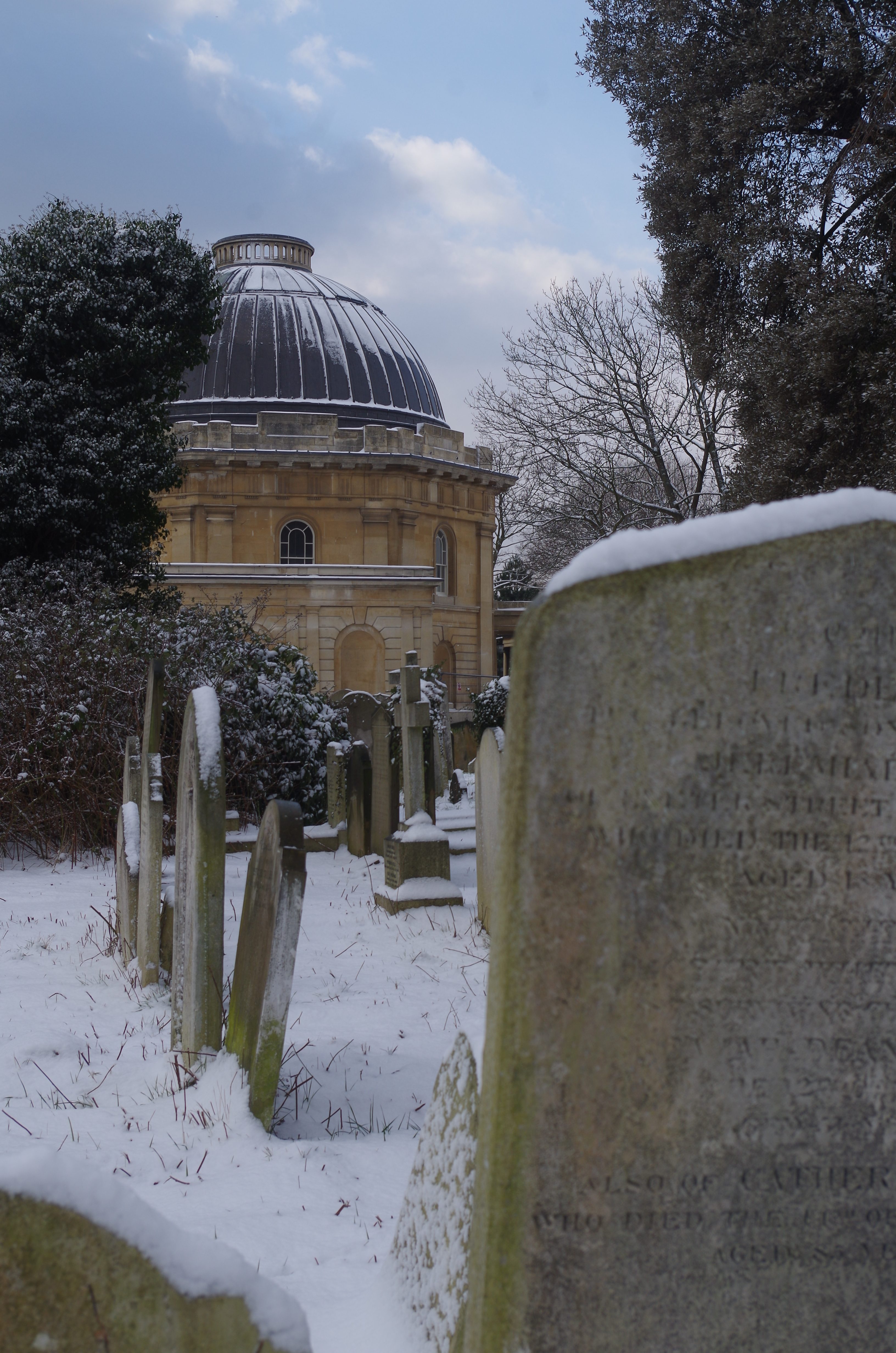
View of Brompton Cemetery chapel Feb 2018 ©Carole Tyrrell
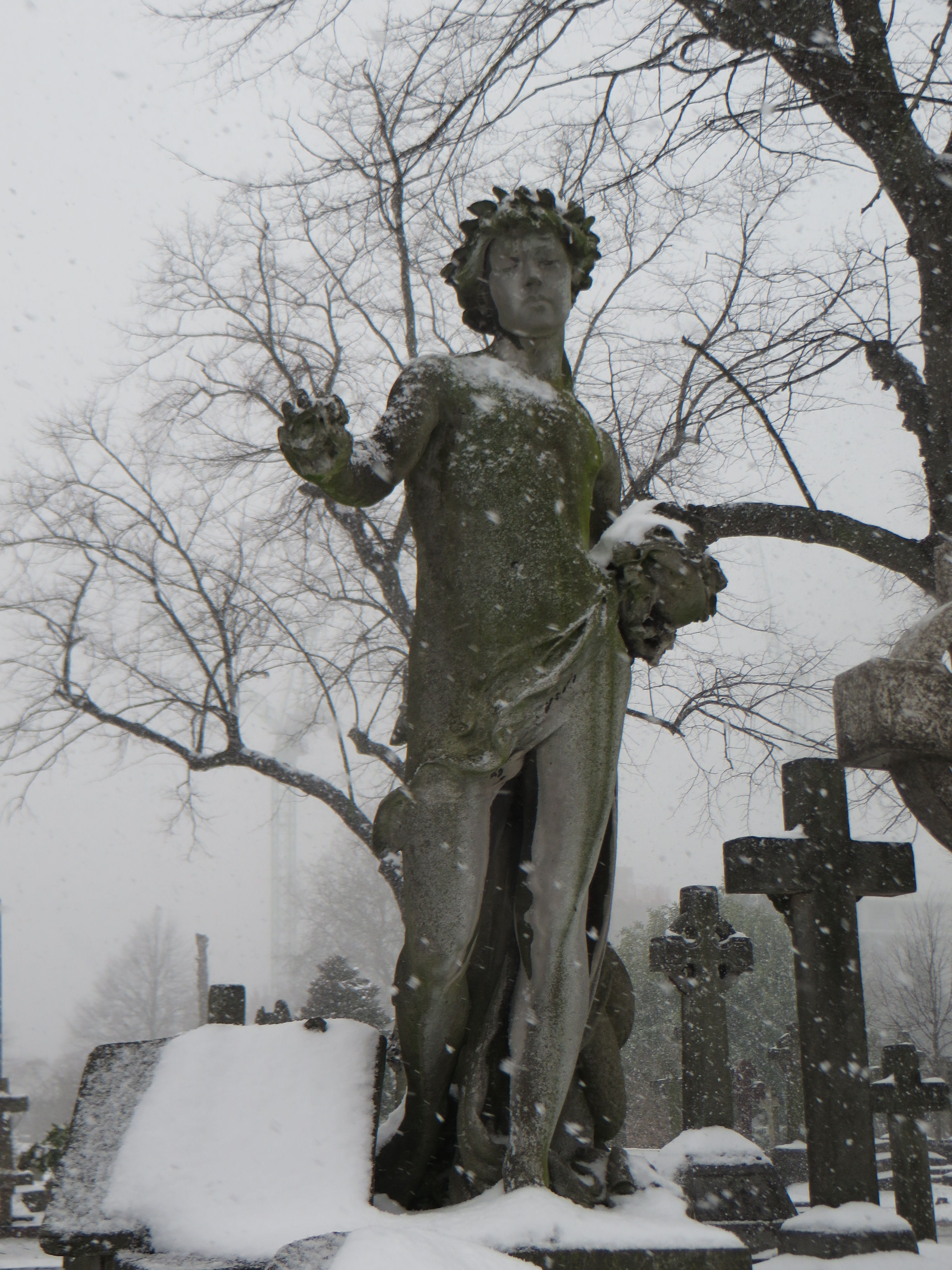
The Italian Boy as I call him, Brompton Cemetery Feb18 ©Carole Tyrrell
Snowy view from sidepath Brompton Cemetery Feb 2018 ©Carole Tyrrell

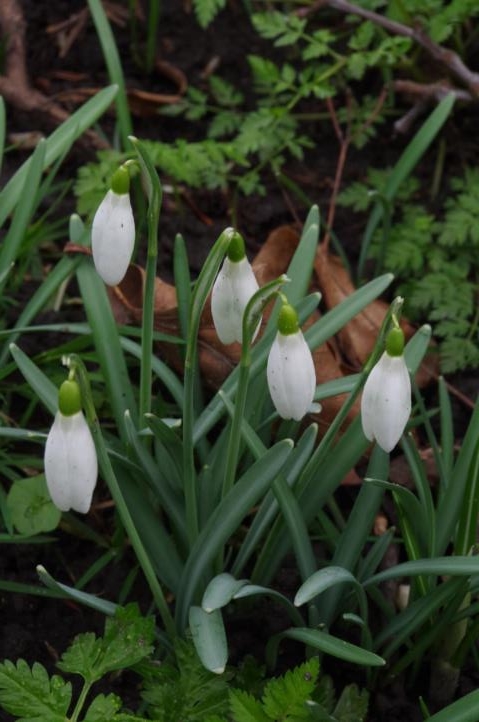
Wildlife in Cemeteries No 8 – the dark side of the Snowdrop

As we are still in lockdown, I thought that I would repost an earlier blog about a flower that is traditionally associated with cemeteries and churchyards. This is the time of year when they start to  make a welcome appearance as signs of Spring and this year, especially, I think that we need to know that better days are coming.

Snowdrops in St George’s churchyard, Beckenham.
©Carole Tyrrell

Imagine yourself in a gloomy medieval church on the festival of Candlemass. You, and your fellow parishioners, have each brought your candles to be blessed by the priest and, after the procession which will fill the church with light, they will all be placed in front of a statue of the Virgin Mary.   Candlemass marked the end of winter and the beginning of Spring and the blessing is to ward off evil spirits.  It traditionally falls on February 2 and is shared with the Celtic festival of Imbolc.  And in the churchyard outside you can see green shoots forcing their way up through the hard winter earth.  The snowdrop’s milk-white flowers show that spring is on its way as they begin to emerge into the light.

The placing of the lit candles in front of the Virgin Mary’s statue gave the snowdrop one of its many other names – Mary’s Tapers.  But there are many others such: Dingle Dangle, Candlemas Bells, Fair Maids of February, Snow Piercer, Death’s Flower and Corpse Flower.

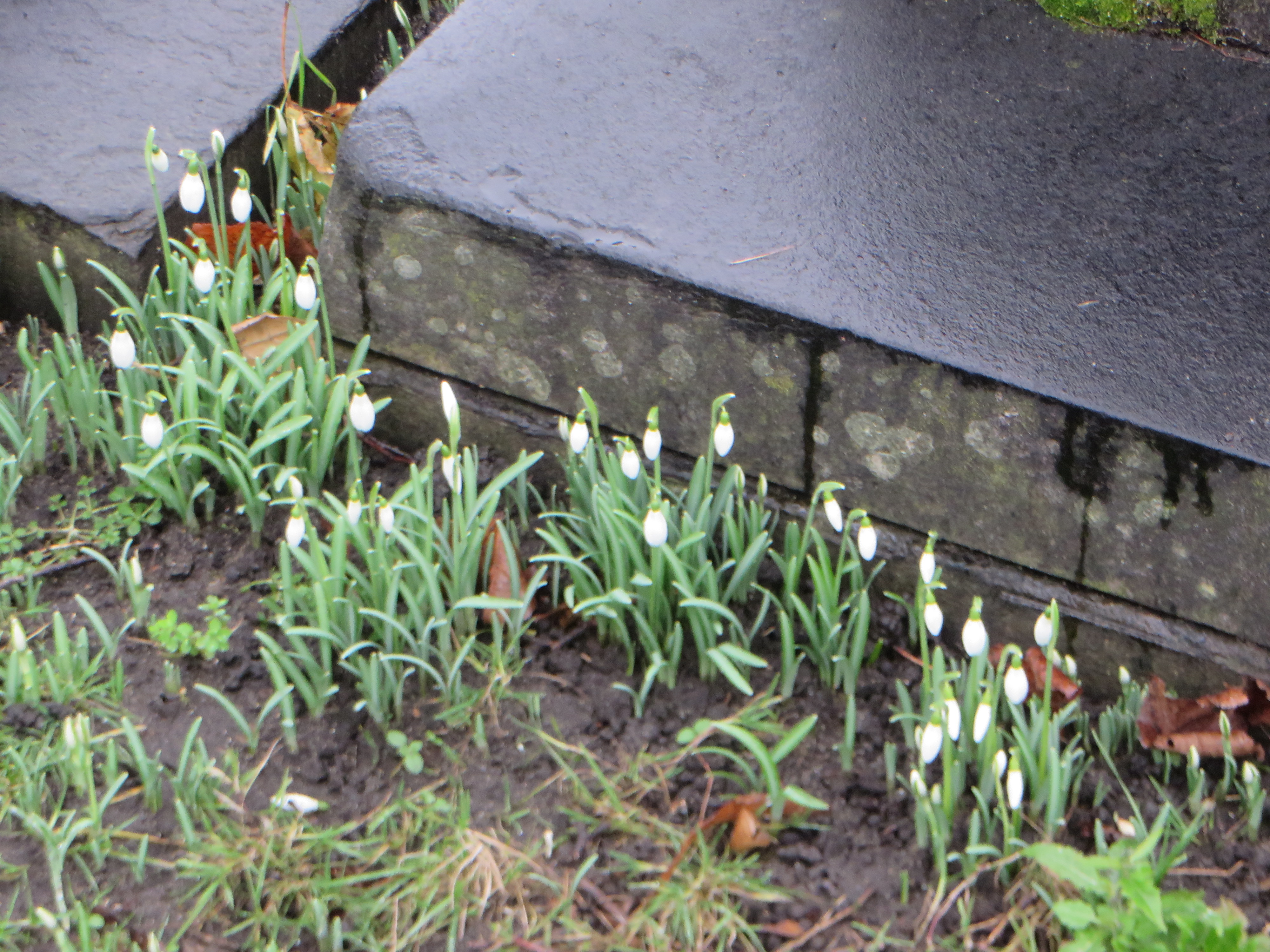
Snowdrops, Brompton Cemetery, January 2018
©Carole Tyrrell


The snowdrop’s appearance has also inspired many comments . According to the Scottish Wildlife Trusts website they have been described as resembling 3 drops of milk hanging from a stem and they are also associated with the ear drop which is an old fashioned ear ring.  Anyone who has seen a group of snowdrops nodding in the wind will understand what they mean.   The snowdrop’s colour is associated with purity and they have been described as a shy flower with their drooping flowers.  However, the eco enchantments website reveals that the flower is designed in this way due:

‘to the necessity of their dusty pollen being kept dry and sweet in order to attract the few insects flying in winter.’

Snowdrops have been known since ancient times and, in 1597, appeared in Geralde’s ‘Great Herbal where they were called by the less than catchy name of ‘Timely Flowers Bulbous Violets’.  Its Latin name is Galanthus nivalis.  Galanthus means milk white flowers and the nivalis element translates as snowy according to the great botanist, Linnaeus in 1753.   In the language of flowers they’re associated with ‘Hope’ and the coming of spring and life reawakening.

However, yet despite all these positive associations, the elegant snowdrop has a much darker side. Monks were reputed to have brought them to the UK but it was the ever enthusiastic Victorians who copiously planted them in graveyards, churchyards and cemeteries which then linked them with death.  Hence the nickname name ‘Death’s Flower.’

They were described by Margaret Baker in the 1903 ‘Encyclopedia of Superstitions, Folklore and the Occult of the World’ as:

‘so much like a corpse in a shroud that in some counties  the people will not have it in the house, lest they bring in death.‘

Snowdrops, St George’s Beckenham.
©Carole Tyrrell

So that’s where the ‘Corpse Flower’ nickname came from.

Snowdrops are also seen as Death’s Tokens and there are several regional folk traditions of connecting death with them. For example in the 19th and early 20th centuries it was considered very unlucky to bring the flower into the house from outside as it was felt that a death would soon occur.  The most unlucky snowdrop was that with a single bloom on its stem.    Other folk traditions were described in a 1913 folklore handbook which claims that if a snowdrop was brought indoors it will make the cows milk watery and affect the colour of the butter.  Even as late as 1969 in ‘The Folklore of Plants’  it was stated that having a snowdrop indoors could affect the number of eggs that a sitting chicken might hatch.  A very powerful plant if these are all to be believed – you have been warned!

It’s amazing that this little flower has so many associations and legends connected with it but I always see it as a harbinger of spring, rebirth and an indication of warmer days to come.

But the snowdrop also has a surprise.  This came courtesy of the Urban Countryman page on Facebook – not all social media is time wasting!  If you very gently turn over a snowdrop bloom you will find that the underside is even prettier and they also vary depending on the snowdrop variety.

Here is a small selection from my local churchyard and one from Kensal Green cemetery.

So don’t underestimate the snowdrop – it’s a plant associated with life and death but watch out for your hens and the colour of your butter if you do decide to tempt fate…..


©Carole Tyrrell text and photos unless otherwise stated

References:

http://www.plantlore.com

http://www.independent.co.uk/environment/naturestudies/bright-in-winters-depths-why-the-flawless-flower-of-candlemas-is-ajoy-forever-8483967

http://www.flowermeaning.com/snowdrop-flower-meaning

http://www.ecoenchantments.co.uk/mysnowdropmagicpage.html

https://scottishwildlifetrust.org.uk/2014/03/natures-death-tokens/


Symbol of the Month – The Woman from Samaria or a Greek goddess?

The Caryer headstone in 2011 , All Saints Frindsbury Photo Kent Archaeological Society

I featured part of this symbol on the Caryer headstone in an earlier Symbol of the Month – the All seeing Eye.    The Kent Archaeological Society website had given me the epitaph and also a reference to the Woman of Samaria with a  question mark next to it.

In March 2020, I visited All Saints, Frindsbury where the Caryer headstone is and looked at it and my photos and wasn’t quite sure if they were right.   Then I looked again at their photo of it taken in 2011 and what a difference 9 years makes!

As you can see, erosion has blurred a lot of the fine detail seen in the 2011 photo and it’s now hard to make out the image of the woman with such clarity now.  It doesn’t help that the headstone is leaning over so making it quite hard to get a decent photo.    In the 2020 image some of the detail has been lost. The stone is darker but. despite the erosion, it is a wonderful example of the stone carver’s art and skill.  This would have been an expensive headstone.

So what have we got? In the 2011 photo, A glamorous, somewhat scantily clad woman who was really well carved. She wears classical style diaphanous robes and wisps of lie across her exposed leg. She has her hair up in a Classical hairstyle and is sitting side on to the viewer wearing a pensive expression. She seems to be sitting on pebbles – is she at a river or at a beach? She holds a water jug and there are clouds above her.  The all seeing eye of God is on the other side of the headstone which may have been comforting to those left behind.

The reference to the Woman from Samaria being a possible source  is. I think, that the lady is holding a water jug and seems to be near water. So does she carry the waters of eternal life that Christ promised in the Bible? Or is she just a scantily clad woman holding a water jug?

The Woman from Samaria appears in the Gospel of John 4: verses 4-26.   Here they are:

There cometh a woman of Samaria to draw water: Jesus saith unto her, Give me to drink.

 (For his disciples were gone away unto the city to buy meat.)
 Then saith the woman of Samaria unto him, How is it that thou, being a Jew, askest drink of me, which am a woman of Samaria? for the Jews have no dealings with the Samaritans.

Jesus answered and said unto her, If thou knewest the gift of God, and who it is that saith to thee, Give me to drink; thou wouldest have asked of him, and he would have given thee living water.

The woman saith unto him, Sir, thou hast nothing to draw with, and the well is deep: from whence then hast thou that living water?

Art thou greater than our father Jacob, which gave us the well, and drank thereof himself, and his children, and his cattle?

Jesus answered and said unto her, Whosoever drinketh of this water shall thirst again:

But whosoever drinketh of the water that I shall give him shall never thirst; but the water that I shall give him shall be in him a well of water springing up into everlasting life.

The woman saith unto him, Sir, give me this water, that I thirst not, neither come hither to draw. King James Version

The meeting between the woman and Christ has inspired many artists and here are two interpretations.   But I had my doubts.   For instance, there’s no well visible on the headstone and, although she could be seen as bathing in the water of eternal life, the living waters referred to in the Bible, with a clear reference to resurrection it just didn’t feel right.   It also felt a bit tortuous to try and fit it all in.

Christ and the Samaritan Woman at the Well Angelica Kauffman (1741-1807) Shared under Wikipedia Creative Commons
Jesus at the Samaritan Woman – Gervais Drouet Shared under Wiki Creative Commons

But there are other images of female water bearers and one of the most obvious is associated with the Zodiac sign of Aquarius.  She is often depicted holding a water jug aloft or pouring from it.  But no, I carried on looking. Sometimes researching symbols is like detective work!

But there is another symbol that involves a woman as water bearer and that is the Zodiac sign of Aquarius.  In fact it is known as the water bearer.  

However, there is also the Greek goddess, Hebe, or the cup bearer. She was the daughter of Zeus and was the cupbearer for the gods and goddesses of Mount Olympus.  Hebe served nectar and ambrosia to them until she married Heracles.  She also had influence over eternal youth and the ability to restore youth to mortals.  In fact, Hebe comes from the Greek word meaning youth or prime of life.

Statue of Hebe Antonio Canova (1757-1822) Shared under Wiki Creative Commons

She was a popular subject in art during 1750-1880 and that would fit in with the date of the headstone. Hannah was the first to buried there and she died in 1809.   There many depictions of Hebe and in fact it was well known that all that was needed to summon her was a floaty white dress, some flowers in the hair and cup to hold. A setting in the clouds helped as well and maybe our Frindsbury lady isn’t sitting on pebbles but on puffy clouds.  In some portraits of Hebe a degree of nudity was allowed.    She was often depicted with wings which can be seen behind the figure on the headstone.  In art Hebe often appears with an eagle. Hebe also had her own personal cult and figures of her were popular in the 19th and early 20th centuries for fountains.

Painting of Hebe – Jacques Louis Dubois (1768-1843) Shared under Wiki Creative Commons

So I think that the figure is a classical one and probably based on Hebe.  Our glamorous lady in the floating draperies may be a reference to the deceased always remaining eternally young in death.  Hannah was only 30 when she died but that wasn’t unusual in an age of low mortality.   She is protected by the watchful Eye of God. It’s interesting to see a pagan symbol beside a more conventionally Christian one.

We will never know the inspiration behind the image used on this headstone.   It may have been skillfully copied from a printed image or painting and may have had personal significance to her husband who is also buried there together with their young son.  It would have been the height  of Classicism and it’s interesting to find it in a country churchyard.  It is sad to see much it has eroded over the years but one see the confidence of stone masons at that time in tackling subjects such as this.

So, in my opinion, our lady may not be the Woman from Samaria but a representation of Hebe.  But of course she could just be another elegant lady showing a bit of leg as she sits for all eternity above the Caryer family.

©Text and photos Carole Tyrrell unless otherwise stated.

References and further reading

https://en.wikipedia.org/wiki/Samaritan_woman_at_the_well#:~:text=The%20woman%20appears%20in%20John,was%20sitting%20by%20the%20well.

https://www.biblegateway.com/passage/?search=John%204%3A7-29&version=KJV

https://en.wikipedia.org/wiki/Hebe_(mythology)

Happy New Year with another version of the Handshake symbol.

Hello all – I think I can just about get away with still wishing you all a Happy New Year!

Well, here we are in another lockdown and so I won’t be poking about in churchyards or cemeteries for a while.

So I took the opportunity to look through my photos from last year just before the first lockdown when I could still be out and about in local churchyards and cemeteries which I haven’t previously posted.

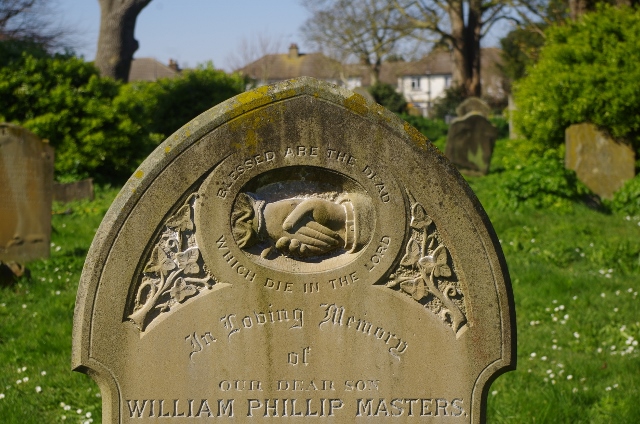
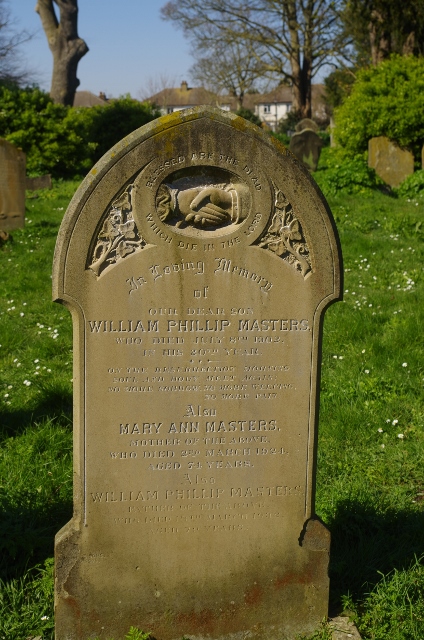
The above headstone is from All Saints in Frindsbury near Strood. The church perches on top of a hill looking down on the town and its churchyard was recommended to me by an old friend. There were some spectacular views of the River Medway down below as its sapphire stream glinted in the Spring sunshine.. When I got there, the trimming of the long grass around the memorials had literally stopped in mid cut and I had to be careful where I walked. I didn’t want to trip over kerb stones hidden in the long grass.

I found this and, although the shaking hands motif is usually associated with a man and wife saying goodbye, here it looks as though a mother and son are saying goodbye. The hands are those of a man and a woman and, although, the father has been added on at the bottom, the son was the first to be buried there. William Masters died young at only 20 and his mother died 22 years later.

In the shaking hands, the deceased is traditionally holding the hand of the living as they part. It can mean goodbye or the deceased guiding the living into eternal life later. It is usually associated with marriage with the visible cuffs delineating them. The frilly hand on the right hand side is a woman and the left hand one is the man with the plainer, more formal cuff.

It was an interesting churchyard and was also in the middle of two cemeteries – the East and the West. These were mainly 19th and 20th century burials but a bright Spring carpet of primroses and foaming white Blackthorn blossom made them appear colourful and bright.

I will be discussing one of the more enigmatic symbols that I found in All Saints in the next blog.

A Christmas card to you from me

What a strange long trip it’s been as a member of the legendary ‘60’s band, The Grateful Dead, once said and it could apply so well to 2020.

At this time last year I suspect that hardly any of us were prepared for COVID and its devastating effects.  Who could have predicted what was to come?

But here we are.

Still trying to make sense of it all and how our lives have changed.

But, when exploring cemeteries and churchyards,  you often discover evidence of previous epidemics such as cholera or the Spanish flu.  For example, Joseph Bonomi’s headstone in London’s Brompton Cemetery is inscribed with the names of 4 of his children who died of whooping cough in one week.

During this pandemic people have turned to cemeteries and churchyards as quiet places in which to exercise or just sit and enjoy the fine Spring weather and the reduced carbon emissions.  

The angel on this year’s card comes from Brompton Cemetery and she often wears a coat of ivy. 

I hope no-one thought that Shadowsflyaway was running out of steam with no Symbol of the Month last month for the first time in five years since this blog began.   In October, I had teething troubles with an unexpected update from WordPress but that has resolved itself.  But this time it’s the effects of lockdown, and travel restrictions and a lack of funds. 

However, there are still so many stories to discover and share with you.   I love the thrill of finding an undiscovered gem hidden under tendrils of ivy or beneath the spreading yew tree that has sheltered it for centuries.   

I would like to wish you all a very Merry Christmas and a brighter 2021.

Symbol of the Month – The All Seeing Eye

Poking about in churchyards as is my wont is how I discover symbols to write about. So it was while exploring 2 churchyards in Kent that I discovered this month’s symbol.

This is the All Seeing Eye, also known as The Eye of Providence, and is usually depicted as a single realistic eye within a triangle or within a burst of light. I’ve always associated it with Freemasons as it appears on their documents.  But neither of these headstones had any other symbols often linked with Freemasons such as the square and compass.  So what did it mean?

The one in the churchyard of St Martin of Tours in Eynsford had what looked like two snakes bordering it together with other familiar memento symbols. Sadly the epitaph is now illegible. 

The second one is in the churchyard of All Saints in Frindsbury and this intriguing version on the grave of the Caryer family.   The Kent Archaeological Society thought that it might represent the Woman of Samuria as featured in John 4.4-26 but I’m not sure about that.  The epitaph reads:

‘Sacred

To the memory of

Hannah wife of John Caryer

Died 9th Sept 1809 aged 30 years

Also Robert her son

Died 28th June 1801 aged 8 years

Also the above John Caryer

Died 11th March 1814 aged (4)2 years.’

The Supper at Emmaus by Jocopo Pontormo dated 1525, shared under Wiki Creative Commons

The earliest known representation of The Eye is in a painting called ‘The Supper at Emmaus’ by the Italian painter Jacopo Pontormo in 1525. This was painted during the Renaissance and it depicts the second part of the Second Appearance story in Luke 24: verses 13.35: 

And they drew nigh unto the village, whither they went: and he made as though he would have gone further.

But they constrained him, saying, Abide with us: for it is toward evening, and the day is far spent. And he went in to tarry with them.

And it came to pass, as he sat at meat with them, he took bread, and blessed it, and brake, and gave to them.

And their eyes were opened, and they knew him; and he vanished out of their sight.

As you can see the Eye is above Christ’s head which shows that God is watching the event and so can be seen as a Christian symbol.  On the Ancient Origins website it’s claimed that

‘the elements surrounding the eye also have a Christian meaning. For example, the triangle surrounding the eye also have a Christian meaning in that it’s a clear reference to the Holy Trinity – the Father, the Son and the Holy Spirit. The burst of light is meant to symbolise divinity, holiness and God himself’

Within the Bible there are many references to The Eye in the context of God keeping watch and observing in Proverbs and Ecclesiasticus and also from  Psalms 33: verse 18:

‘The LORD is in his holy temple, the LORD’s throne is in heaven:
his eyes behold, his eyelids try, the children of men.

Behold, the eye of the LORD is upon them that fear him,
upon them that hope in his mercy . . . . 

The eyes of the LORD are upon the righteous,
and his ears are open unto their cry.’

The Wadjet/udjat Eye of Horus pendant, Cairo Museum, Shared under Wiki Creative Commons

But older religions and faiths such as Hinduism and the Ancient Egyptians also had an eye symbol that was central to their beliefs.

In Egypt it was known as the Eye of Horus. Even today it’s still used as an emblem of protection and good health. The Eye was also known as a wadjet (the whole one), wedjat or udjat.  Sailors would often paint the Eye of Horus on the prows of their ships to ensure a safe voyage. I’m sure that I’ve seen this on a boat or two in some of Hollywood’s classic sword and sandal epics!  The depiction of the Eye of Horus is said to resemble the markings on a falcon’s eye due to the teardrop marking which is sometimes found below the eye as here.  This would make sense as Horus is usually shown as a falcon. There are several myths about Horus and his eye. For instance, in one of them Horus fought with Set who gouged out Horus’s left eye which was later restored by the goddess Hathor.

The All Seeing Eye on a US one dollar bill. Shared under Wiki Creative Commons.

The Eye also appears on the US one dollar bill.  But it made its first appearance as a Freemason symbol on the personal seal of Robert Moray (1609-1673) who was a Scottish Freemason. Then during the 18th century it appeared again in two Freemason books, one of which was Thomas Smith Webb’s ‘Freemasonry Monitor’ and, by the 19th century, it had become part of the permanent hieroglyphical emblems of the Freemasons.    There are other associations with the Illuminati and, if you’re interested, there is more information online.

But with these two All Seeing Eye symbols I think that they were meant, as they often are, to be a comforting message.  The All Seeing Eye meant that the departed were being watched over and so were the bereaved.

©Text and photos Carole Tyrrell unless otherwise stated.

References and further reading

https://www.ancient-origins.net/human-origins-religions/eye-providence-0013057

http://www.thecemeteryclub.com/symbols.html

All-Seeing Eye – Eye of Providence

https://en.wikipedia.org/wiki/Eye_of_Providence (this has some more examples from around the world.)

https://gwmemorial.org/blogs/news/the-eye-of-providence


A ‘free range’ walk on the West side – Highgate Cemetery July 2020

The Egyptian Avenue on a Highgate Cemetery ‘free range

One of the greatest cemeteries in London is Highgate in North London. Crammed with the great and good and also some of the not so good it contains some of the most dramatic funerary architecture to be found in the capital.

The cemetery is bisected by Swain’s Lane with Highgate West on one side and Highgate East on the other. Usually the West side can only be accessed by being on an official tour but this year it was a little different……

Social distancing, in this case, was a good thing!  As The Friends of Highgate Cemetery Trust(FOHCT) were unable to hold tours during the summer they cunningly decided to offer ‘free range’ tours instead. For £10 you could book a time, agree to follow a few sensible rules on safety etc and then wander round the West side at will. And if you had the energy, as Highgate West is large, have a look round the East side as well. The West is very overgrown and FOHCT like their visitors to be safe.  They didn’t want their visitors to have a nasty accident and then haunt them forever more.

Please note that I have covered Highgate in a previous post – 16/2/2016 to be exact so some memorials mentioned here will have been covered more fully in that post.

So, on 10 July, I entered through the arch of the chapel and into the green cathedral of the West side.  The trees had linked arms above the graves, monuments and memorials to form a canopy over the entire site.  It felt as if everything was bathed in green light as I walked up the hill.  At its highest point Highgate is 375 feet above sea level. Cemeteries are often built on these as their permanent residents are nearer ‘my God to thee.’

I passed the empty chair memorial to a young actress and spotted a pelican in her piety symbol amongst the undergrowth. The overgrown nature of the West side gives it a real charm and mystery.  A helpful steward directed me to the Rossetti group of graves which I’d always wanted to see but he also pointed out the grave of a woman who had died when her dress had caught alight. Apparently this only ceased with the coming of the mini-skirt and possibly central heating.

The Rossettis have their own path named after them but the Pre-Raphaelite painter, Dante Gabriel Rossetti is not buried with them.  Instead his parents Gabriele (1783-1854) and Frances (1800-1886), his brother William (1829-1919) and William’s wife Lucy Madox Brown (1843-1894), who was the only daughter of Ford Madox Brown, his sister Christina Rossetti (1830-1894) and Dante’s wife Lizzie Siddal (1829-1862) occupy the plot.  

Lizzie features as the model in several of Dante’s paintings and the Victorian web points out that she died aged 32 instead of at 30.  She was addicted to laudanum which was derived from opium and was a Victorian cure-all. Laudanum was prescribed for morning sickness and cranky infants amongst others.  It was easy to become addicted and she succumbed.  Lizzie was pregnant at the time of her death, although she may not have known it, and had already had a stillborn child with Dante.   It is still not known  if she died of an overdose or a deliberate act of suicide. However, she was a talented artist in her own right and some of her work was featured in the 2019 exhibition ‘Pre-Raphaelite Sisters.’

But Lizzie has also been commemorated by an act that occurred after her death.  One of Dante’s early biographers  recorded it:

On the day of the funeral Rossetti walked into the chamber in which the body lay. In his hand was a book into which at her bidding he had copied his poems. Regardless of those present he spoke to her as though she were still living, telling her that the poems were written to her and were hers, and that she must take them with her. He then placed the volume beside her face in the coffin, leaving it to be buried with her in Highgate Cemetery. This touching scene will some day doubtless be the subject of a picture. Time, after its wont, hallowed and sanctified the memory of loss, but the bereavement was long and keenly felt. Meanwhile, the entombment of Rossetti’s poems had an effect upon which the writer had not calculated. They were familiar to many friends, and passages of them were retained in the recollection of some. These poems were during subsequent years the subject of much anxiety and wonderment, and the existence of the buried treasure was mentioned with reverence and sympathy, and with something of awe. Seven years later Rossetti, upon whom pressure to permit the exhumation of the volume had constantly been put, gave a reluctant consent With the permission of the Home Secretary the coffin was opened” by a friend of Rossetti and the volume was withdrawn. [Knight 76] from the Victorian Web site

It would haunt Dante for the rest of his life.   In one of his most famous paintings ‘Beata Beatrix’ painted in 1869, which is an amalgam of several drawings of Lizzie, a white poppy features. The red dove represents their love and the poppy the laudanum that hastened her death. It’s derived from poppies. Dante died in 1882 and is buried at Birchington-on- Sea.

Elizabeth Siddal circa 1860 unknown photographer shared under Wiki Commons
Beata Beatrix Dante Gabriel Rossetti completed 1870.

William Rossetti was a founder member of the Pre-Raphaelite Brotherhood and wrote widely.  He was also the biographer of his family. One of Christina’s most famous poems was ‘Goblin Market’ and she also featured in ‘Pre-Raphaelite Sisters.’

I returned to the path but discovered a selection of the rich and famous as I walked up to the Circle of Lebanon. 

The epitaph says it all
Lucien Freud artist
Jean Simmons actress.- she starred with Kirk Douglas in Spartacus

Alas, the venerable 250 year old Cedar of Lebanon after which it was named succumbed to old age in 2019.   It was a survivor from the Ashurst estate on which Highgate West was built on and was an impressive sight.  Now a wildflower garden stands on the spot. I had come out onto the upper terrace and from there I could see the layout of the Circle much more clearly. There are some impressive monuments here: Nero the lion eternally slumbers on the Wombwell monument. George Wombwell was a Victorian menagarist who owned 3 travelling animal shows.  The monument to John Maple features low relief carvings from the life of Christ. He owned a very successful furniture business which occupied a large site on Tottenham Court Road.   It no longer exists.   The Circle is built in the Classical style and the inner circle contains 20 vaults and another 16 were added in 1870.

The Circle of Lebanon from the upper tier and note the wildflower garden that replaces the Cedar after which the Circle was named.
Nero, the lion, guarding the Wombwell monument.
The Maples monument on the upper tier of the Circle.

The Terrace catacombs were closed although I have been inside them on a previous visit. By contrast they are in the Gothic style and were built on an existing terrace from the Ashurst estate.  The frontage is 8 yards long with room for 825 people in 55 vaults each containing 15 loculi or coffin spaces.  I was reduced to peering through a doorway on this occasion before turning to the magnificent Beer mausoleum which was built for his 8 year old daughter, Ada.

The Gothic style terrace catacombs
The Beer mausoleum

As it was a self-guided tour I had time to admire the summer wildflowers which were growing in profusion.  Cemeteries are good places to find these; Acanthus, ragwort, verbena, Ladies Bedstraw, Vipers Bugloss, Rosemary Willowherb and also a buddleia in full bloom studded with Peacock butterflies on Faraday Path. 

Peacock tucking into a Budleia blossom on Faraday path.
Viper’s Bugloss
Acanthus

A sidepath from the Circle led me along another path which I’d not previously seen.  The atmosphere seemed different and it was certainly darker, perhaps due to a thicker tree canopy, as I walked along it to a gate at the other end.  This would have originally opened onto Swain’s Lane and there was what appeared to be a former gatekeeper’s lodge nearby. It still bore the monogram of the London Cemetery Company who were the original owners of Highgate cemetery.  Time slips have been reported along this path and I wondered if it was the gate through which a man is reported to look out at unwary passers-by.

A possible former gatekeepers lodge
The monogram of the London Cemetery Company

I retraced my steps towards the magnificent Egyptian Avenue one of Highgate’s highlights. Tom Sayer’s monument lay to my right with his faithful dog, Lion, eternally keeping guard and then the  Sleeping Angel.  This is dedicated to Mary Nichols who was a Londoner who died in 1909 from heart failure and diabetes.  It’s a lovely tribute.

Lion guarding the gave of bare knuckle fighter Tom Sayers
The Sleeping Angel on top of Mary Nichols
The Acheler memorial

The horse on top of the Acheler memorial records John Acheler who became wealthy and well known as a ‘Knacker’.  He called himself ‘horse slaughterer to Queen Victoria’.

The Egyptian Avenue!

And then the Egyptian Avenue!  The centrepiece of Highgate West in my opnion. It may be looking a little tired but it’s a magnificent example of how the Egyptian explorations of the 19th century influenced funerary architecture. Note the two large obelisks flanking the entrance and the stylised lotus flowers on the columns as you enter through the arch and into the passage that will take you into the lower tier of the Circle. 

The Avenue was also a catacomb but they were never really popular as other London cemeteries soon realised. After all if Highgate couldn’t sell all theirs then who could? The passage contains 16 vaults on either side which were each fitted with shelves to hold 12 coffins. These were bought by individual families for their own use.

The passage from the Avenue entrance into the Circle of Lebanon.
The vaults on either side of the passage.
The Circle of Lebanon as you emerge from teh Egyptian Avenue.

By then I thought it was time to explore the East cemetery while I still had the energy.   

Wildflowers were also in profusion here: clover, bird’s foot trefoil and vetch Butterflies flew about on the heat of a late summer afternoon. 

Bird’s Foot Trefoil – Highgate East

I saw my favourites; Jeremy Beadle, Malcolm McLaren, Karl Marx and Patrick Caulfield.   There was also the grand piano dedicated surprisingly enough to a pianist, Henry Thornton, who died in 1918 during the ’flu epidemic.

Jeremy Beadle – Highgate East
Patrick Caulfield – a sense of humour
Malcolm Mclaren
Henry Thornton, a pianist

The East side isn’t as overgrown as the West side and as I explored further I found a memorial which highlighted a dog. This was dedicated to Ann Jewson Crisp and her faithful dog Emperor. 

But as I left the East side I spotted another of its more celebrated residents settling down for a siesta behind the Great Train Robber, Bruce Reynolds’, memorial.  It was a cemetery cat who was soon hidden deep in the grass and I didn’t want to disturb him or her.  What a playground!

A cemetery cat having a kip in the last afternoon sunshine.

As I left the East Cemetery and walked down Swain’s Lane to Archway tube station I still had time to admire my ideal des res – Holly Village – which was built by Victorian philanthropist, Baroness Angela Burdett-Coutts. It is said that she planned it with Charles Dickens. She built the Burdett-Coutts Memorial Sundial in St Pancras Old Burying ground.

Thj Gothic beauty of Holly Village

©Text and photos Carole Tyrrell except where indicated

References and further reading

http://www.victorianweb.org/sculpture/funerary/216.html

https://highgatecemetery.org/about/the-friends

Highgate Cemetery – maps to East and West cemeteries.https://www.hamhigh.co.uk/news/fascinating-history-of-unique-village-within-a-village-1-628284

Death Omens – how well do you know them?

Bring hawthorn blossom indoors and death supposedly will follow.

This is from Folklore Thursday and is about the rural traditions of death omens in Herefordshire. I have always found it incredible that these traditions survive in our modern world. The one concerning Hawthorn blossom is one that I already knew about but you do wonder how they began.

Was it coincidence that, hundred of years ago for example, someone heard an owl screech and a death happened soon afterwards. So the two events became forever linked so that if an owl screeched our ancestors expected a death to happen soon after. Or were our ancestors more in tune with nature than perhaps we are and could read the signs and signals.

I hope you enjoy reading this. Happy Halloween!

Hello Brave New World

In case you were wondering why there hasn’t been much activity on shadowsflyaway recently, it’s because WordPress has had an upgrade. I apparently now have a website instead of a blog.

This wasn’t something that I had anticipated but they have upgraded or updated me so here we are. I’m trying to work out where everything is at the moment. But I’ll get there and be posting away before long.

The angel up above is a male angel which is unusual in Victorian cemeteries. He is in Kensal Green Cemetery in London. If you think he look scary or a little creepy without his head, I have seen archive photos of him with a head and, believe me, he doesn’t look any less unnerving!