Epitaph Exploring in East Anglia! Part 2 The Great Churchyard, Bury St Edmunds

And now the good and the bad….(although that can be debatable.)


Dedicated to Capt Gosnold and is self-explanatory – it looks quite recent as well.
©Carole Tyrrell

An unacknowledged  Founding Father who may have changed history 

Captain Bartholomew Gosnold(1571 – 1607) 

Although the memorial stone and epitaph is largely self-explanatory there is a lot more to Gosnold’s story.  The explorer and colonist isn’t buried here. Instead he is reputed to lie in Jamestown, Virginia.  This was the colony that he helped found and, where. according to Presevation Virgina he is regarded as being …’the prime mover of the colonisation of Virginia.’

Gosnold was originally a Suffolk man who studied law at Middle Temple after graduating from Cambridge.  He made an influential marriage and had seven children. But the sea and adventure were in his blood and he sailed with Sir Walter Raleigh whom he was soon to outstrip.

In 1602  Gosnold. on the ship Concord. made his first attempt to found a colony in Southern New England. Along the way they named Cape Cod after the large number of the fish they found there and then he continued to sail on along the coast to a place with an abundance of wild grapes.  He called the place Martha’s Vineyard because of the grapes and also in memory of his infant daughter who had died in 1598.  However the colony was abandoned when its settlers decided to return to England.

There was big money and fame to be made from exploring and colonising in the 17th century.  These were usually private ventures and so profit driven. But for Gosnold and his ambitions there was only one snag; Raleigh held the patent for Virginia.   But Queen Elizabeth I, who was on the throne at the time, was very interested in revenue and Raleigh’s star was descending.  He’d already lost £40k on the Roanoke disaster which was a huge sum at the time.  Soon Gosnold held an exclusive charter for a Virginia charter to settle there and this eventually became what is now Jamestown.

Sadly Gosnold wasn’t destined to enjoy his acheivements for long.  He died, aged only 36, on 22 August 1607 as the result of a 3 week illness after only 4 months after landing in the New World.  The burial was an honourable one ‘with many volleys of small shot’ fired over his coffin.
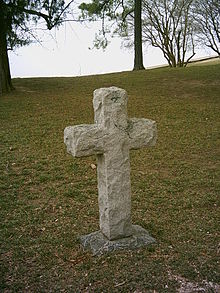
This is believed to be Gosnold’s grave in Virginia.
shared under Wiki Creative Commons
©Ser Amanho di Nicolao

He was one of the prime movers in Virginia’s colonisation and it has since been speculated that without him it might have been Spain that ended up colonising the Atlantic coast.  Elizabeth I’s successor, James 1, was extremely keen to maintain peace with Spain in the 1600’s and Spain was equally enthusiastic to explore the New World.  Without Gosnold who knows what might have happened?

For centuries the location of Gosnold’s grave was unknown.  But, in 2002, a body was excavated in Jamestown which has been presumed to be his.  Preservation Virginia  revealed that it appeared to be a person of high status as a captain’s staff had been placed in the coffin with the body and the coffin had an unusual gabled lid.  DNA was taken and compared with that from a distant descendant of Gosnold’s interred in a Suffolk church but the tests were inconclusive.

I note that his wife is recorded on this memorial plaque so either she didn’t go with him or returned after his death.

And the bad…..or unfortunate…….

Sarah LLoyd – a warning to the passer-by. Charnel House, The Great Churchyard.
©Carole Tyrrell

This epitaph is meant to be a cautionary tale for the passer-by.  The inscription tells Sarah Lloyd’s sad story and again the mason has earned his money if he was paid by the letter.   It’s almost like reading a penny dreadful written in stone.

Reader

Pause at this Humble Stone

a Record

The fall of unguarded Youth

By the allurements of vice

and the treacherous snares

of Seduction

SARAH LLOYD

on the 23d of April 1800

in the 22d Year of her Age

Suffered a Just but ignominous

Death

for admitting her abandoned seducer

into the Dwelling House of her Minstrefs

in the Night of 3rd Oct

1799

and becoming the Instrument

in his Hands of the crimes

of Robbery and Houseburning

These were her last Words

May my example be a

warning to Thousands.


This seemed to tell all of Sarah Lloyd’s story but did it?  I did further research and found that there was more to it than the epitaph states. I am indebted to Naomi Clifford’s excellent blog post for this.

The facts are that Sarah Lloyd was employed as a maidservant for Mrs Syer at her house in Hadleigh near Ipswich and had begun an illicit relationship with Joseph Clarke, a local man. On the night of the burglary, she let him into Mrs Syer’s house while Mrs Syer and her live-in companion slept.  The pair then stole various items from the house including a watch and 10 guineas in cash. They also managed to steal Mrs Syer’s pockets, which were small bags, from their hiding place under her pillow.  These contained cash and jewellery worth 40s (£2.00).  According to the court transcript, Clarke then set fire to the curtains in one of the rooms although other accounts state that they started a fire in a stairwell.   Both of them then fled the scene, hoping to have covered up their crime,  but unluckily for them neighbours managed to quickly put out the fire and the house was saved.  Clarke advised Sarah to leave him out of it and, instead, to say that two other men had been involved.

They lay low until Sarah was recognised as she ran across a field and she was eventually arrested by the local constable. She confessed and the stolen goods were recovered from her family home.  The cash was never found and soon Clarke was also arrested.

However, according to the account of the trial Clarke was found not guilty and acquitted whereas, Sarah, although found not guilty of the burglary was found guilty of stealing.  The strongest penalty was awarded.  This seemed harsh to say the least. According to Naomi Clifford  when Sarah appeared at the local Assizes on 20 March 1800 all she said in her defence was:

‘ It was not me, my lord, but Clarke that did it.

Here is a link to a contemporary account of the trial:    (However, be warned that it’s in 16th century phrasing where the ‘s’ has been replaced by a long ‘f’ which renders, for example, ‘passing’ as ‘paffing’.

https://books.google.co.uk/books?id=Wb1jAAAAcAAJ&pg=PA7&lpg=PA7&dq=sarah+lloyd+the+great+churchyard&source=bl&ots=VStZFRhEFa&sig=ykdosMHb6URQb08QcxF9IFel7RE&hl=en&sa=X&ved=0ahUKEwihhOSVgN3YAhUHIsAKHc7JAEAQ6AEISjAH#v=onepage&q=sarah%20lloyd%20the%20great%20churchyard&f=false

The charges against Clarke were dropped which may have been because he hadn’t confessed to his part in the crime whereas Lloyd had.  Also it was only her word that placed him at the scene as there was no other evidence.

The Assizes judge, Judge Grose, made several remarks which condemned Sarah:

A servant robbing a mistress is a very heinous crime; but your crime is greatly heightened; your mistress placed implicit confidence in your; you slept near her, in the same room, and you ought to have protected her… and though this crime was bad, yet it was innocence, compared with what followed: you were not content with robbing her mistress, but you conspired to set her house on fire, thereby adding to your crime death and destruction not only to the unfortunate Lady, but to all those whose houses were near by.  I have to announce to you that your last hour is approaching; and for the great and aggravated offence that you have committed, the law dooms you to die.’

There was a further twist to the case in that Sarah told the Rev Hay Drummond, the local vicar, when he visited her, that Clarke had seduced her and regularly visited for sex. She’d regarded him as her husband and on the night of the crime she had revealed that she was pregnant and he’d promised to marry her.  Rev Drummond felt that she’d been used and immediately set about organising a petition together with Capel Lofft, a lawyer and magistrate. to try to obtain a Royal Pardon.    Lofft moved in influential circles but the Home Secretary, the Duke of Portland refused any clemency as he considered that Sarah should be made an example as her alleged final words on the epitaph state. Although I think it more likely that she might have said ‘How did Joseph Clarke get off with not guilty?’

The pregnancy wasn’t mentioned again and she was executed on 22 April 1800 after it had been delayed for 14 days by the attempts to obtain a Royal Pardon.  Sarah was buried in the abbey churchyard  that evening with a crowd of 1000 people in attendance.  Mrs Lloyd. Sarah’s mother, had tried to commit suicide when she had heard that the execution was to proceed.

Although Sarah’s age is started as 22 on the epitaph she was unaware of her true age and was illiterate.

The epitaph also seems to have commented on Sarah;s morality although her ‘abandoned seducer’ isn’t named.However, her case has been seen as being part of a slow movement of change with capital punishment.  The first decades of the 1800’s brought significant reductions in the numbers of crimes punishable by death with other less harsh methods of punishment.  Sarah Lloyd was one of 7 women hanged in 1800. There were 6 in England and I in Ireland.  Only 3 more were to hang for stealing in a dwelling house and it ceased to be a capital offence after August 1834.

©Text and photos Carole Tyrrell unless otherwise stated.

Further reading and references:

https://en.wikipedia.org/wiki/Bartholomew_Gosnold

https://historicjamestowne.org/history/captain-bartholomew-gosnold-gosnoll/

https://britishheritage.com/bartholomew-gosnold-the-man-who-was-responsible-for-englands-settling-the-new-world/

http://anthropology.si.edu/writteninbone/unusual_case.html

https://www.buryfreepress.co.uk/news/hidden-treasures-brought-into-view-1-399134

https://books.google.co.uk/books?id=Wb1jAAAAcAAJ&pg=PA7&lpg=PA7&dq=sarah+lloyd+the+great+churchyard&source=bl&ots=VStZFRhEFa&sig=ykdosMHb6URQb08QcxF9IFel7RE&hl=en&sa=X&ved=0ahUKEwihhOSVgN3YAhUHIsAKHc7JAEAQ6AEISjAH#v=onepage&q=sarah%20lloyd%20the%20great%20churchyard&f=false

http://www.naomiclifford.com/sarah-lloyd/

http://www.capitalpunishmentuk.org/lloyd.html
http://www.eadt.co.uk/ea-life/bury-st-edmunds-and-sudbury-how-tragic-sarah-paid-a-terrible-price-for-seduction-1-3452212


Part 2 – ‘Her lean and senile seducer’ – the Charles Bravo inquest and its aftermath


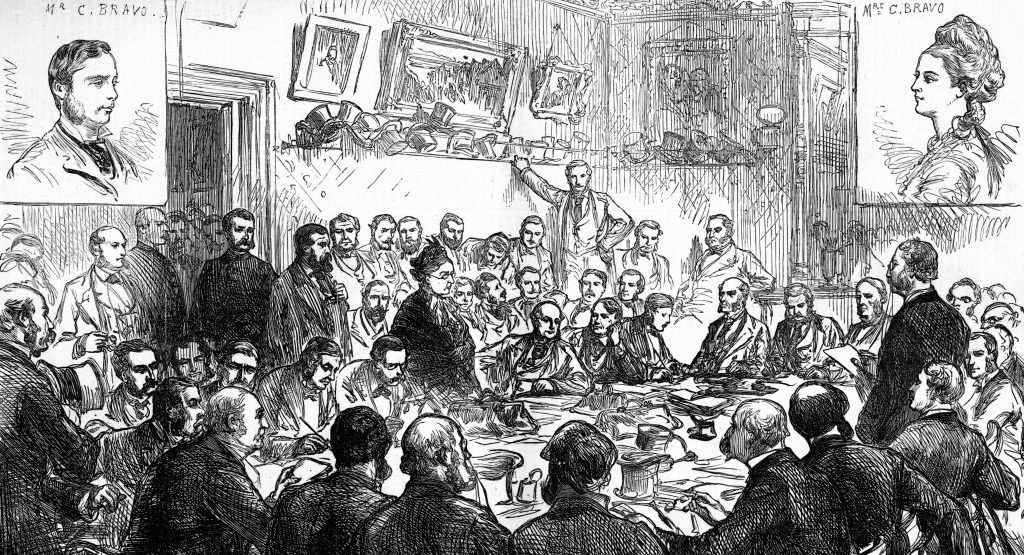
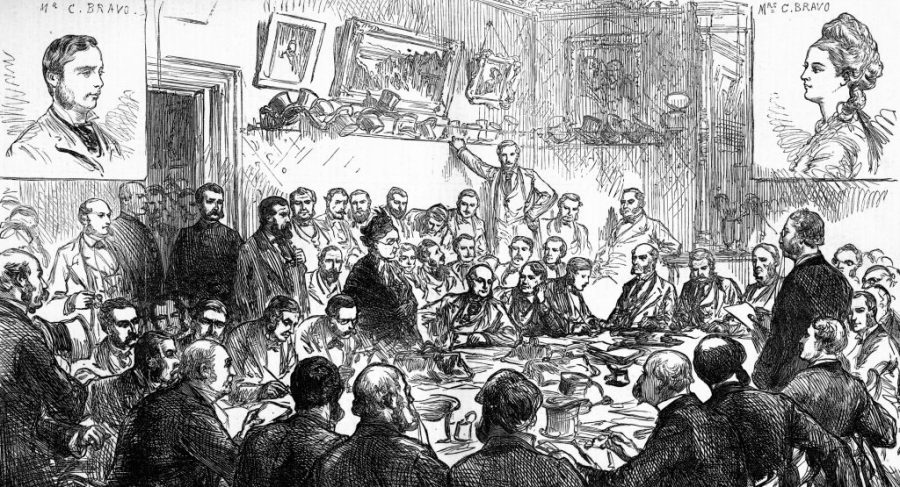
I found this on www.realcrimedaily but with no accreditation. Mrs Cox is giving evidence.
I found this on http://www.realcrimedaily but with no accreditation. Mrs Cox is giving evidence.

 The second inquest began on 11 July 1876 and lasted 5 weeks. It was a public sensation and finally ended Florence’s doomed attempt to regain her place in respectable society. Only men and boys were allowed into the inquest as the details revealed were considered to be so shocking.


Both Florence and Mrs Cox spoke of Bravo’s controlling and bullying nature which was countered by family and friends who described him as good-natured and happy.

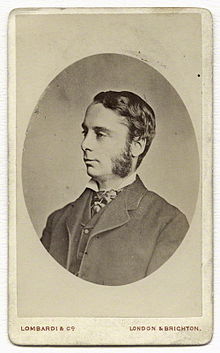
Charles Delaunay Turner Bravo Carte de Visite 1876 National Portrait Gallery, Lombardi Sahed under Wiko Creative Commons Attribute Share Alike 3.0
Charles Delaunay Turner Bravo Carte de Visite 1876
National Portrait Gallery, Lombardi
Sahed under Wiko Creative Commons Attribute Share Alike 3.0


The affair between Florence and Dr Gully became public knowledge because of the inquest and the papers of the day revelled in it while ostensibly taking a moral high ground.  The fact that she had enjoyed it and that it had been common knowledge throughout the area enraged the public and she was soon being pilloried. Much was made of its adulterous nature and the disparity in their ages – he was 67 to her 25.  The Times dubbed Gully as her ‘lean and senile seducer’ whereas in fact he was described as being charismatic with Charles Darwin calling him ‘a friend.’  He was quickly discounted as a suspect as he had not been anywhere near the scene at the time.


Photo of Florence Bravo http://murderpedia.org/female.B/b/bravo-florence-photos.htm
Photo of Florence Bravo
http://murderpedia.org/female.B/b/bravo-florence-photos.htm

Florence was questioned repeatedly about the affair until she finally broke down and tried to demand that the Coroner protect her from what she called ‘the impertinent’ cross examining.

‘I refuse to answer any more questions about Dr Gully!’ she shouted at one point to Joseph Bravo’s solicitor. ‘This inquiry is about the death of my husband and I appeal to the jury as men and Britons to protect me.’

Dr James Manby Gully ''Hydropathy'  cartoon in style of Spy from Vanity Fair 1876. Shared under Wiki Creative Commons Attribution 2.0 Generic
Dr James Manby Gully ”Hydropathy’ cartoon in style of Spy from Vanity Fair 1876.
Shared under Wiki Creative Commons Attribution 2.0 Generic


Dr Gully described the persistent questioning as ‘a gross impertinence’ and publicly denied any involvement or knowledge of Charles’ murder. Gully was now looking at the very likely destruction of all that he had built up – his good name, his practice and his clientele.  The novelist George Eliot, who had been one of his patients, had described him as a ‘quack’. But Gully was very advanced for his time in his use of mesmerism to induce sleep and clairvoyance to diagnose internal conditions. These ideas may seem a little quaint to us today, as X-rays replaced clairvoyance, but they did indicate the way in which medicine might go.  He had had a huge practice at Malvern between 1842-1871 but the inquest ruined him.


Joseph Bravo’s solicitor attempted to salvage Charles’ reputation by trying to prove that he had known nothing of Florence and Gully’s affair when he had married.  Otherwise he would have been revealed as a mere fortune hunter who saw a wealthy widow with a dubious reputation as easy prey. But to no avail – Florence’s pre-nuptial confession proved otherwise.


The Times, somewhat sanctimoniously, declared the affair as ‘the most disgusting exhibition to have been witnessed in this generation.’  It was as if Florence and Gully were on trial and that Charles’ murder was a sideshow.


But the inquest was against the background of the role of women in Victorian society and Florence had been a rebel.  At the time women had no rights and were expected to be only domestic goddesses; sexless, devoted to others and with no other outlets in their lives. However, thinkers such as William Acton thought differently and Gully himself saw womens neuroses as an unconscious response to the pressures of their lives and wrote ‘all these pressures are worsened by their boredom and lack of sexual satisfaction.’  This was very advanced for the time.


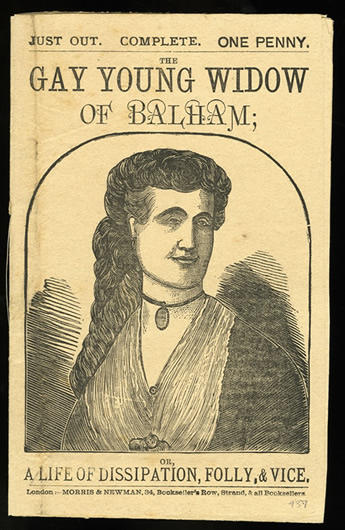
A pamphlet from the time featuring Florenc's past life.  http://murderpedia.org/female.B/b/bravo-florence-photos.htm
A pamphlet from the time featuring Florenc’s past life.
http://murderpedia.org/female.B/b/bravo-florence-photos.htm

Florence, by contrast, ran her own household and managed her own financial affairs.  She was independent of her parents and so could make choices which might have been denied to other women.  She had been estranged from them when she left Ricardo and during her affair with Gully and seemed willing to accept this as the price of having her own life.    However, her desire to be accepted into society again via marriage to Bravo was to bring about her downfall.

Middle-class Victorian women were fascinated by the sensational murder trials of the day and there were several prominent cases featuring wives who were accused of murdering their husbands or lovers – for example, Adelaide Bartlett, Madeline Smith and Florence Maybrick.  They saw their own situations reflected in these women who had been driven to take action to take control of their lives.

At the end of the inquest the jury’s verdict was:

We find that Charles Delaunay Turner Bravo did not commit suicide, that he did not meet his death of misadventure, that he was wilfully murdered by the administration of tartar emetic. But there is insufficient evidence to fix the guilt upon any person or persons.’

The jury were all male and may have thought that a woman couldn’t be a murderess or there just wasn’t enough hard evidence to enable them to point the finger at anyone. No-one was ever  charged with Charles Bravo’s murder although there has been much speculation even to this day.

Aftermath:

Florence sold the Priory and parted with Mrs Cox.  She died less than 2 years later at Southsea where she was living under the name of Florence Turner.  She died of alcoholism although the verdict at her inquest was ‘Death by Misadventure’.  Florence’s exact burial place at Challow is unknown.

Florence’s family of wealthy Scottish landowners were utterly ruined, both financially and socially, by the scandal.

Mrs Cox died in 1913 aged 90 from ‘exhaustion’. She returned to Jamaica after inheriting an estate and properties there valued at £7000 which was a large sum at the time.  She returned to England and was buried in Hither Green Cemetery.  However, her grave is unmarked although the plot is registered.  She had received death threats during the second inquest so maybe someone thought that she knew more than she was saying.

Dr Gully survived Florence by 5 years and died on 5 March 1883.  He stayed in Orwell Lodge near the Priory with his unmarried sisters.  But Susanna, his daughter, refused to have anything more to do with him.   The Malvern Clinic closed in 1913 and is now a hotel.  Dr Gully’s grave location is unknown as he was buried in secret.

Mrs Bravo supervised the building of a large stone surround over Charles’ grave at West Norwood and died a year later of grief.

Griffiths the coachman was quickly discounted as a suspect and faded from events.

Now only Charles himself still has a tangible reminder of this case which continues to fascinate.  But the inscription is now almost unreadable and, from the path, appears blank. It’s as if everyone involved with the case just wanted to vanish from the world, such was the scandal, and eventually even Bravo’s stone may vanish into thick, encroaching vegetation or fall by subsidence leaving no reminder of him.

My own theory is the one proposed by Professor Mary Hartman in which she proposes that Bravo’s death was a tragic accident. Florence was recovering from a second miscarriage and a third pregnancy could have killed her. Charles, however, wanted to resume marital relations as soon as possible as he wanted an heir and this determination does indicate a ruthless streak in him. Florence knew where the antimony was kept and may have slipped it into his water jug to make him unwell so as to avoid having sex with him.  Unfortunately on this occasion she got the dosage wrong as 3-4 grains were sufficient to make him ill and he’d taken 30-40 grams which was 10 times the lethal dose.   It was noted that Florence seemed extremely agitated on the night of 18 April 1876 as events unfolded – did she suddenly realise what she’d done? 9 years later Adelaide Bartlett used chloroform to avoid conjugal relations with her husband and it may have been a common method employed by wives but not usually with such lethal results.

I visited The Priory prior to writing this post and in Florence’s time it must have appeared very imposing.  At the time of Bravo’s murder it would have been surrounded by fields and on its own plot but now it seemed to be almost cowering between the newer houses and car parking that have sprung up around it and the unappealing line of large rubbish bins lined up in front of it. The Priory’s white walls and battlements contrasted with the blue sky as I tried to imagine the chaos and terror on that April night in 1876 as Bravo lay there, dying in extreme pain, in the shadowy candlelit rooms.

It was a tragic event for all concerned and one can only hope that they all now rest in peace.


©Text and photos Carole Tyrrell unless otherwise stated.

 References:

Death at the Priory: Love, Sex and Murder in Victorian England, James Ruddick, Atlantic Books, 2001

Dr Gully, Elizabeth Jenkins, Michael Joseph 1972

https://www.realcrimedaily.com/murder-at-the-priory-the-mysterious-death-of-charles-bravo-realcrimefriday/

http://news.bbc.co.uk/1/hi/england/2650651.stm

http://strangeco.blogspot.co.uk/2015/06/a-pearl-among-poisonings-mysterious.html

http://murderpedia.org/female.B/b/bravo-florence.htm

http://blueborage.blogspot.co.uk/2014/01/living-in-house-with-famous-victorian.html


Horrible Murder – Part 1 of the mysterious and unsolved killing of Charles Bravo

This now almost illegible tombstone is the only visible reminder of one of the most notorious and still unsolved murder cases of the 19th century.  It ruined reputations, destroyed great families and most of the chief suspects lie in unknown, unmarked graves such was the shame in being connected with it.

It’s the last resting place of Charles Delaunay Turner Bravo who died of antimony poisoning on 21 April 1876 aged 30.  It took him nearly 3 days to die an agonising death as the poison was so lethal. The memorial was erected by his sorrowing mother who died a year later of grief.  I first saw it on a guided tour of West Norwood when the guide indicated it and mentioned the name.  It’s now set back from the path and jostles for space with the other memorials and monuments that have grown up around it as if hiding it. In fact I had to wait until the winter die-back to be able to avoid the clinging embrace of long barbed tentacles of brambles and have a closer look. I could just about see his name on the memorial but the stone surround that was originally around it has long since collapsed.


This is the story of one of the notorious cases of the 19th century set against a background of money, womens rights or lack of them, and society’s punishment for those who transgress the rules.


It began on the night of 18 April 1876 after the Bravo household had retired for the night at the Priory on Bedford Hill near Balham.  At this time it was surrounded by fields and all would have been quiet.    Suddenly the night was disturbed by Charles Bravo, the head of the household, shouting ‘Florence! Florence! Hot water! Hot water!’  before collapsing and vomiting. 2 doctors were then called to the scene and so events began.  He had, as was his custom, drank water from his jug before retiring but on this night someone had added 30-40 grains of antimony, a deadly poison which is derived from tartar emetic.  Antimony has no taste in water and is an unusual method of killing someone.   It began by eating its way its way through his intestines which virtually disintegrated and his stomach.  After 3 days his central nervous system began to fail and Bravo knew that he was dying.  He managed to make a will in his wife, Florence’s favour which was witnessed by one of the doctors and the butler before being pronounced dead at 5.20am on 21 April.


It was a long and painful death and the post-mortem gave the cause of death as ‘heart failure from the effect of the poison on his central nervous system’. Incredibly it was first considered to be a suicide but I would have thought that there are far less painful methods. However the police soon decided that it was murder and soon began looking for suspects.  These were:

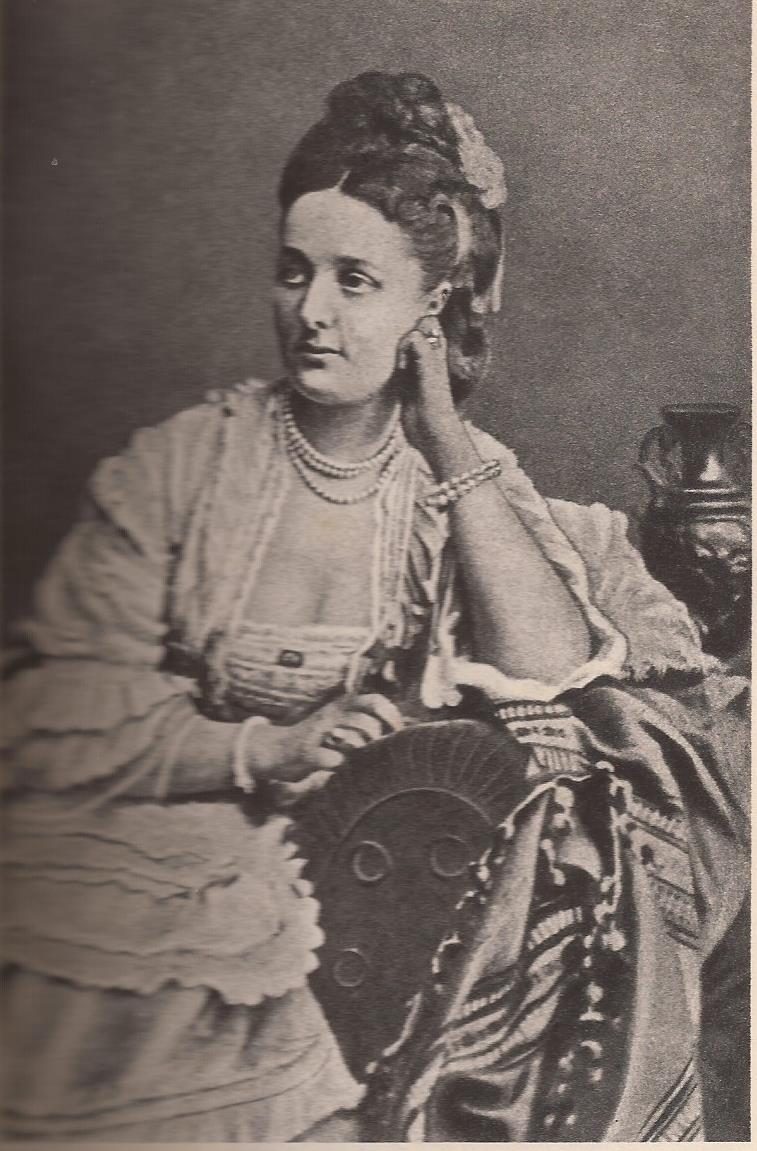
A contemporary photo of Florence Bravo.
A contemporary photo of Florence Bravo. (source unknown)

Florence his widow: She and Charles had married on 7 December 1875 at All Saints Church Kensington and it has been rumoured that she may have already been pregnant as the marriage was brought forward and she had a miscarriage very shortly afterwards.  It hadn’t been a happy marriage as she had already fled to her parents after 3 months alleging domestic abuse.  She had had quite a colourful and somewhat provocative life prior to her marriage.  Florence had been widowed before after her first husband, Captain Alexander Ricardo died in a Cologne hotel room of alcoholism in 1871 after 6 years of marriage.  She had persuaded him to give up his Army career and he struggled to establish another one before taking to the bottle.  However he left her £40,000 which was a huge sum when the average working man earned £30 p.a.

Unusually for the time, she was now an independently wealthy woman and soon established her own household at The Priory.  She met Dr James Manby Gully when she took the ‘water-cure’ at his hydrotherapy clinic in Malvern.  He had known her family for over 30 years and was the celebrity doctor of his day with several famous clients including Tennyson.  He was in a miserable second marriage to a Mrs Kibble who was 17 years older than him and from whom he was legally separated.  Nevertheless he and Florence embarked on a scandalous affair which made them notorious throughout the neighbourhood. Gully took a house on Bedford Hill Road, Orwell Lodge, which was conveniently near The Priory for secret trysts.  As a result Florence was ostracised by local society as people refused to call.  However she considered Gully to be ‘the cleverest man I have ever met.’  But she still yearned to be part of society again and after Gully performed an abortion on her the affair ended.

The only way that she could be admitted back into society and be reconciled with her parents was through marriage. She and Charles were introduced by Mrs Cox, her companion who knew his family.  There has been a suggestion that he was a fortune hunter and certainly no gentleman would have considered marrying someone with her reputation.   It was a marriage that proved to be a disaster.

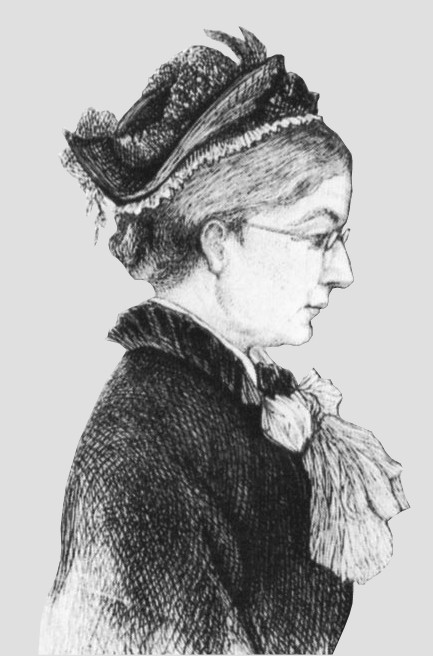
Mrs Jane Cox Florence's lady's companion at the inquest. (Source unknown)
Mrs Jane Cox Florence’s lady’s companion at the inquest.
(Source unknown)

Mrs Jane Cox – She was a widow with 3 young sons at school and was employed by Florence as her ‘lady’s companion’ at The Priory.  Mrs Cox had married in Jamaica and had returned to England after her husband had died.  She had been privy to Gully and Florence’s affair and local shopkeepers had refused to serve her. She had jet black hair and an olive coloured complexion which had led to rumours that she had ‘coloured blood.’ She was facing dismissal by Bravo who was on a mission to reduce household expenses and she was poor to say the least.  She didn’t want to be unemployed and destitute. There was also her behaviour during Bravo’s protracted death agonies. She told one doctor that he had swallowed chloroform whereas Bravo recovered consciousness long enough to refute this and instead claimed that he’d taken laudanum due to pain in his lower jaw. Mrs Cox then confused matters more when she told the second doctor, Harrison Royes Bell, that Bravo had also told her that ‘I have taken poison don’t tell Florence.’ One wonders if Bravo was in any fit state to confide this and it sounds as if Mrs Cox was trying to create a cover-up.   She had also received a bottle clearly marked ‘Poison’ from Dr Gully after he’d vowed never to speak to her again.


Griffiths – the coachman – He had already been dismissed by Bravo two weeks before the wedding and as a result had lost his tied cottage.  Griffiths had been heard making drunken threats in the Bedford Hotel on Bedford Hill in which he claimed that Bravo would be dead within a few months.  He kept antimony in the coach house to which the entire household had access.  A series of very insulting anonymous letters were received at The Priory over Christmas in which Charles was accused of being a fortune hunter and these stopped after Griffiths took a job in Kent.

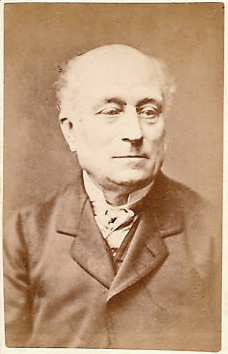
Dr James Manby Gully (source unknown)
Dr James Manby Gully
(source unknown)


Dr James Manby Gully:  He was never a serious suspect although if Bravo had died then perhaps his affair with Florence could resume.  He publicly denied any involvement in the murder.

And what of Charles Bravo himself?

Charles Bravo (source unknown)

He was born in 1845 and was the only son of Augustus and Mary Turner.  Augustus died when Charles was small and Mary married a wealthy merchant, Joseph Bravo, who was 15 years older than her.  He’d made his money from fruit and tobacco and was well-off. After studying at Kings College, London Charles was called to the bar in 1868 and took on his stepfather’s surname when he was 23. But he wasn’t well off and was merely ‘jogging along’ on £200 p.a. This wasn’t the life that he craved.

Both he and Florence had something that the other wanted – she had money and he could give her respectability.  Florence confessed all of her affair with Dr Gully pre-marraige and Charles admitted that he had  supported a woman who had had his child in Maidenhead for 5 years.

But money was already an issue between them prior to marriage as Florence had invoked the right to keep her fortune after marriage.  Until 1870 this would automatically have gone to Bravo but now women could keep any assets they brought into the marriage as long as a legal settlement confirming their intention to do so had been ratified in court prior before the union had taken place.

When Charles discovered this he had threatened not to go through with the marriage  so she compromised by giving him The Priory’s lease and its furnishings, make her will in his favour and in return she would retain control of her money. Already he seemed to be after her money and displaying his domineering, ruthless side. However Bravo was determined to be in charge and decided to reduce household expenses by dismissing staff which Florence hated.  It was also a subtle way of controlling her by getting rid of a support like Mrs Cox and her horses which she loved.

The first inquest was held on 28 April 1876 and concluded that Charles had died from the effects of poisoning but did not know who administered it.  This was considered unsatisfactory. The stage was now set for the second 5 week public inquest which would change the lives of Florence, Dr Gully and Mrs Cox forever.

©Text and photos Carole Tyrrell unless otherwise stated

Part 2 – ‘Her lean and senile seducer’ – the second Charles Bravo inquest and its aftermath


References:

Death at the Priory: Love, Sex and Murder in Victorian England,  James Ruddick, Atlantic Books, 2001

Dr Gully, Elizabeth Jenkins, Michael Joseph 1972

https://www.realcrimedaily.com/murder-at-the-priory-the-mysterious-death-of-charles-bravo-realcrimefriday/

http://news.bbc.co.uk/1/hi/england/2650651.stm

http://blueborage.blogspot.co.uk/2014/01/living-in-house-with-famous-victorian.html