Symbol of the Month – the Ouroboros

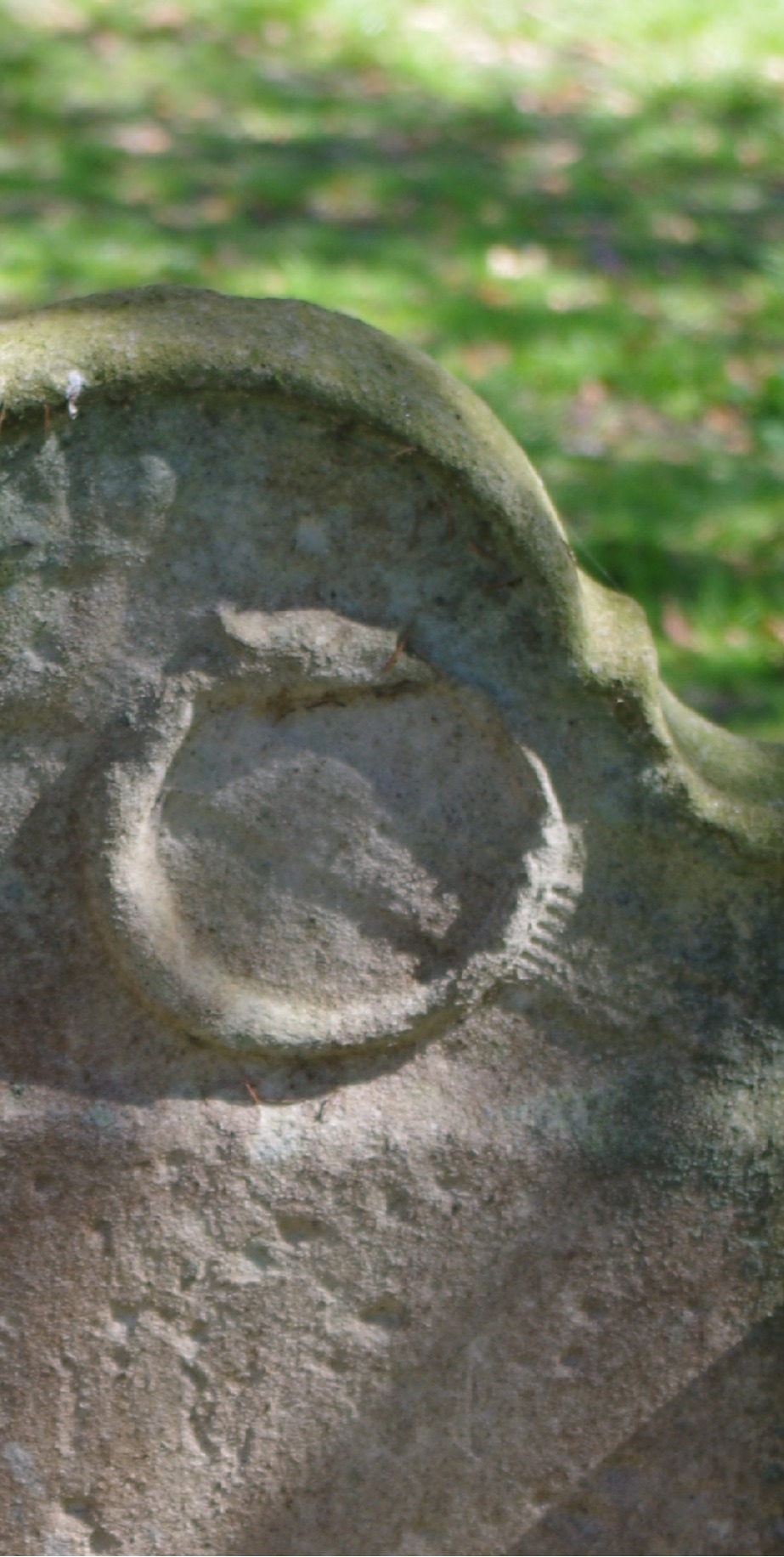
Ouroboros on 18th century headstone, St Mary’s churchyard, Rye, Sussex. ©Carole Tyrrell

For every end there is a beginning.

This is only one of the several positive and powerful meanings of the ouroboros which is one of the most ancient symbols known to man.  It’s depicted as a snake eating its own tail to sustain its life in an eternal cycle of renewal and it usually forms a full circle.  It occurs in many cultures, religions and beliefs.  The psychologist, Jung, called it an archetype which is best described as:

‘a primitive mental image inherited from the earliest human ancestors, and supposed to be present in the collective unconscious.
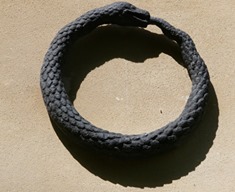
A lovely picture of an ouroboros on a mausoleum in Highgate West.
copyright Jeane Mary – used with kind permission
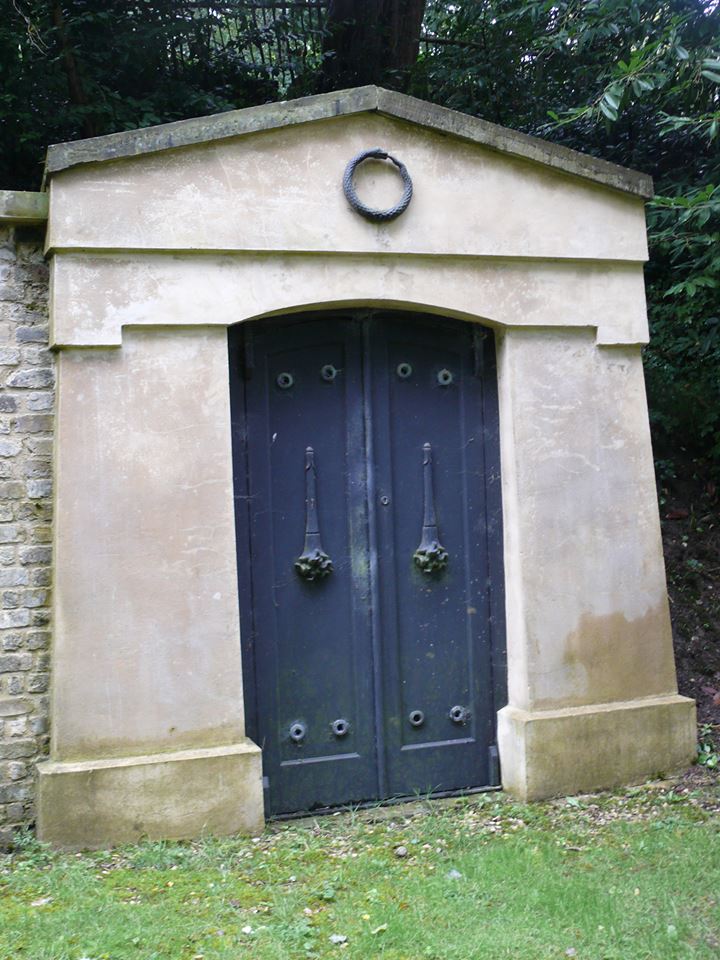
This is the mausoleum to which the ouroboros belongs.
Note downturned torches on doors which are a sign of life extinguished.
copyright Jeane Mary and used with kind permission.

The ouroboros appears in ancient churchyards and Victorian cemeteries as a symbol of resurrection.  The snake is reborn as it sheds its skin and this fine example is on a mausoleum in Highgate cemetery, London. Victorian visitors would have understood its meaning.   As a resurrection image it can be very positive as some of its other attributes are immortality, eternity and wisdom.  However, as with most symbols , it can have several meanings.  These include the Universe’s cyclic nature and life out of death and, as the snake sheds its skin it has a Phoenix-like cycle of life, death and rebirth. The Victorians revived several older symbols in a return to the classicism of ancient Greece and Rome.
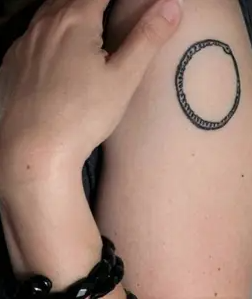
There is also a magnificent ouroboros on the gates of Sheffield General Cemetery. The Highgate one inspired the tattoo worn proudly above by Jeane Mary, a photographer and fellow cemetery explorer now sadly gone from us. She also wears a Whitby mourning bracelet based on the ouroboros in Highgate. Used with kind permission.

But the ouroboros origins lie in either ancient Greece or Egypt as both cultures have claimed it.  In Greece, Plato described it as:

‘the first living thing, a self-eating, circular being’. 

In fact, the Greek translation of ouroboros is ‘tail devouring snake’ and it’s associated with something constantly recreating itself and the eternal return.
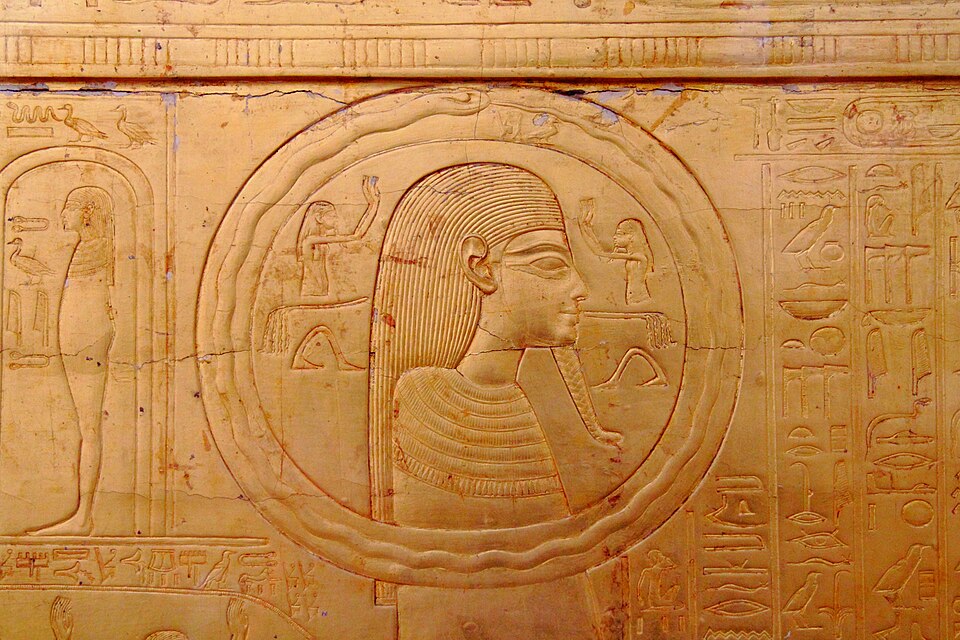
The earliest known depiction of an Ouroboros on one of the shrines enclosing the sarcophagus of Tutenkhamun. Shared under Wiki Commons. Egyptian Museum Cairo.

In Egypt, the ouroboros reputedly appears for the first time in the 14th century BC in Tutenkhamen’s tomb on an ancient funerary text. This depicts the Sun God Ra and his union with Osiris in the underworld and is illustrated with two serpents, holding their tails in their mouths, coiled around hands and feet. This may be a representation of the unified Ra-Osiris.  Both serpents are reputedly the manifestation of the god Mehen, who in other funerary texts protect Ra in his underworld journey.  I haven’t been able to find an image of this particular representation but I did find the one above which is claimed to be the earliest representation of an ouroboros.

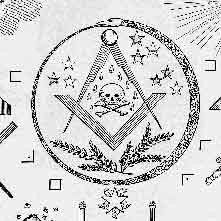
The ouroboros also appears in Hindu, Norse, Aztec and Chinese religions.  In addition, it’s a significant alchemical symbo and features in Cleopatra the Alchemist’s work. There are also Masonic associations from numerous seals, frontispieces and other imagery dating from the 17th century such as the one below:
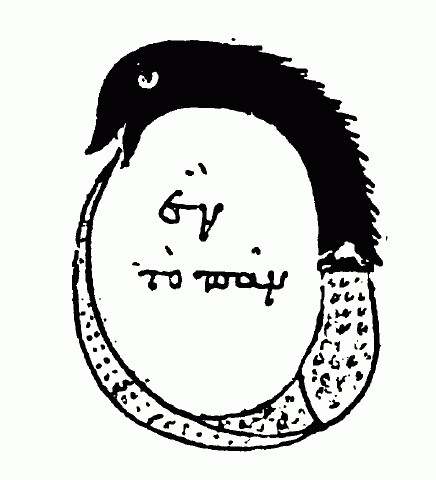
Alchemist ouroboros from Cleopatra the Alchemist Greco-Roman Egypt.
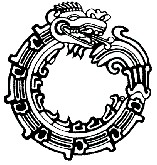
Aztec seven segmented ouroboros.

In China it can also take the form of a dragon and it features on the Magician card in the Rider- Waite deck of Tarot cards.

I found this quote online:

‘In other myths the ouroboros encircles the whole world, a circumference of the waters surrounding the earth.  It can support and maintain the world and also inject death into life and life into death.  Although apparently immobile, it’s actually in perpetual motion, forever recoiling upon itself.’

One of the many fascinating myths surrounding the ouroboros is the experience of the chemist, August Kekule, who was trying to discover the structure of benzene.   This is how he described his Eureka moment :

‘I was sitting, writing at my text-book; but the work did not progress; my thoughts were elsewhere. I turned my chair to the fire and dozed. Again the atoms were before my eyes. This time the smaller groups kept modestly in the background. My mental eye, rendered more acute by the repeated visions of the kind, could now distinguish larger structures of manifold conformation: long rows, sometimes more closely fitted together; all twining and twisting in snake-like motion. But look! What was that? One of the snakes had seized hold of its own tail, and the form whirled mockingly before my eyes. As if by a flash of lightning I awoke; and this time also I spent the rest of the night in working out the consequences of the hypothesis.’

As I said earlier, Jung would see this dream as evidence of the ouroboros and its effect on the collective unconscious.
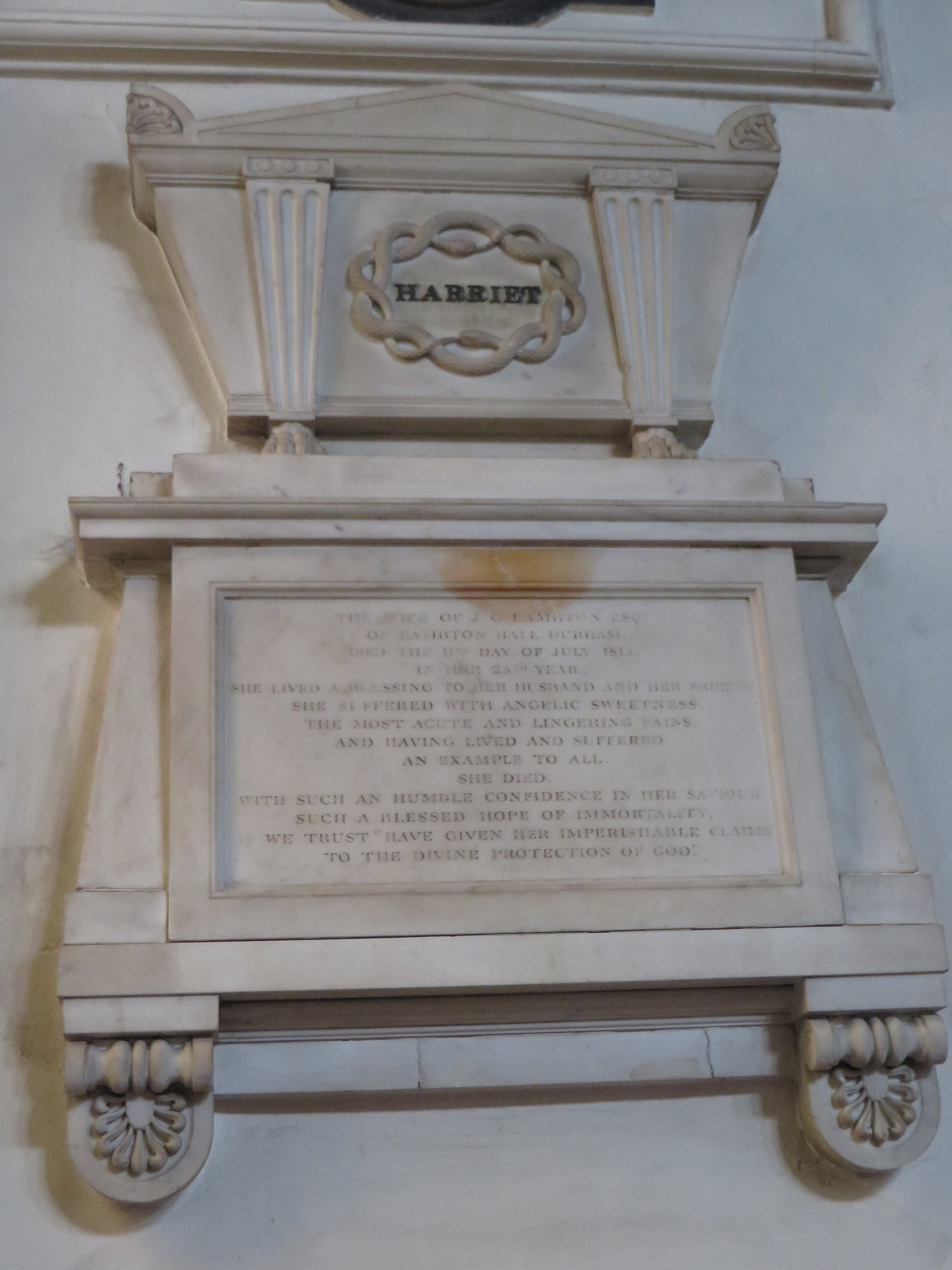
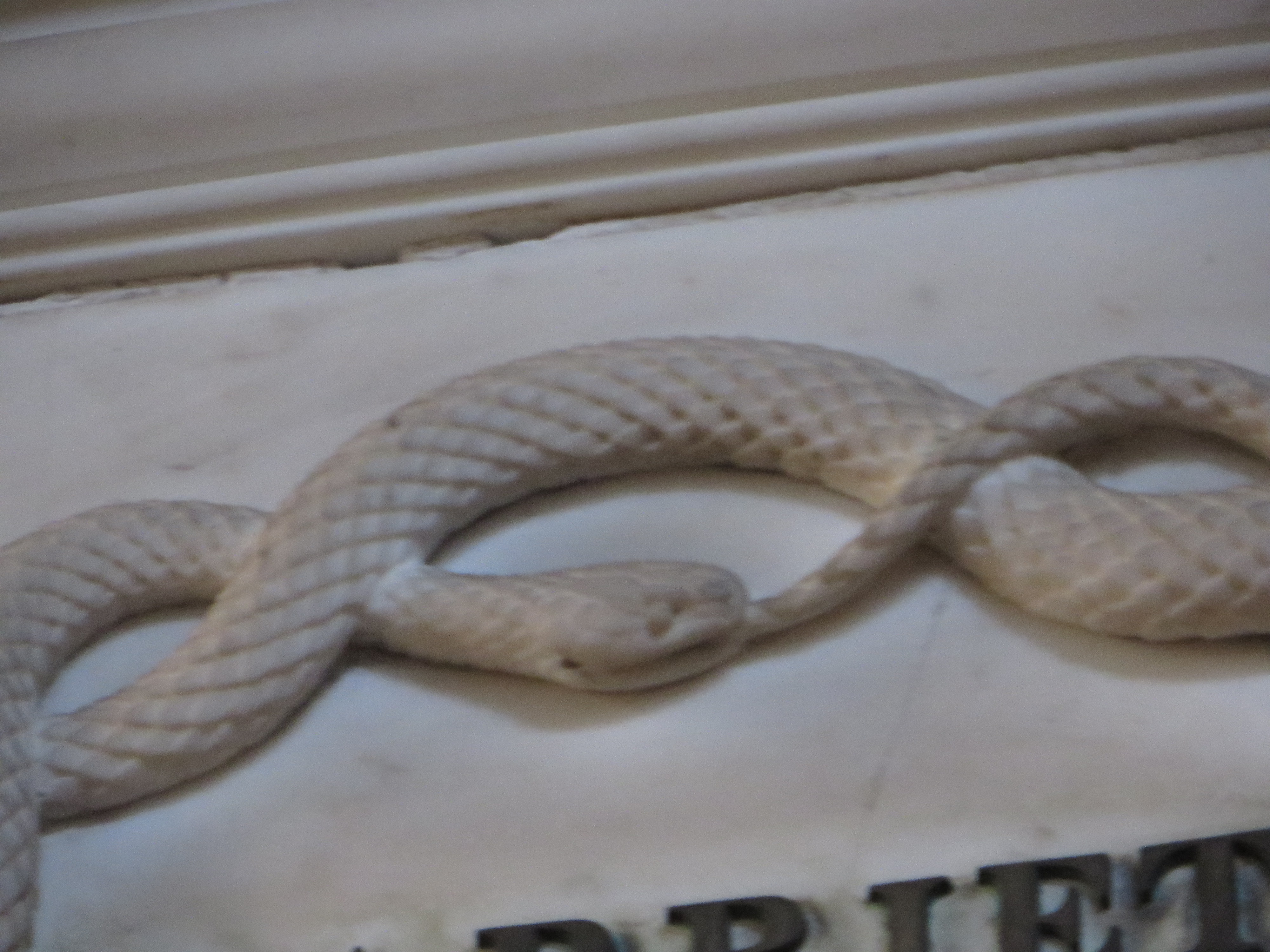
The monument dedicated to Harriet. St George’s church, Beckenham, Kent copyright Carole Tyrrell
Close-up of the snakes. St George’s church Beckenham, Kent. copyright Carole Tyrrell
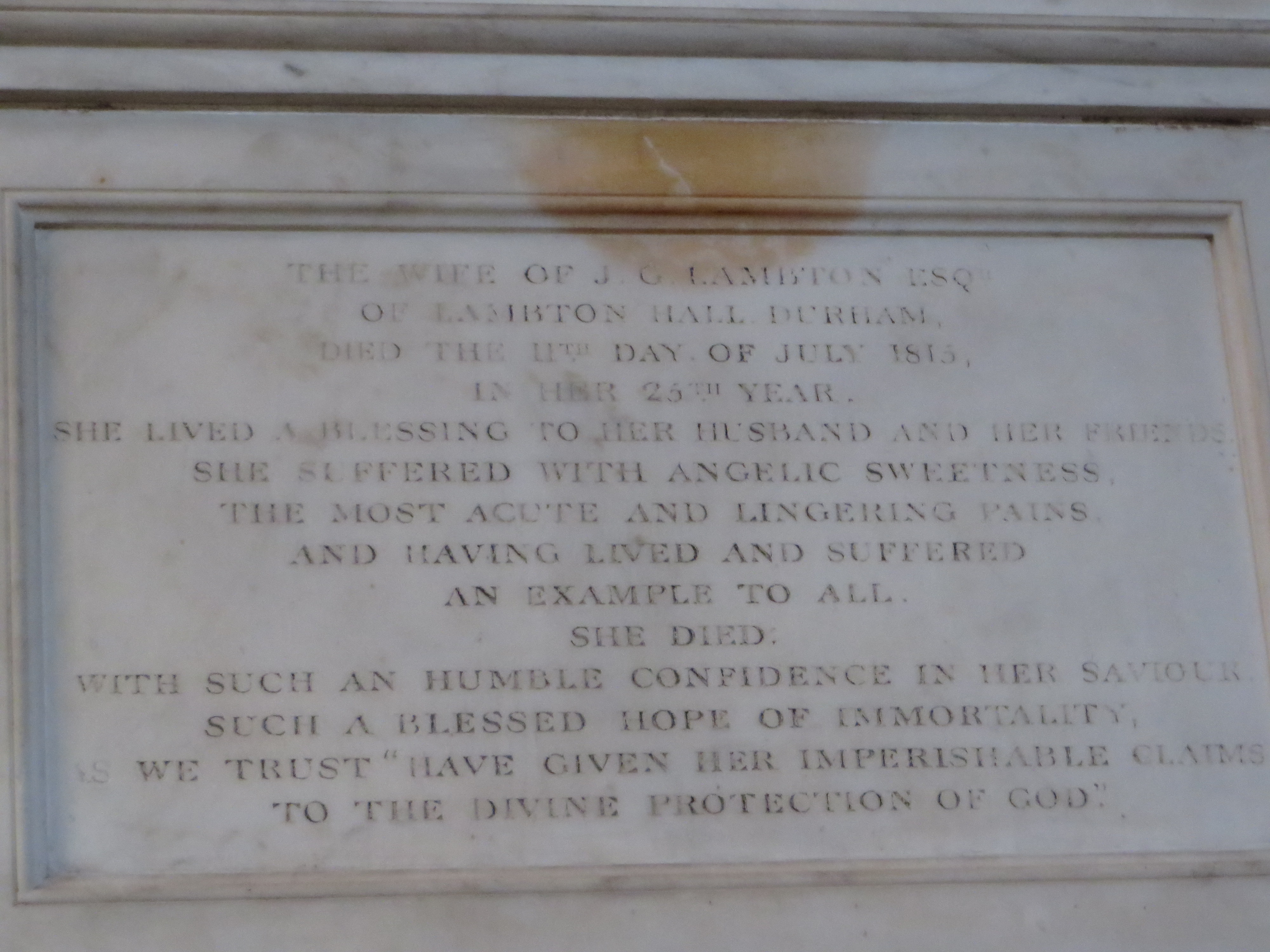
Harriet’s epitaph shows that she was obviously much missed. St George’s church, Beckenham, Kent. copyright Carole Tyrrell

Although the ouroboros is usually depicted as a full circle, this is one that I found in my local church, St Georges in Beckenham. On first glance, it merely looks like an attractive, rippling border around the name Harriet and it dates from 1815. But on a recent visit, I looked closer and realised that it was actually composed of 2 entwined snakes, each biting their own tail.  When I spoke to a churchwarden, she had always thought that, due to the patterning on the snakes’ bodies, that it was two entangled pieces of rope.   It is a poignant memorial to a young wife who died aged 25 after suffering the ‘most acute and lingering pains.’   So it would have been a potent reminder of resurrection. More recently, the ouroboros has also appeared as part of a crop circle.
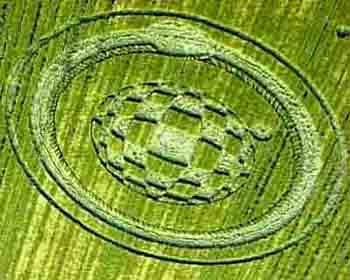
The ouroboros is one of the most intriguing and interesting symbols that I have researched.  It is a universal image of rebirth, hope and eternity.

© Text and photos Carole Tyrrell unless otherwise stated

Further reading and references:

Ouroboros – Token Rock

Ouroboros – Wikipedia

Ouroboros – Crystalinks

Ouroboros, the Infinity Symbol – Mythologian.Net

Stories in Stone – Douglas Keister, Gibbs Smith, 2004

How to Read Symbols, Clare Gibson and Claire Haworth-Maden, A & C Black publishers, 2009

An Illustrated Encyclopaedia of traditional symbols J C Cooper, Thames & Hudson originally pub 1979, reprinted 1993
Symbol of the Month – The Boat

The first Symbol of the Month of 2020 – a little later than I planned but more to come….

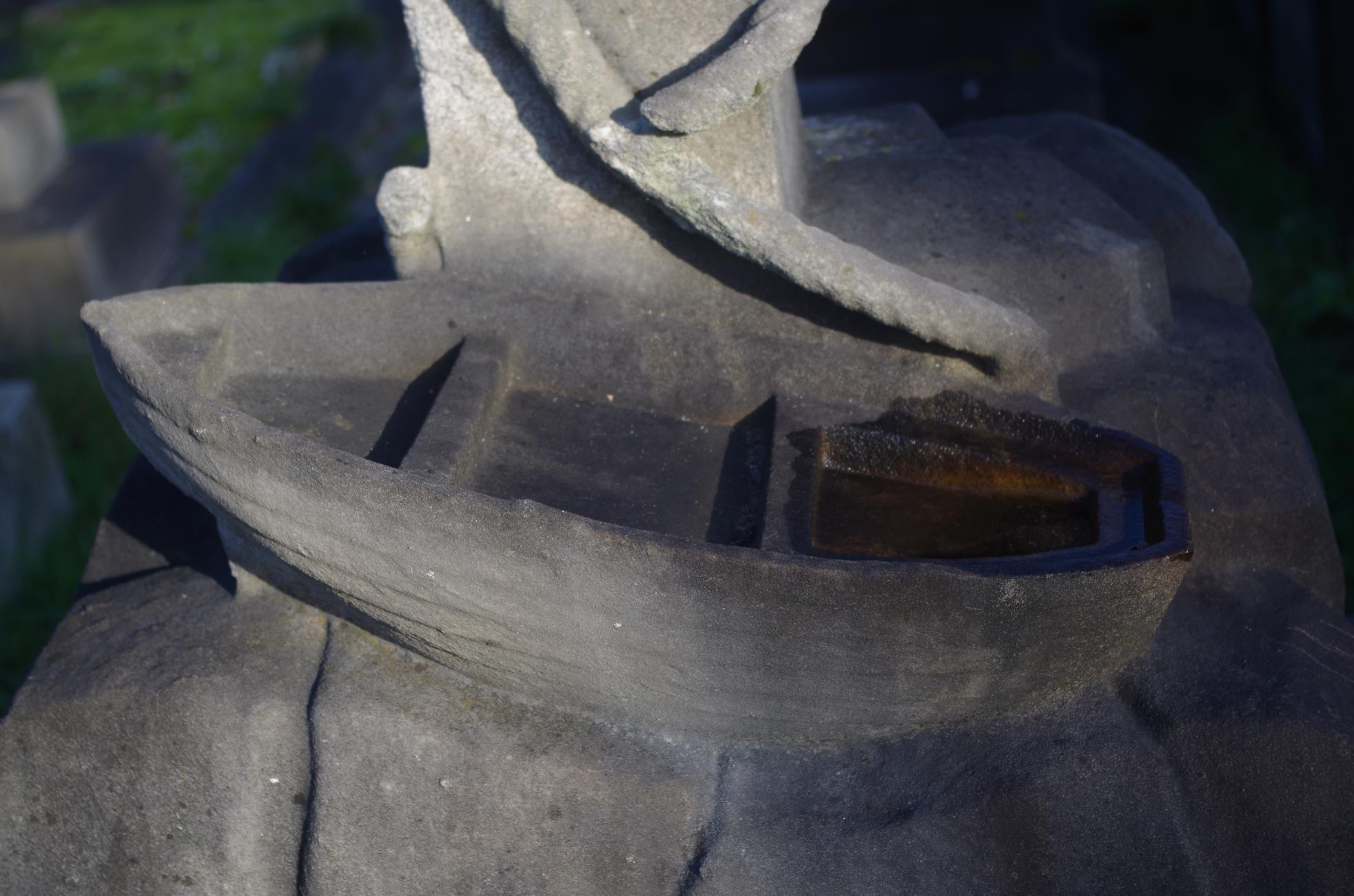
Close-up of boat, Caig monument Brompton Cemetery
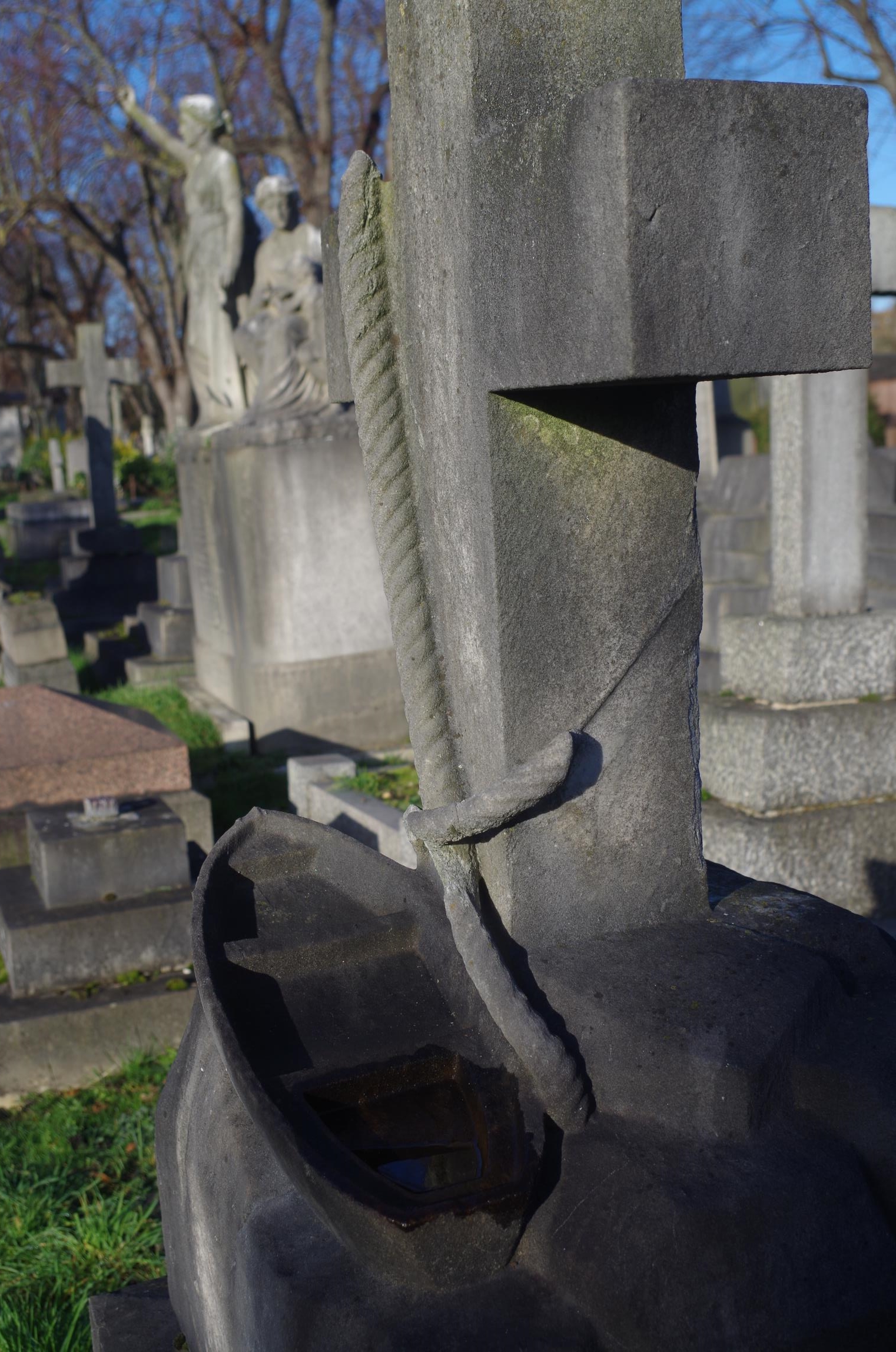
Side view of boat

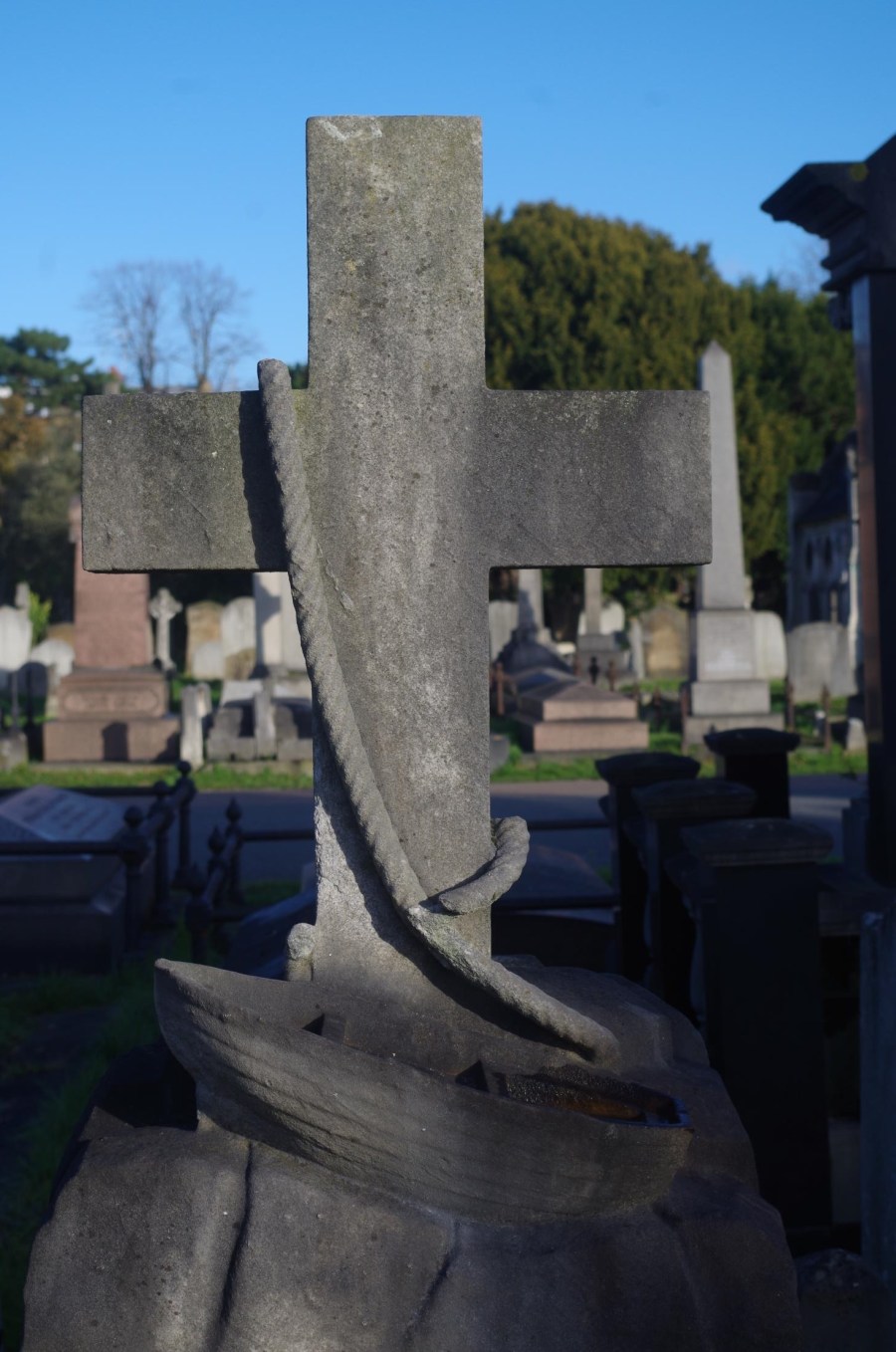
There are many sailing vessels in cemeteries. Ships, boats and the occasional yacht, becalmed on headstones or monuments forever sailing on a marble or granite sea.  Often they reveal the incumbent’s former occupation as on this fine example on the grave of Captain Edward Parry Nisbet in Brompton Cemetery.  Note the cross formed by the mast which is one of the central symbols of Christianity. There’s also the magnificent and exuberant monument to Captain Wimble  and his indomitable wife on the appropriately named Ship Path in West Norwood Cemetery.

But this little boat tied up and apparently moored at the base of a large cross is symbolic of a journey that has reached its final destination.

Side Side view of boatview of boat showing detail as it’s been carved to resemble a wooden boat.

The monument is located within Brompton Cemetery and is a representation of the journey of life.  This is a small sculpture of a rowing boat that has been carved to resemble a wooden one and there are seats inside but no oars. It could be interpreted as coming to the end of your life or journey and entering another life of eternity symbolised by the cross.  In other words, the crossing to the ‘other world’ as Douglas Keister calls it.   Also as www.stoneletters says:

‘…it’s a symbol of our last journey, it embodies the voyage of life, of coming full circle and taking us back to the waters of our beginning.’

However a boat can also be seen as an emblem of safety and refuge as it carries us over life’s often choppy seas and takes us home.  In this context, another boat that springs to mind is Noah’s Ark.  It protected and saved all that were on it and was a metaphor for the church as it weathered the storm against all odds.  However, Keister also suggests that the shape of a boat can resemble that of a cradle or a womb which would again emphasise shelter and protection. It holds us secure above the chaos of life.

Boats and death are a central theme in many other religions and cultures in that they carry the souls of the dead to eternity.  For example, King Arthur was transported by boat on death and, most famously, the Vikings people also used funerary boats. This was granted to important people of the tribe as they and their possessions would be sent out across the water in one after it had been set ablaze.  A symbolic mimicking of the soul’s journey to Valhalla.  Also in Greek mythology, Charon was the ferryman who took the souls of the dead by boat into the Underworld by crossing the River of Woe, Acheron.

But boats and death also feature in literature, especially poetry and there is the famous quotation by F Scott Fitzgerald:

‘So we beat on, boats against the current, borne back ceaselessly into the past.’ 

‘Crossing the Bar’ by  Alfred Lord Tennyson also features a sea voyage which will end in death,

Sunset and evening star,
And one clear call for me!
And may there be no moaning of the bar,
When I put out to sea,

But such a tide as moving seems asleep,
Too full for sound and foam,
When that which drew from out the boundless deep
Turns again home.

Twilight and evening bell,
And after that the dark!
And may there be no sadness of farewell,
When I embark;

For tho’ from out our bourne of Time and Place
The flood may bear me far,
I hope to see my Pilot face to face
When I have crost the bar.

There is also The Ship of Death by D H Lawrence amongst others.

I said earlier that a boat or ship is an important Christian symbol due to the mast forming a cross. Also, the Latin for ‘nave’ ,the central aisle of a church,  means ‘ship’ and there are several Biblical references to boats and ships.  After all, Christ told his disciples to “follow me and I will make you fishers of men”.

But let’s not forget that a boat or ship can also indicate a love of sailing and freedom.

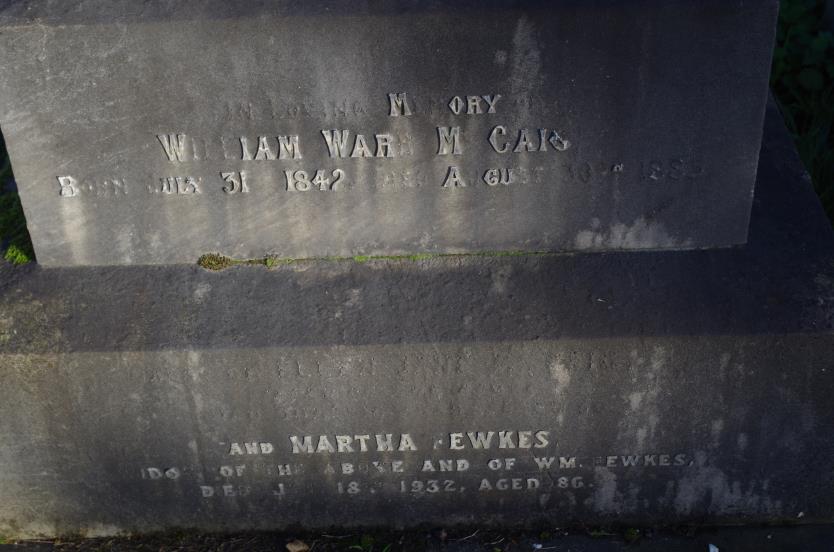
The epitaph beneath the boat – some of the letters are missing .
©Carole Tyrrell

Some of the letters on the epitaph beneath the boat and cross have worn away so I can only assume tha the name commemorated is Walter Ward M Cais but it seems incomplete. He died young at only 43 and his widow, Martha, married again and lived well into the 20th century. It must have been a message of comfort that Walter’s small boat was moored safely for eternity.

Full view of the boat and cross, Caig monument, Brompton Cemetery
©Carole Tyrrell


© Text and photos Carole Tyrrell unless otherwise stated

References:

Stories in Stone, Douglas Keister, Gibbs Smith, 2004

https://stoneletters.com/blog/headstone-symbols-the-boat

https://allaboutheaven.org/symbols/boat/123

http://www.historyofpainters.com/boat_symbolism.htm

http://imagesinthemind.blogspot.com/2008/08/boat-symbol.html


Symbol of the Month – The Mourning Woman


A fine example from Kensal Green Cemetery on the Isabella Shaw memorial.
©Carole Tyrrell


This month’s symbol is the Mourning Woman who is derived from Classicism and its association with ancient Greece and Rome.  I would hesitate before describing their presence in Victorian cemeteries and churchyards as a monstrous regiment but they have mostly been on duty for over a hundred years.  They patiently watch over and grieve for the departed.  An eternal mourner, often with a veil covering her head and swathed in flowing robes, she keeps vigil.

The Mourning Woman can be a free standing statue on top of a monument or plinth looking sorrowfully down on the viewer.  She can also be in the form of a 3D relief weeping over an urn containing the beloved’s ashes as in these examples:


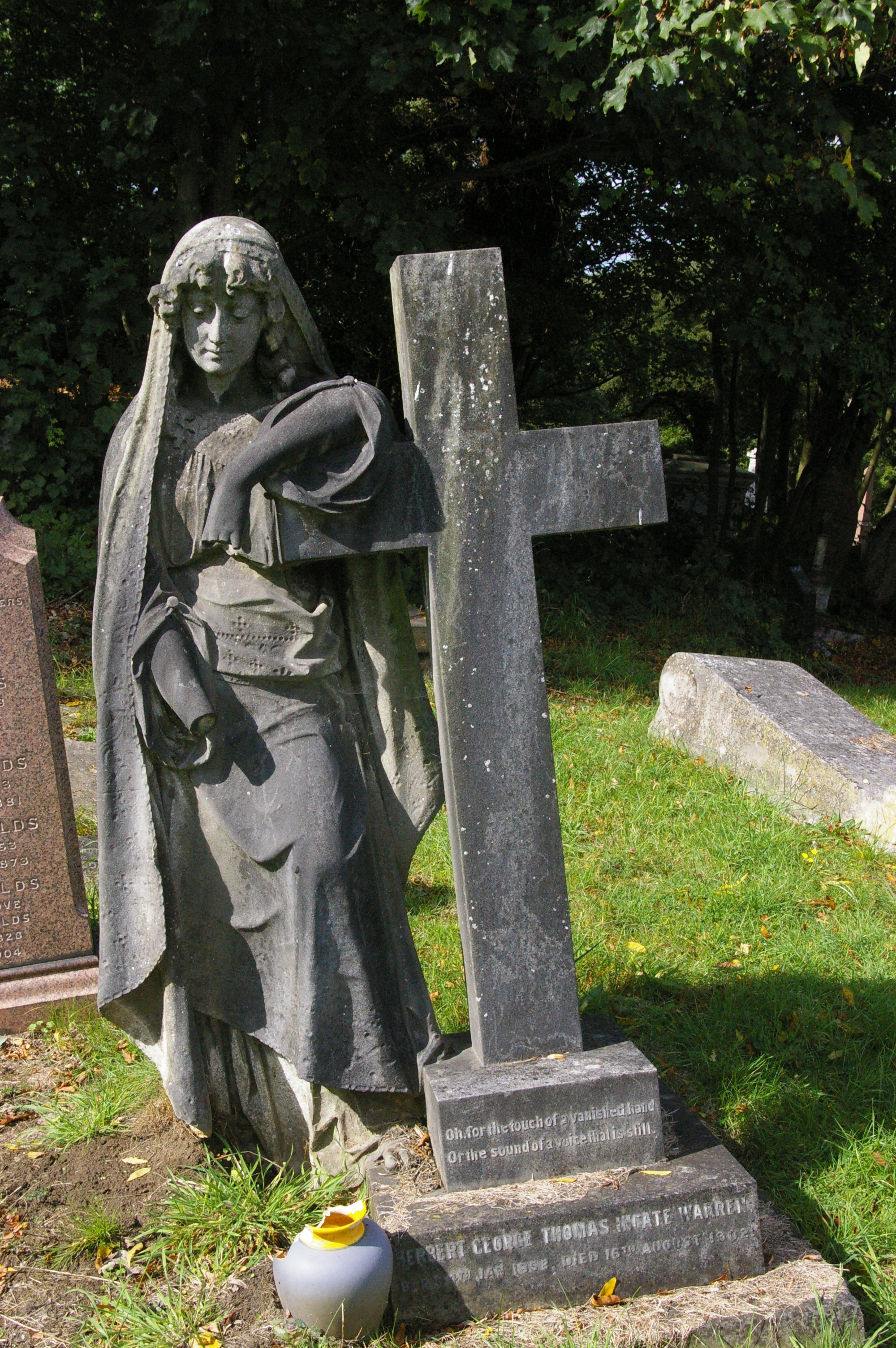
At West Norwood cemetery there is this example of one resting on a lifesize cross (I hate to say it but whenever I see her I’m always reminded of the George Formby song ‘I’m Leaning on a lamp post…etc.).

A full view of the mourning woman as she rests on a cross on the Herbert Warren memorial, West Norwood Cemetery.
©Carole Tyrrell


Classicism held sway when London’s Magnificent Seven cemeteries were created. The anti-Catholic movement from the Georgian era was still a major influence with the cry ‘No Popery!’ loudly shouted.   So no crosses, no statues of Jesus or any angels were permitted.  Instead the clear cool lines of the ancient world were used as well as some of their traditions.

Mourning women were one of these as women played an integral part in the funerary ritual in ancient Egypt, Greece and Rome.   In the latter they were paid professional mourners as the more mourners there were at a funeral the more wealthy and prestigious the departed had been in life.  In the funeral procession which took place prior to the cremation the professional mourning women, who were not part of the deceased’s family, would loudly wail, rip out their hair and also scratch their faces in mourning according to contemporary records.  It was felt that women could more easily express emotions as it was unacceptable for a man to weep in public.

There are several Biblical references to the mourning women.  They are mentioned in Amos 5:16, Chronicles 35:25 and also in Jeremiah 9:17 as below

Thus saith the LORD of hosts,

Consider ye, and call for the mourning women,

that they may come;

and send for cunning women, that they may come:
King James Bible


The reference to ‘cunning’ women means ‘skilled’ women.

They would often weep noisily and copiously spilling their tears into vessels known as tear catchers or lachrimosa.  At the recent excellent Museum of Docklands exhibition, The Roman Dead, there were some on display.  They were small glass vessels and were placed in tombs, presumably overflowing, after the funeral was complete. Again, if many tears were collected, it signified that the deceased was held in high esteem and those crying the most would receive a higher payment.

Incidentally the tear catchers became fashionable again in the 19th century with the Victorian cult of death.  But this time the bottles had special stoppers that allowed the tears to evaporate and when they did the mourning period would be over.  There is also a Biblical association with the practice of collecting tears in bottles in Psalms 56:8:

Thou tellest my wanderings:

put thou my tears into thy bottle:

are they not in thy book?

King James Bible


In ancient Greece it was again women who prepared the body and then laid it out ready for viewing on the second day.

Kinswomen, wrapped in dark robes, stood round the bier, the chief mourner, either mother or wife, was at the head, and others behind. This part of the funeral rites wasthe prothesis. Women led the mourning by chanting dirges, tearing at their hair and clothing, and striking their torso, particularly their breasts.

Wikipedia


Here is a 6th century depiction of ancient Greek professional mourning women in full flow:

Body lying in state attended by family members with the mournign women ritually tearing their hair, Terracotta plaque – late 6th century BC. Walters Art Museum, Baltimore, USA
Shared under Wiki Creative Commons


So for centuries women have been associated with, and played a major part, in the funerary process which may have been one of the reasons for the Mourning Woman appearing in cemeteries.

I feel that these women could be seen as a forerunner of the winged angels that flew into cemeteries towards the end of the 19th century.  Both of them were guardians of the dead protecting them for eternity.

To end on, here is an lovely example that I unexpectedly discovered while on a Sunday afternoon stroll in the ‘secret’ graveyard behind St Nicholas’s church in Sevenoaks.  She stands, surrounded by back gardens, and is a particularly elegant version.  The memorial beneath her feet is dedicated to Elizabeth Dick and was erected by her sorrowing husband.

Sleep well for eternity Elizabeth and all those guarded by the mourning women.

©Text and photos Carole Tyrrell unless otherwise stated

References and further reading:

https://victorianmonsters.wordpress.com/victorian-funerary-practices/https://victorianmonsters.wordpress.com/victorian-funerary-practices/

https://www.ancient.eu/article/96/the-roman-funeral/

https://en.wikipedia.org/wiki/Roman_funerary_practices

http://penelope.uchicago.edu/Thayer/E/Roman/Texts/secondary/SMIGRA*/Funus.html

https://www.psychologytoday.com/gb/blog/understanding-grief/201802/professional-mourners-ancient-tradition

https://biblehub.com/jeremiah/9-17.htm

https://en.wikipedia.org/wiki/Professional_mourning

http://www.lachrymatory.com/History.htm

https://en.wikipedia.org/wiki/Ancient_Greek_funeral_and_burial_practices

http://penelope.uchicago.edu/Thayer/E/Roman/Texts/secondary/SMIGRA*/Funus.html


Symbol of the Month – the square and compass

This example is from Brompton Cemetery and is dedicated to a woman.
©Carole Tyrrell

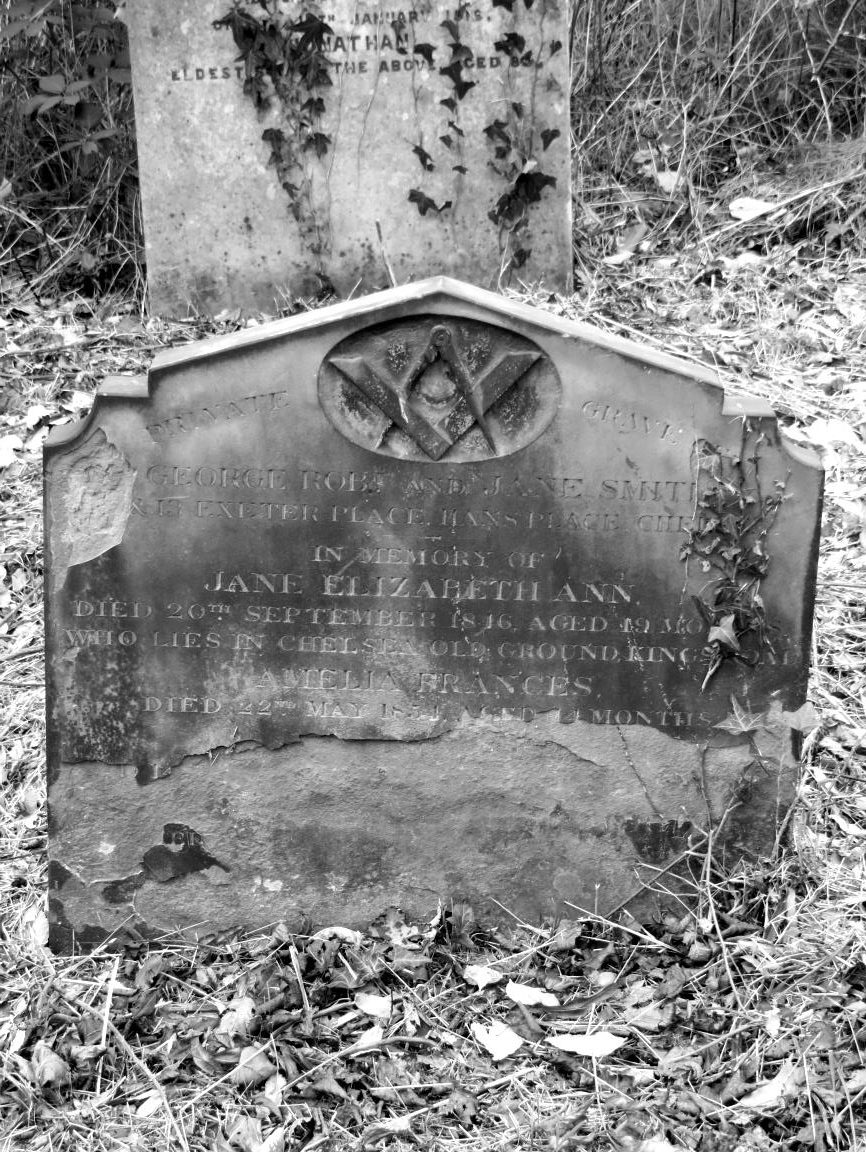
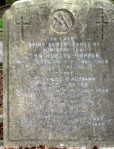
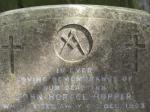
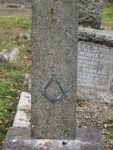
The Square and the Compass is a symbol which is traditionally associated with the Freemasons and appears on their insignia. It’s also an important part of their teachings.  The two elements together form a hexagram which often has the capital letter G inside it to denote God.  However, the ones that I found didn’t have this so perhaps it is a regional or international variation.  But there is a another interpretation of the motif which may be more appropriate to a funerary emblem and let’s not forget that these are also an architect’s tools of the trade

The Freemason association is the most obvious and common.  They’re often seen as quite a secretive and shadowy organisation. ‘It’s all leather aprons and funny handshakes.’ seems to be the opinion of many people.  But according the Freemasons UK website they define themselves as’

‘the world’s largest and oldest non-religious, non-political, fraternal and charitable organisations…rooted in the traditions of the medieval stonemasons who built our cathedrals and castles.’

 They also claim to ‘make good men better’ by encouraging to live their lives according to the Freemasons Five Values of Integrity, Kindness, Honesty, Fairness and Tolerance.’

They use the Square and Compass in Masonic rituals to teach symbolic lessons.  Wikipedia says ‘

‘they have been defined as lessons in conduct  as in Duncan’s Masonic Monitor of 1866

 in which he defines ‘The square to square our actions and the compass to define boundaries and to circumscribe and keep us within the bounds of mankind.’

 There is also a further, somewhat florid definition on the Masonic Lodge of education website which may make for further reading. As they point out, the square is often used in everyday language such as in ‘getting a square deal and, possibly a mason’s comment, ‘squaring off.’ It also appears in earlier texts such as Confucius. However, the square and the compass aren’t exclusive to the Freemasons as they are also used by several other fraternal organisations both in the UK and abroad.

But I prefer the definition of the symbols project in which they point out that both the square and the compass are measuring instruments and so represent judgement and discernment. The compass draws circles which are a symbol of eternity and also infinity. However the square can be viewed as being material and representing ‘fairness, balance, firmness’ and also:

something that is stable and a firm foundation to build upon’

They are a union of the material and of the spirit represented by the hexagram that they form.  So perhaps this is the spirit leaving the earthly plane and going into eternity i.e. from earth into heaven. It’s certainly another way to look at it.

But who knows? The people who chose to use the Square and the Compass on their tombstone may have been Freemasons or maybe not.  There was only one that I felt might have been one because of the quotation above the motif on his cross but this turned out to be a quotation from an 18th century hymn. With the others it was impossible to say.

You don’t see this symbol all that often although I discovered one in Brompton Cemetery and a sprinkling of them in Beckenham Cemetery recently. Interestingly, this is also a cemetery with several Salvation Army burials as well. Here is a gallery of the ones I found within Beckenham Cemetery:

I enjoyed researching this symbol as, although it seemed to be have an obvious association, it was also fascinating to find out other suggestions.

 ©Text and photos unless otherwise stated Carole Tyrell

Further reading and references:

http://www.graveaddiction.com/symbol.html

http://www.bbc.co.uk/london/content/articles/2005/05/10/victorian_memorial_symbols_feature.shtml

https://en.wikipedia.org/wiki/Square_and_Compasses

https://symbolsproject.eu/explore/human/hobby-/-leisure-/-affiliation-/-membership/compass-and-carpenters-square.aspx

http://www.masonic-lodge-of-education.com/square-and-compasses.html


http://www.richardcassaro.com/square-compasses-unveiled

Long-winded but worth a look