A Spring saunter in the footsteps of E Nesbit – Romney Marshes, Kent Part 1- Man size in Marble

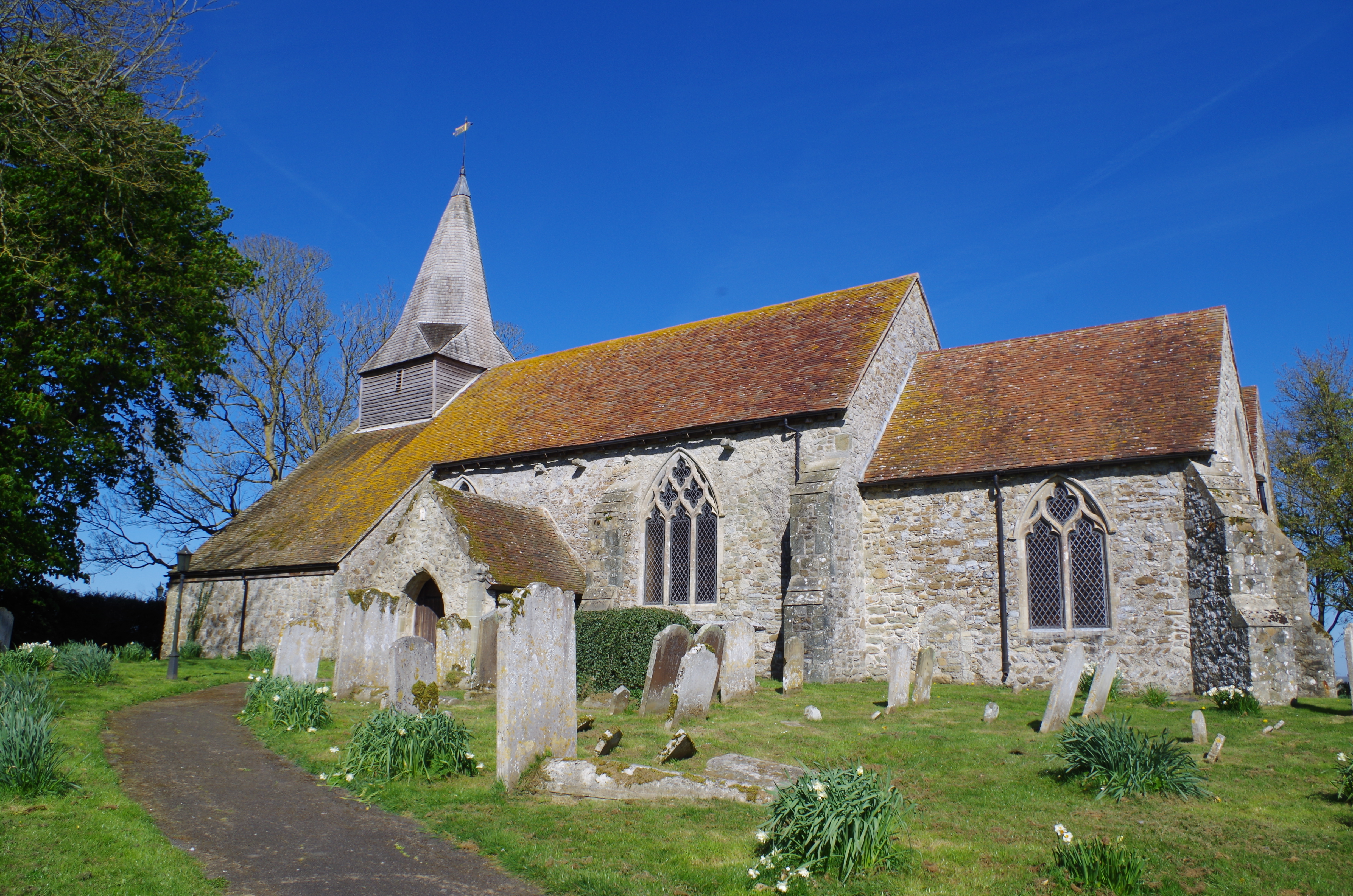
St Eanswith, Brenzett © Carole Tyrrell

The churches of the Romney Marshes are isolated and you’ll need your own transport to visit them. But there are hamlets and villages here and there and I could imagine how it must feel in mid-winter with dark short nights.

However it has long been one of my ambitions to explore the churches that are on the marshes. So when I was offered the chance I didn’t hesitate.  It was a wonderful Spring day, sunny and bright, and we were all eager to explore the Marshes.

Our first church was St Eanswith in Brenzett. This was a plain little church with a candlesnuffer steeple on top of a small slope and was surrounded by a small churchyard dotted with daffodils. There was an azure blue sky and a hare was spotted racing across a bare field at the back of the church. It’s one of the smallest churches on the Marshes and is dedicated to a 7th Saxon princess who founded a nunnery in Folkestone in 630AD. There is now nothing left of the Saxon building and the present church can only be dated back to the 12th century when the Normans rebuilt it.
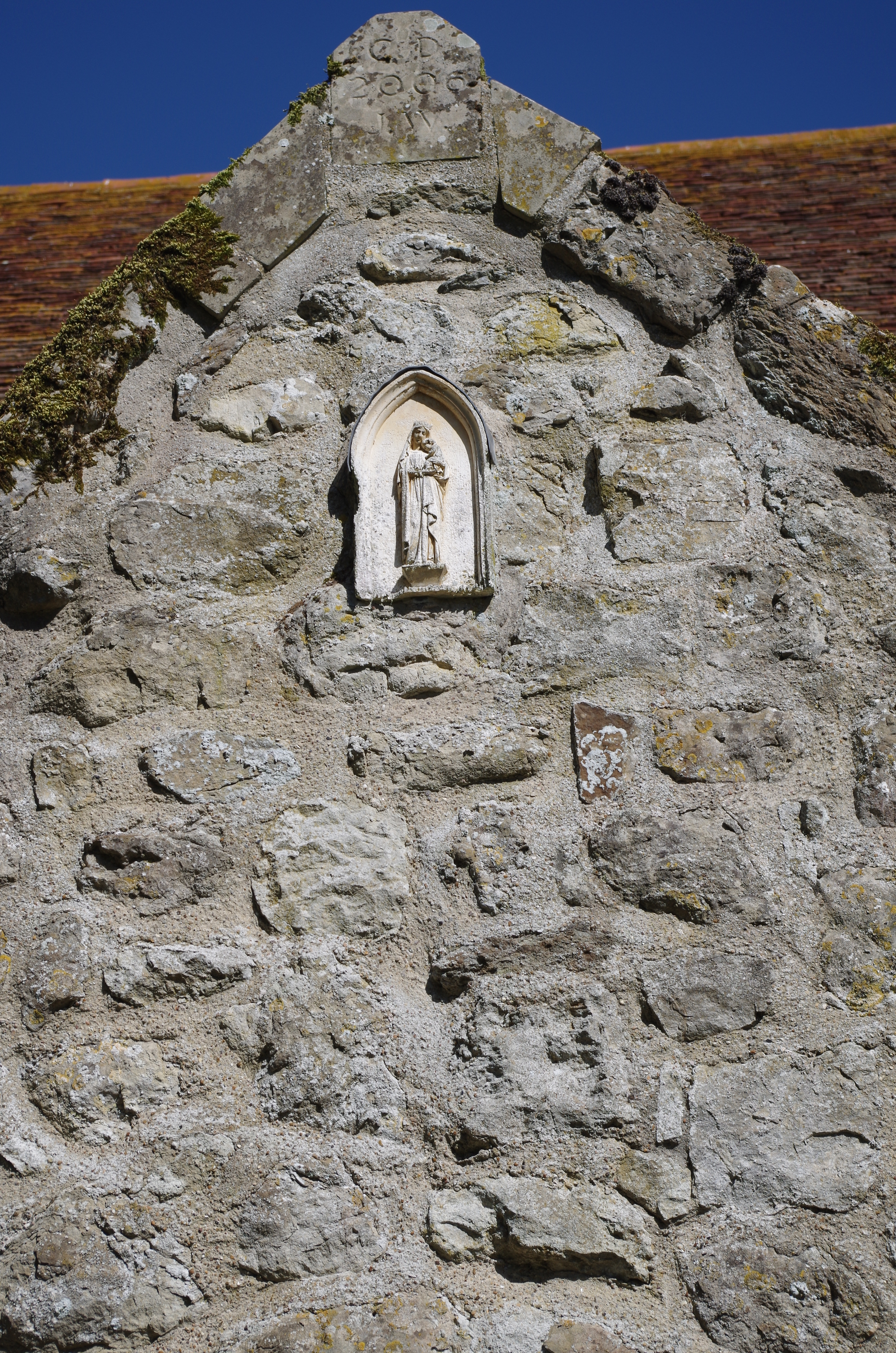
A small statue of St Eanswith over the top of the porch. © Carole Tyrrell

A large Maine Coon cat, who was obviously returning from a night out through the churchyard to its home in the little straggle of houses nearby, caught sight of us and tried to hide by running from patch after patch of daffodils. Then its owner came out of the house that it ran into with another Maine Coon cat!

Hide and seek © Carole Tyrrell

Inside St Eanswith it was plain, with white washed walls and dark wood pews. The pulpit had a raised roof panel which I’d not seen before and at the altar end of the church was the table tomb that we had come to see. This was the Fagge monument and is the only monument in the church. It is dedicated to a father and son, both confusingly called John, and it is a pair of alabaster sculptures of two men in fashionable 17th century clothes. The man in the foreground is portrayed as lying on his back on a sculpted cushion with his left hand on his chest while the man behind is lying on his elbow with his right hand under his chin and his left hand on his left leg. There are visible cracks and damage with repairs which you would expect over the centuries. They are beautifully sculpted. There are small coats of arms beneath the figures at corners which bring a small splash of colour. John Fagge the elder died in 1639 and his son and heir died in 1646.
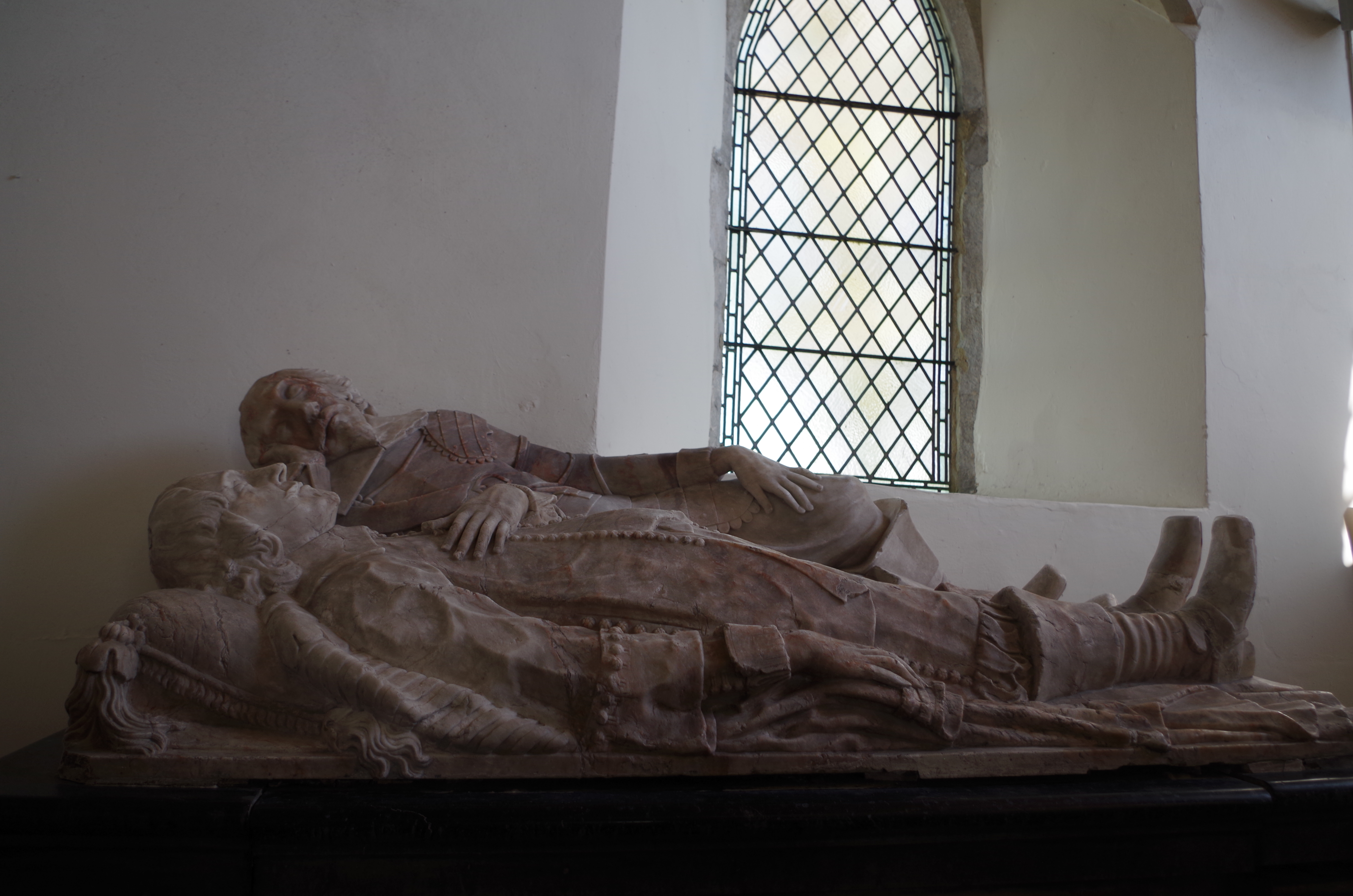
The Fagge monument, St Eanswith. © Carole Tyrrell
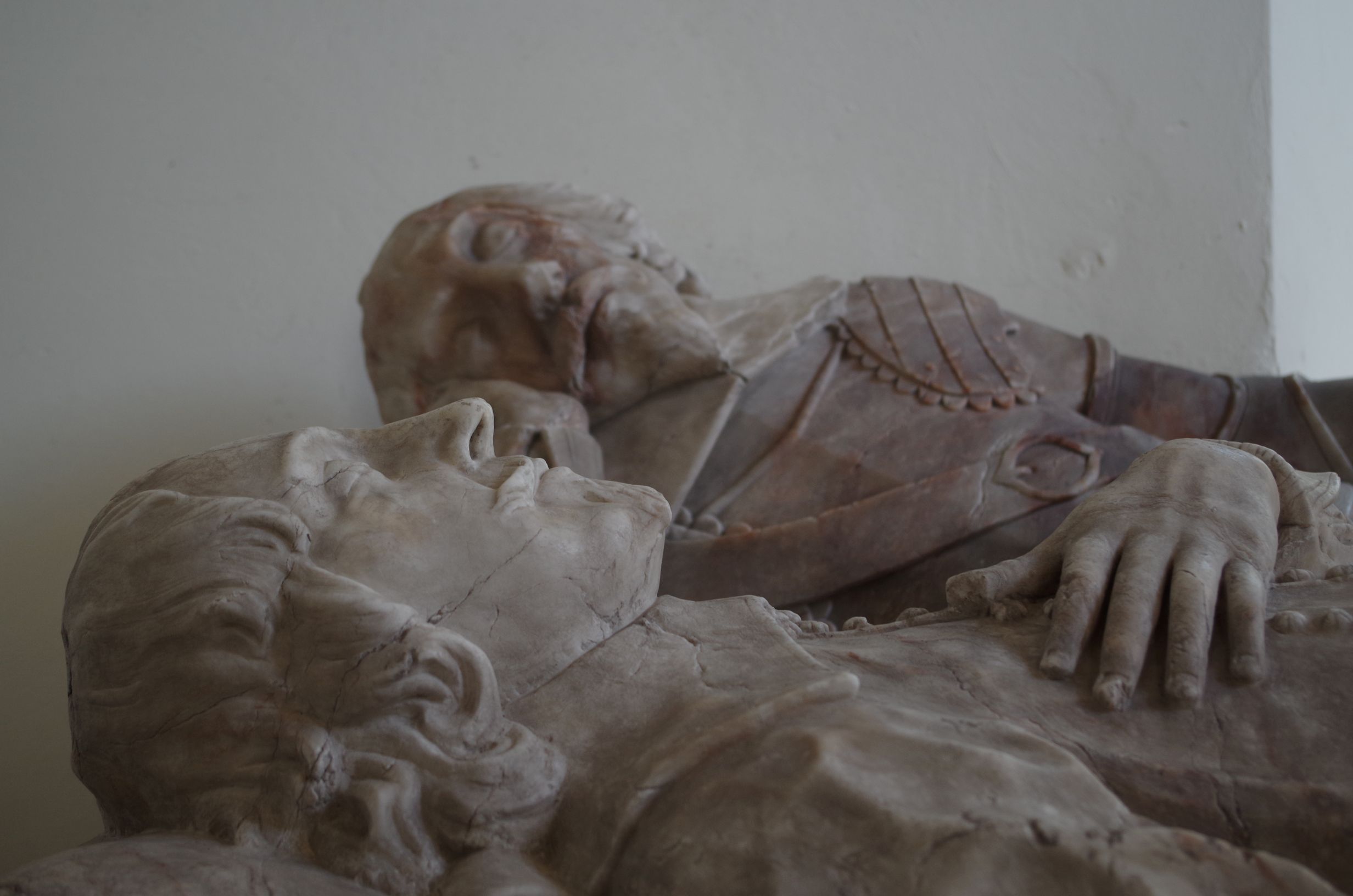
Close up of the Fagge monument. © Carole Tyrrell

Close up of hands showing the ravages of time. © Carole Tyrrell

Epitaph to the Fagges and one of their coat of arms.© Carole Tyrrell

This is the monument that inspired one of E Nesbit’s most famous stories, ‘Man Size in Marble’ which was adapted by Mark Gatiss for the 2024 BBC Christmas ghost story and retitled ‘the Stone Woman’.  A young married couple have moved to the country and their housekeeper tells them of a certain night when something walks from a local church to their house. They take no notice of this but when the husband is called away and leaves his wife alone in the house….you can read the story here:  The Project Gutenberg ebook of Grim Tales, by E. Nesbit.

This is English folk horror clashing with modern reasoning and belief. Nesbit creates the dark countryside so well and also the central characters incredulity at what they are being told. They are still in love with endearments such as ‘wifie’ and ‘dearest’ which makes the ominous events that are about to happen all the more shocking.
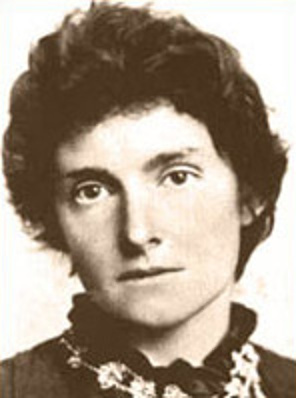
E Nesbit c. 1890 Shared under Wiki Commons

E Nesbit (1858-1924)  is most known for ‘The Railway Children’ which was first published in 1905 and has never been out of print. It was also a classic and well loved childrens film. Some of her other children’s stories have also been adapted for TV.  But she also wrote ghost stories, some of which were recently published by Handheld Press in the collection ‘The House of Silence.’

She was only 4 when her father, an agricultural chemist, died. Edith’s sister, Mary, suffered from ill health and as a result the family travelled in the UK and France. She died in 1871 of tuberculosis after becoming engaged to the poet Phillip Bourke Marston.  After Mary’s death, Edith and her mother lived in Halstead Hall, Halstead in Kent which is considered to be a possible location for ‘The Railway Children’.  When she was 17 they moved to Elswick Road in Lewisham. 

She married Hubert Bland on 22 April 1880. They met when she was aged 18 and at 21 and 7 months pregnant they tied the knot. It was a difficult marriage to say the least as he was always being unfaithful. Edith had 3 children by him and adopted 2 more from one of his long term affairs. It was a complicated family.  She and Hubert were both fervent socialists and joined the Fabian Society, jointly editing its journal ‘Today.’ But this work often took second place to Edith’s writing as she became more successful. The Fabian Society ultimately became part of the Labour party.

From 1899-1920 she lived at Well Hall Eltham. The house is long gone but the garden remains as a public park. She also had a second home at Crowlink, Friston, East Sussex when she entertained.

Bland died in 1918 and she married her second husband, Thomas ‘the Skipper’ Tucker in Woolwich where he was the captain of the Ferry.  They both lived at St Mary’s Bay, Dymchurch at their house ‘The Jolly Boat’ where she died on 4 May 1924. It may have been from lung cancer as she was a great smoker.  Tommy died at the same address on 17 May 1935. To read more about Edith and her life please visit: https://edithnesbit.co.uk

It was such a privilege to see the Fagge monument in the flesh so to speak and also a writer’s inspiration. I could easily imagine Brenzett on a winter’s night, the little terrace of houses with their curtains drawn and lights out as something stirs and moves within the small church and suddenly the top of the tomb is empty and something that shouldn’t be is walking…..

A Spring Saunter in the footsteps of E Nesbit Part 2 her late life on the Marshes

© Carole Tyrrell photos and text unless otherwise stated

Brenzett, Church of St Eanswith — Romney Marsh Historic Churches Trust

St Eanswith’s Church, Brenzett, Kent

The Project Gutenberg ebook of Grim Tales, by E. Nesbit.

https://edithnesbit.co.uk  The Edith Nesbit Society
E. Nesbit – Wikipedia

A 200th birthday and an unsolved murder – a visit to St Werbergh, Hoo, Kent

View of St Werbergh, a pity it wasn’t a better day. © Carole Tyrrell

Every September in Medway, Heritage Open Days take place. For a couple of weekends, I could gain access to buildings that are normally closed to the public such as the Rochester Bridge Chapel, almshouses and a synagogue amongst others. Despite Chatham’s somewhat dubious reputation nowadays, it has rich layers of history to be discovered due to its maritime past.
Last year in 2024, I went further afield and visited the Hoo peninsula. This was an area new to me and I wanted to visit St Werburgh’s church. It’s reputed to date back to the 12th century although an earlier church was on the site around 1080-1086 and was recorded in Rochester Cathedral.


I followed a crowd who seemed to be heading in the right direction, some of whom were in costume, but once I saw the church steeple I knew where I was. You can’t miss it – the battlemented tower is 55ft tall but with the steeple it is 127 ft or 38.5 metres in total. There used to be a light within the steeple that guided ships around the peninsula and if you look up you can still see its little wooden door. It seems plausible, after all why else would a recessed door be set into the steeple. The steeple is covered with oak tiles with a weathervane on top. There are 73 steps in the stair turret which give access to the battlemented tower.

View of steeple. © Carole Tyrrell

View of steeple door. © Carole Tyrrell

I’d never heard of the saint before but the guide leaflet has this to say:


‘St Werburgh was an English abbess known and loved for her great kindness and love to all living things. She is associated with geese because when a flock of geese settled in the convent land and were eating the crops, she ordered them into a fenced enclosure as punishment. That night a servant stole one of the geese, cooked and ate it, leaving only the bones.
In the morning St Werburgh set the geese free with a warning not to eat the crops again. Instead of flying away, the geese circled the convent making a great noise. Realising that one goose was missing she had the bones brought to her and restored the goose to life. The whole flock flew away, never to be seen on convent lands again. She was therefore held to have possessed extra-ordinary powers over natural creatures.’

She also has a stained glass window dedicated to her inside the church.

Statue of St Werbergh in church with a goose at her feet. © Carole Tyrrell

The oldest headstone in the churchyard is dated 1681 and is dedicated to Richard Scott who was a yeoman farmer. He died aged 70 in 1677. There is also a yew tree which is reputed to be 800 years old and the award for the most unusual name has to be a man called ’Time of Day’. who died in 1890. Sadly I didn’t find his headstone on this visit.

The oldest headstone in the churchyard, dedicated to Robert Scott. © Carole Tyrrell

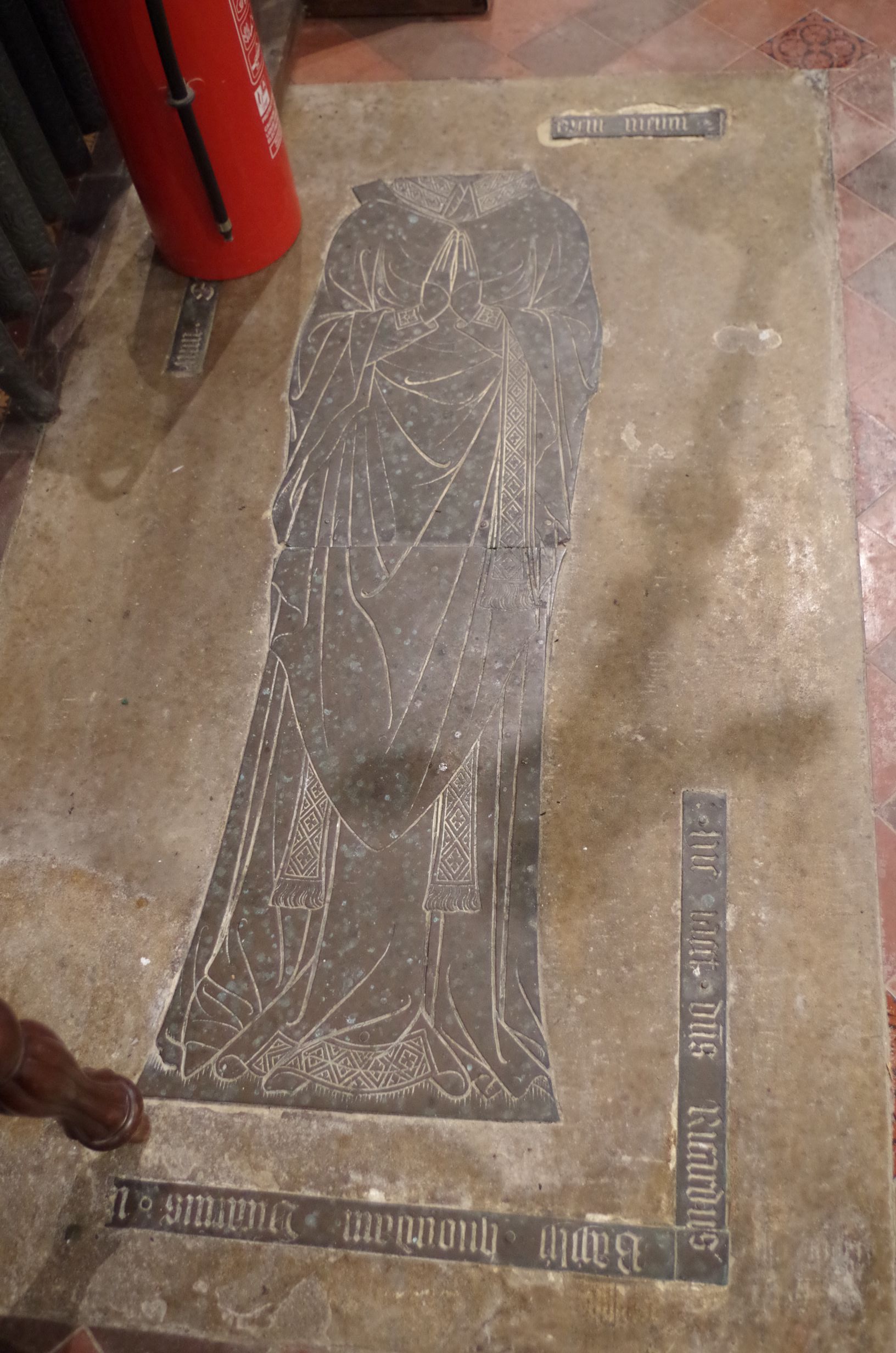
Inside, the church possessed some unusual features. On display was a ledger stone which had been found under the floor and dated to the 12/13th century – the oldest I’ve seen. Two 14th and 15th vicars are also commemorated by memorial brasses. There are also two Royal Coats of Arms from the 17th century and a Norman font.

Medieval ledger stone. © Carole Tyrrell

Memorial brass to a former rector with a missing head.© Carole Tyrrell

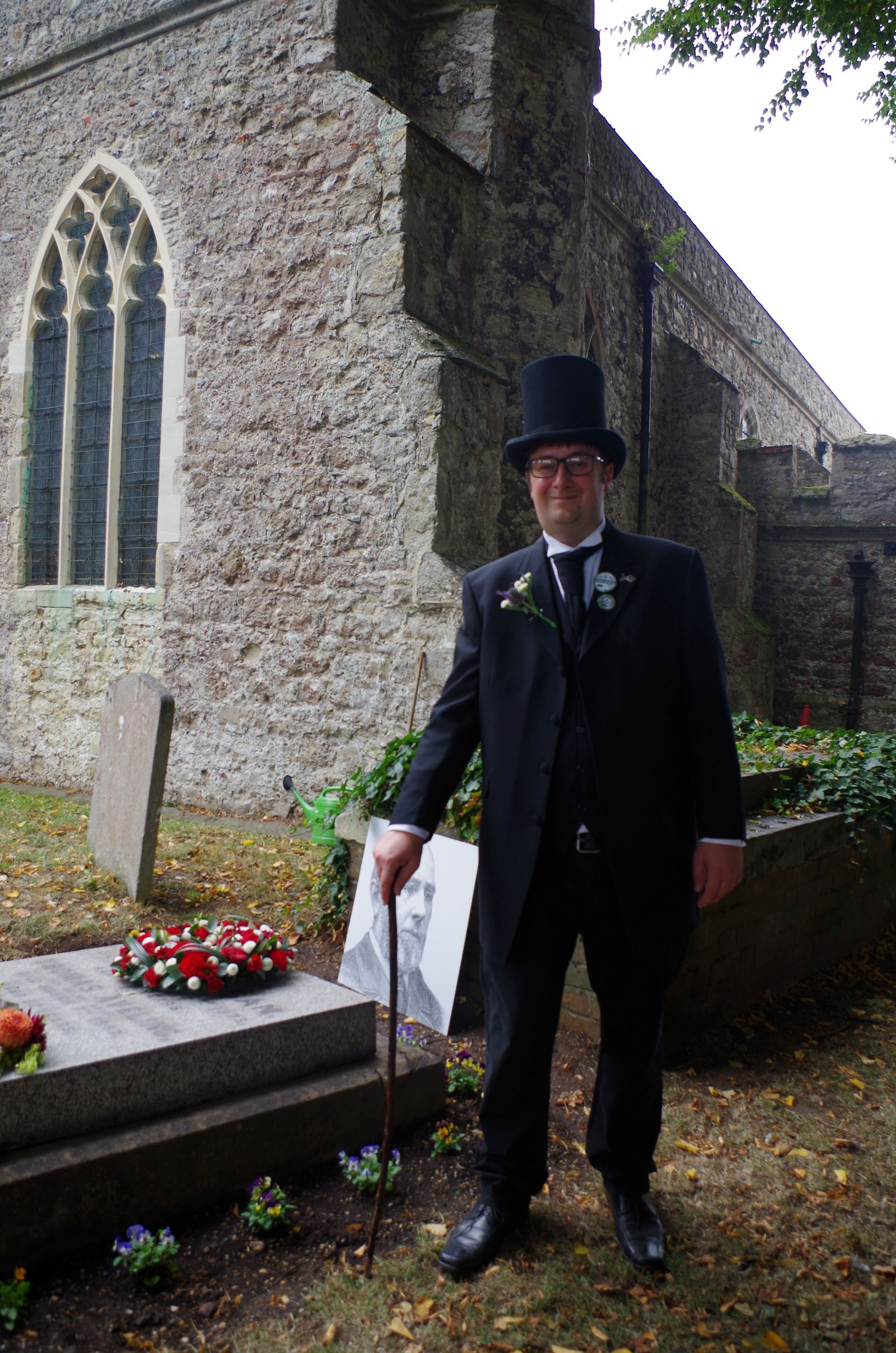
Indoor refreshments were in full swing and I enjoyed a cuppa while exploring. There were local history stalls which is how I discovered the 200 year old unsolved murder. When I came outside again, a ceremony was taking place and the reason for people being in costume was revealed. It was the 200th anniversary of the birth of Thomas Aveling, a local man who designed machines that didn’t require horsepower. Two men were there in Victorian dress from the Thomas Aveling Society. They were joined by children in costume and national treasure, Jools Holland OBE, in his capacity as Deputy Lieutenant of Kent – Medway.

Member of Thomas Aveling society in Victorian dress by Aveling’s grave.© Carole Tyrrell

Thomas Aveling – a brief history

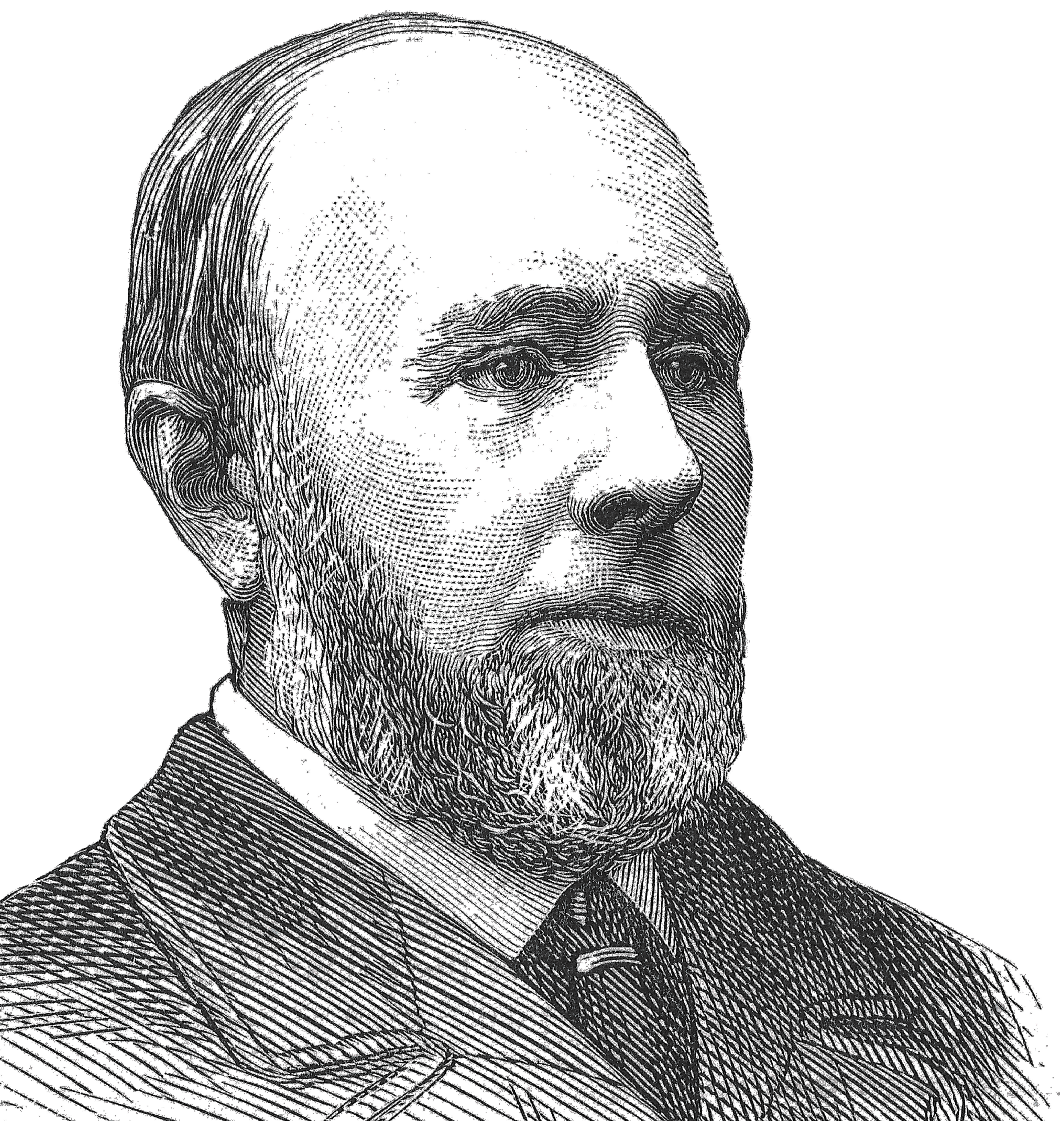
Thomas Aveling. Shared under Wiki Creative Commons

Although he was born in Cambridgeshire in 1824, Thomas moved to Hoo when his widowed mother married the Rev John D’Urban, the curate of St Werbergh. He was apprenticed to a farmer, Edward Lake, and became one himself. But he had dreams of creating machines that could be powered by other means than horsepower. In addition to the farm he also operated a small millwrighting and iron foundry business. Thomas was a talented and determined man and in 1856, in partnership with two other companies, he introduced a steam plough which was incredibly successful. Two years later, in recognition of his achievement, he was awarded ‘a piece of plate’ and a purse containing 300 guineas by Kent farmers. But there was more to come.


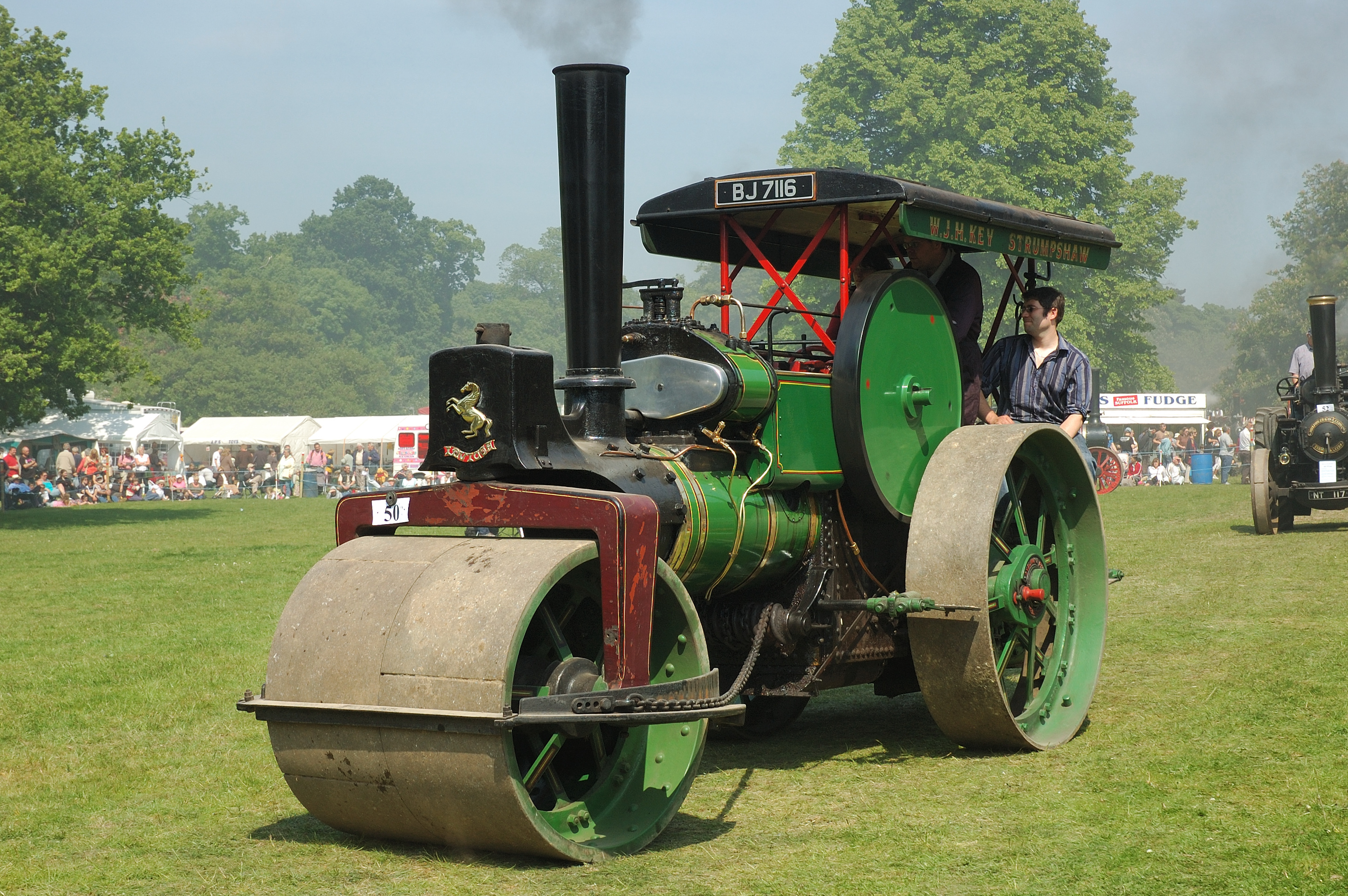
He formed a partnership with Richard Porter in 1862. It was very successful and they sold their products worldwide. But, like most restless, energetic and talented Victorian entrepreneurs, Thomas was onto his next project. One that is still in use today. One that helped create roads the world over including the ones in New York’s Central Park – the steam roller! Virtually unchanged since its creation.

An Aveline/Porter steamroller.

Honours for his invention came thick and fast. Thomas was knighted by the Austrian Emperor after showing it at Vienna’s Universal Exhibition and the French Government awarded him the Chevalier of the National Order of the Legion of Honour.

Thomas was also the Mayor of Rochester and introduced many improvements to the town which sadly no longer exist. He also represented Strood and Frindsbury on the City of Rochester Corporation.

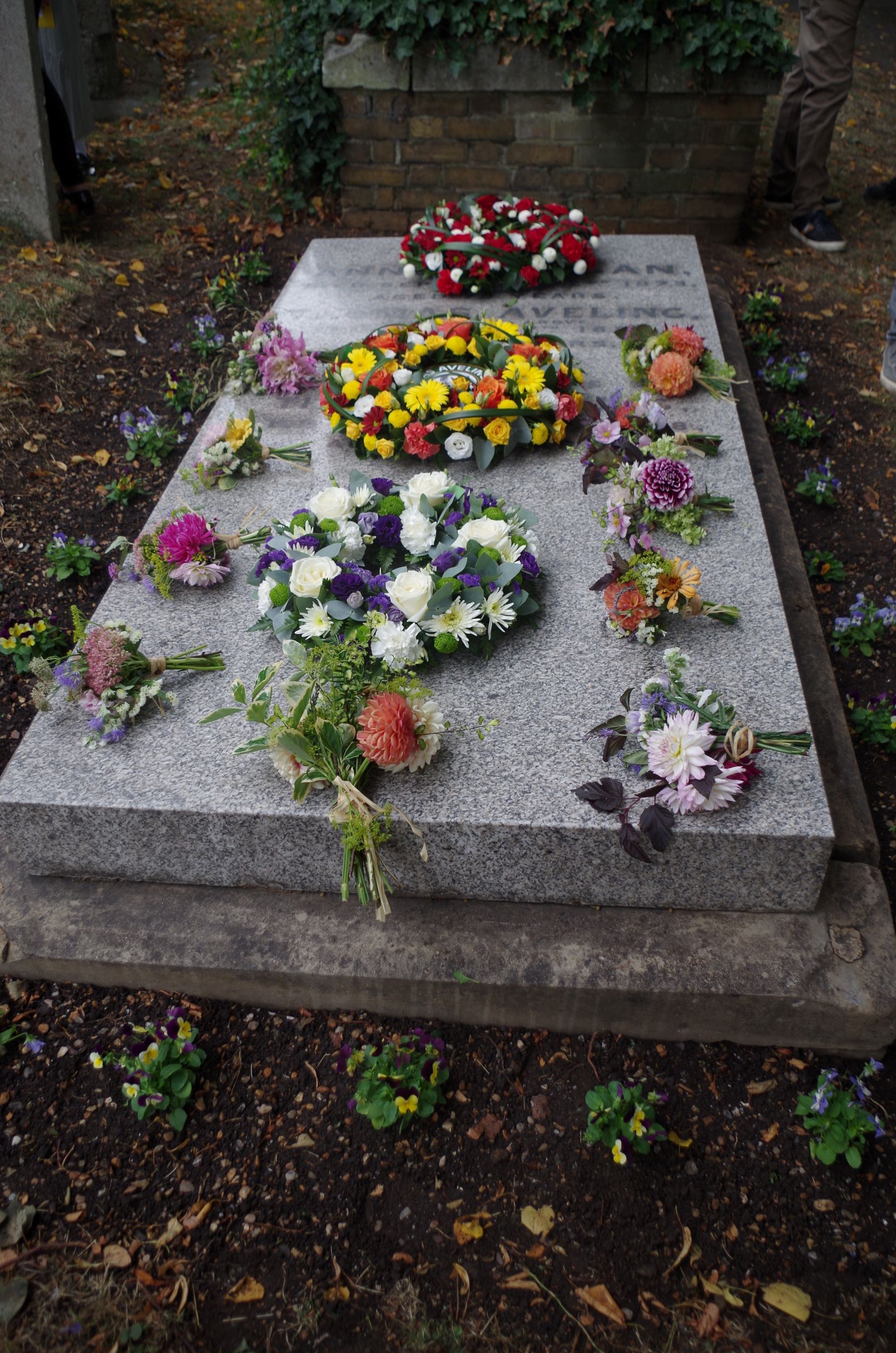
In addition, he was also an enthusiastic yachtsman and it is believed that he may have caught a chill which developed into pneumonia whilst on his 28 ton Yacht, ‘Sally’ at the end of February 1882. On 7 March 1882 he died at the age of 58.  The funeral took place on 11 March 1882 and crowds lined the streets from his home at Boley Hill House in Rochester to St Werburgh’s church – a distance of 4.6 miles.  The funeral procession began with 39 carriages which increased to 54 and his coffin was covered with beautiful wreaths not unlike the ones on his grave for his 200th birthday.  He is buried with his mother, Sarah, his wife Sarah and his son Thomas. Two stained glass windows in the church commemorate him. There is also a secondary school in Chatham named after him and the road names on a housing estate in Hoo are associated with him.

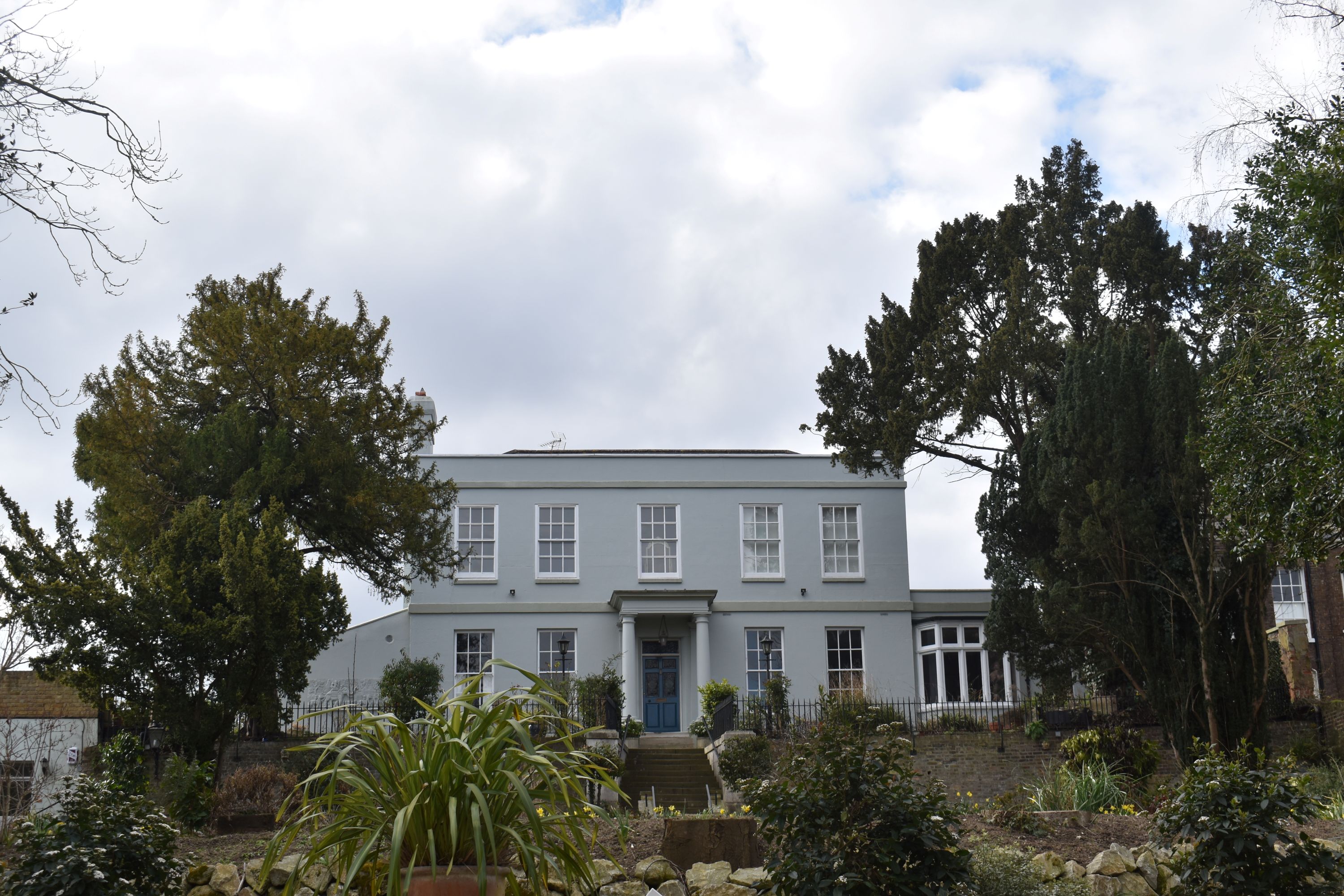
Boley Hill House, Thomas Aveling’s home in Rochester as it is today. © Carole Tyrrell

For a fuller account of Thomas’s life and achievements please visit the Thomas Aveling Society’s website:  https://www.thomasavelingsociety.co.uk

Thomas Aveling’s grave covered with birthday wreaths. © Carole Tyrrell

But very near Thomas Aveling’s grave is one that is determined that the person which it commemorates and the way in which he died will never be forgotten.

©Text and photos Carole Tyrrell unless otherwise stated.

Part 2 The 200 year old unsolved murder of William White, possible suspects and an amateur clerical sleuth.

In a lonely place…………..a visit to the Darnley Mausoleum Cobham Kent Part 1

©Carole Tyrrell

Cobham Wood can feel like a haunted place. This is where the 19th century artist, Richard Dadd, murdered his father in a spot still known as Dadd’s Hole and so began his journey to a lifetime in Broadmoor. But before Mr Dadd gave into his murderous impulses, there was another place associated with death that sits alone in the woodland.  Once intended as a grand and capacious building to house the dead of the Earls of Darnley, it was never used and, for a long time during the 1980’s and 1990’s, it was surrounded by piles of burnt out cars and motorbike scramblers. The hilltop location was ideal for these nocturnal sports.

But on 5 November 1980 someone went too far and lit a pile of tyres and petrol cans in an attempt to blow the mausoleum up.  It brought down the chapel floor and the Mausoleum was open to the  elements. But it survived.

However, it was a sorry sight in 2003 when it featured on BBC TV’s ‘Restoration’ programme as an appeal was launched for funds to restore it. However, the Mausoleum’s future looked  bleak and even I thought that, due to its location, any restoration would be destroyed again. You can see how it looked at the time: https://www.bbc.co.uk/programmes/p01mvbfj

But in June 2020 I made the pilgrimage through the poppy field of Ranscombe Nature Reserve and up through the woods to the Mausoleum. As I emerged from under the tree canopy I was amazed by the Mausoleum’s size. It is big, very big and was designed to hold 32 coffins in a lower crypt. It’s an extraordinary building and was originally sat at the highest point of the Darnley estate.  It became an important feature of the landscape, almost an eyecatcher folly.

The Mausoleum is square in shape with a pyramid shaped roof, a dry moat and a vandal proof fence.

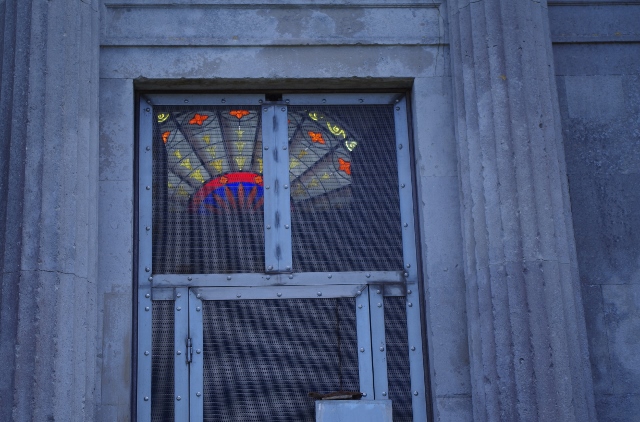
An illuminated lunette hints at the style of the interior.
©Carole Tyrrell

It’s Grade 1 listed and a rather unlovely door keeps it secure from unwelcome visitors.  Just above it I could see one of the 4 lunettes or half-moon windows as the sun shone through the amber stained glass.  This was a tantalising taste of what lay inside as the light shining through them is intended to create an ethereal light inside. But, alas, the building is closed to visitors at present due to COVID-19. The building is made of brick and faced with Portland stone. It can be seen as

‘a very grand classical temple that emphasised the Age of Enlightenment’s preoccupation with a classical way of death’ according to the National Trust’s website.

It drips with symbols of death and remembrance.  The square, circle and pyramid are classical motifs of eternity, the downturned torches indicate a life extinguished and there are 4 little sarcophagi on each corner.  These were stone coffins designed to hold the dead and the word comes from the Greek for ‘flesh eater’.  I was in my element as you can imagine.

But who built it and chose its location? It was the 4th Earl of Darnley  who commissioned the fashionable and exacting architect, James Wyatt (1746-1813) to design the Mausoleum according to detailed instructions in the 3rd Earl’s will. The Earls of Darnley had always been buried in Westminster Abbey but after the 3rd Earl’s death in 1731 the Abbey was full. So the Mausoleum was to be the solution and would hold the coffins of the Earls and their family members. The 3rd Earl:

‘left detailed instructions in his will in which he clearly stated that he wanted a square stone building with a ‘prominent pyramid’ surrounded by a dry moat. He left £5000 or £10,000 if the first amount wasn’t sufficient.’ National Trust

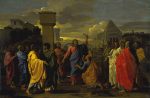
 The source of the pyramid might have come from the Earl’s Grand Tour when he may have seen the tomb of Caius Cestius in the Protestant Cemetery in Rome.  There is also a building with a pyramid roof in the background of a 1647 painting by Nicholas Poussin, ‘The Sacraments of Ordination’. He was a highly regarded painter in the 18th century and there were several paintings by him included in the sale of Cobham Hall.

As the journal of the Mausolea and Monuments Society says:

‘Pyramids were rare in in English Georgian architecture and made their first appearance at Castle Howard;….Wyatt and Darnley trying to recreate the solemn grandeur of the ancients…’ Masusolus

Another source of inspiration may have been  the famous tomb of King Mausolus at Halicarnassus in Asia Minor. He died in 353BC and such was the fame of his tomb that his name became synonymous with all subsequent stately tombs. As a result they became known as mausoleums.

The Darnleys lived at nearby Cobham Hall so the Mausoleum it would have been handy to have your loved ones nearby for eternity. Of course you may have been looking at it and wondering when you might be joining them. In 1786, at its completion, the Mausoleum cost, in total, £9000 which in today’s money is £1million. It is a lavish building with a marvellous interior from photos I have seen.

Wyatt’s designs were exhibited at the Royal Academy in 1783 and a modified design completed in 1786.  However, it was George Dance the Younger (1741-1825) who supervised the work as Wyatt was renowned for having a bad reputation in erecting his own work.  After completion, Humphry Repton (1752-1818), considered to be the last great landscape designer of the 18th century spent the next 30 years designing the landscapes around Cobham Hall for the 4th Earl.

But the Mausoleum was never consecrated and so couldn’t be used for its intended purpose.  According to Mausolus, the journal of the Mausolea and Monuments Society,

the Bishop of Rochester was disapproving of buildings in secular sites and refused to consecrate a building that so brazenly evoked pagan arcadia.’

 Repton himself suggested that it be converted to a viewing platform so that it could be put to some use and the views would have been amazing but it didn’t happen.

But instead of being laid out in the Mausoleum as intended the Earls of Darnley have been interred in the vaults and churchyard of St Mary Magdalene in Cobham village. There is a fine display of their memorials at the rear of the church and in the churchyard.

The Darnleys income came from a 25,000 acre estate in County Meath, Ireland. However their  fortunes declined and in 1957 they sold Cobham Hall. After the arson attack there were many suggestions and schemes for the Mausoleum’s future. A developer bought it, intending to convert it into a residence but went bankrupt.  He was presumably hoping to find a buyer who liked seclusion and could find a use for 32 coffin spaces in a crypt. The building passed into the hands of the official Receiver and HM Government became its new owner. The 4th Earl’s creation’s future looked bleak, its interior blackened from the arson attack and covered in graffiti and surrounded by a rusty junkyard.

What would happen to this fine building?

Part 2: The resurrection of the Darnley Mausoleum

©Text and photos Carole Tyrrell unless otherwise stated.

References and further reading:

https://www.nationaltrust.org.uk/cobham-wood-and-mausoleum/features/saved-from-the-brink—the-restoration-story contains a photo of how the mausoleum looked after the arson attack.

https://en.wikipedia.org/wiki/Darnley_Mausoleum

https://www.nationaltrust.org.uk/cobham-wood-and-mausoleum/features/the-history-of-the-darnley-mausoleum

http://www.mmtrust.org.uk/mausolea/view/87/Darnley_Mausoleum

http://docs.gravesham.gov.uk/AnitePublicDocs/00294841.pdf

http://www.discovergravesham.co.uk/cobham/darnley-mausoleum.html

http://www.mmtrust.org.uk/assets/docs/articles/2009_mmt_news_march0001.pdf

http://www.mmtrust.org.uk/assets/docs/articles/2004_mmt_news_april.pdf

https://abinger-stained-glass.co.uk/portfolio-item/darnley-mausoleum/ – a piece about the ceration of the lunettes.