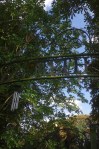
They are the sentinels of the silent cities, standing tall and spreading out their branches to shade the last resting places of the permanent residents. Yew trees can often be older than the churches which they nestle beside in the churchyard and may predate Christianity as many churches were built on pagan sites of worship. In fact there are reputed to be at least 500 yew trees of this vintage! And incredibly, there are 10 yew trees in Britain that are believed to predate the 10th century.
These venerable trees have many associations and traditions. I will try and concentrate on a few but they are usually associated with churchyards and burial grounds. The most common one is that they are nourished by the decaying bodies beneath them and, as they can grow up to 20 metres high, this could seem plausible. Another tradition states that yews were planted on plague victims graves to protect and purify them – if this were true than some churchyards would resemble a forest!
Another common tradition is that they were planted to prevent ‘commoners’ from grazing their cattle on church ground. This was because yews are very poisonous to livestock. The needles are deadly, and Shakespeare used this in Macbeth when the three witches conjure up a deadly brew that contains, amongst other unpleasant ingredients:
‘Gall of goat, and slips of yew Silver’d in the moon’s eclipse,’
However, the Celts saw the yew as a symbol of immortality, death and resurrection. The yew’s drooping branches are able to root and form new trunks where they touch the ground. The one at St James in Cooling was living inside its dead ancestor which demonstrates its ability to renew itself.
In fact, they are one of the most long lived trees in Western Europe but are not considered ancient until at least 900 years old. The oldest tree in Scotland, and possibly Europe, is the magnificent Fortingall yew in Glen Lyon. It has been suggested that it is over 2000 years old and maybe even 9000 years old. It has numerous legends attached to it and in 1769 was reputed to have a girth of over 56ft. In 1854, funeral processions were reputed to be able to pass through the arch formed by its split trunk. The yew in St Cynog’s churchyard in Wales is a mere stripling at a reputed 5000 years old. One of the world’s oldest surviving wooden artifacts is a yew spear head which is estimated to be around 450,000 years old. They are evergreens with red berries which although are edible, the seed in the berry is extremely dangerous.
One of my favourite churchyards is that of St Marys in Painswick, Gloucestershire. It has 99 clipped yew trees but according to Roy’s blog post, attempts to grow a 100th tree have always failed. They are a dramatic sight to see!
I must admit that I would feel disappointed if I visited a churchyard and didn’t see a tall, majestic yew or two keeping watch over the dead as potent symbols of resurrection and immortality.
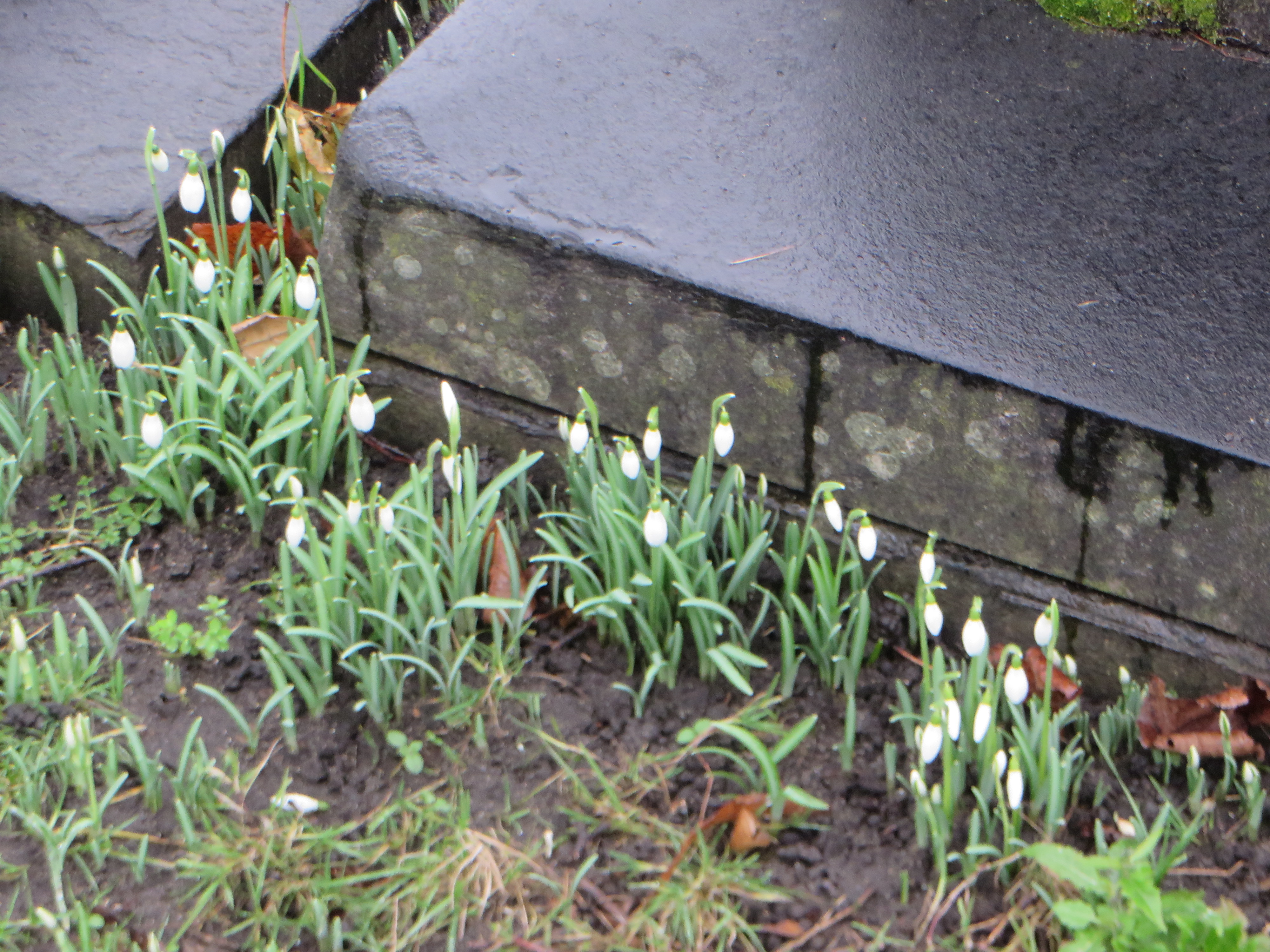
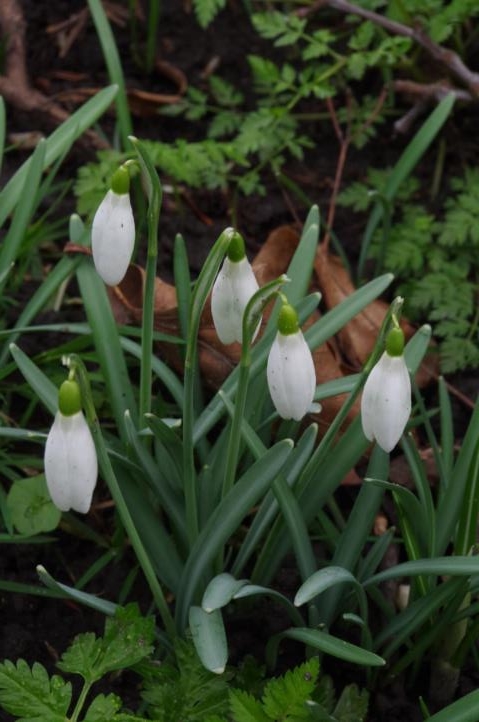
On February 2, tomorrow in fact, it will be Candlemass, an important day in the church calendar. Already snowdrops are appearing, nodding their tiny white heads in the breeze and making people feel that Spring is on its way.
It’s always at this time of year that I repeat this post. For these delicate little flowers have another darker side to them and a long association with churchyards and death.
Imagine yourself in a gloomy medieval church on the festival of Candlemass. You, and your fellow parishioners, have each brought your candles to be blessed by the priest and, after the procession which will fill the church with light, they will all be placed in front of a statue of the Virgin Mary. Candlemass marked the end of winter and the beginning of Spring. The blessing is to ward off evil spirits. It traditionally falls on February 2 and is shared with the Celtic festival of Imbolc. And in the churchyard outside you can see green shoots forcing their way up through the hard winter earth. The snowdrop’s milk-white flowers show that spring is on its way as they begin to emerge into the light.
The placing of the lit candles in front of the Virgin Mary’s statue gave the snowdrop one of its many other names – Mary’s Tapers. But there are many others such: Dingle Dangle, Candlemas Bells, Fair Maids of February, Snow Piercer, Death’s Flower and Corpse Flower.
The snowdrop’s appearance has also inspired many comments . According to the Scottish Wildlife Trusts website they have been described as resembling 3 drops of milk hanging from a stem and they are also associated with the ear drop which is an old fashioned ear ring. Anyone who has seen a group of snowdrops nodding in the wind will understand what they mean. The snowdrop’s colour is associated with purity and they have been described as a shy flower with their drooping flowers. However, the eco enchantments website reveals that the flower is designed in this way due:
to the necessity of their dusty pollen being kept dry and sweet in order to attract the few insects flying in winter.’
Snowdrops have been known since ancient times and, in 1597, appeared in Geralde’s ‘Great Herbal’ where they were called by the less than catchy name of ‘Timely Flowers Bulbous Violets’. Its Latin name is Galanthus nivalis. Galanthus means milk white flowers and the nivalis element translates as snowy according to the great botanist, Linnaeus in 1753. In the language of flowers they’re associated with ‘Hope’ and the coming of spring and life reawakening.
However, yet despite all these positive associations, the elegant snowdrop has a much darker side. Monks were reputed to have brought them to the UK but it was the ever enthusiastic Victorians who copiously planted them in graveyards, churchyards and cemeteries which then linked them with death. Hence the nickname name ‘Death’s Flower.’
They were described by Margaret Baker in the 1903 ‘Encyclopedia of Superstitions, Folklore and the Occult of the World’ as:
‘so much like a corpse in a shroud that in some counties the people will not have it in the house, lest they bring in death.‘
So that’s where the ‘Corpse Flower’ nickname came from.
Snowdrops are also seen as Death’s Tokens and there are several regional folk traditions of connecting death with them. For example in the 19th and early 20th centuries it was considered very unlucky to bring the flower into the house from outside as it was felt that a death would soon occur. The most unlucky snowdrop was that with a single bloom on its stem. Other folk traditions were described in a 1913 folklore handbook which claims that if a snowdrop was brought indoors it will make the cows milk watery and affect the colour of the butter. Even as late as 1969 in ‘The Folklore of Plants’ it was stated that having a snowdrop indoors could affect the number of eggs that a sitting chicken might hatch. A very powerful plant if these are all to be believed – you have been warned!
It’s amazing that this little flower has so many associations and legends connected with it but I always see it as a harbinger of spring, rebirth and an indication of warmer days to come.
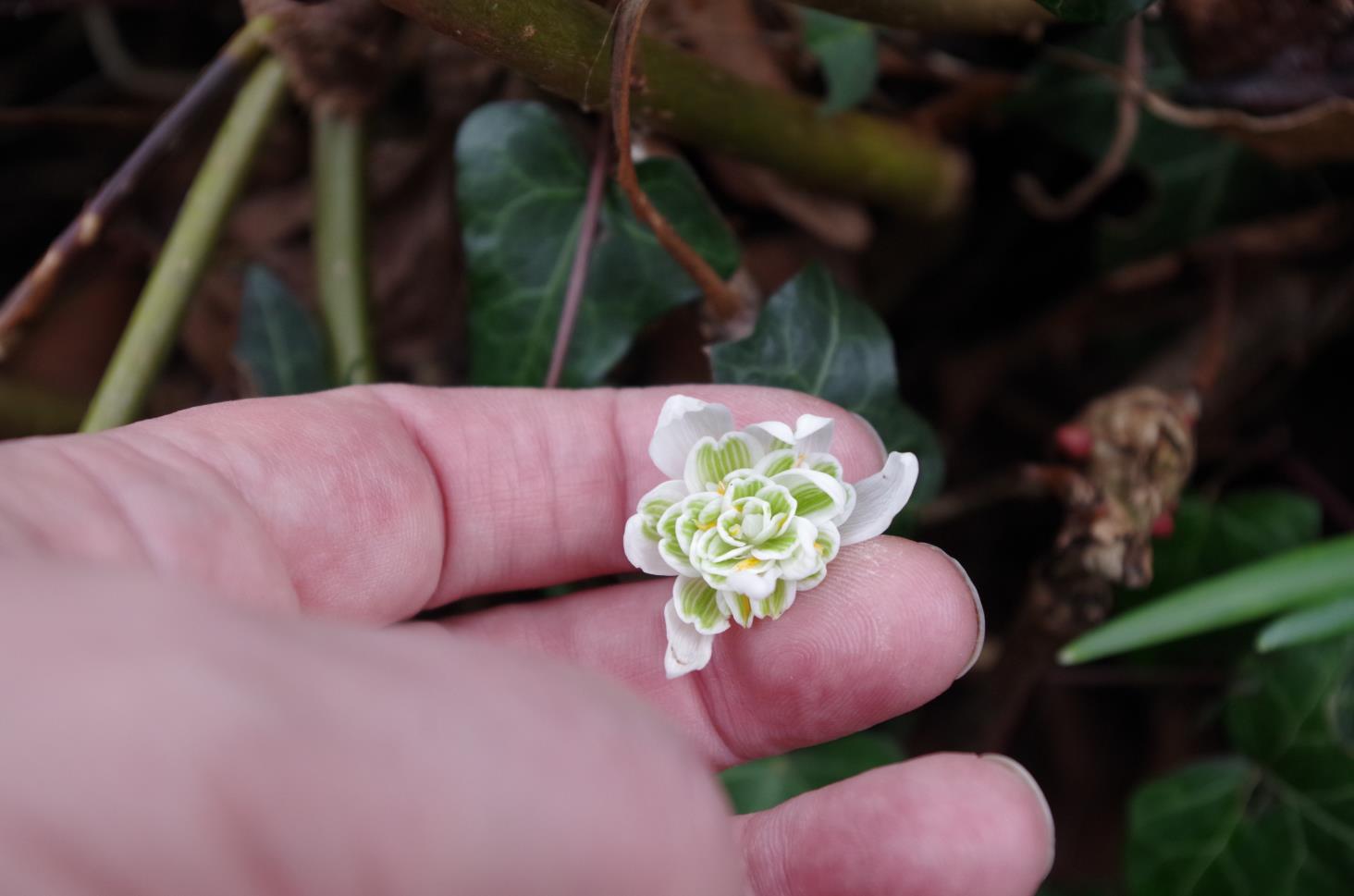
But the snowdrop also has a surprise. This came courtesy of the Urban Countryman page on Facebook – not all social media is time wasting! If you very gently turn over a snowdrop bloom you will find that the underside is even prettier and they also vary depending on the snowdrop variety.
Here is a small selection from my local churchyard and one from Kensal Green cemetery.
So don’t underestimate the snowdrop – it’s a plant associated with life and death but watch out for your hens and the colour of your butter if you do decide to tempt fate…..
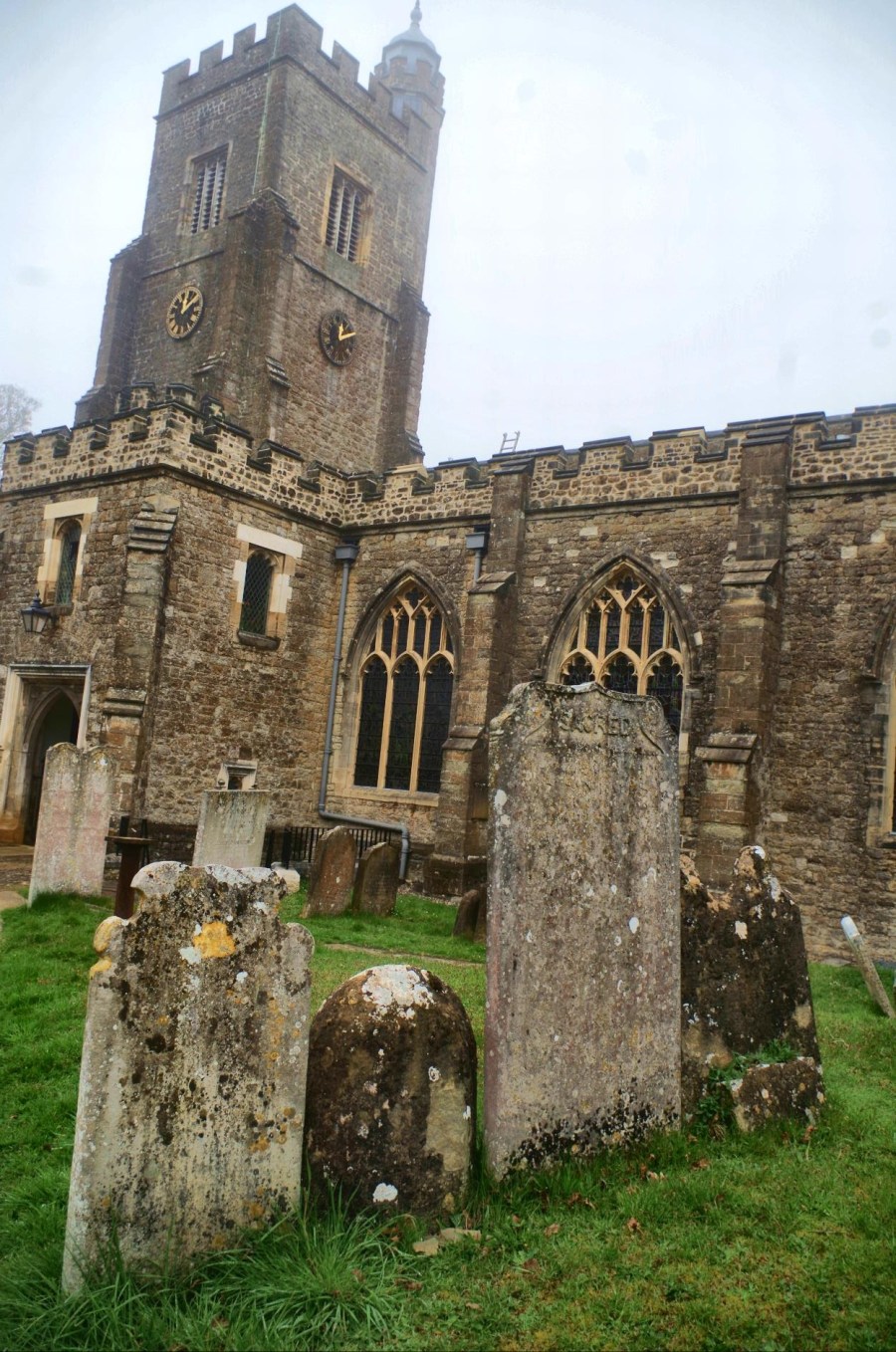
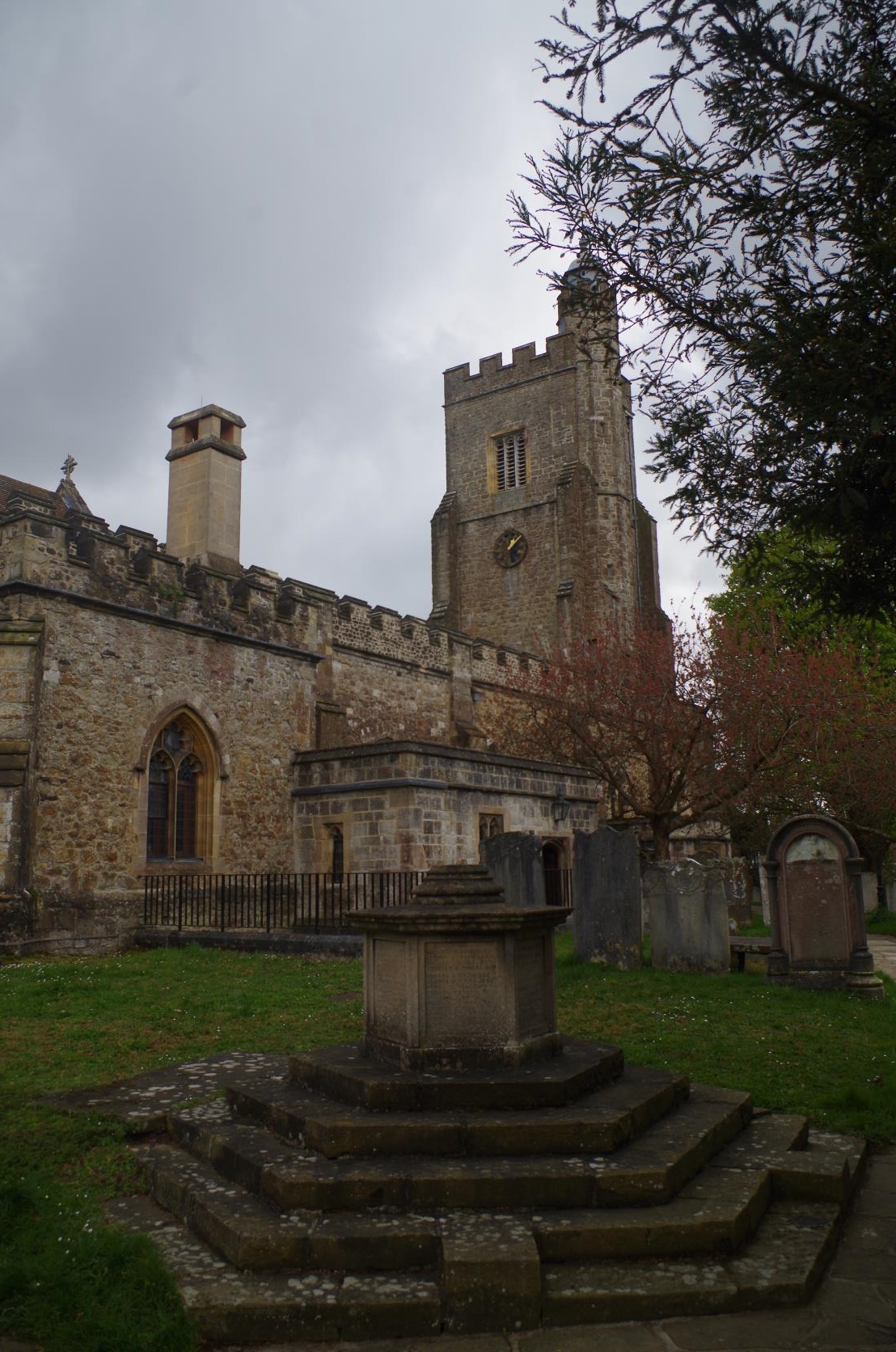
On my previous spring saunters I’ve wandered through two of London’s large, sprawling cemeteries; Kensal Green and West Norwood but this year I thought I’d stay nearer to home. St Nicholas is my local church and within walking distance of my home. It’s in a prominent position in the town as it’s at the top of the hill and opposite the entrance to Knole Park, another local landmark. One of its most famous Rectors was the preacher and poet, John Donne, who was in post from 1616 until 1631 and is commemorated with a metal plate on the pavement outside. Every time I visit its churchyard I find something new and at a time when Nature is beginning to awaken again what better excuse did I need?
The present building’s shape dates from the 13th century and in fact the present nave dates from 1270. It replaces an earlier church. The north aisle was added in 1320 and the chancel south aisle and tower around 1450. There have been many later alterations but the basic 15th century structure and style remains. In 1995 excavations took place to create more meeting rooms in what may have been the crypt. The interior of the church has some monuments dedicated to prominent local families.
But it’s the churchyard that fascinated me. Intertwined with plain Victorian headstones are some wonderful examples of 18th century tombstones adorned with memento mori. A couple are naively executed but others are finely carved with the wonderful 18th century calligraphy accompanying them.
The Spring sunlight illuminated the thick patches of moss and lichens that had carefully draped itself over the monuments and memorials. It made the subtle hues and shades really stand out; the combination of green and gold or browns seemed to gleam amongst more subtle hints.
Some of the lichens looked as if someone had taken a paintbrush loaded with colour and then dabbed it onto the stones. Moss has the effect of softening the edges of stones and letters and, where it replaces letters completely, gives a more organic feel to the epitaph.
A spreading horse chestnut tree was laden with sticky buds already beginning to burst into leaf. ‘How many years has it stood near the church door marking the seasons and years?’ I thought.
A chaffinch called loudly for its mate from the closed part of the churchyard. I had explored this in October and seen its large carpet of prickly sweet chestnuts as a fox had turned tail and run back to where it had come from. There has been a piece of bone abandoned on top of a flat headstone and I hoped that the fox had brought it in from a nearby butchers rubbish bin…….now alas this part of the churchyard is closed due to Health and Safety as it’s so overgrown. On this visit I disturbed a fluffy ginger and white cat who soon fled in the same direction as the fox.
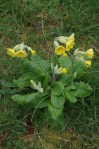
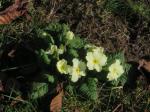
Three large patches of snowdrops clustered protectively around the base of a tree, their pristine heads nodding in the breeze as if deep in conversation. Primroses had begun to stud the grass and I saw my first ever cowslip amid headstones.
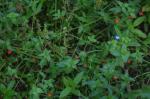
The tiny bright blue flowers of Speedwell blossomed beside a small tombstone and a red-tailed bee, one of the first signs of Spring, buzzed along the top of the grass. Dog violets, a much underrated flowers in my opinion, frothed plentifully beside the iron entrance gate.
Nearby, was not so much a carpet of Spring flowers, but more of a small rug of them. More Primroses, the bright yellow of Lesser Celandine, another harbinger of Spring, and more dog violets all combined to make a wonderful collection of green, yellow and purple.
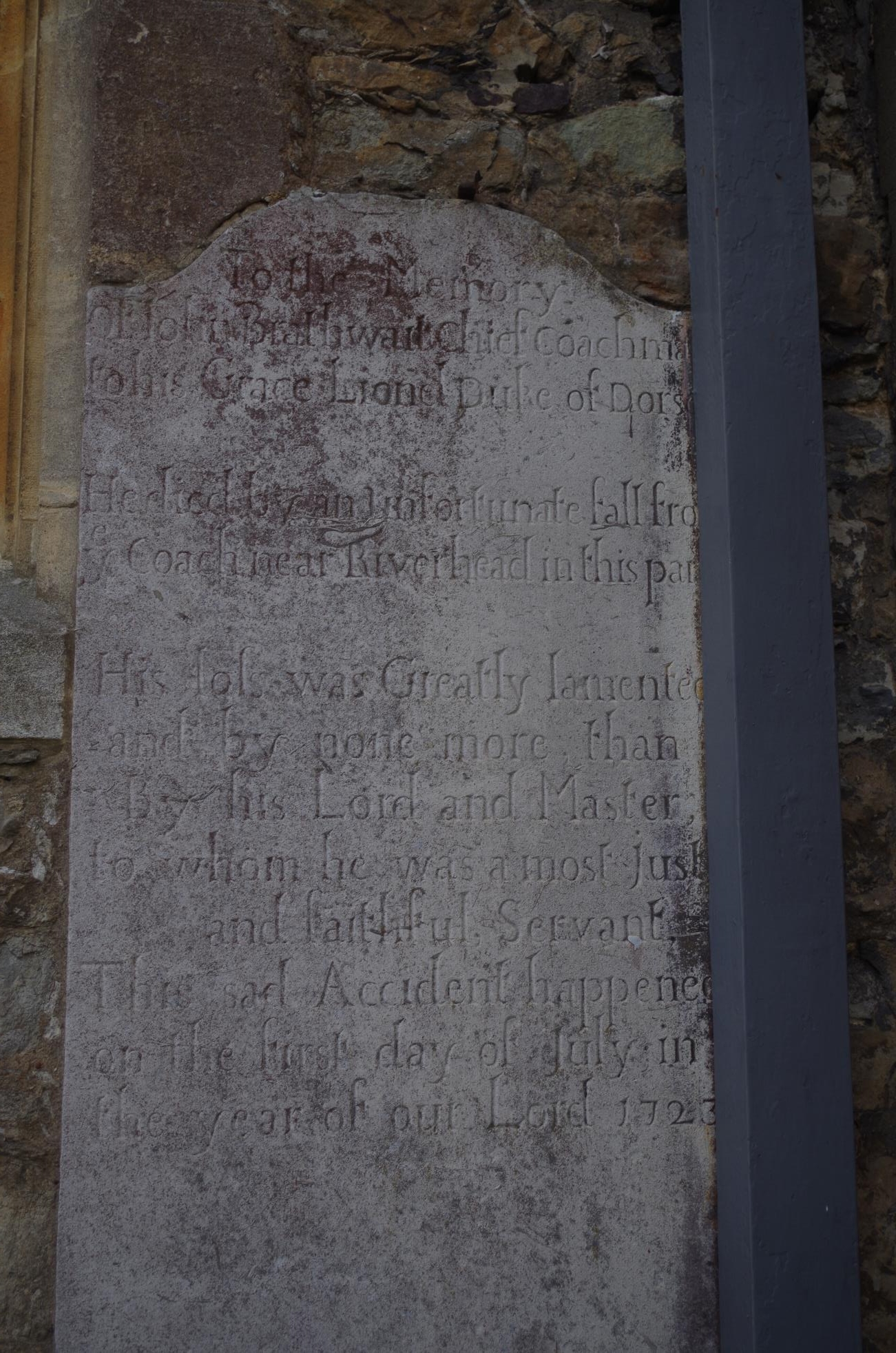
There are some remarkable epitaphs in St Nicholas churchyard and this one which has now been incorporated into the fabric of the church caught my attention.
The epitaph reads:
To the Memory
of John Braithwaite Chief Coachman
to his Grace Lionel Duke of Dorset
He died by an unfortunate fall from
Ye coach near Riverhead in this parish.
His loss was greatly lamented
and by none more than
by his Lord and Master
to whom he was a most just and faithful servant
This sad accident happened
on the first day of July in
the year of our Lord 1723
With the Caring for God’s Acre project which is linked with the bio diversity recording site, irecord, biodiversity within cemeteries is being examined more closely. They are real havens for wildlife especially in big cities as they are an invaluable green space that’s accessible to everyone. I’ve always enjoyed exploring cemeteries partly for this reason whether it be standing waist high in wild flowers on a hot July day in the meadow at Kensal Green cemetery or counting butterflies along the side paths leading to the Courtoy Mausoleum in Brompton Cemetery.
Sadly the Spring sunshine was replaced by April showers but Mother Nature ignored this and kept bursting forth regardless. I’m already looking forward to my summer saunter within St Nicholas.
There had been blue August skies above me as I’d plodded up Woodplace Lane again. The suburbs of Coulsdon and Hooley soon petered out to give way to fields. I lost my bearings around the newly expanded Netherne on the Hill. But I retraced my steps and found myself at the entrance of a large ploughed field and saw a gap in the trees on its opposite side.
I began to walk across the field towards it. As I did so 3 or 4 policemen and women walked past the entrance. ‘Yes, we’ve found her, she’s visiting the cemetery, it’s ploughed so no damage to crops otherwise we’d have suggested that she walk around the border.’ said one into his walkie-talkie. ‘Doesn’t look like a ghoul.’ They walked on and I wasn’t sure whether to be flattered or insulted – me a dangerous person? Obviously the neighbourhood watch had been on duty and I wondered what had been going on at the cemetery.
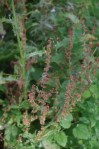
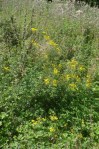
A defiant purple branch of buddleia stood tall over the wait high wildflowers as a white butterfly fluttered around it. Bright splashes of colour from ragwort, scarlet pimpernel, speedwell, red sorrel and fleabane stood out amongst them. There were also fresh puffballs and older ones half hidden in the undergrowth.
The birdsong stopped as I stood inside the graveyard and looked around. It didn’t look as forgotten as it had done in 2007. The cemetery had been cleared but was now rampant again with summer vegetation. There was now a clear border around it which made it easier to explore. The horse chestnut trees still stood tall with bright shiny conkers here and there beneath them. At the bottom of the cemetery was a luxuriant bush of ripe elderberries and I looked over the hedgerow to see two horses grazing in a nearby field.
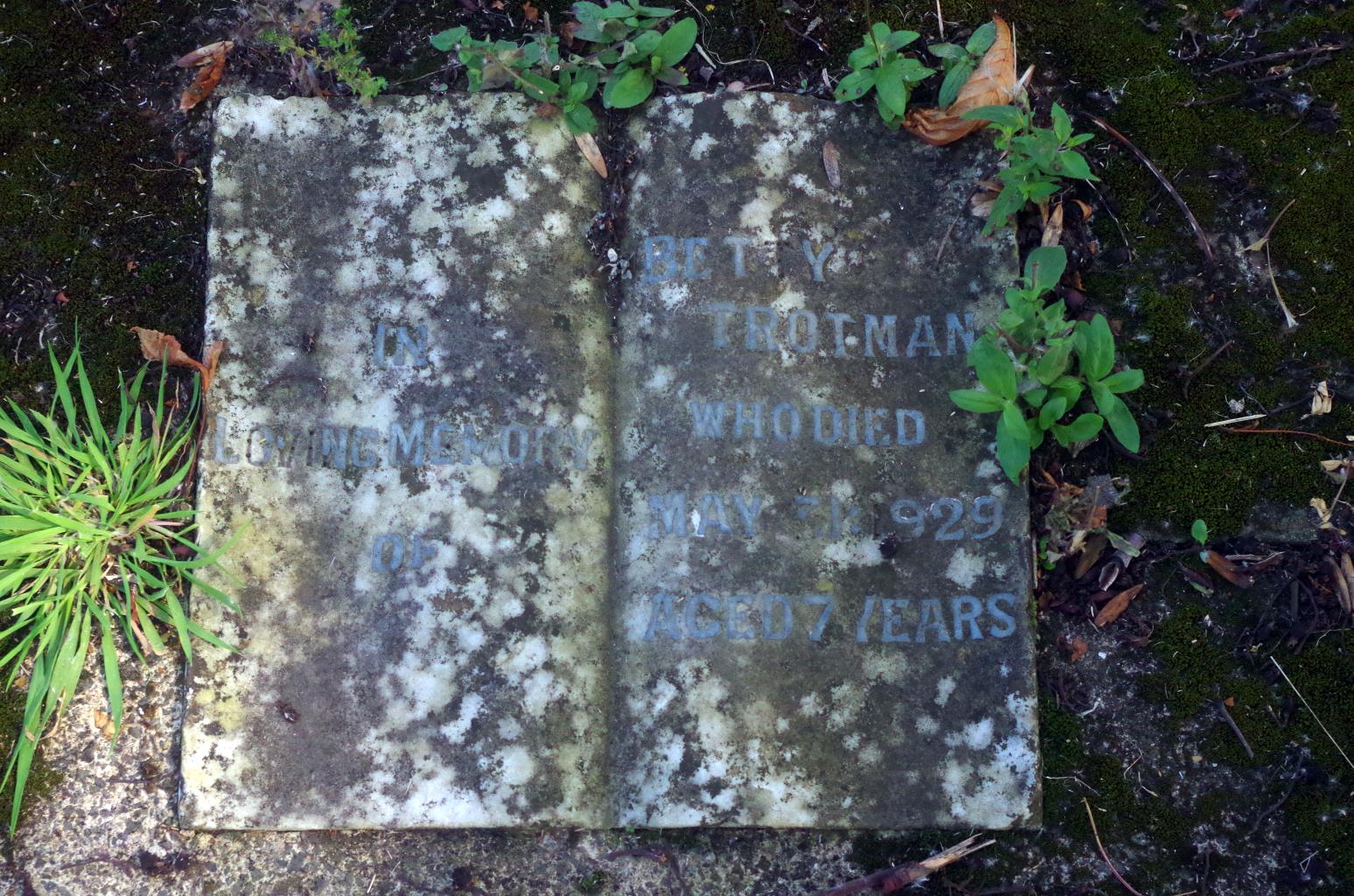
It still seemed incredible that 1350 people were buried here but now the cemetery felt less abandoned. I looked again at the 6 memorials set into the concrete plinth, presumably to preserve them, but at least I now knew why the 7 year old Betty Trotman had been buried there.
In 2010, the developers of the Netherne on the Hill site had claimed in a local newspaper that they had never been approached by any family members of the people buried there. But in 2013, a Croydon paper reported on the 2 and a half year campaign by two local people, an amateur historian called Adrian Falks and a Ms Wendy Mortimer. They had both called for the cemetery to be cleared and the graves within it to be maintained.
Ms Mortimer knew that she had a great-aunt, Frances, who had been buried there in 1915 and had been extremely upset when visiting the graveyard in 2008 to find her last resting place to discover how overgrown the site was. She had had to crawl under a fence to actually get inside to find 5 feet high brambles and no memorials. Ms Mortimer’s great-aunt, Frances, had been an epileptic, which at the time wasn’t properly understood and appropriate treatment didn’t really exist. Frances had become brain damaged after falling from a wall, presumably during an epileptic fit, and had subsequently been sent to Netherne where she was classed as ‘an idiot’ in the less than PC classification of the time. A photo in the paper shows Ms Mortimer kneeling in the middle of the then cleared cemetery beside flowers in memory of her great aunt. It was a tragic tale of a life ruined which nowadays with the correct medication would have been very different.
As I walked around the edge of the cemetery I could see holes dug by animals, presumably foxes. Again in 2010, it was alleged by another Croydon paper that burrowing animals had dislodged some of the remains buried there and that bone fragments had been found.
Due to the war hospital scheme which displaced the asylum population in order to treat nearly half a million wounded or shell- shocked soldiers, some of which are buried here. There are also the children of serving soldiers interred there.
I am indebted to Adrian Falks’ research on the soldiers who were buried at both Cane Hill and Netherne Asylums. However, the names of most of the servicemen remain hidden in closed records. But here are the stories of two of them who are buried at Netherne.:
In 1914, Gunner William James Carpenter joined the army for a better life. But he found Army discipline was too tough and often went AWOL which led to constant disciplining. William finally deserted just before being sent to France in 1915. But after an argument with his wife he left their Peckham home and vanished for nearly 90 years. He had died alone in Netherne hospital but it’s unknown how he ended up there.
Until 1962 a German POW, Hermann Albert Schnid, was buried there. He had contracted syphilis which was treated at the hospital and he’d died there in 1917. In 1959, the German War Graves Commission wrote to the Netherne authorities requesting that his body be exhumed and moved to the Cannock Chase German military Cemetery in Staffordshire.
Mr Falks also discovered the names of a few of the children of serving soldiers who were buried in the cemetery. He was quoted in a newspaper article as saying that he thought the state of the cemetery was ‘shocking’ and ‘that all but one of the children buried at Netherne had had fathers who were fighting in the First World War.’
Some of the children are:
Leslie Thomas Jackman aged 11 – died 11/12/1917 – whose father was a serving soldier
William Arthur Simmonds aged 15 died 15/10/1917 – his father was presumed killed at the Battle of Arras.
Sidney Peters aged 5 – died 03/10/1915 – had a soldier father.
Jessica Davis – aged 11 who died from TB on 20/02/1915. It’s not known if her soldier father survived the war.
and these two:
Both of her parents, Dorothya m
William John Newland – aged 15 – died from pulmonary TB on 18/02/1918. I found his case particularly poignant as he was an orphan without next of kin who had been transferred from an Epsom workhouse infirmary. I hoped that someone was with him when he passed away.
And finally Betty Trotman, aged 7, recorded on the Book of Life memorial as having died on 31/05/1929 after a 5 month stay in Netherne. It had been surmised that her parents probably worked at the hospital. I am indebted to a local resident who had searched for more information on Betty’s family via genesreunited. Both of her parents, Dorothy and Charles were Londoners and have moved to Godstone in Surrey. They married in 1921 but it’s not known if Betty had any siblings. Dorothy died in 1991 aged 90 and Charles preceded her in 1959 aged 65.
Asylums were often overcrowded and an epidemic such as influenza or TB would soon spread amongst patients.
I haven’t found any photos of these incumbents in Netherne cemetery which is sad as I would have liked to be able to put faces to the stories I stood there in the hot August sunshine and realised that under the wildflowers were people with names, Jean, William, Betty, Frances, etc who had all ended up in Netherne often because there was nowhere else for them to go. But some of the once anonymous dead had been reclaimed by their relatives and they no longer rested alone and forgotten.
But one of the saddest and most moving stories is undoubtedly that of 8 year old Jean Barboni who died in Netherne in 1915 and whose nurse mourned him for the rest of his life.
Part 3 – the nurse that never forgot the little boy she cared for and a patient’s remarkable artistic legacy.
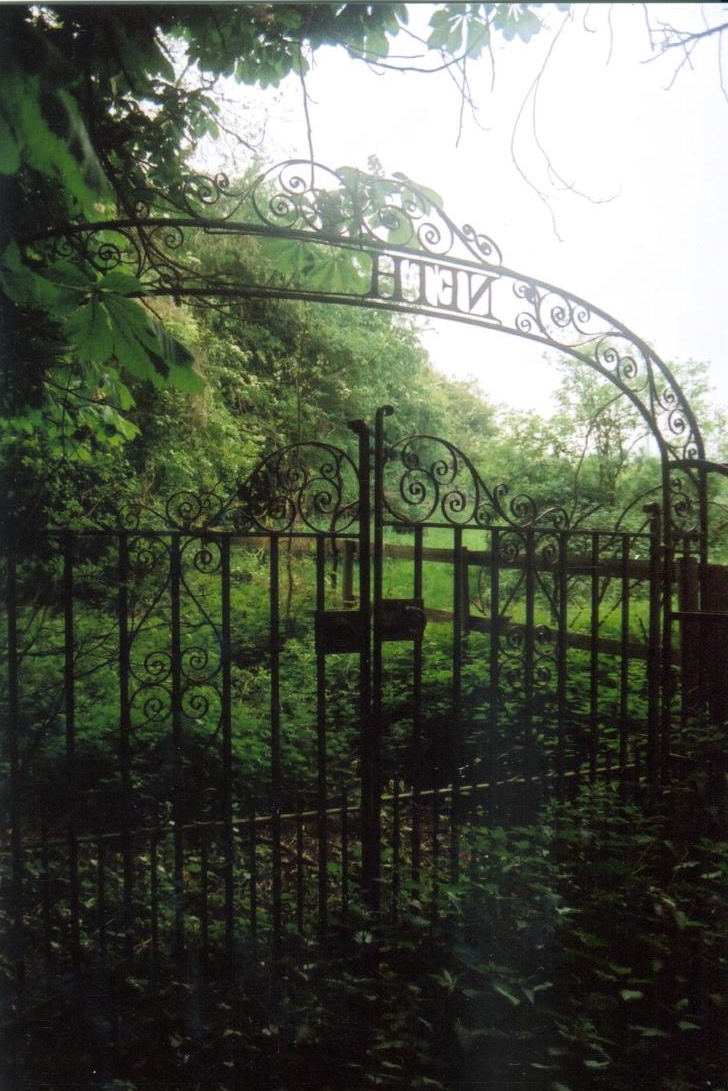
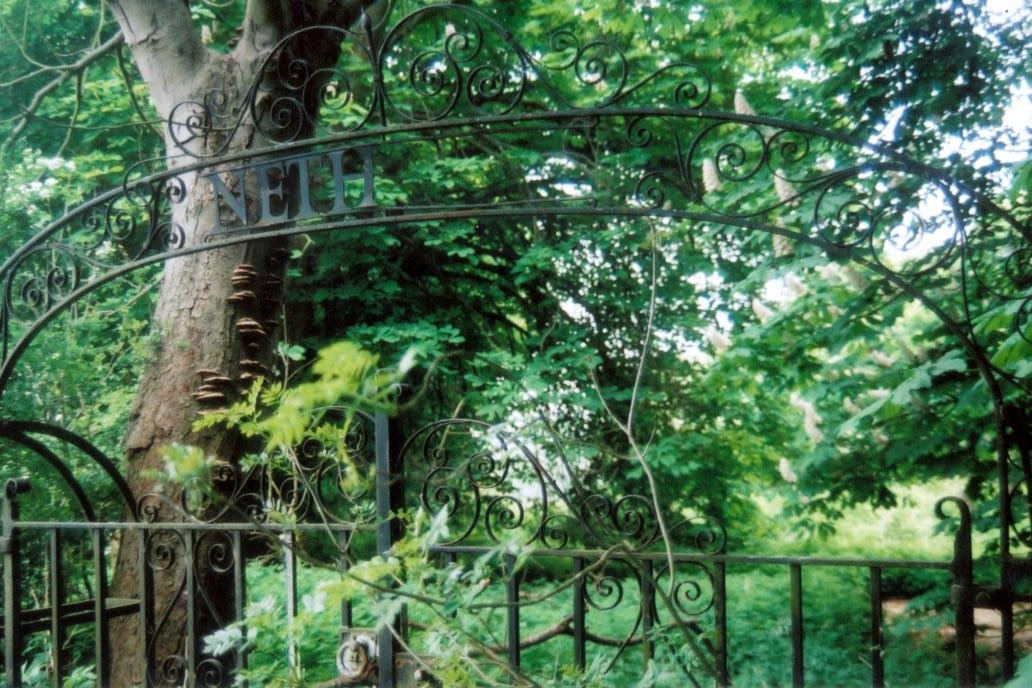
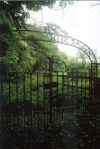
I first visited Netherne Hospital cemetery on an overcast day in May 2007. It’s located at the edge of a large farmer’s field and is a broad, sloping strip of land bordered on three sides by huge, majestic, spreading horse chestnut trees. You can look across the cemetery to the local beauty spot Farthing Downs in the distance. The trees were luxuriantly leafy on my visit and the graveyard certainly looked more appealing than in the photos I’d seen of it on an urban explorer’s website. He had visited it in January when it looked very desolate and forgotten. But on that day in May I saw large white candles of horse chestnut flowers in abundance as I peered through the two elegant, probably Victorian, iron gates. Once they must have had Netherne Asylum in large iron capital letters over the top of them but now only ‘NETH’ remained. They were almost being engulfed by large branches and leaves trying to force their way through. ‘Someone will steal them for scrap.’ I thought to myself as I pushed one of the gates open and entered.
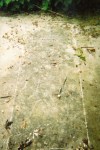
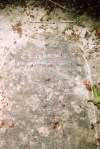
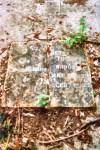
Inside Nature had taken over with a thick carpet of green brambles and undergrowth covering the entire site and it looked as if no one had been there in a very long time. Without the gates the cemetery would have just looked like a fallow field. It was impossible to see any monuments or memorials but I did find a raised concrete plinth in which 2 tombstones and a smaller Book of Life memorial had been inserted possibly to preserve them. The Book of Life was dedicated to a 7 year old named Betty Trotman and I wondered why a child was buried here. Little did I know as I closed the gate behind me that it would take me nearly 10 years to find out.
Netherne was sited at Hooley in Surrey and was originally known as the Surrey County Asylum or Netherne Asylum before being renamed Netherne Asylum.. It closed in the 1990’s along with the other large asylums and hospitals in the county. Surrey has always been seen as an affluent region with its exclusive golf clubs, Tudorbethan stockbroker houses and the rolling hills of the green belt. But it has another, less publicised claim to fame. For over a century at least it was also home to several lunatic asylums originally intended for paupers and also homes or children with learning difficulties. It was felt that the incurable or mentally ill might improve if taken out of the city and into what was then countryside.
The creation of the asylums also reduced the workhouse population as they were designed for paupers. Cane Hill in Coulsdon, Netherne in Hooley, the Epsom cluster, Earlswood in Redhill and St Lawrence’s Hospital in Caterham were amongst them. Iain Sinclair in his book, London Orbital, described them as mandalas of madness. All now gone; either demolished or converted into upmarket housing estates.
In 2007 Netherne Hospital as it later became known was still in the throes of being transformed into an instant village; Netherne on the Hill. The developers later stated that they were ‘leaving the cemetery well alone and allowing the wildlife to take over.’ It would be another three years before relatives of those buried there would start to come looking for their last resting place. At that time I had no idea that there were 1350 people buried there and that these included children, ex-soldiers, epileptics, the elderly as well as the mentally ill and those who had nowhere else to go. The people buried in the cemetery seemed to be as anonymous in death as they had been in life apart from the memorials embedded on the plinth.
The cemeteries and burial grounds attached to these asylums and hospitals can be difficult to find. Often the markers on the graves have gone and so there’s no sign of their original purpose and as a result they can often become overgrown and look abandoned. For example, in 2000 the Somerset & Bath Lunatic Asylum, or the Mendip Hospital as it later became, burial ground in Wells was put up for sale by the NHS as a freehold development opportunity. Nearly 3,000 people, patients and staff, are buried here with the last burial having taken place in 1963. The grave markers had long since been removed. However there was a public outcry from the local populace, some of whom may have had relatives living or working in the hospital and they formed a group to stop it. There is a now a thriving Friends of Mendip Hospital Cemetery group and so the burial ground looks safe.
I started researching the cemetery and discovered that asylums had a varied population. In Rachel Lichtenstein and Iain Sinclair’s book Rodinsky’s Room they go in search of a man, David Rodinsky, who vanishes suddenly from a room above a back garden synagogue in Spitalfields and discover that he ended up in Warlingham Hospital, another Surrey asylum, where he died. They speculated that his Eastern European Jewish scholarly background and language of codes and cabbalism may have led to him ending up there as it would have been incomprehensible to anyone unfamiliar with it. Other patients may have suffered from what we now term learning difficulties which the Victorians classed ‘idiots’. There were also the elderly with dementia or people with degenerative diseases such as syphilis.
The soldiers appeared in asylums after the First World War when the authorities devised a scheme to treat the almost half a million wounded and shell shocked soldiers. This involved decanting the current patients elsewhere and then re-designating the asylums as ‘war hospitals’. By 1920 over 250,000 soldiers had been treated with 9% of them with psychiatric problems. It saved lives but caused upset and distress to the decanted patient population. However, not only soldiers were admitted to the ‘war hospitals’ but also their families.
There was an asylum in every county and in 1914 there were 102 in the UK with a total population of 108,000 men, women and children living within them – some permanently. The sexes were strictly segregated and only met at events such as dances or sports days. Men usually worked on the hospital farm and women in the laundry or kitchen. Women could be admitted as a result of having an illegitimate baby, rape or post-natal depression. Asylums were often overcrowded and an epidemic such as flu could kill many patients.
I’d read on the urban explorer website that Netherne that there had been a campaign by a local amateur historian to have the cemetery cleared and accusing the developers of neglect. It was time for a return visit especially as my research had enabled me to put names to some of those buried there and their poignant, often heart-breaking stories.
Cemeteries are often great places to find wildlife. If you’re lucky you might see a bright little robin or blue tit flitting amongst the memorials as well as foxes, cats and the odd dog out for a walk with his owner. The beginning of summer also heralds the arrival of insects such as butterflies and grasshoppers.
But app designer, Simon Edwards and I, were exploring Brompton Cemetery to find animals of the stone or granite variety either carved or perched onto tombstones. Simon, a GP by trade, had the same enthusiasm as me and we began near the chapel.
The weather couldn’t have been better and my way down to meet Simon I saw a Great Spotted Woodpecker land on a memorial and then take off again before I could get my camera out. I had a few suggestions as to where we might find some interesting examples and Simon already had some on his phone and so we began. We also included insects and birds. However once you start looking for carved wildlife it suddenly catches your eye whereas you might not have noticed it before. The afternoon became a treasure hunt as we found cats, a polar bear, a butterfly and a carving of an Egyptian deity amongst others. If you want to find out how many we found you will have to try the app at:https://ticl.me/West-Brompton/headlines/13317/view
However the most popular animal motif was undoubtedly the dove. They were everywhere – both in 2D and 3D versions whether portrayed flying downwards or perched on a cross until eventually we decided that we were both ‘doved-out’. Undoubtedly the best ones were the one on Susannah Smellie’s memorial near the chapel and the one on the headstone dedicated to a 6 month old baby near Hannah Courtoy’s imposing mausoleum.
The app is intended to give you a pleasant way of spending an afternoon exploring the cemetery and finding the graves on which they are and perhaps wondering more about the people who chose them. Don’t forget to let Simon or me know if you find any that we’ve missed!































 shadows fly away