A Cheshire cat grin from out of the darkness – St John the Evangelist, Margate

Close up of head, ‘monumental’ brass, St John the Evangelist, Margate. ©Carole Tyrrell

It was dark in the chancel as I explored St John’s and then five small figures set into stones in the floor glinted at me.  Four of them were dressed in the clothes or armour of their time and one depicted a former priest, Sir Thomas Cardiff who was in post from 1460-1415. In fact Kent has the largest number of remaining monumental brasses depicting the human form than any other county. These total 400. But one in particular caught my eye.  How could I resist its smiling, gleeful face?
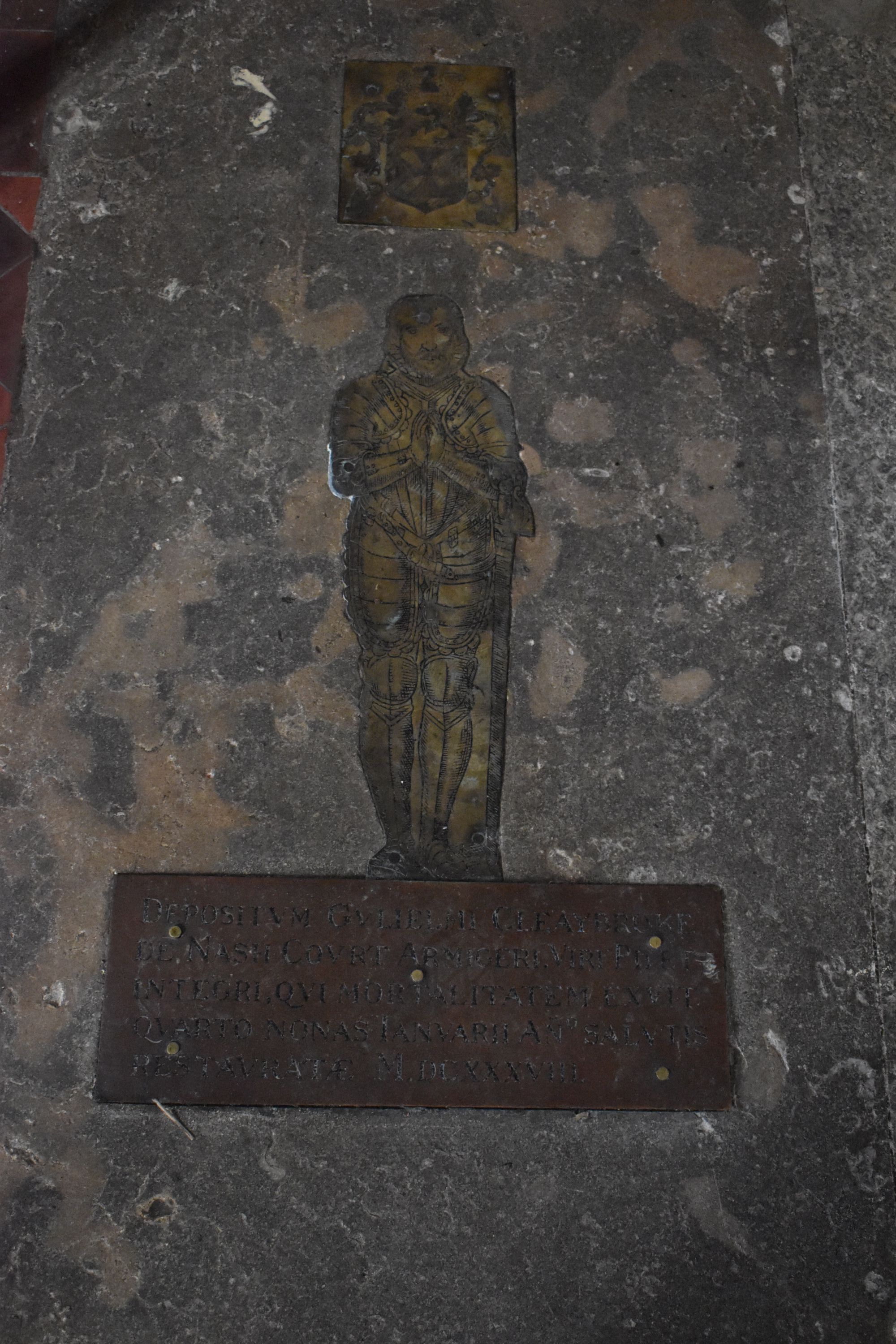
A knight in full armour, St John’s the Evangelist, Margate. ©Carole Tyrrell

Monumental brass of a priest in his vestments, Sir Thomas St John’s the Evangelist, Margate.©Carole Tyrrell

View of skeleton showing depiction of bones.©Carole Tyrrell

It was a skeleton, standing upright and tall with its arms at its sides facing the viewer, and a label underneath in Latin. This was the language of the church pre-Reformation.

The inscription reads:

‘Orate pro anima Ricardi Notfelde qui obiit penultimo die mensis marcii anno domini millesimo ccccxlvi.’

which translates as:

‘Pray for the soul of Richard Notfelde, who died on the last day of March 1446 AD

 The skeleton’s creator has some knowledge of anatomy as the ribs have been sketched in and there are also leg and arm bones. There is a rubbing of the brass in the Wellcome Collection that dates from 1880 and depicts the bones much more clearly.

Wellcome Collection rubbing of the skeleton. Shared under Wiki Commons Brass rubbing by F.Q. Hawkes Mason, 1880.

But it was its face that caught my attention. That grin! The little eyes and nose! It’s obviously not intended to resemble a proper skull but the effect was impressive. As the brasses are in such a dark place within the church, when I stood over the skeleton to take my photos, my shadow fell on it and the grin would disappear. So it was quite difficult to take a decent picture of any of the brasses.

The skeleton is a memento mori which derives from the Latin, ‘remember you must die.’  It is intended to remind the viewer that the skeleton is all that will remain of them after death. Rich or poor, high or low, all will be the same.  

According to the guide on duty, the brasses and their labels have been moved and it’s not known where they originally were within the church. But they also have a secret.  They’re not actually made of brass. Instead, they were made from a cheap alloy called ‘Latten’.  The guide helpfully reminded me of Chaucer’s Pardoner’s Tale in which he sold fake relics to simple, innocent people to extort money from them.  These included a cross made of ‘Latoum’ a cheap alloy that he pretends is made of gold.

Latten was an alloy that

‘contained varying amounts of copper, tin, zinc and lead which gave the characteristics of both brass and bronze.’   Wikipedia.

These alloys were used for monumental brasses in churches, decorative effects on borders, rivets or other metalwork details as on armour for example. They were also used for livery and pilgrim badges. Canterbury Museums have the largest collection of pilgrims badges in the UK so please follow the link to see a selection.

Pilgrim Badges – Canterbury Museums & Galleries

The skeleton was an unexpected find on a Heritage Open Day and I enjoyed making its acquaintance. A rare survivor in any church although I have seen other brasses made from Latten when visiting other Kent churches.

In this case, all that glitters is not brass!

© Text and photos Carole Tyrrell unless otherwise stated.

References and further reading

Latten – Wikipedia

Latten: The Definition and Meaning

Monumental Brasses in Kent — Kent Archaeological Society

Richard Notfield, St John’s, Margate, Kent, 1446. Brass rubbing by F.R. Hawkes Mason, 1880. | Wellcome Collection

An opportunity to support the latest book from Loren Rhoads, a renowned and respected taphophile!

Loren Rhoads is a US based committed taphophile or cemetery enthusiast, and has written several brilliant, informative books on cemeteries, in the US and further afield.   These include:

  • 199 Cemeteries to see before you die
  • 222 Cemeteries to see before you die
  • Wish you Were Here: Adventures in Cemetery Travel
  • Death’s Garden Revisited, Personal Relationships with Cemeteries

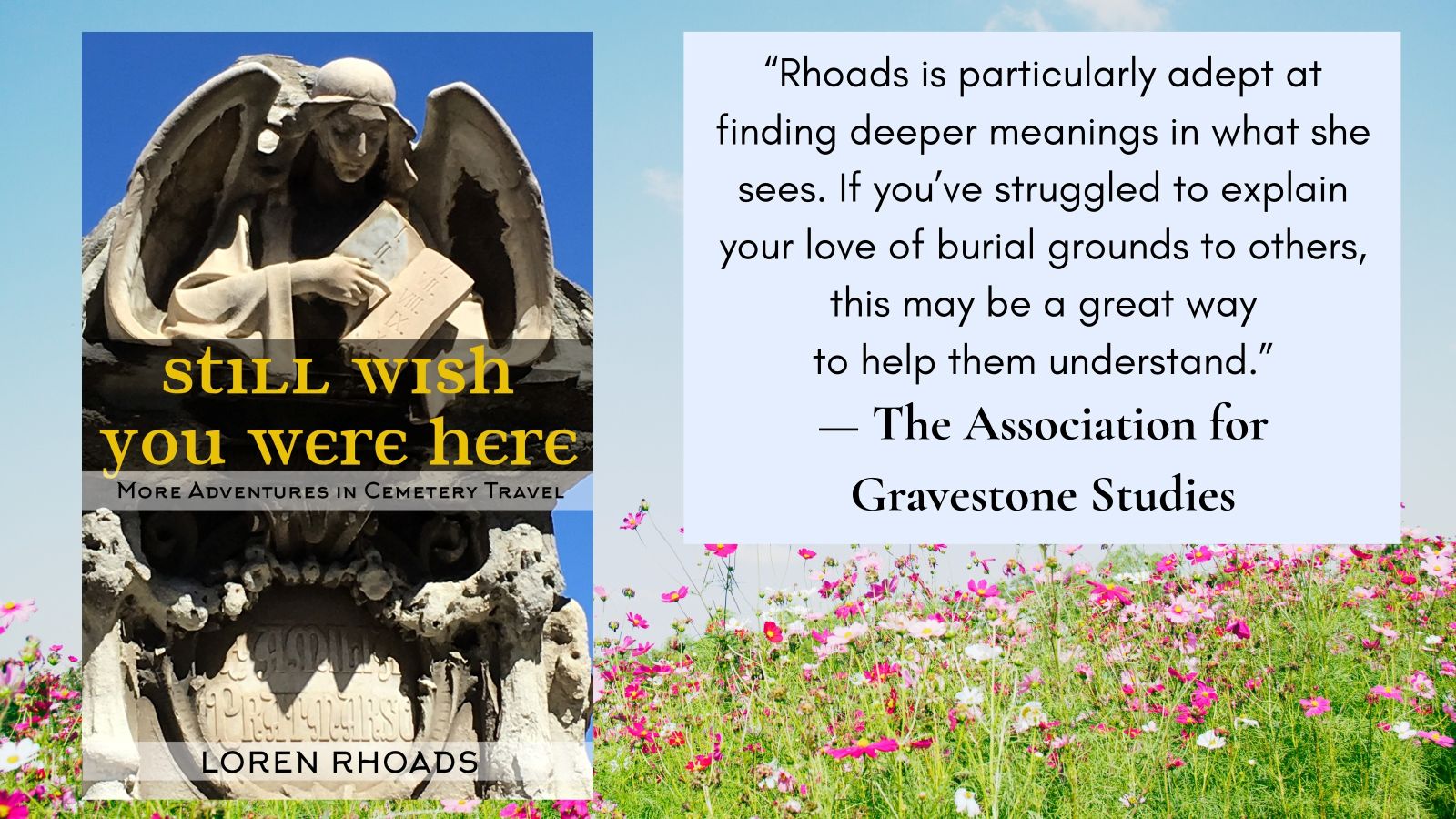
She is an absolute doyenne in the taphophile world and Loren’s latest, ‘Still Wish you Were Here: More Adventures in Cemetery Travel’ is being crowdfunded on Kickstarter.  The backing has already exceeded the requested amount which means that Loren can achieve even more with her book.

In her accompanying video Loren describes ‘Still Wish You Were Here’ as being:

‘part travel memoir, part cemetery history with 36 graveyard travel essays written for various organisations and publications.’ 

She visited 50 burial sites from Michigan, to London, Singapore, Barcelona, Tokyo and more and has confessed to ‘absolutely loving cemeteries and their stories.’ She finds cemeteries as inspiring as I do .  Check out her video at:

Still Wish You Were Here: More Adventures in Cemetery Travel by Loren Rhoads — Kickstarter

I was one of the people who were invited to take part in  ‘Death’s Garden Revisited: Personal  Relationships with Cemeteries’ which was also successfully funded on Kickstarter.  It was a fabulous looking book and I was proud to be part of it and to read other essays by fellow taphophiles.  So, I have every faith in Loren creating another terrific book on cemeteries and have backed it myself!  But don’t take my word for it – this is what the Association for Gravestone Studies have said:

Every little helps and there are several ‘rewards’ for different levels of backing including a cemetery party!   So please, if you are a fellow taphophile and are able to , please consider supporting Loren’s book – if anyone can do it she can!

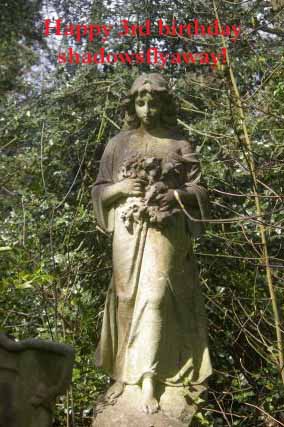
Happy 3rd Birthday shadowsflyaway!

Sarah Bond angel Nunhead Cemetery,
©Carole Tyrrell


Yes, dear reader, it was three years ago in 2015 that I began this blog.  A complete novice, I set it up in order to talk about primarily funerary symbols which are my main interest and to promote my work in progress which will be a book about them.  One of my great pleasures in life is exploring cemeteries, graveyards and cemeteries to find new symbols to write about. But a word of warning, remember to take a camera with you and take photos of the graves around the one that you’ve chosen otherwise they can be difficult to relocate. I feel that symbols are the deceased’s final message to the world.  It can either be a way to say goodbye or a message of comfort to those left behind.   However, I can only speculate on the reasons for their choice.

But, while writing this blog, I’ve also become interested in the living residents of cemeteries – the wildlife.  Often cemeteries are locked up at night and are usually quiet places which enable wildlife to flourish.  There are often wild areas where the grass is left uncut and these can be a vital lifeline in an urban green space.  They can support many different varieties of wildflowers, butterflies, moths, grasshoppers, dragonflies and also foxes and birds.    At a recent Brompton Cemetery Exploring Butterflies day 13 species of Butterflies were found.  It’s interesting how people use cemeteries as one man enthusiastically recommended Brompton Cemetery’s plentiful supply of blackberries for his smoothies!

So, thanks to my readers and visitors for staying with me over the last 3 years.  I hope you’ve enjoyed my posts, photographs and theories on particular symbols.  There’s plenty more to come including exploring what remains of the Necropolis Railway at Brookwood Cemetery in Surrey, a return visit to Chaldon Church to look at the churchyard memorials and also to the place where my interest in cemeteries began, St Lawrence’s Hospital burial ground also in Surrey and a Roman necropolis surrounded by back gardens in Italy.

And as always there will be Symbol of the Month.  It’s always fascinating to undertake the research for these as there may be several different interpretations of meaning and it can also led into other directions.

So please come with me through either the cemetery gates or perhaps the lychgate to a churchyard and let’s explore together.  There’s a symbol over there that I haven’t seen before and although I’m not sure what it means now I soon will…..

©Text and photo Carole Tyrrell