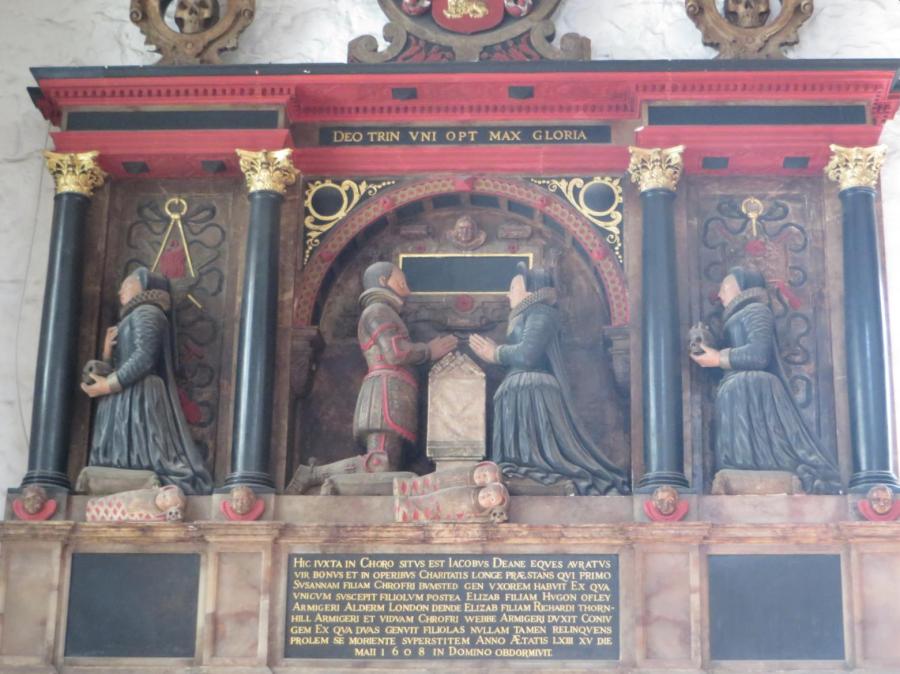
The Deane monument, St Olave’s. copyright Carole Tyrrell
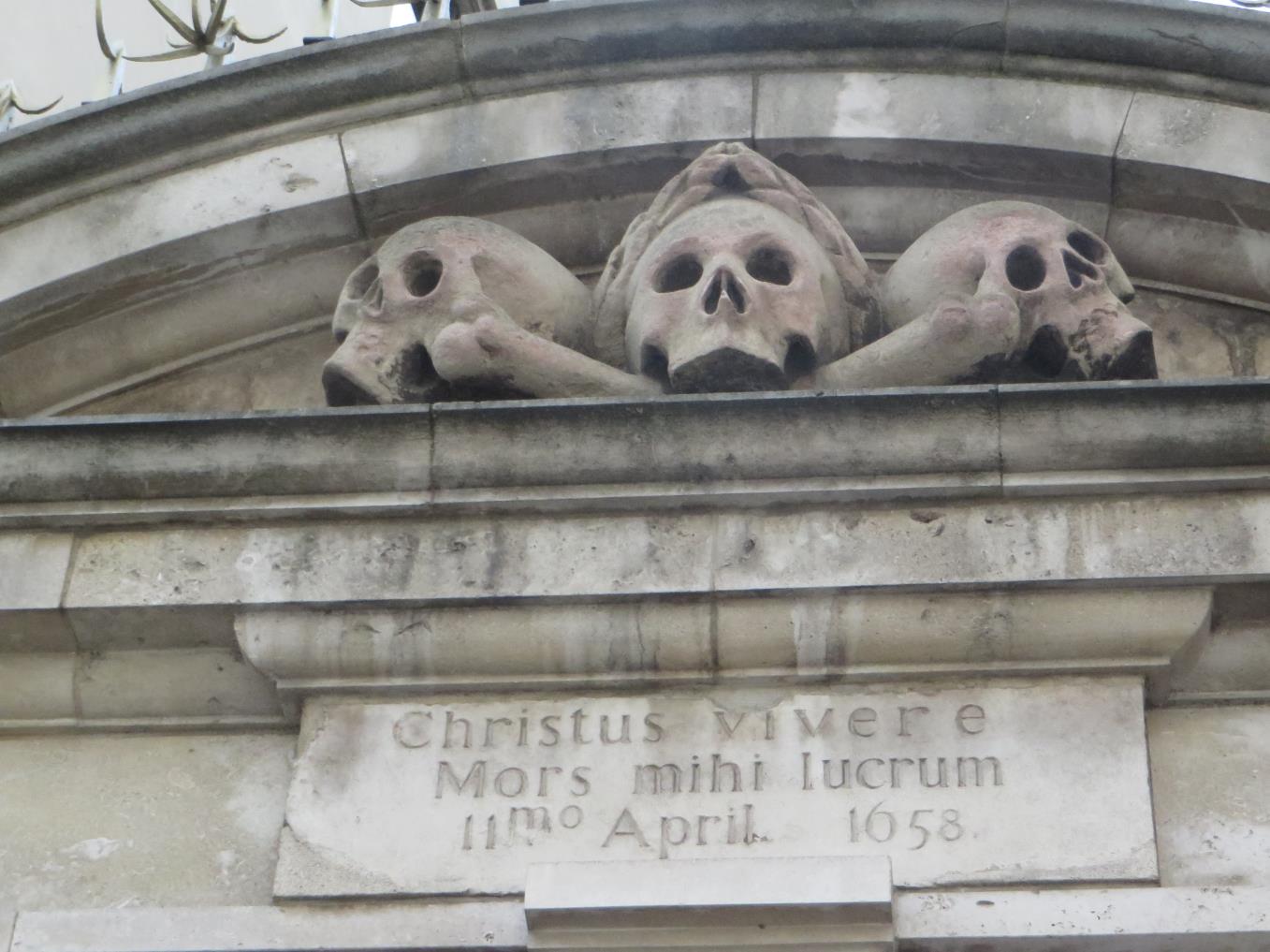
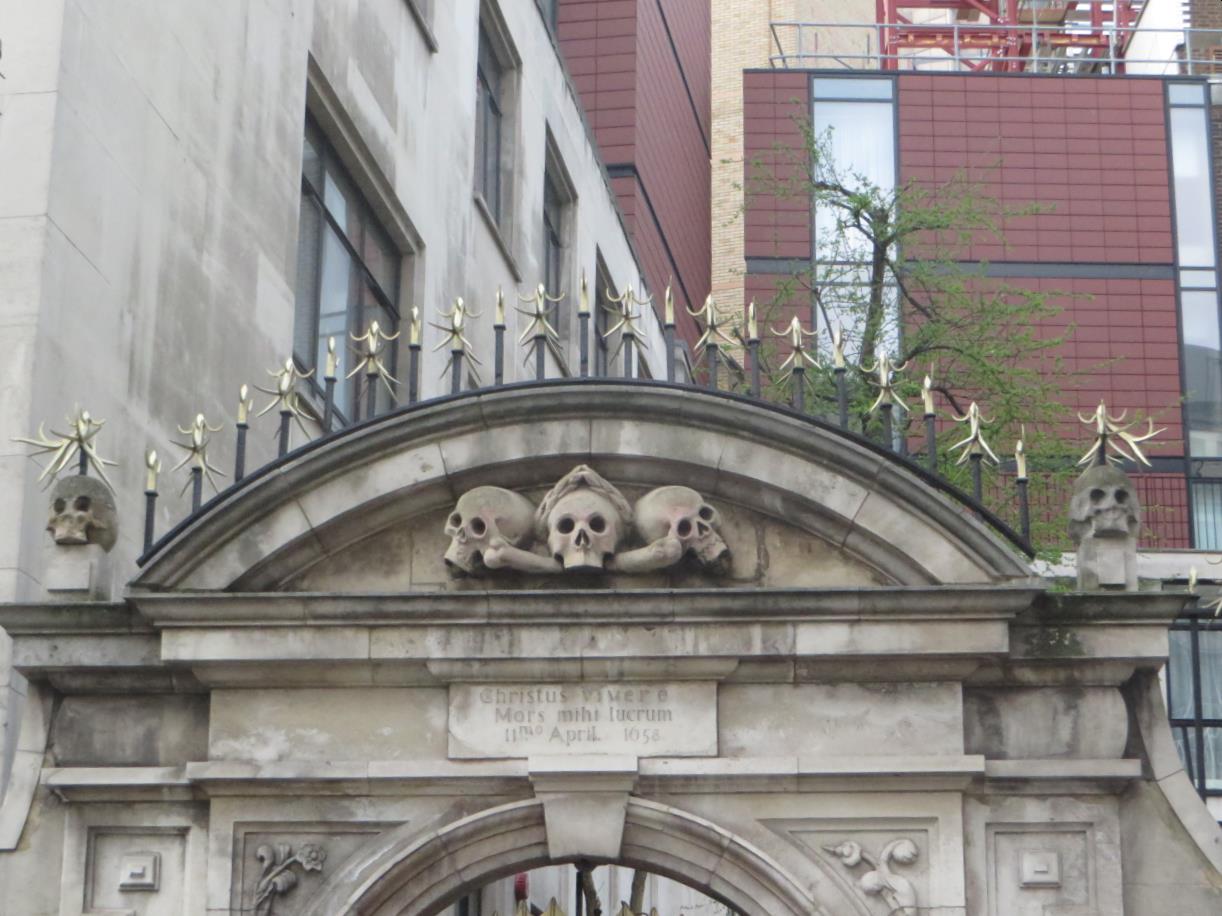
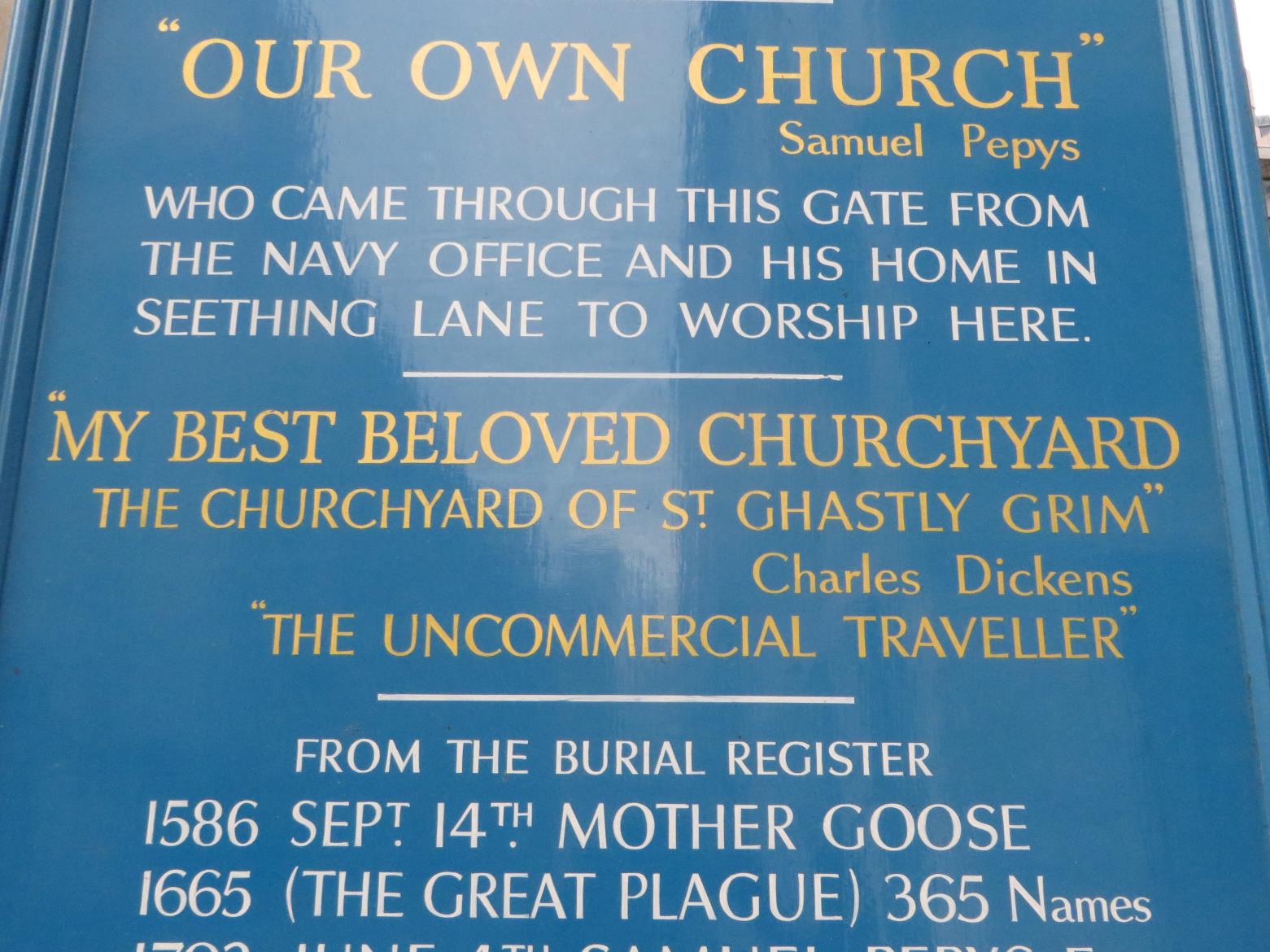
I’m sure you’ll agree that this is a very flamboyant and imposing monument. However, it is also one with great poignancy. It dates from the early 17th century and can be found in St Olave’s church, Seething Lane in the City of London. I was working in the City at the time and spent my lunch hours exploring the ancient City churches. St Olave’s is known for several grinning skulls on the entrance arch to the churchyard which dates to 1658. They impressed Charles Dickens so much that he included it in his book of sketches, The Uncommercial Traveller, in which he renamed the church, St Ghastly Grim.
The skulls that caught Charles Dicken’s eye over the entrance arch to the churchyard. copyright Carole TyrrellFull view of the churchyard arch with its complement of skulls. copyright Carole Tyrrellcopyright Carole Tyrrell
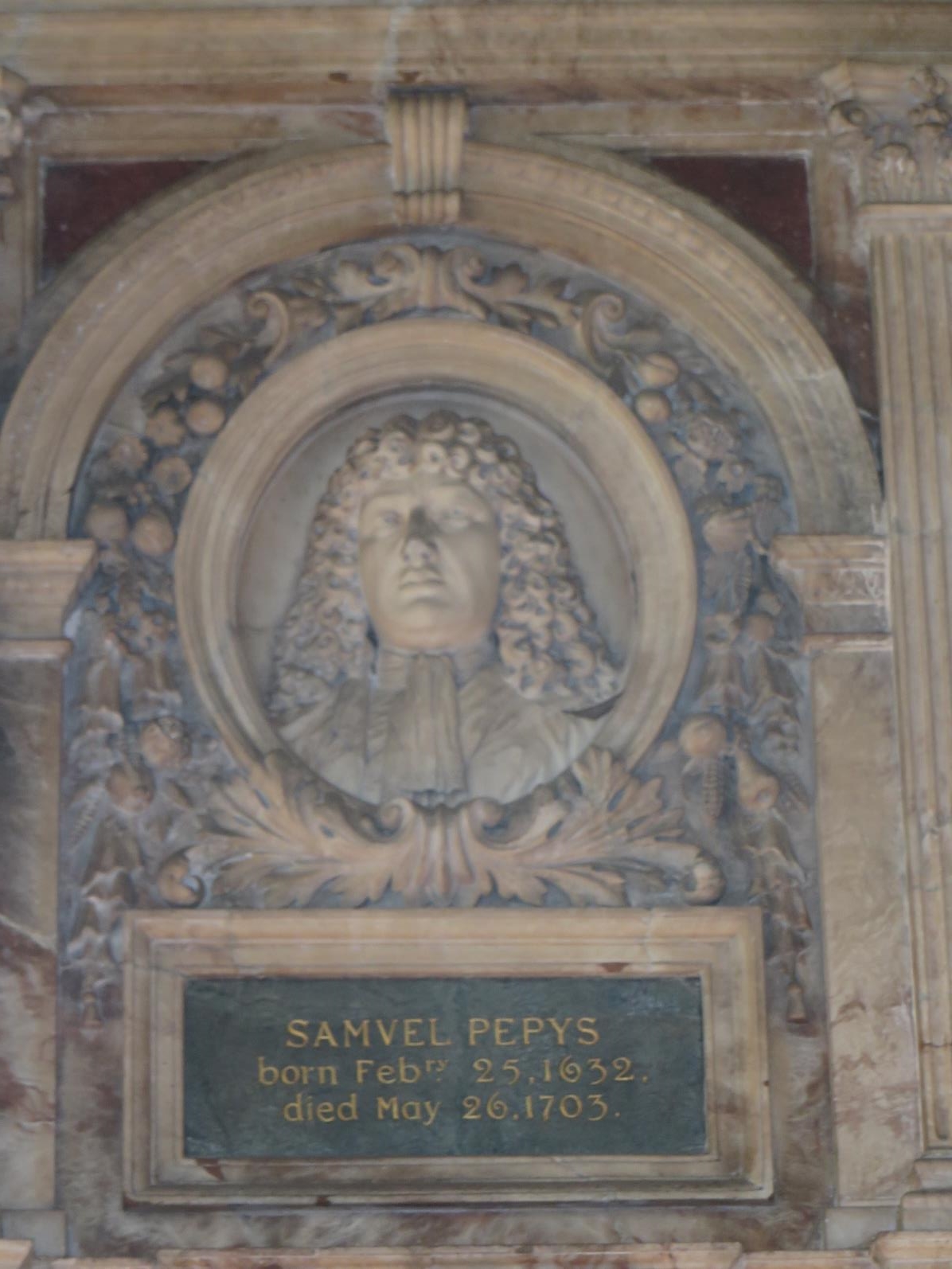
The diarist, Samuel Pepys and his wife had strong connections to St Olave’s and Mrs Pepys is buried within it. It is a church steeped in history.
Samuel Pepys monument. copyright Carole Tyrrell
So, Sir Jacobus, or James, Deane is in good company. This would have been an immensely expensive monument when it was created and is one laden with skulls. Deane and his 3rd wife kneel, facing each other, over a prayer table which was a convention of the time. They are both fashionably dressed as she wears a ruff and bonnet in addition to her beautifully carved black gown. Jacobus himself wears dull gold armour which has been highlighted in red.
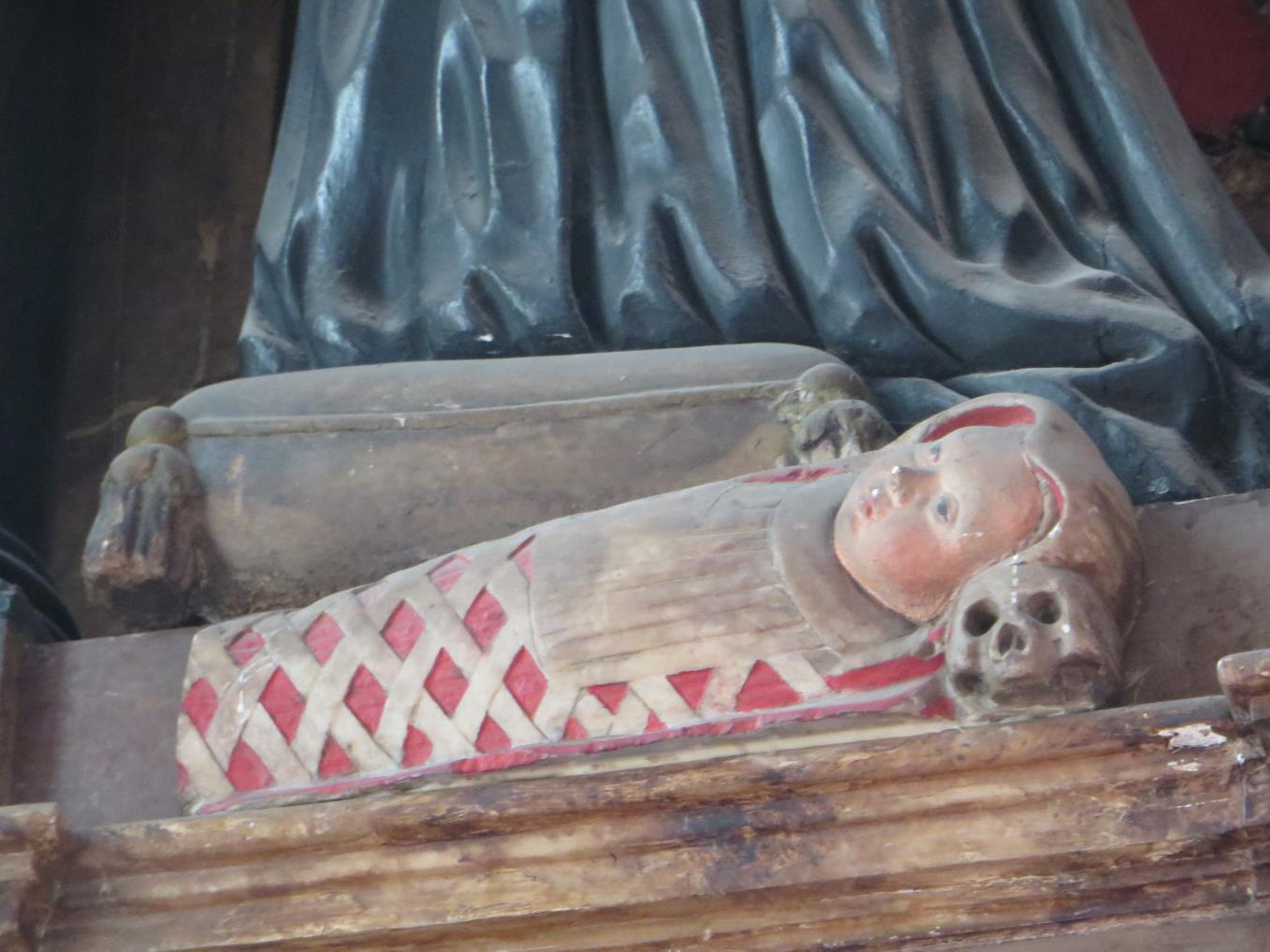
The two women also dressed in fashionable clothing on either side of the couple are Jacobus’s first 2 wives and both carry skulls. However, it isn’t a Gothic fashion accessory but an indication that they both died before their time. The three swaddled infants beneath the figures, a pair and then one on its own, all died in infancy. According to the V & A:
‘Newborn babies were swaddled, wrapped in cloth with bands around them for the first 6-12 months of their lives. It was thought to strengthen the spine and help their body develop. Swaddling would usually bind the whole body, leaving only the head to move. These bands were usually just plain linen.’
The swaddling bands can be seen quite clearly on the figures of the infants. The pair rest on a small skull as does the single one which again indicates mortality.
The two swaddled infants – note the skull that they rest on. Copyright Carole TyrrellThe single swaddled infant – again resting on a skull. Copyright Carole Tyrrell
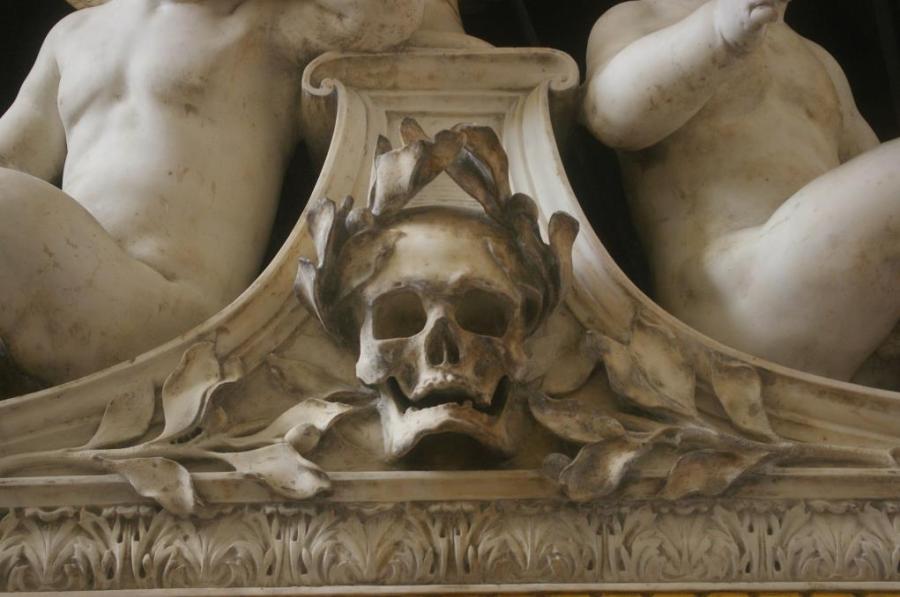
Two other skulls grin from on top of the monument. Cherubic heads or possibly winged messengers also look back at the observer and there are several armorial bearings as well.
One of the two skulls on top of the Deane monument. Copyright Carole Tyrrell
Sir Jacobus Deane was knighted on 8 July 1604 and was a very wealthy man. He made his fortune as a merchant adventurer to India, China and the Spice Islands and was very generous to the poor in every parish in which he lived or owned property. He built almshouses and left liberal bequests. Susan Bumsted was his first wife and Elizabeth Offley was his second. James’s third and last wife was a widow, Elizabeth Thornhill. She already had a son by her first husband and her third husband was John Brewster. Sir James Deane died on 15 May 1608 aged 62 having left no children.
There has been a suggestion that there is a significance to the number 3 contained within the monument. I can’t see it apart from the references to 3 wives and 3 children, but I would refer you to the Rushton Triangular Lodge in which there are a plethora of references to this number and its symbolism. It dates from the same period.
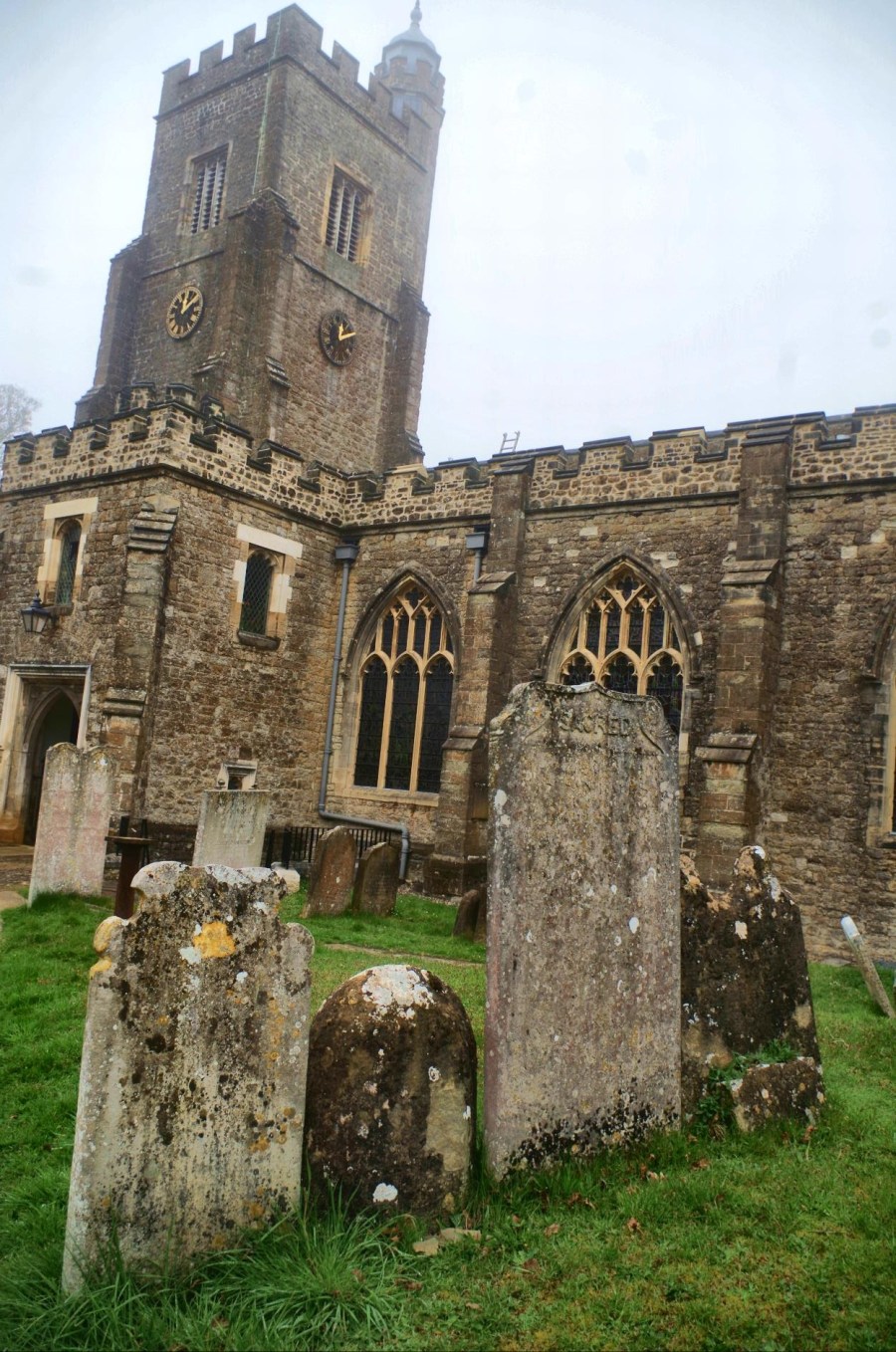
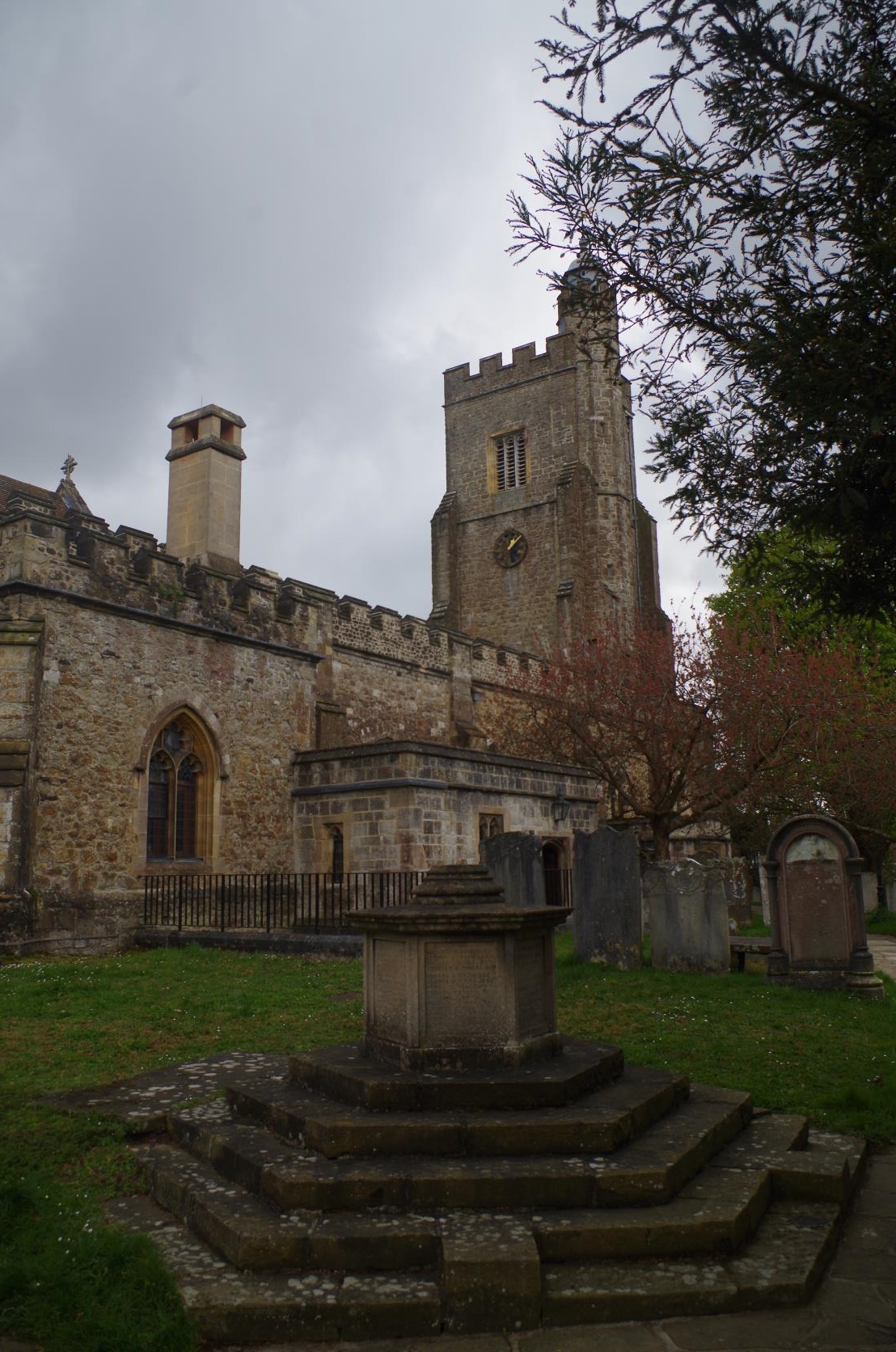
On my previous spring saunters I’ve wandered through two of London’s large, sprawling cemeteries; Kensal Green and West Norwood but this year I thought I’d stay nearer to home. St Nicholas is my local church and within walking distance of my home. It’s in a prominent position in the town as it’s at the top of the hill and opposite the entrance to Knole Park, another local landmark. One of its most famous Rectors was the preacher and poet, John Donne, who was in post from 1616 until 1631 and is commemorated with a metal plate on the pavement outside. Every time I visit its churchyard I find something new and at a time when Nature is beginning to awaken again what better excuse did I need?
The present building’s shape dates from the 13th century and in fact the present nave dates from 1270. It replaces an earlier church. The north aisle was added in 1320 and the chancel south aisle and tower around 1450. There have been many later alterations but the basic 15th century structure and style remains. In 1995 excavations took place to create more meeting rooms in what may have been the crypt. The interior of the church has some monuments dedicated to prominent local families.
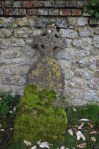
But it’s the churchyard that fascinated me. Intertwined with plain Victorian headstones are some wonderful examples of 18th century tombstones adorned with memento mori. A couple are naively executed but others are finely carved with the wonderful 18th century calligraphy accompanying them.
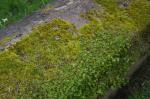
The Spring sunlight illuminated the thick patches of moss and lichens that had carefully draped itself over the monuments and memorials. It made the subtle hues and shades really stand out; the combination of green and gold or browns seemed to gleam amongst more subtle hints.
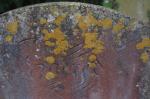
Some of the lichens looked as if someone had taken a paintbrush loaded with colour and then dabbed it onto the stones. Moss has the effect of softening the edges of stones and letters and, where it replaces letters completely, gives a more organic feel to the epitaph.
A spreading horse chestnut tree was laden with sticky buds already beginning to burst into leaf. ‘How many years has it stood near the church door marking the seasons and years?’ I thought.
A chaffinch called loudly for its mate from the closed part of the churchyard. I had explored this in October and seen its large carpet of prickly sweet chestnuts as a fox had turned tail and run back to where it had come from. There has been a piece of bone abandoned on top of a flat headstone and I hoped that the fox had brought it in from a nearby butchers rubbish bin…….now alas this part of the churchyard is closed due to Health and Safety as it’s so overgrown. On this visit I disturbed a fluffy ginger and white cat who soon fled in the same direction as the fox.
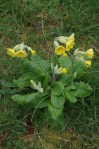
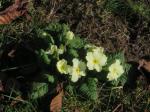
Three large patches of snowdrops clustered protectively around the base of a tree, their pristine heads nodding in the breeze as if deep in conversation. Primroses had begun to stud the grass and I saw my first ever cowslip amid headstones.
The tiny bright blue flowers of Speedwell blossomed beside a small tombstone and a red-tailed bee, one of the first signs of Spring, buzzed along the top of the grass. Dog violets, a much underrated flowers in my opinion, frothed plentifully beside the iron entrance gate.
Nearby, was not so much a carpet of Spring flowers, but more of a small rug of them. More Primroses, the bright yellow of Lesser Celandine, another harbinger of Spring, and more dog violets all combined to make a wonderful collection of green, yellow and purple.
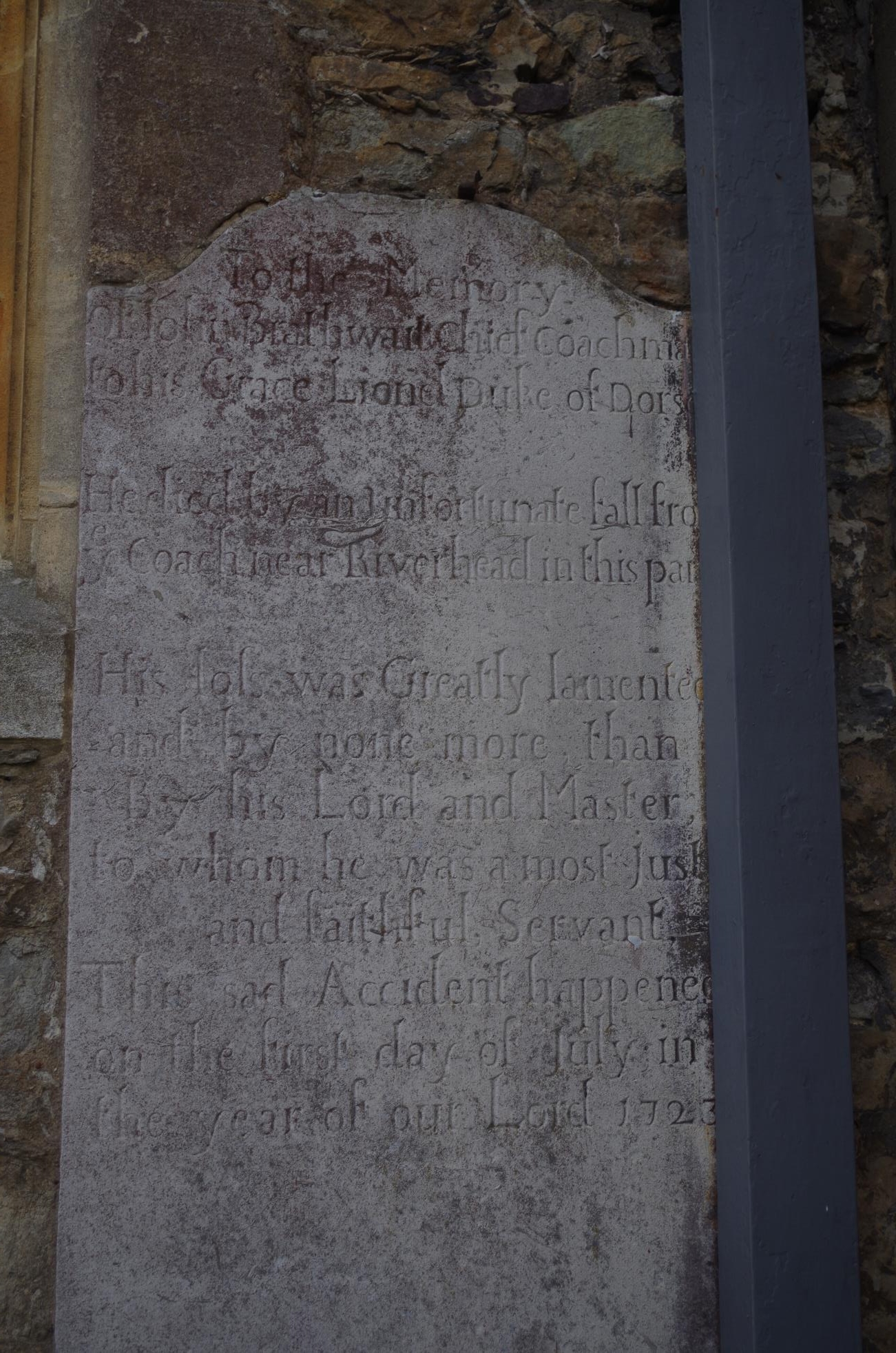
There are some remarkable epitaphs in St Nicholas churchyard and this one which has now been incorporated into the fabric of the church caught my attention.
The epitaph reads:
To the Memory
of John Braithwaite Chief Coachman
to his Grace Lionel Duke of Dorset
He died by an unfortunate fall from
Ye coach near Riverhead in this parish.
His loss was greatly lamented
and by none more than
by his Lord and Master
to whom he was a most just and faithful servant
This sad accident happened
on the first day of July in
the year of our Lord 1723
With the Caring for God’s Acre project which is linked with the bio diversity recording site, irecord, biodiversity within cemeteries is being examined more closely. They are real havens for wildlife especially in big cities as they are an invaluable green space that’s accessible to everyone. I’ve always enjoyed exploring cemeteries partly for this reason whether it be standing waist high in wild flowers on a hot July day in the meadow at Kensal Green cemetery or counting butterflies along the side paths leading to the Courtoy Mausoleum in Brompton Cemetery.
Sadly the Spring sunshine was replaced by April showers but Mother Nature ignored this and kept bursting forth regardless. I’m already looking forward to my summer saunter within St Nicholas.
The substantial church of St Leonards at Streatham could almost be seen as God’s’ traffic calming measure as it makes the drivers on the busy Streatham High Road inch past its walls. But once inside St Leonards churchyard the noisy flow seems to fade to a hum and you can appreciate a church which has had a chapel on its site for over 1000 years.
I was on a guided tour organised by the Friends of Nunhead Cemetery and our guide was John Brown who had an obvious affection for St Leonards.
The first church was built in 1350 and the lowest part of its tower still stands. St Leonards was then rebuilt in 1778 and altered again in 1831 when the nave was completely rebuilt and a crypt created. During the 1860’s a chancel was added. But, on 5 May 1975, disaster struck when a fire completely destroyed the interior. It was then re-designed and St Leonard’s now has a whitewashed interior within its 19th century walls. This has created a wonderful backdrop on which the surviving wall tablets and memorials are well displayed. An inspiring blend of the ancient and new.
We began by exploring outside and stopped to admire the tower which is known as Sir John Ward’s Tower . According to John, it has the highest oak tree between the Thames and Croydon growing halfway up it. The tower is built from Surrey flint and is topped by a modern spire dating from the 1841.
The churchyard contains over 250 memorials dating from the 18th century with the last burial in 1841. Part of the graveyard was bombed during the 2nd World War and, as a result, has been landscaped to create a Garden of Remembrance. John revealed that some of the burials had only had a wooden graveboard which had long since disintegrated.
St Leonards was a very fashionable church during the 18th and 19th centuries and, as a result, a chapel of ease dedicated to All Saints was built in a nearby road. Alas, even God was expected to adhere to the rigid class system of the time as the local gentry worshipped at St Leonards and their servants would attend their own service at All Saints. Dr Johnson and James Boswell are known to have visited the church. This may be one of the reasons that there are several prominent local people buried in the churchyard. John pointed out some of the more illustrious tombs; Merian Drew, the lord of the manor and his daughter Jane Agnes Fisher, George Pratt of Pratts Department store in Streatham and the Colthurst family member who had owned Coutts bank.
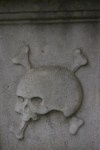
William Dyce, the Pre-Raphaelite painter and polymath, lies under a broken cross. He designed the florin coin and was a much in demand portrait painter. Amongst his many achievements were the frescoes in the robing room of the House of Lords although they remain unfinished. He also painted another celebrated fresco for the House of Lords, ‘The Baptism of Ethelbert’. My own favourite of his paintings is ‘Pegwell Bay, Kent – a Recollection of October 5th 1858’ with its haunting, melancholy atmosphere and muted colour palette. He was also a churchwarden at St Leonards and was responsible for designing the chancel in 1863. Dyce’s ‘Madonna and Child’ of 1827 featured on the Royal Mail 2007 Christmas stamps. Robert Garrard, the royal jeweller s also lies here and there was a flat, plain slab on the grave of one of novelist Trollope’s nephews who was the owner of the building firm, Trollope and Colls. I also admired the small sculptures of angels on the Montefiore monument. There were also several tombstones dating back to the 1700’s with a scattering of skull and crossbones.
A large monument had been made from the wonder material of the 19th century, Coade Stone. A Mrs Coade, invented it but for a long time the recipe was lost. However it and the techniques for producing the stone have now been rediscovered and a new range of Coade sculptures are currently available.
We then followed John inside to admire two 17th century imposing and magnificent monuments in the porch. The striking Massingberde memorial commemorates a London merchant and Treasurer of the East India Company who died in 1653. The two figures facing each other symbolise the triumph of life over death. The dramatic Howland monument was erected by a grieving widow, Elizabeth, to her husband John who died in 1686 and features a brooding skull and several cherubs.
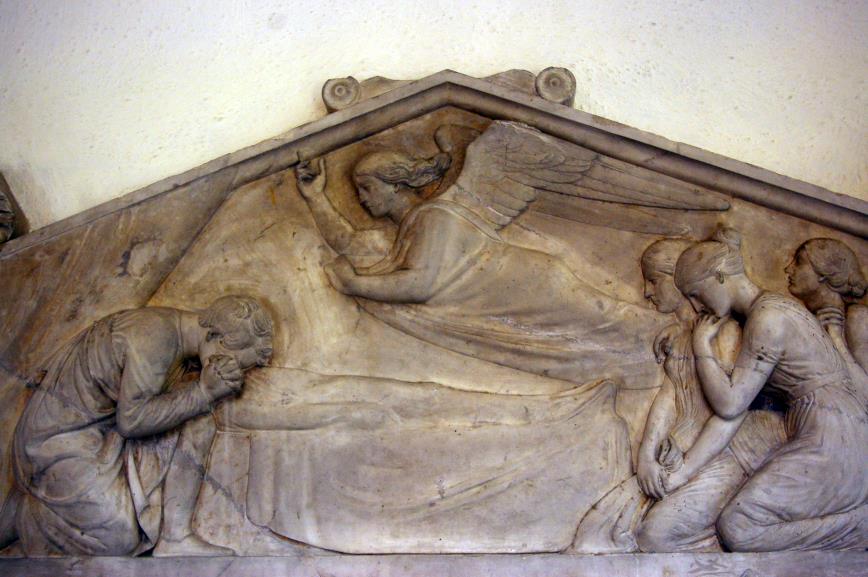
The Thrale memorial tablet by John Flaxman – reputedly drawn from the life. copyright Carole Tyrrell
At the top of the chancel by the altar were the Thrale monuments. These were to Henry Thrale and his mother-in-law, Mrs Salusbury. Henry, who is also commemorated by the nearby Thrale Road, was a wealthy brewer and MP. He and his wife, Hester, entertained the well -known movers and shakers of the day including Dr Johnson and James Boswell. There were two epitaphs written in Latin by Dr Johnson and a beautiful tablet by John Flaxman is set into the wall. It has three female figures on it which were reputedly carved from the life. One of them is Sophia Hoare. John Flaxman (1726-1803) was a prolific sculptor of funerary monuments, mainly in the Classical style, and his work can be seen in Westminster Abbey and Gloucester Cathedral as well as many churches.
A somewhat dog eared and damaged figure lies on top of what looks like a table tomb. This is what’s left of an effigy of Sir John Ward in his armour. Colin Fenn of FOWNC has compiled a list of helpful notes to accompany the reconstruction drawing of it and estimates the figure as dating from 1350-1380. Sir John fought with the Black Prince at Crecy and, in the modern Streatham stained glass window, he appears holding a model of the first, 14th century chapel that he built. The rest of the window records the history of Streatham and St Leonard’s and is well worth seeing. It’s by John Hayward as all the stained glass within St Leonard’s.
There are more intriguing memorials in the Chapel of Unity and John drew our attention to Edward Tylney’s. He was the Master of Revels, under Queen Elizabeth 1 and King James 1, and who put on plays and other entertainments for the Court. He was renowned for being vain and had the memorial created during his lifetime which is why there is a blank space for the date of his death in 1610. But there is another version in which the mason was so relieved at Tylney’s passing that he omitted to add the date of his death. Nearby is William Lynne’s affectionate tribute to his wife, Rebecca which dates from Cromwell’s reign. Part of it reads: ‘
‘Should I ten thousand yeares enjoy my life I could not praise enough so good a wife.’
The oldest inscription, dated 1390, was below the altar and is a small brass plate which asks for prayers for the repose of a long past rector, John Elsefield.
Then we descended the spiral staircase to the crypt. This was an unexpected surprise. Although not as extensive as West Norwood or Kensal Green it was still impressive and atmospheric with incumbents in their loculi.
Loculus which is Latin for ‘little place”, plural loculi, is ‘an architectural compartment or niche that houses a body, as in a catacomb, mausoleum or otherplace of entombment’ Wikipedia
The crypt is laid out with 2 corridors and the gated individual family vaults lead off them. Some contained entire families including the Thrales. John showed us one in which the loculus had been bricked up as the occupant had been buried in only a shroud. This was Mr Costa, a silk merchant, who left instructions that every pauper who carried his coffin was to be given a guinea. Needless to say, his coffin was carried by many poor men and so his wealth was redistributed. Only the undertaker was left empty-handed. There’s also two earls who ended up down there whilst visiting Streatham but I don’t think that the two events are connected.
The crypt was rebuilt in 1831 and was used as an air raid shelter during the 2nd World War during which time an experiment was carried out to determine the depth of the charnel pit under the flagstone floor. The measure went down as far as it would go which was 20ft but the pit extended far below that. More recently it became the home of a local tramp called Black Tommy who had his mail delivered there. One wonders with whom the postmen would have left large packages when Mr Tommy was out.
As a finale, John showed us the substantial headstone of the local ratcatcher which proved that he was certainly busy, successful and appreciated. Sadly, the epitaph appears to have completely vanished. Afterwards a couple of us strolled about the churchyard reading the fine epitaphs on several memorials.


























 shadows fly away