The pet cemetery of Lamb House, Rye, April 2025

View of Lamb House pets cemetery © Carole Tyrrell

In April, I was on a literary weekend in Sussex and Kent. We made the town of Rye our base. The town has a rich literary tradition with several famous writers having lived there.  Several of them were lucky enough to live at Lamb House, a red brick Georgian house with spacious rooms and a garden that was just beginning to take shape on my visit. Neatly labelled rows of vegetable seedlings gave an indication of what was to come later in the year. There is a magnificent view of St Mary’s church from an upper window and Henry James is commemorated with his writing desk and ‘The Telephone Room’. I love finding pet cemeteries as I find them fascinating and touching.
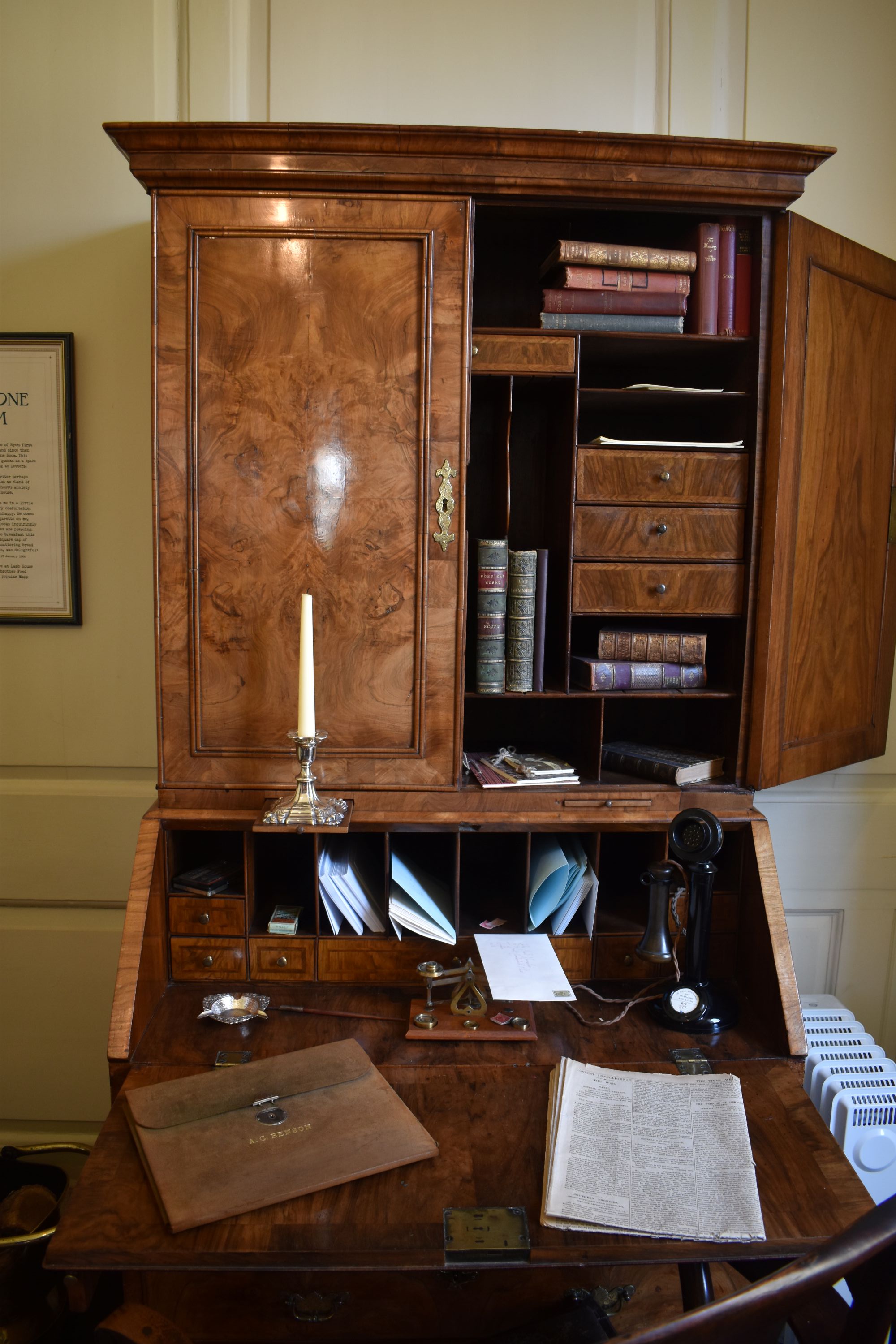
© Carole Tyrrell

Lamb House is now owned by the National Trust and when I last visited over 20 years ago, it looked very different. There was an upstairs tenant – lucky them! Now the upstairs rooms have been opened to visitors and on my visit there was an exhibition, ‘Ghost Written’, which featured the house’s most well known writers through their ghost stories.

Lamb House Rye Shared under Wiki Commons © Jerrye & Roy Klotz, MD

The American writer, Henry James, (1843-1916) wrote three of his most famous books at Lamb House:  ‘The Wings of the Dove’, ‘The Ambassadors’ and ‘The Golden Bowl’. He discovered Lamb House while visiting a friend and instantly fell in love with it. He leased it in 1897 and, two years later, he finally bought it.

The house appears in his novel, ‘The Awkward Age’, where it is Mr Longdon’s home. During James’s time there a literary circle came into being that included Rudyard Kipling and H G Wells amongst others. In 1916, James was very ill in London and wanted to be taken back to Lamb House but he was too ill to be moved.

He was followed by E F Benson (Edward Frederic) Benson (1867-1940) who is known for his Mapp and Lucia novels which are set in a fictional town called Tilling that was based on Rye. They were adapted and made into a successful TV series. I know him through his ghost stories or ‘spook stories’ as he called them. He became Mayor of Rye twice and was awarded the Freedom of Rye which was the town’s highest award. He is buried in the local cemetery on the outskirts of town.  ‘Fred’ as he was known bequeathed two colourful windows, the East and the West, in the local church, St Mary’s. 

View of Fred Benson’s monument © Carole Tyrrell

Another view of Fred Benson’s monument.© Carole Tyrrell

Other writers who lived at Lamb House were Montgomery Hyde and the prolific author of ‘Black Narcissus’, Rumer Godden.

It was in the south western corner of the garden that I found the pet cemetery which was dedicated to Henry James and Fred Benson’s pet dogs. I remembered it from my first visit where it was hidden behind vegetation.  The cemetery is a small collection of headstones. There are no cats as, although Henry James, was;

A great lover of animals he would chase them (cats) away from the garden’

National Trust guidebook

The first headstone in what James called his:

‘domestic mortuary’

was dedicated to Tosca, his black and tan terrier who died in 1899.   

Tosca was followed by Tim who was another terrier, then came:

‘my admirable little Peter’

Then there was another terrier, Nick.  But James’s heart was undoubtedly given to Maximilian or Max, a red dachshund. According to his owner Max had

‘a pedigree as long as Remington Ribbon.’

He also described Max as:

‘the gentlest and most reasonable and well mannered as well as most beautiful small animal of his kind to be easily come across.’

Max loved being taken on long walks but, due to his love of chasing sheep, had to be kept on a long leash. 

Henry was very upset at having to leave Max behind when he went on an  extended trip to the US.  He wrote to his lodgers of his homesickness and how much harder it was when thinking of:

‘poor sweet pawing little Max.’

© Carole Tyrrell

© Carole Tyrrell

© Carole Tyrrell

Fred Benson also adored dogs and his favourite was a collie called Taffy. This is a photo of them together and Taffy is also commemorated in the East Window of St Mary’s church.

From the exhibition, ‘Ghostwritten’ at Lamb House
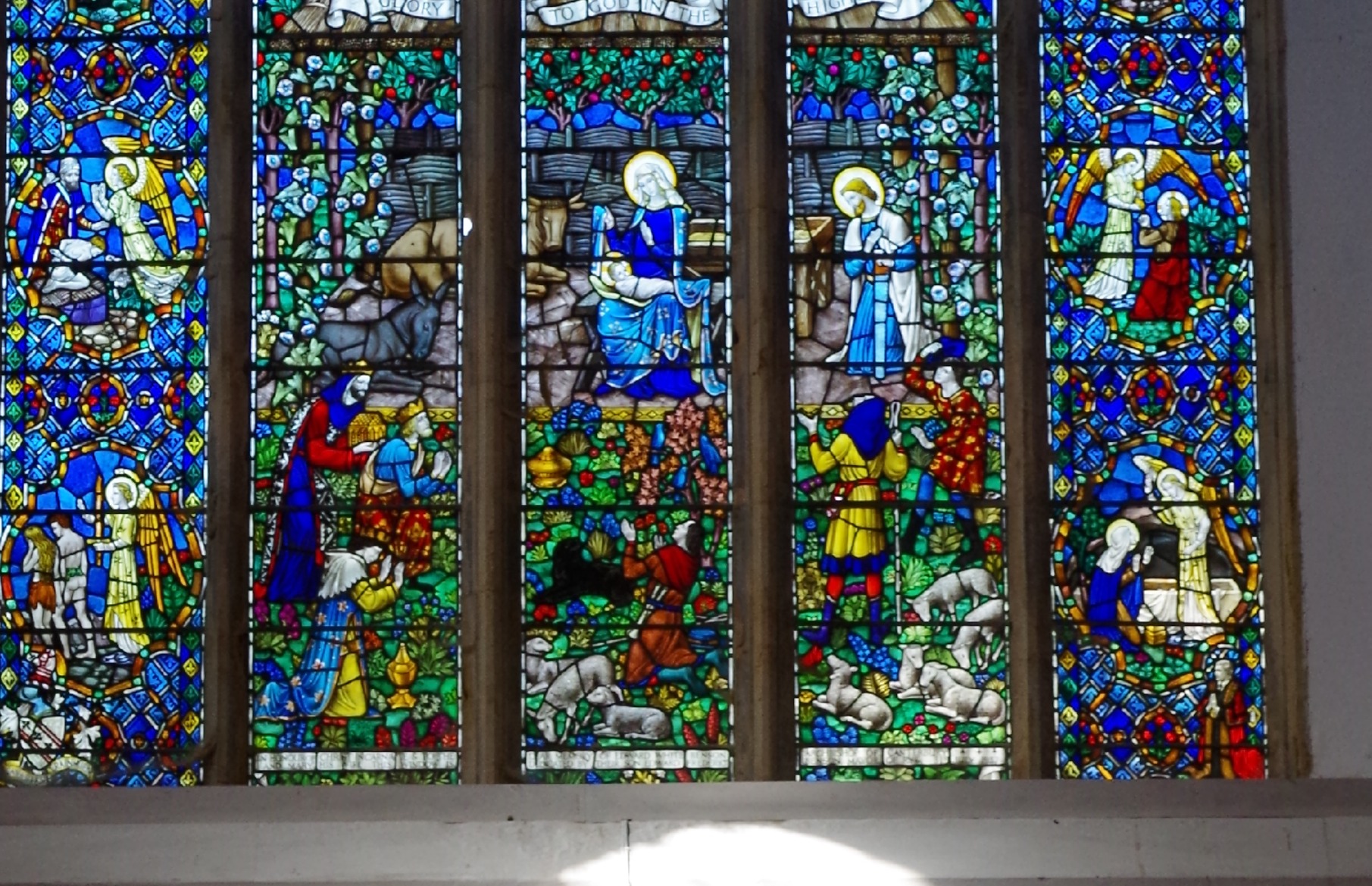
Taffy is the black dog in the lower part of the window, East window, St Mary’s, Rye. © Carole Tyrrell

© Carole Tyrrell

Rumer Godden loved Pekingese dogs and she owned several throughout her life.

I didn’t recall the pet cemetery being so large but the Trust’s intention is to recreate the garden so that it resembles

‘ the space that delighted and inspired Henry James and Fred Benson’

National Trust guidebook

I found the little cemetery with its little plain, simple stones very touching and a poignant reminder that these much loved pets were not forgotten.  And as I read the names on the stones they seemed to come alive again racing around the garden at play.

©Text and photos Carole Tyrrell unless otherwise stated.

References and further reading

National Trust guidebook

Lamb House, Rye | History & Photos

Lamb House – Wikipedia

Wildlife in Cemeteries – no 9 – The Goth Moths are coming!

Six Spot Burnet moth Brompton Cemetery July 2018
©Carole Tyrrell

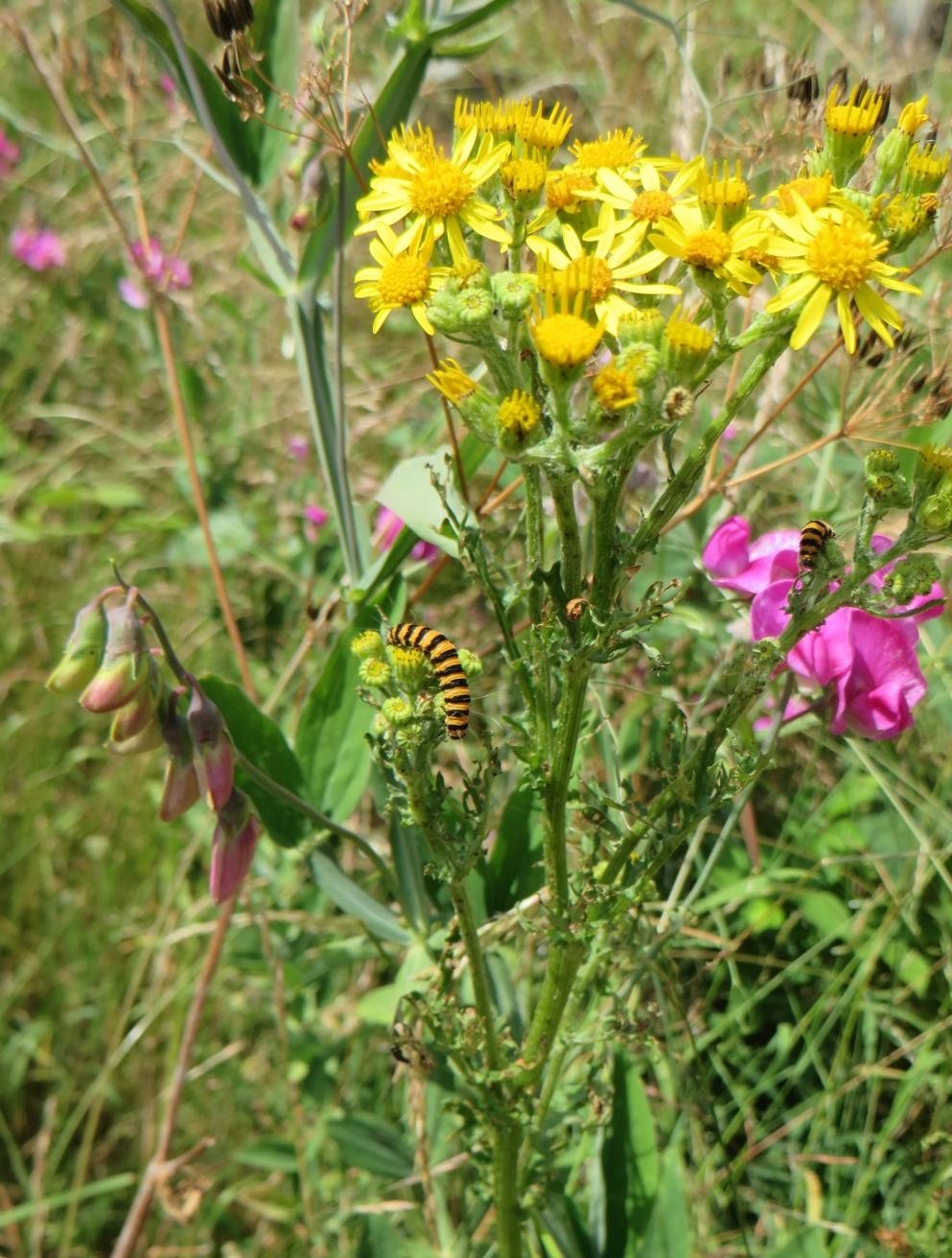
As we prowled the side paths bordering Brompton Cemetery’s celebrated Courtoy Mausoleum  on an Exploring Butterflies day in June of the this year, we also discovered roughly half a dozen caterpillars. They were  unconcernedly munching away on wildflowers or ambling along grass stalks. Usually caterpillars are always so well hidden and camouflaged, especially in long grass, but there they were.

These two attractive specimens  would develop into day flying moths whose presence and colouring were very appropriate to a cemetery.  In fact they could almost be known as the Goth Moths.

Cinnabar moth caterpillars Brompton Cemetery June 2018
©Carole Tyrrell

These stripey beasts feasting on ragwort are the caterpillars of the Cinnabar moth.  When they transform into moths their colouring is very dramatic in scarlet and black:

Cinnabar moth in all its glory shared under Wiki Creative Commons
©Charles J Sharp Sharp Photography

The other caterpillar was nearby as it quietly made its way along a long stem of grass.  In my opinion, it was another prettily patterned one, which will eventually become the Five Spotted Burnet moth.

Six  Spot Burnet caterpillar Brompton Cemetery June 2018
©Carole Tyrrell

This is another dramatically coloured moth in red and black and it gets its name from the number of red spots on its black wings and one appears at the top of this post.

As Goths like to roost in cemeteries and are known for their black clothes which are often contrasted with bright colours such as scarlet and purple it seemed entirely appropriate to find two examples almost named after them.  It was also great to see caterpillars doing well in such an urban environment so obviously the cemetery’s management plan of leaving areas uncut and left to grow wild is working well for nature in 2018.  Long may it continue!

Mating Six Spot Burnet moth Brompton Cemetery July 2018
©Carole Tyrrell


©Text and photos Carole Tyrrell


Wildlife in cemeteries No 7 – dragonflies and damselflies

With gossamer wings which turn into tiny rainbows under the sun’s rays as they pose on trees and tombstones and incredible acrobatic flying displays dragonflies and damselflies are regular visitors to my local churchyard.  And 2017 has been an incredible year for spotting them.

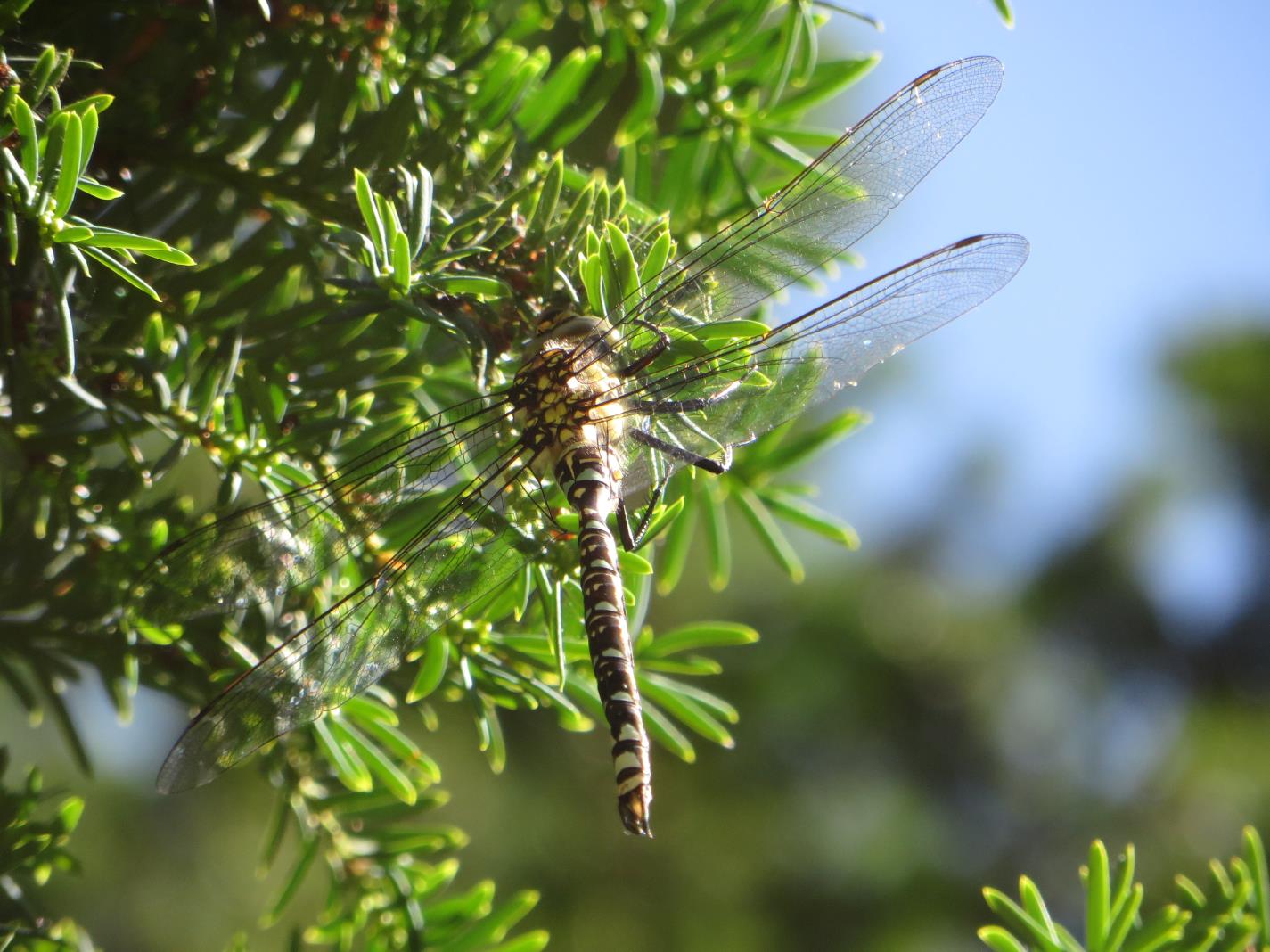
I don’t think that a chucrwarden in St George’s, Beckenham, believed me when, in 2016, she found me trying to capture a Southern Hawker  which was conveniently posing on a  lofty yew branch..   But this year, I have seen so many in there that it did become a regular part of my day to walk through and look for them.

I would watch in amazement at their aerodynamics and speed as their 4 wings whirled furiously like helicopter blades as they flew at speed.   However, they would also fly at a more leisurely pace around and around before, tantalisingly, they would veer off into the foliage of trees to vanish from sight.  It would often be the bigger dragonflies such as Southern Hawkers that I would see on the wing but also as the summer moved on, Common Darters began to appear.

Often a dragonfly would obligingly land on a tombstone or lower branch and I noticed that they were particularly attracted to evergreens such as yews.  This might account for their attraction to cemeteries and graveyards.

Here’s a selection of my favourite images of dragonflies and damselflies from both cemeteries and churchyards:

This is a Southern Hawker from 2016 and was seen it in St George’s churchyard, Beckenham.

Southern Hawker on yew, St George’s churchyard Beckenham August 2017
©Carole Tyrrell

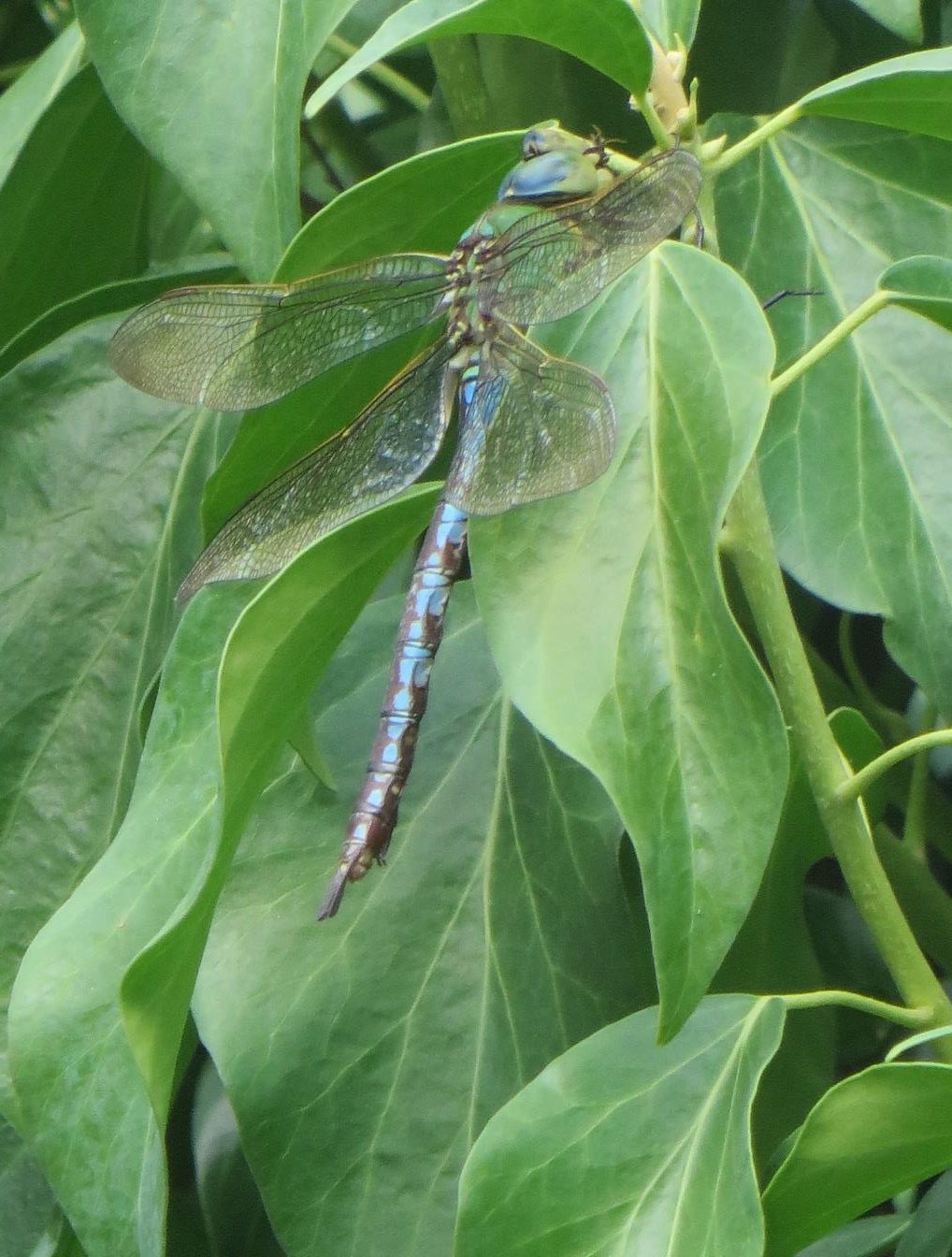
This is a male Emperor from Kensal Green cemetery, London in July 2017. I spotted him/her flying around above The Meadow section which is left uncut around the monuments and tombstones during the summer to encourage wildlife such as butterflies, In some parts it’s very damp underfoot hence the dragonfly I thought. It evaded my attempts to photograph it until, near the entrance as I was leaving, it landed temporarily on an ivy clad monument.

Male Emperor, Kensal Green cemetery July 2017
©Carole Tyrrell

These are two damselflies from Beckenham Cemetery’s Garden of Remembrance pool from July 2017. From July –August it is a magnet for red and azure damselflies.  They look almost like tiny, coloured sticks floating on the breeze and I caught these two ovipositing i.e. laying eggs.  The upright one is laying the eggs and the other is holding it steady.

Damselfiles ovipositing (laying eggs) Beckenham cemetery June 2017
©Carole Tyrrell

Again from St George’s but from 2017, I waited patiently until this beautiful male Southern Hawker landed and helpfully rested on a tombstone.  It stayed there for a few minutes until it got fed up and flew off again.

Male Southern Hawker on tombstone, St George’s churchyard, Beckenham August 2017
©Carole Tyrrell

This is a Common Darter and I saw several over the summer this year in the churchyard. For some reason they were particularly attracted to the pink granite monuments – a cool surface on a hot summer’s day?

Common Darter on pink granite monument, St George’s churchyard Beckenham August 2017
©Carole Tyrrell

I enjoy looking out for them and on one occasion last year the angle at which the dragonfly was perched on a yew branch and the way in which the sun shone through its wings made them look as if they were made from burnished copper.

So do look up when you’re next visiting a cemetery or churchyard on a warm summer’s day and you might be surprised.  I’m looking forward to what the summer of 2018 might bring already!

©Text and photos Carole Tyrrell

Wildlife in Cemeteries no 6 – a summer Sunday saunter

A wonderful and colourful display of hollyhocks over a grave in a clearing behind the Anglican chapel at Kensal Green Cemetery.
©Carole Tyrrell

Summer is when you can really appreciate the wild corners and places within cemeteries.  Often spaces between tombstones and monuments will be left unmown or unscythed which allows grasses to grow tall.  The rapidly expanding bramble stands are good hiding places for foxes to hide in or use to travel between.   Already ripe, plump blackberries are dessert for hungry birds and jam makers.

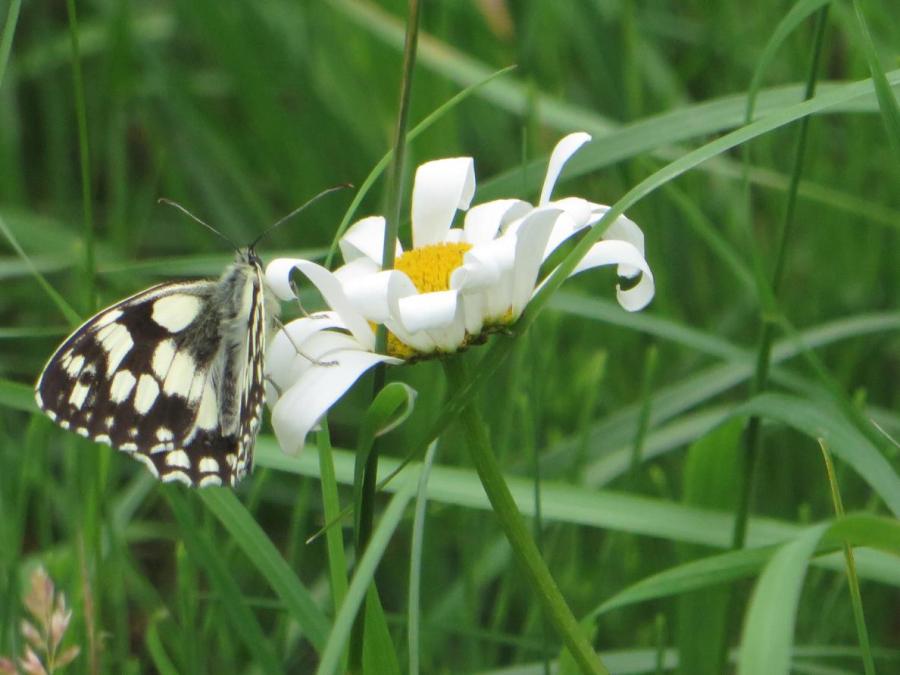
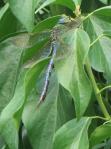
Wildflowers begin to stud the grass and undergrowth with bright dots of colour as they bud and begin to flower under the summer sun’s rays.  These create dazzling combinations of colour as they grow together. At Kensal Green one area near the closed catacomb terrace is designated as a meadow.  I stood inside it in early July of this year, almost waist high in grass and flowers,  surrounded by flitting butterflies and day flying moths, leaping grasshoppers and even a large blue Emperor dragonfly.  The latter was a complete surprise.  There was even a pair of courting Small White butterflies as well.  I just felt so happy to be there with the sun on my face and nature getting on with itself regardless of me.

Ragwort, a bright yellow plant which is rampant at the moment, divides opinion in some quarters. It  has been described as a weed and a wildflower.  Butterflies love it but it’s poisonous to cattle and horses.  I counted 8 Gatekeepers on one Ragwort flower head munching away quite contentedly.  The cemeteries that I explored teamed with wildlife and sometimes unusual or uncommon specimens.

I am a Citizen Scientist (not the most catchiest of titles I must admit and it sounds somewhat po-faced)which means that I go about recording wildlife and what I see on my urban ramblings for various websites including irecord and the LondonButterflyProject. Cemeteries are highly recommended by the latter organisation as great places in which to find butterflies and now, I go to a cemetery or graveyard first, in order to do my count.

So here’s a gallery of what you might find on a sunny afternoon wander through a marble orchard.

NB: Be careful and take care if walking through or exploring areas of long grass and wildflowers as monuments can be camouflaged by them. So wear appropriate footwear – not flips-flops – and watch out for kerbstones and the edges of graves so that you don’t trip over them. Also, due to subsidence monuments can also be at odd angles so again take care.

©Photos and text Carole Tyrrell

©Photos and text Carole Tyrrell