
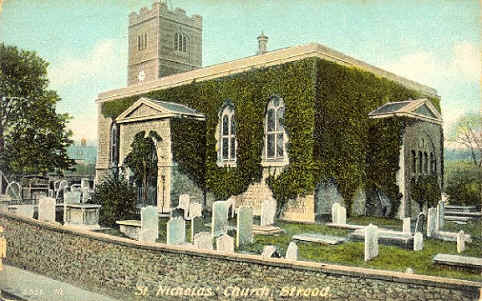
St Nicholas church front entrance, Strood, early 20th century prior to clearances. Courtesy of Kent Archaeological Society
St Nicholas church, which sits in Strood town centre, once boasted a full churchyard of headstones, memorials and monuments as you can see from the above image. It was taken during the early 20th century and may include the original resting place of one or more of the little group now marooned in the South Western corner. It was during the 1960’s that the churchyard was cleared and, instead of a good selection of memorials to explore, there is now an expanse of grass with a few isolated monuments. There has been a suggestion that this wholesale clearance may have been to make the churchyard ‘easier to mow’ but I couldn’t comment on this. It’s just sad to think of what has been lost.
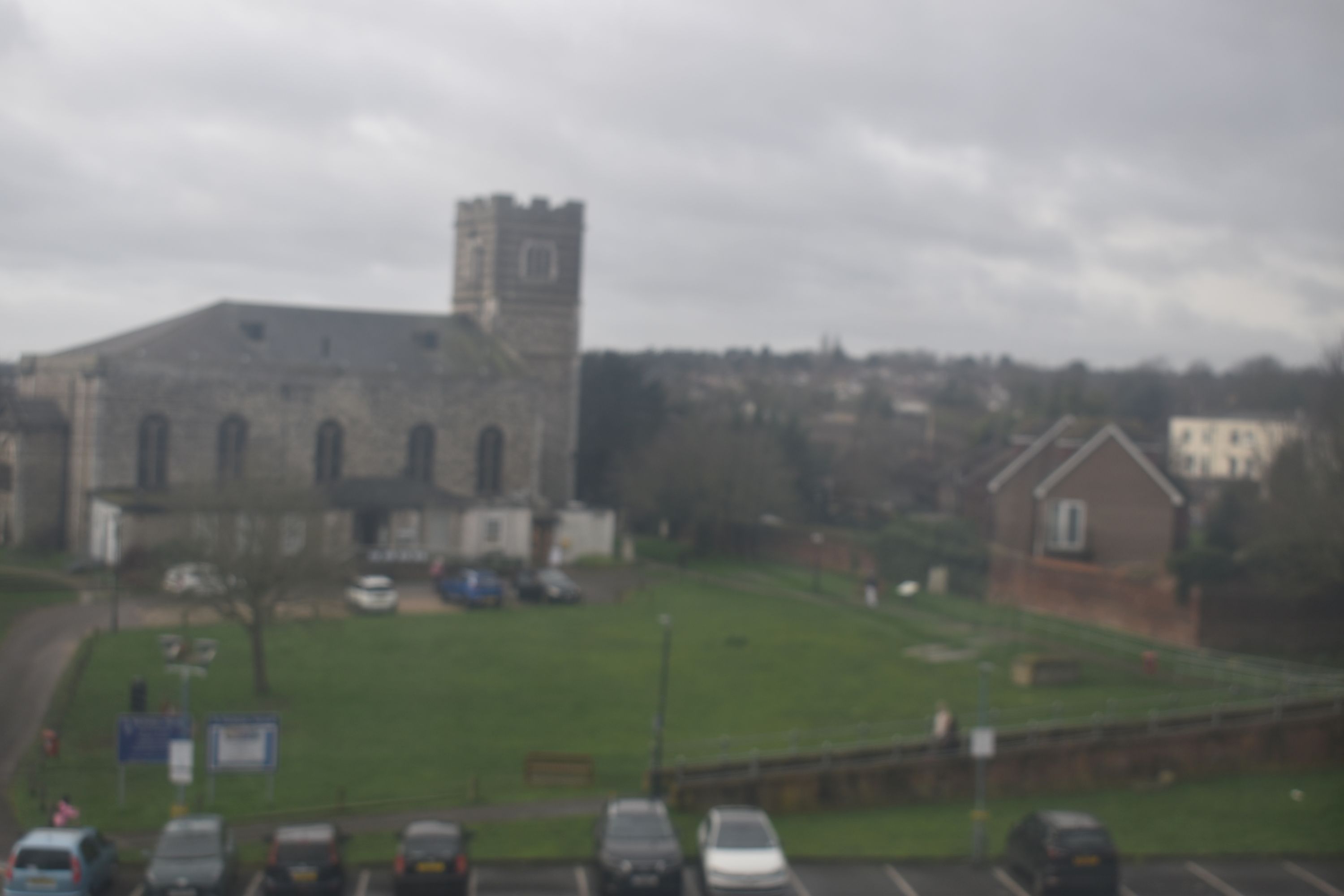
St Nicholas back entrance taken from train, apologies for the quality. This would once have been full of memorials.© Carole Tyrrell
It reminded me of another great cemetery clearance of the time, West Norwood Cemetery, in South West London where 10,000 memorials, headstones and monuments were cleared by Lambeth Council who had compulsorily purchased it due to it having become overgrown and neglected. The clearance was stopped by the Southwark Consistory Court in 1991. No records were kept of what was being destroyed and there was no acknowledgement that relatives might have been upset by it.
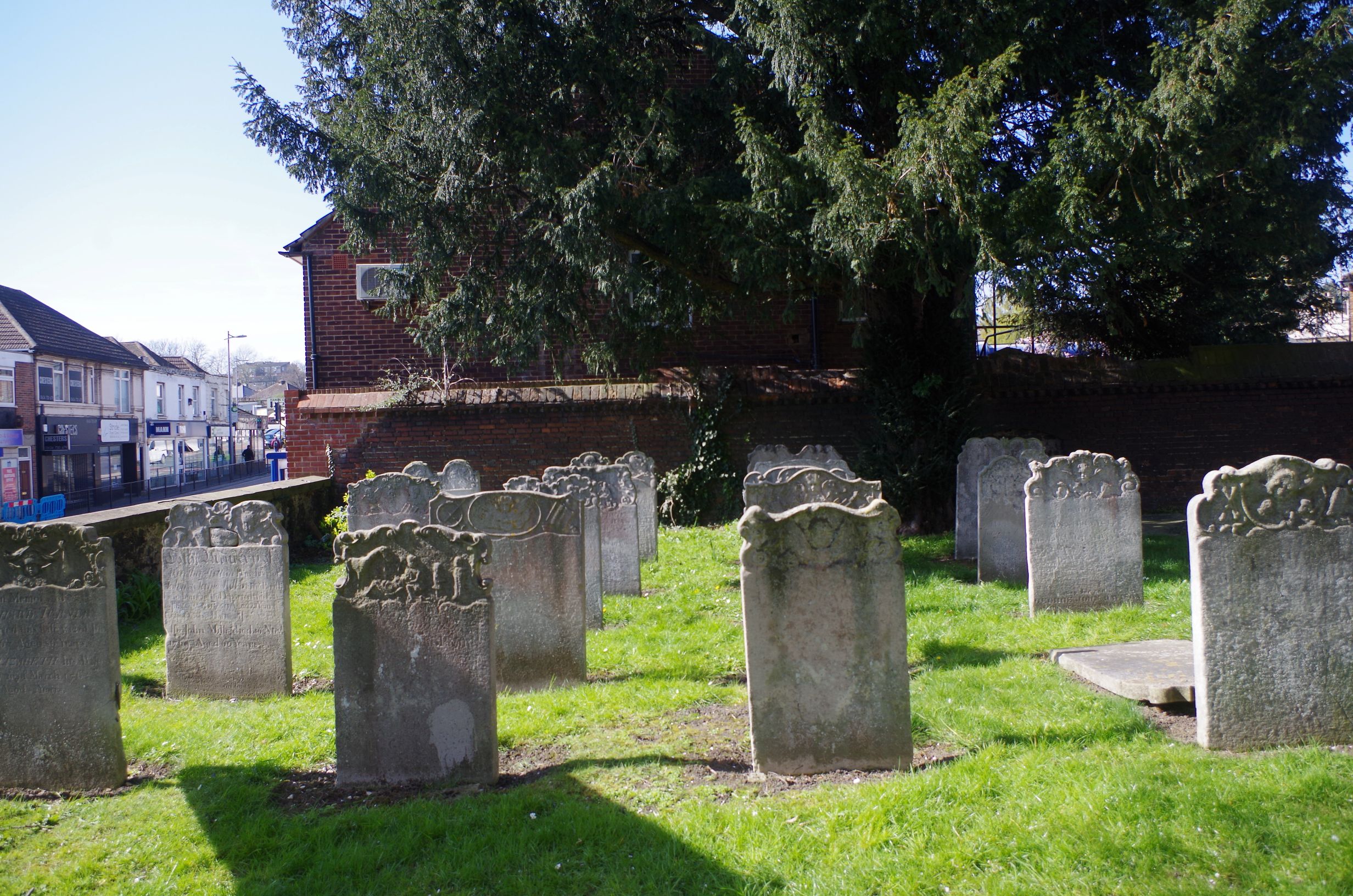
Group view of the 18th century headstones. © Carole Tyrrell
But near the entrance of St Nicholas is a small gathering of eighteen 18th century headstones which have been preserved under yew trees. However, it is undoubtedly not where the permanent residents that they commemorate are actually buried as they could be anywhere within the churchyard. The epitaphs may not be as crisp as they once were and the symbols on the stones may have eroded over time but they are a fascinating collection. My particular interest is funerary symbols and so this was a wonderful collection to explore.
This post features a small selection from the group. These photos were taken in 2020 so they may have deteriorated further since then as they are near a busy road.
It’s an assortment of familiar motifs such as winged souls or messengers, trumpets, skulls and also pictures. The latter are testament to the stonemason’s skill in that they have survived in such good condition. The men, their wives and their families that are remembered on the stones were well to do tradesmen, one was a former Mayor of Rochester, and several left substantial wills and bequests. The trades represented are: two House Carpenters, a Fisherman, a Dredgerman, a Gentleman, a Yeoman, a Blacksmith, and a Tailor. A Dredgerman was an oyster fisherman and a Yeoman was historically a free man who owned and cultivated his own land and had a social rank between peasants and the gentry.
I am indebted to the Kent Archaeological Society for their monument records pertaining to St Nicholas churchyard and also the epitaphs and information about related wills and bequests
WILLIAM PORTER
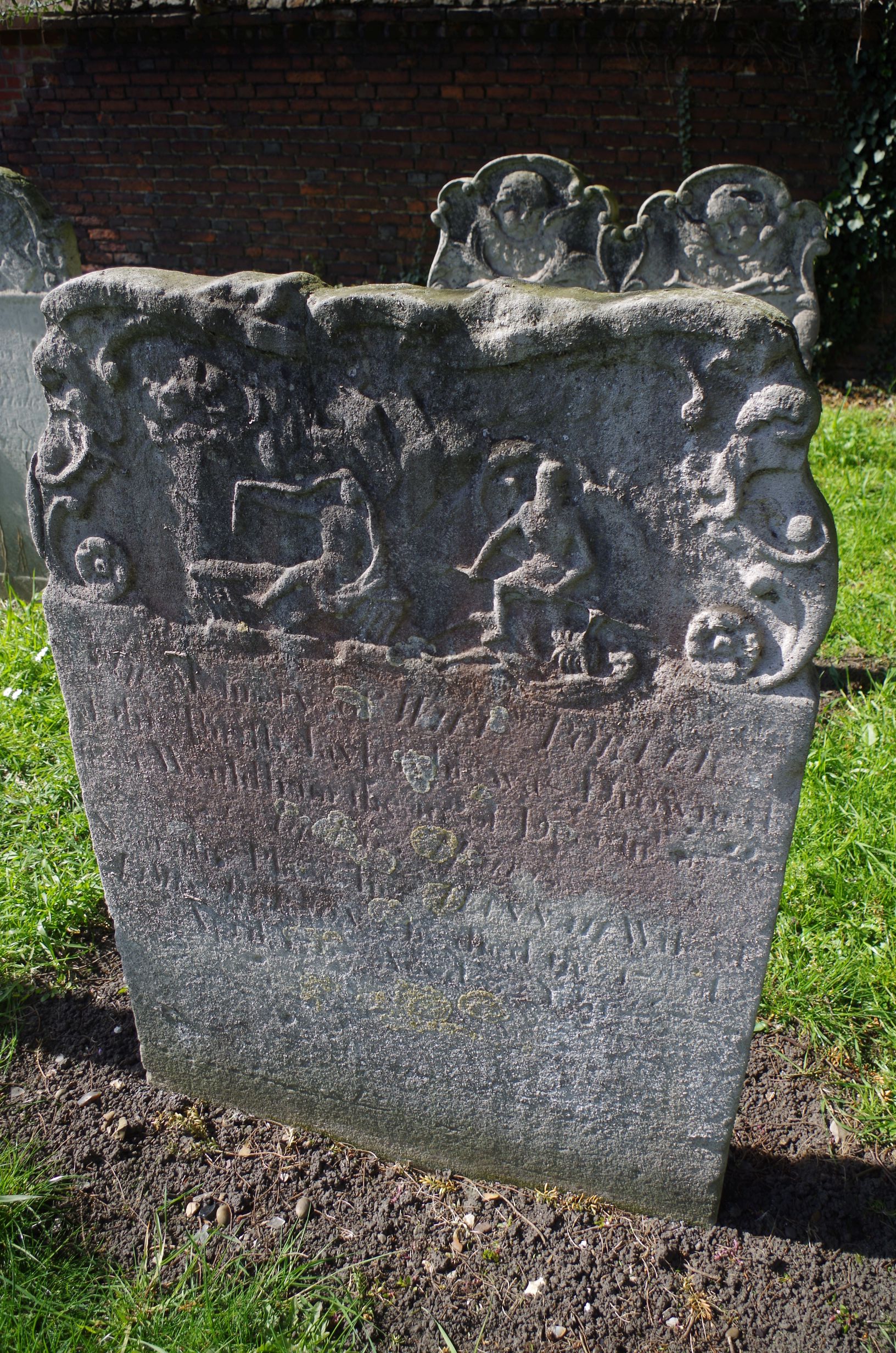
Full view of William Porter’s headstone. © Carole Tyrrell
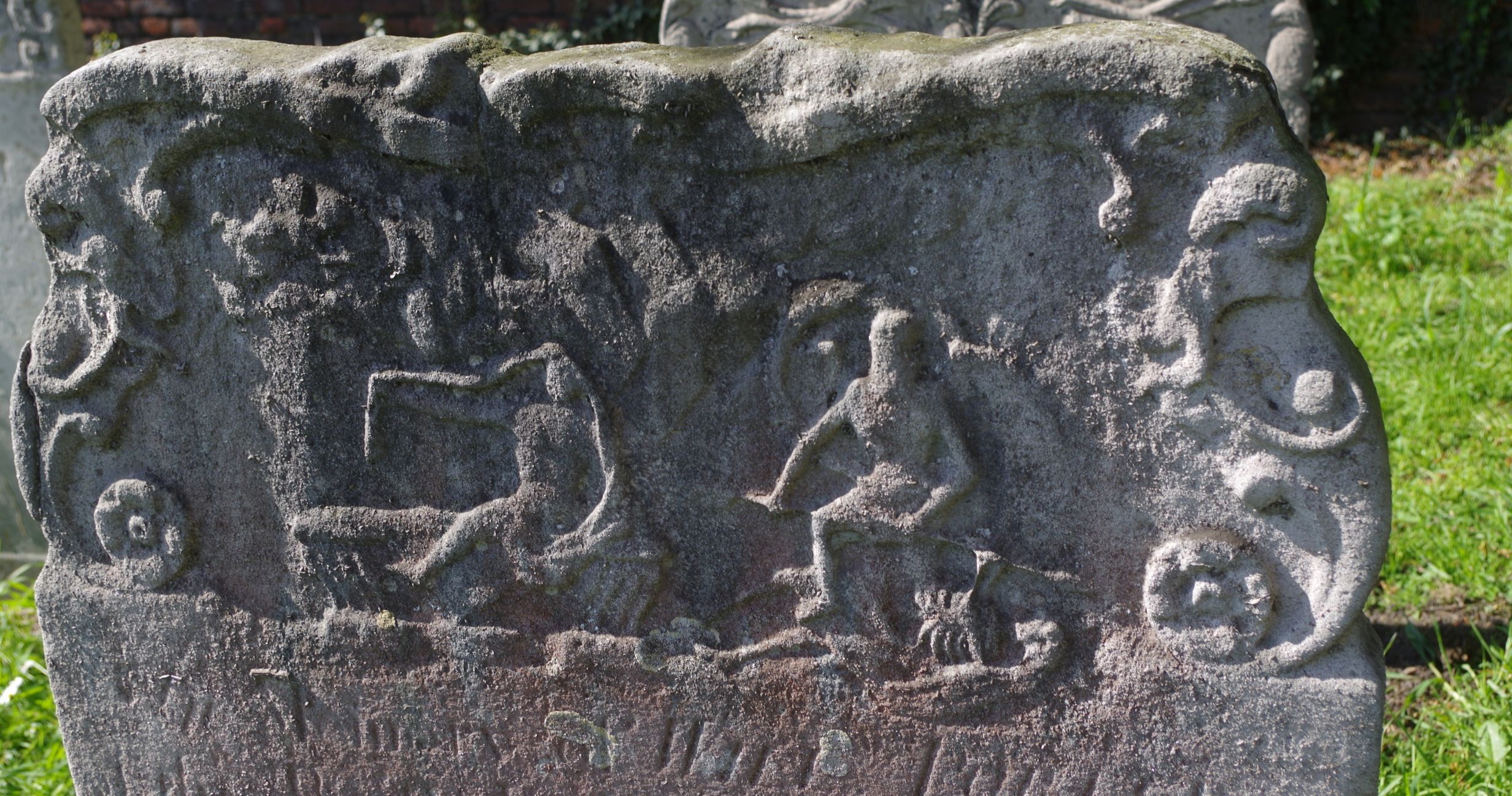
Closer view of the Porter headstone. © Carole Tyrrell
The first one I noticed was ‘The Choice’ which is a familiar one in Kent churchyards. I first saw it in All Saints, Staplehurst, Kent and the scene is almost like a miniature Doom painting. My interpretation of it is that it’s Judgement Day, the deceased has awoken from their eternal slumber and they are throwing off their grave clothes. As you face the stone, the King of Terrors is to your right brandishing ‘Death’s Dart’ while standing on top of a skeletal rib cage. However, on the other side of the awakening person is a blank space except for some stylised clouds at the top. This is where I would expect to find an image of Heaven with perhaps an angel. However, it may have eroded completely. It is a popular image. I found five versions of it in the churchyard of St Mary the Virgin in Newington, Kent. One of the pleasures of exploring churchyards is following a stonemasons work. I may never know who they were but they have left their work as an example of where they have been.
The image itself may have come from a painting, a Bible or even one of the pattern books of the time. However, please bear in mind that the King of Terrors would have been on the deceased’s left hand side which is known as the ‘sinister’ side. There are also rosettes and decorative swirls surrounding the image.
‘The Choice’ is dedicated to William Porter who drowned at Wouldham, Kent on 19 December 1773.
The epitaph reads:
IN MEMORY OF WILL. PORTER
OF THIS PARISH TAYLOR HE WAS DROWNED
AT WOULDHAM DIED 19TH [DECEMBER 1773]
AGED [ ] YEARS
ALSO HANNAH HIS WIFE
WHO DIED THE 17TH ? OF April 17[76]
Aged [ ]
In William Porter’s will he left all of his estate and effects to his wife Hannah for ever. She was also directed to give £100, (a sizeable amount at the time) to Hannah Robson, daughter of James Robson of Strood who was a fisherman. However, Hannah Porter renounced her role as executor of the will and it was subsequently undertaken by three creditors who were bound by a bond of £800 to administer the estate. Hannah herself left a will dated 27th September 1775 in which she left all of her personal estate after the usual expenses to James Robson, mariner, for ever.
William Batcheller’s headstone is behind the Porters and can also be seen in the photos.
WILLIAM BATCHELLER
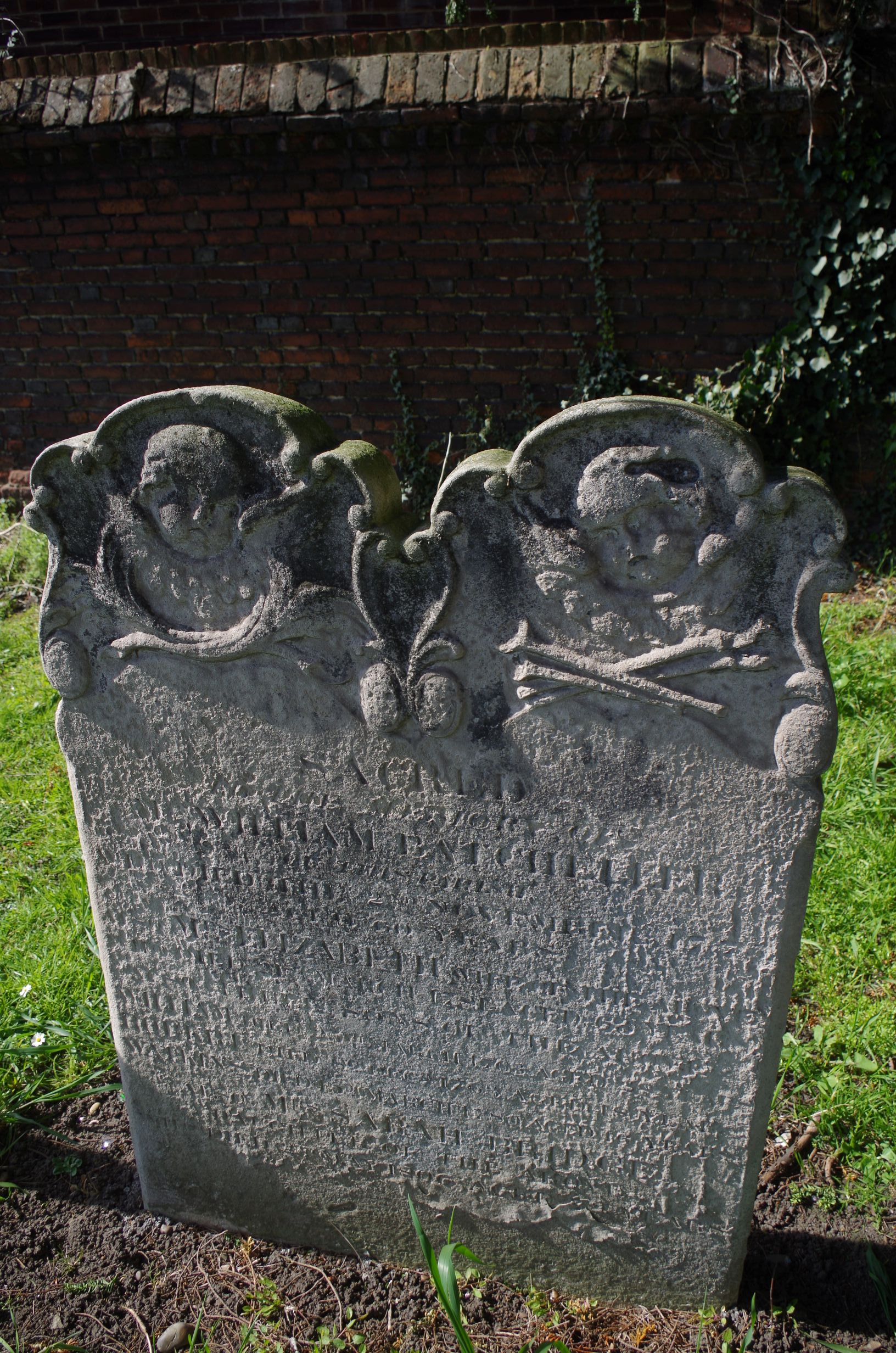
Full view of William Batcheller’s headstone. © Carole Tyrrell
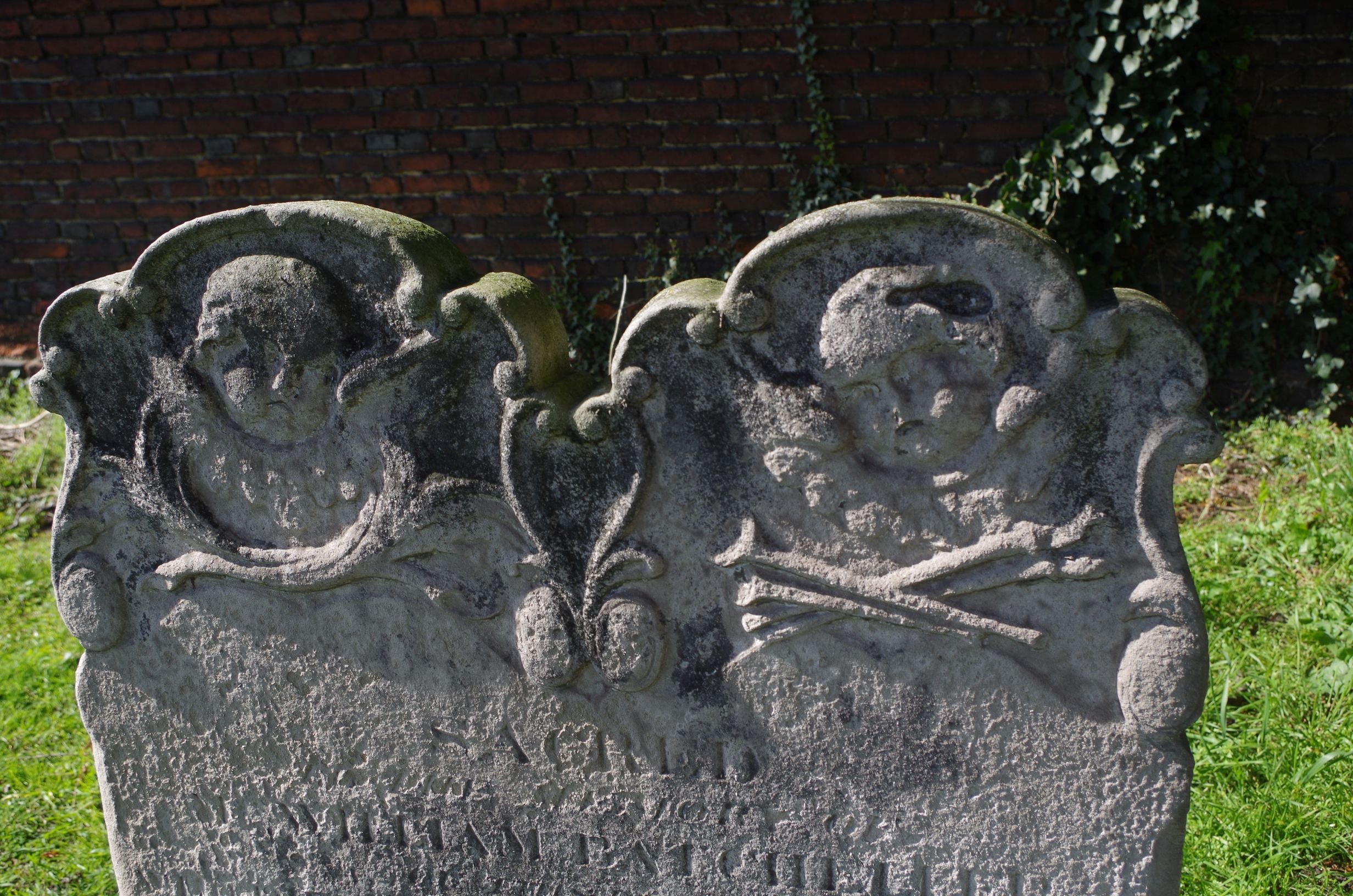
Close up view of William Batcheller’s headstone. © Carole Tyrrell
This headstone is dedicated to William Batcheller and his family. There are two winged messengers or souls which are a sign of resurrection. On the right hand side there appears to be a palm leaf beneath one and on the other side there are trumpets underneath. I thought at first glance that they were crossed bones, but, on a closer glance I could see that they were in fact trumpets. This is a reference to the Day of Judgement where the angel Gabriel would blow a trumpet to bring the dead back to life. The palm has many associations in ancient cultures. For example, in Egypt it represented immortality and it was a sign of victory in ancient Greece and Rome. It is most associated with Palm Sunday in Christianity. This is when palm branches are distributed to a congregation for them to take home. The stone mason has also added decorative touches such as swirls and cartouches to enhance the design which is something that I haven’t seen in other churchyards or cemeteries. The epitaph reads:
SACRED
TO THE MEMORY OF
MR WILLIAM BATCHELLER
OF THIS PARISH
WHO DIED THE 2ND OF NOVEMBER 1776
AGED 60 YEARS
ALSO ELIZABETH WIFE OF THE ABOVE
WHO DIED 21ST? OF MARCH 1781 AGED 68 YEARS
ALSO CHILDREN OF THE ABOVE
WILLIAM DIED 26TH MARCH 1781 AGED 28? YEARS
WATKIN DIED 15th [ ] 17 [ ] AGED 16 YEARS
ALSO MRS SARAH BRIDGE
DAUGHTER OF THE ABOVE
WHO DIED [ ] MAY 1806 AGED 7 [ ] YEARS
William Batcheller left a will dated 14th January 1765 in which he left all his household goods, plate, linen etc to his wife, Elizabeth, who was also his executor. In addition, he wished his wife to have any money from lottery tickets that he bought in 1773.
Sarah, his daughter, also left a will dated 11 November 1805.
In it, she bequeathed various sums of South Sea annuities to three recipients totalling £3,750 and three months after her death they were to be transferred to other recipients including her servant. Any remaining ‘residue’ of her ‘personal estate after funeral expenses, etc.’ was to go to James Bridge.
There was also a codicil to the will, dated the same day, in which she states that ‘a bequest of £500 old stock’ was to go Mary, wife of James Bridge. Sarah had empowered him to buy £100 of old South Sea stock for herself on 11th November 1801. However, she had discovered that a further sum of £100 in this stock had been purchased in the names of James Bridge and his wife ‘contrary to her wishes.’ James Bridge was then told to alter the bonds into her name. and also ‘if he does not, in her lifetime’ then she would revoke his legacy given to Mary Bridge. In lieu of this she gave her £300 of the stock, ‘and no more’ The rest of the will was ratified. A formidable lady.
JAMES BURR
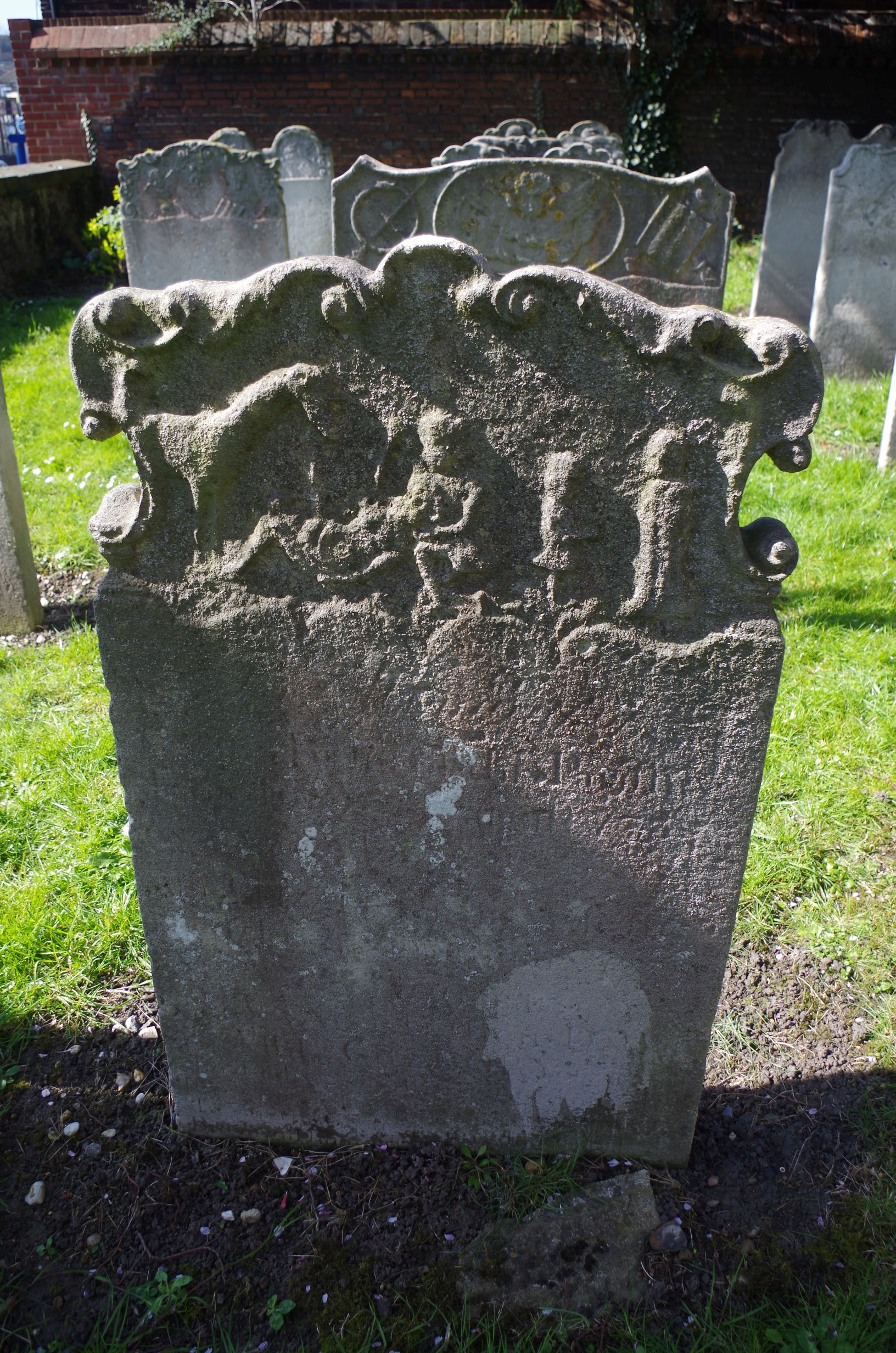
Full view of James Burr’s headstone. © Carole Tyrrell
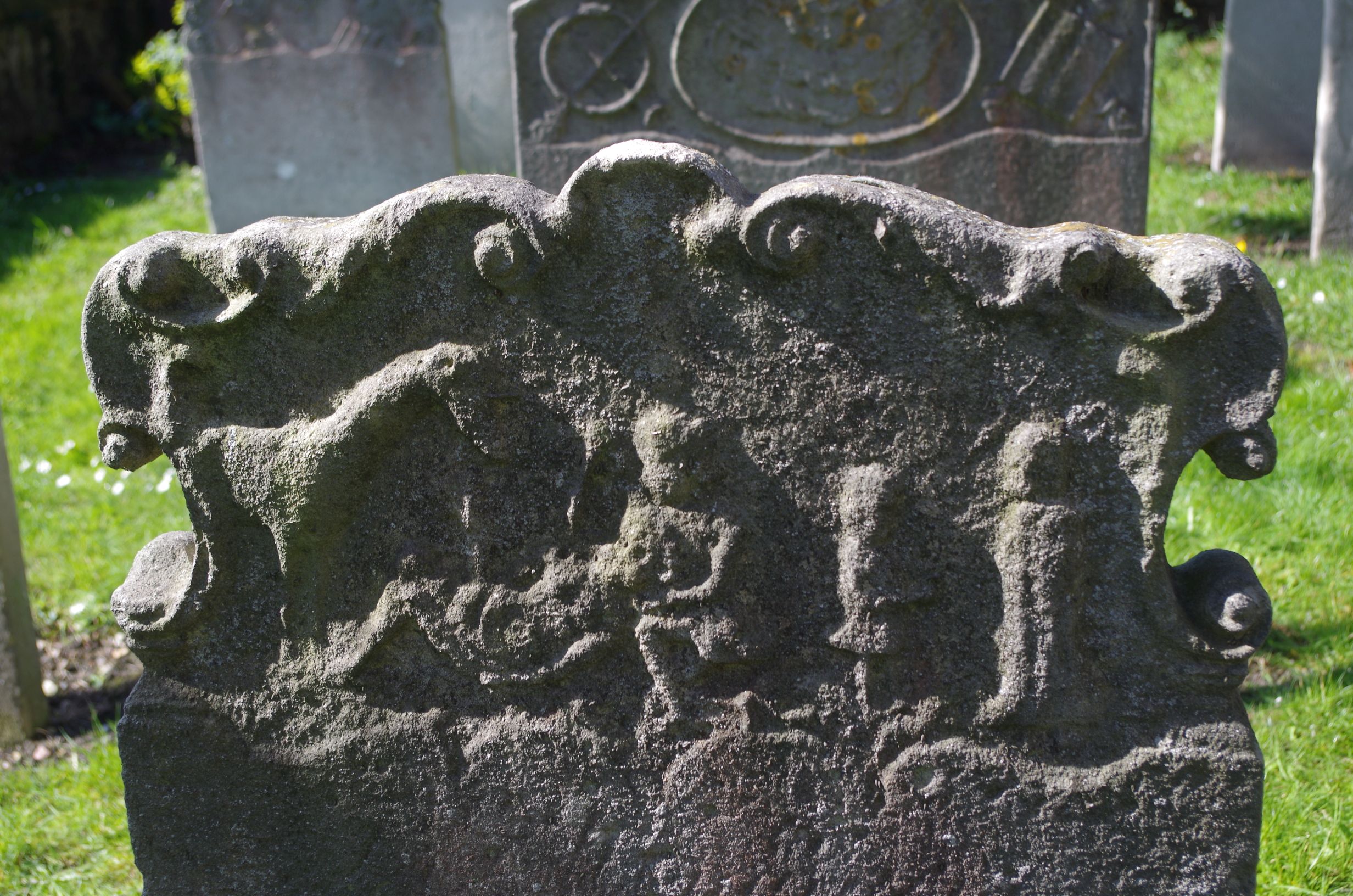
Closer view of James Burr’s headstone. © Carole Tyrrell
This is an image of the Good Samaritan and very similar to the example that I first encountered in St Margaret’s churchyard in Rochester. The Good Samaritan appears in the King James Bible Luke 10:25.37:
‘But he, willing to justify himself, said unto Jesus, And who is my neighbour?
And Jesus answering said, A certain man went down from Jerusalem to Jericho, and fell among thieves, which stripped him of his raiment, and wounded him, and departed, leaving him half dead.
And by chance there came down a certain priest that way: and when he saw him, he passed by on the other side.
And likewise a Levite, when he was at the place, came and looked on him, and passed by on the other side.
But a certain Samaritan, as he journeyed, came where he was: and when he saw him, he had compassion on him,
And went to him, and bound up his wounds, pouring in oil and wine, and set him on his own beast, and brought him to an inn, and took care of him.
And on the morrow when he departed, he took out two pence, and gave them to the host, and said unto him, Take care of him; and whatsoever thou spendest more, when I come again, I will repay thee.
Which now of these three, thinkest thou, was neighbour unto him that fell among the thieves?
And he said, He that shewed mercy on him. Then said Jesus unto him, Go, and do thou likewise.’
In this image the observer can see the victim being helped by the Samaritan whose horse is looking on. Two figures, presumably the priest and the Levite, appear to be moving away from the scene on the right hand side
It is dedicated to James and Elizabeth Burr and their daughter Sarah. The epitaph reads:
IN MEMORY OF
JAMES BURR OF THIS PARISH
WHO DIED [ ] AUGUST 17[ ]
AGED 36 YEARS
ALSO ELIZABETH HIS WIFE
WHO DIED 27TH OF JANUARY 1777
AGED 90 YEARS
ALSO SARAH THEIR DR
OF WILL. GREGORY OF YS PARISH
WHO DIED YE 2nd of July 1778
AGED 64 ? YEARS
However, James Burr does not appear in the Burial Register.
Sarah Burr, his daughter, married William Gregory in the same year as her death. Elizabeth Burr, her mother, left a will dated 25 June 1776 in which she left all her estate to her daughter.
An interesting selection of stones, not only in their symbols and images, but also what they tell us about a section of the local 18th century community’s life and occupations.
Text and photos© Carole Tyrrell unless stated otherwise
References and further reading:
Monumental Inscriptions of St Nicholas Church, Strood — Kent Archaeological Society part of Churchyard, Strood. Recorded by D.E.Williams 2014
West Norwood Cemetery | London Museum

