Symbol of the Month – the open book

An example of an open book on a grave in Beckenham Cemetery where the inscription is now unreadable.
©Carole Tyrrell

Sometimes a wander through a cemetery can make you feel as if you’re in a heavenly library due to the number of open books reverently laid on top of graves.  They’re usually made from stone or granite, inscribed with the name and dates of the deceased and often a decorative carved book marker complete with tassel keeping the pages open. In this example, a downwardly pointing finger indicates the large open book.

©Carole Tyrrell

On first appearance the open book can seem a very simple and obvious symbol and it’s used in place of a more formal headstone. But, as with other symbols, it can have alternative meanings.

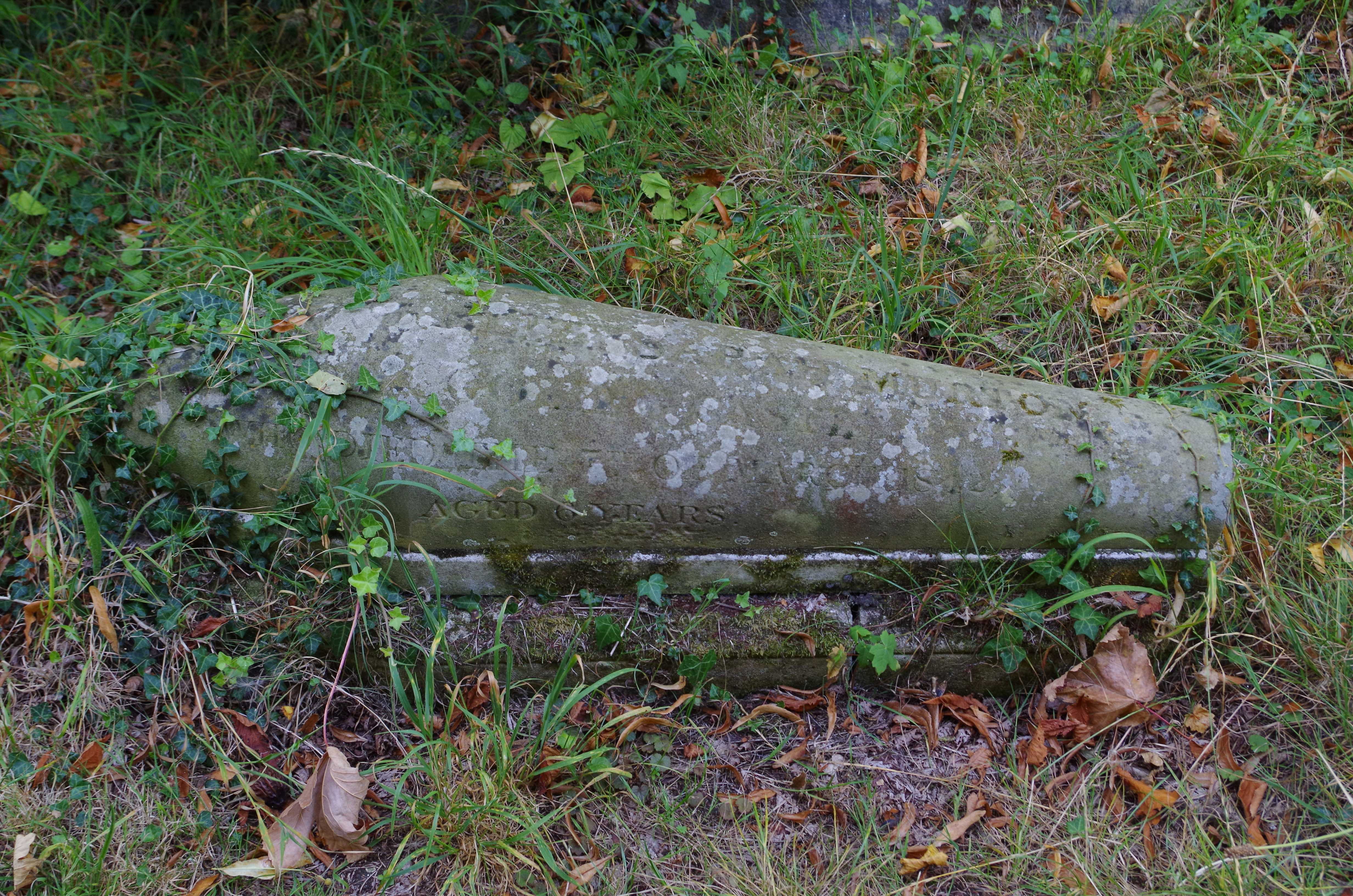
The 3 dimensional version that is carved to simulate a real book is a 19th century innovation.  Prior to this it was rendered in a 2 dimensional, flat form and can be found on 18th  century tombstones as part of an overall design or epitaph. 

An 18th century tombstone in the churchyard of St Nicholas, Strood. © Carole Tyrrell

The open book can almost resemble a visitors book with the deceased’s details inscribed on it as if they were signing in or checking out for eternity and sometimes one page is left blank for perhaps the partner who will follow.  On a recent stroll through Beckenham cemetery I came across several variations:
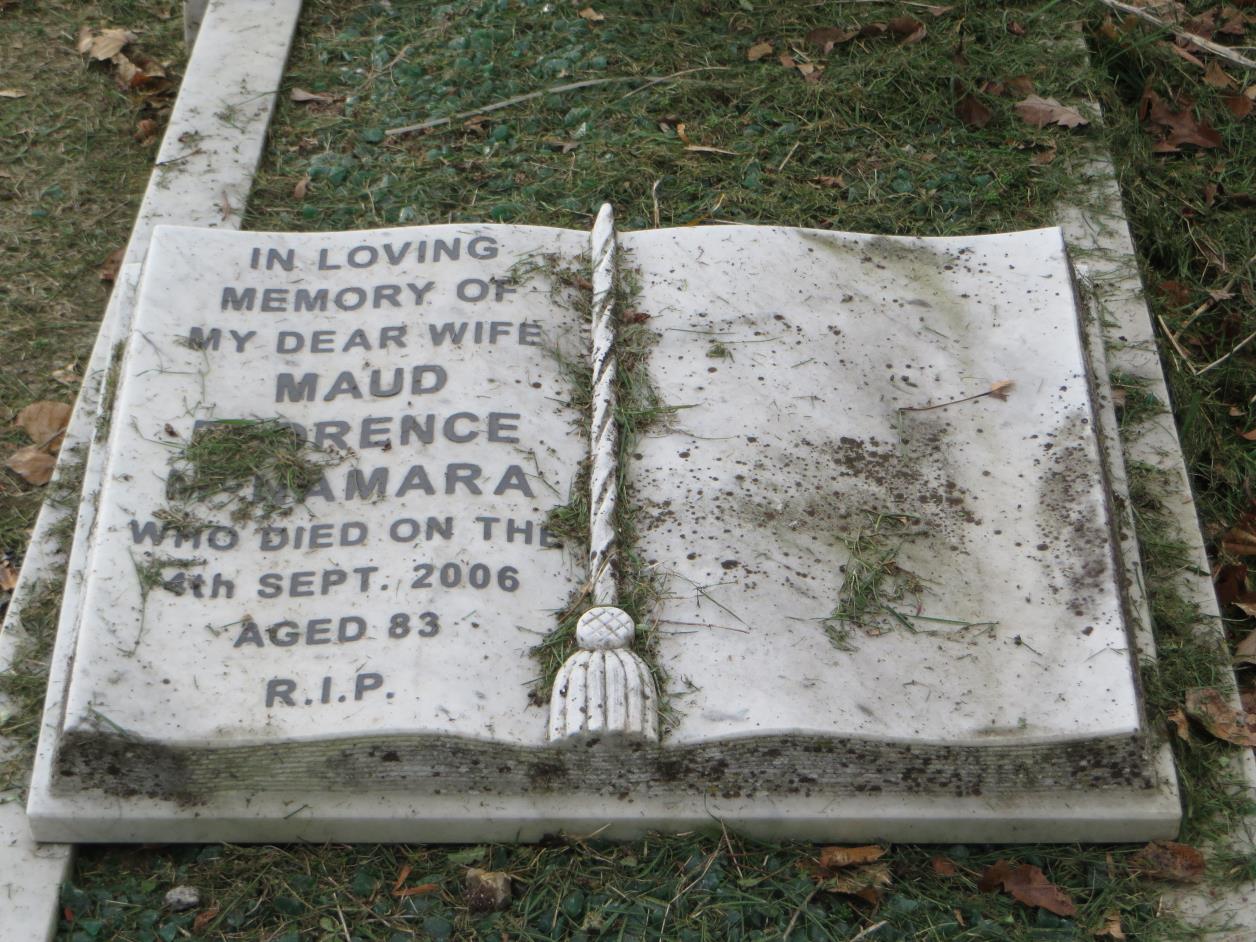
A modern Book of Life showing book marker and tassel with one page left blank for the deceased’s partner. Beckenham Cemetery ©Carole Tyrrell
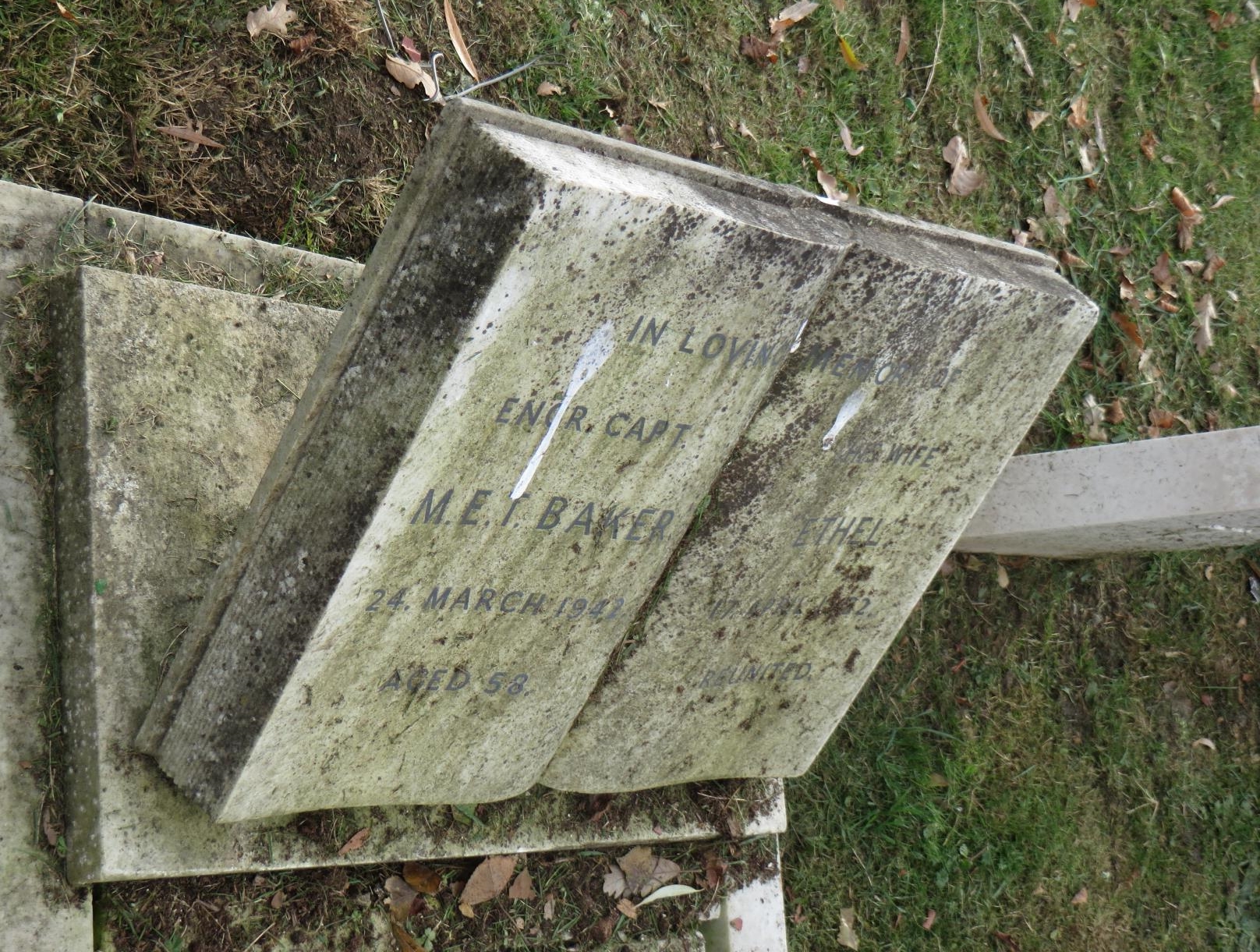
A book showed both pages completed and the book propped up on a platform – Beckenham Cemetery ©Carole Tyrrell
Note how the Book of Life is carved to resemble a real book with pages indicated. Beckenham Cemetery ©Carole Tyrrell
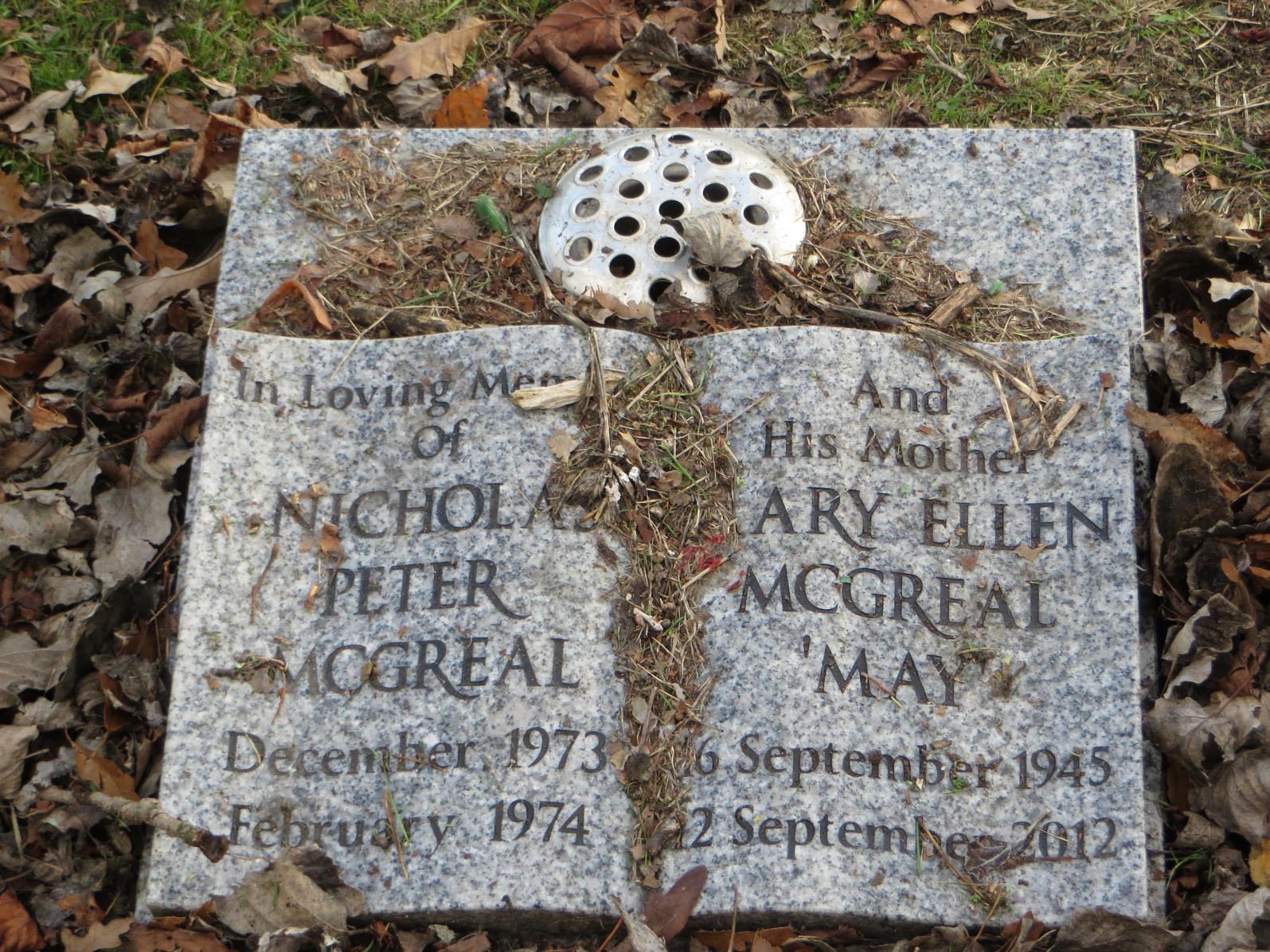
A modern example again from Beckenham Cemetery where the pages aren’t lying flat but have been created to resemble real pages with a slight curve to them ©Carole Tyrrell

For example, there was one with both pages blank which could indicate that the inscription has worn off or that they were ready to be written for eternity.  The latter echoes the well-known phrase  ‘he or she can be read like an open book’ and the empty pages  can indicate that this is how they want to be judged on the Day of Judgement. This references the quotation from the Book of Revelation 20:11-15:

And I saw the dead, small and great, stand before God; and the books were opened: and another book was opened, which is the book of life: and the dead were judged out of those things which were written in the books, according to their works.’ King James Bible

This is also why the open book is also known as the Book of Life as it contains everything that the deceased has done throughout their life and for which they will now be accountable. Christ is often depicted carrying a book.  J C Cooper also sees it as the Book of Life and adds that it can also represent

‘….learning and the spirit of wisdom, revelation and …wisdom.’
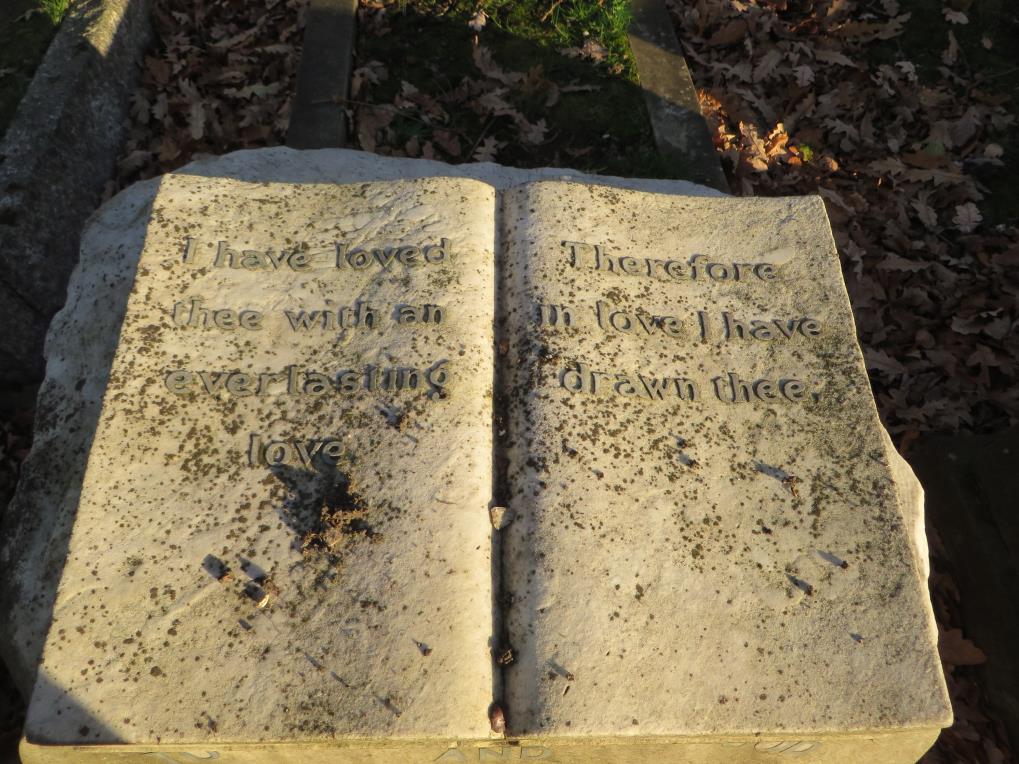
Here the Book doesn’t have an epitaph but instead is inscribed with a Biblical quotation from Jeremiah 31:3
©Carole Tyrrell

‘The LORD hath appeared of old unto me, saying, Yea, I have loved thee with an everlasting love: therefore with loving kindness have I drawn thee.’ Jeremiah 31.3 King James Bible

This makes the symbol almost resemble a Bible.  Other suggestions are that it can indicate the grave of a writer, publisher or even more obviously a clergyman.

It can also suggest that a chapter of life has ended or closed and a variant is the closed book.  I found this one in West Norwood cemetery and it clearly indicates a life that has ended with the final chapter now written.

An example of a closed book from West Norwood Cemetery/ ©Carole Tyrrell

So the open book has made me think about how my book of life would look on my last resting place. I’m determined to make sure that it’s a good read for any passing visitor.

©Text and photos Carole Tyrrell unless otherwise indicated.

References:

An illustrated Encyclopaedia of Traditional Symbols, J C Cooper, Thames & Hudson, 1978

Stories in Stone, a field guide to Cemetery Symbolism and Iconography, Douglas Keister,

Gibbs Smith, 2004

http://biblehub.com/search/jeremiah/31-3.htm

https://www.biblegateway.com/passage/?search=Revelation%2020:11-15

http://biblehub.com/search/jeremiah/31-3.htm

http://www.thecemeteryclub.com/symbols.html

https://stoneletters.com/blog/gravestone-symbols

https://www.thoughtco.com/photo-gallery-of-cemetery-symbolism-4123061

Grave of woman killed by tiger in pub restored

Hannah’s headstone prior to restoration. Copright Greenshed. Shared under Wiki Commons

This story came from the BBC News website.

This is the 300 year old headstone of 33 year old Hannah Twynnoy who was mauled to death in Malmesbury, Wiltshire. She was fatally attacked by the tiger, believed to be part of a travelling menagerie, which was being housed in a pub yard. It escaped and attacked her.

The inscription had become so illegible that. prompted by a local campaign, masonry restorers were brought in to clean it. The epitaph reads:

In bloom of Life
She’s snatchd from hence,
She had not room
To make defence;
For Tyger fierce
Took Life away.
And here she lies
In a bed of Clay,

Until the Resurrection Day.

Follow the link for more information and photos as this is a unique cause of death in England.

https://www.bbc.co.uk/news/articles/cq5e9d94dxjo

References and further reading:

https://en.wikipedia.org/wiki/Hannah_Twynnoy

Champers and cockleshells – a return visit to St James, Cooling August 2024

The Cockleshell vestry, St James Cooling, Kent. © Carole Tyrrell

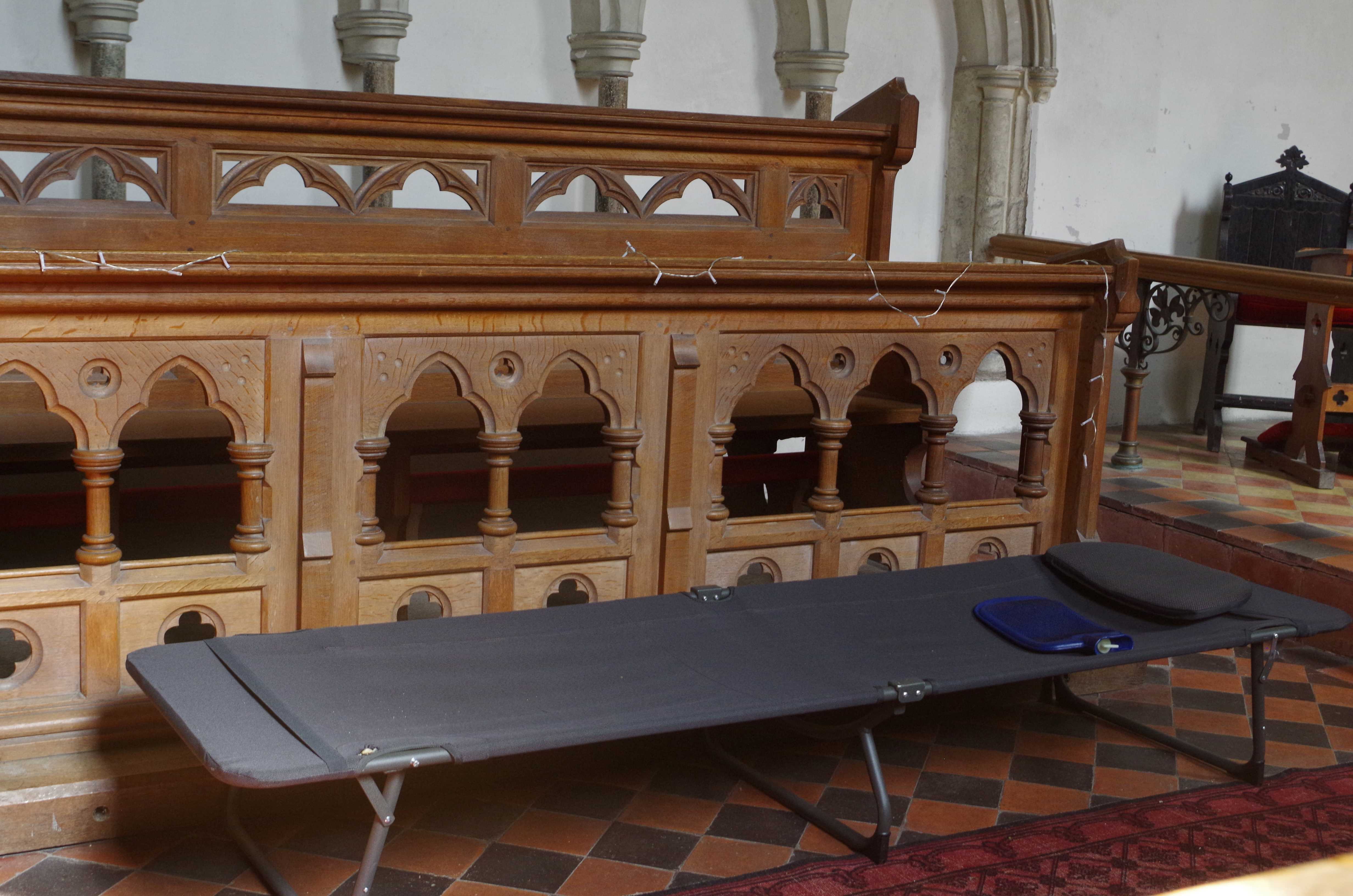
Maybe I just disturbed the nocturnal guests at St James’s and they felt compelled to hide but all appeared to be silent as I stepped inside the church.  But they were given away by 2 vacant camp beds in front of the altar and the small refreshment area by the pulpit. I thought that the hot water bottle on one of the camp beds was a nice touch as I stood there for a moment and wondered what it must have been like staying overnight in an empty church in such an isolated place. There are houses around the church but not that many. ‘Champing’, is a euphemism for overnight ‘camping’ in churches looked after by The Churches Conservation Trust. Don’t worry they’re not pitching tents! The church provided the campbed and the usual amenities. It’s really caught on in recent years and I have been tempted to try it myself.

A recently vacated Champers campbed. © Carole Tyrrell

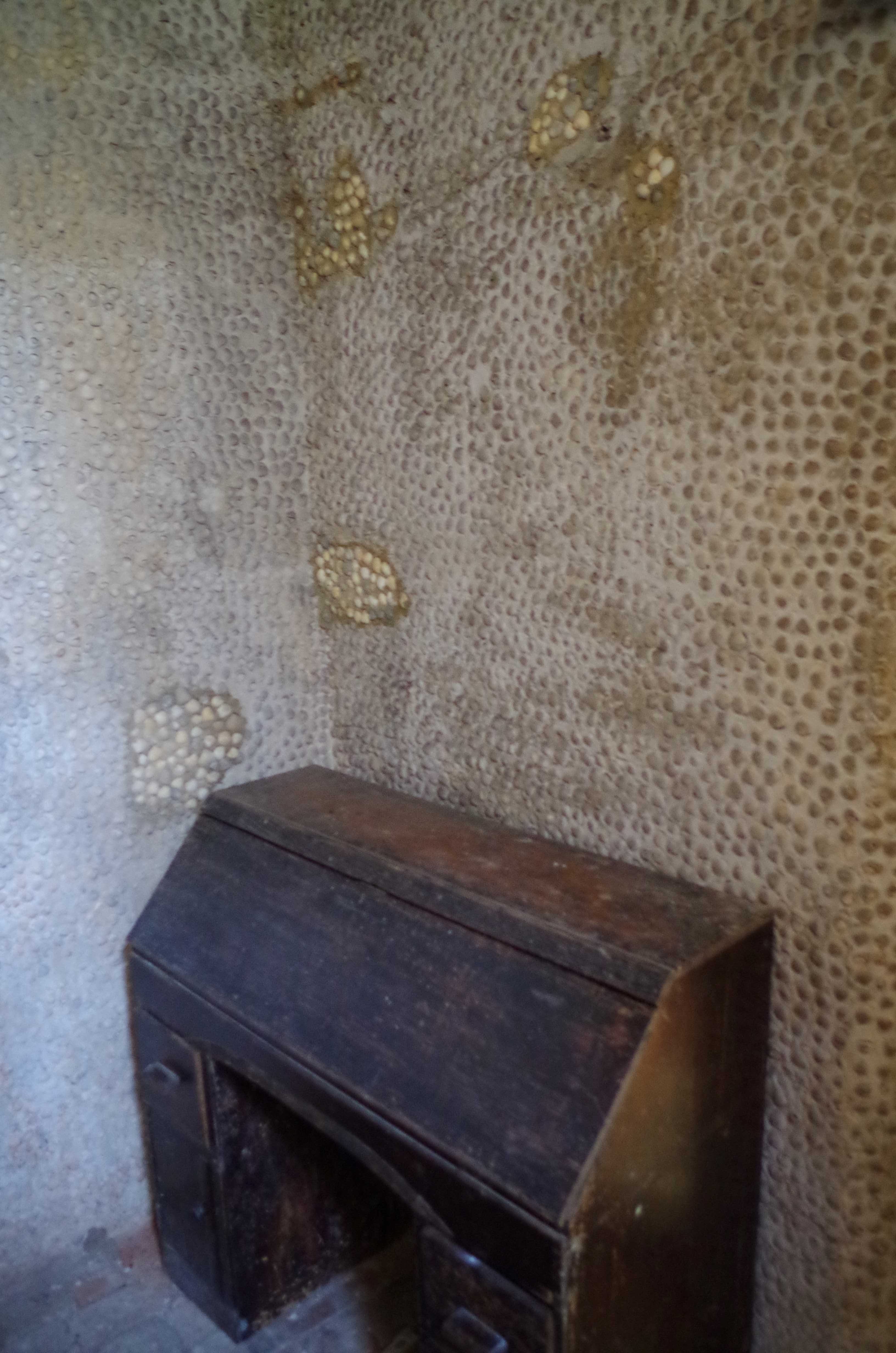
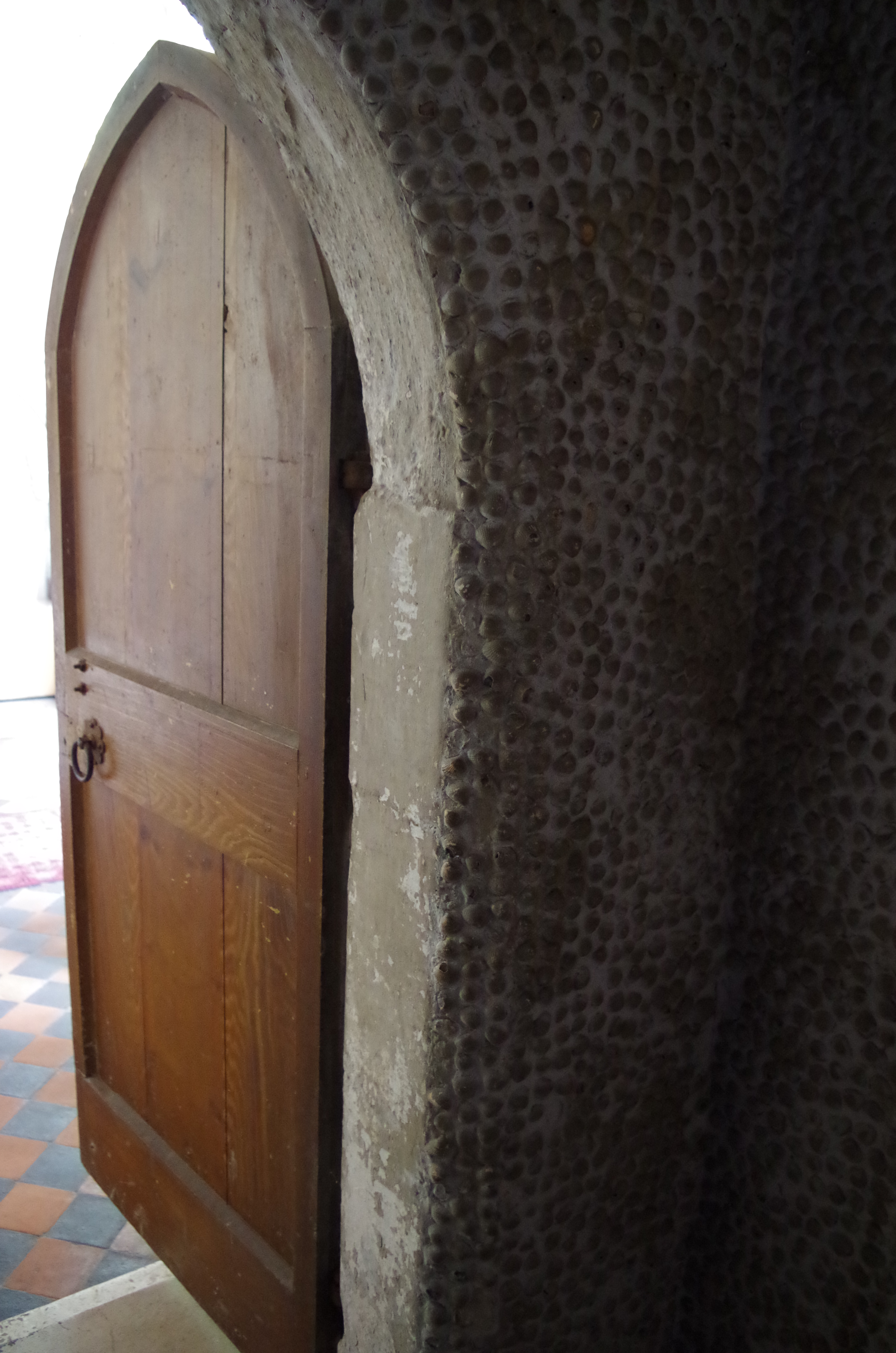
But I was at St James’s to see the cockleshell room which I’d missed on earlier visits. There wasn’t a sign advertising it but a quick look at the church map of the interior and I headed for the church organ. This time I found it! The door’s latch seemed to echo in the tranquillity as I pulled it open. The vestry is ‘compact and bijou’ as an estate agent would undoubtedly say – it is tiny and there was only a small open cobwebbed window, high up in the wall for ventilation. The room felt very warm and contained only a chair, possibly a recycled pew, and a bureau.

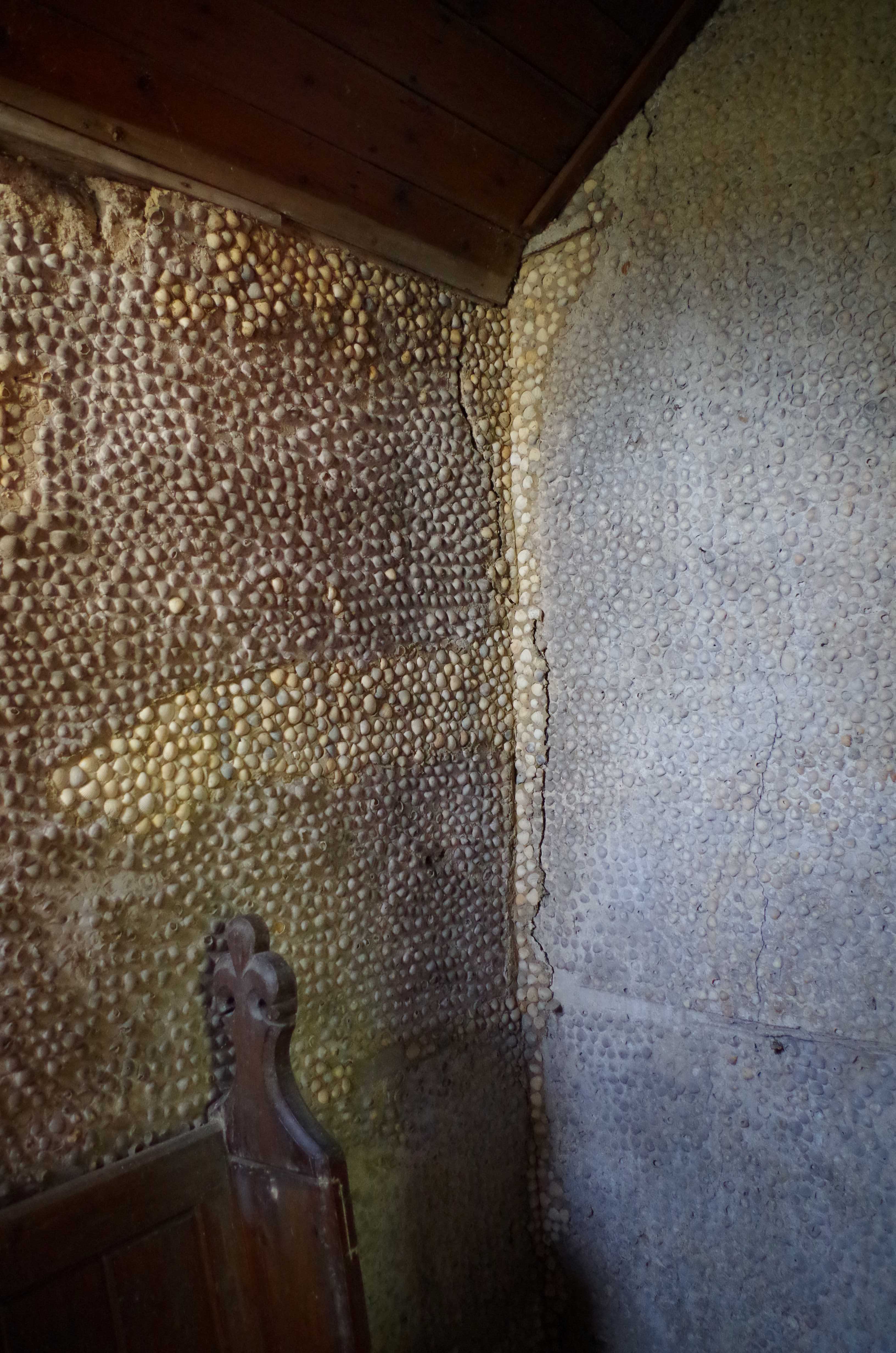
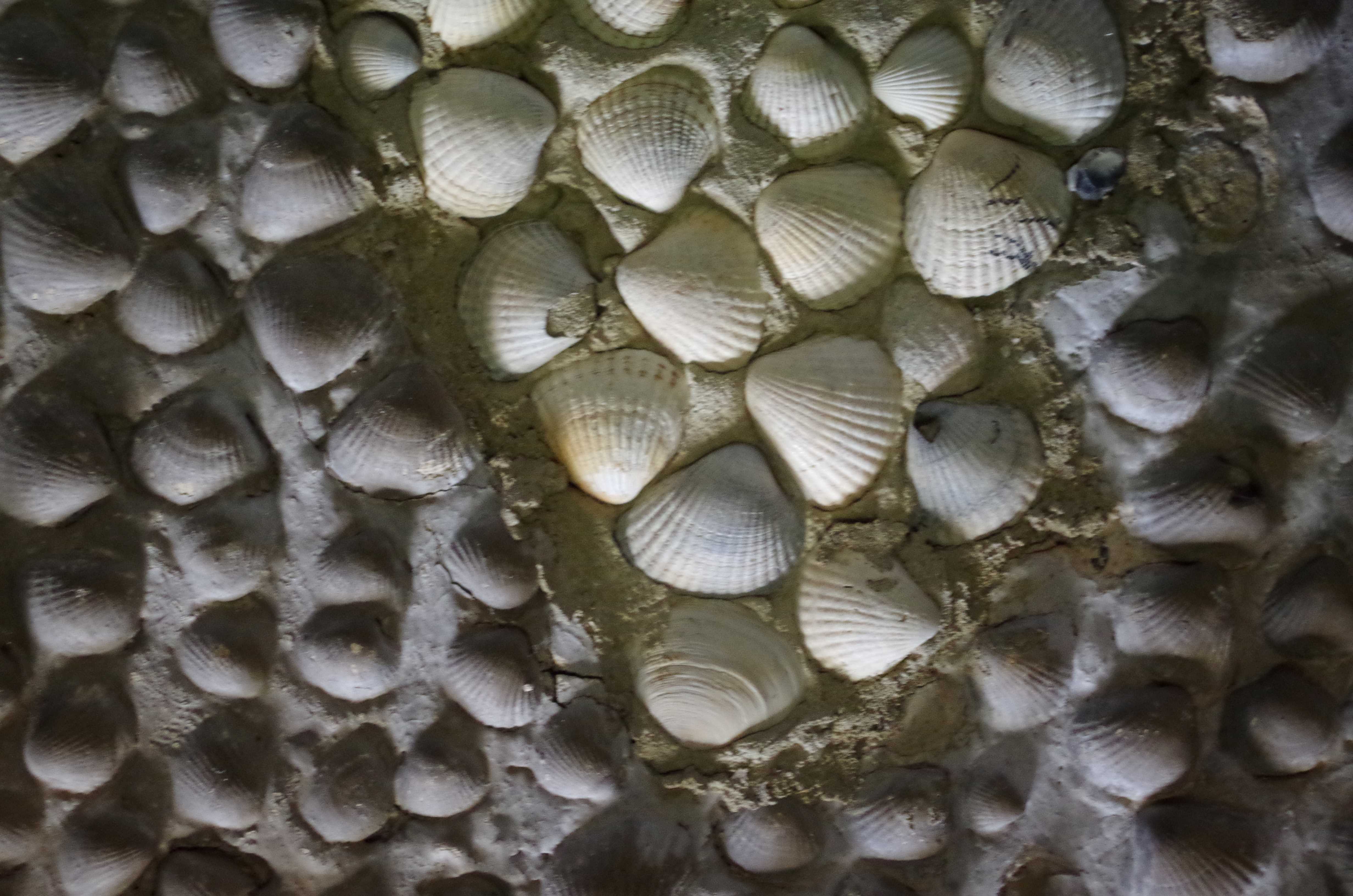
But it’s the thousands of cockleshells that made me catch my breath. They are floor to ceiling, arranged in patterns with newer ones being cemented in. I have to say that it did feel a little claustrophobic.  The vestry dates back to the 19th century and is considered to be either a reminder or perhaps homage to the shell being the symbol of the saint, St James. Shells would be worn in pilgrims’ hats as they went on the trail to his shrine in Santiago de Compostela. Above the door, and supposed to be, are initials and a date which may be 1833 or 1838.  The initials are I.M.  and I.C. CWARDENS which could stand for John Murton and John Comport churchwardens. I was looking in the wrong place so didn’t spot it but perhaps on another visit…. you do need a few minutes just to take it all in and try not to touch them although it is a very tactile surface.

View of the vestry. © Carole Tyrrell

Close up view of cockleshells on wall showing newer ones cemented in. © Carole Tyrrell

You can almost imagine what this room must have looked like at one time with newer shells. © Carole Tyrrell

View of bureau and walls. © Carole Tyrrell

View of church from vestry. © Carole Tyrrell

According to the Churches Conservation Trust, it’s considered to be

‘unique in an English church’.

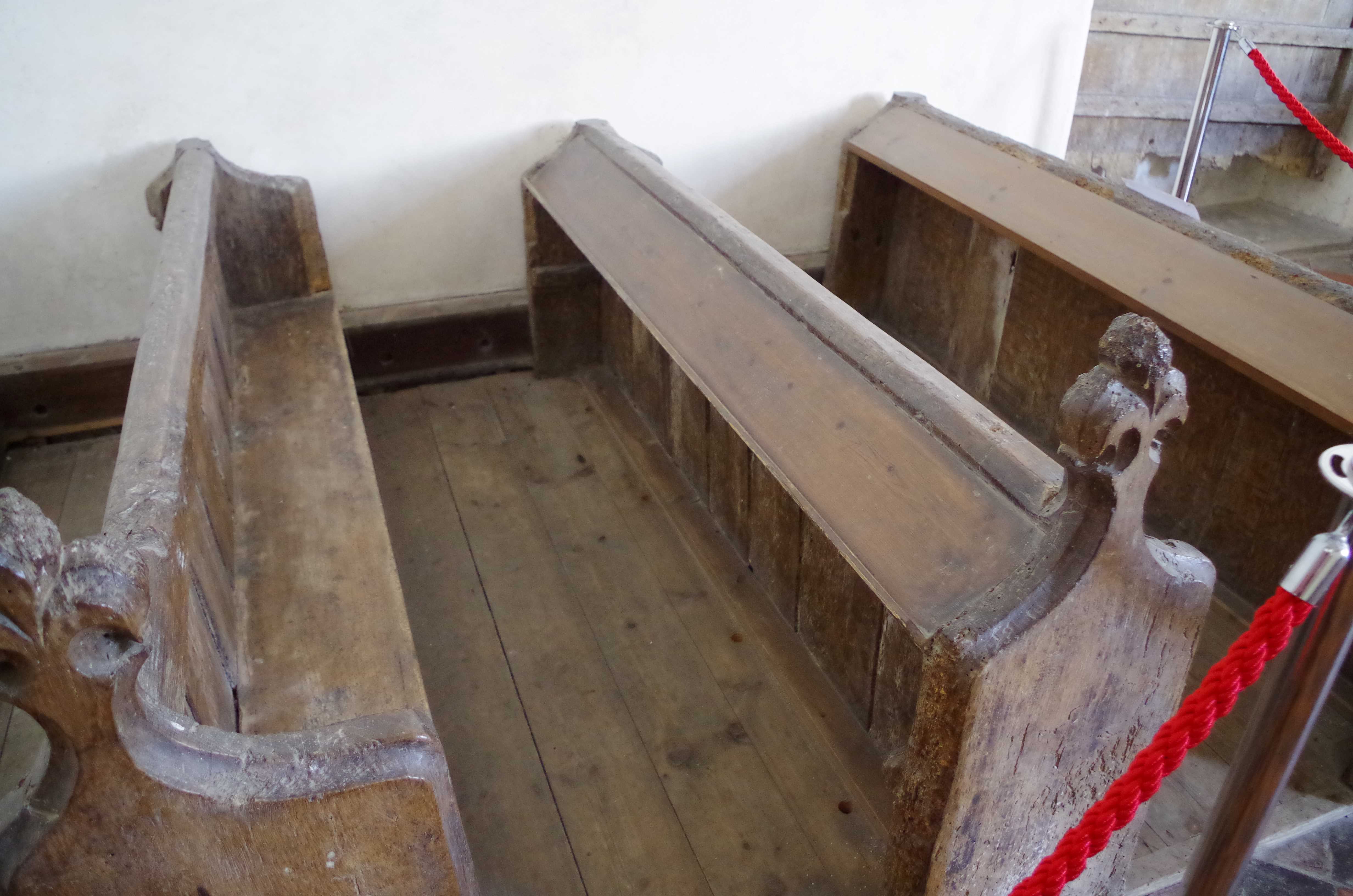
As I explored the nave after leaving the little room I saw the medieval benches that date back to the 14th century. They’ve evaded the iconoclasts of the 1600s and Victorian restoration but are now too fragile to be touched, much less sat on, and are now roped off.

The medieval pews – not considered comfortable by the Victorians. © Carole Tyrrell

The Murton memorial. © Carole Tyrrell

The name Murton appeared again on an elegant and poignant wall memorial to a sailor, John William, eldest son of John Murton of nearby Cooling Castle.  He died young, aged 28, after falling overboard from the Monarch off Rio de Janeiro during a voyage to Calcutta. The inscription on the marble tablet quotes from the ship’s captain’s log:

‘And so perished one of the finest and best hearted seamen who ever trod a ship’s deck. I have lost a trustworthy officer and valued friend. Peace be to his remains.’  

View of churchyard from inside church. © Carole Tyrrell

After that I went outside to see ‘Pip’s Graves’ and the table tomb on which Charles Dickens is reputed to have eaten his lunch. Across the marsh I could see docked ships and butterflies flitted about on the buddleia at one end of the churchyard.  I found a clergyman’s grave denoted by a chalice and more childrens graves. One was dedicated to a six year old. I also pursued a Common Darter dragonfly until it posed obligingly and checked to see if the little grinning demon still kept watch over the outside loo.  He did. I looked up as I left the churchyard and saw, glinting on the weathervane above the tower the representation of another cockleshell.

Docked ships over the marshes from the churchyard. © Carole Tyrrell

Common Darter. © Carole Tyrrell

The chalice symbol indicates the grave of a priest or clergyman. © Carole Tyrrell

A small grave dedicated to a 6 year old in another part of the churchyard. © Carole Tyrrell

Shell symbol on the weathervane. © Carole Tyrrell

View of St James from outside the churchyard. © Carole Tyrrell

The 18th historian, Edward Hasted, described Cooling as

‘an unfrequented place, the roads of which are deep and miry, and it is as unhealthy as it is unpleasant.’ 

It certainly is unfrequented as I was alone as I walked along Cooling Road to and from the church with only passing cars for company. The remains of the 14th century Cooling Castle, which is in private hands, are still impressive. Dark blue sloe berries were still on several bushes and windfalls clustered beneath apple trees in a nearby orchard.  I retraced my steps back to Cliffe for a wander round St Helen’s churchyard and then a very welcome cuppa in their café. 

But how I envied the ‘champers’ enjoying a good night’s kip(I hope) in that little corner of Kent.

© Text and photos Carole Tyrrell unless otherwise stated.

References and further reading

St James’ Church, Cooling, Kent | The Churches Conservation Trust (visitchurches.org.uk)

James the Great – Wikipedia

St. James | Biography, Apostle, the Greater, Death, Feast Day, & Facts | Britannica