

The Cockleshell vestry, St James Cooling, Kent. © Carole Tyrrell
Maybe I just disturbed the nocturnal guests at St James’s and they felt compelled to hide but all appeared to be silent as I stepped inside the church. But they were given away by 2 vacant camp beds in front of the altar and the small refreshment area by the pulpit. I thought that the hot water bottle on one of the camp beds was a nice touch as I stood there for a moment and wondered what it must have been like staying overnight in an empty church in such an isolated place. There are houses around the church but not that many. ‘Champing’, is a euphemism for overnight ‘camping’ in churches looked after by The Churches Conservation Trust. Don’t worry they’re not pitching tents! The church provided the campbed and the usual amenities. It’s really caught on in recent years and I have been tempted to try it myself.
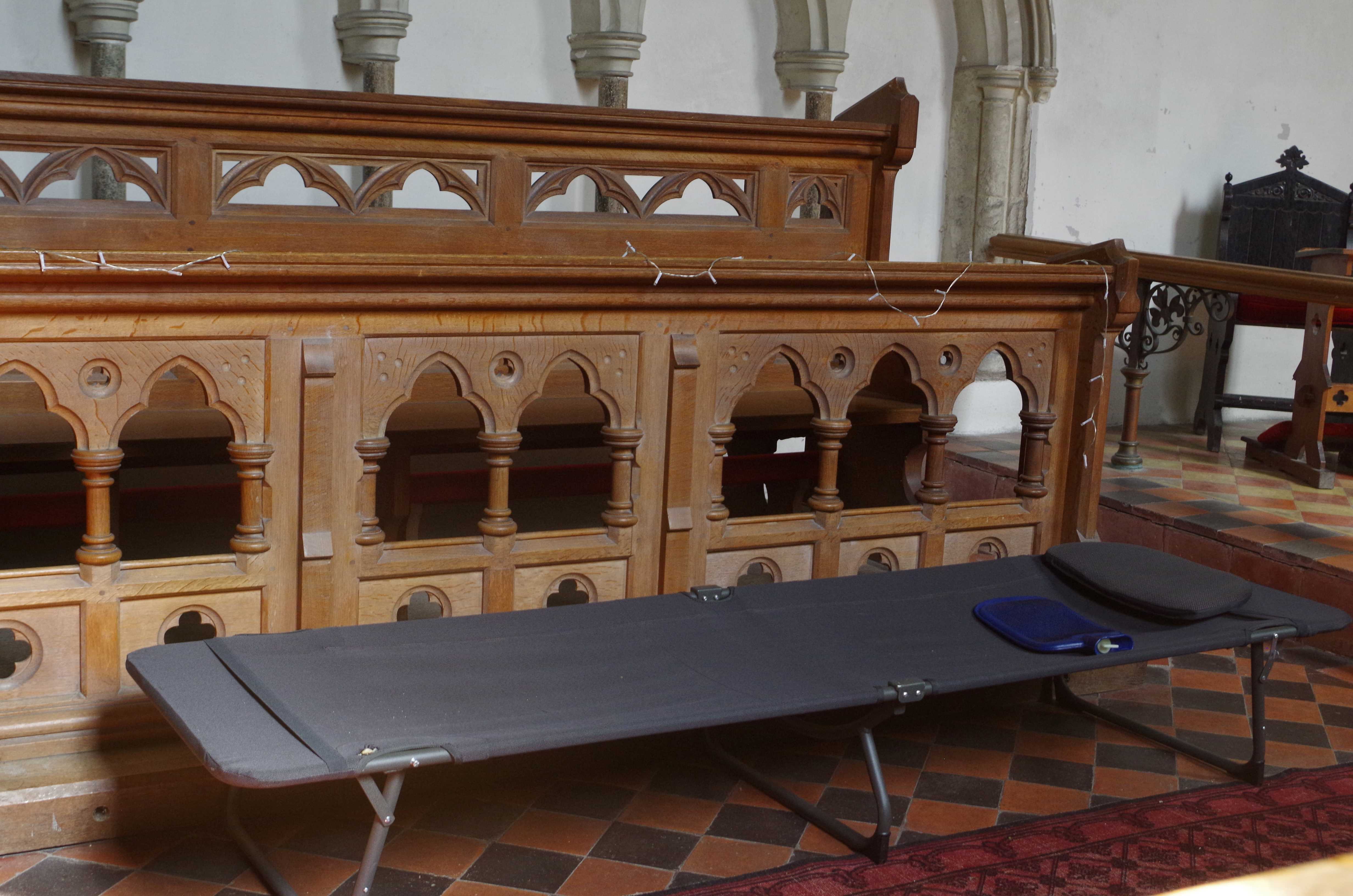
A recently vacated Champers campbed. © Carole Tyrrell
But I was at St James’s to see the cockleshell room which I’d missed on earlier visits. There wasn’t a sign advertising it but a quick look at the church map of the interior and I headed for the church organ. This time I found it! The door’s latch seemed to echo in the tranquillity as I pulled it open. The vestry is ‘compact and bijou’ as an estate agent would undoubtedly say – it is tiny and there was only a small open cobwebbed window, high up in the wall for ventilation. The room felt very warm and contained only a chair, possibly a recycled pew, and a bureau.
But it’s the thousands of cockleshells that made me catch my breath. They are floor to ceiling, arranged in patterns with newer ones being cemented in. I have to say that it did feel a little claustrophobic. The vestry dates back to the 19th century and is considered to be either a reminder or perhaps homage to the shell being the symbol of the saint, St James. Shells would be worn in pilgrims’ hats as they went on the trail to his shrine in Santiago de Compostela. Above the door, and supposed to be, are initials and a date which may be 1833 or 1838. The initials are I.M. and I.C. CWARDENS which could stand for John Murton and John Comport churchwardens. I was looking in the wrong place so didn’t spot it but perhaps on another visit…. you do need a few minutes just to take it all in and try not to touch them although it is a very tactile surface.
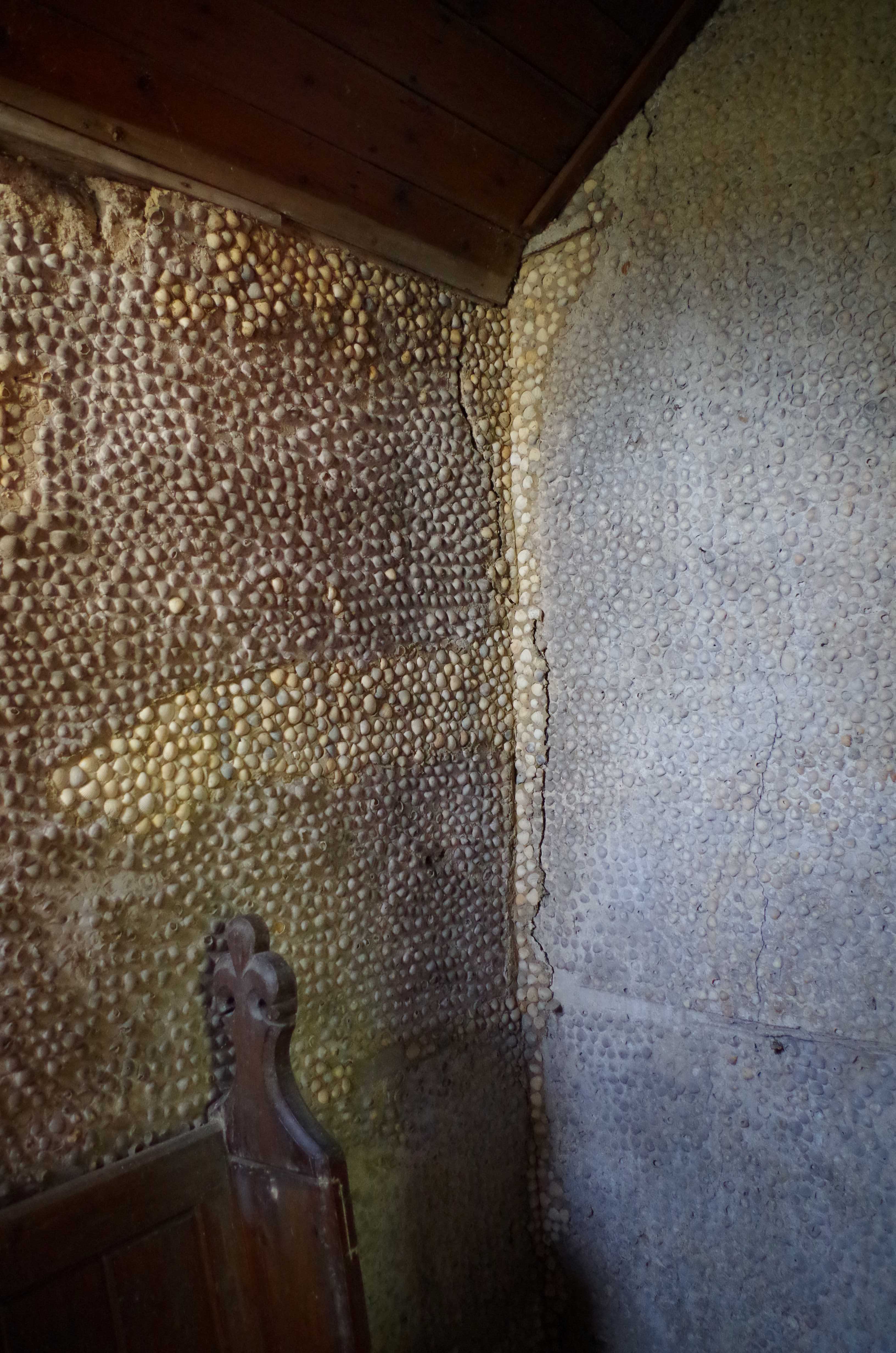
View of the vestry. © Carole Tyrrell
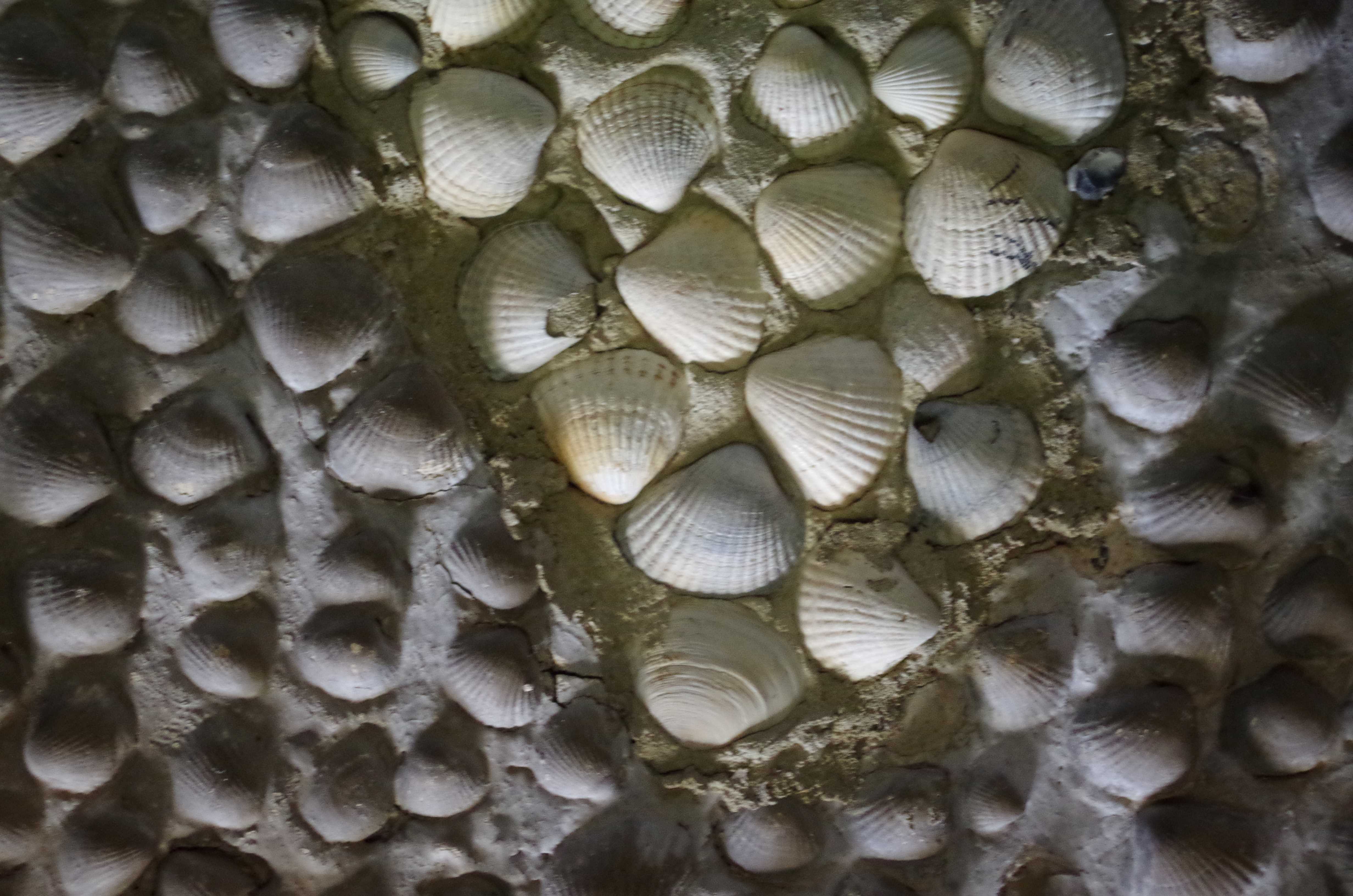
Close up view of cockleshells on wall showing newer ones cemented in. © Carole Tyrrell

You can almost imagine what this room must have looked like at one time with newer shells. © Carole Tyrrell
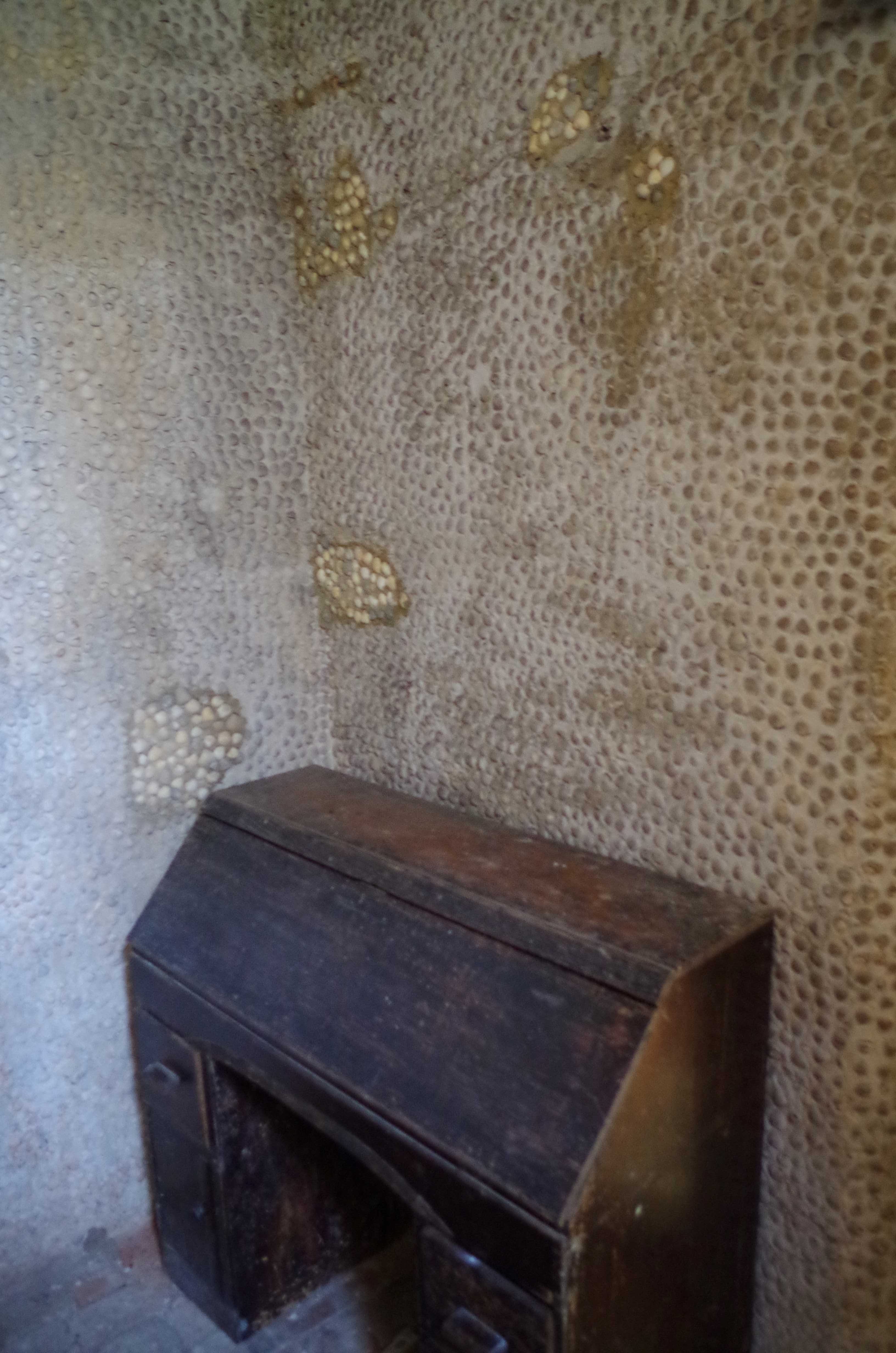
View of bureau and walls. © Carole Tyrrell
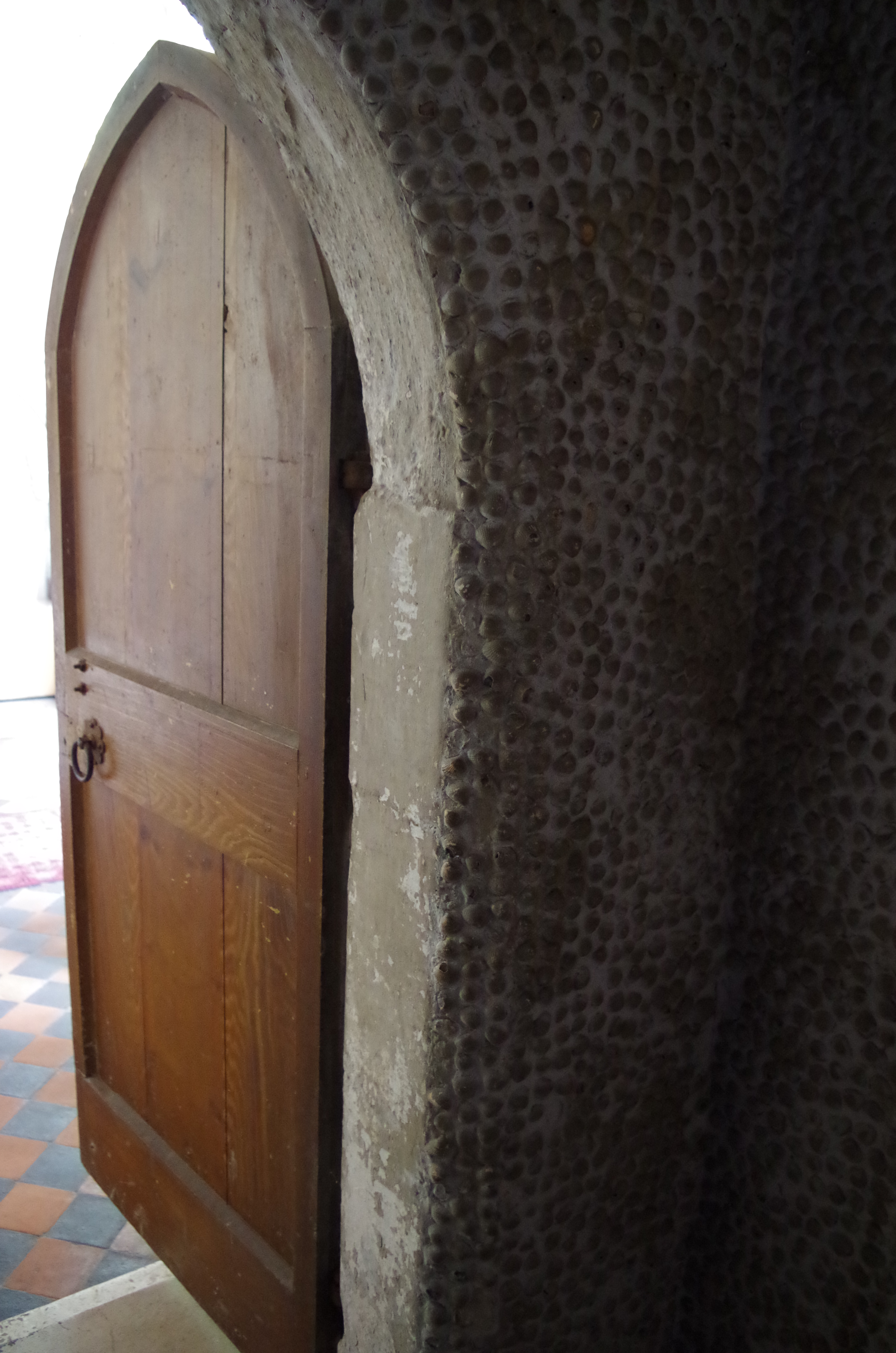
View of church from vestry. © Carole Tyrrell
According to the Churches Conservation Trust, it’s considered to be
‘unique in an English church’.
As I explored the nave after leaving the little room I saw the medieval benches that date back to the 14th century. They’ve evaded the iconoclasts of the 1600s and Victorian restoration but are now too fragile to be touched, much less sat on, and are now roped off.
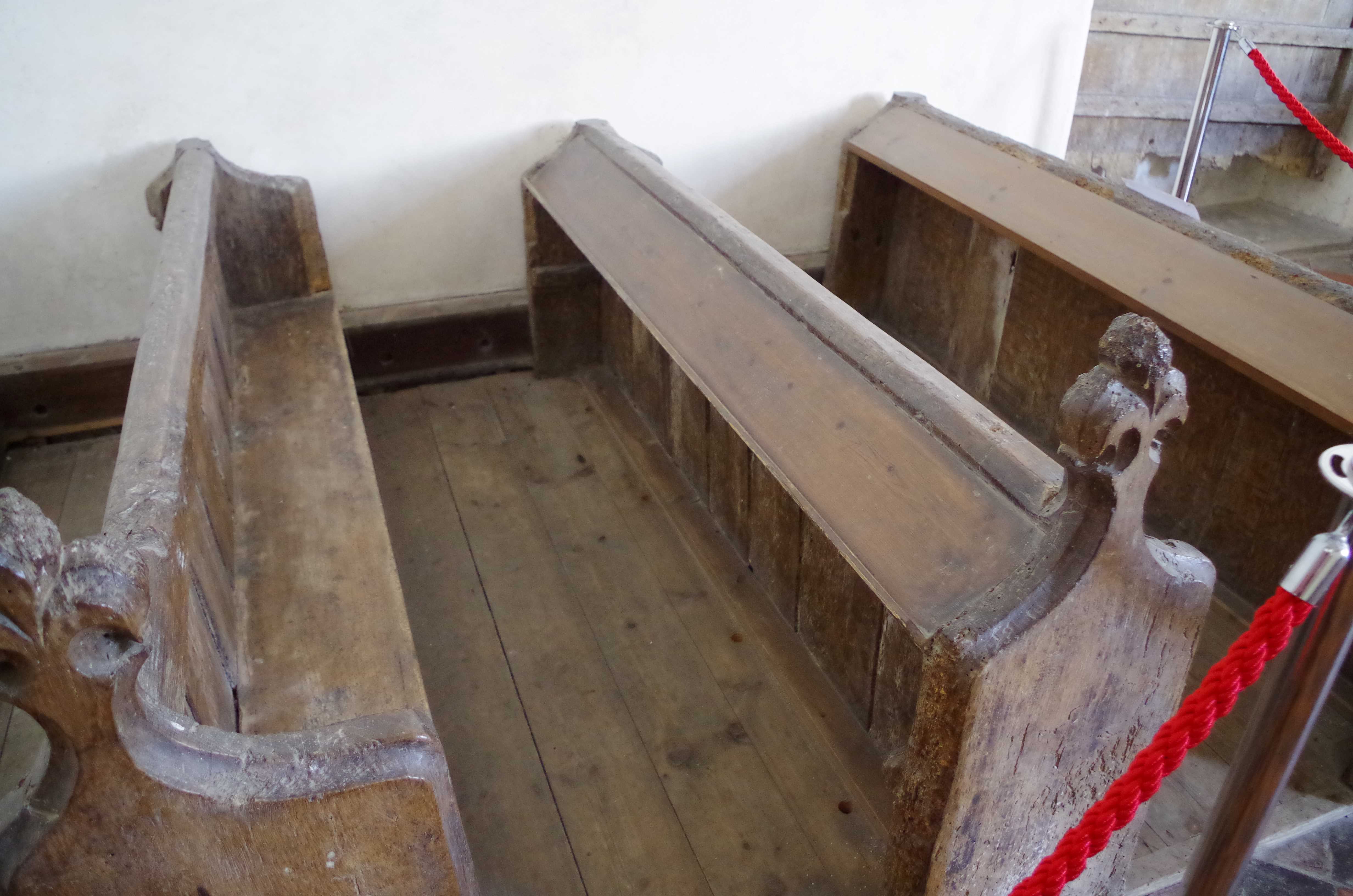
The medieval pews – not considered comfortable by the Victorians. © Carole Tyrrell

The Murton memorial. © Carole Tyrrell
The name Murton appeared again on an elegant and poignant wall memorial to a sailor, John William, eldest son of John Murton of nearby Cooling Castle. He died young, aged 28, after falling overboard from the Monarch off Rio de Janeiro during a voyage to Calcutta. The inscription on the marble tablet quotes from the ship’s captain’s log:
‘And so perished one of the finest and best hearted seamen who ever trod a ship’s deck. I have lost a trustworthy officer and valued friend. Peace be to his remains.’
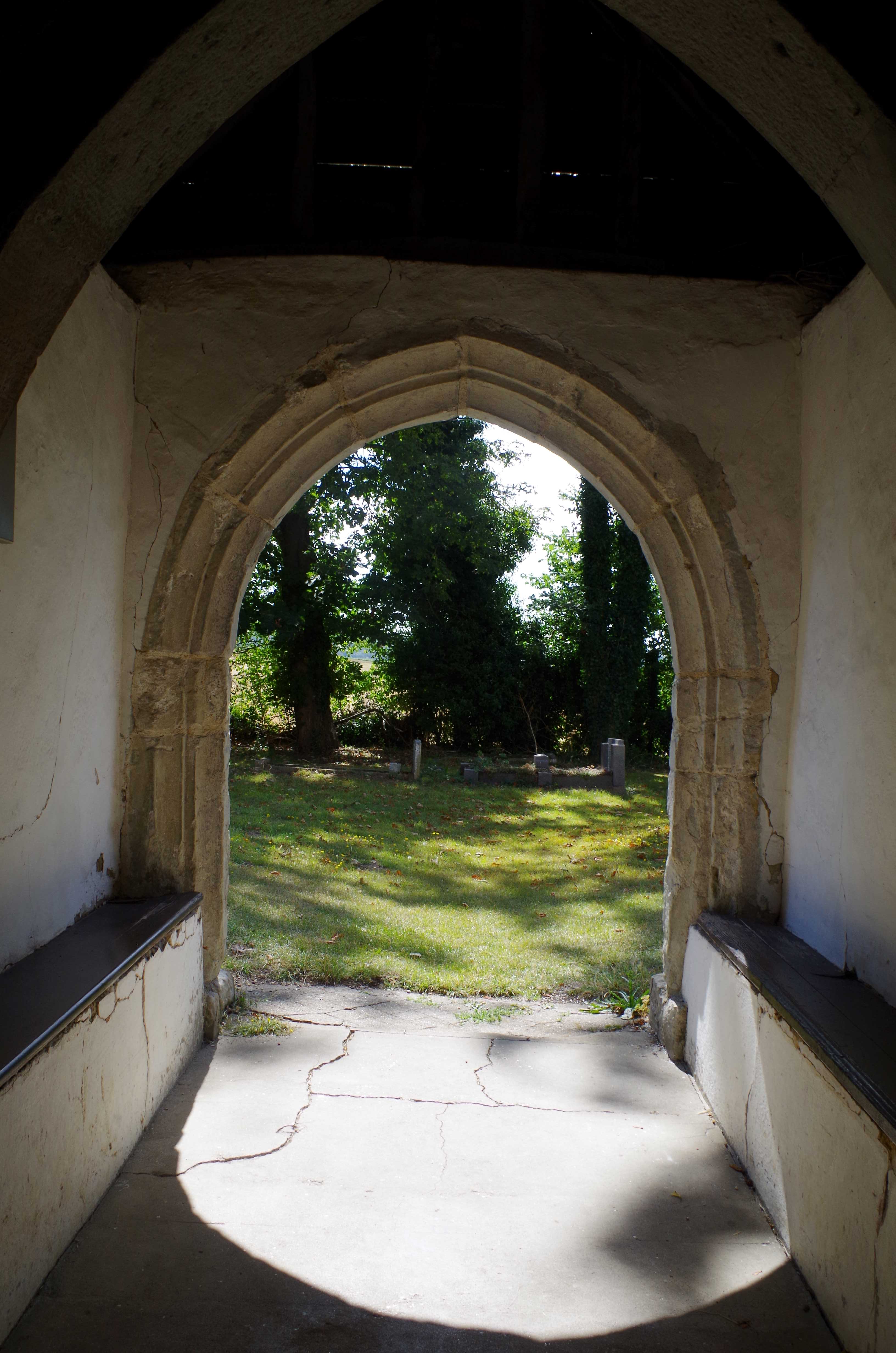
View of churchyard from inside church. © Carole Tyrrell
After that I went outside to see ‘Pip’s Graves’ and the table tomb on which Charles Dickens is reputed to have eaten his lunch. Across the marsh I could see docked ships and butterflies flitted about on the buddleia at one end of the churchyard. I found a clergyman’s grave denoted by a chalice and more childrens graves. One was dedicated to a six year old. I also pursued a Common Darter dragonfly until it posed obligingly and checked to see if the little grinning demon still kept watch over the outside loo. He did. I looked up as I left the churchyard and saw, glinting on the weathervane above the tower the representation of another cockleshell.

Docked ships over the marshes from the churchyard. © Carole Tyrrell

Common Darter. © Carole Tyrrell

The chalice symbol indicates the grave of a priest or clergyman. © Carole Tyrrell
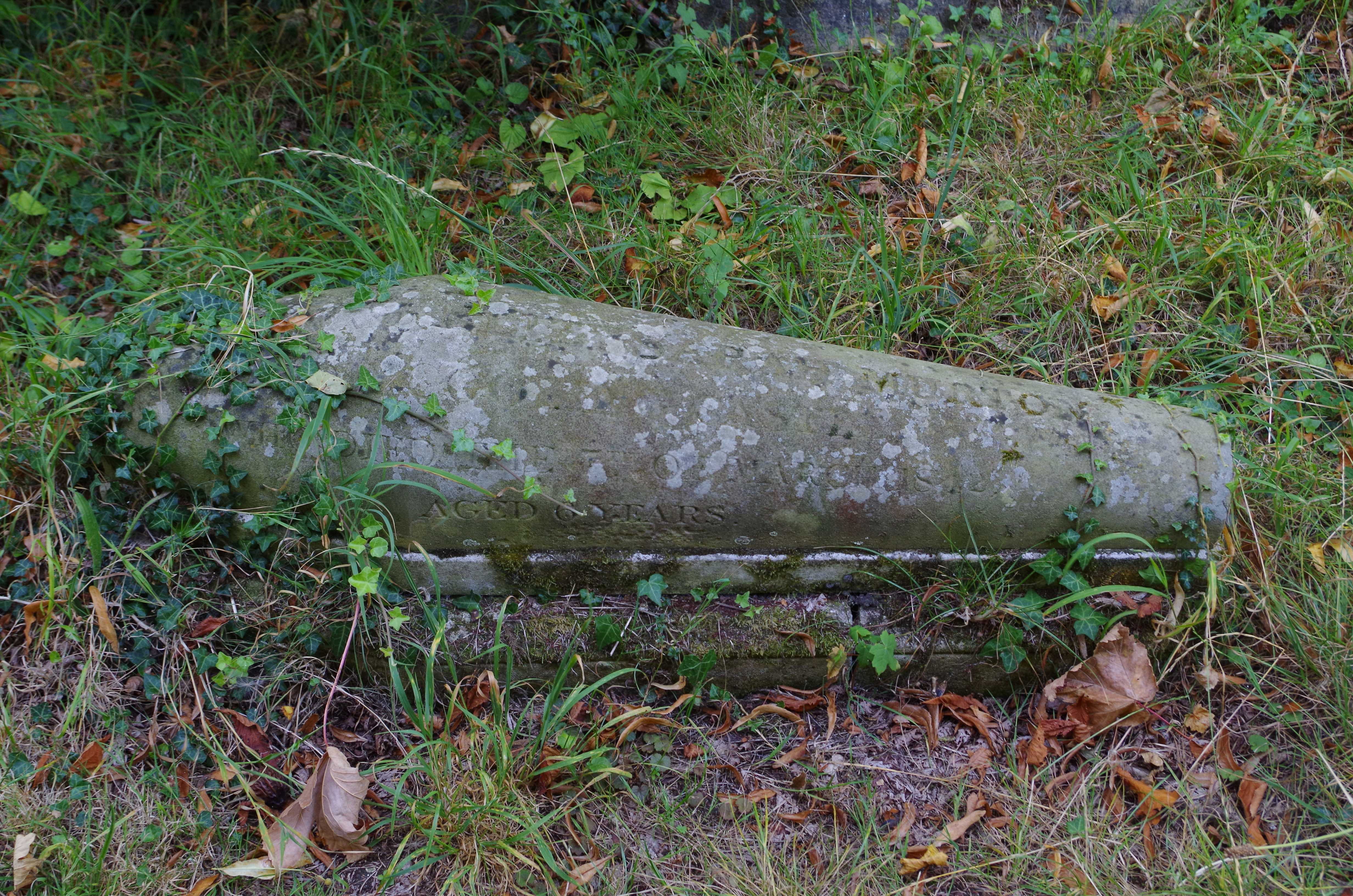
A small grave dedicated to a 6 year old in another part of the churchyard. © Carole Tyrrell

Shell symbol on the weathervane. © Carole Tyrrell

View of St James from outside the churchyard. © Carole Tyrrell
The 18th historian, Edward Hasted, described Cooling as
‘an unfrequented place, the roads of which are deep and miry, and it is as unhealthy as it is unpleasant.’
It certainly is unfrequented as I was alone as I walked along Cooling Road to and from the church with only passing cars for company. The remains of the 14th century Cooling Castle, which is in private hands, are still impressive. Dark blue sloe berries were still on several bushes and windfalls clustered beneath apple trees in a nearby orchard. I retraced my steps back to Cliffe for a wander round St Helen’s churchyard and then a very welcome cuppa in their café.
But how I envied the ‘champers’ enjoying a good night’s kip(I hope) in that little corner of Kent.
© Text and photos Carole Tyrrell unless otherwise stated.
References and further reading
St James’ Church, Cooling, Kent | The Churches Conservation Trust (visitchurches.org.uk)
St. James | Biography, Apostle, the Greater, Death, Feast Day, & Facts | Britannica


Very interesting, thank you for sharing Carole. I love the idea of sleeping the church too, although I don’t think I could get up from those beds, lol.
LikeLike
Dear Tracy
I read too many ghost stories and that might keep me awake at night in an old church! I would love to try it though.
Carolex
LikeLike