Author: shadowsflyaway
More peacock splashes of colour amongst the grey and the black – mosaics from Beckenham Cemetery

©Carole Tyrrell
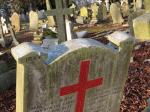
On another recent return visit to Beckenham cemetery in order to research symbols I discovered some more mosaics on memorials. They were mainly small colourful crosses, either at the corners of a memorial or, in the case of one larger cross, the centrepiece of the epitaph.
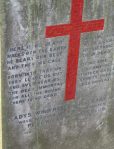
This is the simple but moving Denson memorial. It’s dedicated to Gladys Winifred and baby Mary who were ‘the well beloved wife and daughter of Percy Clifford Denson. The scarlet cross really stood out amid the other plainer granite tombstones. The verses that surround the cross read:
There is no death an angel shape
Walks over the earth with silent tread
He bears our best love thins away
And then we call them dead.
Born into that undying life
Thy leave us but to come again
And ever near us though unseen
The dear immortal spirits tread
For all the boundless universe is life
There is no dead’
This has been adapted from the well know 19th century poem ‘There is no Death’ by John Luckey McCreery (1835-1906) although it has been mistakenly credited to Sir Edward Bulwer-Lytton. It was written in 1863 and, in 1893, McCreery wrote to an Iowa newspaper to remind readers that it was his work.
This is the poem in full with the relevant quotations from the Denson epitaph marked in bold:
There is no death! The stars go down
To rise upon some other shore
And bright in heaven’s jewelled crown
They shine for evermore
There is no death! The dust we tread
Shall change beneath the summer showers
To golden grain or mellow fruit
Or rainbow-tinted flowers
The granite rocks disorganise
To feed the hungry moss they bear:
The forest leaves drink daily life
From out the viewless air.
There is no death! The leaves may fall,
And flowers may fade and pass away –
They only wait, through wintry hours,
The coming of the May.
There is no death! An angel form
Walks o’er the earth with silent tread
He bears our best-loved things away,
And then we call them “dead”.
He leaves our hearts all desolate –
He plucks our fairest, sweetest flowers,
Transplanted into bliss, they now
Adorn immortal bowers.
The bird-like voice, whose joyous tones
Made glad this scene of sin and strife,
Sings now an everlasting song
Amid the tree of life.
Where’er He sees a smile too bright,
Or soul too pure for taint of vice,
He bears it to that world of light,
To dwell in Paradise.
Born unto that undying life,
They leave us but to come again:
With joy we welcome them –the same
Except in sin and pain.
And ever near us, though unseen,
The dear immortal sprits tread,
For all the boundless universe
Is Life –there is no dead!
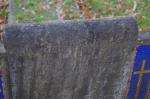
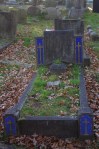
This is one of a pair of gold crosses that are on either side of Harold Chenowith’s (1898-1934) tombstone.
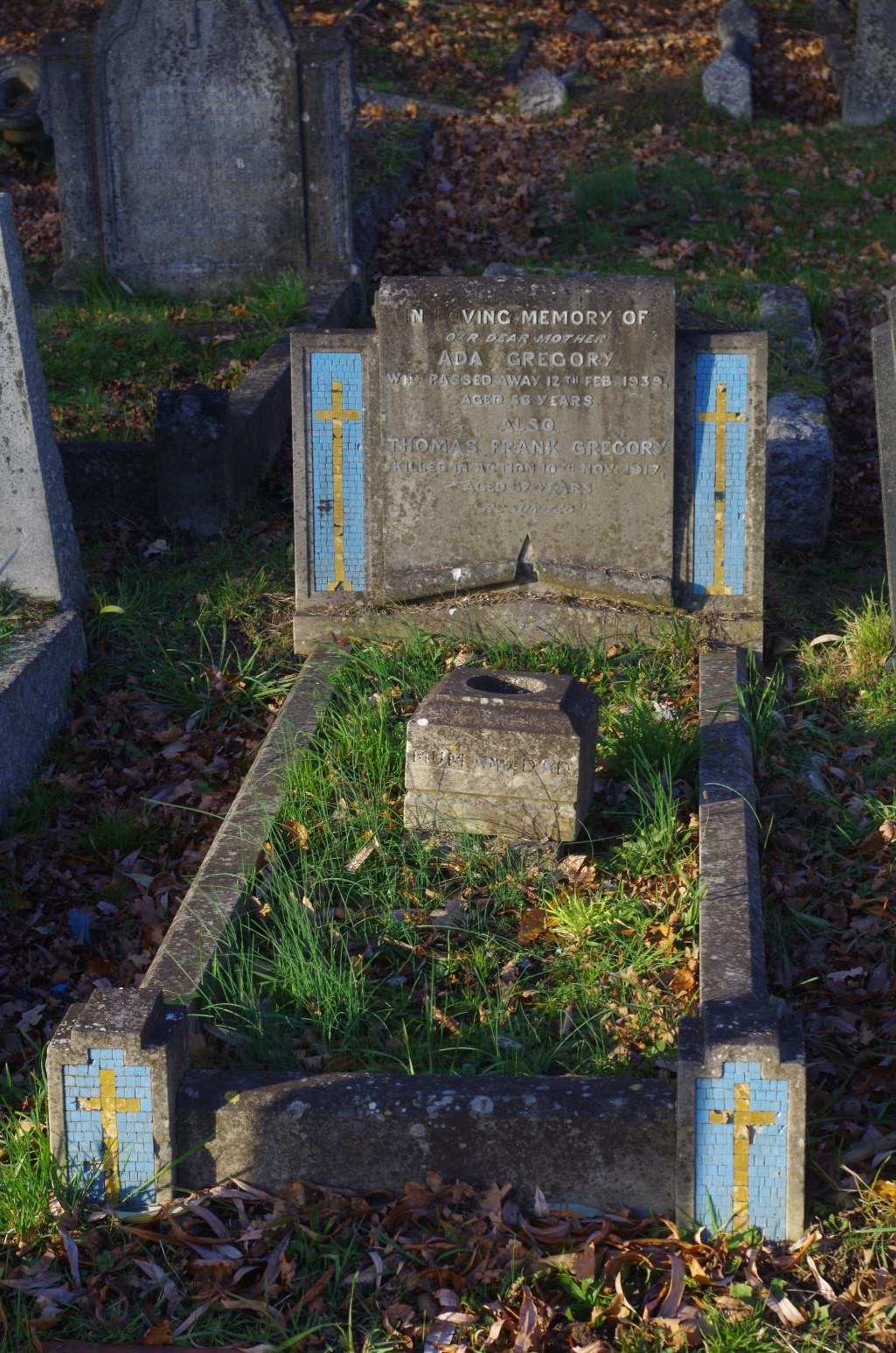
And more golden crosses on each of the corners of Ada Gregory’s monument. She died in February 1939 but her husband, Thomas, who was killed in action in November 1917 is also commemorated here. As the final line of the epitaph states ‘ Reunited.’

©Carole Tyrrell
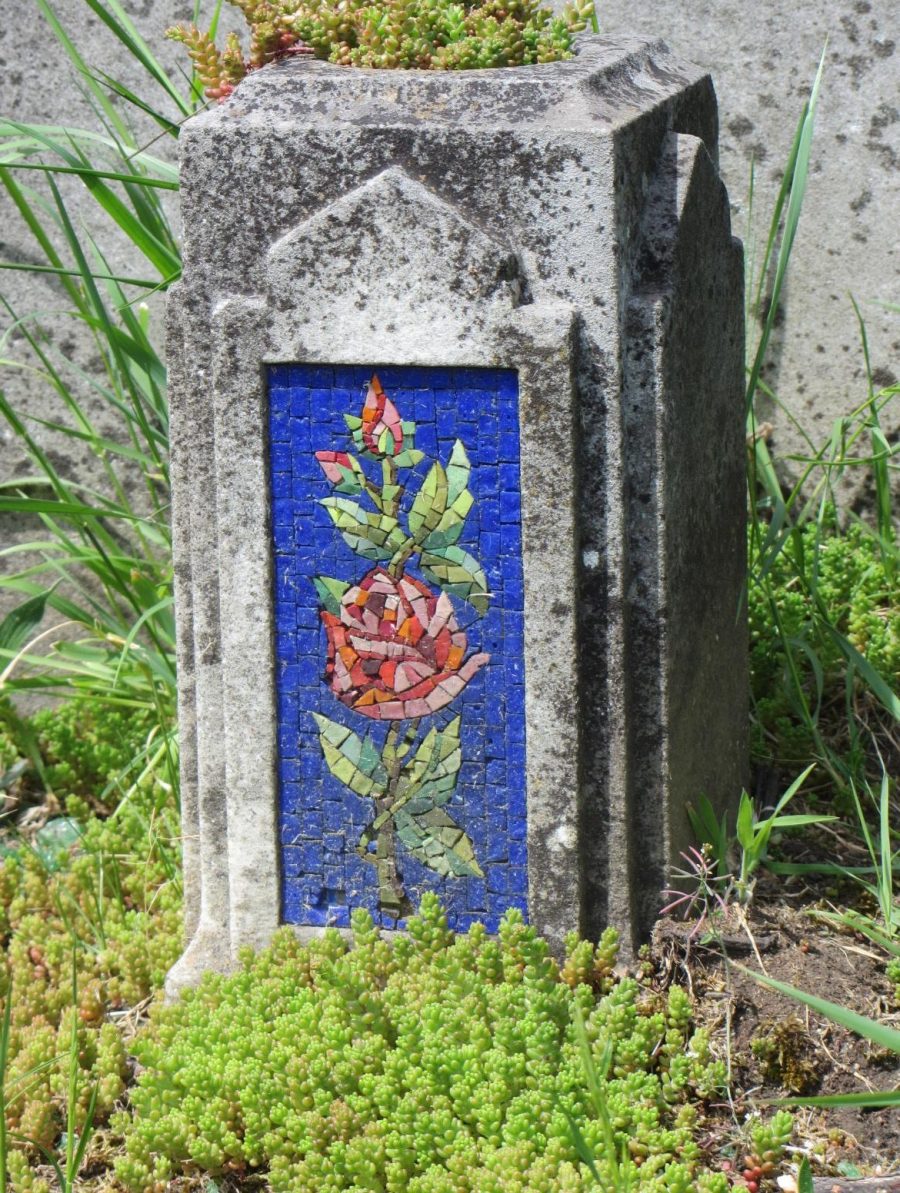
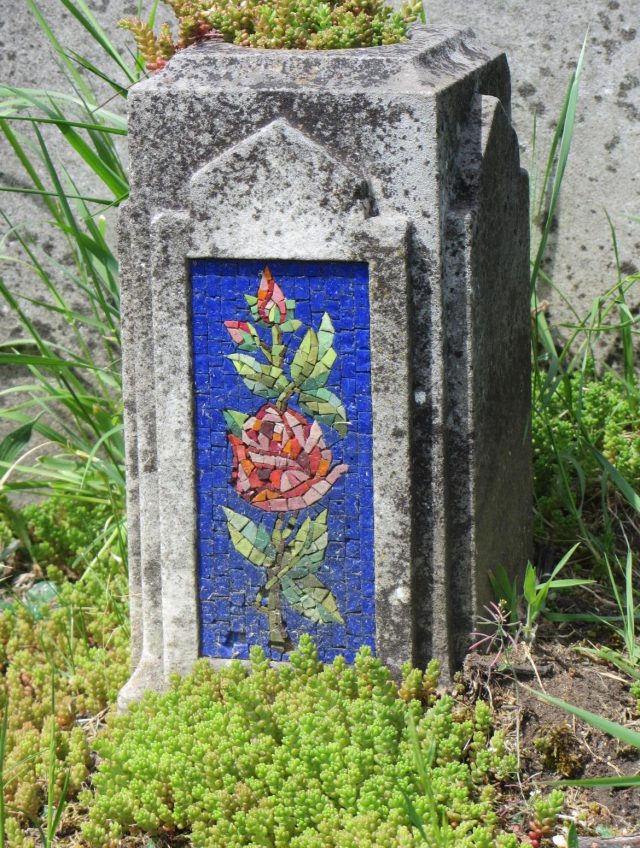
Finally, this is a vase which has been incorporated into the headstone of Margery Alice, ‘beloved wife of Frank Thompson, who ‘passed peacefully away on 6 October 1934 aged 39.’

©Carole Tyrrell
These mosaics decorations all seem to date from the 1930’s and so are pre-Second World War. So far I have been unable to discover the reason behind the vogue for this embellishment and so I will continue to look for them whenever I visit a cemetery.
© Text and photos Carole Tyrrell
http://ir.uiowa.edu/cgi/viewcontent.cgi?article=1932&context=annals-of-iowa
http://funeralhelper.org/there-is-no-death-john-luckey-mccreery.html
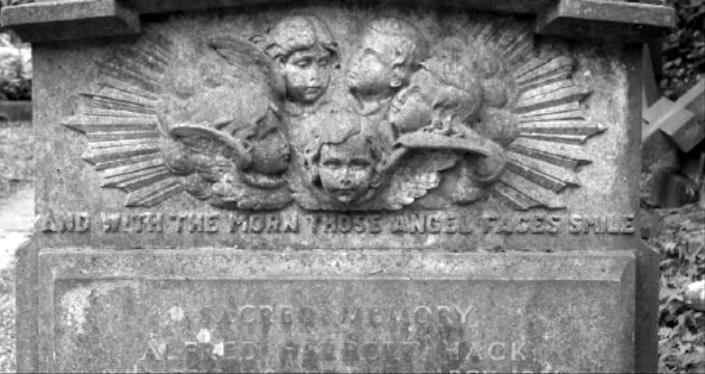
Symbol of the Month – And With The Morn Those Angel Faces Smile

©Carole Tyrrell
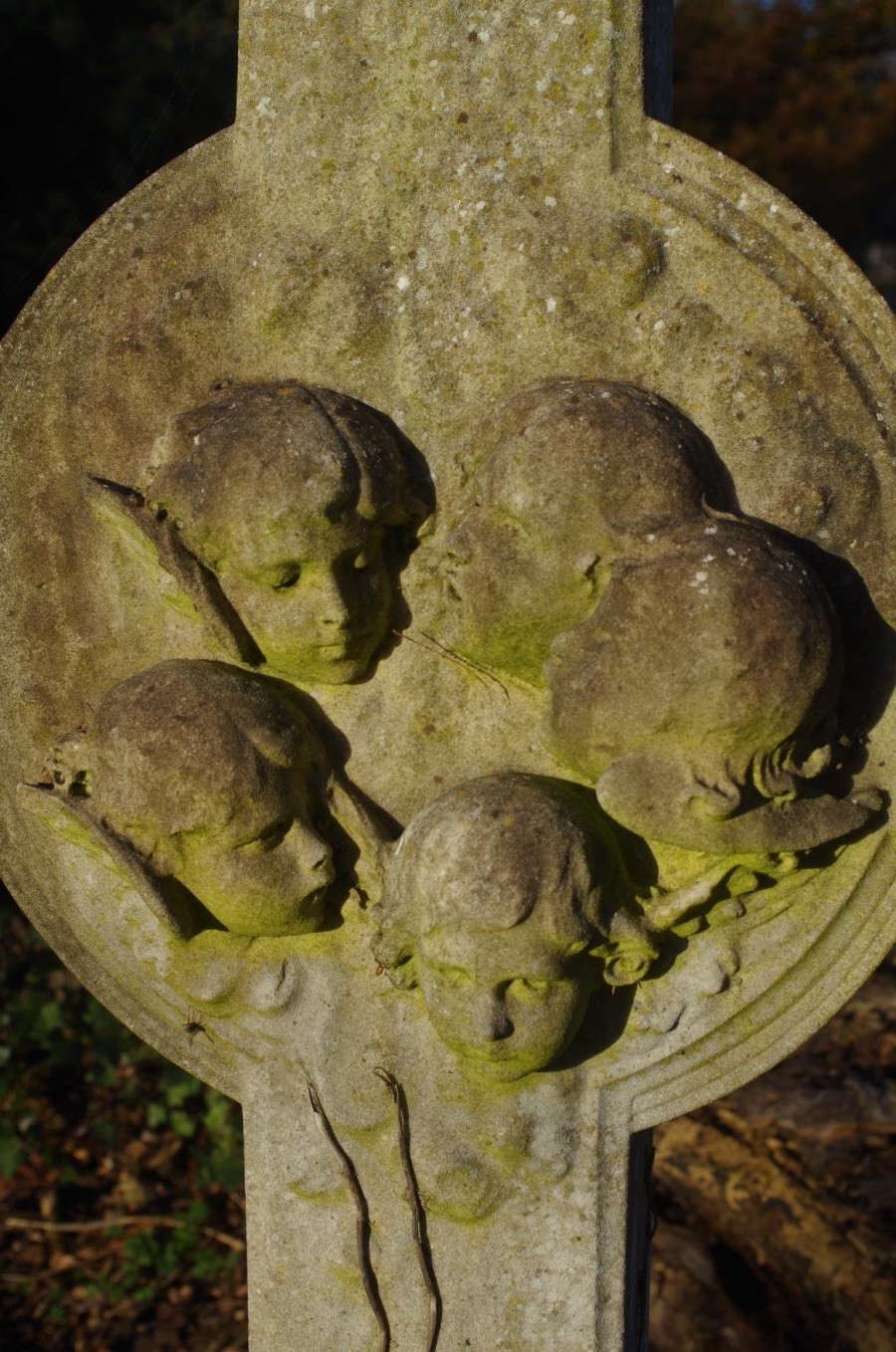
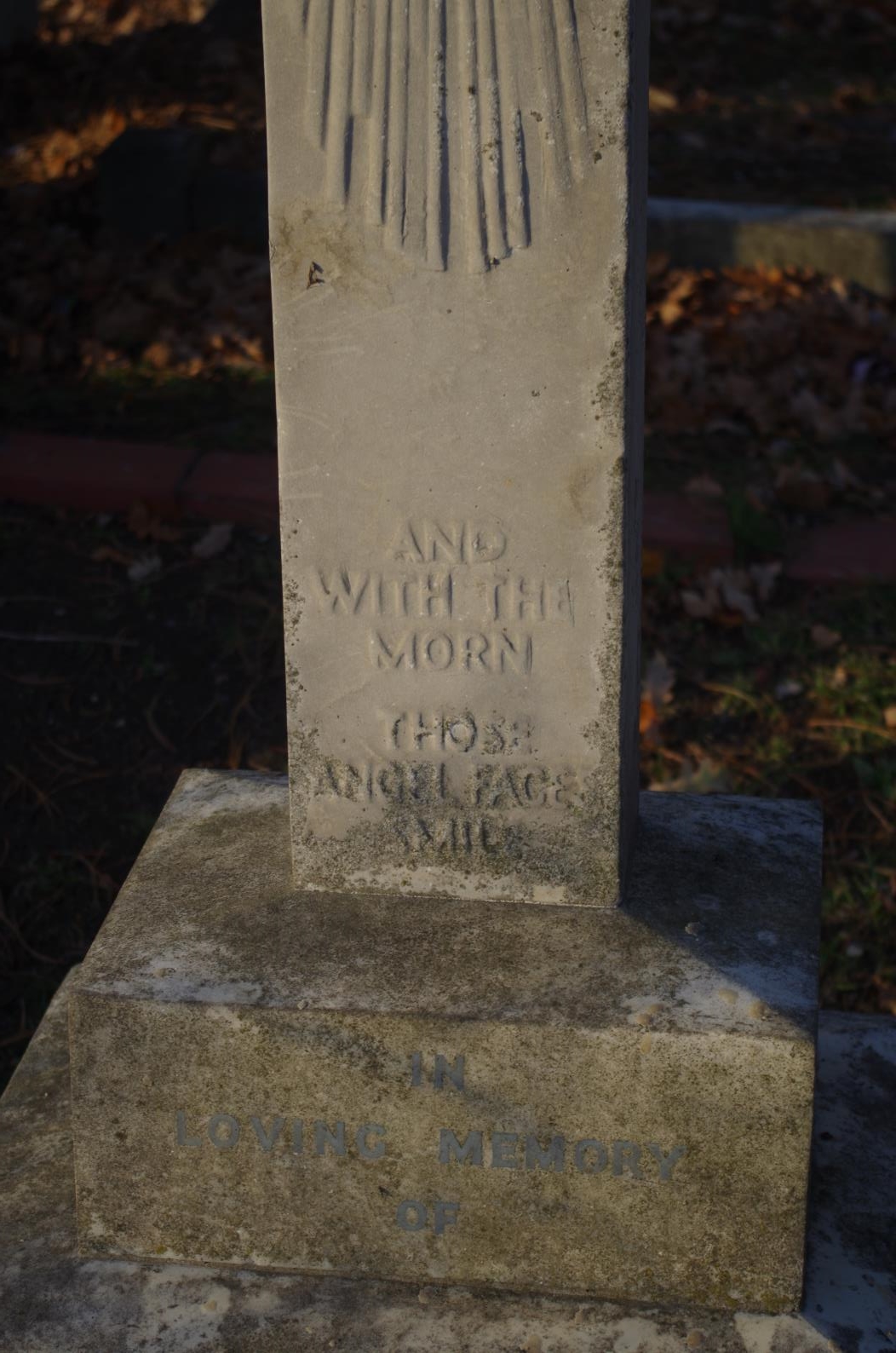
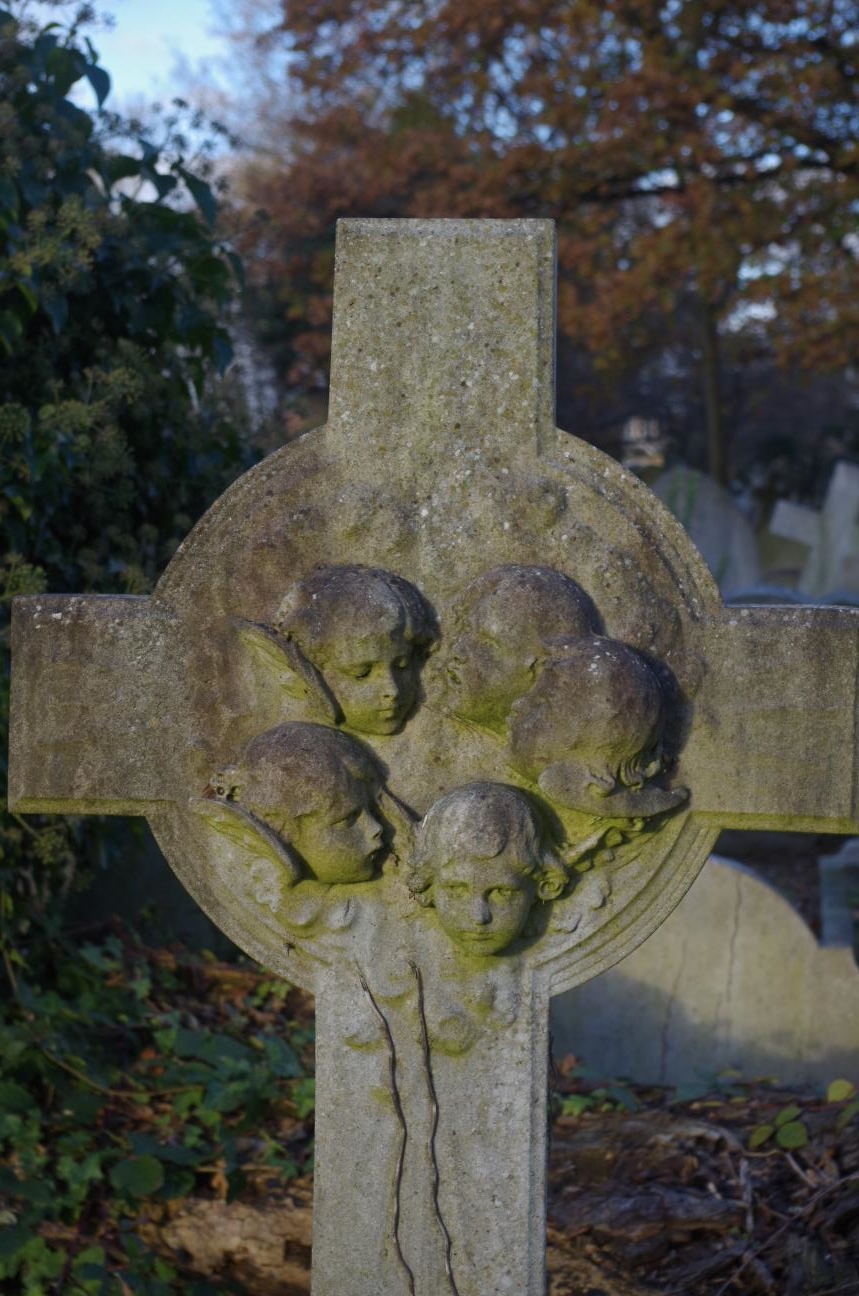
Five child angels, their faces turned to each other, framed by small wings, except for one that was staring out at me, I wanted to reach out and touch them but didn’t want to damage them. They formed a roundel at the centre of a tall cross with the phrase ‘And with the morn those angel faces smile’ inscribed at the base of its stem. I was on a tour of Beckenham Cemetery when I first saw them.

Our guide didn’t comment on them but the monument is in a prominent place on the main road through the cemetery and I often wondered about this pretty and poignant memorial.
On a visit to Highgate East in 2014 I found another example but on a smaller scale on a tombstone in the name of Alfred Hack and dated 1956. There is a distinctly 1930’s look about the angels from their hairstyles.
I also found another version which featured cherubs faces instead of childrens on a visit to Knebworth this summer.
Then , on a more recent visit to Beckenham Cemetery, I found another similar one which was only a short distance away from the first. In this the child angels seem to have more definite, individual faces and the one that has her head towards the viewer is looking down instead of outwards. Now I wanted to find out more about the quotation and the angels and my research led me to a Victorian hymn that was sung on the Titanic at its final service on board and by the inmates of Ravensbruck concentration camp as the S.S led them in. The ‘angel faces’ is a quotation from ‘Lead, kindly Light’, in fact it’s the penultimate line and like ‘Rock of Ages’ it caught the mood of its time.
These are the lyrics:
‘Lead, kindly Light, amid the encircling gloom
Lead thou me on;
The night is dark, and I am far from home,
Lead thou me on.
Keep thou my feet; I do not ask to see
The distant scene; one step enough for me.
I was not for ever thus, nor prayed that thou
Shouldst lead me on;
I loved to choose and see my path; but now
Lead thou me on,
I loved the garish day, and, spite of fears,
Pride ruled my will: remember not past years.
So long thy power hath blessed me, sure it still
Will lead me on,
O’er moor and fen, o’er crag and torrent, till
The night is gone;
And with the morn those angel faces smile,
Which I have loved long since, and lost awhile.’
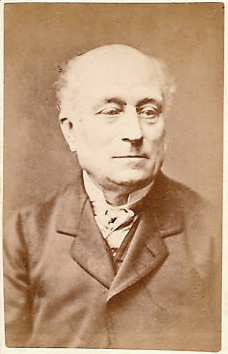
However, the writer John Henry Newman (1801-90), always refused to reveal the meaning of the ‘angels faces’ or what the ‘kindly light’ actually was.
Originally a poem, it was written by Newman in 1833. He was then a young theologian and Anglican vicar and was going through a challenging time in his life. Struck down by a fever which nearly killed him while travelling in the Mediterranean, Newman’s servant was so convinced that he would die that he asked him for his last orders. But in his autobiography, Newman told him ‘I shall not die, for I have not sinned against light’.
Newman recovered but that wasn’t the end of his troubles. Desperate to return to England he then took a boat from Palermo to Marseilles only to end up stranded and becalmed in the Straits of Bonifacio. Exhausted and frustrated Newman wrote the poem, ‘The Pillar of the Cloud’ that, in 1845, became ‘Lead, Kindly Light’. Newman was not happy about this as by then he’d converted to Catholicism and hymn singing wasn’t included as part of divine service. He went onto become Cardinal Newman, one of the most important figures in English Catholicism, and also an important writer. In 1900 Elgar set Newman’s poem ‘The Dream of Gerontius’ to music.

This celebrated portrait is by Sir John Everett Millais.
In the public domain in UK – from the National Portrait Gallery wkipedia
‘Lead, Kindly Light’ has struck a chord with those in danger or about to enter the endless dark realm and needed the comfort of a light leading their way through it. Miners awaiting rescue from deep underground during the 1909 Durham mining disaster sang it as did the passengers on one of Titanic’s lifeboats when the rescue ship, Carpathia, was sighted the morning after. It caught the Victorian mood perfectly as did ‘Rock of Ages’ and Queen Victoria asked for it to be read as she lay dying. It also inspired a celebrated painting by the Scottish artist, Sir Joseph Noel Paton in 1894 in which the angels are pensive young woman.
But why did one line from this song inspire two monuments in Beckenham Cemetery and one in Highgate East? I noticed that both of the Beckenham monuments were on children’s graves and that the carved angels were also children. Perhaps the mourning relatives left behind may have wanted the consolation that their beloved children would be waiting for them when their time came.
The first one is the Foster family monument. The epitaph is now virtually unreadable but I could make out the name ‘Francis Frederick’ carved along the base. There are two inscribed ‘Books of Life’ placed on top of the grave. One is dedicated to John Francis Foster and Alice Gladys Alice Chapman and the other is dedicated to John Francis Foster and Alice Emma Foster.

©Carole Tyrrell
The second one is the Pace family monument and is to the two daughters of Henry William and Elizabeth Pace. These were Lilian Alice who died in 1888 and Grace Irene who died in 1903. Strangely enough they both died at the same age and Elizabeth herself is commemorated here as she died at 33 in 1912.

©Carole Tyrrell
This is the one in Highgate East dedicated to Alfred Hack and dated 1956.

©Carole Tyrrell
So, a line from a hymn that even its writer was unsure of its meaning, became a symbol of comfort to sorrowing families.
However the symbol has been adapted to feature cherubs as in St Mary’s, Knebworth’s churchyard. These are on the tombstone of the Lutyens family’s nanny, Alice Sleath.
But I am indebted to Douglas Keister’s Stories in Stone for the possible origins on the image of the angels.
The composition of the five heads may have been adapted from a painting by Sir Joshua Reynolds PRA entitled ‘Heads of Angels Miss Frances Gordon’ which was painted during July 1786 – March 1787. The sitter was the then 5 year old Frances Isabella Keir Gordon (1782-1831) who was the only daughter of illustrious parents. They were Lord William Gordon (1744-1823) and his wife Frances Ingram (1761-1841), second daughter of Charles, 9th Viscount Irvine (1727-78), who were married on 6 March 1781. Her uncle was Lord George Gordon (1751-93), whose political activities had sparked the anti-Catholic riots of 1780.

Frances’ mother outlived her by 10 years and the painting was then presented to the National Gallery. It was enormously popular and was reproduced on numerous decorative items and photographic reproductions such as ‘The Cherub Choir.’
And so a poignant and powerful symbol was created from the combination of a great painting, an inspirational hymn and Victorian taste and led to these three lovely memorials to much missed children.
©Text and photos Carole Tyrrell unless otherwise stated.
http://www.telegraph.co.uk/culture/music/3668066/The-story-behind-the-hymn.html
https://en.wikipedia.org/wiki/Lead,_Kindly_Light
http://www.thebeautybag.net/videos/angel-faces-smile/
Stories in Stone, Douglas Keister, 2006, Gibbs Smith
Peacock splashes of colour in between the grey and the black – mosaics in cemeteries (and a few other places)

NB-please click on images without an obvious caption and it should come up. Please let me know if it doesn’t.
It’s always the little bright patch of colour that catches your eye. In a sea of grey Portland stone, black, grey or, for the more adventurous, pink granite or terracotta, the sun always catches a small mosaic. They aren’t plentiful but most large Victorian cemeteries have a couple or two if you know where to look.
Most have survived very well and mostly seem to date from the 1920-1930’s. However, there is one in St Mary Catholic Cemetery in Kensal Green which is on a 1950’s tombstone and is religious in nature.
Mosaics and me
When I visited Venice I explored San Michele cemetery, its Isle of the Dead, and, despite not having much time, saw some lovely examples. It was my first experience of seeing mosaics in situ since a school visit to Lullingstone Roman Villa. These are two examples from Venice;
In the same year I also visited Aquileia which is in Northern Italy near the Slovakia border. Once a thriving Roman port it is now 10km from the Adriatic Sea. The Romans left many artefacts including a necropolis which is now surrounded by back gardens and the celebrated mosaic floor in the Cathedral.
Visitors can admire the detailed and colourful figures of birds, fish, reptiles, women and fishermen amongst others from an elevated glass walkway over the floor. Here are a bison and an octopus from the floor:
So it was exciting to be able to go mosaic spotting in the UK and West Norwood Cemetery has a wonderful and large example in its Greek Necropolis. The delicacy and beauty of these creations must be time consuming and expensive so we should appreciate the ones that we have.
On my list to visit – Rudolf Nureyev’s tomb.
I am indebted to Rod Humby from the Joy of Shards website for kindly giving me a link to one of the most spectacular mosaic memorials of all – Rudolf Nureyev’s tomb in Sainte Genevieve des Bois Russian Cemetery, Sainte Genevieve des Bois France. It has a mosaic Oriental carpet draped across it. Nureyev was an enthusiastic collector of beautiful carpets and antique textiles and so it seems fitting that one protects him in his eternal sleep. It was designed by the sculptor Ezio Frigerio who had worked with Nureyev for many years on designing ballet sets.
A brief history of mosaics
The Joy of Shards defines the word mosaic as:
‘The word ‘mosaic’ is as you might expect, Italian in origin. It derives from the Latin ‘mosaicus’ which in turn comes from the Greek ‘mouserus’ or belonging to the Muses and so artistic.’ (reproduced by kind permission)
According to Wikipedia mosaics are:
‘a piece of art or image made from assembling small pieces of coloured glass, stone
or other materials. They are usually made of small flat, roughly square, pieces of
stone or glass of different colours, known as tesserae.’
Again from The Joy of Shards
‘Mosaics were first created roughly 4,000 years ago in Mesopotamia which included what are now Iraq, Syria and Kuwait. At first they were simple and consisted of pushing terracotta cones point first into a background as decoration. In the 8th century pebble pavements appeared which incorporated differently coloured stones to create patterns. But it was the Ancient Greeks, flowed by the Romans who began to incorporate pictures and patterns into their designs. ‘
(reproduced by kind permission)
Mosaic making flourished throughout the Byzantine Empire from the 6th-15th century and soon spread throughout East and Western Europe. Ravenna in Italy was its centre of mosaic making from the 6th century and pieces still survive in place such as The Great Palace in Constantinople, now Istanbul.
The Christian and Islamic faiths have also used mosaics extensively in their basilicas and mosques. These include the Umayyad Mosque in Damascus and the Great Mosque in Cordoba. Ely Cathedral also boasts a mosaic floor in one of its chapels. There are also notable examples in Venice’s St Mark’s and also on the islands of Torcello and Murano. The Jewish faith also used mosaics to embellish their synagogues.
Mosaics fell out of favour and were replaced by paintings around the time of the Renaissance. But they enjoyed a revival in the 19th century as the Victorians re-discovered them. Westminster Cathedral is a fine example and is decorated in the Byzantine style.
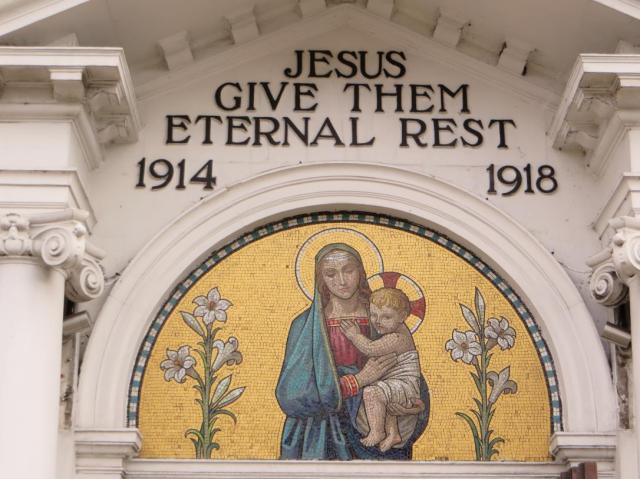
This one is from St Saviour and St John Baptist and Evangelist Roman Catholic church in Lewisham High Street and dates from 1919. It’s over the entrance but I was unable to find out the name of its creator.

This lovely one is from Salisbury Cathedral and features an exquisite border of passionflowers around an 1894 memorial.
There are also the celebrated mosaic interiors of the Beer mausoleum in Highgate and the Doulton sepulchre at West Norwood.
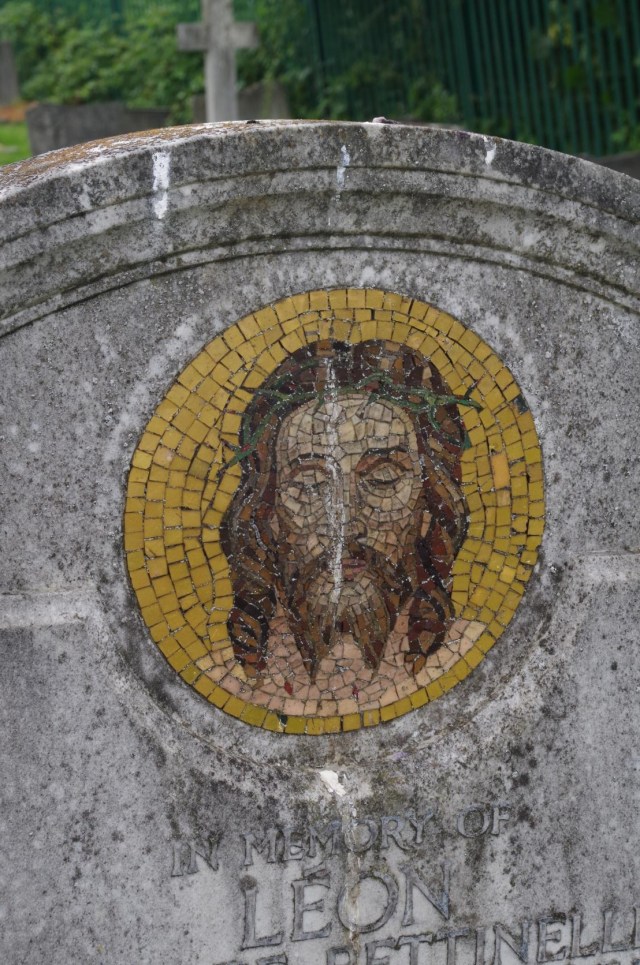
The Bettinelli grave in St Mary’s Catholic Cemetery features the colourful head of Jesus wearing the crown of thorns and is very striking.

Most of the mosaics that I’ve seen appear to have worn very well with only a few tesserae missing here and there. However, there is one in West Norwood’s Greek section in which the tesserae have completely vanished leaving only a ghostly outline of the figures. There is however, a plain blue mosaic slab beneath it.

This is another from the Greek Necropolis; the Maria Michalinos monument and is based on a stele discovered at a site near Athens and displayed at the British Museum. It features a seated woman dressed in classical dress looking at a jewellery casket held by a servant.

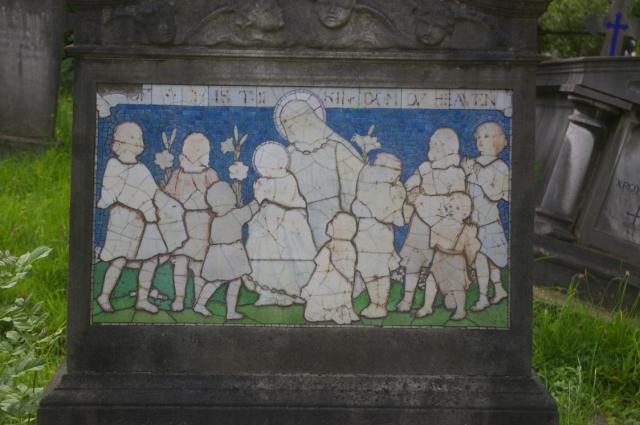
I am compiling a gallery of these little jewels whenever and wherever I find them and here is a selection so far:
Text and photos ©Carole Tyrrell unless otherwise stated or attributed
http://www.thejoyofshards.co.uk/history/
https://en.wikipedia.org/wiki/Mosaic
http://helenmilesmosaics.org/mosaics-miscellaneous/mosaic-headstones/
http://victoriafunerals.com.au/mosiacs-headstones-mausolea.php
http://weburbanist.com/2009/11/01/drop-dead-gorgeous-ten-types-of-tombstones-to-die-for/
http://parisandbeyond-genie.blogspot.co.uk/2011/11/pilgrimage-to-saint-genevieve-des-bois.html
West Norwood Cemetery’s Greek Necropolis – Friends of West Norwood publication, 2011
Symbol of the Month – Laugh now, Cry Later or the Masks of Comedy and Tragedy

©Carole Tyrrell
The two masks of comedy and tragedy, or Sock and Buskin as they are also known for reasons I’ll explain later, are not often found in cemeteries. And as you might expect, when they are there’s a theatrical association.
But what is the history behind this two faced symbol and how did these icons from Ancient Greece come into Victorian cemeteries?
It began with the custom of actors wearing masks, an essential part of the performance, in early Greek theatre. It was a vital part of Greek culture and civic pride. However, Comedy and Tragedy were viewed as completely separate genres and no plays ever combined them.
Tragedy
This genre began in Athens around 532 BC with Thespis, the earliest recorded tragic actor. He was known as ‘Father of Tragedy’ and it has been suggested that his name inspired the English term, thespian, for a performer.
Muse of Tragedy:
Melpomene is the Muse and is often depicted holding the Mask of Tragedy. She often also holds a knife or club and also wears the ‘cothurni ‘or buskin boots that elevated her above other actors. She was a daughter of Zeus and Mnemosyne as was Thalia, the Muse of Comedy, and there were also 7 other daughters who were all Muses.

©Wolfgang Sauber
Licensed under wikipedia Creative Commons Attribution 3.0
Comedy:
After the defeat of Athens by the Spartans in the Peleponnesian War and the subsequent decline in its power, comedy became more important than tragedy. I imagine that people wanted some relief after a protracted war and these were comic episodes about the lives of ordinary Greek citizens. Maybe they were similar to today’s comedy sketches. Greek comedy is reputed to have had a major influence on Roman humour as well. Perhaps they had an early version of Up Pompeii…..
Muse of Comedy:
She is called Thalia but can also be sometimes spelled as Thaleia and is depicted holding the Mask of Comedy in one hand. She’s generally depicted as a young woman crowned with ivy. Thalia wears the thin-soled shoe known as the ‘sock’ from the Latin soccus. It may seem strange but it’s the footwear of the two Muses that led to them being called ‘sock and buskin’.
And so both Comedy and Tragedy became two sides of the theatre world.

Masks:
They were seen as one of the iconic conventions of classical Greek theatre and date back to the time of Aeschylus (525-456 BC) commonly considered to be the father of Greek tragedy. The Ancient Greek term for mask is ‘prosopon’ or face. There are paintings on vases, such as the 5th century BC Pronomos vase, depicting actors preparing for performance with masks. However none have survived due to the organic materials from which they were created such as stiffened linen, leather or cork with wigs of human and animal hair. After the performance they were dedicated at the altar of Dionysus.
It was mainly the chorus that used masks on stage of which there could be up to 12-15 members. Masks created a sense of unity when representing a single character or voice. They always created a sense of mystery and were also a method of disguise. The actor would use the mask to totally immerse himself in his role and become someone else. It also allowed him to appear and reappear in several different roles instead of only being seen as one character. The exaggerated features of the mask also enabled audience members who were sitting at a distance to see characters emotions.
I have found four monuments featuring Tragedy and Comedy each in differing styles, in London Victorian cemeteries: Fred Kitchen in West Norwood Cemetery with a link to Charlie Chaplin. There are two in Brompton Cemetery: Gilbert Laye and Augustus Henry Glossop Harris’s elegant monuments and the exuberant Andrew Ducrow tomb in Kensal Green.
Fred Kitchen (1872-1951):
The graceful Kitchen memorial was recently restored by the Music Hall Guild of Great Britain & America in March 2016 with the Heritage Lottery Fund’s support. It almost dazzles under a summer sky. Both Fred and his father, Richard (1830-1910) rest here and note the broken column on which the Sock and Buskin are placed. This denotes that the head of the family as a broken column indicated that the support, or head of the family, rests here.
Fred came from a theatrical family in that his father, Richard, was the Ballet Master and Dancer at the Theatre Royal Drury Lane. Fred worked mainly in the music halls which were considered a low form of entertainment but many famous comedians learned their craft in them. He was discovered by the legendary impresario, Fred Karno, while playing in a production at Glasgow’s Princess Theatre. It was the stuff of showbiz legend, or cliche depending on your point of view, as Fred was standing in for the chief comedian and so, as a result, a 50 year career theatrical career began. From 1897-1910 Fred was a member of Fred Karno’s Army along with such legends as Laurel and Hardy and Charlie Chaplin. Kitchen had a unique style which featured a splayed walk as he had flat feet and scruffy costume. Chaplin later admitted that this had influenced or he had simply ‘borrowed’ it for his iconic tramp character. In 1913 Fred appeared in a Royal Command Performance for King George V and continued to work until 1945 aged 73. But the music hall circuit was beginning to vanish but his son, Fred Kitchen Jr, continued the family tradition in film and theatre.
Gilbert Laye (1855-1826) – Brompton Cemetery
This is a striking memorial with ‘Comedy & Tragedy’ of either side of a stylised young woman who is holding what appears to be a lyre. There isn’t much known about Gilbert Laye, the incumbent, and I could only find one credit for him online. This was as the director of ‘My Lady Molly’ at Daly’s Theatre on New York’s Broadway. It was a musical comedy and opened on 5 January 1904 and closed on 16 January 1904. He was also briefly the manager of the Palace Pier in Brighton. Both he and his wife, Evelyn Stuart were known as struggling minor actors/ However, she was known as a respected provincial Principal Boy. However, it was their daughter, Evelyn Laye (1900-1995) who became a huge star on stage in musical comedy roles. She made her stage debut in 1915 and acted until well into her nineties. Evelyn worked with Noel Coward and made her first appearance on Broadway in 1929 in his Bitter Sweet. However, her parents disapproved of her first marriage to
actor Sonnie Hale in 1926 which ultimately ended in divorce when he left her for actress Jessie Matthews. Evelyn attracted public sympathy over this with the divorce judge branding Matthews ‘an odious creature.’
Augustus Henry Glossop Harris (1852-1896)

This is a very sophisticated monument with a barefoot mourning woman in robes and her hair tied back resting one outstretched arm on the cenotaph. In vintage photos, the other is raised towards a bust of Harris which tops the plinth. However, the bust is no longer in place and neither is the hand that seemed to stroke it. There are three people commemorated on the monument: Augustus himself, his wife Florence Edgcumbe and their daughter, Florence Nellie Cellier. None of them appear to be buried in Brompton as Augustus died at Folkestone and Florence’s ashes were scattered elsewhere. Florence remarried after Augustus’s death so she may actually be buried with her second husband.
Augustus was a British actor and impresario who came from another theatrical family. Born in Paris his father was a dramatist, Augustus Glossop Harris, and his mother was Maria Ann Bone, a theatrical costumier. The Brompton Augustus Henry was known as ‘the Father of British pantomime’. He co-wrote and produced scripts for large scale pantos that were performed at the Theatre Royal Drury Lane every Christmas. They attracted a popular cast including the legendary Dan Leno. Augustus was also involved in local politics and, in 1890, represented the Strand division in the London County Council. In 1891 he was appointed a sheriff and was also knighted. He married Florence Edgcumbe Rendle in 1881 and after his death she remarried and died in 1914.
Florence Nellie Harris Cellier was their daughter. She married Frank Cellier in 1910 and divorced him in 1925. He was an actor who both appeared and directed in numerous plays and acted in Hitchcock’s ‘The 39 Steps’ in 1948.
‘Comedy and Tragedy’ lie beneath a laurel wreath and violin on top of a carved cloth at the base of the cenotaph.
Andrew Ducrow(1793-1842)

©Mander & Mitchenson Theatre Collection, London
On one of the most desirable and prominent plots in Kensal Green Cemetery lies Andrew Ducrow. To call his blue painted tomb flamboyant is an understatement although the 19th century magazine ‘The Builder’ described it as a piece of ‘ponderous coxcombry‘ . It was supposedly created for his first wife but as the epitaph states
‘Within this tomb erected by genius for the reception of its own remains are deposited those of Andrew Ducrow’
It’s a feast of symbols ranging from 4 Egyptian style 4 sphinxes and columns on the mausoleum and a Greek style roof. A relief over the door depicts Pegasus, the winged horse and a weeping woman in Grecian dress with ‘Comedy and Tragedy’ beside her on clouds.

http://www.victorianweb.org/art/parks/kensalgreen/13.html
©Robert Friedus 2012
A pair of gloves and hat lie almost just discarded waiting for their owner to don them again on part of a broken column. There’s also beehives, shells, flowers and downturned torches. Two angels flank the now bricked up entrance which are the closest to any Christian symbolism.

Licenced under Wikipedia Creative Commons Attribution Share Alike 4.0 International
However, Pegasus and an urn decorated with horses heads and garlands are not just mere emblems but direct references to Ducrow’s profession which was as a renowned circus performer. He was known as the ‘Father of British Circus Equestrianism’. Modern day horse acts owe a huge debt to him as he created many horse feats and acts that are still in use today. For example, his most famous act ‘Courier of St Petersburg’ is still performed to this day at equestrian events. In this a rider straddles 2 cantering horses while other horses bearing the flags of the countries through which a courier would pass on his way to Russia passed between his legs.
Ducrow owned a circus called Astley’s Amphitheatre and had learned his skills from his Belgian father who had emigrated to England in 1793. However, Ducrow also had another act that attracted and thrilled audiences. This was the ‘plastique’ or physique performances in which he and his sons would wear ‘fleshings’ or flesh coloured body stockings and pose on white stallions as they carried them around the amphitheatre several times. It must have been quite a sight to see under the lights and it’s a shame that no-one has yet attempted to revive it. There was a black performer in the company called Pablo Fanque who is mentioned in the Beatle Sgt Pepper Lonely Hearts Club Band track, ‘Being for the Benefit of Mr Kite’ which is one of my favourites.
As you can imagine Ducrow and his company were incredibly popular but bad luck dogged him. The Amphitheatre burned down 3 times and after the last one in 1841 he had a nervous breakdown. He died soon after in 1842 and the Amphitheatre and circus were taken over by others who had worked with him.
©Text and photos Carole Tyrrell unless otherwise stated
http://symbolsproject.eu/explore/human/profession/civil/mask-sock-and-buskin-/-comedy-and-tragedy.aspx https://en.wikipedia.org/wiki/Fred_Kitchen_(entertainer)
http://www.victorianweb.org/art/parks/kensalgreen/13.html
http://peopleof.oureverydaylife.com/meaning-comedy-tragedy-masks-10924.html
http://breakofdawntheater.blogspot.co.uk/2012/02/story-behind-comedy-and-tragedy-masks.html
https://en.wikipedia.org/wiki/Theatre_of_ancient_Greece
https://en.wikipedia.org/wiki/Andrew_Ducrow
https://www.britannica.com/biography/Andrew-Ducrow
https://www.ibdb.com/broadway-cast-staff/gilbert-laye-463851
www.independent.co.uk/incoming/obituary-evelyn-laye-5628073.html
http://www.themusichallguild.com/news.php
Walk Like an Egyptian in Kensal Green Cemetery, Cathie Bryant, FOKGC publications, 2012
The Lord of the Manor and the local ratcatcher lie equal in their eternal sleep under the traffic’s drone – a visit to St Leonard’s, Streatham

©Carole Tyrrell
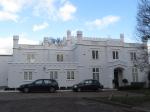
The substantial church of St Leonards at Streatham could almost be seen as God’s’ traffic calming measure as it makes the drivers on the busy Streatham High Road inch past its walls. But once inside St Leonards churchyard the noisy flow seems to fade to a hum and you can appreciate a church which has had a chapel on its site for over 1000 years.
I was on a guided tour organised by the Friends of Nunhead Cemetery and our guide was John Brown who had an obvious affection for St Leonards.
The first church was built in 1350 and the lowest part of its tower still stands. St Leonards was then rebuilt in 1778 and altered again in 1831 when the nave was completely rebuilt and a crypt created. During the 1860’s a chancel was added. But, on 5 May 1975, disaster struck when a fire completely destroyed the interior. It was then re-designed and St Leonard’s now has a whitewashed interior within its 19th century walls. This has created a wonderful backdrop on which the surviving wall tablets and memorials are well displayed. An inspiring blend of the ancient and new.
We began by exploring outside and stopped to admire the tower which is known as Sir John Ward’s Tower . According to John, it has the highest oak tree between the Thames and Croydon growing halfway up it. The tower is built from Surrey flint and is topped by a modern spire dating from the 1841.

©Carole Tyrrell
The churchyard contains over 250 memorials dating from the 18th century with the last burial in 1841. Part of the graveyard was bombed during the 2nd World War and, as a result, has been landscaped to create a Garden of Remembrance. John revealed that some of the burials had only had a wooden graveboard which had long since disintegrated.
St Leonards was a very fashionable church during the 18th and 19th centuries and, as a result, a chapel of ease dedicated to All Saints was built in a nearby road. Alas, even God was expected to adhere to the rigid class system of the time as the local gentry worshipped at St Leonards and their servants would attend their own service at All Saints. Dr Johnson and James Boswell are known to have visited the church. This may be one of the reasons that there are several prominent local people buried in the churchyard. John pointed out some of the more illustrious tombs; Merian Drew, the lord of the manor and his daughter Jane Agnes Fisher, George Pratt of Pratts Department store in Streatham and the Colthurst family member who had owned Coutts bank.
William Dyce, the Pre-Raphaelite painter and polymath, lies under a broken cross. He designed the florin coin and was a much in demand portrait painter. Amongst his many achievements were the frescoes in the robing room of the House of Lords although they remain unfinished. He also painted another celebrated fresco for the House of Lords, ‘The Baptism of Ethelbert’. My own favourite of his paintings is ‘Pegwell Bay, Kent – a Recollection of October 5th 1858’ with its haunting, melancholy atmosphere and muted colour palette. He was also a churchwarden at St Leonards and was responsible for designing the chancel in 1863. Dyce’s ‘Madonna and Child’ of 1827 featured on the Royal Mail 2007 Christmas stamps. Robert Garrard, the royal jeweller s also lies here and there was a flat, plain slab on the grave of one of novelist Trollope’s nephews who was the owner of the building firm, Trollope and Colls. I also admired the small sculptures of angels on the Montefiore monument. There were also several tombstones dating back to the 1700’s with a scattering of skull and crossbones.
A large monument had been made from the wonder material of the 19th century, Coade Stone. A Mrs Coade, invented it but for a long time the recipe was lost. However it and the techniques for producing the stone have now been rediscovered and a new range of Coade sculptures are currently available.
We then followed John inside to admire two 17th century imposing and magnificent monuments in the porch. The striking Massingberde memorial commemorates a London merchant and Treasurer of the East India Company who died in 1653. The two figures facing each other symbolise the triumph of life over death. The dramatic Howland monument was erected by a grieving widow, Elizabeth, to her husband John who died in 1686 and features a brooding skull and several cherubs.

copyright Carole Tyrrell
At the top of the chancel by the altar were the Thrale monuments. These were to Henry Thrale and his mother-in-law, Mrs Salusbury. Henry, who is also commemorated by the nearby Thrale Road, was a wealthy brewer and MP. He and his wife, Hester, entertained the well -known movers and shakers of the day including Dr Johnson and James Boswell. There were two epitaphs written in Latin by Dr Johnson and a beautiful tablet by John Flaxman is set into the wall. It has three female figures on it which were reputedly carved from the life. One of them is Sophia Hoare. John Flaxman (1726-1803) was a prolific sculptor of funerary monuments, mainly in the Classical style, and his work can be seen in Westminster Abbey and Gloucester Cathedral as well as many churches.

©Carole Tyrrell
A somewhat dog eared and damaged figure lies on top of what looks like a table tomb. This is what’s left of an effigy of Sir John Ward in his armour. Colin Fenn of FOWNC has compiled a list of helpful notes to accompany the reconstruction drawing of it and estimates the figure as dating from 1350-1380. Sir John fought with the Black Prince at Crecy and, in the modern Streatham stained glass window, he appears holding a model of the first, 14th century chapel that he built. The rest of the window records the history of Streatham and St Leonard’s and is well worth seeing. It’s by John Hayward as all the stained glass within St Leonard’s.
There are more intriguing memorials in the Chapel of Unity and John drew our attention to Edward Tylney’s. He was the Master of Revels, under Queen Elizabeth 1 and King James 1, and who put on plays and other entertainments for the Court. He was renowned for being vain and had the memorial created during his lifetime which is why there is a blank space for the date of his death in 1610. But there is another version in which the mason was so relieved at Tylney’s passing that he omitted to add the date of his death. Nearby is William Lynne’s affectionate tribute to his wife, Rebecca which dates from Cromwell’s reign. Part of it reads: ‘
‘Should I ten thousand yeares enjoy my life I could not praise enough so good a wife.’
The oldest inscription, dated 1390, was below the altar and is a small brass plate which asks for prayers for the repose of a long past rector, John Elsefield.
Then we descended the spiral staircase to the crypt. This was an unexpected surprise. Although not as extensive as West Norwood or Kensal Green it was still impressive and atmospheric with incumbents in their loculi.
Loculus which is Latin for ‘little place”, plural loculi, is ‘an architectural compartment or niche that houses a body, as in a catacomb, mausoleum or other place of entombment’ Wikipedia
The crypt is laid out with 2 corridors and the gated individual family vaults lead off them. Some contained entire families including the Thrales. John showed us one in which the loculus had been bricked up as the occupant had been buried in only a shroud. This was Mr Costa, a silk merchant, who left instructions that every pauper who carried his coffin was to be given a guinea. Needless to say, his coffin was carried by many poor men and so his wealth was redistributed. Only the undertaker was left empty-handed. There’s also two earls who ended up down there whilst visiting Streatham but I don’t think that the two events are connected.
The crypt was rebuilt in 1831 and was used as an air raid shelter during the 2nd World War during which time an experiment was carried out to determine the depth of the charnel pit under the flagstone floor. The measure went down as far as it would go which was 20ft but the pit extended far below that. More recently it became the home of a local tramp called Black Tommy who had his mail delivered there. One wonders with whom the postmen would have left large packages when Mr Tommy was out.

©Carole Tyrrell
As a finale, John showed us the substantial headstone of the local ratcatcher which proved that he was certainly busy, successful and appreciated. Sadly, the epitaph appears to have completely vanished. Afterwards a couple of us strolled about the churchyard reading the fine epitaphs on several memorials.
© Text and photos Carole Tyrrell unless otherwise stated.
Our grateful thanks to John Brown for his knowledge and enthusiasm, St Leonard’s, and Cathy Mercer of FONC for organising the visit.
http://www.stleonard-streatham.org.uk/church.html
http://www.19thc-artworldwide.org/autumn_07/articles/wrig_09.html baptism of ethelbert
http://www.artrenewal.org/pages/artist.php?artistid=120 – portrait of William Dyce
https://en.wikipedia.org/wiki/Loculus_(architecture)
© Text and photos Carole Tyrrell unless otherwise stated.
Lotta – the dachshund with the waggiest tail…….Knebworth House’s pet cemetery

©Text and photos Carole Tyrrell
As you enter the formal gardens at Knebworth, please take a moment to visit the eternally slumbering residents of its pet cemetery which is nearby. Although not signposted it does appear on the Knebworth map.Most stately homes have one if you know where to look and they give another insight into the lives of the owners and the animals who shared their lives however briefly.
However, although Knebworth House has been the home of the Lytton family since the 1400’s it wasn’t until the 19th century that the family’s pets were formally interred in their own private resting place.
There are varying dates as to when the cemetery came into being. Apparently it started in 1825. but the official Knebworth map has it as dating from 1852. The cemetery not only contains the beloved pets of the Bulwer-Lytton family but also those of their tenants. All are equal in the small well tended graveyard.
But I’m sure that most visitors don’t notice it. It nestles in front of the yew hedge which is known as the Iron Hedge. Yew is traditionally associated with places of burial and death such as churchyards and there are supposedly many traditions associated with this. It’s also seen as a symbol of everlasting life as yew trees have been known to live for centuries. Most of the epitaphs are laid flat so can easily missed by the casual passer-by but a closer look reveals some marvellous memories.
As with other pet cemeteries, it’s the touching epitaphs that I find most interesting as well as the names that owners give their pets.
Beau was Edward Bulwer-Lytton’s cherished pet dog

©Text and photos Carole Tyrrell
There is a small monument to ‘The first of the Tibetans’, Chumbi and Ruby. It goes onto say that they were both found in the Chumbi Valley in 1929. It also adds, sadly, that Chumbi was ‘Lost on the Great North Road 1929.’ and that Ruby ‘Died at Knebworth in 1929’. There is also an inscription around the base of the monument. It reads ‘May the love they had and gave help them even beyond the grave.’ Short lives but much missed.
© Text and photos Carole Tyrrell
Here is a selection of the epitaphs:
Wildlife in Cemeteries – No 4 – Cats

©Text and photos Carole Tyrrell
A large, often quiet and deserted, cemetery or graveyard can be irresistible to an inquisitive feline. Once young Tiddles or Baphomet, depending on your taste in names or cat, has exhausted neat suburban back gardens or annoyed the neighbours sufficiently they often like to explore farther afield.
A cemetery can also attract prey such as rodents or birds and so can be a happy hunting ground. And of course it can be unrivalled as a place to hang out and just chill.
At West Norwood and Woodbury Park in Tunbridge Wells, for example, cats have only to climb through an iron railing or over a wall to gain access and the whole marble orchard is their domain.
And, if you know where to find them, the keen photographer can take some wonderful pictures. I belong to a Facebook page called appropriately enough, Cemetery Cats, and features photos of cats roaming and often posing by pensive angels, monuments, crosses, or on monuments or just generally going about their lives. Contributions are from all over the world; the UK, USA, Italy, France and Eastern Europe.
Here are a selection of my own favourite photos:

©Text and photos Carole Tyrrell

©Carole Tyrrell
©Text and photos Carole Tyrrell
Symbol of the Month – Simply To Thy Cross I Cling

©Carole Tyrrell
What does a woman clinging to a cross, seemingly for dear life, have in common with the film ‘Merry Christmas Mr Lawrence’ and heavy metal group Def Leppard?
Strangely enough, the connection is an 18th century Protestant hymn written by a fiercely Calvinist minister which has entered the Western cultural consciousness in the same way as ‘Abide With Me’.
‘Rock of Ages’ is a hymn with an enduring message of hope and ultimate salvation. So no wonder it inspired a potent funerary symbol which is still used today. However, it’s the second line in the third verse, ‘Simply to Thy cross I cling.’ that has proved most inspirational to Victorian monument masons.
A variant is a pensive young woman leaning on a cross for support as at West Norwood. This cemetery contained several examples and here is a selection:
They’re not angels as they don’t possess wings and angels didn’t begin to appear in Victorian cemeteries until the late 19th century. But they are one of the few cemetery symbols inspired by a popular hymn. It’s also a Protestant motif and was the only way in which a cross would have been permitted in a Victorian cemetery until near the end of the 19th century. This was due to the religious wars that were raging at the time.
When the Victorians created their large municipal cemeteries there was still a fierce Anti-Catholic prejudice within Britain. This dated back to Henry VIII and the Reformation and had resulted in several anti-Catholic laws being passed during the 17th and 18th centuries. But the cry was still ‘No Popery’ in the 19th century and any symbols that were associated with Catholicism weren’t welcome in the new marble orchards. These included crosses, figures of saints and also angels. Instead, there was a return to Classicism using Roman and Greek motifs and architecture. Then, as the 19th century progressed, funerary monuments reflected the tastes of the time. So you could walk through one and see Arts & Crafts, Celtic Revival, Art Nouveau until eventually towards the end angels did being to fly in.
‘Rock of Ages’ was written by a Calvinist minister, the Reverend Augustus Toplady, in 1763 and was first published in a religious magazine, ‘The Gospel’, in 1775. It’s allegedly based on an incident in Toplady’s life. He was a preacher in a village named Blagdon and was travelling along the gorge of Burrington Combe in Somerset’s Mendip Hills when he was caught in a storm. He managed to find shelter in a gap in the gorge and was struck by the name of the crevice that had saved him. It’s still marked as ‘Rock of Ages’ both on the rock itself and maps. He is reputed to have written the hymn’s lyrics on the back of a playing card although one wonders what a minister was doing with a deck of cards. However, no-one’s sure if this incident actually happened or if it’s apocryphal….
Toplady wasn’t a popular man and in an article by Rupert Christensen of the Daily Telegraph he was described as ‘fanatical, in a gross Calvinism and most difficult to deal with.’ John Wesley avoided him. Toplady was also fond of writing bizarre articles, one of which proposed that a spiralling National Debt could never be paid off due to the extent of human sinfulness. Something for the new Chancellor to ponder on I’m sure. Toplady died in 1776 from TB and would undoubtedly have been forgotten were it not for his rousing hymn.
‘Rock of Ages’ caught the popular imagination. Gladstone translated it into Latin and Greek and asked for it to be played at his funeral. Prince Albert reputedly requested it on his deathbed and it has appeared in several feature films. These include ‘Merry Christmas Mr Lawrence’ where it’s sung by David Bowie as Major Jack Celliers and both ‘Paper Moon’ and ‘The Silence of the Lambs’ where it’s played at a funeral. It’s also inspired musicians such as Def Leppard and the writer of the film score for ‘Altered States.’ John Congliano. It’s also the title of the long running musical stage show.
These are its lyrics:
Rock of Ages, cleft for me,
Let me hide myself in Thee;
Let the water and the blood,
From Thy riven side which flowed,
Be of sin the double cure,
Cleanse me from its guilt and power.
Not the labour of my hands
Can fulfill Thy law’s demands;
Could my zeal no respite know,
Could my tears forever flow,
All for sin could not atone;
Thou must save, and Thou alone.
Nothing in my hand I bring,
Simply to Thy cross I cling;
Naked, come to Thee for dress;
Helpless, look to Thee for grace;
Foul, I to the fountain fly;
Wash me, Saviour, or I die!
While I draw this fleeting breath,
When mine eyes shall close in death,
When I soar to worlds unknown,
See Thee on Thy judgement throne,
Rock of Ages, cleft for me,
From L http://library.timelesstruths.org/music/Rock_of_Ages/et me hide myself in Thee.
I’ve also seen the lyrics of the hymn inscribed on monuments as at Streatham Cemetery and also Brompton.
However it does also appear as a motif on tombstones as here:

It has been described as a symbol of faith, of a person lost in sin whose only hope is to cling to the cross.
Sometimes just the phrase is enough as here:

©Carole Tyrrell
It was also popular as a print and these are two examples:
Both seem to clinging to a cross in a raging sea – a sea of sin perhaps?
The symbol has reappeared in more recent years and there is a much smaller, modern version at Beckenham Cemetery. This is on the grave of a 16 year old who died in 1965.

©Carole Tyrrell

©Carole Tyrrell
An inspirational hymn to the Victorians and also well into the 20th Century but what could have the same effect these days? I’ve always fancied a video of Sid Vicious singing ‘/My Way’ on my tombstone…..
© Text and photos Carole Tyrrell unless otherwise stated.
https://en.wikipedia.org/wiki/Rock_of_Ages_(Christian_hymn)
http://www.telegraph.co.uk/culture/music/3668144/The-story-behind-the-hymn.html
http://www.graveaddiction.com/symbol.html
http://www.thecemeteryclub.com/symbols.html
http://owlseeyouinthecemetery.blogspot.co.uk/2014/10/nothing-in-my-hand-i-bring-simply-to.html
Only the thrashing wind through the trees and each other for company forever…… Part 3 of a visit to Knebworth – Elizabeth Lytton’s mausoleum

©Text and photos Carole Tyrrell
The wind thrashed through the small group of ancient oak trees in Mausoleum Field as I stood admiring the view of the surrounding hills. It was a hot, but windy, August day and the gift shop assistant had been enthusiastic about the wonderful vistas. But I felt that on a dark winter’s night it could be very eerie and lonely.
This field contains Elizabeth Bulwer-Lytton’s (1773-1843) mausoleum in which she rests with several other members of the Lytton family. But why is she resting here eternally and not in the Lytton chapel in the nearby church?
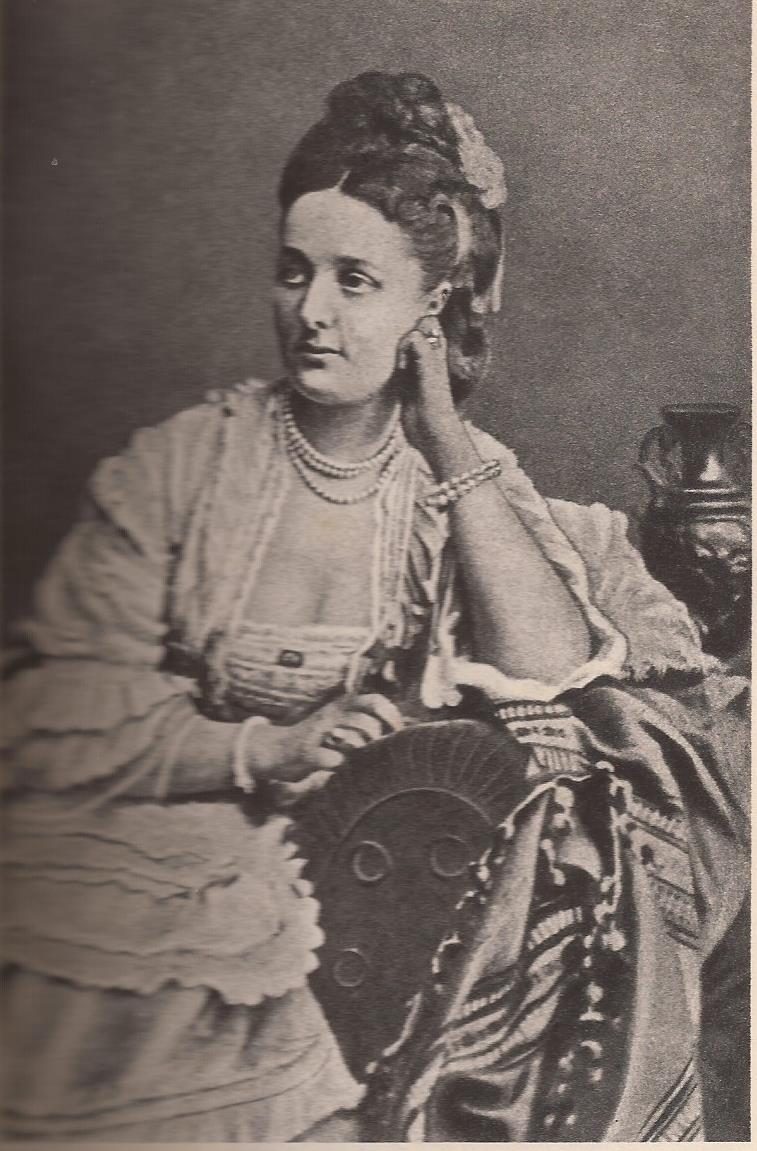
Elizabeth was the mother of Edward Bulwer-Lytton, the novelist and she lived at Knebworth from 1811 -1843. She is responsible for the House’s present Gothic style with its myriad of gargoyles, bats, towers and battlements after having had most of the old, ancient House demolished. She inherited it from her father, Richard Warburton-Lytton who lived at Ramsgate and described the estate as ‘the old half-feudal pile. ‘ Or as we would describe it today ‘as having many original features and development potential.’
She lived with Edward, her third and favourite son, until she died and her rooms are still preserved exactly as she left them. Edward had inscribed above the mantelpiece a reminder to future generations to maintain them in her memory. He was very close to Elizabeth but one wonders if he was worried that she might return and haunt him if he didn’t.
Elizabeth had a powerful personality to say the least. She disapproved of Edward’s marriage to Rosina Doyle Wheeler by cutting off his allowance and forcing him into a whole new career as a writer. He was very prolific, as the section of his books in the library attests, and he coined the famous phrases ‘It was a dark and stormy night’ and ‘The pen is mightier than the sword.’ Edward also had a successful political career but found the pressure too much and after two children, his marriage collapsed. Elizabeth’s thoughts on the situation that she had helped create aren’t known but he gained custody of the children after a nasty separation. Rosina then embarked on her own literary career with a thinly veiled account of her marriage and followed this with other works on the theme of the wronged wife. She was buried in an unmarked grave in Croydon which is certainly ‘out of sight, out of mind’ and was forgotten until her great-great-grandson erected a tombstone in her name in 1995.
Elizabeth quarrelled with every rector of St Mary’s about the tithe that the church claimed on all estate produce. As a result, they all ended up preaching to an empty church while she insisted that her staff and tenants attended her own church services in Knebworth’s State Drawing Room. The large Bible at the foot of her bed in her room is the one that she always used and carries her own initials EBBCL – Elizabeth Barbara Bulwer Lytton. As a House tour guide told us, she planted trees around the church to hide it from the House and they’re still there but it was only partially successful. She was also equally determined that she and her family wouldn’t be buried within the Lytton Chapel or the churchyard.
Of course with the compact size of the Chapel and the three 18th century Lytton gentlemen’s monuments which take up most of the space she may have felt that there simply wasn’t room for her. Or at least room for her to be forever remembered in the way that she wanted and so her own large sepulchre was the only way in which she could compete. Four of the five female statues in the Chapel decorate Sir William Lytton’s monument and it does feel like a gentlemen’s club. So Elizabeth had a mausoleum constructed a short distance from the church and in what is appropriately named Mausoleum Field. Although the male incumbents of the Chapel may have life size facsimiles of themselves lolling about in rumpled sheets Elizabeth had gone farther in a game of one-upmanship.

©Text and photos Carole Tyrrell
The octagonal mausoleum, reputedly based on an Italian design and built in 1817, has niches containing elegant funerary urns.
Elizabeth’s epitaph is on one side and there are other epitaphs to Lytton family members around the tomb.
An obelisk surmounted with an urn commemorates Edward’s son, Robert who became the first Earl of Lytton, and is near the entrance.
Another strong-minded Lytton woman who is interred here was Lady Constance Lytton (1869-1923) who was a noted suffragette under an assumed identity and was force-fed on several occasions. The epitaph reads ‘…sacrificed her health and talents in helping to bring victory to this cause.’ The vault was restored in 2004 and has contemporary iron railings around it. There is a sarcophagus on top of it with shell acroteria. However, these always remind me of old-fashioned baths.

©Text and photos Carole Tyrrell
But knowing Elizabeth’s determination and desire to have her own way one wonders if she and the other incumbents rest easily together or if they are all locked into an eternal argument……
©Text and photos Car0le Tyrrell unless otherwise stated.
http://www.mmtrust.org.uk/mausolea/view/76/Lytton_Mausoleum
https://historicengland.org.uk/listing/the-list/list-entry/1174579
Knebworth House guidebook, Heritage House Group ©Knebworth Estates 2005