Symbol(s) of the Month – the Alpha and the Omega and the Chi-Rho

It’s a two for one offer on symbols this month folks as I feature two ancient symbols which are often combined together.  They both predate Christianity and were then  adopted by the newly emerging faith.  This was a time when Christians only communicated with fellow believers via a secret language of symbols and codes known only to each other.   Discovery would have meant death and so the codes were designed to keep outsiders away.

These symbols are the Alpha and Omega and the Chi-Rho.  They’re not all that common in cemeteries but I found these two examples in Brompton Cemetery, London.   They stood out because of their simplicity and classicism.

The Alpha and Omega

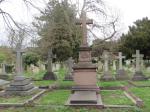
This fine example which also features the Chi-Rho is on the substantial Platt memorial in Brompton Cemetery.  I’ll write about the Chi-Rho later.   Thomas Platt was the first to be buried here in 1899 followed by his wife, Annie,  who outlived him and died in 1925. Two of their daughters are also buried and commemorated here – one died in 1935 and the other, also called Annie, in 1936. I haven’t been able to find out much about him or the family but this is a substantial memorial with space for more incumbents.  It’s made of pink granite in the classical style with a large cross on top and acroteria on each of the corners on the pedestal under the Alpha and Omega, Chi-Rho and cross.

The Alpha and Omega  are very similar in a way to an ouroboros as they both express eternity.  They are formed from the first and last letters of the Greek alphabet and represent God.  He is the first – the alpha – as there is no God before him and the last – the Omega – as there is no God after him.    The symbols also appear in several Bible verses including Revelation verses 1.8:

 “I am the Alpha and the Omega, the Beginning and the End,” says the Lord, “who is and who was and who is to come, the Almighty.” King James version

They also appear in Revelation verses 21.6 and verses 22.13 as well as Isiah verses 44.6.

Both the Jewish and Islamic faiths use the first and last letters of the alphabet to describe the name of their God.

The Alpha and Omega  have been represented  by an eagle and an owl.   There has also been a suggestion that the Omega is an ancient representation of the Goddess Ishtar’s headdress and  that the Alpha was derived from the ox horn headdress worn by male deities and kings but I would like to see more evidence of this.  However it’s an interesting theory on how these symbols might have come into being.

Interestingly, the two motifs are known as a merism.  This is a figure of speech that articulates the beginning of something and the ending of something with the implication that it also refers to all things in between. For example,  for better, for worse, for richer, for poorer etc.

However, Douglas Fielder in ‘Stories in Stone’ has suggested the Alpha and Omega may be the representation of the beginning and end of a life and that would certainly fit in with their use within cemeteries. J C Cooper’s definition is that they denote the beginning and end of all things.

The Chi-Rho

This is a striking example from Brompton Cemetery London and is on the grave of Matthew Boyd Bredon.  He was an Irishman who served in the 3rd Battalion Royal Irish Fusiliers and rose through the ranks.  He became a Lieutenant in 1875 and a Captain in 1878 and became a Major. The epitaph states that he died in Swatow, or Shantou is it was originally known, in China in 1900.  This was the time of the Boxer Rebellion in which treaty ports were imposed on China by the British and other foreign powers who wanted to open up trade. However, these ports weren’t strictly ports and instead were separate communities in which foreigners lived according to their own customs, traditions and rules of law.  Bredon was also the Deputy Commissioner of Customs in China at the time of his death.  In 1900 a brass eagle was presented to his local church, St Saviours in Co Armagh, Northern Ireland in his memory.

The Chi-Rho was created by using the first two capital letters from the Greek word for Christ:

ΧΡΙΣΤΟΣ

These are Chi and Rho and this is the earliest form of christogram.  The definition of a christogram is, according to Wikipedia,

 ‘ a monogram or combination of letters that forms an abbreviation for the name of Jesus Christ and is a traditionally used as a religious symbol within the Christian church.’

The combination of the letters have led to claims that the Chi Rho symbolises the status of Jesus as the risen Christ as the vertical stroke of the Rho intersects the centre of the Chi.  Thus it could be seen as a symbol of resurrection when used in cemeteries.

However, it wasn’t   originally a religious symbol and was, instead, used to mark an especially valuable or relevant passage in a page.  When used like this it was known as a Chresten which meant ‘good.’  It also appeared on ancient Egyptian coins.

Missorium depicting Emperor Constantine’s son Constantius II accompanied by a guardsman with the Chi-Rho depicted on his shield (at left behind horse) photograph © Ludwig von Sybel 1909
Shared under Wiki Creative Commons – in public domain in country of origin.

The Roman Emperor, Constantine, (306-337) used the Chi Rho as part of a military standard known as a Labarum.  He had a dream in which he felt that military success would follow if he put a heavenly and divine symbol on his soldiers shields to protect them

From 350 onwards The Chi Rho began to appear on Christian sarcophagi and frescoes and has been found in the celebrated Roman catacombs.    It came to Britain via the Roman invasion and can be seen on a mosaic at Lullingstone Roman Villa, Kent, UK.

Nowadays it has been adopted as a popular tattoo symbol.

I did try and discover the significance of these two symbols to these two men who both died relatively young but a search through coats of arms and regimental cap badges in the case of Bredon and other sites with Platt yielded no new information. But they have left us with impressive examples of these early and powerful symbols.

©Text and photographs Carole Tyrrell unless otherwise stated

References;

Stories in Stone; A Field Guide to Cemetery Symbolism and Iconography, Douglas Keister, Gibbs M Smith, 2008

An Illustrated Encyclopaedia of Traditional Symbols, J C Cooper, Thames & Hudson, 1978


http://grammar.about.com/od/mo/g/Merism.htm

https://en.wikipedia.org/wiki/Alpha_and_Omega

http://www.religionfacts.com/alpha-omega

http://biblehub.com/revelation/22-13.htm

http://symboldictionary.net/?p=2883

https://library.nd.edu/about/symbols_of_christ/alpha_omega.shtml

http://www.newadvent.org/cathen/01332a.htm

https://www.gotquestions.org/alpha-and-omega.html

https://en.wikipedia.org/wiki/Chi_Rho

https://en.wikipedia.org/wiki/Christogram

http://www.dailykos.com/story/2017/3/18/1636415/-The-Daily-Bucket-A-stroll-through-London-s-Brompton-Cemetery


Death parted them and then reunited them – The Pointing Finger Symbol update

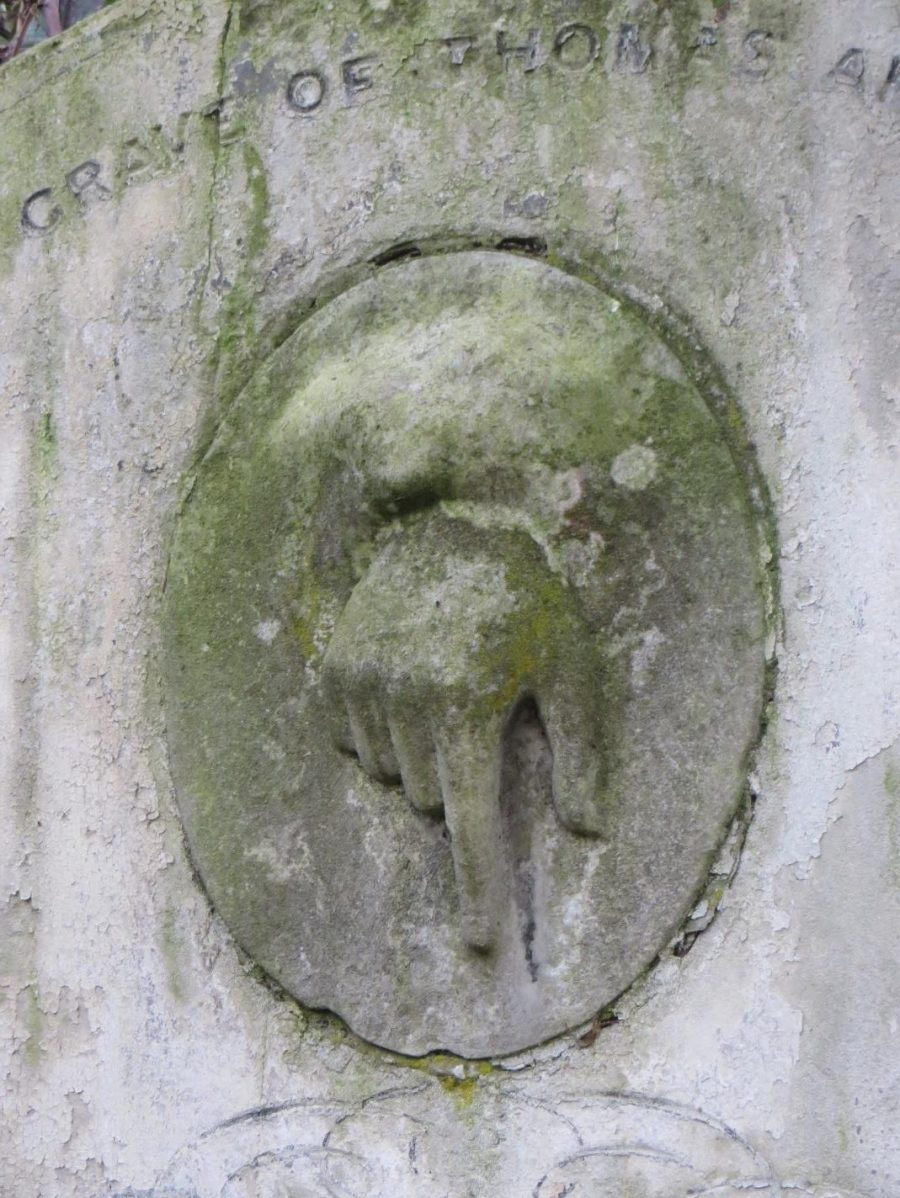
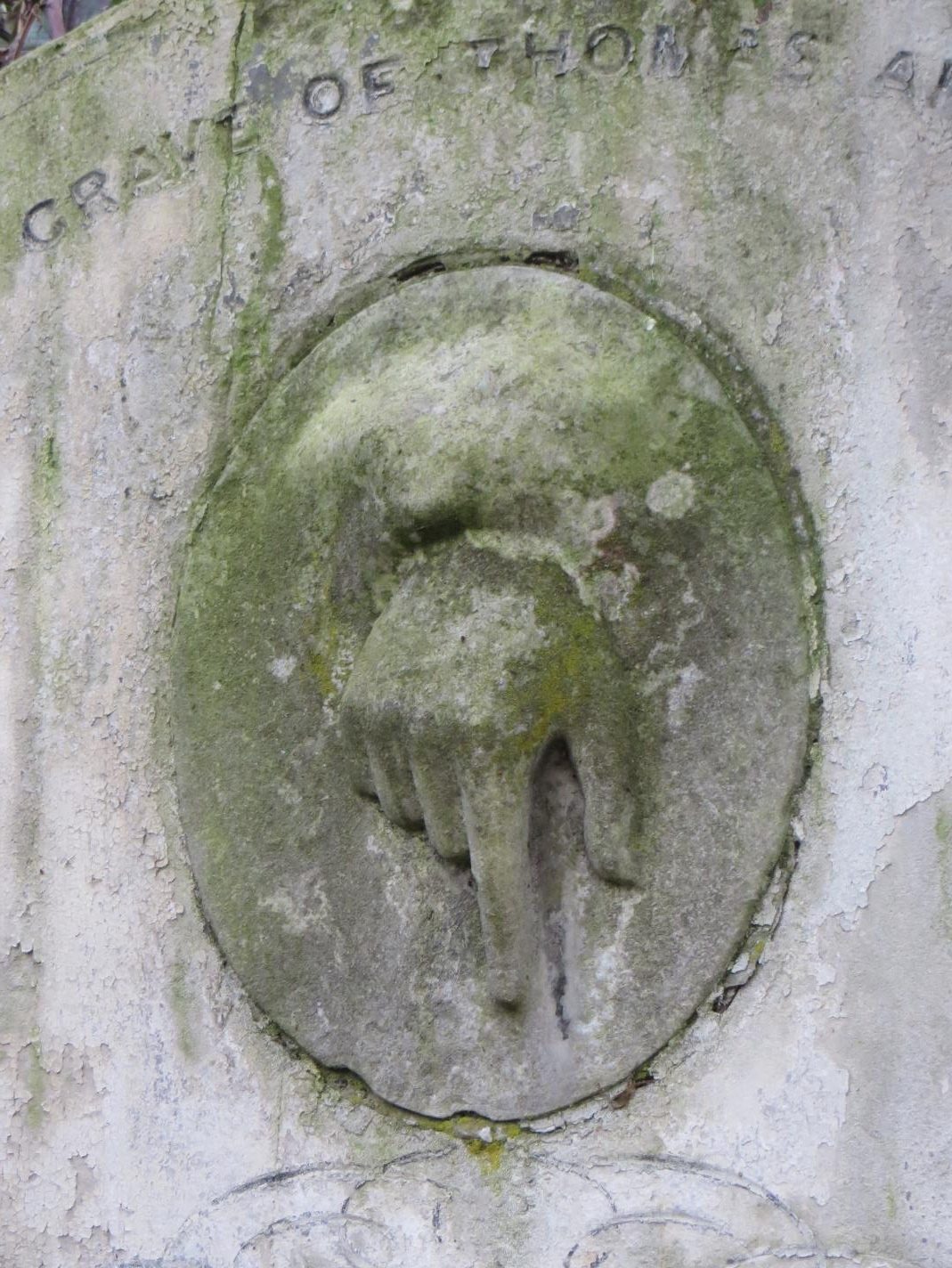
Anderson memorial - the downward pointing hand in detail. ©Carole Tyrrell
Anderson memorial – the downward pointing hand in detail.
©Carole Tyrrell

In my  recent post on the Pointing Finger symbol I was bemoaning that I hadn’t found an example of the downward pointing version.

Someone must have heard me because, lo and behold, as I was pottering through Brompton Cemetery I suddenly saw one.  It was on a side path and set back from it in front of a thick clump of brambles which probably engulf it when they’re in high season.  Winter is always a good time to  look for symbols as the encroaching ivy; brambles and long grass will have died down and don’t obscure them.

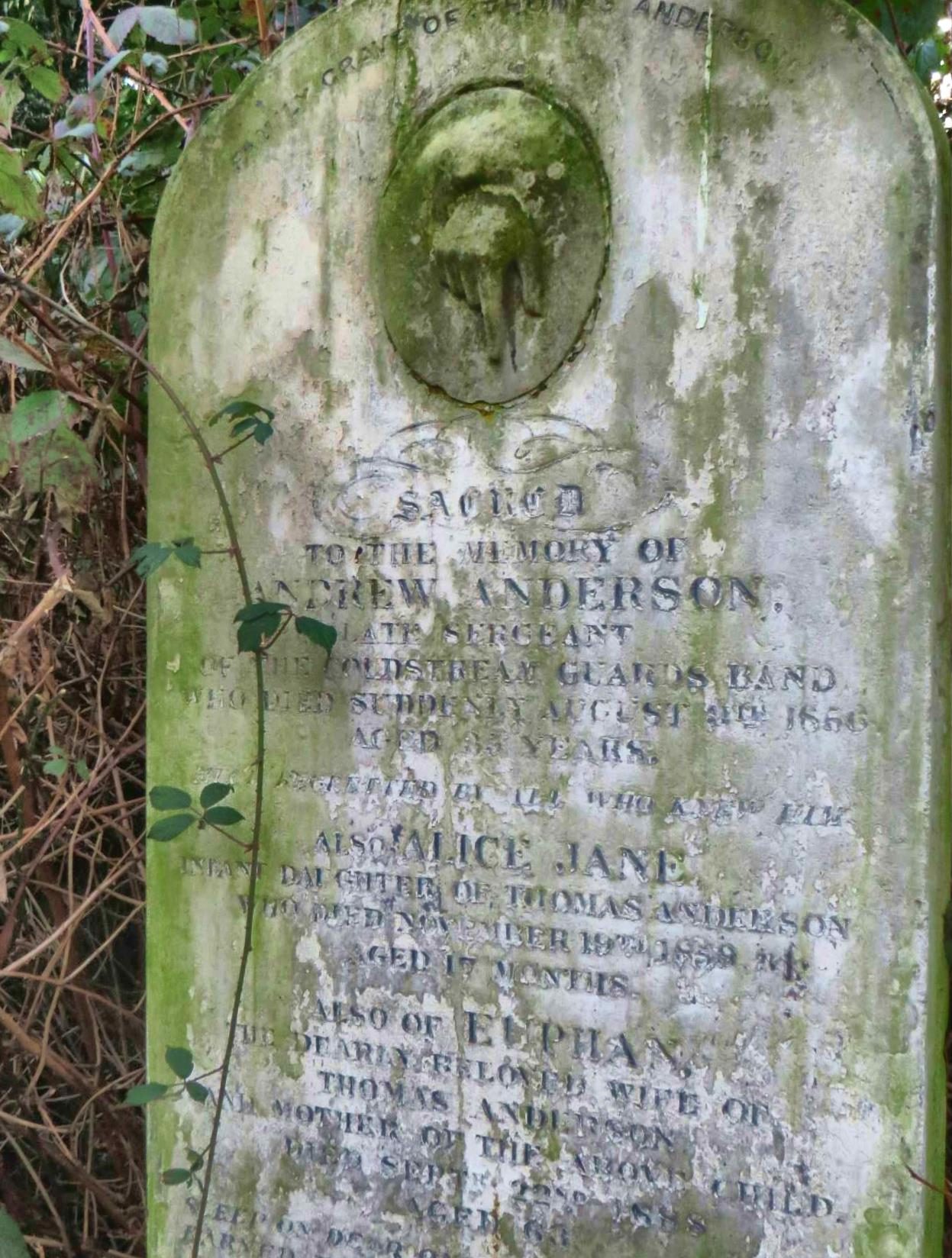
The Anderson family grave headstone.in Brompton Cemetery ©Carole Tyrrell
The Anderson family grave headstone.in Brompton Cemetery
©Carole Tyrrell

There is a fascinating story behind this memorial as it’s the tale of two Irish brothers who first enlisted together at the tender age of 11.  They both had action packed lives in military service together until one died before the other at a young age.  This confirms what I said in my previous post,  that the downward pointing finger denotes an untimely, sudden or unexpected death.

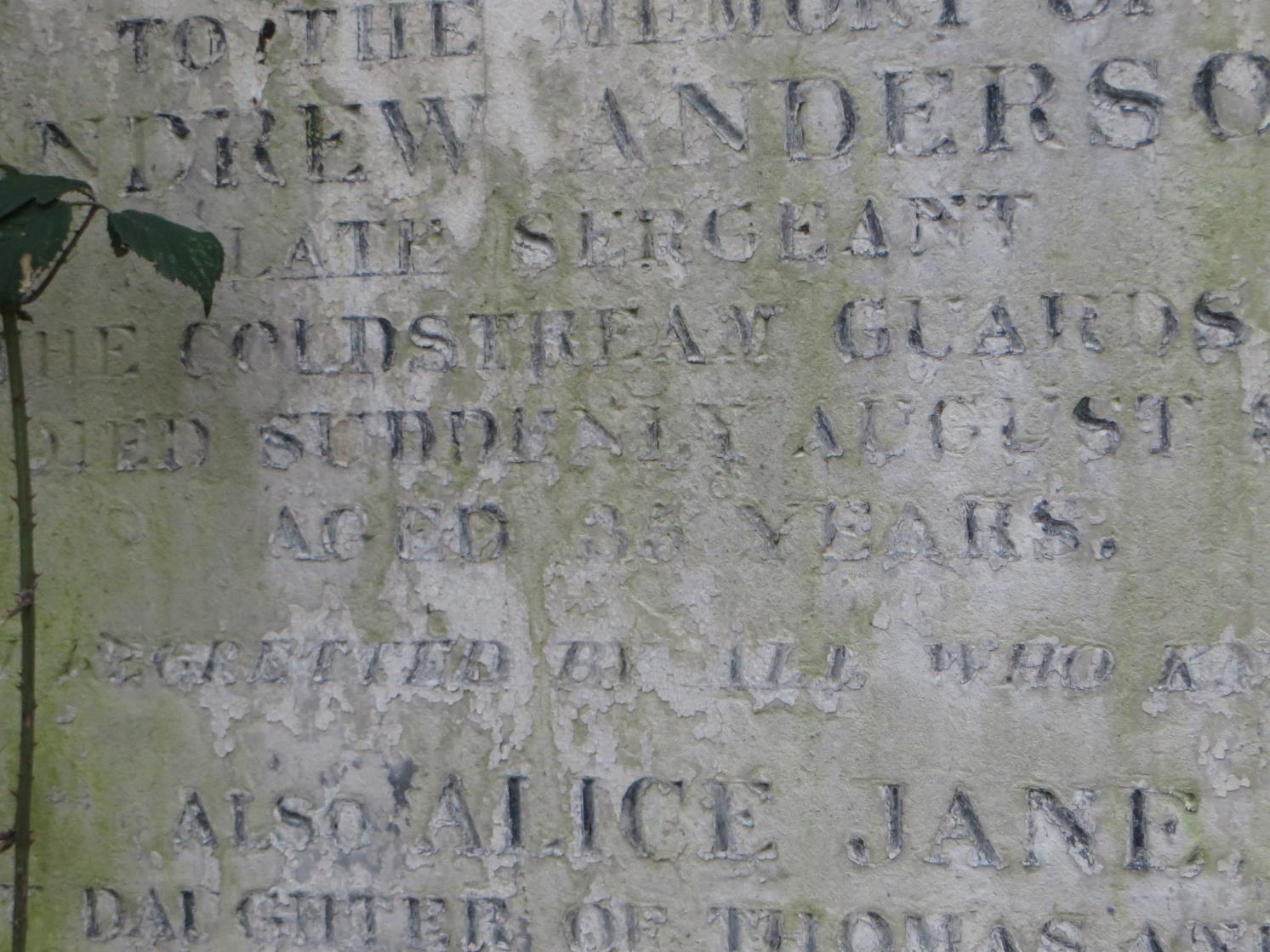
The headstone   announced that it was the ‘Family Grave of Thomas Anderson’ and there are six members of the family commemorated on it.  The first one was to Andrew Anderson, who was a sargeant in the Coldstream Guards Band until died suddenly, aged 35, on August 11th 1856.   Sadly it doesn’t give the cause of death so we can only guess at what might have happened to Andrew. The epitaph also says that his death was ‘regretted by all who knew him’ so he was obviously popular and much missed.  Accident?  Heart attack? Murder?  We may never know but I may do some further investigating.

Andrew Anderson's epitaph in detail. ©Carole Tyrrell
Andrew Anderson’s epitaph in detail.
©Carole Tyrrell

Underneath  Andrew’s epitaph are recorded two more members of the Anderson family.   These are Thomas Anderson’s  ‘infant daughter’,  Alice Jane, who died at 17 months on November 19th 1859 and also his wife and Alice’s mother, Euphan.   She died on September 22 1888 aged 63.   The quotation underneath reads ‘Sleep on dear one and take thy well earned rest.’

The Anderson memorial. Andrew, his brother, and Thomas's infant daughter, Alice Jane, and his wife Euphan are also commemorated. ©Carole Tyrrell
The Anderson memorial. Andrew, his brother, and Thomas’s infant daughter, Alice Jane, and his wife Euphan are also commemorated.
©Carole Tyrrell

And then underneath is Thomas himself.  He died on 15 July 1891 aged 70 with the motto ‘His end was peace.’

Initially I presumed that Thomas was Andrew’s father.   But, after doing some online delving, I discovered a post on an Irish library forum by a respondent who claimed to be Thomas’s great, great, great grandson. He was trying to carry out his own research into the family history.

According to him, Thomas and Andrew Anderson were actually brothers, probably twins, who were both born in 1821 and came from Ennis, County Clare.  This would fit in with Andrew’s age at death and there were other coincidences  between the information on the headstone and what the great, great, great grandson  was saying. The unusual name of Thomas’s wife was helpful and this led me to the Clan McFarlane website as McFarlane was her maiden name.

The brothers were very close and, aged 11, they both enlisted in the 40th Regiment of Foot on February 2 1832 and were then both discharged on 7 September 1839 aged 18.

It was the Royal Navy that beckoned next and they set off for adventure on the high seas aboard HMS Wellesley when they enlisted in 1839.  They both played their part in the Opium War of 1839 – 1842 and, as a result, they both received the China War Medal.  This was awarded to members of the Royal Navy who had ‘served with distinction’ between 5 July 1840 – 29 August 1842.


After that they moved on and back into the Army which is where the Coldstream Guards connection comes in.  As you might expect they both signed up: Thomas on 8 May 1850 and Andrew on 8 May 1844.  Thomas was discharged on 17 May 1860 after becoming a  lieutenant.  We know Andrew’s story but Thomas’s is less clear.

According to the family member he was living at 6 Hospital Street in Glasgow in 1845 and married Euphan McFarlane in 1863.  She came from the Gorbals which always had a reputation as a really tough area and so good preparation for the life of an Army wife.   She and Thomas had three more daughters; Elizabeth Euphan, Rosina Edith and Rosina Elizabeth.  But there’s no mention of Alice Jane.  Both Elizabeth and Rosina Edith married.

But the family member didn’t mention Alice Jane or John so one wonders where they fit in.

Thomas supposedly died in Middlesex  but after his death he joined Andrew in Brompton Cemetery.

Thomas Anderson's epitaph. ©Carole Tyrrell
Thomas Anderson’s epitaph.
©Carole Tyrrell

There are two more Anderson Family members recorded on the headstone; John, Thomas’s son, who died on 15 February 1925 aged 65 and John’s daughter, Isabella, but  her dates were too indistinct to read.

John Anderson's epitaph - not very readable now as it's near the base of the headstone. ©Carole Tyrrell
John Anderson’s epitaph – not very readable now as it’s near the base of the headstone.
©Carole Tyrrell


Family stories can change over time as they’re handed down through the generations   but this seemed to tally with the information on the headstone.   I am trying to contact the great, great, great grandson via the County Clare forum for more information.


The Anderson brothers seemed to have led exciting lives in military service and  certainly did their bit for King and Country. So rest in peace Andrew and Thomas – you have certainly earned it.

© Text and photographs Carole Tyrrell unless otherwise stated.


http://www.rootschat.com/forum/index.php?topic=379308.0

http://www.ourlibrary.ca/phpbb2/viewtopic.php?f=1&t=551

http://www.clanmacfarlanegenealogy.info/genealogy/TNGWebsite/getperson.php?personID=I769&tree=UL

http://www.clarelibrary.ie/eolas/coclare/genealogy/don_tran/mil_rec/rh_chelsea_clare_soldiers_service_docs.htm

https://en.wikipedia.org/wiki/China_War_Medal_(1842)


Symbol of the month – The Butterfly


The Gordon monument butterfly motif in all its glory. Kensal Green Cemetery. copyright Carole Tyrrell
The Gordon monument butterfly motif in all its glory. Kensal Green Cemetery.
copyright Carole Tyrrell


Cemeteries and graveyards can be happy hunting grounds for butterflies.  But not just the bright, dancing summer jewels, borne on the breeze, but also the much rarer kind which perches in them for eternity.

So far I’ve only discovered two of this particular species which were both in London.  One was in Brompton and the other was in Kensal Green.  But I have also seen others online in American cemeteries.

But I’m surprised that the butterfly symbol isn’t more widely used as it is a deep and powerful motif of resurrection and  reincarnation.  It has fluttered through many cultures which include Ancient Egypt, Greece and Mexico.


In classical myth, Psyche, which translates as ‘soul’, is represented in the form of a butterfly or as a young woman with butterfly wings.  She’s also linked with Eros the Greek God of love.   It is also a potent representation of rebirth and in this aspect, the Celts revered it.  Some of the Ancient Mexican tribes such as the Aztec and Mayans used carvings of butterflies to decorate their buildings as certain butterfly species were considered to be reincarnations of the souls of dead warriors.  The Hopi and Navaho tribes of Native American Indians performed the Butterfly Dance and viewed them as symbols of change and transformation.

The butterfly is an archetypal image of resurrection in Christianity and this meaning is derived from the 3 stages of a butterfly’s life.  These are:  1st stage = the caterpillar, 2nd stage = the chrysalis and 3rd and final stage = the butterfly.  So the sequence is life, death and resurrection.   The emergence of the butterfly from the chrysalis is likened to the soul discarding the flesh.  It has been depicted on Ancient Christian tombs and, in Christian art, Christ has been shown holding a butterfly.   It is supposed to appear chiefly on childrens memorials but the two that I’ve seen were on adult memorials.

Butterflies also feature in Victorian mourning jewellery and there is a fascinating article on this with some lovely examples at:

http://artofmourning.com/2014/10/25/butterfly-symbols-and-19th-century-jewellery/

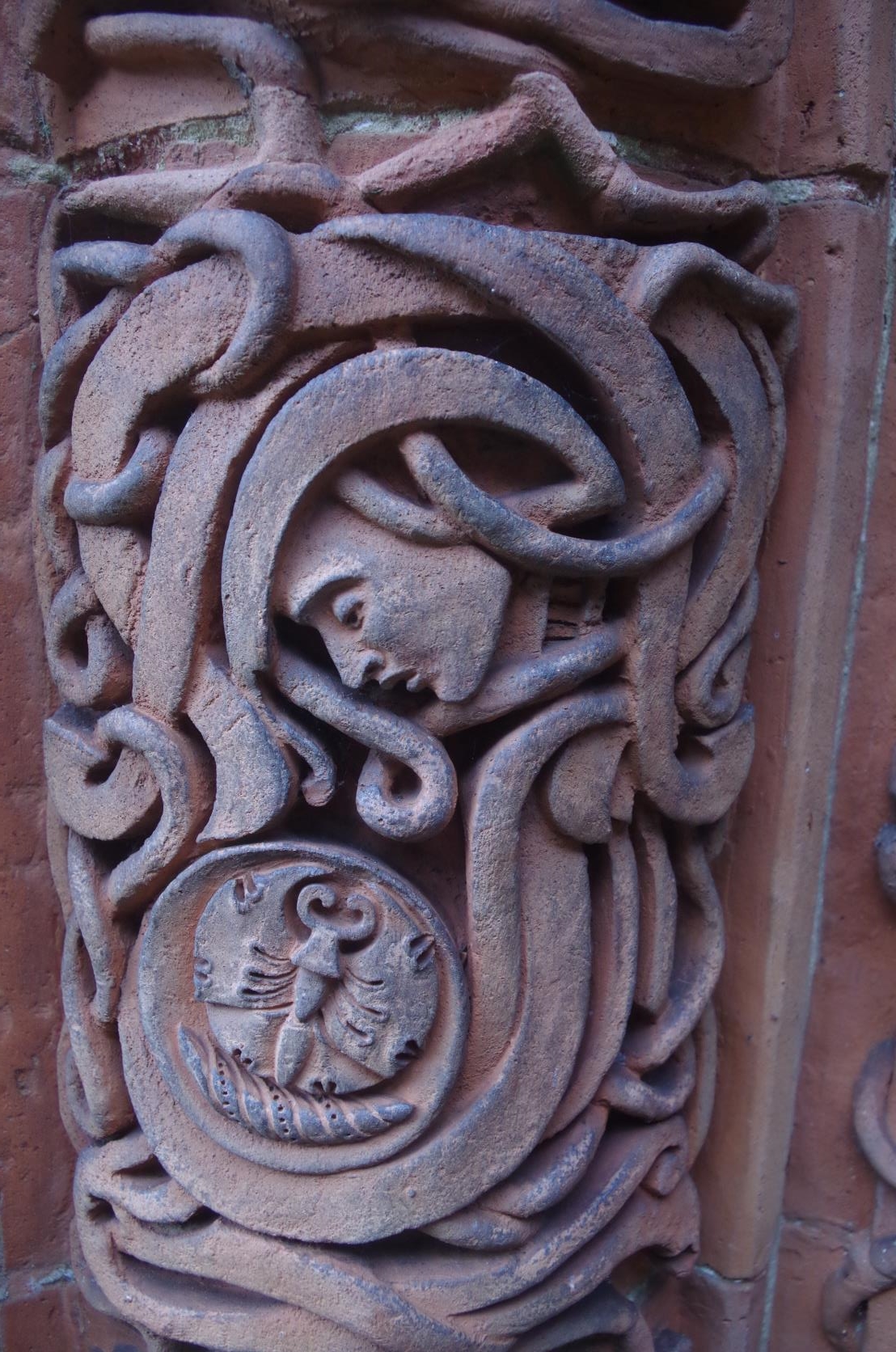
In the 20th century, butterflies appeared in the flowing, organic lines of Art Nouveau and often featured in jewellery and silverware.

Face and butterfly on exterior of chapel. copyright Carole Tyrrell

Face and butterfly on exterior of chapel.
copyright Carole Tyrrell

This example is from the Watts Chapel in Surrey and shows the flowing lines and stylised butterfly.   They also appear in vanitas paintings, the name given to a particular category of symbolic works of art and especially those associated with the still life paintings of the 16th and 17th centuries in Flanders and the Netherlands.    In these the viewer was asked to look at various symbols within the painting such as skulls, rotting fruit etc and ponder on the worthlessness of all earthly goods and pursuits as well as admiring the artist’s skill in depicting these.  Butterflies in this context can be seen as fleeting pleasure as they have a short life of just two weeks.


Butterfly traditions

There are many superstitions and beliefs associated with butterflies.  They are often regarded as omens, good and bad, or as an advance messenger indicating that a visitor or loved one is about to arrive. In Japan, they are traditionally associated with geishas due to their associations with beauty and delicate femininity.

Butterfly & Chinese wisteria by Xu Xi Early Sing Dynasty c970. By Xü Xi (Scanned from an old Chinese book) [Public domain], via Wikimedia Commons
Butterfly & Chinese wisteria by Xu Xi Early Sing Dynasty c970.
By Xü Xi (Scanned from an old Chinese book) [Public domain], via Wikimedia Commons

The Chinese see them as good luck and a symbol of immortality. Sailors thought that if they saw one before going on ship it meant that they would die at sea .  In Devon it was traditional to kill the first butterfly that you saw or have a year of bad luck as a result. In Europe the butterfly was seen as the spirit of the dead and, in the Gnostic tradition, the angel of death is often shown crushing a butterfly underfoot.   In some areas in England, it’s thought that butterflies contain the souls of children who have come back to life. A butterfly’s colours can also be significant. A black one can indicate death and a white one signifies the souls or the departed. It’s also a spiritual symbol of growth in that sometimes the past has to be discarded in order to move forward as the butterfly sheds its chrysalis to emerges complete. So it can indicate a turning point or transition in life. There are also shamanistic associations with the butterfly’s shapeshifting and it has also been claimed as a spiritual animal or totem.


Brompton Cemetery, tomb unknown

This example with its wings outstretched is from Brompton Cemetery in London.   Alas, the epitaph appears to have vanished over time and the surrounding vegetation was so luxuriant  that I will have to return in the winter to investigate further.  Note the wreath of ivy that surrounds it.  Ivy is an evergreen and is a token of eternal life and memories.  The wreath’s ribbons are also nicely carved.

The Gordon monument, Kensal Green

The second one is perched on the tomb of John Gordon Esquire, a Scotsman from Aberdeenshire who died young at only 37.  As the epitaph states   ‘it was erected to his memory as the last token of sincere love and affection by his affectionate widow’.    Gordon came from an extended family of Scottish landowners who had estates in Scotland and plantations in Tobago amongst other interests.  The monument is Grade II listed and is made of Portland stone with a York stone base and canopy supported by the pillars.  There was an urn on the pedestal  between the four tapering stone pillars but this was stolen in 1997.

The butterfly also has an ouroboros encircling it so, not only a symbol or resurrection,  but also of eternity with the tail devouring snake.  It is a little hard to see but it is there.

The butterfly symbol of the roof of the Gordon monument Kensal Green Cemetery. copyright Carole Tyrrell
The butterfly symbol of the roof of the Gordon monument Kensal Green Cemetery.
copyright Carole Tyrrell

The pharaonic heads at each corner are Egyptian elements within an ostensibly  classically inspired monument. Acroteria, or acroterion as is its singular definition, are an architectural ornament.  The ones on this monument are known as acroteria angularia. The ‘angularia’ means at the corners.

The entire monument is based on an illustration of the monument of the Murainville family in Pugin’s Views of Paris of 1822 and also on Moliere’s memorial which are both at Pere Lachaise in Paris.

The Gordon memorial incorporates elements  of the Egyptian style and symbolism that influenced 19th century funerary monuments after the first Egyptian explorations. Kensal Green contains many significant examples and there are others to be found in Brompton, Highgate and Abney Park.  The Victorians regarded the Egyptians highly as it was also a cult of the dead.

So when you next see a butterfly fluttering on the breeze or even perched on a memorial for eternity remember its importance within the tradition of symbols, religions and cultures.  Who knows it might be one of your ancestors…..

© Text and photos Carole Tyrrell unless otherwise stated.

References:

http://www.gardenswithwings.com/butterfly-stories/butterfly-symbolism.html

http://www.whats-your-sign.com/butterfly-animal-symbolism.html

http://www.spiritanimal.info/butterfly-spirit-animal/

http://www.pure-spirit.com/more-animal-symbolism/611-butterfly-symbolism

http://www.shamanicjourney.com/butterfly-power-animal-symbol-of-change-the-soul-creativity-freedom-joy-and-colour

http://www.bbc.co.uk/london/content/articles/2005/05/10/victorian_memorial_symbols_feature.shtml

http://www.thecemeteryclub.com/symbols.html

https://stoneletters.com/blog/gravestone-symbols

https://www.reference.com/world-view/butterfly-symbolize-cf9c772f26c7fa5

https://www.reference.com/world-view/butterflies-symbolize-19a1e06c9c98351c?qo=cdpArticles

https://en.wikipedia.org/wiki/Butterfly

https://en.wikipedia.org/wiki/Vanitas

https://en.wikipedia.org/wiki/Acroterion

https://historicengland.org.uk/listing/the-list/list-entry/1191024

Clare Gibson, How to Read Symbols, Herbert Press 2009

Douglas Keister, Stories in Stone, A Field Guide to Cemetery Symbolism and Iconography, Gibbs Smith, 2004

J C Cooper, Illustrated Encyclopaedia of Traditional Symbols, Thames & Hudson 1978.