
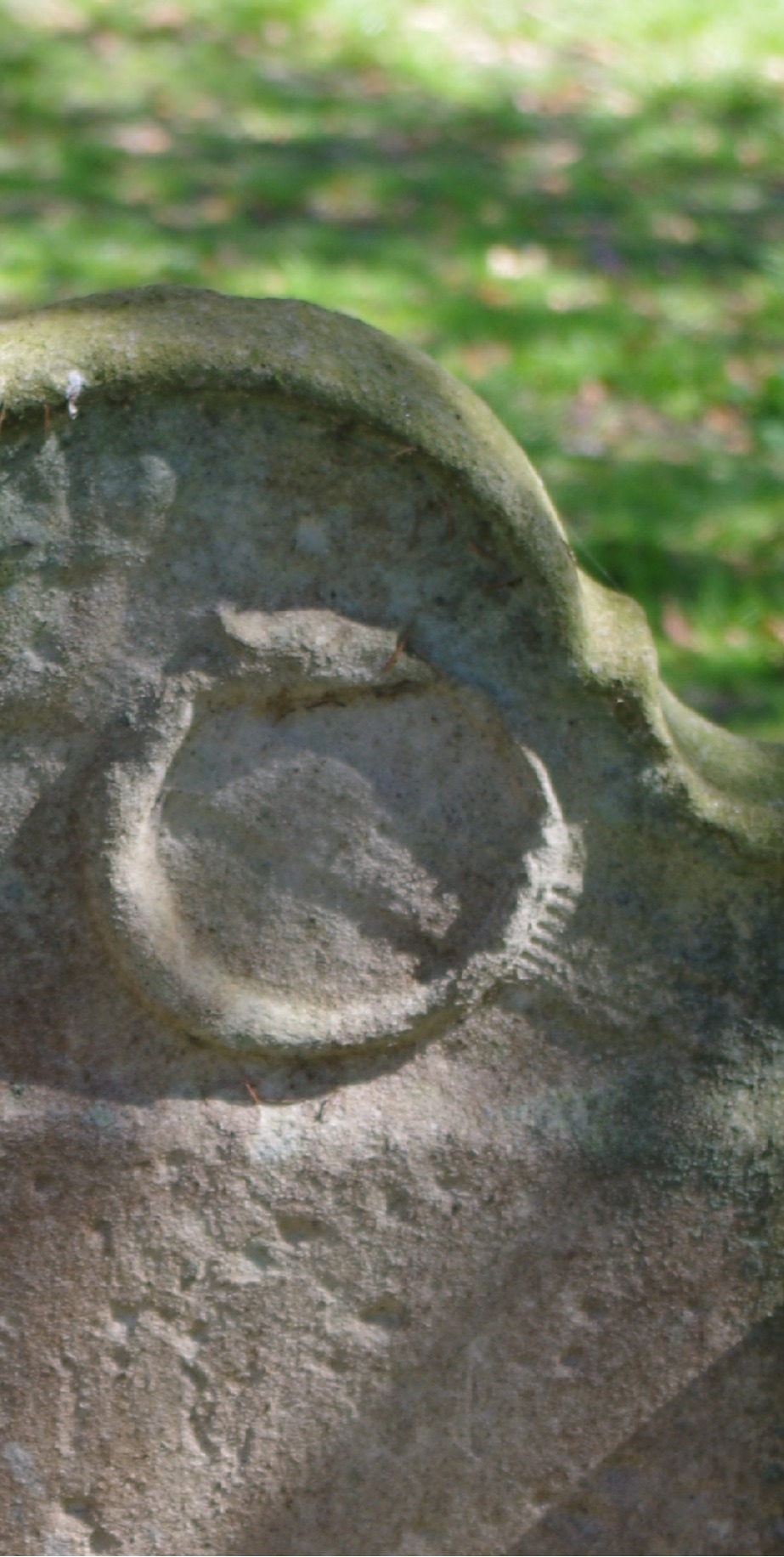
Ouroboros on 18th century headstone, St Mary’s churchyard, Rye, Sussex. ©Carole Tyrrell
For every end there is a beginning.
This is only one of the several positive and powerful meanings of the ouroboros which is one of the most ancient symbols known to man. It’s depicted as a snake eating its own tail to sustain its life in an eternal cycle of renewal and it usually forms a full circle. It occurs in many cultures, religions and beliefs. The psychologist, Jung, called it an archetype which is best described as:
‘a primitive mental image inherited from the earliest human ancestors, and supposed to be present in the collective unconscious.
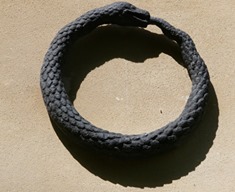
copyright Jeane Mary – used with kind permission
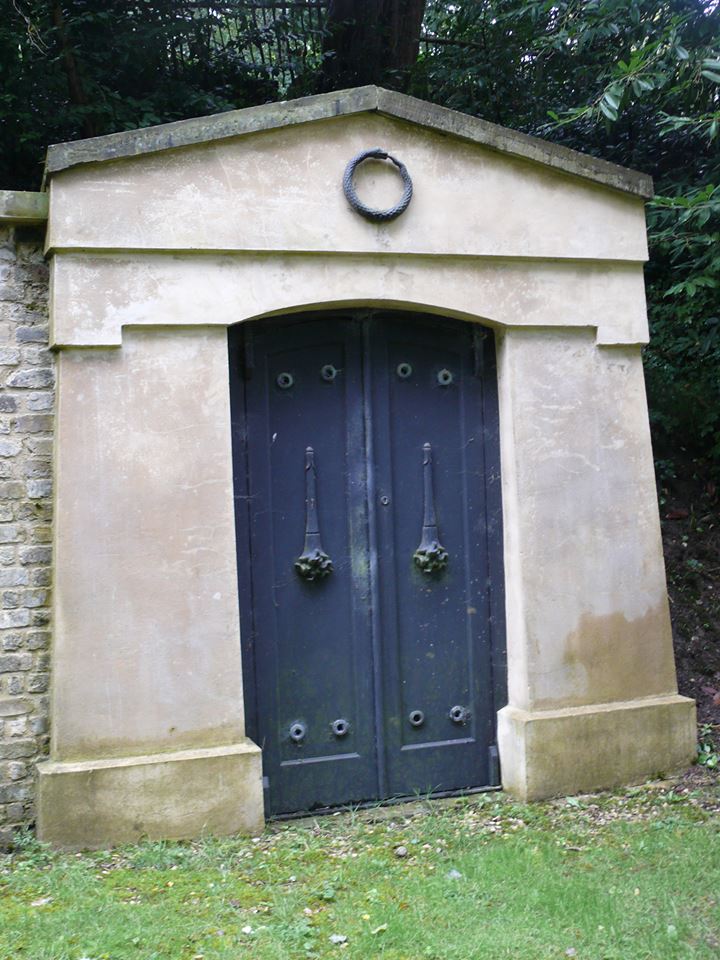
Note downturned torches on doors which are a sign of life extinguished.
copyright Jeane Mary and used with kind permission.
The ouroboros appears in ancient churchyards and Victorian cemeteries as a symbol of resurrection. The snake is reborn as it sheds its skin and this fine example is on a mausoleum in Highgate cemetery, London. Victorian visitors would have understood its meaning. As a resurrection image it can be very positive as some of its other attributes are immortality, eternity and wisdom. However, as with most symbols , it can have several meanings. These include the Universe’s cyclic nature and life out of death and, as the snake sheds its skin it has a Phoenix-like cycle of life, death and rebirth. The Victorians revived several older symbols in a return to the classicism of ancient Greece and Rome.
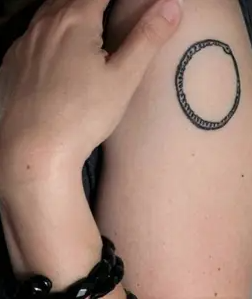
There is also a magnificent ouroboros on the gates of Sheffield General Cemetery. The Highgate one inspired the tattoo worn proudly above by Jeane Mary, a photographer and fellow cemetery explorer now sadly gone from us. She also wears a Whitby mourning bracelet based on the ouroboros in Highgate. Used with kind permission.
But the ouroboros origins lie in either ancient Greece or Egypt as both cultures have claimed it. In Greece, Plato described it as:
‘the first living thing, a self-eating, circular being’.
In fact, the Greek translation of ouroboros is ‘tail devouring snake’ and it’s associated with something constantly recreating itself and the eternal return.
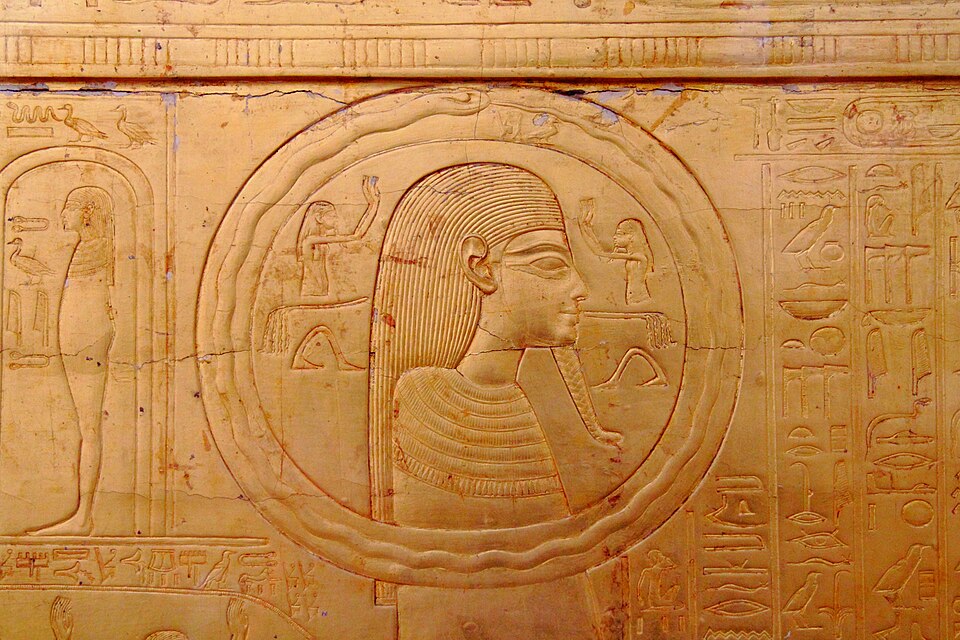
The earliest known depiction of an Ouroboros on one of the shrines enclosing the sarcophagus of Tutenkhamun. Shared under Wiki Commons. Egyptian Museum Cairo.
In Egypt, the ouroboros reputedly appears for the first time in the 14th century BC in Tutenkhamen’s tomb on an ancient funerary text. This depicts the Sun God Ra and his union with Osiris in the underworld and is illustrated with two serpents, holding their tails in their mouths, coiled around hands and feet. This may be a representation of the unified Ra-Osiris. Both serpents are reputedly the manifestation of the god Mehen, who in other funerary texts protect Ra in his underworld journey. I haven’t been able to find an image of this particular representation but I did find the one above which is claimed to be the earliest representation of an ouroboros.
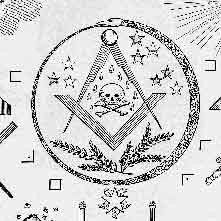
The ouroboros also appears in Hindu, Norse, Aztec and Chinese religions. In addition, it’s a significant alchemical symbo and features in Cleopatra the Alchemist’s work. There are also Masonic associations from numerous seals, frontispieces and other imagery dating from the 17th century such as the one below:
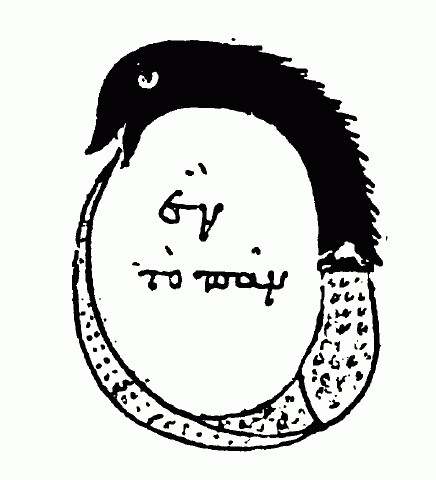
Alchemist ouroboros from Cleopatra the Alchemist Greco-Roman Egypt.
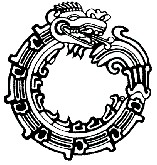
Aztec seven segmented ouroboros.
In China it can also take the form of a dragon and it features on the Magician card in the Rider- Waite deck of Tarot cards.
I found this quote online:
‘In other myths the ouroboros encircles the whole world, a circumference of the waters surrounding the earth. It can support and maintain the world and also inject death into life and life into death. Although apparently immobile, it’s actually in perpetual motion, forever recoiling upon itself.’
One of the many fascinating myths surrounding the ouroboros is the experience of the chemist, August Kekule, who was trying to discover the structure of benzene. This is how he described his Eureka moment :
‘I was sitting, writing at my text-book; but the work did not progress; my thoughts were elsewhere. I turned my chair to the fire and dozed. Again the atoms were before my eyes. This time the smaller groups kept modestly in the background. My mental eye, rendered more acute by the repeated visions of the kind, could now distinguish larger structures of manifold conformation: long rows, sometimes more closely fitted together; all twining and twisting in snake-like motion. But look! What was that? One of the snakes had seized hold of its own tail, and the form whirled mockingly before my eyes. As if by a flash of lightning I awoke; and this time also I spent the rest of the night in working out the consequences of the hypothesis.’
As I said earlier, Jung would see this dream as evidence of the ouroboros and its effect on the collective unconscious.
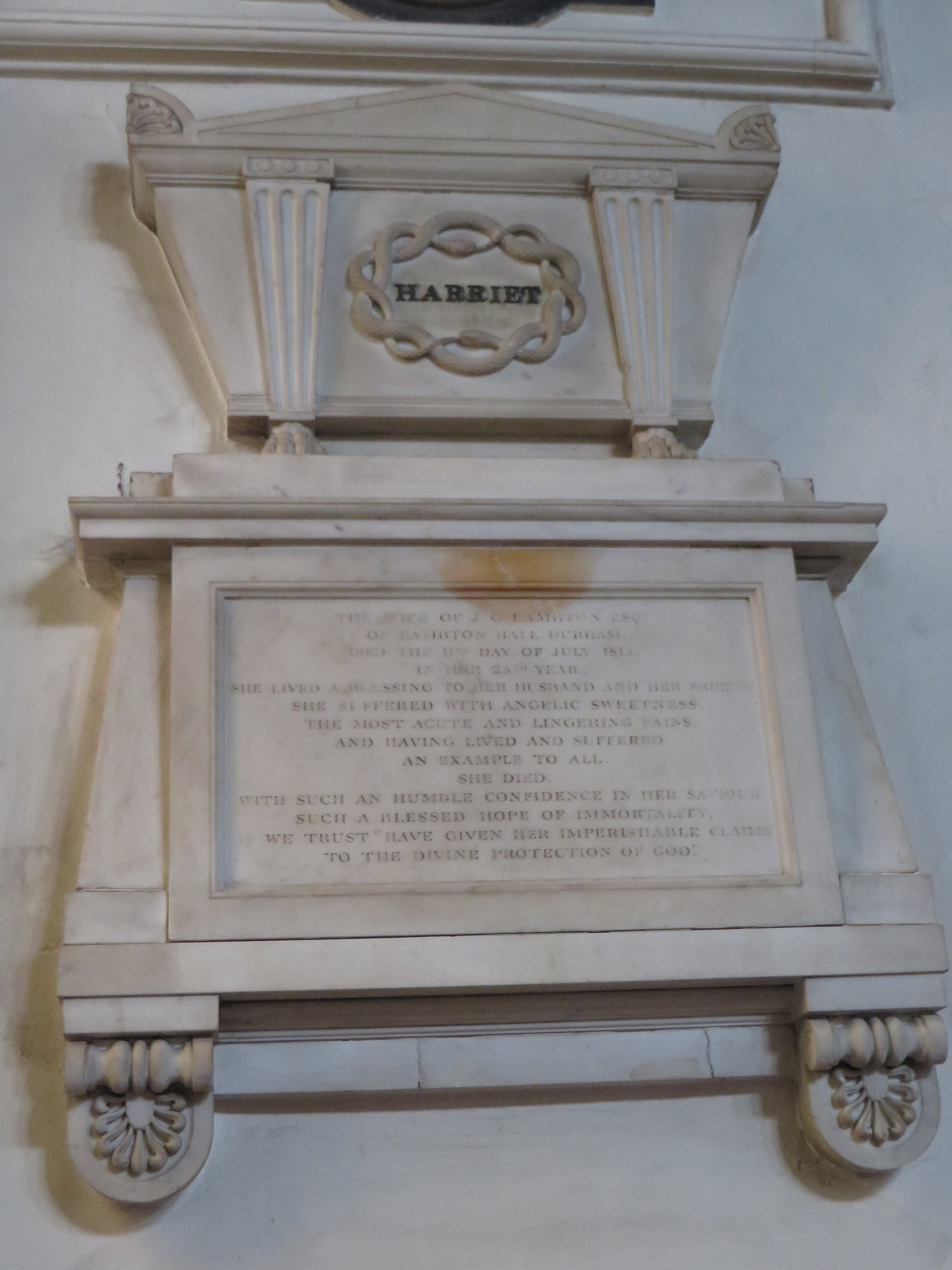
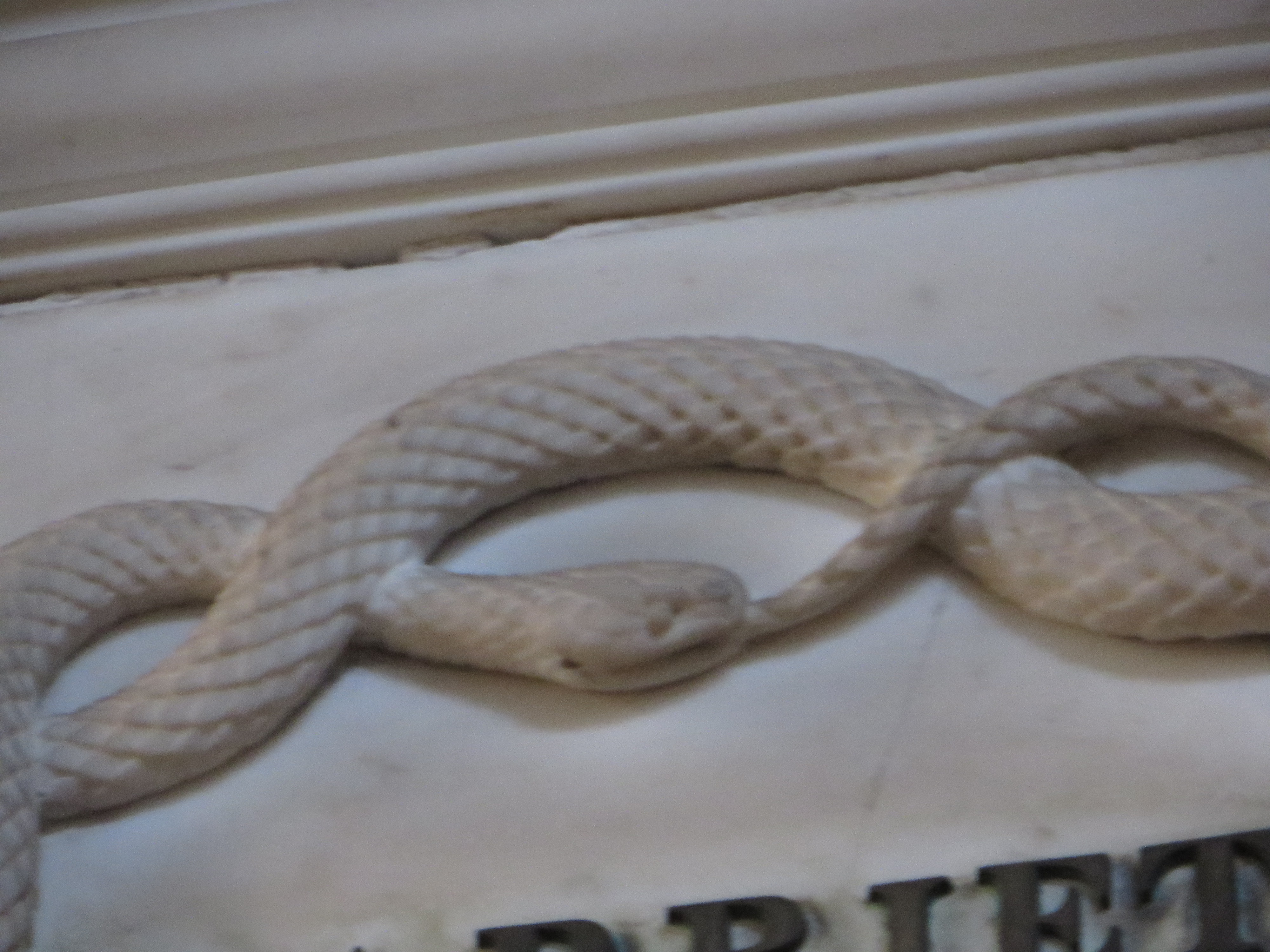
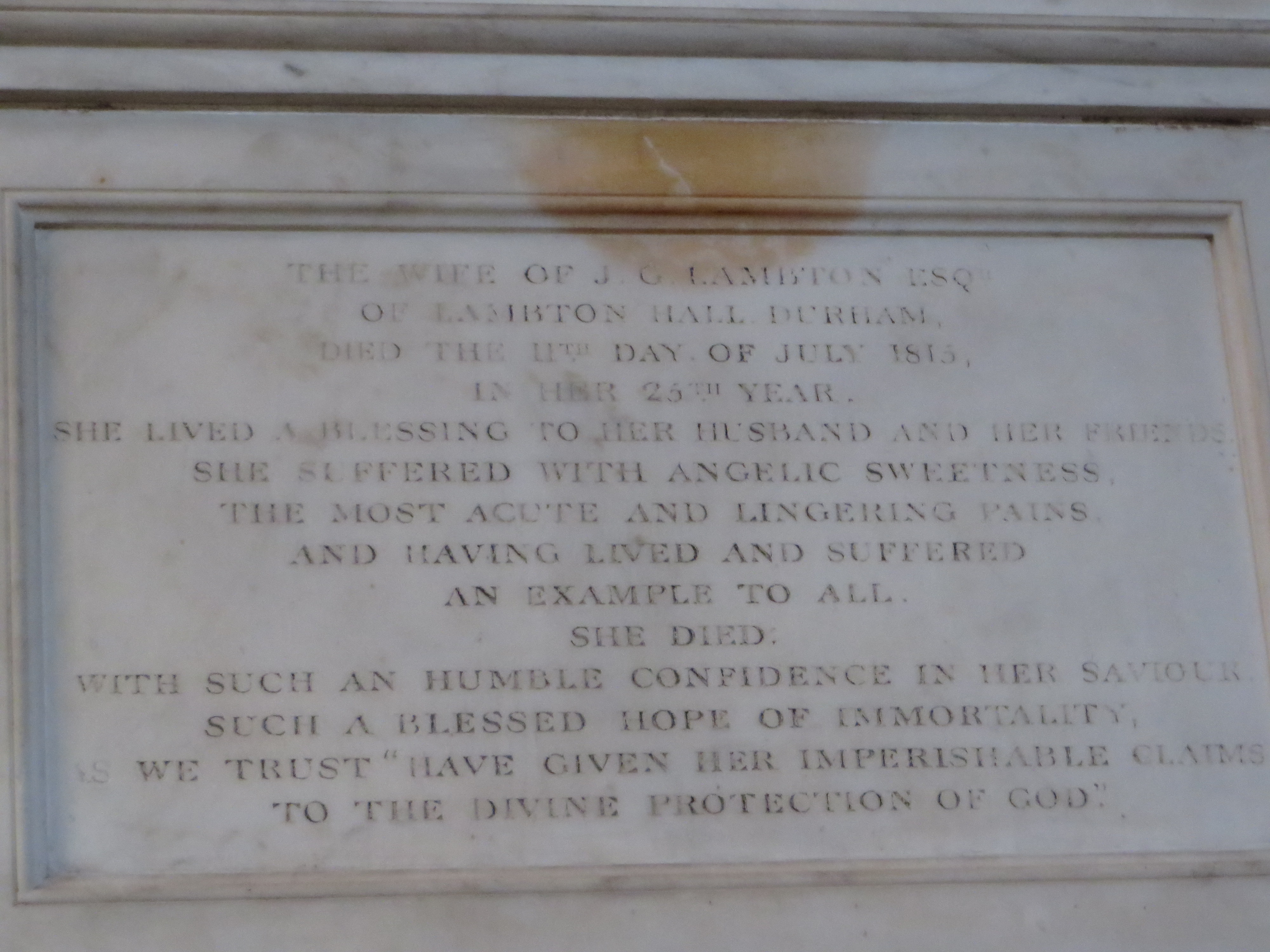
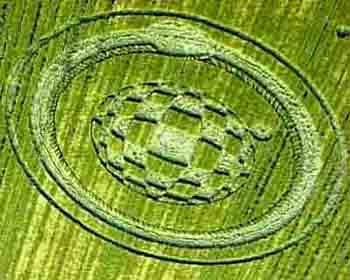
Although the ouroboros is usually depicted as a full circle, this is one that I found in my local church, St Georges in Beckenham. On first glance, it merely looks like an attractive, rippling border around the name Harriet and it dates from 1815. But on a recent visit, I looked closer and realised that it was actually composed of 2 entwined snakes, each biting their own tail. When I spoke to a churchwarden, she had always thought that, due to the patterning on the snakes’ bodies, that it was two entangled pieces of rope. It is a poignant memorial to a young wife who died aged 25 after suffering the ‘most acute and lingering pains.’ So it would have been a potent reminder of resurrection. More recently, the ouroboros has also appeared as part of a crop circle.
The ouroboros is one of the most intriguing and interesting symbols that I have researched. It is a universal image of rebirth, hope and eternity.
© Text and photos Carole Tyrrell unless otherwise stated
Further reading and references:
Ouroboros, the Infinity Symbol – Mythologian.Net
Stories in Stone – Douglas Keister, Gibbs Smith, 2004
How to Read Symbols, Clare Gibson and Claire Haworth-Maden, A & C Black publishers, 2009
An Illustrated Encyclopaedia of traditional symbols J C Cooper, Thames & Hudson originally pub 1979, reprinted 1993
 shadows fly away