A 200th birthday and an unsolved murder Part 2 – a visit to St Werbergh’s, Hoo

William White’s headstone and fulsome epitaph. © Carole Tyrrell

You never know what you will find in a country churchyard; crumbling mausoleums associated with royalty, a fine selection of skulls on headstones and poignant memorials.

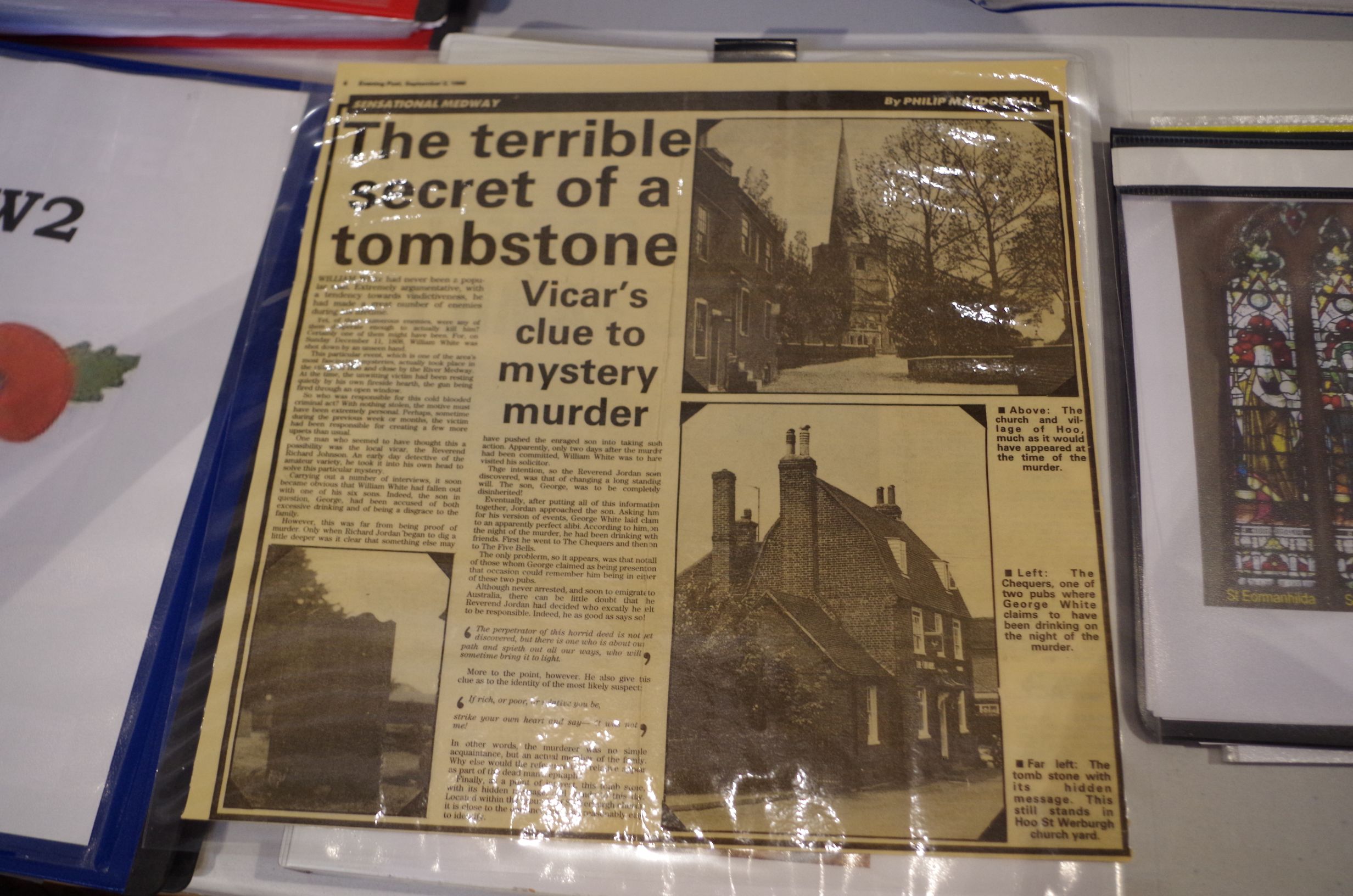
But what I didn’t expect at Hoo was to find one that revealed, positively shouted in fact, about a local unsolved murder from the early part of the 19th century. This is the headstone dedicated to William Walter White. This is the inscription:

‘IN MEMORY OF

WILLIAM WHITE OF THIS PARISH, YEOMAN

WHO WAS ON SUNDAY EVENING THE 11TH OF DECR.

1808 MOST INHUMANLY MURDERED

IN THE BOSOM OF HIS FAMILY

BY A GUN DISCHARGED AT HIM THRO A WINDOW

WHILST SITTING BY HIS OWN FIRESIDE

THE PERPETRATOR OF THIS HORRID DEED IS

NOT YET DISCOVERED BUT THERE IS ONE, “WHO

IS ABOVE OUR PATH AND ABOUT OUR BED

AND WHO SPIETH OUT ALL OUR WAYS”

WHO[O] [WI]LL SOMETIME BRING IT TO LIGHT

HE LIVED ESTEEMED BY ALL WHO KNEW HIM

[AND HIS] SAD END IS UNIVERSALLY REGRETTED HE

[LEFT ISSUE]6 SONSAND 5 DAUGHTERS TO BEWAIL

[HIS LOSS AND DIED [AT] THE AGE OF 58 YEARS

STONE WAS ERECTED JUNE THE 24TH 1809

“[By] whose Assa[ssinating} {H}and [I fell]

[Drop] Reader [o’er my Grave one] Silent Tear

[Live Well remembering that your God is Near]

[If Rich or Poor or Relative you be]

[Strike your own breast and say – It was not Me!]’

A more dramatic epitaph it would be hard to find and the stonemason certainly earned his money!  The case shocked the farming community of Hoo especially as no one was ever brought to justice and suspicions ran rife. It even led to the local vicar of St Werbergh’s at the time, Rev Jordan, deciding to become an amateur sleuth and unmask the perpetrator.

Death had already visited the White family when William’s wife, Jane, dropped dead with no prior indication of illness on 24 March 1808 aged 44. The murder left the 11 children orphans within a short space of time and more about what happened afterwards later. William was a man of some standing in the village. He was a yeoman which meant that, although he was a farmer, he wasn’t part of the gentry. In 1790, he was one of only two franchised householders in the village and so was eligible to vote.

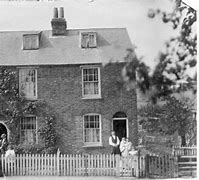
A typical farm house in Hoo. © eclipse

The Murder

The facts are that, on Sunday 11th December 1808, William was sitting reading at home with his family when a shot rang out. A gun had been fired through an open pantry window which killed William outright. The shot entered the back of his head and exited under the right eye. The ‘cries and lamentations’ of his family could be heard in Hoo village a mile away after the body was found. An unsuccessful search was made immediately for the perpetrator. However, a recently discharged gun was found in a ditch roughly 200 yards away from the house near the River Medway which led to the assumption that the murderer had escaped by water.

Such was the notoriety of the case that reports of it appeared in London newspapers and the Bow Street Runners were called in. They were the forerunner of the modern police force.

Bow Street Runners c1800 from History UK website.

Whoever fired the fatal shot must have known the layout of the house and the family’s habits. It took place on a Sunday when there were no servants about and it would have been necessary for the pantry door to be open in order to have a good view from the window as the gun was fired at William sitting by the fire. It had been propped up on a hurdle in front of the window and this helped the murderer to have a good aim. The gun was an old musket-barrel which had nails in the breach fastening it to the stock. It was a very crude gun as the hammer would not hold at full cock but was fastened back by a piece of twine which was presumed to have been cut at the time of firing. The fatal shot was fired at the same as the nightly salvo of guns from convict hulks on the River Medway. 

The suspects

The gun’s owner was a man called Driver and he and another man called Day were picked up in Bapchild near Sittingbourne, Kent. It was assumed that they were on the run. The Coroner, J Simmons Esq, questioned them but soon realised that he didn’t have enough evidence to prosecute them. He then had them removed to one of his Majesty’s ships which was a euphemism for being ‘press ganged’. The Kentish Gazette described it like this:

‘as they were unable to give a satisfactory account of their mode of obtaining a livelihood, they were sent to serve their country on board one of his Majesty’s ships of war.’

 If that wasn’t enough, later on, they were marched back from Portsmouth to Rochester to be further questioned and then press ganged a second time before being finally released without charge.

As for motive, William had recently found a servant, possibly Driver, in the act of robbing a neighbour and had informed the appropriate authorities. He had sacked the man who had sworn to get his revenge. In fact, a week prior to the murder, the unnamed man, had purchased a gun:

‘for which he had no possible occasion, under some frivolous pretence’

according to newspaper reports at the time.

The inquest on William was held and a verdict was returned of:

‘Wilful murder against some per or persons unknown – Friday 23 December 1808.

Events began to gather pace as the executor of William’s will, Thomas Denton, was authorised to put William’s home, land, possessions and other assets up for auction. It was intended that the money raised would be distributed by him amongst the children as he thought best for them. Originally it had been intended that Jane White, William’s wife would be a joint executor but of course with her death it fell to Thomas alone. Understandably the children tried to stop him and suspicion began to fall on him.  In the space of a few months they had been left orphans with the loss of both their parents and now they were to lose the family home as well.

But another suspect had appeared who was much closer to home. It was George White, William’s eldest son. He was known to be on bad terms with his father and had been seen to threaten him. George wanted the farm and the land but William was considering writing a new will leaving him and another relative out. However, his will dated 22 January 1808 did not indicate.   

But George had convinced both the Mr Simmons, the coroner, and the Bow Street Runners that, during the vital thirty minutes between 7.45pm and 8.15pm he had been in Hoo village buying:

‘a penny’s worth of nuts.’

The shop was a good mile away from the farm. But someone else in the community had doubts about George’s alibi and was determined to disprove it as we shall see in Part 3.

©Text and photos Carole Tyrrell unless otherwise stated.

Part 3 – the parson detective comes onto the scene

A 200th birthday and an unsolved murder – a visit to St Werbergh, Hoo, Kent

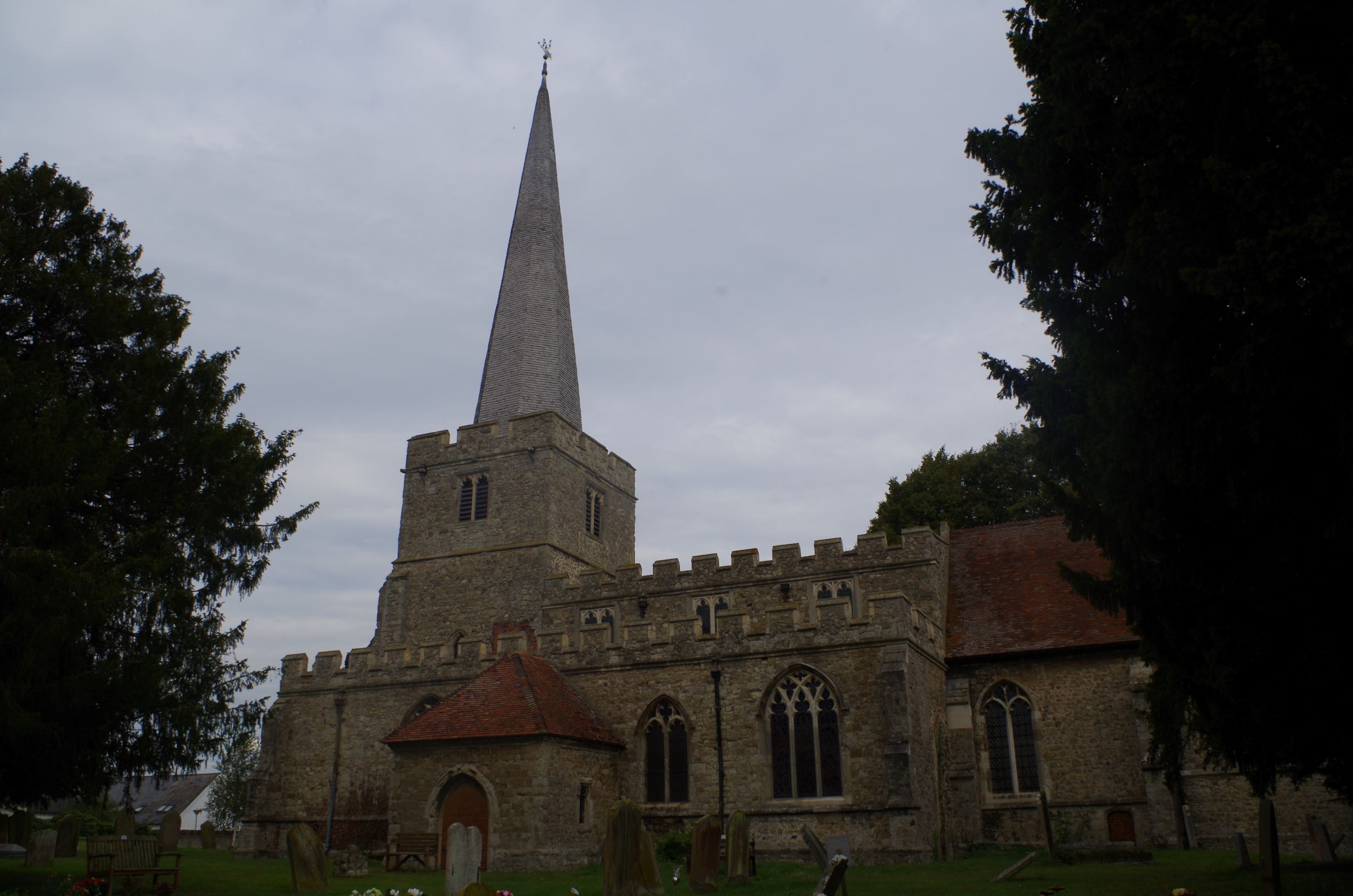
View of St Werbergh, a pity it wasn’t a better day. © Carole Tyrrell

Every September in Medway, Heritage Open Days take place. For a couple of weekends, I could gain access to buildings that are normally closed to the public such as the Rochester Bridge Chapel, almshouses and a synagogue amongst others. Despite Chatham’s somewhat dubious reputation nowadays, it has rich layers of history to be discovered due to its maritime past.
Last year in 2024, I went further afield and visited the Hoo peninsula. This was an area new to me and I wanted to visit St Werburgh’s church. It’s reputed to date back to the 12th century although an earlier church was on the site around 1080-1086 and was recorded in Rochester Cathedral.


I followed a crowd who seemed to be heading in the right direction, some of whom were in costume, but once I saw the church steeple I knew where I was. You can’t miss it – the battlemented tower is 55ft tall but with the steeple it is 127 ft or 38.5 metres in total. There used to be a light within the steeple that guided ships around the peninsula and if you look up you can still see its little wooden door. It seems plausible, after all why else would a recessed door be set into the steeple. The steeple is covered with oak tiles with a weathervane on top. There are 73 steps in the stair turret which give access to the battlemented tower.

View of steeple. © Carole Tyrrell

View of steeple door. © Carole Tyrrell

I’d never heard of the saint before but the guide leaflet has this to say:


‘St Werburgh was an English abbess known and loved for her great kindness and love to all living things. She is associated with geese because when a flock of geese settled in the convent land and were eating the crops, she ordered them into a fenced enclosure as punishment. That night a servant stole one of the geese, cooked and ate it, leaving only the bones.
In the morning St Werburgh set the geese free with a warning not to eat the crops again. Instead of flying away, the geese circled the convent making a great noise. Realising that one goose was missing she had the bones brought to her and restored the goose to life. The whole flock flew away, never to be seen on convent lands again. She was therefore held to have possessed extra-ordinary powers over natural creatures.’

She also has a stained glass window dedicated to her inside the church.

Statue of St Werbergh in church with a goose at her feet. © Carole Tyrrell

The oldest headstone in the churchyard is dated 1681 and is dedicated to Richard Scott who was a yeoman farmer. He died aged 70 in 1677. There is also a yew tree which is reputed to be 800 years old and the award for the most unusual name has to be a man called ’Time of Day’. who died in 1890. Sadly I didn’t find his headstone on this visit.

The oldest headstone in the churchyard, dedicated to Robert Scott. © Carole Tyrrell

Inside, the church possessed some unusual features. On display was a ledger stone which had been found under the floor and dated to the 12/13th century – the oldest I’ve seen. Two 14th and 15th vicars are also commemorated by memorial brasses. There are also two Royal Coats of Arms from the 17th century and a Norman font.

Medieval ledger stone. © Carole Tyrrell

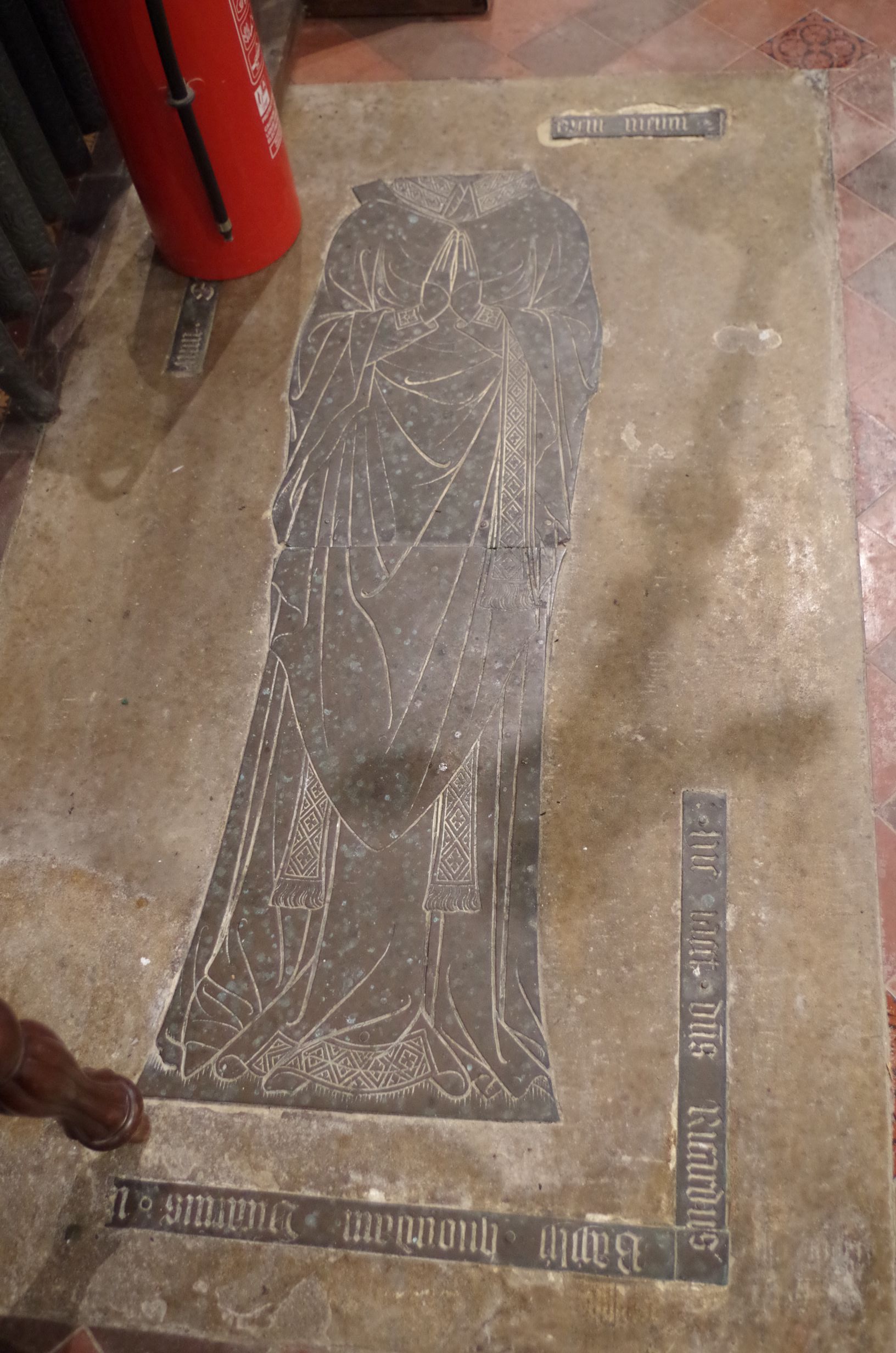
Memorial brass to a former rector with a missing head.© Carole Tyrrell

Indoor refreshments were in full swing and I enjoyed a cuppa while exploring. There were local history stalls which is how I discovered the 200 year old unsolved murder. When I came outside again, a ceremony was taking place and the reason for people being in costume was revealed. It was the 200th anniversary of the birth of Thomas Aveling, a local man who designed machines that didn’t require horsepower. Two men were there in Victorian dress from the Thomas Aveling Society. They were joined by children in costume and national treasure, Jools Holland OBE, in his capacity as Deputy Lieutenant of Kent – Medway.

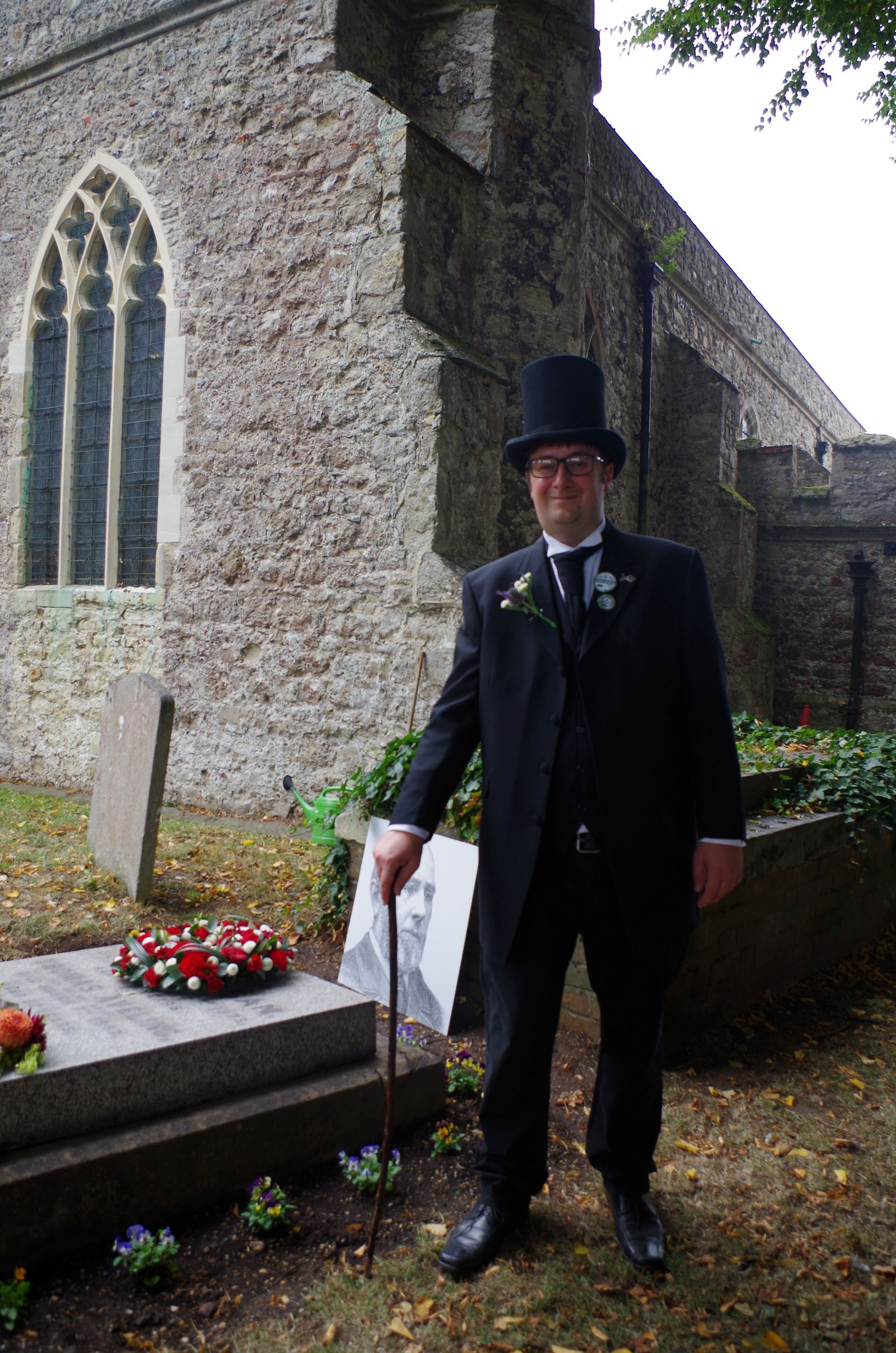
Member of Thomas Aveling society in Victorian dress by Aveling’s grave.© Carole Tyrrell

Thomas Aveling – a brief history

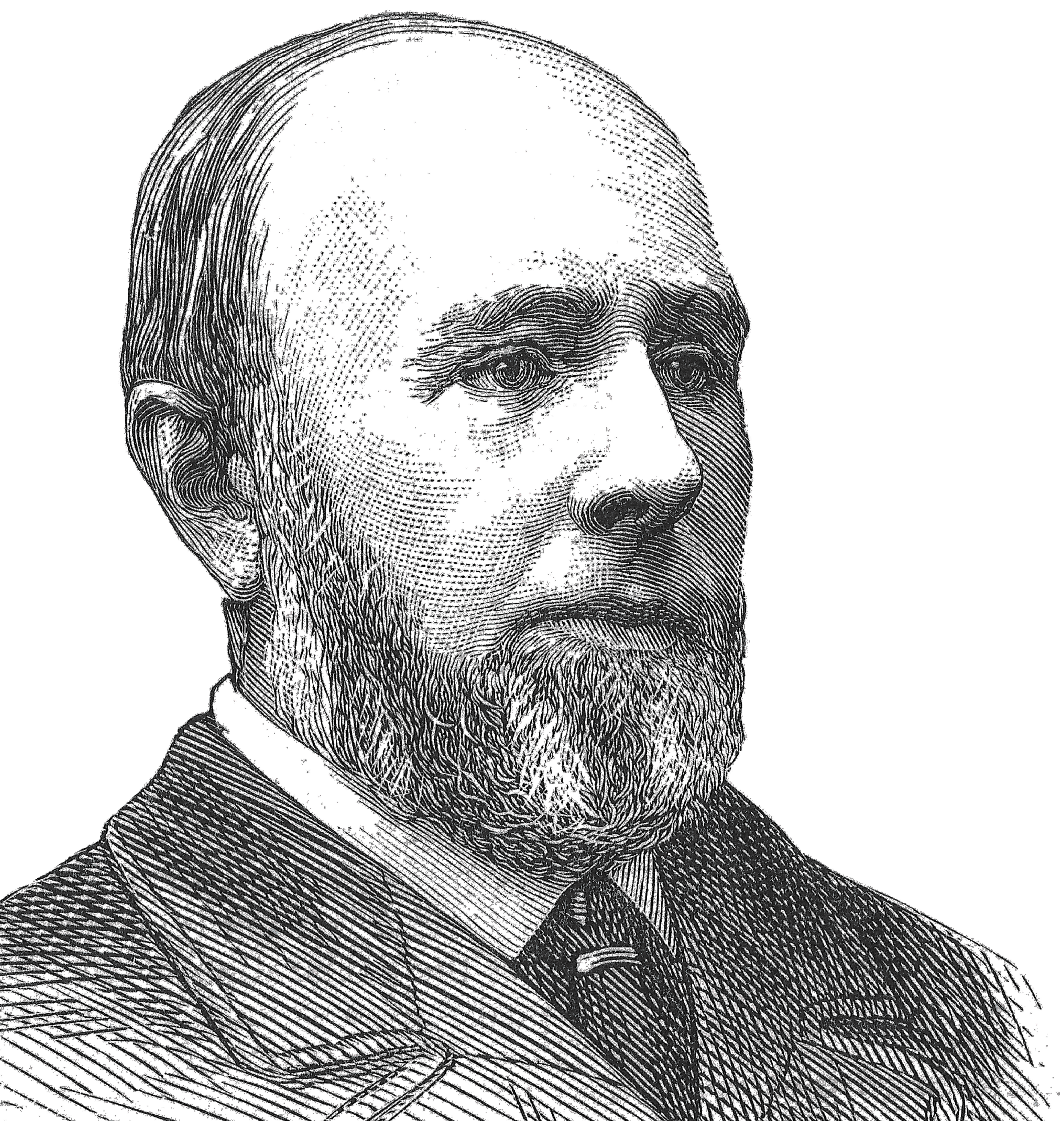
Thomas Aveling. Shared under Wiki Creative Commons

Although he was born in Cambridgeshire in 1824, Thomas moved to Hoo when his widowed mother married the Rev John D’Urban, the curate of St Werbergh. He was apprenticed to a farmer, Edward Lake, and became one himself. But he had dreams of creating machines that could be powered by other means than horsepower. In addition to the farm he also operated a small millwrighting and iron foundry business. Thomas was a talented and determined man and in 1856, in partnership with two other companies, he introduced a steam plough which was incredibly successful. Two years later, in recognition of his achievement, he was awarded ‘a piece of plate’ and a purse containing 300 guineas by Kent farmers. But there was more to come.


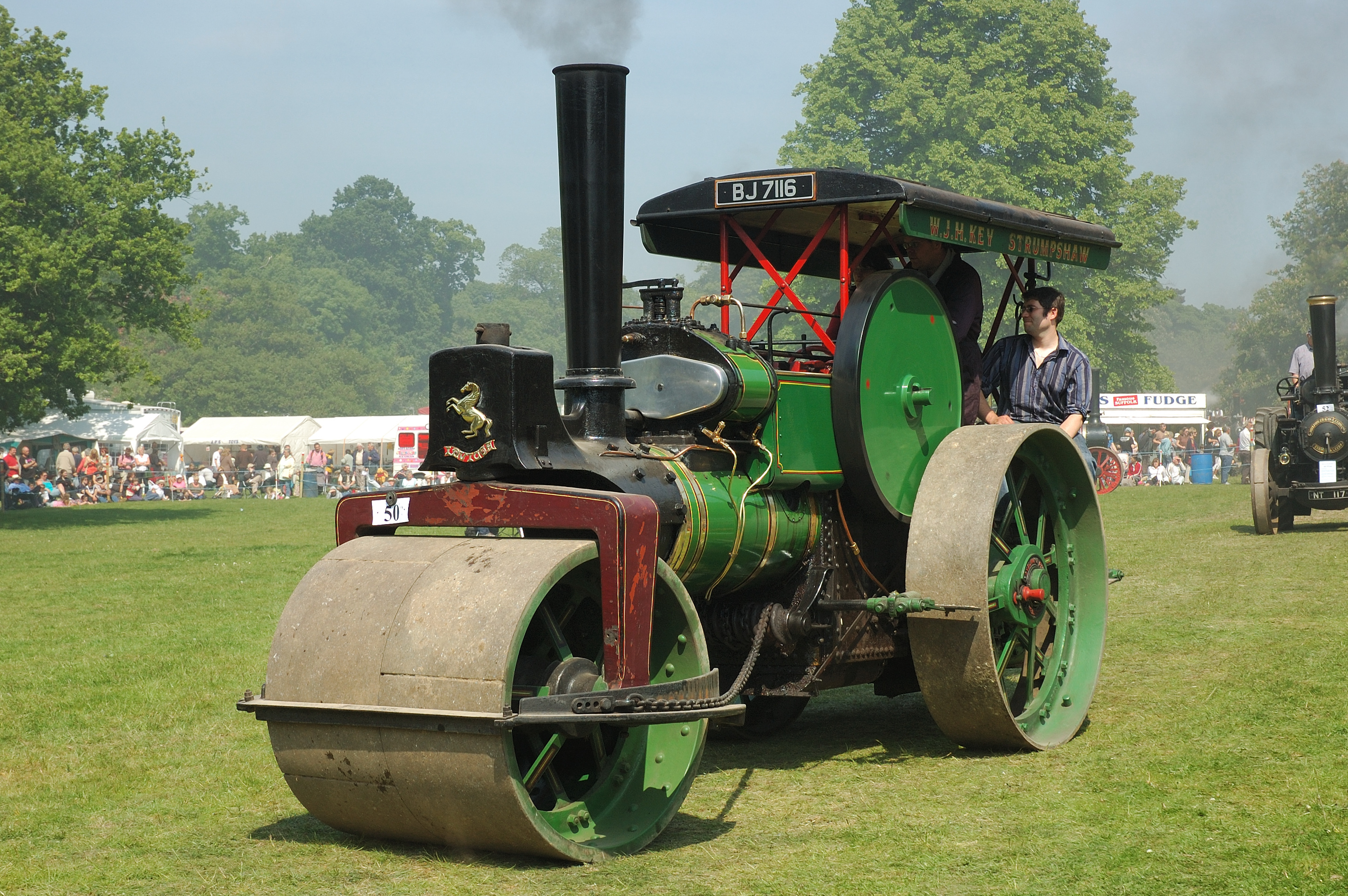
He formed a partnership with Richard Porter in 1862. It was very successful and they sold their products worldwide. But, like most restless, energetic and talented Victorian entrepreneurs, Thomas was onto his next project. One that is still in use today. One that helped create roads the world over including the ones in New York’s Central Park – the steam roller! Virtually unchanged since its creation.

An Aveline/Porter steamroller.

Honours for his invention came thick and fast. Thomas was knighted by the Austrian Emperor after showing it at Vienna’s Universal Exhibition and the French Government awarded him the Chevalier of the National Order of the Legion of Honour.

Thomas was also the Mayor of Rochester and introduced many improvements to the town which sadly no longer exist. He also represented Strood and Frindsbury on the City of Rochester Corporation.

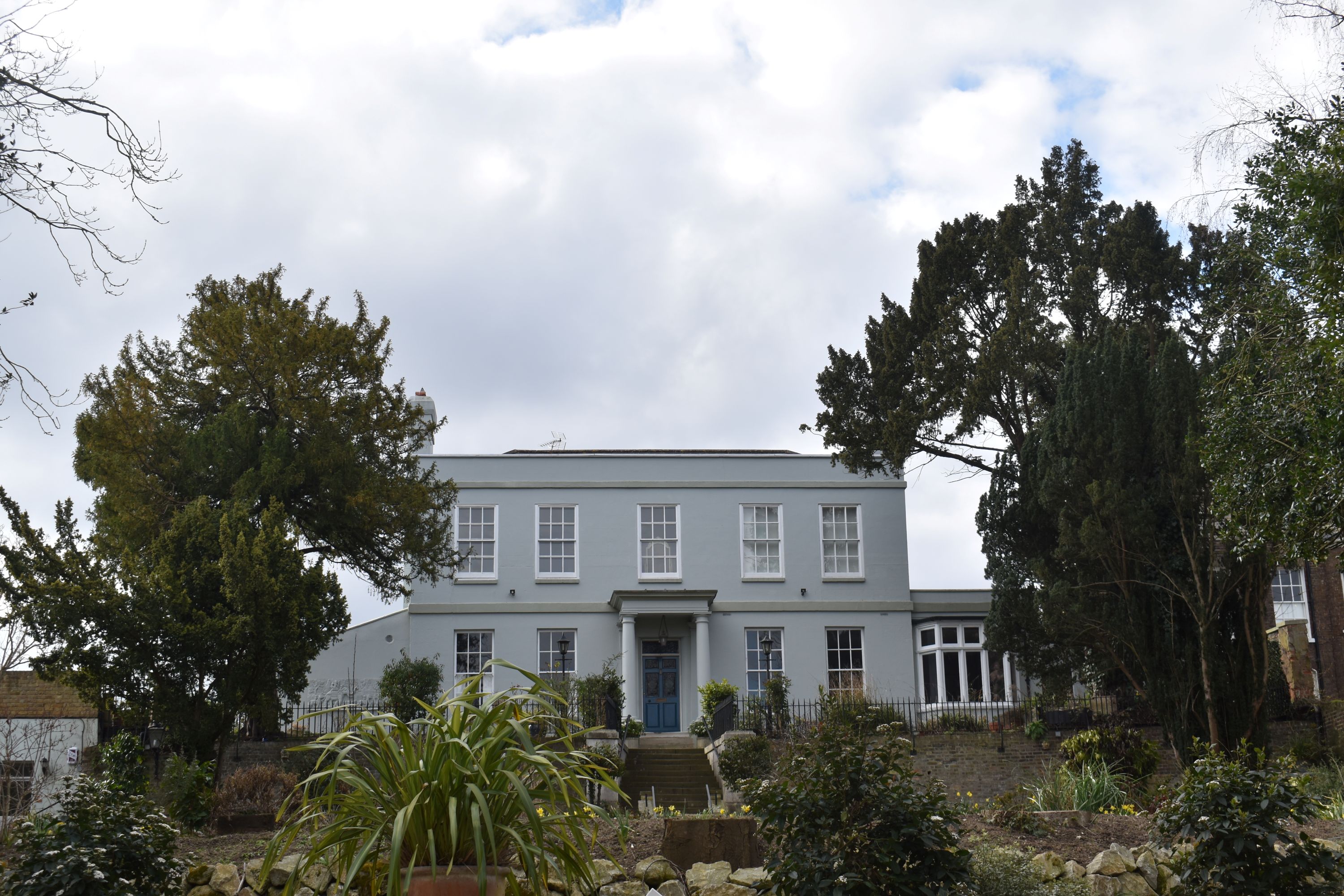
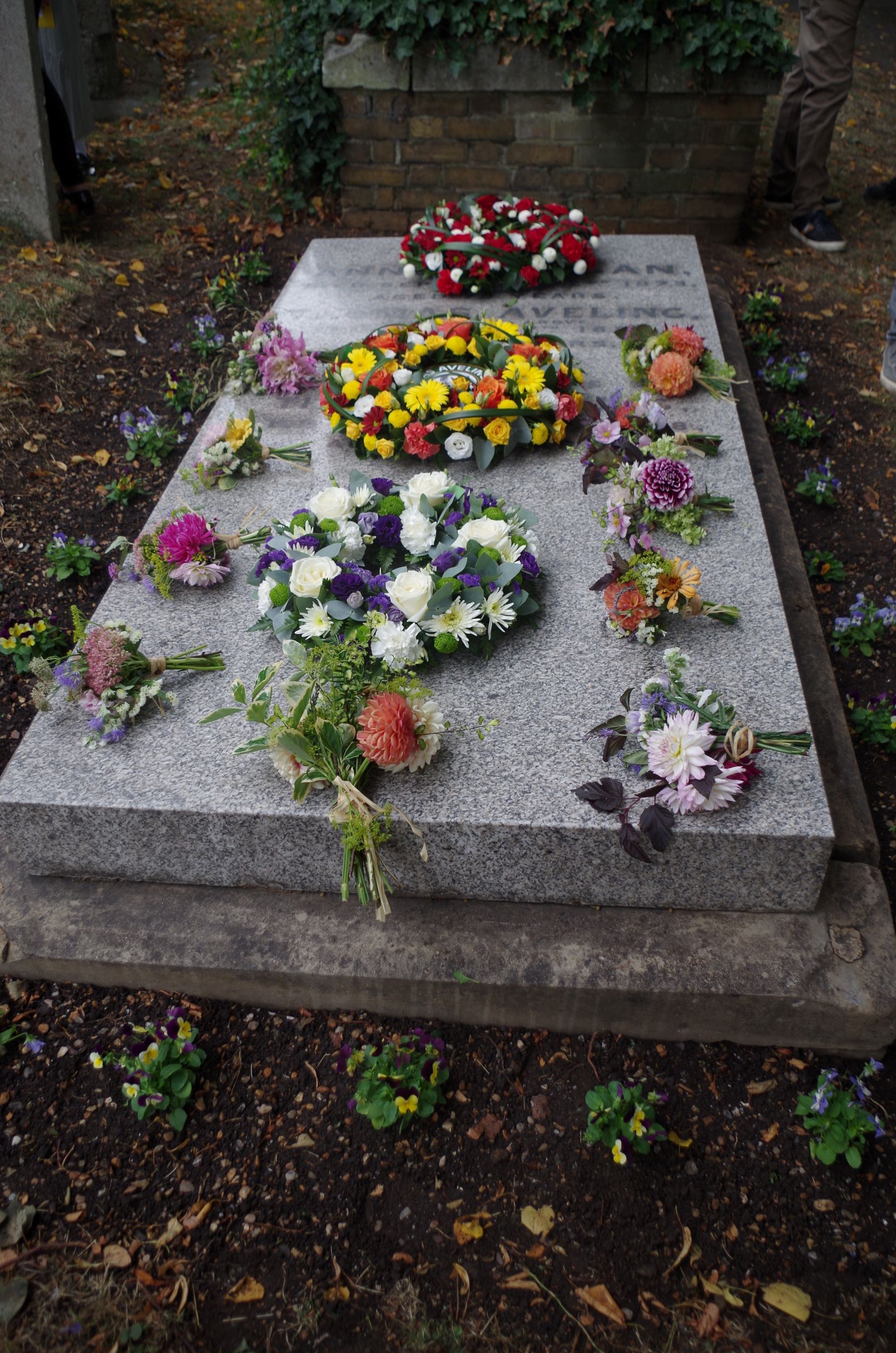
In addition, he was also an enthusiastic yachtsman and it is believed that he may have caught a chill which developed into pneumonia whilst on his 28 ton Yacht, ‘Sally’ at the end of February 1882. On 7 March 1882 he died at the age of 58.  The funeral took place on 11 March 1882 and crowds lined the streets from his home at Boley Hill House in Rochester to St Werburgh’s church – a distance of 4.6 miles.  The funeral procession began with 39 carriages which increased to 54 and his coffin was covered with beautiful wreaths not unlike the ones on his grave for his 200th birthday.  He is buried with his mother, Sarah, his wife Sarah and his son Thomas. Two stained glass windows in the church commemorate him. There is also a secondary school in Chatham named after him and the road names on a housing estate in Hoo are associated with him.

Boley Hill House, Thomas Aveling’s home in Rochester as it is today. © Carole Tyrrell

For a fuller account of Thomas’s life and achievements please visit the Thomas Aveling Society’s website:  https://www.thomasavelingsociety.co.uk

Thomas Aveling’s grave covered with birthday wreaths. © Carole Tyrrell

But very near Thomas Aveling’s grave is one that is determined that the person which it commemorates and the way in which he died will never be forgotten.

©Text and photos Carole Tyrrell unless otherwise stated.

Part 2 The 200 year old unsolved murder of William White, possible suspects and an amateur clerical sleuth.

A love supreme? The Allen memorial, All Saints Birchington

Full view of the Allen memorial. © Carole Tyrrell

There are so many stories within a churchyard. They are truly repositories of a community’s history in their recording of births, deaths and the history of local families. A simple epitaph can say so much about the people buried beneath it.


I almost missed the Allen headstone as it’s lying down on the grass. This would have been a shame as it is one of the loveliest and most poignant memorials in the churchyard and must have looked imposing when it was standing upright.

A closer view of the epitaph. © Carole Tyrrell

It’s dedicated to a married couple, Janet Lormie Allen or ‘Cissie’ who died young aged 23 on 10 October 1914, and her husband, Ernest August Allan, who died 45 years later aged 79. I don’t know why Cissie died so young: it may have been in childbirth, due to illness or to another cause. But she was greatly missed as the sentiment on the headstone shows.

At one side of the tombstone, beside the epitaph, stands a young woman, a maiden, dressed in a diaphanous, long flowing robe from which one strap has fallen, exposing a bare shoulder. The hair is untied and falls to her shoulders. Behind her is a tall, slender rose stem whose blossoms reach over her head. She looks upwards to the blooms above her as, with one hand, she reaches up to pluck a rosebud. In her other hand she already holds a single bloom half open. There is a hint of the waning of the Art Nouveau movement in the flowing lines of her dress and the romance of the image.

The significance of the rose being plucked is that it’s a bud and so not yet in bloom which indicates a life cut short.

I don’t know if Ernest remarried but he was buried with his wife in 1959 and so they were reunited. It’s such a shame that as the headstone is lying down as rainwater gathers on the carving of the young woman and, for example, there has been erosion on her face.

Closer view of the maiden’s face. © Carole Tyrrell

Despite my research I have not been able to find out any further details about the couple. But it’s one of the most beautiful memorials that I’ve seen, not just because of the carving, but, as I like to think of it, a love story written on an epitaph in a country churchyard. And as we approach St Valentine’s Day what could be more appropriate?


©Text and photos Carole Tyrrell

Happy New Year with a couple of mysteries!

Sorrowing woman on headstone, All Saint, Birchington-on-sea, Kent. © Carole Tyrrell

Happy New Year to all my readers and what an auspicious year it is for shadowsflyaway!

It’s 10 years since I began this blog on July 10th 2015 to be exact and some of my readers have been with me since the very beginning. Even now I am still discovering new symbols to write about, little mysteries that I find in churchyards and cemeteries that intrigue and inspire me.

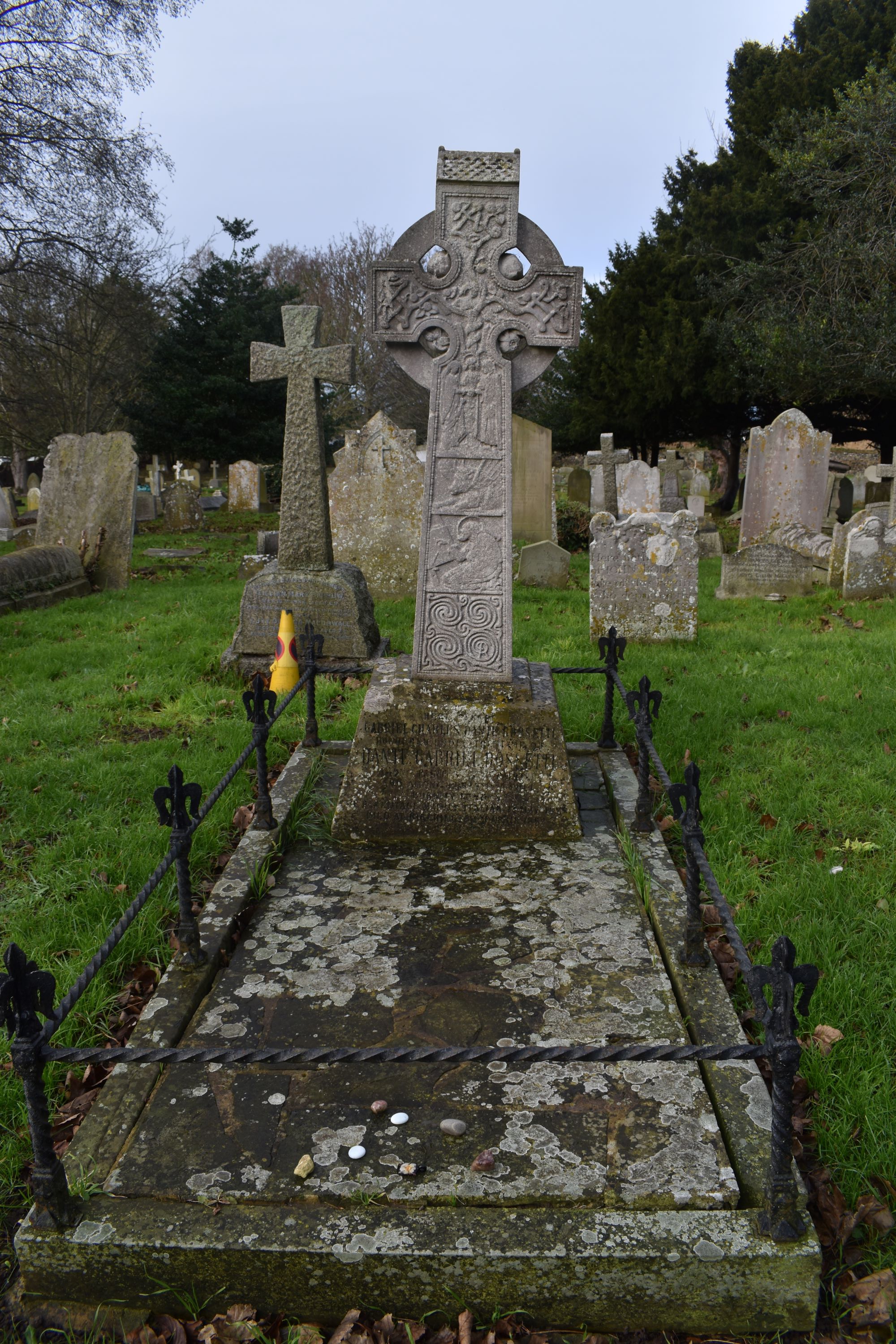
Here are a couple that I found on a Christmas Eve walk in All Saints churchyard, Birchington on Sea. This is where the 19th century Pre-Raphaelite artist, Dante Gabriel Rossetti is buried with a Celtic Cross over his grave. It was a dull grey day, enlivened only by the bright efforts of the town’s yarn bombers.

Dante Gabriel Rossetti’s grave, All Saints Birchington-on-Sea which is in the form of a Celtic Cross. © Carole Tyrrell

An example of one of Rossetti’s most beautiful paintings, ‘Lady Lilith’.

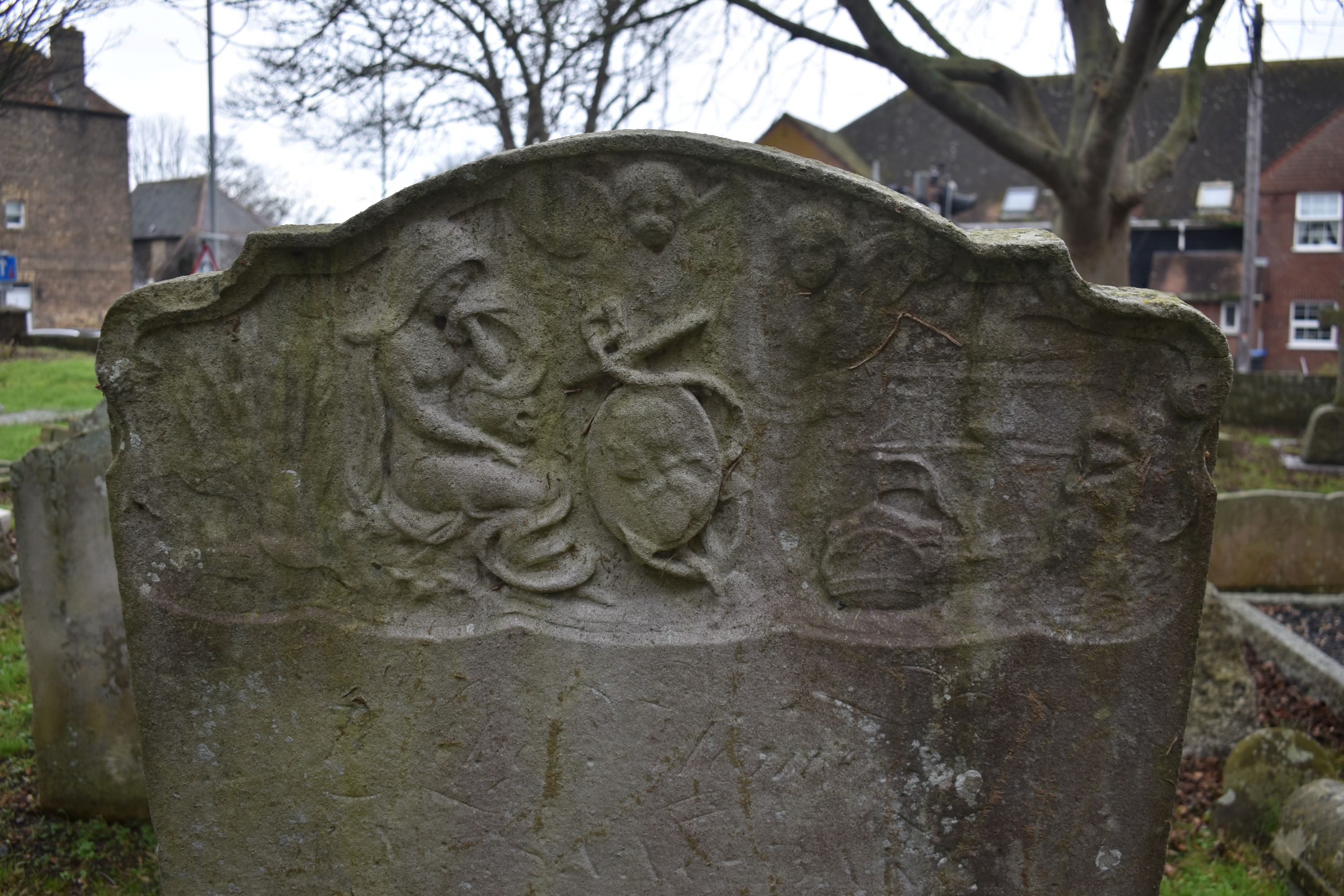
But these two stood out. The first one was located by the original church door and appeared to be a variant on the mourning woman symbol as a woman, wearing a billowing gown or cloak, weeps over a man’s portrait. He faces her in profile and is dressed in 18th century fashion with a small ponytail and is within an oval frame. She sits with a skull on her lap. The portrait is supported by a large anchor whose rope ripple around and behind it. Above it there are two floating angel heads or winged messengers. The carvings on either side of the tableau were indistinct under the overcast sky. But a sunny day can often bring out details of carvings and epitaphs so I will return. The anchor would indicate a naval man and I have to say that that, on first look, the folds of cloth around the lower half of the woman resembled a mermaid’s tail to me. But that may just be me being more fanciful… It’s an impressive headstone with the central figures still crisp. I would hazard a guess that this is from the 18th century.

A closer view of the sorrowing woman headstone. © Carole Tyrrell

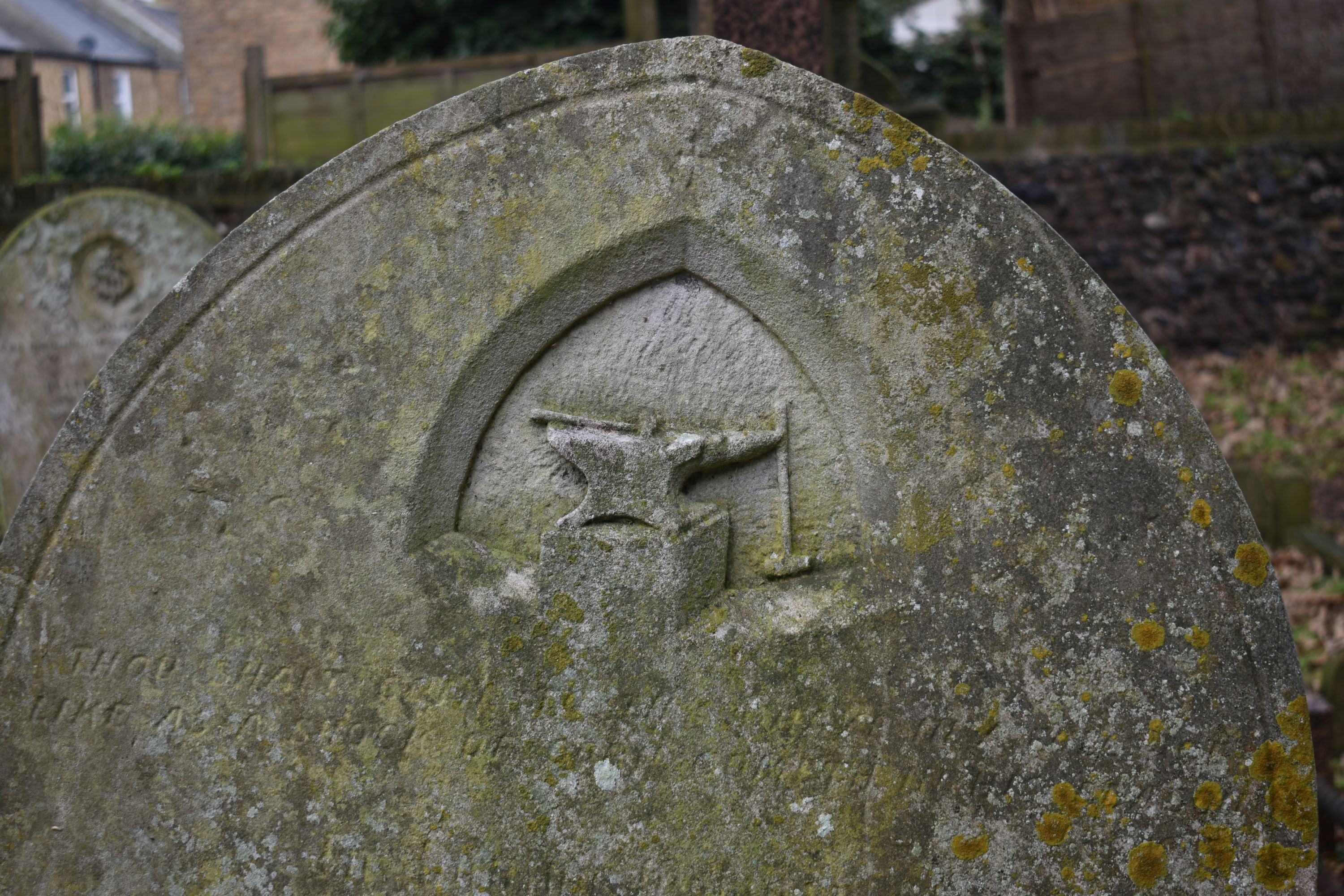
The other one is on a 19th century headstone and features an anvil and tools. On first glance I thought it might belong to the village blacksmith. But it’s dedicated to a woman, Elizabeth Adams. Underneath the motif is what appears to be a quotation which I thought might have come from the Bible. But, so far, I haven’t found anything that resembles it but a burst of bright sunshine could illuminate it further on a future visit.

A closer view of the anvil and tools with quotation partly visible beneath. © Carole Tyrrell

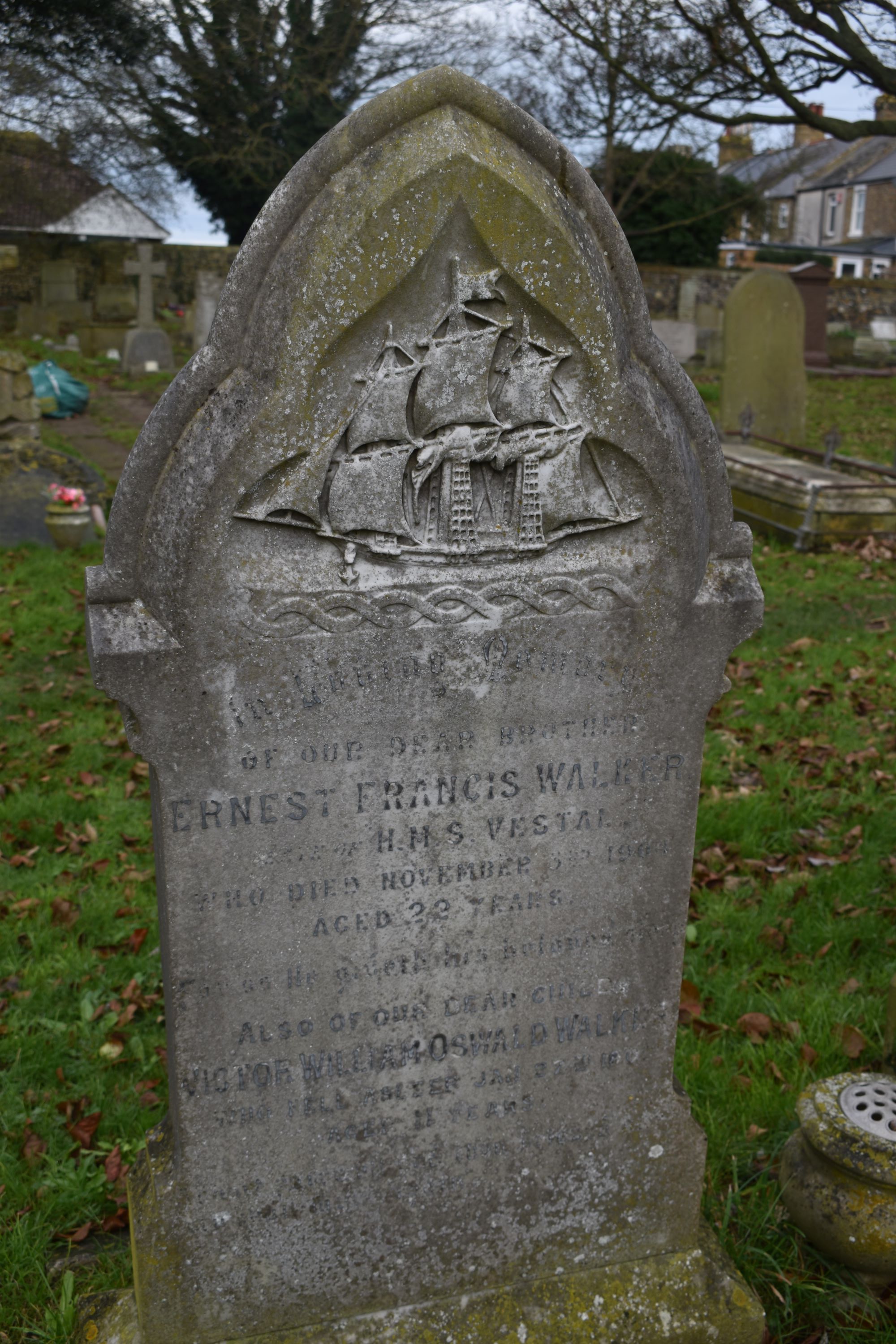
A ship is permanently sailing on Ernest Francis Walker’s headstone with a border of entwined ropes beneath it. The epitaph states that he was a crew member on HMS Vestal and so I presume the carving of a ship is a representation of it. Ernest died young at 22 and there are several ships that bear this name. The one that I think is most likely is a 26 gun sixth rate frigate of the Royal Navy. She was launched in 1833 and sailed in the West Indies and the Caribbean. In 1852 she ran aground near the Needles on the Isle of Wight and was taken to Portsmouth for inspection and repair prior to being decommissioned in 1860 and then broken up in 1862.

I am already looking forward to what else I will discover in 2025 including the spooky angel in a Broadstairs churchyard but I am determined to wait for a really foggy day for that one!

© Text and photos Carole Tyrrell


References and further reading:
https://en.wikipedia.org/wiki/HMS_Vestal_(1833)

Symbol(s) of the Month – the exuberant 18th century symbols of St George’s churchyard

One of the skulls at base of blank cartouche on one side of large chest tomb, St George’s. ©Carole Tyrrell

It’s often on a winter’s night, just as dusk begins to fall and the lamp lights in St Georges churchyard come up, that  the fine selection of 18th century tombstones are at their best. Carved skulls leer at you, an hourglass emphasises time passing and the gravedigger’s tools stand ready for the next interment.  And perhaps there is still a phantom schoolteacher using his sculpted globe to teach geography to his spectral students.

There has been a church on this site since the 14th century and, in one place in the graveyard  the number of burials over the centuries has made the ground rise up on both sides.  But, as well as 18th century examples of funerary symbolism, there are also some wonderful 19th century ones as well.  Inside the church there’s also a good selection of impressive wall monuments dedicated to prominent local families dating back to the 1600’s.  They are  buried in the vaults beneath the church.  St George’s also has the country’s oldest lych gate in that the current one incorporates elements from  a far older one. The churchyard is a pretty one for a short walk through to the bustling High Street  especially when the spring flowers begin to appear, carpeting the grass between the stones with bluebells and flitting butterflies.

View of tombstones with horned skull in foreground. ©Carole Tyrrell

However for this month’s Symbols post I will concentrate on the 18th century memorials within the churchyard. These  tombstones  are topped with classic memento mori symbols.  This is Latin for ‘remember (that you have) to die.’  They are the visual accompaniment to the immortal epitaph from Dundee’s Howff graveyard:

Remember Man as you pass by

As you are now so once was I

As I am now so must you be

Remember man that you must die.’

Graveyard symbolism, according to Douglas Keister, began when the well to do  could no longer be buried with in their local church due to lack of space. Instead, they took up their eternal residence in the newly consecrated burial grounds outside and surrounding the church walls. These were often known as ’God’s Acres’ and gave the wealthy the opportunity to erect a lasting memorial or tombstone in their memory.

St George’s churchyard became the last resting place of prominent local families, some of whose descendants still live in the area. The oldest tombstone dates from 1668 and the 18th century ones  are nearest to the church walls which in effect meant that they were  ‘Nearer my God to Thee.’

I’ve always enjoyed walking through the churchyard as it can feel like walking through a gallery of funerary symbols.  There’s something very exuberant about these 18th Century motifs of mortality even though some have eroded and only one epitaph is still fully readable.  However, the skull and crossbones, the Death’s Heads and others have, in several cases, lasted better than the epitaph below them.

The skull and crossbones are an effective, if macabre, reminder of what is left of a body after it decomposes and there are several good examples in St Georges.

This one is near the church entrance and features a skull and crossbones with what appear to be protruding palm fronds.  It also seesm to be resting on something whch may be a shield.  All that can now be read on the epitaph is…who dep….’

© Carole Tyrrell

The skull and crossbones, a winged hourglass and a set of sexton’s tool on the left hand side.
©Carole Tyrrell

Nearby is another skull and crossbones with a winged hourglass above it.  This is a reminder that ‘Time flies’ or ‘Tempus Fugit’ and that the onlooker will soon be bones and dust. So it’s important to make the most of their time on earth. On the left hand side is a pick and shovel.  These are a sexton’s tools which made me wonder if this was a sexton’s grave but the epitaph is now illegible.  The sexton’s role not only encompassed maintaining and looking after the church but also the churchyard.  In larger graveyards the sexton would have been more of a manager but in smaller ones he would have had sole responsibility for preparing the ground, digging and closing the grave, mowing the lawn and also maintaining the lawn and paths.

Skulls also feature prominently on two other tombstones on the other side of the church very near the wall. One seems to have a very sharp pair of horns and a  definite smirk.  On each side of it there appear to be small trumpets but it’s too weathered to see if anyone’s blowing them.  Maybe he’s keenly anticipating the Last Day of Judgement.

© Carole Tyrrell

The horned skull tombstone showing trumpet detail. ©Carole Tyrrell

Nearby is a large tombstone with what seem to be two somersaulting skulls on them although one is more eroded than the other.  Below them is a small worn hourglass.  I believe that these two examples of skulls may be unique to St Georges as I’ve haven’t yet seen them anywhere else.

Somersaulting skulls and hourglass. ©Carole Tyrrell

Douglas Keister has suggested that the skull and crossbones slowly began to be replaced by the much less stark and macabre  ‘Death’s Head.’  This is a human face with wings on either side of it.  I’ve always known it as the ‘winged cherub’ and there are also several good examples within the churchyard. These are symbols of resurrection intended to give those left behind some hope.

© Carole Tyrrell A closer view of the Saxby Angel with what appears to be a faded open book on one side and a stylised flower on the other side.

I am also a huge fan of calligraphy having studied it for two years at evening classes and it has undergone a revival on late 20th and early 21st century tombstones.  However 18th century calligraphy has a style all of its own and is instantly recognisable.  The only legible 18th century epitaph in St Georges is the one dedicated to a John Saxby.  It reads:

Here lyeth the body of John Saxby of the Parish who Departed this life…year of May 1731 aged 41 years.’

A fine example of a Death’s Head is on top with an open book beside it which may be the Bible or the Book of Life and there’s a stylised flower on the other side.  The open book may be a depiction of the incumbent offering their life to God for judgement as an ‘open book’. People are sometimes described as an ‘open book’ as they have their feelings and thoughts open to the world with no attempt to hide them.

A crown on clouds with two small angelic faces on each side of it. ©Carole Tyrrell

On another memorial two small faces, presumably from the angelic host, peer out from either side of the clouds surrounding a crown.  It’s a representation of the reward that awaits the faithful in heaven.  This verse from the Bible refers to it:

James 1:12 New International Version (NIV)

Blessed is the one who perseveres under trial because, having stood the test, that person will receive the crown of life that the Lord has promised to those who love him.

A plump faced death’s head is surrounded by another open book and what I think maybe a small skull in the far corner of the stone.
 

A plump faced Death’s Head or winged cherub with an open book on one side and what I think is a small skull on the other. ©Carole Tyrrell

But one of the most unique and impressive tombstones in St George’s, or perhaps anywhere, is that of John Kay.  He was an 18th century schoolmaster and his life and talents are recorded by the tools of his trade that have been carved on his stone. There’s a globe on a stand, a trumpet, what appears to be a cornet, an artists palette, a pair of compasses and other items which are now too indistinct to read.  He was obviously very erudite and much appreciated by his students.  Sadly his fulsome epitaph is now virtually unreadable. He lies near Mr Saxby under a spreading yew tree.

© Carole Tyrrell

On the other side of the graveyard is a large chest tomb.  There is a dedication and an armorial on its top and I feel that some patient research in St George’s burial registers may reveal the incumbent’s identity.  There are blank cartouches on each side with death’s heads on top and two skulls beneath each one.  At one end are palm fronds which are a Roman symbol of victory which were then adapted by the Christians as a martyr’s triumph of death.  The palm as a symbol originated in the ancient Near East and Mediterranean region  and is a powerful motif of victory, triumph, peace and eternal life.  It’s traditionally associated with Easter and Palm Sunday and Christs’ resurrection and victory over death. On the other end of the tomb are what appear to be olive flowers.  The olive’s association with wisdom and peace originally came from Greek mythology when the goddess, Athena, presented an olive tree to the city that was to become Athens.  Successive Greek ambassadors then continued the tradtion by offering an olive branch of peace to indicate their goiod intentions. The olive tree is also associated with longevity, fertility, maturity, fruitfulness and prosperity.  In the Bible, Noah sent the dove out after the Flood to see if the floodwaters had receded and when it returned with an olive leaf in its beak Noah knew that the Flood had ended.  Even today the phrase ‘ offering an olive branch’ means the someone wants to make peace. But in this context the olive branch may mwean that the soul has departed with the peace of God. So one memorial incorporates powerful  motifs of mortality and resurrection.

View of chest tomb, St George’s churchyard. ©Carole Tyrrell
Palm fronds at one end of chest tomb, St George’s churchyard ©Carole Tyrrell
Blank cartouche on one side of chest tomb. Note Death’s Heads and skulls. ©Carole Tyrrell

St George’s has also used old tombstones to pave two of the pathways within the churchyard of which some are still readable.  It always feels as if I’m walking over someone’s grave although they are buried elsewhere in the graveyard.  However, although the 19th and 20th century memorials are rather more restrained and far more legible I prefer the more ‘in your face’  18th century symbols.  But in the case of the horned skull I can only frustratingly only guess at its meaning and the person who lies beneath…..

©Text and photos Carole Tyrrell otherwise stated.

References

Stories in Stone; A Field Guide to Cemetery Symbolism and Iconography, Douglas Keister, Gibbs M Smith, 2008

St George’s Churchyard, St George’s Parish Church, Beckenham, Revised June 2005

St George’s Parish Church, Beckenham, information leaflet,, October 2003

http://www.thecemeteryclub.com/symbols.html

http://www.catholictradition.org/Saints/signs4.htm

http://www.planetgast.net/symbols/plants/plants.html

https://stoneletters.com/blog/gravestone-symbols

http://www.graveaddiction.com/symbol.html

A Margate Meander Part 2- a visit to St John’s Cemetery, Margate

Samuel Courtauld and his wife. ©Carole Tyrrell

There are over 53 war graves and I found the plot containing most of them although there are others buried throughout the cemetery. The plot contains 18 German airmen, (one unidentified), and 50 British casualties. The others are Commonwealth service personnel of which 2 remain unidentified and I saw some of them as I explored.

Hebrew section of the cemetery. ©Carole Tyrrell


The Hebrew section is near the crematorium and I found other notable permanent residents although a chill was beginning to make its presence felt as the afternoon wore on. Samual Courtauld and his wife’s headstone seemed quite modest considering his achievements. He was the great art collector who founded the Courtauld Institute of Art in 1932 which continues to this day and, after a series of gifts during the 1930’s, bequeathed his entire collection to the Institute on his death. He also created a £50k acquisition fund for the Tate and National Gallery in London which enabled them to acquire works that helped create national collections of Impressionist and Post-Impressionist art.

Male angel keeping watch on the Weston grave. ©Carole Tyrrell

Another surprise was finding a definitely male angel draped in what could be described as a toga (it looked chilly) keeping watch over the grave of Arthur and Ethel Weston. It’s unusual as most angels in cemeteries and churchyards appear to be pretty, pensive young women.

A 2D representation of ‘Simply to Thy Cross I cling.’ ©Carole Tyrrell

There was a 2D representation of ‘Simply To Thy Cross I Cling’ on the Holness headstone. I found a metal Lourdes medal that had been placed on a stone cross.

Lourdes medal placed over a grave. ©Carole Tyrrell

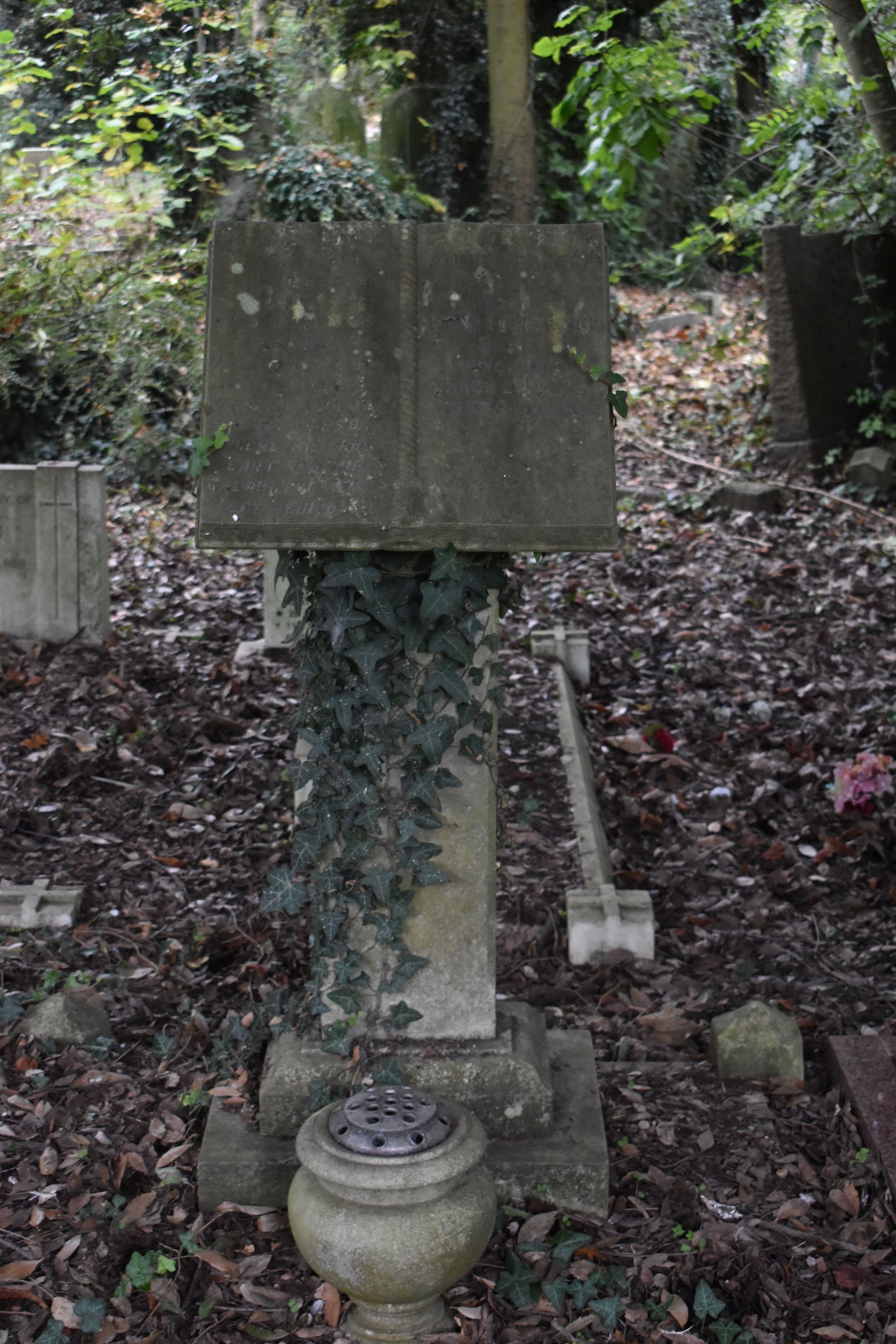
There was also a variant on the open book which was last month’s Symbol of the Month. Here it has been placed on a lectern style stand which made me think of the deceased standing up and telling all those around him of his or her good deeds or perhaps giving them a sermon.

The Open Book. ©Carole Tyrrell

On the elegant Devereux headstone dedicated to Thomas and his wife, Maria, I didn’t need to look at the epitaph to know that this was dedicated to a Royal Navy man. The two pillars have chains wrapped around them ending in two entwined anchors. There is also a Crown above them and the familiar shaking hands at the top.

The Deveraux headstone with naval symbols. ©Carole Tyrrell
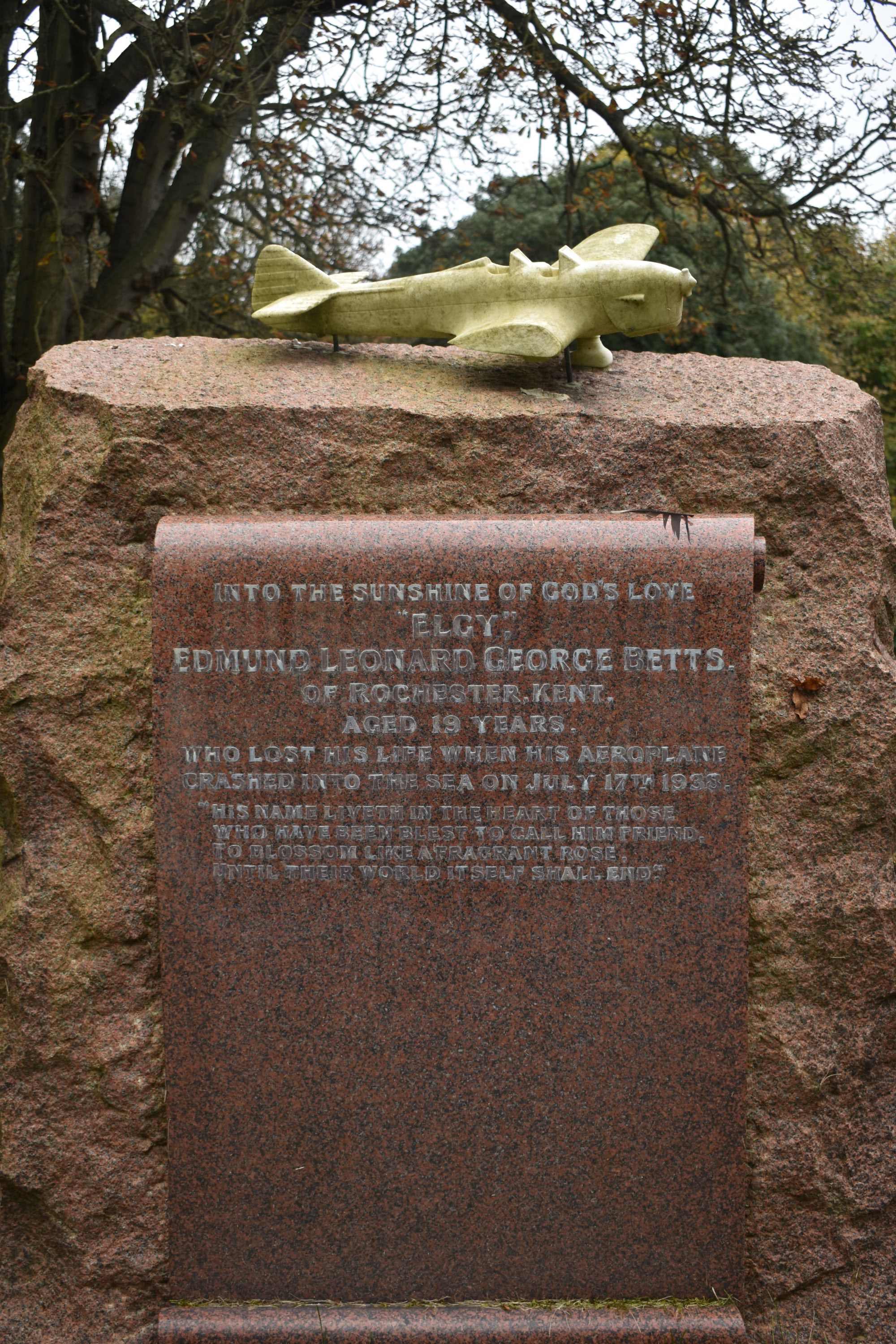
The model airplane on the Betts monument. ©Carole Tyrrell

I then came across my other surprise of the day when I found another Grade II listed monument. I was surprised that the small model airplane on top of it hadn’t been stolen although I saw very little vandalism in the cemetery. The monument is dedicated to Edward Leonard George ‘Elgy’ Betts who died aged 19 on 17 July 1938. I am indebted to Findagrave for the information about him:


….crashed into the sea with a 2 seater light aircraft after taking off from Ramsgate airport. He was flying a Miles Hawk Trainer airplane belonging to Thanet Aero Club and it crashed into the sea off Cliftonville, Margate, Kent. He and his passenger, 16 year old Marjorie Wall, were killed….. She is also buried in Margate Cemetery with her parents. The sculpture of the plane is and accurate representation of the plane in which he died, including the registration letters G-AEFU.’

Full view of the Betts monument. ©Carole Tyrrell

Ramsgate airport is long gone and has been replaced by an industrial. For a Sunday afternoon the cemetery was quite busy with visitors, mostly in cars, and a few like myself on foot. But I was aware that I didn’t have enough time on this visit to explore the entire cemetery so will do it in sections on future visits. I am already anticipating this although there is already plenty to write about!

©Text and photos Carole Tyrrell unless otherwise stated
References and further reading:

https://en.wikipedia.org/wiki/Victoria_Sanger_Freeman

https://en.wikipedia.org/wiki/Surfboat
https://courtauld.ac.uk/about-us/our-history/

https://en.wikipedia.org/wiki/Samuel_Courtauld_(art_collector)
https://en.wikipedia.org/wiki/John_Sanger
https://www.britannica.com/biography/John-Sanger
https://theisleofthanetnews.com/2017/12/15/a-service-has-marked-the-restoration-of-margates-surf-boat-memorial-and-the-loss-of-9-lives-in-the-tragedy/
https://margatelocalhistory.co.uk/Pictures/Pictures-Storms.html
https://daily.jstor.org/vintage-circus-photos-sanger-circus-collection/
https://www.findagrave.com/memorial/46295073/edmund_leonard_george-betts
https://historicengland.org.uk/listing/the-list/list-entry/1396419

https://victorianweb.org/history/education/ulondon/courtauld.html


A Margate Meander Part 1 – a visit to St John’s cemetery, Margate

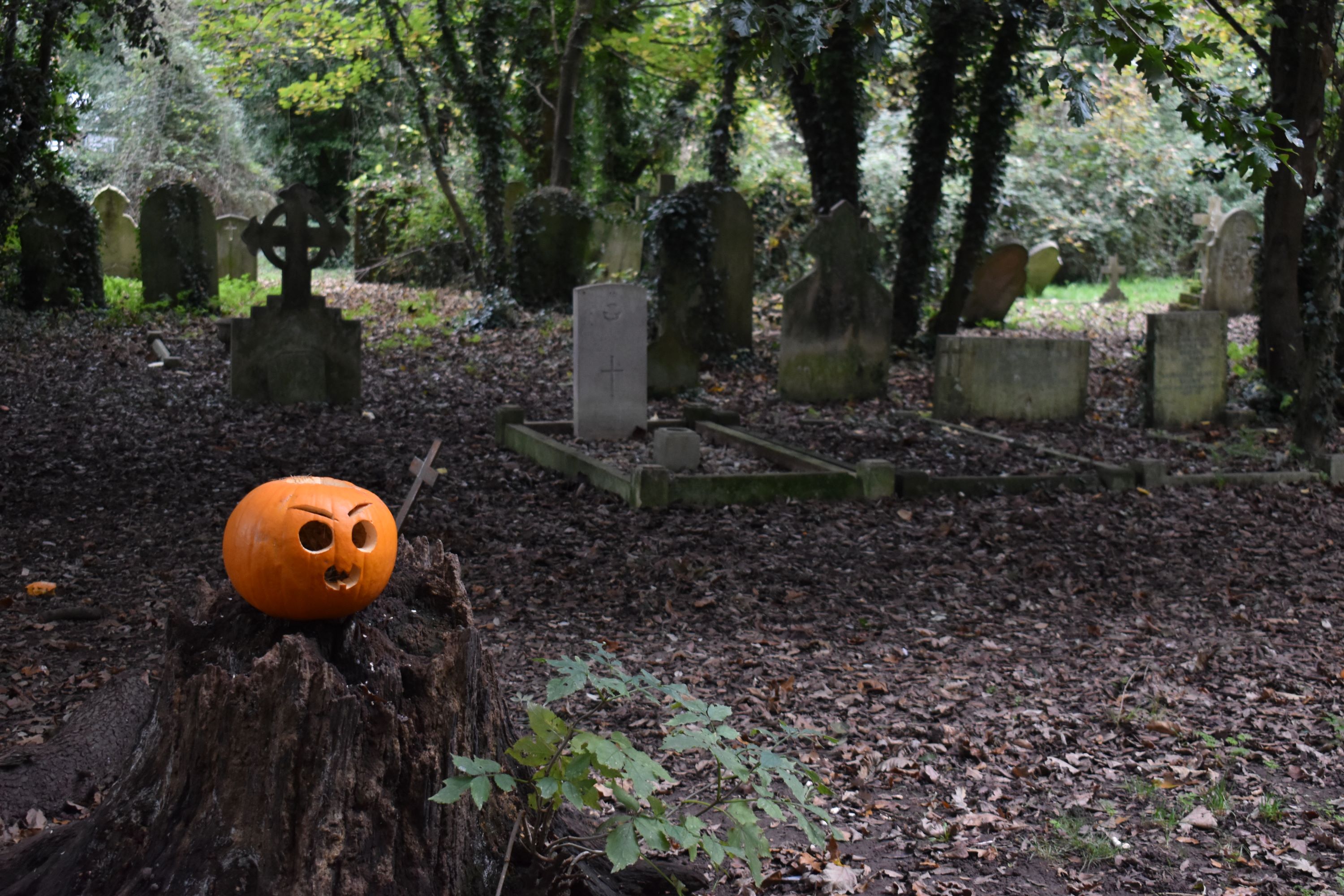
Pumpkins in Margate Cemetery. ©Carole Tyrrell

It was a dark, gloomy grey Sunday when I decided to explore the cemetery and walked up the impressive avenue of yew trees studded with bright red berries to the two cemetery chapels. But, by the entrance, I discovered a smaller building hidden behind bushes in the Gothic style of the chapels. I thought that it might have been a mortuary chapel but, on looking at the map, it may have been a more prosaic toilet block now locked up. The cemetery is officially known as St John’s cemetery and also houses a crematorium and associated gardens of rest.

Toilet or mortuary chapel? ©Carole Tyrrell

After the excitement of Halloween, people appeared to have donated their pumpkins to the local wildlife and I disturbed a squirrel scampering over one. However, although people may consider them to be a tasty treat. Forestry England doesn’t agree and suggests on their website that they be reused to make pumpkin soup or be added to compost.

Nothing prepared me for the size of the cemetery and, so far, I have been unable to discover its exact dimensions. I soon realised knew another visit or two would be necessary to explore it fully. The bright Autumn colours of the leaves were dulled by the greyness of the skies as I merrily kicked up leaves and looked for fungi. But all I could find were a couple of what I thought were parasol mushrooms lurking in the fallen leaves.

Presumed Parasol fungi in autumn leaves ©Carole Tyrrell

Autumn leaves. ©Carole Tyrrell

Placemarker of first burial ©Carole Tyrrell

The cemetery was opened in 1856 and a sign marks the place of the first burial which was a woman, Harriet Ross, on 1 November of that year. Most of the first section along the main avenue dates from the 19th century. As I neared the chapels, there was a large monument in a gap between the yew trees, set back from the path featuring an angel praying before a cross with, I assumed, a portrait of the deceased looking approvingly on. This was on the LeMair monument.

The LeMair monument ©Carole Tyrrell

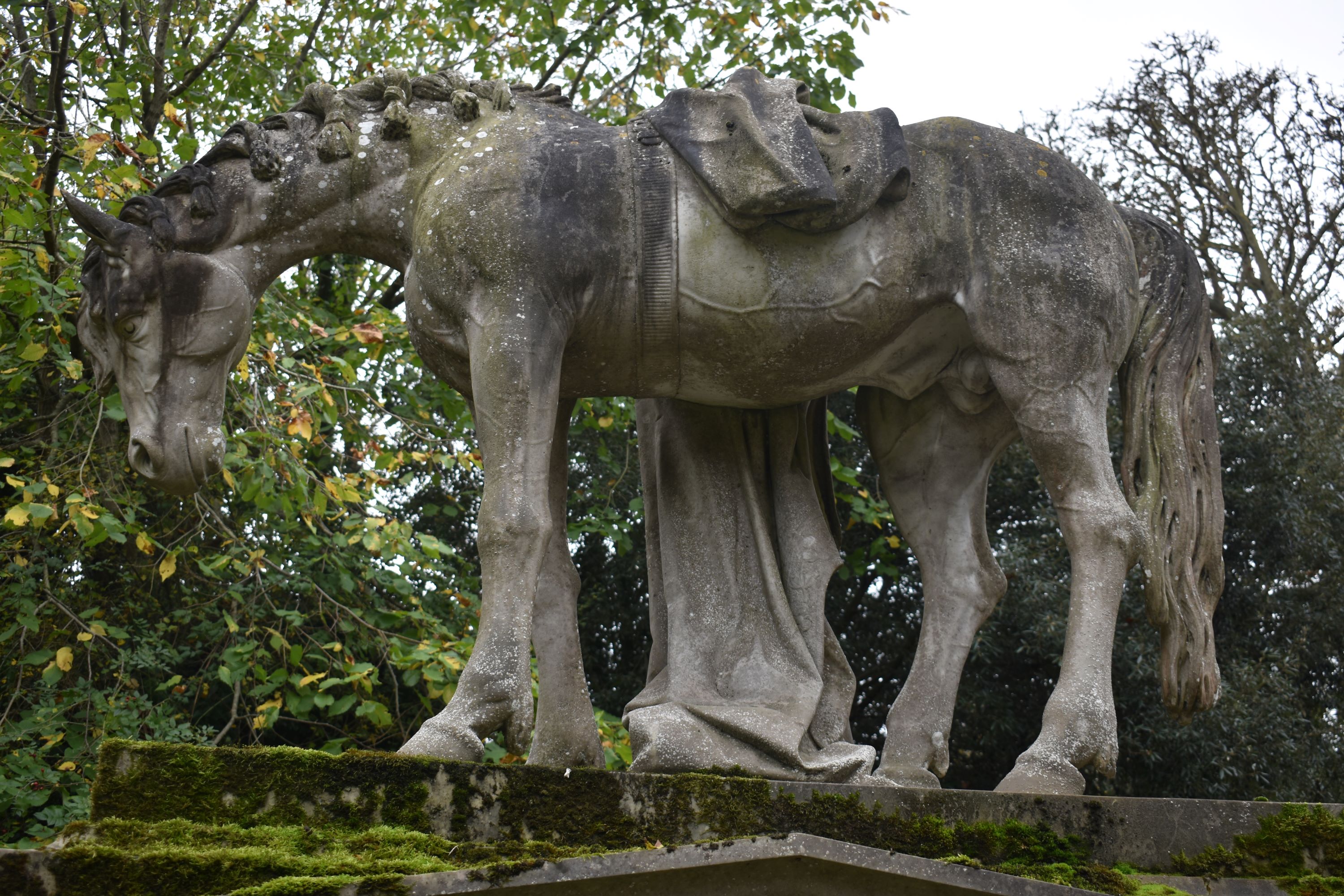
A sign announced ‘Sanger Path’, I wandered along it and came to my first surprise of the day. 4 angels forming a square, one at each corner, on the Reeve memorial. They are well sculpted with detail on the back as well. But then my eye was drawn, well I could hardly miss it, by the lifesize statue of a horse atop the Sanger monument. Beautifully sculpted, it is dedicated to a circus proprietor, John Sanger (1816-1899). He has a tenuous connection to one of my favourite Beatles songs. There is an upturned horseshoe above John Sanger’s epitaph for luck and his shows featured equestrian acts involving horses and ponies and a pantomime every Christmas. He originally went into partnership with his brother, George, but eventually they went their separate ways. George was brutally murdered in 1911 by an ex employee who then committed suicide. A photo album of George’s circus, its performers and animals came up for auction in 2017 and showed that a Victorian circus certainly was value for money! The Sanger circus appeared by royal command at Windsor Castle by Queen Victoria and they also took part in the annual extravaganzas at Crystal Palace.

The Sanger horse ©Carole Tyrrell

©Carole Tyrrell

One of George Sanger’s great granddaughters ashes are also interred in the family plot. This was Victoria Sanger Freeman (1895-1991) and she went under the sobriquet of ‘Queen of the Elephants’ with 4 of them under her charge. She was the last member of the Singer dynasty of circus performers. Beside John Sanger’s horse is another Sanger, Mary Rebecca, who married into the family. She is sandwiched between John and the Reeve ladies. She married William Sanger but I’m not sure at the moment where he stood within the Sanger hierarchy.

Mary Rebecca Sanger is on the left hand side with the Reeve ladies beside her. ©Carole Tyrrell

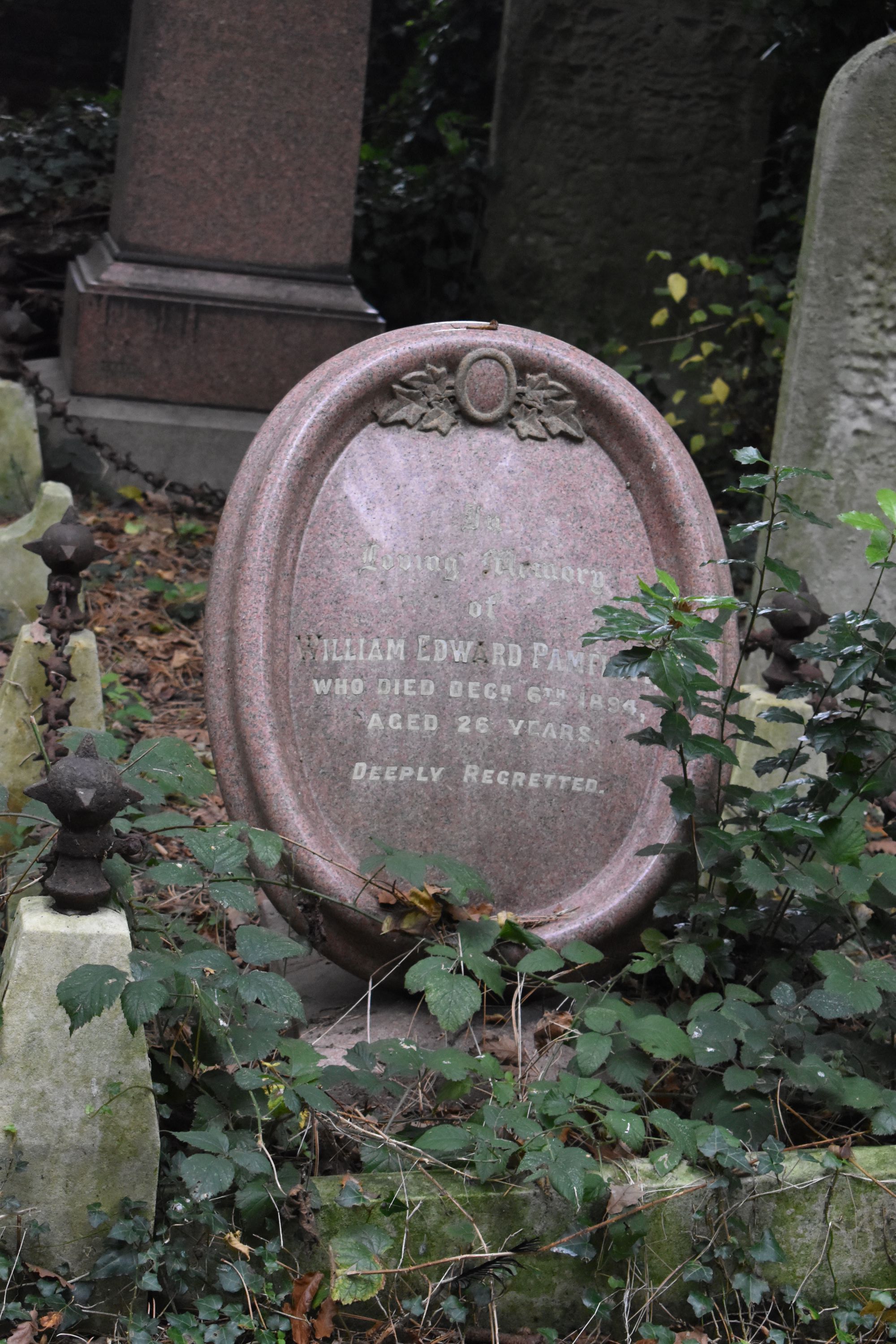
There was an interesting variation regarding epitaphs within the cemetery. On several graves, they were carved within an oval frame that was reminiscent of a portrait. I thought they looked very elegant.

©Carole Tyrrell
©Carole Tyrrell
©Carole Tyrrell

There was only one way to discover why another path was named ‘Surfboat Path’ and halfway down I came upon the Grade II listed memorial to the Surfboat Disaster. It commemorated the tragedy that killed 9 Margate boatman on 2 December 1887 and was restored by the Royal National Lifeboat Institute, 120 years later in 2017.
The town’s surfboat, ‘Friend to All Nations’, went out on that night in appalling weather to assist the sailing vessel, ‘Persian Empire’. Sadly, the surfboat capsized on the Nayland Rock in Margate with only 4 survivors. A surfboat is according to Wikipedia:
‘A surfboat (or surf boat) is an oar-driven boat designed to enter the ocean from the beach in heavy surf or severe waves. It is often used in lifesaving or rescue missions where the most expedient access to victims is directly from the beach’

A surfboat in action ©DonJeffFranky Shared under Wiki Commons
Full view of the Surfboat Disaster monument ©Carole Tyrrell

The 2017 memorial service was not only to acknowledge the tragic event but also as a reminder that the crews and elements still face the same challenges as emphasised in the sad loss of the crew of the Penless lifeboat in 1981. To say that it is impressive is an understatement as it is surrounded by more modest memorials. It’s in the shape of a huge rock with a lifesize mourning woman, her hands to her head, face turned away, in Victorian dress and carrying a laurel wreath, an evergreen that symbolises eternity. There is an epitaph to the disaster beside her and above, on the top of the rock, are a collection of nautical symbols: chains, anchors, ropes and a life belt with the surfboat’s name on it. I was stunned although I would have expected a few nautical graves due to Margate being on the coast.

A closer view of the mourning woman on the monument. ©Carole Tyrrell

Part 2 – A doomed air flight, an unusual angel and an art lover’s final resting place

©Text and photos Carole Tyrrell unless otherwise stated
References and further reading:

https://en.wikipedia.org/wiki/Victoria_Sanger_Freeman

https://en.wikipedia.org/wiki/Surfboat
https://courtauld.ac.uk/about-us/our-history/
https://en.wikipedia.org/wiki/Samuel_Courtauld_(art_collector)
https://www.britannica.com/biography/John-Sanger
https://en.wikipedia.org/wiki/John_Sanger
https://theisleofthanetnews.com/2017/12/15/a-service-has-marked-the-restoration-of-margates-surf-boat-memorial-and-the-loss-of-9-lives-in-the-tragedy/
https://margatelocalhistory.co.uk/Pictures/Pictures-Storms.html
https://theisleofthanetnews.com/2017/10/04/rare-collection-of-lord-george-sanger-circus-photos-sold-at-auction/
https://daily.jstor.org/vintage-circus-photos-sanger-circus-collection/
https://www.findagrave.com/memorial/46295073/edmund_leonard_george-betts

https://historicengland.org.uk/listing/the-list/list-entry/1396419

Champers and cockleshells – a return visit to St James, Cooling August 2024

The Cockleshell vestry, St James Cooling, Kent. © Carole Tyrrell

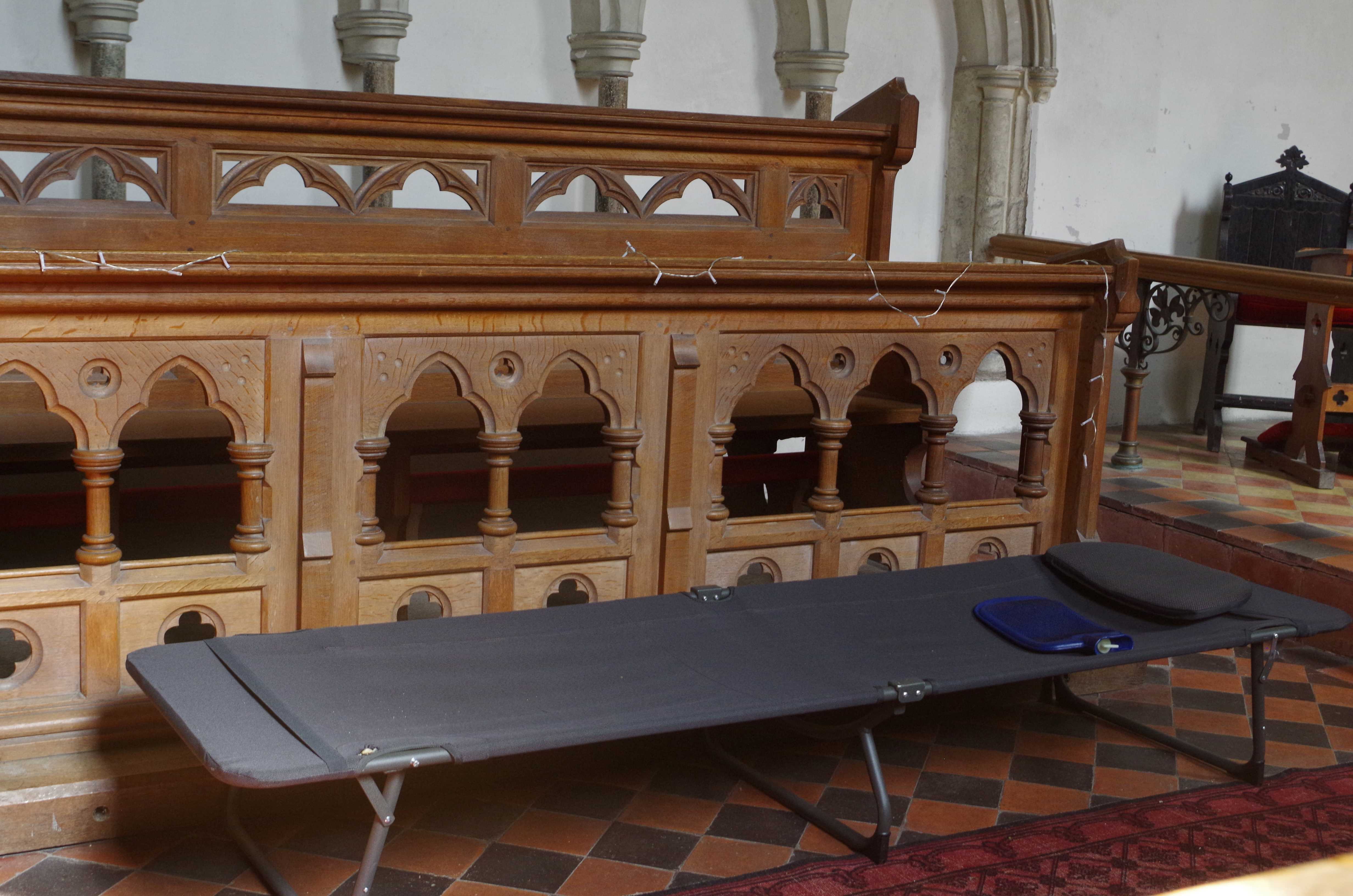
Maybe I just disturbed the nocturnal guests at St James’s and they felt compelled to hide but all appeared to be silent as I stepped inside the church.  But they were given away by 2 vacant camp beds in front of the altar and the small refreshment area by the pulpit. I thought that the hot water bottle on one of the camp beds was a nice touch as I stood there for a moment and wondered what it must have been like staying overnight in an empty church in such an isolated place. There are houses around the church but not that many. ‘Champing’, is a euphemism for overnight ‘camping’ in churches looked after by The Churches Conservation Trust. Don’t worry they’re not pitching tents! The church provided the campbed and the usual amenities. It’s really caught on in recent years and I have been tempted to try it myself.

A recently vacated Champers campbed. © Carole Tyrrell

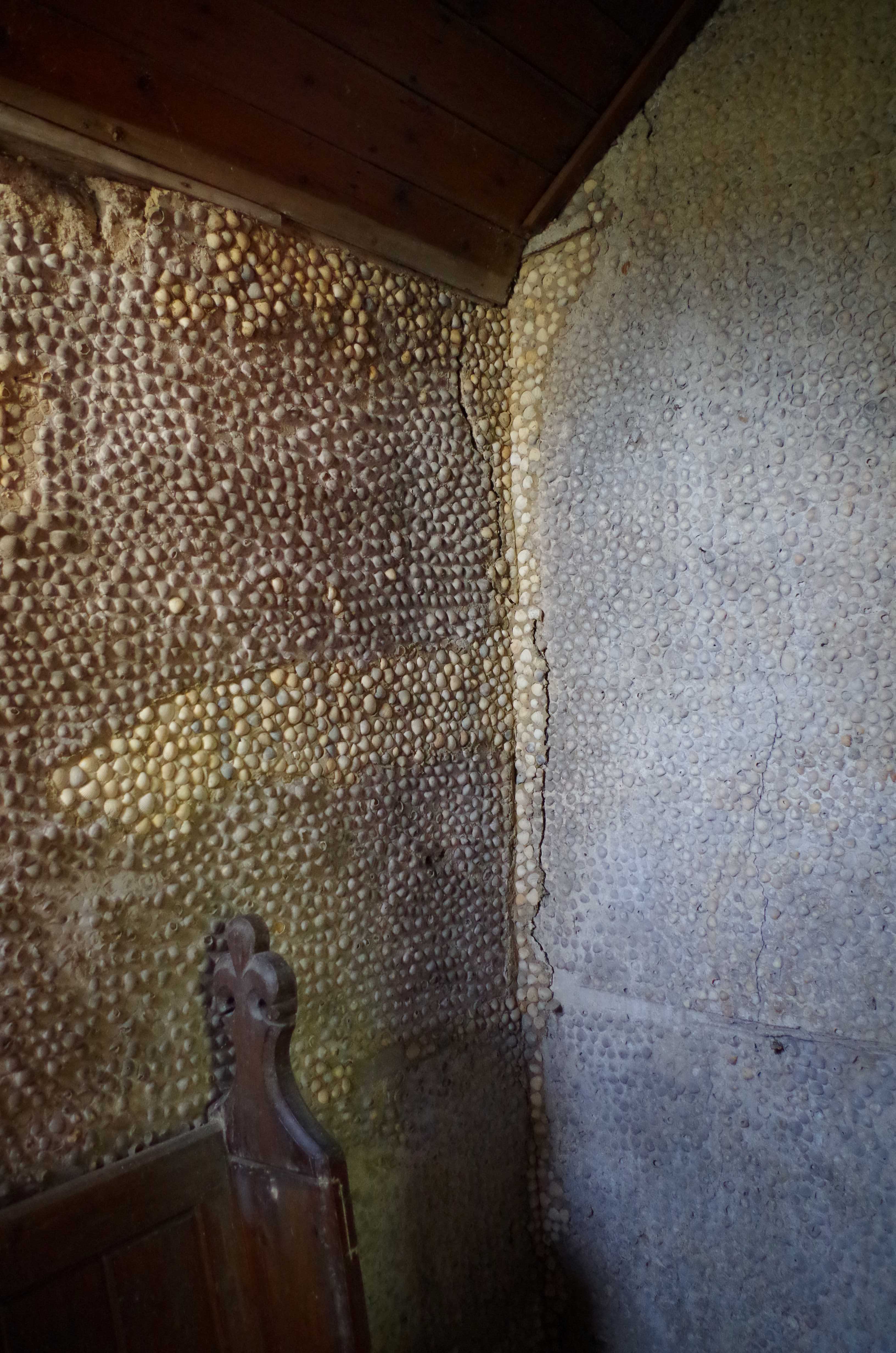
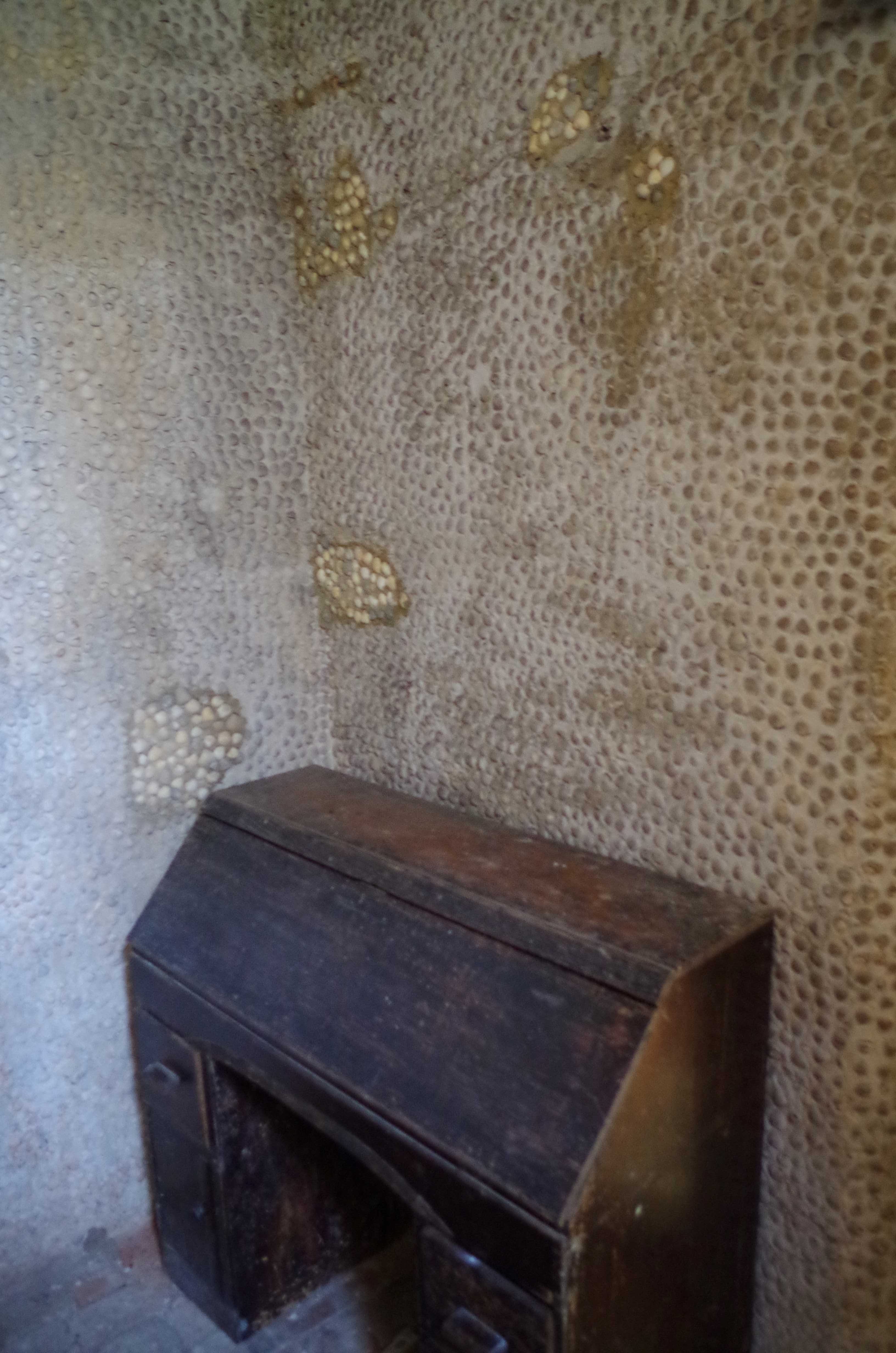
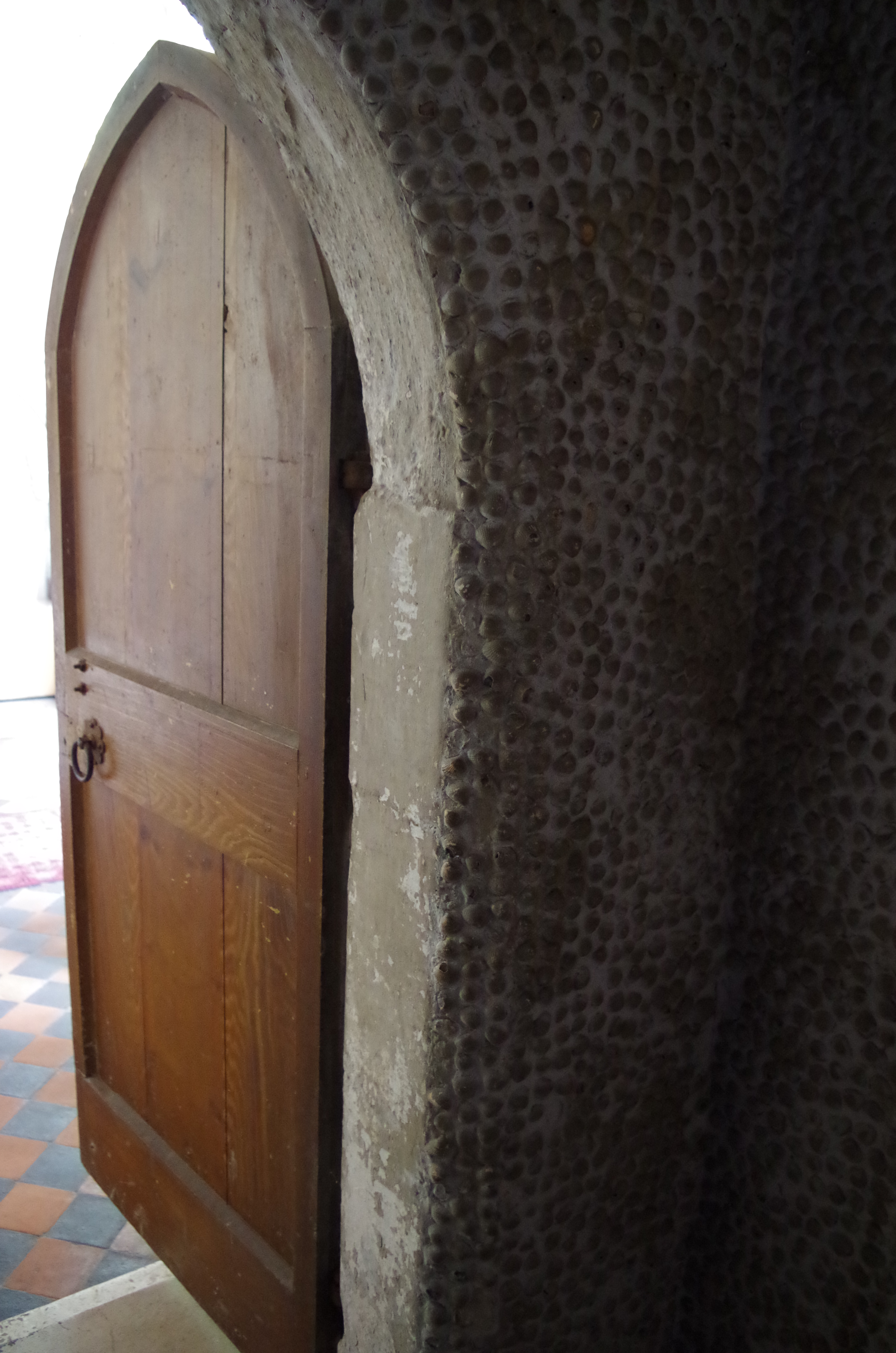
But I was at St James’s to see the cockleshell room which I’d missed on earlier visits. There wasn’t a sign advertising it but a quick look at the church map of the interior and I headed for the church organ. This time I found it! The door’s latch seemed to echo in the tranquillity as I pulled it open. The vestry is ‘compact and bijou’ as an estate agent would undoubtedly say – it is tiny and there was only a small open cobwebbed window, high up in the wall for ventilation. The room felt very warm and contained only a chair, possibly a recycled pew, and a bureau.

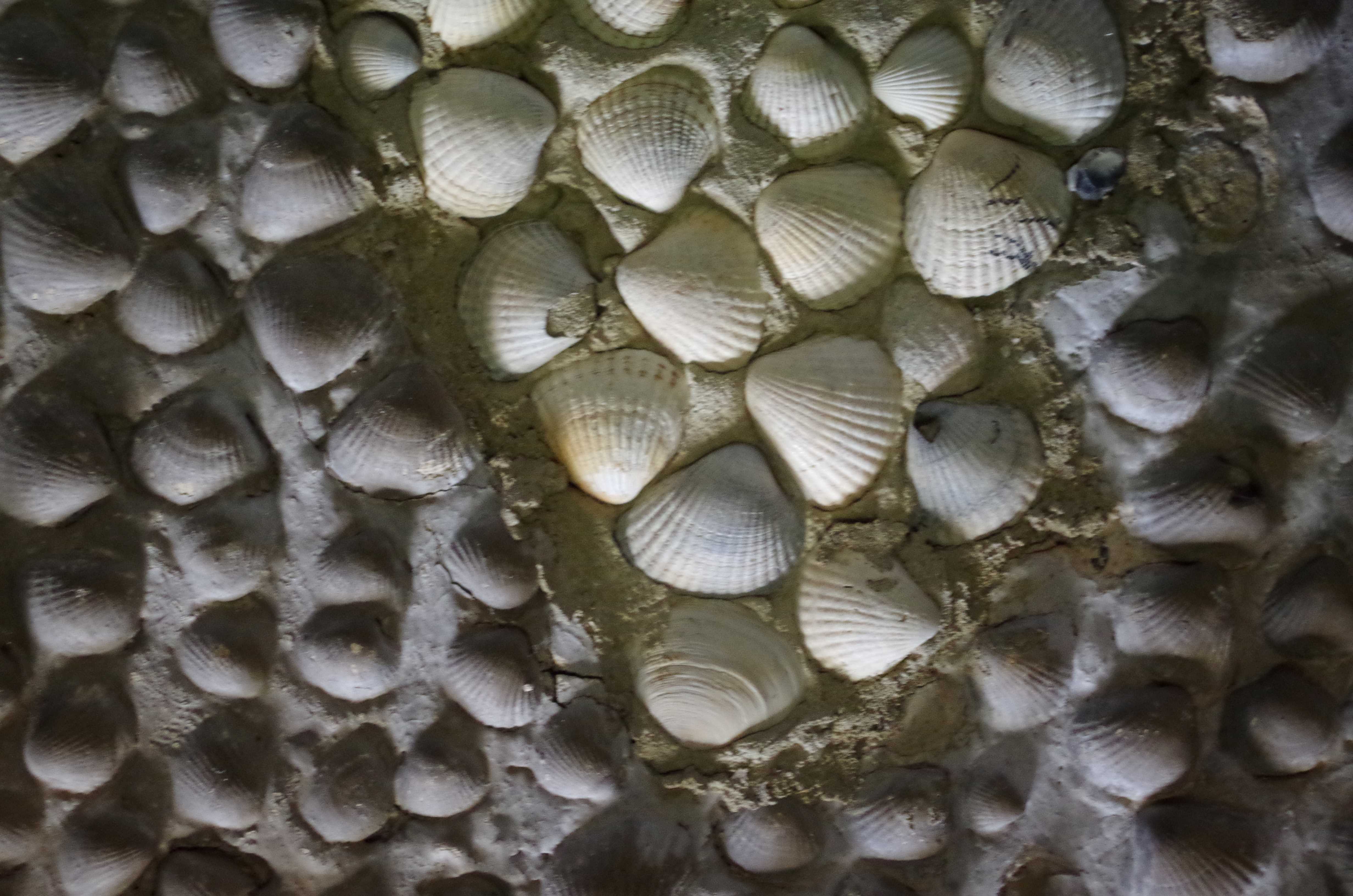
But it’s the thousands of cockleshells that made me catch my breath. They are floor to ceiling, arranged in patterns with newer ones being cemented in. I have to say that it did feel a little claustrophobic.  The vestry dates back to the 19th century and is considered to be either a reminder or perhaps homage to the shell being the symbol of the saint, St James. Shells would be worn in pilgrims’ hats as they went on the trail to his shrine in Santiago de Compostela. Above the door, and supposed to be, are initials and a date which may be 1833 or 1838.  The initials are I.M.  and I.C. CWARDENS which could stand for John Murton and John Comport churchwardens. I was looking in the wrong place so didn’t spot it but perhaps on another visit…. you do need a few minutes just to take it all in and try not to touch them although it is a very tactile surface.

View of the vestry. © Carole Tyrrell

Close up view of cockleshells on wall showing newer ones cemented in. © Carole Tyrrell

You can almost imagine what this room must have looked like at one time with newer shells. © Carole Tyrrell

View of bureau and walls. © Carole Tyrrell

View of church from vestry. © Carole Tyrrell

According to the Churches Conservation Trust, it’s considered to be

‘unique in an English church’.

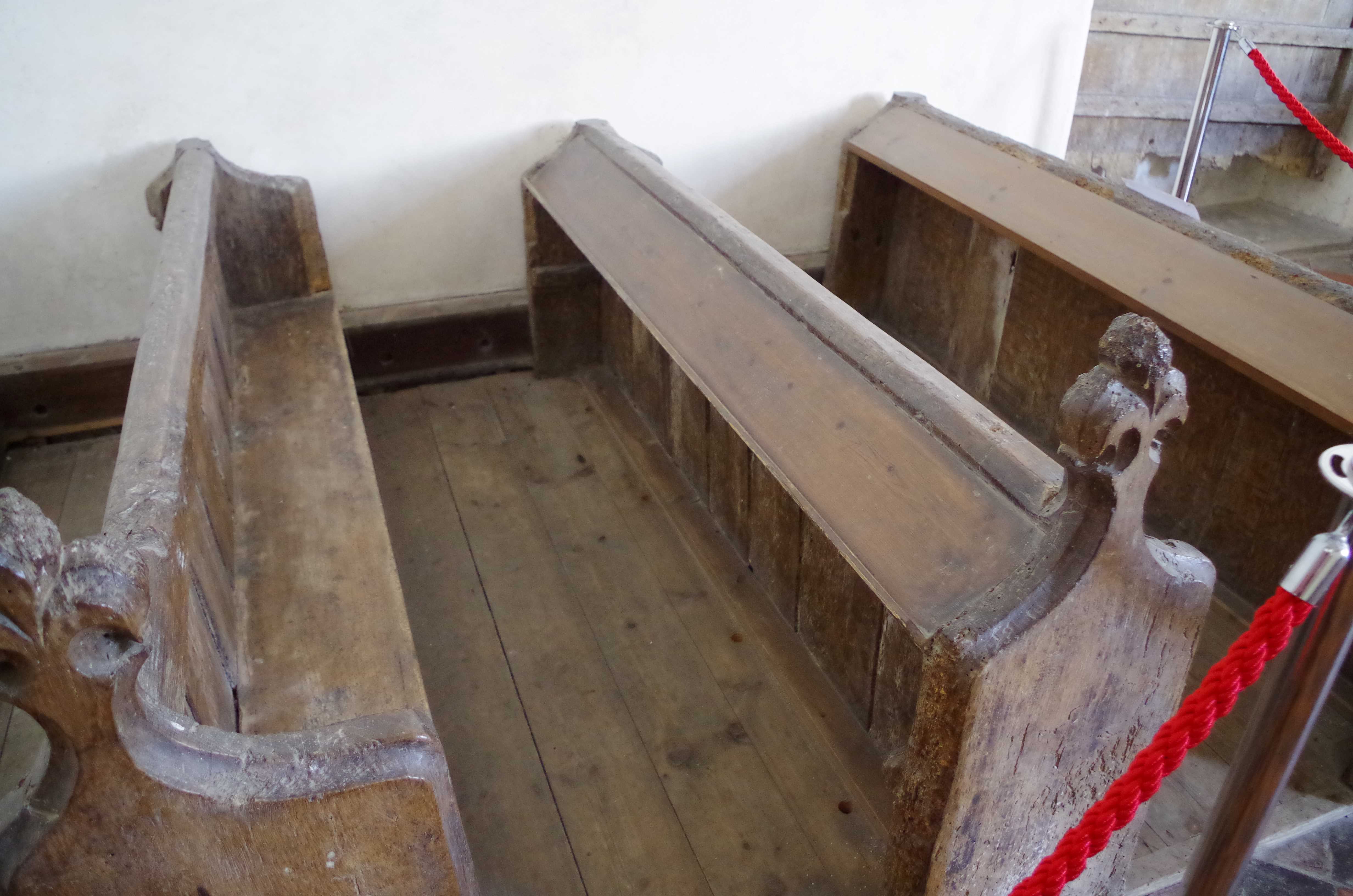
As I explored the nave after leaving the little room I saw the medieval benches that date back to the 14th century. They’ve evaded the iconoclasts of the 1600s and Victorian restoration but are now too fragile to be touched, much less sat on, and are now roped off.

The medieval pews – not considered comfortable by the Victorians. © Carole Tyrrell

The Murton memorial. © Carole Tyrrell

The name Murton appeared again on an elegant and poignant wall memorial to a sailor, John William, eldest son of John Murton of nearby Cooling Castle.  He died young, aged 28, after falling overboard from the Monarch off Rio de Janeiro during a voyage to Calcutta. The inscription on the marble tablet quotes from the ship’s captain’s log:

‘And so perished one of the finest and best hearted seamen who ever trod a ship’s deck. I have lost a trustworthy officer and valued friend. Peace be to his remains.’  

View of churchyard from inside church. © Carole Tyrrell

After that I went outside to see ‘Pip’s Graves’ and the table tomb on which Charles Dickens is reputed to have eaten his lunch. Across the marsh I could see docked ships and butterflies flitted about on the buddleia at one end of the churchyard.  I found a clergyman’s grave denoted by a chalice and more childrens graves. One was dedicated to a six year old. I also pursued a Common Darter dragonfly until it posed obligingly and checked to see if the little grinning demon still kept watch over the outside loo.  He did. I looked up as I left the churchyard and saw, glinting on the weathervane above the tower the representation of another cockleshell.

Docked ships over the marshes from the churchyard. © Carole Tyrrell

Common Darter. © Carole Tyrrell

The chalice symbol indicates the grave of a priest or clergyman. © Carole Tyrrell

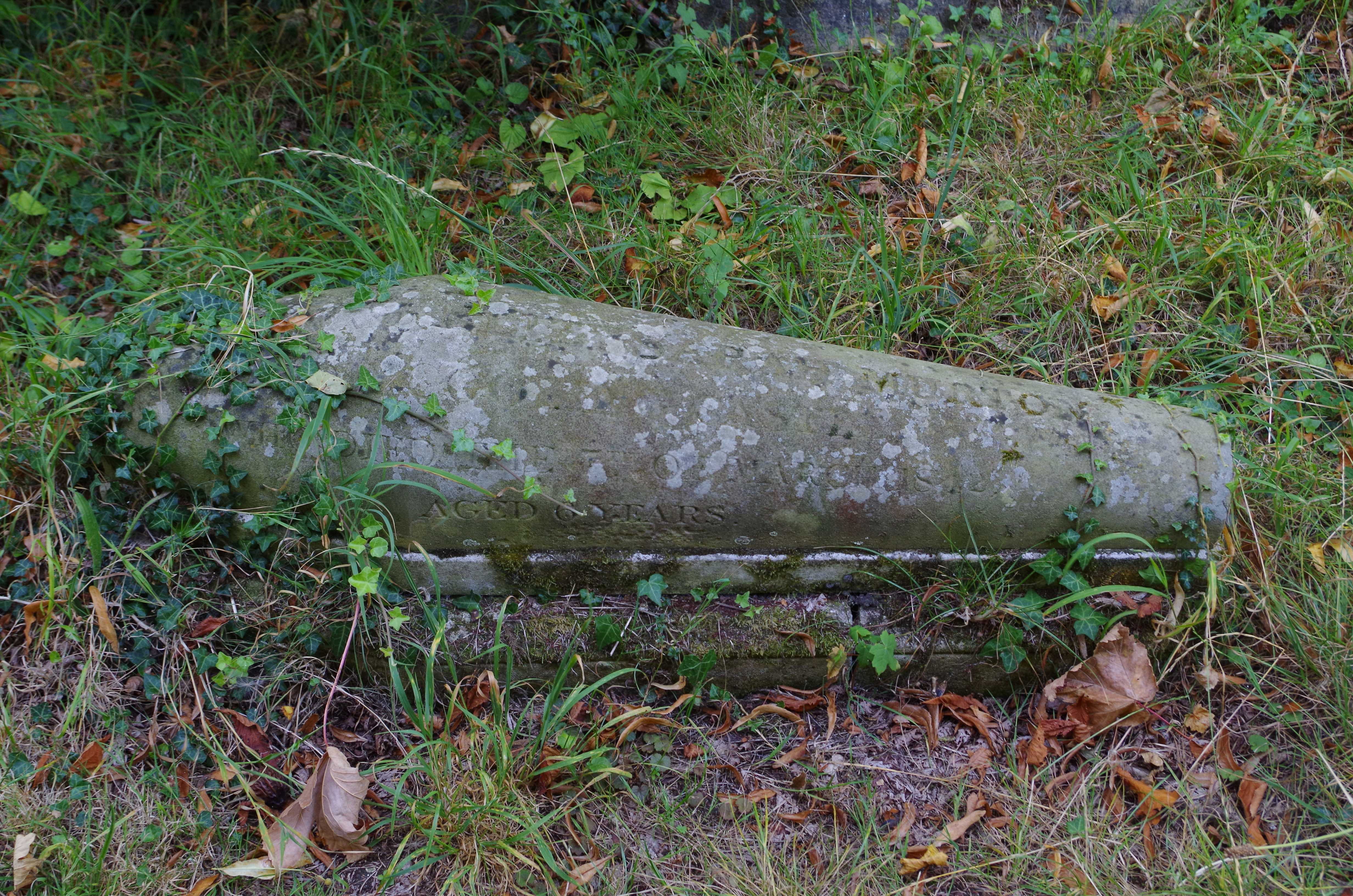
A small grave dedicated to a 6 year old in another part of the churchyard. © Carole Tyrrell

Shell symbol on the weathervane. © Carole Tyrrell

View of St James from outside the churchyard. © Carole Tyrrell

The 18th historian, Edward Hasted, described Cooling as

‘an unfrequented place, the roads of which are deep and miry, and it is as unhealthy as it is unpleasant.’ 

It certainly is unfrequented as I was alone as I walked along Cooling Road to and from the church with only passing cars for company. The remains of the 14th century Cooling Castle, which is in private hands, are still impressive. Dark blue sloe berries were still on several bushes and windfalls clustered beneath apple trees in a nearby orchard.  I retraced my steps back to Cliffe for a wander round St Helen’s churchyard and then a very welcome cuppa in their café. 

But how I envied the ‘champers’ enjoying a good night’s kip(I hope) in that little corner of Kent.

© Text and photos Carole Tyrrell unless otherwise stated.

References and further reading

St James’ Church, Cooling, Kent | The Churches Conservation Trust (visitchurches.org.uk)

James the Great – Wikipedia

St. James | Biography, Apostle, the Greater, Death, Feast Day, & Facts | Britannica

The Tradescant tomb Part 2 -its enigmatic carvings.

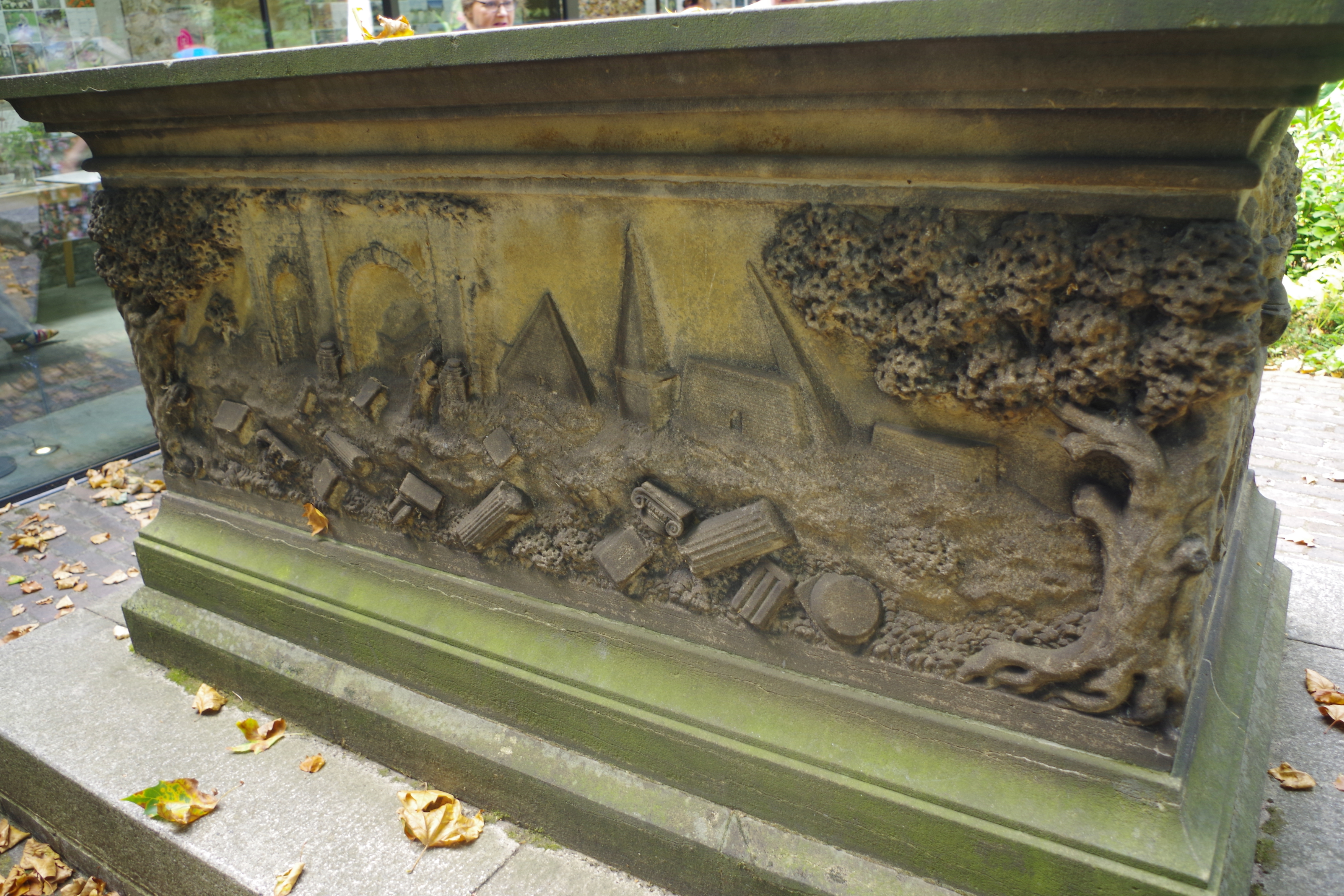
The north side of the tomb showing ruined buildings and discarded architectural features © Carole Tyrrell

It was the drawings made by Wenceslaus Hollar for Samuel Pepys (see above) that were used as guidance for the recarving of the reliefs in 1773 and 1853. These allow the viewer to see what the tomb originally looked like and to compare them with the changes that successive sculptors have made. For example, G P White in 1853 seemed to have his own interpretation of the hydra.

But, as you might imagine with pollution and the London atmosphere, the tomb being outside and at the mercy of the elements, the carvings have deteriorated and changed over the centuries. As the gardentrust.blog says:

‘The casual viewer is not seeing the original carvings. As it was outside in what would have originally been the churchyard, the elements soon did their work. The tomb was so badly damaged by 1773 that a public subscription was raised for its restoration. Lambeth Archives still have the ledger that recorded the donations.

But in 1853, 70 years later, the public funded a further restoration. It was the sculptor G P White who undertook this restoration.’

The 1853 restoration cost £110.  The Victorians were enthusiastic restorers, perhaps too enthusiastic in some ways.

The East end of the tomb. © Carole Tyrrell

At one end of the tomb is a coat of arms which comprises of three fleur de lys on a diagonal bar and with a lion holding up its paw. A helmet with a closed visor is meant to be a sign of gentility and is topped with the crest of another fleur de lys and 2 wings.  However, the Tradescants had no official grant from the College of Arms and may just have adopted it as a ‘rising’ family.  It was a standard item on a monument and is the most conventional symbol.

The west face of the sarcophagus. © Carole Tyrrell

At the other end, the west end, is a fearsome looking hydra which is a mythical ancient Greek creature associated with the 10 Labours of Hercules. It lived in the murky waters of Lake Lerna which was reputed to be the entrance to the underworld. Each time one of the hydra’s heads were cut off , two more would grow in its place so it was a deadly enemy. The hydra in the Pepys drawings is almost friendly and certainly non threatening whereas the 1853 version, carved in high relief, is much more dramatic with its bat like wings, female breasts., seven bird like heads and a long forked reptilian tail. 

There were other changes as well and the gardenstrust.blog commented on the skull in the lower part of the panel.

‘It lacks the lower jaw and is presumably the same one that appears in the younger John’s portrait where it is covered with skull moss, much sought after as a powerful medicine.’

This portrait appears in Part 1. The significance of the skull may be a reminder of vanitas paintings which flourished during the 16th and 17th centuries and came from the Netherlands. They often featured a skull and invited the viewer to ponder on the fleeting quality of life.

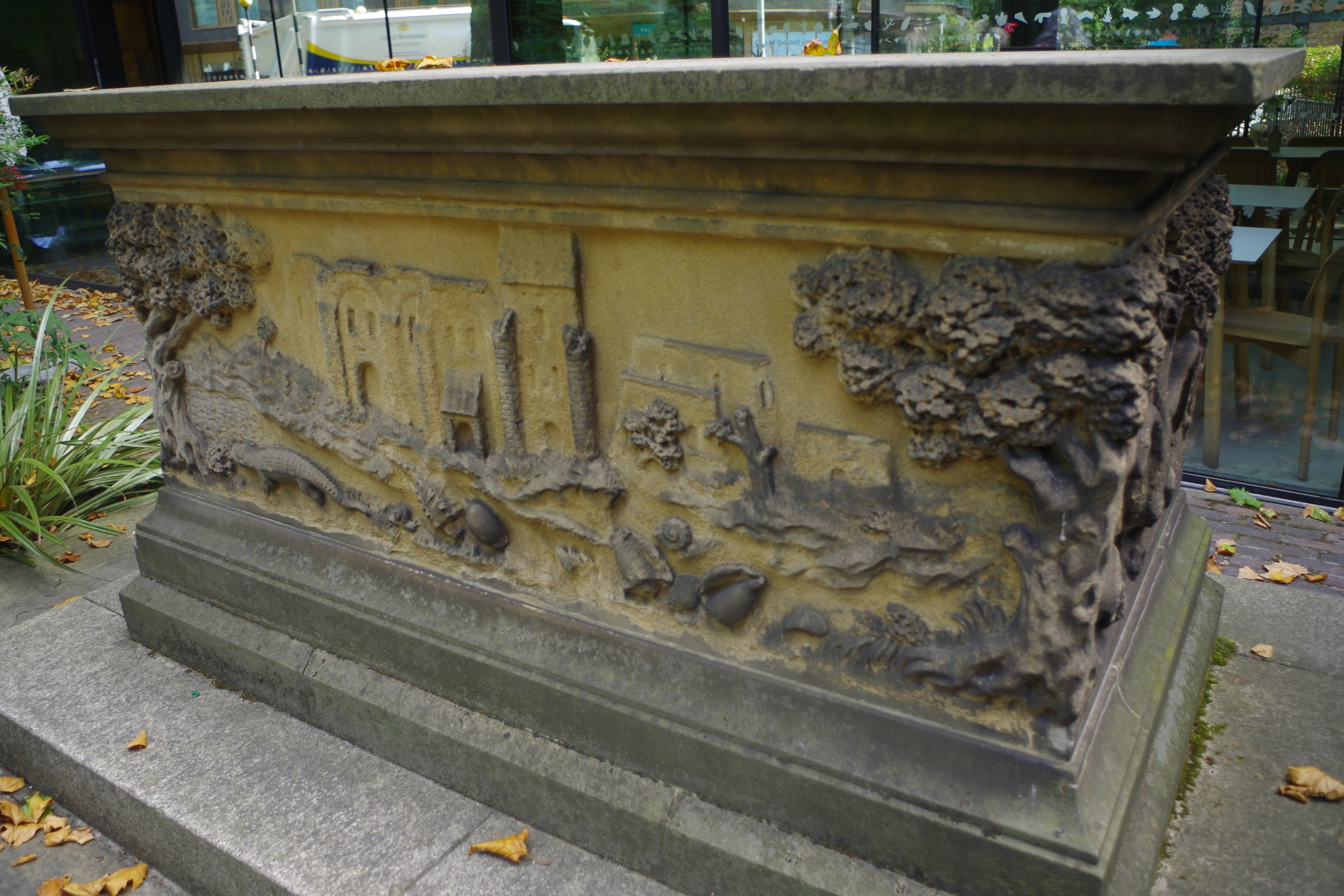
The north side of the tomb. © Carole Tyrrell

The south side of the tomb. © Carole Tyrrell

The longer north and south sides depict:

‘ruined buildings in the background and architectural detritus in the foreground together with a crocodile and shells and fossils. The corners are formed by gnarled and stunted trees with heavy foliage.’ Cabinet.ox.ac.uk

The depiction of the ruins have been debated as the restorations may have changed their appearance. They have been described as Egyptian or Greek with obelisks and a pyramid amongst others. There are also fragments of Corinthian capitals. The shells may refer to specimens that were in the Tradescant collection and the large reptile in the lower part of the north panel could refer to the ‘Crocodile from Aegypt’ that was listed in the exhibits of the ‘Ark.’ It was also seen as a symbol of the early modern culture of collecting as seen in the oldest depiction of a ‘cabinet of curiosities’, the museum of Ferrente Imperato.

Detail showing one of the trees that appear on each of the tomb’s corners.© Carole Tyrrell

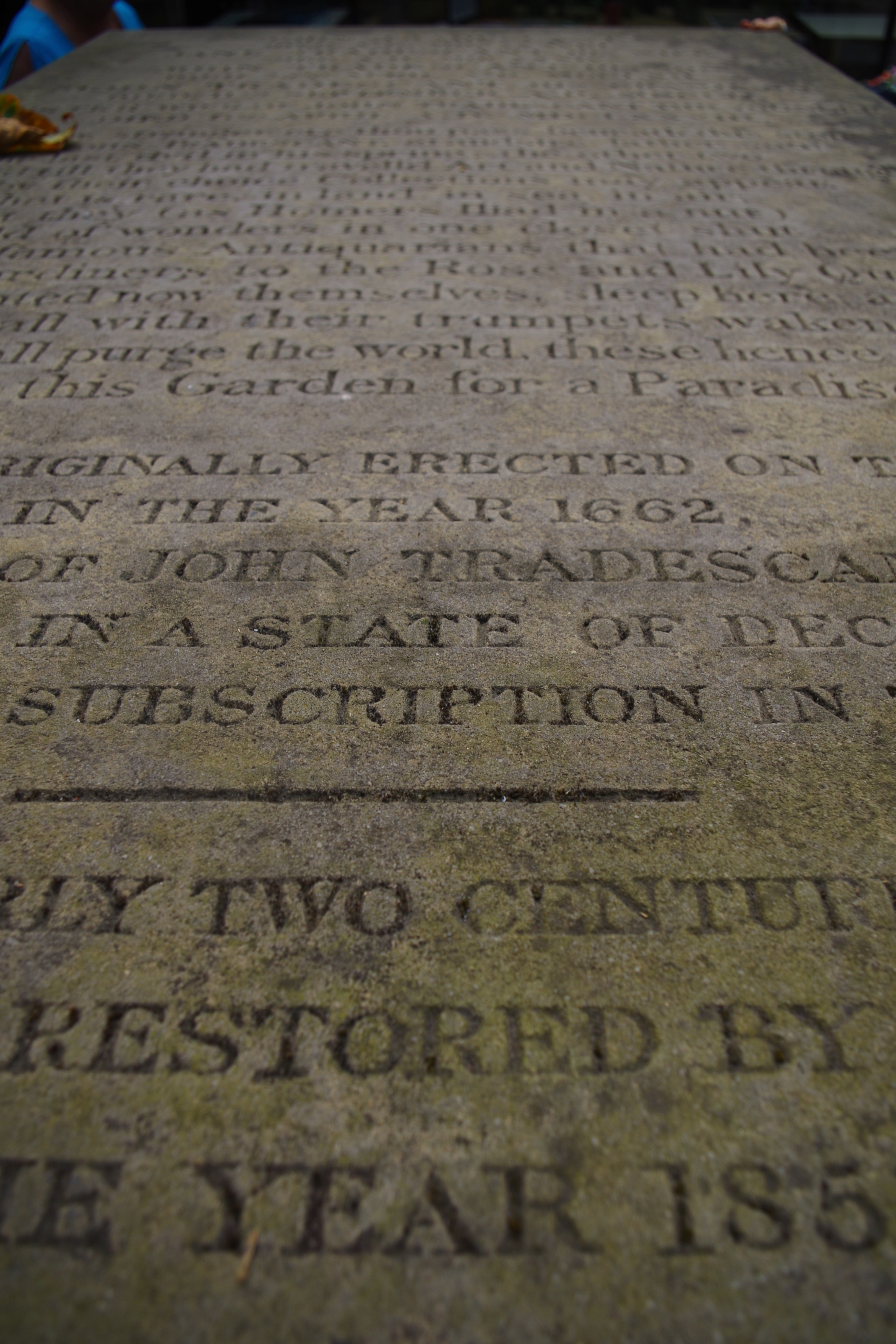
In order to link all the sides of the tomb together, the mason carved a set of large trees in deep relief. They hold up the ledger with its epitaph:

 ‘Know, stranger, ere thou pass, beneath this stone
Lie John Tradescant, grandsire, father, son
The last dy’d in his spring, the other two,
Liv’d till they had travelled Art and Nature through,
As by their choice Collections may appear,
Of what is rare in land, in sea, in air,
Whilst they (as Homer’s Iliad in a nut)
A world of wonders in one closet shut,
These famous Antiquarians that had been
Both Gardeners to the Rose and Lily Queen,*
Transplanted now themselves, sleep here & when
Angels shall with their trumpets waken men,
And fire shall purge the world, these three shall rise
And change this Garden then for Paradise.’

It has been suggested that the line ‘A world of wonders in one closet shut’ may refer to the Ark.

A section of the epitaph on the Tradescant tomb. ©Carole Tyrrell

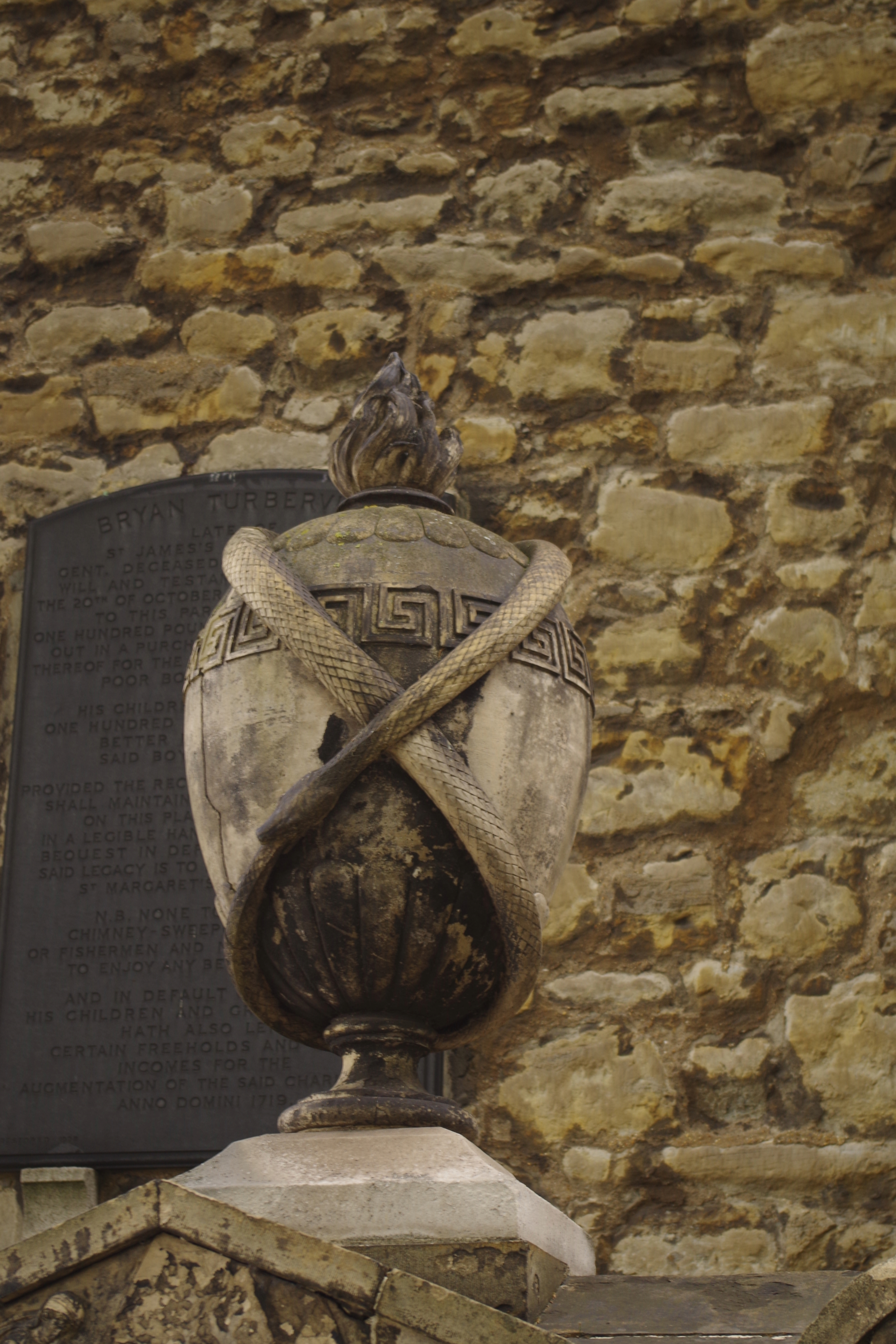
Despite the changes to the carvings, the Tradescant tomb is a magnificent survivor with five members of the family being commemorated. The enigmatic carvings, the epitaph and one woman’s determination have all added to the legendary Tradescant reputation.  It’s a real sight to see and there are other interesting memorials in the ex-churchyard as well. For example, there is one dedicated to Admiral Bligh of Mutiny on the Bounty fame and there is a wonderful ouroboros on another, the Sealy family monument.

The elegant ouroboros on the Sealy monument topped by an eternal flame. © Carole Tyrrell

The Sealy family had connections with Eleanor Coade, the inventor of Coade or artificial stone and the monument is made from it.

Inside the museum there are several memorials on its walls and some fine skulls. Well worth a visit if you’re in the area. 

©Text and photos Carole Tyrrell unless otherwise stated.

The Tradescant family tomb | cabinet (ox.ac.uk)

The Tradescants and their Tomb | The Gardens Trust( a lot more information on the Tradescants and the tomb)

The Tradescants – Garden Museum

The spectacular Tradescant tomb: “a world of wonders in one closet shut” – Flickering Lamps

Garden Museum – celebrating British gardens and gardening

John Tradescant the Elder – Wikipedia

John Tradescant the Younger – Wikipedia

The Garden Museum: Trandescant Tomb | Londonist

The spectacular Tradescant tomb: “a world of wonders in one closet shut” – Flickering Lamps

Madam, have you paid the correct fare for that coffin Part 2 – exploring Brookwood Cemetery and the Necropolis Railway

Vintage photo showing Necropolis Railway in action, Brookwood Museum/
©Carole Tyrrell

If I wanted to be flippant I could have subtitled this post ‘The Tracks of my tears’ as 1, and a group of members of The Dracula Society, enjoyed a guided tour along the fragments of the Necropolis Railway in deepest Surrey.   Our guide, John Clarke, had given a fascinating talk on the Railway after discovering the abandoned North station buildings at Brookwood in the 1970’s.

The Necropolis Railway was commonly known as The Stiffs Express and ran from a dedicated platform at Waterloo station to Brookwood station or Necropolis Junction as it was originally known.  It was created by Victorian enterprise and entrepreneurship in 1854 as its owners eagerly anticipated a lucrative trade from transporting up to 10,000 bodies a year to the new Brookwood Cemetery.   This was approximately 23 miles out of London and was envisaged as relieving the pressure on overcrowded city churchyards.  The Railway had two stations; North and South. One was for Anglicans and the other was for Non-Conformists which was basically anyone who wasn’t an Anglican.

The Victorian class system was rigidly enforced on the Railway even in death. Charles Blomfield, the Bishop of London, declared that it was completely unacceptable for the families of people from different social classes, living or dead, to be forced to share the same train on the journey to the cemetery. After all, no-one wanted people who had led ‘decent and wholesome’ lives to be placed in the hearse car beside those who had led ‘less moral’ lives.  You might think that once someone’s dead what does it matter…..

The Railway wasn’t cheap. Here are the fares with their modern equivalent:

1st  class  6s       = £92

2nd class  3s 6d  = £23

3rd class  2s 6d   = £12

Coffin tickets were priced for 1st/2nd/3rd     class according to the type of funeral booked.

A train left Waterloo at 11.40am and there was a return one to Waterloo at 3.30pm so mourners could be out in the countryside most of the day. This meant that, unless the funeral was on a Sunday, a working person would have to lose a day’s pay.  However refreshments were available at both stations and consisted of home cooked ham sandwiches and fairy cakes. At the talk, Mr Clarke revealed that there had been a sign over the counter announcing ‘Spirits served here.’  There were only two accidents during its 90 years of existence and neither involved fatalities.

But the anticipated trade didn’t take off.  Instead of 10,000 burials per year it was at best roughly 2000 and by the 1930’s the train journeys had tailed off to 1 or 2 a week.  It was the Luftwaffe that finally killed off the Necropolis Railway and it closed forever on 11 May 1941.  After the end of Second World War its surviving parts were sold off as office space.

But we still found its traces around Waterloo. On Westminster Bridge Road the magnificent booking hall still stands with most of the original features intact although the London Necropolis Railway sign has long since gone.  The booking hall dates from 1902 and used to be the HQ of the British Haemophilia Society but is now the offices of a Maritime broker.

Then we walked up Lower Marsh and into Hercules Street to see what remained of one of the 3rd class platforms.  These were meant for working people and, as we looked along the underneath of the platform from ground level, someone in our group pointed out the metal posts on the pavement beneath. These were inscribed with the word ‘LIFE’ whereas the platform up above had been concerned with Death. A hotel is now in place of where the cortege dramatically swept through Waterloo station as they entered.

The Railway was revived in 2017 by the London Dungeon as a Halloween attraction called The Death Express.

Then onto Brookwood Cemetery which I had last visited 20 years ago.  I was looking forward to seeing if it had changed….

Part 2 Brookwood Cemetery, its link with the Omen and a last surprise.

©Text and photos Carole Tyrrell unless otherwise stated.

References:

https://en.wikipedia.org/wiki/London_Necropolis_railway_station

https://en.wikipedia.org/wiki/London_Necropolis_Railway

http://www.bbc.com/autos/story/20161018-the-passenger-train-that-carried-the-dead

https://www.london-walking-tours.co.uk/secret-london/london-necropolis-railway.htm

https://www.john-clarke.co.uk/brookwoodnecropolis.html

https://www.cwgc.org/find/find-cemeteries-and-memorials/44400/brookwood-military-cemetery

https://en.wikipedia.org/wiki/Brookwood_Cemetery