The Comfort of Strangers – impromptu shrines and the passing of icons

This was originally going to be a short piece on roadside shrines.  These are the impromptu response to remember road traffic victims. Grieving relatives and friends place flowers and messages so that casual passers-by would at least know the name of the deceased and that they were missed.  The shrines were also originally intended to remind drivers to slow down and to be more careful with their driving.  However, as a blog from the New York Times said, they can also be a distraction and  may actually cause accidents rather than prevent them.

But a piece in my local freesheet in 2012 made me think.  The Editor commented that roadside shrines had become ‘a tide of detritus left behind in the dead’s memory.’ He went onto say that ‘in times past different cultures had felt it essential to send the dead on their way with appropriate objects, if you were lucky they even killed a goat.’ He continued by saying  that he had seen bottles of Smirnoff Ice, four cans of Stella, a packet of cigarettes, a West Ham shirt, a picture of a dead cat, and a meat pie and called them  ‘ evidence of ‘a modern obsession with proving food for the dead.’  He questioned the object of leaving items that will attract thieves and vandals.

I have seen several roadside shrines and found them very touching but it’s sad when the flowers wilt, they become sodden by rain and then fade completely.   The extra items that the Editor complained about may be the only way that the grief stricken can make the impersonal more personal and make sense of  an inexplicable and sudden death. The shrines almost become a way of sharing the deceased with the world in that the casual observer knows that they liked a certain football team.  They become a person again and not just a statistic.

But what finally prompted me to write this piece was the death of the rock icon, David Bowie on 10 January 2016 and the unofficial shrines that have been created in his memory and the items that  fans left at them.   I found out the news via the internet by logging onto Facebook and there it was.  I was stunned and felt as if I’d been punched hard.  After an hour of reading tributes   I really felt that I wanted to do something.  When Princess Diana died, I had been one of the many who had laid flowers at Kensington Palace in her memory.  It was a public way of displaying sympathy for a woman who I genuinely felt had had a hard time.  As Peter Watts says in his blog article on London Shrines:

‘What fascinated me also about all this was that it had a seditious, outlaw aspect. There was a lot of noise in the press about whether the Queen was treating Diana’s death with sufficient respect, and this huge impromptu shrine – by the people, against the establishment – was given the atmosphere of an almost revolutionary act. It was a fascinating combination – the privacy of remembrance, carried out on a larger scale with political implications.’

It was a once in a lifetime event.

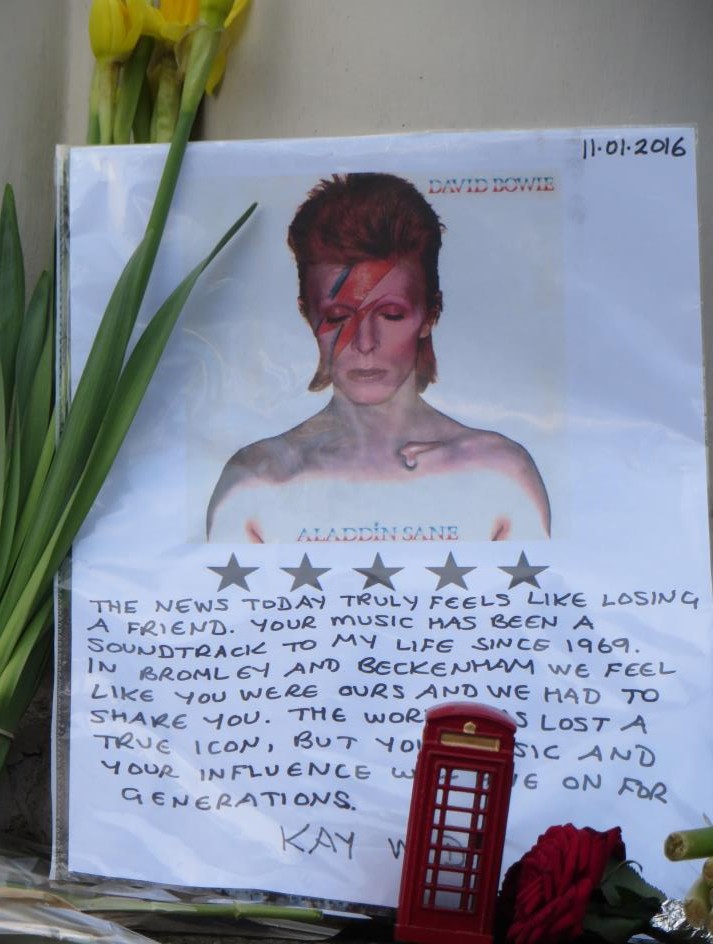
According to social media and news sites people were already laying flowers at a mural of David in Brixton.  I went out to buy flowers.  However, Bowie had been a local lad to me in Beckenham in the early ‘70’s and the suburb also wanted to remember hm.  At what had been the Three Tuns, now a Zizzi’s,  pub in the High Street, where a wall plaque reminded us that he’d played there pre-Ziggy,  a few people had already laid flowers.  There were several people standing around looking completely stunned. I laid my daffodils in front of a large framed picture of the Bowie poster from the V & A show on Bowie and moved onto Brixton.
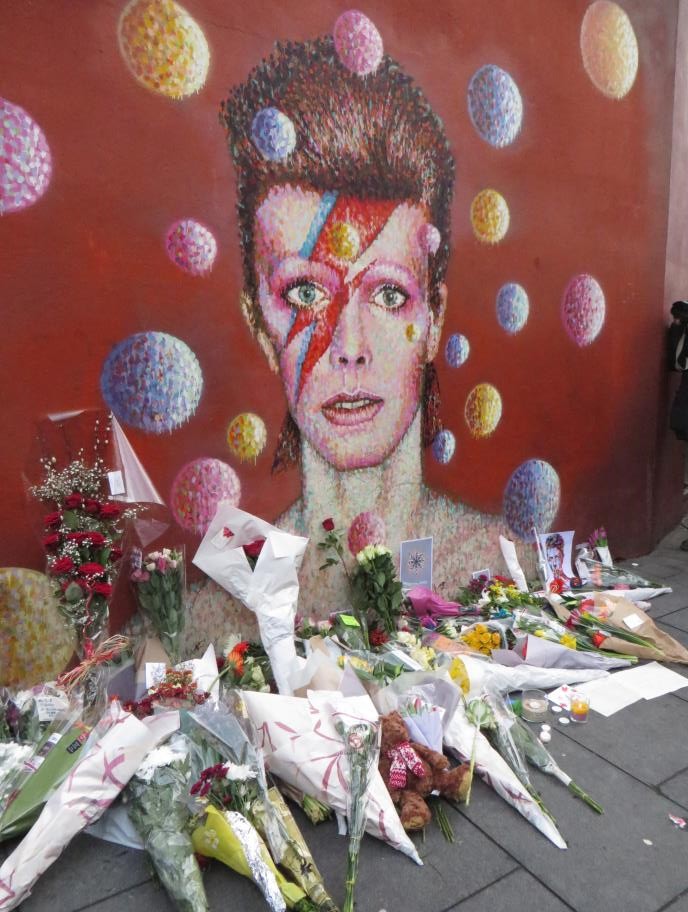
The Bowie mural painted at one end of a Brixton department store. copyright Carole Tyrrell
The Bowie mural painted at one end of a Brixton department store.
copyright Carole Tyrrell

I’d been aware of other rock star shrines such as Marc Bolan’s on Barnes Common and Jim Morrison’s grave in Paris but this time it was for one of my all time heroes.

The mural was in full colour and features Bowie in his Aladdin Sane period.  On the wall next to it was a large colour ad for Iman’s, Bowie’s second wife’s cosmetics. When I arrived at around 10am there was already a  media frenzy taking place. TV crews, people being interviewed, journalists with microphones looking for people to interview, professional photographers, and people of all ages.  People had been laying flowers on their way to work and there were already more than a few.  There were the casual passers-by who glanced over and moved on or took a photo on their phone and others who must have wondered what it was all about.  A pavement evangelist informed us that Bowie had had no fear about dying. I wondered if that was true.  But most of all there was an atmosphere of disbelief and shock.
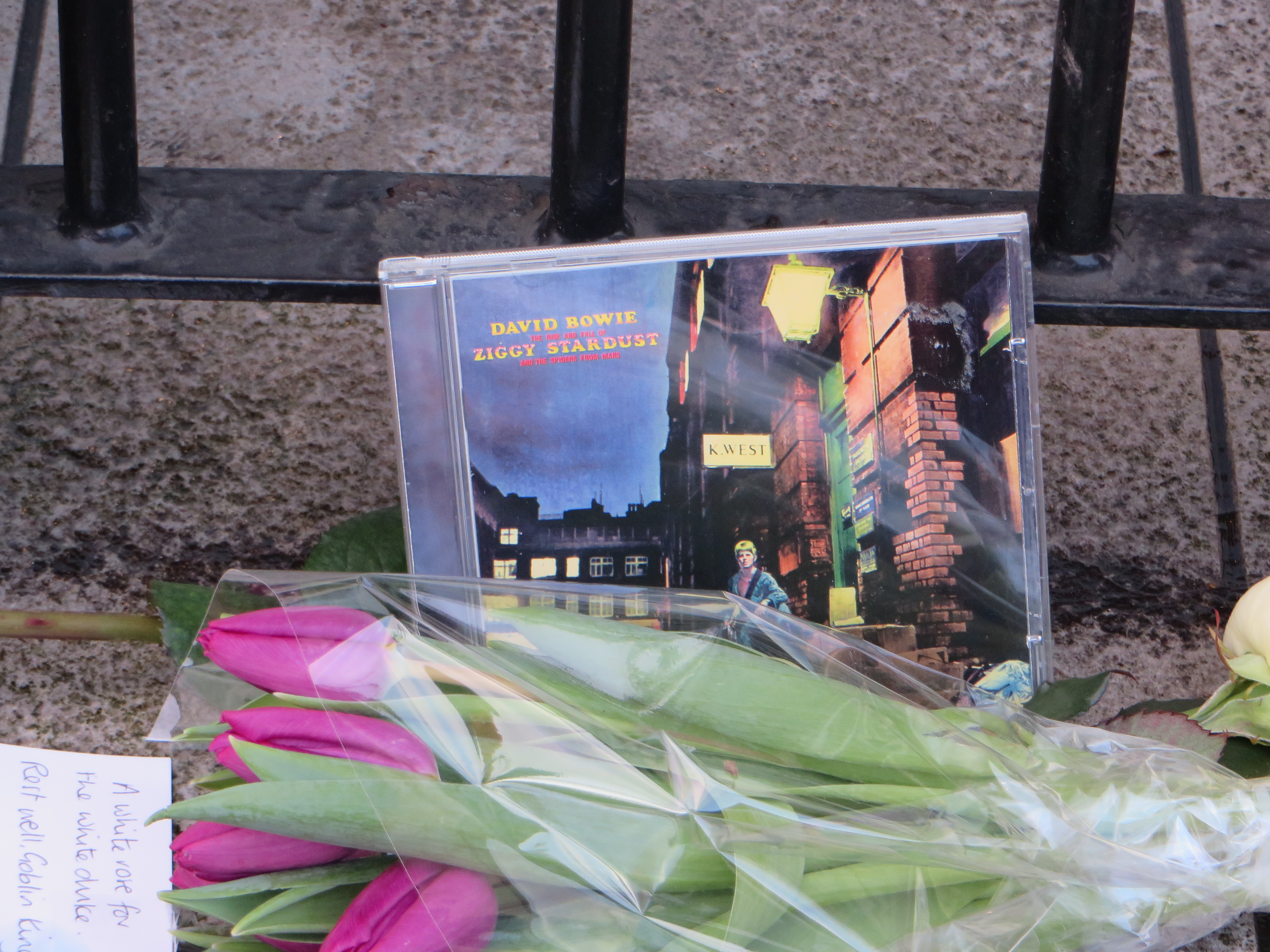
An iconic album. Outsidepub in Beckenham where he used to play. copyright Carole Tyrrell
An iconic album. Outside the pub in Beckenham where he used to play and now a Zizzi’s.
copyright Carole Tyrrell

Since then the floral tributes at Zizzi’s have continued to grow and the overall feeling seemed to be one of fans thanking Bowie for being such a part of their lives and making such wonderful music. LP’s, props, and photos have also been left and so far none have been stolen.    He was also commemorated at the Beckenham Croydon Road Recreation Ground bandstand which was where, in 1969, he had held a free festival and wrote the song, ‘Memories of a Free Festival’ to commemorate it.   Candles had been lit here and a sympathetic council employee was keeping them lit.
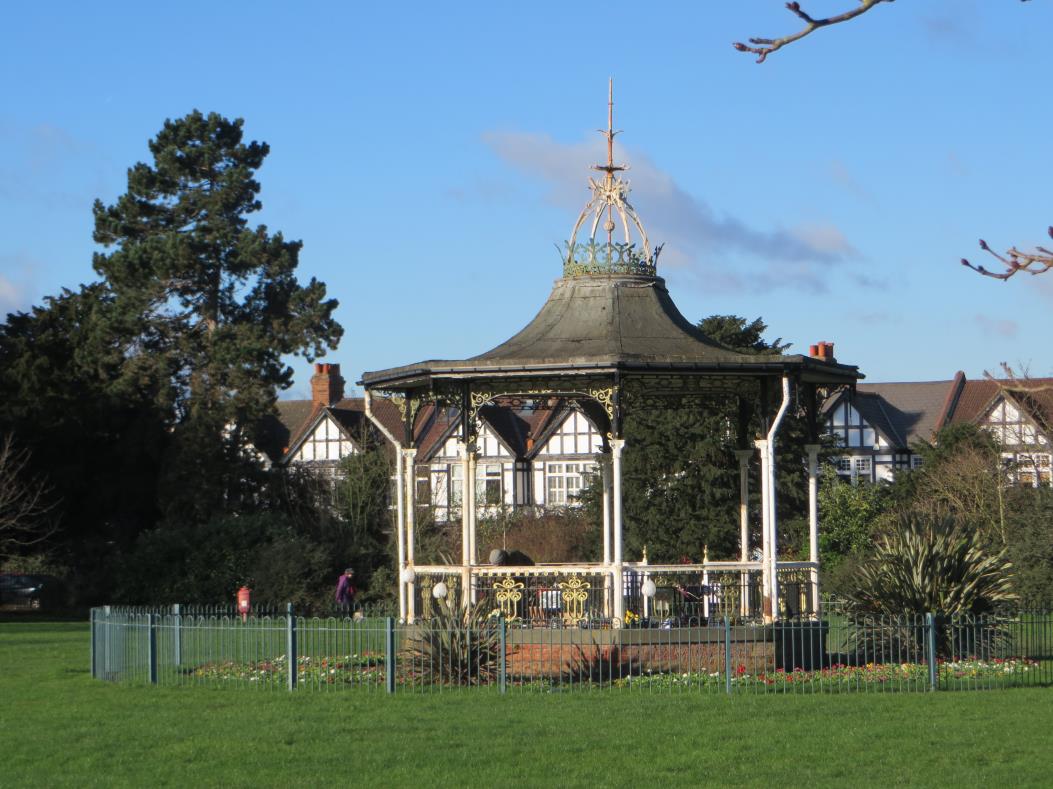
The bandstand in Beckenham where Bowie played at a free festival copyright Carole Tyrrell
The bandstand in Beckenham where Bowie played at a free festival
copyright Carole Tyrrell

Fans were sharing their memories.  At the bandstand someone had left a framed copy of the flyer for the free festival and it was interesting seeing the line-up for the first time.  Photos, album covers, scribbled memories – to some they may well be detritus but they are personal recollections  and I was fascinated by reading them. Parents were there with their grown up children who had probably grown up on Bowie’s music.
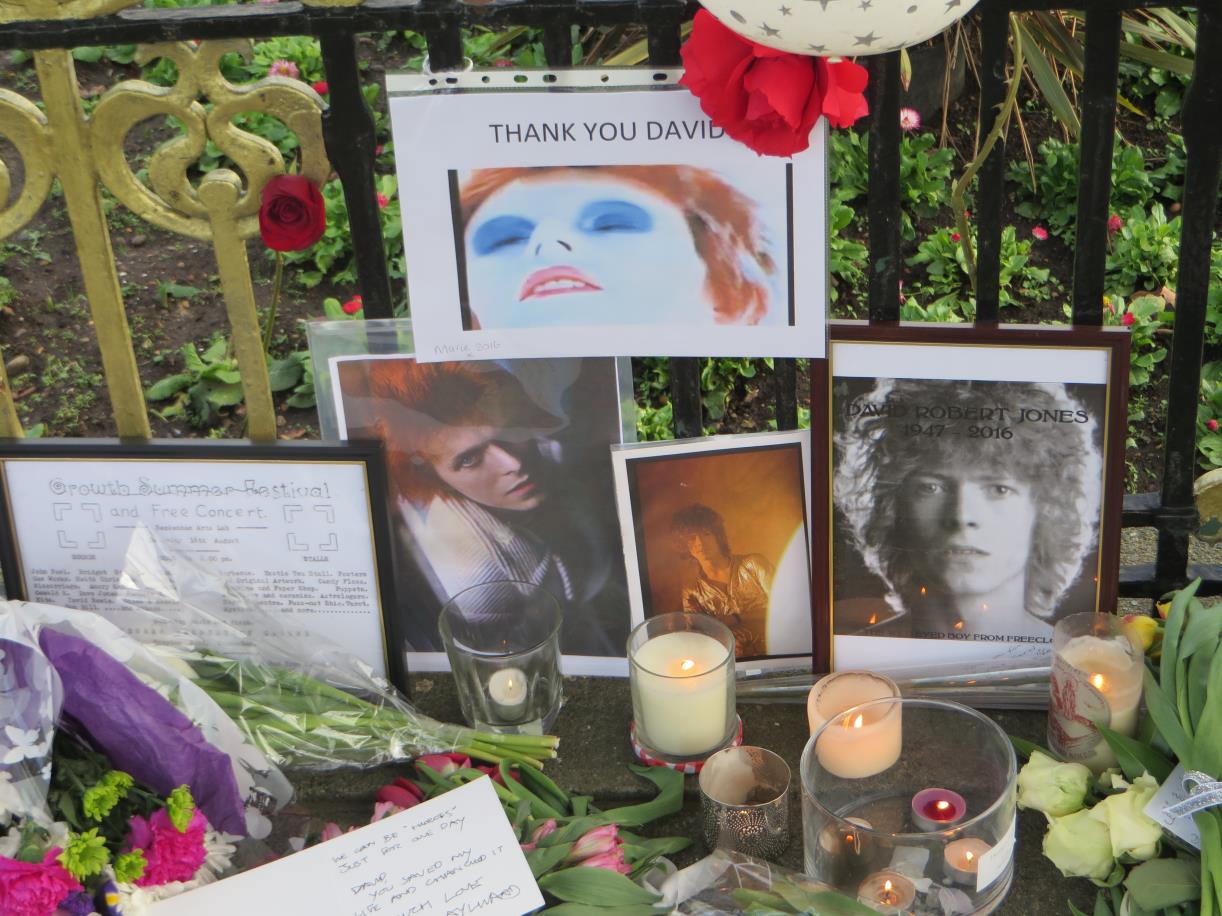
Some of the tributes left by fans at the bandstand. copyright Carole Tyrrell
Some of the tributes left by fans at the bandstand.
copyright Carole Tyrrell

The Brixton Shrine continued to be a focus.  When I returned 2 days later to see it again and to visit Bowie’s birthplace at Stansfield Road, messages had been written  on Iman’s advert and the two models had had Aladdin Sane flashes drawn on their faces.  I added my little message.   There was less of a media presence this time and more people adding to or looking at the flowers.

David Bowie was a pivotal figure for me. I remembered Space Oddity around the time of the moon landings and I’d picked up on Hunky Dory, the LP before he became really big. The early 70’s were such a grey time. The glittering dayglow Sixties were over.  The Age of Aquarius had dimmed, the Beatles had split up and no one seemed to know what to do next. We wanted out own music, something different, harder and in 1972 when I saw Bowie singing Starman on Top of the Pops in 1972 I knew it had arrived. Glam rock as it came to be called may have ended up as bad make up jobs and Bacofoil l but it defined my generation.   From then on I followed him as each successive LP became a major event.  Bowie re-invented himself time and time again and along the way he introduced me to Andy Warhol, Iggy Pop, the Velvet Underground, William Burroughs, Kraftwerk and Jean Genet amongst others.   And if he sometimes made an LP that wasn’t as great, well I simply that thought he would pull it off next time.

For many of us, David Bowie’s passing has been a huge event in our lives.  We may not have met him but his music and his many personas made a deep impression.  They don’t post rest in peace messages on the BT Tower to just anyone.    It made me realise how powerful these collective mourning places can be as they were an important focus for us all.  A way to pay our respects, to express our thanks at his music being such a part of our lives, and to acknowledge his existence.  It was being with strangers, complete strangers, who we joined with for a brief moment, united by a  common bond and then we became strangers again.  A spontaneous event that marked the passing of an icon who had gone too soon.

The flowers will fade and be cleared away, the scribbled messages may also vanish and the mural, Zizzi’s, the bandstand will all go back to being milestones on Bowie’s journey.  As with the roadside shrines, life has to go on.

My experience at the Bowie shrines was to think about my own future. He was a man who made his life count right up to the end.   How long have I got?  Is this what I want to be doing? Make the most of life it may be shorter than you think.  And maybe that’s the oft used word, legacy, of them.  A memento mori for a new generation – As I am now, so you will be.  He didn’t waste his time on this earth and neither should you.

And maybe that’s what all shrines, roadside or otherwise do, remind you that life is fleeting and death is forever so make the most of it while you have it.


Sources:

‘Stella, fags, footie shirt, dead cat, meat pie.’ Andrew Parkes, Editor, Newshopper, 17/10/12

http://roomfordebate.blogs.nytimes.com/2009/07/12/should-roadside-memorials-be-banned/?_r=0

Further reading:

Rock http://greatwen.com/2016/01/21/shrines-of-london/Shrines Thomas H Green


Symbol of the month – the lychgate

comptonlychgate
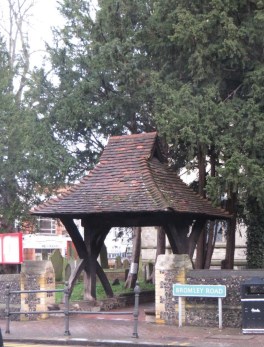
The lychgate to Compton Churchyard, Guildford, UK. copyright Carole Tyrrell

English country churches and lychgates seem to go hand in hand. There is something rustic and romantic about them. Perhaps you’ve seen one at the entrance to a church and thought that they were created as handy shelters or been lucky enough to see a bridal couple paying local children to untie the gates and allow them through.
But the picturesque lychgate has a darker side as it’s also the gate through which the happy couple could be entering in a few decades but on a more sombre occasion.
The word lychgate is derived from the old English or Saxon word, lich, which means corpse. The body would have already been carried along footpaths or the local corpse road to the church. Corpse roads can still be seen in the countryside if you know where to look. Coffins were for the wealthy until the 1700’s and so the less well to do deceased would have been wrapped in a shroud and then laid on a bier under the lychgate. The priest would have then come out of the church to the bier to conduct the first part of the funeral service. The pall bearers would have been able to shelter under the gate. Some lychgates have large, flat stones under them on which the shrouded body would be laid. These are known as lich stones.

lychgate1
St George’s Church Beckenham copyright Carole Tyrrell
lychgate4
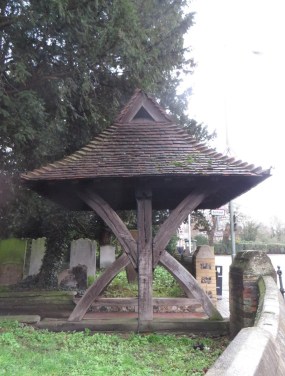
Side view of lychgate showing construction. copyright Carole Tyrrell

A lyhgate is roofed porch-like, almost shed-like, over agate and were often built of wood. They were usually made of 4 or 6 upright wooden posts in a rectangular shape. Above are beams to hold up a pitched roof covered either in thatch or wooden or clay tiles.
Although usually plain, they can sometimes have decorative carvings. For example, St Oswald’s in Peover, Cheshire has these words inscribed on its lychgate:
‘Grant O Lord that through the grave and gate of death we may pass to our joyful resurrection.”
A sobering though for all those who passed beneath.
Some lychgates also have recessed seats in either side of the gate and lychgates were often erected in a local person’s memory. In 2000, the Millenium year, several lychgates were erected to commemorate it. Lychgates are thought to date from the 7th century but were more widely popular in the 15th century.
As they were usually made from wood many lychgates have vanished over the centuries or the remains have been incorporated into modern reproductions.
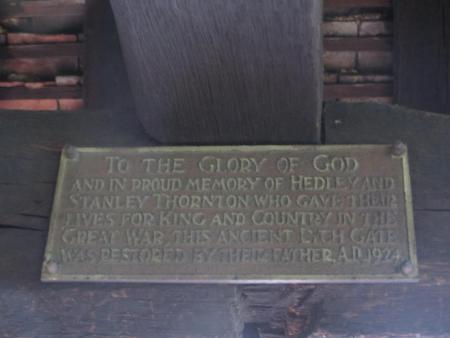
Whilst researching this article I discovered that my local church, St Georges in Beckenham, may have the oldest lychgate in the country as parts of it date from the 13th century. In 9124, it was restored by a local man who lost both of his sons in the 1st World War. There Is an information panel on a roof beam to commemorate this which reads:
“To the glory of God and in proud memory of Hedley and Stanley Thornton who gave their lives for King and Country in the Great War. This ancient Lych Gate was restored by their father. A.D. 1924”

lychgate5
Dedication panel on roof beam. copyright Carole Tyrrell

and there is another one which informs the reader of its age and restoration work done on the lychgate:
“This lychgate is probably the oldest remaining in England was erected in the 13th century and repaired in August 1924, when the framework was left untouched. But the decayed ground cills and the bottoms of the side posts were renewed on new foundations and the spurs to thebrackets which had long been absent were restored.”

lychgate2
Information panel inside lychgate. copyright Carole Tyrrell

St Georges is a Victorian church which is built on the site of an earlier church and there are some interesting 18th century tombstones in the churchyard.
However, lychgates aren’t often found in big city churchyards and so have become associated with picturesque, romantic country and small town churchyards.
A lychgate is ultimately the entrance by which all must pass to enter the church. Christenings, weddings, funerals; all the stages of life and death go through the gate. It is one of the most enduring and unique symbols and image of Britain.
Sources:Wikipedia
http://www.brittania,com
http://www.BritainExpress.com
http://www.peoverchurches
http://www.ianvisits.co.uk
©texts and photos Carole Tyrrell

lychgate3
View of lychgate from church door copyright Carole Tyrrell

Pet cemeteries – an introduction

Anyone who has ever enjoyed the pleasure, and the company, of a pet animal will understand why there are pet cemeteries. It isn’t always possible to bury them in a back garden and some will want a memorial, an acknowledgement that their pet is much missed and was much loved. I still miss my little tabby cat, Twinky, who was run over and killed during the day while I was at work. She ended up being buried in a neighbour’s back garden which was very kind of him but I did miss the chance to say my final goodbye.
Pet cemeteries’ little memorials may seem mawkish but a pet becomes part of the family and part of your life. One of the saddest and most poignant postings I have seen on Facebook was from an urban explorer who had been exploring and photographing an old, abandoned house and had found two small coffins under a bed. Both coffins had nameplates on and, by the names,

the explorer knew that they couldn’t be children. She opened them and discovered the small bodies of the owner’s dogs. It seemed very sad that the owner had loved these pets so much that she had kept them with her until the end and, now, except for the explorer’s chance encounter, no-one would know they were there and they would be swept away when the house was demolished.

The Ancient Egyptians mummified and buried cats who they considered to be gods (and cats have never forgotten this) and Ashkelon in Israel has the largest dog cemetery in the world. The largest animal necropolis in the world at Hartsdale, NY, with 70,000 burials and began because of a sympathetic vet.

In 1899, the Cimetiere des Chiens in et Autres Animaux Domestiques, opened in Asnieres-sur-Seine near Paris. Its oldest grave is a dog from Napoleon’s Grande Armee and burials continue up to the present day. In 1958, it interred its 40,000th burial which was an anonymous stray dog who died outside the cemetery gates. The Cimetiere isn’t just for dogs though as it also contains cats, horses, a monkey, a sheep and 16 year old hen. It’s definitely on my list to visit as a visitor has described it as uplifting and joyful to be amongst these well-loved pets who obviously had very good lives.
I have visited several pet cemeteries: Preston Park, Brighton, Wrest Park and London’s Hyde Park and I was struck by the poignant epitaphs. The animals had names, characters and had been much loved.  There’s also the odd little memorial in a stately home or a garden.

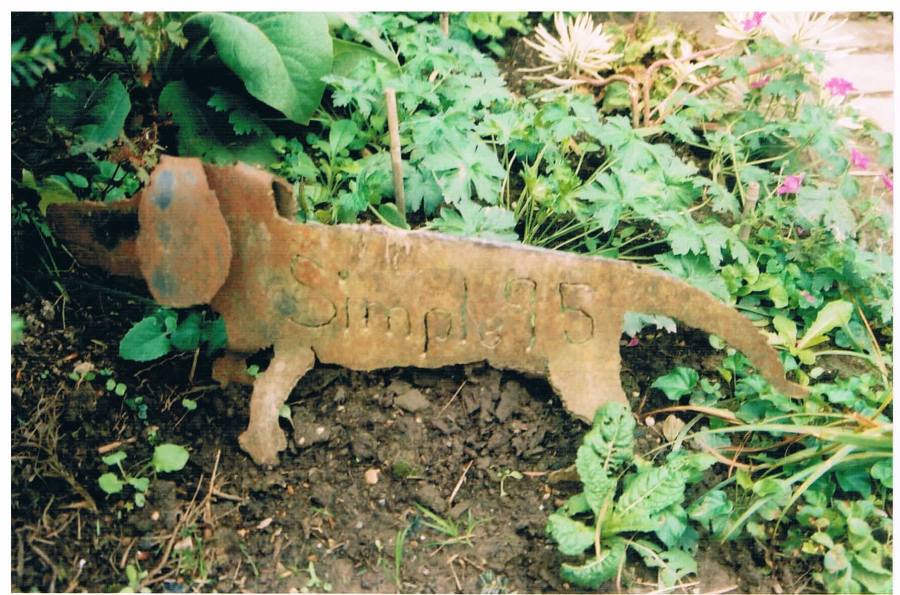
A memorial to a pet dog. copyright Carole Tyrrell
A memorial to a pet dog.
copyright Carole Tyrrell

I found this little marker in  a corner of  the lovely gardens at Great Dixter, Sussex, UK.  What a wonderful place for a dog to go walkies in!
Sources: Wikipedia
Gone for (a very long)walkies….Cimitiere des Chiens at Autres Animaux Domestiques, by Marion Houghton, Friends of Nunhead Cemetery News,
No 129, Sep-Nov 2015

Text and photo copyright Carole Tyrrell

A visit to the Isle of the Dead

View from Venice across the lagoon to San Michele. copyright Carole Tyrrell
View from Venice across the lagoon to San Michele.
copyright Carole Tyrrell

As the boat neared San Michele, the gleaming white walls of San Isola came into view, almost as if it was floating on the water. An elderly lady fellow passenger enquired as to my reason for being the only person disembarking at the Cimiterro stop.  The crowded waterbus quickly sped away on its way to Murano, the glassmakers island. Then I entered the place where the dead rule, where silence is absolute and there was a strong sense of ‘Enter if you dare’.

The hurly burly of San Marco was far behind me as the atmosphere of San Michele, the true Isle of the Dead surrounded me. Once away from the crowds the streets were deserted under the glaring sun. De Chirico images seemed to around every corner. I had been able to see San Michele’s high walls and tall cypress trees from the Fondamente Nuovo quayside on the main island. I wasn’t sure if they were to keep the living out or the dead in.

San Michele is the closest island to Venice and was a former fishing port. Its creation was, like London’s Magnificent 7 Victorian cemeteries, a response to overcrowded city graveyards which resulted in Napoleon issuing a decree on burials.  Due to the lack of space most burials are disinterred after 12 years and taken to the ossuary island of Sant ‘Angelo. However its most famous residents,Stravinsky, Ezra Pound, Diaghilev and Joseph Brodsky all most definitely rest in peace. Venice has two cemeteries; San Michele mainly for Protestants and Catholics and a Jewish one on the Lido.

San Michele Isola church  copyright Carole Tyrrell
San Michele Isola church
copyright Carole Tyrrell

Coducci designed its grand Renaissance church, San Michele Isola, which was the first one built in Venice and commissioned by Franciscan monks in 1469. The monastery on the island was established in the 10th century and was extremely successful and wealthy. The cloister and funerary chapel still remain and more recently political prisoners were housed in the now former monastery.

There were only a few other visitors exploring and it seemed as if every inch of space had been utilised. There are wall graves, conventional graves and huge columbariums with their contents placed in large drawers stacked on top of each other. The effect is rather like a succession of filing cabinets.

A memorial in the columbarium. copyright Carole Tyrrell
A memorial in the columbarium.
copyright Carole Tyrrell

It was difficult to navigate my way around as there didn’t seem to be any site plans or maps visible and I wandered into the main part and was surprised by how the monuments and mausolea stretch on into the distance. Poppies brightly stud the grassy gaps between them. On November 1, All Soul’s Day, chrysanthemums, the Italian flowers of the dead, are everywhere on the island. Diaghilev and Stravinsky lie in the Greek and Russian Orthodox sections and Ezra Pound is in the Evangelic or Protestant part. Jan Morris, the travel writer, has written of being enchanted by the island’s ‘seductive isolation’ and it is absolutely silent here. The only sounds during my visit was the water lapping at the steps of a three window doorway and a fight between what sounded like a cat and a seagull on the other side of one dividing wall. I could almost understand the claim that tourists commit suicide in Venice just so they can be buried on the island. An Englishman from Staffordshire is said to have ‘left us in peace Feb 2 1920.’

In many ways it’s very like a British Victorian cemetery with its carvings and statues of mourning women and sorrowing angels. One wall grave had putti or cherubs holding flowers as decoration. One seemed to be screwing his eyes up against the sun even though his luxuriantly carved locks cast a shadow

Putti or small cherubs on a large wall monument. copyright Carole Tyrrell
Putti or small cherubs on a large wall monument.
copyright Carole Tyrrell

A mourning woman in beautifully carved robes, her hand clasped around her face as if she had toothache stood by a grille as if waiting to be admitted to a seedy club.

A mourning woman. copyright Carole Tyrrell
A mourning woman.
copyright Carole Tyrrell

In the columbarium Elisa Marcosanti’s columbarium drawer is decorated by putti with oddly awkward legs to ensure that they fit into the space.

Another columbarium memorial copyright Carole Tyrrell
Another columbarium memorial
copyright Carole Tyrrell

Venice has always been celebrated for its mosaics and the Mazzega memorial boasted a particularly lovely example in a portrait of the deceased.

An older mosaic on a monument dating from the 19th century. copyright Carole Tyrrell
An older mosaic on a monument dating from the 19th century.
copyright Carole Tyrrell
A modern mosaic on a memorial. copyright Carole Tyrrell
A modern mosaic on a memorial.
copyright Carole Tyrrell

There didn’t seem to be the same quality to more contemporary examples which looked amateurish in comparison in my opinion. A huge statue of a woman in a hooded robe stood in the centre of one section and looked as if she was clutching her stomach in pain.

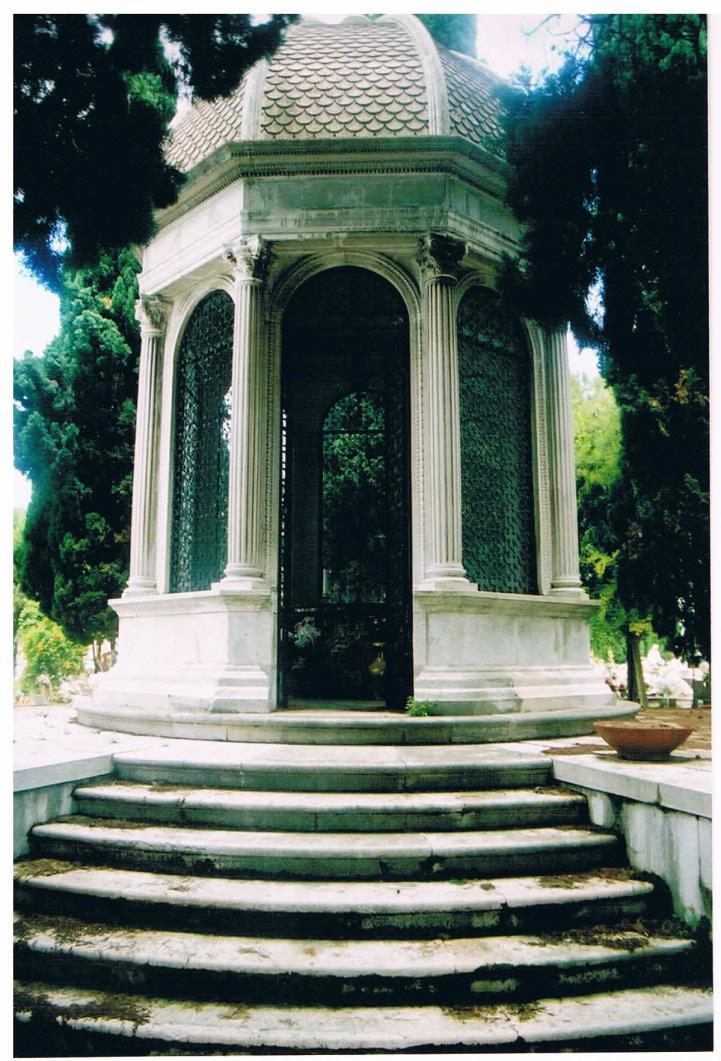
As I wandered amongst the tightly packed memorials and monuments looking for the famous incumbents I came across a plain little mausoleum with its own set of steps leading up to it. The couple coming towards me seemed oblivious to my presence and so I ventured inside. There was an ornate and painted table with candles, a crucifix, small statue of St Anthony and cards and envelopes. There was no indication as to whom it commemorated, no family name and , as I felt I was intruding I crept away.

A mausoleum which had an open door. copyright Carole Tyrrell
A mausoleum which had an open door.
copyright Carole Tyrrell
The altar inside the mausoleum. copyright Carole Tyrrell
The altar inside the mausoleum.
copyright Carole Tyrrell

A sculpture of a couple kissing mystified me; was it Death and the Maiden or the departed saying goodbye to the sorrowing mourner? Certainly the figure of Death looked female…

A large female statue gazing heavenwards. copyright Carole Tyrrell
A large female statue gazing heavenwards.
copyright Carole Tyrrell
An angel that appears to be floating in thin air. copyright Carole Tyrrell
An angel that appears to be floating in thin air.
copyright Carole Tyrrell
Another view over the cemetery. copyright Carole Tyrrell
Another view over the cemetery.
copyright Carole Tyrrell

A view along one of the paths in San Michele copyright Carole Tyrrell
A view along one of the paths in San Michele
copyright Carole Tyrrell

But San Michele didn’t feel crowded and I wouldn’t agree that the statues and memorials are grotesque as one writer stated. Some of the larger statues were very plain. A huge statue of Gabriel, looking like a piece municipal architecture, dominated an area as he held his trumpet on one hand and looked hopefully skyward. He looked as if he’d been bought off the peg compared to the riot of angels, Franciscan friars, angels and weeping women. As I explored further I came across a stack of numbered concrete posts and photographs which I assumed came from disinterred burials.

Pile of photos taken from memorials. copyright Carole Tyrrell
Pile of photos taken from memorials.
copyright Carole Tyrrell

There was so much to see in San Michele and I was aware that I only saw a fraction of it due to lack of time. I never found any of the famous incumbents as it was easier to let my feet and camera wander where they wanted to. The cloister also eluded me but on a return visit….

As the waterbus sped away back to the mainland I saw a modern sculpture in the waters of the lagoon. It seemed to portray St Peter on a boat afloat on the waves. From the quayside San Michele vanished behind it s anonymous walls again and you could easily pass it by with no idea of what its purpose was. I hope to make a return visit one day and wander once more amongst the silent mourning women to look out through the triptych window out onto the ceaselessly flowing water and hear nothing but the waves.

A large Venetian window looks out onto the water. copyright Carole Tyrrell
A large Venetian window looks out onto the water.
copyright Carole Tyrrell

All images are scans from prints from films.

All images and text copyright Carole Tyrrell

First published in Friends of Nunhead Cemetery quarterly journal.

The Green Man of Nunhead Cemetery

The Green Man Nunhead Cemetery. A powerful and pagan image on consecrated ground. Copyright Carole Tyrrell
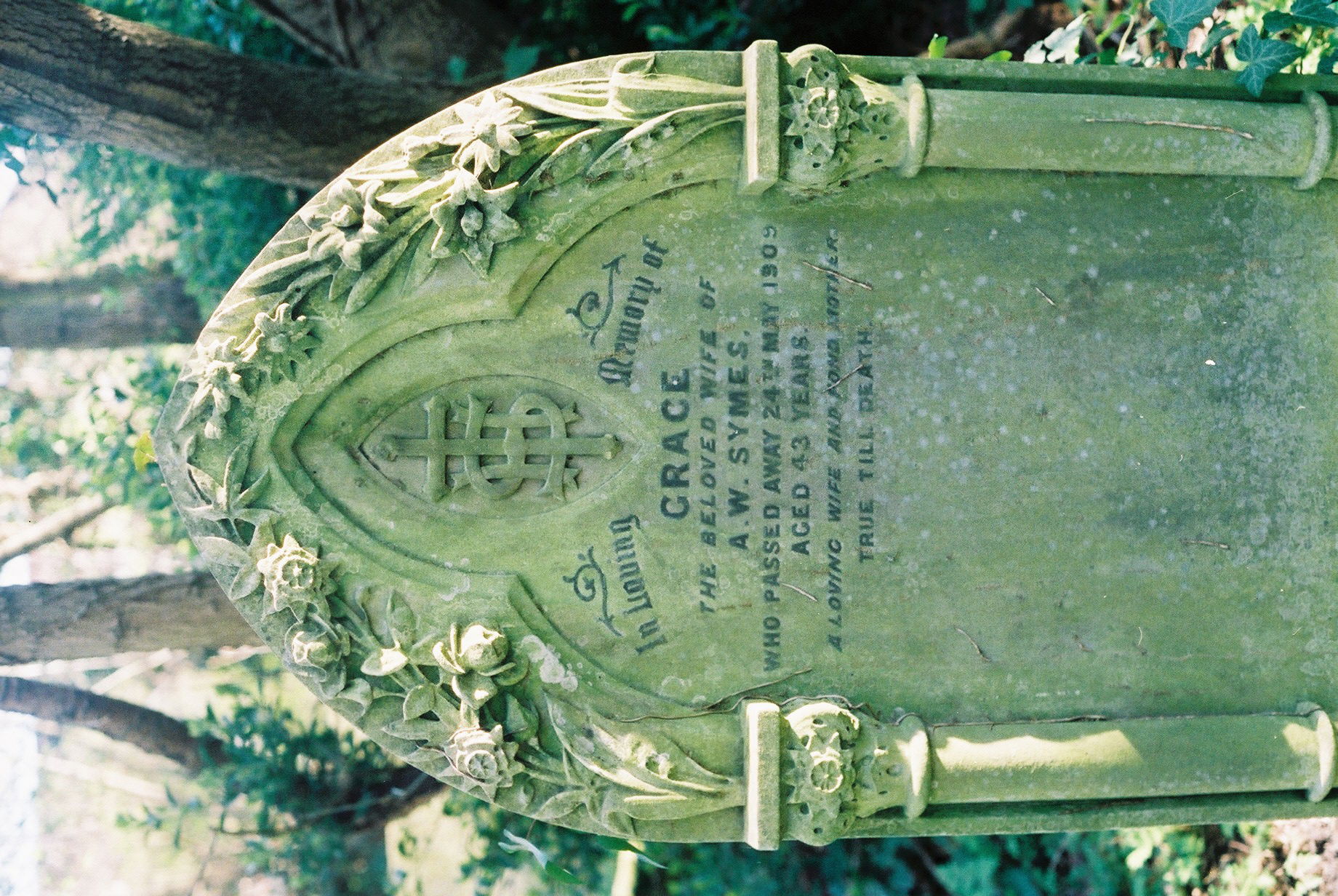
Top 10 Victorian cemetery symbols in Nunhead Cemetery

© Carole Tyrrell

When you think of a Victorian cemetery what do you think of most? Angels atop of monuments pointing dramatically upwards? Crosses? As you walk around Nunhead Cemetery you will certainly see these symbols but there’s a story to be told of 19th century religious and art movements and the Victorian language of cyphers and motifs.

They loved double meanings and secret codes. For example, the stones in many a Victorian piece of jewellery were often selected to form words from the first letters of the stones or the colours chosen as in Suffragette pieces. In art, symbols and items within a painting often said more than what appeared to be the main composition as in ‘The Awakening Conscience’ by William Holman Hunt.

19th century Britain was also in the grip of religious conformity. ‘No Popery’ was the cry and any good Anglican studiously avoided crosses and angels and anything else that might even hint at Catholicism. Instead Victorians turned to ancient Rome and Greece’s classicism and so urns, draped or undraped, made their appearance. As the Romans practiced cremation it seemed appropriate. After Napoleon’s Egyptian explorations obelisks became all the rage. Nunhead has several fine examples of urns and obelisks.

However, as the 19th century wore on, the rules slowly relaxed and in the 1880s angels began to roost. Some were copied from Italian originals as is a magnificent and sensuous example in West Norwood Cemetery. The revival in Celtic arts meant that Celtic crosses, in which the arms formed a wheel, came back into fashions. There was also the language in which every flower had a meaning as with ivy which was a symbol of immortality or evergreen memories.
These are the Top 10 symbols to be found in Nunhead or other Victorian cemeteries. NB: Interpretations are not definitive – please let me know if you disagree.

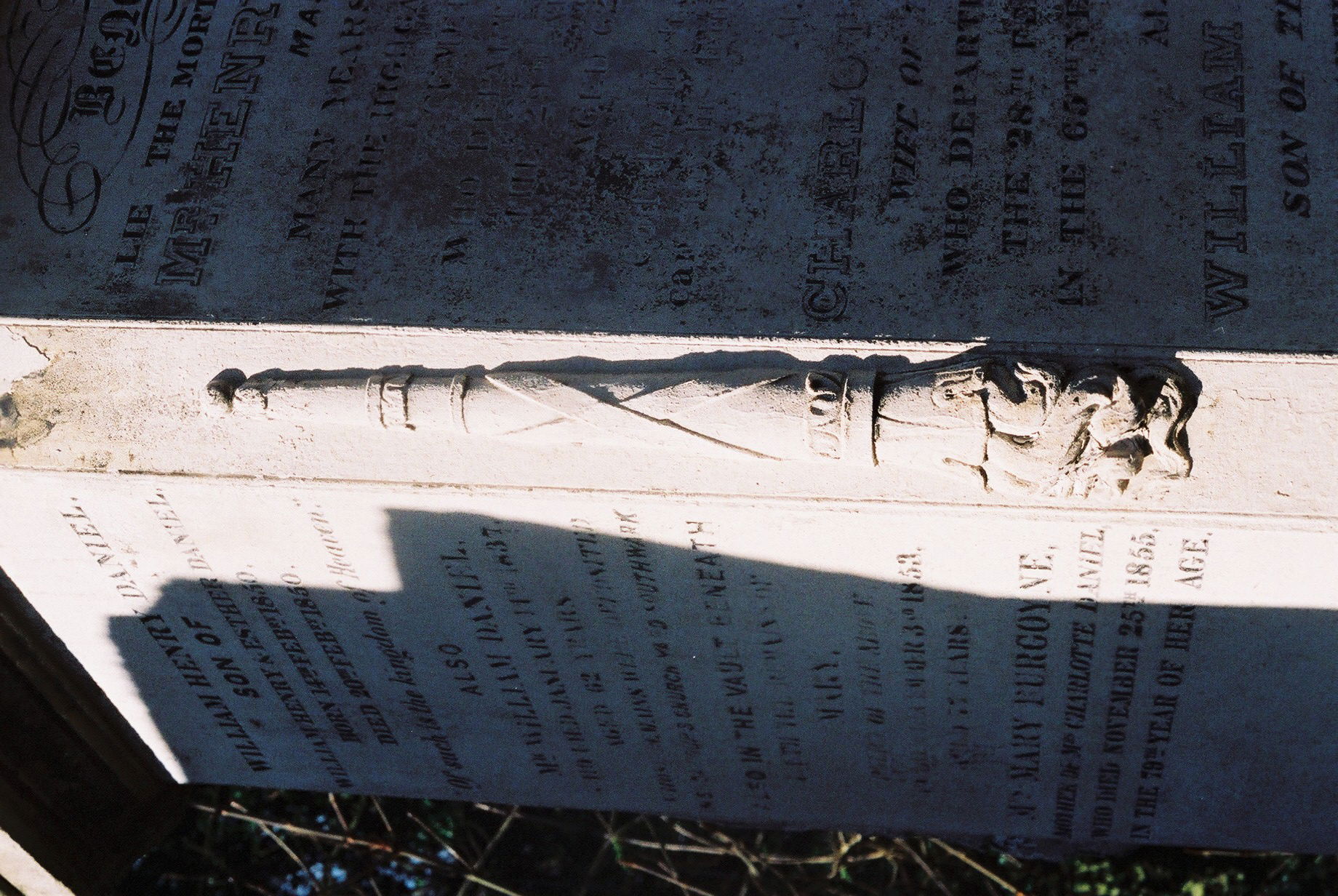
  1. Downturned torches. These can be found on the main gates at Limesford Road and on other monuments within Nunhead including the Daniels one near the chapel. These are a Greek symbol which means ‘life extinguished’.

torch2 torch1.peg

  1. Ouroboros/snake swallowing its own tail. These can be found on top of the pillars at the Limesford Road entrance. They are an ancient Egyptian symbol of eternal life and let the visitor know that they were entering a place of death and memorial. The Friends of Nunhead Cemetery have adopted this emblem as their symbol.

ouroboros

  1. IHS/ also known as the dollar sign. A lovely example can be found on the Symes memorial. It means ‘Iesus Honinum Salvator’ or translated as ‘Jesus the saviour of Man.’

IHS

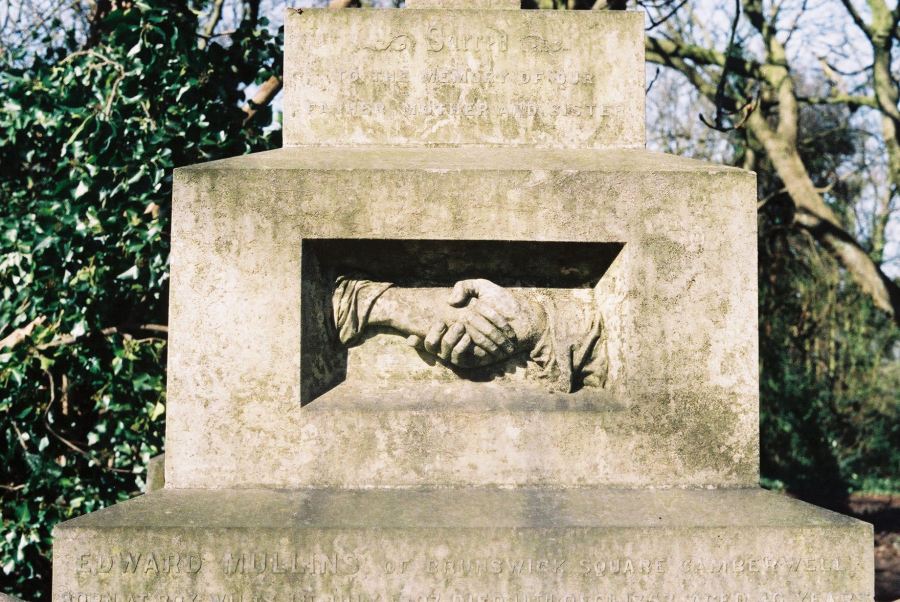
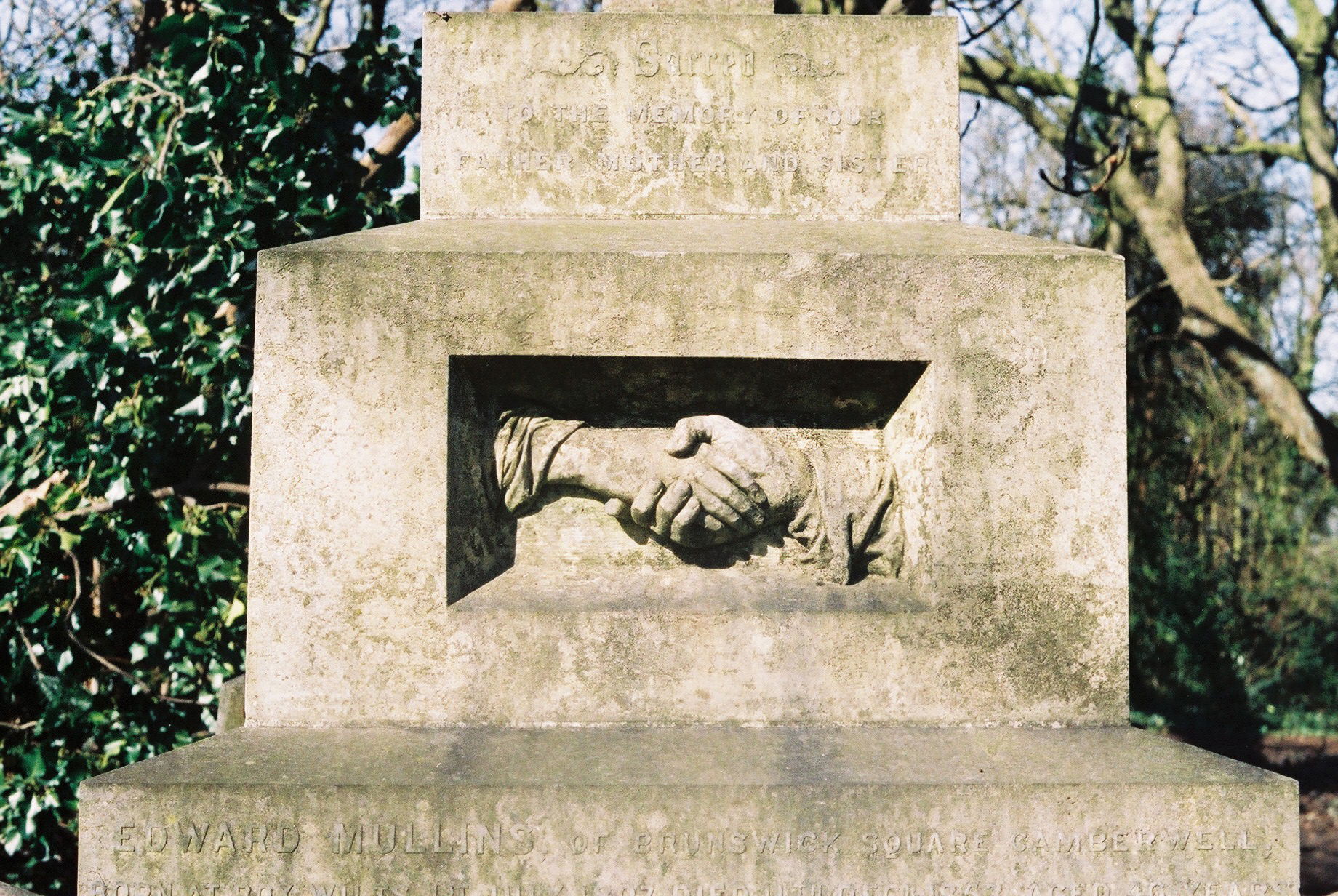
4.Shaking hands. A particularly striking and beautifully carved example is on the Edward Mullins vault. There are several examples within Nunhead but these are the best in my opinion. There are several interpretations of this image: they may mean ‘Farewell’, marriage, a close bond lasting until death or the first one to die holds the surviving spouse’s hand guiding them to heaven. If on a family tomb, as they usually are, they can mean either hope or reunification in the next life or simply ‘see you soon’ which may not be as comforting as it sounds with the Victorians high mortality rate.

shakinghands

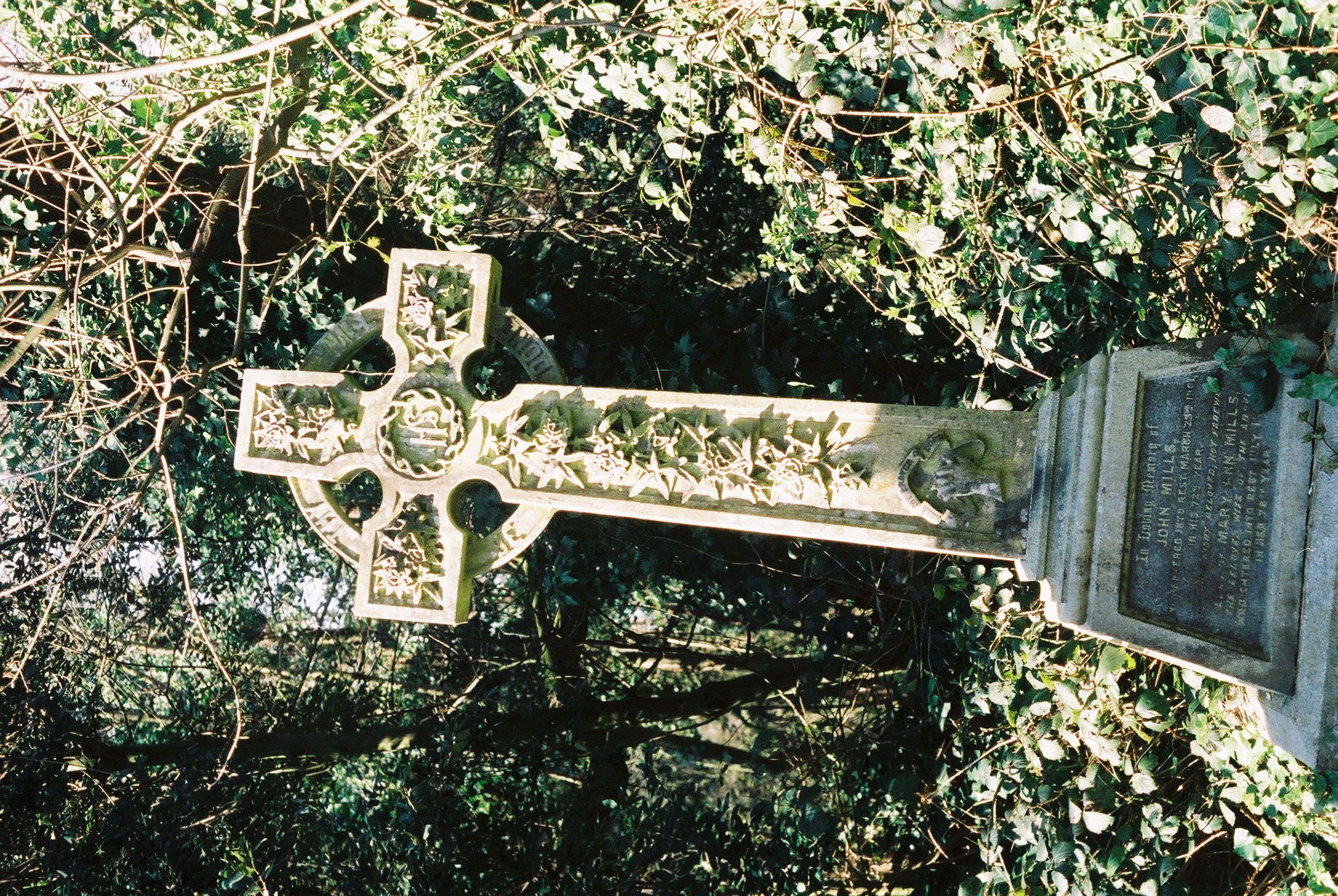
5. Celtic Cross. Nunhead has several fine examples decorated with Celtic strapwork or plain. However the Mills cross near the Chapel is especially lovely with it’s fine carving of passion flowers and the hand at their base with the motto ‘Thy Will be Done’. This is a deeply religious memorial as passion flowers symbolised Christ’s passion, hence their name, in passion, sacrifice and redemption. Its 5 stamen represent the 5 wounds inflicted on Christ on the cross and the 10 petals are the 10 disciples that remained faithful to him. The flower’s corona is said to be the crown of thorns.Celticcross2Cel;ticcross1
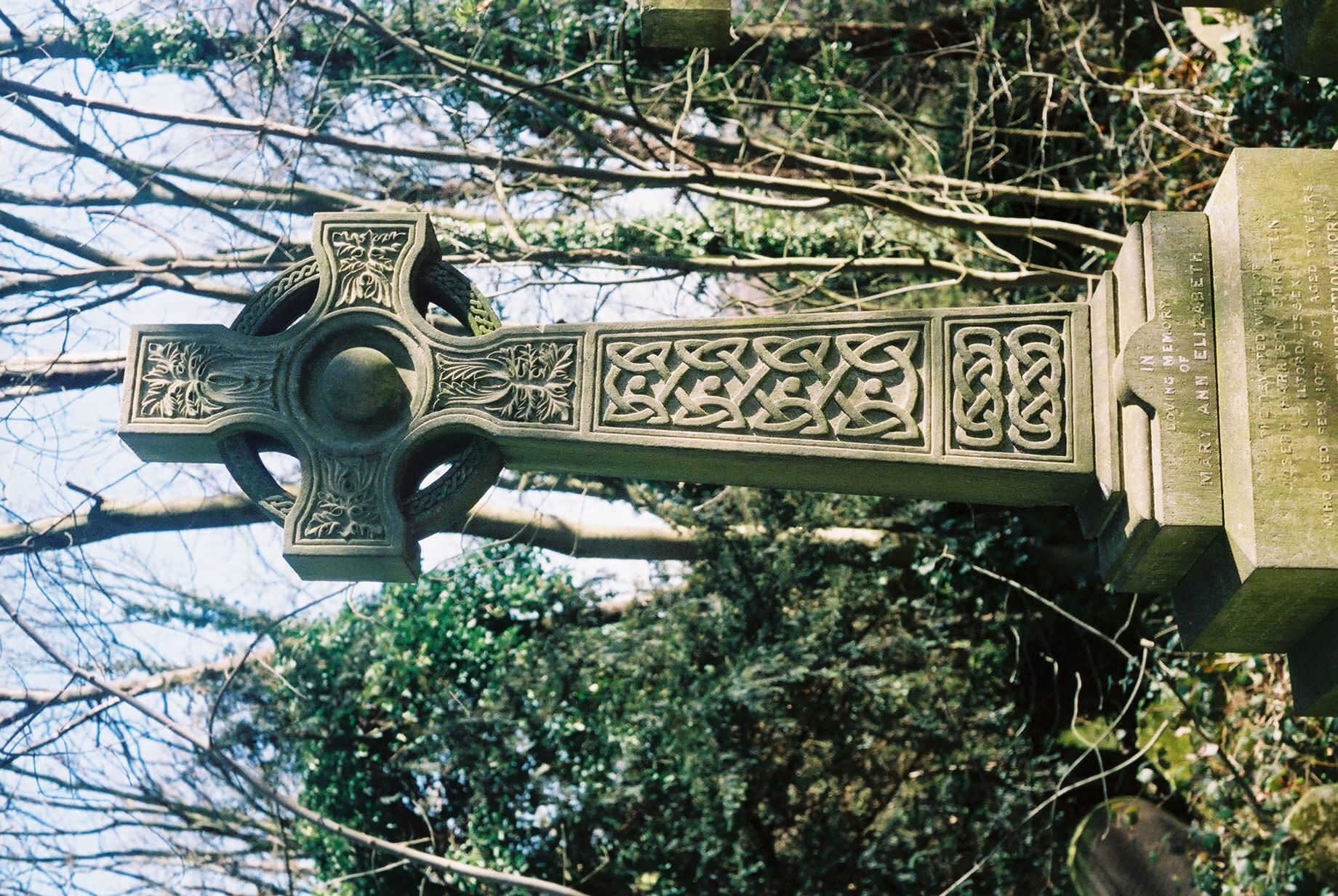
A more conventional strapwork Celtic cross

  1. Urns. These are an ancient Roman symbol and there are several within Nunhead.

Urn

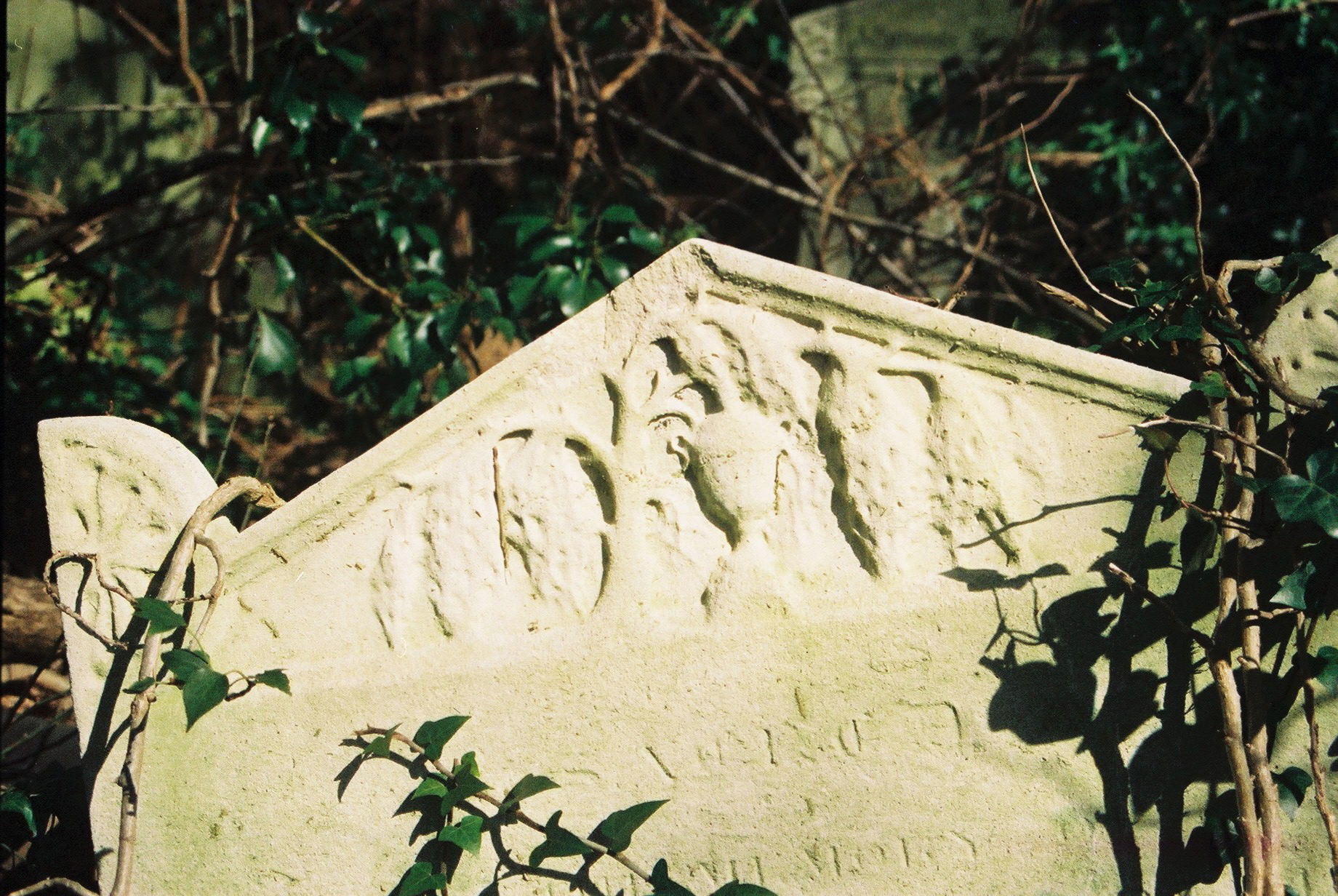
7. Flowers. The language of flowers is something that we’ve lost but to the Victorians it was of great importance. Ivy is an evergreen and means’ everlasting memories’ and the weeping willow is obvious.

willow

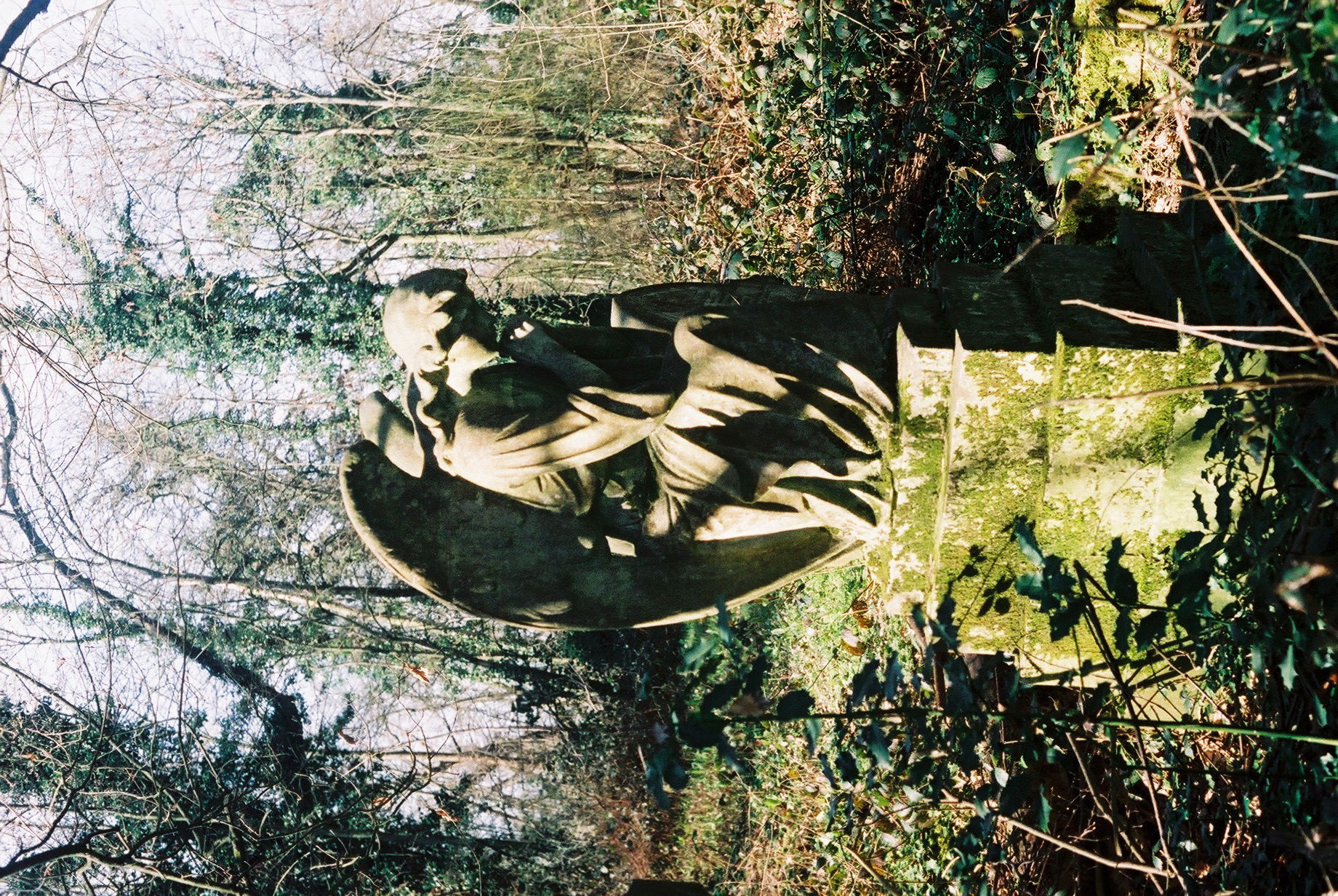
  1. Mourning women. This was another symbol borrowed from Ancient Rome and a fine example is on the Daniels monument on the main avenue near the chapel.

Woman

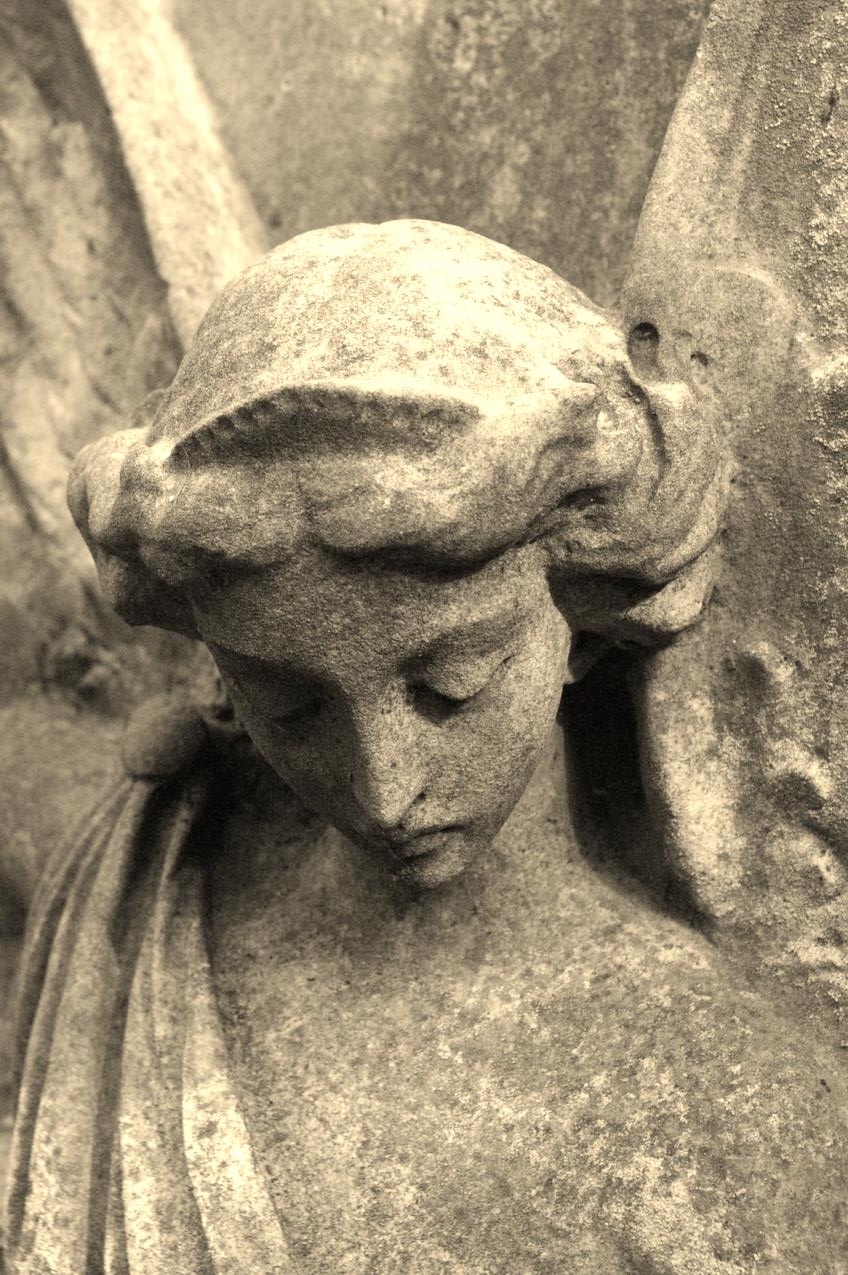
9. Angels. Most angels in the Bible and other sources are male but in Victorian cemeteries they are usually pretty young women. There is a whole mythology around angels and what they are carrying in their hands. On the Hershel tombstone there is an angel carrying a wreath and on the Williams vault there is one pointing upwards and carrying an anchor, perhaps symbolising hope.

angel

  1. Broken column. Nunhead has several examples and at first it can look like deliberate vandalism. These could mean mortality, the support of life being broken and maybe the grave of the head of the family. A variation is the empty chair in Highgate cemetery whose meaning is obvious, The Hawker memorial boasts a lovely example. Although damaged, and in its swirling garland of roses is very reminiscent of the Apprentice Pillar in the Rosslyn Chapel near Edinburgh.

column2

There are many other symbols within Nunhead; chrysanthemums, fireman’s helmets, shells and even a Green Man. So keep looking and let me know if you find any unusual ones.

Carole Tyrrell.

© photos and text Carole Tyrrell

The Angel of St Georges churchyard

A close-up of her calm , enigmatic face. Copyright Carole Tyrrell
A close-up of her calm , enigmatic face.
Copyright Carole Tyrrell

Although there are many beautiful, intriguing and, sometimes poignant, memorials to be found in large Victorian cemeteries you can often find them in your local churchyard as well.

My nearest one is 15 minutes walk away from my house and features this lovely angel in a quiet corner of the churchyard under the shade of a huge and spreading tree.  It is undoubtedly this little spot that has protected her as she cannot be seen by passers-by from the road or the casual stroller through the churchyard.    It’s in memory of a wife and there are no further details on the epitaph.  The date of interment is in 1905 which is the Art Nouveau period and there is a definite nuance to it in this lovely angel as she hangs poised on the cross.

There are other interesting memorials within the churchyard and I will be discussing these in a future article.  But this is the one I wanted to reveal first as she is so lovely and, as far as I know, unique.  Victorian angels in cemeteries are usually selected from a pattern book, carved and then shipped over from Italy and you will see and recognise the same variations.  You could also send a photograph and the angel’s face would be carved into a likeness of the loved one.  There is one in Nunhead Cemetery which is almost certainly carved from the life.  But I haven’t seen this particular angel before and maybe she has also been carved as a likeness of the deceased.

The epitaph reads:

‘Christian Whittingham Little

Wife of Robert little

Of Christ’s Hospital , London

Entered into rest 10 Sept 1905.

Poised on her cross, keeping watch, in a quiet corner of the churchyard Copyright Carole Tyrrell
Poised on her cross, keeping watch, in a quiet corner of the churchyard
Copyright Carole Tyrrell

Text and photos copyright Carole Tyrrell


Wildlife in cemeteries No i in a continuing series…..

As I was passing Elmers Cemetery one evening.....
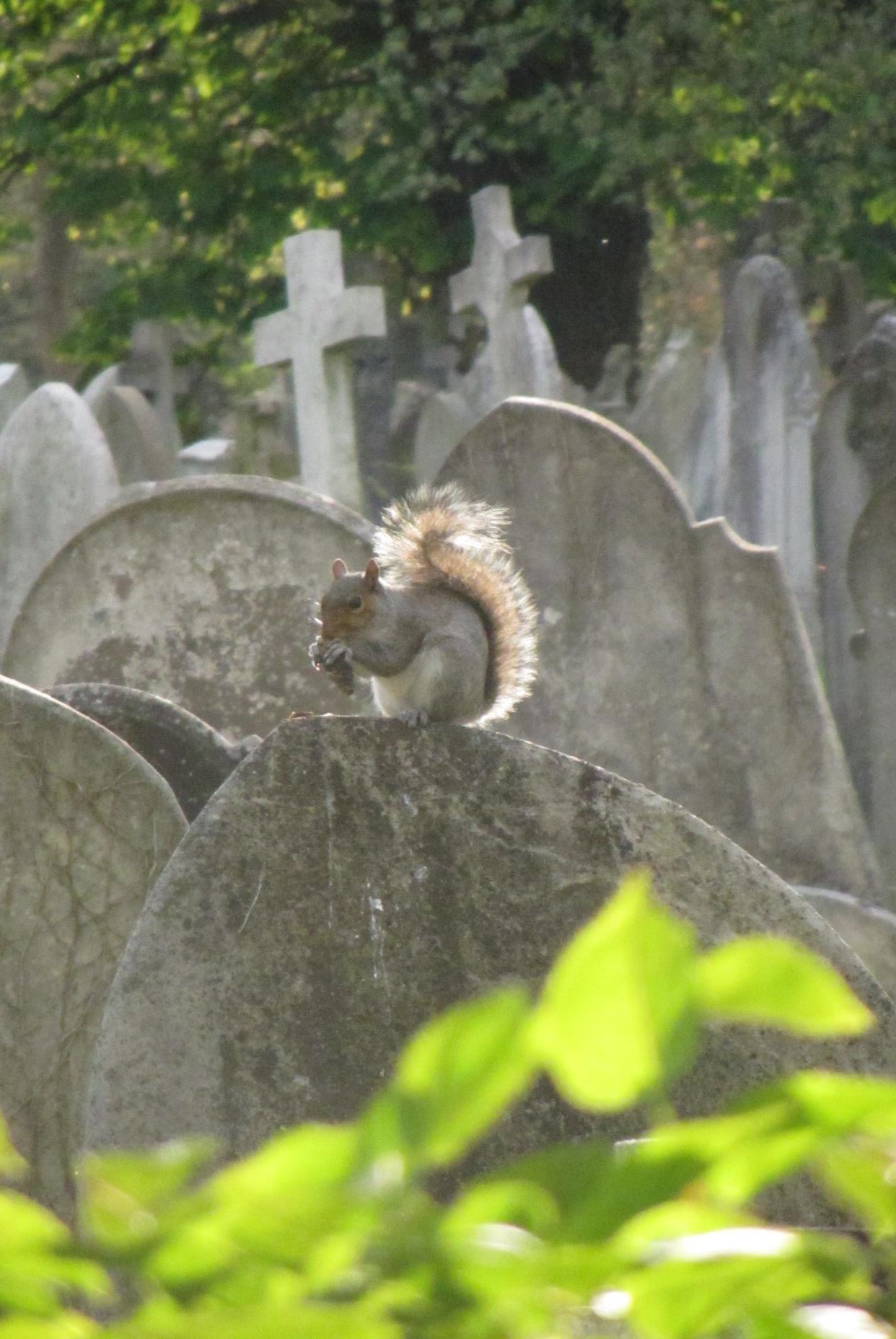
As I was passing Elmers Cemetery one evening…..

There’s always squirrels in cemeteries but watch out for the ones in Brompton Cemetery, London, UK – they’re smart.  They’ll pose on a tombstone for you and then form a pincer action until you’re surrounded. Resistance is futile.   I spotted the one above on a late summer’s evening  in 2014 and liked the way that the sun shone through his tail.

Photo and text copyright Carole Tyrrell


Welcome to the darkness

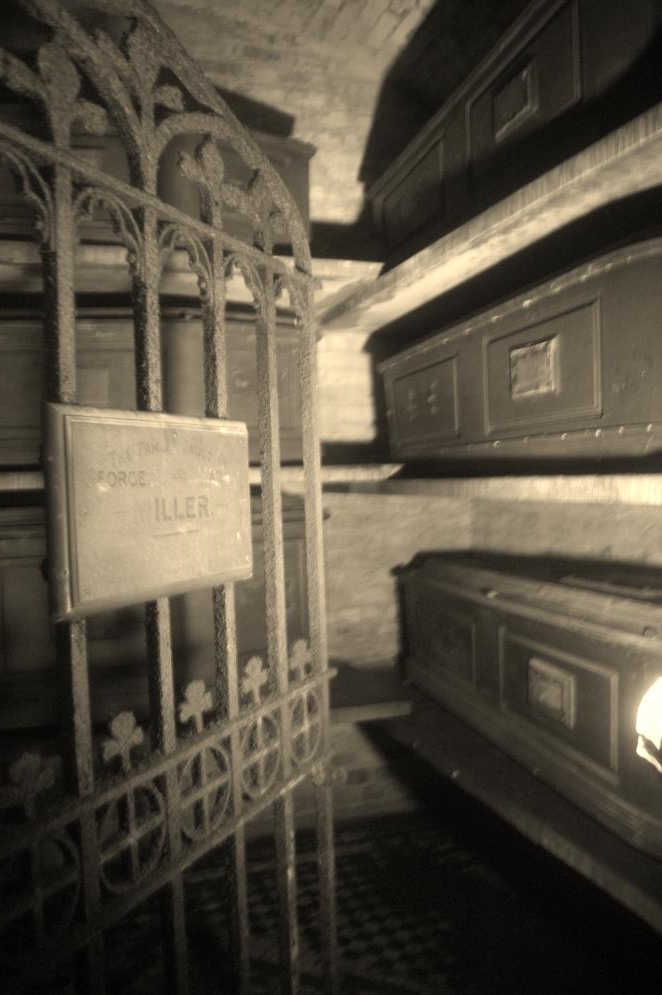
4735wncatacomb1

Enter.  I always do.

I’ve seen more coffins than most people unless you include undertakers.  For the last 25 years I’ve been involved with cemeteries.  Firstly, as a visitor to my nearest large Victorian cemetery, Nunhead, and then as a helper on the publications stall, contributor to the quarterly journal.and finally tour guide.  My speciality is symbols.

It’s a lost language in some ways and there are often several interpretations for each one.  But more on this in future blogs.

When I visit a cemetery I don’t think ‘Oh scary place full of dead people.’  I usually think that yes, it’s a cemetery and full of dead people but people with their own stories who lived their lives and afterwards someone cared enough about them to erect a memorial, a mausoleum, a vault or just a very simple plain stone in their memory.  I often feel a lot of love in cemeteries especially when I read some of the epitaphs.. Even though the huge Victorian monuments are beyond the reach of us today we often still like to individualise our loved ones final resting place with something that was personal to them.

Death is the last great mystery.  We may not have any control over when it occurs or how.  But We are all going to die and it’s how you live your life that’s important.

In this blog I will share some of my favourite memorials, epitaphs, and photos and also reveal the hidden language of symbols.

Enjoy!

The image above is from West Norwood Cemetery catacombs.

Photo and text copyright Carole Tyrrell