Symbol of the month – the butterfly

Butterfly season has now begun in earnest and I have already whiled away several hours in my local park watching them flitting about in the summer sun. Bright, dancing summer jewels dancing on the breeze. But I have seen also seen more permanent butterfly visitors in cemeteries and churchyards – the kind that are perched there for eternity. They are much more than a brightly coloured insect and are symbols of transformation and rebirth

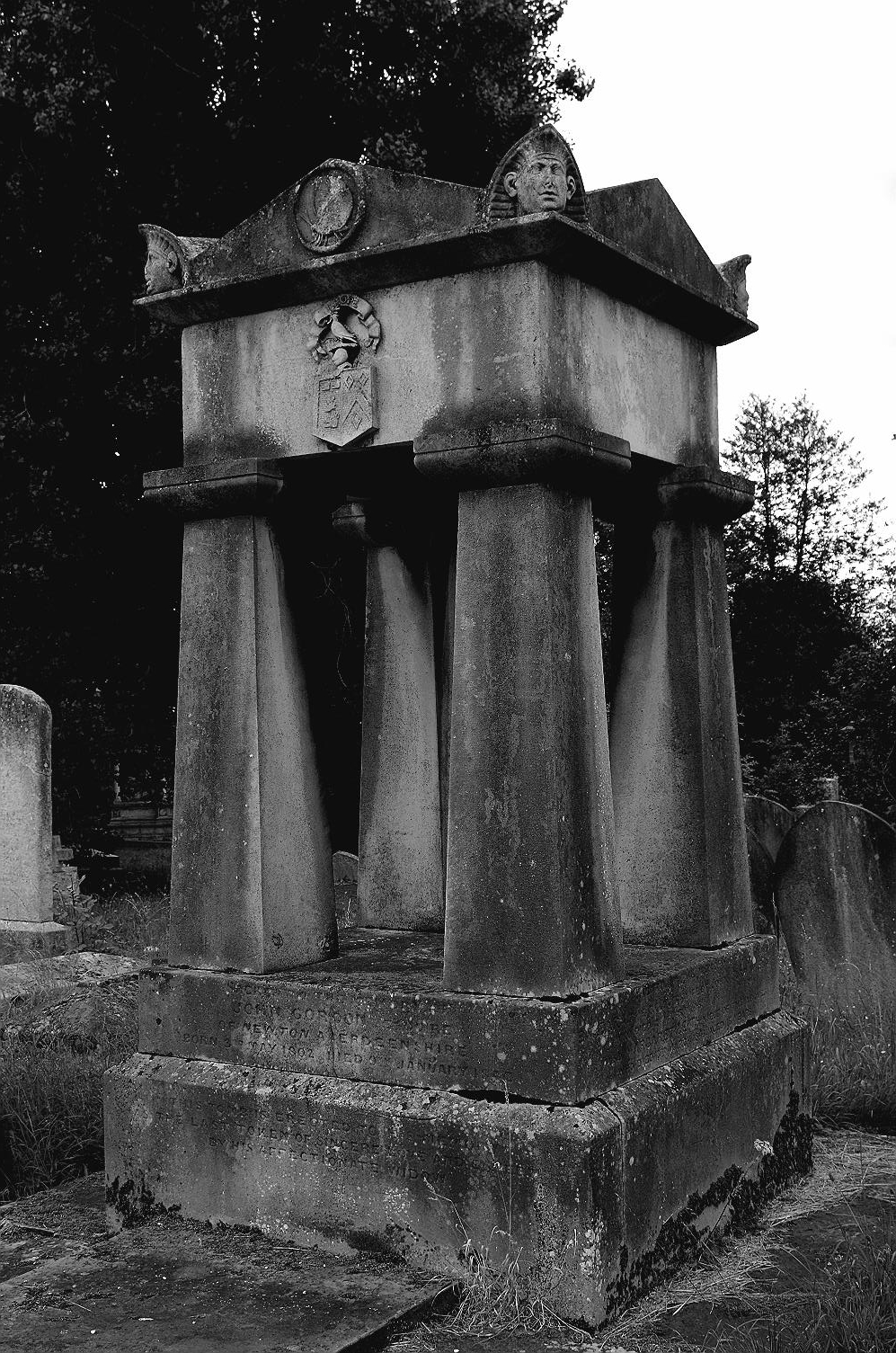
The Gordon monument butterfly motif in all its glory. Kensal Green Cemetery.
copyright Carole Tyrrell

So far I’ve only discovered two of this particular species which were both in London.  One was in Brompton and the other was in Kensal Green.  But I have also seen others online in American cemeteries.

But I’m surprised that the butterfly symbol isn’t more widely used as it is a deep and powerful motif of resurrection and  reincarnation.  It has fluttered through many cultures which include Ancient Egypt, Greece and Mexico.

Gold disc found at Myceanae near Greece – possibly dating from 1350 BC
Ancient Egyptian relief sculpture 26th Dynasty Thebes 664-525 BC
reincarnation.  copyright Sailko (Own work) [CC BY-SA 3.0 (http://creativecommons.org/licenses/by-sa/3.0)%5D, via Wikimedia Commons

There is also the celebrated Neolithic ‘butterfly stone’ found at the Ness of Brodgar which I saw at the British Museum’s ‘Stonehenge’ exhibition in 2023.

In classical myth, Psyche, which translates as ‘soul’, is represented in the form of a butterfly or as a young woman with butterfly wings.  She’s also linked with Eros the Greek God of love.  The butterfly is also a potent representation of rebirth which is why the the Celts revered it.  Some of the Ancient Mexican tribes such as the Aztec and Mayans used carvings of butterflies to decorate their buildings as certain butterfly species were considered to be reincarnations of the souls of dead warriors.  The Hopi and Navaho tribes of Native American Indians performed the Butterfly Dance and viewed them as symbols of change and transformation.

In Christianity the butterfly is an archetypal image of resurrection in and this meaning is derived from the 3 stages of a butterfly’s life.  These are:  1st stage = the caterpillar, 2nd stage = the chrysalis and 3rd and final stage = the butterfly.  So the sequence is life, death and resurrection.   The emergence of the butterfly from the chrysalis is likened to the soul discarding the flesh.  It has been depicted on Ancient Christian tombs and in Christian art Christ has been shown holding a butterfly. 

Butterflies also feature in Victorian mourning jewellery and there is a fascinating article on this with some lovely examples at:

Butterfly Symbols and 19th Century Jewellery – Art of Mourning

They also appear in vanitas paintings. This is the name given to a particular category of symbolic works of art and especially those associated with the still life paintings of the 16th and 17th centuries in Flanders and the Netherlands.    In these the viewer was asked to look at various symbols within the painting such as skulls and rotting fruit and ponder on the worthlessness of all earthly goods and pursuits. They are also invited to admire the artist’s skill in depicting these.  Butterflies in this context can be seen as fleeting pleasure as they have a short life of just two weeks. In the 20th century, butterflies appeared in the flowing, organic lines of Art Nouveau and often featured in jewellery and silverware.

Vanitas Jan Sanders Van Hemessen 1535 – 1540.
https://commons.wikimedia.org/wiki/File%3ALille_Hemessen_vanitas.JPG. Note the butterfly wings being worn by the central figure.
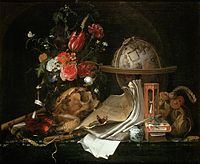
Vanitas Still Life – Maria van Oosterwijck (1630-16930
Maria van Oosterwijck [Public domain], via Wikimedia Commons

Vanitas by Antonio de Pereda (painted during 1632-1636) shared under Wiki Commons

Butterfly traditions

There are many superstitions and beliefs associated with butterflies.  They are often regarded as omens, good and bad, or as an advance messenger indicating that a visitor or loved one is about to arrive. In Japan, they are traditionally associated with geishas due to their associations with beauty and delicate femininity.

Butterfly & Chinese wisteria by Xu Xi Early Sing Dynasty c970.
copyright Xü Xi (Scanned from an old Chinese book) [Public domain], via Wikimedia Commons

The Chinese see them as good luck and a symbol of immortality. Sailors thought that if they saw one before going on ship it meant that they would die at sea .  In Devon it was traditional to kill the first butterfly that you saw or have a year of bad luck as a result. In Europe the butterfly was seen as the spirit of the dead and, in the Gnostic tradition, the angel of death is often shown crushing a butterfly underfoot. In some areas in England, it’s thought that butterflies contain the souls of children who have come back to life. A butterfly’s colours can also be significant. A black one can indicate death and a white one signifies the souls or the departed. It’s also a spiritual symbol of growth in that sometimes the past has to be discarded in order to move forward as the butterfly sheds its chrysalis to emerges complete. So it can indicate a turning point or transition in life. There are also shamanistic associations with the butterfly’s shapeshifting and it has also been claimed as a spiritual animal or totem.

Brompton Cemetery, tomb unknown

This example with its wings outstretched is from Brompton Cemetery in London.   Alas, the epitaph appears to have vanished over time even with vegetation die back in winter I still couldn’t find out who it it was.  Note the wreath of ivy that surrounds it.  Ivy is an evergreen and is a token of eternal life and memories. 

An example of a stylised butterfly on a tombstone in Brompton Cemetery in London. Unfortunately the epitaph is now unreadable. copyright Carole Tyrrell
Another view of the Brompton Butterfly surrounded by an ivy wreath.
copyright Carole Tyrrell

The Gordon monument, Kensal Green

The second one is perched on the tomb of John Gordon Esquire, a Scotsman from Aberdeenshire who died young at only 37.  As the epitaph states:

it was erected to his memory as the last token of sincere love and affection by his affectionate widow’.  

Gordon came from an extended family of Scottish landowners who had estates in Scotland and plantations in Tobago amongst other interests.  The monument is Grade II listed and is made of Portland stone with a York stone base and canopy supported by the pillars.  There was an urn on the pedestal  between the four tapering stone pillars which was stolen in 1997.
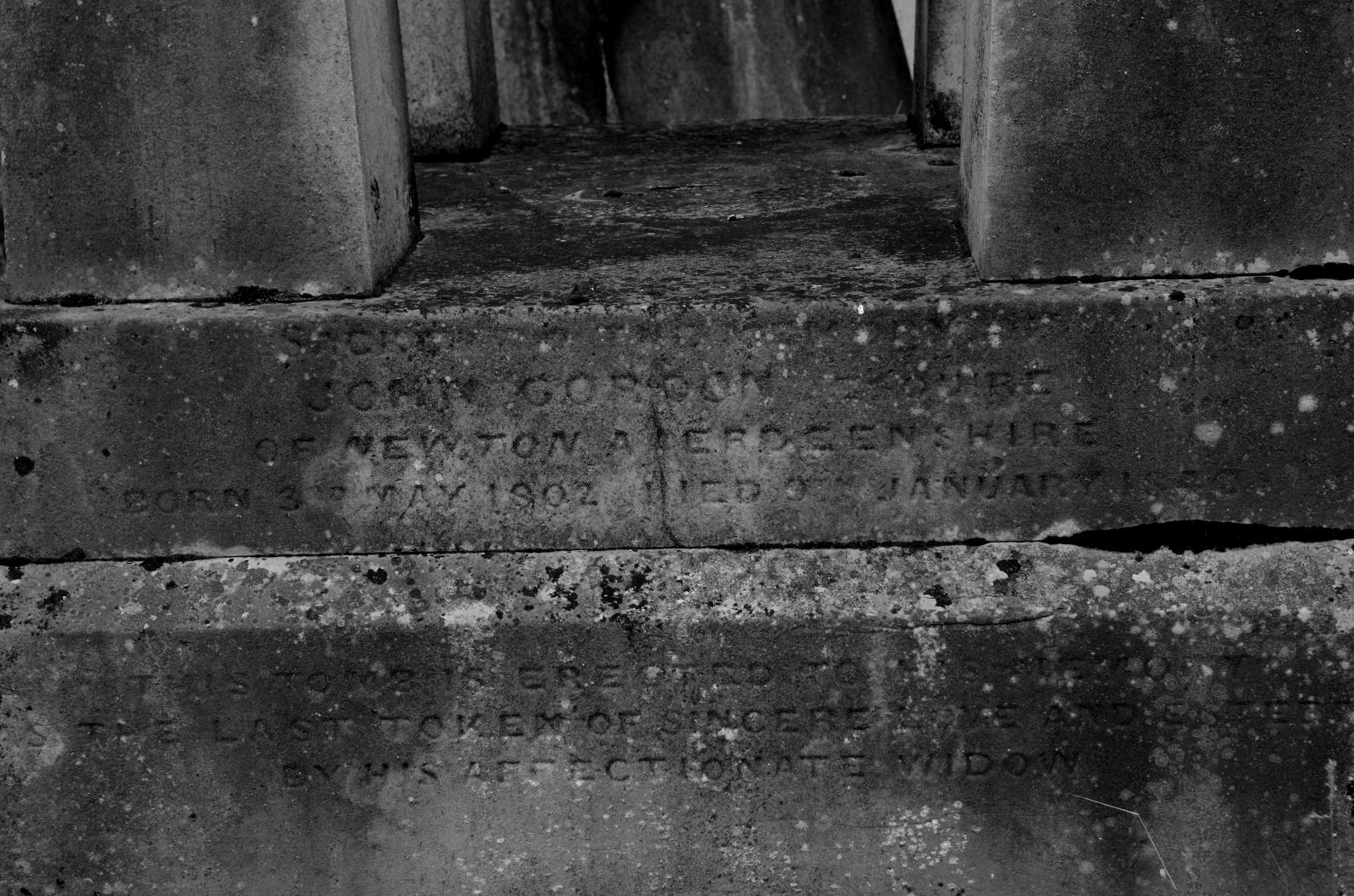
John Gordon’s epitaph Kensal Green Cemetery.
copyright Carole Tyrrell
The Gordon Monument in Kensal Green Cemetery. There are traces of something once being in place – perhaps an urn – on the platform between the pillars.
copyright Carole Tyrrell

The butterfly also has an ouroboros encircling it which is a symbol of eternity. This is the circle created by a snake devouring each its own tail. So the whole sculpture is of a butterfly indicating resurrection within an eternal circle of life, death and rebirth.

The ouroboros symbol surrounding the butterfly symbol of the roof of the Gordon monument Kensal Green Cemetery.
copyright Carole Tyrrell

The pharaonic heads at each corner are Egyptian elements within an ostensibly classically inspired monument are known as acroteria.. Acroteria, or acroterion, its singular definition, are an architectural ornament.  The ones on this monument are known as acroteria angularia. The ‘angularia’ means ‘at the corners’.
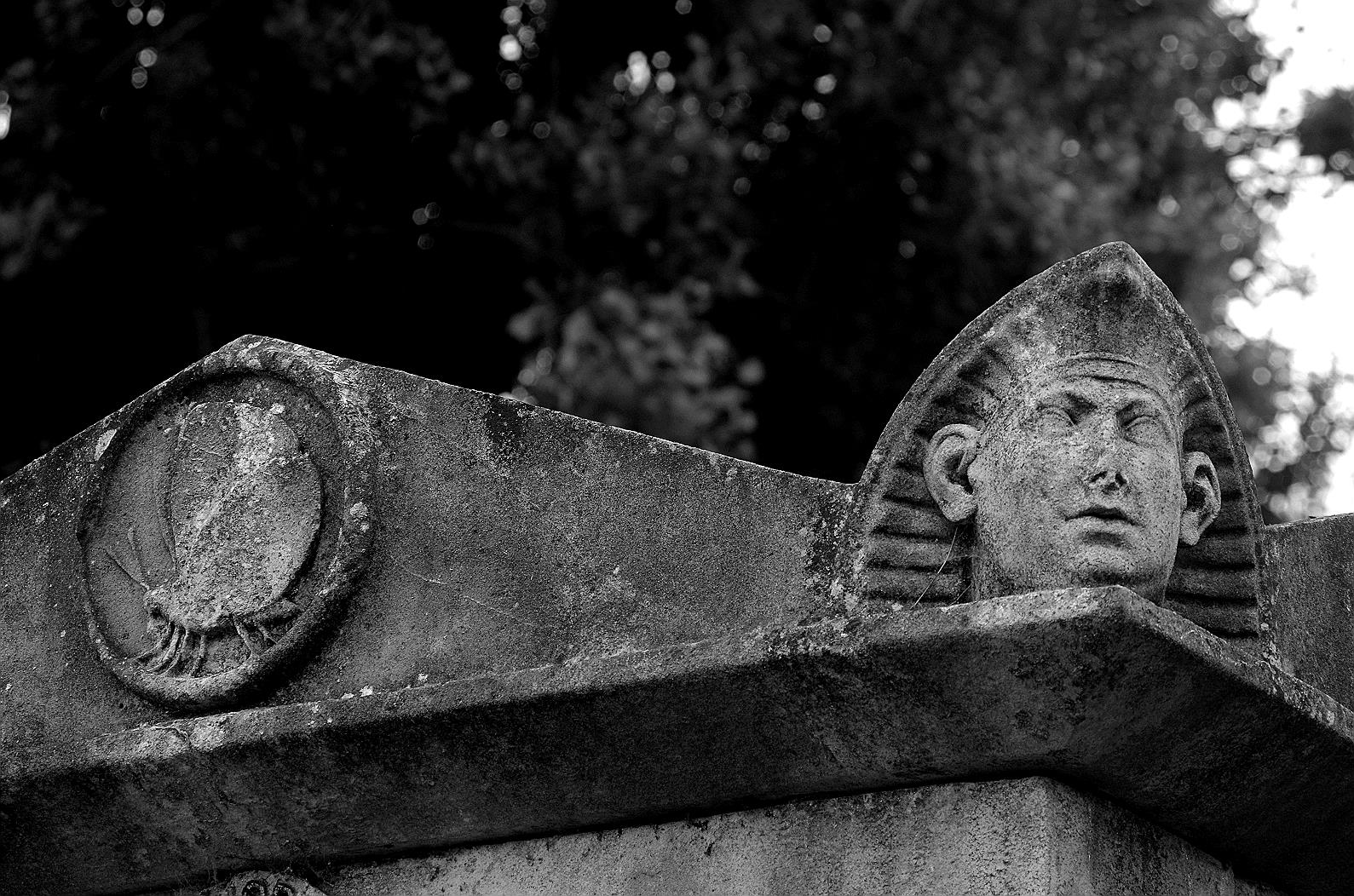
Detail of the roof of the monument – note the Pharaonic head, one at each corner, and another glimpse of the butterfly. Kensal Green Cemetery
copyright Carole Tyrrell
Close- up of one of the four Pharaonic heads on the Gordon monument. Kensal Green Cemetery
copyright Carole Tyrrell


The entire monument is based on an illustration of the monument of the Murainville family in Pugin’s Views of Paris of 1822 and also on Moliere’s memorial which are both at Pere Lachaise in Paris. The Gordon memorial incorporates elements  of the Egyptian style and symbolism that influenced 19th century funerary monuments after the first Egyptian explorations. Kensal Green contains many significant examples and there are others to be found in Brompton, Highgate and Abney Park.  The Victorians regarded the Egyptians highly as their religion was a cult of the dead. 

So when you next see a butterfly fluttering on the wind or even perched on a memorial for eternity remember its importance within the tradition of symbols, religions and cultures.  Who knows it might be one of your ancestors…..

© Text and photos Carole Tyrrell unless otherwise stated.

References:

http://www.gardenswithwings.com/butterfly-stories/butterfly-symbolism.html

http://www.whats-your-sign.com/butterfly-animal-symbolism.html

http://www.spiritanimal.info/butterfly-spirit-animal/

http://www.pure-spirit.com/more-animal-symbolism/611-butterfly-symbolism

http://www.shamanicjourney.com/butterfly-power-animal-symbol-of-change-the-soul-creativity-freedom-joy-and-colour

http://www.bbc.co.uk/london/content/articles/2005/05/10/victorian_memorial_symbols_feature.shtml

http://www.thecemeteryclub.com/symbols.html

https://stoneletters.com/blog/gravestone-symbols

https://www.reference.com/world-view/butterfly-symbolize-cf9c772f26c7fa5

https://www.reference.com/world-view/butterflies-symbolize-19a1e06c9c98351c?qo=cdpArticles

https://en.wikipedia.org/wiki/Butterfly

https://en.wikipedia.org/wiki/Vanitas

https://en.wikipedia.org/wiki/Acroterion

https://historicengland.org.uk/listing/the-list/list-entry/1191024

Behold the ‘Butterfly Stone’ – The Ness of Brodgar Project

Clare Gibson, How to Read Symbols, Herbert Press 2009

Douglas Keister, Stories in Stone, A Field Guide to Cemetery Symbolism and Iconography, Gibbs Smith, 2004

J C Cooper, Illustrated Encyclopaedia of Traditional Symbols, Thames & Hudson 1978.
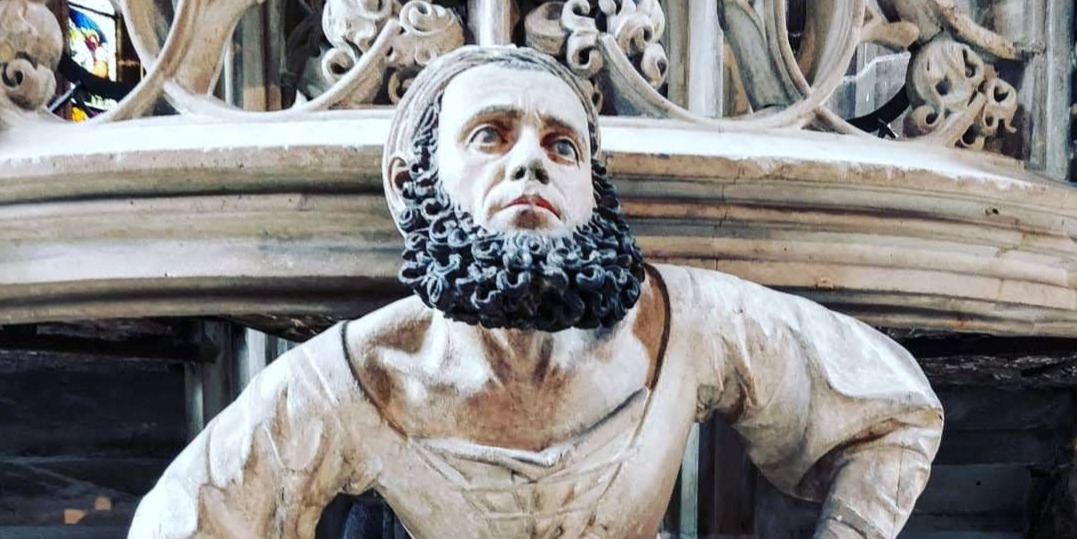
A medieval stonemason steps out from the Dark Ages

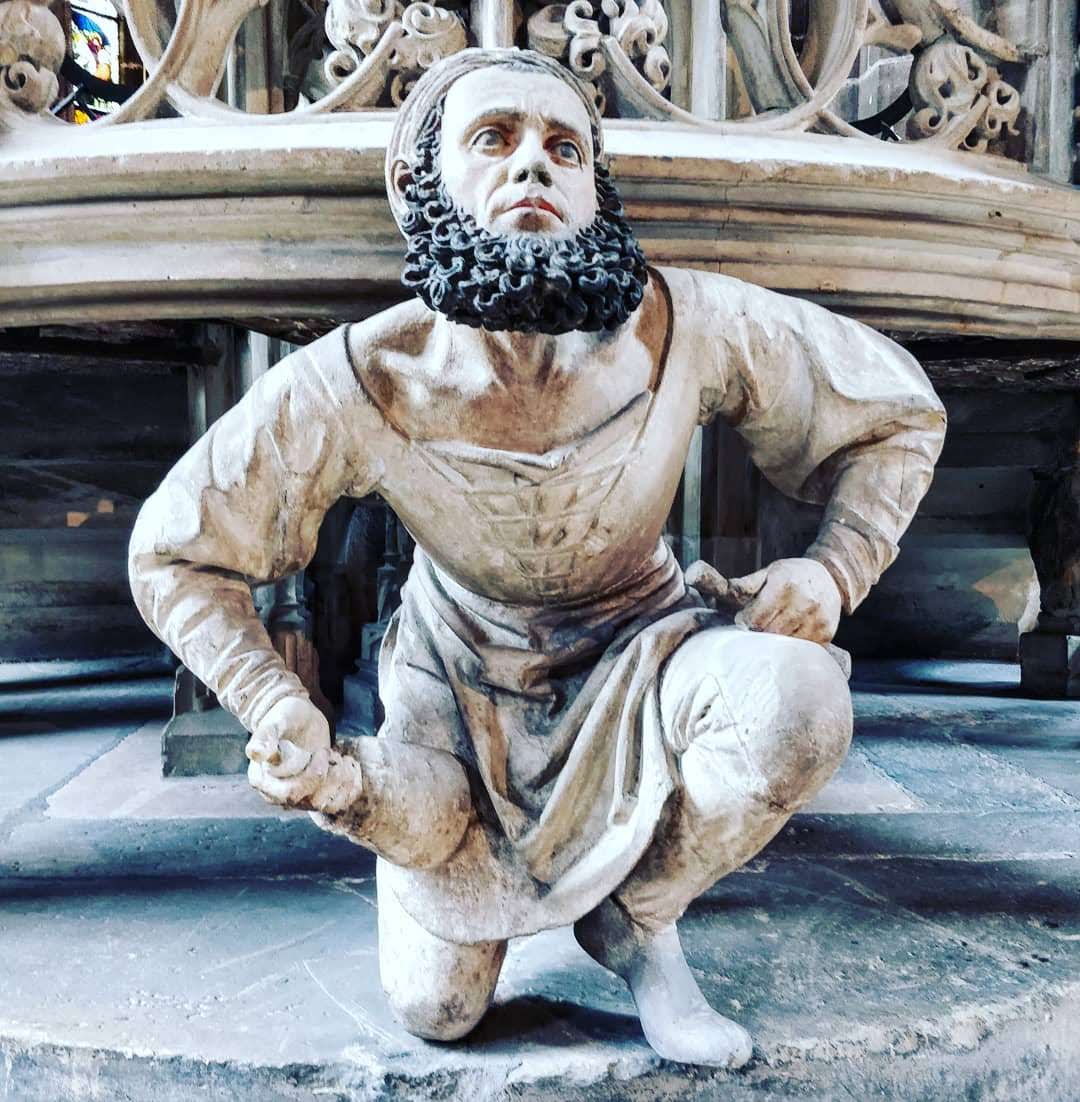
Self portrait of Adam Kraft Photo © Helen Grant

Stonemasons from the middle ages can often be anonymous.  They may have left a name carved on a headstone, although I’ve not been lucky enough to find one yet, or there may be a payment to one in a dusty parish register.  It means that so often their work has to speak for them.

As I said in my 2022 post, ’A Medieval stonemason’s selfie!’  the churchyard of All Saints, Maidstone has two graves of stonemasons from the 19th century and there is also a 17th century monument to a one in Faversham’s St Mary of Charity burial ground. But these days you are far more likely to discover the name of the monumental masons employing the stoneworker at the back of a headstone than the man or woman themselves.

But a friend recently visited Nuremberg in Germany and the church of St Lorenz in particular.  It was there that she found a sculpted self portrait of one of the most celebrated medieval local stonemasons. It’s carved from sandstone and still has colour on it. This is on his beard, his eyes and there are traces on his apron. Kraft carries his tools, a hammer and chisel, and is in his working clothes. He looks out at visitors from the base of one of his most celebrated pieces of work, the Tabernacle. It dates from the 1490s which is when most of his documented work began. It’s an important piece of sculpture as:

‘ It has been suggested that this figure marks the period where the artist’s status was transitioning from anonymous craftsman to recognised individual master.’  http://www.identifier

Full view of the statue. © Helen Grant

The mason’s name is Adam Kraft, (1460’s – Jan 1509) and he is considered to be one of the most important stonemasons of the German late Gothic period.  Adam is believed to have been married twice but it’s not known if he had any children and is buried in the nearby town of Schwabach.

He was chiefly employed by religious institutions and wealthy patrons of the town. In addition, he worked on local public buildings such as Nuremberg’s Imperial stables, epitaphs and reliefs such as coats of arms.  Much of this work can still be seen.

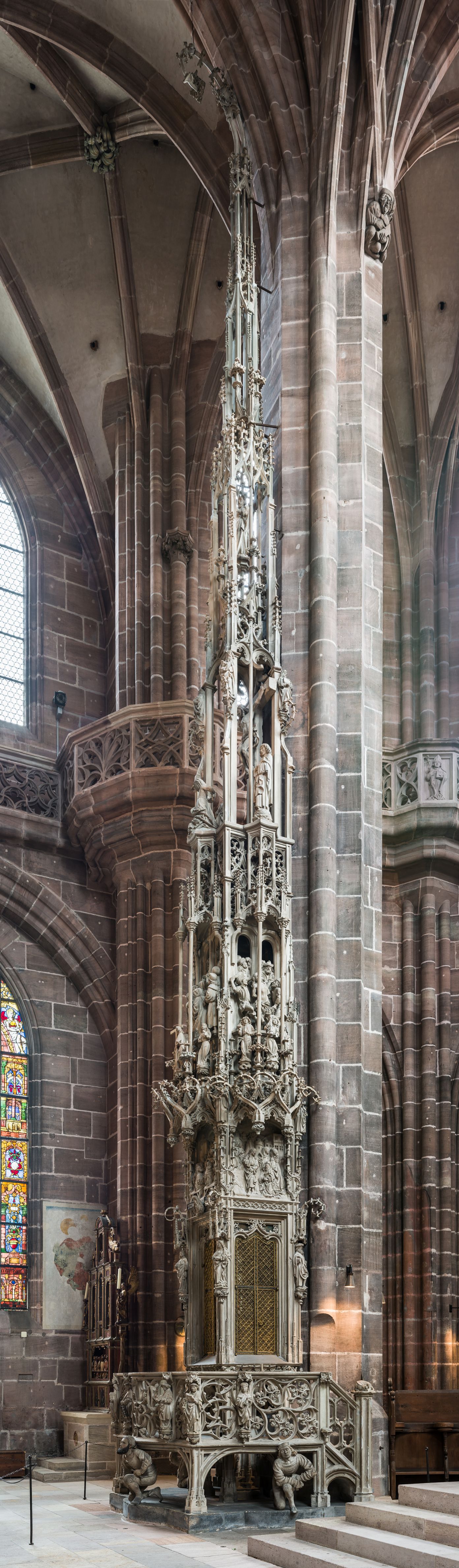
The Tabernacle, St Lorenz church, Nuremberg if you look carefully Adam Kraft’s statue is at the bottom left.© Uocie1 Shared under Wiki Creative Commons

As I said earlier, his self portrait sits at the base of his masterpiece, the 18.7 metres (61 feet) high tabernacle with St Lorenz church. According to Wikipedia:

‘It resembles a gothic tower reaching up into the church’s vault and is created from tracery interspersed with figurative scenes from Christ’s Passion. It was commissioned in 1493 by Hans Imhoff, a patrician from Nuremberg.”

The tabernacle was slightly damaged during World War which led to restoration.

Detail of monument from Nuremberg with a self portrait of Kraft on right hand side from V & A Museum. © Stephen C Dickson Shared under Wiki Creative Commons

A nearby local church, St Sebaldus, has another of Kraft’s significant works on its exterior.  This dates from 1490-92 and depicts the Crucifixion, Entombment of Christ and the resurrection of Christ. If you look closely at one of the panels, you will see what is reputed to be a self portrait of Kraft supporting the crucified Christ as he is taken down from the Cross. A cast of these panels can be seen in London’s Victoria and Albert Museum’s Cast Courts.

Kraft worked in Nuremberg and surrounding areas for nearly 20 years from 1490 – 1509 with a small team of two or three assistants. He depended on wealthy patrons and the Church for commissions. This, I feel would have been true, of most stonemasons of the time. It was the wealthy who could afford headstones and monuments when they had to be buried in the churchyard after the churches ran out of space. There are still medieval items to be found in churches despite the Victorian zeal for restoration.

Simon Kraft wanted to be remembered, not only for his magnificent work, but as a professional craftsman and I feel that his sculpted figure represents all stonemasons. 

©Text Carole Tyrrell unless otherwise stated.

References and further reading:

Adam Kraft | sculptor, stone mason | Artists | Virtual museum of Nuremberg art (has examples of his work)

Adam Kraft – Wikipedia

Adam Kraft | Renaissance, Nuremberg, Altarpiece | Britannica

Self-Portrait of Adam Kraft (at the base of the Sakramentshaus) – Adam Kraft (Nuremberg, c. 1455-1509) | Art Identifier

The Schreyer-Landauer Monument | Kraft, Adam | Rotermundt, Jacob | V&A Explore The Collections

Nuremberg | Population, History, Trials, Castle, Map, & Facts | Britannica

Symbol of the Month – the Agnus Dei

Close-up of Agnus Dei symbol on tombstone. Sadly the epitaph is no longer visible so I can’t confirm if it is to a child or young person.
©Carole Tyrrell

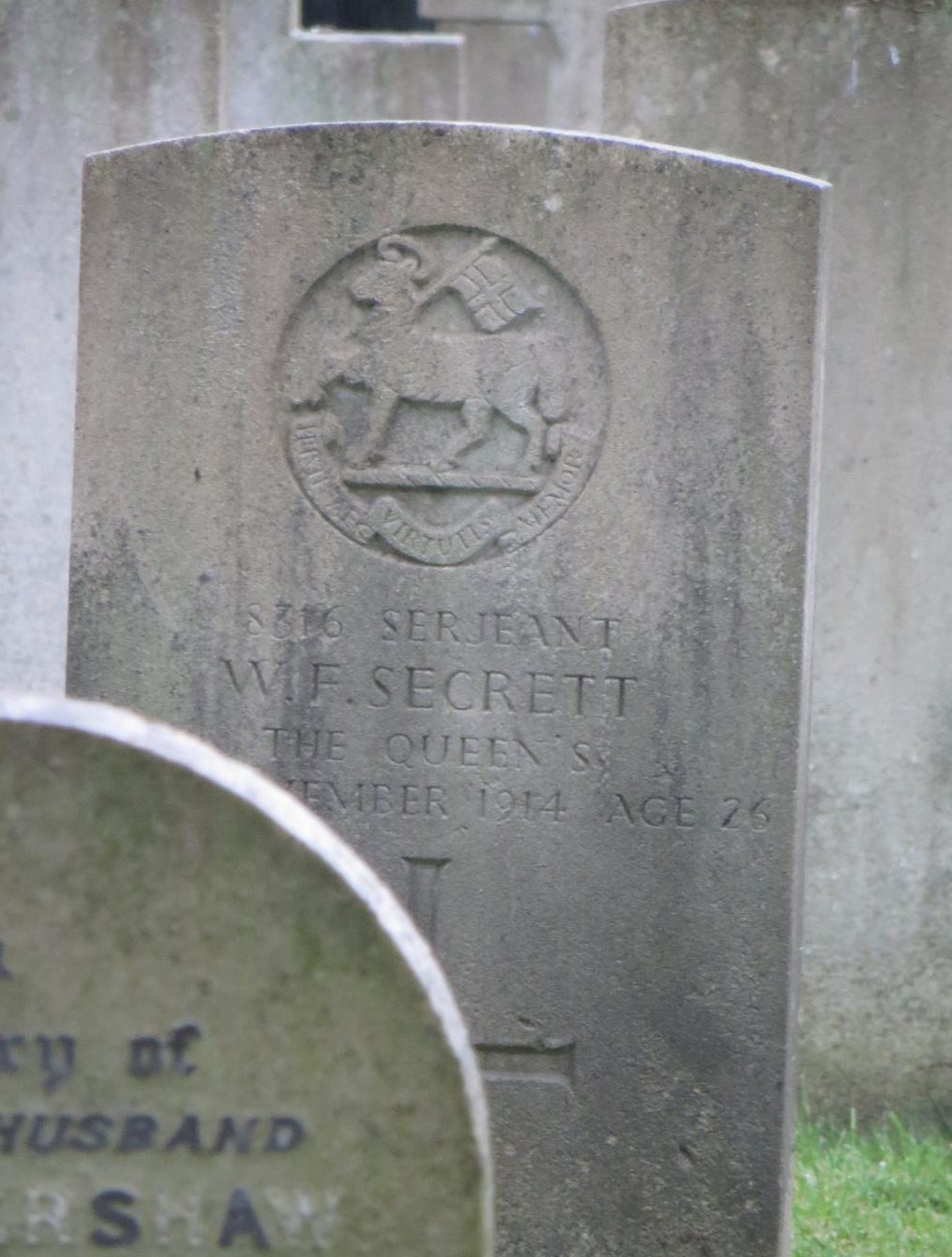
This month’s symbol is the Agnus Dei, which is a Latin term and can be translated as The Lamb of God.  The Lamb is usually portrayed sideways on and is often depicted with a variety of accoutrements such as a cross, a banner and a halo or a combination of these elements.  In the example above, the Lamb is carrying a cross which represents the Crucifixion as well as a banner which, according to J C Cooper, is an emblem of the Resurrection.  It has also be depicted with other motifs such as a shepherd’s crook, Chi-Rho crosses and the alpha/omega.

I have seen The Lamb several times as it is common throughout Christian art and I saw a fine example within a stained glass window in Augustus Pugin’s private chapel at his former home at Ramsgate, Kent.  William Morris also created a memorable one, now sadly faded, in a window at St Martin’s church, Scarborough.  The Agnus Dei is known as a Paschal Lamb within heraldry and is the regimental emblem of the Queens Royal Surrey Regiment.  I found this example in the military war graves section of a London cemetery..

The Agnus Dei on a military tombstone. This is the regimental symbol of the Queens Royal Surrey Regiment in the military graves section of a London cemetery.
©Carole Tyrrell

But the origins of the Lamb go back much further into antiquity. In John 1:29, it’s seen as a direct allusion to Jesus:

‘The next day John seeth Jesus coming unto him, and saith, Behold the Lamb of God, which taketh away the sin of the world.’

This verse emphasises Christ’s sacrifice for humanity’s sins and there are several references in the Old Testament to lambs as sacrificial objects.  For example, the Israelites sacrificed one as a representation of a human sinner.  In this way, its death signified the absorbing of original sin. This  painting, The Sacrificial Lamb, is by the 16th century artist, Francisco Zurbaran. 

Francesco Zurbaran (1598 – 1664) The Lamb of God, Prado Museum, Madrid
shared under Wiki Commons

Sheep have been also been worshipped as deities by several ancient civilisations including he Sumerians. The Bible contains numerous references to sheep with God being seen as the shepherd of a vast flock of sheep that represents humanity.

But as a funerary symbol within cemeteries and graveyards the Lamb represents gentleness, innocence and the unblemished life of the deceased.  In this context, it is supposed to mark the grave of an infant or child.  However, the epitaph on the example that I found in Brompton Cemetery had completely vanished which made it difficult to disprove or support this theory. However, I particularly like this one with its black background emphasising the light rays emanating from the Lamb.  These highlight its divinity within the unusual lozenge shaped tombstone.  But it’s a real shame that we don’t know whose buried there.

The Agnus Dei in an unusual lozenge shaped headstone.
©Carole Tyrrell

The Lamb is also associated with resurrection and there is an example at the back of the Doulton mausoleum in West Norwood Cemetery.

I’m surprised that it doesn’t appear more often within cemeteries and graveyards and I will be looking out for more examples.  Although I was aware that the symbol was called the Lamb of God I didn’t know of its association within major religions  and civilisations. It has been fascinating to research this.

© Text and photos Carole Tyrrell unless otherwise stated.

References and further reading:

Stories in Stone; A Field Guide to Cemetery Symbolism & Iconography, Douglas Keister, 2004, Gibbs Smith

An Illustrated Encyclopaedia of Traditional Symbols, J C Cooper, Thames & Hudson 1979 reprinted 1983.

https://www.verywell.com/headstone-symbols-lamb-sheep-or-agnus-dei-4006520

http://www.religionfacts.com/agnus-dei

https://en.wikipedia.org/wiki/Lamb_of_God

https://symbolsproject.eu/explore/animals/real-insects-birds–saved-soul-the-soul-leaving-the-body-water-animals-terrestrial/lamb-agnus-dei.aspx

http://www.lsew.org.uk/funerary-symbolism/

http://www.jesuswalk.com/lamb/lamb-agnus-dei-artwork.htm

http://www.druidic.org/camchurch/churches/croydon.htm

https://wordsonstone.wordpress.com/category/symbolism/page/4/

http://friendsofstmartins.co.uk/images/ChapelWindows/AgnusDeiSymbol.html

http://www.masonic-lodge-of-education.com/masonic-lamb.html

A doomed Royal marriage and a mausoleum in Ramsgate – St Laurence in Thanet.

View of the D’Este Mausoleum showing bricked up entrance. ©Carole Tyrrell

Part 1 – The love story and a terrible home coming

The churchyard of St Lawrence in Ramsgate contains 1400 graves and was consecrated in 1275. It is now closed to burials but as I explored in early October I found a huge mausoleum right at the very back, peeping out from behind yew trees. It is a little worse for wear to say the least but the mausoleum has royal connections.

It is the D’Este mausoleum according to an information board and the guidebook.  Its inscriptions are now illegible, the outer decoration has been smashed, its roof tiles stolen and the entrance has been bricked up but it has such a story to tell.

It contains 6 people hence its size. They are:

The Duchess of Sussex, wife of Prince Augustus Frederick.

The Duchess’s parents, the Earl and Countess of Dunmore

Two unacknowledged grandchildren of King George III, Augustus and Augusta. She is interred with her husband, Sir Thomas Wilde, The Lord High Chancellor.

Illustrious permanent residents indeed.  I was immediately intrigued and found an archive photo which showed that it had once had an imposing position within the churchyard. Please follow this link:

MMT – Gazetteer Mausoleum Details

It is now considered to be at risk.

The D’Este Mausoleum showing where the inscriptions would have been originally on all sides of the mausoleum. ©Carole Tyrrell

This is the original wording on the inscriptions from 1895:

324. D’Este Mausoleum. South side: Sacred to the beloved memory of The Right Honorable Thomas WILDE, 1st Baron TRURO, who began his professional life as an attorney, by great talent, perseverance, and integrity, unaided by patronage, became Lord Chief Justice of the Court of Common Pleas, and afterwards Lord High Chancellor of England. Born 7th day of July 1782, died 11th November 1855. He had by his first marriage with Mary WILEMAR three sons, the eldest of whom died in infancy, and one daughter. By his second wife Augusta Emma D’ESTE he left no issue. In this tomb are also enclosed the remains of The Right Honourable Augusta Emma, Baroness Truro, widow of Thomas, 1st Baron Truro. And only daughter of Augustus Frederick, Duke of SUSSEX, who died on the 21st day of May 1866. “May God mercifully receive her soul”.

On the west side of ditto: Erected by Augustus Frederick D’ESTE, to receive the mortal remains of his venerated and loved mother, the Lady Augusta MURRAY, 2nd daughter of John, Earl of DUNMORE. Married at Rome on the 4th day of April, A.D. 1793, to His Royal Highness, Prince Augustus Frederick, afterwards Duke of SUSSEX, 6th son of His Majesty KING GEORGE THE THIRD, a subsequent marriage was solemnized at St George’s Church, Hanover Square, London. Both marriages were held invalid in England, as contrary to an Act of Parliament entitled “The Royal Marriage Act”. Here also repose the remains of Augustus Frederick D’Este, the only son of Lady Augusta, and His Royal Highness the Duke of Sussex. Born 13th January 1794, died 18th December 1848.

North side of ditto: On this side are deposited the remains of John, 4th Earl of DUNMORE, died March 1809, and of his Countess, the Lady Charlotte STEWART, daughter of Alexander, 6th Earl of CALLAWAY, died November 1818.’   Kent Archaeological Society

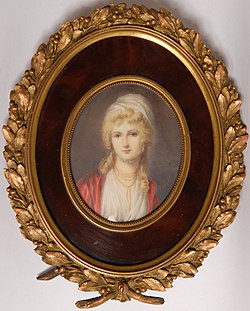
Lady Augusta Murray – portrait miniature by Richard Cosway. Image shared under Wiki Commons

It’s the inscription to Augusta, Duchess of Sussex that begins the story. This is the 18th century Royal marriage which fell foul of a punitive Act of Parliament, The Royal Marriages Act. A wife was denied and repudiated becoming a social outcast, her family ruined and her children nameless. Until eventually she ended up living in Ramsgate where several road and street names still commemorate her.  This the sad story of Lady Augusta Murray’s doomed marriage to Prince Augustus Frederick, the sixth son of George III.

I am indebted to Julia Abel Smith’s biography of Lady Augusta, ‘Forbidden Wife – the Life and Trials of Lady Augusta Murray’ which was published by The History Press in 2020.

She was the daughter of John Murray, the 4th Earl of Dunmore and his wife Lady Charlotte Stewart. Augusta was 32 when she met Prince Augustus, the sixth son of George III in Rome in 1793 . He was 20 and  largely estranged from his father. She was widely travelled and very accomplished which was unusual for a woman of her time. Her father had been the Governor of  New York,  and later Virginia, as the first stirrings of independence happened. In fact, she and her mother were in Gibraltar when news came of the French Revolution and the beheading of Marie Antoinette.  Augusta and Augustus then remarried in London.

Prince Augustus Frederick, portrait by Guy Head. Shared under Wiki Commons.

Augustus had not yet told his father of the marriages as he wanted to do it when he became of age. But neither he nor Augusta had any idea of how strictly the Royal Marriages Act of 1771 could be applied, and particularly to them, once George III and Queen Charlotte found out.

The Act declared that any descendants of George III would be prevented from marrying without his previous consent as well as his heirs and successors. Any marriage contracted without the King’s consent would be null and void.  The result of this would be ruin and rejection for both parties and any children would be illegitimate.  Anyone connected with the marriage would also be liable for prosecution.  However, it was different if the royal petitioner was aged over 25 and hadn’t received the King’s consent as they could give notice to the Privy Council and, if within a year the Houses of Parliament had no objection they would be free to marry.

The inquiry on the legitimacy of both of the marriages which was held on 27 January 1794, was scathing. The marriages were deemed ‘pretended’ and ‘absolutely null and void’ and Augusta was ‘falsely calling herself the wife of the said Royal Highness Prince Augustus Frederick.’  If that wasn’t enough she was also liable for the legal expenses. But Augusta always regarded her marriages as completely legal.

As a result of the inquiry she was awarded a pension of £1,000 p.a. but she, their children and her family became pariahs in the eyes of polite society.  But her parents never stopped supporting her.

Prince Augustus and Augusta continued to see each other and a daughter, called Augusta Emma, was born on 9 August 1801. She was always known as Emma. She and her brother were given the surname of Hanover and it was later changed to D’Este. But life was hard for Augusta with no income and no longer being part of society. She ended up in considerable debt.

However, after eight years of trying to have Augusta recognised as his wife, the final separation came on 7th December 1801 when Augustus finally conceded defeat. He wrote:

‘We are to meet no more. My whole wish now is to make her comfortable.’.

He then became the Duke of Sussex in England, Earl of Inverness in Scotland and Baron Arklow in Ireland. He also moved to Portugal and had a mistress.

Part 2 – The aftermath and the move to Ramsgate

Text and photos ©Carole Tyrrell unless otherwise stated.

References and further reading:

St. Laurence Churchyard

Augusta Emma Wilde, Baroness Truro – Wikipedia the daughter

St Lawrence, Laurence, Ramsgate, Thanet – Churchyard M.I.’s by Charles Cotton 1895 the sicriptions on the Mausoleum

Prince Augustus Frederick, Duke of Sussex – Wikipedia

Lady Augusta Murray – Wikipedia

Forbidden Wife: The Life and Trials of Lady Augusta Murray, Julia Abel Smith, The History Press, 2020.

The pet cemetery of Lamb House, Rye, April 2025

View of Lamb House pets cemetery © Carole Tyrrell

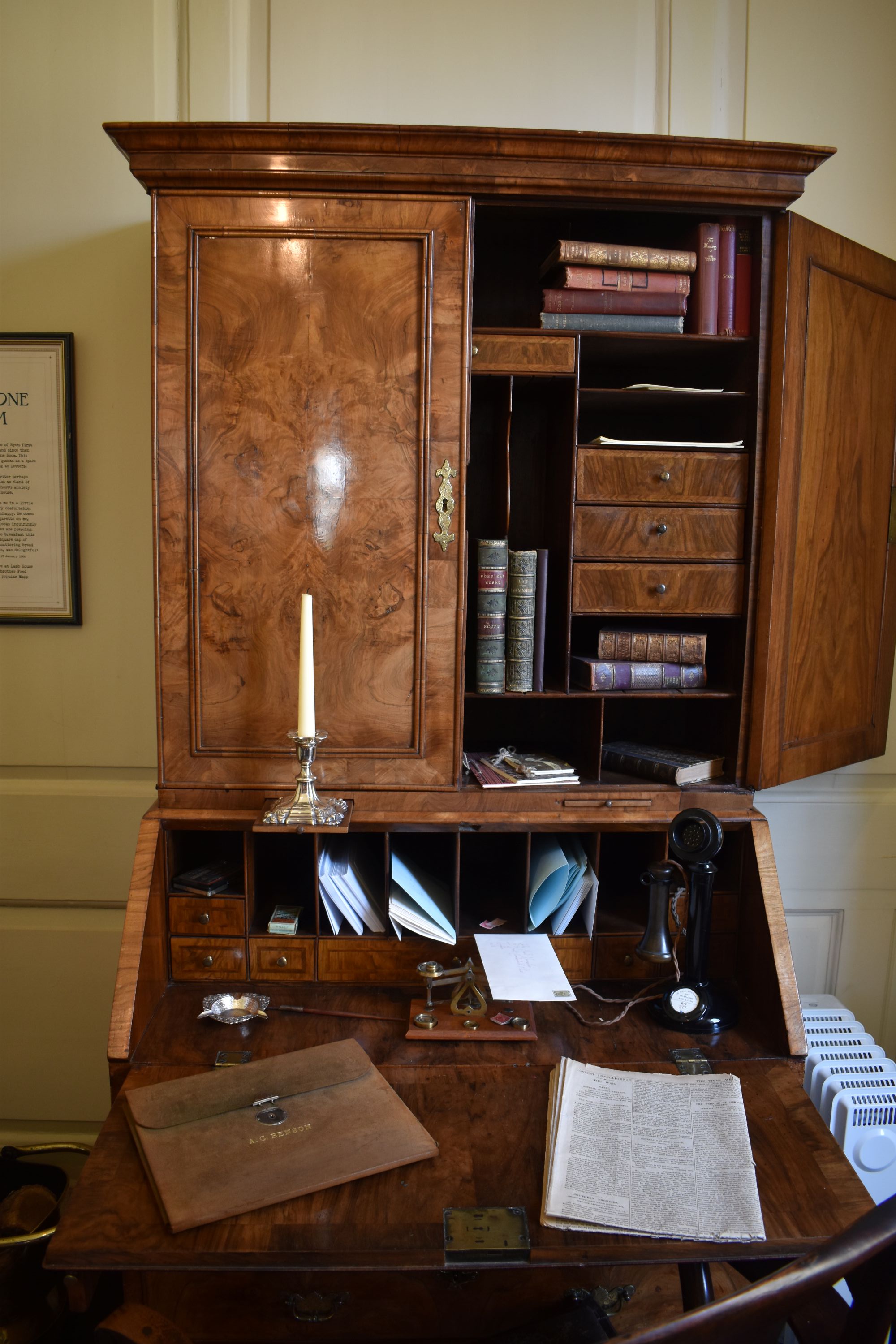
In April, I was on a literary weekend in Sussex and Kent. We made the town of Rye our base. The town has a rich literary tradition with several famous writers having lived there.  Several of them were lucky enough to live at Lamb House, a red brick Georgian house with spacious rooms and a garden that was just beginning to take shape on my visit. Neatly labelled rows of vegetable seedlings gave an indication of what was to come later in the year. There is a magnificent view of St Mary’s church from an upper window and Henry James is commemorated with his writing desk and ‘The Telephone Room’. I love finding pet cemeteries as I find them fascinating and touching.

© Carole Tyrrell

Lamb House is now owned by the National Trust and when I last visited over 20 years ago, it looked very different. There was an upstairs tenant – lucky them! Now the upstairs rooms have been opened to visitors and on my visit there was an exhibition, ‘Ghost Written’, which featured the house’s most well known writers through their ghost stories.

Lamb House Rye Shared under Wiki Commons © Jerrye & Roy Klotz, MD

The American writer, Henry James, (1843-1916) wrote three of his most famous books at Lamb House:  ‘The Wings of the Dove’, ‘The Ambassadors’ and ‘The Golden Bowl’. He discovered Lamb House while visiting a friend and instantly fell in love with it. He leased it in 1897 and, two years later, he finally bought it.

The house appears in his novel, ‘The Awkward Age’, where it is Mr Longdon’s home. During James’s time there a literary circle came into being that included Rudyard Kipling and H G Wells amongst others. In 1916, James was very ill in London and wanted to be taken back to Lamb House but he was too ill to be moved.

He was followed by E F Benson (Edward Frederic) Benson (1867-1940) who is known for his Mapp and Lucia novels which are set in a fictional town called Tilling that was based on Rye. They were adapted and made into a successful TV series. I know him through his ghost stories or ‘spook stories’ as he called them. He became Mayor of Rye twice and was awarded the Freedom of Rye which was the town’s highest award. He is buried in the local cemetery on the outskirts of town.  ‘Fred’ as he was known bequeathed two colourful windows, the East and the West, in the local church, St Mary’s. 

View of Fred Benson’s monument © Carole Tyrrell

Another view of Fred Benson’s monument.© Carole Tyrrell

Other writers who lived at Lamb House were Montgomery Hyde and the prolific author of ‘Black Narcissus’, Rumer Godden.

It was in the south western corner of the garden that I found the pet cemetery which was dedicated to Henry James and Fred Benson’s pet dogs. I remembered it from my first visit where it was hidden behind vegetation.  The cemetery is a small collection of headstones. There are no cats as, although Henry James, was;

A great lover of animals he would chase them (cats) away from the garden’

National Trust guidebook

The first headstone in what James called his:

‘domestic mortuary’

was dedicated to Tosca, his black and tan terrier who died in 1899.   

Tosca was followed by Tim who was another terrier, then came:

‘my admirable little Peter’

Then there was another terrier, Nick.  But James’s heart was undoubtedly given to Maximilian or Max, a red dachshund. According to his owner Max had

‘a pedigree as long as Remington Ribbon.’

He also described Max as:

‘the gentlest and most reasonable and well mannered as well as most beautiful small animal of his kind to be easily come across.’

Max loved being taken on long walks but, due to his love of chasing sheep, had to be kept on a long leash. 

Henry was very upset at having to leave Max behind when he went on an  extended trip to the US.  He wrote to his lodgers of his homesickness and how much harder it was when thinking of:

‘poor sweet pawing little Max.’

© Carole Tyrrell

© Carole Tyrrell

© Carole Tyrrell

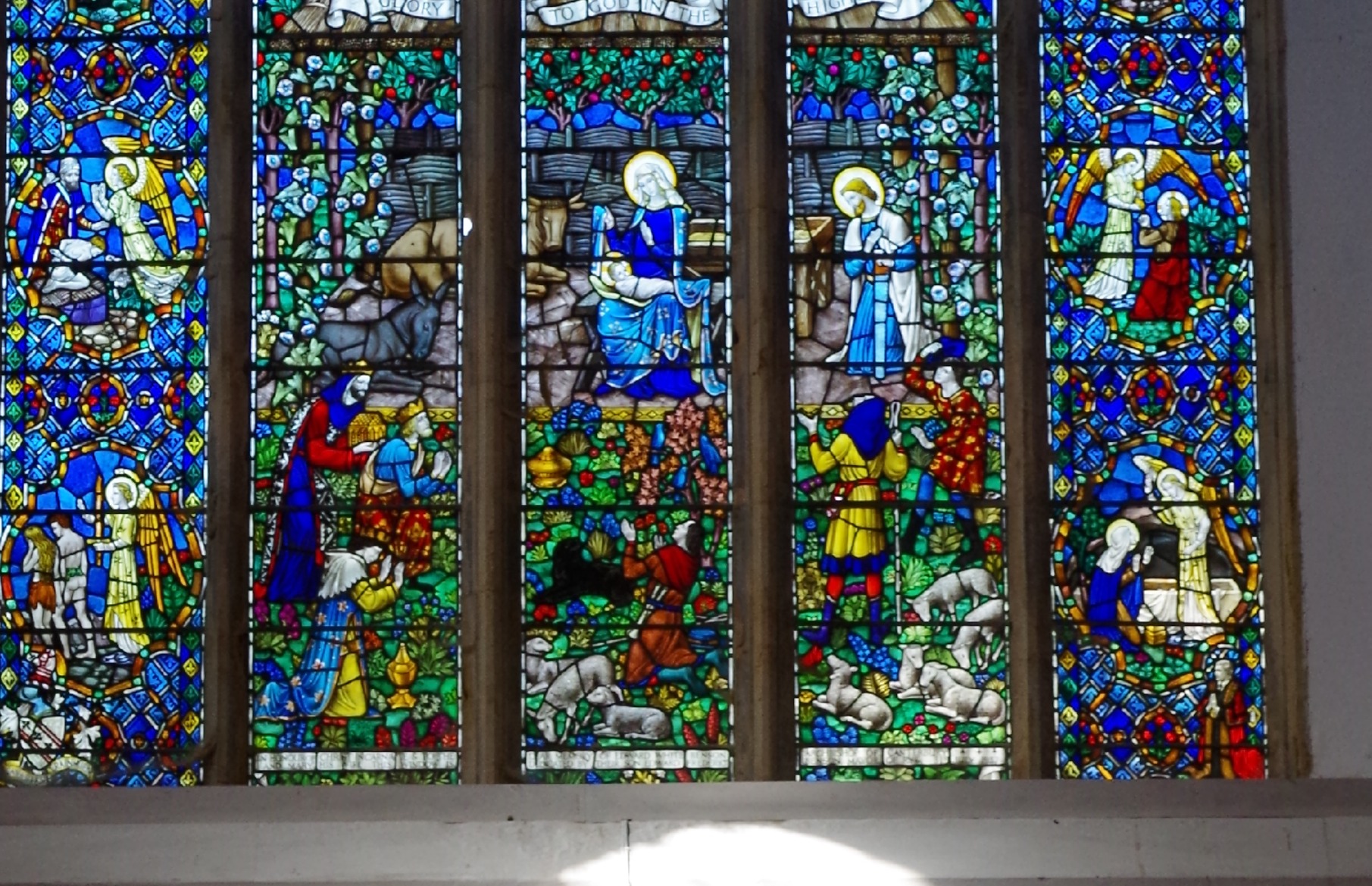
Fred Benson also adored dogs and his favourite was a collie called Taffy. This is a photo of them together and Taffy is also commemorated in the East Window of St Mary’s church.

From the exhibition, ‘Ghostwritten’ at Lamb House

Taffy is the black dog in the lower part of the window, East window, St Mary’s, Rye. © Carole Tyrrell

© Carole Tyrrell

Rumer Godden loved Pekingese dogs and she owned several throughout her life.

I didn’t recall the pet cemetery being so large but the Trust’s intention is to recreate the garden so that it resembles

‘ the space that delighted and inspired Henry James and Fred Benson’

National Trust guidebook

I found the little cemetery with its little plain, simple stones very touching and a poignant reminder that these much loved pets were not forgotten.  And as I read the names on the stones they seemed to come alive again racing around the garden at play.

©Text and photos Carole Tyrrell unless otherwise stated.

References and further reading

National Trust guidebook

Lamb House, Rye | History & Photos

Lamb House – Wikipedia

What I did over the summer and what is to come……

St Peter & St Paul churchyard Seal Kentt. A magnificent view of the North Downs from the back of the church.
©Carole Tyrrell

Dear readers

It has been an eventful summer for me, to say the least. I moved house again for various reasons and now live in Rochester, Kent.  For those of you that don’t know it, it’s a town associated with Charles Dickens and is on the banks of the River Medway.

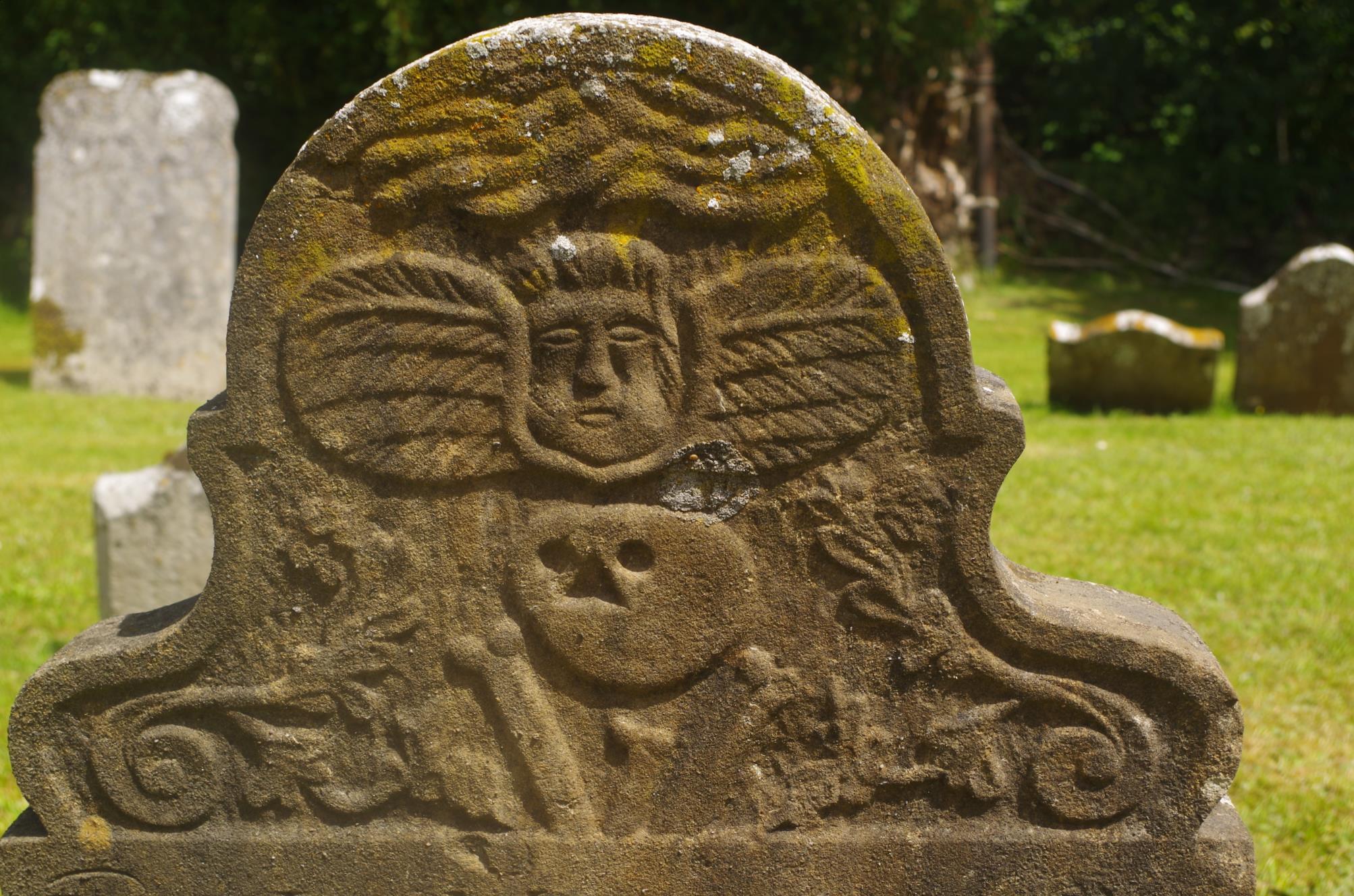
But I have also been busy researching 18th century memento mori’s in Kent churchyards, both around Sevenoaks and Rochester. It was quite surprising to see the differences in carvings from church to church and parish to parish.  They started out as naïve, almost crude, motifs and then professional stonemasons became involved.  In the churchyard of St Peter & St Paul church in Tonbridge there were still 2 tombstones dating back to medieval times. A blog post on my research, or I prefer to call it, poking about in churches and churchyards, is forthcoming as is Symbol of the Month amongst others.

So although shadowsflyaway has been quiet over August I’ve been gearing up for the autumn.

To whet your appetite for the Memento mori post here is one from the churchyard of St Peter and St Paul in Seal, Kent which is almost like a piece of Folk Art in my opinion…

Memento Mori, St Peter & St Paul, Seal, Kent. I think it’s almost like folk art.
©Carole Tyrrell

© Text and photos Carole Tyrrell